1
Optimizing open data to support One Health: Best practices to ensure
interoperability of genomic data from microbial pathogens
Ruth E. Timme1*, William J. Wolfgang2 , Maria Balkey1, Sai Laxmi Gubbala Venkata2, Robyn
Randolph3, Marc Allard1, and Errol Strain4
1. Center for Food Safety and Applied Nutrition, U.S. Food and Drug Administration, 5001
Campus Drive, College Park, MD, 20740, USA
2. New York State Department of Health, Wadsworth Center, Albany, New York, USA.
3. Association of Public Health Laboratories, Silver Spring, MD, USA
4. Center for Veterinary Medicine, U.S. Food and Drug Administration, Laurel, Maryland, USA
*Corresponding author
Email addresses:
Ruth E. Timme1: [email protected]
William J. Wolfgang2: [email protected]
Maria Balkey1: [email protected]
Sai Laxmi Gubbala Venkata2: [email protected]
Robyn Randolph3: [email protected]
Marc Allard1: [email protected]
Abstract
The holistic approach of One Health, which sees human, animal, plant, and environmental health
as a unit, rather than discrete parts, requires not only interdisciplinary cooperation, but
standardized methods for communicating and archiving data, enabling participants to easily
share what they have learned and allow others to build upon their findings.Ongoing work by
NCBI and the GenomeTrakr project illustrates how open data platforms can help meet the needs
of federal and state regulators, public health laboratories, departments of agriculture, and
universities. Here we describe how microbial pathogen surveillance can be transformed by
having an open access database along with Best Practices for contributors to follow. First, we
describe the open pathogen surveillance framework, hosted on the NCBI platform. We cover the
current community standards for WGS quality, provide an SOP for assessing your own sequence
quality and recommend QC thresholds for all submitters to follow. We then provide an overview
of NCBI data submission along with step by step details. And finally, we provide curation
guidance and an SOP for keeping your public data current within the database. These Best
Practices can be models for other open data projects, thereby advancing the One Health goals of
Findable, Accessible, Interoperable and Re-usable (FAIR) data.
Keywords
Genomic Epidemiology, GenomeTrakr, microbial pathogen surveillance, NCBI submission, whole genome sequencing, QA/QC, One Health.
Background
The One Health perspective, which sees human, animal, plant, and environmental health as a
unit, rather than discrete parts, requires not only interdisciplinary cooperation, but standardized
methods for communicating and archiving data, so researchers can easily share what they have
difference in our ability to support these requirements. First, the advent of whole genome
sequencing (WGS) made it possible to establish genomic DNA as a standard data type and
increase the resolution possible between isolates, dramatically changing how surveillance data
for human pathogens could be stored, shared, and analyzed [1]. Second, storing and sharing
genomic pathogen data and surveillance analyses as “open data” [2] has enabled a truly open
vision for all global pathogen surveillance, as shown by the success of the open foodborne
pathogen surveillance model in the United States [2-4] and in partnering countries, such as the
United Kingdom [5]. Newer open surveillance efforts for health care acquired illness (HAI) [6-8]
and viral diseases [9,10] are on a similar trajectory for success. An additional benefit of
submitting pathogen genomes to public databases in real-time is earlier detection of emerging
threats, such the COVID-19 virus [11,12] or MCR-1/colistin resistance.
While this wide array of public data represents the admirable work of many research teams and
their particular areas of interest, it also demonstrates how enthusiastic adoption of technologies
can pose challenges for the very database standardization necessary to make these systems
useful. As more and more data are collected, differences in methods for data description,
analysis, storage, and access could eventually silo our efforts, even within the same pathogen
surveillance community. Yet the One Health vision demands that we create systems that can
integrate knowledge across species, sources, contributors, and analyses. One of the best ways to
honor the hard work and ingenuity which developed these resources would be to ensure such
silos do not develop. Instead, we could build upon the data analysis standards recommended by
PHA4GE [13] and from existing Best Practices, such as those we describe below. Together we
surveillance.
Many researchers now host their genomic data and primary analyses publicly at the United States
National Center for Biotechnology Information (NCBI), which provides a web-accessible view
of their databases and supports seamless collaborations across agencies and political borders.
Once a day, NCBI uses the International Nucleotide Sequence Database (INSDC) to synchronize
with two other important nucleotide databases, European Molecular Biology Laboratory’s
European Bioinformatics Institute (EMBL-EBI) and the DNA Databank of Japan (DDBJ)
[14,15] resulting in a truly international database of nucleotide data.
As of March 2020, the genomes of thirty-two important pathogens (31 microbes and one yeast)
under active surveillance by public health laboratories and hospitals are now stored at NCBI and
are easily available through NCBI Pathogen Detection (NCBI-PD). These genomes, their
associated metadata, and automated analysis results can all be accessed through the NCBI-PD
browser at https://www.ncbi.nlm.nih.gov/projects/pathogens. First released in 2016, the NCBI
PD browser provided the first public analysis portal for microbial genomic surveillance data in
the world [2,16]. This centralized resource has facilitated collaborations across US agencies,
academic partners, non-PulseNet public health laboratories, and international contributors all of
which have continued collecting foodborne pathogen data and acting on those results [17]. Each
day, the NCBI-PD integrates its archived clusters with newly submitted genomes, then computes
updated phylogenies for clusters of closely related genomes, which can provide insights about
past or ongoing disease outbreaks. These results are available both to the contributing public
screens every bacterial genome for genes associated with antibiotic resistance (AMR) [18], stress
response, and virulence, which allows surveillance of specific genes in circulating pathogens by
groups such as the National Antimicrobial Resistance Monitoring System (NARMS).
Since 2016, the NCBI-PD database and surveillance platform has grown in size and importance
to public health [17]. Having a single analytic platform let teams build a common set of tools and
standards, rather than spending time optimizing tools for each individual lab. Collaborative
efforts to improve NCBI-PD have gone beyond the original group of foodborne pathogens to
offer real-time clustering of many other pathogens, including Mycobacterium tuberculosis,
Candida auris and several HIA. As the value of having a shared, public resource for genomic
surveillance data became obvious, other groups began developing new tools and platforms that
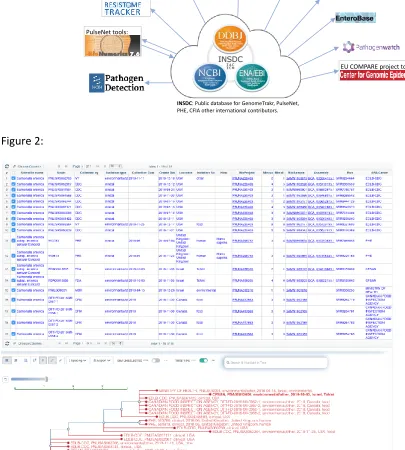
utilized NCBI-PD as a common underlying database (Figure 1). Demand grew for older
resources such as BioNumerics (Applied Maths, Sint-Martens-Latem, Belgium), used by the
PulseNet community [19], to allow users to submit their WGS data to NCBI, as well as the
capability to download NCBI data into BioNumerics to perform local, customized analyses. As a
result of building interoperable systems, researchers can now use public data from the INSDC in
conjunction with private data from individual or industry labs, using platforms such as Integrated
Rapid Infectious Disease Analysis (IRIDA) [20], INNUENDO [21], PathogenWatch
(https://cgps.gitbook.io/pathogenwatch), NextStrain [9], IDseq (https://idseq.net), and CGE
Evergreen [22]. And finally, for FDA-specific missions, tools to support genomic epidemiology
(GalaxyTrakr, https://galaxytrakr.org), AMR surveillance (Resistome Tracker) [23], and risk
Connecting data across species and locations is an essential part of One Health. When a
physician, veterinarian, or public health official identifies a case of bacterial or viral illness, they
must be able to determine how that datapoint may fit with reports from around the world; that
depends on whether the genomic data from the likely pathogen can be analyzed, archived, and
made accessible to others. However, accessibility is not simply being able to download genomic
sequences economically. It also means storing that sequence with standardized attributes
(metadata) that allow important environmental and chain of custody connections to be made. By
ensuring that central data sources, such as INSDC and NCBI, are stocked with sequence data and
associated metadata submitted using standardized attributes and standard templates, scientists
can promote interoperability across multiple platforms and analysis types. These actions can
allow a true One Heath resource to emerge: pathogens submitted by different stakeholders from
different sources (human clinicals, animals, food, and environmental sources) can all be
combined and analyzed for different purposes across different analytic platforms.
Over the last eight years, participants in the FDA’s pioneering GenomeTrakr network (Allard et
al., 2016) have collaborated to build the underlying open-access archive of isolates collected
from environmental (non-human) sources. The resulting data, hosted within the NCBI Pathogen
Detection, are comprehensive enough to bridge multiple needs (defining outbreaks, identifying
their sources, tracking AMR, and primary research), and yet custom NCBI tools and 3rd party
analysis platforms meet the unique needs of specific users. As founders with extensive
experience and in-depth knowledge of this massive data collection effort, we are pleased to share
Main text
Purpose of this document
Our goal for this best practices document is to provide an easy, direct path for any laboratory in
the world to participate in a global pathogen surveillance effort. Increasing the number labs able
to contribute to NCBI not only democratizes the ability of laboratories to connect their data with
others around the world, but also increases the likelihood that the database will capture the range
of real-world pathogen diversity. The majority of genomes now available in the NCBI-PD were
submitted by two stakeholder groups: 1) national-level teams surveilling foodborne pathogens,
including GenomeTrakr [2], PulseNet [4,19], NARMS [25], and Public Health England [26],
among others; and 2) teams surveilling HAI, primarily Brigham and Women’s Hospital [6] and
Public Health England [5]. Prior to 2019, most of these submissions were brokered through the
large networks, such as GenomeTrakr or PulseNet, rather than from individual laboratories
collecting the primary data. With the release of this guidance we are removing GenomeTrakr
from the role of being a data broker for our laboratories. In addition, we are taking a step further
in making this document broad enough to be relevant for anyone (academics, industry,
non-governmental organizations, non-US ministries of health, etc.) interested in starting or
contributing to an existing genomic epidemiology effort to have the tools and guidance readily
available.
Thus, the remainder of this document will describe the NCBI community standards for data
collection and provide guidelines for 1) establishing new surveillance projects at NCBI, 2)
assessing the quality of your sequence data, 3) submitting raw sequence data and associated
isolate metadata to NCBI, and 4) instructions for curating your data and cluster results within
the GenomeTrakr team for submitting foodborne pathogen isolates collected from non-human
sources, these guidelines are written for any laboratory that has the following items in place:
• Pure-culture isolates of pathogens (or the ability to amplify a target organism’s entire
genome from a swab or sample),
• WGS data of these isolates from Illumina-based sequencing platforms (Miseq, NextSeq,
HiSeq, iSeq) that you are willing to share publicly (or assemblies submitted to GenBank
that are platform agnostic),
• Data submission protocols tailored for the NCBI database, although Best Practices apply
for INSDC partners (EMBL-EBI and DDBJ) or other databases such as GISAID [27],
• QC Data that meets or exceeds standard QC thresholds (see Table 1),
• Minimum standard metadata ready for submission (see Table 2),
• Submission should include contact information so that agencies or individuals can
request additional information, metadata, and/or the isolate, and,
• Process identified to curate your submitted genomes and metadata, keeping them
updated, responding to requests, and/or correcting your submissions.
The Importance of Standardized Metadata
Ensuring that your laboratory can provide the minimum set of metadata should be done as the
project is getting started, BEFORE any sequencing starts or submissions are prepared. In order
for pathogen surveillance to be successful, we need standard metadata for each pure culture
isolate, especially when there are numerous independent laboratories collaborating in the effort.
As an example, the minimum metadata fields for GenomeTrakr are as follows:
• laboratory name holdingthe isolate,
• isolation type (human source vs. non-human source),
• collection date (year minimum),
• isolation source (e.g. type of food, animal, or description of environment),
• and location (Country and state if in US).
It is equally important to ensure that each piece of metadata gets submitted to the correct
metadata attribute (or field) within the package, or the information will not get labeled properly
and therefore will not be available to those interpreting the results. The INSDC, in collaboration
with the Global Microbial Identifier (GMI) (https://www.globalmicrobialidentifier.org),
recommends using the Pathogen metadata template for pathogen surveillance submissions:
(NCBI:
https://submit.ncbi.nlm.nih.gov/biosample/template/?package=Pathogen.combined.1.0&action=d
efinition and EMBL-EBI: https://www.ebi.ac.uk/ena/submit/pathogen-data). Following the
GenomeTrakr metadata guidelines described in the “Submitting metadata” section will enable
your data to be Findable, Accessible, Interoperable, and Reusable, also known as meeting FAIR
standards [28]. This will also allow your laboratory’s submissions to get properly analyzed,
integrated, and labeled on the resulting tree clusters within the NCBI-PD browser (Figure 2).
Quality Control Standards: How to QC Data
Quality control (QC) thresholds help ensure the interoperability, accuracy and usefulness of
NCBI-PD resources. It is important that contributors only upload material which meets quality
control (QC) thresholds for both the metadata and the underlying sequence data. For example,
data from an environmental isolate that fails to include descriptive metadata about isolation
source, location, or date of collection is of little use in helping inform epidemiologists about
provide guidance for the investigation. Similarly, if poor quality sequence data is submitted for
clinical isolates, those cannot be reliably clustered, resulting in missed opportunities for early
detection of an outbreak. Guidance for metadata QC will be given later in this document.
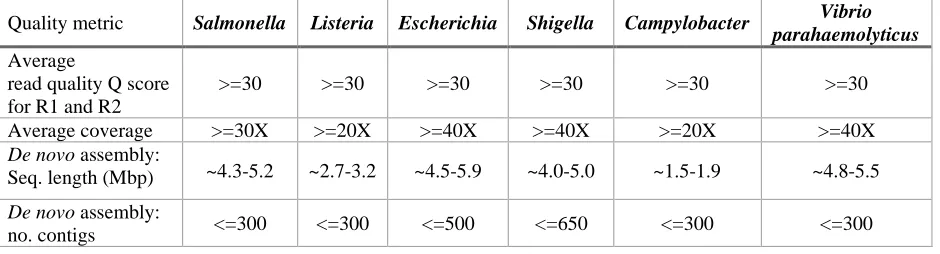
Quality control thresholds recommended for sequence data from bacterial foodborne pathogens,
based on current Illumina sequencing technology, are provided in Table 1. We recognize that
these thresholds may need to be revised in the future, since continuing improvements to
sequencing technologies, as longer read lengths and lower error rates, should lead to lower
coverage requirements and better de novo assemblies (thresholds kept current in the “Assessing
Sequence Quality in GalaxyTrakr” protocol [29]). Data passing these QC thresholds can
generally be considered fit for purpose for identifying clusters of isolates involved in foodborne
outbreaks, as well as for identifying many antimicrobial resistance and virulence/pathogenicity
elements. These levels of quality also support the cgMLST approaches currently used by
members of CDC PulseNet.
Table 1. Quality control threshold guidelines for GenomeTrakr data.
Quality metric Salmonella Listeria Escherichia Shigella Campylobacter Vibrio parahaemolyticus
Average
read quality Q score for R1 and R2
>=30 >=30 >=30 >=30 >=30 >=30
Average coverage >=30X >=20X >=40X >=40X >=20X >=40X
De novo assembly:
Seq. length (Mbp) ~4.3-5.2 ~2.7-3.2 ~4.5-5.9 ~4.0-5.0 ~1.5-1.9 ~4.8-5.5
De novo assembly:
no. contigs <=300 <=300 <=500 <=650 <=300 <=300
The values in Table 1 are empirically derived from a large sample of isolates at NCBI-PD that
were shotgun sequenced using Illumina technology. For each of the Salmonella, Listeria
selected on January 6th, 2020 from each respective NCBI-PD isolate table. On Jan 9th, 2020 1414
of the available Vibrio parahaemolyticus isolates were selected, reflecting its smaller database. A
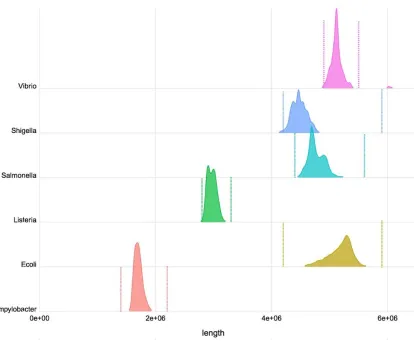
summary of these data (51,414 isolates) shows the range of de novo assembly lengths, defined as
the sum of the length of all contigs, for six pathogens relevant for foodborne outbreaks (Figure 3
and Additional File 1). These results highlight the difficulty in establishing narrow guidelines for
foodborne bacteria sequencing metrics as the assembly length can be highly variable as observed
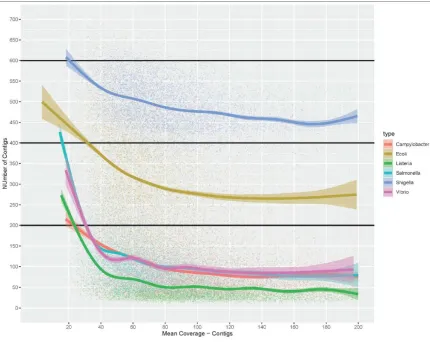
in E. coli, or multi-modal as in Salmonella and Listeria. Increasing coverage does appear to
improve the quality of de novo assemblies, as measured by number of contigs, but that the rate of
improvement slows once coverage exceeds about 40X (Figure 4). Importantly, as genomes for
different pathogens vary in size and complexity, the coverage needed to obtain a good Listeria or
Campylobacter assembly does appear to be less than for larger, more complex genomes like
Shigella and E. coli. GenomeTrakr recommendations for coverage represent a compromise
between sequencing cost and data quality (Table 1 and [29]).
Laboratorians should check their data thoroughly for quality, following guidelines established by
the coordinating body(s) established for their relevant surveillance network, before submitting
data to NCBI. As isolates are typically barcoded and multiplexed, often including isolates from
multiple different surveillance efforts on the same sequencing run (e.g. a single MiSeq run could
have isolates intended for GenomeTrakr, PulseNet, tuberculosis surveillance, and/or HAI), we
strongly recommend performing QC on the entire run, ensuring that sample swaps,
If a laboratory and research group does not have bioinformatic capacity, it can be challenging to
assess if samples meet relevant QC thresholds. Even for teams that do have bioinformatics
resources, it can take significant time to develop the kinds of reports and dashboards that allow
quick decisions about whether a sample needs to be re-analyzed or if there are larger issues with
a sequencing run. We have removed this hurdle by providing a custom, cloud-based workflow on
the Galaxy platform [30], called “MicroRunQC”, that generates a general QC report appropriate
for most microbial pathogens, summarizing sequence quality, coverage, assembly quality, and
sequence typing. Laboratorians can upload their FASTQ sequence data to our custom Galaxy
instance, called GalaxyTrakr (https://galaxytrakr.org), and run the MicroRunQC workflow [29],
producing a QC report in less than an hour for a typical sequencing run of 24-36 isolates.
Laboratories should review this QC report to verify that their sequence quality, coverage, and
assembly quality thresholds are indeed acceptable for the target organism(s). Sequencing type
(ST) results should also be assessed to make sure that the genus/species predictions match the
input sample. While this approach will not detect sample swaps between closely related bacterial
strains or low levels (<5%) of contamination, the ST results can identify putative swaps across
more divergent strains. Additionally, isolates with multiple ST allele calls (i.e. two or more
alleles at one gene) should be further reviewed for evidence of contamination (refer to QC
Failures section).
An important feature of the MicroRunQC workflow is that it was built using open-source tools
and therefore could be implemented on local bioinformatics systems [31]. As with many of the
resources and pipelines used within the GenomeTrakr network, the MicroRunQC workflow is
not restricted to the common foodborne bacterial pathogens and can be used to track sequencing
Neisseria, Legionella, Mycobacterium, etc. Extending QC parameters to encompass these and
other organisms is an ongoing project, and collaborators are welcome to help establish these.
Identifying anomalies and performing root cause failure analyses
As more species and sources of genomic data are brought into the NCBI-PD, the more essential
it becomes that we can all rely on the quality control efforts of participating laboratories. Trust is
an essential part of One Health. Ideally all bacterial WGS data meet the QC criteria specified by
the coordinating sequence network (e.g. GenomeTrakr requirements listed in Table 1), and when
that quality is confirmed, the laboratorians can continue with the next steps of submitting the
data to NCBI .
However, when QC failures are detected, laboratorians are faced with a handful of decisions,
depending on the type of failure identified. We will provide general guidance to the most
common errors flagged in the MicroRunQC report. The most damaging type of errors, for One
Health surveillance purposes, are those which relate to proper labeling of the samples. Do we
have what we expect, based on the provided metadata? These errors include:
1. If the genus or species for one or more samples does not match what is predicted in the
MLST results
2. If the genome size is higher or lower than expected – this is potential evidence of sample
swap, contamination, or mixed cultures, and
3. Number of contigs much higher than expected – this is potential evidence of
contamination, mixed cultures, or poor quality sequence data.
Root cause investigations into these sorts of errors can be as simple as checking sample sheets to
confirm that barcodes/indices were used correctly, and reviewing laboratory notebooks for
as serotype predictions, clustering results, metagenomic analysis, and comparing antimicrobial
resistance genotypes to phenotypes if the information is available. If errors remain and the
provenance of the WGS data still cannot be established, it may be necessary to re-isolate the
bacteria from the original samples.
Not all errors rise to the level of questioning the labeling or provenance of a sample. Some QC
errors affect the usefulness of the data for downstream applications, and result from low read
quality, low coverage, or high number of contigs. Samples exhibiting these problems usually
provide enough usable sequence data to verify species; however, the sequence quantity is
insufficient for downstream analysis. These types of errors can result from problems with library
preparation and potentially loading too little or too much DNA onto the sequencing instrument.
Typically, these mistakes can be fixed by either re-sequencing DNA libraries or preparing new
libraries from genomic DNA. Although NCBI-PD will accept and process data that is of lower
quality, decisions about how and when to correct minor errors may depend upon the resources of
the originating laboratory and the uniqueness of the specific isolate.
NCBI data submission overview
Before starting your first data submission it is imperative to think about the type of data being
submitted and how best to organize these data at NCBI. For most pure-culture microbial
surveillance projects the data structure will be taxonomically focused (Figure 5); therefore, a
BioProject structure will first be established around each pathogen species of interest. Each
species-specific BioProject will contain both the isolate metadata (BioSamples) and the sequence
data collected from each isolate (raw sequence at SRA and/or annotated assemblies in GenBank).
which represents an expansion of Timme et al.’s submission protocol [33].
Creating BioProjects:
BioProjects are an organizing tool at NCBI [34,35] that pull together different kinds of data
submitted across multiple NCBI databases. Each BioProject contains a unique URL, providing a
home page with a title, description, links to lab websites, publications, funding resources
associated with a particular project, along with links to the deposited data. A basic BioProject
holds actual sequence data, assemblies, and their associated metadata. An umbrella BioProject is
a way to group two or more basic BioProjects together, which is useful for disease surveillance
and for looking across the grouped BioProjects in a single view. If specific umbrella BioProjects
are intended for disease surveillance on the NCBI-PD, then the project can be “flagged”
reflecting this intention. The result is that any sequence data submitted to a flagged BioProject
(data or umbrella BioProject) will automatically get processed through the NCBI-PD pipeline.
For example, in the GenomeTrakr network there is one flagged umbrella BioProject for each
pathogen species under active surveillance at NCBI-PD (e.g. one for Salmonella, Listeria, etc.).
The Salmonella umbrella contains 51 data BioProjects, each associated with a contributing
laboratory and each inheriting the umbrella NCBI-PD flag:
https://www.ncbi.hlm.nih.gov/bioproject/183844. Individual data BioProjects can also be
flagged, enabling flexibility for different types of submitters. Consult the NCBI submission
protocol [32] for linking to or establishing new umbrella and data bioprojects. If your laboratory
is already a member of an established surveillance network you should first check to see if they
would like you to link to their existing umbrella BioProject. For reference, the GenomeTrakr
Submitting metadata
The BioSample database at NCBI is designed to hold the metadata for “samples,” or biological
source materials [34], which can be many different things depending on your research. For
microbial pathogen surveillance and GenomeTrakr these materials are the pure-culture bacterial
isolates. Before collecting sequence data for your isolates, ensure that you can provide the
minimum metadata recommended by your coordinating surveillance body. In Table 2, we
provide the GenomeTrakr guidance on how to populate the Pathogen metadata package (see
Appendix D for expanded guidance), along with a core set of recommended fields that users
should populate with contextual data. Step-by-step instructions for submitting isolate metadata to
NCBI are given in the “BioSample creation” section of the NCBI submission protocol [32]. If it
becomes necessary to update, correct, or retract a Biosample registration, consult the NCBI Data
Curation Protocol (Timme et al., 2020d).
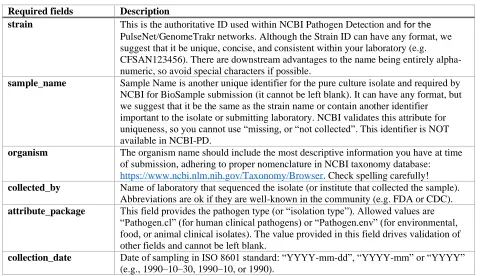
Table 2. The minimum set of metadata fields recommended by GenomeTrakr for BioSample submission of bacterial pathogens. Consult the Populating the “NCBI Pathogen metadata template protocol” [36] for expanded, up-to-date guidance.
Required fields Description
strain This is the authoritative ID used within NCBI Pathogen Detection and for the
PulseNet/GenomeTrakr networks. Although the Strain ID can have any format, we suggest that it be unique, concise, and consistent within your laboratory (e.g. CFSAN123456). There are downstream advantages to the name being entirely alpha-numeric, so avoid special characters if possible.
sample_name Sample Name is another unique identifier for the pure culture isolate and required by NCBI for BioSample submission (it cannot be left blank). It can have any format, but we suggest that it be the same as the strain name or contain another identifier important to the isolate or submitting laboratory. NCBI validates this attribute for uniqueness, so you cannot use “missing, or “not collected”. This identifier is NOT available in NCBI-PD.
organism The organism name should include the most descriptive information you have at time of submission, adhering to proper nomenclature in NCBI taxonomy database:
https://www.ncbi.nlm.nih.gov/Taxonomy/Browser. Check spelling carefully! collected_by Name of laboratory that sequenced the isolate (or institute that collected the sample).
Abbreviations are ok if they are well-known in the community (e.g. FDA or CDC). attribute_package This field provides the pathogen type (or “isolation type”). Allowed values are
“Pathogen.cl” (for human clinical pathogens) or “Pathogen.env” (for environmental, food, or animal clinical isolates). The value provided in this field drives validation of other fields and cannot be left blank.
geo_loc_name Geographical origin of the sample using controlled vocabulary:
http://www.insdc.org/documents/country-qualifier-vocabulary. Use a colon to separate the country or ocean from more detailed information about the location, e.g., “Canada: Vancouver”. Country and state are required for GenomeTrakr isolates from the US, e.g. “USA: CA”.
isolation_source Describes the physical, environmental and/or local geographical sample from which the organism was derived. Avoid generic terms such as patient isolate, sample, food, surface, clinical, product, source, environment.
host *For Pathogen.cl only: “Homo sapiens” if clinical isolate.
host_disease *For Pathogen.cl only: Name of relevant disease, e.g., Salmonella gastroenteritis. This field must use controlled vocabulary provided at:
http://bioportal.bioontology.org/ontologies/1009 or
http://www.ncbi.nlm.nih.gov/mesh. Label this field “not collected” if unknown for clinical isolates. Leave blank for all Pathogen.env isolates.
bioproject_accession The accession number of the BioProject(s) to which the BioSample belongs (PRJNAxxxxxx)
lat_lon Provide latitude and longitude to support “geo_loc_name”. This field is required to be populated by NCBI. However, if this level of detail is not availabe, GenomeTrakr recommends including "missing" or “not collected” here.
* “For Pathogen.cl only”: These fields are mandatory ONLY if isolate is from a human clinical sample. If isolate was collected from food/water/env or animal sources, these fields should be left blank.
Submitting sequence data
NCBI comprises separate databases that hold the different types of DNA, RNA, or assembled
sequence data [37]. For example, the nucleotide database (often called, simply, “GenBank”)
holds annotated DNA or RNA sequence data, complete or draft bacterial genomes, complete
chloroplast or mitochondrial genomes, individual gene sequences, and phylogenetic alignment
datasets, such as internal transcribed sequence (ITS) datasets. The Sequence Read Archive
(SRA) [37,38] database houses unannotated raw high throughput DNA or RNA sequence reads:
for microbial pathogen surveillance these are the Illumina FASTQ file sequences collected from
the pure cultured isolates registered in the BioSample database. For each isolate registered in
Biosample, there is usually one associated SRA submission (only one SRA submission per
isolate is recommended), linked by the run accession (SRR#######). A separate draft or
complete genome can be submitted to GenBank under the same BioSample accession, but this is
not required. NCBI submits the annotated assemblies they create as part of the Pathogen
included in the NCBI Submission protocol [32].
Data management and curation
Establishing a data submission workflow:
If new pathogen species or participating laboratories are added to a surveillance effort after the
initial BioProject is established and linked to the Pathogen Detection pipeline, it may be useful to
create new BioProjects, especially if the labs have multiple projects they need to track separately.
A new BioProject Umbrella should be created if a previously unsurveilled organism is added the
surveilled pathogens list, or a new surveillance network has been established. It is also
reasonable for countries to request a new Umbrella – e.g., Public Health England uses the
Umbrella PRJNA248064 to organize all their submissions. After the BioProjects are established,
the routine submission workflow for an individual laboratory would only include submission to
two databases, BioSample and SRA.
Responsibilities of Contributors
The transition to WGS and open, public systems for pathogen surveillance brings new roles and
responsibilities for scientists working in laboratories and public health professionals who use
WGS results to resolve outbreaks and identify sources of contamination. Laboratories must build
capacity to perform bioinformatic analysis on genomic data, whether locally or via cloud-based
tools (e.g. MicroRunQC in GalaxyTrakr as an example), to assess data quality and to support
outbreak response and traceback efforts. For their part, epidemiologists also need to gain some
understanding of molecular evolution and phylogenetics so they can effectively integrate WGS
findings with traditional data sources. In addition, laboratories need to develop internal processes
to ensure that data collection is recorded consistently, that it is accurately submitted, and that
effective surveillance of public data across organizations and for integration of data from
different partners into a One Health Framework. The quality of any shared resource depends on
the willingness of contributors to maintain the records they submit.
Maintaining current and updated data is an extremely important part of utilizing these data for
public health surveillance. Over the course of the sequence data collection (from culturing,
through genome sequencing, to internal QC and data submission) it is normal to have a low rate
of certain errors, such as sample switches, spelling errors, cut/paste errors, or mis-identified
isolates. Although each of the coordinating surveillance network bodies (GenomeTrakr,
PulseNet, Vet-LIRN, etc) should work to minimize these errors, each submitting lab must be also
diligent about correcting public data as soon as errors are discovered. To facilitate this process,
each lab should have a documented curation procedure to ensure data are updated in a timely
manner. The task of data curation might then be specifically assigned a person or team of people
trained for this important task. Depending on the volume of submissions within a laboratory, the
Data Curation workload could become a significant part of a team’s effort. We have outlined the
step-by-step process in our NCBI Data Curation protocol [39].
Conclusion
To enable easy reference, we will keep the protocols and guidelines published with this
manuscript current at protocols.io, which will also allow our recommendations to evolve with
advances in technology, improvements in metadata interoperability, and expansion of NCBI-PD
capabilities. We hope these Best Practices will reduce the high-learning curve experienced by
most new submitters to these databases, spurring more laboratories to use the NCBI-PD
join the effort, these databases will become a richer source of isolates help realize the One Health
goal of integrating the understanding of human, animal, and environmental pathogens, along
with their sources. A true global surveillance effort fed by hundreds of submitters around the
world, all with common standard metadata, quality control, and submission procedures would be
instrumental for public health, to the advancement of science, and to the overall One Health
ideal.
List of abbreviations
Declarations
Ethics approval and consent to participate Not applicable
Consent for publication Will fill out form
Availability of data and materials
All data analyzed during this study are included in this published article including NCBI
accessions listed in Additional File 1. We also published four new protocols, referenced in this
manuscript with DOI links to their home at protocols.io
(https://www.protocols.io/groups/genometrakr1/publications), and provided a script to install a
local analysis workflow, hosted on GitHub (https://github.com/estrain/MicroRunQC).
Competing interests
Funding
This work was supported by the Center for Food Safety and Applied Nutrition at the U.S. Food
and Drug Administration and, more specifically, the GenomeTrakr team.
Authors' contributions
RET initiated this project, designed the figures, created the protocols, and wrote the paper. ES
lead quality control section of the manuscript, and did the summary analysis of current data for
Figures 3 and 4. MB and SLGV assisted with the protocol development. WJW, RR, MA, and ES
were major contributors in writing and editing the manuscript.
Acknowledgements
We would like to whole-heartedly thank Lili Velez, FDA Scientific Writer, for her editorial
contributions. We also thank our Genometrakr collaborators (including CDC, FSIS, NCBI, and
David Lipman) for reviewing the manuscript and providing feedback prior to publication.
Authors' information n/a
Figures
Figure 1. INSDC hub showing how genomic data in public databases get analyzed by many
different software platforms, for different purposes. Included in this figure are most genomic
epidemiology-related open source analysis platforms available in March of 2020, and one private
software tool, BioNumerics. BioNumerics is also the only platform with submission capability.
submissions across five different submitting laboratories (PulseNet, GenomeTrakr, Public Health
England, Israel Ministry of Health, and CA Food Inspection Agency). URL:
https://www.ncbi.nlm.nih.gov/Structure/tree/#!/tree/Salmonella/PDG000000002.1710/PDS0000
25876.12?key=CkGlI4344DyXbtoPdQ_Gb-uYo_DcyqKm2J-h7suOmdTQl5jY27mU&treelabel=sra_center,strain,epi_type,collection_date,geo_loc_name,isol
ation_source
Figure 3 – Density plot showing the distribution of genome lengths for a random sample of
isolates with Illumina sequence data available from NCBI Pathogen Detection portal (n=10,000
for all species except Vibrio where n=1414 due to smaller number of samples). Sequences were
assembled using SKESA 2.2 and the bars indicate 3 standard deviations from the mean.
Figure 4 – Plot of mean coverage (as reported by SKESA 2.2) vs number of contigs for a
random sample of isolates with Illumina sequence data available from NCBI Pathogen Detection
portal (n=10,000 for all species except Vibrio where n=1414 due to smaller number of samples).
The smoothed line was generated using generalized additive smoothing in R. Assembly quality,
as measured by a decrease in the number of contigs, generally increases with increasing
coverage.
Figure 5. Overview of the database structure at NCBI showing an example Salmonella umbrella
BioProject with three linked laboratory data BioProjects, each with their own BioSamples and
Additional Files
Additional File 1.
• File name: AdditionalFile1-NCBI-PD-accessions.csv, a tabular file with CSV extension
• Title: SRA accessions for the random capture of NCBI Pathogen Detection.
• Description: SRA accessions for 10,000 random isolates sampled from NCBI Pathogen
Detection for Salmonella enterica, Listeria monocytogenes, Escherichia coli,Shigella
References:
1. Armstrong GL, MacCannell DR, Taylor J, Carleton HA, Neuhaus EB, Bradbury RS, et al. Pathogen Genomics in Public Health. N. Engl. J. Med. Massachusetts Medical Society; 2019;381:2569–80.
2. Allard MW, Strain E, Melka D, Bunning K, Musser SM, Brown EW, et al. Practical Value of Food Pathogen Traceability through Building a Whole-Genome Sequencing Network and Database. Kraft CS, editor. J Clin Microbiol. 2016;54:1975–83.
3. Allard MW, Bell R, Ferreira CM, Gonzalez-Escalona N, Hoffmann M, Muruvanda T, et al. Genomics of foodborne pathogens for microbial food safety. Curr. Opin. Biotechnol. Elsevier Current Trends; 2018;49:224–9.
4. Tolar B, Joseph LA, Schroeder MN, Stroika S, Ribot EM, Hise KB, et al. An Overview of PulseNet USA Databases. Foodborne Pathog Dis. Mary Ann Liebert, Inc., publishers 140 Huguenot Street, 3rd Floor New Rochelle, NY 10801 USA; 2019;:fpd.2019.2637.
5. Ashton PM, Nair S, Peters TM, Bale JA, Powell DG, Painset A, et al. Identification of Salmonella for public health surveillance using whole genome sequencing. PeerJ. PeerJ Inc; 2016;4:e1752.
6. Pecora N, Zhao X, Nudel K, Hoffmann M, Li N, Onderdonk AB, et al. Diverse Vectors and Mechanisms Spread New Delhi Metallo-β-Lactamases among Carbapenem-Resistant Enterobacteriaceae in the Greater Boston Area. Antimicrob. Agents Chemother. 2019;63:e02040–18.
7. Nudel K, Zhao X, Basu S, Dong X, Hoffmann M, Feldgarden M, et al. Genomics of
Corynebacterium striatum, an emerging multidrug-resistant pathogen of immunocompromised patients. Clin Microbiol Infect. Elsevier; 2018;24:1016.e7–1016.e13.
8. Quick J, Ashton P, Calus S, Chatt C, Gossain S, hawker J, et al. Rapid draft sequencing and real-time nanopore sequencing in a hospital outbreak of Salmonella. Genome Biol. 2015;16:1–14.
9. Hadfield J, Megill C, Bell SM, Huddleston J, Potter B, Callender C, et al. Nextstrain: real-time tracking of pathogen evolution. Kelso J, editor. Bioinformatics (Oxford, England). 2018;34:4121– 3.
10. Hatcher EL, Zhdanov SA, Bao Y, Blinkova O, Nawrocki EP, Ostapchuck Y, et al. Virus Variation Resource. Nucleic Acids Res. [Internet]. 2017;45:D482–90. Available from:
https://www.ncbi.nlm.nih.gov/genomes/FLU/Database/nph-select.cgi?go=database
12. NCBI. SARS-CoV-2 (Severe acute respiratory syndrome coronavirus 2) Sequences [Internet]. The National Center for Biotechnology Information. Available from:
https://www.ncbi.nlm.nih.gov/genbank/sars-cov-2-seqs/
13. Black A, MacCannell DR, Sibley TR, Bedford T. Ten Recommendations for Supporting Open Pathogen Genomic Analysis in Public Health Settings. Preprints; 2020.
14. Cochrane G, Karsch-Mizrachi I, Nakamura Y, International Nucleotide Sequence Database Collaboration. The International Nucleotide Sequence Database Collaboration. Nucleic Acids Res. 2011;39:D15–8.
15. Karsch-Mizrachi I, Takagi T, Cochrane G, International Nucleotide Sequence Database
Collaboration. The international nucleotide sequence database collaboration. Nucleic Acids Res. 2018;46:D48–D51.
16. NCBI Resource Coordinators. Database Resources of the National Center for Biotechnology Information. Nucleic Acids Res. [Internet]. 2017;45:D12–7. Available from:
https://www.ncbi.nlm.nih.gov/pmc/articles/PMC5210554/
17. Hoffmann M, Luo Y, Monday SR, Gonzales-Escalona N, Ottesen AR, Muruvanda T, et al. Tracing Origins of the Salmonella Bareilly strain causing a Foodborne Outbreak in the United States. J. Infect. Dis. 2015;213:502–8.
18. Feldgarden M, Brover V, Haft DH, Prasad AB, Slotta DJ, Tolstoy I, et al. Validating the AMRFinder Tool and Resistance Gene Database by Using Antimicrobial Resistance Genotype-Phenotype Correlations in a Collection of Isolates. Antimicrob. Agents Chemother. American Society for Microbiology Journals; 2019;63:2861.
19. Swaminathan B, Barrett TJ, Hunter SB, Tauxe RV, CDC PulseNet Task Force. PulseNet: the molecular subtyping network for foodborne bacterial disease surveillance, United States. Emerging Infectious Diseases. 2001;7:382–9.
20. Matthews TC, Bristow FR, Griffiths EJ, Petkau A, Adam J, Dooley D, et al. The Integrated Rapid Infectious Disease Analysis (IRIDA) Platform. bioRxiv. Cold Spring Harbor Laboratory; 2018;79:381830.
21. Llarena A-K, Gonçalves BFR, Silva DN, Halkilahti J, Machado MP, Da Silva MS, et al. INNUENDO: A cross‐sectoral platform for the integration of genomics in the surveillance of food‐borne pathogens. EFSA Supporting Publications. John Wiley & Sons, Ltd; 2018;15:53.
23. McDermott PF, Tyson GH, Kabera C, Chen Y, Li C, Folster JP, et al. Whole-Genome Sequencing for Detecting Antimicrobial Resistance in Nontyphoidal Salmonella. Antimicrob. Agents Chemother. American Society for Microbiology Journals; 2016;60:5515–20.
24. Sanaa M, Pouillot R, Vega FG, Strain E, Van Doren JM. GenomeGraphR: A user-friendly open-source web application for foodborne pathogen whole genome sequencing data integration, analysis, and visualization. Chang Y-F, editor. PLoS ONE. 2019;14:e0213039.
25. Karp BE, Tate H, Plumblee JR, Dessai U, Whichard JM, Thacker EL, et al. National
Antimicrobial Resistance Monitoring System: Two Decades of Advancing Public Health Through Integrated Surveillance of Antimicrobial Resistance. Foodborne Pathog Dis. 2017;14:545–57.
26. Ashton PM, Nair S, Peters T, Bale J, Powell DG, Painset A, et al. Identification and typing of Salmonella for public health surveillance using whole genome sequencing. PeerJ Inc; 2016.
27. Shu Y, McCauley J. GISAID: Global initiative on sharing all influenza data - from vision to reality. Euro Surveill. European Centre for Disease Prevention and Control; 2017;22:957.
28. Wilkinson MD, Dumontier M, Aalbersberg IJJ, Appleton G, Axton M, Baak A, et al. The FAIR Guiding Principles for scientific data management and stewardship. Sci Data. Nature Publishing Group; 2016;3:160018.
29. Timme RE, Gubbala SL, Balkey M, Randolph R, Wolfgang WJ, Strain EA. Assessing sequence quality in GalaxyTrakr [Internet]. 2nd ed. Protocols.io; 2020. Available from:
10.17504/protocols.io.bdvfi63n
30. Afgan E, Baker D, Batut B, van den Beek M, Bouvier D, Cech M, et al. The Galaxy platform for accessible, reproducible and collaborative biomedical analyses: 2018 update. Nucleic Acids Res. 2018;46:W537–44.
31. Strain EA. estrain/MicroRunQC [Internet]. GitHub. GitHub; 2020. Available from: https://github.com/estrain/MicroRunQC
32. Timme RE, Balkey M, Randolph R, Gubbala SL, Wolfgang WJ, Strain EA. NCBI submission protocol for microbial pathogen surveillance [Internet]. 2nd ed. Protocols.io; 2020. Available from: dx.doi.org/10.17504/protocols.io.bdvii64e
33. Timme RE, Sanchez Leon M, Allard MW. Utilizing the Public GenomeTrakr Database for Foodborne Pathogen Traceback. Methods Mol. Biol. New York, NY: Springer New York; 2019;1918:201–12.
35. Sayers EW, Agarwala R, Bolton EE, Brister JR, Canese K, Clark K, et al. Database resources of the National Center for Biotechnology Information. Nucleic Acids Res. 2019;47:D23–8.
36. Timme RE, Balkey M, Wolfgang WJ, Strain EA. Populating the NCBI pathogen metadata template [Internet]. 2nd ed. Protocols.io; 2020. Available from:
dx.doi.org/10.17504/protocols.io.bdwti7en
37. Sayers EW, Barrett T, Benson DA, Bolton E, Bryant SH, Canese K, et al. Database resources of the National Center for Biotechnology Information. Nucleic Acids Res. 2012;40:D13–25.
38. Shumway M, Cochrane G, Sugawara H. Archiving next generation sequencing data. Nucleic Acids Res. 2010;38:D870–1.
39. Timme RE, Balkey M, Gubbala SL, Randolph R, Wolfgang WJ, Strain EA. NCBI data curation protocol [Internet]. 1st ed. Protocols.io; 2020. Available from:
Figure 1:
Figure 2:
Figure 3:
INSDC: Public database for GenomeTrakr, PulseNet, PHE, CFIA other international contributors. PulseNet tools:
FDA tools:
Figure 5:
GenomeTrakr Umbrella BioProject for Salmonella enterica,PRJNA183844
GenomeTrakr BioProject, PRJNA186035 FDA-CFSAN
Sample metadata for each pure isolate (BioSample database)
fastq files (SRA database)
annotated assembly (GenBank database)
GenomeTrakr BioProject, PRJNA183850 New York Wadsworth
Sample metadata for each pure isolate (BioSample database)
fastq files (SRA database)
annotated assembly (GenBank database)
GenomeTrakr BioProject, PRJNA219491 Virginia - DCLS
Sample metadata for each pure isolate (BioSample database)
fastq files (SRA database)
annotated assembly (GenBank database)