DEVELOPING A FRAMEWORK TO ENHANCE
BUILDING HANDOVER PRACTICES IN PUBLIC
SECTOR CONSTRUCTION PROJECTS IN THE
KINGDOM OF SAUDI ARABIA
SULTAN AHMAD HIJAZI
Developing a Framework to Enhance Building
Handover Practices in Public Sector Construction
Projects in the Kingdom of Saudi Arabia
Sultan Ahmad Hijazi
School of the Built Environment,
University of Salford, Salford, UK
I
TABLE OF CONTENTS
TABLE OF CONTENTS ... I LIST OF TABLES ... VII LIST OF FIGURES ... IX ACKNOWLEDGEMENTS ... XII DECLARATION ... XIII LIST OF ABBREVIATIONS AND ACRONYMS ... XIV List of publications ... XVI ABSTRACT ... XVII
CHAPTER ONE: INTRODUCTION ... 1
1.0 Introduction ... 1
1.1 Research Background ... 1
1.1.1. Lack of an Integrated Approach for Building Lifecycle Data Management .. 3
1.1.2. Lack of Standardization & Public Sector Strategy on Building Data Management ... 4
1.1.3 Lack of Adequate Exploration of Emerging Possibilities in Improving Quality of Asset Data Using BIM ... 7
1.2 Research Rationale and Key Research Questions ... 9
1.3 Research Aim and Objectives... 14
1.4 Research Methodology ... 14
1.5 Expected Contribution to Knowledge ... 15
1.6 Structure of Thesis ... 15
1.7 Exclusions, Constraints and Limitation ... 17
1.8 Chapter summary ... 18
CHAPTER TWO: LITERATURE REVIEW ... 19
II
2.2. Building Handover Principles and Procedures ... 19
2.3 Impact of Information Loss at Handover Stage... 21
2.4 Data Requirements for Effective Facilities Management... 22
2.4.1 Challenges in Facilities Data Handover ... 23
2.5 Need for Effective Building Handover ... 24
2.5.1 Building Handover Protocols ... 25
2.5.2 Improving the Project Handover Process ... 26
2.5.3 BSRIA Soft Landings Framework ... 27
2.5.4 Data Requirements for Handover Process ... 31
2.6 The Concept, Origin, and Growth of BIM ... 32
2.6.1 Use of BIM in Building Management ... 33
2.6.2 Building Information Management in Data Handover ... 35
2.7 Building Commissioning ... 37
2.8 The Challenges of Interoperability in Project Delivery... 41
2.9 Challenges in Existing Handover Practices ... 43
2.10 Overview of the Construction industry in Kingdom of Saudi Arabia ... 46
2.11 Building Handover and Data Management Practices in the Construction Industry ... 49
2.12 Initial Conceptual Framework ... 51
2.13 Chapter Summary ... 55
CHAPTER THREE: RESEARCH METHODOLOGY ... 57
3.1 Introduction ... 57
3.2 Definition of Research Methodology ... 57
3.3 Research Design ... 58
3.4 Research Philosophy ... 59
III
3.6 Research Strategy ... 64
3.6.1 Case Study Strategy ... 65
3.6.2 Multiple Cases or Single Case ... 65
3.7 Data Collection Techniques... 67
3.7.1 Interviews ... 69
3.7.1.1. Development of the Interview Protocol... 71
3.7.1.2. The Interviewees (Research Sample) ... 71
3.7.2 Questionnaire ... 73
3.7.2.1 Population and Sample ... 74
3.7.2.2 Questionnaire Design ... 74
3.7.3 Documentation ... 75
3.8 Triangulation ... 75
3.9 Ethical Approval ... 76
3.10 Pilot Study ... 76
3.11 Reliability, Validity and the Ability to Generalise ... 77
3.12 Conducting the Case Study ... 77
3.13 Data Analysis Techniques ... 78
3.14 Relation between Research questions and objectives and data collection methods ... 82
3.15 Chapter Summary ... 83
CHAPTER FOUR: QUALITATIVE DATA ANALYSIS ... 84
4.1 Introduction ... 84
4.2 Analysis of the Participant’s Interviews ... 85
4.2.1 Theme 1: Challenges to effective building handover practices in the KSA public sector construction industry ... 87
IV
4.2.3 Theme 3: BIM and Technology benefits ... 95
4.2.4 Theme 4: Key drivers for effective building handover ... 98
4.2.5 Theme 5: Facility budget for operation and management ... 100
4.2.6 Theme 6: Steps of developing the public sector projects ... 102
4.3 Documentary analysis ... 104
4.4 Chapter Summary ... 104
CHAPTER FIVE: QUANTITATIVE DATA ANALYSIS ... 105
5.1 Introduction ... 105
5.2 Section 1: Survey Demographics ... 105
5.3 Section 2: General information... 106
5.3.1 Satisfaction with quality of information handed over to project owners. ... 107
5.3.2 Number of years of building handover experiences ... 107
5.3.3 Description of the company's principal business activity ... 108
5.3.4 Description of Respondents’ Company ... 109
5.3.5 Period of time that organisation has been using BIM ... 109
5.3.6 Classification of the organisation in terms of size ... 110
5.3.7 Recognition of the Importance of the Project Handover Stage ... 111
5.4 Section 3: Specific and characteristics of Information required for Building Handover ... 111
5.4.1 Significant challenges to effective building handover practices in the KSA public sector construction industry ... 112
5.5 Statistical associations ... 118
5.6 Relationship between key demographic questions with most significant challenges to effective building handover ... 120
5.7 Key benefits of effective building handover ... 122
V
5.9 The importance of the following benefits of BIM in the KSA ... 137
5.10 Plan facility budget for operation ... 146
5.11 Biggest facility challenge ... 147
5.12 Summary of Quantitative Finding ... 149
CHAPTER SIX: FRAMEWORK DEVELOPMENT AND VALIDATION ... 150
6.1 Introduction ... 150
6.2 General information ... 150
6.2.1 Characteristics of the respondents in the questionnaire ... 150
6.2.2 Characteristics of the Participants in the Interviews ... 151
6.3 Satisfaction with current building handover practices within the KSA public sector ... 151
6.4 Theme 1: Challenges to effective building handover practices in the ... 152
6.5 Theme 2: Realisation of the Importance of the project data at the Handover Stage: ... 155
6.6 Theme 3: BIM and Technology benefits ... 158
6.7 Theme 4: Key drivers of effective building handover ... 161
6.8 Theme 5: Facility budget for operation and management ... 164
6.9 Theme 6: Steps of developing the public sector projects ... 167
6.10 Validation of the Final Result of the Qualitative and Quantitative Data ... 172
6.11 Chapter Summary ... 172
CHAPTER SEVEN: CONCLUSIONS AND RECOMMENDATION ... 173
7.1 Introduction ... 173
7.2 The Success of the Research Process ... 173
7.3 Achieving the Aim and Objectives of the Research ... 174
7.4 Main Factors Affecting Building Handover Practices of public sector construction projects in KSA ... 176
VI
7.4.2 Lack of knowledge and experience ... 177
7.4.3 Lack of use of technology ... 177
7.4.4 Lack of training ... 178
7.4.5 Lack of communication during project data at the Handover Stage; ... 179
7.4.6 Unclear Responsibilities ... 179
7.5 Originality of the Research ... 180
7.6 Further Contributions to Knowledge ... 181
7.7 Recommendations ... 182
7.7.1 Recommendations for policy ... 183
7.7.2 Recommendations for practitioners ... 183
7.7.3 Recommendations for researchers ... 184
7.8 Limitations of the Research ... 184
7.9 Suggestion for Further Research ... 185
REFERENCES ... 186
APPENDICES ... 203
Appendix 1: Ethical Approval ... 203
Appendix 2a: E-mail Invitation for Questionnaires ... 204
Appendix 2b: The Questionnaire ... 205
Appendix 3: Research Participant Consent Form ... 213
Appendix 4: The sample of coded themes... 214
VII
LIST OF TABLES
Table 1.1: The costs of insufficient interoperability by Stakeholder Group, by lifecycle
phase in $millions. (Gallaher, 2004) ... 11
Table 3.1: Philosophical assumptions of the main philosophies. Source: Collis and Hussey (2014). ... 60
Table 3.2: The differences between deductive and inductive approaches (Saunders, et al., 2012) ... 63
Table 3.3: Different Research Strategies. (Yin, 2009). ... 64
Table 3.4: Strengths and weaknesses of data collection techniques (Yin, 2009) ... 68
Table 3.5: Interviewee Groups ... 72
Table 3.6: Research questions and objectives with corresponding data collection methods ... 82
Table 4.1: The position of interviewees ... 84
Table 4.2: Themes and question for interviews ... 85
Table 5.1: Percentage (%) of the most significant challenge to effective building handover practices. ... 112
Table 5.2: Significant association (ANOVA) within the challenge to effective building handover practices ... 118
Table 5.3: Significant relationships for the most significant challenge to effective building handover practices in the KSA public sector construction based on Tukey test ... 119
Table 5.4: Chi-square statistic compares the dependent and independent variables .... 121
Table 5.5: Percentage (%) of the most significant benefits of effective building handover in the KSA construction sector ... 122
Table 5.6: Significant association within the challenge to effective building handover practices (ANOVA) ... 129
Table 5.7: Significant associations of the significant benefits of effective building handover in the KSA construction sector based on Tukey test ... 130
Table 5.8: Chi-square statistic compares the dependent and independent variables .... 132
VIII Table 5.10: Significant association (ANOVA) within the importance of the project data
at the handover stage ... 133
Table 5.11: Significant associations of the significant benefits of importance of the project data at the handover stage based on Tukey test ... 134
Table 5.12: Percentage (%) of the factors that have most affected by the building handover process ... 135
Table 5.13: Significant association within the of the factors that have most affected by the building handover process ... 135
Table 5.14: Frequency distribution of the benefits of using BIM ... 136
Table 5.15: Percentage (%) of the benefits of (BIM) in the KSA construction sector . 138 Table 5.16: Shows the Significant association within benefits of BIM in Saudi Arabia construction sector (ANOVA) ... 138
Table 5.17: Significant associations of the important benefits of BIM in the KSA ... 139
Table 5.18: A number of the possibility of easy access to all documents ... 144
Table 5.19: The Significant association within the possibility of easy access to all documents (ANOVA) ... 145
Table 5.20: Significant associations of the possibility of easy access to all documents based on Tukey test ... 146
Table 5.21: Distribution of planning facilities ... 147
Table 5.22: Distribution of biggest facility challenges... 147
IX
LIST OF FIGURES
Figure 1.1: Information Delivery Cycle as specified in PAS1192:2. (BIM Task group,
2016) ... 5
Figure 1.2: Building information model Evolutionary Map-Constructive Perspective. (Bew and Underwood, 2010)... 9
Figure 1.3: Data loss over lifetime of a construction facility (Eastman et al., 2011). .... 10
Figure 1.4: RIBA Plan of Work and Smooth Information Flow ( Design Box, 2013). . 12
Figure 1.5: Reasons for underperforming buildings. (Adapted from Haves et al., 2001) ... 12
Figure 2.1: Building Handover framework (BC Housing, 2012). ... 27
Figure 2.2: The Five Stage Soft Landing process (BSRIA, 2009). ... 29
Figure 2.3: Key principles of soft-landing framework. ... 30
Figure 2.4: General benefits of BIM. ... 35
Figure 2.5: Lifecycle information loss. (Foster, 2010). ... 36
Figure 2.6: Commissioning process Overview. (Berkeley Lab, 2010). ... 40
Figure 2.7: FM Handover: Current Practices. (Foster and Fattor, 2012) ... 45
Figure 2.8: Map of Kingdom of Saudi Arabia. (infoplease, 2015.) ... 47
Figure 2.9: Initial conceptual framework derived from literature review ... 55
Figure 3.1: The Research Onion. Source: Saunders et al., 2012 ... 59
Figure 3.2: Questionnaire design process (Burgess, 2001). ... 73
Figure 3.3: NVivo screen shot of tree nodes with Interviewee ... 81
Figure 4.1: NVivo screen shot of tree nodes ... 87
Figure 4.2: Most significant challenge to effective building handover practices in KSA ... 90
Figure 4.3: Interviewee comments on unclear responsibility definition ... 91
Figure 4.4: Key project documents required at Handover stage ... 94
Figure 4.5: Role of BIM in improving information handover within KSA ... 96
Figure 4.6: The key drivers of effective building handover existing ... 99
Figure 4.7: Facility budget Plan, Challenges and Investment ... 102
Figure 4.8: Steps necessary for enhancing data handover practices in existing public sector projects ... 103
X
Figure 5.2: Distribution of survey respondents’ academic qualification... 106
Figure 5.3: Distribution of survey respondents’ Satisfaction with quality of information handed over to project owners ... 107
Figure 5.4: Respondents years of experience at the building handover stage ... 108
Figure 5.5: Types of Organisations represented by Respondents ... 108
Figure 5.6: Description of the companies ... 109
Figure 5.7: Distribution of survey respondents’ Period of time that organisation has been using BIM ... 110
Figure 5.8: Size of Respondents’ organisation ... 110
Figure 5.9: Importance of the project handover stage to the organisation and clients 111 Figure 5.10: Frequency distribution of “societies not involved” question (Dark shade indicating % of respondents selecting the option, whereas light shade indicating those having not selected the option). ... 113
Figure 5.11: Frequency distribution of “lack of mutual trust and recognition of new project roles, such as information manager” ... 114
Figure 5.12: Frequency distribution of “inappropriate quality assurance method and procedures” ... 115
Figure 5.13: Frequency distribution of “lack of transparency and accessibility of project data for all project team electronically” ... 115
Figure 5.14: Frequency distribution of “not enough time for operations training”. ... 116
Figure 5.15: Frequency distribution of responsibilities of various project team members is unclear. ... 116
Figure 5.16: Frequency distribution of maintenance manuals and keys are often missing. ... 117
Figure 5.17: Frequency distribution of ability to use the information across the design/construction team ... 117
Figure 5.18: Frequency distribution of respondents’ perception on building handover as being an afterthought process ... 118
Figure 5.19: Frequency distribution of “minimize defect”. ... 123
Figure 5.20: Frequency distribution of “cost reduction”. ... 123
Figure 5.21: Frequency distribution of ”improve quality and client satisfaction”. ... 124
XI
Figure 5.23: Frequency distribution of “save time” ... 125
Figure 5.24: Frequency distribution of legislation and legal requirements ... 126
Figure 5.25: Frequency distribution of “Stakeholders influence” ... 127
Figure 5.26: Frequency distribution of “resource efficiency and driving out waste”. . 127
Figure 5.27: Frequency distribution of “moral and ethical obligation” as key benefit of achieving effective building handover ... 128
Figure 5.28: Frequency distribution of the benefits of using BIM ... 137
Figure 5.29: Frequency distribution of the development of Information Technology facilitates ... 141
Figure 5.30: Frequency distribution of the responsibility for building information handover to each of the following parties ... 141
Figure 5.31: Frequency distribution of operations and maintenance of key equipment and facilities ... 142
Figure 5.32: Frequency distribution of easy access, drawings to indicate location and track energy consumption ... 143
Figure 5.33: Distribution of investments ... 144
Figure 5.34: Distribution of plan facility budget for operation ... 147
Figure 5.35: Distribution of Biggest facility challenge ... 148
Figure 5.36: Distribution of the necessary investments to ensure effective implementation of Building Handover ... 149
Figure 6.1: Challenges to effective building handover practices in the KSA public sector construction industry ... 155
Figure 6.2: The important of the project data at the handover stage ... 158
Figure 6.3: Benefits of the BIM and Technology at the handover stage in the KSA public sector. ... 161
Figure 6.4: Existing Key drivers of effective building handover in the KSA public sector ... 164
Figure 6.5: Facility budget for operation and management... 166
Figure 6.6: Key steps in developing the public sector construction projects. ... 169
XII
ACKNOWLEDGEMENTS
I thank Allah, because without his support, blessing, love, and guidance, this work
would not have been possible.
I thank my supervisor, Dr Zeeshan Aziz, for his encouragement, support and follow up. I owe him lots of appreciation for his supervision of this research from beginning to end, which enabled me to develop an understanding of the research.
I want to express my gratitude and thanks to the academic staff and administrative employees in Salford University for their help and encouragement.
I feel a deep sense of appreciation for my mother and father, also my deepest esteem and gratitude to my wife for her support and encouragement during my research. Also, I would like to extend a special thanks to my sons, Faisal and Abdulmajeed, for their patience and support during the period of the research.
XIII
DECLARATION
XIV
LIST OF ABBREVIATIONS AND ACRONYMS
AEC Architecture, Engineering and Construction
AHP Analytical Hierarchical Process
AIA American Institute of Architect’s
BCA Building & Construction Authority
BIFM British Institute of the Facilities Management
BIM Building Information Modelling.
BIS Business, Innovation and Skills (department)
BSRIA The Building Services Research and Information Association
BWA Bernard Williams Associates
CAD Computer Aided Design
Capex Capital expenditure
C&A Commissioning Authority
CDM Construction Design and Management
CGI Computer Generated Images
CIBSE The Chartered Institution Of Building Services Engineers
CIOB The Chartered Institute of Building
COBie Construction Operations Building Information exchange
CSO Case Study Organization
CURT Construction Users Roundtable
DWG, DGN Drawing and Design format
EIR Employer’s Information Requirements
FM Facilities Management
GDP Gross Domestic Product
GSL Government Soft Landings framework
HOBO Handover of Office Building Operations
XV
IFC Industry Foundation Class
IPD The Integrated Project Delivery
IT Information Technology
JCT
KSA
Joint Contracts Tribunal
Kingdom of Saudi Arabia
LEED Leadership in Energy and Environment Design
NIST National Institute of Standards and Technology
M & E Mechanical and Electrical
MEP Ministry of Economy and Planning
O&M Operations & Maintenance
OPR Owner Project Requirements
Opex operational expenditure
PCC practical completion certificate
PFI Private Finance Initiatives
POE Post occupancy Evaluation
PPP Public Private Partnerships
QA Quality Assurance
QR –codes Quick Response codes
RFI Requests for Information
RGEC Research Governance and Ethics Committee
RIBA Royal Institute of British Architects
SL Soft Landings
SPSS Statistical Package for the Social Sciences
XVI
List of publications
1. Hijazi, S. and Aziz, Z., (2013) Improving Building Information Handover Practices in Saudi Public Sector Construction Projects, IPGRC 2013, ISBN- 978-1-907842-40-5.
XVII
ABSTRACT
Many public sector construction projects in the Kingdom of Saudi Arabia (KSA) are marred by communication and coordination problems, with owners having to pay a high price for schedule delays and cost overruns. The process by which building information is conveyed to owners lacks standardisation, a holistic approach, and consistency. This often results in KSA public sector owners receiving building information in a variety of formats, resulting in buildings operating at sub-optimal levels and relevant building data being unavailable at required times to support decision-making and optimal operations and maintenance. Existing systems of data management within KSA public sector projects cannot match the demand of operations and maintenance, as buildings are becoming more complex, in terms of space management, energy demand management, and addressing environmental concerns, due to the functional requirements of modern infrastructure. This research focuses on investigating key technology and process- related challenges in order to ensure smoother transition of information from project design and construction to maintenance and operation phases of a building’s lifecycle. This research aims to develop a framework to enhance data management in building handover practices of public sector construction projects in the KSA. This framework helps improve the operation and maintenance of buildings by establishing a relationship between the project design and construction team, and the operations and project maintenance team. The research identifies key data requirements for effective building handover from a Saudi client perspective.
XVIII achieve data triangulation, to explore implementation of data management in building handover practices, and to provide a more an in-depth understanding.
The finding of this research concludes some unique factors that affect the implementation of actual building handover practices within the public sector construction industry in KSA. These factors include: high manager turnover; lack of knowledge and experience; lack of use of technology; lack of training; lack of communication during project data at the Handover Stage; unclear responsibilities. However, the finding indicates that it is important for all managers in public sector construction to understand that the handover is started already at the beginning of the project. Furthermore, early handovers must be reviewed and strengthened during the final project handover.
Also, the research findings confirmed that the lack of communication was possibly because of the fact that the project team is big and multi-cultural. Thus, the individuals were afraid to ask any questions as they assumed others would think that they were too inexperienced to understand some technical specifications. Hence, it is highly critical to define and use a clear communication procedure. Every manager is responsible for communicating internally and externally about status and issues. These findings will strengthen the existing literature on effective data handover at project completion stage and will narrow the gap in knowledge in KSA studies in particular and to Arab studies in general. Therefore, significant recommendations to the policy, practitioners, and researchers, within both the public and private sector projects, are made to aid and improve construction industry practices.
1
CHAPTER ONE: INTRODUCTION
1.0 Introduction
A key focus of this research effort is to enhance building handover and lifecycle data management practices within public sector construction projects in KSA. This introductory chapter provides the context and background of the research topic. Also, it discusses the research problem, the aim and objectives, research questions, and the significance of the research. It presents the expected contributions to knowledge that might emerge from the completion of the research, a brief indication of the methodology, and the overall structure and layout of the thesis.
1.1Research Background
The KSA is the second largest Arab state in Western Asia and is the majority of the Arabian Peninsula. The country is bounded by Jordan and Iraq to the north, by Kuwait on the northeast, by Bahrain, Qatar emirate and UAE (United Arab Emirates) to the east, by Yemen republic to the south, by the sultanate of Oman to the southeast, and the Red Sea and the Arabian Gulf to the west (Figure 2.8). The population of the kingdom is estimated at 29.65 million. Riyadh, which is the capital of the KSA and also the biggest city in the kingdom, is home to about seven million people (WPR, 2015).
Petroleum is an essential part of the Saudi economy. The country has the biggest oil and a natural gas reserve in the world; it is about 70% of the government’s revenue and 95% of its exports yearly (Saudi Arabia Economy Profile, 2014). To lessen the country's heavy dependence on oil, economic policy has emphasized developing other industries, especially those coming from the non-oil segment, such as tourism and the construction industry, in order to decrease the heavy dependence on oil (El Malki, 2013).
2 (Ventures Middle East, 2013). Growth within the construction industry is often attributed to oil industry profits. These profits have also facilitated the growth of major infrastructure projects, such as: King Abdulaziz Airport Expansion, , Prince Mohamed Bin Abdulaziz Airport, Dammam port expansion, Jeddah monorail, Kingdom Tower, Jeddah Social Housing, Jubail Industrial City, new Universities, Hospitals, and modern cities to meet the demands of the commercial, residential and governmental clients (Ministry of Economy and Planning, 2012). Growth in the KSA construction market is also influenced by the presence of two holy mosques, in Makkah and Al-Madinah, attracting millions of pilgrims each year.
The construction industry in KSA has various distinctive characteristics. It employs a multi-cultural and multi-lingual workforce from developing countries, such as India, Bangladesh, Pakistan, and Egypt (Ventures Middle East, 2013). The Saudi construction workforce is very diverse in terms of its education, culture, practical skills, training, and language. This diversity creates issues, as the workforce is often trained in various standards and procedures (Kattuah, 2013). Even though Arabic is widely spoken in the country, the construction workforce (because of differences in pronunciation and accent) does not always understand it, leading to communication and co-ordination challenges. The multi-cultural background of the workforce also means that the way in which different technical terms are documented and interpreted, and the way in which business is conducted, varies a great deal from one project to another. The industry is highly fragmented and characterised by poor communication and co-ordination (Mitra and Tan, 2012).
3 project handover stage. Manual handling of data and human errors further increase such information loss (Eastman et al., 2011). Accordingly, this often results in communication gaps between designers, contractors and owners. Inefficiencies resulting from such communication and coordination problems are well documented in the recent literature. For instance, Abdul-Hadi and Al-Sudairi (2005) describe how the Saudi construction industry is affected by problems in innovation, productivity, rework, slipping schedules, mistakes, disputes, and increased construction costs. Falqi (2004) suggested in his article that the rate of delay in the KSA is about 200%, with similar findings supported by Assaf and Al-Hejji (2006), suggesting an average time overrun of 10-30% of the project duration. Such delays can be seen as indicators of the overall ineffectiveness of industry to deliver its services as agreed.
Literature reviews indicate that, like construction industries elsewhere in the world, the industry in KSA can also be characterized by its low productivity, slow pace of change, waste, and fragmented processes (Qurnfulah, 2015). Fragmentation of construction processes lead to poor flow of data through the lifecycle. This is particularly evident when buildings or infrastructure are handed over from contractors to owners. A lack of a standardised approach in lifecycle data management often results in project clients/owners receiving piles of documentation at the handover stage in a variety of different formats, such as 2D drawings and specifications (Jordani, 2010; Hashmi and Al-Habib, 2013). The use of 2D drawings is still the most common medium of information exchange at building handover (Hijazi and Aziz, 2013). Many experts have highlighted the inadequacy of 2D drawings to communicate complex construction information and resolve conflicting issues interfering with construction. The literature review indicates following key challenges in existing practice.
1.1.1. Lack of an Integrated Approach for Building Lifecycle Data Management
4 building facilities being under-utilised. The high cost of building operations within KSA is also attributed to a very hot climate and the lack of a holistic approach to building design, construction, and operation. Within the UK, there have been efforts by the government to integrate design and construction of an asset, leading to better asset performance (Government Construction Strategy, 2011). The lack of an integrated approach is also evident through the lack of participation of building users in early lifecycle decision-making. This lack of clear definition of information requirements at the initial stage could provide a barrier to benefit realization at the project’s completion (Kasprzak, 2012). Similar efforts in a KSA context could help better integrate the process. Currently, there is lack of clarity on what information is required by owners to effectively maintain the facility, often leading to wide variation on various public sector projects, in terms of their approach. There is a need to develop a better understanding of the challenges of developing an integrated approach to building lifecycle data management within a KSA context.
1.1.2. Lack of Standardization & Public Sector Strategy on Building Data
Management
A review of global best practice indicates that the need for effective lifecycle data management has crystallized in the form of standards, such as BS PAS 55 (2015) (i.e., Asset management - Specifications for the optimized management of physical assets), BS 1192:2 (2015) (i.e., Specification for information management for the capital/delivery phase of construction projects using BIM), and ISO 55000 (2013) standards. Jordani (2010) highlighted how information supplied through various lifecycle stages of a building is fragmented. The effective operation and maintenance of a facility is heavily dependent on the retrieval of documents collected particularly in design and construction stage. Teicholz (2013) highlighted how existing approaches rely excessively on handover of hard copies and 2D CAD drawings to owners upon project completion. Such approaches are constrained (e.g. lack of accessibility, inability to update information on 2D drawings, etc).
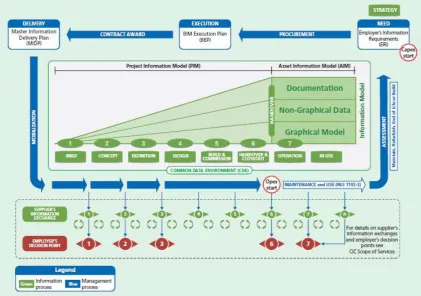
5 projects using building information models are being adhered to (BIM Task Group, 2016). These specifications indicate that the handover process needs to start by documenting Employer’s Information Requirements (EIR). EIR is included in a pre-tender document. These standards (Figure 1.1) promote a collaborative working environment in which information is produced using standardised processes and agreed standards and methods. Standardisation of information allows for information to be used and reused without interpretation or change. Thus, a collaborative working environment is produced using defined standards.
Figure 1.1: Information Delivery Cycle as specified in PAS1192:2. (BIM Task group, 2016)
6 the operations and maintenance stage of a facility. This research, therefore, focuses on identifying factors and gaps relating to lifecycle data management in the Saudi construction industry with a view to devise guidelines for narrowing the gap between the design and construction phase, and the maintenance and operation phases. This will facilitate the later development of a framework that can help in filling this gap and, thus, enable lifecycle management of building data. Lifecycle data management is particularly pertinent in light of recent initiatives by the Saudi government that focuses on sustainability and a reduction of energy-consumption (Abaoud and Veziroglu, 2002).
7
1.1.3 Lack of Adequate Exploration of Emerging Possibilities in Improving Quality
of Asset Data Using BIM
Hardin (2015) defines BIM as a use of tools, processes, and behaviours to leverage efficiencies in the construction industry. Building handover information typically includes as-built drawings, O&M manuals and warranties. Owners’ BIM may contain all the information required for space management, equipment data, finishing, installations, and critical warranties (Hardin, 2015). Mendez (2006) highlighted that there is “additional and valuable information for the owner generated through the design and construction phase and that goes unrecorded or not passed onto the owner”. This is often attributed to a reliance on legacy formats, such as CAD drawings in DWG or DGN formats. According to Gallaher et al. (2004), a loss of $15.8 billion was incurred by US public sector clients because of the inadequate interoperability of CAD and other document formats. BIM allows for the presentation of information in an analytical format ensuring consistent data flow. Thus, new opportunities to address traditional communication and co-ordination challenges are becoming possible because of technologies and process-related improvements, such as Building Information Modelling (BIM), Management information systems, and integrated approaches to project delivery (e.g. Concurrent Engineering, Integrated Project Delivery). In this context, Love (2013) observes that BIM could provide a catalyst of change, due to its ability to reuse information that could be used during project design and construction stage for lifecycle management of infrastructure.
8 often referred to as a shift in focus on project delivery to a focus on services delivery. This is clearly being reflected by various governmental initiatives across the world, making the use of BIM mandatory as part of public procurement strategy (e.g., UK Government Construction Strategy, 2011). The UK Construction Strategy (2011) highlights the potential of reducing construction cost by 20% and enhancing sustainability with BIM. BIM provides an effective approach to integrate people, processes, information, and business systems (Shen et al., 2010). Similarly, there are initiatives across the world to standardise data formats and handover processes by integrating them in procurement processes (Whyte, 2010) with an ultimate aim to achieve asset lifecycle data management. A recent global survey of major client establishments revealed that 61.7 per cent of infrastructure owners held the view that BIM could deliver better results for FM (BIM4FM Survey, 2016).
9
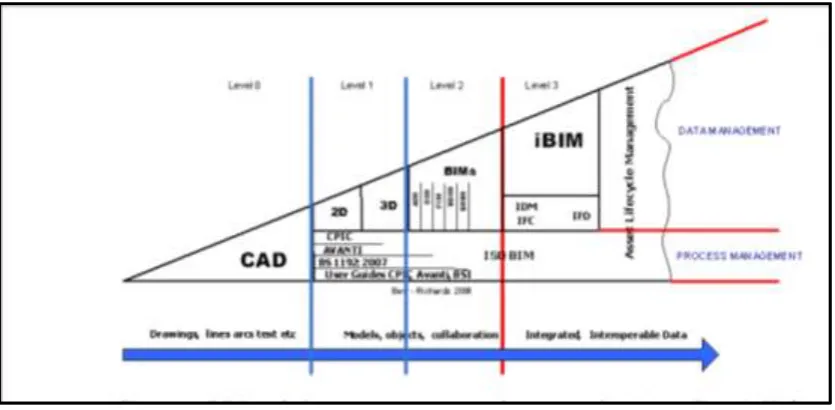
Figure 1.2: Building information model Evolutionary Map-Constructive Perspective. (Bew and Underwood, 2010).
1.2 Research Rationale and Key Research Questions
10
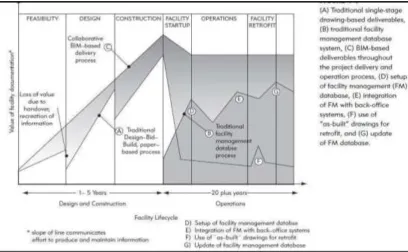
Figure 1.3: Data loss over lifetime of a construction facility (Eastman et al., 2011).
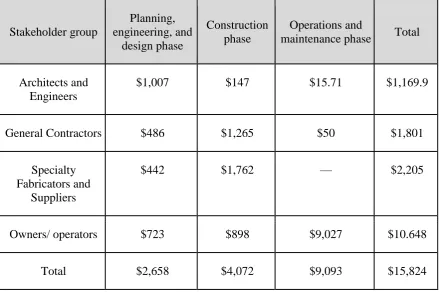
A US study highlights the remarkable cost to building owners and operators (Table 1.1), due to inadequate interoperability, such as the fragmented processes in the construction industry, the paper-based nature of information processing, the lack of use of advanced Information Technology (IT), and the absence of clear protocols or frameworks to organise the information handover between stakeholders during, and after, the final phase of the project (Gallaher et al., 2004). As a result, many public sector buildings operate at a sub-optimal level and are unable to meet design expectations. This results in buildings operating at a high cost, often resulting in client dissatisfaction (Mitra and Tan, 2012). During the asset management phase of a building, numerous trades, people, processes, and technologies work together (Hardin, 2015). Within a KSA context, extremely high temperatures and wear and tear of public infrastructure, coupled with the increasing complexity of buildings, could lead to high maintenance costs. Similar views are expressed by Hardin (2015), who maintain that buildings are becoming increasingly complex in nature because of their functional design, environmental issues such as sustainability, and financial issues with energy.
11 Table 1.1: The costs of insufficient interoperability by Stakeholder Group, by lifecycle phase in $millions. (Gallaher, 2004)
Stakeholder group
Planning, engineering, and
design phase
Construction phase
Operations and
maintenance phase Total
Architects and Engineers
$1,007 $147 $15.71 $1,169.9
General Contractors $486 $1,265 $50 $1,801
Specialty Fabricators and
Suppliers
$442 $1,762 — $2,205
Owners/ operators $723 $898 $9,027 $10.648
Total $2,658 $4,072 $9,093 $15,824
Figure 1.4 illustrates the Royal Institute of British Architects’ (RIBA) plan of work approach to information flow and key workflows. Project reviews at key handover stages of each phase involve due diligence to ensure information quality going forward. As a result, every stage handover ensures that standards are being met (Design Box, 2013). In contrast, an inconsistent approach in the building handover stages can result in building data being maintained in a variety of different formats, such as drawings, photos, manuals, 2D CAD drawings, and specifications. As the size of building/infrastructure related data grows, it becomes unmanageable and is seldom used to support decision-making.
[image:31.595.93.533.119.411.2]12
Figure 1.4: RIBA Plan of Work and Smooth Information Flow ( Design Box, 2013).
[image:32.595.90.563.90.349.2]A critical review of literature provides increasing evidence of buildings not performing as intended by designers, resulting in owner dissatisfaction (Figure 1.5). Likewise, there is general lack of communication in the building operations and maintenance phase, as the designers and contractors have minimal involvement after building commissioning. The design and construction team carry limited liability once building handover has been completed.
13 There is an increasing interest in developed countries in the use of building information models in facilities management for consistent, coordinated, and computable building information/knowledge management through a building’s lifecycle. BIM helps to streamline the data collection processes by helping engage with a variety of stakeholders due to its user-friendly 3D visualization. Evidence from best practice projects indicates that consistent information flow as enabled through BIM could help reduce project costs by up to 20% (BIM Task Group, 2016).
In the KSA context, there is a scarceness of published literature and a knowledge gap concerning areas where BIM-related information could be utilised to support building maintenance (Ghosh et al., 2015). In addition, there is a lack of information in the policy guidelines in the area of lifecycle building data management and building handover practices in the literature. There is a need for efficient and effective building handover with less loss of data in the process. Despite the lack of studies in the literature, and to the best of the author’s knowledge, none of those studies has been carried out in a Saudi Arabian context. So this research will be an addition to knowledge in this area.
All of the above revealed issues highlight the need to address the factors that facilitate life cycle data management and analyse the challenges that face building handover within KSA. From the discussion above, the following key research questions are identified:
● What are the global developments, trends and best practices in building life-cycle data management and handover practices?
● What are the existing building handover practices in the public sector construction projects in KSA?
● What are the key challenges in the existing handover process within KSA and how can be it improved?
14
● How should the KSA government drive its strategy on building handover in the public sector?
1.3 Research Aim and Objectives
The main aim of conducting this research is to develop a framework to enhance data management in building handover practices of public sector construction projects in the KSA.
To meet the aim of the research and to answer the research questions, the specific objectives of the research will be:
To identify the relevant concepts of building information handover practices and its requirements via a comprehensive review of the related literature;
To critically examine the status of existing building handover practices within the public sector in the KSA;
To analyse the challenges faced by clients and facilities management teams in management of public sector infrastructure within the KSA context;
To develop a framework based on identified factors that enhance lifecycle data management within public sector buildings within the KSA;
To provide recommendations to the KSA Public Sector to enhance its management of infrastructure via improved handover practices.
1.4 Research Methodology
15 The research began with an extensive review of the current literature on project handover practices. Then, it is supported by an empirical data survey and interviews with construction organisations in the KSA construction industry. Questionnaires are designed based on the literature review to reach a large target group in an efficient and practical way. The interviews are used to obtain detailed information about personal perceptions, feelings, and opinions of key stakeholders (Naoum, 2003) in the KSA public sector construction industry. Qualitative data from interviews are analysed using the NVivo software package and data from the questionnaires is analysed using the (SPSS) software package. A detailed research methodology is presented in Chapter 4. Findings from the survey and qualitative analysis are used to develop a framework to support building information handover in KSA.
1.5 Expected Contribution to Knowledge
This is the first empirical study that addresses and identifies the challenges faced in public sector building handover information management within the KSA context. Little research has been done on public sector construction project handover within the KSA construction industry and this study will fill that gap in the literature serving as a reference material for both informal and formal higher education programs in the built environment.
Empirical data (both quantitative and qualitative data) collected as part of this research yields new insights into building handover processes within the KSA public sector. The research also helps to inform and guide how public sector construction projects are handed to the operations or the facility management team in the KSA. This research also contributes to the emerging debate of how BIM should be implemented within the KSA. Both quantitative and qualitative data collected as part of this research contributes to this debate and helps narrow the knowledge gap in this field. Existing literature does not address the barriers and challenges within public sector construction.
1.6 Structure of Thesis
16
Chapter 1: Introduction
This chapter introduces the thesis and provides the related background and context of the research topic. It discusses the research problem, the research aim, objectives, question, and the significance of the research. Also, it explains the scope of the research and provides outline research approach.
Chapter 2: Literature Review
In this chapter, a review of the current literature is presented. The theoretical base of the research is developed in this chapter. Chapter two explores the concept of the building handover process in the construction industry locally and internationally in KSA. It is followed by a review of the application of the state-of-the-art technologies to improve the information flow and the relationship between the construction phases in the construction industry in the Kingdom of Saudi Arabia. It also reviews key data management practices and factors affecting the handover process within the KSA construction industry. Also, this chapter affords an in-depth understanding of the KSA construction with a special focus on the lifecycle of data management in this industry in general.
Chapter 3: Research Methodology
This chapter offers and rationalizes the philosophical stance for the research and the adopted methodology. It discusses the methods of research and data collection methods in construction management research, and presents the selected methods and the justification for them. It adopts a mixed method approach using both quantitative and qualitative techniques, and their protocols, which are discussed together with the triangulation methods as a means for data validation. It also describes the conceptual framework development process and issues of ethics relating to the research.
Chapter 4: Analysis of Qualitative Data
17
Chapter 5: Quantitative Data Analysis
This chapter presents the main findings from the survey and the interview based on the research objectives and presents the prototype, which will serve as a technology demonstrator.
Chapter 6: Framework Development and Validation
The chapter presents an analysis of both quantitative and qualitative data collected through questionnaires and semi-structured interviews. It discusses the statistical analysis used in the survey study. It uses Statistical Package for the Social Sciences (SPSS) software in analysing the information generated from survey. It also provides a summary of the interview design strategy and findings from semi-structured interviews. Analysis of interview data is also presented.
Chapter 7: Conclusions, Limitations and Recommendations
This final chapter presents conclusions from the research and highlights the limitations, the key contributions to knowledge, and the recommendations for further research.
1.7 Exclusions, Constraints and Limitation
This research was conducted to investigate issues on how to facilitate effective data management in building handover phases of public sector construction projects in the KSA. The private sector is excluded from this research. The private sector has different dynamics, often driven by short-term Return on Investment; thus, the need for long-term data management is often overlooked. Also, the research did not include the civil infrastructure sector (e.g. Transportation, Airports, Dams, etc.). Including civil infrastructure would have dramatically increased the scope of the research, given the individual requirements of each of the civil infrastructure sectors. Interviews done as part of qualitative data collection were not recorded.
18 interview and, immediately after each interview, write down all the pieces of information and ideas and converted them into a form of written record while they were still easy to remember (Yin, 2009). Then, these records were confirmed by the interviewee. Also, there is lack of published literature on the data management related to building handover practices within the public sector construction projects in the KSA. This matter was considered as a limitation of the research.
1.8 Chapter summary
19
CHAPTER TWO: LITERATURE REVIEW
2.1 Introduction
This chapter offers the background to the research and critically examines existing literature to establish the state-of-the-art in building lifecycle data management practices, with a specific focus on building handover. This chapter explores the need for effective building handover practices and reviews key focal literature in this area. It covers the issues on data management and building handover principles and procedures, as well as the building handover protocol, improving the project handover process, and BSRIA soft landing framework. Furthermore, it focuses on the concept, origin, and growth of BIM in data handover, the challenges of interoperability in project delivery, and challenges in existing handover practices. This chapter also presents the geographic and economic background that influences the construction sector in Saudi Arabia with a special focus on the lifecycle of data management in this industry in general. Finally, a summary is presented to integrate different perspectives of the literature, which have been presented in this chapter.
2.2. Building Handover Principles and Procedures
One of the most important stages in the project lifecycle is the handover of the project to the client at the end of construction; it is essential that a well-organized, efficient and effective transfer of project information to the client be undertaken (Whyte et al., 2010). Generally, the handover of the ownership of the project from the contractor to client can affect the health and safety, reliability, standards of operation, maintenance, and operational cost of the built assets. The project handover period can be a very busy period for all stakeholders, from the contractors’ staff to the building owners and end-users. The contractor is typically responsible for the handover of key project-related documents as described in the contract, including built drawings, schedules, cost, spare lists, maintenance requirements, installed systems, and equipment details (Fallon and Palmer, 2007).
20 project. The term is often associated with main contractors responsibility to inform the client that the building is ready for occupancy by the end users (CIBSE, 2000). Generally, the interlinking between the project completion and handover is essential and inevitable (CIOB, 2010). The Joint Contracts Tribunal (JCT) (2011) argues, from the contract point of view, that the finishing of the project has to be certified using Practical Completion Certificate (PCC), which should be issued by the Architect/Contract Administrator. A PCC is generally issued in the last stage of the project where the contractor delivers back the responsibility of the construction site to the owners. At this phase, the owner receives the completed project and takes the full responsibility for the insurance, security, operation, and maintenance of the built asset (CIBSE, 2000). Whyte
et al. (2010) believe that clients have regulatory requirements to ensure that there is high quality data about their built assets for safe operation. In this context, it is important to ensure data precision and extensiveness and that the data is up-to-date for continuing use in operations. However, the data types used for operations and facilities management vary from those used in ventures and this produces challenges for the handover processes.
The relation between the owner and the principal contractor forms, in essence, the handover process. The project manager or the appointment of a commissioning management specialist represents the contractor. This representation is based mainly on the project’s complexity and/or staff experience. Complex projects, where the work is carried out by several companies (in some stages, different companies work in the same package), face a serious issue to collect, organise, and deliver handover information by a single company. The distribution of the work and information can lead to some contractors being uninformed or updated on a huge amount of information. Sub-contractors who are responsible for specified components and manufacturers do not have to accept the mentioned arrangements beforehand (East and Brodt, 2007).
21 considered the most sensitive period for all of the parties participating in the project, especially the owner who is usually preparing to move into the completed built asset.
However, Saulles (2005) revealed that the contractor is obligated to accomplish the project on time according to contractual terms. The fragmentation of the construction industry, in addition to the time limits, can lead to an inadequate project completion process (Saulles, 2005). As a result, the emerged gaps in the procedure can produce poor levels of documentation. East and Brodt (2007) noted that the common practice of collecting the project information at the end or near end of the project could lead to gaps in the required information, although the information is available at the start of each stage of the venture to be applied and delivered by the sub-contractors. Generally, the most common factors that produce poor deliverables are the pressures and time constraints due to the waiting time until the end of the project (East and Brodt, 2007).
One of the main reasons for time-consuming activities in the project handover process is the heavy reliance on the use of 2-D paper drawings (Wu and Issa, 2012). Whyte et al.
(2012), however, identified that leaving some experts in the project before the completion and before the project handover has deep negative effects. According to Wu and Issa (2012), such negative effects will generate difficulties that will be experienced by the owners throughout the building’s lifecycle and whenever there is a need to extract data from maintenance and operation manuals. The use of BIM will, therefore, reduce or eliminate these challenges. The instruction of BIM on all construction projects will help capture data that can be accessed by all parties to the project during the pre-construction and post-pre-construction phases of the project.
2.3 Impact of Information Loss at Handover Stage
The literature review indicates a wide range of reasons being cited for loss of information at handover stages. These include:
22 Excessive reliance on paper based information delivery mechanisms results in
loss of data as project moves from design to construction phase or to the handover stage (Eastman et al, 2008)
There exists an absence of a clearly distinct framework for building lifecycle information management (Hartman, 2008)
Losing a massive quantity of money looking for, confirming and/or re-forming facility information that should be readily obtainable (Fallon & palmer, 2007) An absence of interoperability between various software used for design,
construction and Operations (Whyte et al, 2011)
Lack of availability to extract useful information from CAD Drawings (Eastman et al, 2008).
2.4 Data Requirements for Effective Facilities Management
Facilities management, according to the “British Institute of the Facilities Management” (BIFM), is a practice of harmonising the physical workplace with the individuals and work of an organisation. BWA (1994) describes facilities management as a management process that includes systematic approaches used to control and provide the approved levels of service that are needed to cope, maintain, operate, as well as to upkeep a facility in an excellent environment at a proper price to meet the business necessities. Likewise, Becerik-Gerber et al. (2011) argue that facilities management is a discipline of design, planning, building, and managing space, in each form of construction, from office building to practice plant.
23 Missing information at the facilities management stage could adversely impact decision-making processes, leading to a disorganised system (Lucas et al., 2011). In this context, owners in 2002 spent $4.8 billion for data confirmation and validation, $613 million to transmit the data to a single applied communication format, $6.9 billion on interoperability, and $1.5 billion on information postponements and during lazy time of workers due to the absence of 'as-is' information (Gallaher et al., 2004). However, usage of a computer modelling system like BIM can mitigate these problems. So as to join the practical and organizational processes into an exact database management scheme, the required data must be first identified.
2.4.1 Challenges in Facilities Data Handover
Starting from the conceptual design of facility to its final completion, lots of information is generated; however, most of this data is valuable in the later phases (Yu et al., 1998). Effectively maintained and iteratively built handover processes can enhance facilities management decision-making (East et al., 2013). According to East et al. (2013), the specifications for facility handover data at present need contractors to produce and supply a set of documents that provide practical value to the facility managers.
24 type, technique, format, and roles for collecting these data types (Whyte et al., 2010). Also, to supplement a correct information management system, there must be a network that can capture the data, as well as the share information on an as needed basis (Chasey and Ghosh, 2013).
2.5 Need for Effective Building Handover
There are several concerns about the continued declining performance of the construction industry, such as usage of in-adequate management practices, staying away from other industries in taking advantage of novel technologies, projects phases being plagued by change orders, high costs, rework, claims, adversarial relationships, and slipping schedules, constructed facilities becoming more complex and difficult, owners and stockholders wanting to get the maximum benefit of their investments, and competition fiercely working to seize the moment by developing organisations that are customer oriented, dynamic, and innovative (Adrian, 2004; DeSimone, 2013).
Similarly, problems faced by the UK construction industry are well documented and have been highlighted in various government reports. These problems include poor image, competitive tendering procedures, over-specification (over design), late payment and cost overruns, changes of design during construction, time constraints and/or delays, low productivity and late completion, absence of labour, excessive overtime, and wastage (Government Construction Strategy, 2012; Proverbs and Holt, 2000). Likewise, the Cabinet Office (2011) explained clearly that the UK is struggling in some aspects in public sector construction. They argue that poor handovers of project data after projects’ completion has a negative impact on the asset performance and that will generate finical pressure. The cost of the disputes could put more pressure on the financial situation (report of Cabinet Office, 2011). Moreover, the report clarified that even in the absence of faults, it is still difficult to find a completed built asset that perform to the design requirements, especially from an energy point of view (Ibid).
25 handover stage (Cabinet Office, 2013). The GSL protocol sets out rules of engagement between owners/clients and designers/contractors, and explains that owners/clients will be supported by designers/contractors in the first few months of occupancy. This ensures that owners are familiar with the building and its systems, and can operate it in an optimal manner (Cabinet Office, 2011). The construction industry is still lagging in terms of providing good value for money to its clients, often leading to dissatisfied clients (Chen and Li, 2006). Most problems in huge construction projects could be attributed to the lack of planning and communication among the project parties to ensure effective management (Kandeil et al., 2010). Lifecycle building data management has the potential to enhance client satisfaction.
2.5.1 Building Handover Protocols
Although the Handover/commissioning process could be managed using agreed and specified guidance (CIOB, 2010; Dicks, 2002; CIBSE, 2000), the flexibility in the guidance regulations is necessary to adapt to suit each project situation. From the historical point of view, fulfilling the controlling legislation is the main reason for gathering the project information and the handover to the owner, according to the Construction Design and Management (CDM) regulations (CIBSE, 2000). One of the main legal responsibilities for owners, architectures, and contractors is the legislation and the general objectives of the process to secure a well-designed project based on a safe process according (Griffiths, 2007).
26 the owner’s occupancy for the building is not considered; that is due to the fact that the O&M details are determined to specific areas (Saulles, 2005).
2.5.2 Improving the Project Handover Process
The advent of new procurement strategies, such as Public Private Partnerships (PPP) and Private Finance Initiatives (PFI), is the main reason for the increased importance about the quality of the information that should be handed over to clients (CIBSE, 2000). CIBSE (2000) argue that there is a serious need to let the contractor carry a contentious responsibility for maintenance and operations. It is worthy to provide clients with complete and accurate information considering the valuable results that could be achieved in terms of decision-making with regard to general costs (Whyte et al., 2012).
The development in Information Technology (IT) facilitates the integration of different and multiple sets of data and increases the efficiency of work (ICE IS Panel, 2008; Jackson, 2010). The probability of missing information in handovers using documents is higher than using integrated data (Whyte et al., 2012). There is a shared view by different professional bodies, which states that the handover process should be determined in the feasibility study stage to secure the success of the project (CIBSE, 2000). However, East and Brodt (2007) argue that the building delivery process must not be seen as simply passing insurance liabilities since the contactor to the building’s new owners, or providing data and details to the end users but rather it must be seen as a continuous procedure that starts at the tendering phase through to a period of practical achievement.
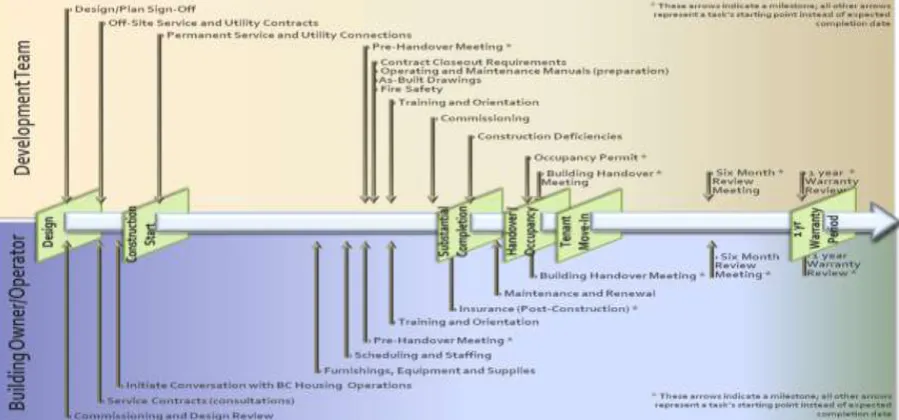
27 (e.g. Figure 2.1). According to CIBSE (2000), the poor understanding of how the systems lead to poor forward plans results in underperformance. However, Kennett (2009) argued that the owners should sign a contract, which guarantees that everything will work as intended as soon as they are handed over the completed project. From this point of view, Wu and Issa (2012) mention that the building commissioning has been known as a period measure to determine that the building performs as planned. It is therefore important to undertake qualitative evaluation of all the performance issues to eliminate the problem of underperformance (Curry et al., 2012).
Figure 2.1: Building Handover framework (BC Housing, 2012).
2.5.3 BSRIA Soft Landings Framework
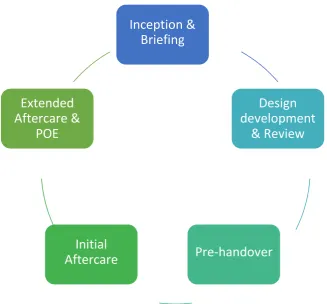
28 According to BSRIA, there are five main stages for soft landings as described and illustrated in Figure 2.2.
Stage 1: Inception and briefing - The liaising between the owners, architects and contractors is an essential point to establish a clear view about the owners’ requirements.
Stage 2: Managing expectations during design and construction - The identification of the owners’ objectives should be addressed clearly at this phase considering the financial responsibilities.
Stage 3: Preparing for handover - Clear instructions to end users regarding the systems and technology that facilitate the building before the handover should be provided.
Stage 4: Initial aftercare in the weeks immediately after handover - The contractors have to visit the site after the handover to ensure the introduced instructions are followed and to provide further advice or observations to prevent any issues before they happen.
29
Figure 2.2: The Five Stage Soft Landing process (BSRIA, 2009).
From the start of the project, the main objective of SL is to establish a solid level of cooperation and integration to fill the gaps in the areas that need interoperability. Therefore, the main advantage of the regular evaluation of the building is to ensure the owner or client’s satisfaction (BSRIA, 2009; Usable Buildings Trust, 2009). Due to the high level of diversity of contracts and process in the construction industry, the SL team does not have the willingness to design a new alternative. Kennett (2009) believes the ‘Golden Thread’, which is an alternative to soft landing guidance, allows information use hand-in-hand depending on the type contract. The main advantage of the Golden Thread is the possibility of information being shared, analysed, and executed. The availability of the gathered information will support the evaluation and improvement of systems and standards that lead to end users’ satisfaction. The Soft Landings framework is a complete process that brings together best practice at all stages of a project and serves as a tool for engaging with results through the method of briefing, design and supply. The Soft Landings framework (SLs) has been developed to help all the relevant stakeholders (clients, designers, builders, managers, and end users) achieve an improved
Inception &
Briefing
Design
development
& Review
Pre-handover
Initial
Aftercare
Extended
30 performance for end users (BSRIA, 2009). The key principles of soft-landing framework are presented in Figure 2.3.
Figure 2.3: Key principles of soft-landing framework.
The unclear boundaries between the owners’, architects’, and contractors’ responsibilities are the main reason for BSRIA to avoid using financial penalties to any failure in the contract requirements. This point is addressed in (BSRIA, 2009; Usable Buildings Trust, 2009) as follows:
“… due to the cost of setting-up a legally defensible structure, uncertainties around metrics, the problems in sharing any responsibility for results among all the parties concerned (not least the occupiers and facilities managers)”.
Consequently, BSRIA introduces the bonuses as encouragement for good achievement and as an alternative methodology to penalties as means of punishments for failures. According to BSRIA (2012), the following steps should be applied to guarantee the success of a project:
Apply the process completely. Ensure the interoperability. Define the end-user objectives.