812
A METHOD FOR FINGERPRINT MATCHING USING
INVARIANT MOMENT
1 DONGFENG XU, 2 YAN CHEN
1 College of Informatice, South China Agricultural University, Guangzhou 510642, China 2
College of Engineering, South China Agricultural University, Guangzhou 510642, China E-mail: 1
[email protected]
ABSTRACT
A method for fingerprint matching using invariant moment featuresis proposed. The fingerprint image is first preprocessed to enhance the original image by the Short Time Fourier Transform (STFT) analysis. Then, a set of seven invariant moment features is extracted to represent the fingerprint image from a cirque of Interest (COI) based on the reference point of the enhanced fingerprint image. The reference point is determined by the complex filters method. Finally, a Back Propagation Neural Network (BPNN) (moment of inertia) is trained with the features for matching. Experimental results show the proposed method has better performance with higher accuracy and faster speed comparing to the traditional Gabor feature-based fingerCode method.
Keywords: Biometrics, Fingerprints, Back Propagation Neural Network (BPNN), Short Time Fourier
Transform (STFT),cirque of Interest (COI),
1. INTRODUCTION
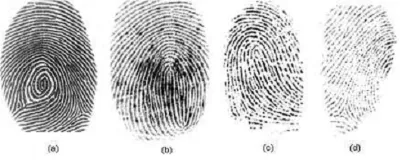
The performance of a fingerprint feature extraction and matching algorithm depend heavily upon the quality of the input fingerprint image. While the ’quality’ of a fingerprint image cannot be objectively measured, it roughly corresponds to the clarity of theb ridge structure in the fingerprint image. A ’good’ quality fingerprint image has high contrastand well defined ridges and valleys. A ’poor’ quality fingerprint is marked by low contrast and ill-defined boundaries between the ridgesand valleys. The quality of fingerprint encountered during verification varies over a wide range as shown in Figure 1. It is estimated that roughly 10% of the fingerprint encountered during verification can be classified as ’poor’[8]. Poor quality fingerprints lead to generation of spurious minutiae and loss of genuine minutiae, the net effect of both leading to loss in accuracy of the matcher.
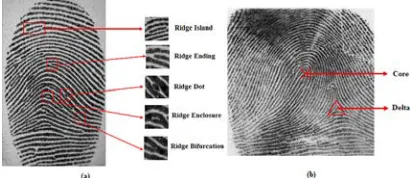
Traditional password/token based authentication schemes are insecure and are being replaced by biometric authentication mechanisms. Fingerprints were one of the first biometrics to be widely used. A fingerprint is a pattern of ridges and valleys on the surface of a finger. The pattern is formed by a set of ridgelines, which sometimes terminates (ridge-endings) or intersects (bifurcations). These ridge-endings and bifurcations from a set of
features called minutiae. Various approaches of automatic fingerprint matching have been proposed in the literature. Finger matching techniques can be broadly classified to two main methods: minutiae-based matching methods [1-2] and texture-minutiae-based matching methods [3-4]. The more popular and widely used techniques, minutiae-based matching methods, use a feature vector extracted from the fingerprints and stored as sets of points in the multi-dimensional plane. The feature vector may contain minutiae’s positions, orientations or both of them, etc. It essentially consists of finding the best alignment between the template and the input minutiae sets. However, minutiae-based matching methods may not utilize the rich discriminatory information available in the fingerprints and are very time consuming [5].
ISSN: 1992-8645 www.jatit.org E-ISSN: 1817-3195
813 details in a fingerprint as a compact fixed length fingerCode. The fingerprint matching is based on the Euclidean distance between the two corresponding fingerCodes. An improved version of the Gabor feature-based method used for fingerprint matching is proposed by Sha et al. [4]. The authors propose a new rotation-invariant reference point location method and combine the direction features with the Average Absolute Deviation (AAD) from the mean features to form an oriented fingerCode. However, the Gabor feature-based methods suffer from the noise and the non-linear distortions. The non-non-linear distortions cause various regions in the sensed image to be distorted differently due to the non-uniform pressure applied by the subject. Also, the variation in position, scale and orientation angle is difficult to track when using these approaches [7]. A texture correlation matching method for fingerprint verification using Fourier-Mellin Descriptor (FMD) and Phase-Only Correlation (POC) function is proposed by Ouyang et al. [6]. It utilized FMD to construct a feature map which is used to repre-sent, align and match fingerprints with POC function. However, to select effective and low dimensional features from obtained FMD feature vector is a difficult work for the author, so the application of this method is limited. Jin et al. [7] propose a method based on the features extracted from the integrated wavelet and the Fourier-Mellin Transform (WFMT) framework. Wavelet transform with its energy compacted feature is used to preserve the local edges and reduce noise in the low frequency domain. The Fourier-Mellin Transform (FMT) served to produce a translation, rotation and scale invariant feature. Multiple WFMT features can be used to form a reference invariant feature through the linearity property of FMT and hence reduce the variability of the input fingerprint images. However, multiple WFMT features are acquired from different training images, which are much time consuming.
In this paper, a method for fingerprint matching using invariant moment features is proposed. A fingerprint image is preprocessed to enhance the original image by STFT analysis [8]. Then, seven invariant moment features are extracted to represent the fingerprint image from a ROI of the enhanced fingerprint image. The ROI is based on the reference point, which is determined by the complex filters method [9]. Invariant moments are one of the principal approaches used in image processing to describe the texture of a region. As one of the texture-based matching methods, the invariant moment feature-based method also takes of rich discriminatory information available in the
fingerprints, so it is able to represent the fingerprint effectively. Matching the features of test fingerprint images and those of template images is realized by a BPNN, which is a supervised pattern classification method with each output unit representing a particular class or category. The BPNN has the advantage of very flexible and favorable classification ability [10].
2. PROPOSED APPROACH
[image:2.612.326.531.302.391.2]We present a new fingerprint image enhancement algorithm based on contextual filtering in the Fourier domain. The proposed algorithm is able to simultaneously estimate the local ridge orientation and ridge frequency information using short time Fourier Analysis. The algorithm is also able to successfully segment the fingerprint images.
Figure 1: Image Based Matching
Human experts use a combination of visual, textural, minutiae cues and experience for verification. Still used in the final stages of law enforcement applications.
Before introduce the reference point detection method, we need to know the singular points. The singular points i.e. core and delta points are two landmarks of fingerprint.Their locations and orientations usually determine the fingerprint ridge flow patterns. Detection of the singular points is very important for fingerprint matching. Manyliteratures introduced all kinds of methods for locating the singular points. However, the complex filters, applied to the orientation field in multiple resolution scales, are used to detect them with high performance [9].
814 The angular and frequency densities are given by marginal density functions
We define the core point here as the reference point because the core point is popular than the delta point and is able to represent the oneness of the fingerprint images. Henry [5] defines the core point as “the north’s most point of the inner most ridge line”. This is suitable for the whole and loop conditions. For fingerprints that do not contain loop or whorl singularities (e.g. those belonging to the arch class), the core point is usually associated with the point of maximum ridge line curvature. Filter h1 satisfies both of these conditions.
[image:3.612.323.523.220.301.2]The proposed matching approach contains five main steps as shown in Fig.2. The first step is to enhance the fingerprint image using STFT analysis. The performance of a fingerprint matching algorithm depends critically upon the quality of the input fingerprint image. While the quality of a fingerprint image cannot be objectively measured, it roughly corresponds to the clarity of the ridge structure in the fingerprint image. There are many reasons that may degrade the quality of a fingerprint image. The quality of fingerprint encountered during verification varies over a wide range. It is estimated that roughly 10% of the fingerprint encountered during verification can be classified as ‘poor’ [5]. So it is necessary to enhance the fingerprint image before feature extraction and matching.
Figure 2: General Architecture
3. SIMULATION EXPERIMENT
While the effect of the enhancement algorithm may be guaged visually, the final objective of the enhan cementprocess is to increase the accuracy of the recognition system. We evaluate the effect of
[image:3.612.103.303.529.631.2]our enhancement on a set of 800 images (100users, 8 images each) derived from FVC2002[1] DB3 database. The total number of genuine and impostor comparision are 2800 and 4950 respectively. We used NIST’s . NFIS2 open source software (http://fingerprint.nist.gov) for the sake of feature extraction and matching. The ROC curves before and after enhancement are as shown in the Figure2. It can be seen that there is a net improvement of 17% on the recognition rate.
Figure 3: Additional Enhancement Results
The fingerprint image database used in this x periment is the FVC2002 fingerprin database set a [13], which contains four distinct databases: DB1_a, DB2_a, DB3_and DB4_a. The resolution of DB1_a, DB3_a, and DB4_a is 500 dpi, and that of DB2_a is 569 dpi. Each database consists of 800 fingerprint images in 256 gray scal levels (100 persons, 8 fingerprints per person). A BPNN with 7 input layer neurons and 2 output layer neurons was trained of 75% (600/800=75%) of patterns in each database, and tests were performed on a patterns. That is, 6 fingerprints of per person (75%) in each database were used fo training, while all the 8 fingerprints of per person in the databases were used for tesing. There were 7 input features and 2 output classes, so the input layer neurons an the output layer neurons were 7 and 2 respectively. The number of the hidden laye neurons was obtained empirically. Experimentally, the optimal number of hidde layer neurons was determined to 4.
The performance evaluation protocol used in FVC2002 was adopted. The Equal Error Rate (EER), revised EER (EER*), Reject Enroll (REJEnroll), Reject Match (RE-
JMatch), Average Enroll Time and Average Match Time were computed on the four databases. To compute the False Acceptance Rate (FAR) and the False Reject Rate (FRR), the genuine match and impostor match were performed. For genuine match, each impression of each finger was compared with other impressions of the same
finger. The number of matches was 2800. For impostor match, the first impression of each finger was compared with the first impression of other fingers. The number of matches was 4950. A
∫∫
=
r
dr d r F
r F r
p
φ
φ θ
θ
θ 2
2
) , (
) , ( ) , (
∫
= r
dr r f
p(θ) ( ,θ) =
∫
θ
θ
θ d
r f r
ISSN: 1992-8645 www.jatit.org E-ISSN: 1817-3195
815 matching was labeled correct if the matched pair was from an
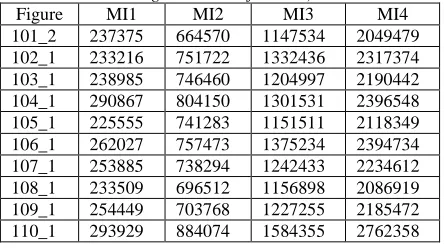
[image:4.612.88.310.136.260.2]Table 1Different Fingerprint Three Feature Values (The Ring Moments Of Inertia)
Figure MI1 MI2 MI3 MI4
101_2 237375 664570 1147534 2049479 102_1 233216 751722 1332436 2317374 103_1 238985 746460 1204997 2190442 104_1 290867 804150 1301531 2396548 105_1 225555 741283 1151511 2118349 106_1 262027 757473 1375234 2394734 107_1 253885 738294 1242433 2234612 108_1 233509 696512 1156898 2086919 109_1 254449 703768 1227255 2185472 110_1 293929 884074 1584355 2762358
The performance evaluation protocol used in FVC2002 was adopted. The Equal Error Rate (EER), revised EER (EER*), Reject Enroll (REJEnroll), Reject Match (RE-JMatch), Average Enroll Time and Average Match Time were computed on the four databases. To compute the False Acceptance Rate (FAR) and the False Reject Rate (FRR), the genuine match and impostor match were performed. For genuine match, each impression of each finger was compared with other impressions of the same finger. The number of matches was 2800. For impostor match, the first impression of each finger was compared with the first impression of other fingers. The number of matches was 4950. A matching was labeled correct if the matched pair was from an identical fingerprint and incorrect otherwise. The test was executed on Pentium IV 1GHz machines. The performances of our proposed method with the method.[4] over the four databases of FVC2002 are shown in Table 2-5. Since the EER and Average Enroll Time and Average Match Time values of our proposed method were smaller than those of the method of Sha, we considered our proposed method had better performances.
Table 2 Different fingerprint of three characteristic values (ring features)
Figure MI0 MI1 MI2 MI3
101_2 ---- 0.2998 0.9218 1.4656 102_1 ---- 0.2859 0.8155 1.2524 103_1 ---- 0.2820 0.8165 1.4047 104_1 ---- 0.2397 0.7777 1.3183 105_1 ---- 0.2969 0.8272 1.4672 106_1 ---- 0.2701 0.8150 1.2249 107_1 ---- 0.2754 0.8267 1.3668
108_1 --- 0.2866 0.8647 1.4439
109_1 ---- 0.2686 0.8633 1.3654 110_1 ---- 0.2264 0.6845 1.0670
4. CONCLUSION
In this paper, a method for fingerprint matching using invariant moment features is proposed. STFT analysis will enhance the original fingerprint images even those with poor quality, and the location of the reference point with complex filters is reliable, so the algorithm for features extraction is effective. Besides, the feature vectors need less storage and the processing speed is fast. Experiments show that the performances of accuracy and processing speed of the proposed method are better than the traditional Garbor feature-based fingerCode method. The performance of a fingerprint feature extraction and matching algorithms depend heavily upon the quality of the input fingerprint image. We have presented a new fingerprint image enhancement algorithm based on STFT analysis and contextual/non-stationary filtering in the Fourier domain. The algorithm has several advantages over the techniques found in literature such as (i) All the instrinsic images(ridge orientation, ridge frequency, region mask) are estimated simultaneously from STFT analysis. This prevents errors in ridge orientation estimation from propagating to other stages. Furthermore, the estimation is probabilistic and is therefore more robust. (ii) The enhancement uti-lizes the full contextual information (orientation, frequency, angular coherence) for enhancement. (iii) The algorithm has reduced space requirements compared to more popular Fourier domain based filtering techniques. We perform an objective evaluation of the enhancement algorithm by considering the improvement in matching accuracy for poor quality prints. Our future work includes developing a more robust orientation smoothening algorithm prior to enhancement.
ACKNOWLEDGEMENTS
This work was supported by the Natural Science Foundation of Guangdong Province, China (No.S2011010001933).
The correspondent author: 2 Yan Chen
REFRENCES:
[1] Jang, X., Yau, W.Y.: Fingerprint Minutiae Matching Based on the Local and Global Structures. In: Proc. Int. Conf. on Pattern Recognition, pp. 1024–1045 (2000)
816 by Relationship Examination. In: Int. Conf. on Image Processing, pp. 427–430 (2000)
[3] Jain, A.K., Prabhakar, S., Hong, L., Pankanti, S.: Filterbank-based Fingerprint Matching. IEEE Transactions on Image Processing 9, 846–859 (2000)
[4] Sha, L.F., Zhao, F., Tang, X.O.: Improved ingercode for Filterbank-based ingerprin Matching. International Conference on Image Processing 8 (2003) II-895-8
[5] Maltoni, D., Maio, D., Jain, A.K., Prabhakar, S.: Handbook of Fingerprint Recognition. Springer, Heidelberg (2003)
[6] Ouyang, Z., Feng, J., Su, F., Cai, A.: ingerprint Matching with Rotation-Descriptor Tex ture Features. In: The 8th International Conference on Pattern Recognition, vol. 4, pp. 417–420 (2006)
[7] Jin, A.T.B., Ling, D.N.C., Song, O.T.: An Efficient Fingerprint Verification System Using Integrated Wavelet and Fourier–Mellin Invariant Transform. Image and Vision Computing 22, 503–513 (2004)
[8] Che-YenWen and Chiu-Chung Yu. Fingerprint enhancement using am-fm reaction diffusion systems. Journal of Forensic Science, 48(5), 2003.
[9] Sonka, Hlavac, and Boyle. Image Processing, Analysis and Machine Vision, second edition. Thomson Asia, 2004
[10] Duda, R.O., Hart, P.E., Stork, D.G.: Pattern Classification, 2nd edn (2007)