Animal Knowledge Based Systems in Egypt
Maryam Hazman
Central Lab for Agricultural Experts Systems, Ministry of Agriculture and Land Reclamation,
Giza, Egypt
Alaa Eldin Abdallah Yassin
Central Lab for Agricultural Experts Systems, Ministry of Agriculture and Land Reclamation,
Giza, Egypt
ABSTRACT
Transferring expertise from highly qualified experts to non-expert veterinarians and animal breeders is one of the Central Laboratory for Agricultural Expert Systems (CLAES) main objectives. CLAES used the knowledge based system technology to achieve this objective. Five animal knowledge based systems have been developed for diagnosis animal diseases and/or management farm. This paper presents the different methodologies used to develop these systems in Egypt. The used methodologies are: the hierarchical classification generic task, the case based reasoning and the commonKADS.
General Terms
Knowledge based systems; expert system.
Keywords
Knowledge based system; expert system; animal clinical; animal management.
1.
INTRODUCTION
Improved animal productivity is one of the main objectives for veterinary services in developing countries to insure the food sustainable. Using information and communication technology to develop systems that assist animals’ breeders will contribute in this objective. Knowledge based system have the ability to transfer knowledge from veterinarian experts and animal production experts to both young veterinarians and animals breeders. Knowledge based systems also known as expert systems which arose as a branch of applied artificial intelligence and were developed by the AI community in the mind-1960s [1]. Knowledge based system is a computer program which includes the knowledge and analytical skills of one or more human experts in a particular problem domain [2]. The idea of knowledge based system construction is to code knowledge into a computer program so that can be consulted in much the same way that one consults a human expert. Well-designed knowledge base systems imitate the reasoning process of human experts to solve specific problems and can be used by non-experts to improve their problem-solving capabilities and by experts as knowledgeable assistants [3].
Since its inception in 1987, the Central Laboratory for Agricultural Expert Systems (CLAES) has established itself at the forefront of agricultural expert systems applications in the developing world. CLAES has gained a considerable experience in developing knowledge based systems in agricultural domain. In the start of CLAES, the developed knowledge based systems covered different crops production management problems. In 1994 CLAES developed its first prototype animal system, which aims to aid animal breeders, extension officers and veterinarians improving the fertility and productivity of farm animals [4]. This system was followed by developing two health care knowledge based systems for different animals’ type to be used by veterinarians [5], [6]. In additional to animal health care systems, CLAES
developed systems to assist the breeder management their animals [7],[8].
In this paper, we will review the animal knowledge based systems, which are developed in CLAES to serve and solve problems of animal breeders in Egypt. The structure of the paper in the following section, a brief overview of knowledge based system is presented. Section 3, presents the first animal knowledge based system developed by CLAES, followed by Bovine and Caprine clinical systems in section 4 and 5. Section 6 describes the different methodologies used in developing the poultry knowledge base system. While wild and zoo animal system is presented in section 7. The final section presents the conclusion.
2.
KNOWLEDGE BASED SYSTEM
In the late 1960's to early 1970's, knowledge based systems began to appear as a branch of Artificial Intelligence. The idea of knowledge based systems can be found in the goal of Artificial Intelligence to develop “thinking computers” [9]. Bunchanan defined the knowledge based systems as computer systems in which an attempt is made to capture and render operable human knowledge about some domain [10]. Knowledge based systems are different from conventional computer programs since they solve problems by mimicking human reasoning processes, relying on belief, logic, rules of thumb opinion and experience [11]. Since 1060s, many knowledge based systems have been developed and applied to solve problems in many different areas. In agricultural domain, knowledge based systems are applied to diagnose diseases and suggest the proper treatment, whether plant or animal. As well as, they are applied to crop management and farm animal management.
In medical diagnosis, knowledge based system is mainly used for performing diagnoses based on symptom of patient, since they can naturally represent the way expert’s reason [12]. Most of animals’ developed knowledge based systems belong to diagnostic problem solving [13]. Maseleno and Hasan [14] presented poultry diseases knowledge based system for diagnosing chicken, while Rong and Li developed their diagnosis system for cow diseases [15]. The knowledge based system for animal diseases diagnosing can meet the farms for the urgent needs of veterinary experts, since there are very few experts at the farms [13].
For management the animal farms, Ihab developed a knowledge based system for dairy farm management [16]. The system provides its user by the suggested feeding for all types of animals in the dairy farm, in additional to diagnosis feeding problems of dairy farms. For pig, a knowledge based system is integrated with decision support models to carry out specific tasks of the daily management in a pig breeding farm [17].
systems to transfer expertise knowledge from scientists and experts in both diagnostic and management the animal farm. The CLAES animal developed systems following the second generation knowledge based system approach. CLAES used three methodologies in developing its animal systems: the hierarchical classification generic task [18], case based reasoning [19], and common-KADS [20]. Five animal knowledge based systems are developed by CLAES, three for diagnosis only, and two for management and diagnosis. The following subsections describe these knowledge based systems.
3.
FERTILITY AND PRODUCTIVITY
OF FARM ANIMALS KNOWLEDGE
BASED SYSTEM
In 1994, CLAES developed its first animal diagnostic knowledge based system. Its goal is to improve the fertility and productivity of farm animals (cattle and buffalo breeds) by using the developed system as a permanent consultant for animal breeders, extension officers and veterinarians. The system focuses on the diagnosis of all disorders (35 disorders) which impede the fertility and productivity of cattle and buffalo of sexual maturity and in age from 15 month to 18 month [5],[21]. The knowledge engineers used the hierarchical classification generic task methodology in developing this system. Hierarchical classification generic task is a problem solving method identified by Chandrasekran for solving diagnostic problems as part of the Generic Task methodology for developing knowledge based system [18]. The power of generic task is that when the problem matches the function of the generic task, it provides a knowledge representation and an inference strategy that can be used to solve the problem [22]. Hierarchical classification generic task represent the knowledge as hypotheses hierarchically organized in a tree structure such that general hypothesis are above more specific ones in the tree [23]. The expertise knowledge are acquired from the domain expert, and represented in a tree structured which was implemented using generic task tool [24].
4.
BOVINE CLINICAL KNOWLEDGE
BASED SYSTEM
In 1998 CLAES co-operated with the General Authority for Veterinary Services to develop the first health care knowledge
based system for cattle and buffalo. It aimed to help young veterinarians to diagnose and treat the newly born cattle and buffalo disorders [25],[26]. The system covered 19 diseases and was developed depending on the hierarchical classification generic task methodology [18], [22].
The expertise knowledge was acquired from the expert in a cases form. The acquired cases were used as input to the hierarchical classification generic task tool which developed in CLAES [23]. The tool used the acquired cases to generate causal model which used to create the hierarchically organized knowledge base of the hierarchical classification generic task. This knowledge based system was distributed to all veterinary directorates in all Governorates.
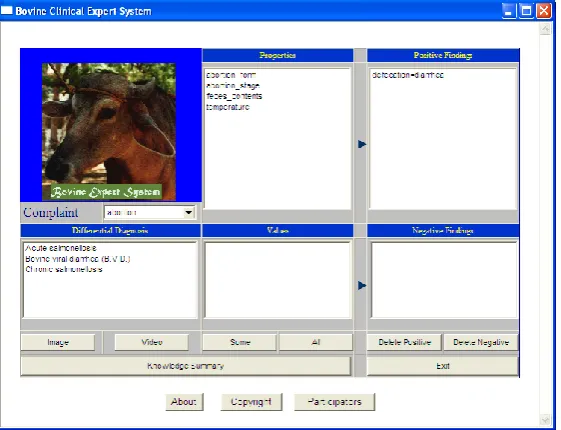
As a result for the successes of health caring knowledge based for cattle and buffalo, a Bovine clinical knowledge based system was developed as extension to it. The aim of the Bovine system is to diagnose cattle and buffaloes affections including different age groups. The system covers 431 diseases and contains multimedia files. The multimedia files consist of images and video clips that cover major ailments signs and treatment operations. In this system, case-based reasoning methodology have been used after trailing hierarchical classification generic task and common-KADS knowledge engineering methodologies for developing clinical expert systems in the veterinary domain. Case-based reasoning is selected because of the associated communication model by a consortium of domain experts and knowledge engineers [5]. Case-based reasoning studies the solutions that were used to solve similar problems in the past so as to solve the current problems [19].
[image:2.595.159.440.537.752.2]5.
CAPRINE CLINICAL KNOWLEDGE
BASED SYSTEM
The public institute for veterinary services asked to develop Caprine clinical knowledge based system Sheep, as a result for the successes of Bovine clinical system. Caprine system aims to diagnose 475 sheep and goat diseases affections including different age groups [6]. Since, one fundamental characteristic of all second generation knowledge based systems is the clear and clean separation between the knowledge that the system is using and the program that utilize it for problem solving. Therefore, any knowledge based systems includes two components: a knowledge base and an
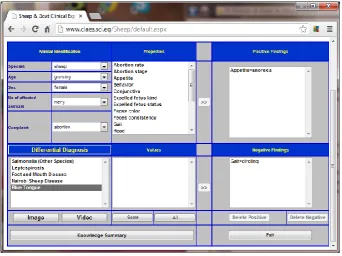
[image:3.595.127.470.218.474.2]inference engine [27]. This separated between the knowledge and the engine allows the reused of the developed system. Developing Caprine system uses the feature of reusing the previews developing system by replacing the Bovine knowledge base by the Coprine knowledge base. So, developing Caprine is used the same methodologies and tool that are used in developing Bovine clinical knowledge based system [5]. Since the target users for clinical knowledge based system are the veterinarians, they are developed in English language. The Caprine clinical knowledge based system is re-implemented to be a web based system to facilitate its usage via the internet as shown in Figure 2 [28].
Fig 2: The Caprine Clinical Knowledge Based System
6.
POULTRY KNOWLEDGE BASED
SYSTEM
With the spread of bird flu, demanding to develop a poultry knowledge based system [7] arises for aiding the poultry breeders. The poultry knowledge based system aims to transfer the expertise from both veterinarian experts and animal production experts to poultry breeders. Transferring the expertise to breeders aims to preserve the poultry and reduce its loss which leads to increase poultry productivity. The system focuses on the chicken. It includes two sub-systems namely: caring and diagnostic, and integrated with a decision support system for suggested the suitable feeding.
CLAES used two methodologies to develop poultry system: commonKADS, and case based reasoning. The commonKADS methodology is the knowledge engineering methodology which used in caring subsystem [19]. While, diagnostic subsystem is developed using the case based reasoning methodology. In caring subsystem, the expertise knowledge are acquired and represented in rules using Knowledge Share and Reuse tool [29]. This tool was constructed by CLAES and supports the modeling knowledge
using three layered approach: the domain knowledge layer, inference layer, and task layer. It provides its user by three types of knowledge representation: rules, table, and functions. The system provides the chicken breeder by the needed caring operation according to the condition of its chicken farm (e.g., the chicken age, production system, breeding system ..etc) in specific age stage. Also, it allows its user to have all the needed operations for special stage or all stages. As shown in figure 3, the system is developed in Arabic language to facility its usage by the breeders. Caring subsystem includes 50 operations that needed to done in 17 farm stages [7].
Fig 3: Poultry Knowledge Based System
7.
WILD AND ZOO ANIMALS
KNOWLEDGE BASED SYSTEM
Transferring the expertise of the wild animal veterinarian experts to young veterinarian in the Egyptian zoos was the aimed of developing Wild and Zoo animal knowledge based system [8]. The system is developed in English to help zoo veterinarian in their daily work. Lion and tiger from carnivores and chimpanzee, orangutans, and monkey from primates are selected to start the knowledge based system by them. It includes two sub-systems namely: Diagnosis, and Nutrition. In additional to information system includes: Treatment, Vaccine, Husbandry, and Enrichment.
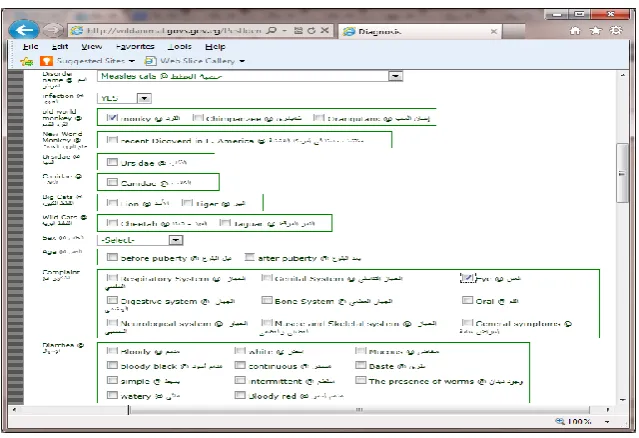
Diagnostic subsystem aims to diagnose 54 diseases that affect zoo animals. It had been developed depending on the case based reasoning methodology using the web knowledge acquisition tool. The knowledge engineers acquired the case form from the domain experts and enter it to the tool to be used by the domain expert. Figure 4 shows the case form used by the domain expert to build their diagnostic systems. Nutrition subsystem is developed using commonKADS methodology. Once more, web knowledge acquisition tool was modified to facility building the knowledge based by the nutrition domain experts.
[image:4.595.138.458.503.722.2]8.
CONCLUSION
Knowledge based systems transfer expertise to non-expert person helping them to solve problems in the same way the human experts done. CLAES main objective is transferring the technology of knowledge based systems in the field of production management of agricultural for both animal and crops to the Egyptian environment [31]. The early CLAES animal knowledge based systems were developed to improve the experiment of the young veterinaries [4],[5],[6]. They transfer the expertise from highly qualified experts to young veterinaries on diagnostic problem. Also, they were used as a learning tool by the veterinaries student. For animal breeders, the developed systems focus on how to prepare the suitable environment for the animals and suggested the needing feeding (caring, feeding) [7], [8].
CLAES developed different tool to be used in developing the knowledge based systems supported different knowledge engineering methodologies. Some tool was used by knowledge engineering [5],[23],[29], other developed to be used by domain experts [30].
In diagnosis problem, case based reasoning methodology is used after trailing hierarchical classification generic task and commonKADS knowledge engineering methodologies for developing clinical knowledge based systems in the veterinary domain. Case-based reasoning is selected since it is more similar to actual human decision processes [5]. Also, it was easily used in knowledge acquisition process and maintenance which already done in developing both poultry and wild animal diagnostic subsystems. For management problems, commonKADS methodology is the appropriate methodology. Explanation which considered as an important component of the knowledge based system does not support in these systems. Adding an explanations component will be very useful especially for the veterinaries users.
Developed animal knowledge based systems in Egypt success to transfer expertise from the expertise of veterinarian experts and production experts to young veterinarian as a learning tools and animal breeders as a consultant.
9.
REFERENCES
[1] Karagiannis, St., Dounis, A. I , Chalastras, T., Tiropanis, P., and Papachristos, D. 2007. Design of Expert System for Search Allergy and Selection of the Skin Tests using CLIPS, in International Journal of Information and Communication Engineering, 3(6), 378-381.
[2] Tripathi, K. P. 2011. A Review on Knowledge-based Expert System: Concept and Architecture, IJCA Special Issue on “Artificial Intelligence Techniques - Novel Approaches & Practical Applications” AIT, 19-23.
[3] Gutierrez-Estrada, J.C., De Pedro San , E., Lopez-Luquec, R., and Pulido-Calvo, I. 2005. SEDPA: an expert system for disease diagnosis in eel rearing systems, in Aquacultural Engineering, 33, 110–125.
[4] CLAES. 1995. Expert system for improvement of fertility and productivity of farm animals, TR/CLAES/TTC/[170] 2.
[5] Rafea, M. 2004. A Case-based Collaborative Knowledge acquisition Tool, Fifth International Workshop on Artificial Intelligence in Agriculture, March 2004 Cairo.
[6] http://www.claes.sci.eg/Projects.aspx?TabId=2&id=2342 0&NavId=1&lang=en
[7] http://www.govs.gov.eg/FrontEnd/ar/ExpertSystems.asp x
[8] http://wildanimal.govs.gov.eg/
[9] Angeli, C. 2010. Diagnostic Expert Systems: From Expert’s Knowledge to Real-Time Systems, in Advanced Knowledge Based Systems: Model, Applications & Research, 1, 50 – 73.
[10]Bunchanan, B. G. 1982. New research on expert systems, In Machine Intelligence, 269-299, Wiley, London.
[11]Mahmoud, M., Hassan, I. 2008. An Integrated Expert System and Geographical Information System, in Agriculture Domain, In the Third National GIS Symposium in Saudi Arabia, April 2008.
[12]Xiao, J., Wang, H., Zhang, R., Luan, P., Li, L. and Xu, D. 2009. Knowledge Acquisition and Representation of the General Auxiliary Diagnosis System for Common Disease of Animal, in Computer and Computing Technologies in Agriculture II, IFIP Advances in Information and Communication Technology 294, 947-952.
[13]Wan, L. and Bao, W.g. 2010. Animal Disease Diagnoses Expert System Based on SVM, in Computer and Computing Technologies in Agriculture III, IFIP Advances in Information and Communication Technology, 317, 539-545.
[14]Maseleno, A. and Hasan, Md. M. 2012. Poultry Diseases Expert System using Dempster-Shafer Theory, in Brunei International Conference and Engineering Technology.
[15]Rong, L.m and Li, D. 2008. A web based expert system for milch cow disease diagnosis system in China, in Computer And Computing Technologies In Agriculture II, IFIP Advances in Information and Communication Technology, 259, 1441-1445.
[16]Gebreel, I. A.E.. 2004. An expert system for dairy farm management, Ph.D. thesis Ain Shams University, Egypt.
[17]Maliappis, M. T., Yialouris, C. P., Deligeorgis, S. G., Sideridis, A. B. 1997. EMISP: an expert management information system for pigs, in Proceedings of the First European Conference for Information Technology in Agriculture, Copenhagen, Denmark, June 1997, 325-330.
[18]Chandrasekaran, B. 1988. Generic Tasks as building blocks for knowledge-based systems: the diagnosis and routine design examples, in The Knowledge Engineering Review, 3(3), 183-210.
[19]Ketler, K. 1993. Case-based reasoning: an introduction, in Expert Systems with Applications, 6, 3–8.
[20]Breuker, J., and Van de Velde, W. 1994. CommonKADS library for expertise modeling reusable problem solving components, IOS Press.
[21]http://www.claes.sci.eg/Projects.aspx?TabId=1&id=2341 3&NavId=&OrgId=21&lang=en.
[23]El-Bahnasy, K. 1998. Expert System Development Tool Based on Hierarchical classification generic task, Ms. Thesis, Cairo University, Egypt.
[24]Sticklen, J., Kamel, A., Hawley, M., Adegbite, V., 1992. Fabricating composite materials: a comprehensive problem solving architecture based on a generic task viewpoint. IEEE Expert, 7 (2), 43-53.
[25]Abdelhamid Y., El-Azhari,S., Hassan, H., Rafea, A. 1999. " An Expert System for Cattle and Buffalo Health Management" 7th International conference on AI Applications, Egyptian Computer Society (EGS), Cairo, Egypt.
[26]http://www.claes.sci.eg/Projects.aspx?TabId=2&id=2341 9&NavId=1&lang=en.
[27]El-Korany, A., Rafea, A., Baraka, H., and Eid, S. 2000. A Structured Testing Methodology for Knowledge-Based Systems, In DEXA 2000, LNCS 1873, 427-436.
[28]www.claes.sci.eg/sheep/default.aspx
[29]CLAES, KSR Tool Code Documentation, Technical Report, TR/CLAES/263/2003.4
[30]http://es.claes.sci.eg/KATools