205
Tan, E. & Abu Bakar, B. (2017). Beyond the last train: Creating a mobile-driven low carbon rail trail. Proceedings of the 3rd Global Tourism and Hospitality Conference (pp. 205-219). Hong Kong: School of
Hotel and Tourism Management, The Hong Kong Polytechnic University. GTHC3149
Beyond the Last Train: Creating a Mobile-driven
Low Carbon Rail Trail
Eunice Tan
1, Barkathunnisha Abu Bakar
2Email1: [email protected].
Email2: [email protected]
School of Arts, Murdoch University1,2
Abstract
There is a growing interest in low carbon tourism and sustainable forms of tourism development in destinations in light of climate change, high resource dependency and sustainability concerns. To address these concerns, rail trails have gained increased attention from city planners and environmental advocates as viable alternatives for creating a more sustainable tourism future in an urban city. However, studies focusing on rail trail experiences involving the application of a mobile-driven low carbon trail has been sparse. This paper explores the feasibility of developing an environmentally friendly, low carbon rail trail in urbanized Singapore. It presents a conceptual framework that outlines key attributes necessary for the successful development of low carbon mobile-driven rail trails. The results of the research support the idea of developing rail trail tourism in Singapore to augment existing tourism resource. Understanding the benefits, demand and requirements associated with rail trail development provides evidence for funding support and stakeholder commitment.
Key words: Low carbon, Modified spaces, Mobile-driven trails, Rail trails, Sustainable tourism. Introduction
206
Rail trails are types of greenways along defunct railway tracks and infrastructures that are converted to multi-purpose public paths (Betz, Bergstrom & Bowker, 2003) providing opportunities for recreation, transportation and physical activity. Rail trails are gaining popularity in urban areas (Wilard & Beeton, 2012) as they can be cost-effective ST development, reduce dependency on vehicular travel, stimulate local economic development and enhance public health and fitness through increased mobility (Litman, 2012; Price & Reed, 2014). Hence, city planners, authorities and advocates have increasingly acknowledged the value in preserving disused railways and effectively repurposing them to maximize the triple bottom line benefits, and for making cities more livable. Further, rail greenways provide a cost-effective investment (instead of building new attractions and/or infrastructure) using existing natural and cultural resources. It also promotes the physical and mental well-being of visitors, and provides the impetus for ST development. Rail trails can offer visitors the opportunity to experience urban and peripheral areas in an active, engaging and integrated manner (Beeton, 2010).
Despite the potential significant value of rail corridors for tourism (Bonduelle, 2006) and growing interest in this form of tourism, there is scant literature and research in tourism studies and limited research on methodologies for rail trail assessments within this context (Oswald Beiler, Burkhart & Nicholson, 2015; Taylor, 2014). Moreover, there is also lack of research into the management and development of rail trails, particularly research studies with a strong tourism focus (Beeton, 2006; Reis & Jellum, 2012). Finally, there has yet to be any significant study in which a mobile-driven low carbon rail trail is explored and developed as a ST product. If destinations are to invest and fund rail trails, more research is required for planning and management decisions to be effective and to better leverage these resources. In particular, there is a greater need for more research focusing on the social, economic and environmental benefits of rail trails (Weston & Mota, 2012).
This exploratory study aims to evaluate the suitability and opportunities of developing a low carbon attraction in an inner-city destination in Singapore through the adaptive reuse of a defunct rail corridor. The study site is the heritage listed colonial-styled Tanjong Pagar Railway Station (TPRS) and the disused rail network that traverse the island, linking Singapore to Malaysia. Specifically, it considers tourism planning and development requirements for its conversion into a green corridor and ST product. It also aims to identify and recommend strategies for developing a successful mobile-driven rail trail. Finally, this research provides insights into the motivations and demands of future trail users, and serves as a guide for the first rail trail development in Singapore. Understanding the benefits, demand and requirements associated with the development of a rail trail provides evidence for funding support and commitment by planning authorities and local communities (Taylor, 2014). Therefore, the objectives of this study are:
(1) To investigate the receptivity of visitors towards a proposed rail trail within a modified urban space,
(2) To gather visitor motivations perceptions and opinions about low carbon trail experiences, and
207
Literature Review Rail Trail Development: Benefits and Potential for Tourism
Trails and greenways are terms used for routes reserved for non-motorized forms of transport for instance, cycling, walking, horse-riding and so forth (Timothy & Boyd, 2015). There has been a progressive abandonment of some railways in many countries due to development of automotive transportation systems and changes on local economies. These defunct railways have subsequently been repurposed for recreational and leisure purposes (Moore & Ross, 1998). Obsolete rail greenways are ideal settings for conversion into recreational trails because the landscapes are flat gradients, firm surfaces and made up of gentle curves which are suitable for the development of walking trails, cycling, horse-riding and wheelchair use.
Many of the rail networks are creations of colonization and contain special heritage and conservation value that make attractive tourism products for urban destinations (Beeton, 2006). The historical and physical infrastructure that is built around and along the railway (e.g. stations) provides opportunities for (1) conservation of local historical sites and cultural heritage, (2) enriching visitor interpretive and learning experiences, (3) immersive off-road tourism within living communities along the network, (4) encouraging healthy living and outdoor recreation, (5) providing alternative transportation, (6) economic benefits for communities en route, (7) environmental benefits and conservation of flora and fauna, and (8) enhancing the genius loci or sense of place (Oswald Beiler et al., 2015; Blackwell, 2001; Mundet & Coenders, 2010; Reis & Jellum, 2012; Wilard & Beeton, 2012). Importantly, urban-based rail trails have the ability to revitalize and enhance urban centers, creating connections between people and places (Rails to Trails Conservancy, 2007). Considering the significant benefits derived from rail trail development, there is motivation among city planners to develop greenways and other sustainable transportation infrastructure (Litman, 2012). Table 1 below explains these benefits.
Table 1: Benefits of infrastructural modification in rail trail development
Heritage Conservation
Rail trail development promotes the conservation of local historical sites and cultural heritage that may have disappeared with the abandonment of the rail network.
Rails to Trails
Conservancy, (2007); Wilard and Beeton (2012)
Interpretation and Learning
Visitors can have more enriching interpretive and learning experiences, through engaging with, and learning about the living communities around the greenways.
Timothy and Boyd (2015); Reis and Jellum (2012)
Development of off-road tourism
Rail trails offer opportunities for immersive off-road tourism within living communities along the network, instead of driving and gazing at places and people in passing
208 Healthy living
and outdoor recreation
Trails and greenways can help to improve health and fitness by providing a safe and inexpensive way to engage in physical and recreational activities.
It facilitates family bonding, provides opportunities for relaxation and encourages a better awareness of the natural environment.
This is critical in many urban cities where majority of the population is physically inactive and disconnected from nature. An increase in health and fitness can lead to lower health cost.
Oswald Beiler et al. (2015); Price and Reed (2014); VanBlarcom and Janmaat (2013); Willard and Beeton, (2012)
Alternative transportation
Encouraging activities such as walking or cycling on trails reduces car usage and consequently carbon footprint from leisure and activities.
Blackwell (2001); Reis and Jellum (2012) Economic
benefits for communities en route
Economic benefits and multiplier effect outcomes from spending by visitors and trail users can boost the local economies/businesses through direct and indirect benefits
Beeton (2006); Blackwell (2001); Weston and Mota, (2012)
Environmental benefits and conservation
The green corridors protect important natural resources and habitats from land development and provide greenways for people and wildlife.
Compared to other forms of tourism, there is considerably less impact on the environment and there are opportunities for non-consumptive activities such as wild life watching
Oswald Beiler et al., (2015); Moore and Ross, (1998)
Enhancing genius loci and sense of place
Enhancement of the quality and character of the place and its community. There is the opportunity to link users to heritage resources in the area by providing an impetus to preserve historical places, buildings, and artifacts.
Users are also provided with the opportunity to socialize with the local community. This in turn can generate prospects for heritage tourism since locals can enlighten visitors with narratives and stories on the historical developments and changes that happened in the places they have served and/or come across. It can also develop a sense of pride and community identity.
Blackwell (2001); Henderson (2011); Howie (2010); Mundet and Coenders, 2010
209
2011). Regrettably, it is often observed that tourism is not the main priority and intention of rail trail stakeholders when planning the trail development (Reis & Jellum, 2012). Certainly, there is a significant gap in academic literature in terms of research that specifically investigates the tourism value of rail trails. As rail trails are becoming popularized, there is a dire need for more research that explores the feasibility of rail trails as emerging ST experiences.
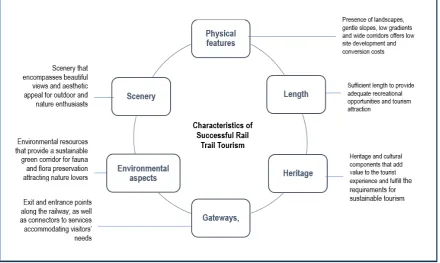
Reis and Jellum’s (2012) rail trail tourism development model identifies the main characteristics of successful rail trail tourism: (1) physical features, (2) length, (3) heritage, (4) gateways, (5) environmental aspects, and (6) scenery. They posit that the more attributes are present in the rail development, the higher its potential to be regarded as an attractive tourism product (Figure 1). Concurrently, Taylor (2014) recommends three key determinants for successful rail trail development from a tourism perspective: (1) the motivation and willingness of tourists to visit; (2) visitor experiences at the trail site; and (3) government and other relevant stakeholder support of the trail development. Within these key determinants, Taylor (2014) details several important contributing factors required at the trail site for potential tourism development: (1) unique trail features, (2) sophisticated marketing program, (3) role of gateway towns, (4) secondary attractions, (5) interpretation, (6) cooperative arrangements between management bodies, (7) role of friends groups, (8) technical factors, and (9) sustainable sources of funding (p.95).
Figure 1: Characteristics of Successful Rail Trail Tourism (Source: Adapted from Reis & Jellum, 2012)
210
& Morrison-Saunders, 2002; Moscardo, 1998; Law & Ting, 2011; Tan & Law, 2016). Further, with the ubiquity of, and advancements in smartphone technology and applications (apps), there has been a significant surge in the application of smartphone devices and mobile-enhanced platforms to augment, enhance and mediate the tourist experience (Ali & Frew, 2013; Kim & Law, 2015; Koivumaki, 2002; Peres, Correia & Moital, 2011; Wang, Park & Fesenmaier, 2012).
Augmenting the Rail Trail: Integrating smartphones and mobile-driven applications Mobile-driven applications (apps) available today within the travel domain offer real-time information connectivity, rich multimedia augmented-realities and ubiquitous networked social communication that are revolutionizing tourism consumption (Dickinson et al., 2012; Kim & Law, 2015; Wang et al., 2012; Wang & Xiang, 2012). There is significant potential for mobile apps to affect and shape the way that tourists experience a destination. Mobile-augmented tourism experiences have the ability to (1) enhance visitor communications and perceptions, (2) offer hedonic and utilitarian value-add, (3) improve satisfaction and loyalty, (4) alter tourist interpretations and intentions, and (5) create positive authentic experiences at the destination (Kim & Law, 2015; Peres et al., 2011).
However, mobile-driven trail apps must be designed in conjunction with other interpretative tools and content available at the trail site to ensure positive perceived value and usability for visitors. As highlighted by Koivumaki (2002, p. 57), such mobile-driven apps “should not be developed as separate stand-alone services, but as part of a complete multi-channel total service package” considered effective, efficient and value-add to users. Within the context of visitor learning and interpretation, Tan and Law (2016) suggest that mobile-driven apps designed for ST should be: (1) ubiquitous and seamless, (2) portable (and accessible in locations not reached by fixed networks), (3) context-specific, (4) interactive and engaging, (5) collaborative and socially connected, (6) in real-time (offering immediacy of information), (7) personalized, (8) integrated with other tools, (9) simple and flexible (information in bite size packages), (10) having stable connectivity (upload/download), (11) permanent (can be recorded and stored), and (12) immersive (affective emotional interaction with the virtual content). The provision and use of mobile-driven trail apps can deliver experiential and informational elements that enhance visitors’ trail-based activities and recreational encounters. Such a mobile trail app can augment the visitor’s interaction with heritage and physical infrastructures, providing further opportunities for conservation, interpretation and low carbon tourism development.
Conceptual Framework
211
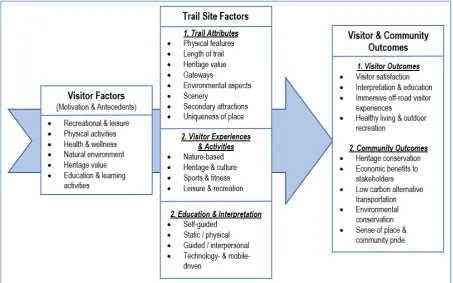
Figure 2: Conceptual model of low carbon mobile-driven rail trail
Methodology
The aim of this exploratory study is to investigate the feasibility of developing a low carbon mobile-driven rail trail in Singapore. The study site is a 26-km disused Keretapi Tanah Melayu (KTM) Berhad Railway Line and its Victorian-style Tanjong Pagar terminal station (TPRS) situated in the city. The railway line is an important green corridor fringing local community spaces and wildlife habitats; whilst the TPRS is a gazetted national monument (Henderson 2011; Liew, Pang & Chan, 2014). The KTM Berhad Railway Line and TPRS were formerly the property of the Malaysian Government until its return to Singapore in 2010. Due to its past functionality, the KTM serves as an emotive source of collective memories for Singaporeans and Malaysians. Many have expressed nostalgia, fascination and fondness for the place, and urged the government to undertake ecological and historical conservation of the site. In 2015, through public enthusiasm and appeals by lobby and conservation groups, the government reviewed and proposed a development plan to conserve the rail corridor.
212
opinions about the rail corridor development and motivations for rail trail use. Meetings were also held with stakeholders (e.g., the Urban Redevelopment Authority and Nature Society Singapore), to explore the viability of repurposing the rail corridor as a ST and recreational destination.
Results
A semi-structured questionnaire was developed for this study and composed of 18 items to collect participants’ demographical and tripographical information, as well as their narratives with regards to opinions about rail trail development preferences, expectations, motivations and perceptions.
Tripographic Profile
Over half the participants (69%, n = 48) were locals and the remaining (31%, n = 22) were tourists. There was an equal representation of males and females in the sample population. The age range was skewed towards a younger population of participants, with the majority (61%, n = 42) of the participants belonging to the 21-30-year range, followed closely by 11% (n = 8) aged 31-40, another 11% (n = 8) aged 41-50. A small percentage were aged above 50 years of age (10%, n =7) and below 20 years of age (7%, n = 5). From the data collected, it was found that the majority of participants (69%, n = 48) had visited the site before. In terms of visit party composition and companions, majority of participants (60%, n = 42) indicated a preference to go on rail trails with friends, while 34 % (n = 24) preferred going with their families. Only a small minority (6%, n = 4) preferred going alone.
Visitor Factors: Motivation and Antecedents
Participants were asked if they agree or disagree that there should be development and activities taking place along the rail corridor. The majority of the respondents 77% (n = 54) agreed that development and activities should take place at the disused railway, while 18% (n = 13) had a neutral point of view. Only a small minority of the respondents disagreed (5%, n =3) and felt that there should not be any form of development. Additionally, participants were further queried on their receptivity towards the site being converted as a modified space for tourism consumption. 90% of the respondents (n = 63) responded favorably towards tourism development at the site, with only a small minority (10%, n = 7) disagreeing with the notion. This indicated a strong visitor and community support towards rail trail tourism development.
213
Figure 3: Visitor Motivation and Antecedent Factors
Trail Factors: Trail Attributes, Visitor Experiences and Interpretation
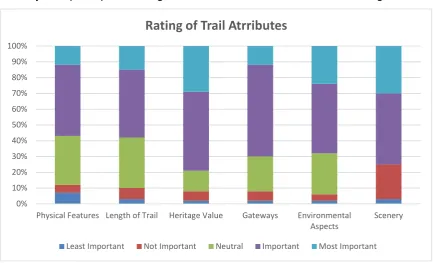
In this section, participants were questioned about the key trail attributes that they considered to be essential for a positive trail experience. There were six main attributes that were provided to participants for their rating based on a Likert-type scale. These attributes were: (1) physical features, (2) length of trail, (3) heritage value, (4) gateways, (5) environmental aspects, and (6) scenery. The participants’ ratings for each attribute are illustrated in the Figure 4 below.
Figure 4: Trail Attributes
68% 76% 70% 67% 0.1%
0 10 20 30 40 50 60 70 80
Recreation & Leisure Health & Wellness Natural Environment Heritage Value Others
Visitor Motivation & Antecedants
0% 10% 20% 30% 40% 50% 60% 70% 80% 90% 100%
Physical Features Length of Trail Heritage Value Gateways Environmental Aspects
Scenery
Rating of Trail Atrributes
214
In terms of the interest in trail experiences, participants were asked to indicate what type of thematic trails they will be keen on. The purpose of this question is to investigate the type of trails that visitors may be interested in, based on their leisure and recreational preferences. Responses were generated via a range of Likert-type items for them to choose from (they can select more than one trail type). The top five trail experiences sought were: (1) Heritage Trail (75%, n = 52), (2) Eco-friendly / nature-based Trail (81%, n = 57), (3) Photography Trail (30%,
n = 21), (4) Cycling Trail (41%, n = 28%), and (5) Other Trail Types. There were no responses for Other Trails.
Expanding on this question, participants were also asked to indicate their preferences in terms of the specific types of activities they may want to engage in on these trails. The purpose of the question was to gauge the rate of interest for the various activities available to potential visitors on the rail trail. Majority of the respondents indicated a preference for a historical/heritage cultural experience, cycling tracks, eco corners and affordable food and beverage establishments. Participants indicated interest in (1) seeing and experiencing railway artefacts and locomotive displays, (2) memory walls and murals, (3) flea markets selling goods of bygone days, (4) an eco-park displaying different rare species of flora and fauna, (5) an eco-friendly playground, and (6) a historical train signalling system.
Visitor Education and Interpretation
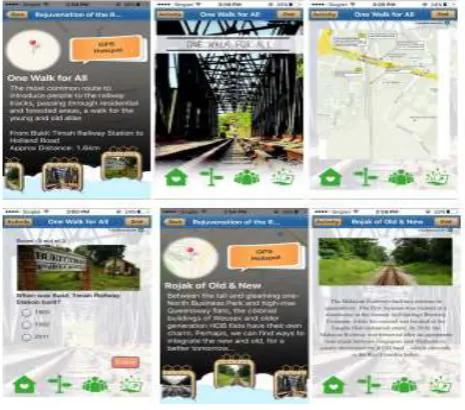
Participants were also asked to share their preferences for the style and type of interpretative experience during a trail visit which included: (1) self-guided tours (86%, n = 60%), and (2) guided tours (14%, n = 10). Consequently, when asked if they would be receptive and interested to use an interactive mobile trail app if available to enhance their interpretative and learning experience, a large majority of participants (83%, n = 57) indicated that they would like to use such an app (Figure 5). However, a small group of participants (17%, n = 12) did not like the idea of using any technology while on a rail trail. These participants indicated they had a preference for static/physical interpretation and/or did not mind having no interpretation because they were in nature, and did not want to focus on technology.
215
Discussion and Conclusion
Due to global concerns for more sustainable modes of tourism development, there is a move towards the reuse and modification of disused infrastructure to serve as unique tourism products and environment for active leisure pursuits (Henderson, 2011). Sustainable forms of tourism development are critical for maintaining the quality of life in crowded urban destinations and to enhance the economic viability of tourism. However, despite their increasing popularity (Taylor, 2014) and the benefits to visitors and the community derived from rail trail tourism development, there is a paucity of research on this topic area (Reis & Jellum, 2012). The current study addresses the void and provides a valuable contribution for the consideration of city developers and tourism planners in an urban Singapore.
The results gathered regarding the motivations and expectations of users have implications for the development and management of the rail trail. There was strong support among participants for the preservation of the disused railway into a green corridor within culturally- and ecologically-sensitive development agendas. Particularly, there was a strong nostalgic and historic appeal articulated by many participants in their motivations to support the conservation of the site. This was also reflected in the Urban Redevelopment Authority’s (URA) website (URA, 2015) and other studies (Henderson, 2011; Liew, Pang & Chan, 2014). However, due to the lack of research, it has been challenging to determine the attributes that are critical to the development of rail trails as tourism experiences (Taylor, 2014). The current study provides a worthwhile understanding of the critical attributes.
Corresponding to Reis and Jellum’s (2012) model, participants in the study had supported the importance of physical features, length of trail, heritage value, gateways, environmental aspects, and the scenery at the destination. Particularly, the attributes related to heritage value, environmental aspects and scenery were considered very important for this type of trail experience and related activities. Trail planners should prioritize the preservation of the unique heritage resources associated with the rail corridor (e.g. TPRS) and the conservation of the ecological resources (green corridor) that attract users. Attention should be paid to the accessibility to and from the rail trail, and various entry/exit points to attractions within the trail should be established to motivate users to visit the trail destination. Infrastructural developments and ancillary services such as visitor information centres, restrooms, signposting, rest stops and shelters, food and beverage establishments and good vantage points offering scenic views are vital pull factors to draw tourists (Willard & Beeton, 2012).
216
As supported in other studies (Willard & Beeton, 2012), many of the participants tend to prefer independent travel and favored planning their own trail and not use guides at the rail trail destination. There was also positive reception towards the prototype mobile trail app, as it created a more engaging and interactive trail experience. As highlighted by Peres et al. (2011), the acceptance and intention to use mobile-driven apps is influenced by the apps’ perceived usefulness (or value-add) and ease of use (e.g., navigational capabilities, usability and functionality). Such applications should enhance and augment the trail experience, rather than to detract or distract. Based on the observations from the study and participants’ response to the prototype rail trail app, it is evident that the provision of such a mobile-driven trail app can serve to enhance the visitors’ on-site trail experience; particularly with regards to the quality of interpretation and visitor learning. The availability of real-time, context-aware applications that cater to the informational, social and communicational needs of visitors while enjoying the rail trail can augment the other trail features and activities enjoyed during the experience. For instance, participants found the learning activities (e.g. the quizzes), and historical and cultural content available in the app had helped them to engage and connect with their surroundings, as well as the rich stories and narratives of the place from a bygone era. It also helped them to gain new knowledge and insights, which consequently enhanced their appreciation of the places and people they may not have encountered or discovered if they were to merely gaze passively or in passing.
As this study surveyed participants who were present at the study site who were interested in the railway, the results need to be analyzed with some caution, especially in extending them to the entire population. This sampling procedure can make generalization of the current study difficult. However, as this study is concerned with rail trail users, it has validity as it enables a conscious selection of individuals who reflect characteristics important for the analysis of this study, and from whom useful data and insights could be obtained (Bernard, 2011). Further, the researchers also observed that the results from this study were congruent with findings from other similar academic studies and online reviews about rail trails in other destinations (Beeton, 2009; Blackwell, 2001; Henderson, 2011; Liew, Pang, & Chan, 2014; Reis & Jellum, 2012). Additional research should be undertaken to examine barriers to trail use and the strategies to overcome these barriers. The concerns of the various stakeholders should also be examined as Hardy and Beeton (2001) caution that the concerns regarding the negative impacts on the environment, crowding at the destination and the lack of supporting infrastructures can impede rail trail tourism development. Further study on the economic viability of rail trails at the green corridor in Singapore is warranted to make informed decisions on the rail trail benefits, as well as the viability and obtaining support for funding sources.
217
that to effectively develop the site into a ST product, there is a need for (1) a sound understanding of the motivations and expectations of users of rail trails; (2) the sustainable development and conservation of the site’s historical and physical resources; (3) effective interpretive facilities, especially the use of mobile-driven technologies to enrich the visitor experiences and educational outcomes, and (4) the development and provision of relevant activities and experiences on site.
Beyond ecological imperatives, social-cultural concerns of the adjacent local community spaces must also be acknowledged. The heritage listed KTM station and its green rail corridor can offer a rich history of local narratives and stories that create excellent opportunities for interpretive and educational programs. When developed carefully, the rail trail could provide a carbon-free tourism opportunity in a highly dense city and be part of a larger sustainable tourism strategy in Singapore. If leveraged and developed in accordance with ST guidelines, the proposed rail corridor can offer a low carbon trail experience that serves to achieve the triple bottom line of economic, social and environmental outcomes beyond the last train and its forgotten past.
References
Ali, A., & Frew, A. J. (2013). Information communication technologies and sustainable tourism.
Abingdon, Oxon: Routledge.
Beeton, S. (2006). Regional communities and cycling: The case of the Murray to the Mountains Rail Trail, Victoria, Australia. Bendigo, VIC: La Trobe University, School of Sport, Tourism and Hospitality Management.
Beeton, S. (2010) Regional community entrepreneurship through tourism: The case of Victoria’s rail trails. International Journal of Innovation and Regional Development, 2(1-2), 128-48. Bernard H. (2011). Research methods in Anthropology: Qualitative and quantitative approaches.
San Francisco, CA: Altamira Press.
Betz, C. J., Bergstrom, J. C., & Bowker, J. M. (2003). A Contingent Model for Estimating Rail Trail Demand. Journal of Environmental Planning and Management, 46(1), 79-96. Blackwell, D. (2001). The Community and Visitor Benefits of the Otago Cenral Rail Trail,
Canterbury, NZ: Lincoln University.
Bonduelle, M. (2006, November 24–25). Voies vertes en France: Un joker durable pour le tourisme [Greenways in France: A wildcard for sustainable tourism]. Paper presented at the Technical Conference Greenways in Europe, Girona, Spain.
Dickinson, J. E., Ghali, K., Cherrett, T., Speed, C., Davies, N., & Norgate, S. (2014). Tourism and the smartphone app: Capabilities, emerging practice and scope in the travel domain. Current Issues in Tourism, 17(1), 84-101.
Hardy, A. L., & Beeton, R. J. (2001) Sustainable tourism or maintainable tourism: Managing resources for more than average outcomes. Journal of Sustainable Tourism, 9(3), 168-192.
Henderson, J. (2011). Railways as heritage attractions: Singapore's Tanjong Pagar station. Journal of Heritage Tourism, 6(1), 73-79.
218
Hughes, M., & Morrison-Saunders, A. (2002). Impact of trail-side interpretive signs on visitor knowledge. Journal of Ecotourism, 1(2-3), 122-132.
Kim, H. H., & Law, R. (2015). Smartphones in tourism and hospitality marketing: A literature review. Journal of Travel & Tourism Marketing, 32(6), 692-711.
Koivumäki, T. (2002). Consumer attitudes and mobile travel portal. Electronic Markets, 12(1), 47-57.
Law, R., & Ting, J. (2011). The impact of visitor behavior on the environmental protection of tourist farms in Guangdong. Asia Pacific Journal of Tourism Research, 16(3), 307-323. Liew, K., Pang, N., & Chan, B. (2014). Industrial railroad to digital memory routes: remembering
the last railway in Singapore. Media, Culture & Society, 36(6), 761-775.
Litman T. (2012). Evaluating non-motorized transportation benefits and costs. Retrieved from: http://www.vtpi.org/nmt-tdm.pdf.
Moore, R. L., & Ross, D. T. (1998). Trails and recreational greenways: Corridors of benefits.
Parks and Recreation, 33(1), 68-79.
Moscardo, G. (1998). Interpretation and sustainable tourism: Functions, examples and principles. The Journal of Tourism Studies, 9(1), 2-13.
Mundet, L., & Coenders, G. (2010). Greenways: A sustainable leisure experience concept for both communities and tourists. Journal of Sustainable Tourism,18(5), 657-674.
Oswald Beiler, M., Burkhart, K., & Nicholson, M. (2015). Evaluating the impact of rail-trails: A methodology for assessing travel demand and economic impacts. International Journal of Sustainable Transportation, 9(7), 509-519.
Peres, R., Correia, A., & Moital, M. (2011). The indicators of intention to adopt mobile electronic tourist guides. Journal of Hospitality and Tourism Technology, 2(2), 120-138.
Price, A. E., & Reed, J. A. (2014). Use and nonuse of a rail trail conversion for physical activity: Implications for promoting trail use. American Journal of Health Education,45(4), 249-256.
Rails-to-Trails Conservancy (2007). Fact Sheet: Rail Trails and Utilities. Retrieved from http://www.railstotrails.org/resourcehandler.ashx?id=3505
Reis, A., & Jellum, C. (2012). Rail trail development: A conceptual model for sustainable tourism.
Tourism Planning & Development, 9(2), 133-147.
Tan, E., & Law, R. (2016). mLearning as a softer visitor management approach for sustainable tourism. Journal of Sustainable Tourism, 24(1), 132-152.
Taylor, P. (2015). What factors make rail trails successful as tourism attractions? Developing a conceptual framework from relevant literature. Journal of Outdoor Recreation and Tourism, 12, 89-98.
Timothy, D. J., & Boyd, S. W. (2015). Tourism and trails: Cultural, ecological and management
issues. Bristol, UK; Channel View Publications.
Urban Redevelopment Authority. (2015). Rail Corridor: Overview. Retrieved from https://www.ura.gov.sg/MS/railcorridor/rfp/overview.aspx.
219
Wang, D., & Xiang, Z. (2012). The new landscape of travel: A comprehensive analysis of smartphone apps. In M. Fuchs, F. Ricci, & L. Cantoni (Eds.), Information and Communication Technologies in Tourism 2012 (pp. 308-319). Vienna: Springer.
Weston, R., & Mota, J. C. (2012). Low carbon tourism travel: Cycling, walking and trails. Tourism Planning & Development, 9(1), 1.
Willard, P., & Beeton, S. (2012). Low Impact Experiences: Developing Successful Rail Trail Tourism. Tourism Planning & Development, 9(1), 5-13.