Prediction of Effective Mobile Wireless
Network Data
Profiling Using
Data Mining Approaches
Ch. R. Phani Kumar
1,*, B. Uday Kumar
2, V. Malleswara Rao
2, Dsvgk Kaladhar
31Department of ECE, GITAM University, Visakhapatnam, 530045, India 2
Department of EIE, GITAM University, Visakhapatnam, 530045, India
3
Department of Bioinformatics, GITAM University, Visakhapatnam, 530045, India
Abstract
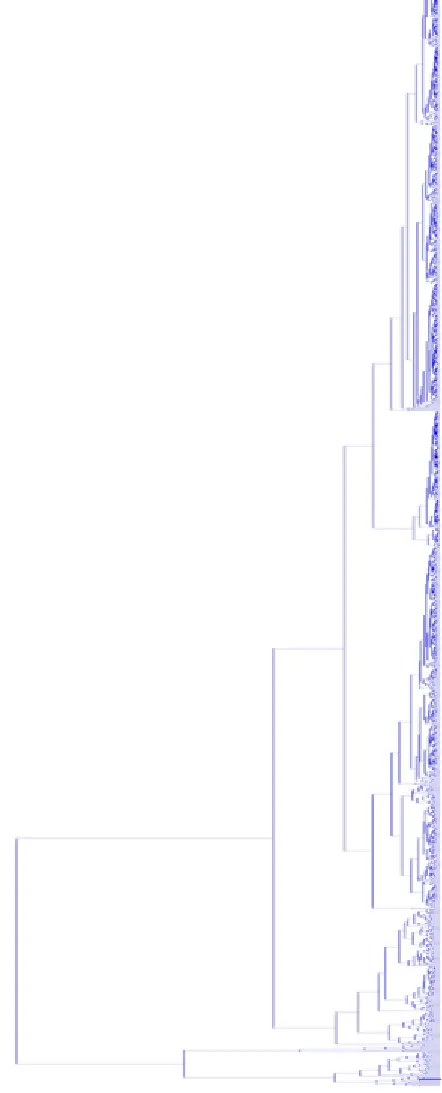
Mobile network analysis has a huge potential that provide insight into the relational dynamics of individuals. Machine learning and data mining techniques provide the behavior patterns of the mobile network data. The data transfer during all the days has produced good results in transfer of data starting from Day 1 to Day 22. Hierarch ical c lustering of the datasets for all the 1634 data e xa mples in the mobile t raffic dataset. Co mplete linkage dendrogram has been produced between 0 and 4.64. Two c lusters have been produced from the present wireless mobile t raffic datasets.Keywords
Mobile Wireless Network , Data Profile, Dataset, Data Mining1. Introduction
Decision tree and neural network techniques can deliver accurate prediction models by using customer de mographics, billing in formation, contract/service status, call detail records, and service change log[1]. Mobility predict ion is one of the most essential issues that need to be e xplo red for mobility management that maybe evaluated through simu lation as co mpared with predict ion methods in mobile computing systems[2].
Data collected fro m mobile phones have the potential to provide insight into the relational dynamics of indiv iduals[3]. Advanced data min ing techniques and a neural network algorith m can be combined successfully to obtain a high fraud coverage combined with a low fa lse alarm rate[4]. Mobile mining is about finding useful knowledge fro m the raw data produced by mobile users consists of a set of static device and mobile device. Prev ious works in mobile data mining include finding frequency pattern and group pattern that builds a user profile based on past mobile visit ing data, filters and to mine association rules[5].
Capac ity in mobile netwo rks will have to be assigned dynamica lly; necessitating development of new data mining techniques for understanding and predicting network load[6]. A c t iv e n e t wo rks a re a n o v e l a p p ro a c h t o n e t wo rk architecture in which the switches (or routers) of the network perform customized co mputations on the messages flowing t h ro ug h t h e m. A c t iv e n et wo rk p e rfo r m u s e r-d riv e n co mputation at nodes with in the net wo rk today, and the
* Corresponding author:
[email protected] (Ch. R. Phani Kumar) Published online at http://journal.sapub.org/algorithms
Copyright © 2013 Scientific & Academic Publishing. All Rights Reserved
eme rgence of mobile code technologies that make dynamic network service innovation attainable[7].
The simplest approach to the analysis of sensor network data makes use of a centralized architecture where a central server maintains a database of readings from all the sensors fro m thousands of nodes, to manage large amount of data efficiently through data mining techniques[8]. The mob ile user's behavior patterns, in which the location and the service are inherently coe xistent, become more co mp le x than those of the traditional web systems[9].
Network Va lue Analysis (NVA) as a way to analyse competitive ecosystems illustrates its application, the provision of mob ile services and content can be e xp lored to identify potential strategic implications for mobile operators[10].
2. Methodology
The Knowledge Discovery in Databases (KDD) methodology seems to be attractive on the analyze of large mobile databases. Following are the algorith ms used to analyze the mobile tra ffic data containing 23 attributes and 1634 datasets.
2.1. Majority
Accuracy of classifiers is often compared to the "default accuracy”, that is, the accuracy of a classifier which classifies all instances to the ma jority c lass. To fit into the standard schema, even this a lgorith m is prov ided in form of the usual lea rner-c lassifier pair. Lea rning is done by :obj:`Ma jority Learner` and the classifie r it constructs is an instance of :obj:`ConstantClassifier`.
Majority Learner will most often be used as is, without setting any parameters. Nevertheless, it has two.
Step1: .. attribute:: estimator_constructor
An estimator constructor that can be used for estimation of class probabilit ies. If le ft None, probability of each class is estimated as the relative frequency of instances belonging to this class.
Step2: .. attribute:: apriori_distribution
Apriori c lass distribution that is passed to estimatorconstructor if one is given.
Step3: .. c lass:: ConstantClassifie r
ConstantClassifie r a lways classifies to the same c lass and reports the same class probabilit ies.
Its constructor can be called without arguments, with a variab le (for: ob j:`c lass_var`), value (for :obj:`default_val `) or both. If the value is given and is of type: obj: `Orange.data.Va lue` (a lternatives are an integer index o f a discrete value or a continuous value), its attribute:obj:`Oran ge.data.Value .variable ` will e ither be used for initia lizing :o bj:`class_var` if variable is not given as an argument, or checked against the variable argu ment, if it is given.
Step4: .. attribute:: default_val Value that is returned by the classifier. Step5: .. attribute:: default_distribution Class probabilit ies returned by the classifier. Step6: .. attribute:: class_var
Class variable that the classifie r predicts.
2.2. Support Vector Machine (SVM)
Support vector machines (SVM ) is a popular mach ine learning method with variants for c lassification, regression and distribution estimation that can learn a problem in a higher dimensional space through the use of a kernel trick. Integrated with Orange is a popular imple mentation by Chang and Lin, libsvm.[26]the fact fro m the mu ltid imensional analytica l geo metry, na mely that the distance between a hyperplane H = {x : wT x + w0 = 0) and a point y ∈ Rk is given by the formula d(H,y ).
2.3. k-Nearest Neighbor
Algorithm
Step1:findNearest
A component that finds nearest neighbours of a given e xa mple . K Nu mber of neighbours. If set to 0 (wh ich is a lso the default value), the square root of the number of e xa mples is used. Change d: the default used to be 1.
Step2:RankWeight
Enables we ighting by ranks (default: true).
weighID
ID o f meta attribute with weights of e xa mples Step3:nExamples
The number of learn ing e xa mp les. It is used to compute the number of neighbours if k is ze ro.
2.4. Random Forest
Algorithm
Step1: Let „N‟ be the nu mber of train ing cases, and let „M‟ be the nu mber of variab les in the c lassifie r. Choose m as input variables, to be used to determine the dec ision at a node of the tree; m should be much less than M.
Step2: Recurse a train ing set for this tree by choosing N times with replace ment fro m all N available tra ining cases (take a bootstrap sample). Rest of the cases to be estimated as error of the tree, by predicting their classes.
Step3: For each node in the tree, randomly choose m
variables, which should be based on the decision at that node.
Step4: Calcu late the best split based on these m variables in the training set. The value of m re ma ins to be constant during forest growing. Rando m fo rest is sensitive to the value of m.
Step5: Each tree is gro wn to the la rgest extent possible, into many classification trees without pruning, in constructing a normal tree c lassifier.
Unsupervised algorith ms such as hierarchia l clustering and SOM provide the problem of trying to find hidden structure in unlabeled data. Learn ing useful structure without labeled classes, optimization criterion, feedback signal, or any other informat ion beyond the raw data can be processed in this methods
2.5. Hierarchical Clustering
Algorithm
Step 1: Cluster data with high Smin 1st hierarch ical leve l
Step 2: Dec rease Smin (stop at Smin=0)
Step 3: Treat cluster centroids as data tuples and recluster, creating ne xt leve l of h ierarchy, then repeat steps 2 and 3.
2.6. SOM (Self organizing maps)
Algorithm
Step1: Rando mize the map's nodes' weight vectors Step 2: Grab an input vector
Step 3: Traverse each node in the map
a. Use the Euclidean distance formula to find the similarity between the input vector and the map's node's weight vector b. Track the node that produces the smallest distance (this node is the best matching unit, BM U)
Step 4: Update the nodes in the neighborhood of the BMU (including the BMU itself) by pulling them c loser to the input vector
Wv(s + 1) = Wv(s) + Θ(u, v, s) α(s)(D(t) - Wv(s)) Step 5: Increase s and repeat from step 2 wh ile
Sieve graphs provide mean, sorting, skewness, and kurtosis related to the mobile traffic data.
3. Results
The mobile traffic datasets have been analysed using data mining techniques. The accuracy and errors in the e xa mples were found by using various classification a lgorith ms.
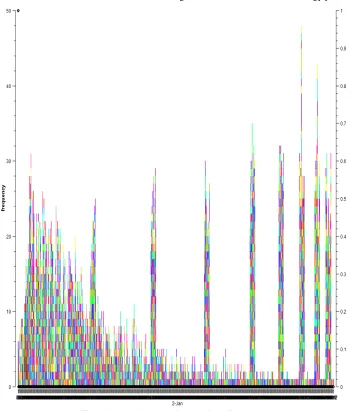
Figure 1 shows that the traffic levels had 96% utilizat ion during data transfer in mobile technology predicted in this dataset.
Figure 1. Distribution plot from mobile traffic datasets
Table1 shows the classification of mobile traffic datasets. As the RMSE is less for kNN, the accuracy of the datasets for kNN was ma ximu m. As R2 is zero for ma jority, so this algorith m has produced less predicted accuracy for our p resent mobile traffic datasets.
Table 1. Classification of mobile traffic dataset
MSE RMSE MAE RSE RRSE RAE R2
Majority 186.3 13.6 9.09 1.0 1.0 1.0 0
SVM 9.06 3.01 1.44 0.04 0.22 0.15 0.95
KNN 4.52 2.13 1.34 0.02 0.15 0.15 0.97
Random Forest 6.37 2.52 1.59 0.03 0.18 0.17 0.96
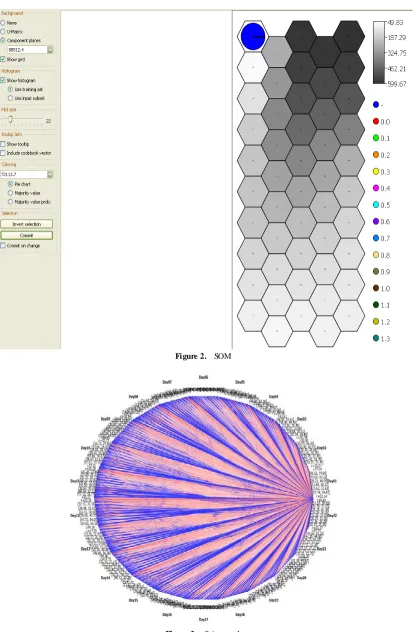
Figure 2 shows the SVM patterns for mobile tra ffic datasets. This unsupervised learning is very useful when compared with supervised learn ing such as classification algorith ms as there are more nu mber o f datasets in h igh skewness (ranges fro m 49.83 – 599.67). There is less number of utilization observed by using this SOM method.
Figure 2. SOM
Figure 3. Seive graph
Figure 4. Hierarchical clustering
4. Discussion
Data mining as we use the term is the e xp loration and analysis of large quantities of data in order to discover mean ingful patterns and rules[11]. Data mining will be ab le
to ma ke a h igh impact in the area of integrated data fusion and min ing in ecological/environ mental applicat ions, especially when involv ing distributed/decentralized data sources like autonomous mobile sensor networks[12]. Knowledge discovery in databases is a rapidly growing field, whose development is driven by strong research interests as well as urgent practical, social, and economica l needs[13].
The development of wireless and web technologies has allo wed the mobile users to request various kinds of services by mobile devices at anytime and anywhere. He lping the users obtain needed information effectively is an important issue in the mobile web systems[14]. In this correspondence, we address the issue of efficiently mining multilevel and location-aware associated service patterns in a mobile web environment. In terms of mult ileve l concept, we consider the comple x p roble m that locations and services are of hierarchica l structures[15].
Mobility predict ion is one of the most essential issues that need to be explored for mobility manage ment in mob ile computing systems[16].As deregulation, new technologies, and new competitors open up the mobile telecommun ications industry, churn prediction and manage ment has become of g reat concern to mobile service providers[17].
Because the radio spectrum is limited, managing the limited a mount of resources is an important issue, especially for h igh-speed data applications thus making data mining prediction models important[18]. Ne w data mining techniques involve min ing calling path patterns in global system for mob ile co mmunication (GSM ) networks[19].
A neural network algorith m ca lled the self-o rganizing map, together with a conventional clustering method like the k-means, can effect ively be used to simplify and focus network ana lysis. It is shown that these algorithms he lp in visualizing and grouping simila rly behaving cells. Thus, it is easier for a human e xpert to discern different states of the network. Th is ma kes it possible to perform faster and mo re efficient troubleshooting and optimization of the para meters of the cells[20].
5. Conclusions
Thus we have predicted the accuracies and errors in mobile t raffic data using various classification algorit ms. Fro m the study, we come to the conclusion that the Majority algorith m is the one with the least accuracy and the k- Nearest Ne ighbors algorithm provides the ma ximu m accuracy,i.e., least error. Thus we propose to use the k- Nearest Neighbours alogorithm or also SVM and Random forest algorith m can be used to make pred ictions in mobile traffic usage which provide an acceptable level o f accuracy.
ACKNOWLEDGEMENTS
GITAM Un iversity, India for their kind support in bringing out the above literature and providing lab facilities.
REFERENCES
[1] Shin Yuan Hunga, David C. Yenb, Hsiu-Yu Wangc, “Applying data mining to telecom churn management”. Expert Systems with Applications, vol. 31, no. 3, pp. 515–524, 2006.
[2] Gökhan Yavaşa Dimitrios Katsarosb, Özgür Ulusoya,Yannis M anolopoulosb, “A data mining approach for location prediction in mobile environments”. Data & Knowledge Engineering, vol. 54, no. 2, pp. 121–146, 2005.
[3] Nathan Eagle, Alex (Sandy) Pentland, David Lazer,”Inferring friendship network structure by using mobile phone data”. PNAS vol. 106, no. 36, pp. 15274-15278, 2009.
[4] R. Brause, T. Langsdorf, M . Hepp,”Neural data mining for credit card fraud detection”. Tools with Artificial Intelligence, 11th IEEE International Conference, pp. 103 – 106, 1999. [5] Jen Ye Goh, David Taniar, “M obile Data M ining by Location
Dependencies”. Intelligent Data Engineering and Automated Learning – IDEAL Lecture Notes in Computer Science,vol. 3177, pp. 225-231, 2004.
[6] J. Han, R. B. Altman, V. Kumar, H. M annila, D. Pregibon, “Emerging scientific applications in data mining”. Communications of the ACM , vol. 45, pp. 54-58, 2002. [7] D. L. Tennenhouse, J. M. Smith, W. D. Sincoskie, D. J.
Wetherall, G. J. M inden, “A survey of active network research. Communications M agazine”. IEEE, vol. 35, pp. 80-86, 1997.
[8] G. Bontempi, Y. Le Borgne, “An adaptive modular approach to the mining of sensor network data”. In Proceedings of 1st International Workshop on Data M ining in Sensor Networks as part of the SIAM International Conference on Data M ining, pp. 3-9, 2005.
[9] V. S. Tseng, K. W. Lin, “Efficient mining and prediction of user behavior patterns in mobile web systems”. Information
and software technology, vol. 48, pp. 357-369, 2006.
[10] J. Peppard, A. Rylander, “From Value Chain to Value Network:: Insights for M obile Operators”. European Management Journal, vol. 24, pp. 128-141, 2006.
[11] M . J. Berry, G. S Linoff, “Data mining techniques: for marketing, sales, and customer relationship management”. Wiley Computer Publishing, 2004.
[12] Q. Yang, X. Wu, “10 challenging problems in data mining research”. International Journal of Information Technology & Decision M aking, vol. 5, pp. 597-604, 2006.
[13] M . Goebel, L. Gruenwald, “A survey of data mining and knowledge discovery software tools”. ACM SIGKDD Explorations Newsletter, vol. 11, pp. 20-33, 1999.
[14] V. S. Tseng, K. W. Lin, “Efficient mining and prediction of user behavior patterns in mobile web systems”. Information and software technology, vol. 48, pp. 357-369, 2006.
[15] S. M . Tseng, C. F. Tsui, “M ining multilevel and location-aware service patterns in mobile web environments”. Systems, Man, and Cybernetics, Part B: Cybernetics, IEEE Transactions on, vol. 34, pp. 2480-2485, 2004.
[16] G. Yavas, D. Katsaros, Ö. Ulusoy, Y. M anolopoulos, “A data mining approach for location prediction in mobile environments”. Data & Knowledge Engineering, vol. 54, pp. 121-146, 2005.
[17] C. P. Wei, I. Chiu, “Turning telecommunications call details to churn prediction: a data mining approach”. Expert systems with applications, vol. 23, pp. 103-112, 2002.
[18] J. L. Chen, “Resource allocation for cellular data services using multiagent schemes”. Systems, M an, and Cybernetics, Part B: Cybernetics, IEEE Transactions on, vol. 31, pp. 864-869, 2001.
[19] A. J. Lee, Y. T. Wang,”Efficient data mining for calling path patterns in GSM networks”. Information Systems, vol. 28, pp. 929-948, 2003.