THE DEVELOPMENT OF A MEASURING INSTRUMENT TO DETERMINE THE EDUCATIONAL FOCUS OF STUDENTS AT A NURSING COLLEGE
by
CHAUTNETTE MOUTON
submitted in accordance with the requirements
for the degree of
DOCTOR OF LITERATURE AND PHILOSOPHY
in the subject
HEALTH STUDIES
at the
UNIVERSITY OF SOUTH AFRICA
PROMOTER: DR DM VAN DER WAL
JOINT PROMOTER: DR VJ EHLERS
(ii)
DECLARATION
Student Number: 423-8818
I declare that
THE DEVELOPMENT OF A MEASURING INSTRUMENT TO DETERMINE THE EDUCATIONAL FOCUS OF STUDENTS
AT A NURSING COLLEGE
is my own work and that all the sources that I have used or quoted have been indicated and acknowledged by means of
complete references.
... ...……...
SIGNATURE DATE
(MRS. C. MOUTON)
(iii)
Dedicated to the memory
of my late parents,
Paul Jacobus Durant
and
Carmen Amy Florence Durant
for their unswerving belief in
my ability to attain any goal
I set out to achieve.
“Our chief want in life is somebody who shall make us do
what we can”.
Ralph Waldo Emerson (Considerations by the Way, in Shechtman,(iv)
ACKNOWLEDGEMENTS
I can do all things through Christ which strengtheneth me (Philippians 4:13).
I wish to express my sincere gratitude to the many people whose support and assistance made the completion of this study possible. In particular I would like to thank the following people and organizations:
• Dr DM van der Wal, my promoter, for his enlightening counsel, unwaning enthusiasm and encouragement
• Dr VJ Ehlers, my joint-promoter, for her invaluable contribution to the research topic • Professor F Steffens, for compiling the statistical calculations of the research data • Mrs M du Plessis and Miss J van Rooyen for their valuable contribution
• Respondents for giving of their time and honesty, for their genuine interest, concern and encouragement; for without them the thesis would not have been possible
• The management teams, tutors and administration personnel at the institutions at which the research was conducted
• Family members and friends for their continued support
• My husband for his love, endurance, emotional support and the editing of my thesis • Miss P Nel for undertaking the tedious task of language control.
(v)
THE DEVELOPMENT OF A MEASURING INSTRUMENT TO DETERMINE THE EDUCATIONAL FOCUS OF STUDENTS AT A NURSING COLLEGE
BY: CHAUTNETTE MOUTON
DEGREE: DOCTOR OF LITERATURE AND PHILOSOPHY SUBJECT: HEALTH STUDIES
UNIVERSITY: UNIVERSITY OF SOUTH AFRICA PROMOTER: DR DM VAN DER WAL
JOINT PROMOTER: DR VJ EHLERS
ABSTRACT
The question the researcher set out to answer was “What is the educational focus of a nursing college when viewed within Bevis and Watson’s Humanistic-Educative-Caring Curriculum Paradigm versus a Stimulus-Response Curriculum Paradigm?” The purpose of this study
was to develop and test an instrument based on the Bevis and Watson Humanistic-Educative-Caring Model; an educational paradigm shift from the Tylerian rationale in nursing education.
A questionnaire comprising 181 Two-Choice Comparative-Value-Statement Items was developed and tested. A non-experimental research design was implemented. During the developmental phase, a non-probability, purposive sample was used; the questionnaire (instrument) was developed; data were analysed by applying content analysis and the questionnaire was refined. During the testing phase a stratified, random sample was used consisting of first to fourth year students from two nursing colleges from the Gauteng Province; the items were tested against biographic data and hypotheses resulting from the Bevis and Watson model. Six conceptual continuums comprise the Bevis and Watson model namely, the Learner Maturity Continuum, the student relationship, the Teacher-student structure, the Typology of Learning, Criteria for Teacher-Student Interactions and Criteria for Selecting and Devising Learning Experiences. Both descriptive and inferential statistics were utilised.
(vi)
The results indicated that the educational focus of the respondents with regard to the Bevis and Watson model was predominantly humanistic. The exception occurred with regard to TUTOR: Teacher-student structure; pertaining to hypothesis 7 on language; and hypothesis 9 on gender, where a behaviouristic orientation appears to prevail. Significant differences were found between the model variables (conceptual continuums) and year group, language, college A and B, and gender. In hypothesis 5, although a humanistic orientation predominated, the 4th year students tended to display an increasing behaviouristic orientation. In hypothesis 8, although a humanistic orientation predominated, college A appeared less humanistic than college B.
Recommendations were made regarding nursing education and further research studies to refine the instrument. The implementation of the Bevis and Watson model calls for a curriculum paradigm shift in nursing education.
KEY TERMS
• Humanistic-Educative-Caring Curriculum Paradigm
• Behaviouristic (Stimulus-Response) Curriculum Paradigm
• Curriculum Focus
• Stimulus-response principles
• Interactions and learning
• Learner Maturity Continuum
• Typology of Learning
• Criteria for Teacher-Student Interactions
• Criteria for Selecting and Devising Learning Experiences
• Educational focus
• Training-Education Continuum
(vii)
TABLE OF CONTENTS
CHAPTER 1
ORIENTATION TO THE STUDY
Page
1.1 INTRODUCTION 1
1.2 PROBLEM FORMULATION 1
1.2.1 Background to the problem 1
1.2.2 Problem statement 6
1.2.3 Research question 9
1.2.4 Purpose of the study 9
1.2.5 Objectives 9
1.2.5.1 Objectives during the developmental phase 10
1.2.5.2 Objectives during the testing phase 10
1.2.6 Assumptions 10 1.2.6.1 Theoretic-conceptual commitments 11 1.2.6.2 Methodological-technical commitments 11 1.2.6.3 Ontological commitments 12 1.2.7 Hypotheses 12 1.2.7.1 Hypothesis 1 12 1.2.7.2 Hypothesis 2 12 1.2.7.3 Hypothesis 3 13
1.3 SIGNIFICANCE OF THE STUDY 13
1.3.1 Direction and focus 13
1.3.2 Scientific foundation of nursing 14
1.3.3 Curriculum refocus 14
1.3.4 Quality assurance instrument 15
1.4 CONCEPTUAL FRAMEWORK 15
(viii)
Page
1.4.1.1 Curriculum Focus 16
1.4.1.2 The Bevis and Watson six conceptual continuums 16 1.4.1.3 Training-Education Continuum 18
1.5 RESEARCH METHODOLOGY 20
1.5.1 Research design 20
1.5.2 Research technique and instrument 20
1.5.3 Sampling design 20
1.5.4 Pretesting the instrument 20
1.5.5 Data collection methods 21
1.5.6 Data analysis 21
1.5.7 Developmental phase: validity and reliability during data 21
collection and analysis 1.5.8 Testing phase: validity and reliability during data collection 22
and analysis 1.6 ETHICAL CONSIDERATIONS 22
1.7 LIMITATIONS OF THE STUDY 23
1.8 TERMINOLOGY 23
1.9 OUTLINE OF THE RESEARCH REPORT 25
1.10 OUTLINE OF THE RESEARCH METHODOLOGY 26 1.11 SUMMARY 32
(ix)
CHAPTER 2
THEORETICAL FRAMEWORK THE BEVIS AND WATSON MODEL
Page
2.1 INTRODUCTION 33
2.2 CONCEPTUAL FRAMEWORK 33
2.3 CLARIFICATION OF TERMINOLOGY 34 2.4 THE BEVIS AND WATSON HUMANISTIC-EDUCATIVE- 40 CARING CURRICULUM PARADIGM 2.5 DESCRIPTION OF THE BEVIS AND WATSON MODEL 41 2.5.1 Learner Maturity Continuum 41
2.5.1.1 Immature positions 43
2.5.1.2 Mature positions 46
2.5.1.3 Teacher-student relationship 48
2.5.1.4 Teacher structure and Student self-structure 50
2.5.2 Typology of Learning 50
2.5.2.1 Different types of learning 50
2.5.2.2 Description of the Typology of Learning 54 2.5.2.2.1 Item learning 55 2.5.2.2.2 Directive learning 59 2.5.2.2.3 Rationale learning 60 2.5.2.2.4 Contextual learning 60 2.5.2.2.5 Syntactical learning 61 2.5.2.2.6 Inquiry learning 62
2.5.3 Criteria for Teacher-Student Interactions 64
2.5.4 Criteria for Selecting and Devising Learning Experiences 67 2.5.4.1 The impact of Benner’s research 73 2.5.4.2 Triple Jump method 74
(x)
CHAPTER 3
LITERATURE REVIEW
THE BEHAVIOURISTIC PARADIGM
Page 3.1 INTRODUCTION 77 3.2 CLARIFICATION OF TERMINOLOGY 77 3.2.1 Learning 77 3.2.2 Training 78 3.2.3 Education 79
3.3 THE BEHAVIOURISTIC FRAMEWORK 79 3.3.1 Classical conditioning 79
3.3.2 Behaviourism 80
3.3.3 Law of effect 80
3.3.4 Operant conditioning 81
3.3.5 Bandura’s social learning theory 81 3.3.6 Bruner’s theory of discovery learning 82
3.4 TYLERIAN RATIONALE AND OUTCOME BASED 82 EDUCATION (OBE) 3.4.1 Outcome Based Education (OBE) 82 3.4.2 Tylerian rationale 83
3.4.2.1 Instrumentalism 84
3.4.2.2 Curriculum development 85
3.5 DISCUSSION OF THE TYLER RATIONALE AND THE 90 BEVIS AND WATSON HUMANISTIC-EDUCATIVE- CARING CURRICULUM PARADIGM 3.5.1 Question one 90
3.5.1.1 Teacher-student relationship, Teacher structure and Student 92
self-structure 3.5.1.2 Immature positions on the Learner Maturity Continuum 92
3.5.1.3 Mature positions on the Learner Maturity Continuum 94
(xi) Page 3.5.2.1 Learning by contract 96 3.5.3 Question three 98 3.5.4 Question four 99 3.5.4.1 An interpretive-criticism approach 99 3.6 SUMMARY 101
(xii)
CHAPTER 4
LITERATURE REVIEW
THE HUMANISTIC-EDUCATIVE-CARING CURRICULUM PARADIGM
Page 4.1 INTRODUCTION 102 4.2 HUMANISTIC-EDUCATIVE-CARING CURRICULUM 102 PARADIGM 4.3 AFFECTIVE EDUCATION 104 4.3.1 Foundations of affect 110 4.3.1.1 Human dignity 110 4.3.1.1.1 Freedom 111
4.3.1.1.2 Caring and Justice 112
4.3.1.1.3 Equality 115
4.3.1.1.4 Peace 115
4.3.2 History of affect in the curriculum 115
4.3.2.1 Religious-based moral education 116
4.3.2.2 Classical humanism 116
4.3.2.3 Child-centred movements 116
4.3.2.4 Character education 117
4.3.2.5 Social efficiency movement 117
4.3.2.5.1 Social reconstructionism and engineering of consent 118 4.3.2.6 Life adjustment education 119
4.3.2.7 Decline of the concept affect 120
4.4 HUMANISTIC EDUCATION 121
4.4.1 Humanistic psychology 121
4.4.1.1 Values education 122
4.4.1.2 Values clarification 122
4.4.1.3 Cognitive-moral developmental education 122 4.4.2 Humanism as a philosophy of education 124 4.4.2.1 Beliefs about education 124
(xiii)
Page
4.4.2.3 The learner 125
4.4.2.4 The nature of method 125
4.4.2.5 Social progress 126
4.4.3 Humanism and human care nursing education 126 4.4.3.1 The moral dimension 127 4.4.4 Student centred learning theories 128 4.4.4.1 Self-directed learning 128 4.4.4.2 Individualised learning 131
4.5 DEVELOPMENTAL EDUCATION 132
4.6 CURRICULUM DEVELOPMENT IN THE 134
POST-MODERN ERA
(xiv)
CHAPTER 5
LITERATURE REVIEW
RECENT TRENDS AND ISSUES IN SOUTH AFRICA
Page
5.1 INTRODUCTION 138
5.2 RECENT TRENDS AND ISSUES IN SOUTH AFRICA 138
5.2.1 Application of behaviouristic principles 139 5.2.1.1 Curriculum content: curriculum organisation and subject content 139 5.2.1.2 Teaching strategies and learning climate 139 5.2.1.3 Evaluation of learning 139 5.2.2 Changes in the educational system in South Africa 140
5.2.2.1 Curriculum 2005 141
5.2.2.1.1 Concerns regarding Curriculum 2005 145 5.2.3 The South African Nursing Council (SANC) 147 5.2.3.1 Documentation 147 5.2.3.2 The Nursing Act 2005 (Act no 33 of 2005) 149 5.2.4 The National Health Plan 150 5.2.4.1 Human resource development 151 5.2.4.2 The Reconstruction and Development Programme (RDP) 152 5.2.4.3 Batho Pele Principles and Patients’ Rights Charter 152 5.2.4.4 The White Paper on the transformation of the health system 153 5.2.4.5 The National Health Act 2003 (Act no 61 of 2003) 154 5.2.5 The Moral Regeneration Movement in South Africa (MRM) 154 5.2.6 The emerging social scene in South Africa 156
5.2.6.1 Democracy 156
5.2.6.2 Gender issues 156
5.2.6.3 Family structure 157 5.2.7 Factors in nursing and nursing education that are erosive to the 157 caring ethic
(xv) Page 5.2.7.2 Economics 158 5.2.7.3 AIDS 159 5.2.7.4 Moral degeneration 159 5.3 SUMMARY 160
(xvi)
CHAPTER 6
RESEARCH METHODOLOGY
Page
6.1 INTRODUCTION 161
6.2 THE CONCEPTUAL FRAMEWORK AND HYPOTHESES 161
6.3 RESEARCH METHODOLOGY FOR THE DEVELOPMENT 162
AND TESTING OF THE INSTRUMENT
6.4 DEVELOPMENTAL PHASE 162
6.4.1 Data collection and refinement 162 6.4.2 Validation of data during the developmental phase 163
6.4.3 Data analysis 163
6.4.3.1 Content analysis 163
6.4.4 Developmental testing phase: pretesting of the instrument 164 6.4.4.1 Testing the items using the Visual Analogue Scale (VAS) 165 6.4.4.1.1 Description of the VAS instrument 165 6.4.4.1.2 Sampling design used for the VAS instrument 167 6.4.4.1.3 Sampling method and size used for the VAS instrument 167 6.4.4.1.4 Administration of the VAS instrument 167 6.4.4.1.5 Results of the testing of the VAS instrument 167 6.4.4.1.6 Outcome of the VAS pretest 168 6.4.4.1.7 Results of the post-pretest questionnaire 169 6.4.4.1.8 The 10-minute discussion 171 6.4.4.2 Consideration of a Likert Scale 171 6.4.4.3 The administration of the second instrument using the 172 Two-Choice Comparative-Value-Statement Items
6.4.4.3.1 Description of the instrument 172
6.4.4.3.2 Sampling design 173
6.4.4.3.3 Sampling method and size 173 6.4.4.3.4 Administration of the Two-Choice Comparative-Value-Statement 174 Items
(xvii)
Page 6.4.4.3.5 Results of the testing of the Two-Choice Comparative-Value- 175 Statement Items
6.4.4.3.6 Outcome of the Two-Choice Comparative-Value-Statement 175 Items pretest
6.4.4.3.7 Results of the post-pretest questionnaire 178
6.4.4.3.8 The 10-minute discussion 179
6.4.5 Discussion of the pretested instrument prior to the empirical study 180
6.5 TESTING PHASE 180
6.5.1 The conceptual framework and hypotheses 180
6.5.1.1 Hypotheses relating to the conceptual framework internally 181 6.5.1.1.1 Hypothesis 1 181
6.5.1.1.2 Hypothesis 2 182
6.5.1.1.3 Hypothesis 3 182
6.5.1.2 Alternative hypotheses relating to biographical data and the 183
conceptual framework 6.5.1.2.1 Hypothesis 4 183 6.5.1.2.2 Hypothesis 5 184 6.5.1.2.3 Hypothesis 6 185 6.5.1.2.4. Hypothesis 7 185 6.5.1.2.5 Hypothesis 8 186 6.5.1.2.6 Hypothesis 9 187 6.5.1.2.7 Hypothesis 10 187 6.5.2 Sampling design 188 6.5.2.1 Population 188
6.5.2.2 Sample eligibility criteria 189
6.5.2.3 Sample size 189
6.5.2.4 Sampling protocol 190
6.5.3 The instrument (Questionnaire) 192
6.5.3.1 Composition of the instrument 192
6.5.3.2 Biographical data 193
6.5.3.3 Reliability of the instrument 193
(xviii) Page 6.5.3.4.1 Face validity 195 6.5.3.4.2 Content validity 196 6.5.3.4.3 Construct validity 197 6.5.3.4.4 Criterion validity 198
6.5.3.5 Procedure for the administration of the questionnaire 198 6.4.3.5.1 Physical safety 198
6.5.3.5.2 Psychological safety 199
6.6 DATA ANALYSIS 200
6.7 ETHICAL CONSIDERATIONS 201
6.7.1 Acceptability of the instrument 201
6.7.2 Informed consent 201
6.7.3 Guarantee of privacy 202
6.7.3.1 Anonymity 202
6.7.3.2 Confidentiality 202
(xix)
CHAPTER 7
RESULTS OF THE STUDY
Page
7.1 INTRODUCTION 204
7.2 ANALYSIS OF THE BIOGRAPHICAL DATA 204 7.2.1 Site details 205
7.2.1.1 College representation 205
7.2.1.2 Internal- and external candidates 205
7.2.1.3 Academic year group of respondents 206
7.2.1.4 College block periods 206
7.2.2 Respondent details 207
7.2.2.1 Age 207
7.2.2.2 Gender 208
7.2.2.3 Language 208
7.3 RELIABILITY AND VALIDITY OF THE INSTRUMENT 211 7.3.1 Coding of responses 212
7.3.2 Reliability 212
7.3.3 Validity 215
7.3.4 Results of the factor analysis 215
7.4 STATISTICS ON ITEMS AND CONCEPTUAL 216 CONTINUUMS 7.4.1 Mean scores per individual item 216 7.4.1.1 Means for items 1 – 20: STUDENT: Learner Maturity Continuum 216
7.4.1.2 Means for items 21 – 33: STUDENT: Teacher-student relationship 219
7.4.1.3 Means for items 34 – 44: STUDENT: Teacher-student structure 220 7.4.1.4 Means for items 45 – 60: STUDENT: Typology of Learning 222
7.4.1.5 Means for items 61 – 73: STUDENT: Criteria for Teacher-Student 223
Interactions 7.4.1.6 Means for items 74 – 90: STUDENT: Criteria for Selecting and 225 Devising Learning Experiences 7.4.1.7 Means for items 91 – 109: TUTOR: Learner Maturity Continuum 227
(xx)
Page 7.4.1.9 Means for items 121 – 130: TUTOR: Teacher-student structure 229 7.4.1.10 Means for items 131 – 144: TUTOR: Typology of Learning 230 7.4.1.11 Means for items 145 – 160: TUTOR: Criteria for Teacher- 232 Student Interactions
7.4.1.12 Means for items 161 – 181: TUTOR: Criteria for Selecting and 233 Devising Learning Experiences
7.4.1.13 Summary of the responses per individual items 234 7.4.2 Mean scores of respondents for the conceptual continuums 235 7.4.3 Matched pairs t-test: comparisons of respondent preferences and 238
perceptions that the respondents have of the tutor/college regarding the conceptual continuums
7.4.4 Testing of hypotheses 1-3 on the conceptual continuums internally 241 7.4.4.1 Hypothesis 1: There is a positive relationship amongst the 241 conceptual continuums regarding respondents’ preferences.
7.4.4.2 Hypothesis 2: There is a positive relationship amongst the 244 conceptual continuums regarding the perceptions respondents
have of the tutor/college.
7.4.4.3 Hypothesis 3: There is no relationship with regard to the 246 conceptual continuums between the preferences of respondents
and the perceptions they have of the tutor/college.
7.4.5 Testing hypotheses relating to biographic data and the conceptual 247 continuums
7.4.5.1 Hypothesis 4: There is no relationship between respondents’ age 247 and their preferences regarding, and their perceptions of the
tutor/college in terms of, the conceptual continuums.
7.4.5.2 Hypothesis 5: There is no significant difference between first, 249 second, third and fourth year respondents with regard to their
preferences regarding, and their perceptions of the tutor/college pertaining to, the conceptual continuums.
7.4.5.2.1 Oneway ANOVA 249
7.4.5.2.2 Multiple comparisons of groups 253 7.4.5.2.3 The Scheffé test 256
(xxi)
Page 7.4.5.2.4 Discussion of results with regard to hypothesis 5 261 7.4.5.3 Hypothesis 6: There is no significant difference between the 264 college block periods respondents have attended and their
preferences regarding, and their perceptions of the tutor/college in relation to, the different conceptual continuums.
7.4.5.4 Hypothesis 7: There is no significant difference between the 267 different language groups with regard to respondents’ preferences,
and their perceptions of the tutor/college relating to, the conceptual continuums.
7.4.5.4.1 Oneway ANOVA 267
7.4.5.4.2 Multiple comparisons of groups 271 7.4.5.4.3 The Scheffé test 273 7.4.5.4.4 Discussion of results with regard to hypothesis7 281 7.4.5.5 Hypothesis 8: There is no significant difference between the two 281 colleges with regard to respondents’ preferences, and their perceptions
of the tutor/college, in relation to the conceptual continuums.
7.4.5.5.1 Oneway ANOVA 281
7.4.5.5.2 Discussion of results with regard to hypothesis8 285 7.4.5.6 Hypothesis 9: There is no significant difference between male 285 and female respondents with regard to their preferences, and their
perceptions of the tutor/college, pertaining to the conceptual continuums.
7.4.5.6.1 Oneway ANOVA 285
7.4.5.6.2 Discussion of results with regard to hypothesis 9 291 7.4.5.7 Hypothesis 10: There is no significant difference between external- 292 and internal students with regard to their preferences, and their perceptions
of the tutor/college, with regard to the conceptual continuums.
7.4.5.7.1 Discussion of results with regard to hypothesis10 295
7.5 CONCLUSION 295
7.5.1 Differences between the various variables and the Curriculum Focus 295 7.5.2 Hypothesis testing: differences between the various variables 296 and the Curriculum Focus
(xxii)
CHAPTER 8
SUMMARY OF THE STUDY,
FINDINGS AND CONCLUSIONS, IMPLICATIONS, RECOMMENDATIONS AND LIMITATIONS OF THE STUDY
Page
8.1 INTRODUCTION 298
8.2 SUMMARY OF THE STUDY 298
8.3 SUMMARY OF THE FINDINGS 299
8.3.1 Summary of the findings of the biographical data 300 8.3.1.1 Distribution of respondents in colleges 300 8.3.1.2 Distribution of internal- and external candidates 300 8.3.1.3 Distribution of year groups 300 8.3.1.4 Distribution of college blocks 300 8.3.1.5 Distribution of the age of respondents 300 8.3.1.6 Distribution of gender 301 8.3.1.7 Distribution of language groups 301 8.3.1.8 Distribution of the different races at colleges A and B for the period 301 2004-2006
8.3.2 Summary of the findings of the statistics on the items and the 302 conceptual continuums
8.3.2.1 Reliability of the instrument 302 8.3.2.2 Mean scores per individual items 302 8.3.2.3 Mean scores of responses for the conceptual continuums 302 8.3.2.4 Comparison of the matched pairs t-test mean scores of responses 302
for the conceptual continuums
8.3.3 Summary of the findings of the testing of the hypotheses 303
8.4 CONCLUSIONS, IMPLICATIONS AND RECOMMENDATIONS 309
8.4.1 Reliability of the instrument 309
(xxiii)
Page
8.4.1.2 Implications 310
8.4.1.3 Recommendations: duplication of this present study; refinement 310 of the instrument
8.4.2 Hypothesis 5: year of study versus the Curriculum Focus 310
8.4.2.1 Conclusions 310
8.4.2.2 Implications 311
8.4.2.3 Recommendations 311
8.4.3 Hypothesis 8: differences between college A and college B 312
8.4.3.1 Conclusions 312
8.4.3.2 Implications 312
8.4.3.3 Recommendations 313
8.4.4 Hypothesis 9: gender versus Curriculum Focus 313
8.4.4.1 Conclusions 313
8.4.4.2 Implications 313
8.4.4.3 Recommendations 313
8.4.5 Hypothesis 1: respondents’ preferences relating to the conceptual 314 continuums
8.4.5.1 Correlations where a Pearson r > 0.5 was identified 314
8.4.5.1.1 Conclusions 314
8.4.5.1.2 Implications 314
8.4.5.1.3 Recommendations 314
8.4.5.2 Continuums among which no significant correlations exist 315
8.4.5.2.1 Conclusions 315
8.4.5.2.2 Implications 315
8.4.5.2.3 Recommendations 315
8.4.6 Hypothesis 2: respondents’ perceptions regarding the tutor/college 315 relating to the conceptual continuums
8.4.6.1 Correlations where a Pearson r > 0.6 was identified 315
8.4.6.1.1 Conclusions 315
8.4.6.1.2 Implications 315
(xxiv)
Page 8.4.6.2 Continuums among which no significant correlations exist with 316 regard to respondents’ perceptions of the tutor/college
8.4.6.2.1 Conclusions 316
8.4.6.2.2 Implications 316
8.4.6.2.3 Recommendations 317
8.4.7 Hypothesis 3: respondents’ preferences versus their perceptions 317
8.4.7.1 Conclusions 317
8.4.7.2 Implications 317
8.4.7.3 Recommendations 317
8.4.8 Summary of general recommendations for education 318 8.4.8.1 Monitor implementation of research done in college A 318
8.4.8.2 Paradigm shift 319
8.5 LIMITATIONS OF THE STUDY 319
8.5.1 The Hawthorne effect 319
8.5.2 Population 319
8.6 ATTAINMENT OF RESEARCH OBJECTIVES 320
(xxv)
LIST OF BIBLIOGRAPHY AND APPENDIXES
Page
BIBLIOGRAPHY 321
SOURCES REFERRED TO: 321
SOURCES CONSULTED: 343
APPENDIX A(i): PERMISSION REQUESTED FROM THE GAUTENG 356 PROVINCIAL GOVERNMENT TO UNDERTAKE THE
PILOT STUDY
APPENDIX A(ii): PERMISSION REQUESTED FROM THE GAUTENG 361 PROVINCIAL GOVERNMENT TO UNDERTAKE
THE STUDY
APPENDIX B(i): PERMISSION GRANTED BY GAUTENG PROVINCIAL 362 GOVERNMENT TO UNDERTAKE A PILOT STUDY
APPENDIX B(ii): PERMISSION GRANTED BY GAUTENG PROVINCIAL 363 GOVERNMENT TO UNDERTAKE THE STUDY
APPENDIX C(i): PERMISSION REQUESTED FROM PARTICIPATING 364 COLLEGE A TO UNDERTAKE THE STUDY
APPENDIX C(ii): PERMISSION REQUESTED FROM PARTICIPATING 367 COLLEGE B TO UNDERTAKE THE STUDY
APPENDIX C(iii): PERMISSION REQUESTED FROM PARTICIPATING 369 COLLEGE B TO UNDERTAKE THE STUDY AT A
LATER DATE
APPENDIX D(i): PERMISSION GRANTED FROM PARTICIPATING 370 COLLEGE A TO UNDERTAKE THE STUDY
APPENDIX D(ii): REPLY: PERMISSION GRANTED FROM 371
PARTICIPATING COLLEGE B TO UNDERTAKE
THE STUDY
APPENDIX E: CONCEPTUAL FRAMEWORK: 372
TRAINING-EDUCATION CONTINUUM
APPENDIX F(i): POST-PRETEST QUESTIONNAIRE FOR THE VAS 373 APPENDIX F(ii): POST-PRETEST QUESTIONNAIRE FOR THE TWO- 376 CHOICE COMPARATIVE-VALUE-STATEMENT ITEMS
(xxvi)
Page APPENDIX G: CRITERIA FOR THE HUMANISTIC-EDUCATIVE- 378
CARING PARADIGM
TABLE G.1: CRITERIA FOR POSITIONS ON LEARNER 378
MATURITY CONTINUUM
TABLE G2: CRITERIA FOR LEARNING TYPOLOGY 388 TABLE G3: CRITERIA FOR TEACHER-STUDENT INTERACTIONS 390 TABLE G3.1: CRITERIA FOR EDUCATIVE TEACHER-STUDENT 390 INTERACTIONS
TABLE G3.2: CRITERIA FOR STIMULUS-RESPONSE 395
TEACHER-STUDENT INTERACTIONS
TABLE G4: CRITERIA FOR SELECTING AND DEVISING 397
LEARNING EXPERIENCES
TABLE G4.1: CRITERIA FOR SELECTING AND DEVISING 397
EDUCATIVE LEARNING EXPERIENCES
TABLE G4.2: CRITERIA FOR SELECTING AND DEVISING 400
STIMULUS-RESPONSE LEARNING EXPERIENCES
APPENDIX H: THE INSTRUMENT USING THE TWO-CHOICE 401
(xxvii)
LIST OF TABLES
Page
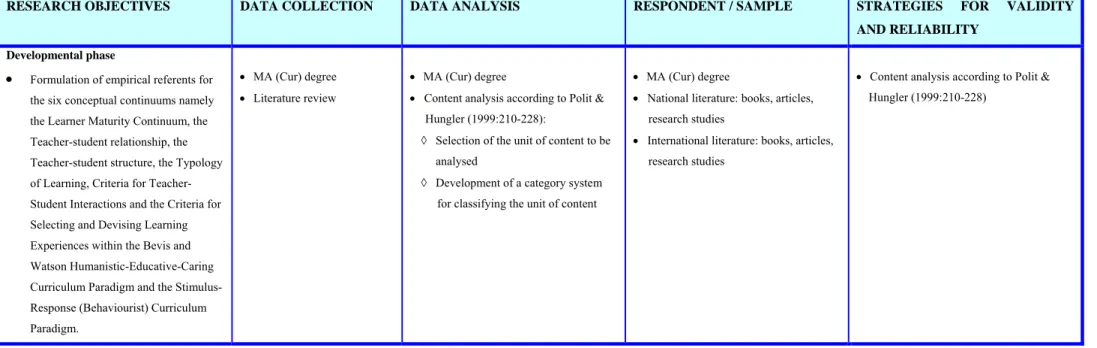
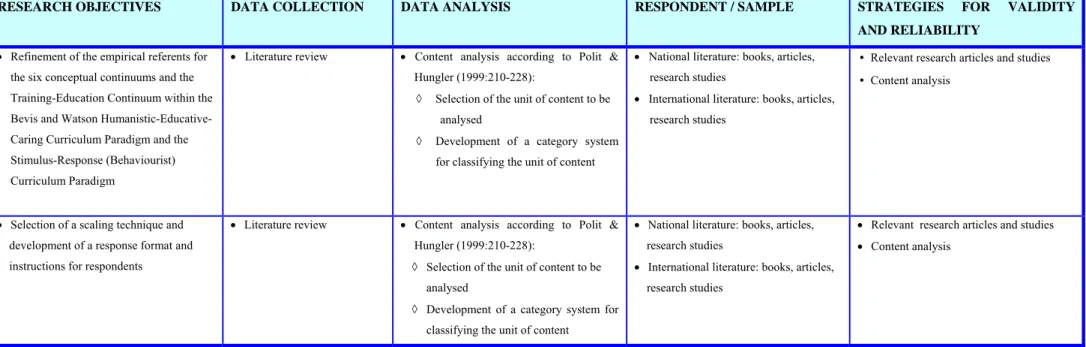
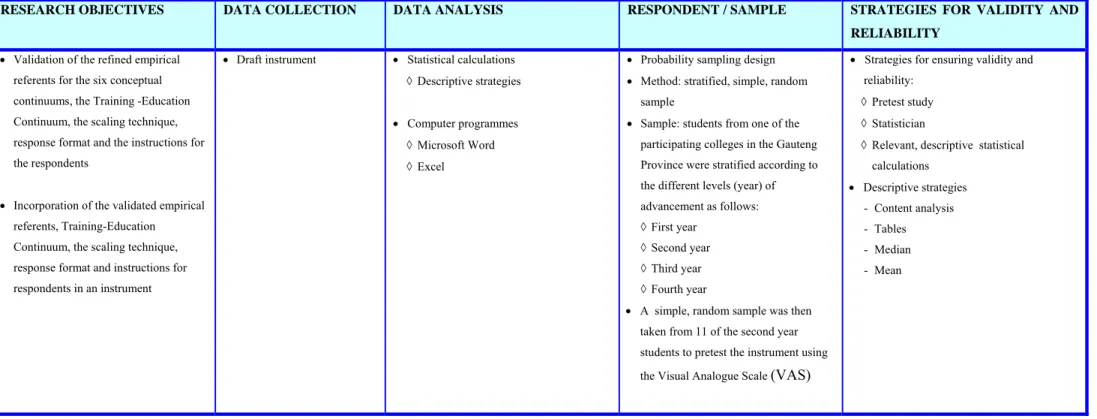
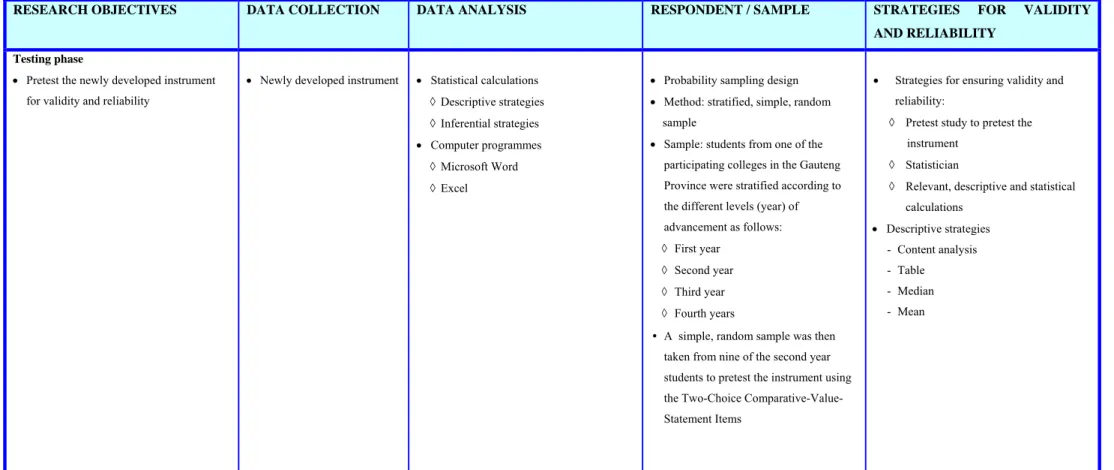
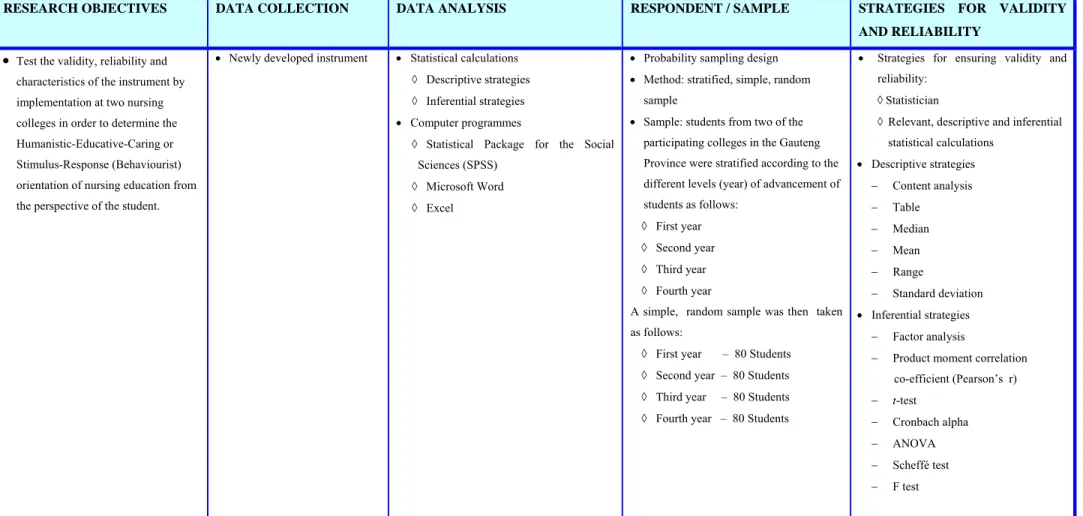
TABLE 1.1: SCHEMATIC REPRESENTATION OF THE 27
RESEARCH METHODOLOGY
TABLE 2.1: TEACHER-STUDENT INTERACTIONS 64
TABLE 2.2: CATEGORIES OF EDUCATIVE LEARNING 68
EXPERIENCES
TABLE 3.1: TYLER’S FOUR QUESTIONS AND BEVIS AND 91
WATSON’S CONCEPTUAL CONTINUUMS
TABLE 4.1: TEACHER STRATEGIES AND BEHAVIOURS: 109
HIGH AND LOW GROWTH CONDITIONS
TABLE 4.2: HISTORY OF AFFECT IN THE CURRICULUM 117
TABLE 4.3: A COMPARISON OF ASSUMPTIONS AND PROCESSES 129 OF TEACHER-DIRECTED (PEDAGOGICAL) LEARNING
AND SELF-DIRECTED (ANDRAGOGICAL) LEARNING
TABLE 6.1: DISTRIBUTION OF THE 181 ITEMS 173
TABLE 6.2: RESULTS OF ANALYSIS OF THE QUESTIONNAIRE 176 AFTER THE PRETEST STUDY
TABLE 6.3: SAMPLE DISTRIBUTION ACCORDING TO COLLEGE 189 AND ACADEMIC YEAR GROUPS
TABLE 6.4: EXAMPLES OF ITEMS CONTAINED IN THE BEVIS 192 AND WATSON CONCEPTUAL CONTINUUMS
TABLE 6.5: TOTAL NUMBER OF ITEMS AND CORRESPONDING 193 QUESTION NUMBERS FOR THE BEVIS AND
WATSON CONCEPTUAL CONTINUUMS
TABLE 7.1: FREQUENCY DISTRIBUTION OF RESPONDENTS IN 205 COLLEGES (N = 299)
TABLE 7.2: FREQUENCY DISTRIBUTION OF INTERNAL- AND 205 EXTERNAL CANDIDATES (N = 299)
TABLE 7.3: FREQUENCY DISTRIBUTION OF YEAR GROUPS 206 (N = 299)
(xxviii)
Page TABLE 7.4: FREQUENCY DISTRIBUTION OF COLLEGE BLOCK 206 PERIODS (N = 299)
TABLE 7.5: FREQUENCY DISTRIBUTION OF THE AGE OF 207
RESPONDENTS (N = 299)
TABLE 7.6: FREQUENCY DISTRIBUTION OF GENDER (N = 299) 208 TABLE 7.7: FREQUENCY DISTRIBUTION OF LANGUAGE GROUPS 208 (N = 299)
TABLE 7.7(a): FREQUENCY DISTRIBUTION OF THE GENDER AND 210 RACE OF INTERNAL- AND EXTERNAL CANDIDATES
SELECTED AT COLLEGE A FOR THE PERIOD 2004-2006
TABLE 7.7(b): FREQUENCY DISTRIBUTION OF THE GENDER AND 211 RACE OF INTERNAL- AND EXTERNAL CANDIDATES
SELECTED AT COLLEGE B FOR THE PERIOD 2004-2006
TABLE 7.8: ALPHA RELIABILITY COEFFICIENTS OF THE 213
CONCEPTUAL CONTINUUMS FOR STUDENTS’ PREFERENCES AND PERCEPTIONS OF
TUTORS/COLLEGES
TABLE 7.9(a): MEANS FOR ITEMS 1–20: STUDENT: LEARNER 217 MATURITY CONTINUUM
TABLE 7.9(b): MEANS FOR ITEMS 21–33: STUDENT: TEACHER- 220
STUDENT RELATIONSHIPS
TABLE 7.9(c): MEANS FOR ITEMS 34–44: STUDENT: TEACHER- 221
STUDENT STRUCTURE
TABLE 7.9(d): MEANS FOR ITEMS 45–60: STUDENT: TYPOLOGY 223
OF LEARNING
TABLE 7.9(e): MEANS FOR ITEMS 61–73: STUDENT: CRITERIA 224 FOR TEACHER-STUDENT INTERACTIONS
TABLE 7.9(f): MEANS FOR ITEMS 74–90: STUDENT: CRITERIA 226 FOR SELECTING AND DEVISING LEARNING
EXPERIENCES
TABLE 7.9(g): MEANS FOR ITEMS 91–109: TUTOR: LEARNER 228 MATURITY CONTINUUM
TABLE 7.9(h): MEANS FOR ITEMS 110–120: TUTOR: TEACHER- 229
(xxix)
Page TABLE 7.9(i): MEANS FOR ITEMS 121–130: TUTOR: TEACHER- 230
STUDENT STRUCTURE
TABLE 7.9(j): MEANS FOR ITEMS 131–144: TUTOR: 231
TYPOLOGY OF LEARNING
TABLE 7.9(k): MEANS FOR ITEMS 145–160: TUTOR: 233
CRITERIA FOR TEACHER-STUDENT INTERACTIONS
TABLE 7.9(l): MEANS FOR ITEMS 161–181: TUTOR: CRITERIA FOR 234 SELECTING AND DEVISING LEARNING EXPERIENCES
TABLE 7.9(m): SUMMARY OF THE SPECIFIC RESPONSES PER 235 INDIVIDUAL ITEMS
TABLE 7.10: MEAN SCORES OF RESPONSES PER CONCEPTUAL 236
CONTINUUM
TABLE 7.10(a): SUMMARY OF NUMBER OF AVERAGE SCORES 237 PER CONCEPTUAL CONTINUUM FALLING WITHIN
A 25%* INTERVAL
TABLE 7.11(a): COMPARISONS OF MEAN SCORES OF RESPONSES PER 239 CONCEPTUAL CONTINUUM RELATED TO STUDENT-
PREFERENCE AND PERCEPTION OF TUTOR/COLLEGE
TABLE 7.11(b): COMPARISONS OF DIFFERENCES OF MEAN SCORES OF 240 RESPONSES PER CONCEPTUAL CONTINUUM RELATED
TO STUDENT- PREFERENCE AND PERCEPTION OF TUTOR/COLLEGE
TABLE 7.12: CORRELATION COEFFICIENTS AMONGST STUDENT 242 PREFERENCE PER CONCEPTUAL CONTINUUM
TABLE 7.13: CORRELATION COEFFICIENTS AMONGST STUDENT 244 PERCEPTION OF THE TUTOR/COLLEGE
TABLE 7.14: PEARSON CORRELATION COEFFICIENTS BETWEEN 247 STUDENT- PREFERENCE AND PERCEPTION OF
TUTOR/COLLEGE PER CONCEPTUAL CONTINUUM
TABLE 7.15: CORRELATIONS BETWEEN THE SCORES OBTAINED 248 FOR THE BEVIS AND WATSON CONCEPTUAL
CONTINUUMS AND THE AGE OF THE RESPONDENTS
(xxx)
Page TABLE 7.16: ONEWAY ANOVA OF MEAN SCORES PER LEVEL 250 OF ADVANCEMENT OF RESPONDENTS AND THEIR
PREFERENCES AND PERCEPTIONS IN TERMS OF THE FOUR CONCEPTUAL CONTINUUMS
TABLE 7.17: ANOVA OF MEAN SCORES PER LEVEL OF 252
ADVANCEMENT OF RESPONDENTS AND THEIR PREFERENCES AND PERCEPTIONS IN TERMS OF THE FOUR CONCEPTUAL CONTINUUMS
TABLE 7.18: MULTIPLE COMPARISONS OF THE CURRICULUM 254 FOCUS OF THE FIRST, SECOND, THIRD AND FOURTH
YEAR STUDENTS WITH REGARD TO STUDENT PREFERENCE
TABLE 7.19: MULTIPLE COMPARISONS OF THE CURRICULUM 255 FOCUS OF THE FIRST, SECOND, THIRD AND FOURTH
YEAR STUDENTS WITH REGARD TO STUDENT PERCEPTON OF THE TUTOR
TABLE 7.20: HOMOGENOUS SUBGROUPS PER YEAR LEVEL 257 RELATING TO TUTOR: LEARNER MATURITY
CONTINUUM
TABLE 7.21: HOMOGENOUS SUBGROUPS PER YEAR LEVEL 258 RELATING TO TUTOR: TYPOLOGY OF LEARNING
TABLE 7.22: HOMOGENOUS SUBGROUPS PER YEAR LEVEL 259 RELATING TO TUTOR: CRITERIA FOR TEACHER-
STUDENT INTERACTIONS
TABLE 7.23: HOMOGENOUS SUBGROUPS PER YEAR LEVEL 260 PERTAINING TO TUTOR: CRITERIA FOR SELECTING
AND DEVISING LEARNING EXPERIENCES
TABLE 7.24: MEAN SCORES RELATING TO COLLEGE BLOCK 265 PERIODS AND RESPONDENTS’ PREFERENCES AND
THEIR PERCEPTIONS OF TUTORS/COLLEGE WITH REGARD TO THE DIFFERENT CONCEPTUAL CONTINUUMS
TABLE 7.25: ONEWAY ANOVA OF COLLEGE BLOCK PERIODS 266 AND RESPONDENTS’ PREFERENCES AND THEIR
PERCEPTIONS OF TUTORS/COLLEGE WITH REGARD TO THE DIFFERENT CONCEPTUAL CONTINUUMS
(xxxi)
Page
TABLE 7.26: ONEWAY ANOVA OF MEAN SCORES RELATING 268
TO LANGUAGE AND RESPONDENTS’ PREFERENCES AND THEIR PERCEPTIONS OF TUTORS/COLLEGE WITH REGARD TO THE DIFFERENT CONCEPTUAL
CONTINUUMS
TABLE 7.27: ANOVA OF LANGUAGE AND RESPONDENTS’ 269
PREFERENCES AND THEIR PERCEPTIONS OF TUTORS/COLLEGE WITH REGARD TO THE DIFFERENT CONCEPTUAL CONTINUUMS
TABLE 7.28: MULTIPLE COMPARISONS OF THE DIFFERENCE IN 271 THE FOCUS IN THE CONCEPTUAL CONTINUUMS
ACCORDING TO LANGUAGE AND STUDENT PREFERENCE TABLE 7.29: MULTIPLE COMPARISONS OF THE DIFFERENCE IN THE 272 FOCUS IN THE CONCEPTUAL CONTINUUMS ACCORDING TO LANGUAGE AND STUDENT PERCEPTION OF
THE TUTOR/COLLEGE
TABLE 7.30: HOMOGENOUS SUBGROUPS PER LANGUAGE GROUP 274 RELATING TO STUDENT: LEARNER MATURITY
CONTINUUM
TABLE 7.31: HOMOGENOUS SUBGROUPS PER LANGUAGE GROUP 275 RELATING TO STUDENT: TEACHER-STUDENT
STRUCTURE
TABLE 7.32: HOMOGENOUS SUBGROUPS PER LANGUAGE GROUP 276 RELATING TO STUDENT: TYPOLOGY OF LEARNING
TABLE 7.33: HOMOGENOUS SUBGROUPS PER LANGUAGE GROUP 277 RELATING TO STUDENT: CRITERIA FOR
TEACHER-STUDENT INTERACTIONS
TABLE 7.34: HOMOGENOUS SUBGROUPS PER LANGUAGE GROUP 278 RELATING TO STUDENT: CRITERIA FOR SELECTING
AND DEVISING LEARNING EXPERIENCES
TABLE 7.35: HOMOGENOUS SUBGROUPS PER LANGUAGE GROUP 279 RELATING TO TUTOR: TEACHER-STUDENT STRUCTURE
TABLE 7.36: HOMOGENOUS SUBGROUPS PER LANGUAGE GROUP 280 RELATING TO TUTOR: CRITERIA FOR TEACHER-
(xxxii)
Page TABLE 7.37: ONEWAY ANOVA FOR COLLEGES PERTAINING TO 282 STUDENT PREFERENCE AND PERCEPTION OF THE
TUTOR/COLLEGE RELATING TO THE CONCEPTUAL
CONTINUUMS
TABLE 7.38: ANOVA OF DIFFERENCES BETWEEN THE TWO 283 COLLEGES WITH REGARD TO STUDENT PREFERENCE
AND PERCEPTION OF THE TUTOR
TABLE 7.39: ONEWAY ANOVA OF GENDER RELATED TO 286
STUDENT- PREFERENCE AND PERCEPTION
OF THE TUTOR/COLLEGE REGARDING DIFFERENT CONCEPTUAL CONTINUUMS
TABLE 7.40: ANOVA OF GENDER RELATED TO STUDENT- 287
PREFERENCE AND PERCEPTION OF THE TUTOR/COLLEGE REGARDING DIFFERENT CONCEPTUAL CONTINUUMS
TABLE 7.41: ONEWAY ANOVA OF INTERNAL- AND EXTERNAL 293 RESPONDENTS RELATED TO STUDENT- PREFERENCE
AND PERCEPTION OF THE TUTOR/COLLEGE REGARDING THE DIFFERENT CONCEPTUAL CONTINUUMS
TABLE 7.42: ANOVA OF INTERNAL- AND EXTERNAL RESPONDENTS 294 RELATED TO STUDENT- PREFERENCE AND PERCEPTION OF THE TUTOR/COLLEGE REGARDING THE DIFFERENT CONCEPTUAL CONTINUUMS
TABLE 7.43: SIGNIFICANT DIFFERENCES AND CORRELATIONS IN 297 STUDENT PREFERENCE AND STUDENT TUTOR
PERCEPTION AND CORRELATIONS WITH REGARDS TO THE CONCEPTUAL CONTINUUMS
TABLE 8.1: SUMMARY OF THE FINDINGS OF THE TESTING OF THE 303
HYPOTHESES
(xxxiii)
LIST OF FIGURES
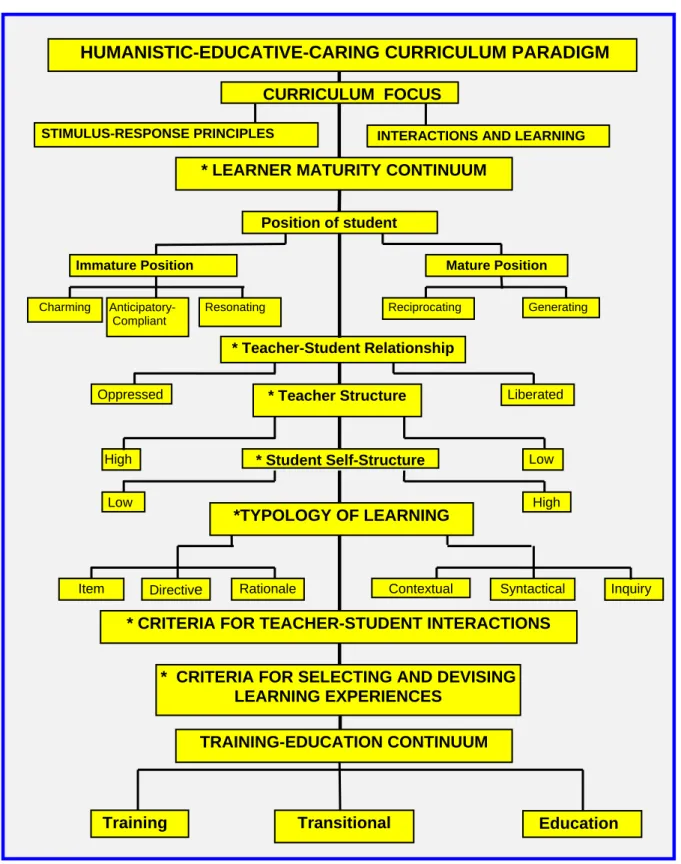
Page FIGURE 1.1: CONCEPTUAL FRAMEWORK: TRAINING- 17
EDUCATION CONTINUUM
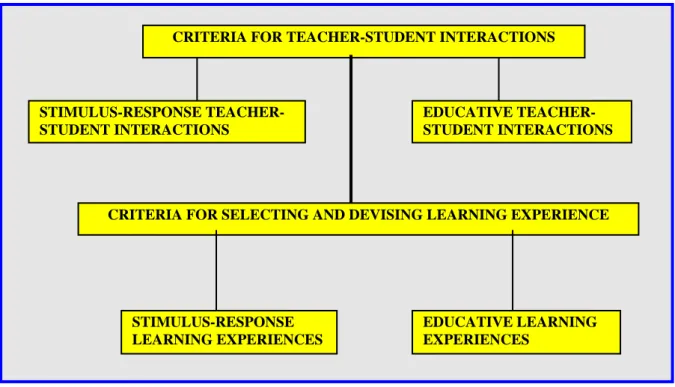
FIGURE 1.2: CRITERIA FOR CONCEPTUAL CONTINUUMS: 19
TEACHER-STUDENT INTERACTIONS AND LEARNING EXPERIENCES
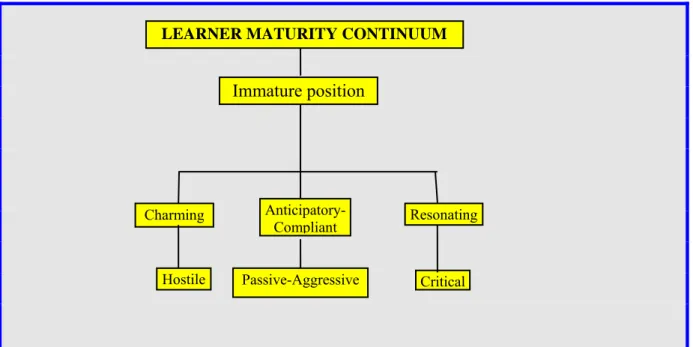
FIGURE 2.1: IMMATURE POSITIONS AND OPPOSITE POLES 42
FIGURE 2.2: PERRY’S SCHEME OF INTELLECTUAL AND 56
ETHICAL DEVELOPMENT
FIGURE 2.3: DEVELOPMENTAL INSTRUCTION MODEL 59
FIGURE 3.1: TEACHER-STUDENT RELATIONSHIP, TEACHER 94 STRUCTURE AND STUDENT-SELF STRUCTURE
FIGURE 6.1: AN EXAMPLE OF A TWO-CHOICE COMPARATIVE- 172 VALUE-STATEMENT ITEM
FIGURE 6.2: SAMPLING DESIGN: TESTING PHASE 191
FIGURE 7.1: CORRELATION COEFFICIENTS AMONGST STUDENT 243 PREFERENCE PER CONCEPTUAL CONTINUUM
FIGURE 7.2: CORRELATION COEFFICIENTS AMONGST STUDENT 246 PERCEPTION OF THE TUTOR/COLLEGE
FIGURE 7.3: HOMOGENOUS SUBGROUPS PER YEAR LEVEL MEANS 257 PLOT FOR TUTOR: LEARNER MATURITY CONTINUUM
FIGURE 7.4: HOMOGENOUS SUBGROUPS PER YEAR LEVEL MEANS 258 PLOT FOR TUTOR: TYPOLOGY OF LEARNING
FIGURE 7.5: HOMOGENOUS SUBGROUPS PER YEAR LEVEL MEANS 259 PLOT FOR TUTOR: CRITERIA FOR TEACHER-
STUDENT INTERACTIONS
FIGURE 7.6: HOMOGENOUS SUBGROUPS PER YEAR LEVEL MEANS 260 PLOT FOR TUTOR: CRITERIA FOR SELECTING AND
DEVISING LEARNING EXPERIENCES
FIGURE 7.7: HOMOGENOUS SUBGROUPS PER LANGUAGE GROUP 274 MEANS PLOT FOR STUDENT: LEARNER MATURITY
(xxxiv)
Page FIGURE 7.8: HOMOGENOUS SUBGROUPS PER LANGUAGE GROUP 275 MEANS PLOT FOR STUDENT: TEACHER-STUDENT
STRUCTURE
FIGURE 7.9: HOMOGENOUS SUBGROUPS PER LANGUAGE GROUP 276 MEANS PLOT FOR STUDENT: TYPOLOGY OF LEARNING
FIGURE 7.10: HOMOGENOUS SUBGROUPS PER LANGUAGE GROUP 277 MEANS PLOT FOR STUDENT: CRITERIA FOR TEACHER-
STUDENT INTERACTIONS
FIGURE 7.11: HOMOGENOUS SUBGROUPS PER LANGUAGE GROUP 278 MEANS PLOT FOR STUDENT: CRITERIA FOR SELECTING
AND DEVISING LEARNING EXPERIENCES
FIGURE 7.12: HOMOGENOUS SUBGROUPS PER LANGUAGE GROUP 279 MEANS PLOT FOR TUTOR: TEACHER-STUDENT
STRUCTURE
FIGURE 7.13: HOMOGENOUS SUBGROUPS PER LANGUAGE GROUP 280 MEANS PLOT FOR TUTOR: CRITERIA FOR TEACHER-
STUDENT INTERACTIONS
FIGURE 7.14: DIFFERENCES BETWEEN THE TWO COLLEGES WITH 284 REGARD TO THE STUDENT: TEACHER-STUDENT
RELATIONSHIPS AND TYPOLOGY OF LEARNING AND THE TUTOR: TYPOLOGY OF LEARNING AND CRITERIA FOR SELECTING AND DEVISING LEARNING EXPERIECES FIGURE 7.15: HOMOGENOUS SUBGROUPS PER GENDER MEANS PLOT 288 FOR STUDENT: TYPOLOGY OF LEARNING
FIGURE 7.16: HOMOGENOUS SUBGROUPS PER GENDER MEANS PLOT 289 FOR STUDENT: TEACHER-STUDENT INTERACTIONS
FIGURE 7.17: HOMOGENOUS SUBGROUPS PER GENDER MEANS PLOT 289 FOR TUTOR: TEACHER-STUDENT RELATIONSHIP
FIGURE 7.18: HOMOGENOUS SUBGROUPS PER GENDER MEANS PLOT 290 FOR TUTOR: TEACHER-STUDENT STRUCTURE
FIGURE 7.19: HOMOGENOUS SUBGROUPS PER GENDER MEANS PLOT 290 FOR TUTOR: TEACHER-STUDENT INTERACTIONS
(xxxv)
GLOSSARY
Affective
Affective means feeling or emotion (King 1984:3), the feeling or emotional aspect of experience and learning (Cline, Necochea & Brown 2000:2).
Affective behaviour
Affective behaviour refers to conduct that reflects feelings, interests, sentiments, awareness, attitudes, values, beliefs, needs and emotional responses (Davis 1981:1588; King 1984:3; Montalvo 1989(b):91).
Affective education
Affective education is an educational process that recognises, fosters improvement in, and utilises emotions, attitudes and values as part of the individual’s learning and motivational characteristics (Hawkins 1985:36).
Affective skills
Affective skills are specific, experiential skills commonly ascribed to an affective educational programme such as adequate depth of feelings, adequate expression and control of feelings, ability to cope with problem feelings and encouragement of positive feelings (Hawkins 1985:36).
Assessment
Assessment refers to the process of obtaining data to ascertain the academic progress the student had made during her course of study. Assessment may be continuous, periodic, formative, summative, norm- and criterion referenced (Quinn 2000:201-203).
Behaviour
Behaviour is defined as a response to one or more stimuli and describes the observable
(xxxvi)
Behavioural objectives
Behavioural objectives are expected behavioural outcomes of the training process, either for an individual experience or a total programme of studies. Learning as an outcome is manifested by either an observable or inferred change in behaviour (Huckabay 1980:15;
Quinn 2000:117, 137; Reilly & Oermann 1990:7).
Behaviourism
When applied to education, behaviourism refers to the specific theory of learning which stresses a direct relationship between a stimulus (S) and a response (R) as depicted in the paradigm, S-R (Huckabay 1980:11; Reilly & Oermann 1990:8).
Behaviouristic educational milieu
A behaviouristic educational milieu is an environment where the primary emphasis is on the attainment of pre-selected educational objectives, in order to produce an observable change in
the behaviour of the student as proof that learning has occurred (Huckabay 1980:15; Quinn 2000:117, 137; Reilly & Oermann 1990:7).
Caring
Caring is a human process involving the cognitive, affective and psycho-motor aspects with the beauty, art, ethics, intuition, aesthetics and spiritual awareness of the inter-subjective human-to-human caring process and moral ideas (Bevis & Watson 1989:53).
Caring interaction
Caring interaction incorporates attitudinal structures of an interpersonal caring process between a nurse educator and a student nurse. It is characterised by perceptions of positive regard, warmth, empathic understanding, congruence, self-disclosure and genuineness (Sheston in Leininger & Watson 1990:117).
Caring nurse
A caring nurse is a nurse who is both trained and educated. This dual concept of training and education as a basis for professional preparation relates to the concept that an educated person is someone who is a knowledgeable, competent practitioner, well equipped with the technology and techniques of her profession (Searle, Brink & Beukes 1986:104, 107).
(xxxvii)
Caring transaction
A caring transaction incorporates activities related structures of an interpersonal caring process between a nurse educator and a student nurse. It is characterised by a dialogical quality of existential awareness, congruent role expectations, mutual goal setting and responsibility as well as mutual positive change (Sheston in Leininger & Watson 1990:117).
Characteristics of an instrument
Characteristics of an instrument are certain criteria to which an instrument must conform in order to be assessed as having validity and reliability (Krefting 1991:214; Wilson 1993:143). Examples of the characteristics are reliability, validity, sensitivity, objectivity and ethical acceptability.
Confluent education
Hawkins (1985:36) stated that confluent education is an arrangement of time, materials and learning experiences to give recognition to the effect of different cognitive and affective traits on content mastery. Francke and Erkens (1994:354, 360), stated that confluent education is a way and a process of teaching and learning in which the affective domain and the cognitive domain flow together.
Curriculum
From the perspective of a Humanistic-Educative-Caring Curriculum Paradigm, curriculum may be defined as the interactions and transactions that occur between and among students
and teachers with the intent that learning occurs (Bevis & Watson 1989:5).
From the perspective of a behaviourist or a stimulus-response curriculum model, curriculum may be defined as the content that has to be learned through the attainment of pre-selected
behavioural outcomes.
Education
Education is a process where interactions and learning are the main focus with the aim of producing an educated nurse who displays the ability to think analytically, critically, evaluatively and creatively and can exercise independent judgement of scientific and non-scientific data during the nursing of a patient or client. During this process the learner is
(xxxviii)
enriched in the syntactical, contextual and inquiry categories of learning and grows in maturity (Bevis & Watson 1989:73).
Educated nurse
An educated person has the ability to think and reason, that is, she is creative, knowledgeable and analytically minded and understands the why and how of the transmission of knowledge.
In this lies the potential for extending the boundaries of knowledge (Searle, Brink & Beukes 1986:106). The outlook of an educated nurse has been broadened and transformed by what she has learned. This transformation of outlook engenders a sense of commitment which is the essence of a professional service to mankind (Searle et al 1986:106).
An educated nurse is one who understands man’s struggle for existence and a meaningful life, one with an extensive knowledge of the ethos of nursing, its ethics and philosophy and of the scientific foundations and technical skills of the science and art of nursing (Searle et al 1986:105-106, 110).
Empirical referents
Empirical referents are classes or categories of actual phenomena that by their existence or presence demonstrate the occurrence of the phenomenon itself. The items in a questionnaire on a specific topic are a theoretical example hereof.
Defining or critical attributes refer to the cluster of attributes that are the most frequently associated with the concept and that allows the analyst the broadest insight into the concept (Chinn & Cramer 2004:146; Walker & Avant 1995:42). Critical/defining attributes and empirical referents are often the same especially when the concept is found in the practical/clinical field. However, if concepts are highly abstract, so might be the attributes and accordingly, empirical referents might be difficult to establish.
Empirical referents, once identified, are extremely useful in developing instruments with which to measure phenomena. They are also very useful in practice since they provide the clinician with clear, observable phenomena by which to “diagnose” the existence of a concept in the clinical field (Chinn & Cramer 2004:146; Walker & Avant 1995:46).
(xxxix)
Ethical acceptability
Ethical acceptability refers to the adherence by the researcher to the professional, legal and social obligations to the respondents in order that the rights of the respondents are protected. An example of ethical acceptability is ensuring that respondents participate voluntarily in the study (Polit & Beck 2004:159, 717).
Evaluation
Evaluation refers to the process of making a value judgement based on the data produced during the assessment of a student’s academic development (Quinn 2000:201).
External students
External students are appointed in student posts and come directly from the community (see internal students).
Four-year comprehensive course
The four-year comprehensive course refers to the course leading to registration as a nurse (general, psychiatric and community) and midwife according to Regulation R425 (South Africa 1985:1).
Humanism
Humanism relates to a human or an individual who is a person and describes the particular nature of the humanness of an individual (Kruger & Whittle 1982:11; Soanes & Hawker 2005:493).
Humanistic
Humanistic is any system or mode of thought in which human interests, values and dignity are taken to be of primary importance, as in moral judgements (King 1984:3).
Inferred behaviour
Inferred behaviour relates to those intellectual skills which are indirectly observed. For example, although the skill of analysis is evident in a written presentation of a certain situation, the principles of logic and critical thinking required to achieve this analysis have to be indirectly inferred (Reilly & Oermann 1990:7).
(xxxx)
Internal students
Internal students are employed and paid by the Gauteng Department of Health. They receive study leave to complete the four-year comprehensive diploma course (see external students).
Learning
Learning in the context of this study is viewed as an educative process involving the transactions and interactions which occur between and among teachers and students (Bevis & Watson 1989:5).
Nurse tutor
A nurse tutor is a registered nurse directly involved in the theoretical and clinical education and training of student nurses. It thus includes both tutors registered with the South African Nursing Council as nurse tutors and registered professional nurses involved in the theoretical and clinical education and training of nurses, whether qualified as registered nurse tutors or not (van der Wal 1992:23).
Nursing college
According to the South African Nursing Council, a nursing college is described as a post-secondary educational institution sanctioned by the South African Nursing Council to provide professional nursing education at a basic and post-basic level (South Africa 1985:1).
Nursing education
Nursing education is a process of guiding, assisting and providing ways that will enable students to learn the art and science of nursing and to apply caring interactions and transactions within a nursing educational milieu (Fischer, Boshoff & Ehlers 2001:68). The product of this process is an educated, caring nurse.
Nursing educational milieu
For the purpose of this study, a nursing educational milieu is an environment where all the interactions and transactions necessary to produce an educated, caring nurse occur between and among students and teachers (Bevis & Watson 1989:53, 73; Sheston in Leininger & Watson 1990:117).
(xxxxi)
Objectivity
Objectivity refers to the use of facts without distortion of the personal feelings, beliefs, values, attitudes and biases of the researcher and/or the respondent (LoBiondo-Wood & Haber 1994:507; Wilson 1993:336).
Paradigm
A paradigm is a way of looking at natural phenomena encompassing a set of philosophical assumptions that guides one's approach to enquiry (Polit & Beck 2004:13, 726).
Reliability
Reliability is the consistency, constancy or dependability, accuracy and precision with which an instrument measures the attribute it is designed to measure (LoBiondo-Wood & Haber 1994:510; Polit & Beck 2004:36, 416, 730; Wilson 1993:339).
Research instrument
An instrument, for example, a questionnaire, is a research tool or device that is designed to measure a specific variable and is utilised to collect and record data (LoBiondo-Wood & Haber 1994:358; Polit & Hungler 1987:530; Wilson 1993:142).
Sensitivity
Sensitivity of an instrument refers to how small a variation in an attribute can be reliably detected and measured (Polit & Hungler 1987:330; Polit & Beck 2004:302-303).
Student nurse
For this study, a student nurse is defined as an individual, male or female, registered at a Gauteng Provincial college of nursing for the four-year comprehensive diploma course according to Regulation R425 of 22 February 1985, at different levels (years) of advancement (Fischer, Boshoff & Ehlers 2001:68; Khanyile & Mfidi 2005:71). The course is referred to in this study as the R425 course.
(xxxxii)
Training
From a behaviouristic viewpoint, training is a process where stimulus-response principles are the main focus, with the aim of producing a trained nurse who has acquired skills through attainment of pre-selected behavioural outcomes in the theoretical and clinical situation (Huckabay 1980:15-16; Reilly & Oermann 1990:xix). Training involves a change in behaviour which is visible to the observer (Bloom 1956:45).
Validity
Validity is the relevance of a measure. A valid instrument measures the concept or construct it claims to measure (Polit & Beck 2004:35-36, 422; Wilson 1993:343)
CHAPTER 1
ORIENTATION TO THE STUDY
1.1 INTRODUCTION
It is a much debated issue that the humanistic and caring aspect in nursing appears to have been lost in a highly technological and sophisticated health milieu (Benner & Wrubel 1989:xv; Hawthorne & Yurkovich 1995:1088-1089; Kyle 1995:506). Compounding this issue is the fact that nurses are trained, in a behaviouristic (stimulus-response) milieu, as opposed
to being educated, in a humanistic, educative, caring milieu (Bevis 1989(a):4-5). This creates serious problems as nurses deal with human beings who require a humanistic, educative caring milieu where they are viewed as a whole or total person and not as sick parts (Searle, Brink & Beukes 1986:88). If a caring and educated professional status is to be obtained, then surely the educational milieu must facilitate this process. Consequently, it is important to ascertain the educational focus in a nursing college so that the nurse tutor, in partnership with the student, may take the appropriate steps to facilitate the process of producing an educated
and caring nurse. To contribute towards this vision, this study focuses on the latter aspect by
quantitatively investigating the nature of nursing education within the Bevis and Watson Humanistic-Educative-Caring-Curriculum Paradigm versus a Behaviouristic (Stimulus-Response) Curriculum Paradigm, from the perspective of student nurses.
1.2 PROBLEM FORMULATION
1.2.1 Background to the problem
A previous study, (Mouton 1997) investigated, within the qualitative paradigm, the educational focus of tutors and students of a nursing college, from the perspective of Bevis and Watson's Humanistic-Educative-Caring Curriculum Paradigm versus a Behaviouristic (Stimulus-Response) Curriculum Paradigm (see figure 1.1). In this 1997 study, tutors described the maturity level of students, how students learn, the teacher-student interactions and the learning experiences of students undertaking the four-year comprehensive course according to Regulation R425 as amended. The latter regulation (Regulation R425) relates to the approval of, and the minimum requirements for, the education and training of a nurse
2
(general, psychiatric and community) and midwife, leading to registration (South Africa 1985:1).
It was found that although there was a definite move in the college towards an educational focus, several training aspects were still deeply entrenched in the behaviouristic educational milieu. In the first year, training of students appeared to be the norm. In the second year,
progression was seen to be in a transitional phase. At this point, it appeared as if tutors were
well on their way to implementing educative principles, but during the third year a relapse occurred and students again adopted behaviouristic principles in the way they learned. The latter pattern was perpetuated during the fourth year (Mouton 1997:247). Some of the training trends manifested included the implementation of study guides with their overemphasis on the attainment of behavioural objectives as proof of learning; the immaturity of students as evidenced by their dependence on the tutors and their inability to take responsibility for their own learning; students learned rules and procedures by means of rote learning; the lecture was the main teaching method and the tutor was seen as an authority figure. Research conducted in Scotland confirmed the use of the lecture method as a teaching method in the traditional nursing programme (Jones & Johnston 2006:943).
Thus, the major implication in the 1997 study centred on the issue that the tutor and the student have to move from the implementation of a behaviouristic (stimulus-response) curriculum, to a humanistic-educative-caring curriculum paradigm, from the first year of study to ensure that the concept education (see glossary) remains the focal point throughout the R425 course undertaken by the students.
The above statement implies that the tutor has to create a humanistic-educative-caring learning environment from her1 first contact with the student. Thus, in the first year, the tutor must already implement educative principles, which enable the student to move from an immature position to a mature position on the Learner Maturity Continuum (see figure 1.1).
1 To avoid the cumbersome repetition of he/she, his/her, himself/herself, female gender terminology namely she, her, herself, is applied
consistently throughout the study. Thus, any reference to female gender includes male gender. Additionally, if it is clear from the context that the researcher or respondent is a male, the masculine pronoun has been used.
3
To achieve this, the tutor has to change her focus from content to student. Tutors have to ensure that the process of learning is emphasised, implying that it is more important how the
student learns than what she learns. A shift is required from the attainment of behavioural objectives to the attainment of broad, educative goals. Students have to be actively involved in, and take responsibility for their own learning. Tutors and students have to collaborate as co-learners; the tutor as the expert learner and the student as the novice learner (Bevis 1989:(b)131; Diekelmann 1990:303; Durgahee 1998:163). The tutor also has to adapt her teaching methods to the way a student learns and in partnership with the student, select
educative learning experiences. Evaluation has to be frequent and aimed at determining the
progress, development and growth of the student towards maturity and responsible learning. Thus, the tutor has to ensure that the content becomes the vehicle around which scholarly activities are developed. By implementing sound educative principles from the first year of study, the tutor and student will create a solid educative foundation upon which the second, third and fourth years of study will be built. In addition, this would provide the foundation for continued, self-directed, life-long learning so needed in an ever-changing professional and practice milieu, such as the health care delivery milieu.
However, the paradigm shift from behaviourism to a humanistic-educative-caring approach, will not be an easy task for various reasons. Firstly, the tutors and students will have to realise that rigidity and limitations are self-imposed. The latter situation stems mainly from the fact that the majority of tutors and students have been educated in an educational milieu where they were unaccustomed to, and even afraid of, moving from the known to the unknown. The unknown factor exposed tutors to a certain element of risk-taking with the ever-present fear of criticism, rejection and disapproval from their colleagues. This fear, in turn, has proven to be a significant obstacle to creativity and has inhibited creative teaching by the tutor and learning by the student (Mouton 1997:249). Passivity on the part of learners also figured prominently in these “educational” settings.
Secondly, the tutor finds herself in a world where the moral imperative to care, appears to have been supplanted with a dominant perspective of self-indulgence and disrespect for human life and dignity (Johns 1996:1135). Thus, the shift to a humanistic-educative-caring paradigm requires the tutor to make a deliberate and decisive choice for the moral value of caring. This choice will require a great deal of courage and self-assertiveness (Mouton
4
1997:249). Internationally, during the past few years, nursing education has leaned greatly on a behaviouristic (stimulus-response) curriculum paradigm, that is, the functional or structural approach to the detriment of a humanistic-educative-caring approach. The latter statement is given credence by perusal of educational literature pertaining to aspects relating to the curriculum, which reveal emphasis on behaviourism in both general and nursing education (Becker, Viljoen, Botma & Bester 2003:57; Klein 1986:32; Kliebard 1995:81; Marsh 1992:107; Slattery 1995:1, 47). For instance, in America, Klein (1986:32) stated that Tyler’s syllabus, “Basic Principles of Curriculum and Instruction” (1950) was selected by an
honorary group of Professors of Curriculum, as one of two publications which has had the most influence in the field of curriculum development. Further, the Tyler model is applied as accreditation criteria for American schools of nursing, which served to entrench behaviourism in nursing institutions (Bevis 1989(a):4-5; Diekelmann 1990:300-301; Martin 1989:109). In Great Britain, nursing education is still based on an apprenticeship type of training (Potgieter 1992:19). The latter aspect is corroborated by Quinn (2000:1) who stated that in the United Kingdom, the nursing curriculum is based on the instrumental ideology. Consequently, the main purpose of the curriculum is to produce a nursing workforce that is equipped to deal with the demands of its role and therefore, a key principle is the vocational relevance of the curriculum. Additionally, he adds that nursing education concepts such as the needs, aspirations and personal growth of the individual are not totally negated but that they are of secondary importance to the main purpose.
In South Africa, perusal of various documents and regulations published by the South African Nursing Council (SANC) revealed the wide use of Tylerian principles. For example, the SANC sets minimum requirements for subject content and practice guidelines in regulations (South Africa:1985:3) and directives (guidelines), which emanate from the Nursing Act 1978 (Act no 50 of 1978). Regulation R425 prescribes programme objectives, subjects and a minimum pass mark of 50% in each subject (South Africa 1985:2-3). A nursing guideline, such as the guideline for the course leading to registration as a nurse (general, psychiatric and community) and midwife (SANC 1985:4) specifies stage objectives and defines an objective as “a specific description of measurable behaviour required from somebody at a given stage”. According to Bevis and Watson (1989:31, 265-266; see section 2.3), the concept measurable behaviour is a debatable issue as not all learning results in observable behavioural
5
changes. The mere fact that learning cannot be measured, or is not observable, is not necessarily indicative that learning has not occurred.
During August 1999, the SANC held a national summit on nursing where two discussion documents were issued. Document A was entitled “Education and training of professional nurses in South Africa: guidelines for transforming nursing education” (SANC 1999(a)). Document B was entitled “Minimum requirement for the education and training and guide on the teaching of students in the programme leading to registration as a nurse (general, psychiatric and community) and midwife” (SANC 1999(b)). The latter two documents were only discussion documents. The SANC is in the process of formulating new regulations and guidelines for nursing education programmes and the new nursing act still has to be proclaimed operational by the President. However, the two discussion documents contain numerous references to behaviouristic principles. For instance, document A refers to the education and training of nurses and to outcomes and objectives under evaluation (SANC
1999(a):1-3, 10). Document B contains contradictory and confusing references to stage
objectives and learning outcomes in the same, and in different paragraphs. The document
further refers to training and a minimum requirement of 4000 hours for clinical placement
and defines outcomes as the contextually demonstrated products of the learning process
(SANC 1999(b):9-10, 17-18).
The objective or behavioural approach, or the product model or behavioural-objectives model in nursing education has been under fire. Its usefulness and appropriateness in a professional educational programme is being questioned. Especially in the United States of America (USA), a human science approach in opposition to a natural science approach is propagated (Bevis 1989(a):4-5; Leino-Kilpi 1989:61-62). In an article on the 10th Anniversary Conference on Research in Nursing Education, sponsored by the Council for the Society for Research in Nursing Education (CSRNE) in America, Brink (1992:33) reported about the current buzz-word in nursing education, namely, curriculum revolution (Bevis 1989(a):4). Brink (1992:33) stated that “the trend is to move away from the Tylerian (the Behavioural-Objectives) Model of curriculum development, which has prescribed nursing curriculum and the direction of nursing thought for the last 35 years, to a holistic caring model of curriculum development”.