Chauhan & Vermani, Journal of Applied Computing, 1(1):25-29, 2016
e-ISSN 2456-5059
Journal of
Applied Computing
A Shift from Cloud Computing Model to Fog
Computing
Schauhan
1, Svermani
2*1Apeejay School of Management, New Delhi, India. 2Apeejay School of Management, New Delhi, India.
Introduction
Cloud computing has significantly changed the way we store and access information. It enables global and on demand network access to a shared pool of resources with minimal management effort. The “pay-as-you-go” cloud computing model provides online servers to store, manage and process data without the need of physical hardware. It also provides various services to its user which includes easy backup and recovery, easy access to information, quick deployment and automatic software integration. But there are also some limitations of the cloud computing like security, connectivity, latency etc. Fog computing is an upcoming technology and is an extension of cloud
computing to overcome the limitations of cloud computing.
This paper discusses benefits and limitations of cloud computing, define fog computing, need for fog computing, limitation of fog computing, applications of fog computing and comparison of cloud and fog computing.
Benefits of Cloud Computing
• Cheap: Unlike on-site hosting, cost of deploying applications in the cloud is less due to more effective use of physical resources. • Universal Access: Cloud computing can allow
remotely located employees to access applications and work via internet.
REVIEW ARTICLE
OPEN ACCESS
Abstract
Cloud computing has provided many opportunities to businesses and individuals. It enables global and on demand network access to a shared pool of resources with minimal management effort. However, this bliss has become a problem for latency-sensitive applications. To improve efficiency of cloud and to reduce the amount of data that needs to be transported to the cloud for data processing, analysis and storage, a new network architect technology 'Fog Computing' has been introduced. In fog computing, small applications and resources are processed at the edge of the cloud, rather than processing entire applications on the cloud.
Keywords: Cloud computing. Fog computing, Decoy, Security, Latency
Citation: Chauhan, S. & Vermani, S. (2016). Cloud Computing to Fog Computing: A Paradigm Shift. Journal of Applied Computing, 1(1): 25-29.
Received: August 13, 2016; Revised: September 27, 2016; Accepted: September 30, 2016 Funding: Declared none.
• Up-to-Date Software: A cloud provider will also be able to upgrade software keeping in mind feedback from previous software releases. • Choice of Applications: This allows flexibility
for cloud users to experiment and choose the best option for their needs. Cloud computing also allows a business to use, access and pay only for what they use, with a fast implementation time.
• Efficient use of Shared Resources: The average amount of energy needed for a computational action carried out in the cloud is far less than the average amount for an on-site deployment. This is because different organizations can share the same physical resources securely, leading to more efficient use of the shared resources.
Limitations of Cloud Computing
Cloud computing has numerous benefits but the technology has some limitations also:
• Connectivity: Cloud computing involves centralized network servers which store and send data on demand to its users. If any problem arises to the server or some server maintenance is taking place, the user cannot access his data at that time.
• Internet Dependent: Cloud computing requires its users to be always connected to the internet in order to access files and services from cloud, which means cloud is completely dependent on internet connection. Loss of connectivity with cloud servers due to any reason like down internet connection or slow speed, will affect the ability to access the cloud.
• Hacking and Security Threads: With internet becoming popular, it becomes most prominent place for any unauthorized person to access and steal data. People are now normally willing to upload their precious data on the cloud rather than keeping it stored locally, which attracts the attention of hackers. It has been seen numerous times with Apple’s online cloud service i.e. iCloud where personal data of famous celebrities has been hacked over internet. This becomes a biggest problem in the cloud computing because there is no such security over internet which guarantees the privacy of users' data uploaded on the cloud.
• Anonymous Users: Cloud computing is widely used by billions but cloud does not
recognize any of its users which means the users are still anonymous to the system which leads to cyber-attacks using cloud services. This not only harms the users but destroys the company’s reputation as well.
• Limited Control: Cloud service provider companies restrict the control of the users on the cloud platform to make any change to the system infrastructure. With this, it becomes difficult to identify the back-end of the system infrastructure and the internet routes used for data transmission.
• Closed System: Every cloud has its own platform used to run the cloud services. This is the biggest challenge faced by the cloud user as it becomes impossible for them to migrate from one cloud platform to another cloud platform, which is known as implicit dependency. Reconfiguring the apps on another platform is not only complex and expensive but this whole process of migrating can expose the data to more security and privacy vulnerabilities.
Fog Computing
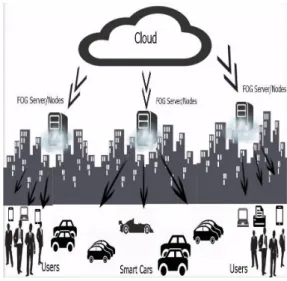
Fog computing is a network architect technology which uses multiple end user client nodes for storage, communication and networking services between end devices and traditional cloud computing data centers (Fig. 1). Fog computing is an extension of cloud computing in which content and application services are placed close to the consumers. Fog computing stores databases locally and reduces the burden on the cloud. Fog computing includes devices which we use on daily basis such as smart phones, wearable health monitoring devices, vehicles and augmented reality devices such as Google glass etc.
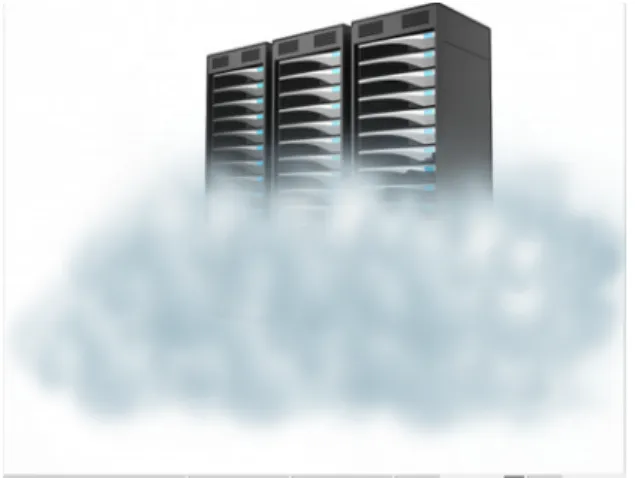
Fog computing involves a data plane which enables computing services to be live within the edge or corner of the network like servers in a data center. If we compare cloud and fog computing, cloud computing serves as a centralized global portal of information and is often lack of location awareness. Whereas fog computing extends cloud to reside at user’s premises and dedicates on localized service applications (Fig. 2).
Fig. 2 Fog computing as localized service applications Need for Fog Computing
• To Connect Cloud with Multiple End Users Fog computing provides the ability to connect multiple users with the help of multiple fog network nodes which allows multiple authorized users to share the data
• Provide Better User Experience
While managing important files, it is recommended to know the back end of the system but it is not possible in cloud computing. With the fog edge devices, it has now become possible for the users to customize their system which not only provides better quality but also gives full access to the system.
• Data Security
Fog computing helps in providing better data security by using decoy technology where the real data is being hidden and the false database is shown to the user who wants to use the file without authorized rights. Decoy technology delivers information in such a way that it appears completely legitimate and normal.
• Collect, Analyses and Store Data Locally for Research and Development
In fog computing data is stored locally, organizations can process and analyze data in real time for research and development. So, as
compared to cloud, fog computing provides better service quality with faster data rate and low service latency and response time.
• Wide Business Scope
Fog applications can be developed quickly and these applications can be deployed easily with the help of wide spread network. In this, manufacturer provides Monitor-as-a-Service (MaaS) to the customers and overcomes the rigid structure of cloud computing.
• Lower Operating Expense
In fog computing, files are stored and analyzed locally without going through the backbone network. So, users can be benefited by reduced bandwidth cost.
• Network Efficiency
Fog computing avoids back-and-forth traffic between cloud and users. This saves the backbone bandwidth and also reduces energy consumption.
• Reduce Data Bottleneck: Fog computing replaced centralized computing system with decentralized system. In fog computing, small applications and resources are processed at the edge of the cloud rather than processing applications entirely on the cloud. This reduces the movement of data across the network and results into less congestion and eliminates data bottleneck.
Limitations of Fog Computing
•
Data QualityData in a fog network flows into multiple users' edge devices. This creates multiple routing through different nodes which can disintegrate the overall data quality.
Fog Computing Applications in Internet
of Things
Internet of Things (IoT) is an upcoming technology in which all objects will have sensors with unique identifiers and will communicate with one another over a network without any human intervention. IoT will generate an unprecedented volume and variety of data. In IoT, for some time sensitive applications, it is necessary to analyze and act on the data in milliseconds. But if all the data is stored on the cloud then it will take more time to process the data. Secondly, IoT requires a powerful connection and a system which neglects any network connectivity loss during data transmission.
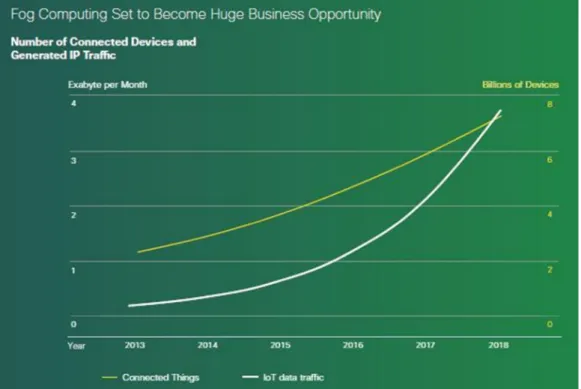
Fig. 3 Cisco Technology Radar, Source: http://techradar.cicso.com Fog computing can be used as an alternative for
this problem by keeping the data closer to the things and sending selected data to the cloud for historical analysis and long term storage. In this way, fog computing will provide low latency, location awareness, and improves quality-of- services for streaming and real time applications. Fog computing is a large business opportunity (Fig. 3).
Some of the applications of IoT are:
• Emergency Vehicles identification and Traffic Light Management
In smart traffic lightening, sensors and cameras can be used to identify emergency vehicles such as ambulances and police vehicles and will automatically change the traffic signals to open the lanes for these vehicles to pass by.
• Smart Grid
The fog devices will collect and process the data generated by the grids and other devices and will issue commands to actuators. Devices such as smart meters and micro-grids will monitor the energy demand, its availability and will automatically switch to the alternate sources of energy such as solar, wind or hydro energy.
Mobile Computing System
Fog manages high demand for computing and communication needs for mobile users. With the short distance and low latency rate, fog computing will provide the mobile users services at faster speed. This will improve service quality, save bandwidth and decrease energy consumptions
• Smart Eco-System
Smart cities will be equipped with wireless sensors which will measure temperature, humidity and all levels of numerous gases in the city ecosystem. Sensors will facilitate decision making by transmitting the data to fog servers to work upon. Devices such as smart air conditioners will work together with fog servers to decrease temperature, facilitate fresh air flow or remove moisture from air.
Table 1. Comparison of Cloud Computing and Fog
Computing
Requirement Cloud
Computing
Fog Computing
Latency High Low
Location of Within the At the edge of server nodes internet local network Client and server Multiple hops One hop distance
Security Undefined Can be defined Attack during High probability Very low
data probability
transmission
Location No Yes
awareness Geographical
distribution Centralized Distributed Number of
server nodes Few Very large
Bandwidth
required More Less
Real time Less supported More supported interactions
Conclusion
Fog computing is an extension of cloud environment to enhance cloud experience by placing data closer to the end user. Local resource pooling and edge analytics results into providing a better user experience. Fog computing focuses on the connectivity to end-users with low latency for quality of services and also provides security in cloud environment in a greater extend.
References
Firdhous, M. ,Ghazali, O & Hassan, S. (2014). Fog Computing: Will it be the Future of Cloud Computing?, Proceedings of the Third International Conference on Informatics & Applications, Kuala Terengganu, Malaysia, pp 8-15.
Hong, K., Lillethun, D., Ramachandran, U., Ottenwälder. B. & Koldehofe, B. (2013). Mobile Fog: A Programming Model for Large- Scale Applications on the Internet of Things, Proceedings of the Second ACM SIGCOMM Workshop on Mobile Cloud Computing, ser.
MCC’13. ACM, pp. 15–20.
Tadapaneni, N. R. (2016). Overview and Opportunities of Edge Computing. Social Science Research Network.
Madhusri, K. & Navneet (2013), Fog Computing: Detecting Malicious Attacks in a Cloud,
International Journal of Scientific &
Engineering Research, Volume 4, Issue 5, pp. 1248-1250.
Stojmenovic, I. & Wen, S. (2014). The Fog Computing Paradigm: Scenarios and Security Issues, Proceedings of Federated Conference on
Computer Science and Information Systems, pp.
1–8.
C. Pvandana, Chikkamannur(2016). A Internet of Things future in Edge Computing. International Journal of Advanced Engineering Research and Science
Zhu, J., Chan, D., Prabhu, M. Natarajan, P., Hu, H. & Bonomi, F. (2013), Improving Web Sites Performance using Edge Servers in Fog Computing Architecture, IEEE 7th International
Symposium on Service Oriented System