2016 International Conference on Wireless Communication and Network Engineering (WCNE 2016) ISBN: 978-1-60595-403-5
A Call Blocking Model and Its Optimal
Control Algorithm in LTE Networks
Bin ZENG
1,*and Rui WANG
21Information Management Center, Naval University of Engineering, Wuhan, Hubei, China 2Library of Training Department, Naval University of Engineering, Wuhan, Hubei, China
Keywords: Quality of service, Long term evolution, Mobile communication, Call admission control, Wireless communication.
Abstract. Call admission control must be designed to guarantee both a grade of service (GoS), i.e., probability of blocking new call, probability of forced termination of calls already in progress due to handoffs, and a quality of service (QoS), i.e., signal-to-interference ratio (SIR). Thus how to design appropriately call admission control policy is crucial in the envisioned personal communication networks. Considering user mobility in LTE networks, a call blocking model and its optimal solution algorithm is proposed to identify the criteria with which new mobile terminal requests will be blocked and to define the performance results, which will determine how optimal the resource allocation is.
Introduction
4G LTE capacity is limited by the total level of interference form all connected users [1]. The number of simultaneous users occupying a LTE cell (base station, BS) therefore must be limited such that an appropriate level of communication quality can be maintained. The LTE network can accommodate multiple Quality of Service (QoS) in the coverage area. In order to maintain the QoS, call admission control thus plays a very important role in LTE network because it directly controls the number of users [2,3]. The purpose of admission control is to ensure that there are free radio resources for the intended call with required signal-to-interference ratio (SIR) and bit rate. Admission control is always performed when a mobile station initiates communications in a new cell, either through a new call or handover. Furthermore, admission control is performed when a new service is added during an active call.
In general, the admission control ensures that the interference created after adding a new call does not exceed a specified threshold. The negotiation of a service contract is performed at the beginning of the call. Admission control can be involved since the user might accept, for example, a lower bit rate if it can be accommodated by the network. Admission control needs to be done separately for uplink and downlink [4,5]. Typical criteria for admission control are call blocking and call dropping. Blocking occurs when a new user is denied access to the system. Call dropping means that a call of an existing user is terminated.
In subscribers’ viewpoint, how to maximize the system utility and benefit under an acceptable call blocking rate is one of the important issues. A good criterion of call admission control would bring a goodly sum of revenue for the company. Our work is supposed to be helpful for telecom industry.
Call Blocking Model
Total call blocking rate is one of the most important measurement of the user’s viewpoint to judge the subscriber [6]. By adjusting the system parameters, we plan an integrated strategy to enhance the system usage for a long period. In this long-term model, our objective is to minimize call blocking rate. In other words, the objective of this long-term model is how to minimize total blocked traffic. The problem description is shown as follows:
Given:
Radius of each base station (BS)
The distribution of users
Users’ homing status
Traffic demand of each mobile terminal
Objective:
To minimize the total blocked traffic
Subject to:
QoS constraint
Homing constraint
Capacity constraint
Notation of Given Parameters and Decision Variables
We define the parameters as below: B denotes the set of candidate locations for base stations. S
denotes the power that a base station received from a mobile terminal that is homed to the base station
with perfect power control. T denotes the set of mobile terminals. cˆ denotes the number of users j
who can be active at the same time in the base station j. rj denotes the transmission radius of base
station j. Wdenotes the set of total bandwidth. Eb denotes the energy that BS received. Ntotal denotes
total noise. denotes voice activity. Mj denotes upper bound on the number of users that can active
at the same time at base station j. denotes attenuation factor. Djt denotes the distance between base
station j and mobile terminal t. Djj' denotes the distance between base station j and j’. N0 denotes the
background noise. KR denotes data bit rate. j denotes call blocking probability of base station j.
gj j
, denotes the minimum number of channels required for traffic demand gj such that the call
blocking probability shall not exceed j. Ij denotes the intracell interference. Ijj' denotes the
interference from base station j’ to j. jt denotes the indicator function which is 1 if mobile terminal
t can be served by base station j and 0 otherwise. Rj denotes the upper bound of radius of base station
j. means a small number. G denotes the processing gain. t denotes the traffic requirement of
mobile terminal t (in Erlangs). Yj denotes the set of transmission radius of base station j.
The zjt denotes decision variable which is 1 if mobile terminal t is serviced by base station j and 0
otherwise.
Problem Formulation
Optimization problem can be descripted as below: Objective function:
B j j j j jIP g B g c
Z min ( ,ˆ )
(1) Subject to:
j j B j j r D Max r j req total b c N S G c N S G N S N E j jj j ' ' ' ) , 2 ( 2 0 0 0 ˆ 1 ) 1 ˆ ( 1 1 ) ( ' ' ' , jB (2)
jt j jt
jtz r
D
jt jt z
, jB,tT (4)
1
B j
jt z
, tT (5)
j
j R
r
0
, jB,rjYj (6)
j
j M
cˆ
, jB (7)
j T
t jt tz g
, jB (8)
j j j
j g c
B ( ,ˆ )
, jB (9)
1 or 0
jt z
, jB,tT. (10) The objective function is to minimize the long-term total blocked traffic of the system after it has been operated. Constraint (2) is to ensure that each traffic source is served with its base station with required QoS. The left hand side of this inequality is the minimal SIR (Signal-to-Interference Ratio) which each connection should be hold [7]. The right hand side means the real SIR. The denominator of the right hand side is the total interference value, including white noise, the intra-cell interference, and inter-cell interference. To be more generic, we do not consider the multi-user detection in our model. Constraint (3) is to ensure that a base station can only serve the mobile terminals that are inside its coverage area of effective radius. Constraint (4) is to ensure that if a base station does not provide service to a mobile terminal, then the decision variable zjt must equal to 0. Constraint (5) is to ensure that each mobile terminal can be homed to only one base station. Constraint (6) is to ensure that the transmission radius of each base station ranges between 0 and Rj. Constraint (7) is to ensure that the number of users who can be active at the same time in a base station would not exceed the base station’s upper bound. Constraints (8)-(9) are to ensure that any base station can serve its slave mobile terminal under certain call blocking rate. Constraint (10) is to enforce the integer property of the decision variables.
Computation Algorithm
The basic approach to the development of the solution procedure to Formulation (1) is Lagrangean relaxation. Lagrangean relaxation is a method for obtaining lower bounds for minimization problems as well as good primal solutions in integer programming problems. The main steps of Lagrangean relaxation method are as following: relax complicating constraints, multiple the constraints relaxed with corresponded Lagrangean multipliers, and add them to the primal objective function. Decompose the problem into several independent subproblems that could be optimally solved. Then solve them optimally and get Lagrangean dual problem solution. By using the Lagrangean relaxation method, we can transform the primal problem (1) into the following Lagrangean relaxation problem (LR) where Constraints (2), (3), and (8) are relaxed.
1 2 3
, , jt j
j D v v v
B j j j jjB g c
g ( ,ˆ ) min
0 ' ' ' ) , 2 ( 2 0 1 ˆ ) ( ) 1 ˆ ( 1 ) ( ) ( ' ' ' N S c c N S G N E N E v j j B j j r D Max r j req total b req total b B j j j jj j
T t j Bjt j jt jt
jt D z r
v2( ) 3( j) T t jt t B j
j z g
v
where v1j, 2 jt
v , v3j are Lagrange multipliers and 1
j
v , v2jt, 3 j
v 0. According to the weak Lagrangean
duality theorem, for any v1j ,v2jt ,v3j 0,
3 2 1 4 j jt j D v ,v ,v
Z is a lower bound on ZIP. The following dual
problem is then constructed to calculate the tightest lower bound.
1 2 3
44 max D j jt j
D Z v ,v ,v
Z
subject to: 0.
3 2
1
j jt j ,v ,v
v
The most popular method to solve the dual problem is the subgradient method. Let a g be subgradient of ZD
vj1,vjt2 ,vj3
. Then, in iteration k of the subgradient optimization procedure, themultiplier vector
v1j ,v2jt ,v3j
is updated by k1 = k tkgk. The step size tk is determined by
2 k k D h IP k g Z Zt . h
IP
Z is the primal objective function value for a heuristic solution.
The algorithm is used to deal with the “Long-term Call Blocking Model” We call it LR. Shown as follow:
Step1. Read configuration file to construct BSs and traffic source.
Step2. Calculate constant parameters, such as jt, Djt and assign Lagrangean relaxation improve counter to equal 20.
Step3. Initialize multipliers.
Step4. According to given multipliers, optimally solve the subproblems to get the value of Zdual.
Step5. Compute the total revenue, the value of ZIP..
Step6. If ZIP is smaller than ZIP*, we assign ZIP* to equal ZIP. Otherwise, we minus 1 from the improve counter.
Step7. Calculate step size and adjust Lagrangean relaxation multipliers.
Step8. Iteration counter increases 1. If interaction counter is over threshold of system, stop this program. And, ZIP* is our best solution. Otherwise, repeat Step4.
Computational Experiments
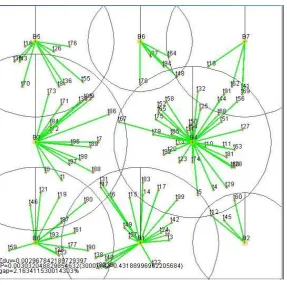
Figure 1. Solution for test in long-term call blocking model.
The parameters are as follows. Maximum number of users who can be active at the same time to a base station = 120. S/N0 = 7db. Eb/Ntotal = 6.58db. Call blocking probability = 3%. Voice communication bit rate = 9.6 Kbps. Voice activity = 0.5. Signal attenuation = 4.
[image:5.595.157.445.86.371.2]This case refers to [8, 9]. In this case, we also have 8 BSs, and 100 traffic sources. The traffic demand for each traffic source is 0.22 Erlangs. The degrees of radius are 0.5 km, 1.5 km, 2 km, 3 km, 3.5 km and 4 km.
Table 1. The Result of Test for Long-term Call Blocking Model, Unit: Total Blocked Traffic (Erlang).
1 2 3 4 5 6 7 8 9 10
Simp 0.4319 0.4259 0.4752 0.5035 0.4151 0.4622 0.4335 0.4364 0.3916 0.5329 LR 0.0030 0.0100 0.0038 0.0016 0.0014 0.0027 0.0034 0.0041 0.0047 0.0008
Summary
The objective of the scheme is to regulate the operation of a network in such a way that ensures the uninterrupted service provision to the existing connections and at the same time accommodates in an optimum way the new connection requests. This is done by managing the available network resources and allocating them in an optimum way among the system users.
References
[1]X. Xiang, C. Lin, X. Chen, X. Shen, Toward Optimal Admission Control and Resource Allocation
for LTE-A Femtocell Uplink, IEEE Transactions on Vehicular Technology. 64 (2015) 3247-3261.
[2]K. Ivesic, L. Skorin-Kapov, M. Matijasevic, Cross-layer QoE-driven admission control and
resource allocation for adaptive multimedia services in LTE, Journal of Network and Computer Applications, 46(2014), 336-351.
[3]W. Kim, G.S. Park, H. Song, An effective cross-layer designed packet scheduling, call admission
[4]V.Y. Borodakiy, K.E. Samouylov, I.A. Gudkova, Analyzing Mean Bit Rate of Multicast Video Conference in LTE Network with Adaptive Radio Admission Control Scheme, Journal of Mathematical Sciences, 218 (2016), 257-268.
[5]J. Zhao, TQS Quek, Z. Le, Heterogeneous Cellular Networks Using Wireless Backhaul: Fast
Admission Control and Large System Analysis, IEEE Journal on Selected Areas in Communications, 33(2015), 2128 – 2143.
[6]TFZ. Badri, R. Saadane, S. Mbarki, Call Admission Control Scheme and Handover Management
in LTE Femtocell-Macrocell Integrated Networks, Computer and Information Science, 8(2015), 135-150.
[7]A. Ksentini, T. Taleb, K.B. Letaif, QoE-Based Flow Admission Control in Small Cell Networks,
IEEE Transactions on Wireless Communications, 15(2016), 2474-2483.
[8]Y. Labyad, M. Moughit, A. Marzouk, New Admission Control Policy for a Flexible VoLTE
Service, International Journal of Computer Applications, 12 (2015), 206-217.
[9]S.A. AlQahtani, Delay Aware and Users Categorizing-Based Call Admission Control for