DESIGN, OPTIMIZATION, AND EVALUATION OF ACYCLOVIR FAST DISSOLVING TABLETS
EMPLOYING STACH PHTHALATE – A NOVEL SUPERDISINTEGRANT
SANTOSH KUMAR R*, ANNU KUMARI
Department of Pharmaceutics, GITAM Institute of Pharmacy, GITAM (Deemed to be University), Visakhapatnam, Andhra Pradesh, India. Email: [email protected]
Received: 28 August 2019, Revised and Accepted: 27 September 2019 ABSTRACT
Objective: The objective of the present research was to prepare starch phthalate (a novel superdisintegrant) and to optimize and formulate acyclovir fast dissolving tablets employing 23 factorial design using starch phthalate as superdisintegrant.
Materials and Methods: Drug excipient compatibility studies such as Fourier-transform infrared spectroscopy, differential scanning calorimetry, and thin-layer chromatography were carried out to check the drug interaction between acyclovir and starch phthalate. The direct compression method was used for tablet preparation. Prepared tablets were then evaluated for hardness, friability, drug content, disintegration time, water absorption, and wetting time, in vitro dissolution studies. Response surface plots and contour plots were also plotted to know the main effects and interaction effects of independent variables (starch phthalate [A], croscarmellose sodium [B], and crospovidone [C] on dependent variables [disintegration time and drug dissolution efficiency in 1 min]) and stability studies were also done.
Results: Tablets of all formulations were of good quality concerning drug content (100±5%), hardness (3.6–4.0 kg/cm2), and friability (<0.16%). In
all formulations, formulation F8 found to be optimized formulation with least disintegration time 9±3 s, less wetting time 10±0.17 s, and enhanced dissolution rate in 1 min, i.e., 99.92±0.11 as compared to other formulation.
Conclusion: From the research, it was concluded that on combination with crospovidone (5%) and croscarmellose sodium (5%), starch phthalate (10%) enhanced the dissolution efficiency of the drug. Hence, starch phthalate can be used as a novel disintegrant in the manufacturing of fast dissolving tablets. Keywords: Fast dissolving tablets, Superdisintegrant, Starch phthalate, Acyclovir, Dissolution efficiency.
INTRODUCTION
Fast dissolving tablets are solid oral dosage forms which disintegrate in the mouth as it comes in contact with saliva and absorbs some amount through the mouth and some in the stomach. Furthermore named as, orally disintegrating tablets or mouth dissolving tablets [1,2]. The specific property which differentiates fast dissolving tablets from conventional tablets is their quick disintegration in mouth and drug dissolution within 5 min. It shows enhanced drug dissolution and has advantages over both conventional tablets and liquid dosage forms [3,4]. Fast dissolving tablets are not only preferred choice for patients having difficulty in swallowing but also the first choice for people with no access to water at the time of administration [5].
Acyclovir falls under BCS Class III drug with poor bioavailability (10– 30%). It is an antiviral drug and used against herpes virus (HSV-1 and HSV-2) by retarding its growth and spread in the body [6].
In present research work by preparing fast dissolving tablets of acyclovir with novel superdisintegrant, starch phthalate and with other superdisintegrants (croscarmellose sodium, and crospovidone), the oral bioavailability of acyclovir can be enhanced safely with fewer side effects. Tablets were prepared as per 23 factorial designs and evaluated
for their hardness, friability, drug content, in vitro drug dissolution, and stability studies.
MATERIALS AND METHODS Materials
Acyclovir, crospovidone, croscarmellose sodium, starch, and potato starch were purchased from Yarrow chemicals, Mumbai. Phthalic
anhydride, dimethyl sulfoxide, acetone, and isopropanol were obtained from Finar Chemicals Ltd., Ahmedabad. Ethanol was bought from Changshu Yangyun Chemicals, China. Microcrystalline cellulose was procured from Qualigens fine chemicals, Mumbai. Magnesium stearate and talc were purchased from Molychem, Mumbai.
Preparation of a novel superdisintegrant starch phthalate Starch phthalate was prepared by esterification reaction using potato starch and phthalic anhydride as in previous research work esterification reaction was used for the preparation of superdisintegrant [7,8]. The steps wise procedure of the preparation of starch phthalate is explained in Fig. 1.
Characterization of starch phthalate
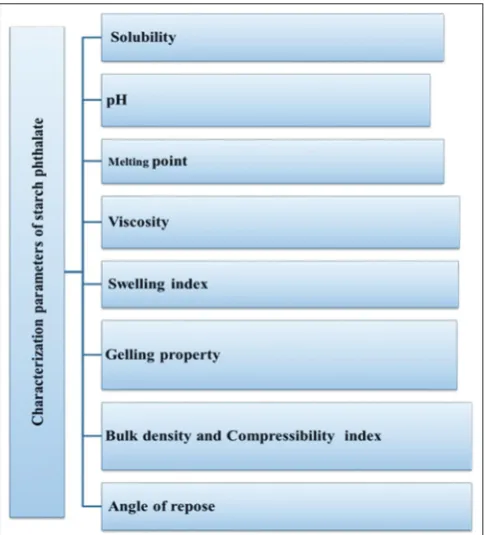
The novel superdisintegrant starch phthalate prepared was evaluated for the following parameters as given in Fig. 2.
Solubility
Solubility of prepared superdisintegrant (starch phthalate) was tested both in aqueous solvents (distilled water, buffer of potential of hydrogen [pH] 1.2, 4.5, and 7.4) and organic solvents (petroleum ether, alcohol, acetone, dichloromethane, and chloroform) and noted down accordingly [9].
pH
About 1% slurry of the starch phthalate was prepared in distilled water and pH was checked by pH meter [9].
Melting point
Starch phthalate melting point checked by melting point apparatus [9]. © 2019 The Authors. Published by Innovare Academic Sciences Pvt Ltd. This is an open access article under the CC BY license (http://creativecommons. org/licenses/by/4. 0/) DOI: http://dx.doi.org/10.22159/ajpcr.2019.v12i11.35474
Fig. 1: Procedure for the preparation of starch phthalate
Fig. 2: Characterization parameters of a novel superdisintegrant
Viscosity
1% slurry of the starch phthalate was prepared in distilled water and pH was checked by pH meter [9].
Swelling index
200 mg of starch phthalate was added into two graduated test tubes having liquid paraffin and distilled, respectively, and mixed well. The prepared dispersion was allowed to stand for 12 h and after 12 h and then after 12 h note the volume of sediment [9]. The swelling index of the material was determined as follows.
Volumeof sedimentindistilledwater-Volumeof sedimentinlightliquidparaffin
S.I(%)= ×100
Volumeof sedimentinlightliquidparaffin
Test for gelling property
About 7% dispersion of potato starch and starch phthalate in distilled water was prepared and checked for its gelation property. Dispersions were allowed to heat in a water bath at 1000°C for 30 min [9].
Particle size
The particle size analysis was performed by microscopic method [9].
Density
The density (g/cc) was measured by liquid displacement process using benzene as liquid [9].
Bulk density
In a 50 ml clean and dry measuring cylinder, accurately weighed amount of sample was transferred and volume of packing was noted down. Tapped that cylinder 50 times on a plane surface and tapped volume of packing was noted down. Loose bulk density and tapped bulk density are calculated as per the formula given below [10].
Massof powder
Carr’s compressibility index of the powder blend was calculated by the following formula [11].
Angle of repose is the highest angle possible between the surface of a mass of powder or granules and the horizontal plane [11]. Angle of repose is measured by applying the next equation;
θ h
FTIR spectra of potato starch and starch phthalate were recorded on samples prepared in potassium bromide (KBr) disks using a BRUKER FT–IR, (Tokyo, Japan). The preparation of samples was performed in KBr disks by means of a hydrostatic press at 6–8 tons pressure [12]. The sample was scanned under the range of 500–4000 cm−1.
X – ray diffraction
Diffraction pattern of starch phthalate was recorded with an X-ray diffractometer (Analytical Spectra’s Pvt. Ltd., Singapore). X-ray diffraction was performed at room temperature (30°C) with a
diffractometer; target, Cu (λ 1.54 A), filter, Ni; voltage, 45 ⱪV; current
40 mA; time constant 10 mm/s; scanning rate 2°/min; and measured from 10 to 35° at full scale 200 [13].
Drug-excipients compatibility studies
DSC
Perkin Elmer thermal analyzer samples were use to record the DSC thermograms of acyclovir and their mixtures (1:1) with starch phthalate. In an aluminum pan, 2–5 mg of samples was sealed and scanned at a heating rate of 10°C min−1 over a temperature range 30–350°C.
FTIR
Samples were prepared by taking acyclovir and their mixtures (1:1) with starch phthalate using KBr disc and their FTIR spectra were recorded. KBr disc was used as reference. FTIR model used is Perkin Elmer.
TLC study
TLC study was carried out on acyclovir and their mixture with starch phthalate (1:1) as follows:
Stationary phase
Silica gel G (pre-coated TLC) plates.
Mobile phase
Dichloromethane:methanol:ammonium solution (80:20:2).
Procedure
Mobile phase was prepared and taken in a TLC chamber. The chamber was allowed to saturate with solvent vapor for 24 h. Standard (pure drug) and test (drug-starch phthalate mixtures) sample were spotted on activated silica plates using narrow capillary tubes. The spotted plates were kept in the TLC chamber and allowed to run mobile phase. The plates were dried and kept in iodine chamber to develop the spots. The retardation factor (Rf) values of standard and test samples were determined by the following formula.
Rf = Distance travelled by sample/Distance travelled by solvent front.
Preparation of aceclofenac fast dissolving tablets
Formula was optimized by 23 factorial designs and then powder blends
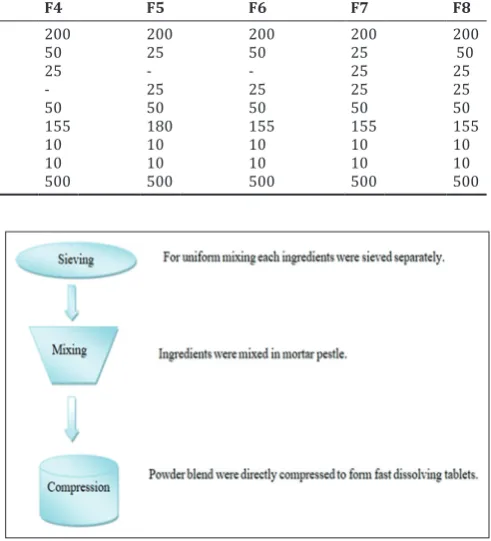
were directly compressed to form fast dissolving tablets. Here, in three independent variables (superdisintegrants, i.e., starch phthalate [A], croscarmellose sodium [B], and crospovidone [C]) and two dependent variables (disintegration time and dissolution efficiency in 1 min) were selected. The composition of different formulation of acyclovir fast dissolving tablets is given in Table 1. Before mixing, each ingredient was passed through #100 mesh to ensure uniform mixing. Starch phthalate, crospovidone, microcrystalline cellulose, croscarmellose sodium, and starch were accurately weighed mixed using mortar and pestle, and then acyclovir was added. At last, talc and magnesium stearate were added to the powder blend before compression [14]. Finally, the mixed blend was compressed using eight station rotator press Karnawathi Machineries Pvt., Ltd., Ahmedabad, India, as shown in Fig. 3.
Evaluation of acyclovir fast dissolving tablets Hardness test
The tablet hardness is force required to break a tablet in a diametric compression force. Hardness test determines the ability of a tablet to withstand damage while handling and transportation. To find out the
hardness of prepared tablets, Monsanto hardness tester was used and unit used to express is kg/cm² [15].
Uniformity of weight
Weight variation of tablets is nothing but how the weight of each individual tablet is differed from the average weight of the 20 selected tablets. Randomly, 20 tablets were selected to determine the weight variation of the tablets, and average weight of 20 tablets and individual weight of each tablet were noted down [16].
Friability
Friability also tells the ability of tablets to withstand pressure and damage while transportation from one place to other. Roche friabilator was used to determine friability of prepared tablets. At 25 rpm (revolutions per minute) tablets were rotated for 4 min or up to 100 revolutions. Then, the tablets were reweighed after removal of fines and the percentage of weight loss was calculated [17].
100×W(initial)-W(Fnal) F=
W(initial)
Drug content uniformity
Randomly, 10 tablets were selected and weighed. Tablets were powdered and weighed equivalent to 10 mg of acyclovir, were extracted
into 0.1 N HCl buffer and filtered. The acyclovir content was calculated
by measuring the absorbance using spectrophotometric method at
254 nm after appropriate dilution with 0.1 N HCl buffer. The drug
content was measured as an average of three determinations [18].
Wetting time
In a dry petri dish, tissue paper was placed having diameter of 10 cm. Carefully, 10 ml of the amaranth color solution was added to the petri dish. Before keeping a tablet, its weight was noted down and carefully in the center of the petri dish a tablet was kept. Observed carefully to note Table 1: Formulae of acyclovir fast dissolving tablets employing starch phthalate as per 23 factorial designs
Ingredients (mg/tablet) F1 F2 F3 F4 F5 F6 F7 F8
Acyclovir 200 200 200 200 200 200 200 200
Starch phthalate 25 50 25 50 25 50 25 50
Croscarmellose sodium - - 25 25 - - 25 25
Crospovidone - - - - 25 25 25 25
Starch 50 50 50 50 50 50 50 50
Micro crystalline cellulose 205 180 180 155 180 155 155 155
Talc 10 10 10 10 10 10 10 10
Magnesium stearate 10 10 10 10 10 10 10 10
Total 500 500 500 500 500 500 500 500
the wetting time of tablet. Here, time required for the tablet to reach the upper surface of the tablet was noted down as wetting time [19].
Water absorption ratio
Take a petri dish in which tissue paper folded twice was placed and carefully 6 ml of water was added to it. A tablet was kept on the tissue paper and allowed to wet completely. The wetted tablet was then weighed. Water absorption ratio R was determined using following equation [19].
Wd = weight of tablet after water absorption
We = weight of tablet before water absorption.
In vitro disintegration time
Disintegration time for fast dissolving tablets was determined using United States Pharmacopeia (USP) disintegration apparatus
0.1 N HCl (hydrochloride) buffer. The volume of medium was 900 ml
and temperature was 37±0.2°C. The time in second taken for complete disintegration of the tablet with no palatable mass remaining in the apparatus was determined [20].
In vitro dissolution studies
The in vitro dissolution rate study of acyclovir fast dissolving tablets was performed using 8 stage dissolution test apparatus (Electrolab TDT-08L)
fitted with paddles (50 rpm) at 37±0.5°C, using 0.1 N HCl (hydrochloride)
buffer (900 ml) as a dissolution media. 5 ml of the samples were taken at definite time interval, filtered through 0.45 µ membrane filter, diluted, and assayed at 254 nm using an analytical technology T360 ultraviolet– visible double beam spectrophotometer. Cumulative percentage release was measured using standard absorbance from the calibration curve [21].
Response surface plot study
Optimization of the acyclovir fast dissolving tablets was done using 23
factorial designs in which 3 factors each at two levels were evaluated. Starch phthalate (Factor A), croscarmellose sodium (Factor B), and crospovidone (Factor C) individual and combined effect were determined by response surface plot method [22].
A polynomial regression algorithm was used to rotate the independent variables to the response variables. The general first-order model and equation, they could be constructed from 2n experimental design is
indicated in the following equation.
Y= β0 + β1A + β2B + β2C + β1 β2AB + β1 β3AC + β2 β3BC + β1 β2 β3ABC
Where, y is the measured response, β0 is the arithmetic mean response
of 1 min, β1, β2, β3, β1 β2, β1 β3, β2 β3, and β1 β2 β3 are coefficients
for the corresponding factors and A, B, C, AB, AC, BC, and ABC are the percentages of starch phthalate, croscarmellose sodium, and crospovidone and interaction terms, respectively. The coefficients were calculated accordingly to the general formula given in equation.
B = ΣXY/2n
Where β is coefficient, X is the corresponding variable (A, B, and C), Y is
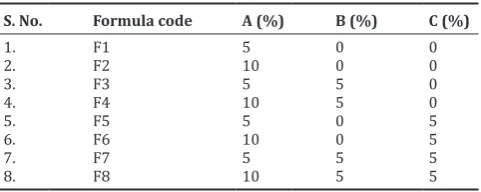
the response value (disintegration time and dissolution efficiency in 1 min), and n is the level. The two levels of three factors employed in the experimental design are indicated in Table 2 and transformed design for analysis of responses of acyclovir fast dissolving tablets is shown in Table 3.
Stability studies
As per International Council for harmonization stability, guidelines stability studies are performed to check the changes in the quality of a
drug substance or drug product by the effect of temperature, humidity, and light with time. Stability studies of F8 formulation were carried out. Tablets were packed in high-density polyethylene bottles and stored at 40±2°C and 75% RH for 6 months. By evaluating the stored tablets for drug content and drug release, tablet stability was determined after 6 months.
RESULTS AND DISCUSSION
The starch phthalate prepared was found to be fine, smooth, and free flowing amorphous powder. The physical and micromeritics properties of the starch phthalate are summarized in Table 4. It was insoluble in aqueous solvents and insoluble in organic solvents tested (methanol, petroleum ether, dichloromethane, and chloroform) the pH of 0.1% aqueous dispersion was 2.88.
Starch phthalate exhibited good swelling in water. The swelling index was 1200. All micrometric properties indicated good flow and compressibility needed for solid dosage form manufacturing. The density of starch phthalate was found to be 0.555 g/cc. The angle of repose and compressibility index showed good flow properties of starch phthalate.
Table 2: Levels of the three factors used in experimental design S. No. Factors/Ingredients Code Level L1 Level L2
1. Starch phthalate A 5 10
2. Croscarmellose sodium B 0 5
3. Crospovidone C 0 5
Factor A (starch phthalate), Factor B (croscarmellose sodium), Factor C (crospovidone)
Table 3: Transformed design for analysis of response of acyclovir FDTs
Table 4: Physical and micromeritics properties of the starch phthalate (novel superdisintegrant)
Parameters Observation
Solubility Insoluble in all aqueous and
organic solvents tested pH (potential of hydrogen)
(1% w/v aqueous dispersion) 2.88%
Melting point Charred at 325°C
Viscosity
(1% w/v aqueous dispersion) 1.08 cps
Swelling index 65%
Gelling property No gelling and the swollen
particles of starch phthalate separated from water, whereas in the case of starch, it was gelatinized and formed gel
Moisture absorption 4.4%
Particle size 158 µm (80/120 mesh)
Density 0.584 g/cc
Bulk density 0.555 g/cc
Angle of repose 27.47°
The FTIR spectrum of potato starch and starch phthalate is given in Figs. 4 and 5. The presence of peaks of the absorption at 1691.57 cm−1 characteristic peaks of ester, so from FTIR studies, it was concluded that starch phthalate (ester) was formed when potato starch was allowed to react with phthalic anhydride.
The X-ray diffraction pattern of starch phthalate not showed any peaks which indicates that the structure is completely amorphous. The
disappearance of pink color in the ester test confirmed the presence of ester, i.e., starch phthalate. As the starch phthalate was amorphous, smooth, and free flowing powder and it had got all the characteristics of superdisintegrants, it was concluded that starch phthalate can be used as novel superdisintegrant in the formulation of fast dissolving tablets.
The compatibility of starch phthalate with the selected drug (acyclovir) was evaluated by DSC, FTIR, and TLC studies. The DSC thermograms of acyclovir and acyclovir with starch phthalate are shown in Figs. 6 and 7.
The DSC thermograms of acyclovir and aceclofenac with starch phthalate exhibited exothermic peaks at 251°C and 227.6°C, respectively. These melting peaks of acyclovir and acyclovir and starch phthalate are nearer to the melting points of acyclovir (230–260°C). The peaks observed
Fig. 4: Fourier-transform infrared spectroscopy spectra of potato starch
Fig. 5: Fourier-transform infrared spectroscopy spectra of starch phthalate
Fig. 6: Differential scanning calorimetry thermogram of acyclovir pure drug
Fig. 7: Differential scanning calorimetry thermogram of acyclovir with starch phthalate
Fig. 8: Fourier-transform infrared spectroscopy spectra of pure drug acyclovir
of pure drug as well as their mixtures with starch phthalate. The close agreement of the Rf value of the acyclovir and acyclovir-starch phthalate as given in Table 5 indicated no interaction between the drug and starch phthalate.
Thus, the result of DSC, FTIR, and TLC indicated no interaction between the selected drug (acyclovir) and starch phthalate, the new superdisintegrant. Hence, starch phthalate can be used as a superdisintegrant in the design of fast dissolving tablets of the selected drug.
Hardness of tablets from all batches was found to be in the range of 3.6–4.0 kg/cm2. All tablets are having enough hardness indicating good
strength with a capability to resist physical and pre-functionary stress conditions during handling as reported in earlier literature [23].
All the tablets exhibited acceptable friability as weight loss on the friability test was <0.15% in all formulations. As per Indian Pharmacopeia (IP), percent friability below 1% is an indication of good mechanical resistance of the tablets. Thus, it was proved that tablets could withstand the pressure, mechanical shocks during handling, transportation, storage, and manufacturing processes as per literature survey [21,24].
All formulations were found to be having drug content within 100±5% of the labeled amount. Hence, it can be concluded that all the formulations are having an accurate amount of drug distributed uniformly in powder mass and followed acceptable limits as per IP.
The in vitro disintegration time of all the tablets was found to be in the range of 9±0.6–48±0.5 s. F8 formulation was found with having least disintegration time of 9 s as compared to other formulation, the order of disintegration time in increasing order is F8<F7<F6<F5 <F4<F3<F2<F1. Fast dissolving tablets prepared employed starch phthalate (novel superdisintegrant) showed disintegration time as compared to fast dissolving tablets prepared using combination of known superdisintegrants such as croscarmellose sodium, sodium starch glycolate, and crospovidone and by wet granulation method using superdisintegrant as reported in earlier literature [25,26].
The water absorption ratio was between 42.5±0.01 and 68.0±0.04. The wetting time was found between 10±0.17 and 49±0.25. Results of hardness, friability, drug content, disintegration time, wetting time, and water absorption ratio are given in Table 6. The water absorption ratio and wetting time of all formulations are shown in Fig. 11. Formulation F8 containing 10% starch phthalate, 5% crospovidone, and 5% croscarmellose sodium showed less wetting time, i.e., 10±0.17 s as compared to other formulations. Fast dissolving tablets using starch phthalate as superdisintegrant has shown less wetting time as compared to fast dissolving tablet prepared using solid dispersion technique as compared with literature survey [10,27].
In vitro dissolution test was carried out in USP Type II paddle apparatus. The dissolution rate depends on wetting time of the disintegrant. Among all the formulations, F8 has less wetting time and has greater dissolution Fig. 10: Thin-layer chromatography plate showing (A) acyclovir
pure drug (B) acyclovir and starch phthalate
Table 6: Physical properties: Hardness, friability, and drug content of acyclovir fast dissolving tablets Formulation Hardness
(kg/cm2) n±S.D Friability (%) n±S.D Drug content (mg/tab) n±S.D Disintegration time (s) n±S.D Wetting time (s) n±S.D Water absorption ratio (%) n±S.D
F1 3.9±0.01 0.12±0.013 198±0.71 45±0.3 49±0.25 48.9±0.01
F2 3.6±0.03 0.13±0.015 198±0.79 27±0.2 43±0.21 51.5±0.23
F3 4.0±0.01 0.14±0.012 199±0.63 24±0.1 42±0.23 68.0±0.04
F4 3.8±0.04 0.12±0.014 198±0.55 38±0.5 36±0.19 51.4±0.22
F5 3.7±0.03 0.14±0.014 199±0.56 20±0.4 20±0.12 50.0±0.55
F6 3.9±0.01 0.15±0.012 198±0.18 14±0.2 17±0.18 52.9±0.52
F7 3.7±0.02 0.14±0.014 198±0.57 12±0.4 15±0.11 58.4±0.04
F8 4.0±0.04 0.12±0.013 199±0.11 9±0.3 10±0.17 42.5±0.01
F9 3.9±0.01 0.15±0.012 198±0.11 59±0.2 29±0.19 31.42±0.01
*SD Standard Deviation from mean, n=3
in the DSC thermograms of acyclovir and acyclovir-starch phthalate mixtures correspond to the melting points of the respective drug. Thus, DSC study indicating no interactions between the selected drug (acyclovir) and starch phthalate.
The FTIR spectra of acyclovir and acyclovir and starch phthalate are shown in Figs. 8 and 9. The characteristic FTIR bands of acyclovir at 2926.01 cm−1 (C-H) and 3441.01 cm−1 (N-H) were all observed in the FTIR spectra of both acyclovir and acyclovir-starch phthalate. These FTIR (spectra observations also indicated no interaction between starch phthalate and acyclovir.
TLC plate showing single spots of acyclovir and acyclovir-starch phthalate is shown in Fig. 10. Single spots were observed in the case
Table 5: Rf value of the acyclovir and their mixture (1:1) with starch phthalate
S. No. Product Rf value
1. Acyclovir 0.7
2. Acyclovir-starch phthalate 0.65
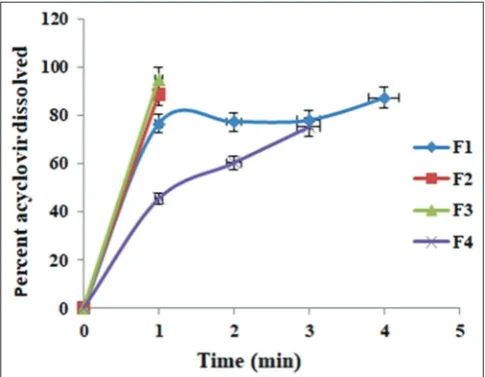
Fig. 12: Dissolution profile of acyclovir fast dissolving tablets of formulation F1 to F4 employing starch phthalate rate. In vitro dissolution studies were carried out for all the formulations
and dissolution profile of formulations F1-F4 is shown in Fig. 12 and of formulations F5-F8 is shown in Fig. 13. Percent dissolved in 1 min (PD1) was
found to be more in F8 formulation which consists of 10% starch phthalate, 5% croscarmellose sodium, and 5% crospovidone. The same was in the case of dissolution efficiency in 1 min (DE1%). Dissolution parameters of
acyclovir fast dissolving tablets are given in Table 7. The PD1 and DE1%
reveal that starch phthalate was effective at 10% starch phthalate, 5% croscarmellose sodium, and 5% crospovidone when the formulations were made by direct compression using these superdisintegrants. Response surface plots study
The response surface plots and contour plots reveal that as the concentration of starch phthalate (Factor A), croscarmellose sodium (Factor B), and crospovidone (Factor C) increases, disintegration time decreases. Response surface plots indicate we can see the effects of Factor A (starch phthalate) and Factor B (croscarmellose sodium) on disintegration time and it was determined from contour plot that a less disintegration time can be obtained with Factor A (starch phthalate) level range between 5 and 6% and Factor B (croscarmellose sodium) level range from 4 to 5% as shown in Fig. 14.
Table 7: Dissolution parameters of acyclovir fast dissolving tablets formulated employing starch phthalate
Parameters F1 F2 F3 F4 F5 F6 F7 F8 F9
PD1 76.53 88.58 94.96 45.35 85.74 72.28 97.79 99.92 36.85
DE1(%) 70 81 87.5 37.5 80 65 90 91 30
Increase in DE1(%) no of folds 2.33 2.7 2.91 1.25 2.66 2.16 3 3.03
-K (min−1) 0.541 2.171 0.884 0.785 1.948 0.863 3.813 - 0.141
Increase in K (min−1) no of folds 3.8 15.3 6.2 5.5 13.8 6.1 27 -
-*SD standard deviation from mean, n=3, PD1: Percent dissolved in 5 min, DE1%: Dissolution efficiency in 1 min, K1: First order rate constant
Fig. 13: Dissolution profile of acyclovir fast dissolving tablets of formulation F5 to F8 employing starch phthalate
The effects of Factor B (croscarmellose sodium) and Factor C (crospovidone) on disintegration time in 1 min are shown in Fig. 15. The contour plots were found to be linear, indicating linear relationship between Factor B (croscarmellose sodium) and Factor C (crospovidone). It was determined from contour plot that less disintegration time can be obtained with Factor B (croscarmellose sodium) level in between 4 and 5% and Factor C (crospovidone) level range from 4 to 5%.
The effects of Factor A (starch phthalate) and Factor C (crospovidone) shown in Fig. 16. It was determined from the contour plot less disintegration time can be obtained when the Factor A (starch phthalate) is used in the concentration range from 5 to 6% and Factor C (crospovidone) in the range of 4 to 5% of the total weight of the tablet.
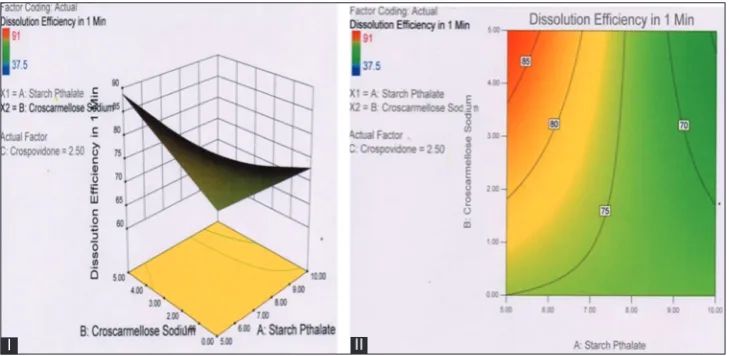
The response surface plot and the contour plots revealed that as a concentration of starch phthalate (Factor A), croscarmellose sodium (Factor B), and crospovidone (Factor C) increases, dissolution efficiency in 1 min increases. The effect of Factor A (starch phthalate) and Factor B (croscarmellose sodium) on dissolution efficiency in 1 min is shown in Fig. 17. The contour plots were found to be linear to certain extent. It was determined from the contour plot that more dissolution efficiency in 1 min can be obtained with Factor A (starch phthalate)
Fig. 14: (I) Response plot II (contour plot) of acyclovir fast dissolving tablets (Effect of starch phthalate and croscarmellose sodium on disintegration time in 1 min)
I II
Fig. 15: (I) Response plot II (Contour plot) of acyclovir fast dissolving tablets (Effect of croscarmellose sodium and crospovidone on disintegration time in 1 min)
Table 8: Drug profile of acyclovir fast dissolving tablets of formulation, F8 before and after 6 months storage for stability
testing
Time (min) Before storage After 6 months
1 99.92±0.11 97.5±0.11
level range between 5 and 6% and Factor B (croscarmellose sodium) level range 4 and 5%.
The effects of Factor B (croscarmellose sodium) and Factor C (crospovidone) are shown in Fig. 18. The contour plots were found to be
almost linear indicating the linear relationship between croscarmellose sodium and crospovidone. It was determined from the contour plot that more dissolution efficiency in 1 min can be obtained with Factor B (croscarmellose sodium) level range between 4 and 5% and Factor C (crospovidone) level range 4 and 5%.
The effects of Factor A and Factor C are shown in Fig. 19. The contour plots were found to be linear indicating the linear relationship between starch phthalate and crospovidone. It was determined from the contour plot more dissolution efficiency in 1 min can be obtained in Factor A (starch phthalate) level range between 5 and 6% and Factor C (crospovidone) level range between 4 and 5%.
Fig. 16: (I) Response plot II (contour plot) of acyclovir fast dissolving tablets (effect of starch phthalate and crospovidone on disintegration time in 1 min
I II
Fig. 17: (I) Response plot II (contour plot) of acyclovir fast dissolving tablets (effect of starch phthalate and croscarmellose sodium on dissolution efficiency in 1 min)
I II
Fig. 18: (I) Response plot II (contour plot) of acyclovir fast dissolving tablets (effect of croscarmellose sodium and crospovidone on dissolution efficiency in 1 min)
Stability study
No visible changes were observed in the fast-dissolving tablets after storage. The drug dissolved from the fast-dissolving tablets were
evaluated before and after storage in each case. No significant difference
(p>0.05) was observed in the percent drug content before and after storage for 6 months. The drug dissolution of the acyclovir fast-dissolving tablets of formulation F8 before and after storage is given in Table 8. The drug dissolution characteristics of the formulation tested remained unaltered during the storage period. The results, thus, indicated that the drug content and drug release rate of the fast-dissolving tablets formulated employing starch phthalate were quite stable.
CONCLUSION
In present research work, starch phthalate a novel superdisintegrant was prepared using potato starch and phthalic anhydride. Acyclovir fast dissolving tablets prepared by direct compression method using 23
factorial designs were found of good quality and passed all evaluation tests such as hardness, friability, disintegration time, in vitro drug release, and stability and found to be suitable as fast-dissolving tablets. From the present investigation, it was found that in combination of croscarmellose sodium (5%), crospovidone (5%), and starch phthalate (10%) showed more dissolution efficiency in 1 min. Thus, starch phthalate found to be an effective superdisintegrant for the preparation of fast dissolving tablets.
ACKNOWLEDGMENT
The authors are thankful to GITAM Institute of Pharmacy, Visakhapatnam, for providing the facility to carry out the work successfully.
CONFLICTS OF INTEREST
The authors confirm that the article content has no conflicts of interest.
AUTHORS’ CONTRIBUTIONS All the authors contributed equally.
REFERENCES
1. Roy A. Orodispersible tablets: A review. Asian J Pharm Clin Res 2016;9:19-26.
2. Masih A, Kumar A, Singh S, Tiwari AK. Fast dissolving tablets: A review. Int J Curr Pharm Res 2017;9:8-18.
3. Kumare MM, Marathe RP, Kawade RM, Ghante MH, Shendarkar GR. Design of fast dissolving tablet of atenolol using novel co-processed superdisintegrant. Asian J Pharm Clin Res 2013;6:81-5.
4. Smita SA, Saudagar RB, Mayuri SS. Review: Fast dissolving tablet. Int J Curr Pharm Res 2018;10:5-12.
5. Chauhan K, Solanki R, Sharma S. A review on fast dissolving tablet. Int J Appl Pharm 2018;10:1-7.
6. Tavakoli N, Varshosaz J, Dorkoosh F, Motaghi S, Tamaddon L.
Development and evaluation of a monolithic floating drug delivery system for acyclovir. Chem Pharm Bull (Tokyo) 2012;60:172-7. 7. Kumar RS, Mudili S. Synthesis and characterisation of starch glutamate
as a novel superdisintegrant. J Drug Deliv Ther 2019;9:100-3. 8. Kumar RS, Yagnesh TN. Optimization of starch oxalate as a novel
superdisintegrant in fast dissolving systems of poorly soluble drugs. J Drug Deliv Ther 2019;9:185-95.
9. Kumar RS, Yagnesh TN. Synthesis, characterization and evaluation of starch xanthate as a superdisintegrant in the formulation of fast dissolving tablet. Int J Appl Pharm 2018;10:249-58.
10. Bhide P, Nachinolkar R. Formulation development and characterisation of meclizine hydrochloride fast dissolving tablets using solid dispersion technique. Int J Appl Pharm 2018;10:141-6.
11. Dhahir RK, Al-Kotaji M. Formulation of orally disintegrating tablets of cinnarizine by using direct compression method. Int J Appl Pharm 2019;11:117-23.
12. Shravani B, Rao NG. Formulation and evaluation of fast dissolving tablets of montelukast sodium using co-processed superdisintegrants. Int J Drug Dev Res 2014;6:125-34.
13. Ajit Shankarrao K, Dhairysheel Mahadeo G, Pankaj Balavantrao K. Formulation and in-vitro evaluation of orally disintegrating tablets of olanzapine-2-hydroxypropyl-β-cyclodextrin inclusion complex. Iran J Pharm Res 2010;9:335-47.
14. Preethi GB, Banerjee S, Shivakumar HN, Kum MR. Formulation of fast-dissolving tablets of doxazosin mesylate drug by direct compression method. Int J Appl Pharm 2017;9:22-8.
15. Bhavani PD, Rao NG. Formulation and evaluation of valsartan fast disintegrating tablets by vacuum drying technique. Asian J Pharm Clin Res 2016;9:73-9.
16. Nagajyothi B, Babu MK. Design and development of glipizide fast dissolving tablets using natural gum superdisintegrant. Asian J Pharm Clin Res 2014;7:144-8.
17. Movva B, Kumar DL, Kumar KM. Formulation and evaluation of fast dissolving tablets of ranitidine hydrochloride by hole technology. Asian J Pharm Clin Res 2013;6:143-7.
18. Manimaran V, Damodharan N. Development of fast dissolving tablets of amlodipine besylate by solid dispersion technology using poloxamer 407 and poloxamer 188. Asian J Pharm Clin Res 2017;10:135-41. 19. Kumar RS, Ghosh A. Design, optimisation and evaluation of piroxicam
fast dissolving tablets employing starch tartrate-a new superdisintegrant. Int J Appl Pharm 2019;11:89-97.
20. Parfait N, Rani KC, Charles N, Geovanny V. Preparation and evaluation of atenolol-β-cyclodextrin orally disintegrating tablets using co-process crospovidone-sodium starch glycolate. Int J Appl Pharm 2018;10:190-4. 21. Remya PN, Saraswathi TS, Sangeetha S, Damodharan N, Kavitha R.
Formulation and evaluation of immediate release tablets of acyclovir. J Pharm Sci Res 2016;8:1258-61.
22. Bala R, Khanna S, Pawar PK. Formulation and optimization of fast dissolving intraoral drug delivery system for clobazam using response surface methodology. J Adv Pharm Technol Res 2013;4:151-9. 23. Karpe M, Mali N, Kadam V. Formulation development and evaluation of
acyclovir orally disintegrating tablets. J Appl Pharm Sci 2012;2:101-5. 24. Masih A, Tiwari AK. Formulation and evaluation of fast dissolving
tablets of amoxycillin trihydrate and potassium clavulanate. Int J Curr Pharm Res 2017;9:48-58.
Fig. 19: (I) Response plot II (contour plot) of acyclovir fast dissolving tablets (effect of croscarmellose sodium and crospovidone on dissolution efficiency in 1 min)
25. Chinnala KM, Vodithala S. Formulation development and evaluation of fast disintegrating tablets of cinitapride hydrogen tartarate by using direct compression technique. Int J Curr Pharm Res 2017;9:98-103. 26. Jain P, Gupta RN, Shrivastava S. Formulation and evaluation of mouth
dissolving tablets of omeprazole. Int J Curr Pharm Res 2016;8:48-51. 27. Begum SK, Madhuri V, Padmalatha K. Design and evaluation