University of South Carolina
Scholar Commons
Theses and Dissertations
Fall 2017
A Study on Satisfaction of Dental Implant Patients
Jung Su O
University of South Carolina - Columbia
Follow this and additional works at:https://scholarcommons.sc.edu/etd Part of theHealth Policy Commons
This Open Access Dissertation is brought to you by Scholar Commons. It has been accepted for inclusion in Theses and Dissertations by an authorized administrator of Scholar Commons. For more information, please [email protected].
Recommended Citation
Su O, J.(2017).A Study on Satisfaction of Dental Implant Patients.(Doctoral dissertation). Retrieved from
A
S
TUDY ONS
ATISFACTION OF DENTALI
MPLANTP
ATIENTSby
Jung Su O
Bachelor of Dental Science Wonkwang University, 2001
Submitted in Partial Fulfillment of the Requirements
For the Degree of Doctor of Public Health in
Health Services Policy and Management
The Norman J. Arnold School of Public Health
University of South Carolina
2017
Accepted by:
M. Mahmud Khan, Major Professor
Whiejong Han, Committee Member
Merchant Anwar, Committee Member
Haeho Lee, Committee Member
ABSTRACT
The implant has been around for half a century. It started in Sweden in the 1960s
and is now being actively practiced all over the world. It is important to investigate what
constitutes a standard for a consumer of medical services in selecting a dentist to receive
implants. A great number of dentists and research organizations have published research
papers on theory and techniques of implants as well as their strengths and weaknesses.
However, researches on reality and satisfaction rate of patients are still very rare.
The purpose of this study was to identify how to improve satisfaction of patients
on whom implant operation was operated and to create constant added values for hospital
management. Patient satisfaction of dental implant including patient’s satisfaction with
the operation, duration of implant operation, and the cost of implant operation were
investigated. This study also examined the management aspects such as dental clinic
choice motivation of implant operation patients, media and factors affecting choosing
dental clinics, and obtaining routes of implant information. To identify perception and
status of patients who visit dental clinics and hospitals in Seoul, patients were asked to
participate in answering the survey questionnaires.
The majority of patients with dental implant treatment (42.4%) answered that they
first learned about dental implant ‘from dentist during dental treatment’, however the
majority of patients without dental implant treatment (62.0%) answered that they first
implants, it is necessary to introduce the implants actively during dental treatment. In
addition, mass media promotion may not be very effective in leading patients to receive
implant treatment.
When patients choose a dentist or dental clinic, they considered factors in the
following order; career and experience of dentist, introduction of acquaintances, regular
dentist, proximity to home, moderate dental treatment cost, convenience of traffic and
parking, advertisements or internet searching, and others. Therefore, to successfully
attract dental implants, it is important to actively promote the dentist's career or
experience. In addition, it has been confirmed that lowering the cost of treatment is not
the most important factor in determining a dentist. When patients select a dentist/dental
clinic for dental implant surgery, they considered factors in the following order; dentist’s
career and implant surgery experience, cost of dental implant, referral by acquaintance or
neighbor, regular dental clinic/dentist, convenient location and parking, dentist’s
educational background, dental clinic facilities, and others. The most important was the
experience and experience of the dentist. Over 90% of patients with dental implant
answered that they are satisfied on dental implant treatment. The degree of satisfaction
with the implants was also very high, and thus promoting the patient's satisfaction with
implant satisfaction may not be an effective method.
This study provided basic data for establishing a management strategy to increase
TABLE OF CONTENTS
ABSTRACT ... iii
LIST OF TABLES ... vii
CHAPTER 1INTRODUCTION ... 1
1.1BACKGROUND/ NEED FOR RESEARCH ... 1
1.2RESEARCH GOALS ... 9
CHAPTER 2 EXAMINATION OF EXISTING LITERATURES ... 12
2.1THE NUMBER OF DENTAL CLINICS IN SOUTH KOREA... 12
2.2EMERGENCE OF DENTAL IMPLANTS ... 13
2.3WHAT IS DENTAL IMPLANT? ... 14
2.4EFFECTIVENESS OF DENTAL IMPLANTS ... 14
2.5FUTURE OF IMPLANT ... 16
2.6EXAMPLES OF SURVEY ON IMPLANT SATISFACTION ... 18
CHAPTER 3METHODOLOGY ... 33
3.1OBJECTIVE ... 33
3.2SUBJECTS ... 34
3.3TOOLS ... 34
3.4CONTENTS ... 35
3.5ANALYSIS METHODS ... 36
4.2QUESTIONS REGARDING THE USE OF DENTAL SERVICES ... 38
4.3THE MOST INFLUENCED FACTORS TO CHOOSE A DENTIST OR DENTAL CLINIC ... 40
4.4THE REASONS TO KEEP CURRENT DENTIST OR DENTAL CLINIC ... 44
4.5THE REASONS NOT TO KEEP CURRENT DENTIST OR DENTAL CLINIC ... 44
4.6CRITERIA TO CHOOSE A DENTIST/DENTAL CLINIC FOR DENTAL IMPLANT SURGERY ... 46
4.7QUESTIONS ABOUT EXPERIENCE OF DENTAL IMPLANT TREATMENT ... 48
4.8SATISFACTION OF DENTAL IMPLANT TREATMENT ... 52
4.9AWARENESS OF IMPLANT LIFETIME AND COST ... 53
4.10QUESTIONS THAT WERE GIVEN TO PATIENTS WITHOUT DENTAL IMPLANT TREATMENT ... 55
4.11COMPARISON OF SATISFACTION AND COST OF DENTAL IMPLANT SURGERY BEFORE AND AFTER 2014 ... 55
CHAPTER 5DISCUSSION ... 59
REFERENCES ... 66
LIST OF TABLES
TABLE 4.1PATIENT CHARACTERISTICS ... 41
TABLE 4.2QUESTIONS REGARDING THE USE OF DENTAL SERVICES ... 42
TABLE 4.3QUESTIONS REGARDING THE MOST INFLUENCED FACTORS
TO CHOOSE A DENTIST OR DENTAL CLINIC ... 43
TABLE 4.4QUESTIONS REGARDING THE REASONS TO KEEP CURRENT
DENTIST OR DENTAL CLINIC ... 45
TABLE 4.5THE REASONS NOT TO KEEP CURRENT DENTIST OR DENTAL CLINIC ... 46
TABLE 4.6CRITERIA TO CHOOSE A DENTIST/DENTAL CLINIC
FOR DENTAL IMPLANT SURGERY ... 47
TABLE 4.7EXPERIENCE OF DENTAL IMPLANT TREATMENT ... 49
TABLE 4.8SATISFACTION OF DENTAL IMPLANT TREATMENT ... 56
TABLE 4.9SATISFACTION OF DENTAL IMPLANT TREATMENT
BY AGE GROUP AND GENDER ... 56
TABLE 4.10AWARENESS OF IMPLANT LIFETIME AND COST ... 57
TABLE 4.11QUESTIONS THAT WERE GIVEN TO PATIENTS WITHOUT DENTAL IMPLANT
TREATMENT ... 58
CHAPTER
1
INTRODUCTION
1.1 Background / need for research
It has been already 45 years since dental implant appeared. Since
osseointegration-type implants that are being generally used in dental offices throughout
the world today began in Sweden in the 1960s, and it began spreading throughout the
world around the 1980s (Gaviria et al. 2014). Although history of dental implants is short,
it was a method that was completely different from those that preceded it and therefore
the interest in it began escalating. In particular, the interest in dental implants has
exploded in Korea in the last several years. There is a rapid increase in all aspects of
dental implants ranging from production and distribution of implants, dentists who
practice implants, professional implant technicians, implant patients, etc (Shingu Kim
2006, 218). In Korea, the cost of implant treatment varies from 1 million won to 3
million won depending on the difference between the area and the clinic, and the
complaints are high that the price of the implant is expensive. At the same time,
depending on the medical institution, the materials and procedures used for the implant
procedure and the medical charge are different so that the confusion of medical
consumers is increasing (Kim et al. 2014; Shin et al. 2008). From 2016, the Korean
over 65 years of age, however only two teeth per person are supported per lifetime
(Ministry of Health & Welfare, 2016).
Patients' perception of implants has also changed a lot compared to the past. In the
past, dental implants were perceived as expensive surgical operation and therefore people
find it difficult to approach it. In addition, it was rare to find dental hospitals that
performed implant surgery. However, with increase in education level of society, ease of
finding available information about implants, e.g., through the Internet, reduction in cost
of implant surgery and increasing price competition, more wide-spread use of implant
operation not only in university hospitals but also local dental offices, etc., patients who
needed implants found it easier than ever to receive implant surgery.
Due to such reasons, implant surgery increased rapidly and many dental hospitals
began recognizing implant surgery as a profitable business. Accordingly, dental hospitals
began competitively advertising and promoting implant surgery and making investments
in necessary staff training, purchase of highly expensive equipment and hospital
modeling to attract and accommodate implant patients. However, with the recent global
economic crisis and Korean economy entering the period of fierce competition, just like
any other areas of business in Korea society, competition is intensifying in medical
industry as well and it has also changed the way patients perceive medical services as
well. Moreover, as the medical industry is being transformed from an industry centered
on supplier of medical practices to the one centered on consumer of medical practices,
i.e., patients, the fact that is evidenced by improvement in patient rights and
In the United States where dental implants became more common much earlier
than in Korea, researches on dental implants began independently from the case where
dental implant was first developed by Professor Branemark of Sweden during the 1960s
and applied to toothless patients. Bicon Dental Implants began their research work in
1968 as part of U.S. Army research project with the aim of "restoring each and every
tooth using dental implant and developing dental implants where dentures can be fixed
using adhesives". As a result, the company succeeded in commercializing dental implants
for general public in the United States in 1985 for the first time. Today, dental implant is
commonly practiced in the United States. From 1983 to 1987, the number of implant
surgery has quadrupled (National Institute of Health Consensus Development Conference,
Statement on Dental Implant, 1988). Also, between 1986 and 1990, it grew by 73%, a
remarkable growth rate (Stillman 1993).
In 1992, more than 300,000 implants were done and the number is continuing to
increase every year. It has achieved 175 million dollars in revenue and more than 90% of
dentists are practicing implant surgery on a routine basis (Misch 1993).
Dental implant was introduced in Korea during the 1980s with only a very small
minority of dentists practicing it. However, beginning in the late 1990s, there was a boom
in dental implants as ample opportunities for general practitioners to learn the techniques
through various seminars, learning from dentists with implant experiences, obtaining
training by linking to dental implant organizations overseas, etc. As a result, in the 2000s,
patients could receive dental implants not only at big hospitals but also local dental
for the industry as a result of the expanded market and enhanced income for dental
practice, as it was an area that was completely different from the existing dentures
method. However, whether such a boom will continue in the future is uncertain and the
experts vary in their opinions.
Dentists generally agree that the dental implant market is no longer the "Blue
Ocean". Some even lament that it has now become the "Rotten Ocean". At the center of
such lamentations are declining revenues from dental implants as a boom in dental
implants led to fierce competition with steep discount in consultation fees and excessive
advertising; and appearance of patients who require post-treatment care due to poor
recuperation sometimes accompanying medical lawsuits. In addition, due to recent
world-wide recession, dental practices are undergoing prolonged financial problems. Moreover,
while in the past patients tended to respond receptively to doctors, today they tended to
be extra-careful when selecting an expensive treatment as the live in the age of flooding
information, e.g., the Internet (Chiui Shinbo Newspaper 2008).
Under the circumstance, it is more important than ever to investigate what
constitutes a standard for a consumer of medical services in selecting a dental office to
receive implants. To this day, a great number of dentists and research organizations have
published research papers on theory and techniques of implants as well as their strengths
and weaknesses. However, researches on reality and satisfaction rate of patients are still
very rare. To this day, more than 10,000 research papers have been published on theory
and techniques of bone in-growth dental implants. However, only less than 2% of them
It is important to conduct a survey on medical service consumers who may have
to receive implant operation in the future or patients who have already received implant
surgery in order to assess the level of their satisfaction or dissatisfaction after their
surgery and make improvements on them. In fact, Mr. Shin Hoseong, a researcher at
Korea Institute for Health and Social Welfares (KIHASA), published a paper titled
"Survey Results on People's Awareness of Dental Implants" in December, 2008. He
surveyed 1,051 people, with or without experience in dental implants, on their
satisfaction of dental implants and what they consider as important when they receive
implants. The result shows that 59.88% of implant patients were satisfied with the
operation. To the question what they considered most important in selecting a hospital,
people without experience in dental implants (874 people) said that they considered
advertising and experience of the hospital director as most important (49.54%, ranked 1st)
while people with implant experience (177 people) said a recommendation from a friend
most important (32.2%, ranked 1st). (Shin Hoseong, 2008)
Tepper G. et al. conducted face-to-face interviews with 1,000 Austrians using
full-time members of the Austrian Gallup Institute in order to find out where they get
information about dental implants and how they felt about the cost. They were all above
14 years old and consisted of 521 females and 479 males. The result of the interview
revealed that only 20% of them knew dental implants as an alternative solution to loss of
tooth. For major ways of obtaining information about dental implants, 68% of them
obtained information through dentists; 23% through media; and 22% from friends of
acquaintances. Of all interviewees, 31% wanted to obtain more information about dental
of them thought the cost was too high. However, from the point of view of aesthetics, 82%
of them thought they were satisfied and 90% expressed their satisfaction regarding
functional aspects of dental implants as a replacement for teeth lost. Nevertheless, no
interviewees felt satisfied about the cost.
The interview here provides important information for dentists who provide
dental implants. People who received implants believed that implant cost was too high
but were satisfied with the service it provided. Due to lack of information and knowledge
about dental implants, there are many people who do not know that implants can be a
solution to loss of tooth. Also, it appears that most people have blind perception that
dental implant is too expensive. Such perception is a big hindrance for patients to go with
implant operation. We can think of two solutions to solve these problems. First, there is a
need to lower cost or obtaining implants. However, dentists are in diametrically opposite
position regarding lowering the cost of operation, so there seems to be a limit. In addition
to lowering implant cost, it is probably important to promote value of implant to patients.
In particular, under the implant market environment of 2010 where emergence of
"dumping dentists" and decline in profitability of implants make it difficult to lower cost
further, promoting value and effectiveness of dental implants to patients is expected to be
even more necessary. Second, there is a problem of effectively delivering information to
patients about effectiveness of implants as a replacement of missing teeth. It seems
necessary to increase awareness of implants through public media, magazines and
pamphlets. (Tepper G, et al., 2003)
edentulous state before implant in complete denture state and implant-retained
overdenture state after implant was compared. There were eight types of assessment
criteria (comfort, hygiene, retention, appearance, speech, mastication, and overall
satisfaction). The total number of participants was 55 and they were patients who used
implant-retained mandibular overdentures using implants from 1998 to 2004. A
questionnaire was given to both male and female patients to evaluate their general
satisfaction they experienced as they used implant prostheses.
The results show that there was a significant correlation between gender and
comfort. (p<0.0001) Patients who used one or more conventional dentures for a long time
before implant surgery were satisfied with new implant dentures in terms of comfort and
function. (p<0.01) Also, the older they were, the more satisfied they were with new
implant dentures in terms of aesthetic and comfort. Overall, for all patients, there was
higher positive correlation in comfort satisfaction than aesthetic satisfaction. This
research shows that the satisfaction of patients using the implant-retained mandibular
overdentures is correlated to age, gender and past prosthetic history.
The reason the comfort and function satisfaction is low for patients who used one
or more conventional dentures for a long time before implant surgery is probably because
they were used to conventional dentures for a long period. The reason why there was
negative correlation in aesthetic satisfaction for most patients was because, although
implant-supported overdentures are functionally superior, it is aesthetically inferior to
Schwartz-Arad D., et al. studied the stress a patient receives when he is informed
about situations that could occur during dental implant surgery. The participants in this
research consisted of 98 health patients scheduled to receive implant surgery. Just before
implant surgery, 2 different audio tapes containing information about implant insertion
were played to patients. After implant surgery, a questionnaire consisting of 21 questions
was given to the patient. The analysis showed that the patient was placed under a
significantly stressful situation before the implant surgery. Some patients experience
extreme nervousness. It was revealed that, under such a situation, providing relevant
information about surgery to patients just before implant insertion worsens patient's
nervousness. No matter how good the information is, if it is not appropriate for the
situation, it will end up backfiring. In conclusion, explaining to a patient about the
potential side effects that could occur during implant surgery was not an appropriate
method. It would be better to find a way to relax nervous patients. (Schwartz-Arad D, et
al., 2007)
Zitzmann N.U. et al. studied patient satisfaction of removal implant overdentures
using two or four implants to edentulous mandible patients. Questionnaire was given to
20 patients before implant, which was collected twice, 6 months and 36 months after
implant. In both two implants-retained mandibular overdentures (IRET) and four
implants-supported mandibular overdentures (ISUP), greater improvements were made in
prostheses retention and pain reduction compared to complete dentures of edentulous
patients. In long-term comparison of IRET and ISUP, IRET (two implants), in all aspects,
except for chewing ability, and in psychological parameters in particular, patient
therefore stabilization was superior. This brought about improvement in prosthesis
retention, chewing ability and pain reduction for a long term. However, from
maintenance point of view, ISUP is not favored compared to two implants dentures or
complete dentures because there is a problem of recalling at least once a year. There exist
various variables to what types of dentures are best for a patient. (Zitzmann NU, et al.,
2006).
Therefore, a research on the subject of patient satisfaction is necessary in order to
understand patients as a doctor and as part of hospital administration.
1.2 RESEARCH GOALS
The purpose of this study was to identify how to improve satisfaction of patients
receiving implant operations, and to create constant added values for hospital
management. For this, along with overall patient satisfaction of implants, implant
operation, duration of implant operation, and its cost, this study intends to do the research
on the management aspects such as dental clinic choice motivation of implant operation
patients, media and factors affecting choosing dental clinics, and obtaining routes of
implant information.
Through the research as above Bartlett et al. reported that when the doctor
recognized operation patient’s perception and status, based on that, by increasing
service, and by being brought into close relationship with clinics, patients had a tendency
to follow doctor’s orders and prescriptions and be willing to participate into medication
process and to publicize their clinics (Bartlett, et al., 1984). However, even though there
have been over 10,000 papers published with regard to mechanisms and procedures of
dental implant, the papers regarding how much the dental implant service was
satisfactory to the patients are no more than 2% out of the dental implant related papers
(Yoon-Young Heo et al., 2010). Moreover, previous studies show that there is a wide gap
between the patient`s satisfaction with the previous researches and the current research
case. Therefore, currently we need to examine for a research on satisfaction of implant
patients.
Thus, this study aims to identify perception and status of patients who visit dental
clinics and hospitals in Seoul by modifying and supplementing the survey questionnaires
in use for previous studies and to do the research on methods of providing a more
improved medical service by analyzing factors affecting patient’s satisfaction.
There are various factors that affect satisfaction of patients. Standard for patient
satisfaction varies across generations too. Today, dental implant has established itself as a
common surgical operation at dental office and hospital. Accordingly, the aim of this
paper is to discover how much contribution dental implant has made to oral health-related
quality of life.
The ultimate goal of this research is to enhance quality of life for patients by
satisfaction and understanding the reality of dental implants and how patients perceive
dental implants.
The purpose of this study is to investigate;
To evaluate the characteristics of patients who experienced dental
implant therapy compared with patients who did not
To investigate the overall and specific satisfaction level of dental
implant therapy in patients who visited dental hospital and clinics in
Seoul, Korea
To analyze differences on perception of dental implant cost and
influenced factors to choose a dentist between implant experience
and non-experience patients who visited dental hospital and clinics
CHAPTER 2
EXAMINATION OF EXISTING LITERATURES
2.1 THE NUMBER OF DENTAL CLINICS IN SOUTH KOREA
The number of dentists in Korea exceeded 15,000. A dentist per dental clinic has
a population of 3,300 people in nationwide. The metropolitan area, Seoul, is already
saturated and medical charges are falling (Seminar biz newspaper, 2016).
According to the Health Insurance Review and Assessment Service of South
Korea, among the 15,477 dental clinics in nationwide, 4,583 were located in Seoul, 3,412
in Gyeonggi-do, 1,139 in Busan-si, 757 in Daegu-si, 749 in Gyeongsangnam-do, 748 in
Incheon-si, 561 in Gyeongsangbuk-do, 520 in Gwangju-si, 481 in Daejeon-si, 479 in
Jeonllabuk-do, 446 places in Chungcheongnam-do, 406 places in Jeollanam-do, 339 in
Ulsan-si, 336 in Chungcheongbuk-do, 334 in Gangwon-do, 156 in Jeju-si, and 21 in
Sejong-si, indicating that more than 57% of the total dentists are concentrated in the
Seoul metropolitan area. A dentist per dental clinic has a population of 2,226 people in
Seoul metropolitan area.
Especially in Seoul, the concentration of Gangnam-gu is very serious. Of the
4,583 dental clinics located in Seoul, 571 are located in Gangnam-gu, and the largest
number of dental clinics in Seoul is in the densely populated area followed by Seocho-gu
was 590 in Jung-gu, 977 in Jongno-gu, and 988 in Gangnam-gu, in contrast, 3,938 in
Dobong-gu, 3,388 in Eunpyeong-gu and 3,263 in Nowon-gu.
The number of dentists in Seoul was 6,427. In Seoul, 825 dentists were active in
Gangnam-gu with the largest number of dentists, followed by 449 in Seocho-gu and 390
in Songpa-gu.
The number of over 75 years of age who are the main target of dental implant
treatment is 344,639 in Seoul, and Nowon-gu has the highest number of elderly people
with 21,415 followed by Songpa-gu (18,672), Gangseo-gu (3,800) and Eunpyeong-gu
(8,097).
2.2 EMERGENCE OF DENTAL IMPLANTS
In the past, when you lose two or more teeth, an adjacent tooth had to be pulled
out in order to use healthy tooth as abutment. This caused so many problems such as
changes in patient's occlusion, periodontal disease, cavities, psychological rejection,
reduced length of life for natural teeth, etc. (Donghan Lee 2002, 10)
As a result, osseointegrated dental implant was introduced in order to solve
problems associated with side effects and, in fact, dental practice faced a turning point as
2.3 WHAT IS DENTAL IMPLANT?
Dental implant is a surgical procedure that implants a bio-friendly mounting
device inside alveolar bones or jawbones to construct artificial tooth and allow them to
function as natural teeth. However, dental implant is distinguished from implants used in
orthopedics, etc. Dental implants must deal with many unfavorable conditions that other
implants do not face: it must with stand strong and repeated masticatory force in order to
enable chewing of foods; and it is not completely buried inside jawbones but penetrates
gums and is exposed to inside of oral cavity, therefore always subject to external
contamination. Accordingly, it not only requires compatibility with bone, periodontal and
tissue structure but also mechanical and engineering strengths that can withstand biting
force. The need for developing dental implants have emerged in order to respond such
demands and underwent tremendous growth as Professor Branemark of Sweden during
the 1960s introduced and established the idea of osseointegration (Donghan Lee 2002,
10).
2.4 EFFECTIVENESS OF DENTAL IMPLANTS
Emergence of dental implants was a turning point in dental practice. It overcame
the limits of traditional dental surgical procedures to some extent. When
osseointegration-type implant dentures were worn, compared to general dentures, there
was a gradual but clear improvement in masticating efficiency and function and the
interocclusal detection (Lundqvist 1992). Average dentures can withstand 15~25 psi
(pound per square inch) of biting power, which is about 1/5~1/4 of the biting power of
natural teeth. In contrast, it has been reported that fully bone anchored dentures
(Branemark denture) that uses 5~6 implants can maintain biting power that is similar to
that of almost natural teeth and its masticating form and function are also similar to that
of natural teeth as well (Haraldson 1983; Lundgren 1987).
Recently, dental implants are actively being used in orthodontics. I particular, in
case of mini-implants, it is being used as an anchor so orthodontic treatment is done
without anchor loss, which is another value of implants reported (Higuchi 1991).
In the past, functions of dental implants were regarded as important. Also, there
have been many researches done on implants and osseointegration in order to improve
long-term survival rate of implants. However, the recent trend is to emphasize the
importance of soft tissues that envelope implants in order to increase long-term survival
rate of implants in addition to issues in osseointegration of implants. It has been observed
that there are histological, biochemical and micro-structural similarities between animals
and humans in terms of the structure of periodontal soft tissues and soft tissues around
implants. (Abrahamsson 1996)
Since Professor Branemark introduced dental implants to dentistry, the
importance of dental implants as a field in dental treatment has been growing. While the
initial goal of implants was to fulfill the basic roles of teeth to enhance osseointegration
and dental implant functions, today demand for balance between adjacent remaining teeth
and gums around implants is constantly increasing. This is becoming a particularly
the area of aesthetics, growth and maintenance of hard and soft tissues have become a
necessity (Seo-woung Kim 2007, 1). Beauty not only refers to pleasant psychological
response to visual stimulation but also a technique called art. For an artistic work to
receive good evaluation, it must satisfy five senses. However, when interpreting beauty,
people define beauty according to what they recognize. There are various factors that
contribute to satisfying patients. Ability of doctors, friendliness of staff members of
hospital, beautiful interior, etc. However, most of all, patient satisfaction will be
maximized when demand of patients is carefully considered and medical services that
surpass their expectation are provided to them. It is important to analyze each and every
element. However, clinical doctors must realize that it is very important to create overall
harmony among various elements.
2.5 FUTURE OF IMPLANT
Although implants are being used widely across the world today, it is deficient in
terms of being a perfect alternative to replace natural teeth. When bone quality is bad, it
might take 6 to 12 months to manufacture prosthetics for implants. There is even a case
when implant fixture falls out not long after implant prosthetics is completed. It is often
the case a long period of applying masticating pressure causes upper implant structure to
fall out or loose screws make implant shaky. It is difficult to give implant surgery to
patients with severe diabetes or who are going through cancer treatment. With dental
implants, since the nerve system of natural teeth is absent in dental implants, patients do
masticate harder than when they use natural teeth. It increases the chance of causing
periodontal damage to natural teeth. Although dental implant is clearly a revolutionary
alternative to natural teeth when natural teeth are lost, there is a still room for much
improvement. In order to improve on such imperfection, there are researches in progress
throughout the world. Improvement in safety and success of implants will once again
motivate dentists to actively perform dental implants.
It is expected that implants and bone implant materials that make osseointegration
faster and bone quality harder will appear soon. According to Yonsei University Dental
School and Korea University Graduate School of Clinical Dentistry, development of new
implants is underway in Georgia University School of Dentistry to advance
osseointegration period and solidify bone quality by applying bone
cell-inducing/-forming catalyst rhBMP-2 to implant surface. Also, at Weintraub Implant Research Lab
of UCLA School of Dentistry and Iowa University School of Dentistry, development of
"customized implant" that uses the patient's DNA to perform surface treatment is in
progress. Implants researches using DNA is underway not only in these labs but also at
companies and research labs in Sweden, the country with advanced dental implant
industry. Also, "Infuse", bone implant materials with outstanding performance, has been
approved by US FDA and being sold in the United States. It has been reported that a
Korean company also succeeded in developing a product similar to "Infuse" and launched
the product in the market (Chiui Shinbo Newspaper 2008).
There is much room for improving performance of implants. If advanced implants
and bone implant materials are developed and launched, experts generally agree that
improved, it will help dentists to reduce a chance for implant failure and minimize
possibility of medical lawsuits, so expectation is there for it to have positive impact on
improving hospital finance.
2.6 EXAMPLES OF SURVEY ON IMPLANT SATISFACTION
2.6.1 SATISFACTION WITH IMPLANT TREATMENT IN COMPARISON
WITH DENTAL TREATMENT
Timmerman et al. studied patients’ satisfaction with mandibular implant-retained
overdenture during the period from 1991 to 1993 using 110 edentulous patients. This
study was conducted at the Department of Oral and Maxillofacial Surgery and
Department of Special Dental Care and Maxillopacial Prosthodontics of the Ignatius
Teaching Hospital in Breda, the Netherlands. Three types of mandibular implant
retained-overdentures were provided to them, and satisfaction with each type of implant was
measured and compared by applying a different type to each patient (Timmerman 2004).
Cune et al. applied three different types - magnet, bar clip, and ball socket - of
implant retained overdenture to edentulous patients, and compared their satisfaction in
comparison with that with conventional denture. First, two implants were placed onto the
mandible of 18 edentulous patients. For the first three months of experiment, new
conventional dentures without any attachment to the maxilla and mandible were provided
and used. After 3 months, patients were selected at random, and implant-retained
months, the attachment was replaced with a different type. Patients’ satisfaction was
measured by marking on a visual analogue scale (VAS) (Cune 2006).
Grogono et al. sent questionnaires by mail to 95 patients treated at a university
hospital for implant in order to compare their psychological attitude before and after
implant treatment and to examine the effect of implant prostheses on their psychological
attitude. The items surveyed through the study were eating, speaking, esthetics,
maintenance, relationship, social life, employment, and overall dental health, and 61 of
the questionnaires were answered and returned (64%). The participants used removable
complete denture or partial denture before implant treatment, and the average period of
using implant prostheses since implant treatment was 26 months (Grogono 1989).
Zitzmann et al. compared two or four implant overdentures with conventional
complete denture in order to test which type of implant overdenture prostheses was more
economic to edentulous patients. For comparison, 20 edentulous mandible patients who
participated in the study were divided into 3 groups: implant-retained overdentures (two
implants, IRET); implant-supported overdentures (four implants, ISUP); and complete
dentures (control group, CDs). Cost effectiveness analysis was conducted through six
months (Zitzmann 2005).
Siadat et al. conducted research to see whether patient’s age, gender, and past
prosthetic history were correlated with their satisfaction. Satisfaction was compared
between complete denture in the edentulous state before implant treatment and
implant-retained overdenture after implant treatment, and eight items were evaluated (comfort,
study, 55 male and female patients were surveyed about their general satisfaction with the
use of implant prostheses (Siadat H 2008).
MacEntee et al. analyzed the economic cost and effect of implant prosthesis and
conventional denture, and built a framework for the management of edentulous jaw. They
compared the physiological and psychosocial costs and benefits of implant prosthesis and
conventional denture in this framework (MacEntee MI 1998).
In the studies presented above, Timmerman et al., Cune et al., Grogono et al., and
Zitzmann et al. reported that implant denture was more satisfactory because it gave
higher satisfaction than conventional denture in general and in terms of pain reduction
and chewing ability (Timmerman 2004; Cune 2006; Grogono 1989; Zitzmann 2005). In
the same type of study, however, Siadat et al. and MacEntee et al. reported different
results. That is, Siadat et al. reported that those who had used conventional denture
preferred conventional denture to implant denture, and MacEntee et al. reported that
satisfaction with implant denture was low due to cost, long period of making,
maintenance and management, and aesthetic reasons (Siadat 2008; MacEntee 1998).
After all, these studies suggest that overall satisfaction with implant denture is
high but there are things to be improved through exhaustive surveys of patients’
satisfaction.
Pjetursson BE et. al conducted a survey on 104 patients who have been using
implants for single crown or fixed partial dentures (FPDs) for the average of 10 years.
They all received implant surgery from the Department of Periodontology and Fixed
Prosthodontics at University Bern in Switzerland. Their average age was 59 and 214
using single crown implant were 48% and the rest of them used implants from FPDs.
Satisfaction level was divided into 5 grades (range: very satisfied to not at all satisfied)
and was measured in 12 categories (function, comfort, phonetics, esthetics, oral hygiene,
general satisfaction, costs, and preference for natural teeth or an implant-supported
prosthesis). The results showed that most of 104 patients (>94%) responded "Very
satisfied". Also, more than 2/3 of patients (72%) responded that they could not feel the
difference between implant prosthesis and natural teeth. In particular, the patients showed
the highest satisfaction in most basic function of implants--general function, chewing and
comfort (97% very satisfied or satisfied). Also, when survival rate of implants for 10
years was measured, 93% of them were still maintaining normal functions. To the
question "Are you going to recommend implant to other people?" 89% of the respondents
said they would recommend it to acquaintances such as relatives and friends. In addition,
even to the questions not related to cost, 87% of the patients responded that implant cost
was reasonable, a result contrary to other researches. They also showed high level of
satisfaction in oral hygiene (93%). Among them, 47% of them claimed that they have less
bleeding in gingiva or mucoas around implants than in natural teeth when they brush their
teeth. In conclusion, most of the patients who were using single or multiple implants over
long a long period (from 5 to 15 years) felt satisfied about implants. Also, 94% of them
were regularly visiting hospitals for implant check.
What is noticeable here is that, about 87% of the patients responded that the
implant cost was reasonable. Given that university hospitals cost more than private
hospital, it is an unexpected result. The research did not go into finding out the reasons
patients recognized the values for the cost because university dental clinics have various
advantages over private clinics in terms of equipment, facility, brand awareness,
reliability, services, etc. Based on this guess, private hospitals also should focus on
finding ways to improve patient satisfaction so that they can receive fair return for quality
services rather than seek low price to attract patients (Pjetursson BE, et al,.2005).
KIyak H.A. et al. conducted a survey on 39 patients who received implants in
order to study psychological impacts osseointegrated dental implants have on patients.
The research studied oral and psychological functioning problems as they use
osseointegrated implants prostheses and extroversion, neuroticism, self-concept and body
image patients experience during implant surgery. Participants were given 6
questionnaires from before phase 1 surgery to final recall appointment for the new
prostheses. Final recall appointment was done from 12 to 18 months after phase 1 surgery.
In the phase 1 surgery stage, the most common problem was related to eating. Interests on
aesthetics were much less. After phase 2 surgery and implant prostheses are completed,
all problems experienced during phase 1 surgery were revisited. The results show that
there were significant improvements. Phase 1 surgery-related problems appeared much
more negative than phase 2 surgery-related problems. Before receiving implant surgery,
the biggest body image for almost all patients was negative vis-a-vis teeth. As patients
used implant prostheses, there found significant improvements not only teeth but also on
mouth, facial, and overall body image. Implant satisfaction scores increased with time.
There is a need to find a way to reduce problems patients experience during phase 1
Schropp L., et al. researched patient satisfaction on early vs. delayed placed dental
implant. The goal of this research is to explore a patient's immediate response during
implant surgical and prosthetic procedures and function, aesthetics and overall
satisfaction about immediate single-tooth implant and delayed single-tooth implant.
Single-tooth implant was planted in anterior or premolar region of 46 patients. 23
implants were planted using IM (Early immediate: IM: implant insertion within 10 days
of tooth extraction) method and 23 implants were planted using DE (Delayed: implant
insertion within 3 months of tooth extraction) method. Within 16~18 months of
delivering IM implant restoration, questionnaires were collected from 41 patients.
Analysis results showed that IM group's satisfaction on implant restoration was
significantly higher than that of DE group. (96 vs 93; p<0.02). There were no significant
difference between both groups in terms of assessment of implant surgery procedure.
While IM method implant surgery is complicated and difficult to operate, DE type
implant surgery is simple. About 25% of patients experienced unpleasantness during
prosthetic procedures and they pointed out impression taking as a reason. Implant
prosthesis impression process goes through much more complex process compared to
natural teeth prosthesis impression process. Use of abutment screw driver could cause
discomfort to patients. Nevertheless, in this research most patients showed high
satisfaction without significant unpleasantness in IM and DE implant treatment process.
(Schropp L,et al,.2004).
Harle T.M. et al. conducted a survey study on 46 female patients in order to
explore changes in mental, psychological and social state of patients who received
implants and are using implant-retained prosthesis effectively every day show much
better characteristics not only in eating but also oral mechanical ability and signs and
symptoms compared to pre-implant stage. Also, implant patients showed a good tendency
in communication, psychological functioning, self-care and role performance. In addition,
they showed clinically important improvement in terms of physical, psychological
functioning after implant therapy. It is often heard from old patients who received
implant surgery that they feel much younger (Harle TJ, et al,.1993).
Maxillary anterior region is the area that is very difficult to apply implant
treatment. Levi A., et al. studied the factors that influence patient satisfaction in maxillary
anterior dental implant treatment. Five variables that are closely related to overall patient
satisfaction--implant position, definitive restoration shape, appearance, effect on speech
and chewing capacity--were surveyed. Among 123 people who received a questionnaire,
only 78 responded. The conclusion was that practitioner responsible for implant treatment
should consider multidimensional aspects related to patient satisfaction. In this research,
aesthetics affect patient satisfaction the most in maxillary anterior implant prostheses.
Aesthetics is a very subjective area. What is most important for both dentists and patients
to achieve optimal results is communication. In particular, maxillary anterior region has
treatment limitation in terms of aesthetics. In order to achieve the result a patient expects,
there should be enough discussions on treatment limitation with a patient before implant
restoration is provided. In conclusion, implant position, restoration shape, overall
appearance, effect on speech, and chewing capacity in maxillary region is an important
patient for treatment limitation of maxillary region must first precede (Levi A, et al.,
2003).
Narby B., et al. conducted a survey over 10 year period on a middle-aged and
older Swedish population in order to find out changes in awareness of the public about
implant treatment. First, in 1989, a questionnaire survey was conducted on three thousand
residents of Orebro County, Sweden, to find out how much interest they have on
implant-based prosthodontic treatment. The survey was conducted again on the same residents in
1999. 1665 subjects responded to both questionnaires. In the 1989 survey, only a few
respondents expressed interest in implant treatment. However, in 1999, 92% of people
who did not show interest in 1989 survey responded that they are interested in implant
treatment. The barrier for those who had one or more teething missing or required
implant treatment due to discomfort of complete dentures was the cost. The research
shows that interest in implant treatment has increased significantly from 1989 to 1999.
Increase in the number of implant providers and company brought about by dramatic
change in public demand for implant treatment played an important role too. These
providers and companies invested a significant amount of efforts in developing implants
with superior quality and promoting them. Also, clinical researchers did a lot of work in
developing surgical skills that are easier and can reduce pain for patients in shorter
operation time. As a result, today, it has become possible to successfully implant bones
that used to be difficult to implant in the early period. However, even now, in 2010,
although the desire of patients for implant treatment has increased even more, they are
Through the research as above Bartlett et al. reported that when the doctor
recognized operation patient’s perception and status, based on that, by increasing
patient’s satisfaction it was possible to induce them to continue to use clinic’s medical
service, and by being brought into close relationship with clinics, patients had a tendency
to follow doctor’s orders and prescriptions and be willing to participate into medication
process and to publicize their clinics (Bartlett, et al., 1984). However, even though there
have been over 10,000 papers published with regard to mechanisms and procedures of
dental implant, the papers regarding how much the dental implant service was
satisfactory to the patients are no more than 2% out of the dental implant related papers
(Yoon-Young Heo et al., 2010).
2.6.2. RELATIONSHIP BETWEEN IMPLANT AND QUALITY OF LIFE
Packer et al. studied Parkinson’s disease (PD) patients about how dental implant
influenced their quality of oral health. They placed Astra-Tech implants in 9 PD patients
and provided them with fixed or removable prostheses. The range of their ages was 54-77.
The implants success rate among them was 85% in the maxilla and 81% in the mandible.
The survey was conducted for 12 months from 3 months after the completion of implant
prostheses (Packet 2009).
Cibirka et al. evaluated patients’ prosthodontic rehabilitation while using
complete denture before implant therapy and after implant therapy. They evaluated items
related to the patients’ subjective feelings such as function, comfort, esthetics, speech,
of life (HRQL) were developed to measure dental implant therapy. In this study, 26
patients received implant treatment for mandibular prosthesis and new maxillary denture.
One dealing questionnaire asked about the patient’s feeling with conventional complete
denture before implant treatment, and the other one asked about the implant-treated
patient’s feeling after a year from the completion of prosthetic rehabilitation (Cibirka
1997).
Melas et al. surveyed 83 patients (The criteria for entering the study included the
ability to speak English, age 18 years or over, and having dentures fabricated at St
Bartholomew’s and The Royal London School of Medicine and Dentistry during the past
10 years, but not in the last 6 months. There is no reference about rate of Man and
Women) on how implant-stabilized overdentures influenced their daily living. The
participants were classified according to gender, age of denture, and duration of
edentulism, and were interviewed with a questionnaire about ‘The Oral Impacts on Daily
Performances’ (Melas 2001).
Among the studies above, Packer et al. reported that dental implant was highly
satisfactory in the patients’ eating and overall satisfaction, and Cibirka et al. reported that
dental implant was highly satisfactory in terms of comfort, esthetics, speech, self-image,
and oral dental health. In particular, Melas et al. reported that patients felt comfortable in
their daily living and less difficult in eating a wide range of food items (Packet 2009;
Cibirka 1997; Melas 2001). These studies show that dental implant can improve the
2.6.3 RELATIONSHIP BETWEEN PATIENTS’ PSYCHOLOGICAL STATE
AND SATISFACTION
Abu Hantash et al. studied psychological impact related to implant patients’ oral
health-related quality of life. For this study, they conducted a survey with 50 patients (22
men and 22 women, aged between 22 and 71 years, mean age 43.22 years) who were
partially edentulous or in need of dental implant therapy (This article didn’t have an
enough trust. Because this article didn’t explain about the tooth situation of patients
detailed). Two questionnaires – The Dental Impact on Daily Living (DIDL) and the
Neuroticism Extraversion Openness Five-Factor Inventory (NEO-FFI) – were used, one
for a survey before implant treatment and the other for a survey in 2~3 months after the
end of implant prosthodontic rehabilitation therapy (Abu Hantash 2006).
Schwartz-Arad et al. studied patients’ stress that they had when they were given
information about possible situations during the procedure in dental implant surgery
setting. The participants of this study were 98 healthy patients who were planned to have
implant surgery. Two different audio tapes containing adequate information about
implant insertion were played to them just before implant surgery. Then, a questionnaire
consisting of 21 questions was provided after the implant surgery (Schwartz-Arad 2007).
Sondell et al. experimented on how dentist-patient verbal communication
dimensions affected patients’ satisfaction. Patients and dentists were controlled according
to age and gender, and satisfaction was measured in two ways: one for the single visit
(satisfaction with care), and the other for the overall result (satisfaction with treatment
length of prosthesis treatment was 20 months, and the treatment process was monitored
through inquiry. At the end of each session of treatment, the conversation between the
patient and the dentist was recorded (Sondell 2002).
Abu Hantash et al. reported that patients’ personality traits were closely correlated
with their satisfaction, and Schwartz-Arad et al. and Sondell et al. reported that
communication between the patient and the dentist at implant surgery had a significant
effect on the patient’s stress and satisfaction. These studies show that patients’
satisfaction is related to their individual psychological state, and that attention should be
paid not only to treatment but also to appropriate communication with patients according
to their psychological state (Abu Hantash 2006; Schwartz-Arad 2007; Sondell 2002).
2.6.4 RELATIONSHIP BETWEEN HEALTH EDUCATION AND
SATISFACTION WITH IMPLANT
Seon-jeong Moon et al. surveyed the relationship between dental implant patients’
oral hygiene management behavior and their satisfaction. The survey was conducted from
January 7 to June 30 in 2014, and collected data were analyzed using SAS (ver 9.2). The
participants of the survey were implant patients at six dental hospitals and clinics in
Daegu, Busan, and Jinju, and 266 questionnaires were analyzed as valid data. The
questionnaire used in the study consisted of 6 questions on the subject’s general
characteristics, 3 on the use of dental implant prosthesis, 3 on how to manage dental
implant prosthesis, 4 on follow-up behavior, 3 on the use of oral hygiene supplies, 5 on
with the use of prosthesis. In the 5-point Likert scale, the lowest point was 1 and the
highest one was 5. In addition, research assistants given prior education by the researcher
interviewed the participants individually (Seon-jeong Moon 2015).
Ji-hyeon Jeon et al. studied implant patients’ maintenance and management
behavior according to their experience in tooth brushing education.
They sampled through random sampling 250 implant patients who visited one of
four dental clinics in the Daejeon area during the period from April 1 to October 1, 2012,
and surveyed them using a self-report questionnaire about general characteristics (gender,
age, occupation, academic qualification, income, marital status, reason for dental
extraction, and operative procedure), experience in tooth brushing education, and implant
tooth follow-up (Ji-hyeon Jeon 2013).Seon-jeong Moon et al. and Ji-hyeon Jeon et al.
reported that patients’ adequate education about oral hygiene management including
prosthesis management increased the implant survival rate, which, in turn, raised the
patients’ satisfaction.
Moreover, Crews et al. pointed out that dentists should encourage their patients to
quit smoking for a higher success rate of dental implant. This shows that adequate health
education on oral management can improve not only the implant survival rate but also the
2.6.5 RELATIONSHIP BETWEEN SATISFACTION WITH IMPLANT AND
DENTAL SERVICE MANAGEMENT
Hye-jeong Lee et al. conducted “A Study on Implant Treatment Patients’
Satisfaction with Dental Care Services.” With 107 patients who had received implant
treatment, they conducted a questionnaire survey about their age, occupation, income,
duration of treatment, period after treatment, reason for visit, use of dental care facilities,
etc. (Hye-jeong Lee 2005).
Ji-hyeon Jeon et al. studied the relationship between dental implant patients’
satisfaction with the quality of medical service, value satisfaction, and intention to reuse.
The survey was conducted with 320 implant patients who visited one of four dental
clinics in the Daejeon area for about 4 months from December 2013 to March 2014, and
the subjects were sampled at random by the surveyor and they answered a self-report
questionnaire, which asked 19 questions on the quality of medical service and about
intention to reuse (Ji-hyeon Jeon 2004).
Min-sook Cho et al. analyzed factors influencing dental implant patients’
satisfaction and intention to reuse using a structural equation model. They surveyed 250
patients who received implant treatment at one of six dental hospitals and clinics in
Busan, Changwon, and Gimhae during the period from July 1 to July 30, 2012, and used
209 of them as valid data. The questionnaire consisted of questions on dentist’s technical
expertise, paramedical staff’s technical expertise, reasonableness of medical fee,
was answered on a 5-poiont scale from ‘Not at all’ (1) to ‘Absolutely yes’ (5), and a total
of 35 questions were asked (Min-sook Cho 2013).
Both Ji-hyeon Jeon et al. and Min-sook Cho et al. reported that dentist’s expertise,
specialized equipment, etc. had a significant effect on satisfaction with implant and reuse,
and were closely correlated with the quality of medical service (Ji-hyeon Jeon 2004;
Min-sook Cho 2013). This is significantly related with the report of Hye-jeong Lee et al. that
patients’ selection of implant treatment hospital was determined more by acquaintances’
recommendation (56%) than by advertisement (1.9%) (Hye-jeong Lee 2005). Because
patients’ selection of implant dental hospital was largely made by acquaintance who
experienced high-quality medical services, the intention to reuse implant by patients
whose satisfaction is high influences new patients’ intention to use implant. From this, we
may infer that implant patient’s satisfaction may have a high effect on dental service
CHAPTER 3
METHODOLOGY
3.1 OBJECTIVE
The purpose of this study was to identify approaches to improve satisfaction of
patients receiving dental implants, and help hospital management to provide added value
for their dental implant services. Thus, this study aimed to identify perception and status
of patients who visit dental clinics and hospitals in Seoul by modifying and
supplementing the survey questionnaires in use for previous studies and to do the
research on methods of providing a more improved medical service by analyzing factors
affecting patient’s satisfaction.
The specific goals of this study were as follows: first, to evaluate the
characteristics of patients who experienced dental implant therapy compared with
patients who did not. Second, to investigate the overall and specific satisfaction level of
dental implant therapy in patients who visited dental hospital and clinics in Seoul, Korea.
Last, to analyze differences on perception of dental implant cost and influenced factors to
choose a dentist between implant experience and non-experience patients who visited
3.2 SUBJECTS
The subjects of this study were 200 consenting patients who were sampled at
random from 6 dental hospitals and clinics in Seoul throughout over three months from
April to June in 2017. The participants were divided into those who had experienced
implant treatment in the past and those who experience implant treatment for the first
time, and differences between the two groups were examined for their satisfaction with
implants, their recognition of implants, and their satisfaction with the dental hospital
where they have received treatment.
3.3 TOOLS
This study was conducted through a questionnaire survey. For the survey, the
researcher visited each of the selected dental hospitals and clinics in person, and conduct
personal interviews with the participants. In each interview, the researcher filled the
questionnaire based on the participant’s answers. The questionnaires used to assess the
implant patients’ satisfaction with implants, recognition of implants, and satisfaction with
the dental hospital where they have received treatment.
In order to design the questionnaires for this study, questionnaires used in
previous studies on satisfaction with implants, motives for implant treatments, and the
future of implants, etc. were collected. They were analyzed and revised partially, and
3.4 CONTENTS
Two types of questionnaire were used in this study, one for patients who have
experienced implant treatment in the past, and the other for those who experience implant
treatment for the first time.
Both of the two questionnaires asked demographic characteristics such as gender,
year of birth, household income, joy category, area of residence, and whether to smoke
and the level of smoking. In addition, they asked treatment-related details such as
whether to have a favorite dental hospital or clinic, reasons for choosing a dental hospital
or clinic for treatment, recent history of dental visits, and satisfaction with the dental
hospital or clinic that they have visited now.
In addition to these common questions, the questionnaire for patients who have
experienced implant treatment in the past asked about their satisfaction with implant
treatment. Specifically, thus, it contained questions on the time of implant treatment, the
number of implants, evaluation of implant treatment that they have received, changes
made by implant treatment, dissatisfaction with the implant treatment that they have
received, cost of implant treatment, understanding of implant treatment and follow-up
management, etc.
The questionnaire for patients who experience implant treatment for the first time
asked about their opinions on implants. Specifically, thus, it contained questions on
whether they have experienced implant-related consultation, reasons for hesitation when
implant treatment was recommended, and their opinions on the life and cost of implants,
3.5 ANALYSIS METHODS
Data collected as above were analyzed using SPSS 21.0 (SPSS Inc., Chicago, IL,
USA) with regard to differences between patients with previous experiences in implants
and those without, differences among those with previous experiences, and differences
among those without. Independent t-test was used to compare the mean of two groups
and chi square test was conducted to analyze the difference in categorical variables.
Statistical significance was determined to be statistically significant when p value was
CHAPTER 4
RESULTS
4.1 DESCRIPTIVE RESULTS
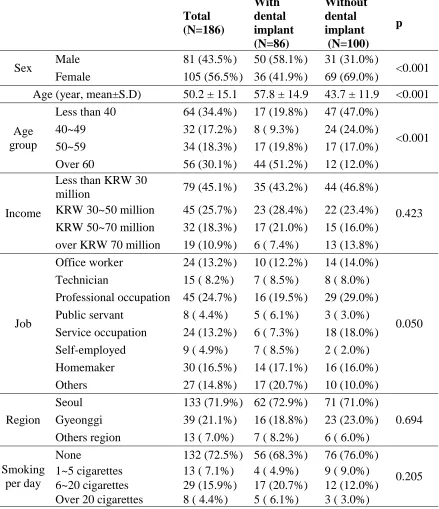
Descriptive characteristics of patients who participated in survey were summarized
in Table 4.1. The study sample included 186 survey respondents. Patients who have
experienced implant treatment were 86 (46.2%) and patients who have no implant
treatment were 100 (53.8%).
Among 186 patients who participated in survey, 43.5% were male. Among 86
patients who have experienced implant treatment, 58.1% were male. However, 31.0% of
patients without implant treatment were male. There were statistically significant
differences in sex distribution between patients with dental implant treatment and patients
without dental implant treatment (p<0.001). The proportion of men who underwent
dental implant surgery is significantly higher than that of women. It would be explained
by the difference in smoking rates between men and women in Korea. The rate of male
smokers in Korea is the second highest in OECD countries and the second lowest in
women (OECD report, 2006). The oral hygiene condition of a man could in a worse
environment than a woman, and the frequency of extraction due to periodontal disease is
The average age of the survey respondents was 50.2 ± 15.1. The average age of
patients who have experienced implant treatment and without implant treatment were
57.8 ± 14.9 and 43.7 ± 11.9, respectively. There was a significant difference in average
age between patients with dental implant treatment and patients without dental implant
treatment (p<0.001).
Over 50% of patients with dental implant treatment were over 60 years old whereas
47% of patients without dental implant treatment were less than 40 years old.
Four groups were generated according to yearly family income and there was no
significant difference in income between patients with dental implant treatment and
patients without dental implant treatment (p=0.423). Patients who participated in survey
were office worker (13.2%), technician (8.2%), professional occupation (24.7%), public
servant (4.4%), service occupation (13.2%), self-employed (4.9%), and homemaker
(16.5%). There was no difference in job between patients with dental implant treatment
and patients without dental implant treatment (p=0.050). Region where patients live were
Seoul (71.9%), Gyeonggi (21.1%), and other (7.0%). There was no difference in region
between patients with dental implant treatment and patients without dental implant
treatment (p=0.694). In terms of smoking, 72.5% of participants were none smoker.
Patients who smoke 1-5, 6-20, over 20 cigarettes per day were 7.1%, 15.9%, and 4.4%,
respectively. There was no difference in cigarettes per day between patients with dental
4.2 QUESTIONS REGARDING THE USE OF DENTAL SERVICES
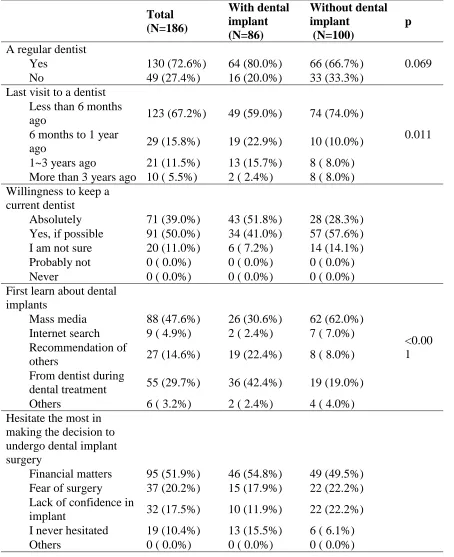
Table 4.2 summarized the use of dental services of patients who participated in
survey. Of 186 respondents, 72.6% of survey respondents had a regular dentist. Eighty
percent of patients who have experienced dental implant and 66% of patients without
dental implant had a regular dentist. This was not statistically different. Patients without
dental implant treatment were more likely to recently visit dentists than patients with
dental implant. More non-experienced patients visited the dentist within 1 year compared
with patients with dental implant.
The patients with dental implant answered positively to the question of whether to
keep a current dentist. Over 50% of patients with dental implant answered ‘absolutely’
whereas 28.3% of patients without dental implant answered ‘absolutely’.
The routes first learned about dental implant treatment were appeared in the order of
mass media (47.6%), from dentist during dental treatment (29.7%), recommendation of
others (14.6%), internet search (4.9%), and others (3.2%). There were statistically
significant differences in the routes first learned about dental implant treatment between
patients with dental implant treatment and patients without dental implant treatment
(p<0.001). The majority of patients with dental implant treatment (42.4%) answered
‘from dentist during dental treatment’, however the majority of patients without dental
implant treatment (62.0%) answered that they first learned about dental implant from
‘mass media’.
Of the patients who received implant treatment, 26 (30.6%) were the first to learn