A Secure Protocol for Spontaneous Ad-Hoc
Networks
N.M.V.Satyannarayana
Student, M.TechVignan’s Lara institute of science and technology Vadlamudi,Guntur(dt),Andhra Pradesh, India
R.Veerababu M.tech(Ph.D)
Assistant ProfessorVignan’s Lara institute of science and technology Vadlamudi,Guntur(dt),Andhra Pradesh ,India
Abstract: This paper presents a secure protocol for spontaneous wireless unexpected networks that uses Associate in Nursing hybrid symmetric asymmetric theme and therefore the trust between users so as to exchange the initial knowledge and to exchange the key keys that may be used to cipher the information. Trust relies on the primary visual contact between users. Our proposal may be a complete self-configured secure protocol that is able to produce the network and share secure services with none infrastructure. The network permits sharing resources and offering new services among users in a very secure setting. The protocol includes all functions required to work with none external support. We've designed and developed it in devices with restricted resources. Network creation stages area unit elaborated and therefore the communication, protocol messages, and network management area unit explained. Our proposal has been enforced so as to check the protocol procedure and performance. Finally, we tend to compare the protocol with alternative spontaneous unexpected network protocols so as to highlight its options and that we offer a security analysis of the system.
Keywords: communication, protocol messages, cipher information.
INTRODUCTION:
THE exponential growth within the development and acceptance of mobile communications in recent years is especially discovered within the fields of wireless native space networks, mobile systems, and present computing. This growth is principally as a result of the quality offered to users, providing access to data anyplace, user friendliness, and easy readying. Moreover, the measurability and flexibility of mobile communications increase users’ productivity and potency. Spontaneous impromptu networks are shaped by a group of mobile terminals placed in a very shut location that communicate with one another, sharing resources, services or computing time throughout a restricted amount of your time and in a very limited area, following human interaction pattern [1], [2]. People are hooked up to a gaggle of individuals for a jiffy, and then leave. Network management ought to be clear to the user. A spontaneous network could be a special case of impromptu networks. They sometimes have very little or no dependence on a centralized administration. Spontaneous networks are often wired or wireless. we tend to contemplate solely wireless spontaneous networks during this paper. Their objective is that the integration of services and devices within the same
spontaneous networks as a result of they have associate initial configuration (i.e., network configuration) or external authorities (for example, central certification authorities). None of the prevailing papers propose a secure spontaneous network protocol supported user trust that gives node legitimacy, integrity checking, and privacy. The network and protocol planned during this paper will establish a secure self-configured atmosphere for information distribution and resources and services sharing among users. Security is established supported the service needed by the users, by building a trust network to get a distributed certification authority. A user is in a position to affix the network as a result of he/she knows somebody that belongs thereto. Thus, the certification authority is distributed between the users that trust the new user. The network management is additionally distributed, which allows the network to possess a distributed name service. We apply uneven cryptography, wherever every device encompasses a public-private key combine for device identification and parallel cryptography to exchange session keys between nodes. There are not any anonymous users, as a result of confidentiality and validity are supported user identification.
RELATED WORK
In [15], Latvakoski et al. make a case for a communication design concept for spontaneous systems, integration application-level spontaneous cluster communication, and ad hoc networking along. a collection of ways to alter plug and play, addressing and quality, peer to look connectivity, and also the use of services also are provided. Liu et al.
[16]show however networked nodes will autonomously support and get together with one another during a peer-to peer (P2P) manner to quickly discover and self-configure any services on the market on the area and deliver a real-time capability by self-organizing themselves in spontaneous groups to supply higher flexibility and adaptableness for disaster observance and relief. Gallo et al.
[17] pursued 2 targets in spontaneous networks: to maximize responsiveness given some constraints on the energy value and to attenuate the energy value given bound necessities on the responsiveness. Nadjm-Tehrani [18] developed the primary real spontaneous network that gives services dynamically using the Jini technology. They make a case for the field of study design of the contact service and its implementation. The prototype demonstrates however major standard, flexibility, dependability, efficiency, and transparency, affect the design and services of a dynamic network of devices. In [19], Untz et al. propose a light-weight and economical interconnection protocol appropriate for spontaneous edge networks. They style and implement Lilith, an image of associate degree interconnection node for spontaneous edge networks. It uses MPLS and permits totally different communication ways on a per flow basis, provides seamless change between operational and back-up ways, and makes on the market information on destination reachability. Feeney et al. [20] given Spontnet, a image implementation of
a straightforward unintentional network configuration utility supported the most ideas of spontaneous networks. Spontnet permits users (using face-to-face authentication and short-range link with simply diagnosable endpoints) to distribute a bunch session key while not previous shared context and to determine shared namespace. 2 applications, a simple internet server and a shared whiteboard, are provided as samples of cooperative applications. They use IPSec protocol (used for Virtual personal Networks), applied although net. Spotnet thus uses each wired and wireless links and corresponding protocols.
SECURE SPONTANEOUS NETWORK
Our protocol permits the creation and management of distributed and localized spontaneous networks with little intervention from the user, and also the integration of different devices (PDAs, cell phones, laptops, etc.). Cooperation between devices permits provision and access to totally different services, like cluster communication, collaboration in program delivery, security, etc. The network members and services could vary as a result of devices are liberated to join or leave the network. Spontaneous network ought to complete the subsequent steps so as to be created.
NETWORK OVERVIEW
Once getting this certificate the system can validate the data; if correct then it'll sign this node as a valid node. All nodes will be each purchasers and servers, can request or serve requests for data or authentication from alternative nodes.
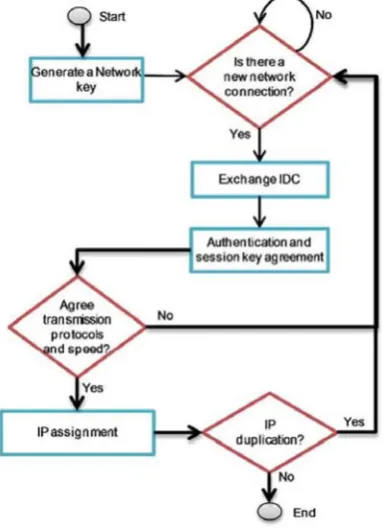
Fig. 1. Algorithm for joining a new node
4.SERVICES DISCOVERY
B asks for the out there services. Services is discovered using internet Services Description Language (WSDL).
Our model is predicated on [33], however in our spontaneous network we tend to don’t use a central server. Moreover, different service discovery services is enforced in our system [34]. A user will raise different devices so as to grasp the out there services. It's associate agreement to permit access to its services and to access the services offered by different nodes. Services have an oversized variety of parameters that don't seem to be transparent to the user and need manual configuration. One issue is to manage the automated integration tasks and use, as an example, service agents. Different is to manage secure access to the services offered by the nodes within the network. The fault tolerance of the network is predicated on the routing protocol wont to send info between users. Services provided by B square measure out there given that there's a path to B, and disappear once B leaves the network.
ESTABLISHING TRUSTED CHAIN AND CHANGING TRUST LEVEL
There square measure solely 2 trust levels within the system. Node A either trusts or doesn't trust another node B. The package application put in within the device asks B to trust A once it receives the valid IDC from B. Trust relationship is
asymmetric. If node A failed to establish trust level with node B directly, it is established through trusty chains, e.g., if A trusts C and C trusts B, then A could trust B. Trust level will amendment over time counting on the node’s behavior. Thus, node A could decide to not trust node B although A still trusts C and C trusts B. It may also stop trusting if it discovers that previous trust chain doesn't exist any longer.
PROTOCOL AND NETWORK MANAGEMENT
In the network formation, nodes perform associate degree initial exchange of configuration info and security victimization the mechanism of authentication or acknowledgement supported the works shown in [35], [36]. This mechanism avoids the necessity for a central server, creating the tasks of building the network and adding new members terribly straightforward. The network is formed victimization the knowledge provided by users, thus, every node is known by associate degree scientific discipline address. Services square measure shared victimization transmission control protocol connections. The network is built victimization that has high information to share resources. We've reserved the short-range technology (Bluetooth) to permit authentication of nodes when they be part of the network. After the authentication method, every node learns the identity card of different familiar nodes, a public key and a LID. This info are updated and completed throughout the network nodes. This structure provides associate degree authenticated service that verifies the integrity of the info from every node as a result of there's a distributed CA. Each node requests the services from all the nodes that it trusts, or from all familiar nodes within the network, depending on the sort of service. Asking to multiple nodes is formed through diffusion processes. The protocol prioritizes access to info through trustworthy nodes. Once the knowledge cannot be obtained through these nodes, it will then raise other nodes. Nodes can even send requests to update network information. The reply can contain the identity cards of all nodes within the network. The node replying to the current request must sign this information making certain the believability of the shipment. If it's a trustworthy node, its validity is additionally ensured, since trustworthy nodes are liable for collateral their previous certificates. Beneath this network, any kind of service or application may be enforced. The services offered by our protocol are secure.
PROTOCOL OPERATION
replacement network or participate in associate degree existing one. If he/she decides to make a replacement network, it begins the procedure a session key are going to be generated. Then, the node can begin its services (including the network and authentication services). Finally, it will wait for requests from different devices that wish to affix the network. If the user desires to become a part of associate degree existing network, the node follows Step one algorithmic rule from Section three, to find a tool which will offer trust to that, save corresponding data and can ready to begin communications. The node that belongs to the network, and is accountable for corroboratory the new node’s information, can perform a diffusion process to the nodes that are inside its communication range. These nodes can forward the received packets to their neighbors till the information reach all nodes within the network. This method permits sub stantiative the validity and uniqueness of the new node’s information. The authentication method for brand new device B. The receiver node A validates the received information and sends a broadcast message to B to visualize if these information are not employed in the network (even the science address). This IP checking packet is distributed haphazardly doubly so as to avoid simultaneous checks and reach all devices [13], [14]. When the authentication device receives the science checking reply, it sends the authentication reply to the new device. If any step is wrong, a mistake message is distributed to the new device.
SECURITY ANALYSIS/EVALUATION OF THE PROPOSED SCHEME
In this section, we have a tendency to analyze and judge the planned security theme. The planned security protocol is labile because new security scientific discipline algorithms are often easily supplemental. So as to perform Associate in Nursing analysis and evaluation from the sensible perspective, we provide the foremost common attacks in spontaneous wireless unintentional networks and the way our proposal refuses them. We will observe that the secure mechanisms enclosed in our spontaneous unintentional network make it to accomplish high level of security.
COMPARING SPONTANEOUS NETWORK FEATURES We have not found another secure protocol for spontaneous wireless unexpected network deployed, thus we've got searched other spontaneous network proposals printed within the literature so as to match their options with our proposal. A number of them haven't enclosed any security system, however others have enclosed some systems that exist by default within the used technology, like Wired Equivalent Privacy (WEP), IPSec, and Diffie-Hellman. But no one propose an entire security protocol, that is that the main purpose of this paper. Moreover, the protection explanations in these papers are few and that they don't tackle security issues very well. They solely describe however new nodes be a part of the network securely; neither make a case for however the knowledge is secured nor show its security
performance. In this comparison, we've got enclosed the most options of a spontaneous network: would like for user intervention, self configuration, and security. We've got con jointly enclosed network purpose (what is it created for), the programming language used to produce it and if there's a true image existing.
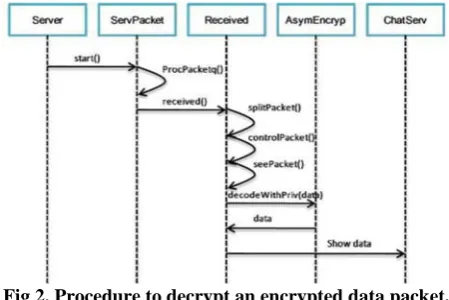
Fig 2. Procedure to decrypt an encrypted data packet.
CONCLUSION
REFERENCES
[1] L.M. Feeney, B. Ahlgren, and A. Westerlund, “Spontaneous Networking: An Application-Oriented Approach to Ad-hoc Networking,” IEEE Comm. Magazine, vol. 39, no. 6, pp. 176-181, June 2001.
[2] J. Lloret, L. Shu, R. Lacuesta, and M. Chen, “User-Oriented and Service-Oriented Spontaneous Ad Hoc and Sensor Wireless Networks,” Ad Hoc and Sensor Wireless Networks, vol. 14, nos. 1/2, pp. 1-8, 2012.
[3] S. Preuß and C.H. Cap, “Overview of Spontaneous Networking -Evolving Concepts and Technologies,” Rostocker Informatik- Berichte, vol. 24, pp. 113-123, 2000. LACUESTA ET AL.: A SECURE PROTOCOL FOR SPONTANEOUS WIRELESS AD HOC NETWORKS CREATION 639 TABLE 6 Security Evaluation of Our Proposal TABLE 5 Comparative of Spontaneous Networks
[4] R. Lacuesta, J. Lloret, M. Garcia, and L. Pen˜ alver, “A Spontaneous Ad-Hoc Network to Share WWW Access,” EURASIP J. Wireless Comm. and Networking, vol. 2010, article 18, 2010.
[5] Y. Xiao, V.K. Rayi, B. Sun, X. Du, F. Hu, and M. Galloway, “A Survey of Key Management Schemes in Wireless Sensor Networks,” Computer Comm., vol. 30, nos. 11/12, pp. 2314-2341, Sept. 2007. [6] V. Kumar and M.L. Das, “Securing Wireless Sensor Networks with
Public Key Techniques,” Ad Hoc and Sensor Wireless Networks, vol. 5, nos. 3/4, pp. 189-201, 2008.
[7] S. Zhu, S. Xu, S. Setia, and S. Jajodia, “LHAP: A Lightweight Hopby-Hop Authentication Protocol For Ad-Hoc Networks,” Ad Hoc Networks J., vol. 4, no. 5, pp. 567-585, Sept. 2006.
[8] A. Noack and S. Spitz, “Dynamic Threshold Cryptosystem without Group Manager,” Network Protocols and Algorithms, vol. 1, no. 1, Oct. 2009.
[9] J. Yan, J. Ma, F. Li, and S.J. Moon, “Key Pre-distribution Scheme with Node Revocation for Wireless Sensor Networks,” Ad Hoc and Sensor Wireless Networks, vol. 10, nos. 2/3, pp. 235-251, 2010.
[10] M. Mukesh and K.R. Rishi, “Security Aspects in Mobile Ad Hoc Network (MANETs): Technical Review,” Int’l J. Computer Applications, vol. 12, no. 2, pp. 37-43, Dec. 2010.
[11] K. Sahadevaiah and P.V.G.D. Prasad Reddy, “Impact of Security Attacks on a New Security Protocol for Mobile Ad Hoc Networks,” Network Protocols and Algorithms, vol 3, no. 4, pp. 122-140, 2011. [12] L. Herrero and R. Lacuesta, “A Security Architecture Proposal for
Spontaneous Networks,” Proc. Int’l Conf. Advances in the Internet Processing System and Interdisciplinary Research, Oct. 2003. [13] R. Lacuesta and L. Pen˜ aver, “IP Addresses Configuration in
Spontaneous Networks,” Proc. Ninth WSEAS Int’l Conf. Computers (ICCOMP ’05), July 2005.
[14] R. Lacuesta and L. Pen˜ alver, “Automatic Configuration of Ad-Hoc Networks: Establishing Unique IP Link-Local Addresses,” Proc. Int’l
Conf. Emerging Security Information, Systems and Technologies (SECURWARE ’07), 2007.
[15] J. Latvakoski, D. Pakkala, and P. Paakkonen, “A Communication Architecture for Spontaneous Systems,” IEEE Wireless Comm., vol. 11, no. 3, pp. 36-42, June 2004.
[16] L. Liu, J. Xu, N. Antonopoulos, J. Li, and K. Wu, “Adaptive Service Discovery on Service-Oriented and Spontaneous Sensor Systems,” Ad Hoc and Sensor Wireless Networks, vol. 14, nos. 1/2, pp. 107-132, 2012.
[17] S. Gallo, L. Galluccio, G. Morabito, and S. Palazzo, “Rapid and Energy Efficient Neighbor Discovery for Spontaneous Networks,” Proc. Seventh ACM Int’l Symp. Modeling, Analysis and Simulation of Wireless and Mobile Systems, Oct. 2004.
[18] J. Ba¨ckstro¨m and S. Nadjm-Tehrani, “Design of a Contact Service in a Jini-Based Spontaneous Network,” Proc. Int’l Conf. and Exhibits on the Convergence of IT and Comm., Aug. 2001.
[19] V. Untz, M. Heusse, F. Rousseau, and A. Duda, “Lilith: an Interconnection Architecture Based on Label Switching for Spontaneous Edge Networks,” Proc. First Ann. Int’l Conf. Mobile and Ubiquitous Systems: Networking and Services (Mobiquitous ’04), Aug. 2004.
[20] L.M. Feeney, B. Ahlgren, A. Westerlund, and A. Dunkels, “Spontnet: Experiences in Configuring and Securing Small Ad Hoc Networks,” Proc. Fifth Int’l Workshop Network Appliances, Oct. 2002.
[21] M. Danzeisen, T. Braun, S. Winiker, D. Rodellar, “Implementation of a Cellular Framework for Spontaneous Network Establishment,” Proc. IEEE Wireless Comm. and Networking Conf. (WCNC ’05), Mar. 2005. [22] J. Rekimoto, “SyncTap: Synchronous User Operation for Spontaneous
Network Connection,” Personal and Ubiquitous Computing, vol. 8, no. 2, pp. 126-134, May 2004.
[23] C. Cornelius, A. Kapadia, D. Kotz, D. Peebles, M. Shin, and N. Triandopoulos, “Anonysense: Privacy-Aware People-Centric Sensing,” Proc. Sixth Int’l Conf. Mobile Systems, Applications, and Services (MobiSys ’08), pp. 17-20, June 2008.
[24] R. Lacuesta, J. Lloret, M. Garcia, and L. Pen˜ alver, “Two Secure and Energy-Saving Spontaneous Ad-Hoc Protocol for Wireless Mesh Client Networks,” J. Network and Computer Applications, vol. 34, no. 2, pp. 492-505, Mar. 2011.
[25] J. Sun, C. Zhang, Y. Zhang, and Y. (Michael) Fang, “An Identity-Based Security System for User Privacy in Vehicular Ad Hoc Networks,” IEEE Trans. Parallel and Distributed Systems, vol. 21, no. 9, pp. 1227-1239, Sept. 2010.