In This issue
Influence of Pocket Gophers on Seeded Mountain Range in Utah
Odell Julander, Jessop B. Low, and Owen W. Morris
The Adaptation and Production of Species and Selections of Grasses and Clover in Colombia
Loy V. Crowder, Jaime Vanegas A., Jaime Lotero C., and Angelo Michelin
Wildlife Survival in Brush Burns
W. E. Howard, R. L. Fenner, and H. E. Childs, Jr.
Implementing a Year-Round Forage Program in California
A. T. Spencer
The Interrelation of Three Environmental Factors Affect- ing Germination of Sagebrush Seed
L. W. Weldon, D. W. Bohmont, and H. P. Alley
Response .“f Native Vegetation of the Central Great Plains fo Applications of Corral Manure and Commercial Fertilizer ._...G. E. Klipple and John L. Retzer
Conirol of Three Major Brush Species on Grazing Lands in ihe United States, Cuba, and Brazil
C. E. Fisher and Lawrence Quinn
A Study of Bracken Fern Poisoning of Cattle on a Cali- fornia Forest Range _____ _ __________ ____________ __._ Kenneth A. Wagnon
Book Reviews: The Living Forest (McCormick); Field- book of Natural History (Palmer) ; Plant Classification
(Benson) ________________________________________~_~~_~___~______~_~___~______~____________~______.___
Current Liierafure. ____________ _ ________._. ______________ _____ . . . .._.._...Lee A. Sharp
Society Business: Summer Field Meeting: Photo Contest
Rules; President’s Message...__~~__~____~_~_______.~._._ 219
225 230 235
236
239
244 249
American
Society of Range Management
The American Society of Range Management was created allied technologists, and to encourage professional improvement in 1947 to foster advancement in the science and art of grazing of its members.
land management, to promote progress in the conservation and Persons shall be eligible for membership who are interested greatest sustained use of forage and soil resources, to stimu- in or engaged in practicing range or pasture management or late discussion and understanding of scientific and practical animal husbandry ; administering grazing lands ; or teaching, range and pasture problems, to provide a medium for the or conducting research, or engaged in extension activities in exchange of ideas and facts among society members and with range or pasture management or related subjects.
T
he JOURNAL OF RANGE MAN--,
AGEMENT, published bi-monthly, is the official organ of the American Society of Range Management. The Society, however, assumes no responsibility for the statements and opinions expressed by authors and contributors.Off ice, Executive Secretary. Address all inquiries and correspondence including memberships, renewals, replacements of JOURNALS, etc., to Executive Secretary, American Society of Range Management, P.O. Box 5041, Portland 13, Oregon.
Dues. Membership dues should be sent to the Executive Secretary. .The dues are $8.00 per year including a subscrip- tion to the JOURNAL OF RANGE MAN- AGEMENT. Dues for student members are $4.00 per year, including the JOURNAL. All subscriptions mailed outside the North American continent and insular possessions of the U. S. are $8.50 per year. Subscrip- tions must be paid in advance. Remit by draft or check on U. S. banks in U. S. funds.
Reprinfing. The reprinting of articles or parts of articles published in the JOURNAL OF RANGE MANAGEMENT is author- ized on the express condition that full credit be given the JOURNAL and the author. The date of original publication must be shown with the credit line.
Posf Office Enfry. Second-class post- age paid at Portland, Oregon, and at ad- ditional offices.
Change of Address. Notices of change of address should be received by the Execu- tive Secretary one month before the date of issue on which the change is to take effect. Both the new and old addresses should be sent to the Executive Secretary, American Society of Range Management, P.O. Box 5041, Portland 13, Oregon.
Printers. The Nebraska Farmer Company, 1420 P Street, Lincoln, Nebraska.
Copyright 1959 by the American Society of Range Management.
OFFICERS OF THE SOCIETY
President:
DONALD F. HERVEY Colorado State University
Fort Collins, Colorado
Vice President: Executive Secretary:
FRED H. KENNEDY JOHN G. CLOUSTON
U. S. Forest Service P. 0. Box 5041 Albuquerque, N. Mex. Portland 13, Oregon
BOARD OF DIRECTORS
KENNETH CONRAD Wray, Colorado
1957-59
E. WM. ANDERSON Soil Conservation Service
Pendleton, Oregon
JAMES L. FINLEY Holbrook, Arizona
1958-60
Past President:
1959-61 JOHN CHOHLIS
Western Livestock Journal Sacramento, California
MELVIN S. MORRIS University of Montana Missoula, Montana
C. H. MCKINNON LK Ranches, Ltd.
Calgary, Alberta
ROBERT S. CAMPBELL U. S. Forest Service New Orleans 13, La.
HISTORIAN: A. A. BEETLE, Dept. of Agronomy, University of Wyoming, Laramie, Wyoming
JOURNAL OF RANGE MANAGEMENT EDITOR
WARREN C. WHITMAN
Department of Botany, North Dakota Agricultural College Fargo, North Dakota
EDITORIAL BOARD 1957-59
FRANK GYBERG E. J. WOOLFOLK
Cornville, Arizona Pacific Southwest Forest & Range Exp. Sta. Berkeley 1, California 1958-60
ARNOLD HEERWAGEN W. R. HANSON
Soil Conservation Service Eastern Rockies Forest 321 New Customs Building Conservation Board
Denver 2, Colorado Calgary, Alberta 1959-61
DONALD R. CORNELIUS Agricultural Research Service
P. 0. Box 245 Berkeley 1, California
JACK R. HARLAN Oklahoma State University
Journal of
Volume 12, Number 5 September, 1959RANGE
MANAGEMENT
Influence of Pocket Gophers on Seeded
‘*
Mountain Range in Utah
ODELL JULANDER, JESSOP B. LOW, AND OWEN W. MORRIS
Range Conservationist, Intermountain Forest and Range Experiment Station, Forest Service, U. S. Department of Agriculture, Ogden, Utah; Leader, Utah Cooperative Wildlife Research Unit, Logan Utah; and District Agent, Predator and Rodent Control, U. S. Fish and Wildlife Service, Salt Lake City, Utah.
Large areas of high-mountain range in the Intermountain West are depleted and need seeding to forage species. Many of these areas, particularly the open parklands, are heavily populated with pocket gophers (Thomomys talpoides). Failures in seeding high-mountain parklands to grass and the failure of seeded stands to “hold” have been fre- quent. Since high populations of pocket gophers have often been associated with these failures, gophers were suspected as a pos- sible cause.
The Monte Cristo area of the Cache National Forest in north- ern Utah is an example of such high-mountain, gopher-infested range. For several years stock- men and forest officers had been seeking a solution to problems re- lated to establishment and main- tenance of a successful stand of grass. The influence of pocket gophers on a grass seeding in this area was studied from 1952 through 1957. The techniques of this study and the information gained from it are presented here.
Cooperating in the study were: Nick Chournos, sheepman, who provided the land, constructed and maintained fences, and paid the cost of reseeding; U. S. Fish and Wildlife Service, Branch of Predator and Rodent Control, which controlled gophers on the study area throughout the ex- periment; Utah Wildlife Re- search Unit, which was respon- sible for studies of relative gopher populations; Intermoun- tain Forest and Range Experi- ment Station, U. S. Forest Serv- ice, which was responsible for vegetative studies; Cache Na- tional Forest, U. S. Forest Serv- ice, which assisted in the seed- ing and in collecting data.
Previous Work
Considerable study has been made of the life history, feeding habits, and control of pocket gophers. A few investigators have reported the effects of gophers on native range (Moore and Reid, 1951; Ellison and Aldous, 1952; and Branson and Payne, 1958). But to our knowl- edge the only reported study
219
dealing specifically with effects of pocket gophers on seeded range is by Garrison and Moore (1956). They found that “old- drill-row plants in 9- to ll-year- old plantings of crested wheat- grass were not greatly affected by current gopher burrowing and feeding. Establishment of natural reproduction between drill rows, however, was defi- nitely impaired.” In new plant- ings they found some differ- ences between species in sus- ceptibility to gopher damage, and they recommended using rhizomatous wheatgrasses, deep plowing to destroy broad-leaved herbs, and moderate gopher con- trol for the first few seasons.
Study Areas
Two areas, each approximate- ly 3 acres, separated by a %-mile strip of spruce-fir timber, were selected for study; one to be gopher-infested, the other go- pher-controlled. These areas were similar typical overgrazed flats covered by a dense stand of tarweed (Madia glomerata), col- lomia (Collomia Zineurifoliu), and other annuals. Interspersed with these annuals was an occasional perennial plant of geranium (Geranium richardsoni), butter- weed groundsel (Senecio serru), and others. Corm- or bulbous- rooted ephemeral forbs (Cluy- toniu Zunceolutu, Lithop hrugmu teneZZu, and Orogeniu Zineuri- foliu) were common and well distributed throughout both areas. Grasses were very scarce.
220 ODELL JULANDER, JESSOP B. LOW, AND OWEN W. MORRIS
1 - 1 . . ,
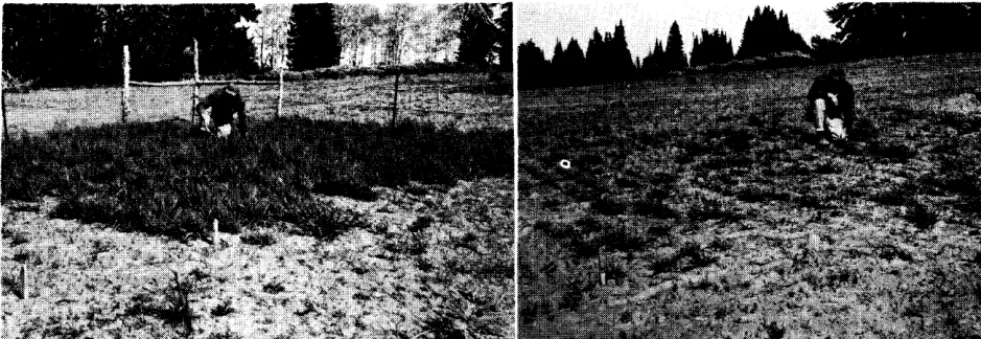
FIGURE 1. Differences in production of grass between gopher-controlled plots (left) and uncontrolled plots (right) one year after seeding.
mice (Microtus montanus) and whitefooted mice (Peromyscus spp.), live in the same general area with the gophers. These mice may be closely associated with the gophers in that the go- phers’ tunnels may furnish pro- tection and possibly stored food for the mice. Although this study was aimed primarily at gophers, control of the gophers with “1080” poisoned grain undoubt- edly affected the population of other small rodents. However, since gophers were very abun- dant on the uncontrolled area and the different types of dam- age observed were clearly asso- ciated with gopher signs, the ef- fects reported herein are pri- marily related to gophers.
Soils on the two areas are similar. They are deep, very fine sandy loams from red sandstone parent material. Two color phases (brown and gray) of the same soil type are represented on both areas. Each has a pH of about 7, and the productive ca- pacities of the two areas ap- peared to be about equal. Con- siderable topsoil has been lost and a noticeable characteristic of these soils is that their surfaces, when bared of cover, tend to crust over and become somewhat resistant to water infiltration. Gentle slopes characterized both areas. However, part of the go- pher-controlled area was steeper
and erosion was more evident before seeding and a year or so afterward.
Treatments and Methods Both areas were seeded to grass July 1, 1952, by duckfoot cultivation, followed by broad- cast seeding and harrowing. The duckfoot cultivator killed prac- tically all of the tarweed and other annuals, and by August 30 an excellent stand of grass seed- lings occupied both areas. In- cluded in the grass mixture were timothy (Phleum pratense), or- chardgrass (Dactylis glomerata), tall oatgrass (Arrhenatherum elatius), and smooth brome (Bromus inermis). Abundance of species in the stand was approxi- mately in the order listed, with timothy the most abundant and
Table 1. Stand and yields of grass gopher cxmfrol
smooth brome very scarce. Both areas were protected from graz- ing. On one area gophers were closely controlled each year; on the other they were not con- trolled.
Gopher control was accomp- lished by poisoning. Oats treated with “1080” were inserted in all active runways as early in the season as possible (July 1-15) ; retreatment and trapping were used as new mounds occurred during the summer.
Stand index records were taken the fall after planting and in early summer each year thereafter on six lOO-ft. transects located at random within each area. The measure of stand in- dex was the presence of grasses on %-sq.-ft. plots. Square-foot plots, divided into quarters, were
on seeded range with and without
1952 1953 1954 1955 1956 1957 Average Stand index
(plant occurrence on
1/4-sq.-ft. plots) _ _ _ - - Percent - - - - -
Gophers controlled 80 71 91 96 98 89 87.5
Gophers uncontrolled 70 33 30 61 43 16 42.2
Yield
(per acre, air-dry) _ - _ _ - Pounds - - - - -
Gray soil
Gophers controlled __.. 1,495 572 1,309 1,686 1,290 1,270
Gophers uncontrolled ___. 968 294 700 539 175 535
Brown soil
INFLUENCE
taken at 2-ft. intervals along the transects. Presence of bulbous- or corm-rooted forbs, tarweed, and perennial forbs was recorded by 1-sq.-ft. plots. Forage yield was estimated on 9.6-sq.-ft. plots in the fall of 1953 and each fall thereafter. Samples consisted of three lo-plot transects randomly located within each of the two soil color phases on each area. Clipping and weighing of herb- age was used to train in esti- mating forage and to check and supplement the weight es t i- mates. In this way forage pro- duction from each soil phase could be compared for the two areas.
Relative gopher populations and activities were measured by counting current mounds on fifty O.l-acre plots located mechanical-
ly throughout each area; also by recording presence of winter casts on the square-foot vegeta- tion plots.
Results
Both gopher-infested and go- pher-controlled areas had excel- lent initial stands of seedlings in the fall of 1952 (Table 1). At that time, some damage to seedlings was noted on the uncontrolled area, and a slight difference in grass stands between gopher- controlled and uncontrolled areas was indicated. However, gophers were active on only part of the uncontrolled area the first year, and the differences be- tween areas were not statistical- ly signif icant.
Some mortality of seedlings occurred late in the fall of 1952 following a very severe drought -one of the driest autumns on record in Utah. This drought is believed to have been largely responsible for the drop in grass stand index the following sum- mer (1953) on the gopher-con- trolled area, and also for part of the reduction on the uncon- trolled area. A good cover of grass was regained on the go- pher-controlled area in 1954 and
OF POCKET GOPHERS ON SEEDED RANGE 221
continued through 1957. The slight drop in stand index in 1957 probably reflects a slight decrease in plant numbers rather than in ground cover. The size of the grass clumps and the grass stand over the entire gopher- controlled area increased stead- ily from 1953 through 1956, and the stand appeared to be very good in 1957.
Differences in grass stand in- dex between gopher-controlled and uncontrolled areas from 1953 to 1957 (Table 1) were due pri- marily to gopher activity. Other small rodents may have de- stroyed some grass, but no such effects of their presence were noticeable. No indications of dense populations of small ro- dents were observable at any time during this study. Index values show that more than half of the grass seedlings on the un- controlled area were lost during the first year following seeding. The marked increase on this area in 1955 resulted from an ex- ceptionally good seedling crop in the fall of 1954. However, this crop of seedlings was short- lived, and by 1957 the grass cover over the uncontrolled area
was generally very poor. Differ- ences in a stand index based on seeded species only would be even greater-82 percent for the controlled area and only 4 per- cent for the uncontrolled. Two native grasses, slender wheat- grass (Agropyron trachycaulum) and mountain brome (Bromus carinatus), made up the re- mainder. They are apparently less susceptible to pocket gopher damage than the seeded species. Tarweed began reinvasion of the uncontrolled area in 1953, and by 1957 it was found on 89 percent of the 1-sq.-ft. plots. A small amount of tarweed ap- peared on plots in the controlled area in 1953, but disappeared by 1957.
Grass Production
Striking differences in grass yields on gopher-controlled and uncontrolled areas from 1953 through 1957 show the damage done by gophers (Table 1 and Figure 1). Yield differences be- tween years on the gopher-con- trolled areas are attributed large-
ly to variation in growing condi- tions. Grass grew poorly in 1954 because of a cold late spring and
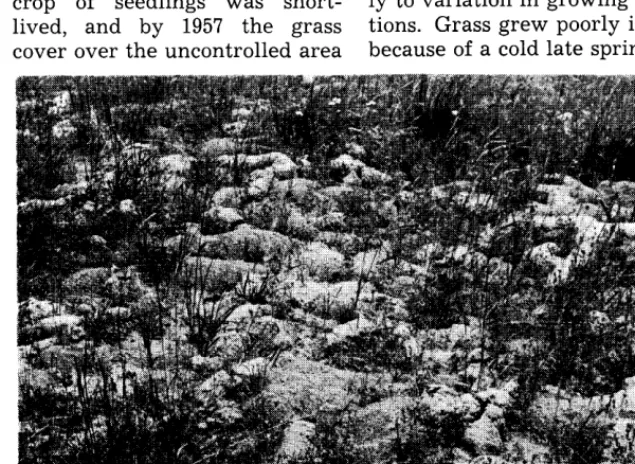
FIGURE 2. Winter casts (narrow, elongated, light-colored deposits) and summer mounds (fresh piles of darker loose dirt) indicate abundance of gophers on uncontrolled area.
222 ODELL JULANDER, JESSOP B. LOW, AND OWEN W. MORRIS
a severe frost on July 24. How- ever, this was a good year for seedling survival. Growing con- ditions were highly favorable in 1956, and intermediate in other years.
Volume of grass produced on the brown soil of the controlled area was somewhat less than that produced on the gray soil for the first 3 years because of slower establishment of the grass stand. By 1956 the grass stands had about the.same dens- ity and produced about equally, indicating that the gray and brown soil phases were similar in productive capacity.
Gophers reduced forage yields more on areas of brown soil than of gray soil. They invaded the brown soil sooner after seeding and were more plentiful there for the first 2 years. Gophers in- vaded this soil heavily during the fall and winter of 1952, and their population remained high through 1957. Gophers were noticeably fewer on the gray soil in 1952 and 1953 but they increased thereafter until popu- lations on much of the gray soil appeared equal to those on the brown soil. A few spots on the gray soil were not invaded heav- ily until 1954, and grass injury on these spots trailed behind that in the heavily invaded portions throughout the study. For the 5-year period grass yields on the gopher-controlled area were 2.4 times as much on the gray soil, and 6.4 times as much on the brown soil as on the uncon- trolled area.
Table 2. Effectiveness of pocket gopher control as indicated by mounds and winier casts.
1952 1953 1954 1955 1956 Average Mounds per acre _ _ _ _ _ _ Number - - - - Gophers controlled 8 96 94 24 120 68 Gophers uncontrolled 125 494 1,622 259 3,922 1,284 Winter casts _ - _ _ - Percent - - - - -
(occurrence on 1-sq.-ft. plots)
Gophers controlled -... 3 8 4 1 4 Gophers uncontrolled ____ 71 79 87 96 83 -
Gopher Mounds and Casts Mound numbers and winter casts were the best usable in- dexes we have of the relative sizes of gopher populations on gopher-controlled and uncon- trolled areas (Table 2 and Figure 2). The mound counts do not ac- curately measure differences in populations between years be- cause the counts were made at different dates and under differ- ent weather conditions. The 1955 mound count was made in early summer, while the other counts were made in September. How- ever, numbers of mounds and occurrence of winter casts be- tween gopher-controlled and un- controlled areas are believed to indicate relative gopher popula- tions reliably because they were made at the same time on all areas.
There was an average of 19 times as many mounds on the uncontrolled area as on the con- trolled area during the period of study (Table 2). Furthermore, mounds on the controlled area represent a shorter period of gopher activity than those on
the uncontrolled area, because gophers on the controlled area were trapped or poisoned soon after activity was noticed. Few gophers wintered on this area, as indicated by the even greater difference in winter casts than in mounds between controlled and uncontrolled areas. Much of the damage to grass seems to occur when casts are formed, and casts are more destructive to seedlings than mounds are. Hence it appears that presence of casts is more closely corre- lated with damage to grass than with presence of mounds in the area studied. Thus the occur- rence of winter casts on only 1 to 8 percent of the plots on the controlled area, as compared to 71 to 96 percent on the uncon- trolled area, represents a great difference in gopher influence and reflects very successful go- pher control.
Soil Moisture
A deleterious effect of gopher activity on soil moisture is shown in Table 3. In 1953, while digging samples of gopher foods on the uncontrolled area, it was noted that there was more compaction of soil and less soil moisture on areas heavily covered with win- ter casts than on cast-free areas. That fall, after about 1 month of dry weather, soil-moisture sam- ples were taken at 2- to 6-inch depths on areas of heavy cast occurrence and on cast-free areas. Higher soil-moisture per- centages in cast-free areas were evident for both gray and brown
Table 3. Percenfages of moisfurel affer drought and affer rain in relation to gopher acfivify.
_~___~ ~~ ~_~ _~______. ._
After drought2 After rain3 ---
Soil Gophers present Gophers absent uncontrolled controlled Gophers Gophers
_~__-_--___.-- _~_ ~~
Gray 6.33 7.61 11.33 12.63
Brown 5.49 6.45 _._ ~___ 7.80 14.43 ’ Based on oven-dry weight.
2 Samples from 2- to g-inch depth in young grass stand after drought period, uncontrolled area, fall 1953.
INFLUENCE OF POCKET GOPHERS ON SEEDED RANGE 223
soils. The differences, though not great, are highly significant statistically. If the wilting coef- ficient of these soils is assumed to be 5 percent, which seems reasonable, the differences in available soil moisture are con- siderable.
Soil-moisture samples were taken again on gopher-controlled and uncontrolled areas in the summer of 1954 after a general
%-hour rain of moderate intens- ity. Since the rain was general and steady over the two adjacent areas, the rainfall was believed to be the same for both. Highly significant differences in per- centage of soil moisture were found between gopher-controlled
and uncontrolled areas (Table 3). Soil on the gopher-controlled area-especially the brown soil -had retained much more of the rainfall. The chief reason for the different percentage of’ moisture on the two soils seemed to be that gopher casts were most plentiful on the brown soil. Also the brown soil is heavier than the gray; consequently, the go- pher casts from brown soil be- come harder and appear to seal off the exposed soil more tightly.
The first spring rains tend to “melt down” the winter casts, and some of the soil spreads out. As the casts dry, they become very hard and relatively imper- vious to infiltration; this is true on both gray and brown soil. The soil that washes off the casts makes the soil near the casts somewhat impervious to water. This is in contrast to results re- ported by Ellison and Aldous (1952) on a distinctly different soil type on the Wasatch Plateau where gopher activity made the soil softer and looser.
Exploratory tests using infil- tration cans indicated that water infiltration was inversely re- lated to the presence of gopher casts. Numerous gopher tunnels through the first foot of soil may also result in additional drying
FIGURE 3. Pocket gophers eat root crowns by undermining.
during periods of drought. Since available moisture often becomes a limiting factor in the growth of grass and survival of seedlings in the late summer and early fall in the area studied, this indirect effect of gophers is likely very important to the establishment and productivity of seeded grass stands.
Discussion
While replications in this study are lacking, additional studies being made with the same grass mixture on a nearby, similar area show trends very similar to those reported here. Pocket gopher population den- sities and their influences on range evidently vary greatly un- der different circumstances. Ef- fects differ between seeded and native range, and also between types of natural range. Ellison and Aldous (1952), working with native range in central Utah, found that “grasses and sedges tend to increase where gophers are present as compared with where they are absent.” But on native range in Montana, Bran- son and Payne (1958) conclude that grasses “detrimentally af- fected by gopher activity were:
and stem bases, and damage other plants
Idaho fescue, California oatgrass, timber oatgrass, prairie wedge- scale, and subalpine needle- grass.” Mountain bromegrass was favored by gophers in the latter study but did not occur in the former study. Both studies showed an increase in slender wheatgrass and a decrease in common dandelion and western yarrow as a result of gopher ac- tivity. Moore and Reid (1951) found that in Oregon pocket go- phers prevented improvement of poor-condition mountain mead- ows and delayed improvement of those in fair condition.
Not only did soil differences influence results in the Monte Cristo study, but also the obser- vations at Monte Cristo of effects of gopher activity on soil condi- tions are at variance with those reported for central Utah. In our study area gopher activity made the soil surface harder and less pervious, and decreased available soil moisture. On the other hand, Ellison and Aldous (1952) observed the opposite ef- fect and postulated that “gophers perform a useful function in loosening the soil. . . .”
224 ODELL JULANDER, JESSOP B. LOW, AND OWEN W. MORRIS
also be influenced by the species used. Although the grasses seeded in our study were con- sidered the best available at the time, there is doubt that they will withstand gopher damage as well as some others. Garrison and Moore (1956) listed tall oat- grass as very susceptible to seri- ous gopher injury, and rhizom- atous wheatgrasses as the least damaged. Our observations indi- cate that orchardgrass and smooth brome are about as sus- ceptible to gopher damage as is tall oatgrass.
Observations throughout the study have revealed several ways in which pocket gophers damage seeded stands. Many plants undermined by gopher tunnels died or were seriously weakened. Numerous grass seed- lings and other small plants were undermined and then pulled down into tunnels in the fall, presumably for food and nesting material. Being covered by mounds or casts killed or weak- ened additional seedlings and small plants.
The most serious form of dam- age to grass by pocket gophers was destruction of root crowns and stem bases, where much of the plants’ food reserve is stored (Figure 3). The gophers fed on these plant parts under protec- tion of snow sometime in winter or early spring, for the damage was readily evident in early spring. Dead remains of large, well-established grass c 1 urn p s were frequent. They had been attacked from both underground and from the surface. Surface feeding was most noticeable when plants grew in rows. Sur- face runways about %-inch deep and 2 inches wide led from one grass clump to the next and usu- ally connected to underground gopher tunnels. Grass roots in the bottom of these runways and the detached seed stalks on
either side revealed the destruc- tive process. Signs of this
type
of damage are largely obliterated by spring and early summer rains.The data reported here show results of a dense pocket gopher population. They indicate that for the grass species used and areas similar to those studded some degree of gopher control is essential to establishment and maintenance of good seeded stands when gopher populations are high. The degree of control or the density of gopher popula- tion that might be tolerated un- der various conditions is still not well known. Garrison and Moore (1956) suggest that a seedbed free of broad-leaved herbs and planted to rhizomatous wheat- grasses would probably need only moderate gopher control for the first three years, and that control costs would be justifiable considering the cost of reseeding.
Summary
Two typical overgrazed tar- weed flats heavily infested with pocket gophers were reseeded to a mixture of grasses. On one area the gophers were closely and effectively controlled; on the other they were left undis- turbed. An excellent stand of grass seedlings emerged on both areas. Studies from 1952 through
1957 showed a downward trend of grass stands and yields on the uncontrolled area and establish- ment and maintenance of a full grass stand on the controlled area. Production of seeded grasses from 1953 to 1957 aver- aged 355 pounds per acre on the uncontrolled area, and 1,195 pounds per acre on the controlled area. Occurrence of grass plants on 1/4-sq.-ft. plots remained high on the controlled area but showed a downward trend on the uncontrolled area.
Pocket gophers damaged seeded grass stands on the areas studied in the following
ways:
(1) Their winter casts partially seal the soil against water infil- tration; their tunnels aerate the soil and thus aggravate summer drought. (2) They undermine plants and destroy or weaken their roots. (3) They often under- mine seedlings and small plants and pull them into their tunnels for food and nesting materials. (4) Their mounds and particu- larly their winter casts, cover and often kill young plants. (5) Under cover of snow in winter or early spring they eat or other- wise destroy root crowns and stem bases of well-established grass clumps. This last activity accounts for a large share of grass destruction on the areas studied.Some degree of gopher control appears necessary for establish- ment and maintenance of good seeded stands of timothy, or- chardgrass, tall oatgrass, and smooth bromegrass on depleted range having dense populations of pocket gophers, such as those studied.
LITERATURE CITED
BRANSON, F. A. AND G. F. PAYNE. 1958. Effects of sheep and gophers on meadows of the Bridger Moun- tains of Montana. Jour. Range Mangt. 11: 165-169.
ELLISON, LINCOLN AND C. M. ALDOUS. 1952. Influence of pocket gophers on vegetation of subalpine grass- land in central Utah. Ecology 33: 177-186.
GARRISON, GEORGE A. AND A. W MOORE. 1956. Relation of the Dalles pocket gopher to establishment and maintenance of range grass plantings. Jour. Range Mangt. 9: 181-184.
MOORE, A. W. AND ELBERT H. REID. 1951. The Dalles pocket gopher and its influence on forage pro- duction of Oregon mountain meadows.
884, 36 pp. U. S. Dept. Agr. Cir.
The Adaptation and Production of Species and
Selections of Grasses and Clover in Colombia
LOY V. CROWDER, JAIME VANEGAS A., JAIME LOTERO C., AND ANGELO MICHELIN
Agronomist, Colombian Agricultural Program of The Rockefeller Foundation, and Agronomists, Forage Crops Division, Department of AgricuZturaZ Research, Ministry of AgricuZture, Colombia
The cooperative agricultural research program of The Rocke- feller Foundation and the Co- lombian Ministry of Agriculture was initiated in 1950. A division of forage and pasture crops, with responsibility for pasture man- agement and grass and legume improvement, was added in 1955.
Prior to this time available in- formation was largely observa- tional and little was known con- cerning the distribution of grasses and legumes in Colombia, nor their adaptation, and poten- tial productivity. Two of the initial projects conducted by the forage division were a survey of the pasture crops in common use in Colombia and the establish- ment of introduction nurseries in a number of climatic regions. This report is a review of the relative adaptation and produc- tion of the material studied in the collection gardens. The data obtained served as the basis for selecting the better adapted spe- cies, which were then placed in more extensive management tri- als such as rate and method of seeding, height and frequency .of clipping, grass-legume mixtures, fertilization, and irrigation. These data were also used in the screening of material for the breeding program.
Maferials and Methods Nurseries were established in a number of locations at eleva-
- l Paper No. 94 of the AgricuZturaZ
Journal Series of The Rockefeller Foundation.
tions from 150 to 11,000 feet above sea level. Seeds of forage and pasture crops were planted in rows 20 feet long and spaced 3 feet apart. Vegetative parts
(stems, stolons, crowns) served to establish grasses such as ber- muda, pangola, elephant, and guinea. A distance of 6 feet was left between rows of the pasture crops, which are spread by sto- lons or rhizomes. Each entry was duplicated or placed in triplicate. Lime, nitrogen, phosphorus, and potassium were added when soil tests indicated that these ele- ments were low.
Notes were recorded periodi- cally on habit of growth, height, spread, date of flowering, rela- tive seed set, relative forage yield, and recovery after cutting. When a growth cycle was com- pleted, the plants were cut and the procedure repeated. Data were collected from some nurs-
eries for 2% years and from others for 1% years.
The material in the introduc- tion gardens consisted of the most important pasture and for- age crops used in Colombia and also a large group of grass and legume species supplied by the United States Department of Agriculture. The genera included were: Agropyron, Agrostis, An- dropogon, Anthoxanthum, Ar- rhenatherum, Avena, Axonopus, Bouteloua, Brachiaria, Bromus, Chloris, Coix, Cynodon, DactyEis, Digitaria, Eragrostis, Eriochloa, Festuca, Heteropogon, Holcus, Hyparrhenia, Ixophorus, Lolium, Melinis, Panicum, Paspalum, Pennisetum, Phalaris, Phleum, Poa, Saccharum, Sorghum, Ste- notaphrum, Tripsacum, Cajanus, Calopogonium, Canavalia, Cent- rosema, Clitoris, Crotalaria, Des- mod&m, Dolichos, GZ ycine, In- digofera, Lathyrus, Lespedeza, Lotus, Lupinus, Medicago, MeZiZ- otus, Phaseolus, Pisum, Pueraria, Sesbania, Stizolobium, Vicia, and Vigna.
The ratings (not adapted, poor, fair, good, and very good) shown in Tables 1 and 2 give the rela- tive adaptation as measured by persistence, desirable agronomic type of growth, relative forage yield (scored on a rating of height, spread, leafiness and stemminess) , seed production, and aftermath.
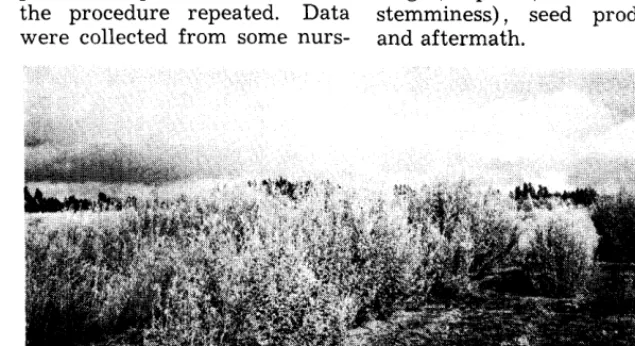
FIGURE 1. Annual white sweet clover (left and background) is well adapted over a range of altitude from 2,500 to 9,000 feet and makes excellent growth as compared to the bien-
CROWDER, VANEGAS, LOTERO, AND MICHELIN
Resulfs and Discussion
Colombia may be divided into
four major climatic zones which
are designated as hot, warm,
cool, and cold. The boundaries
are arbitrarily delimited by alti-
tude as follows: Hot-O to 2,500
feet, Warm-2,500 to 6,500 feet,
Cool-6,500 to 10,000 feet, Cold-
above 10,000 feet.
Although
many of the forage and pasture
crops extend from one climatic
division into another, optimum
to maximum growth and produc-
tion are generally obtained in the
specific region of adaptation.
Hof
Climate
(0 fo 2.500 feet.)The area recognized as the hot
climatic zone can be character-
ized as generally flat with some
rolling plains and low sloping
mountains which are not too
steep. In the most important
agricultural areas the soil pH
ranges from 6.0 to 6.82, and gen-
erally phosphorus and potassium
occur in sufficient amounts to
sustain optimum growth of most
crops. The mean annual tem-
perature is 85” F. Rainfall varies
with location; however, the usual
pattern is 3 months of ample rain
followed by 3 months of dry
weather.
A rather large number of
grasses grow in the hot climatic
zone, of which many are quite
productive. However, available
legumes are limited. Common
bermuda grass (Cynodon dacty-
Zen) and common bahia grass
(Paspalum notatum)
occur
throughout the zone and are es-
pecially prevalent in overgrazed
pastures. Brownseed
(Paspalumplicatulum)
flourishes
from
about 800 - 1,500 feet, especially
in the Eastern Plains, and
P. con-jugatum
thrives in the upper
limits. Mixed with bahia .can be
found carpet grass
(Axonopuscompressus).
Para grass
(Pani-2 Baird, G. B., Manuel Rodriguez J., Victor M. Vega J., and Aljonso Aristizabal G. 1957. The fertility status 0 j soils
in
important agricul- tural areas of Colombia. Soil Sci. Sot. o j Amer. Proc. 21: 405-408.FIGURE 2. Harding grass (left) is not recommended, but the ryegrasses are well adapted
to the cool climate and are highly productive. Perennial (English) ryegrass is shown in the center, with annual (domestic) ryegrass on the right.
cum purpurascens)
abounds in
the moist places, and guinea
grass
(Panicum maximum)and
jaragua
(Hyparrhenia rufa)are
well adapted to the drier loca-
tions. In the lower limits pitted
bluestem
(Andropogon pertusus)is seen, and other weedy
AndTo-pogons
are common. Among the
introductions there are several
guineas with fine leaves and
stems which appear to be well
adapted and of superior quality
in contrast to the type commonly
grown. Pangola grass
(Digitariadecumbens)
has recently become
prominent as a pasture crop, and
several other grasses appear
promising: Dallisgrass
(Paspal-urn dilatatum),
buffel
grass
(Pennisetum ciliare),signalgrass
(Brachiariu decumbens),
Rhodes
grass
(Chloris gayana),and
coastal, midland, and suwanee
bermudas.
Tickclovers
(Desmodiumspp.)
generally flourish in all pastures
and constitute a fair percentage
of the sward; however, seeds are
not commerc’
lly
%
available.
Tropical kudzu
ueraria
phase-oloides)
and jicama (Calopogoni-
urn spp.) prosper in most of the
regions but are not in common
use. Yields of alfalfa have been
outstanding in the upper boun-
daries of the hot climatic zone
and alfalfa may be cut every 5
to 6 weeks with ample water. A
prolonged dry season results in
diminished yields, and a striking
deficiency of boron has occurred
in some areas. Other legumes
which may be utilized are velvet-
bean (Stizolobium deeringian-
urn), hyacinth dolichos
(DolichosZablab),
pigeon pea
(Cajanusspp.), pigeonwings
(Clitorisspp.), and rice bean
(Phaseoluscalcaratus).
Warm Climate (2,500 - 6,500 feet.)
Several rather large valleys,
undulating hills, and rather steep
mountains occur in this region.
In the important agricultural
areas the soil pH ranges from 5.5
to 6.5,:ind in some areas the soils
are low in phosphorus and nitro-
gen. The daily temperatures
vary from 65” to 95” F. and rain-
fall occurs in three-month cycles.
Bahia grass, sour paspalum
(P.conjugatum),
bermuda grass, and
carpet grass provide limited
grazing throughout the region
and are exceedingly beneficial in
the conservation of soil on the
steep mountain slopes. Para
grass, guinea grass, and jaragua
occur in the lower boundaries
and molasses grass
(Melinus .ADAPTATION OF GRASSES AND CLOVERS IN COLOMBIA
227
Table 1. The relative adaptation of grass species and selections af eight locations in Colombia, South America.*
Species
Andropogon pertusus Anthoxanthum odoratum Arrhenatherum elatius Avena sativa
Axonopus compressus Axonopus Micay Axonopus scoparius Brachiaria decumbens Bromus catharticus Chloris gayana Cynodon dactylon C. dactylon (coastal) C. dactylon (midland) C. dactylon (Suwanee) Dactylis glomerata
Digitaria decumbens Eriochloa polystachya Festuca arundinacea Feslwa elatior Holcus Zanatus Hyparrhenia ruja Ixophorus unisetus Lolium multijlorum Lolium perenne
Melinus minutiflora .
Panicum antidotale Panicum maximum
Panicum purpurascens Paspalum conjugatum Paspalum dilatatum Paspalum notatum Paspalum plicatulum Paspalum virgatum Pennisetum ciliare Pennisetum clandestinum Pennketum purpureum Phalaris coerulescens Phalaris minor Retz.
P. tuberosa var. stenoptera Saccharum o jjicinarum Sorghum sudanense Sorghum vulgare Tripsacum Zaxum
Usme Bogota 11,000 ft. 8,500 ft.
N G F VG N N N N F N N N N N F N N F F G N N G F N N N N N N N N N N P N F F F N N N N N F G VG N N N N G N N N N N VG N N G G F N N VG VG N N N N N N N N N N VG N VG G VG N N N N Villa-
Las Palmas Manizales IIIi;li: Palmira vicencio Monteria 8.000 ft. z 6.500 ft. , . I . 3.000 ft. I 1.500 ft. 150 ft.
N F G VG N N N N G N N N N N VG N N G G F N N G G N N N N N N N N N N VG F G G G N N N N N P P P G G VG N F F N N N N F F N F F P P P P P F F G N F F G N F N F F F P P F P P P N N P P G F VG G P G G VG VG VG N VG F N N N G G N N VG G VG VG G G G F G F F VG P N P G G G VG F N N N F N N VG N VG G VG VG VG N VG G N N N VG VG N N F G VG VG G VG VG G G G P VG N N N VG VG VG VG F N N N N N N G N G G VG VG VG N VG G N N N VG VG N N G F VG VG G VG VG VG G G N VG N N N VG VG VG VG G N N N N N N G N F G VG VG VG N VG F N N N VG G N N F P VG VG G G G F G F N VG N N N VG VG VG VG * The classifications (N = Not adapted, P = Poor, F = Fair, G = Good, and VG = Very good) indicate adapta-
tion and relative production under optimum growing conditions.
downward.
Axonopus Micay (Axonopus scoparius)is the best
contributes a major portion of
adapted soiling crop for the cen-
the pasture sward in the central
tral and upper areas and ele-
area, which corresponds to the phant grass
(Pennisetum pur-coffee growing region. Other
pureum) and Guatemala grass
grasses that appear outstanding
(Tripsacum Zaxum)are best
and might become worthwhile
adapted to the lower areas. Su-
pasture crops are pangola, coast-
dangrass
(Sorghum sudanense)al bermuda, and Dallis grass. and sorghum (S.
vulgare)are
Kikuyu
(Pennisetum clandestin-also highly productive in the
urn)
and Rhodes grass sometimes
lower limits but are not in gen-
occur but are relatively unpro-
era1 use.
ductive. Imperial carpet grass
Alfalfa is well adapted to cer-
tain of the well drained soils of
the warm climate but may re-
quire lime, phosphorus, and bor-
on for establishment and mainte-
nance. Potash and boron defi-
ciencies in alfalfa have been ob-
served after one year. Tropical
kudzu is very productive in the
lower areas and mixes well with
para’ or guinea grass or may be
used alone.
Desmodiumspp. oc-
228 CROWDER, VANEGAS, LOTERO, AND MICHELIN
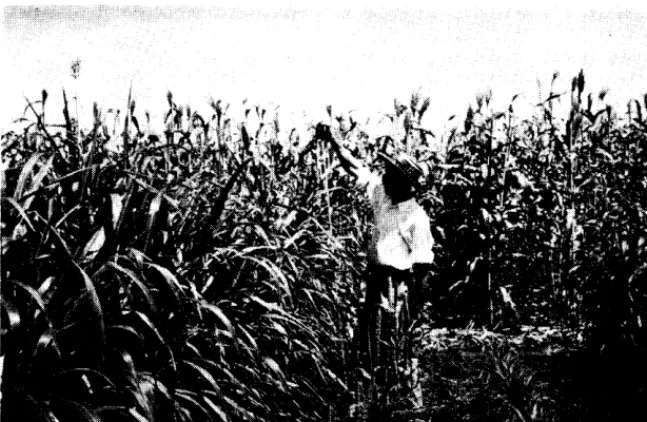
FICURE 3. Sudangrass and sorghum are well adapted to the warm climate and act as
perennials under these conditions. They may be cut 5 to 8 times a year and yield 10 to 20 tons of green material per acre per cut. Tift sudangrass, left; common cattail millet, center; Starr millet, right; and forage sorghum in the background.
amount of forage to the pasture mixture. Dolichos spp. make luxuriant growth and could be used as a supplemental grazing or soiling crop but would prob- ably be most useful as green ma- nure. Cajanus spp. and velvet- beans are well adapted but are not generally used.
Cool Climate (6,500 - 10,000 feet)
Except for the Savannah of Bogota, the cool region is moun- tainous with precipitous slopes and small intervening valleys. The soils are rather high in or- ganic matter (4-15 percent), have a low pH (4.5 - 5.5)) and are de- ficient in phosphorus. The mean temperature is 55” F. and rains occur in three-month cycles.
The best adapted and most pro- ductive grasses are annual rye- grass (LoEium multiflorum), per- ennial ryegrass (L. perenne), orchardgrass (Dactylis glomer- ata), meadow fescue (Festuca elatior), tall fescue (F. arundi- nacea), rescue grass (Bromus catharticus), and kikuyu. The annual ryegrass produces the greatest quantity of forage in the early stages of growth but does not persist as well as the peren- nial form. Both are severely at-
tacked by rust. Orchardgrass grows slowly for six months after establishment but later out- yields perennial ryegrass. Kiku- yu is the most widespread grass and occurs throughout the cool region. Velvet grass (Holcus Zanatus) and sweet vernalgrass (Anthoxanthum odoratum) oc- cur as weedy grasses in many pastures. Smooth brome (Bro-
mus inermis), timothy (P hleum pratense), Kentucky bluegrass (Poa pratensis), redtop (Agros- tis alba), tall oatgrass (Arrhena- therum elatius), reed canary- grass (Phalaris arundinacea), and Harding grass (P. tuberosa var. stenoptera) grow in the cool climate but are relatively un- productive. Common oats (Av- ena sativa) is suitable for use as a soiling crop but does not readi- ly recover after cutting.
White clover (Trifolium re- pens), red clover (T. pratense), and alfalfa (Medicago sativa) are the most productive legumes in the cooler regions. White clover can be found in native pastures but a tremendous dif- ference exists among types. In varietal trials certain ladino se- lections have yielded three and four times as much forage as the locally grown white clover va- rieties. Red clover and alfalfa have been more productive than white clover, but alfalfa is more exacting in its soil requirements. Other legumes that have been grown, although with less suc- cess, are Berseem clover (Tri- folium alexandrinum), alsike clover (7’. hybridum), hop clover (T. procumbens), bur clover
FIGURE 4. Common elephant grass is shown on the left and Napier elephant grass on the
right. Napier elephant grass grows well in the warm climate, and may be cut 4 to 6 times a year, yielding from 20 to 40 tons of green material per acre per cut. At the
ADAPTATION OF GRASSES AND CLOVERS IN COLOMBIA 229
Table 2. The relative adaptation of several species and selections of legumes in eight locations in Colombia, South America. *
Species 11,000 ft. Usme 8,500 ft. Bogota Las Palmas M8a;~k&es
~~&l~~ 8,000 ft. , . , .
Ca janus ca jan N
Calopogonium coeruleum
N
Calopogonium mucunoides NCentrosema plumieri N
Centrosema pubescens N
Clitoris ternatea N
Crotaluria intermedia N
Crotalaria juncea N
Crotalaria paulina N
Crotialaria striata N
Desmodium spp. N
Dolichos lablab N
Glycine max N
Lathyrus tingitanus P
Lupinus albus G
Lupinus angustifolius G
Lupinus luteus G
Medicago hispida P
Medicago sativa (Buffalo) N
Medicago sativa (DuPuits) N
Medicago sativa (Peruvian) N
Melilotus alba P
Melilotus officinalis P
Phaseolus angularis . N
Phaseolus calcaratus N
Pueraria phaseoloides N
Sesbania spp. N
Stizolobium deeringianum N
Trifolium alexandrinum P Trijolium pratense F
Trijolium repens F
Vicia spp. F
Vigna sinensis N
N N N N N N N N N N N N N VG G G G G F VG VG VG G N N N N N G VG VG VG N N N N N N N N N N N N N N VG G G G G F G G VG G N N N N N G VG VG G N F P P P P P P P P P F P P G F F F F F VG VG VG G P P P P P F G F F N VG VG VG G G G G VG VG G G VG VG P P P P N F G G VG G G VG VG F VG P F P F VG Villa-
Palmira vicencio Monteria 3,000 ft. 1,500 ft. 150 ft.
VG VG VG G G G G VG VG G VG VG VG P P P P N G G VG G F VG VG VG G VG N N N P VG VG VG VG G G G G VG VG G VG VG VG P N N N N N N N G F G VG VG G VG N N N N VG VG VG VG G G G G VG VG G VG VG VG N N N N N N N N P P VG VG VG F VG N N N N VG
* The classifications (N = Not adapted, P = Poor, F = Fair, G = Good, and VG = Very good) indicate adapta- tion and relative production under optimum growing conditions.
(Medicago hispida), black medic (M. Zupulina), birdsf oot trefoil (Lotus corniculatus), lupines (Lupinus spp.) , and vetches (Vicia spp.).
Cold Climate or Paramos (above 10,000 feet)
The region above 10,000 feet is largely mountainous with very small valleys. Many of the mountains extend above the tim- ber line and several have snow- capped peaks. The soil is gen- erally high in organic matter (lo-20 percent), low in pH (4-5)) and extremely low in phospho- rus. The daily temperature ranges from 0” to 55” F.
The two most important grasses in the cold region are
sweet vernal and velvet grass which cover most mountain slopes. Other genera which oc- cur but are relatively unimpor- tant are Agrostis, Eragrostis, Calamagrostis, Stipa, and Sporo- bolus.
Legumes are rarely found; however, native lupines and white and red clover grow in the lower fringes.
In Tables 1 and 2 are listed the species and several varieties or selections which proved to be superior in their regions of adaptation. The species that were not rated as good or better were omitted. Most varieties re- acted in a similar manner to the species. The ratings given indi- cate adaptation as measured by
persistence, desirable agronomic type, high forage yield (scored on a rating of leafiness, stemmi- ness, height and spread), good seed setting ability, and rapid re- covery after cutting. The scores show optimum yields as obtained under good management.
Summary
Grasses and legumes that oc- cur in Colombia and introduc- tions obtained from other sources were studied in observational nurseries located at elevations ranging from 150 to 11,000 feet above sea level. The nurseries contained 33 grass and 24 legume genera.
230
CROWDER, VANEGAS, LOTERO, AND MICHELIN
of flowering, relative seed set, divided into four climatic zones:
to adaptation within each zone.
relative forage yield, and recov-
hot (0 - 2,500 feet), warm (2,500 -
6,500 feet), cool (6,500 - 10,000
The ratings measured per-
ery after cutting. Observations
feet), and cold (above 10,000
sistence
,desirable agronomic
were made for 1 $$a or 2Yz years. feet). The data compiled were type, relative forage yield, seed
The country was arbitrarily
used to rate the species according
production, and aftermath.
Wildlife Survival in Brush Burns
W. E. HOWARD, R. L. FENNER, AND H. E. CHILDS, JR.
Specialist, Field Station Administration, University of California, Davis; Forest Comburologist, Fenner and Day Company, Richmond, California; and Instructor, Life Sciences Department, Cerritos Junior College, Nor- walk, California
Control burning of brush is
now a common practice in range-
improvement in California. Fre-
quently, before burning, some or
all of the brush is mashed down
with mechanical equipment or
killed by chemical sprays. To
learn how destructive such fires
are to wildlife, a study was made
to measure the survival of ani-
mals, either surrounded by fire
or in various environments with-
in such a fire. The study took
place at the San Joaquin Experi-
mental Range, O’Neals, Califor-
nia.
Information on wildlife sur-
vival was obtained
in three
ways: (1) caged animals were
placed in different habitats with-
in the fire area, with tempera-
ture-recording devices
on the
cages; (2) birds and animals
drinking at a spring
were
counted on three mornings both
before and after the area was
burned; and (3) the behavior of
individual animals during the
fire was observed from within
the burn and from points behind
the advancing fire.
This material has been gath-
ered from two burns. The data
on birds drinking at a spring
came from a 200-acre reburn on
July 26, 1952; it was first burned
in 1950. The spring was on the
John O’Neal property, adjacent
to the Experimental Range. The
rest of the information was ac-
quired from a 200-acre burn on
the Experimental Range on Sep-
tember 6,1952. In both instances
some brush had been knocked
down by a bulldozer the previous
year.
The second-mentioned
burn was accomplished by area
ignition-the
simultaneous igni-
tion of all, sides and the middle.
To that end, some of the periph-
ery and the center of the area
were wired with incendiary
bombs so hazardous areas could
be ignited electrically while men
with torches ignited
the re-
mainder of the boundary.
In both fires the principal veg-
etation was annual grasses and
forbs, wedge-leaf ceanothus (Ce-
anothus cuneatus), Mariposa
manzanita
(Arctostaphysos mar-iposa),
interior live oak
(Quer- cus wislixenii),blue oak
(Quer- cus douglasii),and Digger pine
(Pinus sabiniana).
Both brush
and trees were sufficiently
sparse to require grass for fuel
between patches of woody vege-
tation. Nevertheless, the heat
was intense - at least 1200” F.
near some. woody vegetation.
Caged Animals
To test the protection from
fire that various environmental
situations may offer, an experi-
ment was conducted with 37
caged animals: four rattlesnakes
(Crotalus viridis)
and two
ground squirrels (Citellus beech-
eyi)
in Horn-Fitchhardware-
cloth squirrel traps (6 by 6 by
18 inches)
;8 white-footed mice
(Peromyscus maniculatus, P. boylei,