MACHINE LEARNING AND DATA ANALYTICS FOR MULTILAYER DATA IN POLICY PLANNING
BY
MUMTAZ HANNA BEE VAUHKONEN
DISSERTATION
Submitted in partial fulfillment of the requirements
for the degree of Doctor of Philosophy in Educational Policy Studies in the Graduate College of the
University of Illinois at Urbana-Champaign, 2017
Urbana, Illinois
Doctoral Committee:
Associate Professor Pradeep Dhillon, Chair and Director of Research Professor Bill Cope
Associate Professor Feng Liang Assistant Professor Sanmi Koyejo
ABSTRACT
“Does bigger data lead to better decisions?” has been a frequent question for discussion among many decision makers—data scientists as well as organizational leaders and managers. Educational institutions, finance, and the retail industry have had big data for several decades that did not significantly alter decision making as it is doing today, as most of the decisions made were driven more by either small-scale studies or a desire to support a group’s belief or interests. However, the advent of computational mechanisms changed the notion of what big data analysis is (Evgeniou, Gaba, & Niessing, 2013). Linking these methods to diverse related data is proving to be a game changer for big data analysis; for example, connecting sales figures to customer behavior is leading to better business decisions. By extending this research into the education domain, data sources at multiple levels in education can be combined to connect the big picture by analyzing and connecting data at higher macro levels to lower levels. The main purpose of this study is to present a framework for analyzing macro data with multiple data types in
education for effective policy planning by linking data analysis at multiple macro levels (district and school levels) and extend it demonstrate a proof of concept of connecting to micro levels. Achieving this task required the following steps:
1. Use an unsupervised approach in big data techniques to analyze data at school level and district levels.
2. Develop a supervised classification system to use clusters from step 1 as classes so that changes in school data are constantly reassessed and assigned to new classes.
4. Perform a regression analysis on results from the macro level to investigate deeper with additional variables to identify the differences and verify the frequent patterns and association rules.
5. Develop a simulated analysis of student-level performance data to identify similarity and dissimilarity patterns using collaborative models that gain insights into collective
intelligence in a recommender system format, which teachers can use to find optimal measures to improve a student’s learning.
These steps, put together into an analytical system, can handle large volumes of data and give insights for developing effective macro and micro policies. The results indicate that applying machine learning and data mining models enable extracting more insights at a macro policy planning level.
Dedicated to my beloved husband, Ari Vauhkonen, and children, Sigriðr and Odin Vauhkonen
ACKNOWLEDGMENTS
I extend my hearty gratitude to my advisor, Prof. Pradeep Dhillon, whose patience, support, and dedication to her students have brought me this far. Without her I would not have been able to navigate this doctoral process. She has stood by me through tumultuous times of personal tragedy as well as following times of happiness. Her support has been not only
academic but also a strong moral backbone for me to keep taking small steps at all times. I have been extremely fortunate to have her as my advisor.
My immense gratitude to Prof. James D. Anderson, who always had faith and belief to support me in all ways that culminated in completing this large-scale project and multiple domain courses required for completion of this thesis. His flexibility to allow me to take courses from Stanford and UIC, so that I can meet the requirements on schedule, is exemplary of his broad vision to enable students to accomplish their goals.
My gratitude and thanks to Prof. Bill Cope for always being available and giving timely feedback and being flexible with meetings and reviews. His insights have enabled me to frame my research questions to be more precise.
My sincere thanks to Prof. Emeritus Michael Heath, Computational Science and
Engineering Department, for his vision and guidance for me to pursue a Machine Learning and Data Mining specialization and enabling me to obtain a joint Ph.D. with the department. My sincere thanks to Prof. Narayana Aluru for enabling my completion of the CSE joint Ph.D. certification.
My sincere thanks for Stephanie Rayl, who has assisted me with numerable requests over the years, from course registrations to scheduling my defense.
Most importantly, no amount of thanks would be enough for my husband, Ari Vauhkonen, for all the love, all those supporting elements in life such as countless nights of washing the dishes so I could carve a bit of extra time for my research. This research would have been enormously harder with little children without his commitment and hard work toward my goals and often counseling on various decisions. And my hearty hugs and thanks for my two adorable children, Sigriðr and Odin, for keeping me entertained with humor and their
innumerable questions on my research. I am fortunate to have my parents Dr. I. Khasim and Rasool, who have given me the lifetime of love, inspiration, and support to pursue my goals, and thanks are not adequate to express my gratitude. My father’s own journey toward his Ph.D. has served as an inspiration for me. I also thank my siblings, Khasim and Khadar, who have
constantly supported my decisions to pursue my interests. I also feel immensely fortunate to have highly supportive parents-in-law, Leo and Liisa Vauhkonen. It has been humbling to receive such warm support and constant well wishes from them and from my sister-in-law Anu and her family to complete my research.
I also thank my near and dear friends who have constantly stepped in to help me with children and logistics in the busiest of times with my exams and assignment submissions.
TABLE OF CONTENTS
Chapter 1 Introduction ...1
1.1 Research Questions ... 2
1.2 The Problem Context ... 3
1.3 Key Contributions ... 8
1.4 Dissertation Structure ... 11
Chapter 2 Research Motivations ...12
2.1 Data Mining in Education ... 12
2.2 Rise of Education Data Mining ... 13
2.3 Data Mining in Education and Policy Planning ... 14
2.3.1 Macro Research ... 20
2.3.2 The Micro–Macro Context for Future Research ... 22
Chapter 3 Data Collection and Preprocessing ...23
3.1 Data Description ... 23
3.2 Data Cleaning ... 27
3.3 Data Types and Preprocessing and Validation ... 31
Chapter 4 Computational Methods ...35
4.1 Clustering ... 36
4.1.1 The k-Means Algorithm ... 40
4.1.3 The DBSCAN Algorithm ... 45
4.2 Classification ... 48
4.2.1 Random Forests ... 49
4.3 Text Mining ... 51
4.3.1 Structured versus Unstructured Data ... 52
4.3.2 Hierarchical Clustering of Documents ... 54
4.3.3 Topic Modeling ... 56
4.3.4 Locality-Sensitive Hashing ... 57
4.4 Frequent Patterns and Association Rules ... 60
4.5 Recommender Systems: Collaborative Filtering... 62
Chapter 5 Data Analysis and Results ...64
5.1 Analysis Environment: R and RStudio ... 64
5.2 Data Exploration ... 64
5.3 Macro Clustering Analysis ... 67
5.3.1 Schoolwide Macro Clustering ... 68
5.3.2 PAM Clustering by Student Ethnicity in 1,636 High Schools ... 76
5.3.3 Clustering of District-Level Data ... 89
5.4 Multiclass Classification Models ... 97
5.5. Frequent Patterns and Association Rules ... 103
5.6 Regression and Results ... 105
5.7 Foundations for the Future: The Micro Analysis ... 108
5.7.1 Text Mining ... 109
5.7.2 Collaborative Filtering ... 114
Chapter 6 Discussion and Future Research ...117
6.1 Technical Aspects ... 117
6.2 Connecting the Micro and Macro Levels ... 120
6.3 Ethics and Privacy ... 121
Chapter 7 Conclusion ...124
7.1 Future Steps ... 125
References ...127
Appendix A Adequate Yearly Progress: Table of Attributes ...137
Appendix B School Demographics Data ...148
Appendix C District-Level Financial Data ...149
Appendix D Sample School Profiles from Each Cluster Selected by k-Means ...151
Cluster 1: Saratoga High ... 151
Cluster 2: Riverdale High ... 152
Cluster 3: Thousand Oaks High ... 153
LIST OF TABLES
Table 1: Datasets at school and district levels for years 2012–2013, 2013–2014 (“2014”), and
2014–2015 (“2015”) ... 2
Table 2: Example of predictive and descriptive models used in EDM research ... 16
Table 3: EDM implementations by domain in education ... 17
Table 4: List of EDM tools available ... 20
Table 5: Sample of attributes used for clustering from all California high schools ... 25
Table 6: Sample values of a few attributes ... 28
Table 7: Sample of invalid and zero characters ... 29
Table 8: Schoolwide results with k-means ... 70
Table 9. Sample attribute representative values for each cluster for schoolwide data for PAM algorithm ... 74
Table 10: Representative values of key math performance attributes for Hispanic/Latino high school students in California. ... 80
Table 11: Representative math attributes for white student group ... 82
Table 12: Representative values of math performance attributes for African American students 85 Table 13: Asian math performance indicators for three clusters ... 89
Table 14: Economic attributes available for district-level clustering ... 93
Table 15: 2015 district clustering results on key economic attributes in context of student graduation outcomes ... 93
Table 16: 2014 district clustering results on key economic attributes in context of student graduation outcomes ... 93
Table 18: Student demographics by cluster for 2014 district data ... 95
Table 19: 2015 teacher data at district level and student outcomes by cluster ... 96
Table 20: 2014 teacher data at district level and student outcomes by cluster ... 96
Table 21: 2015 District data analysis meal programs and foster care and ELA ... 97
Table 22: 2013–14 District data clustering results on meal program, foster care and ELA ... 97
Table 23 Classification results from Random Forests, and prediction error (OOB) rate estimate 99 Table 24: Global variable importance based on an ensemble of 500 trees used for classification ... 99
Table 25: Mean decrease in accuracy and mean decrease in Gini index for the variables used in the model ... 100
Table 26: Confusion matrix for test data set for linear discriminant analysis ... 102
Table 27: Number of observations from the training set in each class ... 102
Table 28: Accuracy and misclassification rates for each class assignment in LDA for test set . 102 Table 29: Sample attributes at school level used for frequent pattern analysis ... 103
Table 30: Most frequent patterns and association rules ... 104
Table 31: Additional attributes for regression analysis ... 106
Table 32: Significance of results of regression on external variables and cluster number ... 107
Table 33: MARS coefficients with hinge functions ... 108
Table 34: Topic Modeling results for Mountain View High School, CA ... 110
Table 35: Grouping of observations by k-means ... 112
Table 36: Pairwise document similarities from locality-sensitive hashing for a set of 20 documents ... 114
LIST OF FIGURES
Figure 1: Proposed set of methods and data flows. ... 10
Figure 2: Example of removal of stop words. ... 30
Figure 3: Result of stop word removal and stemming on teacher’s comments. ... 31
Figure 4: Term document matrix shows the document frequency of words from three documents. ... 34
Figure 5: The yellow boxes at the end indicate the clustering algorithms that were used in the following research. ... 37
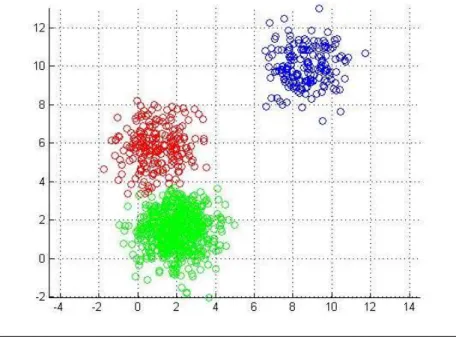
Figure 6: k-Means clusters. This method largely identifies clusters of spherical shape. ... 38
Figure 7 Agglomerative and divisive approaches in hierarchical methods. (Reproduced from Han et al., 2011.) ... 39
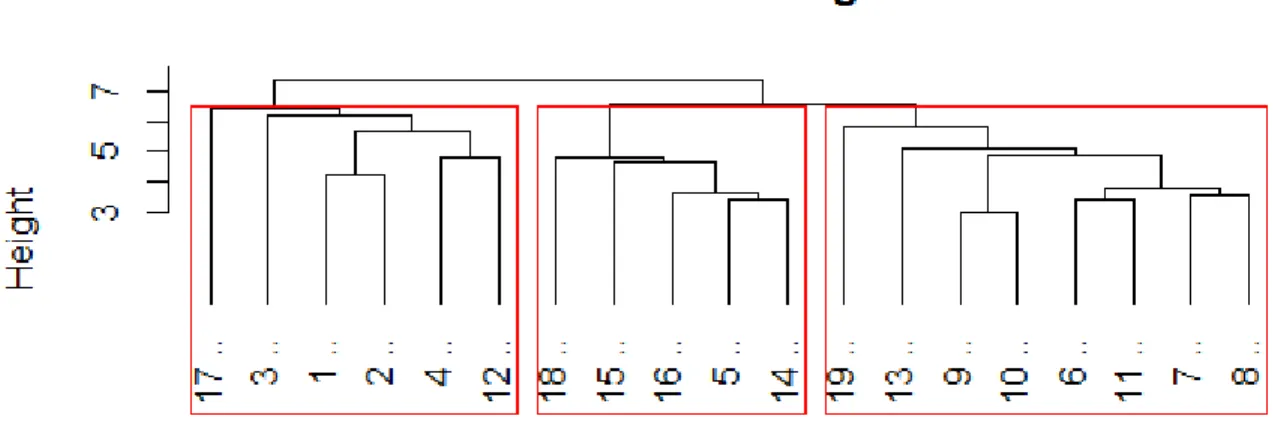
Figure 8: A tree structure is normally used to present hierarchical clustering visually from the top down. ... 39
Figure 9: Dense region formation in DBSCAN. (Source: Wikimedia Commons, author Chire, retrieved from https://en.wikipedia.org/wiki/File:DBSCAN-Illustration.svg) ... 47
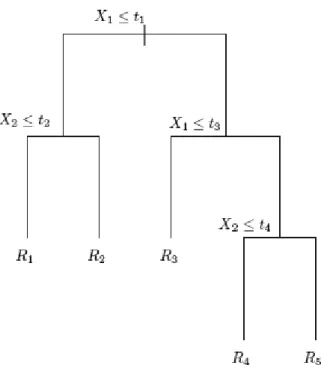
Figure 10: Decision tree that splits on four attributes. ... 50
Figure 11: Hierarchy of a document corpus. ... 53
Figure 12: Bit vectors for min-hash. ... 59
Figure 13: Steps in the analysis. ... 65
Figure 14 Identifying multicollinearities. ... 66
Figure 15 Identifying correlations. ... 67
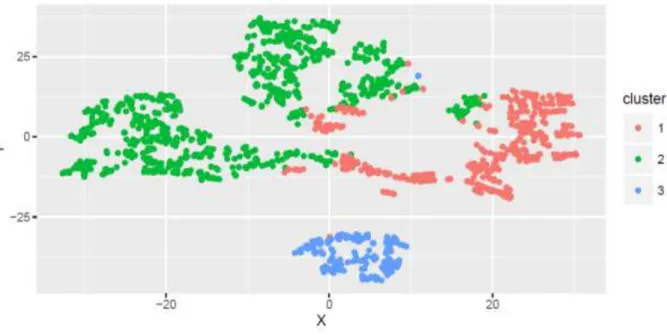
Figure 16 Plot of a three-cluster outcome using k-means. ... 68
Figure 18: Four clusters obtained with PAM based on the Gower distance. ... 71
Figure 19: Three clusters obtained with PAM. ... 72
Figure 20: SSE for different number of clusters found by PAM. ... 73
Figure 21: Histograms for variable m_pprof for the four PAM clusters. ... 75
Figure 22: Clustering results from DBSCAN, showing multiple sparse clusters with most observations treated as noise. ... 76
Figure 23: Ethnic distribution of California high school students. ... 77
Figure 24: Comparison of ethnic distribution of students in the State of California and the United States. (Source: California State Department of Education.) ... 78
Figure 25: Plot of 3 cluster solution using PAM for Hispanic/Latino data. ... 79
Figure 26: Hispanic math proficiency rates across state of California in three clusters. ... 81
Figure 27: Three-cluster results of using PAM algorithm for white student data. ... 82
Figure 28: White math proficiency rates across state of California in three clusters. ... 83
Figure 29: Clustering by African American student group. ... 84
Figure 30: Histograms of African American students for the attribute “percent proficient in math” for the two clusters. ... 84
Figure 31: Enrollment at Whitney (Gretchen) High School, Cerritos, California, where the math percent proficient or above is 90% for African Americans, one of the highest rates in the nation. ... 86
Figure 32: Cabrillo High School in Santa Barbara County, where math percent proficient of African American students is among the worst in the United States. ... 87
Figure 33: Clustering results for Asians (including South Asia, South East Asia, and East Asia). ... 88
Figure 34: Histogram of percent proficient or above in math for Asians (including South Asian,
South East Asian, East Asian). ... 88
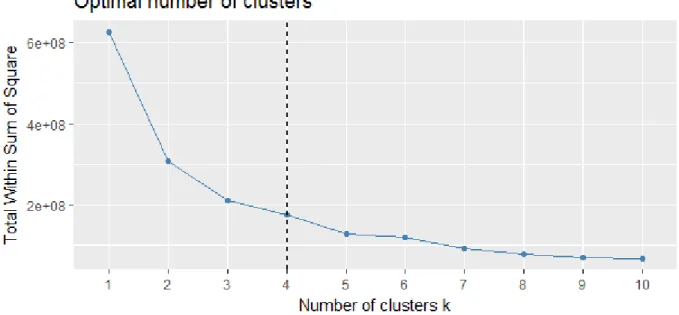
Figure 35: Total SSE for 2015 district finance data for clustering. ... 90
Figure 36: Total SSE for 2014 district-level finance data for clustering. ... 90
Figure 37: 2015 data, four-cluster solution of district-level data analysis. ... 91
Figure 38: 2014 data, three-cluster solution of district-level clustering. ... 92
Figure 39: Graphs of mean decrease in accuracy and mean decrease in Gini index for each variable used in the model. ... 100
Figure 40: Plot indicates the separation of the four classes on a two-dimensional plane. ... 101
Figure 41: Support and confidence for multiple-order frequent patterns. ... 105
Figure 42: Log Likelihood of the Reviews from Mountain View High schools ... 111
Figure 43: Hierarchical clustering produced by the UPGMA. ... 113
CHAPTER 1
INTRODUCTION
The main motivation for this research has been to understand the underlying connections and dynamics between macro attributes for policy interactions and patterns at macro level in the education domain using large-scale data analysis. Policy planning and decision making require tremendous amounts of data gathering and analysis for effective allocation of resources and successful outcomes, whether in education, health, business, or some other domain. Use of statistical models has been a mainstay for policy decision making in the areas of education; however, the emergence of big data analytics and machine learning models have extended the capabilities for extracting numerous insights in education data. Similar to preventive health care, where big data analysis and machine learning models have made tremendous strides, these models have come into increasing in use in the domain of learning analytics in general for both personal computing–based and web-based learning systems. However, macro-level
implementation for policy planning is extremely sparse. Policy planning at macro levels is still very time consuming and heavily influenced by varied groups’ agendas versus the reality on the ground. The research presented here takes, as an example, California statewide high school macro-level education data from multiple years and shows how data mining and machine learning models can bring additional insights and add value to macro policy planning; in
addition, as a future step, it provides a use case as a strong foundation for linking to micro-level analysis based on simulated data.
1.1 Research Questions
For the present research, we define the lowest granularity of macro levels of data to be at the level of each school, with school districts as the next higher level. The type of macro data that exists for California education system is at the individual school level on several attributes, ranging from student performance by school on math and English, teacher/student ratio, number of years of teaching experience, teacher salaries, meal programs, student ethnicity, school finances at district level, and so on. Overall data falls into the categories listed in Table 1, and each dataset in turn has multiple attributes. Full lists of these attributes are provided in
Appendices 1, 2, and 3.
Table 1: Datasets at school and district levels for years 2012–2013, 2013–2014 (“2014”), and 2014–2015 (“2015”)
Student performance data Student demographics
Teacher experience and salaries
District-level finance and demographics and expense per student
Online text reviews of parents/guardians/students on select number of high schools in California
By analyzing this data using data mining and machine learning models, the research tries to create a technical framework that can address the following questions.
1. Can we streamline large amounts of education data with numerous attributes and various data types together at a macro level and group schools based on multiple attributes to discover underlying common factors between schools?
2. Can new schools be automatically classified to a category? Can the category of the school be reassigned based on parameter changes from year to year?
3. In this sea of big data, how can we discover and identify influential macro-level patterns that have crucial impact on the success of students in an educational system at school level?
4. Can text mining of the social data input from public stakeholders correlate with the metrics collected by the schooling system?
In addition to these questions, the research also presents a possible foundation for future extension of the analysis to micro levels, so as to link macro and micro levels in order to address questions such as the following:
Can we establish a technical framework that can bring together the collective knowledge of the teachers under a system of seamless use with efficiency to enhance the learning experience of students?
Can we create a feedback loop mechanism between patterns that emerge out of micro data and the macro level so that economic, human, and infrastructural resources can be channeled to the appropriate groups of students?
Answers to these questions are vital in transforming education that can cater to individual learning. This study presents the results from a prototype model of an analytics framework system that attempts to provide answers to the questions just raised for high school data from the state of California.
1.2 The Problem Context
The advent of big data has permeated many domains in analyzing patterns, finding associations, and predicting future outcomes. It is especially so in consumer-driven businesses, where it is heavily used to formulate corporate policies. It is being adapted to health care
contexts, both in finding the optimal care for a patient at the micro level and, from a macro perspective, in predicting health outcomes, diagnostics, recovery, and financial aspects for patient cohorts. Health care modeling closely relates to modeling in educational data mining. In the context of education, data mining and machine learning models have been successfully adapted for understanding learning behavior at the micro level. However, such models have been quite slow in making inroads into policy planning at macro levels. Since defining a policy for meeting every individual difference is not a viable method, using mining techniques to find broader patterns and associations would enable formulation of policies that optimize the existing economic and service resources to achieve the set goals. Aside from knowing how best a certain category of students can learn, macro policy planning also involves understanding the broader trends of technological, economic, and social aspects and opinions of different stakeholders, which need to be taken into account in planning curriculum changes for adapting to the future. For example, aside from core theoretical foundations, current technological progress demands a significant amount of change in curriculum to involve heavy scientific, technical, engineering, and mathematical (STEM) emphasis, so that the next generation’s human resources are available in required numbers to maintain the innovation and technological progress needed to solve the problem we will encounter in our efforts toward sustainable growth. Information aspects related to these kinds of broader trends often exist in the form of combinations of textual and numeric data. By integrating the qualitative and quantitative results, a clearer picture of trends emerges, thereby enabling a reliable and effective way of informing policy decision making.
Educational data mining (EDM) has emerged as a modeling and design paradigm for formulating algorithms to identify patterns, find associations, and make predictions at micro and macro levels. At a micro level EDM can classify and characterize learners’ identifiable
capabilities and performance; at a macro level it can assist in gaining insights to domain knowledge content, assessents, educational functionalities, and applications (Luan, 2002). Education policy consists of setting principles and rules for achieving certain goals in the sphere of education. Policies are formulated at several levels (school, district, state, and country). In order to achieve the goals defined by these policies, certain protocols are established that, in turn, define the procedures for accomplishing the specific tasks set forth to achieve the goals. Some of these tasks have to be performed by individuals (for example, learners) and some by other stakeholder organizations (schools, districts, etc.). Traditionally these policies have been made by committees consisting of a team of researchers and representatives of governing boards and political entities, based to some extent on standard statistical analysis. This often leads to policies based on the assumptions and personal biases of members and political parties involved in those committees. However, with the increasing pace of technological progress, democratic processes involved in decision making, and globalization forces impacting day-to-day lives, this traditional method of policy planning falls short of encompassing the changes needed and the direction the societies are taking. With the advent of big data a clear perspective can be obtained on many aspects and levels by interconnecting information from all agents involved in the process (Moreno-Jimenez et al., 2014). Students, parents, teachers, industry leaders, government
officials, and nation builders all have their say and stake in building and guiding society through knowledge. Thus, bringing the opinions, aspirations, and expectations of all these stakeholders together is imperative, and in the current age the possibilities of achieving this are very realistic. Although it is a gargantuan task to provide a solution that is all encompassing, this proposal puts forth a method that, although it tackles only a part of the greater problem, forms a critical
This study explores macro data analysis with the following steps and lays a possible foundation to link to micro-level analysis for future research expansion.
Macro analysis with clustering: A large dataset of high schools from the state of
California is clustered on their performance indicators, primarily in mathematics, but also on a large set of economic and social attributes of these schools. At a macro level, data is analyzed at a district level as well as school level for the years 2013, 2014, and 2015. Three types of clustering models are applied to determine the clustering algorithm that best suits data in the educational context with combination of quantitative and qualitative variables.
Classification model: A classification model is developed based on the clustering approach described in the previous item. The clusters formed are treated as classes, and a classification model is tested using two approaches: random forests and linear
discriminant analysis for multiclass classification. The resulting classification model can automatically classify a new school or reassign a school with changed data into a
different class.
Frequent patterns and associations at school Level: Frequent-pattern analysis approaches data from a different direction than clustering does. The main aspect that is analyzed is which attributes co-occur most frequently at a certain level and what
associations exist between these attributes. An example of an association rule is: ”If the number of teachers with less than 2 years of experience is lower in a school, the
graduation rate is higher for students.” Such insights can be gained from finding frequent patterns and establishing association rules. In this research, frequent-pattern analysis is applied at school-level and district-level data to find association rules.
Regression analysis: Regression analysis is performed in two contexts. In the first, the output from the frequent-pattern analysis is subjected to further regression analysis to establish the nature of the association between the frequent pattern attributes to reveal additional angles to the impact between the attributes that form the topmost association rules. In the second context, regression is run to identify whether it can better explain the variation in the variable of interest with additional attributes.
The following are possible future research steps:
Recommendation systems for harnessing collective knowledge: A sample of students is taken from each of the clusters formed, and individual performance data is simulated based on real performance metrics of school population, along with teacher feedback for each student and their growth reports. A collaborative system is constructed using the recommender system collaborative filtering algorithm. This system will enable teachers to quickly find similar student profiles to the student of their interest and study other teachers’ approaches in enhancing the learning method.
Identifying Macro Patterns from micro data: The collaborative system described in the previous item becomes very efficient over time as data increases, and it identifies larger common patterns among similar students’ learning success with teacher recommendations. These larger patterns are then propagated to the macro decision makers, who can easily observe what kind of methods are working best for a certain group of students, so that the appropriate resources can be effectively targeted to similar set of students.
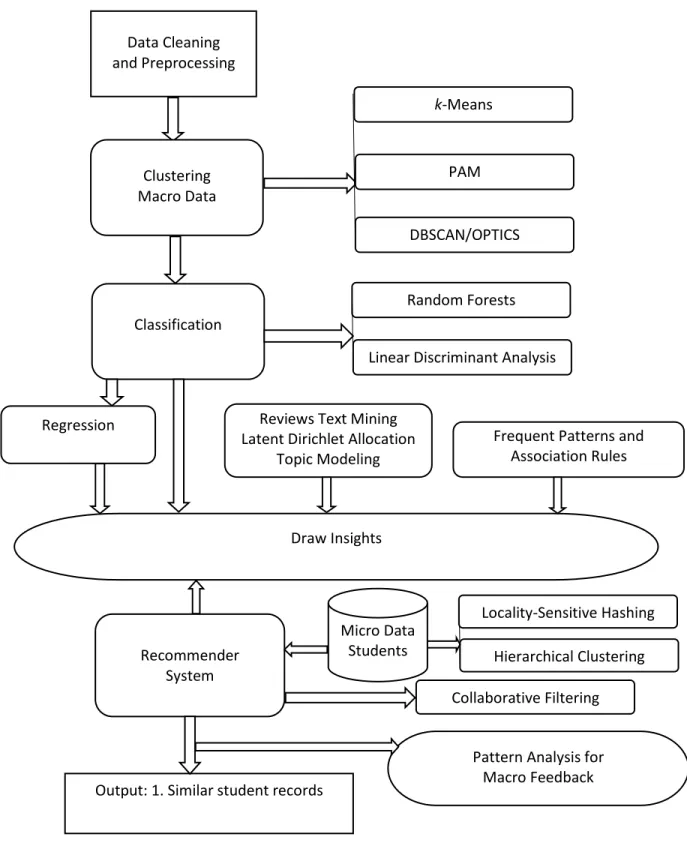
The following sequence of machine/statistical learning and data mining methods is proposed to identify the complex collective information that can emerge from large amounts of data. Figure 1 illustrates the flow.
1.3 Key Contributions
In this research I have brought forward the following contributions:
1. Demonstrated a technical framework to analyze large amounts of macro-level education data using machine learning and data mining techniques for drawing crucial insights for multi layered data in policy planning contexts.
2. Identified models that can handle multiple data types for unsupervised analysis. Compared three clustering techniques with California statewide high school data to identify factors for math performance indicators.
3. Created a technical framework that can that can link various levels of macro and micro data for deriving insights using multiple techniques. The school-level data analyzed is linked to district-level finance information to observe the impact of various funding sources on performance indicators. It is further linked to a simulated level of micro data. This large-scale study has not been performed before on a macro scale for high school data and in addition link it to micro levels for a recommendation system for collaborative use of teacher’s insights on similar students.
4. I propose a way for identifying class labels for categorizing schools effectively into groups by applying classification models to clustering outputs. Identifying labels manually is an expensive and enormous task. The resulting model of applying
creating a training and testing set of the data and (2) to classify new schools or reclassify existing schools quickly based on the parameter changes that take place during the academic years.
5. Implemented a topic modeling method for online reviews written by students, teachers and community stakeholders on high schools to draw insights that are difficult to gather from official education educational data collection methodologies. This acts are a initial medium to launch more official surveys on concerned topics.
6. Demonstrated a recommendation system using collaborative filtering methods that can be used by teachers to utilize the collective knowledge of other teachers state wide in
identifying similar students for recommending a learning approach that works the best for a particular student.
Data Cleaning and Preprocessing Clustering Macro Data k-Means PAM DBSCAN/OPTICS Classification Random Forests
Linear Discriminant Analysis
Regression
Recommender System
Collaborative Filtering Reviews Text Mining
Latent Dirichlet Allocation Topic Modeling
Locality-Sensitive Hashing Hierarchical Clustering
Output: 1. Similar student records
Pattern Analysis for Macro Feedback Draw Insights
ntify patterns at Macro level
Frequent Patterns and Association Rules
Micro Data Students
7. I present a method to merge text and numeric attributes for analysis and show that by doing so the analysis models can provide more insights.
1.4 Dissertation Structure
Physically, the description of the research is divided into following chapters:
Chapter 2 states the research motivations and problem along with an in-depth discussion of the role of machine/statistical learning and data mining models in the domain of education policy planning. It also explores previous research conducted in this domain.
Chapter 3 describes the datasets used and the machine learning methodologies applied in analysis of the data. A total of 1,636 high schools from state of California were analyzed with multiple attributes belonging to both quantitative and qualitative types.
Chapter 4 elaborates on the computational methods used in the analysis and the algorithms assessed for each part of the framwork.
Chapter 5 presents the results and analysis of the data using various methods in the system framework.
Chapter 6 discusses the results in the light of effective policy planning. Chapter 7 draws conclusions and plans for future research.
CHAPTER 2
RESEARCH MOTIVATIONS
The fundamental concept that this research explores is that large-scale analysis of macro data using machine learning and data mining models can extract more insights for effective policy planning by linking varying levels of macro data with multiple data types. By applying the appropriate analytic methods, insights and knowledge can be geared toward precisely identifying problem areas, assessing possible solutions, and allocating required resources at the macro level. This chapter explores how big data analysis can add value to education policy decisions, but before delving deeper, a brief overview of data mining in the field of education is explored.
2.1 Data Mining in Education
Data mining (DM) is the use of a computer-based information system (CBIS) (Vlahos, Ferratt, & Knoepfle, 2004) to scan huge data repositories, generate information, and discover knowledge. The meaning of the traditional term “mining” lends itself favorably to data mining, as the goal is to discover and extract valuable knowledge hidden in an ocean of data. Data mining is a part of the knowledge discovery and data mining (KDD) domain. Data mining approaches lead to identifying data patterns, organizing information of hidden relationships, structure association rules, estimate unknown items’ values to classify objects, compose clusters of homogenous objects, and unveil many kinds of findings that are not easily produced by a classic CBIS (Peña-Ayala, 2014). The analysis output of data mining represents a valuable support for decision making at all levels. In the context of education, it is a novel approach that can be developed for
Shafti, & Ortigosa, 2009). In the current age, the use of data mining in the education arena has proved inescapable and has given rise to the domain of educational data mining (EDM) research field (Anjewierden, Kollöffel, & Hulshof, 2007).
The data mining field is an amalgamation of disciplines such as probability (Karegar, Isazadeh, Fartash, Saderi, & Navin, 2008), machine learning (Witten, Frank, & Hall, 2011), statistics (Hill & Lewicki, 2006), soft computing (Mitra & Acharya, 2003), artificial intelligence (Bhattacharyya & Hazarika, 2006), and natural language processing (McCarthy & Boonthum-Denecke, 2011). Given the existing research, a majority of data mining approaches, probability, machine learning, and statistics constitute 88 percent of EDM approaches (Peña-Ayala, 2013).
2.2 Rise of Education Data Mining
EDM is an emerging field with the primary goal of applying data mining techniques and tools to education data (Baker & Yacef, 2009). Researchers in EDM apply this domain to tackle
problems from institutional effectiveness to enhancing student learning by adopting several standard methods of analysis developed in the data mining domain. An example of this development process is the Cross-Industry Standard Process for Data Mining (CRISP-DM). CRISP-DM includes business understanding, data understanding, data preparation, modeling, evaluation, and deployment (Leventhal, 2010). This process has been applied in numerous EDM studies (Luan, 2002; Vialardi et al., 2011; Wang & Liao, 2011) and is a standard practice for many data mining methods.
The rise of EDM can be traced back to the year 2000, as 98 percent of EDM research has been published starting in 2000. As a specialized field, EDM is still in a relatively juvenile state. As it has grown, EDM has shifted from isolated papers published in conferences and journals to
dedicated workshops, an international conference on educational data mining, a specialized journal of EDM, a handbook (Romero, Ventura, Pechenizkiy, & Baker, 2011), and a growing community of experts.
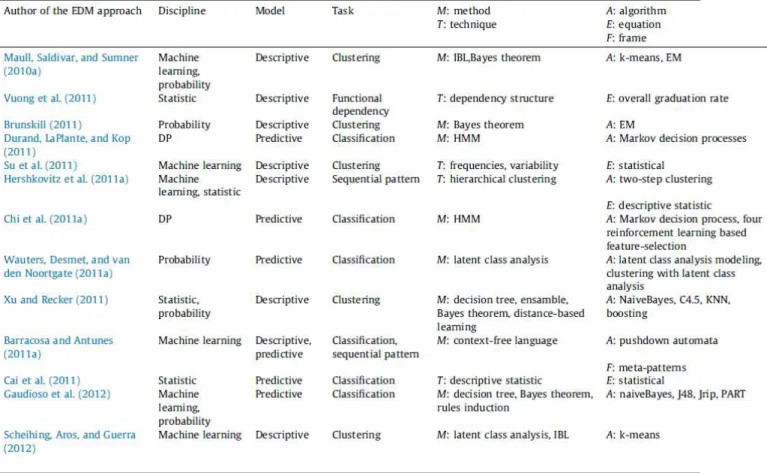
A major advantage of EDM is that it can be discussed in theory only to a small extent, and the majority of it has to be implemented. As previously mentioned, it has been applied to several domains in education such as student assessment, online learning systems, individualized learning models, and institutional effectiveness. The majority of the implemented systems in EDM fall under two perspectives: predictive and descriptive. Predictive models forecast future outcomes based on existing data, and descriptive models explain patterns and correlations in existing data. Table 2 (Peña-Ayala, 2014) shows a sampling mix of predictive and descriptive models used in EDM research.
As the ability to collect more data increases, more complex models with a combination of descriptive and predictive approaches are required. The degree of complexity in education policy planning certainly calls for such a combination of approaches. The following section discusses EDM research and implementations so far.
2.3 Data Mining in Education and Policy Planning
The aspect of increasing institutional effectiveness in delivering enhanced outcomes for the students constitutes the main component of education policy planning. Although EDM has made many strides in research in the area of individualized student learning, it is extremely rare to come across analytical systems at macro level. At a macro level, what is available is statewide databases that contain information on school and student performances, statistics on teachers and
staff, financial statements, etc. While the data is available, the analytical method and the approach that is needed to analyze and interpret the data is lacking.
Table 2: Example of predictive and descriptive models used in EDM research
Reproduced from Peña-Ayala (2014).
Policy planning in general is very dynamic, requiring constant assessment of conditions at all levels of education. Policymakers and administrators today demand more data and insights for better decision making. However, a lack of detailed analytic frameworks in this domain hinders making informed policy decisions that can be cost effective from a financial and human resource perspective under current economic and political conditions, which lead to budgetary constraints. Table 3 presents the number of EDM tools implemented in each category of
education, and it can be seen that there are none under the category where macro policy analysis and institutional-level decisions can be made. Most of the implementations exist at the level of student records or online learning and computer-based learning systems.
Table 3: EDM implementations by domain in education Education Systems
Number Implemented Component-based development systems (CBDS)
Intelligent tutoring system 88
Learning management system 20
Conventional education 20
Computer-based educational system 115
Student-based
Student behavior modeling 48
Student performance modeling 46
Assessment 45
Student modeling 43
Student support and feedback 21
Curriculum, domain knowledge, sequencing, teacher
support 19
Institution-based
Data mining–based None
Education databases with no advanced analytics 15 Multiple sources from Journal of Educational Data Mining.
The available research is largely on web-based learning systems and some classroom-based observational analytics. Increase in educational software products and dedicated data collection by state agencies have led to large repositories of data that reflects how students learn and perform in a given setting (Koedinger, Cunningham, Skogsholm, & Leber, 2008).
Simultaneously, the popularity of Internet-based education has developed into a new dimension of e-learning with content access, instruction, and self-paced learning methods (Castro, Vellido, Nebot, & Mugica, 2007). Studies in web-based learning show that monitoring student learning is an important input to enhancing the quality of teaching (Mazza & Dimitrova, 2004). Online learning systems often lack direct contact between students and teachers, and this lack leads to deficiencies in understanding where students need input, where to make changes to teaching, and
process from students, survey inputs, and system log files. Hershkovitz and Nachmias (2009a) researched online student learning behavior with respect to their pace in online learning and online information organization using analytics techniques. The research shows in general that students’ pace of learning is not consistent; however, the analysis does not support informing macro policy extensively. Although the research provides information on improving web-based education, further analysis and exploration can inform how well this web-based education can be integrated in meeting macro goals at large. A study led by Cohen and Nachmias (2011) shows that in web learning environments, micro measures for instructors and macro measures for institutional policy makers can be gathered. Measures such as content usage, student–student and student–teacher online interpersonal interactions, variance in courses, assessment measures, and several other micro measures were analyzed to improve student learning experience and teacher improvement. At the macro level, aspects related to three measures (cost efficiency, instructional quality, and university prestige) were collected. Although the study was targeted at
understanding micro and macro issues for a predetermined set of measured attributes from a parametric perspective, it did not apply data mining models to detect underlying patterns and new insights that would connect micro and macro issues without narrowing them down to just three aspects.
Currently existing data mining tools such as DBMiner (Han et al., 1997), SPSS Clementine (now IBM SPSS Modeler; IBM, n.d.), Weka (Machine Learning Group at the University of Waikato, n.d.), RapidMiner (RapidMiner, Inc., 2017), and distributed computing platforms such as Hadoop and Spark are very powerful in dealing with unstructured data analysis. However, they require complex implementations and customizations, as they are not
oriented toward analyzing educational data. The skills required for implementing on these platforms are often very technical and different from the domain of an educator.
Efforts have been made to develop tools geared toward educational analysis. TADA-Ed (Tool for Advanced Data Analysis in Education; Merceron & Yacef, 2005a), enables teachers to visualize and mine students’ online homework and exercises to derive patterns that can be useful in enhancing students’ learning. EPRules (Romero, Ventura, & De Bra, 2004), was developed based on association rule mining to improve online courseware by employing the GBGP (Grammar Based Genetic Programming) method, widely used in genetic programming, where each individual is represented by a tree derived from a grammar defined by the user that
represents all the possible prediction rules. By choosing the top rules and letting the tool analyze further, a teacher can predict student performance and difficulties in a particular course or subject. This tool, however, does not enable looking at groups of students at a large scale, and it also requires technical knowledge for implementation and customization.
Later research by Romero, Ventura, Zafra, and De Bra (2010) implements an association rules tool based on the collaborative filtering method. Collaborative filtering is a method that is used in recommendation systems based on large datasets. It involves filtering for information or patterns based on a larger set of similar users or agents or items to recommend for new cases. The tool developed by Romero and coworkers derives rules on e-learning courses where each course is tagged with certain attributes by domain experts. Once the course is in the system, all activity by a student in relation to the course is derived and stored. Attributes including courses taken, exercises, forums, quizzes, chats, and questions are all recorded. By applying the
association rules and collaborative filtering, some rules are derived. Based on the rules, some recommendations are given for each instructor to improve her or his course as well as share the
results with other instructors. Although this research is extremely useful for understanding the performance of each student and each course, and it does try to derive some rules for teachers to gain insights, it does not attempt to address macro issues at a larger scale.
Many tools in EDM currently focus on micro aspects of analyzing student learning. Table 4 shows a list of existing EDM tools.
Table 4: List of EDM tools available
Reproduced from Romero et al. (2010).
2.3.1 Macro Research
The IBM study on Mobile County, Alabama, public schools (IBM, 2011a) took a large initiative of implementing a data warehouse system that integrated academic and administrative
performance of students. The results enabled the teachers to understand the pattern of at-risk students.
The Hamilton County, Tennessee, implementation of a data analysis system by IBM (2011b) on 78 schools to track performance metrics and model them to understand the low graduation and high dropout rates resulted in 8% increase in graduation rates. With built-in pattern recognition and predictive algorithms, the system gave teachers and administrators the capability to understand the key predictors that indicated a student failing or dropping out in the future. By identifying these predictors well ahead and providing the right intervention, positive results were obtained. This system also integrates data from many schools to an extent to find and categorize common patterns among at risk students.
Another advanced system that IBM (2013) is developing for schools in Gwinnett County, Georgia, is a project known as Personalized Education Through Analytics on Learning Systems (PETALS), which extensively uses machine learning, predictive modeling, deep content
analytics, and advanced case management to identify learning needs of students and provide personalized recommendations for learning. By analyzing longitudinal student data from
multiple sources, the goal of the system is to identify similar students, provide the right learning content automatically, and recommend teaching techniques for specific needs.
Though these IBM systems implement some level of macro data analysis, they do not connect the macro and micro levels as an automatic feedback system nor use collective knowledge and recommender systems to enhance student learning.
A micro and macro data mining analysis on the study of Barcelona ports used several methods like association rules, clustering and time series analysis (Nettleton, Fandiño, Witty, & Vilajosana, 2000). The results indicate that by analyzing micro levels of data, association rules
for macro policies can be derived, which enables optimal allocation of economic, infrastructure, and human resources.
Ubels, van Klinken, and Visser (2010) have explored the micro and macro planning gaps in the context of local groups and interests and larger national goals. The research indicates that streamlining goals from local aspirations to national level avoids conflicts.
2.3.2 The Micro–Macro Context for Future Research
From the studies just discussed, it can be seen that big data has made deep inroads at micro levels. The main challenge remaining is how to use the big data techniques to inform macro policy analysis from micro data in a seamless feedback mechanism. Since data mining and machine learning models have an immense capability, an analytic framework that can connect these two aspects is presented.
In order to have a macro-level system for analysis, a data warehouse is essential. Guan, Nunez, and Welsh (2002) propose a model for a data warehouse for storing education
information, but they do not suggest the appropriate methods that can be utilized for analyzing the data in the data warehouse. The analytical framework system proposed here can connect with macro and micro levels; to bring the intended change at micro levels effectively takes enormous amount of analysis.
The following chapter covers the background research in technical methods chosen for developing the system.
CHAPTER 3
DATA COLLECTION AND PREPROCESSING
Data for education analysis exists in many forms. Traditionally, quantitative and qualitative data have been most often used for analyzing and coming to conclusions. With the dawn of data analytics and statistical models that have evolved into more complex machine learning and data mining algorithms, different types of data can be brought under the purview of analysis and merged together to gain deeper insights. The data for this research contains a mix of quantitative, qualitative, and text data. The advent of enormous data storage capacities enabled collection of large quantities of observational data. This provides an opportunity to detect actual patterns that exist.
Although the large amount of observational data is a boon for applying the machine learning and data mining algorithms, it also has complex problems of data being not “clean” and readily available to analysis. The data will have many messy elements such as missing values, incorrect values, and invalid characters. This chapter presents, in detail, the types of data utilized for research presented here, the problems encountered with the data, the data cleaning process applied, and the transformations applied to make the data analyzable with the algorithms.
3.1 Data Description
The data used for the analysis falls into the following categories:
I. Large-scale California-wide high school data on Adequate Yearly Progress (AYP) performance metrics for three years: 2013, 2014, and 2015 (attributes tabulated in Appendix 1)
II. California-wide high school data on pupil demographics, second language learners, free meal program participation, and teacher qualifications (attributes tabulated in Appendix 2)
III. California-wide district-level finance and demographic information, including attributes on various sources of revenues (attributes tabulated in Appendix 3)
For a future research step, individual student yearly report data, including grades on various subjects, text-based trimester comments from teachers, and recommendations for
progress, was simulated based on the mean and standard deviation performance measures of each school selected as a sample set from the clusters.
The datasets are described in more detail as follows.
I. High school performance data at school level from the state of California: A total of 1,636 high schools were used for the macro-level analysis for identifying school clusters. This includes only traditional high schools. Schools for differently abled students and vocational high schools have been excluded. The data consists of multiple variables indicating school-level performance metrics for the years 2013, 2014, and 2015 from the Adequate Yearly Progress Report. This data has been obtained from the California Department of Education. Table 5 lists some of the multiple attributes used for the analysis. The data was originally provided as an Excel file, which was converted to a comma-separated values (CSV) file for analysis in the R language. This raw data had to be further cleaned before it could be analyzed, as it had some problems to overcome. The problems and the cleaning methods are discussed in detail in Section 3.2.
Table 5: Sample of attributes used for clustering from all California high schools
Field Name Type Width Description
cds Character 14 County/district/school code
rtype Character 1 Record type: D=district, S=school, X=state
type Character 1 Type: 1=unified, 2=elementary district, 3=9–12 high district, 4=7–12 high district, E=elementary school, M=middle school, H=high school
sname Character 50 School name dname Character 50 District name cname Character 50 County name
Crit1 Character 2 Number of AYP criteria met, based only on participation rate and additional indicators
Crit2 Character 2 Number of AYP criteria possible
m_enr Character 7 Schoolwide or Local Education Agency (LEA)-wide math enrollment
m_tst Character 7 Schoolwide or LEA-wide math, number of students tested m_prate Character 5 Schoolwide or LEA-wide math participation rate
m_val Character 7 Schoolwide or LEA-wide math valid scores
m_prof Character 7 Schoolwide math number of students scoring proficient or above
m_pprof Character 5 Schoolwide math percent of students scoring proficient or above
mp_aa
Adequate Yearly Progress (AYP) data from California school system. Sample of important attributes are listed here. Please refer to Appendix 1 for a full list of attributes.
II. Second dataset and data spread in multiple tables: The second step of analysis using regression methods was performed to observe whether some other variables correlate with the clustering, such as number of students in the free lunch program, number of migrants, and teacher qualifications. The information for these attributes had to be fetched from other multiple tables provided by the California Department of Education. Since certain attributes were not available for all 1,636 schools, for some steps, only a
sample set of schools from each cluster derived in the initial analysis was taken. Please refer to Appendix 2 for a full attribute list.
III. District-Level Finance Data: There are altogether 87 high school and 330 unified school districts in the state of California. For the research implemented here, a total of 337 districts are taken into account, including high schools. The dataset consists of 51 attributes used in the analysis. Appendix 3 details the list of attributes.
Next steps: simulated data with merged numeric and text data: The three datasets just described are macro datasets that do not contain individual, micro-level data. Micro-level data for individual student performance is not legally available from the school system. To establish a technical flow for testing algorithms in future research, micro-level data at the individual level was simulated based on the mean and standard deviation available for the schools taken as a random sample from each of the clusters created from the analysis in step 1. The attributes selected are a reflection of the California system’s high school grade reports and annual student reports, containing data on student performance on the courses studied, teacher comments for each trimester, and recommendations for improving performance or college plans.
One of the main goals of the research is also to demonstrate a combined analysis of text data and numeric data. The trimester comments and recommendations of the teachers are text data. After text mining was done, the results were used in the form of numeric variables for merging with the rest of the student report variables for analyzing micro-level data. The
3.2 Data Cleaning
Significant efforts are needed to transform this raw data into “clean” or “tidy” data that algorithms can process. It is said that 60% to 80% of the effort in data analytics goes into cleaning and transforming data into sets that can be analyzed (Dasu & Johnson, 2003; Famili, Shen, Weber, & Simoudis, 1997).
When handling data for analysis, it is not out of norm for the initial, raw dataset to be “messy” and “noisy.” Messy data contains invalid values and characters or missing values or lacks a proper structure to analyze (Wicham, 2014). Noisy data implies a random error or variance in a measured variable (Han, Kamber, & Pei, 2011). A “cleaned” or “tidy” dataset is a necessity for any machine learning or data mining algorithm to find meaningful insights.
Tidy or clean data has been mapped into a structure with the following three main characteristics (Wicham, 2014):
1. Each variable forms a column. 1. Each row is an observation.
2. Each type of observational unit forms a table.
By establishing a structure to the meaning of data, it lends itself for efficient processing using statistical methods or computer algorithms. The same rules are applied to unstructured text data such as web pages. In the simplest form, each document (a text document or web page) forms a row and each word a variable (column). The frequency of the words in the document is tallied in the cell where the row and column intersect. Discussion of several specific issues encountered in cleaning up this data follows.
Mix of school-level, district-level, and state-level data: The original data file consisted of a mix of district- and state-level data and school data for all levels (elementary, middle, high,
special education, vocational schools, charter schools). Since the focus of this research is on high school performance, data had to be separated. A total of 2,476 rows of high school data were present, out of which missing values and invalid data were major problems in some observations, as can be seen in Table 6.
Table 6: Sample values of a few attributes m_val m_prof m_pprof m_ppm 3188508 1065490 33.4 – 17 0 0 – 419 95 22.7 – 85 7 8.2 – 58 12 20.7 – 77 19 24.7 – 96 84 87.5 – 77 21 27.3 – 1 – – – 14 0 0 – 276 38 13.8 –
Missing values: Values that are absent where there should be data are classified as missing values. Missing data, in turn, is classified into “missing at random” and “not missing at random.” Data is missing at random if the reason it is missing is not related to the actual missing values. This type of missing data does not pose significant problems if removed. Data is not missing at random, on the other hand, when the very cause of it being missing is related to the missing values.
Several methods have been proposed to deal with missing values, such as the following: 1. Removing records with missing values and analyzing the remaining data. This can pose
problems where the datasets are small.
3. Using statistical approaches such as regression or expectation–maximization (EM) algorithms, to estimate the missing values.
Cleaning method selected: For the purpose of this research only those observations that have full data available have been considered, as omitting the records with missing values did not impact the main goal of research. Out of 2,427 high schools in California, data from 1,665 high schools that contained data for all observations has been used for analysis. Missing values were not imputed, because it was essential to have a true picture of analysis in this context, and adequate data was available for analysis.
Invalid characters: There were many invalid characters as well as missing values. Values that contained these characters were treated as missing values. An example is shown in the sample data snippet in Table 7.
Table 7: Sample of invalid and zero characters m_val m_prof m_pprof m_ppm
17 0 0 – 419 95 22.7 – 85 7 8.2 – 58 12 20.7 – 77 19 24.7 – 96 84 87.5 – 77 21 27.3 – 1 – – – 14 0 0 – 276 38 13.8 –
Zero values were treated as actual values after they were researched and confirmed with the California department of education.
Apart from treating the missing values similarly as just discussed, the new data was merged with cluster analysis data, based on the county/district/school code. This ensured that available data was complete from the combination of multiple datasets.
Cleaning and parsing the text for analysis: Cleaning of text data—in fact, cleaning of all raw data—consumes more time than the analysis itself but is a necessary step in feature extraction and preprocessing the lexicon. These extracted features should be able to capture the content of documents in such a way that documents with similar content with different
terminology would have similar features. This involves the following steps.
a. Removing stop words: Stop words are words such as “is,” “the,” or “of” that are very frequent and do not contribute significantly to the meaning of the sentence. Figure 2 has an example taken from the Slater school debate.
increas number children area ( born move new folk take advantag newli creat job mv) prudent rush school open. gather point handi community, increas sens communiti & communiti spirit, make get school easier & faster without car drive gridlock town
Figure 2: Example of removal of stop words.
b. Stemming or lemmatization: Stemming is the process of removing suffixes and prefixes, leaving the root or stem of the word. For example, “walk,” “walking,” and “walked” all have the same base word, or lemma: “walk.” Stemming reduces the number of unique words (i.e., it reduces the dimensionality of the dataset) and improves system performance. However, stemming without discernment can create problems for clustering or classification methods (Solka, 2008). For example, stemming “relativity” to “relate” or “probate” to “probe” can cause problems for certain methods of analysis because the meanings of the words in these
when applied in a systematic way, results in saving computational resources and reducing redundancy. The Porter stemming algorithm (Porter, 1980) is a popularly used stemming procedure, and many tools based on variations of this algorithm exist.
Figure 3 shows an example of how a teacher’s comment gets transformed after removal of stop words and stemming.
Positive in class. Participates in discussions. Needs improvement in writing. Shows lot of interest in Math. Demonstrates respect and kindness towards peers and teachers
[1] "posit class particip discuss need improv write show lot interest math demonstr respect kind toward peer teacher \n\n"
Figure 3: Result of stop word removal and stemming on teacher’s comments.
Section 3.3 describes in more detail the transformations applied to text data and the data types just discussed.
3.3 Data Types and Preprocessing and Validation
Once the dataset is cleaned and structured, the next step is to assess and explore whether the variable values are directly usable or need some transformations to enable them to be
analyzed. Attributes of continuous value, categorical attributes, scaled data, and text descriptions exist in the dataset. Certain numeric attributes can be used directly as they are or can be
subjected to some form of normalization. Nominal, binary, scaled, and text data, however, each require their different methods to be preprocessed. This section explains the steps taken for transforming certain attributes.
Continuous variables: Attributes with continuous values constitute a significant portion of a dataset. These attributes can be transformed using several techniques such as z-score
normalization and log transformation. For the current research question, most of the continuous variables are scores of students, number of students, quantities of materials, and so forth. A z -score normalization would be suitable for many of these, and it also works as an easy method to detect outliers. Continuous variables can also be subjected to measures of central tendency and many calculations to measure similarity and dissimilarity.
Categorical variables: Categorical data is data that specifies a category or group to which an observation belongs. It can originate from continuous values as well as from qualitative forms. It can be a dichotomous attribute, which can have only two values such as “yes” or “no”; it can also be polytomous, or nominal, with multiple classes, such as grades A, B, C, or D or states in the United States. For most machine learning and data mining algorithms, these variables have to be converted into numeric codes.
A numeric ranking methodology to convert categorical variables to numeric labels has been followed. For example, the categorical attribute MetAttendTarg has three levels (“yes,” “no,” and “NA”). To enable effective clustering, these values have been converted to 1, 2, and 3, respectively. The nature of the data type has not been altered. Similarly, scaled attributes such as grades have been coded using similar numeric denominations.
Text document transformations: Applying computational methods to text for analyzing them requires transformations that have to be in numeric form. Since most of the similarity and dissimilarity measures require some form of numeric input, text data also need to be converted into a form where the words are represented in the form of numbers. This converted structure is called a term document matrix, described next.
Term document matrix: A term is a word. Keeping a count of how many times a word appears in a document or a corpus is an important part of text mining and is called term
frequency. The terms that appear the most frequently are not necessarily the most important ones. Because very common words such as “student” or “class” do not contribute much to analysis of the comments given by the teacher, such extremely frequent terms are eliminated from term weighting. The importance of a word comes with its context in the document or corpus. This encoding of text and attributing some degree of importance is called term weighting. The method that is most adopted is called inverse document frequency, and the overall method is called term frequency/inverse document frequency. The formulation for it is given as:
i j i j i df N tf w, , log
where wi,j is the weight of the term i in the document j, tfi, j = number of occurrences of term i in
document j, N is the total number of documents, and dfi is the number of documents containing
term i.
The following small example details how the transformation is implemented. Given the following three documents a, b, c:
a. Student is excellent in math and always completes homework b. Student is very good in math and helpful to fellow class mates c. Student is very motivated in sciences. Has to improve in English
When these are to be transformed, the initial step is to do the cleaning process of removing stop words and stemming. Then the frequency of each word in the documents is tabulated. Figure 4 shows the term frequencies for the three documents.
Terms
Docs alway and class complet english excel fellow good hav help homework improv mate math motiv science student veri 3 1 2 1 1 1 1 1 1 1 1 1 1 1 2 1 1 3 2
Figure 4: Term document matrix shows the document frequency of words from three documents.
Multicollinearities: When an attribute can be predicted from another attribute, there is a high degree of correlation between them. Often in datasets, the same information is represented in multiple forms, or measured through more than one attribute. When this happens, there will be multicollinearities in the data. This problem causes regression-based models to fail to identify the real relationships between the variables accurately. Thus, after assessment variables’ importance using statistical methods, some variables are removed. For numeric attributes, principal
component analysis is applied, and for categorical attributes, a chi-square correlational analysis is performed.
CHAPTER 4
COMPUTATIONAL METHODS
There are several approaches and methods in machine and statistical learning and data mining that can be applied for educational data. Choosing the right method for a given problem is one of the most important steps toward finding meaningful information from massive amounts of data. To identify which method or algorithm best fits the need, it is necessary to choose a few algorithms based on theoretical knowledge and research implementations that may share some similarities with the nature of the problem to be solved. The available methods largely fall into three categories:
1. Supervised learning 2. Unsupervised learning
3. Reinforcement or semi-supervised learning
Supervised Methods: Supervised learning methods solve problems such as classification using a two-step process: a learning step and a predicting step. These methods rely on a training dataset that has labels that indicate what the correct output for each observation is. Once the algorithm is trained on the known labels to create a model (a process called the learning step), it can predict the output variable on new, unseen data. Often a test dataset is used to validate the model. The larger the training dataset, the more accurate the model is in predicting new data.
For example, if we have many schools and they are categorized into few groups based on some indicators, the training dataset can have as a label variable the column that indicates which group a particular school belongs to. Once the model is trained, it can predict the group of a new school that is not yet categorized.