Abstract-For various applications, we cannot process the whole image directly for the reason that it is inefficient and unpractical. Therefore, several image segmentation algorithms were proposed to segment an image before recognition or compression. Image segmentation is to classify or cluster an image into several parts (regions) according to the feature of image, for example, the pixel value or the frequency response. Up to now, lots of image segmentation algorithms exist and be extensively applied in science and daily life. In this paper, we survey several popular image segmentation algorithms, discuss their specialties, and show their segmentation results. Moreover, this paper also presents an efficient image segmentation technique using K-means and superpixel algorithm. Our approach can fulfill the goal of image segmentation effectively in a self-adaptation way and alleviate the effect of uneven illumination with good robustness and lower computation complexity.
Keywords: K-means, Super pixel, Clustering, Color Image segmentation, Region Merging, PSNR.
I INTRODUCTION
Image processing is a form of signal processing in which input is an image and the output is either an image or a set of characteristics or parameters related to the image [1]. The smallest element of an image is a pixel, also known as picture element. The processing of an image is done pixel by pixel. The Method for improving the image quality is called Image Enhancement. Images are considered as one of the most important medium of conveying information. Understanding images and extracting the information from them such that the information can be used for other tasks is an important aspect of Machine learning. An example of the same would be the use of images for navigation of robots. Other applications like extracting malign tissues from body scans etc form integral part of Medical diagnosis. One of the first steps in direction of understanding images is to segment them and find out different objects in them.
Image segmentation is useful in many applications. It can identify the regions of interest in a scene or annotate the data. We categorize the existing segmentation algorithm into region-based segmentation, data clustering, and edge-base segmentation. Region-edge-based segmentation includes the seeded and unseeded region growing algorithms, the JSEG, and the fast scanning algorithm. All of them expand each region pixel by pixel based on their pixel value or quantized value so that each cluster has high positional relation. For data clustering, the concept of them is based on the whole
Manuscript received Dec, 2015.
J.Deny, IEDC Coordinator, Kalasalingam University, Research Scholar, Bharath University.,
Dr.M.Sundharajan, Dean-Electronics , Bharath University.,
image and considers the distance between each data. The characteristic of data clustering is that each pixel of a cluster does not certainly connective. The basis method of data clustering can be divided into hierarchical and partitional clustering. Furthermore, we show the extension of data clustering called mean shift algorithm, although this algorithm much belonging to density estimation. The last classification of segmentation is edge-based segmentation. This type of the segmentations generally applies 2 edge detection or the concept of edge. The typical one is the watershed algorithm, but it always has the over-segmentation problem, so that the use of markers was proposed to improve the watershed algorithm by smoothing and selecting markers. To overcome this problem our proposed method consists of a new way to segment the images in efficient way using K-means and Super Pixel algorithm.
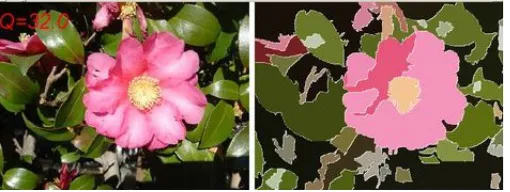
Fig. 1.1 A sample color image segmentation
Region-based methods mainly rely on the assumption that the neighboring pixels within one region have similar value. The common procedure is to compare one pixel with its neighbors. If a similarity criterion is satisfied, the pixel can be set belong to the cluster as one or more of its neighbors. The selection of the similarity criterion is significant and the results are influenced by noise in all instances. In this chapter, we discuss four algorithms: the Seeded region growing, the Unseeded region growing, the Region splitting and merging, and the Fast scanning algorithm. Superpixels are becoming increasingly popular for use in computer vision applications. However, there are few algorithms that output a desired number of regular, compact superpixels with a low computational overhead. K-Means algorithm is an unsupervised clustering algorithm that classifies the input data points into multiple classes based on their inherent distance from each other. The algorithm assumes that the data features form a vector space and tries to find natural clustering in them. Here, we introduce a novel approach that is able to segment the images based on k-means and super pixel algorithm to overcome above mentioned problems. The organization of this paper is as follows. Section II explains some existing techniques for image enhancing model. Section III describes the proposed model for image segmentation and proposes our guided k-means and superpixel algorithm.
Review of Advanced Color Image Segmentation
Using K-means and Super-pixel Algorithm
Section IV consist of some expected outcome. Finally, Section V concludes this paper.
II IMAGESEGMENTATIONTECHNIQUES
In this section, literature surveys of various papers that provide basic concepts and knowledge for this work have been done.
Multicomponent Image Segmentation
Multicomponent image segmentation method is developed using a nonparamet- ric unsupervised artificial neural network called Kohonen’s self- organizing map (SOM) and hybrid genetic algorithm (HGA). SOM is used to detect the main features that are present in the image; then, HGA is used to cluster the image into homogeneous regions without any a prior knowledge.
Mohamad Awad, Kacem Chehdi, and Ahmad Nasri [1] performed experiments on different satellite images confirm the efficiency and robustness of the SOM–HGA method compared to the Iterative Self-Organizing DATA analysis technique (ISODATA). Drawback of SOM–HGA is being slower than ISODATA. (SOM–HGA is about five times slower than ISODATA.) SOM–HGA performance can be further improved by parallel cooperation with more segmentation methods, such as FCM. Another approach to improve the segmentation process is to use a knowledge base that contains the cluster centers of previous segmentation on different satellite images. In addition, it contains information about the capturing date of the image and other related information, which will help in speeding up the process of segmenting similar satellite images.
J. Driesen, P. Scheunders [15] propose a framework for the segmentation of multicomponent images. The specific framework we aim at contains different steps in which all components of the multicomponent image are processed simultaneously, accounting for the correlation between the image components. The framework contains the following steps: a) to initiate, a pixel-based, spectral clustering procedure is applied. b) to include spatial information, a model-based region-merging technique is used, applying a multinormal model for the coefficient regions, and estimating the model parameters using Maximum Likelihood principles; c)the model allows to treat noise that might be present efficiently; d) a multiscale version of the framework is established by repeating the same procedure at different resolution levels of the original image. e) Then, a link between the different levels is established by constructing a hierarchy between the regions at different levels.
Stéphane Derrode , Grégoire Mercier [16] work extents the Hidden Markov Chain (HMC) model for the unsupervised segmentation of multicomponent images. Although the vectorial extension of the model is almost straightforward, we are faced to the problem of estimating a mixture of non-Gaussian multidimensional densities. In this work, we adopt an Independent Component Analysis (ICA) approach that allows the mutual dependance between the layers to be taken into account in the segmentation process. Classification results on a four bands SPOT-IV image illustrate the method. Also, a comparison is performed when only mutual independence or correlation between the components is assumed.
B. Medical Image Segmentation
In medical imaging there is a massive amount of information, but it is not possible to access or make use of this information if it is efficiently organized to extract the semantics. To retrieve semantic image, is a hard problem. In image retrieval and pattern recognition community, each image is mapped into a set of numerical or symbolic attributes called features, and then to find a mapping from feature space to image classes. Image classification and image retrieval share fundamentally the same goal if there is given a semantically well-defined image set. Dividing the images which is based on their semantic classes and finding semantically similar images also share the same similarity measurement and performance evaluation standards.
Zhou Zhenhuan [2] propose a 3D-MRF image model based on 2D MRF by extending 2D planar to 3D space, define and describe the 3D neighbor, clique and potential function. We segment medical image using the 3D-MRF and the steps are as follows: 1.Initial images are segmented by using k-means clustering, to reduce the computational burden by using a special data structure: the k-d tree. 2. The parameters are estimated by using the maximum a posteriori (MAP) for the 3D-MRF model. 3. Computing optimal Solution is done using the Expectation-Maximization (EM) algorithm and the Iterated Conditional Models (ICM) algorithm. Drawback of this work can be explained as in the 3D segmentation experiments, the axial image is scanned, the coronal or sagittal image is reconstructed by the axial image, maybe produce image artifacts and affect segment results more or less. Therefore the results may be less effective.
Paresh Chandra Barman et.al[17] proposed a new medical diagnosis system for image segmentation. In this a new variational level set algorithm is used without re-initialization. This algorithm can be easily implemented using a simple finite difference scheme. To remove noisy element of the image, thresholding and erosion methods are used. During this not only the initial curve shown anywhere in the image, the interior contours (like tumors) can also be automatically and quickly detected.
H.S. Prasantha et.al[18] discussed various image segmentation algorithms. They compare the outputs and check which type of segmentation technique is better for a particular format. Correctness and stability are the two key factors which allows for the use of a segmentation algorithm in a larger object detection system.
Ajala Funmilola A. et.al[19] explained several methods employed for medical image segmentation such as Clustering, Thresholding, Classifier, Region Growing, Deformable Model, Markov Random Model etc. Their work is mainly focused on clustering methods, specifically k-means and fuzzy c-means clustering algorithms. They combine these algorithms together to form another method called fuzzy k-cmeans clustering algorithm, which results better in terms of time utilization. The algorithms have been implemented and tested with MRI images of human brain. Results have been analyzed and recorded.
the image. Then compare the results with the existing ones. This attains a higher value of detected tumor pixels than any other segmentation techniques. With extra input features this also acquires the weight vector value for the neuro fuzzy i.e. (6×6). The number of tumor cells and the execution time will also be analyzed for weight vector.
C. Natural and Remote Sensing Image Segmentation
Segmentation is an important problem in remote sensing image processing. Early remote sensing image segmentation methods utilize pixel-based strategies and ignore rich spectral and structure information. Thus, the segmentation results are unsatisfactory and have adverse influence on following image analysis. In recent years, object-oriented segmentation methods are extensively applied in remote sensing image analysis. Homogenous region features such as intensity, texture, and shape can be used to improve the segmentation accuracy.
Licheng Jiao, Maoguo Gon, Shuang Wang, Biao Hou, Zhi Zheng, Qiaodi Wu [3] proposed to solve the image segmentation problem more efficiently, we propose a MA-based approach, Memetic Image Segmentation Algorithm (MISA), and com-pare the new method with its genetic version (MISA without learning), the K-means algorithm, fuzzy c-means algo-rithm, and two state-of-the-art image segmentation algorithms including an efficient graph-based algorithm and a spectral clustering ensemble-based algorithm in segmenting artificial texture images, remote sensing images and natural images. Drawback of this work is that MA based approach may be sometime impractical like in case of magnetic resonance imaging (MRI) image segmentation and synthetic aperture radar (SAR) image segmentation with domain-specific knowledge is also planned in our future work.
Devis Tuia, Jordi Mun˜oz-Marı, Gustavo Camps-Valls [21] proposed a method inspired in the cluster assumption that holds in most of the remote sensing data. Starting from a complete hierarchical description of the data, the proposed strategy aims at sampling and labeling pixels in order to discover the data partitioning that best matches with the user’s expected classes. Thus, the method combines active supervised and unsupervised clustering with a smart prune-and-label strategy. The proposed method is successfully evaluated in two challenging remote sensing scenarios: hyperspectral and very high spatial resolution (VHR) multispectral images segmentation.
D. Image Segmentation using JSEG and Normalized Cuts
Yongzheng Geng, Jian Chen, Li Wang [5] proposes a novel color image segmentation method. The method improves the JSEG(Joint Systems Engineering Group) algorithm, and it uses the results of JSEG as the input of Ncut(Normalized Cuts). Experiments show that this proposed algorithm can obtain a good segmentation results. The two main contributions of this paper are: 1) it is effective to overcome the problems of the large computation, 2) the final image segmentation boundary is more accurate. The proposed algorithm suffers from the problems, such as divided region boundary inaccurate, incomplete region merging for certain regions, robustness not high enough and so on. Meanwhile, due to the
complexity of image segmentation, it is still very difficult for us to get a good image segmentation result for different types image, so relevant theories and methods need further study.
Jianbo Shi and Jitendra Malik [22] propose a novel approach for solving the perceptual grouping problem in vision. Rather than focusing on local features and their consistencies in the image data, our approach aims at extracting the global impression of an image. We treat image segmentation as a graph partitioning problem and propose a novel global criterion, the normalized cut, for segmenting the graph. The normalized cut criterion measures both the total dissimilarity between the different groups as well as the total similarity within the groups. We show that an efficient computational technique based on a generalized eigenvalue problem can be used to optimize this criterion. We have applied this approach to segmenting static images, as well as motion sequences, and found the results to be very encouraging.
E. Image Segmentation using Watershed Algorithm
Early image retrieval techniques were based on textual annotation of images. Content based image retrieval, uses the visual contents of an image such as color, shape, texture, and spatial layout to represent and index the image. In typical content based image retrieval systems, the visual contents of the images in the database are extracted and described by multi-dimensional feature vectors. The feature vectors of the images in the database form a feature database. To retrieve images, users provide the retrieval system with example images or sketched figures. The system then changes these examples into its internal representation of feature vectors.
Niket Amoda1 , Ramesh K Kulkarni [23] proposes a novel Texture Gradient based Watershed Segmentation technique is developed. The Watershed Transform is a well established tool for the segmentation of images. However, it is often not effective for textured image regions that are perceptually homogeneous. In order to properly segment such regions the concept of the Texture Gradient is introduced and is implemented using a Non Decimated Wavelet Packet Transform. A marker location algorithm is subsequently used to locate significant homogeneous textured or non textured regions. A marker driven Watershed Transform is then used to properly segment the identified regions. There are two generally used methods for image segmentation: discontinuity based method and similarity based methods.
research we will focus on a more standard performance measure which could well reflect the difference between segmentation results.
In this paper, a new image segmentation method based on adaptive threshold and masking operation with watershed algorithm have been presented whose goal is to overcome over-segmentation problem of the traditional watershed algorithm. This paper analyzes the drawbacks of the conventional watershed segmentation. The qualitative results show that our algorithm outperforms the others. Consequently,
III PROPOSEDWORK
In our proposed method we will apply k-means and superpixel algorithm for image segmentation. K-Means algorithm is an unsupervised clustering algorithm that classifies the input data points into multiple classes based on their inherent distance from each other. The algorithm assumes that the data features form a vector space and tries to find natural clustering in them.
Superpixel algorithms group pixels into perceptually meaningful atomic regions, which can be used to replace the rigid structure of the pixel grid. They capture image redundancy, provide a convenient primitive from which to compute image features, and greatly reduce the complexity of subsequent image processing tasks
Form K-means clusters from a set of n-dimensional vectors 1. Set ic (iteration count) to 1
2. Choose randomly a set of K means m1(1), …, mK(1).
3. For each vector xi compute D(xi , mk(ic)), k=1,…K
and assign xi to the cluster Cj with nearest mean.
4. Increment ic by 1, update the means to get m1(ic),
…,mK(ic).
5. Repeat steps 3 and 4 until Ck(ic) = Ck(ic+1) for all k.
Boot Step:
Initialize K clusters: C1, …, CK
Each cluster is represented by its mean mj
Iteration Step:
Estimate the cluster for each data point Re-estimate the cluster parameters
Figure 3.1: Workflow Diagram of proposed algorithm
IV EXPECTED OUTCOME
The PSNR is used to calculate the peak signal-to-noise ratio, given in decibel (dB), between two images. In reference [19], the authors presented PSNR and MSE to evaluate the segmentation performance. It is expected that proposed method will provide us a better PSNR and MSE value in comparison of previous method applied.
V CONCLUSION
This paper proposes an approach based k-means and superpixel to segment color images. This paper analyzes the drawbacks of the conventional watershed segmentation. The qualitative results show that our algorithm outperforms the others. The experimental results on several color images will show that the proposed approach in this paper can achieve the goal of image segmentation effectively in a self-adaption way and alleviate the impact of uneven brightness with good robustness and lower complexity. Some threshold parameters are involved in the proposed algorithm, and how to automatically set these parameters will be the future direction of improvement.
REFERENCES
1. Mohamad Awad, Kacem Chehdi, and Ahmad Nasri, “Multicomponent Image Segmentation Using a Genetic Algorithm and Artificial Neural Network”, IEEE Geoscience And Remote Sensing Letters, Vol. 4, No. 4, October 2007 pp. 571-575. 2. Zhou Zhenhuan “Medical Image Segmentation based on a
3D-MRF” , IEEE International Conference on BioMedical Engineering and Informatics, 2008, pp. 137-139.
3. Licheng Jiao, Maoguo Gon, Shuang Wang, Biao Hou, Zhi Zheng, Qiaodi Wu “Natural and Remote Sensing Image Segmentation Using Memetic Computing”, Computational Intelligence Magazine, IEEE , Volume: 5, Issue: 2, 2010, pp. 78-91.
4. Md. Habibur Rahman, Md. Rafiqul Islam, “Segmentation of Color Image using Adaptive Thresholding and Masking with Watershed Algorithm,” IEEE International Conference Informatics, Electronics & Vision (ICIEV), 2013, pp. 1-6.
5. Yongzheng Geng, Jian Chen, Li Wang “A Novel Color Image Segmentation Algorithm Based on JSEG and Normalized Cuts,” IEEE 6th International Congress on Image and Signal Processing, 2013, pp. 550-554.
6. T. Saikumar, P. Yugander, P. Murthy and B.Smitha, "Colour Based Image Segmentation Using Fuzzy C-Means Clustering," International Conference on Computer and Software Modeling IPCSIT, IACSIT Press, Vol. 14, 2011.
7. Prashanth Kumar G and Shashidhara M “Skin Color Segmentation for Detecting Human Face Region in Image,” In: Proc. of IEEE International Conference on Communication and Signal Processing, April 3-5, 2014, pp. 001-005.
8. Zhan Di, Li Shijin, Gao Xiangtao, Bo Ping, “Hydrological sheet color image segmentation based on gradient and color information” In: Proc. of SPIE 8372, 83720R, 2012.
9. Z. Jianming, Z. Ju, and W. Juan, "Watershed segmentation algorithm based on gradient modification and region merging," Journal of Computer Applications(JCA) Vol. 31(2), pp. 369–371, 2011.
10. Y. Wangsheng, H. Zhiqiang, and S. Jianjun, "Color Image Segmentation Based on Marked-Watershed and Region-Merger", Acta Electronica Sinica, Vol. 39(5), pp. 1007–1012, 2011. 11. G. Deng and Z. Li, "The Study of Improved Marker-Controlled
Watershed Crown Segmentation Algorithm," Seventh International Conference on Computational Intelligence and Security, pp. 1576-1579, 2011.
12. N. Anh, Y. Kim, and G. Lee, "Morphological Gradient Applied to New Active Contour Model for Color Image Segmentation," ICUIMC 12, Feb. 20–22, 2012.
13. B. Li, M. Pan, Z. Wu, "An Improved Segmentation of High Spatial Resolution Remote Sensing Image using Marker-based Watershed Algorithm", 20th International Conference on Geoinformatics, Jun. 15- 17, 2012.
graphs," Pattern Recognition Pattern Recognition, Vo. 45(1159-1179), 2012.
15. J. Driesen, P. Scheunders, “A Multicomponent Image Segmentation Framework," Advanced Concepts for Intelligent Vision Systems Lecture Notes in Computer Science Volume 5259, 2008, pp 589-600
16. Stéphane Derrode , Grégoire Mercier “Unsupervised Multicomponent Image Segmentation Combining Vectorial HMC Model And ICA” In Proc. of the IEEE ICIP’03, Barcelona Feb. 20–22, 2018.
17. Paresh Chandra Barman et.al. MRI IMAGE SEGMENTATION USING LEVEL SET METHOD AND IMPLEMENT AN MEDICAL DIAGNOSIS SYSTEM. Computer Science & Engineering: An International Journal (CSEIJ), Vol.1, No.5, December 2011.
18. H.S.Prasantha et.al. MEDICAL IMAGE SEGMENTATION. (IJCSE) International Journal on Computer Science and Engineering. Vol. 02, No. 04, 2010, 1209-1218.
19. Ajala Funmilola A et. al.,“Fuzzy k-c-means Clustering Algorithm for Medical Image Segmentation”. Journal of Information Engineering and Applications, ISSN 2224-5782 (print) ISSN 2225-0506 (online) Vol 2, No.6, 2012.
20. S. Murugavalli and V. Rajamani. An Improved Implementation of Brain Tumor Detection Using Segmentation Based on Neuro Fuzzy Technique. Journal of Computer Science 3 (11): 841-846, 2007, ISSN 1549-3636.
21. Devis Tuia, Jordi Mun˜oz-Marı, Gustavo Camps-Valls “Remote sensing image segmentation by active queries” 0031-3203/$ - see front matter & 2011 Elsevier Ltd. All rights reserved. doi:10.1016/j.patcog.2011.12.012.
22. Jianbo Shi and Jitendra Malik, Member, IEEE “Normalized Cuts and Image Segmentation” ieee transactions on pattern analysis and machine intelligence, vol. 22, no. 8, august 2000n pp 888-pp 892. 23. Niket Amoda1 , Ramesh K Kulkarni “Image Segmentation and