COMPARITIVE STUDY IN DETECTION
RETARDED CHILDREN USING
CONVENTIONAL
*Dr. Dalia
Professor, Department of Physiology,
ARTICLE INFO ABSTRACT
Background: children audiometry. Method children in decibles stimulus frequencies threshold Result: agreement 2 testing could PTA and threshold significant. Conclusion: to PTA
Copyright © 2018, Dr. Dalia Biswas and Dr. Prakash, which permits unrestricted use, distribution, and reproduction
INTRODUCTION
Hearing loss is a major public health issue and common such affliction after arthritis and (Clinical Policy Title, 2006). Hearing loss global issues that affect at least 278 million people Two-thirds of these people live in developing 2010). Early detection of hearing loss is prerequisite in the field of audiology. childhood handicaps is hearing loss and with its burden lies in developing countries like India; needs to be addressed. A hearing loss occurring can have a major impact on speech and language Even a mild hearing loss during the first 3 adversely affect a child’s development in areas auditory input (Alberti, 1983).
*Corresponding author:Dr. Dalia Biswas,
Professor, Department of Physiology, Jawaharlal Nehru Datta Meghe Institute of Medical Sciences, Wardha
ISSN: 0975-833X
Article History:
Received 18th February, 2018 Received in revised form 26th March, 2018 Accepted 03rd April, 2018 Published online 23rd May, 2018
Citation: Dr. Dalia Biswas and Dr. Prakash, A. Nikose
children using brainstem-evoked response audiometry
Key words:
Brainstem-Evoked Response Audiometry, Pure tone Audiometry,
Developmentally Retarded Children.
RESEARCH ARTICLE
DETECTION OF SEVERE HEARING LOSS IN
USING BRAINSTEM-EVOKED RESPONSE AUDIOMETRY
CONVENTIONAL AUDIOMETRY
Dalia Biswas and Dr. Prakash, A. Nikose
Physiology, Jawaharlal Nehru Medical College, Datta
Medical Sciences, Wardha
ABSTRACT
Background: This study was taken up to compare the hearing threshold children with severe hearing loss using conventional audiometry audiometry.
Method: It was a Cross sectional, comparative study involving children in the age group of 6-12 yrs of age. Sample size was 20.
decibles (dB) of each ear was found seperately (Based on appearance stimulus intensity). Pure Tone Audiometry was used to measure frequencies (500 – 6000 Hz). The results were plotted on an audiogram, threshold at each frequency for each ear.
Result: The comparision report between BERA and PTA showed agreement between the two (BERA and PTA) findings. 30 % showed
testing methods (BERA and PTA). In 15% of the cases be made only by BERA test. Out of this 15% cases,
and the rest (10%) showed no response by PTA. The threshold using Mann Whitney U Test as regards to PTA significant.
Conclusion: This indicates that BERA can provide a more conclusive PTA regarding hearing threshold in severely deaf developmentally
Prakash, A. Nikose. This is an open access article distributed under the reproduction in any medium, provided the original work is properly cited.
and is the third most and heart disease and deafness are people worldwide. developing countries (Tucci, one of the first The commonest with a large chunk of India; so this issue occurring early in life language development. 3 years of life can areas that rely on
Medical College,
Pure tone audiometry (PTA) identify hearing threshold levels determination of the degree, hearing loss. Thus, providing management. PTA is a subjective, hearing threshold, as it relies on stimuli. PTA provides ear frequency specific pure tones to so that the configuration of a (Sindhusake, 2001). PTA is described assessment of a hearing loss. classifying the hearing loss hearing impairment and impairment is defined by the (WHO) as a hearing loss with one or both ears. The degree mild, moderate, severe or profound Fact sheet N°300). Although widely normal children, behavioural tests administered to a developmentally
International Journal of Current Research
Vol. 10, Issue, 05, pp.69165-69169, May, 2018
Nikose. 2018. “Comparitive study in detection of severe hearing
audiometry and conventional audiometry”, International Journal of Current
DEVELOPMENTALLY
AUDIOMETRY AND
Datta Meghe Institute of
threshold in developmentally retarded audiometry and brain stem evoked response
involving 20 developmentally retarded Using BERA the hearing threshold appearance of wave V at minimum measure hearing acuity over a range of audiogram, which displayed the auditory
showed that 55% of cases had an showed no agreement between the cases estimation of hearing threshold cases, 5% cases showed inconclusive The comparative finding of hearing and BERA was found to be
conclusive information as compared developmentally retarded children.
Creative Commons Attribution License, cited.
is the key hearing test used to levels of an individual, enabling type and configuration of a providing the basis for diagnosis and subjective, behavioural measurement of on patient response to pure tone specific thresholds, and uses to give place specific responses, a hearing loss can be identified described as the gold standard for loss. But, how accurate is PTA at of an individual, in terms of hearing disability? Hearing theWorld Health Organisation with thresholds higher than 25db in
of hearing loss is classified as profound (Deafness and hearing loss widely used and fairly reliable in tests have their limitations when developmentally retarded paediatric
OF CURRENT RESEARCH
population. Further, behavioural tests, while measuring the lowest stimulus intensity to which response occurs, often do not provide an accurate picture of auditory threshold (McCormick, 1994). Brainstem Evoked Response Audiometry (BERA) is an objective test to understand the transmission of electrical waves from the VIIIth cranial nerve to the brainstem, in response to click sounds given through the ear. BERA is an effective tool that can be used for various screening for hearing loss in newborns, infants and other young children. There are no known risks of undergoing Brainstem Evoked Response Audiometry. In a developmentally retarded child, sustaining the child's attention is even more challenging. Response assessment is further hampered by concomitant motor disability like spasticity and involuntary movements. When results using these tests are inconsistent after two or three trials, it may become necessary to abandon further testing in favour of BERA (McCormick, 1994). In a study by Rakhi Kumari et al 2016, out of total of 105 cases in 62 cases (59.05%) the findings of both BOA and BERA tests were similar but in 43 cases the findings of both tests were not similar. In total 18 cases (17.14%) diagnosis of severe hearing loss could be made by BERA test only because of in 10 cases there was inconclusive BOA finding and in 8 cases there was no response in BOA test (Rakhi Kumari, 2016). Hence this study was planned to study developmentally retarded children with severe hearing loss using conventional audiometry and brain stem evoked response audiometry. We hypothesised that either both are equally effective (null) or that, BERA is better than conventional Audiometry (Alternate).
Research question
Is PTA sufficient in accurate detection of hearing threshold in DR children in the age group of 6-12 years with severe hearing loss as compared to BERA?
Aim
To study the severe hearing loss in developmentally retarded children using brainstem-evoked response audiometry and conventional audiometry.
Objective
Determination of hearing threshold using Pure tone audiometry (PTA) in developmentally retarded (DR) children.
Determination of hearing threshold using brainstem-evoked response audiometry (BERA) in DR children.
To compare the detection of hearing threshold using PTA and BERA in DR children.
MATERIALS AND METHODS
Setting- Electrophysiology dept, AVBRH, Sawangi, Meghe, Wardha.
Design- Cross sectional, comparative study. Sample size – 20.
Research plan- As detailed below, the study was undertaken, after IEC clearance.
Study protocol
Inclusion criteria
Children between 6-12 yrs of age, visiting AVBRH hospital.
Children diagnosed as cerebral palsy, birth asphyxia, microcephaly, hydrocephalous, history of seizures, congenital cataract, hyperbilirubinemia at birth requiring phototherapy.
Cooperative DR children in this age group.
Parents giving consent to the procedures.
Exclusion criteria
Neonates, infants and children less than 6 years.
All conditions other than mentioned above.
Non- cooperative DR children in this age group.
Children on ototoxic drugs.
Non consenting parents.
Procedure of BERA
A. Instrument used- Polyright using Neuro-MeP.NET (Version 3) software.
A1- Technical specification used for the procedure
Channels - single channel BAEP.
Sensitivity - 0.5 µV / div.
High cut filter – 2000 Hz.
Low cut filter – 100 Hz.
Sweep speed – 2 ms/div.
Input impedence - < 5 K ohms.
A/D converter – 14 bit analog – digital conversion.
Number of averages -2000.
A2- Auditory stimulator
Type – TA01 Headphone.
Stimulus –click.
Frequency- 2000 Hz.
Intensity used – 30 dB SPL to 110 dB SPL.
Presentation – Lt and Rt ear monaural.
Click duration – 100 µs square wave clicks of alternating polarity.
White noise – contra lateral masking by 30 dB less than stimulus intensity.
A3- Placement of electrodes
The monaural montage i.e Cz – M1 / M2 is used:
Cz (vertex) = Reference or positive electrode.
Fpz/Fz (nasion) =Ground.
M1/M2 (mastoid) = Active or Recording electrode.
Electrical activities were recorded with silver electrodes (Ag/Agcl) placed on vertex C2 and Mastoid M1 or M2 after
clearing the area with acetone alcohol and applying conductive paste over there. Ground electrode were placed at the nasion (F2). Potentials were evoked during resting and in few cases
90dB and in some cases upto 70dB. Rate of stimuli was 11.1/sec. The clicks were released from earphone of Neuro-MeP.NET, in an isolated room. The ear not being tested was masked with white noise 30dB below the intensity of stimulus. A total of 2000 stimulations was averaged and the process was repeated at least once to ensure reproducibility of the responses.
Parameters for interpretation
All the parameters were compared at 70 dB stimulus intensity level.
Hearing threshold in decibles(dB) of each ear seperately (Based on appearance of wave V at minimum stimulus intensity).
Procedure Pure Tone Audiometry (PTA)
PTA or pure tone audiometry is a hearing test accepted worldwide as a standard protocol for determining hearing levels or hearing loss. Its a behavioural test used to measure hearing acuity over a range of frequencies. At each frequency there is a process by which the sound level is gradually decreased until the sound cannot be heard; the sound level is then increased until it can just be heard and, after a defined number of repetitions, this is then recorded as the auditory threshold. The results are plotted on an audiogram, which displays the auditory threshold at each frequency for each ear.
Severity of hearing loss: There are 4 stages of hearing loss,
mild, moderate, severe and profound .
The average of audiogram was determined by calculating an average of the Air conduction thresholds obtained at 500Hz, 1000Hz and 2000Hz. Following are the hearing loss degrees:
If this average falls between 0dB to 25dB then hearing is normal.
If this average falls in between 25dB to 40dB then mild hearing loss.
Between 41dB to 70dB it is moderate loss.
Between 71dB to 90dB it is severe loss.
Above 90db it is profound hearing loss.
Statistical analysis
Statistical analysis was done by using descriptive and inferential statistics using Kolmogorov Smirnov Z Test and Mann Whitney U test and software used in the analysis were SPSS 22.0 version and Graph Pad Prism 6.0 version. p<0.05 was considered as level of significance.
[image:3.595.49.281.249.421.2]Observation
Table 1. Profile of study subjects (N=20)
Sr No. Variables Number of cases Percentage
1 Gender
Males 9 45%
Females 11 55%
2 Age group in years
6-8 yrs 8 40%
9 -12 yrs 12 60%
3 Socioeconomic status
Lower class 16 80%
Middle class 4 20%
4 Associated condition
Cerebral palsy 14 70%
Birth asphyxia 2 10%
Seizure history 2 10%
Stunted growth 2 10%
Table 2. Hearing threshold using Pure tone audiometry (PTA) , (N=20)
Sr No. Hearing threshold Number of cases Percentage
1 ≥100 dB 7 35 %
2 90 dB 3 15%
3 70 dB 4 20 %
[image:3.595.317.548.324.469.2]4 Inconclusive finding 6 30%
Table 3. Hearing threshold using BERA, (N=20)
Sr No. Hearing threshold Number of cases Percentage
1 ≥100 dB 4 20%
2 90 dB 7 35%
3 80 dB 4 20%
4 70 dB 5 25%
RESULT
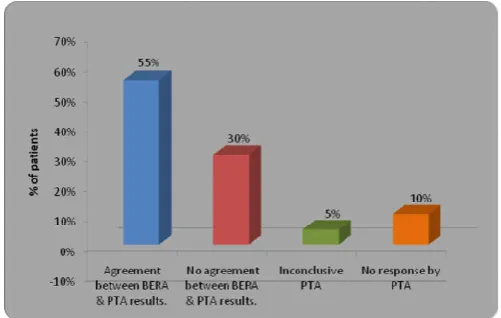
[image:3.595.40.286.584.770.2]Graph 1- Comparision of hearing threshold using PTA and BERA
Table 4. Comparison of hearing threshold using PTA and BERA
Mann Whitney U Test
N Mean Std.
Deviation
Std. Error Mean
z-value p-value
BERA 19 82.10 11.34 2.60 2.33 0.019,S
PTA 14 92.14 12.45 3.32
Maximum cases were having a hearing threshold ≥ 100 dB (35%). 15% of the subjects had a hearing threshold of 90 dB and in 20% of the subjects, the hearing threshold was 20%. The study showed inconclusive finding for 30 % of the cases. Table 3 depicts the hearing threshold as detected by BERA. Maximum number of cases (35%) had a hearing threshold of 90 dB. Equal percentage of subjects (20% ) were seen having a hearing threshold of 80dB and ≥100dB. 25% of the subjects had a hearing threshold of 0dB. Graph 1 shows the comparision report between BERA and PTA. 55% of cases had an agreement between BERA and PTA findings. 30 % showed no agreement between the 2 testing methods (BERA and PTA). In 15% of the cases estimation of hearing threshold could be made only by BERA test. Out of this 15% cases, 5% cases showed inconclusive PTA and the rest (10%) showed no response by PTA. The comparative finding of hearing threshold using Mann Whitney U Test as regards to PTA and BERA was found to be significant as seen from Table 4. This indicates that BERA can provide a more conclusive information as compared to PTA regarding hearing threshold in severely deaf developmentally retarded children.
DISCUSSION
It is known that the electrophysiological threshold depends on the electric potential record, which has close relation to the number of stimulated fibers, synchronism and size of electric activity. Thus, the subject may detect a piece of sound in weak intensity without necessarily registering corresponding electric potentials (Jerger, 1978). Therefore, it is essential to know the differences between the subjective and electrophysiological auditory thresholds, once its determination bears examiner's mind when conventional subjective exams do not present the expected results (Schochat, 2004; Gorga, 2002). BERA is usually prescribed in children below 5 years of age. After 5 years routinely PTA is done which is usually sufficient to decide the threshold of hearing. But in developmentally
retarded children due to their cerebral or physical deformities, PTA testing does not provide the accurate information in children above 5 years. So the age group of 6 – 12 years was selected for the study. We have encountered very few studies in this matter as per all possible data searches. Maximum children were females in our study. In the study by Kumari et al. maximum subjects were male (Rakhi Kumari et al., 2016). In this study most (60%) of the subjects were in the age group of 9 – 12 years. Study by Rakhi Kumari showed majority of cases (69.52%) were below 3 years of age (Gorga et al., 2011) , and study by Thirunavukarasu had subjects in the age range of 1-5 years (Thirunavukarasu et al., 2015). Mohammad Shamim Ansari et al investigated spastic CP children for ABR measures in the age range of 3 to 12 years (Mohammad Shamim Ansari, 2016).
Similarly, Mohammad Shamim Ansari and MA Hafiz Ansari studied hearing impairment in 110 children of 2-10 years of age of both genders with cerebral palsy, respectively (Mohammad Shamim Ansari, 2015) Majority of the subjects in our study (80%) were from low socioeconomic class. It is also reported in the literature that socioeconomic status has a role in the prevalence of hearing impairment. Niskar et al. (1998) described the prevalence of hearing loss among US children by socioeconomic characteristics. A total of 6166 children in the age range of 6 to 19 years completed hearing examination in a mobile Centre of the Third National Health and Nutrition Examination Survey conducted in span of six years from 1988. Children from families whose incomes at or below the US national poverty line were significantly more likely to have a hearing impairment when tested (Niskar et al.,
1998). Before a decade, Rao et al. (2002) estimated the prevalence of hearing impairment among children of school entry age, in rural regions of coastal South India. An otoscopic and audiometric evaluation was done for a total of 855 children studying in the first year of school. One of the important factors affecting the prevalence of HI was socioeconomic status. The prevalence of hearing impairment was significantly lower among children belonging to high socio-economic status (P<0.005) (Rao et al., 2002).
In the study by Rakhi Kumari in 18 cases (17.14%) a diagnosis was possible only by the results of BERA , as 10 cases showed inconclusive PTA finding and in 8 cases there was no response to PTA. Also the result of study by V. Rupa showed a dilemma where the diagnosis could be made only by BERA due to considerable difference between PTA and BERA results in 7 cases. This study had inconsistent response by PTA in 5 cases and no elicitable PTA response in 6 cases.
Limitation
The relationship between the measures is complex, however, as the procedures differ from one another distinctly. While BERA elicits an electrophysiological response from the auditory system to the level of the brainstem, the PTA elicits a perceptual response, which reflects the involvement of the entire auditory system. Furthermore, the stimuli have different acoustic properties, and so the estimation of behavioral thresholds from ABR thresholds must take multiple factors into account.
These results cannot be generalized, since it depends on technical conditions which are particular to each laboratory.
Conclusion
This study concludes that BERA test should be performed only, in inconclusive PTA findings and BERA should be the test of choice in difficulty to perform PTA, as regards to developmentally retarded children.
Recommendation
All DR children in age group of 6- 12 yrs should be subjected to PTA test for determining the hearing threshold. Only in cases of non cooperation of patient, inconclusive or no response PTA finding, the BERA test should be advised. This shall add to the economy of the patient and decrease the unwanted workload on the electrophysiology laboratory.
REFERENCES
Alberti, PW., Hyde, ML., Riko, K., Corbin, H., Abramovich, S. 1983. An evaluation of BERA for hearing screening in high-risk neonates. Laryngoscope, 93:1115-21.
Clinical Policy Title: Brainstem auditory evoked response (BAER) Clinical Policy Number: 09.01.06.
Deafness and hearing loss Fact sheet N°300". WHO (World Health Organization). Retrieved 16 November 2.
Gorga, MP., Neely, ST. 2002. Some factors that may influence the accuracy of auditory brainstem response estimates of hearing loss. In: RC Seewald, JS Gravel (Eds.). A Sound Foundation Through Early Amplification 2001, Proceedings of the Second International Conference.
Chicago: Phonak AG, 49-61.
Jerger J, Mauldin, L. 1978. Predictions of sensorineural hearing level from the brainstem evoked response. Archives
of Otolaryngology, 104:.456-461.
McCormick B. 1994. Behavioural hearing tests, 6 months to 5 years. In paediatric audiology 0-5 years. Mc Cormick B, ed. Whurr Publishers London, 97-115.
McCormick B. 1994. Behavioural hearing tests, 6 months to 5 years. In paediatric audiology 0-5 years. McCormick B, ed. Whurr Publishers; London:97-115.)
Mohammad Shamim Ansari, Rangasayee Raghunathrao, Mohammad A Hafiz Ansari, 2016. Auditory Brainstem Response Characteristics of Children with Cerebral Palsy: Clinical Utility and Prognostic Significance. Otolaryngology (Sunnyvale); 6:259.
Mohammad Shamim Ansari, MA Hafiz Ansari, 2015. A study of audio logical profile of children with cerebral palsy.
Indian Journal of cerebral palsy. 1 (2) : 80-83.
Niskar, AS
.
, Kieszak, SM.
, Holmes, A.
, Esteban, E.
, Rubin, C.
, Brody, DJ. 1998. Prevalence of hearing loss among children 6 to 19 years of age: the Third National Health and Nutrition Examination Survey. JAMA. Apr 8;279 (14):1071-5.Rakhi Kumari, Priyanko Chakraborty, R. K. Jain, Dhananjay Kumar.2016.Auditory assessment of children with severe hearing loss using behavioural observation audiometry and brainstem evoked response audiometry. . International
Journal of Research in Medical Sciences.
Jul;4(7):2870-2873 .
Rao, CV., Wolf, DM., Arkin, AP. 2002. Control, exploitation and tolerance of intracellular noise. Nature. 420(6912): 231-7.
Rupa. V. 1995. Dilemmas in auditory assessment of developmentally retarded children using behavioural observation audiometry and brain stem evoked response audiometry. The Journal of Laryngology and Otology, -
cambridge.org.
Sachdeva, S., Amir, A., Alam, S., Khan, Z., Khalique, N., Ansari, MA. 2010. Global developmental delay and its determinants among urban infants and toddlers: A cross sectional study. Indian J Pediatr., 77:975-80.
Schochat, E. 2004. Avaliação eletrofisiológica da audição. In: Ferreira LP, Lopes MB, Limongi SCO. Tratado de Fonoaudiologia. São Paulo: Roca, 656-668.
Sindhusake D, Mitchell P, Smith W, Golding M, Newall P, Hartley D, et al. 2001. Validation of self-reported hearing loss. The Blue Mountains Hearing Study. Int. J. Epidemiol.
30:1371-78.
Thirunavukarasu, R., Balasubramaniam, GK., Kalyanasundaram, RB., Narendran, G., Sridhar, S. 2015. A study of brainstem evoked response audiometry in high-risk infants and children under 10 years of age. Indian J
Otol., 21: 134-7.
Tucci, DL., Merson, MH., Wilson, BS. 2010. A summary of the literature on global hearing impairment: current status and priorities for action. Otol Neurotol., 31(1):31-41 .