1148
Complex Word Identification as a Sequence Labelling Task
Sian Gooding
Dept of Computer Science and Technology University of Cambridge
Ekaterina Kochmar ALTA Institute University of Cambridge
Abstract
Complex Word Identification (CWI) is con-cerned with detection of words in need of plification and is a crucial first step in a sim-plification pipeline. It has been shown that re-liable CWI systems considerably improve text simplification. However, most CWI systems to date address the task on a word-by-word basis, not taking the context into account. In this pa-per, we present a novel approach to CWI based on sequence modelling. Our system is capa-ble of performing CWI in context, does not require extensive feature engineering and out-performs state-of-the-art systems on this task.
1 Introduction
Lexical complexity is one of the main aspects con-tributing to overall text complexity (Dubay,2004). It is typically addressed with lexical simplification (LS) systems that aim to paraphrase and substitute complex terms for simpler alternatives. Previous research has shown that Complex Word Identifi-cation (CWI) considerably improves lexical sim-plification (Shardlow,2014;Paetzold and Specia,
2016a). This is achieved by identifying complex terms in text prior to word substitution. The per-formance of a CWI component is crucial, as low recall of this component might result in an overly difficult text with many missed complex words, while low precision might result in meaning dis-tortions with an LS system trying to unnecessarily simplify non-complex words (Shardlow,2013).
CWI has recently attracted attention as a stand-alone application, with at least two shared tasks focusing on it. Current approaches to CWI, in-cluding state-of-the-art systems, have a number of limitations. First of all, CWI systems typically ad-dress this task on a word-by-word basis, using a large number of features to capture the complexity of a word. For instance, the CWI system by Paet-zold and Specia(2016c) uses a total of69features,
while the one by Gooding and Kochmar (2018) uses 27 features. Secondly, systems performing CWI in a static manner are unable to take the con-text into account, thus failing to predict word com-plexity for polysemous words as well as words in various metaphorical or novel contexts. For in-stance, consider the following two contexts of the word molarfrom the CWI 2018 shared task ( Yi-mam et al., 2018). Molarhas been annotated as complex in the first context (resulting in the bi-nary annotation of1) by 17 out of20 annotators (thus, the “probabilistic” label of 0.85), and as non-complex (label0) in the second context:
Contexts Bin Prob
Elephants have fourmolars... 1 0.85 ... newmolarsemerge in the
back of the mouth. 0 0.00
The annotators may have found the second con-text simpler on the whole, asmolarsis surrounded by familiar words that imply the meaning (e.g., mouth), whereaselephants is a rarer and less se-mantically similar co-occurrence. Such context-related effects are hard to capture with a CWI sys-tem that only takes word-level features into ac-count. Thirdly, CWI systems that only look at in-dividual words cannot grasp complexity above the word level, for example, when a whole phrase is considered complex.
In this paper, we apply a novel approach to the CWI, based on sequence labelling.1 We show that our system is capable of:
• taking word context into account;
• relying on word embeddings only, thus elim-inating the need for extensive feature engi-neering;
• detecting both complex words and phrases;
1Trained models are available at: https://github.
• not requiring genre-specific training and rep-resenting a one-model-fits-all approach.
2 Related Work
2.1 Complex Word Identification
Early studies on CWI address this task by ei-ther attempting to simplify all words (Thomas and Anderson, 2012; Bott et al., 2012) or setting a frequency-based threshold (Zeng et al.,2005; El-hadad, 2006; Biran et al., 2011). Horn et al.
(2014) show that the former approach may miss up to one third of complex words due to its in-ability to find simpler alternatives, and Shard-low (2013) argues that a simplify-all approach might result in meaning distortions, but the more resource-intensive threshold-based approach does not necessarily perform significantly better either. At the same time, Shardlow (2013) shows that a classification-based approach to CWI is the most promising one. Most of the teams participating in the recent CWI shared tasks also use classification approaches with extensive feature engineering.
The first shared task on CWI at SemEval 2016 (Paetzold and Specia, 2016b) used data from several simplification datasets, annotated by non-native speakers. In this data, about 3% of word types and 11% of word tokens, if contexts are taken into account, are annotated as com-plex (Paetzold and Specia,2016b). The CWI 2018 shared task (Yimam et al., 2018) used the data from Wikipedia, news sources and unprofession-ally written news, derived from the dataset of Yi-mam et al.(2017). The dataset was annotated by
10 native and 10 non-native speakers, and, de-pending on the source of the data, contains40%
to50%words labelled as complex in context. The dataset contains words and phrases with two labels each. The first label represents binary judgement withbin=1if at least1annotator marked the word as complex in context, andbin=0 otherwise. The second label is a “probabilistic” label representing the proportion of the 20 annotators that labelled the item as complex. The importance of context when considering word complexity is exemplified well in this dataset, as11.34%of items have dif-ferent binary labels depending on the context they are used in. When considering probabilistic anno-tations, of the items labelled in different contexts
10.96% have at least a 5-annotator difference in complexity score in differing contexts. The dataset contains104instances with a10-annotator
differ-ence between scores based on the context of the word. For instance,suspicionhas been annotated
23times:
Word Unique Max Min σ
suspicion 16 0.95 0.15 0.25
Of the23probabilistic annotations forsuspicion
70% are unique. Max and min values show the largest difference in annotations for this word in context, with19annotators labelling it complex in one scenario and only3in another. Finally,σ rep-resents the standard deviation of the probabilistic annotations for this word.
In this paper, we use the data from the CWI 2018 shared task, which contains annotation for both words and word sequences (calledphrasesin the task), and represents three different genres of text. We focus on the binary setting (complex vs. non-complex) and compare our results to the win-ning system byGooding and Kochmar(2018).
2.2 Sequence Labelling
Sequence labelling has been applied successfully to a number of NLP tasks that rely on contex-tual information, such as named entity recogni-tion, part-of-speech tagging and shallow parsing. Within this framework, the model receives as in-put a sequence of tokens (w1, ..., wT) and pre-dicts a label for each token as output. Typically, the input tokens are first mapped to a distributed vector space, resulting in a sequence of word em-beddings (x1, ..., xT). The use of word embed-dings allows sequence models to learn similar rep-resentations for semantically or functionally sim-ilar words. Recent advances to sequential model frameworks have resulted in the models’ ability to infer representations for previously unseen words and to share information about morpheme-level regularities (Rei et al.,2016).
fea-tures and access to relevant information. For ex-ample,Rei(2017) shows that training a model to jointly predict surrounding words incentivises the discovery of useful features and associations that are unlikely to be discovered otherwise.
From the perspective of CWI, it is clear that context greatly impacts the perceived difficulty of text. In this paper we investigate whether CWI can be framed as a sequence labelling task.
3 Implementation
For our experiments, we use the English part of the CWI datasets from Yimam et al. (2017), which contains texts on professionally written NEWS, amateurishly written WIKINEWS, and WIKIPEDIA articles. The original data includes the annotation for a selected set of content words, which is provided alongside the full sentence and the word span. The annotation contains both bi-nary (bin) and “probabilistic” (prob) labels as de-tailed in Section2:
Sentence Word Bin Prob
They drastically... drastically 1 0.5
As the sequential model expects the complete word context as an input, we adapt the original for-mat by tokenizing the sentences and including the annotation for eachword token, using C for the annotated complex words and phrases, andN for those that are either annotated as non-complex in the original data or not included in it (e.g., function words), which results in the following format:
They N
drastically C ...
We opted to use a sequential architecture byRei
(2017), as it has achieved state-of-the-art results on a number of NLP tasks, including error detec-tion, which is similar to CWI in that it identifies relatively rare sequences of words in context. The design of this architecture is highly suited to the task of CWI as: (1) the use of a BiLSTM pro-vides contextual information from both the left and right context of a target word; (2) the con-text is combined with both word and character-level representations (Rei et al., 2016); (3) this architecture uses a language modelling objective, which enables the model to learn better compo-sition functions and to predict the probability of individual words in context. As previous work
on CWI has consistently found word frequency and length to be highly informative features, we choose an architecture which utilises sub-word in-formation and a language modelling objective.
We use300-dimensional GloVe embeddings as word representations (Pennington et al.,2014) and train the model on randomly shuffled texts from all three genres for 20 iterations. We train the model using word annotations and predict binary word scores using the output label probabilities. If the probability of a word belonging to the com-plex class is above 0.50, it is considered a com-plex word. For phrase-level binary prediction, we consider the phrases contained within the dataset. The complex class probability for each word, aside from stop words, is predicted and combined into a final average score. If this average is above a pre-defined threshold of0.50 then the phrase is con-sidered complex.
4 Results & Discussion
Results: We report the results obtained with the sequence labelling (SEQ) model for the binary task and compare them to the current state-of-the-art in complex word identification, CAMB system by Gooding and Kochmar(2018), which achieved the best results across all binary and two probabilis-tic tracks in the CWI 2018 shared task (Yimam et al.,2018). The evaluation metric reported is the macro-averaged F1, as was used in the 2018 CWI shared task (Yimam et al.,2018). For the binary task, both words and phrases are considered cor-rect if the system outputs the corcor-rect binary label.
The CAMBsystem considers words irrespective of their context and relies on27 features of vari-ous types, encoding lexical, syntactic, frequency-based and other types of information about indi-vidual words. The system uses Random Forests and AdaBoost for classification, but as Gooding and Kochmar(2018) report, the choice of the fea-tures, algorithm and training data depends on the genre. In addition, phrase classification is per-formed using a ‘greedy’ approach and simply la-belling all phrases as complex.
Test Set Macro F-Score
CAMB SEQ
Words Only
NEWS 0.8633 0.8763 (+1.30)
WIKINEWS 0.8317 0.8540 (+2.23)
WIKIPEDIA 0.7780 0.8140 (+3.60) Words+Phrases
NEWS 0.8736 0.8763 (+0.27)
WIKINEWS 0.8400 0.8505 (+1.05) WIKIPEDIA 0.8115 0.8158 (+0.43)
Table 1: SEQvs. CAMBsystem results on words only and on words and phrases
systems achieve similar results: the SEQ model beats the CAMB model only marginally, with the
largest difference of+1.05%on the WIKINEWS
data. However, it is worth highlighting that the CAMB system does not perform any phrase
clas-sification per se and simply marks all phrases as complex. Using the dataset statistics, we estimate that CAMB system achieves precision of 0.64.
The SEQ model outperforms the CAMB system, achieving precision of0.71.
We note that the SEQ model is not only able to outperform the CAMB system on all datasets for
both words only and words+phrases, but it also has a clear practical advantage: the only input information it uses at run time are word embed-dings, whereas the CAMBsystem requires27 fea-tures based on a variety of sources. In addition, the CAMB system needs to rely on individually
tailored systems to maximize the results across datasets, whereas the SEQ model is a ‘one size fits all’ model that is able to work out-of-the-box across all datasets, achieving state-of-the-art per-formance by harnessing the power of word con-text, embeddings and character-level morphology. We additionally compare our results to the re-cent work byMaddela and Xu(2018), who show an improvement on the CWI systems with the use of additional ‘human-based’ features. Using an English lexicon of 15,000 words with word-complexity ratings by human annotators, they are able to improve the scores of the winning CWI system from the 2016 shared task byPaetzold and Specia(2016c), and the nearest centroid (NC) ap-proach byYimam et al. (2017). They report the best F-score of74.8 on the combined CWI 2018 shared task testset, achieved using the NC ap-proach augmented with the complexity lexicon.
We note that both CAMB and our SEQ model achieve significantly higher results.
Discussion: To further analyze the results achieved by CAMB and SEQ on the test sets, we apply the McNemar statistical test (McNemar,
1947), which is comparable to the widely used pairedt-test, and is most suitable for dichotomous dependent variables. Table 2 presents the con-tingency table for words only, and Table 3 for words+phrases:
CAMBCorrect CAMBWrong
SEQCorrect a=3002 b=205
SEQWrong c=145 d=349
Table 2: Contingency table forwords only
CAMBCorrect CAMBWrong
SEQCorrect a=3443 b=207
SEQWrong c=145 d=457
Table 3: Contingency table forwords+phrases
Using the above values, the continuity corrected McNemar test (Edwards,1948) estimatesχ2 as:
χ2 = (|b−c| −1)
2
(b+c) (1)
According to the test, the SEQ system achieves significantly better results than the CAMB system onwords only(p= 0.0016,χ2 = 9.95) as well as onwords+phrases(p= 0.0011,χ2 = 10.57).
349word tokens, with289word types, are in-correctly labelled by both systems (see Table 2). Of these, 166 words are incorrectly identified as complex, and183are incorrectly identified as sim-ple. Of the words that are not identified as com-plex by the SEQmodel,74%are marked as
com-plex by only one annotator out of twenty, and93%
by one or two annotators. This highlights the id-iosyncratic nature of the task and why it may be particularly challenging to address the complexity needs of all individuals with a single system.
There are205word instances that are correctly classified by the SEQmodel, but not by the CAMB
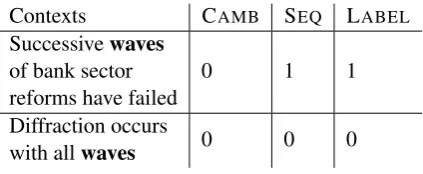
[image:4.595.89.274.62.199.2]Contexts CAMB SEQ LABEL
Successivewaves
of bank sector reforms have failed
0 1 1
Diffraction occurs
[image:5.595.76.288.61.148.2]with allwaves 0 0 0
Table 4: Context dependent annotations of the word
waves
We note that the SEQmodel is able to correctly identify the complexity of the word waves when used in different contexts. The system outputs a score of 0.5692 for the first context (Successive waves of bank sector [...]) and0.4704for the sec-ond (Diffraction occurs with all waves), reflecting that the complexity level is dependent on the con-text.
5 Conclusions
In this paper, we address the limitations of the ex-isting CWI systems. Our SEQmodel relies on se-quence labelling and outperforms state-of-the-art systems with a one-model-fits-all approach. It is able to take context into account and classify both words and phrases in a unified framework, without the need for expensive feature engineering. Our future research will focus on the relative nature of complexity judgements and will use the SEQ
model to predict complexity on a scale. We will also investigate whether the SEQmodel may ben-efit from sources of information other than word embeddings and character-level morphology. Fi-nally, we plan to investigate alternative methods to modelling phrase and multi-word expression com-plexity.
Acknowledgments
We thank Cambridge English for supporting this research via the ALTA Institute. We are also grate-ful to the anonymous reviewers for their valuable feedback.
References
Or Biran, Samuel Brody, and Noemie Elhadad. 2011. Putting it Simply: a Context-Aware Approach to Lexical Simplification. In Proceedings of the 49th Annual Meeting of the Association for Computa-tional Linguistics: short papers, pages 496–501.
Stefan Bott, Luz Rello, Biljana Drndarevic, and Hora-cio Saggion. 2012. Can Spanish Be Simpler?
Lex-SiS: Lexical Simplification for Spanish. In Pro-ceedings of COLING 2012: Technical Papers, pages 357–374.
William H. Dubay. 2004. The Principles of Readabil-ity.Costa Mesa, CA: Impact Information.
Allen L. Edwards. 1948. Note on the correction for continuity in testing the significance of the differ-ence between correlated proportions. Psychome-trika, 13(3):185–187.
Noemie Elhadad. 2006. Comprehending Technical Texts: Predicting and Defining Unfamiliar Terms. In AMIA Annual Symposium Proceedings, pages 239–243.
Felix A. Gers, J¨urgen Schmidhuber, and Fred Cum-mins. 2000. Learning to forget: Continual prediction with LSTM. Neural Computation, 12(10):2451–2471.
Sian Gooding and Ekaterina Kochmar. 2018. CAMB at CWI Shared Task 2018: Complex Word Identifica-tion with Ensemble-Based Voting. InProceedings of the Thirteenth Workshop on Innovative Use of NLP for Building Educational Applications, pages 184–194.
Sepp Hochreiter and J¨urgen Schmidhuber. 1997. Long short-term memory. Neural computation, 9(8):1735–1780.
Colby Horn, Cathryn Manduca, and David Kauchak. 2014. Learning a lexical simplifier using Wikipedia. InProceedings of the 52nd ACL, pages 458–463.
Mounica Maddela and Wei Xu. 2018. A Word-Complexity Lexicon and A Neural Readability Ranking Model for Lexical Simplification. In Pro-ceedings of the 2018 Conference on Empirical Meth-ods in Natural Language Processing (EMNLP), pages 3749–3760.
Quinn McNemar. 1947. Note on the sampling error of the difference between correlated proportions or percentages. Psychometrika, 12(2):153–157.
Gustavo Paetzold and Lucia Specia. 2016a. PLUMBErr: An Automatic Error Identifica-tion Framework for Lexical SimplificaIdentifica-tion. In
Proceedings of the first international workshop on Quality Assessment for Text Simplification (QATS), pages 1–9. European Language Resources Association (ELRA).
Gustavo Paetzold and Lucia Specia. 2016b. SemEval 2016 Task 11: Complex Word Identification. In Pro-ceedings of the 10th International Workshop on Se-mantic Evaluation (SemEval-2016), pages 560–569.
Jeffrey Pennington, Richard Socher, and Christopher Manning. 2014. GloVe: Global Vectors for Word Representation. InProceedings of the 2014 confer-ence on empirical methods in natural language pro-cessing (EMNLP), pages 1532–1543.
Marek Rei. 2017. Semi-supervised multitask learn-ing for sequence labellearn-ing. In Proceedings of the 55th Annual Meeting of the Association for Compu-tational Linguistics (Volume 1: Long Papers), pages 2121–2130.
Marek Rei, Gamal K.O. Crichton, and Sampo Pyysalo. 2016. Attending to characters in neural sequence labeling models. InProceedings of COLING 2016, the 26th International Conference on Computational Linguistics: Technical Papers, pages 309–318.
Matthew Shardlow. 2013. A Comparison of Tech-niques to Automatically Identify Complex Words. InProceedings of the Student Research Workshop at the 51st Annual Meeting of the Association for Com-putational Linguistics (ACL), pages 103–109.
Matthew Shardlow. 2014. Out in the open: Finding and categorising errors in the lexical simplification pipeline. InIn Proceedings of the 9th LREC, pages 1583–1590.
S. Rebecca Thomas and Sven Anderson. 2012. WordNet-Based Lexical Simplification of a Docu-ment. In Proceedings of KONVENS 2012 (Main track: oral presentations).
Seid Muhie Yimam, Chris Biemann, Shervin Mal-masi, Gustavo Paetzold, Lucia Specia, Sanja ˇStajner, Ana¨ıs Tack, and Marcos Zampieri. 2018. A Report on the Complex Word Identification Shared Task 2018. InProceedings of the 13th Workshop on In-novative Use of NLP for Building Educational Ap-plications, pages 66–78.
Seid Muhie Yimam, Sanja ˇStajner, Martin Riedl, and Chris Biemann. 2017. CWIG3G2 - Complex Word Identification Task across Three Text Genres and Two User Groups. InProceedings of the Eighth In-ternational Joint Conference on Natural Language Processing (Volume 2: Short Papers), pages 401– 407.