Roadmap on Transformation Optics
Martin McCall 1,*, John B Pendry 1, Vincenzo Galdi 2, Yun Lai 3, S. A. R. Horsley 4, Jensen Li 5, Jian Zhu 5, Rhiannon C Mitchell-Thomas 4, Oscar Quevedo-Teruel 6, Philippe Tassin 7, Vincent Ginis 8, Enrica Martini 9, Gabriele Minatti 9, Stefano Maci 9, Mahsa Ebrahimpouri 6, Yang Hao 10, Paul Kinsler 11, Jonathan Gratus 11,12, Joseph M Lukens 13, Andrew M Weiner 14, Ulf Leonhardt 15, Igor I. Smolyaninov 16, Vera N. Smolyaninova 17, Robert T. Thompson 18, Martin Wegener 18, Muamer Kadic 18 and Steven A. Cummer 19
Affiliations
1 Imperial College London, Blackett Laboratory, Department of Physics, Prince Consort Road, London SW7 2AZ, United Kingdom
2 Field & Waves Lab, Department of Engineering, University of Sannio, I-82100 Benevento, Italy
3 College of Physics, Optoelectronics and Energy & Collaborative Innovation Center of Suzhou Nano Science and Technology, Soochow University, Suzhou 215006, China
4University of Exeter, Department of Physics and Astronomy, Stocker Road, Exeter, EX4 4QL United Kingdom
5 School of Physics and Astronomy, University of Birmingham, Edgbaston, Birmingham, B15 2TT, United Kingdom
6 KTH Royal Institute of Technology, SE-10044, Stockholm, Sweden
7 Department of Physics, Chalmers University , SE-412 96 Göteborg, Sweden
8 Vrije Universiteit Brussel Pleinlaan 2, 1050 Brussel, Belgium
9 Dipartimento di Ingegneria dell'Informazione e Scienze Matematiche, University of Siena, Via Roma, 56 53100 Siena, Italy
10 School of Electronic Engineering and Computer Science, Queen Mary University of London, London E1 4FZ, United Kingdom
11 Physics Department, Lancaster University, Lancaster LA1 4 YB, United Kingdom
12 Cockcroft Institute, Sci-Tech Daresbury, Daresbury WA4 4AD, United Kingdom.
13 Quantum Information Science Group, Computational Sciences and Engineering Division, Oak Ridge National Laboratory, Oak Ridge, Tennessee 37831, USA
14 School of Electrical and Computer Engineering, Birck Nanotechnology Center, and Purdue Quantum Center, Purdue University, West Lafayette, Indiana 47907, USA
15 Physics of Complex Systems, Weizmann Institute of Science, Rehovot 7610001 Israel
16 Institute for systems research, University of Maryland, College Park, MD 20742, USA
17 Department of Physics, Astronomy and Geosciences, Towson University, Towson, MD 21252, USA
18 Karlsruhe Institute of Technology, Institut für Angewandte Physik, Wolfgang-Gaede-Straße 1, D-76131 Karlsruhe, Germany
19 Electrical and Computer Engineering, Duke University, PO Box 90291, Durham, NC 27708, USA
*Guest editor of the roadmap
Email: [email protected]
Abstract
Transformation Optics asks Maxwell’s equations what kind of electromagnetic medium recreate some smooth deformation of space. The guiding principle is Einstein’s principle of covariance: that any physical theory must take the same form in any coordinate system. This requirement fixes very precisely the required electromagnetic medium.
The impact of this insight cannot be overestimated. Many practitioners were used to thinking that only a few analytic solutions to Maxwell’s equations existed, such as the monochromatic plane wave in a homogeneous, isotropic medium. At a stroke, Transformation Optics increases that landscape from ‘few’ to ‘infinity’, and to each of the infinitude of analytic solutions dreamt up by the researcher, corresponds an electromagnetic medium capable of reproducing that solution precisely.
The most striking example is the electromagnetic cloak, thought to be an unreachable dream of science fiction writers, but realised in the laboratory a few months after the papers proposing the possibility were published. But the practical challenges are considerable, requiring meta-media that are at once electrically and magnetically inhomogeneous and anisotropic. How far have we come since the first demonstrations over a decade ago? And what does the future hold? If the wizardry of perfect macroscopic optical invisibility still eludes us in practice, then what compromises still enable us to create interesting, useful, devices?
While 3D cloaking remains a significant technical challenge, much progress has been made in 2-dimensions. Carpet cloaking, wherein an object is hidden under a surface that appears optically flat, relaxes the constraints of extreme electromagnetic parameters. Surface wave cloaking guides sub-wavelength surface waves, making uneven surfaces appear flat. Two dimensions is also the setting in which conformal and complex coordinate transformations are realisable, and the possibilities in this restricted domain do not appear to have been exhausted yet.
Beyond cloaking, the enhanced electromagnetic landscape provided by Transformation Optics has shown how fully analytic solutions can be found to a number of physical scenarios such as plasmonic systems used in electron energy loss spectroscopy (EELS) and cathodoluminescence (CL). Are there further fields to be enriched?
A new twist to Transformation Optics was the extension to the space-time domain. By applying transformations to space-time, rather than just space, it was shown that events rather than objects could be hidden from view; Transformation Optics had provided a means of effectively redacting events from history. The hype quickly settled into serious nonlinear optical experiments that demonstrated the soundness of the idea, and it is now possible to consider the practical implications, particularly in optical signal processing, of having an ‘interrupt-without-interrupt’ facility that the so-called temporal cloak provides. Inevitable issues of dispersion in actual systems have only begun to be addressed.
Now that time is included in the programme of Transformation Optics, it is natural to ask what role ideas from General Relativity can play in shaping the future of Transformation Optics. Indeed, one of 3
the earliest papers on Transformation Optics was provocatively titled ‘General Relativity in Electrical Engineering’. The answer that curvature does not enter directly into transformation optics merely encourages us to speculate on the role of Transformation Optics in defining laboratory analogues.
Quite why Maxwell’s theory defines a ‘perfect’ transformation theory, while other areas of physics such as acoustics are not apparently quite so amenable, is a deep question whose precise,
mathematical answer will help inform us of the extent to which similar ideas can be extended to other fields.
The contributors to this roadmap review, who are all renowned practitioners or inventors of Transformation Optics, will give their perspectives into the field’s status and future development.
Contents
1. Introduction
2. Near Field Transformation Optics
3. Spatial dispersion and Spectral Domain Transformation Optics 3.1 Nonlocal and non-Hermitian extensions of transformation optics
3.2 Transformation optics by photonic crystals: a nonlocal route towards the optical frequency regime
4. Complexification in Transformation Optics
5. Surface Transformation Optics
5.1 Extending transformation optics and towards a thin cloak
5.2Combining curvature and index gradients for surface and guided waves 5.3 Transformation optics at surfaces
6. Antennas
6.1 Metasurface Radiation and Guidance at Microwaves
6.2 Bespoke lenses: An opportunity for tailoring antenna radiation patterns 6.3 Transformation Optics for Antenna Engineering
7. Spacetime Cloaking
7.1 Spacetime Transformation Optics
7.2 Transformations optics with spatial dispersion 7.3 Experimental progress in temporal cloaking
8. Transformation Optics for Analogue Cosmology
8.1 Cosmology in the laboratory: challenges at the horizon 8.2 Spacetime analogs based on hyperbolic metamaterials 8.3 Transformation optics in general relativity
9. Optics and Beyond
9.1 Seeking applications in optics and beyond
9.2Beyond Optics: Transforming Other Wave And Transport Systems 3
1. Introduction
–
Martin McCall Imperial CollegeA little over a decade ago Pendry et al noted that the long-known form-invariance of Maxwell’s equations could be interpreted as an extremely flexible design recipe for achieving virtually arbitrary distortions of electromagnetic fields. It is an unusual theory in that the recipe is exact, i.e. all aspects of the
electromagnetic field, amplitude, phase and polarization are in principle relocated by an appropriate material design. The method was
immediately applied to design and build a device that guided light around a void region in space, thus bringing the celebrated invisibility cloak of science fiction right into the laboratory. Although the cloak is the most striking example, transformation optics has since developed many other applications that combine its design ingenuity with parallel developments in metamaterials technology. In this Roadmap review several leading practitioners give their unique personal perspectives of the current status of the field, and where the future challenges lie.
Pendry’s article focuses on the near-field and the impact of TO on surface plasmonics, explaining, for example, the huge enhancements of local fields around structural singularities, and the resultant opportunities offered to spectroscopy and nonlinear optics resulting from the very tight compression of light fields.
Transformation Optics designs invariably prescribe inhomogeneous material parameters. A striking departure from this is described by Vincenzo Galdi, who examines the use of the TO algorithm in the spectral domain. Such designer dispersion prescribes media with fascinating frequency dependencies, all the while maintaining uniformity in the spatial domain. The theme of spatial dispersion in TO is taken up again in Lai’s article, who discusses how photonic band-gap engineering is combined with TO to produce
omnidirectional impedance matching.
Simon Horsley shows how analytic continuation of the coordinates into the complex arena permits extensions to media with gain and loss, connecting TO closely with so-called PT symmetric media, and showing how to design reflectionless media. Rather than exploit form invariance under coordinate transformation, Li et al explain how new possibilities emerge if, instead, form invariance is pursued with respect to
transformation of the electromagnetic field, leading to, for example, an effective magnetic bending force on
light. They also discuss strategies for producing thin cloaks based on metasurfaces.
Rhiannon Mitchell-Thomas reviews geometrical approaches confined to curved surfaces, rather than 3-D space, showing that TO designs using isotropic graded index media allow for novel implementations of, for example, Eaton and Luneburg lenses.
Discontinuous transformations at surfaces are
discussed by Philippe Tassin et al, who show how the latest metasurface technology opens up applications in integrated optics.
Martini et al discuss how a planar version of Transformation Optics leads to control of
surface/plasmonic wave propagation or ‘metasurfing’; while Oscar Quevedo-Tereul shows how TO is being used to tailor antenna radiation patterns using bespoke lenses. The theme of antenna engineering is taken up by Yang Hao in reviewing how TO based radome designs are leading to novel compact phased arrays.
Paul Kinsler and Jonathan Gratus consider generalization of TO to the spacetime domain.
Kinsler’s article discusses spacetime cloaking, in wich events, not objects, are hidden from view. Gratus shows that in the broader TO regime with both time and space included, spatial dispersion plays a
necessary and fundamental role. Lukens et al describe some of the experimental efforts in event cloaking, emphasising the role played by space-time duality in achieving localized shadowing in space-time. They emphasise that applications will likely focus on specific communication tasks, and offer tantalising connections between temporal cloaking and quantum information processing.
As Ulf Leonhardt points out in his contribution, following the detection of gravitational waves, cosmology has now entered a golden era, and how Electromagnetism might repay its debt to GR becomes an issue addressable by TO. Smolyaninov et al discuss, for example, how the mapping between metric and material parameters, a key idea in TO, informs cosmology in the optics lab, with inhomogeneous hyperbolic metamaterials directly analogising signature changing events and multiverses. As Thompson makes clear, the distinction between medium and spacetime contributions in Maxwell’s equations opens up several 3
potential new avenues since the mapping between distortion and effective medium is actually not unique.
Beyond optics, Martin Wegener takes us from using TO to improve solar cell efficiency to transformation mechanics, showing how mechanical cloaks can improve the utility of scaffolds. Steve Cummer also assesses how the TO algorithm can and has been successfully extended to other disciplines such as acoustics, elastodynamics and heat flow.
A recurring theme in all the contributions is the extant gap between design aspiration and technological feasibility. Theorists have provided beautiful design tools that can potentially give us many very useful and practical devices, but we are frustrated at often only being able to realise a fraction of this potential due to the difficulty of producing broad-band metamaterial designs requiring sub-wavelength fabrication. The compromises currently made on the altar of progress do not do justice to the original designs. Perhaps the main ‘take-home’ message of this review is to provide a rallying call to technologists and experimentalists to make the necessary step change to meet these
challenges and turn, as Cummer notes, simple feasibility demonstrations towards practically useful devices.
2. Near Field Transformation Optics –
JB PendryImperial College London
Status
Transformation optics (TO) has its origins in Einstein’s general theory of relativity: he showed how Maxwell’s equations can be written in a non-Cartesian space and how changes to the coordinate system can be represented as changes to the constitutive parameters,
. These ideas were slow to be adopted by the optics community but in 1996 Ward and Pendry [1] faced the challenge of adapting electromagnetic finite difference codes to the cylindrical geometry of a fibre. Originally written in Cartesian coordinates to tackle photonics crystals the codes did not need to be reprogrammed in cylindrical coordinates, but simply presented with a transformed . However the most powerful insight came with the realisation that under a coordinate transformation lines of force, whether electric or magnetic, remained attached to the coordinate system. A picture emerged of space as a deformable entity, and the possibility of rearranging the fields by distorting space, then asking through Einstein’s equations what values of would send the fields in the desired direction. The value of this insight is that it replaces the intuitive pictures of ray optics with a way to manipulate field lines, but retaining the insight offered by a physical picture of what is going on. Furthermore an intuitive picture can be given of how transform. Under a simple compression by of coordinates along one axis, components of both along that axis are reduced by a factor of ; components perpendicular to the axis are increased by . Any transformation can be represented by a series of compressions and rotations and thus the whole transformation can be understood in geometrical terms. A review of these ideas can be had in reference [2].
These ideas first gained attention when deployed to design a cloak of invisibility, a challenge that is almost impossibly difficult using conventional paradigms but ridiculously simple for TO. Many cloaks can also be envisaged in terms of deflected rays, but this picture is not available to us for structures that are much less than the wavelength and we are confronted with the so called ‘near fields’ where the electric and magnetic components are no longer tightly coupled into the ray picture but lead a more independent existence. For example a cloak for static magnetic fields can in no way be envisaged as controlling a set of rays and we are forced instead to think of lines of force. Such a cloak has been realised by Supradeep Narayana and Yuki Sato [3] and figure 1 shows their results.
TO has had a strong impact on plasmonic systems. The optical response of metals is dominated by the sea of free electrons and on the surface the electron sea supports electromagnetic waves called surface plasmons. Bound to the metal surface and with a wavelength much shorter than that of light in free space, their behaviour is dominated by the shape of the surface. For example, a highly polished silver surface is an excellent mirror reflecting nearly all incident light. On the other hand finely divided silver in the form of nanoparticles, such as found in photographic negatives, absorbs nearly all incident light and is black. This is an extreme example of a metamaterial: internal structure dominates the optical response. Understanding the interplay of surface structure with the near field has enabled new insights.
Current and Future Challenges
[image:6.595.307.554.70.279.2]Surface plasmonics [4] is perhaps the field in which TO has most impact. Plasmonics burst spectacularly into spectroscopy when Fleischman made the observation that Raman signals from molecules adsorbed on a rough silver surfaces were many orders of magnitude greater than the free space cross sections would predict. The effect can be explained by huge enhancements of local fields of incident light around structural singularities. Heavy computational studies confirmed this explanation but provided little insight into why singularities produce enhancement. It fell to transformation optics to explain the effect in simple terms.
Figure 1 TO was used to control static magnetic fields in this realisation of a cloak for magnetism [3]. (a) Magnetic field lines are diverted away from the cloaked region whilst remaining undisturbed outside the cloak. (b) measurements of the field with and without the cloak confirm the picture shown in (a).
3
Consider a structure consisting of a surface containing a sharp knife edge. The edge constitutes a singularity and local electric fields are massively enhanced in its vicinity when the structure is illuminated. The singularity can be removed by a simple transformation,
where the origin is located on the edge. This transforms the edge to a non singular array of wave guides and the singularity at the origin of space vanishes to infinity in space. All singular structures can have their singularities removed in this fashion. Enhancements can be understood as the compression of an infinite system into a finite one. This has the curious consequence that a finite singular structure has a continuous spectrum typical of an infinite system, and an infinity in the density of states at the singularity. Though this result has to be qualified for real materials where practical considerations of loss and of non locality of their response can reduce predicted enhancements. More details can be had in reference [5].
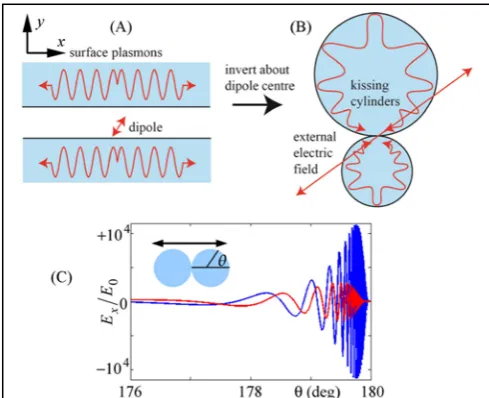
Another system described in [5] is shown in figure 2. In this instance the transformation is an inversion which takes a simple metallic waveguide and transforms it into two touching cylinders. The transformation is singular at the touching point which produces intense local fields. Not only does a transformation explain why local fields are so intense, it also provides a means of classifying the spectrum: often it is the case that the transformed system, lacking the original singularity, has a simpler structure. In the examples given above the transformed waveguide structure is translationally invariant along the axis allowing modes to be classified as Bloch waves, assigned a wave vector, , and their frequencies calculated analytically as a function of .
TO can also be applied in the context of the refractive index to remove singularities from a structure as has been elegantly demonstrated in reference [6]
Advances in Science and Technology to Meet Challenges
Several challenges meet these beautiful theoretical concepts when inviting experimentalists into the field. The first is the materials challenge. Most of the conclusions presented above assume an ideal loss free metal described by a local dielectric function, . Locality means that depends only on frequency and not on wave vector. Loss absorbs energy and prevents realisation of ideal field enhancements, so that only relatively loss free metals such as silver and gold are serious candidates for the effects. Non locality has the
effect of smearing out any singularities in the surface structure. In metals non locality arises because the electron sea has limited compressibility and cannot be squeezed into very sharp corners preventing realisation of an ideal singularity [7,8,9]. The search is on for new materials that perform even better than our current optimum candidates of silver and gold [10], a challenge made more difficult by our limited theoretical understanding of losses and non locality beyond the standards achieved by current best performers.
Beyond that there is the issue of how to sculpt surfaces to the required geometrical perfection. Metals have very high surface energy and object to the formation of singularities: sharp edges tend to round off, and singularities formed by touching curves often result in the fusing of the two surfaces. Engineering on the nanoscale demands expensive apparatus to achieve the precision needed.
Despite these slightly pessimistic observations great opportunities are to be had. I have alluded to the spectacular enhancements in spectroscopic sensitivity already a reality. Utilising the design tool of TO structures can be optimised to give the best response and single molecule sensitivity can be had.
It is already possibility to compress light into a focus far smaller than the free space Abbé limit. Compression into a square nanometre is possible, many orders of magnitude more dense than achieved with conventional lenses thus achieving with modest power inputs energy densities great enough to trigger Figure 2 (A) Surface plasmons are excited by light emitted from an excited atom in a metallic waveguide. (B) Transformation by inversion about the atom centre generates a completely different structure of two touching cylinders. (C) The waveguide solutions from (A) map directly to the touching cylinders giving strongly enhanced fields near the point of contact. 3
[image:7.595.306.551.215.414.2]non linear effects. A cornucopia of new experiments awaits exploitation of nonlinearity, from simple switching of light with light to more sophisticated concepts such as phase conjugation and time reversal.
Concluding Remarks
TO is a general tool that provides a new way to visualise electromagnetic phenomena, whilst retaining accuracy at the level of Maxwell’s equations. It has particular value for the near field where conventional ray pictures are of no use, but where the concept of fields still applies. In the above two areas of application are described: to DC fields where the entire system exists in the near field, and surface plasmonics where most of the interesting phenomena are observed on length scales smaller than the free space wavelength.
Acknowledgments This work was supported by the EPSRC (Grant No. EP/L024926/1), and the Gordon and Betty Moore Foundation.
References
[1] Ward AJ, and Pendry JB, 1996 Refraction and Geometry in Maxwell’s Equations Journal of Modern Optics, 43 773-93
[2] Pendry JB, Luo Y, and Zhao Rongkuo 2015 Transforming the optical landscape Science 348 521-4
[3] Supradeep Narayana and Yuki Sato 2012 DC Magnetic Cloak Advanced Materials 24 71-74 [4] Maier SA 2007 Plasmonics: Fundamentals and
Applications (Springer, New York)
[5] Pendry JB, Aubry A, Smith DR, and Maier SA 2012 Transformation optics and subwavelength control of light Science 337, 549-52.
[6] Horsley SAR, Hooper IR, Mitchell–Thomas RC and Quevedo–Teruel O 2014 Removing singular refractive indices with sculpted surfaces Scientific Reports 4 4876
[7] Mortensen NA, Raza S, Wubs M, Søndergaard T and Bozhevolnyi SI 2014 A generalized non-local optical response theory for plasmonic nanostructures Nature Communications 5, 3809.
[8] Zhu W, Esteban R, Borisov AG, Baumberg JJ, Nordlander P, Lezec HJ, Aizpurua J and Crozier KB 2016 Quantum mechanical effects in plasmonic structures with subnanometre gaps Nature Communications 7, 11495.
[9] Luo Y, Fernandez-Dominguez AI, Wiener A, Maier SA, and Pendry JB 2013 Surface Plasmons and Nonlocality: A Simple Model Physical Review Letters, 111, 093901
[10] Brown AM, Sundararaman R, Narang P, Goddard III WA, and Atwater HA 2016 Nonradiative Plasmon Decay and Hot Carrier Dynamics: Effects of Phonons, Surfaces, and Geometry ACS Nano 10 957–966
3. Spatial Dispersion and Spectral Domain
Transformation Optics
3.1 Nonlocal and non-Hermitian extensions of transformation optics
–
Vincenzo GaldiUniversity of Sannio
Status
By interpreting the material effects on wave propagation as local distortions of a given coordinate reference frame, transformation optics (TO) provides a very powerful and systematic framework to precisely manipulate electromagnetic fields [1]. In essence, the conceptual design of a desired response may be conceived by relying primarily on geometrical intuition based on the geodesic path of light rays, and is effectively decoupled from the actual material synthesis problem, which is eventually posed as a suitable approximation of some analytically derived ideal constitutive “blueprints”.
Conventional TO schemes typically rely on local, real-valued coordinate transformations, which inherently imply some limitations in the attainable field-manipulation effects. Thus, typical constitutive blueprints tend to be spatially inhomogeneous and anisotropic [1], whereas it is generally not possible to extrinsically generate nonlinear, nonreciprocal, nonlocal (i.e., spatial dispersion), and non-Hermitian (i.e., loss and/or gain) effects, among others. Several extensions have been proposed in order to overcome these limitations. Here, we focus on certain extensions that enable the TO formalism to deal with nonlocal and non-Hermitian effects, which are becoming increasingly relevant in many metamaterial applications.
Current and Future Challenges
In [2,3], our team laid out the foundations for a nonlocal TO extension, which can be exploited to engineer complex spatial-dispersion effects. Such extension relies on a reformulation of TO in the frequency-wavevector phase space, accessed via temporal and spatial Fourier transforms, and retains the attractive features of conventional TO in terms of decoupling the actual metamaterial synthesis from the conceptual design, with this latter still heavily inspired by geometrical intuition. As illustrated in Fig. 1, a broad variety of interesting dispersion effects can be interpreted in the phase space as geometrical transformations of the conventional conical dispersion surface of a homogeneous medium. Thus, for instance, effects such as one-way (nonreciprocal) propagation, additional extraordinary waves, and slow-light can be
[image:9.595.309.550.191.354.2]associated to analytic properties of the transformation such as non-centersymmetry, multivaluedness, and stationary inflection points, respectively. Similar to the conventional (local) TO approach, our proposed nonlocal extension systematically yields, in analytic closed-form expressions, the required (nonlocal) constitutive blueprints in terms of wavevector-dependent permittivity and permeability tensors [2,3].
Figure 1 – Conceptual illustration of the nonlocal TO extension in the frequency ( )-wavevector ( ) phase space (see [3]). (a) Conical dispersion surface of a homogeneous medium. (b) Hyperbolic dispersion (purely imaginary transformation component). (c) One-way, nonreciprocal propagation (non-centersymmetric transformation). (c) Additional extraordinary wave (multivalued transformation). (d) Frozen mode (stationary inflection point). (f) Dirac-point conical singularity (phase-space shift).
By comparison with conventional (local, spatial-domain) TO, we note that the above nonlocal extension inherently yields spatially homogeneous constitutive blueprints. In view of the underlying spatial Fourier transform, the spectral resolution, i.e., the capability to tailor the dispersion surfaces in the frequency-wavevector phase space, is gained at the expense of the spatial resolution. On the other hand, conventional TO allows fine tailoring of the spatial response, but completely lacks spectral resolution. Thus, conventional and nonlocal TO can be viewed as two extremes in the spatial vs. spectral resolution tradeoff. As a future challenge, it would be very intriguing to bridge these two extremes, so as to blend in a desired fashion both spatial and spectral resolution. From the mathematical viewpoint, windowed spatial Fourier transforms, such as the Gabor transform, seem to constitute a particularly suitable, self-consistent framework for such a hybrid TO formulation. In such a scheme, the window width would set the spectral vs. spatial resolution tradeoff via an uncertainty relation, and the conventional and nonlocal TO formulations would be recovered as the limits for zero and infinite window width, respectively. The above-envisioned Gabor-type formulations may 3
considerably expand future prospects for TO applications, encompassing complex scenarios featuring, e.g., nonlocal effects at different spatial scales, such as photonic “hypercrystals”. Moreover, they may also set the stage for disruptive field-manipulation platforms combining the spatial-routing (e.g., multiplexing, steering) capabilities of conventional TO with the inherent signal-processing capabilities (e.g., convolution, differentiation, integration) enabled by nonlocal TO. This may open up new intriguing venues in the emerging field of “computational metamaterials” [4].
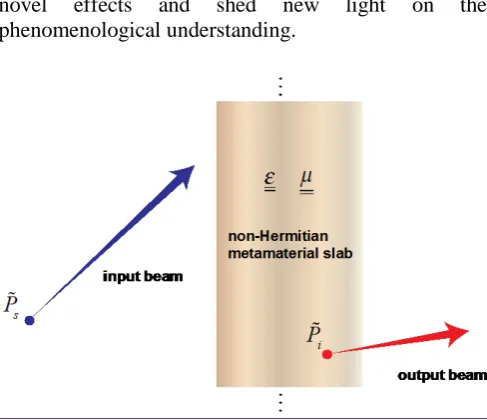
In [5,6], our team put forward a complex-coordinate TO extension that can naturally handle non-Hermitian metamaterials featuring spatial modulation of loss and gain. Also in this case, the appealing characteristics of conventional (real-valued) TO in terms of physically incisive modeling and geometry-driven intuitive design are retained, by combining the approach with well-established analytic formalisms based, e.g., on the “complex-source-point” (CSP) representation of beam-like wave objects, and the “leaky-wave” (complex propagation constant) modeling of radiating states [5,6]. For instance, as schematized in Fig. 2, a complex coordinate transformation relating a “source” and an “image” CSP can be interpreted in the real, physical space as an input-output transformation of an optical beam, induced by a non-Hermitian metamaterial slab, with full control on the waist position, direction and diffraction length. This represents a rather versatile and insightful approach, which brings about new degrees of freedom and may provide new perspectives in the design of active optical devices and radiating systems, with the use of gain not merely limited to achieve loss compensation.
Metamaterials mixing loss and gain are also receiving a surge of interest as potentially feasible testbeds for studying phenomena and properties that are distinctive of non-Hermitian systems. These include parity-time symmetry and exceptional points (i.e., degeneracies between complex eigenstates), which are ubiquitous in many disciplines, ranging from quantum mechanics to nuclear physics [7]. The application of non-Hermitian TO extensions to these scenarios is still largely unexplored, and represents one of the most fascinating developments to pursue. Preliminary studies on parity-time-symmetric metamaterials [5] have shown intriguing connections between the onset of spontaneous symmetry breaking (an example of exceptional point) and the discontinuous character of the complex-coordinate transformation. This may be indicative of deeper connections between the analytic properties of the transformations and the physics of exceptional points, whose exploration may uncover
[image:10.595.308.552.76.286.2]novel effects and shed new light on the phenomenological understanding.
Figure 2 – Schematic representation of the complex-coordinate TO mapping between a “source” and an “image” CSP ( and , respectively). In the physical, real space the mapping can be interpreted as a transformation of an input beam into an output beam (blue and red arrows, respectively), induced by a non-Hermitian metamaterial slab.
Advances in Science and Technology to Meet Challenges
Nonlocal TO extensions crucially rely on nonlocal effective models to approximately match the desired (ideal) constitutive blueprints with that of a physical metamaterial structure within appropriate phase-space regions. Therefore, essential to further advances in this field is the availability of a comprehensive “library” of effective nonlocal models, building up on general [8] and structure-specific [9] nonlocal homogenization approaches. Moreover, the discovery of new structures and regimes where nonlocal effects are enhanced, and possibly attainable via moderate-permittivity, low-loss material constituents may significantly boost the practical applicability of nonlocal TO. Finally, the development of full-wave numerical simulation tools implementing nonlocal constitutive relationships would also represent a major catalyst.
Non-Hermitian TO, on the other hand, critically relies on the possibility to precisely tailor the spatial distribution of loss and gain, which is becoming technologically viable. At microwave frequencies, gain may be attained via classical amplification schemes based on operational amplifiers and Gunn diodes, whereas at optical wavelengths active dopants such as two-level atoms (or quantum dots) may be exploited. While certain non-Hermitian effects may require unfeasibly high values of gain, it is also important to remark that completely passive (i.e., lossy) structures have been exploited to experimentally demonstrate 3
pivotal proof-of-concept effects in the physics of exceptional points (see, e.g., Ref. [10]). Within this framework, metamaterials with near-zero constitutive parameters (real part) [11], appear particularly attractive in view their well-known capabilities to dramatically enhance the effects of relatively low levels of loss and/or gain.
Concluding Remarks
In a variety of metamaterial applications of current interest, spatial dispersion and loss/gain are escalating from second-order nuances to instrumental effects. Nonlocal and non-Hermitian extensions of the TO approach potentially constitute an attractive framework to harness these effects in a versatile, systematic and insightful fashion.
Further perspectives on nonlocal and non-Hermitian TO extensions are discussed in Sections 3.2, 7.2 and Section 4, respectively.
References
[1] Pendry J B, Schurig D and Smith D R 2006 Controlling electromagnetic fields Science 312 1780–1782
[2] Castaldi G, Galdi V, Alù A and Engheta N 2012 Nonlocal transformation optics Phys Rev Lett 108 063902
[3] Moccia M, Castaldi G, Galdi V, Alù A and Engheta N 2016 Dispersion engineering via nonlocal transformation optics Optica 3 179–10
[4] Silva A, Monticone F, Castaldi G, Galdi V, Alù A and Engheta N 2014 Performing mathematical operations with metamaterials Science 343 160–163. [5] Castaldi G, Savoia S, Galdi V, Alù A and Engheta N 2013 PT metamaterials via complex-coordinate transformation optics Phys Rev Lett 110 173901 [6] Savoia S, Castaldi G and Galdi V 2016
Complex-coordinate non-Hermitian transformation optics J Opt 18 1–13
[7] Heiss W D 2012 The physics of exceptional points J Phys A 45, 444016.
[8] Silveirinha M G 2007 Metamaterial homogenization approach with application to the characterization of microstructured composites with negative parameters Phys Rev B 75 115104
[9] Chebykin A V, Orlov A A, Vozianova A V, Maslovski S I, Kivshar Y S and Belov P A 2011 Nonlocal effective medium model for multilayered metal-dielectric metamaterials Phys Rev B 2011 84 115438
[10] Doppler J, Mailybaev A A, Böhm J, Kuhl U, Girschik A, Libisch F, Milburn TJ, Rabl P, Moiseyev N and Rotter S 2016 Dynamically encircling an exceptional point for asymmetric mode switching Nature 537 76– 79
[11] Liberal I and Engheta N 2017 Near-zero refractive index photonics Nat Photon 11 149–158
3.2 Transformation optics by photonic crystals: a nonlocal route towards the optical frequency regime
–
Yun LaiSoochow University
Status
Transformation optics (TO) theory was originally derived in a local medium framework [1,2]. Since coordinate transformation often leads to unusual materials parameters absent in nature, metamaterials [3] have been applied to realize these parameters in novel TO applications, such as cloaking [1-3] and illusion optics [4]. Most of the experimental demonstrations of TO were achieved by metamaterials. However, at optical frequencies, metamaterials suffer from the loss in their metallic components. Moreover, optical metamaterials demand nano-scale unit structures, which makes the fabrication of macroscopic samples quite challenging.
On the other hand, photonic crystals [5] can provide an excellent low-loss platform for optical devices. Besides the famous band-gap properties, photonic crystals are also well known for exhibiting novel refractive behaviors such as negative refraction. Interestingly, negative refraction was first proposed and realized in the field of metamaterials, as a direct result of the double negative parameters. However, negative refraction was also realized by photonic crystals later. Unlike metamaterials that use unusual medium parameters to control the propagation of waves, photonic crystals utilize their spatial dispersions, which can be described by the equal frequency contours (EFCs) in the band structure, to control the wave propagation. By designing specific EFCs, the refractive behaviors of TO media and some novel TO applications can also be simulated by photonic crystals. For instance, Urzhumov and Smith first proposed to utilize elliptical EFCs to simulate the stretched TO media, and thus further realize cloaking phenomena [6]. Liang and Li proposed to use photonic crystals to replace the TO media in bending waveguides [7]. These seminal studies, however, didn’t explore the possibility of realizing the omnidirectional impedance matching condition, which is another distinct signature of the TO media obtained by coordinate transformation. In fact, if omnidirectional impedance matching can also be achieved by pure dielectric photonic crystals, the realization of ideal nonreflecting TO applications in the optical frequency regime is possible.
Current and Future Challenges
The TO theory can provide the perfect solution of omnidirectional impedance matching in the local
medium framework. However, the solutions usually require complex permittivity and permeability which are difficult to realize. Even in microwave frequencies, the perfect TO parameters are usually reduced significantly to ease the fabrication and the property of omnidirectional impedance matching is normally sacrificed [3]. This led to reflection in cloaking experiments, compromising the ideal invisibility. Interestingly, it is seldom known that beside the perfect TO solution, there are actually infinite other solutions for omnidirectional impedance matching. But in order to find these unusual solutions, one has to go beyond the local medium framework, where the original TO theory is rooted, into the much less explored realm of nonlocal photonic media. Such nonlocal media exist in neither natural materials like dielectrics, nor ordinary metamaterials which function as local effective media due to sub-wavelength structures.
[image:12.595.308.552.69.376.2]Photonic crystals, with microstructures much larger than that of metamaterials, can also possess effective permittivity and permeability responses. When the excited bands and eigenmodes are near the Brillouin Zone center, photonic crystals can behave as effective media with zero refractive index [8]. While for bands and eigenmodes far away from the Brillouin Zone
Figure 1
–
(a), (b) show the refractive behaviors of a metamaterial slab and an “ultratransparent” photonic crystal slab, respectively. (c), (d) show the transmittance and nonlocal parameters of a designed photonic crystal. Reprinted with permission from Ref. [9] Copyright (2016) by the American Physical Society.center, the effect of inherent nonlocality appears, which can turn photonic crystals into nonlocal photonic media with k-dependent parameters. To the surprise of most people, such nonlocality in photonic crystals can be utilized to realize of omnidirectional impedance matching [9].
Advances in Science and Technology to Meet Challenges
In Figs. 1(a) and 1(b), we show that the refractive behaviors of a photonic crystal slab with a “shifted” elliptical EFC are exactly the same as that of a metamaterial slab with an elliptical EFC at the Brillouin Zone center. It is astonishing that photonic crystals with such “shifted” EFCs could exhibit the rare property of omnidirectional impedance matching in TO media. It makes the photonic crystal non-reflective and totally transparent for incident light from any angle. This is clearly demonstrated in Fig. 1(c), where a transmittance T>99% for all angles within (-89 ͦ, 89 ͦ) is achieved in a slab of the photonic crystal structure shown in the inset graph, irrespective of the number of layers. In Fig. 1(d), the nonlocal (k-dependence) nature of the effective permittivity and permeability of this photonic crystal is clearly shown. The retrieved parameters (dots) excellently match with the derived theoretical requirement for omnidirectional impedance matching (dashed lines). In a certain sense, the omnidirectional impedance matching may also be understood as the expansion of the Brewster’s angle from a single angle to all angles. Therefore, a type of “ultratransparent” nonlocal photonic medium beyond any dielectric is possible [9]. Such an ultratransparency effect also exist in one-dimensional photonic crystals [10]. Moreover, the effect could also be broadband and polarization-insensitive in some cases [10].
Since the ultratransparent photonic crystals exhibit controllable refractive behaviors and omnidirectional impedance matching, their functionality is very similar to the ideal TO media. In Fig. 2, we demonstrate an example of a wave concentrator. The original TO concentrator is discretized into four layers (shown in Figs. 2(a) and 2(b)) and a core. Each layer can be replaced by a corresponding type of ultratransparent photonic crystal with an EFC of the same shape, but “shifted” to the X point in k-space, as shown in Fig. 2(c). In the simulation results shown in Figs 2(d) and 2(e), one can see that the concentrating effects of the original TO and photonic crystal concentrators are almost the same, except for a phase difference of π in the core region. Such a phase difference is induced by the shift of EFC in k-space. As shown in Fig. 1(b), an additional phase of pd is added to the transmitted waves where p denotes the shift of EFC in k-space and d is the thickness of the photonic crystal. In other
words, this phase difference is a signature of the nonlocality effect [9].
Ultratransparent photonic crystals can provide a pure dielectric platform for a large number of novel photonic devices such as nonlocal TO applications, wide-angle polarization filter, microwave transparent device, etc. One of the most important issues is the design strategy for the nonlocality in such photonic crystals. Besides the EFCs that control the direction of wave propagation, the effective surface impedance should be independently engineered, so as to ensure omnidirectional non-reflection. More optimization and engineering methods need to be further explored in order to find out the best strategy as well as the limit of
the realized nonlocal photonic media.
Concluding Remarks
[image:13.595.308.554.262.554.2]The original TO theory was established in the field of metamaterials with local medium description. Now, pure dielectric photonic crystals with nonlocal effective parameters have shown an almost equivalent power in controlling both the refractive behavior and the impedance matching behavior, for the first time.
Figure 2
–
(a) shows the design process of a wave concentrator by ultratransparent photonic crystals. (b) shows the parameters of the TO concentrator. (c) shows the EFCs of the discretized four layers of the TO (dashed lines) and photonic crystal (solid lines) concentrators. (d) and (e) show the simulated concentrating effect for the TO and photonic crystal concentrators, respectively. Reprinted with permission from Ref. [9] Copyright (2016) by the American Physical Society.With the advance in the fabrication techniques of large-scale photonic crystal with micrometer dielectric structures, this route may lead to experimental realization of ideal nonreflecting TO applications such as cloaking in the optical frequency regime.
Acknowledgments – This work has been supported by the State Key Program for Basic Research of China (No. 2014CB360505, No. 2012CB921501), National Natural Science Foundation of China (No. 11374224, No. 61671314) and a Project Funded by the Priority Academic Program Development of Jiangsu Higher Education Institutions (PAPD).
References
[1] Pendry JB, Schurig D, and Smith DR 2006 Controlling electromagnetic fields Science 312 1780-1782
[2] Leonhardt U 2006 Optical conformal mapping, Science 312 1777-1780
[3] Schurig D, Mock JJ, Justice BJ, Cummer SA, Pendry JB, Starr AF, and Smith DR 2006 Metamaterial electromagnetic cloak at microwave frequencies, Science 314 977-980
[4] Lai Y, Ng J, Chen H, Han D, Xiao J, Zhang Z, and Chan CT 2009 Illusion optics: The optical transformation of an object into another object Phys Rev Lett 102 253902
[5] Joannopoulos JD, Johnson SG, Winn JN, and Meade RD 2008 Photonic Crystals: Molding the Flow of Light (Princeton University Press, Princeton, USA, 2 ed.)
[6] Urzhumov YA, and Smith DR 2010 Transformation optics with photonic band gap media Phys Rev Lett 105 163901
[7] Liang Z, and Li J 2011 Scaling two-dimensional photonic crystals for transformation optics Opt. Express 19 16821-16829
[8] Huang X, Lai Y, Hang ZH, Zheng H, and Chan CT 2011 Dirac cones induced by accidental degeneracy in photonic crystals and zero-refractive-index materials Nat Mater 10 582-586
[9] Luo J, Yang YT, Yao ZQ, Lu WX, Hou B, Hang ZH, Chan CT, and Lai Y 2016 Ultratransparent Media and Transformation Optics with Shifted Spatial Dispersions Phys Rev Lett 117 223901 [10] Yao ZQ, Luo J, and Lai Y 2016 Photonic crystals
with broadband, wide-angle and polarization-insensitive transparency Opt Lett 41 5106-5109 3
4. Complexification in Transformation
Optics –
S. A. R. HorsleyUniversity of Exeter
Status
Transformation optics is a theory where changing the coordinate system is used as a tool to solve the difficult problem of wave propagation in inhomogeneous materials. While we often take these coordinates as real numbers, transformation optics has even more power when we allow them to take complex values.
Undoubtedly, conformal transformations are the most widespread application of complex valued coordinates.
They have long been applied to solve Laplace’s equation in two dimensions, in areas such as electrostatics, fluid dynamics, and elasticity [1]. A conformal transformation takes the complex numbers
z=x+iy and z*=x-iy (formed from the Cartesian coordinates x and y) to new complex numbers w(z) and
w*(z*). Such a transformation leaves the form of Laplace’s equation unchanged, and this form invariance allows one to map simple solutions in simple geometries, to equivalent solutions in more complicated ones. Meanwhile, a conformal transformation of the Helmholtz equation maps wave propagation in one refractive index profile, to propagation in another perhaps much more intricate one. Transformation optics has made heavy use of conformal transformations to design optical materials. For instance, Leonhardt [2] used a conformal transformation along with some clever analysis of a branch cut to design one of the first invisibility cloaks; and more recently Pendry and others [3] developed a theory of plasmonic energy concentrators based on conformal transformations.
But the utility of complex coordinates is much broader than conformal mapping. While a conformal map replaces the two-dimensional coordinates x and y with the single complex number z and its complex conjugate
z*, one can also treat the x,y coordinates in the wave equation as complex numbers themselves. Such a ‘complexification’ effectively doubles the number of dimensions of the space.
At the simplest level, this extension of the coordinate system allows one to find inhomogeneous materials that change the amplitude of a wave without generating any reflection (through a transformation like that shown in figure 1a). As a rough illustration consider a plane wave in 1D, ϕ=exp(inkx) (obeying the Helmholtz equation d2ϕ/dx2+(nk)2ϕ=0). Performing a complex rotation of
the x coordinate x=(a+i b)x’, we obtain either an exponentially growing or decaying wave, replacing the original real index n with the complex index (a+ib)n. As emphasized by Chew [4], the theory of the perfectly matched layer – nowadays the most common method for
truncating a computational domain - is founded on this approach.
Continued interest in transformation optics has led to new work in this area, applying complex valued spatial coordinates to design materials with inhomogeneous distributions of loss and gain [5-7]. This has been teamed with the simultaneous realisation that such ‘lossy and gainy’ optical materials can be used for the experimental investigation of a breed of complex valued (‘PT symmetric’) potentials that have long been a curiosity in quantum mechanics [8]. For example it has been found that reflectionless materials with PT -symmetry can be designed using a complex coordinate transformation of the Maxwell equations [6].
Figure 1: (a) Schematic of a complex coordinate transformation of the wave equation, where the real line x=x1 is transformed to a curve C that ventures into the
analytically continued wave field. This process changes both the material parameters and the wave field in the wave equation; (b) an example of the numerical solution of the 1D wave equation in the complex plane, in this case showing a series of branch cuts (dashed red lines) emerging from poles along the imaginary axis. 3
[image:15.595.312.508.74.426.2]This ‘complexified transformation optics’ allows for an interesting way of thinking. When we ordinarily solve the wave equation in real space we don’t consider the analytic continuation of the coordinates - the coordinates in the lab are real numbers! But, were we to look more carefully at the solution to the wave equation we would find particular features (e.g. poles or branch cuts) that occur in the wave field at complex values of the coordinates (see figure 1b). Through introducing an inhomogeneous anisotropic material, a complex coordinate transformation can move these features into real space [5,6]. Transformation optics with complex coordinates gives a physical meaning to the analytic continuation of a wave field!
Taking seriously the analytic continuation of the wave equation has recently provided some other new and rather general results [5,7]. These apply to planar media where the refractive index (or equivalently the permittivity) varies as a function of one of the coordinates x. If the refractive index n(x) is an analytic function in either the upper or lower half complex x
plane then the material will not reflect waves incident from one side, whatever the angle of incidence. In addition, if n(x) has only poles of order higher than 1 in the complex position plane then the slab will also have the same transmission coefficient as free space – it will be invisible from one side. The construction of such reflectionless media is in many cases also practically feasible, and one such material has recently been experimentally realised [9].
Current and Future Challenges
If we want to extend the reach of complex analysis in wave propagation problems there are both mathematical and practical challenges. Here I shall mention some which I know of, and some questions I think are interesting to ask.
I think the practical challenges are quite clear. Take the application of conformal transformations to cloaking, or to the design of plasmonic structures (e.g. gratings). Because conformal transformations are a special kind of coordinate transformation, then there is the question of what happens when we deviate from the condition of conformality. No experiment will be able to implement a refractive index profile accurate to an infinite number of decimal places. The same problem is also evident for the analytic profiles given in [7] – no experiment will be able to fabricate a profile that is exactly equivalent to a function that is analytic in the upper half complex position plane. There is always some tolerance to error, but the experiment needs to be within this tolerance. But In many cases I think it remains a challenge to build the devices we are inventing with transformation optics (whether using real or complex valued coordinates);
both to develop a sufficient range of available material parameters, and to make the fabrication error small enough that the devices function as we intend them to.
Although there are many experiments in this area, I am just trying to make the point that many of our designs remain very difficult to put into practice are not yet practically feasible. This is especially true for some of the designs where both the real and imaginary parts of the material parameters are graded in space.
There are also some interesting mathematical questions to address. For instance, we know that making the coordinates complex can lead to general results concerning the reflection and transmission of waves through inhomogeneous media [5,7], and that features in the complex position plane can be given a physical meaning via transformation optics [6]. But to date we have largely based our understanding on the theory of functions of a single complex variable. Yet mathematicians have developed the theory of several complex variables – seldom used in optics - with concepts such as ramification taking the place of the branch cut. An interesting question is whether the theory of functions of several complex variables can be applied to derive useful information about the interaction of waves with structured media. In a similar spirit, it is also interesting to ask whether the theory of complex manifolds (and special cases such as the Kahler manifold) can be applied to complex coordinate transformation optics.
Another interesting connection that may be productive to explore, is the connection between complex coordinates and the one-way edge states that are currently attracting interest in the field of ‘topological photonics’ [10]. This connection does not seem to have been explored, but can be straightforwardly observed in the cases where the effective refractive index vanishes so that the field obeys the Laplace equation ∇2ϕ=0.
Because the system only supports interface states that propagate in one direction, the field must become a function of a single complex variable e.g. only z, i.e. ϕ(z)=exp(kz)=exp[k(x+i y)].
Advances in Science and Technology to Meet Challenges
The above mathematical challenges pose questions that do not require any new mathematics, but require further time to answer. In contrast, I think the experimental realisation of many of the materials we design does require advances in technology.
Probably the most important is the ability to precisely and separately control the reactive and dissipative response of materials, so that refraction, loss and gain can all be separately graded in space. This could involve 3
the development of metamaterial elements with a wide range of complex effective permittivity and permeability values. Gain is an especially difficult property to control, and present implementations often lead to instabilities.
Although there are cases where both real and imaginary parts of the material parameters have been separately controlled in space (see e.g. [9]), at the moment this is generally a difficult task. We should mention that [9] grades the resonant properties of metamaterial elements to obtain one of the non-reflecting index profiles derived in [7], using the frequency domain Kramers-Kronig relations to guarantee the required distribution of material properties. Such an approach may be useful more generally.
Concluding Remarks
Complex analysis is an old topic that is being given new practical relevance in the field of metamaterials research. It is used within transformation optics both through conformal transformations in two dimensions, and through the complex transformations and analytic continuation used to investigate materials with distributions of loss and gain. In the future there promise to be further applications of the mathematics of complex coordinates in optics, which may enable a deeper understanding of wave propagation in complex inhomogeneous media.
Acknowledgments – SARH acknowledges financial support from a Royal Society TATA University Research Fellowship (RPG-2016-186).
References (separate from the two page limit)
[1] Schinzinger R S and Laura P A A 1991 Conformal Mapping: Methods and Applications, Dover (New York) [2] Leonhardt U 2006 Optical Conformal Mapping Science 312 1777-1780
[3] Pendry J B, Aubry A, Smith D R and Maier S A 2012 Transformation Optics and Subwavelength Control of Light Science 337 549-552
[4] Chew W C and Weedon W H 1994 A 3D perfectly matched medium from modified Maxwell’s equations with stretched coordinates Micro. Opt. Tech. Lett. 7 599-604 [5] Horsley S A R, King C G and Philbin T G 2016 Wave propagation in complex coordinates J. Opt. 18 044016 [6] Castaldi G, Savoia S, Galdi V, Alu A and Engheta N 2013 PT Metamaterials via Complex-Coordinate Transformation Optics Phys. Rev. Lett. 110 173901
[7] Horsley S A R, Artoni M and La Rocca G C 2015 Spatial Kramers-Kronig relations and the reflection of waves Nat. Phot. 9 436-439
[8] Ruter C E, Makris K G, El-Ganainy R, Christodoulides D N, Segev M and Kip D 2010 Observation of parity-time symmetry in optics Nat. Phys. 6 192-195
[9] Jiang W, Ma Y, Yuan J, Yin G, Wu W and He S 2017 Deformable broadband metamaterial absorber engineered with an analytical spatial Kramers-Kronig permittivity profile Laser Phot. Rev. 11 1600253
[10] Lu L, Joannopoulos J D and Soljacic M 2014 Topological Photonics Nat. Phot.. 8 821-829
5. Surface Transformation Optics
5.1 Extending transformation optics and towards a thin cloak – Jensen Li, Jian Zhu, University of Birmingham
Status
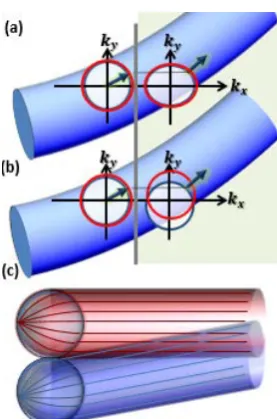
The interest of getting an invisibility cloak has a very long history but its main breakthrough came from the establishment of transformation optics (TO). It is the theoretical framework of TO to give us a recipe of the required material profile of a cloak while metamaterials provide us the necessary palette of material parameters. The first metamaterial cloak was realized in the microwave regime within half a year from the theory proposal [1]. Figure 1(a) shows the dispersion surface of a TO medium when a light bends from the freespace to the surface layer of a cloak while Fig. 2(a) shows the simulation of a cylindrical cloak for a plane wave coming from the left. The dispersion surface for both the TE and TM polarizations become generally elliptical with a change in shape to redirect light. The deformation gets bigger near the inner surface of cloak with more extreme material parameters. It was then quickly recognized that metamaterials cannot provide these extreme parameters for a cloak to work at optical frequencies due to the limit of resonance strength. One way out is to make a compromise on the functionality. If we conceal an object under a carpet instead of in the middle of air, the transformation involved compresses the object to a flat sheet instead of a point. This strategy makes the range of the required material parameters much less extreme. Cloaks for visible light, Fig. 2(b), become realizable (e.g. Ref [2]). Since then, we have been witnessing a dynamic period of development of TO in one of two directions: one on further simplifying cloaking strategies to have the ultimate application of cloak in the real world; another on extending TO as a framework to design optical components with functionalities beyond the conventional ones. The simplification route pushes the cloak towards higher frequencies, towards 3D applications, and towards cloaking objects of macroscopic sizes. The generalization route applies TO on getting devices beyond a cloak, e.g. to project an additional virtual object as an optical illusion, to design silicon photonic components with optimized performance, and to apply transformation approach to other kinds of waves.
A consideration on how to extend the fundamental principle of TO can actually benefit both directions. Coordinate transformation is at the heart of TO to get form-invariance of Maxwell’s equations. A real 3-tuple (𝒙𝒙,𝒚𝒚,𝒛𝒛) is mapped to another 3-tuple. One possibility is to generalize the coordinates to complex numbers. It extends TO to include material gain and
loss so that active applications like fictitious source generation and one-way invisibility can be achieved [3]. On the other hand, we can add a fourth coordinate: time. A dynamic event cloak becomes realizable [4]. It turns out coordinate transformation is not the only possibility to get form-invariance. The transformation can also happen in the polarization, an internal degree of freedom, as a gauge transformation [5]. An example is an abstract rotation in the polarization space for 2D wave propagation:
� 𝑬𝑬𝒊𝒊𝑯𝑯𝒛𝒛′
𝒛𝒛
′�=�𝐜𝐜𝐜𝐜𝐜𝐜 𝝓𝝓𝐜𝐜𝐬𝐬𝐬𝐬 𝝓𝝓((𝒙𝒙𝒙𝒙,,𝒚𝒚𝒚𝒚)) − 𝐜𝐜𝐬𝐬𝐬𝐬 𝝓𝝓𝐜𝐜𝐜𝐜𝐜𝐜 𝝓𝝓(𝒙𝒙(𝒙𝒙,𝒚𝒚,𝒚𝒚))� � 𝑬𝑬𝒊𝒊𝑯𝑯𝒛𝒛𝒛𝒛�.
The transformation induces a corresponding one on the material parameters and forms its own class of materials. Figure 1(b) shows the class generated from such an abstract rotation. The transformed permittivity has additional anisotropy 𝝐𝝐𝒙𝒙𝒛𝒛 and 𝝐𝝐𝒚𝒚𝒛𝒛. Equivalently, the dispersion is split into two polarizations by shifting the circular one into two opposite directions in the k-space (vs. deforming shape in Fig. 1(a)). This splitting can be interpreted as a gauge field (pseudo vector potential) for photon. It provides a “magnetic” force to redirect light and can be utilized to design a cloak [6]. Figure 2(c) shows the simulations for a cylindrical cloak designed with gauge field approach. The rays passing through the cloak are squeezed upwards (vs. Fig. 2(a)). This asymmetry occurs in opposite ways for the two polarizations. Such an asymmetry with the “magnetic” bending force gives us a route to design TO devices with asymmetric transmission functionality. Figure 2(d) shows an example to generate a one-way edge state, which propagates
Figure 1 Ways to redirect light beam (a) by changing the shape of dispersion surface from TO-media, (b) by splitting dispersion surface from gauge transform-media. Vertical grey line indicates an interface. (c) Luneburg lens for getting variable directions from point sources. 3
[image:18.595.359.498.69.279.2]between two regions of metamaterials and is not reflected even when a sharp corner is encountered. Current and Future Challenges
Although generalizations allow us to extend TO applications to new territories, a major current challenge on designing a cloak using the TO approach stays behind: to obtain a thin cloak, working for wide angles in 3D, which are essential for a wearable cloak. Taking the cylindrical cloak as example (Fig. 2(a) with ray-tracing), intuitively the outermost cylindrical layer is responsible for the light hitting the cloak at a shallow angle, while an inner one, together with the layers outside, are responsible for the light nearer to normal incidence. The angular operation thus comes from a finite thickness of the cloak. Unless very extreme material parameters are allowed, a small thickness and wide-angle operation are difficult to realize at the same time. It also means that we can go further on the simplification route to get a thin cloak but with limited viewing angle.
We have already seen some successful demonstrations along this direction. By going to the extreme case of only one single layer of metamaterial atoms, as a metasurface, a carpet cloak at the normal incidence can be designed by phase compensation to get a target reflected plane wave. Surprisingly, even though it is designed at normal incidence, the working angle can be as large as 30 degrees in a demonstrated 3D metasurface cloak [7] (Fig. 2(e)). For the carpet cloak, it is also desirable to go beyond a flat mirror to mimic an arbitrary background image on the floor. Advances in Science and Technology to Meet Challenges
To enhance the working angle for a thin cloak, bearing in mind the issues we have discussed earlier, one natural step is to make a balance between working
angles and thickness of cloak. Naturally, we can go from a single layer of metamaterial atoms to multiple layers or a thicker layer. Recently, the concept of Huygen’s metasurfaces with two layers of metamaterial atoms have found excellent usage in enhancing transmission efficiency, utilizing both electric and magnetic response of the metamaterial atoms, with a homogenized boundary description of the metasurface [8]. Such a homogenized boundary description may be utilized to formulate TO instead of using effective medium parameters of the bulk. By designing successive layers of the metasurfaces, the cloaking behavior at a series of viewing angles can be obtained from normal to oblique incidence.
Another approach to get angular operation for a thin cloak takes advantage of the concept of integral imaging. Figure 1(c) shows the basic principle in redirecting light by a lens array. Unlike TO, in which dispersion surfaces are defined continuously at any locations inside the device, the device is pixelized into an array of lenses and each lens controls the direction of the generated light from a point source at different foci. Such an array can be used to project the desired 3D image you would like the observer to perceive in the case of a cloak. A preliminary demonstration by putting a 1D array of cylindrical lens on top of a digital display has achieved a cloak with viewing angle up to
𝟏𝟏𝟏𝟏.𝟒𝟒°, varying in a single direction [9]. Although the viewing angle is limited due to paraxial geometrical optics, it gives a practical approach for a thin cloak with all three colors, with a compromise on spatial resolution of the image. To get an omnidirectional viewing angle, one can replace the 1D paraxial lens array by a 2D array of Luneburg lens (as Fig. 1(c) depicts). Figure 2(f) shows schematically if we assemble such Luneburg lens arrays into a pyramid, which projects the image on the floor consisting of circular-disk patterns to any angles. Furthermore, to focus light coming from different directions to the Luneburg lens array on a common plane, TO will be very favorable to realize flattened Luneburg lens [10] for the lens array.
Concluding Remarks
Based on the early works of TO together with metamaterials, we have now the basic language in designing a cloak. We believe there are still huge opportunities for us to develop TO. A fundamental approach in extending TO’s theoretical framework should be beneficial to both getting a realistic cloak and designing optical components with properties beyond those given by conventional approaches. Probably, the wearable cloak for visible light will be an extension or combination of the TO technique with approaches such as metasurfaces and integral imaging. Figure 2 (a) and (b): cylindrical and carpet cloak at
visible light from coordinate transform (from Ref.[2]). (c) and (d): gauge transform to get a cloak and one-way edge state. (e) and (f) are 3D carpet cloaks by
metasurface (from Ref. [7]) and by lens array. 3
[image:19.595.48.275.526.678.2]Acknowledgments – We acknowledge support from European Union’s Seventh Framework Programme under Grant Agreement No. 630979.
References (separate from the two page limit)
[1] Schurig D, Mock J J, Justice B J, Cummer S A, Pendry J B, Starr A F, and Smith D R 2006 Metamaterial Electromagnetic Cloak at Microwave Frequencies Science 314 977-980
[2] Gharghi M, Gladden C, Zentgraf T, Liu Y, Yin X, Valentine J and Zhang X 2011 A carpet cloak for visible light Nano Lett. 11, 2825–2828
[3] Castaldi G, Savoia S, Galdi V, Alù A and Engheta N 2013 PT Metamaterials via Complex-Coordinate Transformation optics. Phys. Rev. Lett. 110, 173901 [4] McCall M W, Favaro A, Kinsler P, and Boardman
A 2010 A spacetime cloak, or a history editor J. Opt., 13, 024003
[5] Liu F and Li J 2015 Gauge field optics with
anisotropic media Phys. Rev. Lett. 114 103902 [6] Liu F, Horsley S A R and Li Jensen 2017
Invisibility cloaking using pseudomagnetic field for photon Phys. Rev. B 95 075157
[7] Ni X et al 2015 An ultrathin invisibility skin cloak for visible light Science 349 1310-1314
[8] Pfeiffer C and Anthony G 2013 Metamaterial Huygens’ surfaces: tailoring wave fronts with reflectionless sheets Phys. Rev. Lett. 19 197401 [9] Choi J S and Howell J C 2016 Digital integral
cloaking Optica 3 536
[10] Hunt J, Tyler T, Dhar S, Tsai Y-J, Bowen P, Larouche S, Jokerst N M and Smith D R 2012 Planar, flattened Luneburg lens at infrared wavelengths Opt. Exp.20 1706-1713
![Figure 1 TO was used to control static magnetic fields in this realisation of a cloak for magnetism [3]](https://thumb-us.123doks.com/thumbv2/123dok_us/9339599.435979/6.595.307.554.70.279/figure-control-static-magnetic-fields-realisation-cloak-magnetism.webp)




![Figure 2 (a) and (b): cylindrical and carpet cloak at visible light from coordinate transform (from Ref.[2])](https://thumb-us.123doks.com/thumbv2/123dok_us/9339599.435979/19.595.48.275.526.678/figure-cylindrical-carpet-cloak-visible-light-coordinate-transform.webp)