Social Software Engineering as non profit technologies:
Trends and future Potentials for Social Informatics and
Digital Humanities
Prantosh Kr. Paul1, Bhaskar Karn2, Dipak Chatterjee3 and Poovammal E4
1 Indian Institute of Engineering Science and Technology (IIEST), Shibpur, WB, India. 3 DIT, Birla Institute of Technology, Mesra, Ranchi, India.
3 Institute of Engineering and Management, Salt Lake, Kolkata, WB, India. 4 Department of Computer Science and Engineering, SRM University, Tamil Nadu, India
Corresponding author : [email protected]
ABSTRACT
Software Engineering and its application and integration to the community or society is called as Social Software Engineering. This is a concept and procedure rather than tools and products towards design, development and management of products, software, application and system for the society or community; directly and indirectly and thus social Software Engineering gain popularity recently for building Social Computing and Social Informatics much more advance and popular. In other sense, such Engineering practice may also known as Non Profit Technologies. This paper is talks about Social Software Engineering including its basic feature and characteristics. Paper also illustrated some technologies and products which are helps in promotion of Digital Humanities and Digital product application too.
Keywords: Social software engineering, SSE, digital humanities, social information system, information culture, knowledge management, information science, software engineering
Social Software Engineering (SSE) is actually a branch of Social Engineering and Development. Social Software Engineering is mainly concerned with the social aspects and community development by the design, development, management, implementation and further promotion of computer, system, products and application or software. Social Software Engineering is virtually a
non profit technology as it as comprises with the information and communication technologies which support the goal of NGO, non profit trust, third sector and so many mission based organizations [Paul, Govindarajan and Sarangi, 2012]. Hence,
OBJECTIVE
This paper is mainly talks about several aspects related to Social Software Engineering and Digital Humanities which are illustrated as follows—
To know basic about the Social Software Engineering; including its basic
¾
feature and characteristics;
To know about the Social Software Engineering; including its basic need and
¾
importance for development of social informatics and computing;
To learn about the main challenges and opportunities of Social Software
¾
Engineering in Indian and developing countries perspectives;
To know about the need and importance of Social Software Engineering as
¾
non profit technologies for the promotion of Digital Humanities.
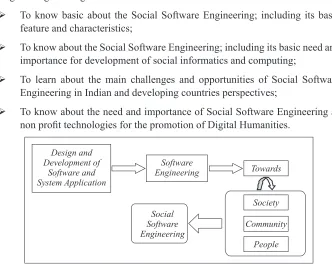
fig. 1: Showing SSE as a domain and direct and indirect facets fundamentals
Social Software Engineering is actually a branch of Software Engineering and Software development towards community or society applications and packages. In Social Software Engineering practice, technologist or developer mainly engaged in software and application or product development towards community and social promotion. With Social Software Engineering, it is easily possible to develop Digital culture among the common people for removing Digital Divide. In simple sense, it is very much different to express about SSE; but mainly deals or may be with following characteristics [according to SoSEA,
2008]:-Social Software Engineering is mainly responsible for the producing
¾
Relationship or Companionship
¾ is another important feature of Social Software Engineering which is mainly deals with making explicit the various associations among people (White and McCain, 1997).
Community and Human
¾ activities is another important feature of Social Software Engineering as in this case software is specially designed consciously to support human activities and solve social and community problems.
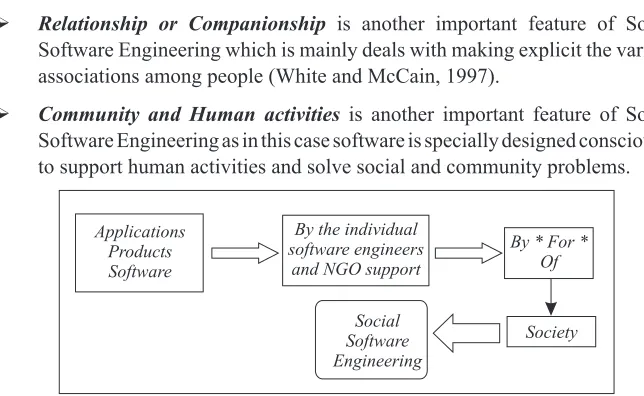
fig. 2: Depicted Social Software Engineering and its ultimate role and objectives
Social Software Engineering as Non Profit Technologies: Current Potentials
Development of software not only deals with developing programmes but also developing of a wide spectrum of related components; which constitute software and other applications. Hence Social Software Engineering is actually a process or system or mechanism through which software design, development and maintenance is possible. Thus, Social Software Engineering is mainly way’s
playing an important role towards non profit technology which helps in community
and society many ways [Paul, Ghosh and Chatterjee, 2013; Paul, Ganguly and
Chatterjee, 2013; White and McCain, 1997].
In communication sector, we are witness of so many online and electronic mailing systems which helps us to share information, text, and audio and video instantly and hence this is promoting community culture towards digital world. Gmail, Rediffmail, Hotmail, Sify are some common application which are free to use and helps in Digital Humanities many ways. In Education, Business, Government and Social Purposes such E-Products are very much popular (Paul and Ganguly, 2013).
In Information Sector, we can see one tool which is directly involves with the society or community i.e. Social Networks. We know that, information is prime
mover of the society and needed in almost all the sector irrespective of profit making or non profit making. With social networking site, it is easily possible to
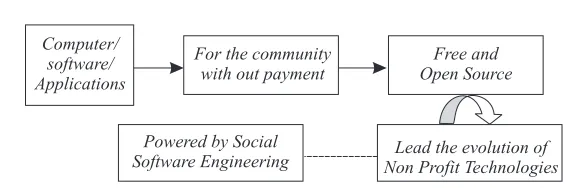
fig. 3: Depicted Non Profit Technologies and its need and background
Information, audio and video directly to any one or group of user at any time and this information transfer ultimately improving our existing information infrastructure and indirectly promoting Information Society.
In core computing and software world, we can see several tools and technologies which are directly and indirectly helps in Social Informatics promotion and development. Database is very much important for social and community information system; which will be helpful in information collection, selection, processing and dissemination towards community and in this regard some free software are- MySQL, Green Stone, KOHA and so on [Paul, Ghosh and Chatterjee,
2013].
In Business Community too, all the above technologies are applicable and day by day changing. In small business and micro level commercial activities, IT hardware and software are very much important and valuable; but we can see so many tools and technologies which are able to build virtualization and some popular name in this regard are—
In many cases, because of higher product and software development small organization, social organization and social informatics agencies are facing various problem and thus, it is very much good way to introduce Social Software Engineering powered tools, techniques and products for the community
development. According to Wikipedia, ‘Not Profit Organization also uses both
properly and open source software as well as various tools like- www, e-mail,
social networking, wikis and blogs and so on’. And this way some non profit
groups may leverage web based services in their media outreach, using online news writes such as free and online news paper. Free Encyclopedia, Dictionaries, and other electronic material too now days freely available and in this category Wikipedia, Britannica Encyclopedia are important example [Paul, Ganguly and
Chatterjee, 2013].
and potential to introduce Social Software Engineering for complete social development by Social Informatics practices;
In many organization and IT companies it is essential to implement corporate
¾
social responsibility agenda for better Digital Humanities practice [Paul,
2013];
It is essential to introduce much more products and services in wide range of
¾
sector such as business, education, Government, policies, Social Work and so on for all round development.
Proper planning and funding is very much essential for development of Social
¾
Software Engineering and complete Non Profit Technologies.
Activities Application/ Programme
Community Connection Facebook, Orkut, Twitter E-Mail Gmail, Rediffmail, Hot Mail Data Storage My SQL, DBASE
Domain Based Social Networking Linkid, Academic Research, Med 2.0
fig. 4: Depicted some software and application which are brought us by healthy Social Software engineering practice
CONCLUSION
Social organization and non profit organization are uses computer, internet, networking system and operating system are important name in the field of Social
Software Engineering. Gmail, Rediffmail, Whats Apps, Android based application, Linux, www are important name to modernize information sector many ways (Paul, Govindarajan and Sarangi, 2012; White and McCain, 1997). Some technology is
created specifically for use by Non profit organization and for instance, there are more than 30 software packages designs for non profit organization for several
NGO activities such as volunteer management, donor management, Financial Application, Multimedia application, Information dissemination and so on.
REfERENCES
Cohen, Eli B. and Nycz Malgorzata, (2006), Learning Objects and E-Learning: an Informing Science Perspective. Interdisciplinary Journal of Knowledge and Learning Objects, 2(02): 20-23
Martin, S.B., (1998), Information technology, employment, and the information sector: Trends in information employment 1970–1995. Journal of the American Society for Information Science; 49(12):1053–1069.
Paul, Prantosh Kumar, Sarangi, Bibhuti Bhusan and Chaterjee, Dipak (2012), “Cloud Computing and its strategic and technical application in Information Networks in Indian Scenario in IEEE sponsored procedings of National Conference on Information and Software Engineering, 2(02): 146-149
Paul, Prantosh Kumar, Chaterjee, Dipak and Karn, Bhaskar (2012), “Cloud Computing: Issues and challenges with probable solution in Indian Perspectives” International Journal of Information Dissemination and Technology, 2(01):31-33.
Paul, Prantosh Kumar, Sridevi, K V, Ghosh, Minakshi and Ashwina Lama (2012), “Education Technology: The Transparent Knowledge Delivery through QPN and Cloud Computing” An International Journal, 12(02): 455-462
Paul, Prantosh Kumar, Kumar, Ajay and Ghosh, M. (2012) “Cloud Computing: the 21st Century Friend for Virtualization” In Procedinngs of International Confernce of Computer Applications and Software Engineering, 01(01):37-40
Paul, Prantosh Kumar and Ghose, M K (2012) “Cloud Computing: Possibilities, Chalenges, and opportunitities with special reference to its emerging need in the academic and working area of Information Science”, ICMOC, Procedia Engineering, 38:2222-2227. Paul, Prantosh Kumar Chaterjee Dipak, Kumar Ashok (2013) “E Learning: New Age
Knowledge Model Delivery through Advance Information Technology and Cloud Computing: An Overview” BRICS International Journal of Educational Research,
03(01): 22-25
Paul, Prantosh Kumar, S Govindarajan, Dipak Chaterjee, “Cloud Computing: Emphasizing Hybrid Cloud Computing on Android Computing Platform-An Overview” International Journal of Applied Science and Engineering, 1(1):21-28.
Paul, Prantosh Kumar, S Govindarajan, B B Sarangi (2012) “Software Engineering:
Challenges, issues and opportunities in the emerging field of Information Science and Technology (IST)” International Journal of Computer Mathematical Sciences and Applications, 06(03-04):109-115.
Paul, Prantosh Kumar, M Ghosh (2013) “Cloud Computing and its possible utilization in Health and Hospital Administration” Journal of Business Management- An International Journal, 05(02): 147-152
Paul, Prantosh Kumar (2013), “Cloud Computing: Its Opportunities and Advantages with Special Reference to Its Disadvantages- A Study” in International Journal of Neural Network Application, 06(02): 84-88
Paul, Prantosh Kumar, M Ghosh, D Chatterjee (2013), “Cloud Computing Utilization in Food and Nutrition Sector- Empowering Information Transfer: Challenges and Opportunities” International Journal of Soft Computing Bio Informatics, 04(02): 90-95.
Paul, Prantosh Kumar and Ganguly, Jhuma (2013), “Green Computing: The Emerging tool of Interdisciplinary Environmental Sciences-Problems and Prospects in Indian Scenario” International Journal of Pharmaceutical and Biological Research, 5(04): 210-214
Paul, Prantosh Kumar, Jhuma Ganguly, Dipak Chatterjee (2013) “Green Information Science [GISc]: Journey towards Environmentally Friendly Information and Technological World” in The Sci-Tech International Journal of Engineering Sciences, 01(01): 80-87. Paul, Prantosh Kumar (2013), “Cloud platform and the Virtualised World: Take a look”
International Monthly Refereed Journal of Research in Management and Technology,
02(09): 112-119
Paul, Prantosh Kumar (2013), “Distance Education and Online Education empowered by Cloud Computing: the Proper Information Infrastructure” Abhinav National Journal of Arts and Education; 02(09): 1-8
Paul, Prantosh Kumar (2013), “Digital Repositories: some Tools, Technique and Technologies and Social issue” International Monthly Refereed Journal of Research in Management and Technology; 02(10): 63-68.
Paul, Prantosh Kumar, (2013), “Virtual World: Empowered by Cloud Computing- A Conceptual Study” International Monthly Refereed Journal of Research in Management and Technology; 02(10): 82-89
Paul, Prantosh Kumar, (2013), “Education 2.0: Promoting Technological Knowledge Delivery” Abhinav National Journal of Arts and Education, 02(12): 43-49
Paul, Prantosh Kumar, (2013), “BSc-Information Science: Need, Value with Special Reference to a Proposed Curriculum with Multi Entry and Multi Exit System” Abhinav National Journal of Science and Technology, 02(12): 01-11
Paul, Prantosh Kumar (2013), “Green Computing and Informatics: Way to Green and Energy Consumed World” International Monthly Refereed Journal of Research in Management and Technology, 02(13):70-77
Paul, Prantosh Kumar (2013), “Digitization: Establishment and Some Requirement in Cloud Age” Scholars Journal of Engineering and Technology (SJET), 1(4):257-260 Paul, Prantosh Kumar. Green information science: Information science and its interaction
with greencomputing and technology for eco friendly information infrastructure. International Journal of Information Dissemination and Technology, 3(4):292-296. Paul, Prantosh Kumar K L Dangwal (2014) “Cloud Computing Based Educational Systems
and iits challenges and opportunities and issues” Turkish Online Journal of Distance Education-TOJDE, 15(01): 89-98
Paul, Prantosh Kumar K Kumar, D Chatterjee, R Rajesh (2014), “Usability engineering and user interface design for electronic information systems and its subsystems: Overview”
20(01): 23-32
Reichman, F. (1961). Notched Cards. In R. Shaw (Ed.), The state of the library art 04(01): 11–55. New Brunswick, NJ: Rutgers, The State University, Graduate School of Library Service.
Information Science (pp. 201–218), Copenhagen, Denmark: Royal School of Library and Information Science.
Saracevic, T. (1975). Relevance: A review of and a framework for the thinking on the notion in information science. Journal of the American Society of Information Science,
26(6):321–343.
Saracevic, T. (1979a). An essay on the past and future of information science education. I. Historical overview. Information Processing and Management, 15(1):1–15.
Saracevic, T. (1979b). An essay on the past and future of information science education. II. Unresolved problems of ‘extemalities’ of education Information Processing and Management, 15(4):291–301.
Vickery, B.C., and Vickery, A. (1987). Information science in theory and practice. London: Butterworths.
White, H.D., and McCain, K.W. (1997). Visualization of literatures. Annual Review of Information Science and Technology, 32:99–168.
www.en.wikipedia.org (SSE Accsed on 02-02-2014)