© 2016 IJSRSET | Volume 2 | Issue 2 | Print ISSN : 2395-1990 | Online ISSN : 2394-4099 Themed Section: Engineering and Technology
Hardware Implementation of Power Generation using Attic
Type Internally Braced Air Exhauster for Industrial Application
T. Rajesh, D. Velmurugan, G. Abinaya, l. Ahila, B.Saravanakumar, K. Thirumoorthy
Department of Electrical and Electronics Engineering, Info Institute of Engineering, Kovilpalayam, Coimbatore, Tamilnadu, India
ABSTRACT
This work presents power generation using Attic type (internally braced) air exhauster to generate the electrical power for industrial application. Generally power can be generated from renewable and non-renewable energy sources like solar, wind, tidal, geothermal, coal, natural gas and petroleum. To satisfy the growing power demand the industry focuses on alternate energy sources like wind driven mills and PV systems. The installation cost for these resources is high and it also occupies lot of space. Moreover power generation through wind mills induces noise pollution which affects our environment. To eliminate this problem designing an attic type air exhauster with AC generator, Regulator, Boost converter, Inverter, step up transformer will be liable to quench the energy demands. In this method AC generator is used to convert kinetic energy available from air exhauster into electrical energy. The output from the AC generator is given to DC-DC converter (rectifier, Boost converter). Boost converter which steps up the voltage, finally inverter is used to supply the power for utilization purpose [1]. The proposed system’s output voltage is directly proportional to the speed of air exhauster. The proposed system is validated with the Matlab simulation and an experimental setup.
Keywords: AC Generator, Rectifier, Boost converter, Inverter, Step-up transformer.
I.
INTRODUCTION
Industries are the one which mostly uses the energy in our modern society. The Indian industrial sectors mostly focus on manufacturing, mining, agriculture and construction. In these industries, electricity is one of the main elements used to drive the electrical motors. Electrical energy is generated by using the renewable and non-renewable energy resources. In the present scenario, electrical energy is one of the scared resources in our country due to the less energy reserve capacity in India. Most widely used reserves in India are coal, oil and gas. Some of the researchers concluded that these resources will be last within 18-26 years. India facing upto 10-17% of average level severe shortages in energy demand and energy supply. In 2020 additional 10,000MW energy is required. So we have to install at the cost of 8000 billion.
II.
METHODS AND MATERIAL
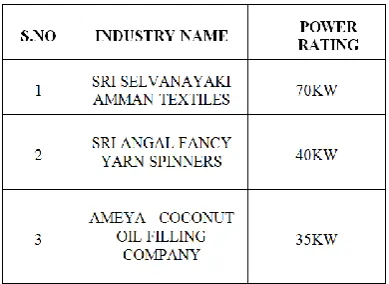
Table 1: Survey of Various Industries
This figure 2 shows the mechanical layout of the proposed method. Air exhauster is used as a medium for generating energy. In this method, attic type internally brazed air exhauster is used. The rotating part of the exhauster is connected to gear and bearings. The rotating part of the generator is coupled to the exhauster. The upper part of the exhauster is rotating plate and the lower part of the exhauster is exhauster base. The height and width of the exhauster is 30cm and 50cm respectively. An AC generator is coupled to the rectifier. And then voltage regulator, boost converter, battery, inverter, step up transformer and finally a load is connected in series with the air Exhauster.
Mechanical Layout Design of Circuit Diagram
Figure.1. Mechanical layout diagram
III.
RESULTS AND DISCUSSION
1. SIMULATION RESULTS A. Single Phase Rectifier
Figure 2. Simulation circuit for rectifier
Table 2. Elements of Circuit diagram
Figure 3. Simulation Output for Rectifier
B. Boost Converter
Figure 4. Simulation circuit for Boost converter
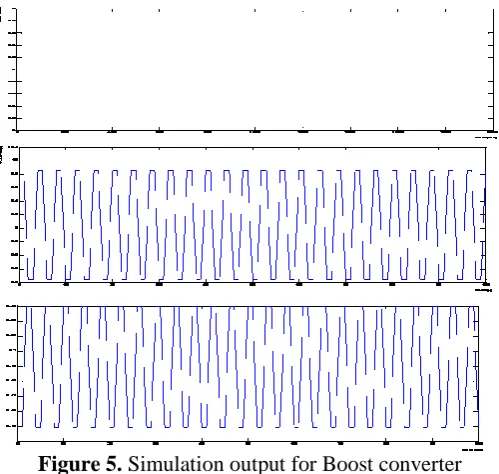
Figure 5. Simulation output for Boost converter
Figure 4 & 5 are the circuit diagram and simulation output of boost converter respectively. The simulation result is obtained by using MATLAB. In figure 4, a whole simulation will be kept under a discrete mode to occur an instant output in a discrete manner. An input voltage (VIN =5V) is connected with the series R load, diodes and MOSFET. Gate pulse is given to the MOSFET from the pulse generator. Finally the input and output voltage (Vin =10V) is connected to the scope in the circuit [1].
C. Single Phase Inverter
Fig 6 & 7 are the circuit diagrams and simulation output of a single phase inverter respectively. In Inverter, DC input voltage is converted into AC output voltage by varying the parameters of pulse generator, time period,
phase width, and load resistance. The 10V DC input voltage is converted into variable output voltage.
Figure 6. Simulation circuit for Inverter
D. Hardware Description
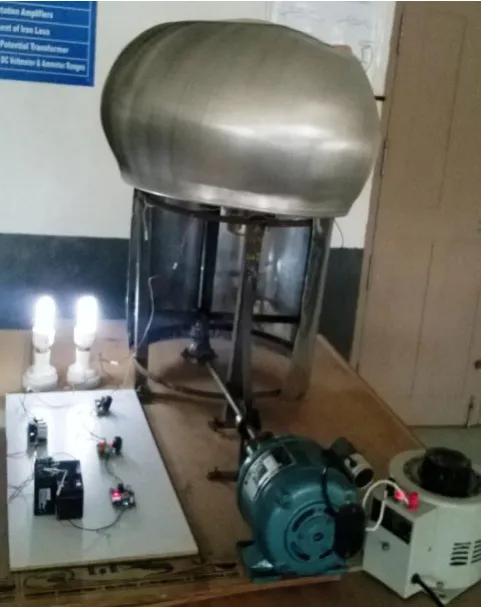
Figure.8. Experimental setup for hardware Circuit
Figure 9. Experimental setup for converter with load
An air exhauster is a device which is used to release a heat from the closed areas of an Industry by rotating itself. This rotation will be used as energy for producing electricity in our proposed method. The rotating air exhauster will be connected to an AC generator by using the gear which is used to increase the speed of the generator. In that, AC generator produces an ac voltage
from the rotation of the air exhauster. After that, the rectifier will be used to convert the AC to DC voltage. In our proposed method, the rectification is done for the storage purpose. After the rectification process, the (10-12)V variable DC voltage is obtained. This variable DC voltage will be stabilized by voltage regulator.
The voltage regulator provides the constant 12V dc voltage as an output. To store a voltage in a battery, we have to boost the voltage.so boost converter is used.It boosts the 12V DC to 15V DC and boosted voltage gets stored in the battery. An inverter is connected to the battery to convert the DC voltage to 12V AC voltage because AC supply is used for all loads in a distributed system. The obtained AC voltage in the output is very low. Hence, we use the step up transformer for stepping up the voltage from 12v-230v supply voltage for load. Finally the load will be switched ON due to the supply voltage.
2. EXPERIMENTAL RESULTS
Figure 11. Experimental output for Boost converter
Figure.12. Experimental output for Inverter
Figure10, 11, 12 shows the experimental output for rectifier, boost converter, inverter respectively. The rectifier output voltages of 5v DC is converted into boost voltage and obtained voltage is 10V DC. Boost converter output voltage is converted to 12V AC. The inverter output is given to step up transformer. The voltage steps up into 230V.
3. CALCULTION OF ENERGY FROM AIR EXHAUSTER
Energy generation with exhauster= E=[ Nd – ((Mh × Nw)/Nh) ] × Nh × PA
Nd= No. Of Working days per year = 365
Nh= No. Of Working hours per day = 24
Mh= weekly maintenance hours =3
Nw= No. of weeks per year =52
PA = Air exhauster generating power
E = Yearly generated energy
For example,
E=[ Nd – ((Mh × Nw)/Nh) ] × Nh × PA =[ 365 – (( 3× 52)/24)] × 24 × 12.24 ] =105312.96
=105KW
Table.3. Calculation of Power For Various Speeds
Figure 13. characteristics of Speed Vs voltage and current
Figure 14. Characteristics of Speed Vs Energy (KW)
equation we calculate energy for one hour and one year. Energy is increased from 105 to 371KW by increasing the speed.
IV.
CONCLUSION
A Hardware design and development of power generation using air exhauster for industrial application is validated under the converter part and is simulated using MATLAB software, experimental results are also verified with the help of CRO. This method is good alternative for comparing the other alternative sources of producing electricity. The proposed technique is cabable of generating 371 units of electricity / air exhauster / year. For a huge industrial unit which consists of thousands of exhauster, implementing this technique will considerably reduce the electricity bill. When compared to other techniques, it has better efficiency, low cost and easy maintenance.
V.
REFERENCES
[1] D. Velmurugan, G.Abinaya, L.Ahila,
B.Saravanakumar, K.Thirumoorthy, “Design and Development of Power Generation using Air Exhauster for Industrial Applications” Vol. 3, Issue 4, March 2016 | ISSN (online): 2348-1439
[2] S.Vijaya Kumar1, Amit Kumar Singh2, Athul
Sabu3, Mohamed Farhan.P4 ” Generation of Electricity by Using Exhaust from Bike” Vol. 4, Special Issue 6, May 2015
[3] Dipak Patil1, Dr. R. R. Arakerimath2” A Review of
Thermoelectric Generator for Waste Heat Recovery from Engine Exhaust” Vol.1 Issue.8,December 2013.Pgs: 1-9
[4] Prathamesh Ramade1, Prathamesh Patil2, Manor
Shelar3, Sameer Chaudhary4, Prof. Shivaji Yadav5,Prof. Santosh Trimbake6” Automobile
Exhaust Thermo-Electric Generator Design
&Performance Analysis” International Journal of Emerging Technology and Advanced Engineering
Website: www.ijetae.com (ISSN 2250-2459,
Volume 4, Issue 5, May 2014)
[5] R. Saidur a, M.Rezaei a, W.K.Muzammil a,
M.H.Hassan a, S.Paria a, M.Hasanuzzaman b,n” Technologies to recover exhaust heat from internal Combustion engines” 1364-0321/$ -seefrontmatter & 2012 ElsevierLtd.Allrightsreserved.
[6] Jia S, Peng H, Liu S, Zhang X. Review of
transportation and energy consump- tion related research. Journal of Transportation Systems
Engineering and Information Technology
2009;9(3):6–16.
[7] Saidur R. A review on electrical motors energy use
and energy savings. Renewable and Sustainable Energy Reviews 2010;14(3):877–98.
[8] Saidur R, Atabani AE, Mekhilef S. A review on
electrical and thermal energy for industries. Renewable and Sustainable Energy Reviews 2011;15(4):2073–86.
[9] Jahirul MI, Saidur R, Hasanuzzaman M, Masjuki
HH, Kalam MA. A comparison of the air pollution of gasoline and CNG driven car for Malaysia. International Journal of Mechanical and Materials Engineering 2007;2(2):130–8.
[10] Saidur R, Jahirul MI, Hasanuzzaman M, Masjuki
HH. Analysis of exhaust emissions of natural gas engine by using response surface methodology. Journal of Applied Science 2008;8(19):3328–39.
[11] UNESCAP. Country Reports: Population and