Samson et al. World Journal of Engineering Research and Technology
AN OPTIMAL CHANNEL PREDICTION OF PSEASMC MODEL
*1S. Samson Dinakaran and 2Dr. M. Devapriya
1
Assistant Professor/Department of CSVLB Janakiammal College of Arts & Science,
Coimbatore, Tamil Nadu, India.
2
Assistant Professor/Department of CS Government Arts College, Coimbatore, Tamil Nadu,
India.
Article Received on 09/08/2019 Article Revised on 30/08/2019 Article Accepted on 20/09/2019
ABSTRACT
In the previous researches, Sublinear communication and Quantum
protocol in Performance and Security Enhanced Asynchronous Secure
Multiparty Computation (SQPSEASMC) model has been designed to
reduce both storage and communication costs. In this model, the upper
bounds of multiparty quantum channels were represented in terms of
multiparty squashed entanglement and derived on the rates at which
GHz channels or multiparty secret channels which can be distributed
among a number of parties over an arbitrary quantum broadcast network. On the other hand,
the open issue was that whether bounds can also be obtained for a network of multiple access
channels which were normally noisy non-local gates. For this reason, an aggregating quantum
repeater was presented that derives the upper bound to restrict the quantum and secret
abilities over the network. Still, the open issue is that whether the optimality of the
aggregated quantum repeaters satisfies the relationship between the quantum channels and
the number of links between Alice and Bob in deriving entanglement. Hence in this paper,
Sublinear communication and Quantum protocol with Channel Prediction in Performance and
Security Enhanced ASMC (SQPSECP-ASMC) is proposed. In this model, the optimality of
aggregated quantum repeaters is achieved by using a supervised rank aggregation method that
predicts the unconnected links in a SMC networks. At first, different topological measures
are used to rank a list of unlinked nodes in a network at a given time. After that, the new links
at a consecutive time interval is predicted based on the weighted value of each topological
World Journal of Engineering Research and Technology
WJERT
www.wjert.org
SJIF Impact Factor: 5.924*Corresponding Author
S. Samson Dinakaran
Assistant Professor/
Department of CSVLB
Janakiammal College of
Arts & Science,
Coimbatore, Tamil Nadu,
measure. Further, the supervised rank aggregation model for link prediction is built by using
these learned weights. Finally, the experimental results show that the proposed
SQPSECP-ASMC model achieves better performance than the SQPSESQPSECP-ASMC in terms of differential
privacy, latency and accuracy.
KEYWORDS: Secure multiparty computation, SQPSEASMC, Link prediction, Aggregated quantum repeaters, Supervised rank aggregation.
I. INTRODUCTION
Typically, Secure Multiparty Computation (SMC) or Multi-Party Computation (MPC) is a
kind of cryptography with the aim of developing techniques for parties in order to jointly
measure the function over their inputs when preserving those inputs. Though it prevents the
party’s confidentiality from each other, it cannot be used efficiently in most of the real-time
applications. Consider a set of parties who want to correctly decide few general functions of
their local inputs when preserving their local information as private as possible, however who
do not confidence each other, not the channels by which they communicate. This is the very
common security issue in SMC i.e., it can be utilized for resolving many real-time challenges
like distributed selection, privacy request, signature distribution or decryption functions, etc.
Regrettably, solving SMC without further considerations is very expensive in terms of
number of payloads to be sent, number of redundancy and number of synchronous rounds.
To tackle these problems, TrustedPals,[1] model has been developed which is a smart
card-based security structure that facilitates more important solutions to the SMC challenges. This
model has a distributed system in which functions were locally employed with tamper-proof
security elements. In traditional methods, the functions were executed as a Java desktop
application and the security components were predicted by Java Card Technology enabled
smart cards, tamper-proof Subscriber Identity Modules (SIM) similar to those utilized on
smart phones or memory devices with integral tamper-proof processing elements. In this
framework, the function F is embedded as a Java function and is shared within the networks
in an initial phase. After that, the functions provide their input value to their security element
and the model obtains the secure allocation of the input values. At last, all security elements
decide the function and return the result to their function. The network security elements
initiate private and authentic channels between each other and acts as a secure transfer within
Consequently, this model tolerates the avoidance of safety issues in SMC to a problem of
fault-tolerant synchronization. As well, the decrement from security to fault-tolerance offers a
novel set of authentication requests concerning a combination of a fault-tolerant algorithm
into secure systems. This provides this framework vulnerable to the rapid changes in the
network delay and so this is not perfect for network execution. Cortinas et al.[2] explored how
to make Trusted Pals applicable in a network configuration with less synchrony. Also, they
proved how to solve the Asynchronous version of SMC (ASMC) using asynchronous
synchronization algorithms motivated by the current outcomes in fault-tolerant distributed
computing. They used an asynchronous consensus algorithm and encapsulate timing
hypotheses within a device known as a failure detector.[3] However, it generates fixed size
messages in fixed time intervals. Therefore, the size of the payload field was required to
choose for finding an acceptable tradeoff between security and performance such that a
message size offers better security in cost of worse performance.
To overcome such issue, Performance Enhanced ASMC (PEASMC) and Security Enhanced
ASMC (SEASMC) were proposed to quantitatively measure the performance and security by
improving the set of metrics. As well, Performance and Security Enhanced ASMC
(PSEASMC) was proposed,[4] to compute the best tradeoff by reducing the tradeoff objective
function which has both performance and security metrics together instead of automatically
switching from one security configuration to another until the required tradeoff was achieved.
According to this model, an acceptable tradeoff between security and performance is
achieved based on the chosen payload size efficiently. On the other hand, the consensus in
this model was not solved due to high storage and communication efforts. Also, the bit
complexity of the payload was high due to utilization of unbounded buffers. As a result,
Sublinear communication and Quantum protocol in PSEASMC (SQPSEASMC) was
proposed,[5] in which One-Time Truth Table (OTTT) protocol was used for enabling several
parties to commonly assess N-party functionality by sharing between Alice and Bob. The
secret sharing was depending on the oblivious transmit of a bit-string message from Alice to
Bob. The hash functions were used for authenticating whether Bob receives the message or
not. Based on this protocol, both capacity and communication complexities were reduced
with high security level against malicious adversaries. In this multi-party quantum channels,
the upper bounds were derived on the rates at which GHz states or multi-party private states
which can be shared among a number of different parties over an arbitrary quantum broadcast
However, the problem was that whether bounds can also be obtained for a network of
multiple access channels. Also, the multiple access channels were noisy non-local gates.[6]
So, aggregating quantum repeaters were presented to derive the upper bound that restricts the
quantum capacity and the private capacity over the network.[7] The quantum network is
composed of a wide range of stretchable quantum channels such as erasure channels,
dephasing channels, bosonic quantum amplifier channels and optical lossy channels in the
asymptotic limit; however, may not be in general. But, it is more vital fact that the optimality
of the aggregated quantum repeater protocol is currently related to the basic questions on
whether the given quantum channels satisfy the fundamental relations between Alice and Bob
for the secret-key distillation or not.
Hence in this article, a supervised rank aggregation method is proposed to predict the links in
SMC networks and enhance the optimality of aggregated quantum repeaters. Initially, a list of
unlinked nodes in a network at a given time is ranked based on different topological measures
i.e., quantum communication capacity, assortativity (it indicates how much nodes tend to link
to other nodes with similar degree and it is measured by degree-degree correlation) and
centrality measures (it quantifies the significance of a node relative lively behaves for all
nodes). Each topological measure must rank a truly occurring link on the top positions. Then,
each topological measure is weighted based on its performances in predicting the new links at
consecutive time intervals. These learned weights are used to have a supervised rank
aggregation model for predicting new links. Therefore, it provides a better prediction of
relationship between quantum channels and links between Alice and Bob.
The rest of the paper is organized as follows: Section II presents the previous researches on
aggregation method for SMC/MPC. Section III explains the methodology of proposed model.
Section IV illustrates the experimental results compared with the existing models and Section
V concludes the entire discussion.
II. LITERATURE SURVEY
Pathak et al.[8] proposed the multiparty differential privacy through aggregation of locally
trained classifiers. In this method, a privacy-preserving protocol was proposed for making a
differentially private aggregate classifier using classifiers trained locally by separate mutually
untrusting parties. These parties were allowed to interact with an untrusted curator for
constructing additive shares of a perturbed aggregate classifier. However, the computation
Goryczka et al.[9] proposed a secure multiparty aggregation with differential privacy. In this
method, the security was guaranteed by SMC protocols using Shamir’s secret sharing,
perturbation-based and different encryption schemes. Differential privacy of the final result
was achieved by Distributed Laplace Perturbation (DLPA) mechanism. To satisfy the
differential privacy, partial random noise was generated by all parties such that the
aggregated noise follows Laplace distribution. However, the computation overhead was high
that limits the scalability.
Jung et al.[10] proposed the privacy-preserving data aggregation without secure channel by
introducing novel secure product and sum computation protocol. This method was considered
how an external aggregator or multiple parties can learn few algebraic statistics over parties
privately owned data when preserving the data confidentiality. Also, considered that all
channels were subjected to the eavesdropping attacks and all the communications via the
aggregation were open to others. However, the information leakage during computation and
communication was high.
Tian et al.[11] proposed an aggregation of private sparse learning models using MPC. In this
approach, the problem of privately learning a sparse model was considered across multiple
sensitive datasets. Also, learning individual models were proposed and privately aggregated
by using SMC. However, this model has limitations on analyzing accuracy loss and amount
of data leaked by the aggregated model.
Bonawitz et al.[12] proposed a practical secure aggregation for privacy-preserving machine
learning. In this approach, MPC was controlled to compute total of model parameter that
updates from individual parties components in a secure way. The server has two
responsibilities such as it routes payloads between the other parties and computes the final
outcome. Nevertheless, the communication cost was not reduced efficiently.
Bindschaedler et al.[13] considered the privacy preserving aggregation in constrained
scenarios where inter-participant communication was not realistically possible. Shamir secret
sharing was employed within a star network to provide the collusion resistance and fault
tolerance. Also, different protocols were developed to add noise to the computed aggregate
function, thereby ensuring differential privacy for the participants. However, the
Long et al.[14] proposed a framework for distributed and secure machine learning among
untrusted individuals. This framework has two phases such as a two-step training protocol
based on homomorphic addition and a zero knowledge proof for data authentication. By
combining these two techniques, privacy of per-user data was provided and a malicious user
was prevented. However, the authentication time per user was high.
III. Proposed Methodology
In this section, the proposed methodology is explained in brief. Consider
is a temporal sequence of an initial graph. The entire sequence is split into three segments
such as training, labeling and testing or validation. Three graphs such as and
are generated by making union of the temporal sequences of the graphs for three
corresponding time slots. The training data is built as follows:
An example can be generated for each couple of repeaters that are not linked
in ; however both belonging to the same linked component. The class labeling is
obtained by verifying whether the couple of repeaters are indeed connected in . If such
a link exists, then it will be a positive example in the supervised learning process and if no
link exists, then it will be a negative example. Therefore, examples are generated from these
graphs for both training and testing. Also, these examples are characterized by a given
number of topological attributes such as average number of times quantum channel is used,
average of all degree (income and outcome) of nodes in the channel and distance between
two nodes.
Each attribute of an example has the capacity for providing some unique information about
the data while considered individually. The training examples are ranked based on the
attribute values. Therefore, for each attribute, a ranked list of all examples is obtained.
Considering only the top K ranked examples and with a hypothesis that when the examples
are ranked according to their attribute values, the positive examples must be ranked on the
top and the performance of each attribute is computed. This performance is measured in
Positive Rate (FPR) i.e., minimizing the prediction of negative examples or a combination of
both. Then, a weight is assigned to each attribute based on these individual performances.
For testing, examples obtained from the testing graph characterized by same attributes are
used and all examples are ranked based on their attribute values. Thus, n different rankings of
the test examples for n different attributes are obtained. After that, these ranked lists are
merged by using a supervised rank aggregation mechanism and the weights of the attributes
acquired during learning process. The top n ranked examples in the aggregation are taken to
be the predicted list of positive examples. By using this predicted list, the performance this
proposed model is computed. In this case, k is equal to the number of positive examples in
the testing graph.
3.1 Weights Computation
The topological measures weights are computed based on their capability for predicting
correct elements in the top k positions of their rankings. The weights associated to the applied
topological measures are computed based on the following criteria:
Maximizing positive precision: By maximizing the prediction of positive examples, the
attribute weight is computed as:
(1)
In Eq. (1), n denotes the total amount of attributes and Precision represents the precision of
attribute i based on the prediction of positive examples i.e., secure links. Precision is referred
to as the percentage of predicted instances that are relevant.
Minimizing FPR: By minimizing the prediction of negative examples i.e., non-secure links, a
weight is computed as:
(2)
In Eq. (2), FPR denotes the FPR of attribute i based on the prediction of negative examples.
FPR is referred to as the percentage of non-relevant instances that are predicted as relevant.
Consider Li is the ranked list of n repeaters (a link) and Li (1) is the rank element x in the list
Li. The top ranked element has the rank 0. Then, a primary individual Borda score of an
element x for a link i is given by:
(3)
Consider and are two repeaters. The local preference function is defined as follows:
(4)
Introducing the weights in Borda aggregation rule is rather simple. Consider
are the weights for links providing ranked lists on repeaters. Then,
the weighted Borda score for a repeater is given by:
(5)
For approximate Kemeny aggregation, the weights are introduced into the definition of the
non-transitive preference relationships between repeaters. This is modified as follows:
Consider is the sum of all computed weights i.e., . For each couple of
repeaters , a score function is computed as follows:
(6)
After that, the weighted preference relation is defined as follows:
(7)
This new preference relation is used for sorting a primary aggregation of repeaters to obtain a
supervised Kemeny aggregation. The initial aggregation can be any of the input lists or an
aggregation obtained by applying any other conventional aggregation method such as Borda.
In this model, merge-sort is applied for the time being.
In this section, the performance of the proposed SQPSECP-ASMC model is evaluated and
compared with the existing SQPSEASMC model by using Java. This comparative analysis is
done in terms of different metrics,[5] such as differential privacy, latency and accuracy.
Differential Privacy: It is used to estimate the confidentiality of this model.
Accuracy Measure: It is used to measure the exactness of this model in terms of average
accuracy and worst-case accuracy.
Latency: It is used to measure the number of rounds required to interface all legitimate
parties.
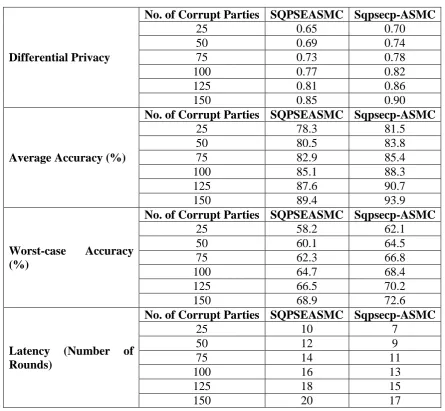
Table 1 gives the comparison of proposed SQPSECP-ASMC and existing SQPSEASMC
models regarding differential privacy, average accuracy, worst-case accuracy and latency.
Table 1: Comparison of Performance Metrics.
Differential Privacy
No. of Corrupt Parties SQPSEASMC Sqpsecp-ASMC
25 0.65 0.70
50 0.69 0.74
75 0.73 0.78
100 0.77 0.82
125 0.81 0.86
150 0.85 0.90
Average Accuracy (%)
No. of Corrupt Parties SQPSEASMC Sqpsecp-ASMC
25 78.3 81.5
50 80.5 83.8
75 82.9 85.4
100 85.1 88.3
125 87.6 90.7
150 89.4 93.9
Worst-case Accuracy (%)
No. of Corrupt Parties SQPSEASMC Sqpsecp-ASMC
25 58.2 62.1
50 60.1 64.5
75 62.3 66.8
100 64.7 68.4
125 66.5 70.2
150 68.9 72.6
Latency (Number of Rounds)
No. of Corrupt Parties SQPSEASMC Sqpsecp-ASMC
25 10 7
50 12 9
75 14 11
100 16 13
125 18 15
Figure 1: Comparison of Differential Privacy.
Figure 1 exhibits the assessment of SQPSECP-ASMC and SQPSEASMC in terms of
differential privacy. For instance, consider the number of fraudulent parties is 150. At that
point, the differential privacy for SQPSECP-ASMC is 5.88% boosted than SQPSEASMC.
From this investigation, it is shown that the SQPSECP-ASMC model can increase the secrecy
for all N parties than the SQPSEASMC model.
Figure 3: Comparison of Worst-case Accuracy.
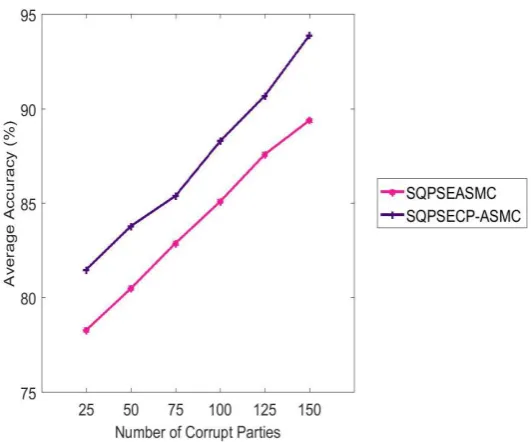
Figure 2 and 3 represent the assessment of average and worst-case accuracy for proposed and
existing models, correspondingly. On the chance that the amount of dishonest parties is 150,
in that case the average accuracy of proposed SQPSECP-ASMC model is 5.03% increments
than the SQPSEASMC model. Also, the worst-case accuracy of SQPSECP-ASMC is 5.37%
higher than SQPSEASMC model. Along these lines, it is inferred that the proposed
SQPSECP-ASMC model accomplishes higher exactness in both average and worst-case
scenario for securely computing secret shares of the N-party functionality.
Figure 4: Comparison of Latency.
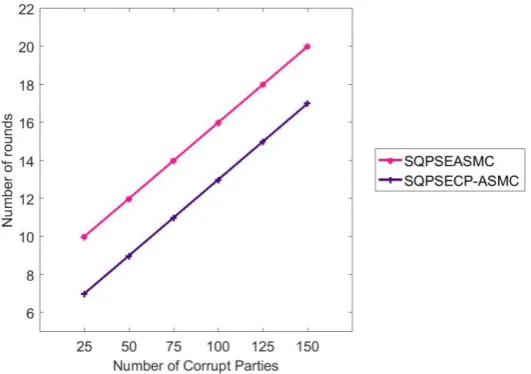
Figure 4 demonstrates the assessment of SQPSECP-ASMC and SQPSEASMC regarding
latency. For instance, consider the amount of fraudulent parties is 150. For this condition, the
SQPSEASMC model. In this way, it is seen that the proposed SQPSECP-ASMC model
significantly limits the number of rounds to interface all genuine parties with maximum
secrecy.
V. CONCLUSION
In this article, SQPSECP-ASMC model is proposed to achieve the optimality of aggregated
quantum repeaters by using a supervised rank aggregation method that predicts the
unconnected links in a SMC networks. Initially, a list of unlinked nodes i.e., repeaters is
ranked based on the topological measure. Then, the new links at a consecutive time interval is
predicted by assigning a weight for each topological measure. Further, the link prediction is
built by using these learned weights in a supervised rank aggregation model. In the end, the
experimental results proved that the proposed SQPSECP-ASMC model has maximum
differential privacy, average and worst-case accuracy and minimum latency.
REFERENCES
1. Fort, M., Freiling, F., Penso, L. D., Benenson, Z., & Kesdogan, D. (September).
TrustedPals: Secure multiparty computation implemented with smart cards. In European
Symposium on Research in Computer Security (pp. 34-48). Springer, Berlin, Heidelberg,
2006.
2. Cortinas, R., Freiling, F. C., Ghajar-Azadanlou, M., Lafuente, A., Larrea, M., Penso, L.
D., & Soraluze, I. Secure failure detection and consensus in trustedpals. IEEE
Transactions on Dependable and Secure Computing, 2012; 9(4): 610-625.
3. Atif, M. Formal modeling and verification of distributed failure detectors. Faculty of
Mathematics and Computer Science, TU/e, 2011; 10.
4. Dinakaran, S. S., & Devapriya, M. Security and performance enhanced asynchronous
secure multiparty computation (ASMC). International Journal of Engineering Research
& Technology, 2019; 8(06): 724-730.
5. Dinakaran, S. S., & Devapriya, M. Minimizing storage and communication costs in
PSEASMC model, 2019.
6. Bäuml, S., & Azuma, K. Fundamental limitation on quantum broadcast
networks. Quantum Science and Technology, 2017; 2(2): 024004.
7. Azuma, K., & Kato, G. Aggregating quantum repeaters for the quantum internet. Physical
8. Pathak, M., Rane, S., & Raj, B. Multiparty differential privacy via aggregation of locally
trained classifiers. In Advances in Neural Information Processing Systems, 2010;
1876-1884.
9. Goryczka, S., Xiong, L., & Sunderam, V. (March). Secure multiparty aggregation with
differential privacy: A comparative study. In Proceedings of the Joint EDBT/ICDT 2013
Workshops (pp. 155-163). ACM., 2013.
10.Jung, T., Mao, X., Li, X. Y., Tang, S. J., Gong, W., & Zhang, L. (2013, April).
Privacy-preserving data aggregation without secure channel: Multivariate polynomial evaluation.
In Proceedings IEEE INFOCOM (pp. 2634-2642). IEEE., 2013.
11.Tian, L., Jayaraman, B., Gu, Q., & Evans, D. Aggregating private sparse learning models
using multi-party computation. In NIPS Workshop on Private Multi-Party Machine
Learning, 2016.
12.Bonawitz, K., Ivanov, V., Kreuter, B., Marcedone, A., McMahan, H. B., Patel, S., & Seth,
K. (October). Practical secure aggregation for privacy-preserving machine learning.
In Proceedings of the 2017 ACM SIGSAC Conference on Computer and Communications
Security (pp. 1175-1191). ACM., 2017.
13.Bindschaedler, V., Rane, S., Brito, A. E., Rao, V., & Uzun, E. (March). Achieving
differential privacy in secure multiparty data aggregation protocols on star networks.
In Proceedings of the Seventh ACM on Conference on Data and Application Security and
Privacy (pp. 115-125). ACM., 2017.
14.Long, Y., Gangwani, T., Mughees, H., & Gunter, C. Distributed and Secure ML with