International Journal of Pharmacy & Therapeutics
Journal homepage:
www.ijptjournal.comIJPT
GENESIS AND DEVELOPMENT OF PHARMACY EDUCATION AND
PHARM D IN ASIA.
Diana Thomas, Maria C Paul, Sumitha C
Amrita School of Pharmacy, AIMS, Elamakkara P.O., Cochin, Kerala, India.
ABSTRACT
Throughout the world the profession of pharmacy is growing up producing an adequate number of well trained pharmacists competent to practice the profession of pharmacy in the changing environment. Even with the remarkable growth achieved in the field of pharmacy, newer challenges are coming to the front which needs more planning and coordination between the various health care professionals. To provide better clinical pharmacy services to the society, the Doctor of Pharmacy (Pharm D) program was adopted in Asia during 1990’s from the west. The development of pharmacy education in Egypt, Lebanon, China, India, Pakistan, Bangladesh, Thailand, Philippines, Jordan, Qatar, Saudi Arabia, and UAE are discussed here. The first pharmacy program dates back to 1824 in Cairo University, Egypt. Even though the Madras Medical College started the first pharmacy course in 1860 in India it was only in 1932 it became a university programme in BHU. The first Pharm D programme was started in 1955 in University of California in San Francisco, USA. In the later years other countries followed this trend and started revising their pharmacy curriculum to match with that of USA. Pharm D in India was introduced in 2008 in about 20 colleges including Annamalai University in Tamil Nadu.
Key Words: Pharmacy, Pharmacy education, Pharmacy in Asia.
INTRODUCTION
The pharmacy education and its practice vary extensively throughout the world. Currently the pharmacy education is not significantly practice oriented in certain countries. In Asia, including Middle East the profession of pharmacy education is growing up and this can be exemplified by the rise in the number of pharmacy schools and graduates. An adequate number of well trained pharmacists are required to uphold the profession of pharmacy. Even with the remarkable growth achieved in the field of pharmacy, newer challenges are coming to the front which needs more planning and coordination between the doctors, the pharmacists, the pharmaceutical companies and health policy makers to provide better clinical pharmacy services to the society. Pharm D is a multidisciplinary and multifunctional programme. It aims at producing pharmacists with better clinical skills who can provide pharmaceutical care to people (Syed Imran et al., 2008). The doctor of pharmacy (Pharm D) program Corresponding Author
Diana Thomas
Email: [email protected]
was introduced in Asia to mould up students with the knowledge and skills with conventional learning methods including clinical simulations and training. The Doctor of Pharmacy (PharmD) program was introduced in Asia to mould up students with the knowledge and skills with conventional learning methods including clinical simulations and training. Our goal in this present research is to study about Pharm D in various countries in the Asian continent including U.A.E, Qatar, Saudi Arabia, Egypt, Lebanon, Jordan, Bangladesh, Pakistan, China, Philippines and Thailand. These countries were specifically selected to study the genesis of pharmacy education to their present status of Pharm D as they are near to India and to know their specific contributions to the field of pharmacy education. The percentage expenditure each country spends in healthcare is given in table 1.
pharmacy education. Egypt is a transcontinental country bordered by the Mediterranean Sea to the north, the Gaza Strip and Israel to the northeast, the Red Sea to the east, Sudan to the south and Libya to the west. Egypt is the largest country in Middle East in terms of population about 82 million. The pharmacy program in Egypt dates back to 1824 in Cairo University (Nadir Kheir et al., 2008).
Fig 1. Cairo University
Egypt has about 13 pharmacy colleges most of which are government colleges, though some private colleges have emerged recently. Clinical pharmacy is in an embryonic stage of development. Egyptian universities produce a higher number of pharmacy graduates than required to meet the national professional need. The majority of graduates enter the profession in the community sector; some obtain employment in Egypt's expanding pharmaceutical industry, and a small number work in hospitals. Pharmacists in Community and hospital sectors primarily serve a pharmaceutical supply role (El-Sayed et al., 2006).
Lebanon is a country on the eastern shore of the Mediterranean Sea. It is bordered by Syria to the north and east, and Israel to the south. . The capital of Lebanon is Beirut and is called as “Paris of the Middle East. Because of the financial power and diversity, Lebanon was known in its heyday as the Switzerland of the East. Lebanon is divided into six governorates, Beirut Governorate, Nabatieh Governorate, Beqaa Governorate, North Governorate, Mount Lebanon Governorate and Mount Lebanon Governorate. The country currently has around 4100 pharmacy personnel. Pharmacy education started in Lebanon at 1889 at the Saint Joseph University of Beirut with a pharmacy diploma program. Lebanon, officially the republic of Lebanon is a country on the eastern shore of the Mediterranean Sea. The northern and eastern part of Lebanon is bordered by Syria and Israel to the south. There are five pharmacy schools in Lebanon. There is two years of "pre-professional" or "pre-pharmacy" which is the entry-level part of the curriculum. After completing this set of courses, students apply for admission into the professional phase of the program which is B.S. in
Pharmacy. The B.S. program consists of the two pre-professional years plus three years of pre-professional courses. After completing the pre-professional courses, students are enrolled into professional phase of the program B.S. in Pharmacy degree (Victor Khachan et al., 2004). The countries Lebanon and Thailand started Pharm D in 1992, the earliest among the above mentioned countries. There are two pharmacy schools in Lebanon which offer Pharm D degrees. First is the Lebanese University which is taught is French. The second is the Lebanese American University which is only US accredited doctor of pharmacy program outside United States. Graduates of this program are eligible to take the North American Pharmacy Licensure Examination (NAPLEX).They can be licensed to practice in the United States. They admitted 19 students for this program in 1992.The program was first established by Dr.Anwar Bikhasi, a pharmacy graduate of the American University of Beirut with a PhD from the University of Michigan. Admission into the program is highly competitive with an average admission rate of 20% of the applicants. Now Lebanon has 5 pharmacy schools. This was the leading Pharm D program in Middle East. Like the Lebanese American University many programs started in Lebanon and other neighbouring countries (Dib J G et al., 2004). The first year of Pharm D is the course work in basic sciences that is general chemistry, organic chemistry, mathematics, biological and biomedical sciences, information and communication technology, and physical sciences. Also general education in humanities, behavioural and social sciences and communication skills were also taught. The professional years of the curriculum includes course work in the biomedical, pharmaceutical and clinical sciences and also in behavioural and, social and administrative pharmacy sciences. Training includes 10 to 36 weeks. But in Saint Joseph University, 18 months or 72 weeks of experiential training is needed.
their national pharmacy education program. Thailand in 1984-85 signed a treaty to train their teachers in pharmacy schools in USA. The pharmacy teachers were sending to the American Universities to gain site exposure and experience in running Pharm D program including its various components. Doctor of Pharmacy in Thailand was first established by the Faculty of Pharmaceutical sciences, Naresuan University in 1992 (Revikumar K G et al., 2009). The Faculty of Pharmacy, Mahasarakham University, was the second university in Thailand to establish the 6-year Pharm D program. The first batch of students was taken up in the year 2000. The current Pharm D curriculum requires 240 credits hours. All pharmacy students should take up 1500 hours of general professional practice and eight clerkship rotations in governmental and private hospitals, community pharmacies, and pharmaceutical manufacturers. The students have to spend their final year for clerkship rotation under the supervision of preceptors. Graduates of BS pharmacy can take extra 2 years to complete Pharm D.
The Philippines is officially known as the Republic of the Philippine. Its capital city is Manila. The country is 48th largest in the world in terms of gross domestic product. Per capita total expenditure is about 52 $.The Centro Eskolar University, Philippines established in 1907 started the college of pharmacy in June, 1921. Philippines are situated in Southeast Asia in the western Pacific Ocean. To its north across the Luzon Strait lies Taiwan. It is bounded on the east by the Philippine Sea. The education level of Philippines is also increasing and has many colleges and universities. In 1929, the 3-year course was extended to 4 years leading to the degree of Bachelor of Science in Pharmacy. First Pharm D program in Philippines was started in June 2005 in Centro eskolar Makati. It is a 6 year program and requires completion of 52 units of formal work and 36 units of lineal rotation. The New College of Pharmacy at Qatar University started Pharm D first. Annually 20 students are enrolled for this program. In 2007, the students were accepted into the 5 year BSc (Pharm) and in 2011 students will be accepted into the final year of 6 year Pharm D program. The program is a 5-yr baccalaureate program that requires 1-year of general sciences before competitive application. It also requires the completion of US based pharmacy college admission test (PCAT). The first batch of Pharm D is expected to come out in 2012.
India, officially The Republic of India is a country in South Asia. It is the seventh largest country by geographical area, the second- most populous country with over 1.18 billion people and the most populous democracy in the world. The concept of practice of pharmacy in India is very old, though its education and practice was not very well defined. It was the British Emperorship that gave the Indian pharmacy education its stepping stone. In 1860, the Madras Medical College started the first pharmacy course. A formal training of the compounders was started in 1881 in Bengal. The students were scientifically educated and
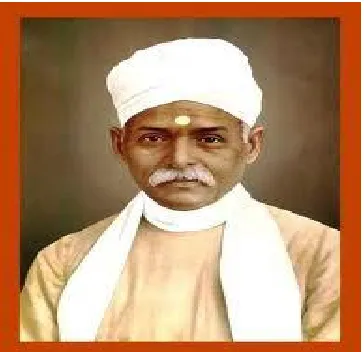
trained. They were initially known as the Chemist and Druggist, but it didn’t get popularised as a profession. The formal pharmacy education in India started in Banaras Hindu University by Mahamana Pt Madan Mohan Malviya (see figure 2) and Prof M L Schroff (see figure 3) in1932 (Singh H, 2002). It was a three year Bsc degree in Pharmaceutical Chemistry and Pharmacognosy. The first M.pharm course was started in 1940, April the in the Banaras Hindu University (BHU). At the time of independence there were only five pharmacy colleges in the country and it increased to 16 by 1967. Since then the pharmacy education has grown significantly. Later in the years the pharmacy education got transformed. From the period of 2000-2008 hundreds of new pharmacy degree colleges started in the country. The number of degree colleges in India increased to around 1100 by 2010. Now the country provides 2 year D Pharm degree, 4 year B Pharm degree and the post graduate courses like 2 year M Pharm degree. There are about 1100 degree colleges offering B Pharmacy and the number of M Pharm and Phd aspirants are also increasing over the years.
Fig 2:Madan Mohan Malviya
India started Pharm D program at the same time i.e.; in 2008. In the year 2008 Pharm D was introduced in the Annamalai University in Tamil Nadu, India. Now there are about 24 colleges offering Pharm D 6 year course in India. There is no doubt that currently there is enormous gap existing between education and practice of pharmacy. Through the introduction of Pharm D we expect to reduce this gap (Gilzai K et al., 2007).The syllabus of B Pharm is a mixture of clinical and industrial subjects. Nearly 55% of jobs are available in the industrial sector and only 3% jobs in healthcare sector. By the introduction of Pharm D this problem can be solved to an extent. The Pharmacy Council of India (PCI) also known as Central Council was constituted under section 3 of Pharmacy act in 1948. It regulates and controls the pharmacy education in India. All though first attempts to introduce Pharm D in India begin in the early 90’s in Trivandrum Medical College and a curriculum for Pharm D was framed by Dr.K G Revi Kumar in 1999, which was then the head of Hospital and Clinical Pharmacy, Trivandrum Government medical college it could not materialise due to some reasons. The Indian authorities came to think seriously about PharmD when the Foreign Pharmacy Graduation Equivalency Committee (FPGEC) in US made it mandatory that a 5 year pharmacy graduation programme to be eligible to take the Foreign Pharmacy Graduation Equivalency Examination (FPGEE). As a result, six year regular PharmD and the three year post baccalaureate PharmD programme were introduced in the country in 2008. In September 2008, 20 colleges were given approval for starting Pharm D for the academic year 2008-2009. In 2010 – 2011 about 62 colleges were given permission to start PharmD and a state wise list is given in table 2. In India the Pharm D programme has been planned and developed to provide opportunity for evidence based practice culture. The future prospects of Pharm D in India are promising and give immense opportunities for carrying out innovative practise experiences in the field of pharmacy.
Pakistan officially the Islamic Republic of Pakistan is a country in South Asia. Islamabad is the capital city of Pakistan. It has about 170 million people and also has the second largest Muslim population. The economy is semi industrial and is the 27th largest in terms of purchasing power. The working Pharmacy personnel’s in Pakistan is estimated about 8102. The education system in Pakistan is developing profoundly. The nearest neighbour of India, Pakistan also started pharmacy education near to the time when India had started. Pakistan has a 1,046-kilometre coastline along the Arabian Sea and the Gulf of Oman in the south and is bordered by Afghanistan and Iran in the west, India in the east and the China in the far northeast. In Pakistan, pharmacy education was already there when it came into existence but it has been neglected and has failed to contribute significantly to national healthcare. In Pakistan, the bachelor’s degree was the first professional degree for pharmacy practice. It was started in 1944 at the University
of Punjab, Lahore. University of Karachi established the faculty of pharmacy in 1964. Later in 1982 university of Peshawar started the pharmacy education (Zaheerudin Babar et al., 2005). In 2003, the Pakistan Pharmacy Council introduced Pharm D as a professional basic degree course of 5 years. In 2004, the Higher Education Commission (HEC) of Pakistan revised the pharmacy syllabus and changed the 4 year Bachelor of pharmacy (B.Pharm) degree to a 5 year Doctor of Pharmacy (Pharm. D.). In the last 5 years, there has been a rise in the number of pharmacy institutions in the country, currently about 17 universities are imparting pharmacy education. Though, the number of institutions has almost doubled, the quality of education has not improved. The Syllabus was revised but it still shows insufficiencies and shortcomings and does not meet international standards. Universities offering the Pharm.D program in Pakistan are Karachi University; Dow College of Pharmacy, Hamdard University, Baqai University, Federal Urdu University, The University of Punjab, The University Of Lahore, Gomal University, The Islamia university of Bahawalpur, etc. These institutes are recognized by the Pakistan Pharmacy Council. In almost all countries after gaining a degree in pharmacy, students have to undergo a one year internship either in hospital or in industry. But in Pakistan this is not compulsory and a pharmacist can be registered with the pharmacy council as soon as he passes the exam. As a requirement for the fulfilment of the degree of Pharm.D, students have to complete their "Clinical Pharmacy Clerkship" during fourth and the fifth professional which involves rotations to the assigned wards of Teaching Hospitals and the completion of "Clinical Pharmacy Practice Project-Thesis" at the end of clerkship. Students have to present this Thesis and have to appear in the viva voce examination and have to defend their thesis in order to get it approved. Department of Pharmacy, University of Peshawar is the leading role model in this regards. The provincial government has approved three local hospitals (Khyber Teaching Hospital, Lady Reading Hospital and the Hayatabad Medical Complex) for Clerkship rotations for Pharm.D students of University of Peshawar Pharmacy College of Punjab also started Pharm.D degree The subjects in each year are approved by the Academic Council of University of the Punjab, Lahore and Higher Education Commission formerly known as University Grant Commission. Candidates for admission should have completed F.Sc. (Pre-medical) or B.Sc. (After F.Sc. Pre-medical) or equivalent examination holding at least 2nd Division in the Examination on the basis of which he/she is seeking admission. All the students (except foreigners) must have to appear in Entry Test. To practice in Pakistan, pharmacist must be enrolled with either provincial councils or to Pakistan Pharmacy Council. (Zaheerudin Babar et al., 2005).
3rd largest country in the world. China is located in the East of Asia, on the Western shore of Pacific Ocean. The annual number of pharmacy graduates has been approximately 10,000. China is one of the world’s oldest civilisations. Prior to the19th century, it possessed one of the most advanced societies and economies in the world. Traditional Chinese pharmacy has had a history of thousands of years and the scientific therapeutic effects of traditional Chinese materia medica have attracted great attention around the globe. Modern pharmacy education in China began in the Qing Dynasty in 1906(Chinese Pharmaceutical year book, 2006). In 1949, there were 8 schools and universities offering pharmacy programs and degrees. In 1955, the first university to admit postgraduate pharmacy students was Beijing Medical College (currently known as Peking University Health Science Centre) (Chen Zongmin et al., 1998). With the development of medicine and pharmacy a number of newer drugs and dosage forms have come in to the Chinese market and this become a burden for the clinical physicians to study the rational clinical use and safety for their therapeutic effects. They have to depend on pharmacists to solve these problems. This is why the education of clinical pharmacy begins to attract more attention. In 1987 the National Educational Committee approved the start of the specialty of clinical pharmacy. The clinical pharmacists in China are engaged in the clinical application of drugs and monitoring their therapeutic effects. The first class of these students in the clinical pharmacy specialty graduated in 1994. Today, there are more than 257 pharmacy schools and universities that offer the BS degree and higher degrees throughout China. Traditionally, students receive a BS degree as an entry-level pharmacy degree. Students holding a BS degree can earn an MS degree in 3 years or a PhD in 5 years. Students with an MS degree can work toward a PhD with an additional 3 years of study. Another route to pharmacy education is through bachelor or master degrees in medical sciences (BM or MM, respectively). These students declare their first level as medical sciences and their second level as clinical pharmacy. They are eligible for licensure as a pharmacist; however, they cannot practice medicine.
Clinical pharmacy education in China has developed only recently. As there is no standardization of curricula, there are a variety of degrees offered from various programs. BS degrees in pharmacy or medicine, MS degrees in pharmacy or medicine, and PhD degrees in pharmacy can all have components of clinical pharmacy. From 1989 to 1999, the West China School of Pharmacy at Sichuan University offered the first 5-year clinical pharmacy BS degree. Since 2000, the Ministry of Education has allowed only pharmaceutical sciences as a first-level discipline for BS degrees. Students wishing to study clinical pharmacy at the bachelor's level may select clinical pharmacy as a second-level area of concentration under pharmaceutical sciences. As an exception, in 2008 China Pharmaceutical University was allowed to offer a
first-level, 5-year BS degree in clinical pharmacy. The Ministry of Education is considering a proposal for an entry-level professional degree of master and/or doctor in clinical pharmacy similar to the doctor of pharmacy (PharmD) degree in the United States (Melody Ryan et al., 2008).
The Kingdom of Saudi Arabia is the largest Arab country of the Middle East. It is "The Land of the Two Holy Mosques" in reference to Mecca and Medina, the two holiest places in Islam. Saudi Arabia has the largest oil reserves in the world and ranks first in its export. The country currently has around 15000 pharmacy personnel’s. In Saudi Arabia, the majority of the pharmacy graduates choose to work in hospitals rather than in community pharmacies. The Kingdom of Saudi Arabia borders the Arabian Gulf and the Red Sea, north of Yemen. Saudi Arabia with its 28 million people has 9 pharmacy schools. King Saud University (KSU) in Riyadh started the first college of pharmacy in 1959. Later several other universities also started pharmacy education including King Abdul Aziz University, King Faisal University and King Khalid University in Abha. The degree of bachelor of pharmacy (BPharm) is the basic degree in pharmacy education in this country. BPharm students enrol for a 5-year program consisting of 10 semesters (Mayyada Al-Wazaify et al., 2006). Pharm D program in Saudi Arabia was started in King Abdullah University in 2001(Mayyada Al-Wazaify, 2005). Pharm D in Saudi is a 7 year program. After completion of 6year Pharm D, the candidate has to take Accredited Residency Training Program (1Year). Up on completion the candidate can apply for Master Degree in Pharmacy. According to the Saudi Commission for Health Specialties (SCFHS), if a student has taken Pharm D within a minimum six years period, the total duration of the program can be made seven years as the graduate has a chance to further develop himself by taking Accredited Residency Training Program for one year duration (Revikumar K G et al., 2009).
6.2 million. In Jordan, 2 pharmacy faculties were established from 1979 one at The University of Jordan (JU), Amman, and the other at Jordan University of Science and Technology (JUST), in the northern city of Irbid. Teaching started at both faculties with few full-time faculty members and a few part-time lecturers. The first group of 90 students, graduated in 1985. In addition, government, 6 privately funded universities have pharmacy programs in Jordan. Over the past 24 years, the total number of pharmacy graduates in Jordan has surpassed 4000.Here female students dominate admissions (Mayyada Al-Wazaify, 2005).
The UAE includes seven states which are Abu Dhabi, Dubai, Sharjah, Ajman, Umm Quwain, Ras al-Khaimah and Fujairah. The capital of the United Arab Emirates is Abu Dhabi, the country's centre of political, industrial, and cultural activities. The country has the world's seventh largest oil reserve and is one of the most developed economies in West Asia. The total expenditures on healthcare from 1996 to 2003 were estimated to be US$436 million. According to the World Health Organization, the pharmaceutical personnel per 100 000 population is 40. Many programs and initiatives has been launched by the government to improve the quality of education at schools across the country importantly Pharm D. Pharmacy education started in UAE in 1992 by the Dubai pharmacy college (Mayyada Al-Wazaify et al., 2006). The United Arab Emirates is a federation located in Persian Gulf specifically in the southeast of the Arabian Peninsula in southwest Asia. There are totally 7 pharmacy colleges within the country. The first institution to start Pharm D in U.A.E was the gulf pharmacy college under the gulf medical university. The program aims at moulding the students to become more competitive with ground knowledge in biomedical and behavioural sciences. Annually around 40 students are admitted for this program with an annual fee of around 45000 AED. It is a five and a half year program which include one year of internship.
The didactic part mainly includes the basic and medical sciences subjects which are clinically oriented. It totally comprises of 12 semesters in which Biomedical and behavioural sciences are taught in the first 2 years whereas advanced pharmaceutical studies and clinical sciences are dealt in the third, fourth and fifth year. Well equipped scientific and computer laboratories, pharmaceutical care units along with drug information centres facilities are provided by most of the colleges. The clerkship period is from the second semester of the fifth year to the first semester of the sixth year during which the students are exposed to the various medical departments to understand the relations of the human body to the clinical practice. The graduates will be able to join other healthcare professionals as practicing pharmacists in clinical settings in the hospitals and in the community.
Qatar is an Arab country, in the Middle East. The capital of Qatar is Doha. Qatar is rich in oil and gas resources with firstor second highest GDP per capita in the world. In Qatar free health care is provided to every citizen, the country also offers free education. Qatar was the last country to start pharmacy education in Middle East. The country currently has around 1050 practicing pharmacists. The country is aimed at continuing professional development of pharmacists in Qatar, supporting lifelong learning to ensure optimal patient care. Qatar, a country with 1.5 million people has two pharmacy schools which commenced in 2007. Qatar occupies the small Qatar Peninsula on the north easterly coast of the much larger Arabian Peninsula. This country is located in the peninsula bordering the Persian Gulf and Saudi Arabia. Qatar was the last country to start pharmacy education in Middle East. Qatar University started a 5-year BSc (Pharm) degree in 2007. It is currently the first and only pharmacy college in the country. The College of pharmacy which became Qatar University receive daccreditation from the Canadian council on accreditation of Pharmacy Programs in 2008.
Table 1: Percentage expenditure on healthcare system by each country
COUNTRY EXPENDITURE ON HEALTH CARE SYSTEM
LABANON 12% of GDP
SAUDI ARABIA 11% of Gov income
JORDAN 9.2% of GDP
INDIA 7% of GDP
EGYPT 6.3 % of GDP
CHINA 5.5% of GDP
PHILLIPINES 3.8% of GDP
THAILAND 3% of GDP
UAE 2.6% of GDP
QATAR 1.9% of GDP
Table 2. A state wise list of number of colleges providing PharmD in India
Sl No Name of the State Number of colleges providing PharmD
1. Andhra Pradesh 22
2. Gujarat 1
3. Karnataka 17
4. Kerala 4
5. Madhya Pradesh 1
6. Punjab 1
7. Tamil Nadu 14
8. Maharshtra 2
Total 62
CONCLUSION
Most of the Asian and middle Eastern countries being developing countries is yet to meet the needs of people as basic education, health, hygiene etc. The pharmacists are not just drug dealers and the community expects more professional services from them. Learning and working in harmony with other members of health care are the immediate needs for the ideal role and social relevance of pharmacist in the health care system. So, the curriculum must be framed taking into consideration to confidently serve the requirements of patient care and pharmacy practice. The introduction of Pharm D in various countries in Middle East and Asia including India will enable them to give more emphasis to patient care and spend considerable time in the community or in the hospital pharmacy. This kind of knowledge and skill development prepares the graduates to practice confidently in the hospital and community setting. After the FPGEC
(Foreign Pharmacy Graduation Equivalency Committee) in US mandated a 5 year pharmacy Graduation programme to be eligible to take the FPGEE (Foreign Pharmacy Graduation Equivalency Examination), the B pharm graduates for Asia and Middle East were not allowed to appear for that particular exam. Pharmacy graduates (B.Pharm) are not eligible to take up jobs as practising pharmacists in other countries, particularly the western countries where Pharm D has become the professional degree for practice of Pharmacy. Many countries have hence upgraded their pharmacy education to the current status of Pharm D to meet with the standards of the pharmacy education in the United States and Europe. This will also meet the growing need of better patient care and support. Moreover the introduction of Pharm D program contributes to the development of clinical pharmacy services as a speciality of Pharmaceutical Sciences (Tse C S, 2007).
REFERENCES
Chen Zongmin. The development of Higher Pharmaceutical Education in China. Am J Pharm Edu., 62, 1998, 72-75. Chinese Pharmaceutical Yearbook. Shanghai, China: The Second Military Medical University Press; 2006, 247-8. Dib JG, Sade S, Merhi F. Pharmacy Practice in Lebanon. Is J Health-syst Pharm, 61, 2004, 794-5
El-Sayed, El-Awady, Stephen Moss, David Mottram, James O’Donnel.Students perspective on Pharmacy curriculum and instruction in Egyptian Schools. Am J pharm Edu., 70(1), 2006, 9.
Gilzai K, Naushad M, Arjun DP. India to introduce five year Pharm D programme. Am J pharm Educ, 71(2), 2007, 55-64. Mayyada Al-Wazaify,Albsoul-Younsel A.Pharmacy education in Jordan. Am J Health-syst Pharm, 62, 2005, 2548-2551. Mayyada Al-Wazaify, Lloyd Matowe etal. Pharmacy Education in Jordan, Saudi Arabia and Kuwait. Am J Pharm Educ.,
70(1), 2006, 15-19.
Melody Ryan, Hong Shao, Li Yang, Xiao- Yan Nie, Suo-Dizhai, Lu-Wen Shi, William C Lubawy.Clincal Pharmacy Education in China. Am J Pharm Edu., 72(6), 2008, 129.
Nadir Kheir etal. Pharmacy Education and Practice in 13 Middle Eastern Countries. Am J Pharm Educ., 72(6), 2008, 65-72. Revikumar KG, Mohanta GP et al. Genesis, Development and Popularization of Doctor of Pharmacy (Pharm D) Education
Program at the Global level - A study based on the story from 1955 to 2009. Indian J. Pharm. Pract, 1(2), 2009, 8-17. Singh H.History of Pharmacy in India and Related Aspects. Pharmacy Practice. Vallbh Prakashan, Delhi, 2002, 3.
Syed Imran Ahmed, Mohammed Azim Ahmed Hassali.The Controversy of Pharm D Degree. Am J pharm Educ., 72(3), 2008, 71.
Tse CS. Clinical pharmacy practice 30 years later. The Annals of Pharmacotherapy, 42, 2007, 116-118.
Victor Khachan, Yolande B Saab, Farid Sadik. Pharmacy education in Lebanon. Currents in pharmacy teaching and learning, 2(3), 2010, 186-191.