PROJECTS-TO-THINK-WITH AND PROJECTS-TO-TALK WITH: HOW ADULT LEARNERS EXPERIENCE PROJECT-BASED LEARNING IN AN ONLINE COURSE
by
HUEI-LIEN CHEN
B.S., National Open University, Taiwan, 1995 M.S., Cardinal Stritch University, 2002
AN ABSTRACT OF A DISSERTATION
submitted in partial fulfillment of the requirements for the degree
DOCTOR OF PHILOSOPHY Department of Secondary Education
College of Education
KANSAS STATE UNIVERSITY Manhattan, Kansas
ABSTRACT
In many college of education programs, the feasibility of online courses has provided opportunities for in-service teachers who are pursuing a higher educational goal while working full-time with school and/or family responsibilities. Although preliminary evidence on project-based learning (PBL) in traditional classrooms with younger learners suggests that students are highly motivated, it is not clear whether adult learners recognize the value of the online PBL approach. This study documented adult learners’ learning experience with online projects, their collaborative experience, and their learning experience with technological tools. The result of this study can contribute to our understanding of the strengths and the obstacles in an online PBL environment.
Nineteen participants who registered in a graduate level course participated in this case study over a 16-week semester. They collaborated in small group of 2–5 members in order to communicate and construct projects at a distance. Qualitative and quantitative data were collected and interpreted based on a descriptive case study design. Multiple sources of data include course documentation, archival data from course management system, student-created projects, surveys, and interviews. A model for content analysis of CMC was applied to qualitative analysis of the electronic discourse.
Findings of this study indicated that participants gained positive experience in this new way of learning. In particular, three themes related to online PBL approach emerged: (1) project relevancy and authenticity as the primary concerns in guiding driving question, researching information, and constructing artifact; (2) synchronicity is indispensable for online collaboration; and (3) repeated exposures with technology tools reduce the fear and reinforce the skill to be learned.
PROJECTS-TO-THINK-WITH AND PROJECTS-TO-TALK WITH: HOW ADULT LEARNERS EXPERIENCE PROJECT-BASED LEARNING IN AN ONLINE COURSE
by
HUEI-LIEN CHEN
B.S., National Open University, Taiwan, 1995 M.S., Cardinal Stritch University, 2002
A DISSERTATION
submitted in partial fulfillment of the requirements for the degree
DOCTOR OF PHILOSOPHY Department of Secondary Education
College of Education
KANSAS STATE UNIVERSITY Manhattan, Kansas
2006
Approved by:
Major Professor Dr. Diane McGrath
COPYRIGHT
Huei-Lien Chen 2006
ABSTRACT
In many college of education programs, the feasibility of online courses has provided opportunities for in-service teachers who are pursuing a higher educational goal while working full-time with school and/or family responsibilities. Although preliminary evidence on project-based learning (PBL) in traditional classrooms with younger learners suggests that students are highly motivated, it is not clear whether adult learners recognize the value of the online PBL approach. This study documented adult learners’ learning experience with online projects, their collaborative experience, and their learning experience with technological tools. The result of this study can contribute to our understanding of the strengths and the obstacles in an online PBL environment.
Nineteen participants who registered in a graduate level course participated in this case study over a 16-week semester. They collaborated in small group of 2–5 members in order to communicate and construct projects at a distance. Qualitative and quantitative data were collected and interpreted based on a descriptive case study design. Multiple sources of data include course documentation, archival data from course management system, student-created projects, surveys, and interviews. A model for content analysis of CMC was applied to qualitative analysis of the electronic discourse.
Findings of this study indicated that participants gained positive experience in this new way of learning. In particular, three themes related to online PBL approach emerged: (1) project relevancy and authenticity as the primary concerns in guiding driving question, researching information, and constructing artifact; (2) synchronicity is indispensable for online collaboration; and (3) repeated exposures with technology tools reduce the fear and reinforce the skill to be
TABLE OF CONTENT
LIST OF FIGURES ...ix
LIST OF TABLES...x
ACKNOWLEDGEMENTS ...xii
DEDICATION...xiii
CHAPTER 1: INTRODUCTION...1
Statement of the Problem ...8
Purpose of the Study ...8
Research Questions ...9
Significance of the Study ...10
Limitations of the Study...11
Definitions of Terms ...12
CHAPTER 2: LITERATURE REVIEW ...14
Theoretical Perspectives...16 Constructivism ...16 Constructionism ...19 Distributed Cognition...21 Project-Based Learning...24 Collaborative Learning...25
Technological Tools for Communication, Collaboration, and Cognition...29
Computer-Mediated Communication (CMC)...30
Knowledge Building (KB)...32
Cognitive Tools...37
Research On Project-Based Learning ...39
CHAPTER 3: RESEARCH DESIGN AND METHODOLOGY...48
Research Questions ...48
Research Design ...50
Context of the Study ...53
Course Description...53
Participants ...56
Learning Groups ...56
Instructor...58
Researcher ...59
The Technological Context ...60
Data Sources ...63
Documentation...63
Archival records...64
Survey and Interview ...68
Data Analysis...70
Establish Trustworthiness...72
CHAPTER 4: OBSERVATIONS AND INTERPRETATION...73
Meeting Dr. M ...73
Meeting Project Teams...74
Discussions of Research Questions ...91
Research Question 1...91
Observations and Interpretations ...92
Three Project Experiences ...92
Overall experience ...97
Content and/or skills learned ...98
Why participants liked the projects...98
Perceptions of the project method...99
Forming Driving Questions ...102
Authentic Audience...104
Research and Investigation ...105
Collaboration...106
Technology ...107
Artifact...107
Research Question 2...115
Observations and Interpretations ...116
KSOL: Main Message Board (MMB)...116
KSOL: Group Message Board (GMB)...121
KSOL: Chatroom ...122
Concept Mapping Tool...125
Web Authoring Tool ...128
Tools for Knowledge Building ...129
Technical Problems...132
Research Question 3...138
Observations and Interpretations ...141
Interaction Patterns...141
Working Pattern...144
Social Skills and Roles...146
Social Learning ...147
A Sense of Community ...148
Problems in Collaboration...150
Research Question 4...157
Observations and Interpretations ...161
Instructional Strategies...161
Assessment of Learning ...166
Research Goals ...168
Conclusions and Needs for Future Research...169
Recommendations for Online Learners, Instructors, and Designers ...180
Design considerations for online PBL ...181
REFERENCES ...183
APPENDIX A: Team A Project 1 Experience...193
APPENDIX B: Team B Project 1–3 Experiences ...197
APPENDIX C: Team C Project 1–3 Experiences ...204
APPENDIX D: Team D Project 1–3 Experiences...214
APPENDIX E: Team E Project 1–3 Experiences ...221
APPENDIX F: Team F Project 1–3 Experiences...232
APPENDIX G: Team G Project 2–3 Experiences...239
APPENDIX H: Course Syllabus ...244
APPENDIX I: Tool Integration Project Description ...249
APPENDIX J: WebQuest Project Description...251
APPENDIX K: EDCI 718 Survey...253
APPENDIX L: Lessons Learned from Pilot Study ...254
APPENDIX M: Ice Breaker Activity ...255
LIST OF FIGURES
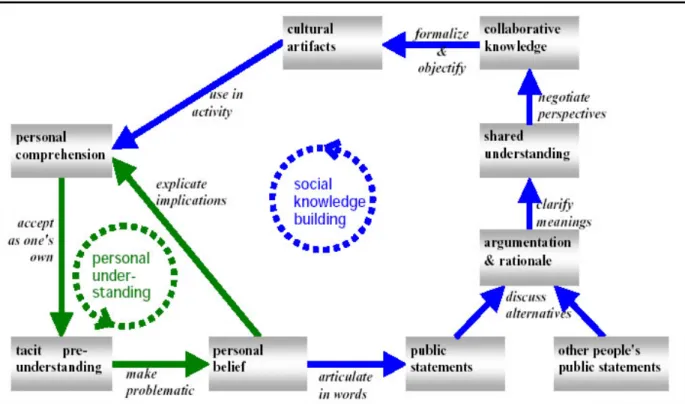
Figure 1. Stahl’s (2000) diagram of knowledge-building processes(Source: copyright © 2000,
Erlbaum Publisher. Used by permission of Erlbaum Publisher) ...36
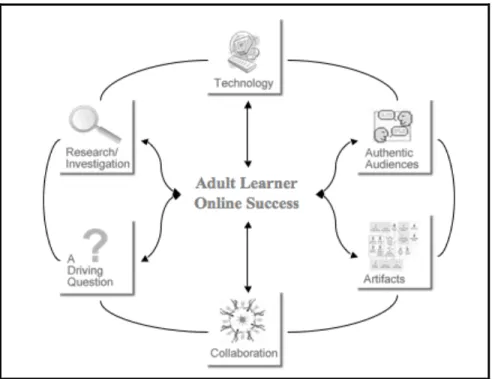
Figure 2. Illustration: Conceptual framework of online PBL...46
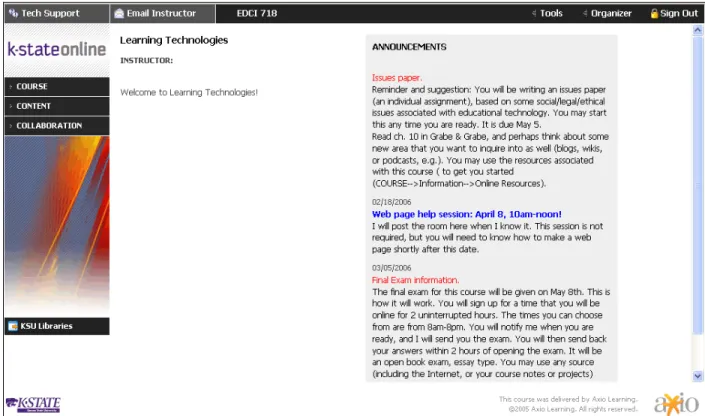
Figure 3. K-State Online (KSOL). (Source: copyright © 2005, Kansas State University. Used by permission of Kansas State University) ...60
Figure 4. KSOL - tools page. (Source: copyright © 2005, Kansas State University. Used by permission of Kansas State University) ...61
Figure 5. KSOL – student view page. (Source: copyright © 2005, Kansas State University. Used by permission of Kansas State University) ...62
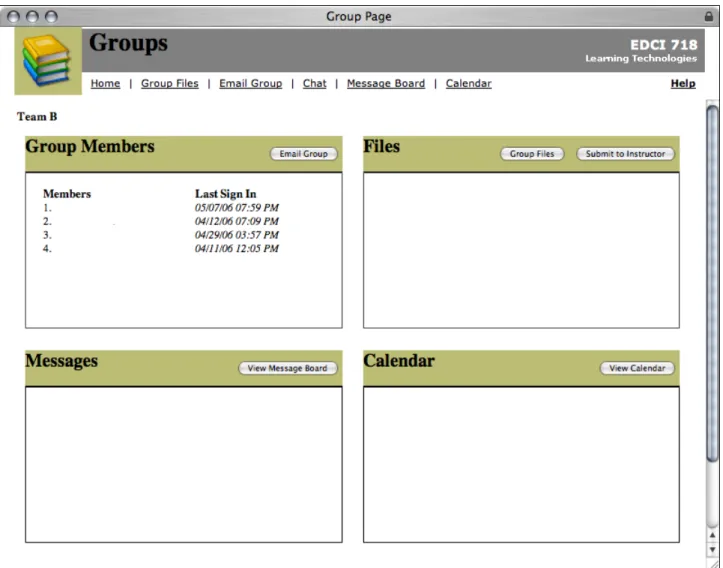
Figure 6. KSOL - Group entry page. (Source: copyright © 2005, Kansas State University. Used by permission of Kansas State University) ...65
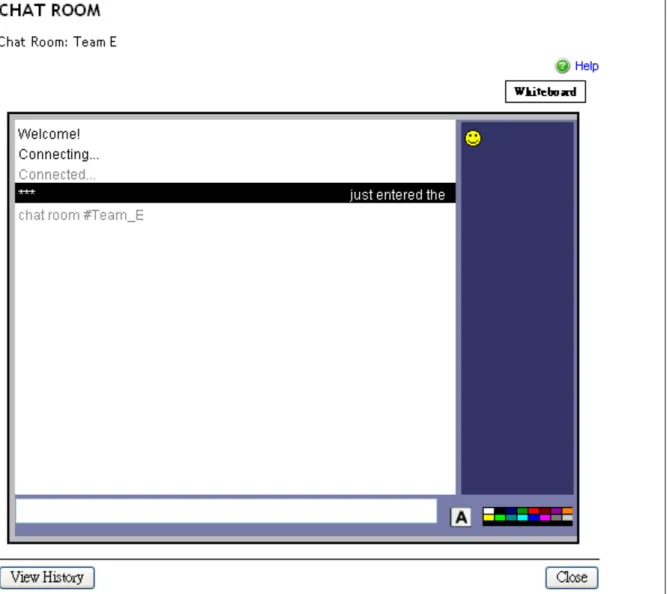
Figure 7. KSOL- Group Chatroom page. (Source: copyright © 2005, Kansas State University. Used by permission of Kansas State University)...66
Figure 8. Teams’ concept maps for project 2 ...94
Figure 9. Teams’ WebQuest screenshots for project 3...96
Figure 10. Individuals’ concept maps ...128
Figure 11. KSOL calendar screenshot (Source: copyright © 2005, Kansas State University. Used by permission of Kansas State University) ...163
LIST OF TABLES
Table 1. Possible synchronous and asynchronous communication tools...30
Table 2. Summary of socio-cognitive technological determinants of knowledge building (Scardamalia, 2002)...34
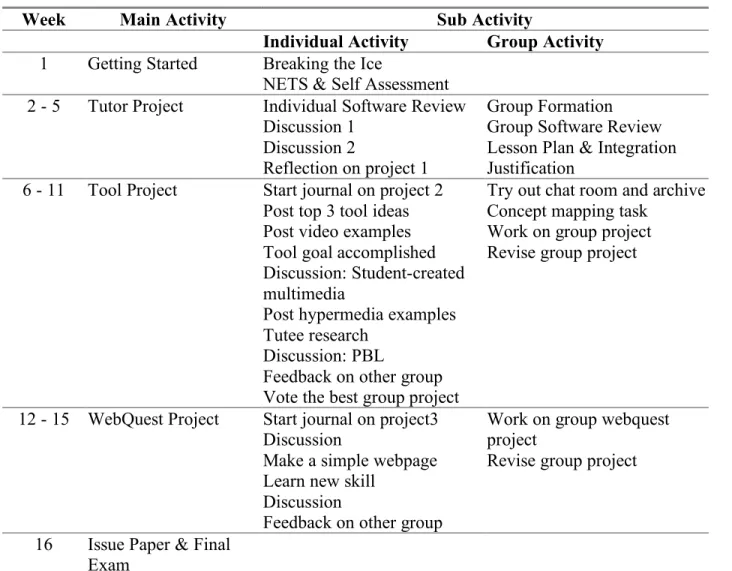
Table 3. Class schedule, activities, and projects...54
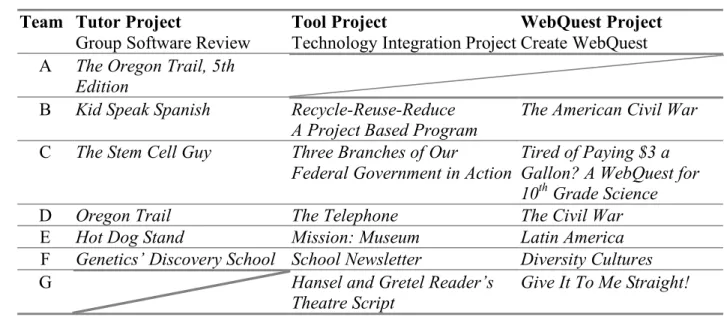
Table 4. Team projects overview...68
Table 5. Team formations over projects...75
Table 6. Sample data on learning experiences associated with each project and its challenges.96 Table 7. Participants’ overall learning experiences with projects (n = 15)...97
Table 8. Learn more content or more skills (n = 15)...98
Table 9. Reasons why participants liked these projects (n = 15)...99
Table 10. Data analysis pertaining to PBL features...101
Table 11. Participants' most difficult learning experiences (n = 15)...110
Table 12. Data analysis related to students’ learning experiences with technology...115
Table 13. MMB postings (for Q&A)...117
Table 14. Help section messages...117
Table 15. Conversations about collaboration messages...118
Table 16. MMB postings (for groups)...119
Table 17. MMB postings (for individuals)...120
Table 18. Posts read by students...121
Table 19. Group message board posting summary...122
Table 20. Summary of groups’ chat history on frequency and time spent (hh:mm)...123
Table 22. Phases and forms of knowledge building (Stahl, 2000)...130
Table 23. Tools that participants liked and disliked (n = 15)...133
Table 24. Initial coding categories and examples of student comments related to research question 3...138
Table 25. Emerged categories and examples related to research question 3...139
Table 26. Patterns of group leadership...144
Table 27. Data categories and examples of student comments related to social roles...146
Table 28. Roles that participants played (n = 14)...146
Table 29. Face-to-face meeting over projects...151
Table 30. Summary of findings on collaboration experiences in online PBL...153
Table 31. Data analysis pertaining to research question 4...158
ACKNOWLEDGEMENTS
I would like to thank all of the people who made this dissertation possible. First, and the most, I deeply thank my advisor Dr. Diane McGrath, for her continuous guidance in my Ph.D. program. Dr. McGrath opened my eyes to Project-Based Learning research, which inspired me to choose the topic of this dissertation. Dr. McGrath is a great teacher. She always believed in me and has helped me to accomplish my goals in different stages. Dr. McGrath also hired me as a
programmer in the Seeing Gender project, in which I had the pleasure to work with Dr. Linda Thurston and Dr. Jackie Spears. I thank them for providing the most flexible working
environment for me to balance my study goals and work demands.
Also, I would like to thank my committee members Dr. Jeong-Hee Kim, Dr. Rosemary Talab, and Dr. Clark Harris for their very helpful insights, comments, and suggestions as well as Dr. John Staver for his input in my proposal and Dr. Chandima Cumaranatuge for his
encouragements. I gratefully acknowledge the nineteen participants who made this dissertation possible. And thanks to K-State Online for permission to use screenshots and to collect data.
Last, and not the least, I thank my fellow colleagues, Dr. Bo Yang, Dr. Cecil Schmidt, Brad Atchison, Jean Kiekel, Marcela Parra, Lorena Barboza, Huiming Lu, Zia Ahmadi, and Dennis Devenney for their invaluable supports throughout my doctoral journey at K-State.
DEDICATION
I dedicate this dissertation to my wonderful family, especially my mother Mrs. Tuan-Erh Lou Chen (羅端兒), and my father Mr. Hsou-I Chen (陳守儀), who know little about educational theories but raised three Ph.D. daughters. They gave me a positive attitude toward challenges through a simple faith in God. I thank my wonderful husband, Mr. Kuo-Huang Chang, who came to the United States with me and has supported me both spiritually and financially. Let me also say “thank you” to my precious son, William, who left his friends in Taiwan when he was in the age that friends meant everything to him. And, this research is dedicated to: my sister-in-law, Ms. Kuo-Feng Chang, for taking care of my parents-in-law; my outstanding sisters and brothers-in-law including Ms. Huei-Huei Chen and Mr. Hui-Wen Lin, for accompanying my parents; Dr. Hui-Ping Chen and Mr. Chris Lieser for being supportive family; Mr. Jack Liu for answering my emergency calls once in a while; and Dr. Pearl Huei-Chu Chen, for teaching me how to write academic papers, how to be a researcher, and for bringing out the good ideas in me.
CHAPTER 1: INTRODUCTION
In 1938, more than six decades ago, the International Council for Open and Distance Learning (ICDE) began its first conference. Bunker (2003) summarized trends and patterns that have been recorded in the ICDE conference proceedings over the past years. These research trends accessibility, quality, methodology, internationalization, and educational technologies -could provide insight on alternative approaches facing distance education today.
In all countries, continuous learning for adults is becoming essential as many jobs are emerging to replace traditional job (Hanna, 2003). As a result, traditional universities are facing increasing pressures to be creative and innovative in providing maximum access to adult learners as efficiently as possible. At the same time, the distinction between on-campus learning and distance learning is blurring as wireless access to the Internet is being created. Classes with multiple formats for learning are provided as options to more and more students. Today’s learners, especially adults, expect institutions of higher education to be responsive to their individual needs, which means providing course schedules and formats that are convenient, easily accessed, and independent of fixed times and locations (Dillman, Christenson, Salant & Warner, 1995; Kearsley, 2000). As cautioned by Frank Mayadas, the director of the Sloan Foundation's Asynchronous Learning Network, the online learners face unique challenges; consequently, they are more demanding of quality services such as high speed connections, technical supports, and/or instant feedback than the on-campus learner population (Carr, 2001).
Online education and traditional distance education, they share certain attributes such as the fact that both are time- and place-independent and the interaction is mediated. However, as distinguished by Burge (1988), traditional distance education typically relies on a mass delivery
of pedagogic material using mail, radio, or television. Learners are expected to self-study, usually with access to a tutor or facilitator by phone or mail. The interactivity of the face-to-face model is not present or at the same level in distance education. This is consistent with Moore’s (1986) finding that traditional distance learning emphasizes the independence of the learner rather than the group and the activity level. Furthermore, Barab, Thomas, and Merrill (2001) suggest that the focus of online learning has shifted from dissemination of information to
fostering collaboration. Online education has the potential to support group communication via a variety of distance learning technologies. The social, affective, and cognitive benefits of online peer interaction and collaboration are comparable to those provided by face-to-face education. Many course management systems (CMS) have been developed during the last decades, including open source and proprietary products with different functions or characteristics ranging from whether the product offers chat functions, assessment tools, video conferencing, or
compliance with disability standards. At Kansas State University, where this research was conducted, the College of Education switched from the BlackboardTM course management system to K-State Online (KSOL)1 in 2006. This transition created a challenge for faculty to transfer their courses from BlackboardTM to the KSOL system. As suggested by Smart and Meyer (2005), universities need to consider time and effort needed to make the transition a success for their courses and students. Although research on converting courses from one CMS to another has been surprisingly lacking and calls for holistic investigations, it is beyond the scope of this study.
CMS has adopted the inspiring idea of using the computer as a tool to amplify intellectual processes (Harasim, 1990). In the history of the computer in education, early pioneer works include Bush’s memex, a theoretical device that would allow individual to store books, records, and communications as a supplement memory (Bush, 1945). Unfortunately, Bush’s memex was never constructed. Two decades later, Engelbart’s On-Line System (NLS), later marketed as Augment, emphasized the provision of tools to support collaboration among people doing their work in an asynchronous, geographically distributed manner. Then, in the early 1960s, Nelson (1987) coined the phase hypertext to denote online writing and reading that are non-sequential and heavily cross-referenced and annotated. In Project Xanadu, Nelson envisioned having users create linkages between ideas and explore those linkages, using a variety of features that
facilitate developing and tracking interconnections. Together, these pioneering visions and systems explored the potential of using computers to create cognitive and social connectivity– webs of connected information and communication among knowledge constructors. Later on, Turoff (Hiltz & Turoff, 1978) invented EMISARI, a computer conferencing system, to structure human communication for information exchange and effective problem solving with a group of members. This view of using computers to create cognitive and social connectivity remains popular, and many educational communities have adopted this collective intelligent view of a computer system that supports both individual and social aspects of learning.
Harasim (1990) identifies five attributes that consist online education as a unique mode: (1) many-to-many communication, (2) place independent group communication, (3) time independent communication, (4) text-based communication, and (5) computer-mediated
communication (CMC). Among those, CMC is the most significant attribute, as Harasim states: “… CMC offers not only increase learner’s access to information- and do so powerfully and successfully- but can also facilitate knowledge building activities. This is where the
interest in CMC and online education lies- and where the challenge lies. We are
developing and using new tools: How do they work? In what ways might the new media- particularly computer-based tools- empower our intellectual processes, to make us better thinkers, learners, and problem solvers? “ (p. 52-53)
CMC, defined as human communication via computer, may facilitate active construction of meaning. In response to new information, a learner actively generates responses, both
positive and negative, a process that stimulates cognitive restructuring. Brown (1989) views technology as a means to support collaborative conversations that ensure construction of understanding instead of using technology as a cognitive delivery system. Furthermore, Brown indicates that knowledge building is a sense-making pursuit. Through conversation, negotiation, and authentic activity, learners add contributions to a shared knowledge base.
Perkins (1986) also views knowledge as a sense-making pursuit. Opposing processing knowledge as information passively, he argues that the learner’s actively employing knowledge as design “would mean knowledge as structures adapted to a purpose, just as a screwdriver or a sieve are structures adapted to a purpose” (p. 3). Scardamalia and Bereiter (2003) defined knowledge building as “the production and continual improvement of ideas of value to a community” (1370). They further distinguish the differences between knowledge building and learning, although the terms are commonly used interchangeably in education. They contend:
“Learning is an internal, unobservable process that results in changes of belief, attitude, or skill. Knowledge building, by contrast, results in the creation or modification of public knowledge- knowledge that lives ‘in the world’ and is available to be worked on and used by other people” (p. 1370).
Moving from the role of passive receiver/processor to the role of knowledge
constructor/producer requires a developmental trajectory. Scardamalia and Bereiter summarize three traditional approaches that attempt to launch learners onto the developmental trajectory. The first approach focuses on foundational knowledge, based on the assumption that learners are
able to use learned knowledge if they learn it well enough, the knowledge creation is not applied until graduate school. The result of this approach leads to the majority of people unprepared for the challenge of knowledge creation when they enter graduate school. The second approach focuses on subskills (now often known as the “21st century skills”, Scardamalia & Bereiter, 2003) such as critical thinking, scientific method, and collaboration. Unfortunately, when facing the real world workforce, only a few people are capable to assemble these subskills into use. The third approach, associated with “learning communities”, “project-based learning”, and “guided discovery”, is currently widely used in conjunction with the use of information technology. Yet, Scardamalia and Bereiter caution that, without careful consideration, this approach might too easily decline toward shallow constructivism. Accordingly, Scardamalia and Bereiter (2003) distinguish between shallow and deep forms of constructivism:
“The shallowest forms engage students in tasks and activities in which ideas have no overt presence but are entirely implicit. Students show little awareness of the underlying principles that these tasks are to convey. In the deepest forms of constructivism, people are advancing the frontiers of knowledge in their community. This purpose guides and structures their activity: Overt practices such as identifying problems of understanding, establishing and refining goals based on progress, gathering information, theorizing, designing experiments, answering questions and improving theories, building models, monitoring and evaluating progress, and reporting are all directed by the participants themselves toward knowledge building goals.” (pp. 1370-1373).
Project-based learning (PBL) is increasingly an integral part of educational reform. Evidence has begun to show that PBL can enhance the quality of learning and leads to higher-level cognitive development through students’ engagement with complex problems and
collaboration with experts and peers (Newell, 2003). In the design process required by a project, learners develop skills and abilities such as the research skills, organization/project/time
management skills, ability to represent understanding in the artifact, presentation skills,
project (McGrath, 2003). Examples can be found in science and mathematics learning (MacGregor and Thomas, 2002; Goldman, Duschl, Ellenbogen, Williams & Tzou, 2003); multimedia production (Yang, 2003; Liu & Hsiao, 2001), study of student agency (Barron & CTGV, 1998), study of motivation (Blumenfeld, et al., 1991), and study of collaborative learning (Hargis, 2005; Day, Lou, & Van Slyke, 2004-05; Marchaim, 2001; Blumenfeld, Krajcik, Marx & Soloway, 1994).
While PBL facilitates learning in traditional classroom settings, PBL also supports an online community of learners (Murphy & Gazi, 2001; Synteta, 2000). Likewise, while PBL engages traditional learners, PBL also benefits non-traditional learners such as pre- and in-service teachers in professional development programs (Frank & Barzilai, 2004; Toolin, 2004, Rosenfeld & Ben-Hur, 2001; Krajcik, Blumenfeld, Marx & Soloway, 1994). Although PBL has not yet had a universally accepted definition, this study adopts four summarized features
provided by Blumenfeld and his colleagues (Blumenfeld, Krajcik, Marx & Soloway, 1994): “(a) a driving question, encompassing worthwhile content that is meaningful and is anchored in a real-world problem; (b) investigation and artifacts that allow students to learn concepts, apply information, and represent knowledge in a variety of ways; (c) collaboration among students, teachers, and others in the community; and (d) use of technological tools such as microcomputer-based laboratories, graphing software, hypermedia, and telecommunications, which help learners represent and shared ideas.” (p. 540)
McGrath (2002) furthered articulates PBL as “teaching and learning around projects that are driven by an authentic question or problem that is central to the discipline/curriculum,
involves the building of a community of learners, and culminates in the presentation of a student-constructed work to an outside audience” (p. 42). In addition, to go beyond the hands-on activity attribute, Chen and McGrath (2004-05) proposed the notion of cognitive PBL that focus on helping learners overcome learning obstacles that are not commonly addressed in simple PBL environments.
This study investigates adult learners’ experiences in an online cognitive PBL
environment whose design was based on three rationales: First, PBL promotes learner autonomy and collaboration. Since the number of online learning programs/courses is increasing, PBL would help support a community of learners who are expected to be highly autonomous and to take responsibility for self-regulated learning; also, to collaborative with peers in order to gain more perspectives. Second, PBL embraces technology. In the light of contemporary theories for learning such as constructivism (Phillips, 2000), constructionism (Papert & Harel, 1991),
situated cognition (Lave & Wenger, 1989), and cognitive apprenticeship (Collins, Brown, & Holum, 1991), an important concept that has been discussed recently focuses on making thinking visible–an essential skill for 21st century learning (Perkins, 2003). Even so, it is difficult to implement this concept with few research studies available to guide us. A technology-assisted PBL environement encourages learners to explore tools that can be used for inquiry,
communication, construction, and expression (Bruce & Levin, 1997); and consequently, making both individuals’ and the group’s thinking visible to the community so that it can be easily accessed and reviewed later on. Third, PBL values learning with projects. According to Liu (2003), PBL “typically starts with an end product, which serves as a driving question compelling students to learn about the central concepts and principles of a topic while engaging in producing the product” (p. 24). Students are reported more engaged when working on a meaningful
external artifact. Papert and Harel (1991) described this motivational aspect with the project method as “objects-to-think-with” and “objects-to-talk-with.”
Despite these rationales, we know little about how PBL affects adult learners in an online learning community. Studies on PBL with younger learners in traditional instructional settings are not necessarily applicable to online PBL that deals with adult learners and complex learning
tasks. While research is needed to find better teaching and learning strategies in an online learning community, an important area to explore is students’ learning experiences around projects through collaborative interactions within a small group. As suggested by Dillenboug (1999), a collaborative learning situation includes a variety of contexts and interactions. It would be meaningless to assess the effects of collaborative learning without “zooming in” to gain a better understanding of the underlying processes. Therefore, this case study focusing on identify and situate for the reader the central themes that characterize the course dynamics can make an important contribution to our understanding of adult online learners’ collaborative learning experience with projects.
Statement of the Problem
Many educators seem to have the impression that PBL is a motivational, hands-on approach yet is only good for younger and/or inexperienced learners, as the term “shallow constructivism” described by Scardamalia and Bereiter (2003). Despite the trend to incorporate online PBL to engage adult learners, little research has been done to guide the design and implementation of online projects in higher education. Research needs to be conducted to observe and document the learning process as students collaborate in groups to complete a series of projects at distance. In addition, the process of using technology tools at a distance needs to be investigated to contribute to further study on distance technologies.
Purpose of the Study
The purpose of this qualitative case study is to attempt to achieve research goals at three levels as suggested by Maxwell (2005):
gap in current knowledge on the impact of online PBL on students’ learning experience.
2.At the practice level, this study attempts to understand participants’ learning experiences within KSOL, and to find out how participants deal with difficulties such as technical problems, time constraints, and group conflicts. These factors may or may not hinder the quality of the projects produced by groups. In addition, this study also attempts to understand the instructor’s experiences in structuring online courses that meet the PBL criteria. The findings provide insights toward further studies in using CMS for better teaching and learning.
3.At the personal level, since the researcher had her bachelor degree from the National Open University in Taiwan, this study meets a personal interest in designing better online learning environments that enhance quality teaching and learning for distance education.
Research Questions
1. What are the quality and nature of participants’ learning experiences over a series of different projects (as gleaned from their perceptions as well as their performance in three different projects) within the context of an online project-based learning community? What are some difficulties/problems associated with participants’ learning experiences?
2. How do participants’ online project-based learning experiences affect their use of educational technology tools over the semester?
3. What are participants’ group collaborative experiences in communicating and constructing projects online?
4. What are the instructor’s experiences in structuring this online PBL course? What are the difficulties in meeting the six PBL criteria in an online PBL environment? And what are the strategies used to manage class virtually?
Significance of the Study
Many higher education instructors are asked to move their courses online, despite the fact that some of these courses might be targeted to students in a traditional learning environment. With the help from institutional technical support services, the task of moving from face-to-face learning to an online format may not be so daunting. To enhance online learning quality, several remedies have been proposed, for examples, Gagné’s (1965) nine events of instruction, which provide a framework of hierarchical instruction in order to facilitate learning at each level, is still viable to guide online course design. Keller’s attention, relevance, confidence, and satisfaction (ARCS) model is still relevant in promoting learner motivation (Song & Keller, 2001). Moore’s (1986) proposition of appropriate opportunities for dialogue, appropriately structured learning materials, and appropriate learner autonomy is still helpful to assist learners succeed within transactional distance.
All of these models are focusing on the technical dimension of online learning. There has been much discussion with respect to using these models to guide instructional interactions among learners with the content and with the instructor. What seems to be lacking is an equally important social dimension to the online learning community. Therefore, the focus of this research was on this social dimension, and it is this aspect that is highlighted.
PBL has been used in various settings: traditional classrooms, online courses, grade schools, and higher education, including teacher education programs. Despite the popularity of PBL, research has not provided sufficient understanding on how the PBL method guides adult learners in constructing collaborative projects within the online learning community. Therefore, this case study provides thick descriptions of the learning dynamics within a semester-long online graduate level course, and investigates how students explore ways to use Web-based tools
that help learners communicate and construct projects over time. The main objective is to investigate both the instructor’s experiences and the participants’ learning experiences with the project method using the CMS tool. Such research is expected to contribute to the improvement of pedagogy in the design and use of CMS for education.
Limitations of the Study
This research is a descriptive case study. Case studies can be viewed from different perspectives: some consider the case an object of study; the others consider it a methodology (Creswell, 1998). Maxwell (2005) identifies several goals that can be achieved in qualitative research, including: (1) understanding the meaning, (2), understanding the particular context, (3) identifying unanticipated phenomena and influences, and generating new grounded theories, (4) understanding the process, and (5) developing causal explanations. However, Stake (1994) indicates case study should be a study of the particular case. This research does not attempt to make any generalizations, but pays attention to what can be learned from this single case for two reasons: first, the 24 students enrolled in this course were diverse in terms of their ages,
geography localities, technology experiences, learning styles, teaching experiences, working habits, and personal beliefs and values; and second, the information gathered from this specific case was bounded in time and place, and to that particular situation (course, system, instructor, university, etc.). Therefore, the findings of this study are not generalizable to other settings, yet the findings are relevant to research on online learning.
Another limitation is the use of Internet communication technologies to collect data. Traditionally, qualitative data are obtained through face-to-face methodologies such as
classroom observation and/or interview. Recently, both quantitative and qualitative data have been collected through Computer-Mediated Communication (CMC), via either synchronized or
asynchronized Internet tools. Although some researchers are concerned that the collected
electronic data might lack visual social cues for analyzing and interpreting the data, Giese (1998) argues that using the Internet is a new way of transmitting meaning. Mann and Stewart (2000) further explain the idea:
“…, the Internet is both a technological and a cultural phenomenon. As qualitative researchers, we consider it insufficient simply to demonstrate the technological advances the Internet might allow us to achieve. In Internet Communication and Qualitative Research the Internet is considered not simply as a technological tool but as a wholly new, constructed environment with its own codes of practice.” (p. 7)
Accordingly, based on Mann and Stewart, the information collected via Internet
communication technology is “a hybrid showing features of both spoken and written languages” (2000, p. 182).
Definitions of Terms
Computer-Mediated Communication (CMC). CMC is using computers as medium for human communication. The possible types of CMC include synchronous CMC such as real-time chat, computer conferencing; and asynchronous CMC such as email and text-based messaging systems.
Course Management System (CMS). CMS is an elaborate computer program that allows instructors to manage materials distribution, assignments, communications and other aspects of instruction for their courses. Such electronic learning (e-learning) systems are sometimes also called Learning Management Systems (LMS), Virtual Learning Environments (VLE), education via computer-mediated communication (CMC) or Online Education. (Wikipedia, n.d.)
Cognitive Project-Based Learning (Cognitive PBL). Complex project-based learning with cognitive and metacognitive learning goals, specifically aims to support higher-order thinking
Cognitive Tool (CT). “Any tool that can support aspects of learners’ cognitive processes” (Lajoie, 1993)
Making Thinking Visible (MTV). A term used to encourage making the processes of knowledge building and critical thinking explicit. Possible examples of MTV can be a technology-mediated instructional plan, languages, or software to represent one’s own thinking, and to respond to one another’s ideas.
Online Learning Community (OLC). An online learning community is a place where learners work collaboratively as a community to achieve learning objectives through networking and/or Internet technology.
Project-Based Learning (PBL). PBL is described as teaching and learning around projects that are driven by an authentic question or problem that is central to the discipline/curriculum,
involves the building of a community of learners, and culminates in the presentation of a student-constructed work of an outside audience (Blumenfeld, Krajcik, Marx, & Soloway, 1994;
CHAPTER 2: LITERATURE REVIEW
Education is shifting its focus from teaching to learning, from a teacher-centered perspective to a student-centered perspective (Land & Hannafin, 2000). In this paradigm shift, educators are confronted with challenges such as how to design a learning environment that facilitates self-regulated learning within a constructivist learning environment (CLE). A CLE supports individuals or groups as they attempt to negotiate multiple points of view; scaffolds thinking and actions in order to deepen understanding; and allows learners to amplify and extend cognitive capabilities to reach their potentials (Mayer, 1996; Bransford, Brown, & Cocking, 2000; Driscoll, 2000).
Among a variety of approaches that are consistent with the constructivist perspective, Blumenfeld, Krajcik, Marx, and Soloway (1994) suggest using project-based instruction as a model for teacher learning. They assert project-based instruction as:
“one attempt to embody constructivist theory. Other attempts include conceptual change approaches to instruction (Pintrich, Marx & Boyle, 1993), interactive technology
environments such as Papert’s (1993) microworlds, and cognitive science-based programs such as the work of Newman, Griffin, and Cole (1989). Project-based
instruction cannot be portrayed through a traditional curriculum-implementation model where teachers follow prescribed practices. Instead, teachers apply a range of practices congruent with the theory but tailored to meet unique classroom circumstances and their teaching style” (p. 540).
Today, the new technology of the World Wide Web (WWW) has opened up a new era for teaching and learning. Web-based learning places a heavy demand on students’ autonomy and collaboration within the virtual community. Hargis (2005) suggests that the five aspects of PBL–a driving question, investigation, collaboration, technology, and artifact–work well in the context of an online environment because “[t]elecommunications allow students to interact with a wider community of other students, and outside science experts to share information, data,
resources, and ideas (p. 157)”. However, the results of PBL may vary depending on the types of project and the levels of student engagement. To distinguish different types of PBL in terms of cognitive engagement, the notion of Cognitive PBL (Chen & McGrath, 2004-05) was proposed to help learners overcome learning obstacles that are not commonly addressed in simple PBL environments. In short, Cognitive PBL supports higher order thinking and focuses on helping students develop effective cognitive strategies.
This study has the potential to contribute to the development of the Cognitive PBL framework by providing a deeper understanding of the dynamics of using PBL to guide online collaborative learning around projects. In this chapter the three theoretical perspectives (1) constructivism, (2) constructionism, and (3) distributed cognition, are first discussed. Secondly, under the topic of project-based learning, collaborative learning and technological tools that are important to online PBL are discussed. And thirdly, research on PBL in a variety of learning contexts is reviewed. Constructivism, constructionism, and distributed cognition are discussed as the theoretical underpinnings for PBL because they support the essential features of PBL (Krajcik, Bluemenfeld, Marx & Soloway, 1994) as listed below:
1. A driving question or problem that sets the scene for the project
2. Student construction of an artifact and presentation to an outside audience 3. Student collaborative research often over an extended period of time 4. Community of inquiry
5. Use of technology-based cognitive and communication tools
Taken together, the three theoretical perspectives discussed below emphasize students working with authentic knowledge problems and producing collaborative artifacts that embody their creative work with ideas within a community of inquiry, in which cognitive responsibility is distributed among all the members in the group.
Theoretical Perspectives Constructivism
Over the last 25 years, the theoretical paradigm has shifted from viewing the learner as a passive information processor to seeing the learner as an active constructor of knowledge. This view of knowing is labeled as constructivism. According to Perkins (1991), constructivism is an engaging and collaborative concept to whose evolution many thinkers have contributed. Beers (n.d.) gives examples of these thinkers, including: (1) Socrates- who encouraged students to think critically without being given an absolute answer, a method known as the Socratic Method. (2) Jean Piaget- who found that the learner learns through construction of one logical structure after another by passing through stages of equilibrium and disequilibrium. The learner starts out in a state of equilibrium with his or her own worldview, and through interacting with others and the world, the learner is forced to deal with new perspectives and becomes decentered, a state of disequilibrium. Eventually, the learner either assimilates this new concept by fitting it into an existing mental model or accommodates this new concept by restructuring an existing mental model. Or, the learner may reject the new concept if no viable conception can be made to the existing mental model. (3) Lev Vygotsky- who indicated that language, culture, and adult guidance and/or collaboration with more capable peers are an integrated part of the learning process. Within the community of social development, learners are able to move from their actual developmental level in which they can solve problems independently to the level of their full potential; between these two levels is what Lev Vygotsky called Zone of Proximal
Development (ZPD). A ZPD is “the distance between the actual developmental level as determined by independent problem solving and the level of potential development as
peers” (Vygotsky, 1978, p. 86). Ideally, learners will reach the full potential of their ZPDs with the help of tools and guidance from the teacher and/or more knowledgeable peers within a learning community. (4) John Dewey- who believed in education as “a process of living, not a preparation of future living” (Dewey, 1974, p. 430). (5) Jerome Bruner- who viewed education as a process of discovery, only the learners know where to categorize information in their heads, therefore they should be actively involved in the whole process (Bruner, 1996). (6) Seymour Papert- who was a formal student of Piaget and furthered develop the theory constructionism, which will be discussed in the next section.
Over the years, constructivism has grown into a big tree with many branches, such as radical constructivism, social constructivism, cultural constructivism, critical constructivism. Among those, radical constructivism and social constructivism are the most often mentioned branches in comparing and contrasting different types of constructivism. According to Staver (1998), radical and social constructivism share the same foundation; they both view: (a) knowledge as built up by individual and the community; (b) social interaction as the means by which people build up knowledge, primarily through language; (c) cognition and language as functional and adaptive; and (d) the purpose of cognition and language as making sense of meanings, that is, bringing coherence to an individual’s world view, or to a community’s shared knowledge base. However, Staver makes the distinction that, while radical constructivists focus more on the individual’s cognitive process, social constructivists emphasize more the influences of social aspects through language and interactions with others. Although one of the major criticisms of constructivism is our empiricist tradition suggesting that knowledge comes form the senses and from experiences, Staver (1998) pointed out that, as humans, we are restricted
to adopt the social constructivist perspective of learning by rejecting truth as correspondence with an external reality and instead viewing truth in terms of internal coherence and viability. Today, many learning and/or instructional theories that rest on a constructivist foundation have adopted the social constructivist perspective (Land & Hannafin, 2000; Wilson & Myers, 2000).
As stated by Jonassen (1992), constructivist learning is not supposed to mirror reality, but rather to construct meaningful interpretations. Moreover, Perkins (1991 b) suggests that
constructivist pedagogy often imposes high demands on the learners in regard to the following aspects:
Cognitive complexity- Constructivist instruction asks students to cope with very complex situations. Perkins (1991b) distinguished three paths and associated conflicts in conventional constructivist pedagogy: (1) Conflict-buried: this conventional instruction asks learners to follow the path and ignore the conflict between their prior experience and the target learning model. The outcome is learners learn to play the school game for the tests and assignments without any recognition. (2) Conflict-faced: this Piagetian path asks learners to compare and contrast their naïve models with an unfamiliar model. However, learners often have a hard time with this path due to the lack of familiarity with the newer model. (3) Conflict-deferred: according to Perkins, this path is seldom used. Learners in this path are asked to just learn a new way of thinking and talking about the phenomena under study while being asked to bracket their intuitive models until the new way has become consolidated. Then the instruction turns back to the learners’ naïve models and encourages learners to explore the relationships between the two models.
Task management- Students need task management skills to sequence learning experiences. Task management is distributed in the whole class including the teacher, the instruction, and the learners themselves. Perkins claims that if students lack the opportunity to
manage their own learning, they are not likely become autonomous thinkers and learners. One solution that helps with both task management and cognitive complexity is the scaffolding or coaching strategy proposed by the apprenticeship model (Collins, Brown, & Newman, 1989). Cognitive apprenticeship is a contemporary learning model that implements traditional
apprenticeship strategies but focuses on the cognitive process in order to make the expert’s thinking process visible to the apprentices. This model is increasingly being applied to
classroom research. However, how to provide appropriate scaffolding and coaching strategy in online learning environments with a large group of students remains to be answered by future research.
Buying in- Learners’ attitudes toward the constructivist learning approach is another concern. Perkins points out that in constructivist learning, students need to learn two things at once: content area knowledge and the new way of learning. Therefore, they should be given time to “buy-in” to the new way of learning.
Constructionism
Seymour Papert developed this version of constructivism, which he referred to as constructionism. This theoretical point of view is based on his findings that individual learners are more engaged when working on an external artifact that is meaningful to them, what he refers to “objects-to-think-with” (Papert & Harel, 1991). Papert was a pioneer in artificial intelligence; he believes that the better way to teach kids about computers and mechanics is to let them build an actual working machine and program it. For example, Papert developed the computer language LOGO; with LOGO, children are encouraged to invent their own objects-to-think-with, such as the Turtle, a computer-controlled cybernetic “animal.”
According to Evard (1996, p. 224), a strong emphasis on constructionism is placed on “created objects being external to their creator, as things ‘in the world’ can be shown, discussed, examined, probed, and admired.” Moreover, when students share a creation with others, they not only obtain deeper understanding of other people’s perspectives, but also refine their created object. In a study of fifth-grade students’ discussions around designing an educational video game project for younger students, a computer-based system was used to provide a public communication space. Notably, Evard discovered that students learn through both asking and answering authentic questions; moreover, “…a public communication space to the Game Design Project could provide designers with the ability not only to share their questions and ideas with more students, but to reflect on their own words” (p. 225).
In a study of how children perceive others’ perspectives, Ackermann (1996) argues that although Piaget’s functional theory of intelligence provides a solid ground for understanding how people regulate their boundaries with the world, it fails to explain the self-correcting function of accommodation. Ackermann suggests that separation and connection, diving in and stepping out, self-projection and self-diffusion are necessary for cognitive growth and repeated over time for learners to make sense to the world. Accordingly, Ackermann proposes two keys to learning: perspective-taking and object construction that anchored from Piaget’s functional theory, the balance between “stability and change, closure and openness, or, in [Piaget’s] own words, between assimilation and accommodation” (p. 27).
Although some educators use constructivism and constructionism interchangeably, the major distinction is that the former is learning to do, while the latter is learning by doing.
Recently, PBL has focused on empowering students with technology tools for knowledge construction. Within a constructivist framework, this approach requires students to be active
constructors of meaning as they interact with learning tasks, their peers, and technology tools to construct new understanding. Constructionism (Papert, 1991, 1993) applies this idea of
knowledge construction to student construction of physical or digital artifacts (e.g., models, charts, poems, plays, robots, computer games) that embody their understanding of concepts being studied. Therefore, PBL is based on constructionism emphasizing understanding to be externalized, shared, reflected upon, evaluated, and revised through constructing an artifact. In addition, a technology assisted PBL environment provides a public communication space for perspective-taking and object construction.
Distributed Cognition
Distributed cognition theory is based on social learning theory. Since the popularity of Russian psychologist Lev Vygotsky who asserted that culture is the prime determinant of individual development, social learning has been widely discussed by developmental and educational theorists. Salomon and Perkins (1998) articulated two metaphors for learning:
“On one hand, we have the conception of the individual leaner, emphasizing the
acquisition of knowledge and cognitive skill as transferable commodities… One the other hand, we have the sociocultural conception of learning as a collective participatory process of active knowledge construction emphasizing context, interaction, and situatedness” (p. 2).
I believe that both of these two aspects of learning, the “cognitive, acquisition-oriented” conception of individual learning and the “situative, participatory-oriented” conception of social learning are important. Salomon and Perkins suggested that research should look for evidence within the social context, because individuals’ learning is facilitated by others, and the meaning is often socially constructed. Salomon and Perkins (1998) defined it as social mediation of
learning and provided four perspectives to help us deeper understanding of how individual and social learning intertwine:
1. The social mediation of individual learning- An individual learns from a teacher, a parent, a master, or from the others, as described by Vygotsky’s conception of zone of proximal development. Salomon and Perkins called this most familiar form of learning “cognitive and acquisition-oriented” version of individual learning. However, this perspective on social
learning involves critical conditions such as feedback, guidance, challenge, and encouragement. The other condition involves the objectivization of one’s thoughts, “when communicated and shared, can be discussed, examined, and elaborated upon as if they were external objects” (Salomon & Perkins, 1998, p. 8).
2. Social mediation as participatory knowledge construction- Individuals are seen as being involved in an integrated and highly situated social system in which interactions serve as “the socially shared vehicles of thought” (Salomon & Perkins, 1998, p.3). Interactions, can take the form of team problem-solving or collaborative and cooperative learning. This perspective views the individual and the social agents as “a unified learning system” in which learning outcomes are both situated and distributed among the participants. Salomon and Perkins describe this radical version of social learning as situative and participation-oriented.
3. Social mediation by cultural artifacts- In some cases, the learner may not receive direct help from people but obtains help from the cultural surroundings such as books,
videotapes, or rich information sources. This is known as learning with tools, or cultural artifacts. Learning with artifacts has become apparently important because “artifacts are themselves
directing learning and making decisions. It is believed that computer-supported learning environments offer more opportunities for this form of social learning.
4. The social entity as a learning system- “Organizational learning has its own characteristics related to what is learned, how it is learned, and the adjustments called for to enhance learning”(p. 12). This form of collective learning systems occurs in groups, such as a family, a sports team, or a business organization.
According to Hollan, Hutchins, and Kirsh (2000), distributed cognition theory seeks to understand the organization of cognitive systems. It considers cognition as going beyond individuals to include interactions between people and with resources and materials in the environment. Two basic principles are provided to help us distinguish Distributed Cognition from other theories:
1. While the boundaries of traditional views of cognition are those of individuals, the boundaries of distributed cognition are those “socio-technical systems such as the bridge of a ship or an airline cockpit” (p. 2).
2. While traditional views look for cognitive events in the manipulation of symbols inside individual actors, distributed cognition looks for a broader state of cognitive events and does not expect all such events to be encompassed by an individual.
After observing cognitive processes in ship navigation in a natural context, Hutchins proposed three major findings (Hutchins, 2000):
“…cognitive processes may be distributed across the members of a social group; cognitive system involves coordination between internal and external structures; and cognitive processes may be distributed through time: earlier events can transform the nature of later events” (p. 176)
Traditionally, thinking and learning tend toward dependence on the individual alone – what Perkins called person-solo. However, Perkins (1992, 1993) indicates that people employ
objects within their surroundings, including other people, physical and information resources, to support, share, and undertake aspects of cognitive processing – what he called person-plus. That is, what can be learned is not just in the mind of the learner, but in the surrounding environment as well. Perkins (1995) suggests that the use of tools such as student journals, designer
notebooks, computers, peer tutoring, or pair problem solving are examples of person-plus. Perkins believes that students will benefit more from distributed cognitions because knowledge resides not only in individual minds, but also in having access to tools or objects such as books, computers, or learning communities. Pea (1993) also views human cognition as distributed across individuals, environment, external symbolic representations, tools, and artifacts – “as a means of coping with complexity of activities we often call mental” (p. 81).
Project-Based Learning
Project-Based Learning (PBL) is a model of "organizing learning around projects"
(Thomas, 2000). It starts with an “end product” (Liu, 2003) and “driven by an authentic question or problem that is central to the discipline/curriculum” (McGrath, 2002). It involves five
aspects: a driving question, investigation, collaboration, technology, and an artifact (Krajcik, 1999). In addition, some researchers and many teachers believe that students are motivated in creating projects for authentic audience (e.g., Viner, 2003). In the reviewed literature, evidence has begun to show that PBL enhances the quality of learning and leads to higher-level cognitive development through students’ engagement with complex problems and collaboration with experts and peers (Newell, 2003). Also, by viewing the design process as learning itself, learners develop skills and abilities such as research skills, organization/project/time management skills, ability to represent understanding in the artifact, presentation skills, metacognitive skills, ability
to accept others’ evaluation, and skill and willingness to revise the project (McGrath, 2003). Because this research is about teachers’ learning experience within the online PBL environment, the following two sections will review collaborative learning and technological tools that are important to online PBL.
Collaborative Learning
Collaborative learning is based on Vygotsky’s social development theory. Two of Vygotsky’s ideas help us understand this theory better. First, we cannot understand a child’s cognitive development without understanding the social interaction around the child (Vygotsky, 1978). According to Vygotsky, “every function in the child’s cultural development appears twice: first, on the social level, and later, on the individual level; first, between people (interpsychological) and then inside the child (intrapsychological). This applies to voluntary attention, to logical memory, and to the formation of concepts. All the higher functions originate as actual relationships between individuals” (p. 57).
Roschelle and Teasley (1995) refer to collaboration as “…a coordinated, synchronous activity that is the result of a continued attempt to construct and maintain a shared conception of a problem” (p.70). Dillenbourg (1999) further suggests that a theory of collaborative learning should meet the following four criteria:
(1)Situations – the situation requires group members who are “more or less at the same level, perform the same actions, have a common goal and work together” (p. 7). Three aspects need to be considered in a situation for collaborative learning to occur:
i. The collaboration is more likely to occur between people with a similar status, such as symmetry of action, knowledge, or status with respect to their community. ii. Learners develop shared goals through the negotiation of goals; moreover, they
iii. The division of labor is horizontal, that is, the labor is unstable in collaboration, roles may shift very quickly, rather than vertical division of labor that is a more fixed division and generally made explicit at the outset.
(2)Interactions- the collaborative interactions have three features:
i. Interactivity- the degree of interactivity among group members is not defined by the frequency of interactions, but by the extent to which these interactions influence the group members’ cognitive processes.
ii. Synchronicity- collaboration implies doing something together, a synchronous communication rather than an asynchronous communication. Although there are delays in any computer supported learning environment, which might not be seen as synchronous communication, Dillenbourg (1999) argues, “this dichotomy corresponds to the underlying technology but not to the real performance of communicative systems” (p. 9).
iii. Negotiability- in contrast to a hierarchical situation, collaborative interactions expect the dialogues to be more complex, such as group members argue for their standpoints, and they justify, negotiate, and attempt to convince others to some extent.
(3)Learning mechanisms- at the most fundamental level, learning occurs at the level of individual cognition and then extends to pairs and/or groups. These mechanisms include:
i. Induction- the learners induce patterns relating referring expressions with referents.
ii. Cognitive load- the learners’ interaction with other group members increases their cognitive loads.
iii. (Self)explanation- the learners continuing add, adjust, or remove solo-model of self explanation to fit with social explanations.
iv. Conflict- a discrepancy between different viewpoints leads to conflicting statements or positions.
v. Internalization- the individual transfers information from the social interaction to the inner reasoning.
vi. Appropriation- learners reinterpret their own actions under the light of what their partners do or say next.
(4)The effects- to understand the effects of collaborative learning, Dillenbourg suggests not treating collaboration as a “black box.” Rather, we need to “zoom in” to the interactions to gain better understanding of the underlying mechanisms.
Groups are the typically spaces that allow researchers to zoom in and investigate the interactions. After reviewing 50 articles that deal with stages of group development, Tuckman
(1965) proposed a four-phase pattern of group development, forming (individuals testing which behaviors will be acceptable in the group), storming (conflict, frustration, and disruption at the group level and gradually determine the leadership structure), norming (group finally settles down and members express their concerns for the interaction and maintenance of interpersonal relationships), and performing (members show a simultaneous autonomy and mutuality).
Tuckman identified two realms that small groups deal with, the social-realm and the task-realm. In the social-realm, the four-phase developing sequencings are testing-dependence, conflict, cohesion, functional roles, and anxiety for separation. In the task-realm, the four-phase developing sequencings are orientation to tasks, emotionality, relevant opinion exchange, the emergence of solutions, and self-evaluation.
McCreary (1990) suggests applying Tuckman’s stages of group development to CMC. As McCreary points out, disruptions are an important and natural stage of true group formation. “The real challenge lies at the level of learning how to work and even how to “be” together, rather than simply to focus on getting the job done” (p. 124). Unless the group moves
successfully through the storming phase, it will not achieve the highest degree of productivity in phase 4.
According to Nemiro (2004), not all stages developed in small groups, especially for groups that are developed and/or operated over Internet or Web communication. To assure groups reach the performing stage via technology tools, Nemiro suggests an important aspect that is often neglected:
“Collaborative technology makes it easier to coordinate virtual teams of all sizes by enabling team members to post questions, work jointly on documents, schedule meetings, and track progress toward goals. However, collaborative technological tools simply will not work if the climate within an organization and within the teams that make up an organization does not foster and encourage people to work together. The same requirements hold for creativity… A creative climate for virtual teams includes solid
connections (at the task and interpersonal level) among team members and appropriate team member and management conditions and competencies that support creativity.” (p. 43)
Nemiro furthered explains her viewpoint of these solid connections, what she called a two-dimensional connection: at the task-connection level, a sense of dedication, involvement, and commitment is developed; here the task goals are clearly defined and shared by all members. At the interpersonal-connection level, regular communication is necessary for sharing and
updating information and results; furthermore, members develop a “family-like” feeling, a personal bond that goes beyond common goals and commitment to the task and care for one another. A sense of trust also needs to be developed, trust in one another’s ability and expertise, trust that team members will share ideas, and trust that team members will give honest and constructive feedback. Inevitably, according to Nemiro, three contextual factors are considered as pitfalls in building connections among group members in an online context: first, the
nonverbal communication– lack of visual cues is challenging. Second, a level of
dehumanization and social isolation develops; as a result, messages in electronic mail tend to be “stronger and more uninhibited and assertive” (p. 47). And finally, the virtual environment offers little social context; it leads to problematic miscommunication if cultural differences are not properly addressed.
Similarly, while investigating how collaborative interactions influence problem-solving outcomes, Barron (2003) identifies a dual-problem space when learners are involved in
collaboration, “a content space (consisting of the problem to be solved) and a relational space (consisting of the interactional challenges and opportunities)” (p. 310). Although Barron has found that, “on average, group work leads to better problem-solving and learning outcomes” (p. 308), Barron suggests that
“However, less research attention has been directed toward the variance between groups. Research on cognitive mediators of collaborative learning makes the important point that it is not simply the act of asking children to work in groups that is essential but rather the possibility that certain kinds of learning processes can be activated” (p. 308).
“To make progress on this agenda, measurement approaches are needed that capture variation in conversational exchanges and allow for analyses that preserve the group as the primary unit of analysis” (p. 309).
“Studies of conversational patterns that preserve the group as the unit of analyses may provide new insights about how and why some conversations are more generative than others for collective work and the emergence of learning opportunities” (p. 309). Hence, Barron suggests the need for a better understanding of how social and cognitive factors intertwine in the accomplishment of collective thinking. In the current study, social and cognitive factors involved in the co-construction of knowledge are explored in terms of
collaborative interactions, group dynamics, social negotiation, and the sense of community in order to answer Research Question 3: What are participants’ group collaborative experiences in communicating and constructing projects online? For example, the interactions features as suggested by Dillenbourg (1999) are used for the initial coding categories in this study.
Technological Tools for Communication, Collaboration, and Cognition
According to Spitzer (1998), too often distance learning has focused on the technical dimension and failed to recognize that the human or social dimension has an equal share. Spitzer further provides some principles for designing a successful distance learning system. For
example, the system should focus on the students, minimize pain, use appropriate technology, be sure of students’ prerequisite capabilities, provide technical support, give time for students to adjust, use high-speed connection, and create a positive, motivating environment. The
technological tools discussed below including CMC, Knowledge Building, and Cognitive Tools are technology-based cognitive and communication tools that support both cognitive and social