University of South Carolina
Scholar Commons
Theses and Dissertations
2017
Student Perceptions of the Impact of Social Media
on College Student Engagement
Cheri Richardson University of South Carolina
Follow this and additional works at:https://scholarcommons.sc.edu/etd
Part of theCurriculum and Instruction Commons
This Open Access Dissertation is brought to you by Scholar Commons. It has been accepted for inclusion in Theses and Dissertations by an authorized administrator of Scholar Commons. For more information, please [email protected].
Recommended Citation
Student Perceptions of the Impact of Social Media on College Student Engagement
by
Cheri Richardson
Bachelor of Science Francis Marion University, 2003
Master of Business Administration Francis Marion University, 2008
Master of Education Francis Marion University, 2015
Submitted in Partial Fulfillment of the Requirements
For the Degree of Doctor in Education in
Curriculum and Instruction
College of Education
University of South Carolina
2017
Accepted by:
Rhonda Jeffries, Major Professor
Yasha Becton, Committee Member
Eliza Braden, Committee Member
James Kirylo, Committee Member
ii
iii
Dedication
I dedicate my dissertation work to my parents, George and Brenda
Richardson. Thank you for the support and encouragement you always show me.
I appreciate your active presence and unconditional love. It is an honor to be
your daughter. [CBLR]
I also dedicate this dissertation work in memory of my grandfather, USMC
Drill Instructor and Bugler, Sgt. George H. Richardson, Jr. who was an advocate
and practitioner of continuous education. May his legacy continue to drive my
passion for learning and challenge me to push limits in every aspect of my life.
With love and admiration for each of you.
iv
Acknowledgements
I wish to thank my committee members for the time and expertise they
contributed to my dissertation. Thank you to Dr. Eliza Braden, Dr. Yasha Becton,
and Dr. James Kirylo.
A special thank you and note of appreciation goes to my advisor and
committee chair, Dr. Rhonda Jeffries. Thank you for the countless hours you
spent assisting me in reflecting, reading, and providing feedback as I navigated
through the dissertation process. You served as a beacon of light as you
encouraged and supported me. I will never find the words to truly express my
appreciation for you. I am so glad to have met you and had the opportunity to
work with you.
I would also like to thank Reference Librarian, Marilee Birchfield, who
assisted me in focusing as I was working towards completing my literature
review. You provided the expert guidance and tips I needed at just the right
time.
My final acknowledgement is to all educators who are passionate about
helping students obtain a higher level of understanding and advanced skills they
v
Abstract
This research study explores student perceptions of the impact that social
media has on the student engagement of college students. Research has shown
that student engagement has a direct correlation to student success. This study
provides a brief outline of conceptual framework considerations by identifying
applicable theories of student engagement. It is important to understand the role
of social media on student engagement as educators strive to assist students
with enhancing their student success. Research participants completed a survey
to obtain information regarding the types of social media they use along with
their understanding of student engagement and the impact social media has on
their engagement. Participants responded to selected-response questions and
open-ended questions regarding their perceptions of their social media usage
and the impact of the usage on student engagement. This study advances our
understanding of college student perceptions of the varying impact that social
vi
Table of Contents
Dedication ... iii
Acknowledgements ... iv
Abstract ... v
List of Tables ... x
List of Figures ... xi
Chapter 1: Research Overview ... 1
Introduction... 1
Social Media and Student Engagement ... 3
Problem Statement ... 5
Research Question and Statement of Purpose ... 7
Definition of Terms ... 10
Conceptual Framework ... 11
Methodology ... 14
Participant Selection ... 14
vii
Research Question ... 15
Sources of Data Collection ... 17
Chapter Summary ... 17
Chapter 2: Literature Review ... 19
Introduction... 19
Student Engagement Defined ... 20
Perspectives and Approaches to Student Engagement ... 23
Shift in Research ... 25
Importance of Student Engagement ... 27
Theoretical Base ... 30
Higher Education Technology Integration ... 34
Social Media Use Among College Students ... 38
Social Media and Student Engagement ... 46
Chapter Summary ... 54
Chapter 3: Methodology ... 56
Defining and Perspectives/Approaches ... 56
viii
Research Method ... 58
Purpose Statement ... 59
Research Objective ... 60
Research Design ... 60
Data Analysis ... 65
Chapter Summary ... 67
Chapter 4: Findings and Interpretation of Results ... 68
Introduction... 68
Findings of the Study ... 70
Interpretation of the Results ... 85
Chapter Summary ... 88
Chapter 5: Summary and Discussion ... 90
Introduction... 90
Focus of the Study ... 90
Overview of the Study ... 90
Summary of the Study... 91
ix
Action Plan: Implications of the Findings ... 92
Suggestions for Future Research ... 93
Conclusion ... 95
References ... 96
Appendix A: Survey Questions ... 105
x
List of Tables
Table 4.1 Gender of Study Participants ... 69
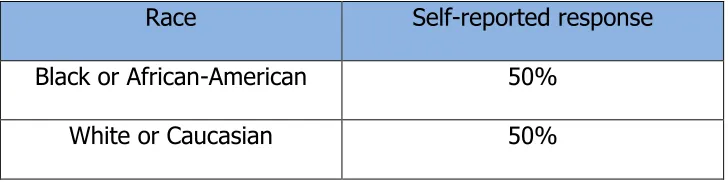
Table 4.2 Race of Study Participants ... 69
Table 4.3 Social Media Usage of Study Participants ... 71
Table 4.4 Daily Social Media Usage Log for Study Participants ... 72
Table 4.5 Personal/Social vs. Academic Social Media Use ... 73
xi
List of Figures
Figure 4.1 Student Classifications of Study Participants ... 69
Figure 4.2 Major Field of Study of Study Participants ... 70
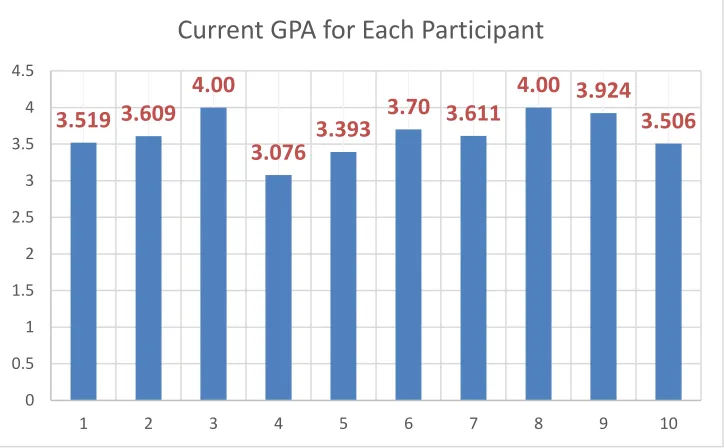
Figure 4.3 Current GPA of Study Participants ... 70
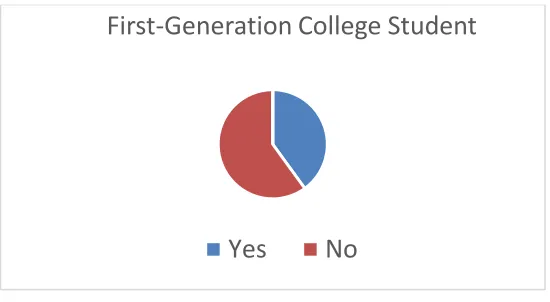
Figure 4.4 First Generation Study Participants ... 71
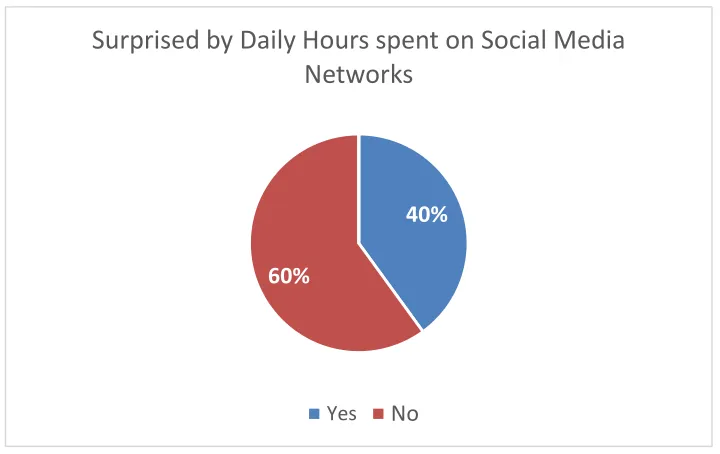
Figure 4.5 Reaction to Daily Social Media Usage ... 73
Figure 4.6 Social Media as a Course Supplement ... 74
Figure 4.7 Impact/Effect of Social Media on Student Engagement ... 75
Figure 4.8 Student Engagement During Course Time ... 75
1
Chapter 1 Research Overview Introduction
College campuses provide a variety of disciplines, courses, and
activities/events for students to attend. Students have specific requirements for
each general education course and then later within their major, minor, and/or
collateral courses. Many college professors encourage classroom discussions and
active participation as part of the course. There are campus events that students
can voluntarily attend that range from academic content to entertainment/social
events to leadership opportunities. There are also events that students may be
required or expected to attend as part of their course(s).
In considering the advancements in technology and the generational
characteristics of college students today, students have become accustomed to
accessing information immediately through utilizing the internet and social
media. Most college students have smartphones or other wireless devices, that
allow them to update their statuses, post a tweet, or even post a selfie as they
walk to and from class. Some professors have even incorporated social media
into their courses, while others stress in their syllabus that cell phones should be
2
correspondences of students, faculty, and staff. While attending an academic or
athletic event, many students are so consumed in the virtual world of social
media, they are unaware and seem disengaged from what is occurring in the real
world, right in front them. Another instance of observation is when students are
seated with peers, or close friends, yet those students are on their phones
instead of interacting with those who are physically present.
With students so connected with and through social media, the researcher
contemplated the effect that social media had on the students. Various research
has examined social media as a facilitator and communication tool that can be
utilized to improve learning and assist with the college transition and adaptation
(DeAndrea, Ellison, LaRose, Steinfield, & Fiore, 2011). These observations along
with initial research set the thought process in motion to conduct a research
study on student engagement. Social media can create connections and
interactions among peers, which can enhance the college integration and
learning experience (Gray, Vitak, Easton, & Ellison, 2013). The communications
are social and academic focused and are shown to increased persistence and
social adjustment for college students. Lederer (2012) states that the use of
social media in learning environments increases student engagement, builds
communication skills among students and faculty, and assists the students in
building a professional profile. Some of the disadvantages of social media use
3
learning process, discourages face-to-face communications, and there is a
concern and caution of misuse of social media such as with cyberbullying
(Lederer, 2012). There is a digital divide between supporters and critics of social
media integration into the classroom and further concern about equality and
opportunity of access and usage of social media technologies for all students
(Guy, 2012). As we acknowledge the wide-usage of social media, we must
consider using social media as an educational tool to facilitate and enhance the
learning environment for students. On an individual level, social media is used by
students for personal and social use; some researchers question whether
implementing social media in academic course will serve as a supplement to
learning or will create a structural shift in the way students learn (Tess, 2013).
Social Media and Student Engagement
There are many perspectives concerning why it is important to study
student engagement. When students are engaged, faculty and students can both
benefit as noted below:
It is in the best interests of both students and academic staff to have
highly motivated, engaged students that complete their studies. For the
lecturers, such students give incentive to them in their teaching practices,
and encourage more innovative and creative ways of achieving optimal
outcomes in both learning and teaching. For the students, remaining
4
likely to generate grades that will enhance their future career
advancement. (Errey & Wood, 2011, p. 29)
Teaching students who are engaged can motivate and encourage their
professors to become more active and creative as they share their wealth of
subject knowledge with their students. Students who are engaged will benefit by
deepening their understanding and achieving better student outcomes that could
assist them in their future endeavors.
Social media is a complex, multi-layered term. “Understanding social
media critically means, among other things, to engage with the different forms of
sociality on the Internet in the context of society” (Fuchs, 2014, p. 6). In 2013, a
list of the most accessed websites in the world was compiled. A few of the
websites included on the list are Google, Facebook, YouTube, Yahoo, Amazon,
Twitter, BlogSpot, and LinkedIn. Many of these websites combine media,
information, communication, and social networking (Fuchs, 2014).
Since students have changed so much over the past couple of decades,
we must attempt to understand these changes in order to engage students. Most
students today have been exposed to a digital world throughout their lives.
Students desire constant connection and communication and an environment
5
Problem Statement
There is difficulty for colleges with sustaining student engagement.
Despite careful considerations in curricular and co-curricular program
coordination, students may attend and participate, but their level of engagement
may vary or be non-existent. Student engagement has been researched in
various ways in higher education for several years. Student engagement has
been found to contribute to a student’s overall college success, affects retention
rates, and can influence the atmosphere of the campus community. Alexander
Astin’s (1999) theory posits that the greater the involvement of the student, the
more motivated and engaged the student will be throughout their college career.
This will enhance the college experience for the student and lead to a higher
level of student learning and personal development. Student engagement has
been researched in various ways in higher education for several years. Student
engagement has been found to contribute to a student’s overall college success,
affects retention rates, and can influence the atmosphere of the campus
community. Astin’s (1999) theory conveys that the greater the involvement of
the student, the more motivated and engaged the student will be throughout
their college tenure. This will enhance the college experience for the student and
lead to a higher level of student learning and personal development.
Many students attend campus events but they are interacting with social
media during the events. Some students in class do not interact with the
6
may be difficult for some students to not have social media constantly accessible
while they are in class, especially if the instructor has asked that students not be
on their phones. Student engagement is observed in students asking and
responding to questions, participation and discussions, through interactions,
following directions, and/or reacting to the content.
This lack of engagement, or disengagement, could negatively affect the
overall success of the student, their interactions with peers, and/or their personal
growth and development. A possible cause of this problem is that college
students arrive on campus with a knowledge base, behaviors, and routines that
they have learned and chosen over many years. Most of these students are
considered adults (chronologically speaking) for the first time in their lives and
they are solely responsible for how they utilize their time and effort. Most
students today have grown up with and become reliant on technology and social
media. Students may not understand how to properly use social media in
effective ways for academic and developmental purposes. There is also a
concern of how students protect their privacy on social media communications
(Junco, 2014). Students may use their phones during course instruction, walking
to and from classes, and while attending campus events and activities. An
instructor may have little to no participation from a student during class with
discussions and interactions pertaining to the subject content. Students attend
campus events but are constantly on their phones instead of participating or
7
more of a phenomenon with social media as students work towards dividing
attention and task switching. This study examined student perceptions regarding
social media usage and whether this usage has an impact on student
engagement. Since the majority of college students use social media, it is
important to obtain a better understanding of how these social media
technologies can be used in constructive ways for student learning (Junco,
2014). The use of social media in academically focused ways has been linked to
student engagement, campus involvement, college adjustment, and academic
performance (DeAndrea, Ellison, LaRose, Steinfield, & Fiore, 2011). Perhaps this
study which explored the perceived impact social media has on the student
engagement of college students will assist in a better understanding and possible
techniques or methods to improve student engagement. These techniques or
methods will be incorporated with social media to have a positive impact on the
engagement of college students. The data obtained from surveys provides
insights for improving or strengthening student engagement through social
media. It is important that students have quality interactions that support their
learning and personal development. Students will learn from their peers and by
interacting with faculty and staff. Students who are engaged are invested in their
own learning and enhancing their student success.
Research Question and Statement of Purpose
The research question for this study is what is the perceived impact of
8
research was to describe the perceived impact that social media has on the
student engagement of college students. In noting what appears to be a form of
possible dependency with social media, the researcher began to consider what
impact social media has on student engagement. Incorporating the use of social
media effectively for academic courses will be considered if social media
supplements learning and not simply serve as an additional unrelated tool. The
findings will be shared with colleagues who may be interested in implementing
social media within academic and non-academic activities and events. The results
will also be shared with student participants and other students as self-reflective
and discussion topics. This study will provide valuable data and findings while
exploring the impact that social media has on student engagement.
As technology has become more prevalent and accessible to college
students, the researcher has embraced using new software programs and search
engines. However, the researcher stood firm that cell phones did not have a
place in the classroom. The syllabus clearly noted that cell phones should be
powered off and not visible during the class. Over the past few years, the
researcher has acknowledged that college students are constantly using their cell
phones out of habit and what students perceive as a necessity. Some colleagues
allow students to tweet questions to them during class. Even though there is
resistance to using cell phones in the classroom, the researcher was open to
using social media networks to increase student engagement, which would
9
Research has found that academic and co-curricular engagement has an
impact on the psychosocial development and academic success of students
(Junco, 2014). Social integration is a factor that each institute has an opportunity
for impact. If a student feels connected with their peers, faculty/staff, and the
college or university, the student will a stronger commitment and higher level of
integration as they are motivated to reach their personal goals (Tinto, 1993). In
considering Chickering and Gamson’s (1987) principles for good practice in
undergraduate education, social media can increase the student-faculty contact,
encourage student cooperation, lead to continued active learning with
discussions, promote prompt feedback, increase time on task, communicate high
expectations through modeled educator use, and broaden the ways a student
learns (Junco, Heiberger, & Loken, 2011). It is important to understand also
what the student themselves believe about the impact of social media on their
student engagement as we consider research that has been conducted since the
influx of social media advances.
This study asked student participants to self-report their daily social media
usage and answer questions about their student engagement. Participants
considered their social media usage and whether it has an effect on their student
engagement in preparing, studying, and participating in courses and activities.
These perceptions are important to better understand the reported or possible
underlying connection that social media may have with the student engagement
10
Definition of Terms
For the purpose of this study, social media will be defined as any platform
that allows users the ability to publish, share, and access information (Murthy,
2013). For the purpose of this study, student engagement will be defined as
the time and effort students devote to academic and co-curricular activities that
may be linked to the expectations of the university (Kuk, 2009).
Within the literature various definitions will be presented but for the
purpose of this study, the researcher has listed major terms along with their
complete definitions:
Facebook. An online social network site established in 2004 where
individuals share pictures, personal information, and joins friends (Hew,
2011).
Instagram. An online photo-sharing service that enables users to take
pictures with their mobile devices, add a variety of filters, and post their
pictures to a stream (Junco, 2014).
Social media. A web service that allows users to sustain a profile within a
enclosed system; electronic tool that provides users with ability to publish,
share, and access information (Murthy, 2013).
SnapChat. A mobile photo- and video-messaging application that allows
11
before it is deleted from the from the mobile device. A unique feature of
SnapChat is the ability to doodle and add text to picture and video, which
gives users the ability to easily create memes (Junco, 2014).
Student Engagement. Student engagement represents the time and effort
students devote to activities that are empirically linked to desired
outcomes of college and what institutions do to induce students to
participate in these activities (Kuh, 2009).
Twitter. A micro-blogging service that is limited to 140 characters. It
provides a platform for connections of information to be made through the
use of hashtags (Murthy, 2013).
Conceptual Framework
This action research study will refer to selected applicable theories to
ground the study. Chickering and Gamson (1987) identified the following
indicators of engagement called the:
Seven Principles for Good Practice in Undergraduate Education. These
principles include student-faculty contact, cooperation among students,
active learning, prompt feedback, time on task, high expectations, and
respect for diverse talents and ways of learning.
Chickering and Gamson (1987) identified the Seven Vectors of Student
12
following: (1) developing competence; (2) managing emotions; (3) moving
through autonomy toward interdependence; (4) developing mature interpersonal
relationships; (5) establishing identity; (6) developing purpose; and (7)
developing integrity.
By examining the impact of social media on student engagement, the
researcher explored the developing competences as the participants
communicated and responded to the researcher as part of their interpersonal
competence. Intellectual, physical, and interpersonal competences developed
throughout the college experience can be noted through using critical thinking
skills, involvement, and communications. Many of these communications for
college students occur through social media. Also within student development,
students learn and develop their ability to manage their emotions and reactions.
From course discussions to social settings, students manage their emotions and
reactions at different levels and in different ways. As students gain their
independence and become more self-sufficient, they come to find that they do
need others as they gravitate towards interdependence. Students form new
relationships and begin making decisions about the specific activities and events
they will attend, they will be moving from autonomy to interdependence.
Students will not only be establishing an actual identity but students will also be
making decisions about their virtual identity and social networking presence.
Their purpose will become more focused as they find meaning in their interests
13
developing integrity and they formulate their own values and standards.
(Chickering and Gamson, 1987; Dickson, 1991; Junco, 2014).
Astin (1984) developed the Student Involvement Theory which is centered
around the involvement of students. Student involvement “refers to the amount
of the physical and psychological energy that the student devotes to the
academic experience” (p. 518). Students may become involved in their studies,
extracurricular activities, and/or interactions with faculty and staff. The Student
Involvement Theory explains that students must be engaged in their
environment to advance in their personal development and to achieve a higher
level of learning. In considering this theory, if students can utilize social media to
create an environment where they are more comfortable to interact with their
peers while discussing and sharing information about the course, this could lead
to a higher level of learning for the students. According to Astin (1999) “the
theory of student involvement is more concerned with the behavioral
mechanisms or processes that facilitate student development (the how of
student development)” (p. 522).
Vincent Tinto (1993) developed the Retention Theory as he studied and
analyzed student retention. There are numerous aspects that can have an effect
on student retention. If a student feels isolated, as if they do not fit in, or if they
are struggling with connecting their past knowledge with the new knowledge;
14
Methodology
This research study allowed the researcher the opportunity to select a
topic and obtain informative data through a systematic process. After identifying
and narrowing the topic of student engagement, the researcher selected one
factor within student engagement to explore. This research provided data and
findings that will guide educating students regarding the impact that social media
can have on student engagement and provided information needed to explore
whether the researcher can effectively incorporate social media into the college
classroom to enhance student engagement.
Participant Selection
In determining participant selection, it was decided that a random
selection of student perspectives would be important to the study. Some of the
students were in the process of acclimating to the college life as freshman and
would provide valuable data. Upperclassmen would provide an interesting
perspective since they have already attended college courses and events.
Students in college have more freedom in choosing how they will spend their
time and possibly set the tone for the type of student they will be for the
remainder of their time in college. In acknowledging the past enrollment
statistics, the participant pool consisted of students from various geographical
areas within the state (with the possibility of a few exceptions). There was also
an array of major areas of study among the participants. The study consisted of
15
For the purpose of this study, the research participants provided data
regarding their use of social media, perspectives of student engagement,
feedback concerning the impact social media have on their student engagement
within their higher education experience. After students were given information
pertaining to the study and provided answers to any questions, students were
asked to sign a consent form, if they choose to participate.
Research Site
The study was conducted at a public university in a rural area of a
southern state. The university is a comprehensive institute that offers a broad
range of undergraduate majors, professional schools in education and business,
and graduate programs in business, education, psychology, and nursing.
More than 96 percent of the campus student population are residents of
South Carolina and many of these students are first-generation college students.
The latest published total enrollment was 3,944, which consisted of 1,175 men
and 2,796 women. Of that total, 1,907 are White (not of Hispanic origin), 1,779
are Black (not of Hispanic origin), 54 Hispanic, 46 Asian, 2 Native Hawaiian, 12
American Indian, 66 Internationals, 34 two or more races, and 44 unknown.
Within this total enrollment, there are 44 South Carolina counties represented,
33 states represented, and 21 countries represented. There are approximately
1,530 students who resided on campus and 2,414 commuter students.
Research Question
16
allowed the opportunity to work closely with college students in various ways.
Interest in campus-related topics and knowledge of higher education current
topics focused the research topic on student engagement.
“At the intersection of student behaviors and institutional conditions is
student engagement. We focus on student engagement because it represents
aspects of student behavior and institutional performance that colleges and
universities can do something about, at least on the margins, whereas many
other factors such as precollege characteristics are typically beyond the direct
control of the student or the college or university” (Kuh, Kinzie, Buckley, Bridges,
& Hayek, 2006, p. 8). When students first arrive at college, this creates an
opportunity for faculty and staff to encourage and set the tone for student
engagement. These students are trying to acclimate to the college campus and
will be looking to the faculty, staff, and their peers for guidance and modeling.
There are many recommendations and suggestions available for
increasing student engagement. The purpose of this study is to determine the
impact of a specific factor on student engagement. Specifically, the study will
explore the following question: What is the perceived impact of social media on
the student engagement of college students? Student participants will be
questioned about their perceptions of the impact of social media on their college
17
Sources of Data Collection
Data analysis should be carefully considered and properly conducted. The
results and conclusions of a research study develop from the purposeful
collection, examination, organization, and compilation of the data.
Mertler (2014) defines descriptive statistics as “simple mathematical
procedures that serve to simplify, summarize, and organize relatively large
amounts of numerical data” (p. 169). “The goal of inferential statistics is to
determine how likely a given statistical result is for an entire population based on
a smaller subset or sample of that population” (Mertler, 2014, p. 174).
For the purposes of this research study, the researcher obtained data
pertaining to social media usage and its perceived impact on student
engagement. Participants were asked to self-report information about their own
behaviors and their understanding of the behavior of others as it pertains to
social media and student engagement.
Chapter Summary
This chapter covered the introduction of the research by identifying the
research question and purpose of the study. The conceptual framework was
addressed to assist in understanding the purpose of the study. Chapter 2
explores the related literature that frames this study. Chapter 3 defines the
methodology and relative information pertaining to the research. Chapter 4
18
data. Chapter 5 provides an overview and discussion of the study as well as
19
Chapter 2
Literature Review
Introduction
This study examined significant factors impacting social media and
student engagement within one south eastern college campus. The literature
review sought to examine the current crisis of high engagement of social media
among college students and its impact on their college experience, their level of
classroom engagement, and academic. This chapter includes an organization of
the literature review, and examines the literature relevant to this study according
to the research questions.
The literature review for this chapter began with a broad overview of
student engagement to highlight how student engagement is defined and
manifests in the college environment. The review has been divided into the
following subheadings: Student Engagement Defined, Perspectives and
Approaches to Student Engagement, Shift in Research, Importance of Student
Engagement, Theoretical Base, Higher Education Technology Integration, Social
Media use among College Students, Social Media and Student Engagement, and
20
education and has been the focus of the college student experience for many
years. Why is student engagement important in higher education? Student
engagement has been found to contribute to a student’s overall college success,
affects retention rates, and can influence the atmosphere of the campus
community.
The purpose of this literature review is to describe the related literature
on social media and the impact that it can have on the engagement of college
students.
Student Engagement Defined
In determining the historical formulation of the term engagement, Axelson
and Flick (2011) found a modification from its initial definition of a “moral, often
legal, obligation” to a less rigid definition of “condition, or act, of being so
occupied” (p. 40). At the moment of measurement, a person is considered to be
engaged if they are completely present. Interestingly, the term engagement was
originally a legal obligation and transformed into meaning someone who is
present. However, today engagement as it is related to students has its own set
of definitions because it has been found to be so important to student success.
Students can be engaged formally and informally within the classroom
and outside of the classroom. This act of engaging can occur with faulty-student
interactions as well as with peer interactions (Lester, 2013). Students can be
21
in the classroom. A student can also be engaged in a student organization,
campus event, or leadership opportunity. This engagement can occur in an
official or relaxed setting and with their instructors and/or their fellow classmates
or friends.
Kuh (2009) states that “Student engagement represents the time and
effort students devote to activities that are empirically linked to desired
outcomes of college and what institutions do to induce students to participate in
these activities” (p. 683). Students who have predetermined plans and goals will
place emphasis on the elements needed to accomplish those. They may devote
unlimited time and effort to ensuring that they achieve their aspirations.
As colleges and universities examine and measure student engagement,
the definition is revisited and formulated to meet individual campus needs. “The
definition of engagement is being redefined in more specific ways as institutions
examine multiple aspects of engagement in pursuit of increased levels on
campus” (Lester 2013, p. 2). There are so many variations to student
engagement and how it can be measured. Student engagement can be accessed
within a classroom, an academic discipline or program, co-curricular activities, or
even by student characteristics. Once the decision is made regarding the
component of student engagement that will be studied, then an appropriate
measure is determined. Researchers need to also decide what will constitute
22
There are four elements that exist when student engagement occurs.
Students will be attentive and focused, committed, persistent, and will seek
meaning and value as they learn and complete assignments. Sometimes the
terms engaged and involved are used interchangeably. When a student is
engaged, they are also involved. However, a student can be involved without
being engaged. The major variance is that students who are engaged will
connect with the assignments or content (Schlechty, 2011).
The most widely known measurement for collecting student engagement
data since its creation in 2000 for college students is the National Survey of
Student Engagement (NSSE). This instrument has five benchmarks that are
used: level of academic challenge, active and collaborative learning,
student-faculty interactions, enriching educational experiences, and a supportive campus
environment. The purpose of the survey is to provide institutions with data that
can be used to continuously make needed improvements. It also serves as a
means of documenting good practices and in support of public advocacy. Initially
the NSSE was used in several smaller colleges but it is now used annually at
several hundred colleges and universities. The National Survey of Student
Engagement is sent to first-year and senior students. There are five sections to
the survey: participation in educational activities, institutional requirements,
college environment features, background information, and the student’s
educational and personal growth since beginning college. These results give
23
on their campus and to make any needed adjustments or additions to provide
students with the instruments that they need to be successful (Kuh, 2009). Many
studies that are researching student engagement will use the National Survey of
Student Engagement or parts of the survey as a data collection source. The
questions and answer responses are written in such a way that the respondent
clearly understands the questions and the answers provide pertinent information
needed for data analysis. The National Survey of Student Engagement ask
students to respond to questions about the focus on program and activities “that
support student learning and persistence. The eight items that make up this
scale ask students about academic support programs, encouragement of diverse
interactions, and provision of social opportunities, campus activities, health and
wellness, and support for non-academic responsibilities” (2013).
Perspectives and Approaches to Student Engagement
Some researchers attempt to define student engagement by the
approaches they use to understand engagement. However, as with the definition
of student engagement, there are varying opinions on the number and naming of
the approaches. In an article by Kahu (2013), there are four approaches
identified to define student engagement. The approaches that have been
identified are the behavioral perspective, the psychological perspective, the
socio-cultural perspective, and the holistic perspective. The behavioral approach
looks at instructional practice, psychological looks at the internal process of an
24
the holistic perspective in which a few researchers attempt to join the diverse
areas of theory and research.
“One constant across the myriad conceptualizations of engagement is that
it is multidimensional. Yet, agreement on multidimensionality differs from
agreement on the number and types of engagement dimensions, which ranged
from two to four” (Appleton, Christenson, & Furlong, 2008, p. 370). Engagement
is usually categorized by having two or three components. The two component
model will typically include affective/emotional and behavioral. The affective or
emotional subtype would incorporate components such as, sense of belonging,
interest, and identification. The behavioral subtype would incorporate
components such as, effort, participation, and conduct. The three component
model would add a cognitive subtype. The cognitive subtype would incorporate
components such as learning goals, self-regulation, and learning investment. In
addition to the two and three component models, other researchers suggest that
there are four subtypes in classifying engagement. Those four subtypes are
academic, behavioral, cognitive, and psychological (Appleton, Christenson, &
Furlong, 2008).
Most of the research within the topic of student engagement concentrates
on observable indicators such as those found in academic and behavioral
engagement. Cognitive and psychological engagement are determined by
25
Shift in Research
Often previous studies and programs would identify students who were
disengaged and then implement strategies in an attempt to re-engage them.
More recent studies have additionally been geared towards identifying learning
needs of students in attempt to make modifications to engage students (Junco,
2014; Kettlewell, Southcott, Stevens, & McCrone, 2012; Taylor & Parsons, 2011).
Students today have become accustomed to constant and immediate
communication. Because of advances in technology and changes in society over
the past couple of decades, the learning goals and preferences of students are
also changing. “Student engagement has become both a strategic process for
learning and an accountability outcome unto itself” (Taylor & Parsons, 2011, p.
4).
“At the intersection of student behaviors and institutional conditions is student engagement. We focus on student engagement because it represents
aspects of student behavior and institutional performance that colleges and
universities can do something about, at least on the margins, whereas many
other factors such as precollege characteristics are typically beyond the direct
control of the student or the college or university” (Kuh, Kinzie, Buckley, Bridges,
& Hayek, 2006, p. 8). When students first arrive at college, this may serve as the
best opportunity for faculty and staff to encourage and set the tone for student
engagement. First-year students are attempting to acclimate to the college
26
modeling. They are adjusting to new schedules and routines, possibly new living
environments, and many will be making their own decisions for the first time as
an adult. These adjustments can cause student at time to feel anxious,
homesick, isolated, and lost. Other first-year students will embrace this new
freedom and use this time to explore and define themselves as adults and
individuals.
Students who born between 1982 and 2002 are often referred to as the
Net Generation, the Millennials, and even the iGeneration. These students are
multitaskers and they have become accustom to using text, instant messaging,
and video messaging as a means of communicating with others. Although this
type of communication does not replace face-to-face interactions it does allow
for communication without time and geographical barriers. Pletka (2007) created
a program My So-Called Digital Life where over 2,000 middle and high school
students were given digital cameras to document and record their lives for one
month. Pletka has conducted several research studies and assembled information
pertaining to the Net Generation. Pletka found that this generation is constantly
available and interactive. They share information and expect immediate retrieval
of information since social media has become so intertwined with their lives.
Pletka discovered that students wanted to be part of the community and engage
within this community because they felt connected to each other. Many of the
students developed friendships through the program interactions. These students
27
system among those in the program. The program itself allowed students to
exchange and advance their knowledge base and communication skills. This also
served as a platform to express their ideas in a way to obtain feedback from
their peers. Pletka determined that the Net Generation students prefer
educational environments that are more individualized and allow for immediate
feedback. Incorporating social media would allow for flexibility and
personalization for the classroom and coursework. It would also provide a
platform for students to share information, ideas, or questions with the ability to
receive immediate feedback and/or responses.
Importance of Student Engagement
There are many perspectives of why it is important to study student
engagement. When students are engaged, faculty and students can both benefit.
These students will make connections with materials that have learned
previously and with the new material they are being exposed to. These students
will also increase their communication and leadership skills as active learners.
Their independence will also flourish as they find meaning and value in their
studies.
Research has shown that student engagement fluctuates more within a
campus community than it does among campus to campus comparisons. There
are also some identifiers of students that could make them more susceptible to
first-28
generation, male, commuter, or transfer college students (Buckley, Bridges, &
Hayek, 2006). This is an important point to consider. College and university
campuses are quite different from one to the next. There are also as many
difference in the student body. In reviewing studies and information of student
engagement, it is essential to remember that student engagement can vary more
within a campus itself than in comparison with other campuses. Therefore, what
works for one campus and student body, may not be feasible to even
contemplate for another campus.
Student engagement is important because it generates learning and can
serve as a predictor of student success and retention. Students who are engaged
are typically capable of adapting to receive support from their instructor and the
faculty-student interactions during instruction allow the instructor to gauge if the
subject content is bring received as intended. This ability can be vital to the
success of a student. When a student can comfortably ask questions of their
professor, this will support their student learning and understanding. If a student
can accept constructive criticism from a professor, this can be very useful in their
future as a student and as a future employee. Student engagement can also lead
to achieving student outcomes and skill development, a more interactive and
advanced learning environment, and improved student motivation (Reeve, 2012).
Instructors can support student engagement by facilitating independent thinking
and motivating interests of their students. Since students can access information
29
students opportunities to support independent thinking. Social media can be
used by have students discuss various assignments, share information with their
peers, or by blogging about their findings and connections with subject content.
Faculty can also support student engagement by modifying approaches to
strengthen engagement in the classroom. When students feel a sense of
community with their environment they are more likely to be engaged.
Budgen, Main, Callcott, and Hamlett (2014) conducted a study to address
issues of retention and engagement of first-year students in Australia. The
participants were assigned to groups that were each led by two peer mentors.
The participants were given a survey to collect demographical information and
preliminary impressions of the university support system and involvement. At the
end of the first year, students were given another survey and they also
participated in focus groups. Even though the study did not find a significant
difference in retention rates, it did demonstrate successful implementation of the
mentoring program. First-year students created new relationships and became
involved and engaged in activities. Many times first-year students can feel
disconnected as they begin college. This mentoring program created a
community among the first-year students and its mentors. Participants attended
activities with their mentors which expanded on this feeling of community and
also gave the participants are opportunity to be engaged in activities outside of
academics. An unplanned perk of the study was the betterment of the mentors.
30
beneficial relationships with peers and staff involved with the mentoring program
(Budgen, Main, Callcot, & Hamlet, 2014). As the mentors served in their roles,
they were able to gain valuable experience as they worked with the first-year
students and those associated with coordinating and implementing the program.
This study reestablished the importance of connections and relationships are to
student engagement. When students feel that they are a part of a community,
they may feel a sense of ownership and feel more compelled to contribute. As
they form relationships, they will become more comfortable with sharing
information and idea and also with asking questions and contributing to the
curricular and co-curricular experiences.
Theoretical Base
In considering the theories that can be applied to student engagement,
there are many theories that are directly and indirectly related to student
engagement. As the definitions of student engagement evolved, so did the
theories. These theories provide information that is important in understanding
students and the role that engagement can have on their learning and success.
Chickering and Gamson identified the following indicators of engagement called
the:
Seven Principles for Good Practice in Undergraduate Education. These
principles include student-faculty contact, cooperation among students,
31
respect for diverse talents and ways of learning (as cited in Kuh, 2009, p.
684).
This study will examine indicators of engagement. As social media is
introduced into the curriculum, the student-faculty should potentially increase
because there will be various tools for communicating with the instructor. Social
media usage will also require that students communicate and discuss course
content among their participating peers. The use of social media will also give
students an opportunity to increase their active learning and will allow access to
prompt feedback from the instructor, their peers, or anyone who may be
following the social media application. There will be high expectations of
students as social media is used to supplement their student learning and in
turn, the students will have expectations of the instructor to be knowledgeable of
the social media and to use it effectively. Since certain social media tools allow
others to view information that is shared or discussed, respect for diversity and
ways of learning will be stressed among the participants. Chickering and Gamson
wrote that the time students spent on their coursework is interconnected with
how their student success. Chickering identified the Seven Vectors of Student
Development within his development theory. The seven vectors include: (1)
developing competence; (2) managing emotions; (3) moving through autonomy
toward interdependence; (4) developing mature interpersonal relationships; (5)
establishing identity; (6) developing purpose; and (7) developing integrity
32
By examining the impact of social media on student engagement, the
researcher will also be able to explore the developing competence as the
participants communicate and respond to the researcher and peers as part of
their interpersonal competence. As students form new relationships and begin
making decisions about the specific activities and events they attend, they will be
moving through autonomy through interdependence. Students will not only be
establishing an actual identity but students will also be making decisions about
their virtual identity and social networking presence. Students will begin to
develop integrity and they formulate their own values and standards.
Alexander Astin developed the Student Involvement Theory which is
centered on the involvement of students. Student involvement “refers to the
amount of the physical and psychological energy that that the student devotes to
the academic experience” (Astin, 1999, p. 518). Students may become involved
in areas such as their studies, extracurricular activities, and /or interactions with
faculty and staff.
The Student Involvement Theory explains that students must be engaged
in their environment to advance in their personal development and to achieve a
higher level of learning. In considering this theory, if students can utilize social
media to create an environment where they are more comfortable to interact
with their peers while discussing and sharing information about the course, this
could lead to a higher level of learning for the students. There are five tenets
33
requires physical and psychological energy. The second tenet is involvement
occurs along a continuum. The third tenet is involvement has quantitative and
qualitative features. The fourth tenet is that development is proportional to
quantity and quality of involvement. The fifth tenet is that educational
effectiveness is related to the capacity to increase involvement (Astin, 1999).
According to Astin (1999) “the theory of student involvement is more
concerned with the behavioral mechanisms or processes that facilitate student
development (the how of student development)” (p. 522). Due to his research,
modern engagement research has been widely attributed to Astin (Axelson &
Flick, 2011).
Vincent Tinto developed the Retention Theory in which he studied and
analyzed student retention. There are numerous aspects that can have an effect
on student retention. If a student feels isolated, as if they do not fit in, or if they
are struggling with connecting their past knowledge with the new knowledge,
can have an influence on whether a student is retained or not. Tinto found that it
was vital to assist students with social and academic assimilation to increase the
success of student retention. Tinto claimed that persistence is a key component
of student engagement and student engagement has a positive correlation to
student retention. He found that when students did not form relationships with
their peers or faculty/staff, they were more prone to withdraw and not return.
34
This study examined whether the social media has an impact of their
student engagement along with the reported use of social media. First-year
students often will struggle with fitting in with their new peers and within the
new campus environment. Students may not feel comfortable asking questions
or participating in their initial college courses. However, social media can allow
students to correspond with their instructor and their peers without the added
pressure of being face to face with their peers. Participants of this study, were
asked to share information about their specific social media use and their
perception of its impact. Social media may provide an opportunity for students to
learn from others as they learn and discuss these connections and deepen their
own understanding their peer learning.
Higher Education Technology Integration
Technology has had a place in classrooms for quite some time. In 1910, a
Catalogue of Educational Motion Pictures was published by George Kleine and
made available to school libraries through a rental program. However, most
school did not have the financial means to rent these movies much less provide
the equipment needed to show them. The first noted movie shown in 1910 was
in Rochester, New York. By 1917, Chicago had implemented a visual arts
department in their school district. By 1931, there were film and media
departments in twenty-five states. “Classroom use of films became a symbol of
progressive teaching approaches” (Cuban, 1986). Of the information available, it
35
enough equipment, teachers not trained on the equipment or film use, and
difficulty in finding a subject-related film.
Also in 1920, the Radio Division of the U.S. Department of Commerce
implemented educational radio stations to provide classroom teaching via the
radio. BY 1945, many school districts and state departments were providing radio
programs to assist teachers with instruction. The equipment for broadcasting a
radio show was much affordable and accessible that the motion film equipment
but many schools still could not afford the equipment and/or could not work the
radio programming scheduled times within their school schedules (Cuban, 1986).
Instructional television entered the scene from 1954-1983. The Ford
Foundation invested money for instructional education for educational
advancement. Through their funding, over $20 million in 250 school systems and
50 colleges by 1961. Instructional television was used to teach an entire class,
supplement class content, or aid in the teaching (Cuban, 1986).
In the early 1980s, machines later known as computer were being used in
exclusive classrooms. During the 1990s, computers could be found in almost
every school district even if they only had a limited quantity for district use. By
2000, the student to computer ratio was 5 to 1 with a 1 to 1 ration being
strongly encouraged by school districts in 2010.
Technology is everywhere today. We can search articles online without
36
and friends from anywhere in an instant. Students have become accustomed to
using technology for a variety of activities and social networking. Information
technology is rapidly changing in ways that we cannot even imagine today. It is
important to understand how to use technology and social media as they will
serve as resources and tools for students and as they become professionals in
their careers (Gardner & Jewler, 1997).
In the 1950s and 1960s, large computers were being used for
administrative positions at some research institutions. Many faculty members
began using computer in the 1960s due to approval of research grants they had
applied for. Individual faculty members started using computers to more easily
process data and by 1992 massive amounts of material and information were
available through the world wide web. By 1996 over 50 percent of freshman
students had access to computers on their college campuses and 25 percent of
those freshmen had acquired their own computers (Smith, 2006). Video
simulations and smartboards were introduced into classrooms and labs. The
majority of students and faculty today have various forms of devices used for
student learning and social interactions. Some faculty members have already
incorporated social media into their classrooms while others are either feeling the
pressure to make changes or they have decided not to build social media in their
curriculum. Adding social media would require the professor to ensure that they
understand the media application, how to use it from an instructor and students
37
new technology will require that the instructor is properly trained on its use and
then a training session and/or tutorial is held with the participants. Students who
have prior knowledge of using the social media tool will need to also attend this
training to ensure that the participants are exposed to the same training.
Instructors should either facilitate this training or attend the training. It is
important that an instructor understands how the social media tools are used
and displayed from a student perspective. Faculty members would also need to
regularly check all applications that they implement because information would
be uploaded in various formats. This can be viewed as a downside for instructors
because they may have trouble fitting this into their already busy schedules and
routines. However, if these tools lead to increased student learning and
engagement, then the benefit will be worth incorporating these regular
checkpoints. As this practice continues to emerge, we will learn from those who
are using social media in their classes and the influence it is having on student
learning (Kelly, 2003). Since this is still a fairly new practice and research is
growing but currently limited, we will learn what works well and what does not
seem to work well, from those who integrate social media into their courses. As
more research claims that student engagement can be increased through using
social media, there will also be more instructional and supplemental materials to
enhance the use of social media which will prove to be helpful to instructors.
“The power of television and video for learning lies in the use of
38
civically in facets of the academic content. Visual learning can result in increased
engagement as well as increased complexity, depth, and breadth of experience
to improve student academic performances” (Lemke,year, pg. 6). Research has
shown that the use of education television can increase student engagement if
the television episode is relative and specific to the content and if the teacher is
appropriately incorporating the televised content. Educational television must be
used to supplement and reinforce the material and not as a substitute for subject
content. This can help student learning by using visualization and integrating a
higher-order of thinking. Another consideration is locating and selecting
educational videos that are updated so students are receiving the most current
information. Along with this, the equipment would also need to be compatible to
the format of the material. It is important also to review the school culture and
teacher preparation with using educational as a supplemental teaching and
learning resource.
Social Media Use Among College Students
Junco and Cole-Avent (2008) note that current students are more wired
and connected through the internet than any other generation has been. The
researchers have also found that there are differences among the college
students. Females access the internet and social media applications mostly for
communication purposes. Males access the internet and social media applications
mostly for research and playing games. Junco and Cole-Avent also discover that
39
communication. The advances in technology will continue to occur and college
students will come to expect technology to be incorporated into their course
work and college experience. This study identified differences in how females
and males use the internet once it is accessed.
In research conducted by Junco (2011), the relationship between
Facebook and student engagement was studied. There were 2,368 participants
who completed surveys from a four-year, public college. A selection of the
survey results are listed below:
Students reported spending a mean of 750.75 (SD 642.24) minutes
(or 12.5 h) per week preparing for class and spending, on average,
298.50 (SD 438.32) minutes (or 5 h) per week participating in
co-curricular activities.Students in this sample spent a substantial amount of
time on Facebook. Students:
Spent a mean of 101.09 min (SD 99.16) on the site per day
Spent a mean of 74.97 min (SD 86.82) on the site “yesterday”
Checked Facebook a mean of 5.75 (SD 6.78) times per day
Checked Facebook a mean of 4.8 (SD 6.71) times “yesterday.”
(Junco, 2011, p. 166).
These results gave an estimate of the time spent by the participants in
preparing and studying for class per week versus how much time they spent on
Facebook on a daily basis. The results for this particular study showed that there
40
studying. However, the study did determine that there is a positive relationship
between the time spent on Facebook and the time spent participating in
co-curricular activities. This is consistent with similar research that has found that
those who utilize social networking websites were more involved on campus and
had more real-world connections than those who do not use social networking
websites (Junco, 2011).
In a 2013 study Junco research inequalities of Facebook use among
college students. The survey was sent to students through their university email.
The study yielded responses from 2,368 students from a four-year, public
institute. The respondents were 64% female and 89% self-identified as
Caucasian. The study did not find a relationship with the time spent on Facebook
and the respondents’ gender, race, or highest level of education for their parent.
The results showed that females were more probable to post and tag photos and
comment on others’ posts. African Americans reportedly would not be as prone
to inquire with friends. A positive relationship was found between the level of
parent’s education and the student posting videos, sending messages, and
creating events. This same group had a negative relationship when it came to
updating their status. (Junco, 2013b). There was a limitation in this study
pertaining to the race of the participants. The demographics were somewhat
representative of the university surveyed; however, the African American
41
Bartow (2014) examined the outcome of five teachers who used social
media as part of their classroom instruction. Bartow does note that many schools
do not allow access social media applications. Observation notes and detailed
interviews provided an understanding of the affect of incorporating social media.
An initial hesitation can occur with implementing social media because the
instructor may not feel as versed as their students in the use and features.
However, the study showed that communications and interactions with the
instructor increased while using social media. Through social media such as
Edmodo (an online collaboration tool), student participants were more on-task
because of reminders and they had access to more information at one time
because the teacher could provide students with a large amount of information
at one time. The instructors can also place various resource links and
supplemental materials within the content of a social media site. As students
work though the course content and social media application, they can be a
source of information for instructors to learn more efficient and effective ways to
utilize social media tools. Some instructors felt that they had less control when
implementing social media. Interestingly, the study discovered that some
instructors had more control than without social media. Social media use
provides evidence of sharing and participation of these tools instead of relying on
a student’s own admission or other forms of determining if the student has