Technology (IJRASET)
P2P File Access Availability in MANET for
Efficient File Sharing
J.Banumathi1, S.vijayarangam2 PG Student/ CSE, Associate Professor/CSE
Priyadarshini Engineering College, Vaniyambadi, vellore-635751
Abstract- Earlier days of MANET we are sharing only a single data because the nodes are not that much efficient. In now a day, file sharing in among different nodes in MANET is also possible because of file sharing is efficient file replication in P2p.This can be an more interesting concept in recent years. In file sharing the file query can be suffered in following three possibilities.ie,node mobility, limited communication range, resource. The current file sharing in MANET have two short comings.First,they lack a rule to allocate limited resources to different files in order to minimize the average querying delay.second,they consider storage as available resources for file sharing but neglect the fact that the file holders frequency with other nodes. In this paper, and by propose a OFRR(optimal file replication rule).it takes an advantage of allocated resources to each file based on its popularity and size.
Keywords: P2p, MANET, File sharing, File Availability.
I. INTRODUCTION
With the increasing popularity of mobile devices, e.g., smart phones and laptops, we envision the future of MANETs consisted of these mobile devices. By MANETs, we refer to both normal MANETs and disconnected MANETs, also known as delay tolerant networks (DTNs). The former has a relatively dense node distribution in an area while the latter has sparsely distributed nodes that meet each other opportunistically. On the other side, the emerging of mobile file sharing applications on the peer-to-peer (P2P) file sharing over such MANETs.
The local P2P file sharing model provides three advantages. First, it enables file sharing when no base stations are available (e.g., in rural areas). Second, with the P2P architecture, the bottleneck on overloaded servers in current client server based file sharing systems can be avoided. Third, it exploits otherwise wasted peer to peer communication opportunities among mobile nodes. As a result, nodes can freely and unobtrusively access and share files in the distributed MANET environment, which can possibly support interesting applications.
For example, mobile nodes can share files based on users’ proximity in the same building or in a local community. Tourists can share their travel experiences or emergency information with other tourists through digital devices directly even when no base station is available in remote areas. Drivers can share road information through the vehicle-to-vehicle communication. However, the distinctive properties of MANETs, i.e., node mobility, limited communication range and resource, have rendered many difficulties in realizing such a P2P file sharing system.
For example, file searching turns out to be difficult since nodes in MANETs move around freely and can exchange information only when they are within the communication range.
Broadcasting can quickly discover files, but it leads to the broadcast storm problem with high energy consumption. Probabilistic routing and file discovery protocols avoid broadcasting by forwarding a query to a node with higher probability of meeting the destination. But the opportunistic encountering of nodes in MANETs makes file searching and retrieval non-deterministic. File replication is an effective way to enhance file availability and reduce file querying delay. It creates replicas for a file to improve its probability of being encountered by requests. Unfortunately, it is impractical and inefficient to enable every node to hold the replicas of all files in the system considering limited node resources. Also, file querying delay is always a main concern in a file sharing system. Users often desire to receive their requested files quickly no matter whether the files are popular or not. Thus, a critical issue is raised for further investigation: how to allocate the limited resource in the network to different files for replication so that the overall average file querying delay is minimized? Recently, a number of file replication protocols have been proposed for MANETs.
Technology (IJRASET)
frequently query. In the former, redundant replicas are easily created in the system, thereby wasting resources. In the latter, though redundant replicas are reduced by group based cooperation, neighboring nodes may separate from each other due to node mobility, leading to large query delay. There are also some works addressing content caching in disconnected MANETs/ DTNs for efficient data retrieval or message routing. They basically cache data that are frequently queried on places that are visited frequently by mobile nodes.
Both the two categories of replication methods fail to thoroughly consider that a node’s mobility affects the availability of its files. In spite of efforts, current file replication protocols lack a rule to allocate limited resources to files for replica creation in order to achieve the minimum average querying delay, i.e., global search efficiency optimization under limited resources. They simply consider storage as the resource for replicas, but neglect that a node’s frequency to meet other nodes (meeting ability in short) also influences the availability of its files. Files in a node with a higher meeting ability have higher availability.
II. RELATED WORK
A. File sharing in normal MANET
Individual node or a group of nodes decide the list of files to replicate according to file querying frequency.Hara and Maria proposed three file replication protocols static access frequency (SAF), dynamic access frequency and neighbourhood (DAFN), and dynamic connectivity based grouping (DCG). In SAF, each node replicates its frequently queried files until its available storage is used up. SAF may lead to many duplicate replicas among neigh boring nodes when they have the same interested files. DAFN eliminates duplicate replicas among neighbours. DCG further reduces duplicate replicas in a group of nodes in descending order based on frequency.
B. File sharing in Disconnected MANET
Proposed the DTN storage module to leverage the DTN store-carry-and-forward paradigm and make DTN nodes keep a copy of a message for a longer period of time required by forwarding. Gao et al. [14] proposed a cooperative caching method in DTNs by copying each file to the node in each network central location, which is frequently visited by other nodes. When the central node is full, less popular replicas are moved to its neighbour nodes.
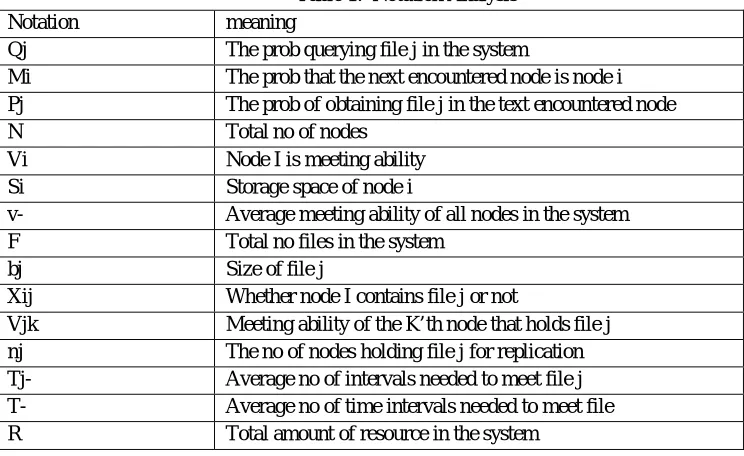
[image:3.612.121.493.442.670.2]C. Equations
Table 1: Notation Analysis
Notation meaning
Qj The prob querying file j in the system
Mi The prob that the next encountered node is node i
Pj The prob of obtaining file j in the text encountered node
N Total no of nodes
Vi Node I is meeting ability
Si Storage space of node i
v- Average meeting ability of all nodes in the system
F Total no files in the system
bj Size of file j
Xij Whether node I contains file j or not
Vjk Meeting ability of the K’th node that holds file j
nj The no of nodes holding file j for replication
Tj- Average no of intervals needed to meet file j
T- Average no of time intervals needed to meet file
R Total amount of resource in the system
D. Distributed file replication protocol\
Technology (IJRASET)
then propose a replication protocol to realize OFRR and analyze the effect of the protocol.III. PROPOSED FRAMEWORK
We propose a distributed file replication protocol that can approximately realize the optimal file replication rule with the two mobility models in a distributed manner in the OFRR in the two mobility models (i.e., Equations (22) and (28)) have the same form, we present the protocol in this section without indicating the specific mobility model. We first introduce the challenges to realize the OFRR and our solutions. We then propose a replication protocol to realize OFRR and analyze the effect of the protocol. The priority competition and split file replication protocol (PCS).
First introduce how a node retrieves the parameters needed in PCS and then present the detail of PCS and briefly prove the effectiveness of PCS. And also refer to the process in which a node tries to copy a file to its neighbors as one round of replica distribution. Recall that when a replica is created for a file with P, the two copies will replicate files with priority P =2 in the next round. This means that the creation of replicas will not increase the overall P of the file. Also, after each round, the priority value of each file or replica is updated based on the received requests for the file.
Then, though some replicas may be deleted in the competition, the total amount of requests for the file remains stable, making the sum of the Ps of all replicas and the original file roughly equal to the overall priority value of the file. Then, we can regard the replicas of a file as an entity that competes for available resource in the system with accumulated priority P in each round. Therefore, in each round of replica distribution, based on our design of PCS, the overall probability of creating a replica for an original file
A. Delay tolerant network
Delay tolerant network involves some of the same technologies as are used in disruption-tolerant network but there are important distinctions. it requires hardware. That can store large amounts of data. such media must be able to survive extended power loss and system restarts. In a delay-tolerant network, traffic can be classified in three ways, called expedited, normal and bulk in order of decreasing priority.
Expedited packets are always transmitted, reassembled and verified before data of any other class from a given source to a given destination. Normal traffic is sent after all expedited packets have been successfully assembled at their intended destination. Bulk traffic is not dealt with until all packets of other classes from the same source and bound for the same destination have been successfully transmitted and reassembled.
B. P2P file sharing in MANET
Our proposed the DTN storage module to leverage the DTN store-carry-and-forward paradigm and make DTN nodes keep a copy of a message for a longer period of time required by forwarding a cooperative caching method in DTNs by copying each file to the node in each network central location, which is frequently visited by other nodes.
When the central node is full, less popular replicas are moved to its neighbor nodes. However, central nodes may be frequently changed, leading to frequent file transfers and high overhead.
C. MANET with RWP model
In the RWP model, we can assume that the inter-meeting time among nodes follows exponential distribution [29], [30]. Then, the probability of meeting a node is independent with the previous encountered node. Therefore, we define the meeting ability of a node as the average number of nodes it meets in a unit time and use it to investigate the optimal file replication. Specifically, if a node is able to meet more nodes, it has higher probability of being encountered by other nodes later on. We use mi to denote the probability that the next node a request holder meets is node i. Then, mi is proportional to node i’s meeting ability (i.e., Vi). That is
Technology (IJRASET)
encountering nodes that hold file j or its replica. That is,Where Xij is a zero-one variable that denotes whether node i contains file j or its replica. As stated above, a node’s probability of being encountered by other nodes is proportional to the meeting ability of the node. This indicates that files residing in nodes with higher meeting ability have higher availability than files in nodes with lower meeting ability.
D. Distributed file replication
We conduct the analysis under the community-based mobility model. Unless otherwise specified, we use the same notations in Table 1 (which is for the RWP model) but add 0 to each notation to denote that it is for the community-based mobility model. Recall that in the RWP model, we can assume that the inter-meeting time among nodes follows the exponential distribution. Based on this assumption, we can calculate the probability that a newly met node is node i (i.e., mi), which is used to find the expected time T to satisfy a request and finally deduce the OFRR that can minimize T.
[image:5.612.165.449.341.635.2]1) Replica cost: From Table 4, we find that the replication costs of different protocols follow PDRS > DCG > PCS > OPTM Random > SAF ¼ CACHE ¼ 0. This match with the results in Table 3 and the reasons are the same.
Table 2: Trace Driven Experiments Simulation results of the Trace-driven Experiments
Protocol Hit rate Average/1% /99 %
/delay(s)
Replication cost
Random 0.828652 67.9564 /
0.00175637 /
193.259
4695
CACHE 0.830038 64.6417 /
0.00172859 /
191.703
0
SAF 0.837664 62.1525 /
0.001172887 /
190.896
0
PDRS 0.842982 61.0969 /
0.00172652 /
191.279
246454
DCG 0.848559 59.0611 /
0.00172883 /
189.270
14510
PCS 0.868749 50.2859 /
0.00172885 /
188.550
9846
OPTM 0.878677 41.2200/0.00172874
/189.00
4721
Technology (IJRASET)
Try at most K Times
OFRR Success Rule
Failure
3) Average delay: The average delays of the five methods with the Haggle trace and the MIT Reality trace, respectively. We find that with both traces, the average delays follow OPTM < PCS < CACHE-DTN < DCG < Random, which is in reverse order of the relationship between the five methods on hit rate as shown. This is because the average delay is reversely related to the overall data availability.
IV. CONCLUSIONS
In this paper, we investigated the problem of how to allocate limited resources for file replication for the purpose of global optimal file searching efficiency in MANETs. Unlike previous protocols that only consider storage as resources, we also consider file holder’s ability to meet nodes as available resources since it also affects the availability of files on the node
We first theoretically analyzed the influence of replica distribution on the average querying delay under constrained available resources with two mobility models, and then derived an optimal replication rule that can allocate resources to file replicas with minimal average querying delay.
Finally, we designed the priority competition and split replication protocol (PCS) that realizes the optimal replication rule in a fully distributed manner. Extensive experiments on both GENI testbed, NS-2, and event-driven simulator with real traces and synthesized mobility confirm both the correctness of our theoretical analysis and the effectiveness of PCS in MANETs.
In this study, we focus on a static set of files in the network. In our future work, we will theoretically analyze a more complex environment including file dynamics (file addition and deletion, file timeout) and dynamic node querying pattern.
REFERENCES
[1] Palazzi and A. Bujari, “A Delay/Disruption Tolerant Solution for Mobile to Mobile File Sharing,” Proc. IFIP/IEEE Wireless Days,2010.
[2] Y. Tseng, S. Ni, and E. Shih, “Adaptive Approaches to Relieving Broadcast Storms in a Wireless Multihop Mobile Ad Hoc Network,” Proc. 21st Int’l Conf. Distributed Computing Systems (ICDCS), pp. 481-488, 2001.
[3] B. Chiara et al., “HiBOp: A History Based Routing Protocol for Opportunistic Networks,” Proc. IEEE Int’l Symp. World of Wireless,Mobile and Multimedia Networks (WoWMoM), 2007.
[4] A. Lindgren, A. Doria, and O. Schelen, “Probabilistic Routing in Intermittently Connected Networks,” ACM SIGMOBILE Mobile Computing and Comm. Rev., vol. 7, no. 3, pp. 19-20, 2003.
[5] F. Li and J. Wu, “MOPS: Providing Content-Based Service in Disruption-Tolerant Networks,” Proc. IEEE 29th Int’l Conf. Distributed Computing Systems (ICDCS), 2009.
[6] S. Moussaoui, M. Guerroumi, and N. Badache, “Data Replication in Mobile Ad Hoc Networks,” Proc. Second Int’l Conf. Mobile Ad-hoc and Sensor Networks (MSN), pp. 685-697, 2006.
[7] L. Yin and G. Cao, “Supporting Cooperative Caching in Ad Hoc Networks,” IEEE Trans. Mobile Computing, vol. 5, no. 1, pp. 77-89, Jan. 2006.
[8] T. Hara and S.K. Madria, “Data Replication for Improving Data Accessibility in Ad Hoc Networks,” IEEE Trans. Mobile Computing, vol. 5, no. 11, pp. 1515-1532, Nov. 2006.
[9] J. Zheng, J. Su, K. Yang, and Y. Wang, “Stable Neighbor Based Adaptive Replica Allocation in Mobile Ad Hoc Networks,” Proc. Int’l Conf. Computational Science (ICCS), 2004.
[10] H. Duong and I. Demeure, “Proactive Data Replication Semantic Information within Mobility Groups in MANET,” Proc. Second Int’l Conf. MobileWireless
File
Priority
Technology (IJRASET)
[11] Y. Huang et al., “Optimizing File Retrieval in Delay-Tolerant Content Distribution Community,” Proc. Int’l Conf. Distributed Computing Systems (ICDCS), 2009.
[12] W. Gao, G. Cao, A. Iyengar, and M. Srivatsa, “Supporting Cooperative Caching in Disruption Tolerant Networks,” Proc. Int’l Conf. Distributed Computing Systems (ICDCS), 2011.
[13] J. Reich and A. Chaintreau, “The Age of Impatience: Optimal Replication Schemes for Opportunistic Networks,” Proc. Fifth Int’l Conf. Emerging Networking Experiments and Technologies (CoNEXT), 2009
[14] S. Ioannidis, L. Massoulie, and A. Chaintreau, “Distributed Caching over Heterogeneous Mobile Networks,” Proc. ACM Int’l Conf. Measurement and Modeling of Computer Systems (SIGMETRICS), 2010.
[15] M.J. Pitkanen and J. Ott, “Redundancy and Distributed Caching in Mobile DTNs,” Proc. ACM/IEEE Int’l Workshop Mobility in the Evolving Internet Architecture (MobiArch), 2007.
[16] X. Zhuo, Q. Li, W. Gao, G. Cao, and Y. Dai, “Contact Duration Aware Data Replication in Delay Tolerant Networks,” Proc. IEEE 19th Int’l Conf. Network Protocols (ICNP), 2011.
[17] X. Zhuo, Q. Li, G. Cao, Y. Dai, B.K. Szymanski, and T.L. Porta, “Social-Based Cooperative Caching in DTNs: A Contact Duration Aware Approach,” Proc. IEEE Eighth Int’l Conf. Mobile Adhoc and Sensor Systems (MASS), 2011.
[18] Z. Li and H. Shen, “SEDUM: Exploiting Social Networks in Utility-Based Distributed Routing for DTNs,” IEEE Trans. Computers, vol. 62, no. 1, pp. 83-97, Jan. 2012.
[19] V. Gianuzzi, “Data Replication Effectiveness in Mobile Ad-Hoc Networks,” Proc. ACM First Int’l Workshop Performance Evaluation of Wireless Ad Hoc, Sensor, and Ubiquitous Networks (PE-WASUN), pp. 17-22, 2004.