Local negotiation and alignment of
expectations and interlocal transfer of
lessons in niche development trajectories :
metaanalysis of 22 new energy projects in
Europe
Raven, R, Heiskanen, E and Hodson, M
Title
Local negotiation and alignment of expectations and interlocal transfer of
lessons in niche development trajectories : metaanalysis of 22 new energy
projects in Europe
Authors
Raven, R, Heiskanen, E and Hodson, M
Type
Conference or Workshop Item
URL
This version is available at: http://usir.salford.ac.uk/17229/
Published Date
2007
USIR is a digital collection of the research output of the University of Salford. Where copyright
permits, full text material held in the repository is made freely available online and can be read,
downloaded and copied for noncommercial private study or research purposes. Please check the
manuscript for any further copyright restrictions.
Local negotiation and alignment of expectations and
transfer of lessons in niche development trajectories
Meta-analysis of 22 new energy projects in EuropePaper for the workshop on Innovation, Institutions and Path Dependency, Zürich, April, 15-18, 2007
R.P.J.M. Raven
Eindhoven University of Technology / Energy research Centre of the Netherlands Eindhoven / Amsterdam, The Netherlands
Email: [email protected] / [email protected]
E. Heiskanen
National Consumer Research Centre Helsinki, Finland
Email: [email protected]
R. Lovio
Helsinki School of Economics Helsinki, Finland
Email: [email protected]
M. Hodson
Centre for Sustainable Urban and Regional Futures Manchester, UK
Email: [email protected]
Abstract
1. Introduction
This paper aims to make a contribution to a particular theme of the workshop, i.e. the relation between the need for maintaining diversity while enabling path creation for emerging sustainable technologies. From our perspective this is a question of how on the one hand projects can be sufficiently socially embedded (local path creation) while also provide valuable lessons for the emerging niche trajectory (maintaining
inter-local diversity). We will address this issue by drawing upon a meta-analysis of
22 new energy projects throughout Europe including a variety of technologies: wind turbines, bioenergy technologies, solar systems, energy efficiency technologies, carbon capture and sequestration (CCS), hydrogen technologies and geothermal technologies. The meta-analysis was carried out in the context of a European research project on societal acceptance of new energy technologies called ‘Create Acceptance’.1
The analysis is framed within the niche development literature and in particular Geels and Raven (2006) and Raven and Geels (2007). This literature offers a framework for analyzing the relation between individual projects in local contexts and the translation of local experiences into generally applicable rules on the ‘global niche level’. The niche development perspective has been developed on the basis of a large number of case studies of sustainable technologies such as wind turbines (Kemp et al., 2001), battery powered vehicles (Kemp et al., 1998; Hoogma et al., 2002; Truffer, 2002), fuel cell vehicles (Lane, 2002), photovoltaic cells (Van Mierlo, 2002), organic food (Smith, 2003, 2006), renewable energy technologies (Tsoutsos and Stamboulis, 2005), biogas plants (Raven, 2005) , biomass co-firing (Raven, 2005, 2006) and biofuels (Van der Laak et al, forthcoming). Its theoretical foundation comes from a variety of literature and in particular evolutionary theories on technical change - emphasizing variation, selection and retention mechanisms and the role of niche markets as proto-test beds for new and emerging ‘technological species’ - and socio-cognitive theories - emphasizing the relation between learning in social networks and changing content of cognitions, and in particular expectations.
We will not repeat the full argument behind the niche development model, because this has been done elsewhere (see the above references). Instead we selectively focus on the issues that offer insights for the topic of this paper (section 2). We then continue with an operationalisation of the niche model into a research strategy (section 3) that enables us to understand the translation of experiences into general applicable lessons in a selected number of individual projects (section 4). We end with conclusions and discussions in section 5.
2. The niche development perspective: arguments and concepts
The niche development model emerged from the insight that many sustainable innovations never leave the laboratory or showroom. Building upon evolutionary theories on technical change (and in particular evolutionary economics) Kemp et al. (1998) argue that an important notion for understanding this is the regime concept, which was originally developed by Nelson and Winter (1981). Regimes are a set of stabilized routines that tend to make engineers blind for radical variations. They are retention mechanisms in the minds of engineers like genes are in biological variation. Rip and Kemp (1998) and Geels (2004), building upon institutional theory, widen the
1
regime concept and argue that the general concept of ‘rules’ can better explain path dependence and stability in technological change than just the engineering routines. In contemporary societies innovation processes and technological change have become widely embedded in society. No longer only engineering routines structure the development and adoption of new variations, but a wide variety of rules - including formal ones like regulations and informal ones like normative roles, expectations and routines of many social groups - enable and constrain the development and adoption of socio-technical variations. On an even wider scale socio-technical landscapes - referring to slowly changing developments such as demographic trends or international policies as well as sudden events like wars - are important.
Kemp et al. (1998) argue that for radical variations to develop successfully (or even become acknowledged at all), ‘protected spaces’ are necessary. They provide learning platforms for new social networks to emerge. Those new and emerging networks can negotiate, struggle, learn and experiment in a partially shielded environment provided by for examples subsidies or investments by powerful actors. Regime rules only partially apply, making the emergence of new practices possible. In these protected spaces experimental projects such as pilot- and demonstration plants can be developed.
These projects are local variations in local context from which participants interpret outcomes and experiences and negotiate about them and, through social learning, select lessons that are transferred to general rules embedded in an emerging community level (Raven and Geels, 2007). Examples of such rules are general organizational models, financing structures, technical standards, shared ideas about what users want, best-practice publications etc. These rules and the emerging community network can then provide resources (in terms of general knowledge, financial resources, discourses, etc) for developing new variations in new local contexts. Gradually rules can stabilize and start to form a new and distinctive set of retention mechanisms for new and emerging technological species.
Special attention is paid to the role of expectations in this cycle. Expectations are important for understanding technological change for two reasons (Van Lente, 1993; Brown and Michael, 2003; special issue in TASM, 2006, No. 3). First, expectations indicate directions for innovative activities in local projects, as they are translated into search heuristics. Second, product champions such as project managers use expectations strategically and rhetorically when they make promises to attract attention and resources from sponsors. These expectations take the outside world into account, because promises sketch a future world in which the innovation will function (solve problems, conquer markets). If the outside world changes, this will influence the content of expectations and the resources made available for local projects. Expectations thus mediate between niche rules and local projects and are influenced by the outside world.
Articulation of expectations [
] to provide direction to variation Resource
provision
Experimental pilot projects with concrete artefacts [variation] Network of actors
(emerging community)
Interpretation of outcomes, experiences [selection]
Cognitive rules [retention]
Local practices Niche level (emerging field/community) Social learning, drawing general lessons [selection]
Enrolment of actors on basis of outcomes (network building) Formal rules, regulations, programmes Normative roles, responsibilities, trust External environment (regime and landscape levels) Strategies, plans, imagenation, rhetorics Politics (e.g. debates, topics) Cultural (e.g. liberalization ideology) Environmental (e.g. climate change) Regime problems
and discussions
Figure 1. Dynamics in socio-cognitive technology evolution (Geels and Raven, 2006; Raven and Geels, 2007)
3. From Local Variation to Inter-local Transfer? Developing a Framework for Research
The niche development model is useful for analysing the relationship between processes of the local embedding of technologies and the lessons that can be taken from this at the level of emerging niche trajectories. To do so we have developed a three step research framework, which we outline below (adapted from Hodson et al, 2007):
(1) Variation through local contextualisation of a niche innovation (2) Selection, negotiation and alignment of expectations
(3) Retention and transfer to the inter-local level
3.1Variation through Local Contextualization of a Niche Innovation
Moreover, these expectations may not have equivalence. Clearly some are more influential in shaping projects in a local context than others. In particular important in framing the terms of the debate is the initial expectation of the project manager, or organisation(s) or individual(s) responsible for the initial development of a project initiative. To distinguish between the initial expectation expressed by the project initiator and the (more reactive) responses of actors that become involved subsequently we term these initial expectations as the project vision. Project visions offer prospective views on the form, features, functions and benefits of technologies in relation, here, to local contexts of application. In this sense, visions articulated at an early stage of project initiation can be viewed as highly aspirational and be seen largely in terms of their articulation of a future. Visions and the goals they outline provide a reference point through which networks can be built, gaining commitments to ‘participate’, orientating the actions of potential participants and constituencies (see Russell and Williams, 2002, pp.60-1).
Project visions are not fixed and will change over time with the variety of social interests who become involved and the expression of a variety of alternative expectations. The issue this raises is who, or which social interests became involved in reframing the vision and with what variability of expectations (see Borup et al, 2006)? In the early stages of framing and producing a vision – given the importance of visions in the subsequent mobilisation and shaping of expectations – the issue becomes one of analysing and articulating the variety (or otherwise) of expectations which inform the early stage production of a vision and importantly the ways in which these are communicated.
To do justice to the variety of expectations in local projects the first step in our case study analysis is therefore to analyse the variety of expectations expressed by the actors that were involved in the project. So our first sub-question is ‘what was the project vision and which other expectations were expressed subsequently?’.
3.2Selection and Alignment of Expectations
Given the potential variability of expectations of the relationship between niche innovation and local context, from different positions, this raises the issue of how particular sets of expectations dominate and the processes through which selection and alignment of expectations occur in local project-context variations. This should not be seen merely as administrative process but is potentially deeply political and embedded in power relationships in which processes of ‘participation’ and ‘engagement’ of stakeholders, their expectations and particular social interests and the ways in which they are shaping and reshaping the initial vision of the project are important.
The next step in our analysis is therefore to open up the black box of participation and engagement and deconstruct the ways and mechanisms through which expectations were negotiated. The second sub-question is ‘through which mechanisms were expectations negotiated, who took initiative and with what purpose, and who was involved?’.
3.3Towards retention and transfer to the niche level.
The issue that a concern with variability and selection and local contexts raises is related to what the ‘transferable’ lessons are that can be taken from particular local contexts and how they become institionalised into general rules on the global niche level. We can distinguish between inter-local transfer of lessons and translation and institutionalisation of lessons into rules at the global niche level. In this paper both are captured with the phrase ‘retention and transfer to the niche-level’. This will be examined in the following case study sections, where empirical examples of niche innovations in different local contexts are analysed to inform the development of an understanding of retention and transfer to the niche level and to examine the implications of the lessons of projects at a level beyond that of the immediate project level. The last sub-question is therefore ‘which lessons are learned locally in the project and to what extent and through which mechanisms are they transferred to the global niche level?’
4. Local variation and inter-local transfer – evidence from a meta-analysis of recent European case studies
In the following, we discuss the questions raised in the previous sections in the light of an ongoing meta-analysis of recent European projects. The problem of maintaining diversity versus local path creation was not the main focus of the analysis – rather, this question emerged from the analysis, and especially from closer consideration of ‘lessons learned’ from the cases. Hence, we can merely pick up indicative examples from the case studies, rather than derive conclusions from the entire dataset.
The dataset was collected in order to enable an analysis of factors influencing the social acceptance of a range of new energy technologies (energy efficiency and geothermal energy, bioenergy, wind power, solar energy, hydrogen and CO2 capture
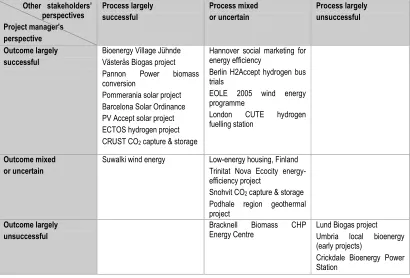
Table 1. Overview of case study projects: successfulness in terms of outcome (project managers’ perspective) and process (other stakeholders’ perspectives).
Other stakeholders’ perspectives Project manager’s perspective Process largely successful Process mixed or uncertain Process largely unsuccessful Outcome largely successful
Bioenergy Village Jühnde Västerås Biogas project Pannon Power biomass conversion
Pommerania solar project Barcelona Solar Ordinance PV Accept solar project ECTOS hydrogen project CRUST CO2 capture & storage
Hannover social marketing for energy efficiency
Berlin H2Accept hydrogen bus trials
EOLE 2005 wind energy programme
London CUTE hydrogen fuelling station
Outcome mixed or uncertain
Suwalki wind energy Low-energy housing, Finland Trinitat Nova Ecocity energy-efficiency project
Snohvit CO2 capture & storage
Podhale region geothermal project
Outcome largely unsuccessful
Bracknell Biomass CHP Energy Centre
Lund Biogas project Umbria local bioenergy (early projects)
Crickdale Bioenergy Power Station
A central outcome of our meta-analysis was that sensitivity to local context and the local embeddedness of the project were key aspects determining the immediate successfulness of the project. The most successful projects devoted intensive efforts toward ‘local re-invention’ of the new energy technologies in terms of their linkages to locally available resources and local concerns. We have thus suggested that successful projects should be locally embedded, provide local benefits, establish continuity with existing physical, social and cognitive structures, and apply locally appropriate communication and participation procedures.
Yet our analysis of successfulness did not extend beyond the project level, and thus we have not hitherto considered a broader kind of successfulness: how well did the
projects promote learning on the wider emerging niche community level? The focus
on local embeddedness in our recommendations may thus raise a legitimate concern: will projects developed according to this ‘formula’ for success be able to provide useful contributions to the emerging niche community level? Do they provide lessons that have relevance for other applications?
other case studies as well. Retention does not merely pertain to cognitive rules, but also to normative issues such as cultural meanings and beliefs or administrative and participatory practices. Such ‘lessons’ seem to diffuse through different kinds of communities and pathways than the more technical knowledge developed in the project.
4.1Bioenergy Village Jühnde: biogas for local energy independence
The concept of a Bioenergy Village was coined by a group of social scientists from the University of Göttingen (IZNE), who wished to develop a biomass strategy linked to societal and economical welfare in rural areas (Brohmann et al. 2006). A central idea in the model is a complete shift of an entire village away from fossil energy sources to renewable bioenergy, mainly based on biogas. Jühnde, a village of 750 inhabitants in Lower Saxony, Germany, was selected out of 17 volunteering villages in the region to pioneer the concept. The entire project has been based on a strong participatory ethic that aims to combine ecological goals and energy independency with the development of the local economy, the preservation of the local cultural heritage and a strengthening of the local community spirit.
(1) Variation through local contextualisation of a niche innovation
The local variation on the biogas concept relates to the specific purpose of the facility – the independent production of electricity and heat by and for an entire village – and to the governance model selected. The technical core of the bioenergy concept is a 750 kW biogas plant digesting liquid manure and silaged plant material (Brohmann et al. 2006). The biogas is combusted in a combined heat and power plant (CHP), which generates enough electricity for the entire village; the co-generated heat is mainly used for space heating via a newly constructed district heating system (supplement with a 550 kWh wood chip burner during the winter months).
The innovative aspect of this case is the large-scale and voluntary conversion of an entire village to bioenergy, mainly based on biogas derived from residues from local farming. The technical concept was strongly grounded in local values, local participation and local ownership. The energy system in the Jühnde model is operated by a local cooperative, which was launched by local farmers, and in which 70% of the residents are members. The technologies applied in the project are not radically new, but as an energy system, the project represents an extremely rapid (4 years) and comprehensive local conversion from fossil to renewable energy supply. This radical process was made possible by a participatory decision process, into which all inhabitants were invited.
(2) Selection and alignment of expectations
example. Moreover, two local farmers Jühnde had plans to diversify and become energy suppliers. They were the first to be involved in a local co-operative, and a number of other local residents invested in the launch of the project, thus becoming the first of many local members of the co-operative.
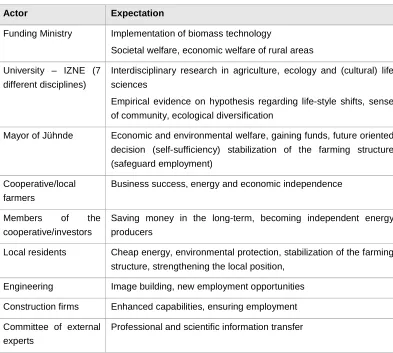
Table 2: Actors and expectations involved in the Jühnde project
Actor Expectation
Funding Ministry Implementation of biomass technology
Societal welfare, economic welfare of rural areas
University – IZNE (7 different disciplines)
Interdisciplinary research in agriculture, ecology and (cultural) life sciences
Empirical evidence on hypothesis regarding life-style shifts, sense of community, ecological diversification
Mayor of Jühnde Economic and environmental welfare, gaining funds, future oriented decision (self-sufficiency) stabilization of the farming structure (safeguard employment)
Cooperative/local farmers
Business success, energy and economic independence
Members of the cooperative/investors
Saving money in the long-term, becoming independent energy producers
Local residents Cheap energy, environmental protection, stabilization of the farming structure, strengthening the local position,
Engineering Image building, new employment opportunities
Construction firms Enhanced capabilities, ensuring employment
Committee of external experts
Professional and scientific information transfer
appealing communications (e.g., festivals and events for children), which engaged an ever-widening local network of support.
(3) Retention and transfer to the niche level
From the start, the project involved a number of mechanisms for interlocal transfer, among others, a ‘Committee of External Experts’. An important element was the active role of the research institute, IZNE, with its specific focus on transdisciplinary research, with a strong social science component. Hence, many of the lessons derived from the project pertain to the governance structure of the project, the integration of the project in the local economy and culture, and the identification of appropriate forms of participation and communication. Moreover, already during the planning phase, the project involved a dedicated Round Table for other communities in Southern Lower Saxony, with the explicit purpose of gaining and transfer of information. The regional level has, in fact, been the most visible form of interlocal transfer for the project. Other neighbouring villages have been eager to join the project and become energy independent, too. The project has also provided references and recommendations for local project partners (e.g., engineering). Since the inauguration of the local energy facility, large numbers of visitors from other communities have been hosted on study tours.
One of the important general rules transferred in this project is a cultural and
normative one, linking local bioenergy (including biogas) production to energy independence and local self-sufficiency. Alongside this, technical lessons and
expertise, as well as rules pertaining to local governance and participation are transferred. Important lessons have been gained concerning the mode of local organization, which is based on a local co-operative, broad participation in decision making, local customers and local ownership (Brohmann et al. 2006). The transfer to the interlocal level has hitherto occurred mainly within the region, and has concerned the unique way in which the Jühnde model combines technological change with local participation and infusion with cultural meaning. The concept may have broader lessons for community-based projects elsewhere (in particular, in rural areas), but is likely to require a degree of adaptation.
4.2Växtkraft biogas plant in Västerås: creating new marketable products from waste
In Sweden, co-digestion of municipal and agricultural waste has featured as part of the country’s Eco-Cycle Society strategy, and more recently, biogas has also become a valuable transport fuel as the country has pledged to become fossil fuel free (Heiskanen 2006). In the late 1990s tens of municipalities were granted support for constructing biogas plants under the government programme for sustainable development (Thyselius 1999). One of these was Västerås, a town with 100 000 inhabitants, which successfully established a local biogas facility by finding synergies among a range of local interests.
(1) Variation through local contextualisation of a niche innovation
processes. The use of the digested material as fertilizer presented problems due to consumer and NGO concerns about heavy metal buildup and the risk of spreading pathogens (Bengtsson and Tillman 2004). Another set of problems related to the local impacts of biogas plants, most importantly the issue of odour, which sometimes provoked local opposition. The sector was fairly dependent on financial support from the state, and most biogas plants have been financed by municipally-owned waste companies making use of generous state grants (Khan 2004a). The Västerås biogas project was jointly initiated by three different partners (Khan 2005): local farmers investigating options to grow ley crop and to digest the crops in a common biogas plant, the regional waste company investigating alternative forms of biological waste treatment for organic household waste after having instituted a system for source separation of organic household waste some years earlier, and the municipal energy company.
(2) Selection and alignment of expectations
A joint project was started in 1995 for a plant that would produce biogas from ley crops and organic household waste. During the long and explorative planning process (Khan 2005), common design solutions were sought that would combine the interests of the three different partners and their stakeholders. Many basic design issues were altered during the project in order to make it fit into local circumstances. The original location of the project had to be abandoned when the local energy company decided to build another type of district heating system in the area. This change of location gave rise to the decision to upgrade the gas produced to vehicle fuel quality, and thus find a new market for the product. The project team also had to ensure that the digested sludge would be acceptable as a soil improvement medium for organic production. Finally, local residents’ concerns needed to be addressed, and this was done by locating the plant on an existing landfill site and ensuring improved odour control. Regional and national authorities also had an important role in the selection process, as they very critically reviewed the emission levels (Khan 2004b).
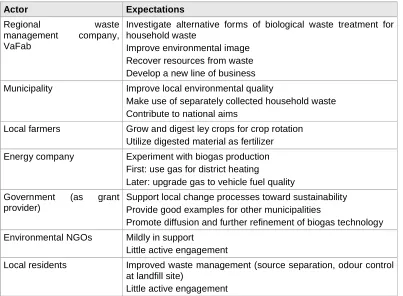
Table 3. Actors and expectations in the Växtkraft project
Actor Expectations
Regional waste management company, VaFab
Investigate alternative forms of biological waste treatment for household waste
Improve environmental image Recover resources from waste Develop a new line of business
Municipality Improve local environmental quality
Make use of separately collected household waste Contribute to national aims
Local farmers Grow and digest ley crops for crop rotation Utilize digested material as fertilizer
Energy company Experiment with biogas production First: use gas for district heating
Later: upgrade gas to vehicle fuel quality
Government (as grant provider)
Support local change processes toward sustainability Provide good examples for other municipalities
Promote diffusion and further refinement of biogas technology
Environmental NGOs Mildly in support
Little active engagement
Local residents Improved waste management (source separation, odour control at landfill site)
Little active engagement
(3) Retention and transfer to the niche level
The project started out as a local or regional project, albeit through government funding was aimed to promote learning about biogas co-digestion at the national level. Toward the completion of the project, however, a number of information transfer mechanisms set in. One important form of information transfer was the decision in 2003 to join the Agroptigas project funded by EU FP5. As a consequence, the Federation of Swedish Farmers, as well as a number of national and international research institutes and consultancies joined the project. Research has focused on technical optimisation of the feedstock production and delivery to the plant as well as on plant operation. Moreover, a communication and information forum model has been developed for rural-urban communication (Agroptigas 2005). Other media for communicating the project have included professional associations, regional and national authorities and national research projects.
by Khan (2004; 2005). VaFab, the project manager, has also gained valuable technical and organizational lessons for further projects.
5. Discussion
The two biogas cases discussed above illustrate a key finding from the entire meta-analysis, which is the way in which visions pertaining to new technologies change in response to the social interests present in the local context. The two biogas projects represent very different applications of the same basic technology, i.e., the controlled production of fuel methane through anaerobic digestion of organic matter. Although the two cases applied similar production technologies, they used different feedstocks and used the fuel produced in very different applications. These variations derive from different local circumstances, expectations and competencies – as well as from emergent processes resulting from local negotiations.
The projects examined here are also representative of many of the other case studies examined in the dataset in terms of being more innovative in terms of social embedding than in terms of new-to-the-world technologies. Yet, they were highly innovative in their local contexts, and illustrate how – even in the ‘protected spaces’ of local experiments – extensive alignment of a range of different expectations is required. As a diversity of local expectations are aligned to the vision of the project, the new technologies take on a lot of local character. This process could be termed ‘local path creation’: as they are embedded, projects are linked to specific local processes and elements that support the new technology.
In the Jühnde project, biogas production was linked to the goal of local energy independence – the aim was to use local agricultural feedstocks to create a local fuel economy. In this context, producing electricity locally was important because residents wanted to be independent of the large energy producers. In contrast, the Växtkraft project – as a result of local variation – eventually took on the aim to create a new marketable product, i.e., vehicle fuel, which is a subject of intensive interest on the national level. It also promotes fuel independence, but on the national level, in connection with Sweden’s plan to become fossil fuel free.
In addition to the different national contexts, the two projects examined here reflect different local settings – the one rural and the other urban. These local contexts provided different possibilities and constraints for the project. The rural context of Jühnde provided the possibility for intensive local participation and ownership, which might not be equally easy to accomplish in on an urban scale. Moreover, the limited economic and employment prospects present in a rural setting motivated residents to make a large effort to support the project. Finally, environmental motives were strongly present among the residents in Jühnde, and created support for the project. In the urban settings of Västerås, similar processes for aligning expectations were not available on the scale of the entire population, nor was there an equal level of interest present among the general public. Yet the project managed to find a number of synergies and diverse ‘local loops’, i.e., local nutrient recycling between town and country, and provision of fuel for the emerging network of biogas fuelling stations. Nonetheless, the alignment of expectations in the Växtkraft project took much longer and was much more complicated, in spite of an initial interest by project actors.
farmers’ interests or the waste company’s interest to upgrade of urban waste management practices evolved into the much wider cultural processes of supporting energy independence in Southern Lower Saxony of contributing to an ‘exchange of resources between town and country’. At the same time, a range of new institutions have emerged to govern the new technologies, such as the local energy co-operative model in Jühnde or the development of a joint-stock company owned by farmers, a waste management company, a local energy company, and an institutional investor, as is the case for the Växtkraft facility.
In spite of their local embeddedness, the two projects examined here – as well as a number of other projects examined in the meta-analysis – also provided lessons that can be translated into rules at the emerging niche community level. Yet, the nature of these rules and their transfer mechanisms are quite different, as the two cases examined here illustrate. In the Jühnde project, diffusion has been – at least initially – mostly on the regional level, whereas in the Växtkraft project, it has occurred more on the national and international level. Moreover, in the case of Jühnde, the transfer has involved an entire concept – ‘the Jühnde model’, including the social and cultural elements that have emerged to support the technical concept. In the Växtkraft case, there has been more transfer of individual technical and organisational solutions, which may be applicable as part of new combinations in different contexts. Nonetheless, it is important to note that there is also social learning on the local level, which relates to the local embedding of the technology. Such ‘lessons’ are not self-evidently transferable beyond their local context as such, but are an important part of the local embedding process.
6. Conclusions
Taken as a whole, the meta-analysis of the case studies collected for the Create Acceptance (2007) project stress the importance of local embeddedness. In this paper, we have focused on two projects that were ‘successful’ – many of the ‘failed’ or ‘mixed’ projects encountered problems because of a failure to align the original vision of the project with local expectations. The meta-analysis also revealed that projects were capable of successfully using ideas, concepts and solutions derived from other contexts – in fact, none were based on purely locally developed concepts. Yet, successful projects devoted significant efforts to the ‘local reinvention’ of concepts and solutions derived from elsewhere.
emerging global niche technology, while others remain idiosyncratic customisations. These lessons are translated into rules when they have become standard practice in new projects. In our cases, the translation of lessons into niche rules was less strong. The projects were more an exemplar to other projects rather than that they evidently become the way to do things. However, it is likely the result from the project perspective and limited time frame taken in the Create Acceptance project, and a hypothesis would be that when investigating a larger number of subsequent projects, translation of local lessons into niche rules will become more visible. Some of the contextual changes (e.g., ideological meanings attached to a technology, or supporting institutions) may also diffuse beyond the immediate context, but the diffusion pattern is less straightforward than that of the technological design changes.
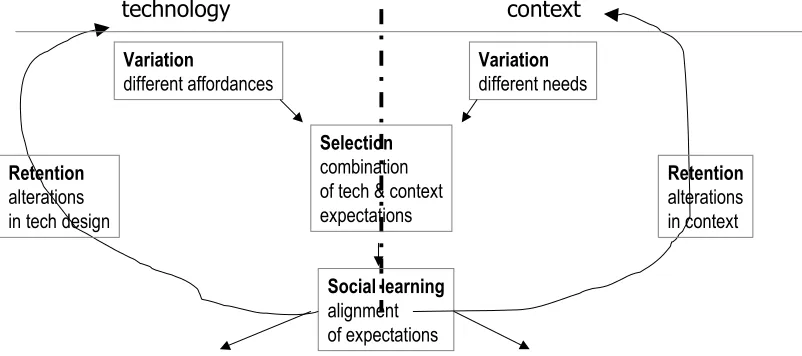
Figure 2. Sequences of variation and selection in the interplay between technology and context
Nonetheless, we can conclude that the transfer of local lessons into global rules is difficult and requires dedicated work and close attention to the conditions of transferability. The case studies in our meta-analysis produced a range of ‘rules’ that may be applied in other contexts, such as organisational models, financing structures, technical solutions and ideological meanings. In this sense, each process of local embedding has the potential to increase the diversity of the social and cultural affordances of the generic technology, for example, by suggesting different local embedding processes and institutional solutions for rural and urban contexts. Yet, our findings concerning the amount of energy devoted to local embedding of concepts in each and every successful project that we analysed in the Create Acceptance (2007) project provide a warning: ready-made solutions cannot be ‘dropped’ into a context without local negotiations. Thus, many of the ‘rules’ derived from local contexts to the niche level could preferably be termed ‘suggestions’.
7. Research agenda
technology context
Variation
different affordances
Variation
different needs
Selection
combination of tech & context expectations
Social learning
alignment of expectations
Retention
alterations in tech design
Retention
[image:16.612.111.512.237.415.2]The cases presented here were based on a meta-analysis of 22 individual projects. On the basis of this analysis we were able to observe transfer of lessons into niche rules, which we demonstrated with two case studies. This analysis was not the prime focus of the Create Acceptance project, but rather a result from questions raised from this analysis. The following issues require further research:
• Our cases show the variety of expectations in concrete, real-life projects, and how they require negotiation and mutual alignment in order for a project to become socially accepted. Above we termed this alignment as social learning, which can produce lessons in terms of a) local variation of the technological design, b) local variation in the context of the project, and c) translation into general niche rules. Social learning in projects is thus a crucial process that links back results from a negotiation process into a new stage of variation, selection and retention. Further research into the characteristics of this process in relation to local path dependence and maintaining diversity at the global level is required.
• Filling this ‘gap’ of understanding how the transfer between local lessons and global rules occurs requires a focus on how the active and dedicated work of translation overcomes the cultural and intuitional difference between local contexts.
• The time dimension of translation of local lessons into general niche rules, and back to new local contexts requires further research.
References
Agroptigas (2005). Communication and information forum for a rural-urban
communication. Agroptigas project, WP4, Deliverable 10.
Arnstein, S., (1969), ‘A Ladder of Citizen Participation’, Journal American Institute
of Planners, 35, pp.215-24.
Borup, M., Brown, N., Konrad, K., & Van Lente, H., (2006), ‘The Sociology of Expectations in Science and Technology’, Technology Analysis and Strategic
Management, Vol. 18: 3/4, 285–298, July–September
Brohmann, B, Fristche, U. & Hünecke, K. (2006). Case Study: The Bioenergy Village Jühnde. Report by Öko-Institute e.V. for Create Acceptance Work Package 2 – Historical and recent attitude of stakeholders.
Create Acceptance (2007). Factors influencing the societal acceptance of new energy
technologies:Meta-analysis of recent European projects. Executive Summary of
Work Package 2 of the Create Acceptance Project.
Geels, F.W., Raven, R.P.J.M. (2006), Non-Linearity and expectations in niche-development trajectories: Ups and downs in Dutch biogas plant niche-development (1973-2003), in: Technology Analysis & Strategic Management, Vol. 18 (3/4), p. 375-392
Heiskanen, E. (2006). Case Study: Biogas in Sweden. Report by National Consumer Research Centre for Create Acceptance Work Package 2 – Historical and recent attitude of stakeholders.
Hodson, M., Marvin, S., and Simpson, V., (2007), ‘Technological Transitions and Public Engagement: Competing Visions of a Hydrogen Fuel Station’, in Flynn, R., and Bellaby, P., (Eds), Risk and Public Acceptance of New Technologies, Palgrave-Macmillan: London.
Hodson, M., and Marvin, S., (2007), ‘Cities Mediating Technological Transitions: The Adaptability of Infrastructure and Infrastructures of Adaptability’? in Geyer, H.S., and Richardson, H.W., (Eds), International Handbook of Urban Policy, Edward Elgar
Hoogma, R., Kemp, R., Schot, J., Truffer, B. (2002), Experimenting for Sustainable
Transport: the Approach of Strategic Niche Management, Spon Press, London and
New York
Khan, J. (2004a) Local Politics of Renewable Energy: Project Planning, Siting
Conflicts and Citizen Participation , Phd Thesis, Department of Evironmental and
Energy Systems Studies, Lund university.
Khan, J. (2004b) Siting conflicts in renewable energy projects in Sweden: a biogas case study, in Åsa Boholm and Ragnar Löfstedt (eds.), Facility Siting: Risk, Power
Khan, J. (2005) The importance of local context in the planning of environmental projects: examples from two biogas cases, Local Environment , Vol. 10, No. 2, .
Kemp, R., Rip, A., Schot, J.W. (2001), Constructing transition paths through the management of niches, in: Garud, R., Karnø, P. (eds.), Path dependencies and creation, LEA, London, p. 269-299
Kemp, R. Schot, J.W., Hoogma, R. (1998) Regime Shifts to Sustainability through Processes of Niche Formation: the Approach of Strategic Niche Management, in:
Technology Analysis & Strategic Management (10): 175-96
Lane, B.M. (2002), Implementation Strategies for Fuel-cell Powered Road Transport Systems in the United Kingdom, Open University, UK
Raven, R.P.J.M. (2005), Strategic Niche Management for Biomass, Thesis, Eindhoven University of Technology, Eindhoven
Raven, R.P.J.M. (2006), Towards alternative trajectories. Reconfigurations in the Dutch electricity regime, in: Research Policy, forthcoming
Raven, R.P.J.M., Geels, F.W. (2007), Socio-cognitive evolution in the dynamics of
niche-development trajectories: comparative analysis of biogas development in the Netherlands and Denmark, submitted manuscript
Rowe, G., and Frewer, L.J., (2005), ‘A Typology of Public Engagement Mechanisms’, Science, Technology and Human Values, Vol.30:2, pp.251-290.
Rowe, G., and Frewer, L.J., (2004), ‘Evaluating Public-Participation Exercises: A Research Agenda’, Science Technology Human Values, Vol. 29:4, pp.512 – 556.
Russell, S., and Williams, R., (2002), ‘Social Shaping of Technology: Frameworks, Findings and Implications for Policy…’, in Sorensen, K., and Williams, R., Shaping
Technology, Guiding Policy, Edward Elgar: Cheltenham, pp.37-132.
Smith, A. (2003), Transforming technological regimes for sustainable development: a role for alternative technology niches?, in: Science and Public Policy, Vol. 30 (2), p. 127-135.
Smith, A. (2006), Green niches in sustainable development: the case of organic food in the United Kingdom, in: Environment and Planning C, Vol 24, p. 439-458.
Thyselius, L. (1999). The potential for biogas in Sweden. CADDET Renewable
Truffer, B. (2002), The coupling of viewing and doing: strategic niche management and the electrification of transport, in: Greener Management Journal, Vol. 37, p. 111
Tsoutsos, T.D., Stamboulis, Y.A. (2005), The sustainable diffusion of renewable energy technologies as an example of an innovation-focused policy, in: Technovation, Vol 25, 753-761
Van der Laak, W.W.M., Raven, R.P.J.M., Verbong, G.P.J. (forthcoming), Strategic Niche Management for Biofuels, in: Energy Policy
Van Mierlo, V. (2002), Kiem van Maatschappelijke Verandering: Verspreiding van
Zonnecelsystemen in de Woningbouw met Behulp van Pilotprojecten, University of