Original Research Article
Effects of Whatsapp and Facebook on academic, professional and social
lives of medical students and resident doctors of North India
Shubha Singhal*, Shalini Chawla
INTRODUCTION
Humans have been innovating ways to make life easier for themselves from the beginning. Recently, these changes have gained pace because of the widespread use of technology.1 The advancements in technological development have changed the life style of the individuals in the society. It can be seen in many aspects of life including the way individuals communicate with each other. For many years, individuals preferred to communicate via a telephone that connected them quickly with each other. In the later stages, individuals moved to communicate using a mobile phone, SMS, an email etc. With the introduction of smart phones, various social networking sites have become popular. Amongst
them, Facebook and Whatsapp are on the top in terms of popularity.2
Whatsapp and Facebook are the communication apps which facilitate the exchange of instant messages, pictures, videos and thus help in connecting the people with each other. Although it has brought many benefits like allowing the people to easily connect with friends and family around the globe, and breaking down the international borders and cultural barriers, these benefits have come at a price. People spend more than usual hours on social networking sites to download pictures, browse through updates seeking entertainment and chat around with friends to keep themselves connected to one another. These sites have caused an addiction amongst the youth
ABSTRACT
Background: Whatsapp and Facebook are the communication apps which facilitate the exchange of instant
messages, pictures, videos and thus help in connecting the people with each other. Although it has brought many benefits, these benefits have come at a price. People spend more than usual hours on social networking and find it difficult to concentrate on their work and studies. This study was planned to assess the effects of Whatsapp and Facebook on academic, professional and social lives of medical students and resident doctors.
Methods: The study was conducted on 480 medical students and 275 resident doctors. The data were collected with
the help of a questionnaire designed for gathering the effects of Whatsapp and Facebook on academic, professional and social lives of medical students and resident doctors.
Results: Majority of the participants (98.3%) used both Whatsapp and Facebook and spent 1-2 hours per day on Whatsapp and Facebook. Nearly 45% participants said that usage of Whatsapp and/ Facebook had a positive impact on their study performance. More than half of the participants (54.6%) agreed that Whatsapp and Facebook use affected their mood and reduces their interpersonal interaction with family and friends.
Conclusions: Study concludes that Whatsapp and Facebook have positive impact in academic and professional lives
of medical students and doctors. However, excessive use of social networking sites for recreational purposes has negative impact on their mental and social health.
Keywords: Medical students, Doctors, Academic, Professional, Social networking sites
Department of Pharmacology, Maulana Azad Medical College, New Delhi, India
Received: 18 May 2019
Accepted: 09 July 2019
*Correspondence:
Dr. Shubha Singhal,
E-mail: [email protected]
Copyright: © the author(s), publisher and licensee Medip Academy. This is an open-access article distributed under
the terms of the Creative Commons Attribution Non-Commercial License, which permits unrestricted non-commercial use, distribution, and reproduction in any medium, provided the original work is properly cited.
wherein they find it difficult to concentrate on their work and instead prefer logging in and jumping across from one site to another. Some have been able to derive benefit out of these sites whereas some have been challenged adversely in academics because of the use of these applications.3 Hence, this study was planned to assess the effects of Whatsapp and Facebook on academic, professional and social lives of medical students and resident doctors in North India.
METHODS
Study setting
A cross sectional, questionnaire-based study was conducted by the Department of Pharmacology of Maulana Azad Medical College and Associated Hospitals, New Delhi (India) between October 2016 and October 2017.
Ethics committee approval
The Institutional Ethics Committee, Maulana Azad Medical College and Associated Hospital, New Delhi permission was taken prior to initiation of the study (EC No: F.1/IEC/MAMC/(52/1/2016/No 76 dated July 14, 2016).
Study participants
MBBS (Bachelor of Medicine and Bachelor of Surgery) students from all four professional years and resident doctors working in Maulana Azad Medical College and Associated Hospitals and willing to participate in the survey were included in the study. A total of 480 MBBS students’ 200 junior residents and 75 senior residents were approached, out of which 480 (100%) MBBS students, 150 (75%) junior residents and 50 (66.6%) senior residents agreed to participate in the survey. From each professional year, 120 MBBS students were selected. Sample selection of MBBS students and residents was done randomly. The sample size was a convenience sample.
Study tool
A pretested, validated, structured questionnaire was used for the study. The questionnaire was prepared to assess the impact of Whatsapp usage on academic, social and professional aspects of medical students and resident doctors, taking guidance from previous literature.4,5Face and content validation was done. For validation, the questionnaire was distributed to four senior residents and four junior residents and they were asked them to judge each question in three categories: essential, useful but not essential or not necessary. Further, we calculated the content validity for each question by the giving formula: CVR= (ne–N/2)/(N/2).Where CVR is content validity
ratio, ne is number of participants indicating essential, and N means total number of participants.6 If the value came
positive, then only the question was included in the questionnaire. After modification, the final questionnaire had a total of 28 questions. It was divided into three parts: (i) demographic information, including age, gender, current professional status (ii) pattern of usage of Whatsapp and Facebook in medical students and residents (iii) questions to assess the impact of Whatsapp on academic, professional and social life of MBBS students and residents.
The data was collected by the one author and a data collector. Both were trained. The data collector approached the participants and explained the purpose of the study. The questionnaire and study information sheet were shared with them. They were explained that it would take about 20 min to complete the questionnaire. If they were found willing then questionnaire was given to them. The completed questionnaires were assessed, every week, by the principal investigator, till the completion of the study.
Statistical analysis
The data entry was done in a predesigned Microsoft® Excel 2007 sheet. Statistical analysis was done by using descriptive statistics. Continuous variables are presented as mean values ±standard deviation (SD), and categorical variables are presented as percentages.
RESULTS
Baseline characteristics of the participants
As per our knowledge this is the first study, to assess the impact of Whatsapp and Facebook usage on academic, professional and social life of medical students and residents doctors in North India. A total of 700 participants were approached, out of which 680 agreed to participate and fill the questionnaire form, resulting in a response rate of 97.1%.
There were more male participants (53%) in the study. Maximum participants (51.3%) were less than 21 years of age (Table 1).
Table 1: Demographic detail of study participants.
Variable N (%)
Gender
Male 361 (53.0)
Female 319 (46.9)
Age (in years)
<21 349 (51.3)
22-30 313 (46.0)
31-40 18 (2.6)
Mean±SD
Designation
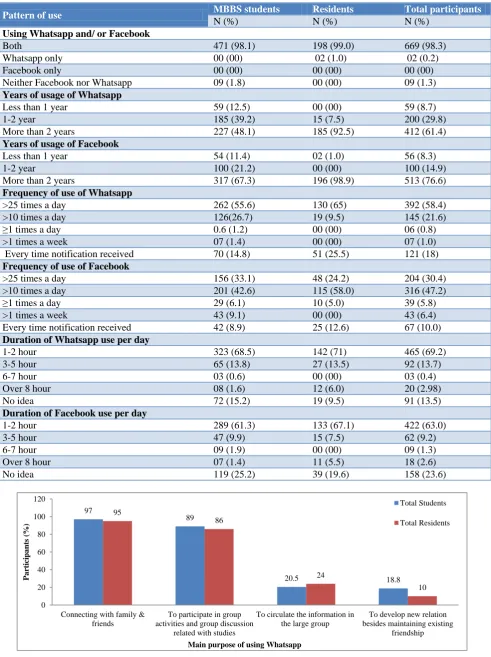
Table 2: Pattern of Whatsapp and Face book usage amongst MBBS students and residents.
Pattern of use MBBS students Residents Total participants
N (%) N (%) N (%)
Using Whatsapp and/ or Facebook
Both 471 (98.1) 198 (99.0) 669 (98.3)
Whatsapp only 00 (00) 02 (1.0) 02 (0.2) Facebook only 00 (00) 00 (00) 00 (00) Neither Facebook nor Whatsapp 09 (1.8) 00 (00) 09 (1.3)
Years of usage of Whatsapp
Less than 1 year 59 (12.5) 00 (00) 59 (8.7) 1-2 year 185 (39.2) 15 (7.5) 200 (29.8) More than 2 years 227 (48.1) 185 (92.5) 412 (61.4)
Years of usage of Facebook
Less than 1 year 54 (11.4) 02 (1.0) 56 (8.3) 1-2 year 100 (21.2) 00 (00) 100 (14.9) More than 2 years 317 (67.3) 196 (98.9) 513 (76.6)
Frequency of use of Whatsapp
>25 times a day 262 (55.6) 130 (65) 392 (58.4) >10 times a day 126(26.7) 19 (9.5) 145 (21.6) ≥1 times a day 0.6 (1.2) 00 (00) 06 (0.8) >1 times a week 07 (1.4) 00 (00) 07 (1.0) Every time notification received 70 (14.8) 51 (25.5) 121 (18)
Frequency of use of Facebook
>25 times a day 156 (33.1) 48 (24.2) 204 (30.4) >10 times a day 201 (42.6) 115 (58.0) 316 (47.2) ≥1 times a day 29 (6.1) 10 (5.0) 39 (5.8) >1 times a week 43 (9.1) 00 (00) 43 (6.4) Every time notification received 42 (8.9) 25 (12.6) 67 (10.0)
Duration of Whatsapp use per day
1-2 hour 323 (68.5) 142 (71) 465 (69.2) 3-5 hour 65 (13.8) 27 (13.5) 92 (13.7)
6-7 hour 03 (0.6) 00 (00) 03 (0.4)
Over 8 hour 08 (1.6) 12 (6.0) 20 (2.98)
No idea 72 (15.2) 19 (9.5) 91 (13.5)
Duration of Facebook use per day
1-2 hour 289 (61.3) 133 (67.1) 422 (63.0)
3-5 hour 47 (9.9) 15 (7.5) 62 (9.2)
6-7 hour 09 (1.9) 00 (00) 09 (1.3)
Over 8 hour 07 (1.4) 11 (5.5) 18 (2.6) No idea 119 (25.2) 39 (19.6) 158 (23.6)
Figure 1: Purpose of using Whatsapp and/or Facebook.
97
89
20.5 18.8
95
86
24
10 0
20 40 60 80 100 120
Connecting with family & friends
To participate in group activities and group discussion
related with studies
To circulate the information in the large group
To develop new relation besides maintaining existing
friendship
Participa
nts
(%
)
Main purpose of using Whatsapp
Majority of the participants (98.3%) used both Whatsapp and Facebook. Only 9 (1.3%) participants neither used Facebook nor used Whatsapp (p<0.05). Most of the participants used Whatsapp and Facebook for more than 2 years. More than half (55.6%) of the medical students opened Whatsapp more than 25 times a day and spent 1-2 hours per day on Whatsapp. Similar pattern of Whatsapp usage found amongst the residents also. Frequency of use of Facebook was found to be less as compared to that of Whatsapp. Both medical students (61.3%) and residents (67%) spent 1-2 hour of the day on Facebook (Table 2).
The main purpose of using Whatsapp and Facebook was to connect with family and friends followed by group activities or discussion related to studies (Figure 1).
Impact of Whatsapp and Facebook usage on academic and professional life of study participants
Majority of the participants (89.5%) were the part of educational group on either Whatsapp or Facebook or both and found the group activities beneficial for their academic and professional life. Among all the participants, 85.5% residents and 59.6% students opened
social networking site during lectures or clinical rounds. The difference between the extent of opening of Whatsapp/Facebook during lectures among the residents and MBBS students was significant (p<0.05). More than half of the residents (55%) made more spelling errors in English after using Whatsapp and /or Facebook as compared to 21.6% of MBBS students. 28.5% residents communicated with patients on Whatsapp and / or Facebook. Among them, 82.5% residents found the communication beneficial for doctor-patient relationship. 44.5% participants said that usage of Whatsapp and/ or Facebook had a positive impact on their study performance while 32% participants said use of Whatsapp and /Facebook was harmful for their studies. Among 299 (44.5%) participants who found Whatsapp and/ or Facebook to have a positive impact on their studies said, social networking was beneficial because it was an effective communication application (93.3%) and helpful in receiving updates related to changes in schedule of lectures of faculty (97.3%). Similarly, 215 (32%) participants who found social networking sites to have a negative impact on their academic performance said social networking was harmful for their studies because it reduced concentration on studies (79%) and also adversely impacted the study duration (74.8%).
Table 3: Impact of Whatsapp and Facebook usage on academic and professional life of study participants.
Variables
MBBS students
Total residents
Total participants
N (%) N (%) N (%)
Part of educational group on Whatsapp and / or Facebook
Yes 424 (90) 177 (88.5) 601 (89.5)
No 47 (9.9) 23 (11.5) 70 (10.4)
Found the group activities beneficial for academic/ professional life?
Yes 391 (83) 149 (74.5) 540 (80.4)
No 33 (7.0) 28 (14) 61 (9.0)
Opened Whatsapp and / or Facebook during lectures/ lab/ clinical rounds
Yes 281 (59.6) 171 (85.5) 452 (67.3)
No 190 (40.3) 29 (14.5) 219 (32.6)
Absent from the academics activities/ clinical rounds because of using Whatsapp and /or Facebook
Yes 50 (10.6) 4 (2) 54 (8.0)
No 421 (89.3) 196 (98) 617 (91.9)
Make more spelling errors of English characters after using whats app and /or Facebook
Yes 102 (21.6) 110 (55) 212 (31.5)
No 369 (78.3) 90 (45) 459 (68.4)
Communication with patients on Whatsapp and / or Facebook
Yes 68 (14.4) 57 (28.5) 125 (18.6)
No 403 (85.5) 143 (71.5) 546 (81.3)
Found communication on Whatsapp and /or Facebook beneficial for doctor patient relationship
Yes 45 (66.1) 47 (82.4) 92 (73.6)
No 23 (33.8) 10 (17.5) 33 (26.4)
Effect Whatsapp and / or Facebook usage put on academic performance
Positive 199 (42.2) 100 (50) 299 (44.5)
Negative 156 (33.1) 59 (29.5) 215 (32)
No effect 116 (24.6) 41 (20.5) 157 (23.3)
Usage of online social networks has positive impact on academic performance because
1)These are effective communication application
Yes 195 (97.9) 84 (84) 279 (93.3)
No 4 (0.84) 16 (16) 20 (6.68)
2) Improves interaction between classmates/ lecturers
Yes 184 (92.4) 74 (74) 258 (86.2)
No 15 (7.5) 26 (26) 41 (13.7)
3) Helpful in receiving updates related to change in schedule from lecturers and faculty
Yes 192 (96.4) 99 (99) 291 (97.3)
No 7 (3.5) 1 (1) 8 (2.6)
Usage of online social networks has negative impact on academic performance because:
1) It impaired study duration
Yes 107 (68.5) 44 (74.5) 161 (74.8)
No 49 (31.4) 15 (25.4) 54 (25.1)
2) Reduced concentration on studies
Yes 111 (71.1) 59 (100) 170 (79)
No 45 (28.8) 00 (00) 45 (20.9)
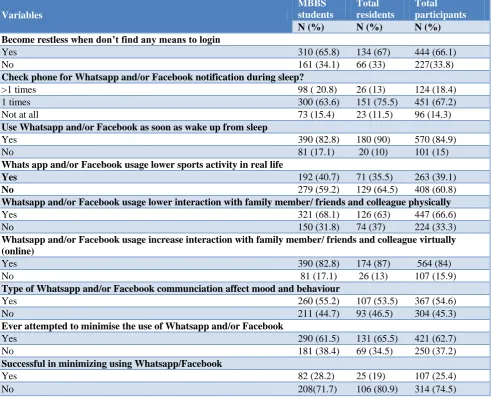
Table 4: Impact of Whatsapp and Facebook usage on social life of study participants.
Variables
MBBS students
Total residents
Total participants
N (%) N (%) N (%)
Become restless when don’t find any means to login
Yes 310 (65.8) 134 (67) 444 (66.1)
No 161 (34.1) 66 (33) 227(33.8)
Check phone for Whatsapp and/or Facebook notification during sleep?
>1 times 98 ( 20.8) 26 (13) 124 (18.4)
1 times 300 (63.6) 151 (75.5) 451 (67.2) Not at all 73 (15.4) 23 (11.5) 96 (14.3)
Use Whatsapp and/or Facebook as soon as wake up from sleep
Yes 390 (82.8) 180 (90) 570 (84.9)
No 81 (17.1) 20 (10) 101 (15)
Whats app and/or Facebook usage lower sports activity in real life
Yes 192 (40.7) 71 (35.5) 263 (39.1)
No 279 (59.2) 129 (64.5) 408 (60.8)
Whatsapp and/or Facebook usage lower interaction with family member/ friends and colleague physically
Yes 321 (68.1) 126 (63) 447 (66.6)
No 150 (31.8) 74 (37) 224 (33.3)
Whatsapp and/or Facebook usage increase interaction with family member/ friends and colleague virtually (online)
Yes 390 (82.8) 174 (87) 564 (84)
No 81 (17.1) 26 (13) 107 (15.9)
Type of Whatsapp and/or Facebook communciation affect mood and behaviour
Yes 260 (55.2) 107 (53.5) 367 (54.6)
No 211 (44.7) 93 (46.5) 304 (45.3)
Ever attempted to minimise the use of Whatsapp and/or Facebook
Yes 290 (61.5) 131 (65.5) 421 (62.7)
No 181 (38.4) 69 (34.5) 250 (37.2)
Successful in minimizing using Whatsapp/Facebook
Yes 82 (28.2) 25 (19) 107 (25.4)
Impact of Whatsapp and Facebook usage on social life of study participants
Majority of the participants (66.1%) reported restless when they were not able to find any means to login. Around 75% of residents and 63.6% of medical students opened the Whatsapp/Facebook at least once during sleep. Most of the study participants (85%) used Whatsapp/Facebook as soon as they woke up from sleep. More than half of the participants (54.6%) agreed that Whatsapp and Facebook use affected their mood and behaviour. Among all the participants, 62.7% participants attempted to minimize the use of Whatsapp and Facebook.
DISCUSSION
Communication is a process of sending and receiving information among people. It facilitates the spread of knowledge and helps form relationships between people. The urge to communicate with people for personal as well as for commercial use has given rise to various social networking sites and instant messaging services. Amongst them, Whatsapp messenger and Facebook have ruled the industry because of their distinct features.2
One major reason to select Whatsapp/Facebook as the study subject is due to its popularity in the society and also because of the scope it has in communicating the information accurately and precisely. In spite of these facts, new research suggests that the excessive social networking, increases the risk of severe psychopathologies in youth and impacts both social, professional and health aspects of user’s lives.4
Hence this study was carried out to assess the impact of Whatsapp and Facebook on academic, professional and social lives of medical students and residents doctors.
Almost all the participants (98.3%) used Whatsapp and Facebook. Only 1.3% participants neither used Whatsapp nor used Facebook. The difference between the users and non-users of Whatsapp and Facebook was statistically significant (p<0.05) and showed the popularity of social networking among medical students and residents doctors. More than half of the participants (58.4%) opened Whatsapp >25 times a day and spent 1-2 hour (69.2%) of the day on Whatsapp. Number of visits for Facebook was lesser as compared to those for Whatsapp. Therefore, as much of the quality time of a day was utilised in social networking, time for other productive work was reduced. Apart from this, excessive use of Whatsapp and Facebook is also associated with various health related issues and social problems including depression, low self esteem and sleep related disorders.7 As per one study, social networking induced depression is the most common health impacting problem of young generation and increased the incidence of depression among students by upto 56% in the last 10 years.8
Maximum number of participants used Whatsapp (61.4%) and Facebook (76.6%) for more than 2 years. The number of use years of usage of Whatsapp and Facebook was more in residents as compared to the medical students (p<0.05). It might be because of less exposure of medical students to technology as compared to that of residents primarily due to age difference.
Our study highlights that both residents (95%) and medical students (97.1%) used Whatsapp/ Facebook to remain in contact with friends and relatives followed by group activities or discussion related to studies. Similar findings were also observed in earlier studies.5,9
In the present study majority of the participants (89.5%) were the part of educational group on Whatsapp and Facebook and found the group activities beneficial for their academic and professional life. These findings suggest that Whatsapp and Facebook have played a positive role in academic and professional lives of medical students and residents. Similar findings were also observed in previous study where more than 90% of the participants said that Whatsapp facilitated their research work by sharing useful information with other students 10.
A large percentage of participants (67.3%) opened Whatsapp and Facebook during lectures/ labs/ clinical rounds. These findings were in contrast to the previous study in which only 5% participants opened Whatsapp/Facebook during lectures.9 Opening of Whatsapp or Facebook during lectures/ clinical round can distract the attention of medical students and residents from the main lesson and hinder their active participation in class. Less than half of the participants (44.5%) found that social networking had positive impact on their academic performance. Among the 45% of participants who found social networking beneficial for their academic performance, 93.3% said that social networking was helpful because it was an effective communication application and facilitated their learning by improving interaction with classmates and lecturers. Most of the participants (97%) found it useful in studies because through Whatsapp/Facebook they could receive updates related to changes in schedule. These results were in line with earlier studies.10,11
According to the survey, 32% participants found Whatsapp/Facebook harmful for their academic performance and out of which more than 70% stated that Whatsapp/Facebook took lot of time away from studies and also distracted them from their studies. Similar conclusion was drawn in an earlier study which assessed the impact of Whatsapp on youth.11
addiction was not associated with academic performance.7,9
As per previous study, 69% of participants said that social networking sites are responsible for destroying their spellings and grammar.11 In our study, less number of participants (28.6%) agreed on the fact that they made more spelling errors in English after using Whatsapp/Facebook. Residents (45%) made more spelling error as compared to medical students (21.6%) (p<0.05). This finding can be related to years of use of Whatsapp/Facebook.
Few participants (18.6%) also used social networking for communication with their patients. Among them 73.6% found the communication beneficial for doctor patient relationship. The findings were similar to earlier study where 74% participants agreed that social networking sites were helpful in making connection at both professional and personal level.3
67.2% participants opened Whatsapp/Facebook more than one time (>1 times) during sleep and 84.9% used Whatsapp/Facebook as soon as they woke up from sleep. These findings were in contrast to earlier studies where less number of participants opened Whatsapp/Facebook during sleep and used Whatsapp/Facebook immediately after waking up from sleep.4,12 Our study findings suggest a dependence behaviour of medical students and residents on Whatsapp/Facebook. Such dependence can lead to various type of sleep disorders which in turn could have negative consequences on their health and academic performance. A study carried out in Saudi Arabia on sleep quality among medical students also suggests that excessive use (>2 hours) of social networking had negative effect on sleep quality of medical students.13
More than half of the participants (66.6%) said Whatsapp and Facebook use lowered their interaction with family members and friends physically. Similar findings were found in the study carried out in Pakistan to assess the effect of Facebook on medical students.9 Our study also suggests that Whatsapp and Facebook usage decreased person to person interaction physically but increased virtual interaction.
More than 60% of participants accepted that they became restless when they did not find any means to login. 54.6% participants said that Whatsapp/Facebook communication affected their mood and behaviour. They felt annoyed and sometimes even depressed when their friends did not respond to their messages immediately. They also felt uncomfortable when they were not able to give prompt reply. Similar findings were observed in previous study which assessed the impact of social networking on medical students of south India 4.
Nearly 63% of participants tried to minimize the use of social networking, however most of them failed in their attempt. These finding suggest that even when medical
students and residents were aware of the fact that they were using Whatsapp/Facebook excessively, they wanted to quit but they could not.
Limitations in the study
The study was carried out amongst medical students and residents doctors of single medical college. Although, sample is heterogeneous in nature as each participant come from different backgrounds, yet they cannot be used to predict the overall situation in the country.
The sample was convenience sample. However, since this was just an observational study, the sampling method did seem to fulfil its purpose.
Subjective evaluation of academic performance.
CONCLUSION
Our study concludes that positive use of Whatsapp and Facebook in study and research should be encouraged while excessive use in recreational purposes be reduced to the minimum satisfactory level. Counsellors should orient the students about the danger of social networking site addiction because this can actually derail them from their academic and professional goals. Health education programs should be instituted to tackle health or social problems.
Funding: No funding sources Conflict of interest: None declared
Ethical approval: The study was approved by the
Institutional Ethics Committee, Maulana Azad Medical
College and Associated Hospital, New Delhi
REFERENCES
1. Singh N, Chopra N, Kaur J. A study to analyze relationship between psychological behavioural factors on whats app addiction among youth in Jalandhar district in Punjab. Europeon J Business Manag. 2014;6(37):269-73.
2. Prathap J, Jubilson J, Dhanavanthini P, Srinivasan R, Shibu J, Dani V. Facebook- Whats App merger- A revolution in the social networks. IJECS. 2014;14(4):17-24.
3. Khurana N. The impact of social networking sites on the youth. J Mass Communication J. 2015;5(12). 4. Shettigar MP, Karinagannanavar A. Pattern of
Whatsapp usage and its impact on medical students of Mysore Medical College and research institute, India. Int J Community Med Public Health. 2016;3:2527-31.
5. Jeffrey M, Musah A. Social Media Network Participation and Academic Performance In Senior High Schools in Ghana. Library Philosophy and Practice (e-journal). 2015;1286.
7. Al Suwayri SM. The impact of social media volume and addiction on medical student sleep quality and academic performance: Across-sectional observational study. Imam J Appl Sci. 2016;1:80-7. 8. Moreno MA, A pilot evaluation of associations
between displayed depression references on Facebook and self reported depression using a clinical scale. J Behavioral Health Services Res. 2012;39(3):295-304.
9. Farooqi H, Patel H, Aslam HM, Ansari IQ, Khan M, Iqbal N, et al. Effect of Facebook on the life of Medical University students. Int Arch Med. 2013;6:40.
10. Jain R, Jain S. Impact of Whatsapp on acadmic activities of basic and applied science students in college of applied and basic sciences, Madhav university, Pindwada. Int J Current Sci Technol. 2016;4(4):188-90.
11. Bhatt, A, Arshad, M. Impact of Whatsapp on youth:A Sociological Study. IRA-International J Manag Social Sci. 2016;4(2):376-86.
12. Choudhary SR, Momin IH, Kantharia SL. Facebook and Whatsapp: Beneficial or Harmful? J Evidence based Med Healthcare. 2015;2(17):2506-11. 13. Asiri AK, Almetrek MA, Alsamghan AS, Mustafa
O, Alshehri SF. Impact of twitter and Whatsapp on sleep quality among medical students in King Khalid University, Saudi Arabia. Sleep Hypn. 2018;20(4):247-52.
Cite this article as: Singhal S, Chawla S.Effects of