Lawrence Berkeley National Laboratory
Recent Work
Title
Of impacts, agents, and functions: An interdisciplinary meta-review of smart home energy management systems research
Permalink
https://escholarship.org/uc/item/491803j6Authors
McIlvennie, Claire Sanguinetti, Angela Pritoni, MarcoPublication Date
2020-10-01DOI
10.1016/j.erss.2020.101555 Peer reviewedOf Impacts, Agents, and Functions: An Interdisciplinary Meta-review of Smart Home
Energy Management Systems Research
Claire McIlvennie1,2, Angela Sanguinetti3, Marco Pritoni4
1Rubenstein School of Environment and Natural Resources, University of Vermont; 2Gund Institute for Environment, University
of Vermont; 3Consumer Energy Interfaces, University of California, Davis; 4Lawrence Berkeley National Laboratory
Corresponding author: Claire McIlvennie
Rubenstein School of Environment and Natural Resources University of Vermont
81 Carrigan Drive Burlington, VT 05405
Abstract
Smart home energy management technologies (SHEMS) have long been viewed as a promising opportunity to manage the way households use energy. Research on this topic has emerged across a variety of disciplines, focusing on different pieces of the SHEMS puzzle without offering a holistic vision of how these technologies and their users will influence home energy use moving forward. This paper presents the results of a systematic, interdisciplinary meta-review of SHEMS literature, assessing the extent to which it discusses the role of various SHEMS components in driving energy benefits. Results reveal a bias towards technical perspectives and controls approaches that seek to drive energy impacts such as load management and energy savings through SHEMS without user or third-party participation. Not only are techno-centric approaches more common, there is also a lack of integration of these approaches with user-centric, information-based solutions for driving energy impacts. These results suggest future work should investigate more holistic solutions for optimal impacts on household energy use. We hope these results will provoke a broader discussion about how to advance research on SHEMS to capitalize on their potential contributions to demand-side management initiatives moving forward. Keywords
Smart home; energy management; control; information; interdisciplinary; energy impacts; demand-side management
1. Introduction
Many new technologies are expected to play a significant role in the ongoing transition towards a clean energy future. Smart home energy management technologies (SHEMS) in particular, such as automated home systems and connected appliances, have long been viewed as promising opportunities to enhance the residential sector’s ability to contribute grid resources required to support this transition [1,2] while providing households with valued services like enhanced comfort and convenience [3–5]. As such, visions of the future energy system often conceptualize the residential sector as a powerful distributed
energy resource (DER), enabled by the deployment of SHEMS and coupled with advances in the Internet of Things and broader smart grid capabilities.
With the potential to provide a dynamic combination of production, storage, and flexible demand, many industry stakeholders expect households to become more active participants in the energy system moving forward [6–9]. Yet, exactly how they will participate remains to be seen. As SHEMS continue to emerge uncertainty remains regarding their ability to deliver on hypothesized energy impacts. These uncertainties include what types of energy services SHEMS will be best suited to provide, what functionalities will prove key to unlocking these energy services, and which parties - such as homeowners, utilities, or the technologies themselves - will drive these potential benefits. Seeking to address these uncertainties, a proliferation of research on SHEMS has emerged in the last decade to better understand their role in the grid of the future. However, as noted by Christensen and colleagues [6], “the high degree of ‘interpretive flexibility’ associated with the ‘smart grid’ means that is it imbued with very different and sometimes conflicting interpretations of how solutions should be designed” (345). To date, few people have lived in a home defined by smart energy solutions [10] and the research on SHEMS has emerged across a variety of different disciplines. The result has been a scattered body of research that often presents findings on different pieces of the SHEMS puzzle, emphasizing some over others, without offering a clear, holistic vision of how these technologies and their related energy management strategies could impact energy use in the home moving forward.
Seeking to help put the pieces of that puzzle together, this research surveys and analyzes the dominant discourses in SHEMS research on key questions regarding the energy impacts of SHEMS. Specifically, the analysis aimed to assess the disciplinary perspectives involved in this research and the energy impacts, key actors, and technological functionalities expected to play fundamental roles in the future energy system. We believe this research provides several key contributions to the literature. To the authors’ knowledge, it is the first review seeking to explicitly assess the extent to which different disciplines contribute to SHEMS research and quantify the relative prevalence of research regarding different pathways through which SHEMS could impact household energy use. This is done by using quantitative metrics to illustrate the frequency at which core SHEMS constructs are discussed in the literature to date. To do so, the authors develop a conceptual model for understanding how SHEMS could deliver energy impacts and use this model to guide an analysis of the current discourse in the field around components of this model. In addition, this research extends the literature through its goals of understanding how
different disciplinary perspectives influence the extent to which certain pathways to energy impacts are researched versus others.
We hope the results of this research will provoke a conversation about how to holistically advance research on SHEMS and their contribution to broader energy transitions. We aim to catalyze discussion about gaps in research that need to be addressed to better understand the ability of SHEMS to provide key energy management services and which disciplines might be poised to collectively contribute to those efforts. With these objectives in mind, this paper proceeds as follows: the remainder of section one reviews the background literature on SHEMS, with a focus towards defining the relevant technologies and their key functionalities. Section two presents the author’s conceptual model and discusses the method for the review and analysis. Section three presents the results and section four concludes with a discussion regarding paths forward for this field of research.
1.1 Background
SHEMS represent a subset of the wider smart home, internet of things, and home energy management product industries [11]. Traditionally, home energy management technologies have been defined as technologies that “enable households to manage their energy consumption by providing information about how they use energy and/or by allowing them (or third parties) to control energy consumption in the home” [12]. In a comprehensive market study of home energy management technologies, Karlin and colleagues [13] identify two key functionalities crucial to the ability for these technologies to augment the way in which households manage energy consumption: the ability to provide control over energy use and information to the user regarding that usage. SHEMS include the portion of this technology space that have the potential to enable both information and control. Technologies typically fall into three high level categories [14]: user interfaces, such as an energy portal or load monitor; smart hardware, like smart plugs or switches, appliances or thermostats; and software platforms that provide home data analytics. As innovation has advanced, electric vehicles, home battery storage, and solar PV are increasingly considered SHEMS as well. Through these functionalities, SHEMS allow for enhanced data flows and services between households and energy service providers [2,15].
Control functionalities refer to the capability to alter energy use through technologically enabled features and intelligence. SHEMS can provide control to homeowners or third parties through an interface (remote control) or algorithmic control strategies (scheduled automation or optimization based on previous consumption data, user preferences, and/or machine learning, i.e. rule-based control) [14]. Common examples include water heaters capable of being remotely controlled by utilities for direct load control programs and smart thermostats with their ability to learn occupant behaviors and adjust set points accordingly. Technologies with these functionalities have long enabled efficient management of energy consumption in the commercial and industrial sectors, thus the assumption their application to the residential sector would also bring about the chance to capture untapped energy savings naturally follows [16].
In addition, SHEMS offer new opportunities to provide the user in-depth information about their energy consumption and better engage them through a deeper understanding of their home. SHEMS can provide information to building occupants through interfaces such as smartphone apps, in-home displays, or displays embedded in smart appliances [17]. Effects of providing energy feedback to consumers with the goal of driving energy savings, primarily through avenues such as bill inserts or home energy reports and feedback-only devices (e.g., in-home monitors without control functionalities), has been well researched [18]. While these strategies have proven relatively successful in realizing some energy savings, they have struggled to deliver long-term, persistent energy savings or behavioral changes [19–21].
New technologies, coupled with advanced metering infrastructure, seem poised to offer the chance to build off the existing work on energy feedback and behavior-based programs generally to provide more in-depth information to users regarding energy systems (consumptions rates, as well as sources,
production rates, waste, and direct and indirect personal and societal impacts). These technologies also afford the opportunity to facilitate two-way flows of communication between the user, technology, and third parties such as utilities [22,23]. These new information streams could empower and encourage homeowners to change their behavior to align with the rhythms and needs of the wider energy system
through enhancing the visibility of that system, thereby supporting more informed decisions about energy-consuming behaviors [8,24,25].
Spurred by these functionalities, SHEMS are expected to impact household energy consumption in numerous ways. Many stakeholders emphasize the potential to bring about household energy savings and related cost reductions both to the user and grid at large, although estimates of the magnitude of energy savings range from negative savings to over 25% depending on the product in use and their functionalities [11,15]. Alternatively, and potentially more promising, are the load management capabilities of SHEMS [26,27], referring to their ability to help manage, coordinate, and control the timing of when and how household end-uses consume energy [28]. Indeed, many stakeholders view SHEMS as key to unlocking “flexible demand” in the residential sector capable of matching the variable supply that accompanies increasingly present renewables [29,30].
As these strategies diffuse into the home and increasingly intersect with everyday life, the question of agency has emerged [31]. SHEMS and their enhanced functionalities theoretically open the door to greater participation of numerous agents in the management of residential energy consumption. These agents include utilities and other third parties, residents, or the smart technologies themselves [30]. A spectrum of different visions regarding how to best to deploy these technologies to maximize their energy management potential exist. Research to date has highlighted uncertainty regarding which parties or technologies should be tasked with managing energy use in the home to access the greatest savings potential [29]. As summarized by Christensen, Gram-Hanssen, and Friis [6], “Some argue for remote control with as little active participation from residents as possible...others work with designs that aim to involve residents actively through continuous information about real-time prices” (345).
Diverse disciplinary perspectives underscore these various conceptualizations of how SHEMS will deliver the greatest energy benefits. Within the realm of energy studies, different disciplines have
increasingly been shown to influence how researchers view the role of actors within the energy system in driving energy savings. Stern [32] argued that overreliance on one disciplinary perspective (ex. economic models) could lead to inaccurate conceptualizations of energy consumers and result in overlooking promising policy solutions that other disciplines (such as the behavioral sciences) might otherwise shed light on. Recently, work by Moezzi and Luztenhiser [33] and Strengers [34] has more specifically investigated the ways in which various disciplinary perspectives implicate different actors and
technologies in residential energy use and lead to numerous hypotheses surrounding why they use energy and solutions to manage that use. While each perspective brings a partial truth to the table [33], such research suggests that viewing issues of home energy use from a multidisciplinary lens could help develop more robust framings of problems, understandings of the agents of change in the system, and resilient solutions moving forward [34].
Yet, to date, “smartness” in grids, technologies, and systems has often been defined in terms of technical potential and advancements that enable things to think and act for people [35]. Research in the energy sector has been continually shown to have a technical skew. Providing a historical perspective, Wilhite and colleagues [36] discuss the early dominance of device-centric approaches to demand-side
management beginning in the 1980s that only started to give way to the social sciences when
analysis, Sovacool [37] found that social sciences such as psychology, sociology, and public policy made up less than 20% of the research published in energy studies journal articles between 1999 and 2013. Recent research suggests this trend has continued as innovations in smart technologies have emerged. Darby [27] discusses two dominant narratives in the field, both centered around active technologies and passive users: the first focused on a passive user amid active technologies aimed at providing comfort and convenience, the other centered around home automation for the sake of allowing buildings to provide and receive grid services. Janda and Topuzi [38] describe narratives where smart technologies serve as the “hero” as compared to less common narratives which emphasize learning by society to overcome
complex challenges. Those in favor of a more technological approach argue that energy management systems are in a better position than the user to control energy use due to their ability to alleviate uncertainty related to variables such as prices and weather and plan the appropriate response [39] and issues surrounding persistence of behavior change [40].
However, many strategies that include or rely on the user in efforts to positively affect home energy use do exist [41] and automated control strategies will likely not be sufficient to render them obsolete. Innovations in remote sensing and machine learning offer the chance to improve behavior-based demand-side management strategies [40], including more effective eco-feedback interfaces that are salient, precise, and motivating [42] and “eco-feedforward” advice and prompts for personalized actions or new routines households could assimilate into their lifestyles [43]. Pilot studies around such programs have already begun to show initial promise [44–46].
As a result, there have been a series of calls for a more holistic, integrated solution to managing energy in the home, developed by embedding technological solutions into a deep understanding of context and users [47,48]. While the smart home has the potential to incorporate different strategies around information and controls to drive energy benefits, a better understanding of which of these strategies (either alone or integrated together) will deliver the greatest energy impacts is needed. Such integrated approaches could find a synergistic relationship between the role of the resident and their technologies [49]. Broader, ongoing changes in the energy system are creating opportunities to radically rethink the approach to demand side management, relationships between users, technologies, and energy providers [3]. As argued by a growing body of authors in the field, taking advantage of this opportunity and not repeating the historical trend of relying on purely technical or automated fixes will be necessary to meet ambitious energy transition goals.
In order to support these efforts, this research aimed to assess the dominant discourses in SHEMS research on key questions regarding their energy impacts. In particular:
1. What disciplinary perspectives have contributed to SHEMS research?
2. To what degree has the SHEMS literature focused on different types of energy-related impacts? 3. To what degree are different agents (e.g., end-user, third party, or the technologies themselves)
considered to be driving the energy-related impacts of SHEMS?
4. What functionalities underlying the energy impacts of SHEMS have been the focus of research? 5. How is disciplinary perspective associated with the types of impacts, agents, and functionalities
We hypothesize that this research will show a skew towards technology-centric, controls approaches to managing energy use despite repeated calls for more interdisciplinary and user-focused energy research over the last several decades. We believe this current focus limits our understanding of SHEMS ability to deliver desired energy impacts, both to the resident and the grid.
2. Method
A systematic meta-review of the SHEMS literature was conducted to answer the research questions outlined above. The analysis focused on SHEMS review papers as a proxy for the state of the literature, capable of providing a landscape view of ongoing trends in and discourse dominating the research and researchers in this space. Within the last decade, a multitude of review papers have been written on the topic of SHEMS. Given the expansiveness of the field and the rapid rate at which it is growing, we sought to develop a methodology that would allow us to reasonably assess the whole state of the field spanning all disciplines. The study of review papers allowed this research to capture and assess a broad swath of the literature over a long period of time and fit our goals of understanding the dominant discourses, in terms of who is studying SHEMS and their foci. The next sections describe the search criteria used to identify relevant papers and the method of analysis.
2.1 Literature Search
Papers included in the review had to meet three sets of criteria:
● Review Paper: For the purpose of this research, “review paper” was defined as a paper dedicated to assessing the literature relating to the implementation of SHEMS. Thus, single study papers were excluded from the sample. If a paper included both a review and the presentation of new research, only the results of the review section were included in the analysis.
● SHEMS and Key Functionalities. Each paper had to include a discussion of SHEMS and at least one of the two key functionalities identified in the literature review above - namely information and/or control. Papers that did not discuss at least one of these functionalities were therefore excluded. While there are many strategies available to alter home energy use, this review focused specifically on those that employ SHEMS. For example, reviews that discussed information provided to users through smart phone applications would have been included but reviews that focused on other strategies, such as information provided to users on bills or home audits, were excluded. If a paper discussed both SHEMS and non-SHEMS related strategies it was included in the sample and only those strategies involving SHEMS were considered in the analysis. In addition, the criteria for SHEMS also sought to ensure papers primarily considered energy management in the residential sector. Papers that only considered other sectors (ex. commercial) were excluded. Papers that discussed multiple sectors (ex. residential and commercial) were included and only the results explicitly related to residential homes were analyzed.
● Focus on Energy Impacts. Finally, papers needed a core focus on the ability for these
technologies and their functionalities to specifically manage energy consumption once installed in homes and report empirically derived results regarding the impact of SHEMS on home energy use. Since SHEMS are a subset of the broader space of smart home technologies, these criteria
sought the exclude reviews that 1) discuss the broader smart home space without considering the energy savings or management potential of the technologies and 2) solely focus on topics such as security, communications protocols, and device interoperability. While these topics are certainly important for the ability of SHEMS to function optimally in the home, they are tangential to our core focus on understanding the impacts of SHEMS on energy use. In addition, the criteria to discuss empirically derived energy impacts excluded papers that only discussed hypothetical benefits of SHEMS for managing energy. If a review discussed both hypothetical and empirically supported impacts, only the findings for which empirical support was explicitly cited were coded. For the purpose of this analysis, we defined energy impacts as any outcome from the
implementation of SHEMS related (directly or indirectly, positively or negatively) to how a given household consumes energy.
Keyword searches were conducted within four scholarly databases: Google Scholar, SCOPUS, Web of Science, and PsychInfo. Keywords included combinations of “home energy management”, “smart home”, “control”, “information”, “feedback”, and “review”. The searches were conducted in September and early October 2018, thus including papers published up until that time. The authors did not restrict the
timeframe for review papers, and thus included articles from any year so long as they met the criteria. Journal articles and conference proceedings were included in the final sample, but non-peer reviewed publications, such as white papers and industry reports, were excluded in the final database even if their content otherwise met the criteria. To determine if a paper met the criteria, the abstract, title, and keywords were first reviewed. If necessary, the body of the text was also scanned.
2.2 General Procedure
Papers identified for inclusion were compiled in a master database for coding. Coding was performed on the “results” of each paper. If a paper had an explicitly titled “results” or “findings” section, that section was coded. However, a large majority of papers in our sample did not have such sections. In these papers, the “results” section was taken as the main body of the text, excluding the introduction, methodology, and conclusion or discussion. The rationale for this decision was supported by reviewing the final paragraph of each introduction section to confirm they outlined or otherwise set up the subsequent sections as a review and the main contribution of the paper. The authors felt the results section provided a consistent unit of analysis across each paper despite their variations in length and structure. All text, tables, and figures in the results sections were included in the analysis and coding.
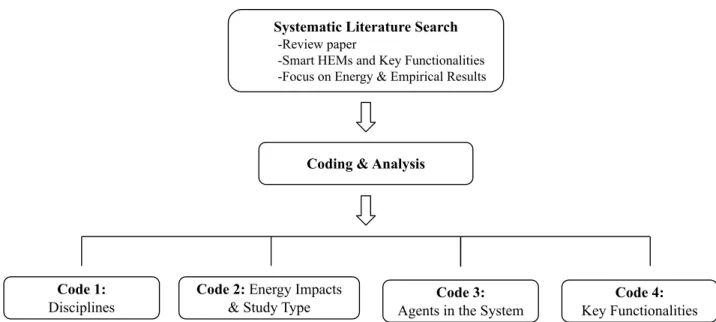
Each paper in the sample was coded across four primary dimensions corresponding to the research
questions, as summarized in Table 1.The procedure for the analysis is also visually represented in Figure 1.Coding procedures were conducted according to a coding guide, derived deductively from the research questions and hypotheses driving the study and a conceptual model of SHEMS developed by the authors as represented in Figure 2.The authors used a quantitative approach to content analysis, recording when each paper met the criteria for a pre-established code level. Similar methodologies have been used in related studies, such as in the work of Sovacool [37]. The following subsections detail a conceptual model that organizes the coding scheme and the coding method.
Figure 1. Flow diagram for search, coding, and analysis. 2.3 SHEMS Conceptual Model
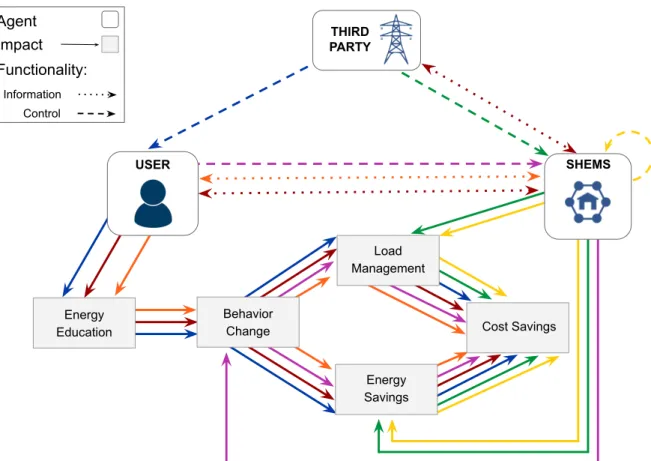
Figure 2 illustrates the authors’ conceptual model of SHEMS, which was used to guide the coding scheme. The aim of such a model was to create a holistic visualization of the key components of SHEMS and potential pathways towards realizing energy impacts. The conceptual model ultimately includes three core components: agents capable of taking action in the system, SHEMS functionalities providing the ability to deliver information and control, and the resulting energy impacts driven by the relationships between the agents and SHEMS functionalities.
Within this model, three key agents exist: SHEMS technologies themselves, users, and third parties. Users and SHEMS operate within the home while third parties are primarily external to it. Within the system, any given agent could be either active or passive. Active agents are defined as those components of the system directly driving the creation of the energy impacts, such as a user making behavior changes, a smart appliance optimizing energy use, or a user or third party remotely controlling end uses through SHEMS interfaces. Alternatively, passive agents are relatively unchanging or assumed constant
components of the system, such as an in-home display sitting on a counter and providing information, an individual whose behavior is assumed to remain the same, or a third party setting a dynamic pricing scheme and relying on users or SHEMS to react accordingly.
The model further incorporates the two key functionalities as identified by Ford and colleagues [13] - information and control. These functionalities are depicted by the dashed and dotted arrows within the diagram. Dotted arrows represent flows of information between agents and dashed arrows represent control actions.
Finally, the model illustrates potential energy impacts related to SHEMS. The authors hypothesized that five primary energy-related impacts could result from SHEMS: energy savings, load management, cost savings, energy education (i.e., awareness and knowledge), and specific behavior change. These impacts result from interactions between agents and functionalities.
Systematic Literature Search
-Review paper
-Smart HEMs and Key Functionalities -Focus on Energy & Empirical Results
Coding & Analysis
Code 2: Energy Impacts
& Study Type Agents in the SystemCode 3: Key Functionalities Code 4: Code 1:
Taken together, Figure 2, illustrates different pathways to achieve different energy impacts through the deployment of SHEMS. The colored arrows illustrate the diversity of pathways through which impacts could be generated based on various interactions of agents within the system via information and control functionalities. For example, the orange arrows originate between the SHEMS and user, representing a flow of information between these agents. This information might then lead the user to better understand their energy consumption (orange arrow from the user to the energy education impact) and therefore change their behavior (orange arrow from energy education to behavior change). This behavior change might reduce peak energy use (load management), help conserve energy (energy savings), and each of these impacts could result in a reduction in the user’s energy bill (cost savings). As such, the initial information passed between the user and SHEMS could result in all five of the hypothesized impacts of energy education, behavior change, load management, energy saving, and cost savings. The figure illustrates six example pathways but is not an exhaustive account of all possible pathways in order to maintain visual clarity.
Figure 2. Conceptual model representing the relationships between agents, functionalities, and potential energy impacts related to SHEMS.
2.4 Coding Guide and Method
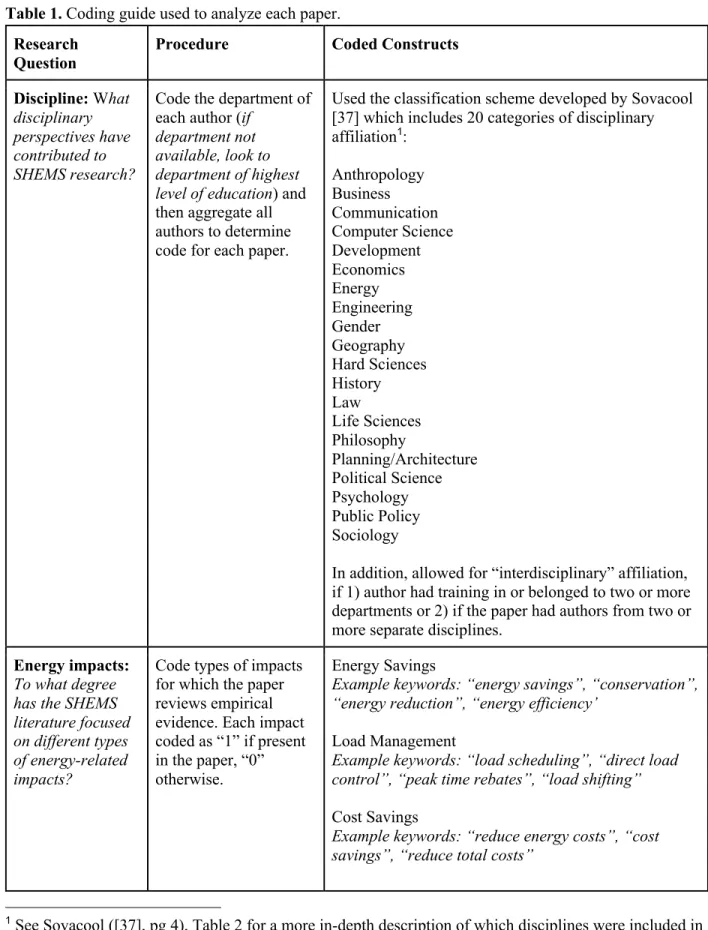
The authors developed a coding guide to assess the extent to which each review paper discussed the different components of the conceptual model described above. An overview of the guide is presented in Table 1 and a more detailed description of the codes are provided in the following sections.
Information Control Impact Agent Functionality: USER THIRD PARTY SHEMS Energy Education Behavior Change Load Management Energy Savings Cost Savings
Table 1. Coding guide used to analyze each paper. Research
Question
Procedure Coded Constructs
Discipline: What disciplinary perspectives have contributed to SHEMS research?
Code the department of each author (if
department not available, look to department of highest level of education) and then aggregate all authors to determine code for each paper.
Used the classification scheme developed by Sovacool [37] which includes 20 categories of disciplinary affiliation1: Anthropology Business Communication Computer Science Development Economics Energy Engineering Gender Geography Hard Sciences History Law Life Sciences Philosophy Planning/Architecture Political Science Psychology Public Policy Sociology
In addition, allowed for “interdisciplinary” affiliation, if 1) author had training in or belonged to two or more departments or 2) if the paper had authors from two or more separate disciplines.
Energy impacts:
To what degree has the SHEMS literature focused on different types of energy-related impacts?
Code types of impacts for which the paper reviews empirical evidence. Each impact coded as “1” if present in the paper, “0” otherwise.
Energy Savings
Example keywords: “energy savings”, “conservation”, “energy reduction”, “energy efficiency’
Load Management
Example keywords: “load scheduling”, “direct load control”, “peak time rebates”, “load shifting”
Cost Savings
Example keywords: “reduce energy costs”, “cost savings”, “reduce total costs”
1 See Sovacool ([37], pg 4), Table 2 for a more in-depth description of which disciplines were included in
Energy Awareness and Education
Example keywords: “knew their energy use”, “using feedback to explore device usage”
Behavior Changes
Example keywords: “energy management behavior”, “change their habits”, “turn off the air conditioning”
Code type of studies in which each impact was observed. Each study type coded as “1” if present in the paper, “0” otherwise.
Field Study
Studies on real-world, or “in the wild”,
implementations of SHEMS, including test homes, pilot studies, and utility interventions
Modeling & Simulation
Virtual modeling of SHEMS implementations
Agents: To what degree are different agents considered to be driving the energy-related impacts of SHEMS?
Code types of agents involved in driving energy impacts. Each agent coded as “1” if present in the paper, “0” otherwise.
SHEMS
Individual appliances (ex. smart thermostat) or entire systems (ex. smart home platform)
Users
Individuals within the home interacting/adopting the SHEMS
Third Parties
Organizations involved in deploying and/or controlling SHEMs in the home, ex. utilities or third party
aggregators
Identify whether each agent holds active and/or passive roles in the system.
Active
Actors driving the creation of the energy impacts
Passive
Relatively static or unchanging actors in a system
Functionalities:
What
functionalities underlying the energy impacts of SHEMS have been the focus of research?
Code type of SHEMS functionalities
employed to drive energy impacts. Each high-level functionality (information, control) coded as “1” if present in the paper, “0”
Control-based
Rule-based or remote control
Information-based
otherwise. Further, descriptors of that functionality (rule-based, remote control, feedback, prompts) coded as “1” if present in the paper, “0” otherwise.
To begin, each paper was coded for disciplinary perspective. First, the disciplinary affiliation or training for each of the contributing authors was coded. For this, the authors referred to the methodology used by Sovacool [37] to assess the disciplines contributing to energy studies. To code the discipline of each author, the departmental affiliation stated on the publication was recorded. If no affiliation was stated, then further research was conducted to determine the discipline of the author’s highest degree. If neither of these could be identified, the disciplinary code was left blank. These affiliations were then sorted into the twenty disciplinary categories established by Sovacool [37] and indicated in Table 1. The designation of interdisciplinary was recorded if an author either listed two or more different departmental affiliations or received a degree in two or more departments. After each author had been coded, those codes were aggregated to develop a single code for each paper. If the discipline of each author on a paper was the same then the paper was assigned that discipline. A designation of interdisciplinary was given if a paper included authors of at least two different disciplines.
Next, the main body of each paper was reviewed to identify the energy impacts resulting from empirical studies of SHEMS. Energy impacts were coded according to the guide presented in Table 1. While the authors primarily focused on the impacts included in the conceptual model, additional themes were allowed to emerge through coding “other” relevant themes and reviewed after completion of the coding. For each of the energy impacts identified, the authors then reviewed the text surrounding this impact to assess the methodology of the study being reviewed, agents present in the system, and the functionalities employed in realizing the energy impacts. With regards to study methodology, the authors recorded the type of study reviewed if it was explicitly stated. If it was not stated, this code was left blank. In terms of agents, consistent with the conceptual model, actors were coded as either active or passive and, in theory, a system could have more than one active and/or passive agent. Each impact was reviewed to see if was driven by information and/or control functionalities. If available, the reviewers also noted the type of information and controls employed, as noted in Table 1.
For the codes related to the conceptual model, coding only occurred if a given concept was explicitly mentioned in a paper (i.e., not inferred or assumed). Codes were recorded in a binary fashion, i.e. denoted as either present in the article (1) or not (0). In addition, a review article was allowed to be coded for multiple constructs under the same code, i.e. codes were not mutually exclusive. For example, a paper could discuss energy impacts related to both energy savings and behavioral changes, consider examples of SHEMS in which the end-user is both a passive and active agent, or review the results of studies using both modeling and simulation and field study approaches. For the latter example, if a review paper discussed both modeling and field studies, those codes would have each been recorded as “1” (i.e. both
present in the paper). The coding was completed by the primary author, with co-authors reviewing segments to ensure accuracy and consistency.
3. Results
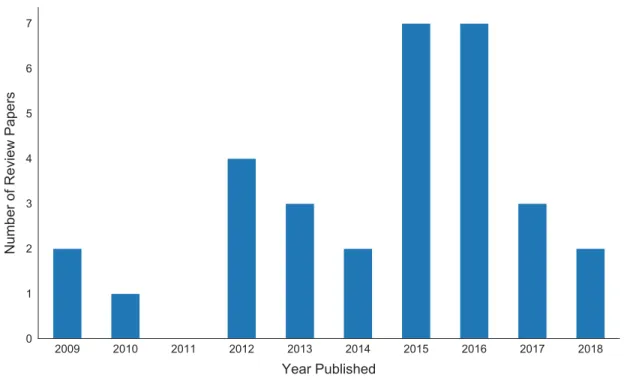
An extensive search returned 31 papers that met our criteria, including 22 journal papers and nine conference papers. All papers included in the final database were published between 2009 and 2018, as illustrated in Figure 3. Across this timespan, data indicates a relatively consistent stream of publication of SHEMS review papers year over year, with particularly intensive publication periods in 2015 and 2016, with seven papers published in each of those years, respectively. These two years alone account for the publication of nearly 45% of the papers in the sample.
Figure 3. Number of SHEMs review papers published by year.
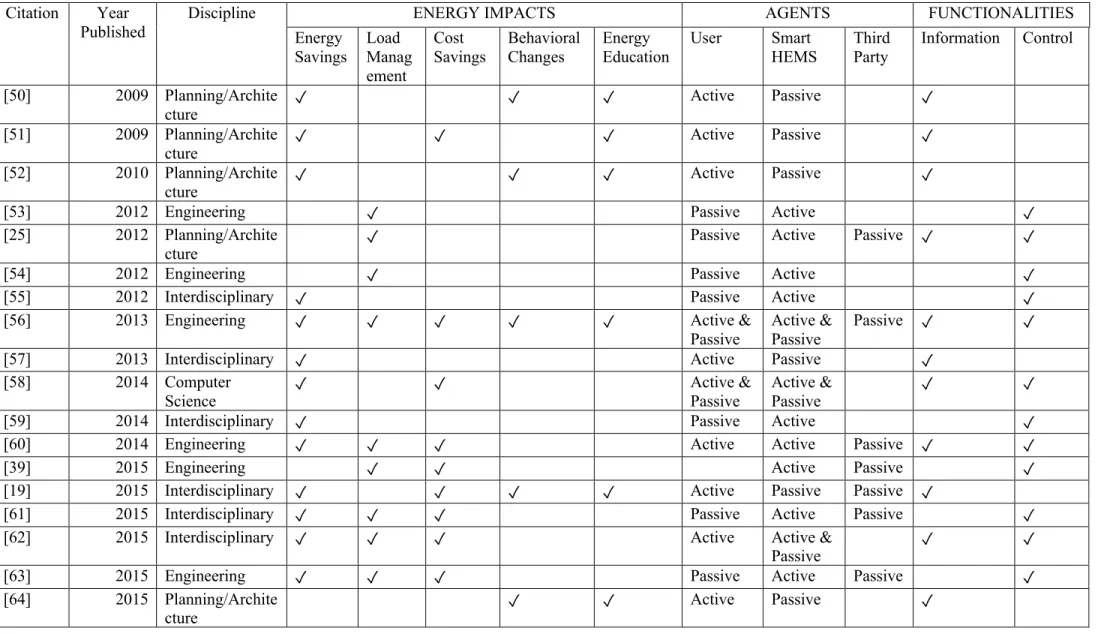
All 31 papers that met the criteria are listed in Table 2, which summarizes the high-level results of the coding analysis. These results, and their interactions, are discussed more fully in each of the sections below.
3.1 Disciplinary Perspectives Contributing to SHEMS Research
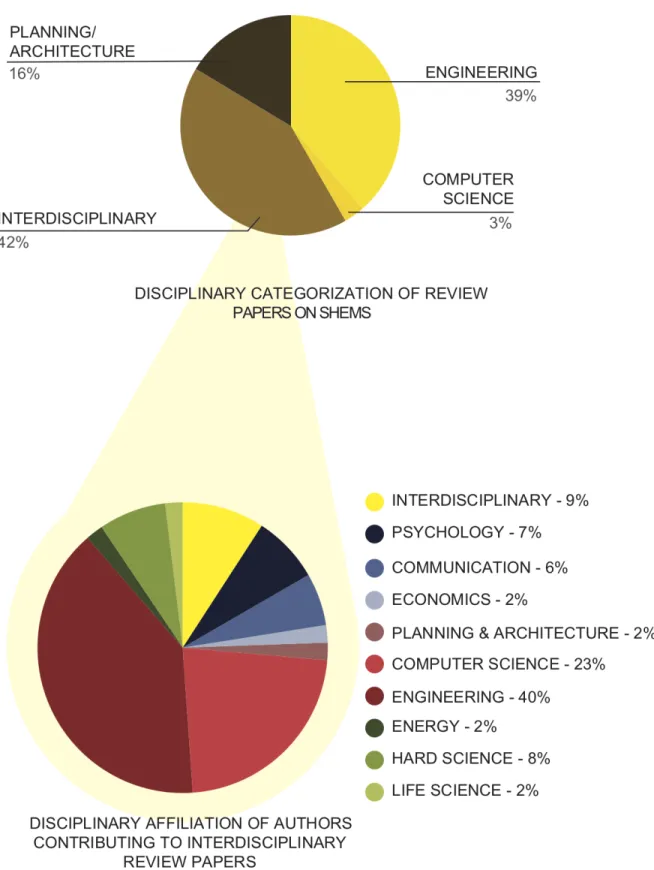
To begin, each of the identified review papers was coded for disciplinary affiliation. Results of this exercise revealed four high level disciplinary categories in the sample: engineering, computer science, planning and architecture, and interdisciplinary. Together, interdisciplinary and engineering papers constituted the large majority, 81%, of the reviews in the sample, comprising 42% (n = 13) and 39% (n = 12) respectively. The remaining papers came from the planning and architecture (16%, n = 5) and computer science (3%, n =1) disciplines.
To better understand the perspectives of the interdisciplinary review papers in the sample, the disciplinary affiliations of their individual authors were analyzed. This analysis revealed a diverse array of disciplines contributing to interdisciplinary papers as represented in Figure 4. As with the broader sample of papers, engineering affiliations dominate the sample, representing 40% of the contributing authors. Computer scientists also represent a moderately large share of the authorship, representing 23% of the authors contributing to interdisciplinary reviews. Together, these two disciplines make up just over two-thirds, or 63% of the authors. The remaining one third of the authors, stem from a variety of disciplines including interdisciplinary (9%), hard science (8%), psychology (7%), communications (6%), and economics, energy studies, life sciences, and planning and architecture (2% each).
Table 2. List of SHEMS reviews identified and the results of the coding analysis. Blank cells indicate a code was not identified in the review.
Citation Year Published
Discipline ENERGY IMPACTS AGENTS FUNCTIONALITIES
Energy Savings Load Manag ement Cost Savings Behavioral Changes Energy Education User Smart HEMS Third Party Information Control [50] 2009 Planning/Archite cture ✓ ✓ ✓ Active Passive ✓ [51] 2009 Planning/Archite cture ✓ ✓ ✓ Active Passive ✓ [52] 2010 Planning/Archite cture ✓ ✓ ✓ Active Passive ✓
[53] 2012 Engineering ✓ Passive Active ✓
[25] 2012 Planning/Archite cture
✓ Passive Active Passive ✓ ✓
[54] 2012 Engineering ✓ Passive Active ✓
[55] 2012 Interdisciplinary ✓ Passive Active ✓
[56] 2013 Engineering ✓ ✓ ✓ ✓ ✓ Active &
Passive
Active & Passive
Passive ✓ ✓
[57] 2013 Interdisciplinary ✓ Active Passive ✓
[58] 2014 Computer Science ✓ ✓ Active & Passive Active & Passive ✓ ✓
[59] 2014 Interdisciplinary ✓ Passive Active ✓
[60] 2014 Engineering ✓ ✓ ✓ Active Active Passive ✓ ✓
[39] 2015 Engineering ✓ ✓ Active Passive ✓
[19] 2015 Interdisciplinary ✓ ✓ ✓ ✓ Active Passive Passive ✓
[61] 2015 Interdisciplinary ✓ ✓ ✓ Passive Active Passive ✓
[62] 2015 Interdisciplinary ✓ ✓ ✓ Active Active &
Passive ✓ ✓
[63] 2015 Engineering ✓ ✓ ✓ Passive Active Passive ✓
[64] 2015 Planning/Archite cture
[65] 2016 Interdisciplinary ✓ ✓ ✓ Passive Active Passive ✓
[66] 2013 Interdisciplinary ✓ ✓ ✓ Active &
Passive
Active Passive ✓ ✓
[67] 2016 Engineering ✓ Passive Active Passive ✓
[68] 2016 Interdisciplinary ✓ ✓ Active ✓
[69] 2016 Interdisciplinary ✓ ✓ ✓ Passive Active Passive ✓
[70] 2016 Engineering ✓ ✓ Passive Active ✓
[71] 2016 Engineering ✓ ✓ ✓ Passive Active Passive ✓
[72] 2016 Engineering ✓ ✓ ✓ Active &
Passive
Active Passive ✓ ✓
[73] 2017 Engineering ✓ ✓ ✓ Active Active &
Passive ✓
[74] 2017 Interdisciplinary ✓ ✓ ✓ Passive Active &
Passive
Active & Passive
✓
[75] 2017 Interdisciplinary ✓ Active Passive Active ✓
[76] 2018 Interdisciplinary ✓ ✓ ✓ ✓ Active Active &
Passive
Passive ✓
Figure 4 groups these disciplines (excluding the interdisciplinary category) into three high level categories, namely social sciences (shades of blue), technical sciences (shades of red), and traditional sciences (green). Based on these groupings we see that the technical sciences make up the large majority of authors on interdisciplinary reviews (65%) followed by the social sciences (15%), the traditional sciences (12%), and interdisciplinary (9%).
Figure 4. Disciplinary breakdown of SHEMS review papers in sample (top pie chart) and disciplinary breakdown of authors contributing to interdisciplinary reviews (bottom pie chart).
Considering the disciplinary contributions over time, the first review paper in the sample was written from the planning and architecture perspective in 2009. From 2009 through 2018, relatively flat or limited growth in the number of review papers published occurs in the computer science and planning and
architecture disciplines, as illustrated in Figure 5 which shows the cumulative number of papers published by discipline over time. With regards to the interdisciplinary papers, the number of reviews published each year initially increases linearly from 2012 when the first review paper was published to 2014, then averages about two to three review papers per year from 2015 onward. The engineering review papers follow a similar trajectory after the first two papers are published in 2012.
Figure 5. Cumulative number of review papers published by year and discipline. 3.2 Energy Impacts Discussed in SHEMS Literature
Within the 31 papers reviewed, each of the hypothesized impacts (energy savings, load management, cost savings, behavior change, and energy education and awareness) emerged in at least one paper, as shown in Figure 6. No unexpected impacts emerged.
Figure 6. Results related to energy impacts discussed among the sample of review papers. Results reveal that the most commonly discussed impacts of SHEMS are energy savings, load management, and cost savings, appearing in roughly 74%, 68%, and 61% of the review papers,
respectively. With regards to energy savings, a majority of the articles broadly discussed the ability for SHEMS, like connected appliances and in-home displays, to drive energy savings at the household level. Review papers reported a variety of energy savings results, ranging from increases in consumption, no impact on energy use, and energy savings upwards of 60%, depending on whether energy savings were referring to total household or appliance specific consumption. When discussing load management, many review papers commented on the ability for SHEMS to schedule appliance operation or optimize load curves at the level of the household. Here, reviews generally discussed shifting from on- to off-peak hours (and reduction of peak-to-average ratio), with a number of papers seeking to address solutions to rebound peaks, or periods of increased energy use after a demand response event when customers schedule loads at the same time. Although not always explicitly stated, cost reductions seemed primarily related to users of SHEMS in the form of bill reductions. Estimates of energy cost reductions ranged from 5% to 74%; although the majority fell in the 20-30% range, dependent on the rate structure, geographic location, and the technologies involved.
The least commonly discussed energy impacts were behavior change (19%) and energy education and awareness (22%). Reported actual or desired behavioral changes included conservation behaviors such as turning off appliances, in addition to general changes in household habits or lifestyles, with one paper noting end-users stated they wanted to change their behavior as a result of information obtained from SHEMS, but felt unable to do so due to lack of control. Somewhat related, the reviews that discussed educational impacts of SHEMS commented on the ability for these technologies to help users better
understand their electricity use patterns or the energy-related consequences of using different end uses. For example, one paper reviewed a study in which a SHEMS device was used as a tool to explore the home and connect actions, such as opening a window, with consequences, like wasting heat.
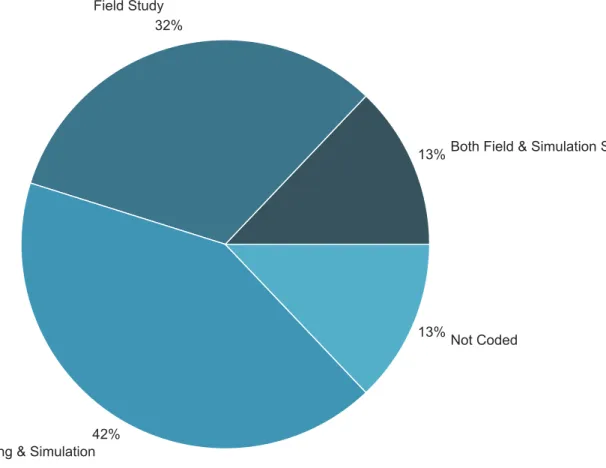
3.2.1 Study Methodologies. As shown in Figure 7, the vast majority of energy impacts reported in the review papers were derived from either modeling and simulation experiments or field pilots. For 13% of the papers, the exact study method could not be identified for any of the SHEMS discussed, so this information was not coded. In total, over half of the review papers in the sample (55%) discussed results from modeling and simulation studies, 45% discussed the results of pilot or field studies. 13% of these papers discussed results from both kinds of studies. Looking at the connection between energy impacts and methodologies, certain energy impacts tend to be studied with one type of method over another. For example, behavior change and energy education and awareness were reported based solely on field studies. Alternatively, load management, cost savings, and energy savings tend to skew towards modeling and simulation studies, although are reported based on the results of field studies as well.
Figure 7. Methods used to study the energy impacts of SHEMS. 3.3 What Agents Drive Energy Impacts
The analysis also sought to identify what agents are primarily implicated in SHEMS driving energy impacts. Given the existing literature, the authors hypothesized the dominant agents would be SHEMS, users, and third parties. As hypothesized, analysis of the review papers revealed these are the three
primary agents involved in SHEMS research (no unexpected actors emerged from the review). Since discussion of SHEMS technologies was a criteria for inclusion in the research, these agents were
identified in 100% of the review papers (n = 31), followed by users in roughly 94% of the papers (n = 29), and third party actors in just under 52% (n = 16).
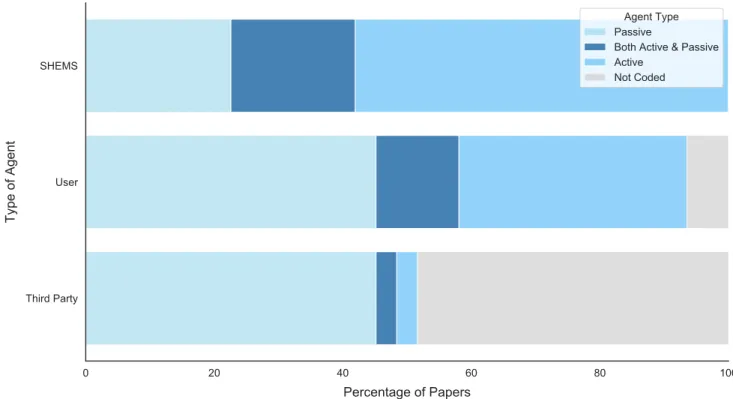
Figure 8. Type of agents in SHEMS systems and the ways in which they contribute to energy impacts. Figure 8 represents the distribution of agents coded across the review papers and the extent to which they were conceptualized as active or passive components of the system. Of the three agents identified,
SHEMS was the one most frequently considered an active part of the system, identified as such in 77% of all review papers. Alternatively, these technologies were seen as passive agents in about 42% of the review papers and conceptualized as both active and passive in just under 20% of the sample. The users were the next most common active agent, coded as active in just over 48% of the papers in the sample. Users were conceptualized as passive in just under 55% of the papers and identified as both active and passive components of the system in about 13% of papers. Users were not identified at all in 6% of the review papers analyzed. Finally, third parties, primarily referring to utilities or other grid-focused actors, were conceptualized as active the least often. Third parties were not mentioned in roughly 48% of the review papers analyzed and when they were mentioned, it was almost exclusively as a passive actor (48% of papers), typically a utility administering some type of dynamic rate structure. Third parties were only considered an active participant in just under 7% of the reviews, which includes papers where they were coded as both passive and active (3%) and just active (3%).
Figure 9. Association between energy impacts and different agents in SHEMS systems. Figure 9 shows the correlations between energy impacts and agents as discussed in the review papers. The metric used to quantify correlation was the phi coefficient. This metric is appropriate given the binary nature of the coding data, i.e., a construct was either present (1) or not present (0) in a given review paper. The metric indicates the extent to which specific codes were likely to appear in the same review paper, such that a strong positive correlation suggests both constructs were often discussed in the same papers, while a strong negative correlation suggests that papers tended to discuss one or the other construct, but not both. To orient the reader to the figure, the top left quadrant shows the correlation between different energy impacts. The bottom left quadrant presents the correlation between energy impacts and types of actors in each paper. Lastly, the bottom right illustrates the correlation between different agent types. The dark blue cells indicate strong positive correlations and dark red cells indicate strong negative
correlations.
From Figure 9, a number of observations can be made about the discourse surrounding relationships between energy impacts and the actors in SHEMS. First, considering the relationships between energy
Energy Impacts Agent Types Energy Impacts Agent Types
impacts, strong positive correlations emerge between behavior change and energy education and
awareness (phi = 0.91), suggesting they are often discussed together. The results also suggest a moderate positive correlation between load management and cost savings (phi = 0.44). On the other hand, load management has a moderate negative correlation to energy education and awareness (phi = -0.45) and weak negative correlation with behavior change (phi = -0.36), suggesting they are not frequently considered in the same papers.
Considering the relationships between different agent types, third parties have a weak correlation with all other agents. This is intuitive since these agents are not well represented in the papers reviewed. Looking at users and SHEMS agents, however, stronger trends are observed. For example, a strong positive correlation emerged between active users and passive SHEMS (phi = 0.75) and a moderate positive relationship between passive users and active SHEMS (phi = 0.6). Conversely, moderately negative correlations exist between active SHEMS and active users (phi = -0.64), and between passive SHEMS and active SHEMS (phi = -0.64). There are moderate negative correlations between passive SHEMS and passive users (phi = -0.54) and between passive users and active users (phi = -0.55).
Finally, considering the interactions between agent types and assessed energy impacts, no strong relationships emerge across these constructs. However, there are numerous moderate relationships. The data suggest moderate negative correlations between active SHEMS and energy education and awareness (phi = -0.63) and active SHEMS and behavior change (phi = -0.52). In addition, moderate positive relationships exist between active SHEMS and load management (phi = 0.62) and active users and both behavior change (phi = 0.51) andenergy education and awareness (phi = 0.56). We see roughly the same relationship between passive SHEMS and each of these same two impacts (behavior change, phi = 0.58, and energy education and awareness, phi = 0.64). Results also point to a moderate positive relationship between passive third parties and both load management (phi = 0.39) and cost savings (phi = 0.5). Finally, the results show a moderate negative relationship between passive SHEMS and load management (phi = -0.39).
3.4 Functionalities Underlying Energy Impacts
Each paper was additionally coded to understand whether the discourse around impacts stemmed primarily from controls and/or information-based functionalities of SHEMS. As hypothesized, control-based functionalities dominate the discussion of functionalities employed in the review papers, with 81% of the papers in the sample reporting energy impacts derived from controls-based strategies (n = 25). Alternatively, information-based strategies appeared in 48% of the review papers (n = 15). 29% of the reviews discussed both functionalities (n = 9). This breakdown is represented in Figure 10.
Figure 10. Types of SHEMS Functionalities identified in the review papers (bottom pie chart) and the types of control strategies employed (top pie chart).
When discussing information-based strategies, the majority of the review papers broadly discussed the effects of feedback or other information from SHEMS without commenting specifically on the strategies employed. When considering the papers discussing controls-based energy impacts, the type of control (either rule or remote) employed was identified when possible. As shown in Figure 10, of the papers discussing controls, the majority (76%) commented on rule-based (algorithmic) control while only 24%
discussed remote-control. 20% discussed both forms of control and in 20% of the papers (n = 5), the type of control could not be distinguished.
3.5 SHEMS Systems by Disciplinary Perspective
Finally, Table 3 presents a summary of the constructs related to the conceptual model aggregated by disciplinary affiliation of the paper. Column one designates each of the four disciplines present and the number of articles within each. The resulting columns show what percentage of the total papers in that subsample discussed each of the energy impacts, agents, and functionalities related to SHEMS. Given our sample size we cannot comment on statistically significant results, but in reviewing the evidence several trends begin to emerge. Since only one paper was present from the computer science discipline, results discussed here focus on the remaining three disciplines (interdisciplinary, engineering, and planning & architecture).
With regards to the energy impacts discussed, each discipline shows a similar tendency to discuss energy savings, with a large majority (between 60-70% each) reporting impacts related to energy savings. Consistent with the overall results, these disciplines all show a substantially lower frequency of discussing impacts related to behavior change and energy education. 20% of planning and architecture papers discussed these impacts while only 8% each of interdisciplinary and engineering papers did. The results begin to show more diversity when considering load management and cost savings. Engineering papers were the most likely to report on load management, with over 80% of them doing so, followed by interdisciplinary (62%) and planning and architecture (20%). Alternatively, interdisciplinary papers were the most likely to discuss cost savings (69%), followed by engineering (58%), and planning and
architecture (20%).
When discussing the different agents in the system, both interdisciplinary and engineering papers show a significant skew towards discussing active SHEMS and passive users, while this trend is reversed in the planning and architecture subgroup. In particular, nearly all (91%) of engineering papers discussed active SHEMS, followed by 77% of interdisciplinary papers, and only 20% of planning and architecture. Alternatively, only 17% and 38% of engineering and interdisciplinary papers, respectively, discussed SHEMS in a passive light, as compared to 80% of planning and architecture reviews. When discussing users, the reverse trend emerges. Planning and architecture reviews discussed users as active in 80% of reviews and passive in only 20%. On the other hand, interdisciplinary and engineering papers considered systems in which users were active in only 38% and 33% of papers, respectively, and passive in 54% and 67% of reviews, respectively. Consistent with the high level finding of this analysis, third parties were most often considered passive components of the system across the disciplines and discussed as active in only a small minority of interdisciplinary papers.
Similar to the trends observed surrounding agents in the system, interdisciplinary and engineering papers show a distinct skew towards technical, controls-based functionalities of SHEMS. 92% and 85% of engineering and interdisciplinary papers discussed controls functionalities, respectively. On the other hand, only about a third of the papers in each of these disciplines discussed information-based functionalities of SHEMS. The reverse trend emerges in the planning and architecture field, with all papers (100%) discussing information-based functionalities and a minority (20%) discussing controls.
Table 3. Summary of dominant trends in SHEMS discourse by disciplinary perspective. Note, under the “Agents” column, “A” signifies “Active” and “P” signifies “Passive”.
Discipline Energy Impacts Agents Functionalities
Energy Savings Load Mgmt Cost Savings Behavior Change Energy Ed.
SHEMS User Third
Party Info. Control Interdiscipli nary (N=13) 69% 62% 69% 8% 8% A: 77% P: 38% A: 38% P: 54% A:15% P:46% 31% 85% Engineering (N=12) 67% 83% 58% 8% 0% A: 91% P: 17% A: 33% P: 67% A: 0% P: 58% 33% 92% Planning & Architecture (N=5) 60% 20% 20% 20% 20% A: 20% P: 80% A: 80% P: 20% A: 0% P: 20% 100% 20% Computer Science (N=1) 100% 0% 100% 0% 0% A: 100% P: 100% A:100% P:100% A: 0% P: 0% 100% 100%
4. Discussion & Conclusion
This research sought to conduct a systematic, interdisciplinary assessment of the SHEMS literature in terms of the dominant discourses surrounding their potential to impact household energy use. It analyzed 31 review papers written on this topic since 2009, stemming from engineering, computer science, planning and architecture disciplines and interdisciplinary research collaborations. These reviews had a heavy reliance on modeling and simulation methods, especially when estimating potential energy savings and load management. Review papers tended to focus exclusively on either user-centered, information-based solutions or techno-centric, controls-focused solutions to managing home energy use, with the latter being much more prevalent. Relatedly, energy savings, load management, and cost savings impacts received the most attention, with a minority of papers focusing on energy education and behavior change impacts. As a result of limited integration, few of the numerous potential pathways for SHEMS to impact household energy use, articulated in the conceptual model presented in Figure 2, have received frequent attention in the literature. The following sections reflect on these key findings among others, consider the limitations of the present study, and draw out key considerations for future work. In particular we look at the need for more holistic solutions to home energy management, the role of the social sciences and interdisciplinary research moving forward, and implications of the reliance on modeling and simulation studies in research.
4.1 Advancing SHEMS: A Holistic Path Forward
Taken as a whole, the findings of this review point to the need for more holistic approaches to understanding the role of SHEMS in driving energy benefits in the residential sector and tradeoffs
between different approaches to doing so. Results show a skew towards technology centric, control-based solutions to managing home energy use and this bias manifests in several ways. First, the analysis
indicates a dominant focus on SHEMS as the core and active agent within the system. While users still appear in nearly all papers, they are more frequently considered as passive actors. One unexpected finding
from this review was that third party actors were not identified in over half of the review papers and when they were discussed it was almost exclusively in a passive role through the use of dynamic pricing
structures. Further, the results indicate that active users and active SHEMS were rarely discussed in the same papers. While this finding may be less surprising in single study papers taking predominantly one or two views of the system, our study reviewed review papers, which typically seek to cover wider swaths of the literature.
The second way this bias manifests is through a reliance on controls approaches to managing energy use as opposed to information-based ones. Although 29% of the review papers did consider both information and controls-based functionalities, these papers mainly discussed them as two separate solutions to managing energy use, not integrated into one program. A further 52% of papers focused on control-based solutions only, with no mention of information-based opportunities surrounding SHEMS. The limited number of papers discussing behavior-based energy impacts logically flows from this finding - if the technology is primarily charged with controlling energy use why does the user need to change? Revisiting the model presented in Section 2.2, Figure 2 we can see the ways in which this bias
conceptually limits the potential SHEMS-related pathways towards energy impacts. Figure 11 presents an illustration of the modified conceptual model excluding third party actors and their associated pathways to energy impacts and Figure 12 shows the same model excluding the user and related pathways. The ways in which this limits the potential opportunities to enact change in the system is immediately apparent. For example, without the user, impacts around energy education and behavior change disappear, which also limits the potential pathways towards achieving load management, energy savings, and cost savings. Without the third parties, the system loses its connection to the external grid and also reduces pathways to energy savings and load management.
Figure 11. Representation of the SHEMS conceptual model excluding third party agents and related pathways to impact.
Figure 12. Representation of the SHEMS conceptual model excluding user agents and related pathways to impact. USER SHEMS Energy Education Behavior Change Load Management Energy Savings Cost Savings Information Control Impact Agent Functionality: THIRD PARTY SHEMS Load Management Energy Savings Cost Savings Information Control Impact Agent Functionality:
While it may turn out to be true that the greatest potential impacts lie in the technical functionalities of SHEMS, there is no way of knowing this is true unless all potential pathways are investigated. History has shown that policy approaches relying on technical potential will only go so far towards delivering energy benefits if the underlying assumptions regarding the role of actors, such as users, are incorrect. Perhaps the best example of this relates to innovations in manual, programmable, and smart thermostats. While programmable thermostats were expected to provide significantly greater energy savings than their manual counterparts, and initially received an ENERGYSTAR label designation, ENERGYSTAR removed its label from the product in 2009 when these savings were not realized [78]. Research has suggested that this gap, between expected and realized savings, was likely related to the fact that estimates of savings potential often underestimated the degree to which individuals already manually manage heating and cooling loads in their home [8]. For example, Malinick and colleagues [78] evaluate how energy savings projections around these programmable thermostats relied on the assumptions that users programmed their thermostats and let them run. Sintov and colleagues [79] recently found users who pre-program their thermostats are just as likely as those who did not to adjust their thermostat on any given day. Such assumptions likely contributed significantly to lower than expected energy savings and ultimately the removal of the ENERYSTAR designation [78]. It is hypothesized that similar assumptions often underlie the reasons research and development pilots, broadly speaking, often do not live up to expectations [38].
The results of our research suggest that, despite such evidence, SHEMS research has continued to make similar assumptions regarding the passive role of customers. This is supported by recent work by Larsen and colleagues [30], who conducted an analysis of the role of smart technologies in district heating systems in Denmark. The study found that smart home technologies appeared to have been developed with the aim of removing uncertainties surrounding unpredictable human behavior through strategies such as automated controls. The authors argued that this ignores both the ability for these technologies to serve as disruptive forces, reconfiguring household dynamics, and for users to override or subvert controls if motivated to do so. Yet, there is no evidence to suggest that new innovations in automated technologies will be exempt from issues surrounding human behavior that previous technologies, like programmable thermostats, have dealt with. Research has consistently shown that users prefer some level of control over their environments and will take actions to regain it where possible [80]. Indeed, some research suggests that energy savings potential around thermostats could be greatest when both users and technologies are involved in the process of creating heating and cooling schedules [46].
In addition to these findings about the user-technology relationship, our findings regarding third parties also feel disengaged from current developments in the industry. In our sample, when third parties were considered, it was primarily to institute dynamic pricing schemes that active SHEMS would then use to optimize or schedule demand accordingly [69,71,74]. Very few articles discuss the role of programs like direct load control or other utility-run demand response programs. These findings seem disconnected from visions of the future that highlight utilities or other third parties as using smart technologies to unlock new opportunities to manage energy use, afford greater penetration of renewables, and provide grid services to support the energy transition more broadly. In the review by Sovacool [37], he notes “...some critiques suggest that a large gap exists between what energy policy researchers think is important, and what business persons, utility commissioners, and policymakers actually think and do.”
Our findings here suggest that this could also be the case within the realm of SHEMS research and policy. Yet third party actors such as utilities seem uniquely placed in the energy system in terms of their
connections to a wide array of stakeholders, including industry players in emerging technologies, policymakers at the local, regional, and federal levels, and customers across sectors, to help deploy new innovations. Indeed many such actors are currently in the process of conducting field pilots to test out these technologies. Past research from the field of socio-technical transitions has long pointed to the key role of intermediary or middle actors with such connections to help move systems towards more
sustainable states [81,82] and this should be further investigated in future SHEMS research.
Taken together, these findings suggest that future exploration of SHEMS should explicitly investigate the potential for multiple active agents to contribute towards the generation of energy benefits and
acknowledge that these agents interact within a system, constantly evolving based on interactions, and potentially in unexpected ways. The results of this analysis seem to primarily fall on only a few
components of our conceptual model and thus we encourage future work on SHEMS to dive deeper into a more holistic understanding of the relationships represented in Figures 2, 11, and 12. To do so will involve critically examining underlying assumptions regarding which components of the system are truly passive and reconsidering how functionalities of SHEMS regarding information and control can
holistically be leveraged together.
4.2 Role of the Social Sciences and Interdisciplinarity in SHEMS Research
A crucial component of successfully challenging assumptions and taking a more holistic approach to the successful deployment of SHEMS to deliver energy benefits will be the increased participation of more disciplines in SHEMS research. Results of this study reveal a significant underrepresentation of the social sciences in SHEMS work. An extensive search identified no review papers strictly from a social science perspective, and only 15% of authors contributing to interdisciplinary papers had affiliations within the social sciences. This finding is consistent with Sovacool [37] who argued social sciences are vastly underrepresented in contemporary energy research, broadly speaking. In recent years, the literature has seen increasing research contributions in the smart home or SHEMS space by social scientists, including the work of authors such as Strengers and colleagues [8,83,84] and Hargreaves and colleagues [23,85,86]. This research has brought to light important critical perspectives on whether new innovations in the smart home space actually address energy-related challenges in the residential sector [8] and how future
research regarding SHEMS functionalities like information can be reframed to engage a wider range of actors and develop new solutions to address energy transitions [23].
While we believe more contributions such as these will be key to the future success of SHEMS, further research in this space should not focus solely on increasing the presence of social sciences alone, but on integrating these perspectives with more technical ones. Surprisingly, the results of the current analysis suggest an impressive amount of interdisciplinary collaboration in this field to date. Roughly 40% of the review papers in the sample came from interdisciplinary collaborations. Compared to the results of Sovacool [37], who finds that less than one in four papers on energy studies reported interdisciplinary affiliations, the findings of this research suggest greater levels of interdisciplinary collaboration occur on the topic of SHEMS relative to energy studies generally. However, even the interdisciplinary perspectives here were significantly skewed towards technical collaborations (e.g., engineering and computer science).