Communication in Problem Based Learning
by
Dr Pauline Bryant MBBS MRCGP MMed
Submitted for the qualification of
Doctor of Education
at the
University of East Anglia
Department of Education and Lifelong Learning
March 2018
"This copy of the thesis has been supplied on condition that anyone who consults it is understood to recognise that its copyright rests with the author and that use of any information derived therefrom must be in accordance with current UK Copyright Law. In addition, any quotation or extract must include full attribution.”
2
Abstract
Problem Based Learning (PBL) is one of the many ways that undergraduates are supported to learn in Norwich Medical School. PBL is an instructional design model that was first introduced into medical schools in Canada in the 1960s. Theoretical arguments were put forward in the medical education literature that claimed PBL was a revolutionary, new and superior learning method. The method attracted considerable enthusiasm, but it also attracted controversy. Descriptions of the process were diverse and the pedagogy was illusive. Never the less, it subsequently spread worldwide, and thousands of medical students now learn in PBL groups.
The purpose of my research was to explore PBL at Norwich medical school and to find ways to improve it. My focus was on communication in PBL tutorials, and the aim was to identify communicative elements that realised and hindered effective dialogue.
The objectives were to
1) Consider the theoretical framework of PBL and explore enablers and barriers to effective dialogue,
2) Consider the learning environment of the PBL tutorial, particularly brainstorming, and identify ways in which to maximise the learning opportunities,
3
3) Determine how this knowledge can be used to facilitate effective dialogue to take place between learners in PBL.
The main research question was;
What communicative strategies can be used by tutors to enhance elaborative dialogue to take place in brainstorming in Problem Based Learning tutorials?
Using elements of Conversation Analysis (CA), I explored communication in PBL. Focusing particularly on brainstorming, I identified specific communicative elements that were used by tutors to facilitate elaborative dialogue. Elaborative dialogue, in which students explain their thinking, appears to be of particular importance in the learning and understanding of concepts. Elaboration includes;
a) Verbalising conceptual understanding, b) Identifying conflicting information, c) Co-construction of understanding, d) Answering/ asking relevant questions,
It is clear that the extent to which students benefit from working in small groups depends on the quality of interaction between students within the group. I
identified communicative elements that were inhibitory to elaborative dialogue. In addition, I identified that there were contextual factors that inhibited
4
communication between students in the tutorials for example, students were expected to chair tutorials, but they struggled to perform the role.
The findings from my study are useful for PBL tutors who can use these elements of conversation analysis to examine their own practices; for example, tutors can audio record a section of a PBL tutorial, and identify their own questioning techniques that have promoted useful dialogue between learners, and reflect on their practice. This conversation analysis method can be applied to other small group teaching methods in other disciplines and by other organisations. I hope this will serve as a starting point to encourage individual tutors and institutions to explore ways to enhance communication in PBL tutorial groups and enrich the learning experiences for students.
5
Acknowledgements
A great number of people have supported me in this thesis. My thanks go to my supervisor Professor Nigel Norris for his patience and confidence that it could be done. I would like to thank the students and tutors who took part in the study and allowed me to observe their group and who remain anonymous. I would also like to thank the many staff members and students whose thought provoking questions fuelled the interest that inspired the study and encouraged me to continue.
I would like to thank Gabrina Pounds for opening my eyes to the rich world of linguistics and Veronica Bion for the transcription of the full tutorials from which I was able to extract relevant data. I would like to thank Christina Mason for her advice on my draft manuscript and Lindsey Pharoah for proofreading and
encouragement in the final stages. I was sustained and encouraged throughout the EdD by my colleagues in the Department of Medical Education at the Norwich Medical School and a wonderfully supportive group of fellow EdD students in the School of Education and Lifelong Learning at UEA; Elizabeth Blowers, Margaret Bunting, Kevin Bryant and Pater Devonish. I would also like to thank the PhD students on the Thesis Boot Camp created by Tina Davey and supported by Mandy with wonderful cake without which the thesis may never have been completed.
Finally, I would like to express my gratitude to my family; my wonderful husband Ben and our children, Will, Dan, Matt and Katy for putting up with endless early morning computer key clicking.
6
Contents
Abstract ... 2 Acknowledgements ... 5 Contents ... 6 Glossary ... 11 Abbreviations ... 16 CHAPTER 1 Introduction ... 18Statement of the problem ... 18
Research question ... 19
Aims and objectives ... 19
Importance of the research ... 20
What is PBL?... 21
PBL in medicine ... 22
PBL at Norwich Medical School ... 24
Research focus ... 26
Thesis structure ... 27
CHAPTER 2 Literature Review ... 29
The literature search ... 29
Definitions of PBL ... 30
The diversity of PBL ... 31
The origin of PBL in the undergraduate medical curriculum ... 33
Concern about knowledge decay... 36
PBL as a solution to knowledge decay ... 38
The introduction of PBL in the UK; problems with medical education ... 39
The overcrowded curriculum ... 40
7
Educational theory ... 41
Discussion as a way of teaching ... 41
Discovery learning ... 43
Self-directed learning and andragogy ... 43
Activation elaboration hypothesis ... 45
Situational interest hypothesis ... 47
The problem as a starting point for learning ... 49
How to write a PBL problem for medicine ... 51
The PBL tutor ... 56
How to be a good PBL tutor ... 57
Summary ... 60 Research gap ... 61 CHAPTER 3 Methodology ... 62 Research philosophy ... 62 Epistemological perspective ... 62 Ontological perspective ... 63
Difficulties with comparative research in education ... 65
Heterogeneity ... 66
The need for baseline measures ... 67
Unplanned change ... 68
Confounding factors... 69
Difficulty in identification of outcome measures ... 70
Effectiveness of PBL ... 71
Decisions about research methods ... 73
Preliminary exploration ... 74
8 Study Design ... 77 Participant recruitment... 77 Student recruitment ... 77 Tutor recruitment ... 77 Data collection ... 78
Audio recording and observation ... 78
Decisions about data analysis ... 80
Conversation analysis ... 84
Data analysis process ... 91
Reflexivity ... 101
CHAPTER 4 Data Analysis ... 104
Tutorial Group 1 ... 104 Tutorial Group 2 ... 126 Tutorial Group 3 ... 146 Tutorial Group 4 ... 186 Tutorial Group 5 ... 210 CHAPTER 5 Findings ... 258
Background to the tutorial groups ... 258
Findings ... 260
Non-elaborative discourse ... 261
Questions with multiple parts ... 261
Missed elaborative opportunity ... 263
Long turns, vague questions ... 265
Hypophora ... 267
Interruptions ... 269
9
Closed questions ... 273
Guessing what to learn ... 276
Elaborative discourse ... 277 Extension questions ... 277 Dialogue control ... 281 Short questions ... 282 Wait time ... 284 Minimal response ... 287 Unusual events ... 289 Laughter ... 289
Whispering and whistling... 290
Summary ... 291
CHAPTER 6 Discussion ... 293
PBL philosophy ... 293
Student led dialogue ... 294
Social dialogue ... 294 Leadership ... 295 Deference ... 297 Social relationships ... 298 Conformity ... 300 Compliance ... 302 Summary ... 305
Tutor led dialogue ... 306
Tutors use of the IRE in PBL ... 307
The IRE and problems with use in PBL ... 307
10
The non-expert tutor ... 309
Classroom authority, power and control ... 310
Tutor training deficits... 312
Summary ... 315
Suggestions for improvement in PBL ... 317
CHAPTER 7 Conclusion ... 321
Purpose of the study ... 321
Research process ... 322
Summary of findings ... 322
Reflection on the research ... 325
Reflection on PBL ... 327
Recommendations for practice ... 328
Advice for PBL tutors at Norwich Medical School ... 330
Top tips for PBL tutors ... 331
Contributions to the field of medical education and medical education research ... 340
Contribution to PBL at Norwich Medical School ... 342
References ... 343
Appendices ... 352
Appendix 1 Extract from Tutor Discussion Forum minutes ... 352
Appendix 2 Participant Consent Form ... 354
Appendix 3 Participant Information Sheets ... 356
Appendix 5 Ethics Approval ... 388
11
Glossary
Ace inhibitors a class of drug used in the treatment of blood pressure
Arrhythmia medical term for a group of conditions in which the heart
beat is irregular
Brainstorming a discussion process used as a starting point in PBL
tutorials
Cardiovascular the body system involving the heart
Calcium channel blockers a class of drug used in the treatment of blood pressure
Chair student member of a PBL group who is responsible for
leading the tutorial
Clinical reasoning a process of collecting information to come up with list of possible diagnoses
Clinical skills ability to perform the practical duties of a doctor including taking a history, examining patients, organising and
interpreting tests, making a management plan, prescribing, undertaking practical procedures and communication with patients and relatives
Coagulation cascade a process that occurs to make the blood clot
Communication skills ability to communicate effectively with patients, relatives and carers to take account of patients’ ideas, concerns and expectations.
12 Conversation analysis an approach to the study of dialogue in social interaction
Diabetes a disorder in which the body is unable to metabolise sugar
Diagnosis identification of a disease
Differential diagnosis a list of possible causes for a patient’s symptoms and signs
Double blind see randomised control trial
Duodenal ulcer an open sore on the lining of the bowel wall
D-dimer a blood test to help in the diagnosis of thrombosis. A
negative test practically rules out the diagnosis
Elaborative dialogue discussion between students which contains verbalisation of conceptual understanding and co-construction of meaning including asking and answering questions
Elective a period of study abroad to experience health care in a
different environment
Electroencephalogram a test of electrical activity of the brain
Empathy ability to understand the feelings of others
Evaluation appraising effectiveness of practice
Evidence based medicine application of scientific evidence to medical practice.
13 Functional magnetic resonance imaging
a test of brain activity by measuring blood flow
General Medical Council a body which oversees the standard of the medical profession
Hypertension High blood pressure
Hypertrophic Obstructive Cardiomyopathy
A condition in which a portion of the heart muscle becomes thickened
King’s Fund an English health charity that shapes health and social care
policy and practice, provides NHS leadership and hosts healthcare events
Learning objectives a list of faculty derived learning outcomes against which the students will be assessed
Mean corpuscular volume the average volume of red blood cells
National Institute for Health and Care Excellence.
an executive non-departmental public body of the Department of Health
Non-Steroidal Anti-inflammatory
14 Objective Structured Clinical Examination
an exam in which students move round a timed circuit performing tasks which are observed and assessed by an examiner
Osmosis a process by which molecules pass from a less
concentrated solution to a more concentrated solution through a semipermeable membrane
Pharmacology the study of drugs
Physiology the study of the functional mechanisms of the body
Placement a learning environment away from the medical school,
typically a hospital or general practice
Pneumonia an infection in the lungs
Professionalism the ability of students and doctors to comply with the expectations of the GMC and general public
Randomised controlled trial a study in which a number of similar people are assigned to two groups to test a specific intervention. One group receives the intervention the other group is the control. In a double blind randomised control trial neither the participants nor the investigators know to which group participants have been assigned.
15 Reflective practice ability to consider one’s own performance in an objective
manner
Scenario a patients’ case or a problem presented to the group at the
start of brainstorming
Scribe a student member of a PBL group who is responsible for
documentation.
Strategic learner a student who can apply different learning methods to achieve outcomes efficiently
Stool faeces
Student centred a course designed to meet the needs of the students
Student selected studies part of the undergraduate curriculum for which study options are available
Thrombosis a blood clot
16
Abbreviations
BMA British Medical Association: the professional association and registered trade union for doctors in the United Kingdom.
BMJ British Medical Journal: a provider of journals, clinical decision support, events and medical education. It is a wholly owned subsidiary of the British Medical Association.
CA Conversation analysis
CURB Calculation to assess the severity of pneumonia
EEG Electroencephalogram
FY1 Foundation Year 1 doctor. First post after qualification
FY2 Foundation Year 2 doctor. Second year after qualification
fMRI Functional magnetic resonance imaging
GMC General Medical Council
HOCM Hypertrophic obstructive cardiomyopathy
IRE Initiation, response, evaluation
MCV Mean corpuscular volume
MI Myocardial Infarction
NICE National Institute for Health and Care Excellence
17
18
CHAPTER 1 Introduction
Statement of the problem
In 2009 I became a PBL tutor at Norwich Medical School. I tutored several groups over the next few years and gradually began to realise there was a dichotomy between what I observed happening in practice and the PBL process described in the literature. This was particularly noticeable in the brainstorming part of the tutorial. I felt that the students spent a lot of time discussing organisational issues and seemed to spend very little time discussing medical knowledge. I had expected to hear students discussing their understanding of medical concepts and coming up with objectives they had identified as a learning need. What I heard were superficial discussions that I felt were not an efficient use of their time together as a group. I felt more detailed discussions of medical concepts would be of better educational value. Through conversations with other tutors, I found many that felt the
brainstorming part of their tutorial was difficult and not always useful (Appendix 1). There was lack of clarity about the purpose of brainstorming. There was also
hesitancy to make changes, and concern that criticism of the effectiveness of brainstorming in PBL was not permissible. This sparked my interest to investigate the factors that inhibited effective dialogue in PBL brainstorming and to find ways in which it could be made a more efficient learning tool at Norwich Medical School.
19
Research question
What communicative strategies can be used by tutors to enhance elaborative dialogue to take place in brainstorming in Problem Based Learning tutorials at Norwich Medical School?
Aims and objectives
The purpose of my research was to find ways to improve PBL tutorials at Norwich Medical School. My focus was on communication in PBL tutorials and the aim was to identify communicative elements that realised and hindered effective dialogue, specifically in brainstorming, in order to maximise the learning opportunities for students.
The objectives were to
1) Consider the theoretical framework of PBL and explore enablers and barriers to effective dialogue,
2) Consider the learning environment of the PBL tutorial, focusing particularly on brainstorming, and identify ways in which to maximise the learning opportunities,
3) Determine how this knowledge can be used to facilitate effective dialogue to take place between learners in PBL.
My thesis explores dialogue in brainstorming in PBL tutorials for Year 2 students at Norwich Medical School. Using elements of conversation analysis, I examined the dialogue that took place in brainstorming, and explored linguistic elements that could be facilitatory and inhibitory in promoting effective dialogue between
20
learners. I considered the theoretical framework of PBL and reflected on the extent to which the theoretical underpinnings were relevant to the design and
implementation of PBL in Norwich Medical School. I also explored contextual barriers that the dialogue revealed were preventative to elaborative dialogue. I considered ways in which tutors and course designers could use this knowledge in order to help PBL tutors to enable effective dialogue to take place, to maximise the learning opportunities in the PBL classroom.
Importance of the research
PBL is a widespread educational method and thousands of medical students learn in PBL groups worldwide. It is vital for medical students to be trained well in order to be able to carry out the important and essential work of doctors to standards that are expected. The undergraduate curriculum must be rigorous to meet the learning needs of students in order to enable them to demonstrate they have met required competencies. In the current climate in the UK in which the government is putting pressure on Universities to improve teaching standards (Johnson 2016) and students are more vocal than ever about their rights to receive high quality teaching (Meadows 2018), research in this area is timely and valuable.
My research adds to the field of medical education and medical education research literature in four general areas. First, the research methods I have used add to the repertoire of approaches that can be used to investigate practice. Secondly, my research findings provide practical guidance for tutors to enable them to use strategies to facilitate effective dialogue between learners. Thirdly, my data reveals
21
contextual challenges that can impact the pedagogical processes in PBL. Fourthly, the thesis offers an insight into why previous research has produced variable conclusions about the effectiveness of PBL.
What is PBL?
PBL is a student centred pedagogy in which small groups of students are facilitated to learn through discussion of a case. PBL encompasses a wide variety of practice in medicine. As a broad outline it comprises; 1) learning in small groups, 2) teacher-facilitated learning, 3) learning by means of self-study and 4) learning by means of problems that are first discussed in the group (Dolmans and Gijbels 2013). This is the framework that I use as a definition of PBL for this thesis. Learning in small groups and self-study are found in many learning environments, but facilitation (rather than teaching) and starting with a problem (rather than its use after presentation of theory) are less common. The original concept of PBL in medicine grew from ideas promoted in the 1960s by faculty members developing a new curriculum at the medical school at McMaster University, Ontario, Canada (Barows and Abrahamson 1964, Hamilton 1976). Similar learning methods were already in place in other disciplines, for example, the Casebook Method pioneered at Harvard Law School by Christopher Columbus Langdell (Langdell 1983). Amongst the
medical profession, allied health professions and other disciplines in both the undergraduate and postgraduate education environment, interest in PBL has grown considerably since that time.
22
Early definitions of PBL in medicine focused on the idea that groups of students would work together on a problem to identify gaps in their knowledge and decide what information they needed to acquire in order to manage that problem
(Barrows and Tamblyn 1980). Barrows outlined a variety of approaches that could be used in PBL. He described use of a number of different types of problem as a starting point for learning, which included lectures and real patients (Barrows 1986). It is apparent from the literature that an assortment of teaching and learning practices fall under the umbrella term of PBL. It is also clear that PBL has been a source of controversy in the medical community. Arguments as to whether PBL was better than what had gone before, in so called traditional medical schools, were played out in the medical literature and there was a rapid rise in publications relating to medical education (Distlehorst and Barrows 1982, Norman and Schmidt 1992, Albanese and Mitchell 1993, Schmidt 1993, Bligh 1995, David 1999, Harden 1999, Maudsley 1999, Colliver 2000, Dolman, Giuselaers et al. 2002, Prideaux 2002). The medical profession became split with advocates and opponents of PBL locked in heated debate (Norman and Schmidt 2000, Prideaux 2002). One of the difficulties was that there was no clear definition of either PBL or traditional medical school teaching.
PBL in medicine
PBL tutorials can be conducted in a variety of ways. In medicine, as outlined in the British Medical Journal (Wood 2003), a PBL tutorial typically involves a small group of students who meet regularly to discuss a problem. A tutor normally facilitates
23
groups. Groups typically stay together for several sessions ranging from a few weeks to several years. Groups normally allocate students to the role of ‘chair’ and ‘scribe’ for each session and these roles are rotated round the group.
The PBL process
A PBL tutorial is typically divided into three phases: brainstorming, independent study and reporting back.
1) In the brain storming phase students normally discuss a ‘problem’.
2) During independent study, students have time ranging from a few hours to a few weeks in which to study a topic.
3) In reporting back students usually present new knowledge to discuss with the group.
The PBL case
A PBL case (sometimes called a scenario or problem) usually contains clinical material for the students to discuss. It might be, for example, a patient history or investigation results. Cases are presented in written form, but with more modern technology, they can be presented in other ways e.g. audio or video recording. The case is used as the starting point for learning. In more traditional learning
environments, cases are typically given to students after they have been provided with theory and principles and used as an exercise in which the student can apply knowledge. In PBL, it is the other way around.
24 The PBL tutor
The role of the tutor is to facilitate the students to learn rather than to impart knowledge. The PBL tutor is typically a faculty member but not necessarily an expert on the PBL case.
The PBL chair (student)
The chair is expected to coordinate contributions from students and lead the discussion
The PBL scribe (student)
The scribe is expected to record the discussion and make notes of areas that are identified by the group to be a further learning need.
PBL at Norwich Medical School
Norwich Medical School opened in 2003. PBL was at the centre of the curriculum. Each PBL case scenario was designed to fulfil a list of faculty-defined learning outcomes which could be achieved by the students through discussion of the case in the PBL setting, and supported by independent study and attendance at lectures, seminars and placements. PBL is used at Norwich Medical School throughout the 5 years of the undergraduate medical curriculum. PBL groups consisting of 10 medical students and a tutor take part in 22-25 tutorials per academic year. Groups stay together for one academic year and when possible, keep the same tutor. Students frequently work with their PBL group members in other learning settings, for example, they will often attend clinical placements together and travel there in a minibus if it is some distance away. The groups get to know each other very well.
25
PBL is one of the many learning opportunities available to the students in the diverse undergraduate medical curriculum at Norwich Medical School. In addition to PBL, students attend lectures and tutorials, and take part in practical sessions, for example, anatomy dissection and clinical skills training. They are also given the opportunity to undertake student selected studies and individual projects, spend time abroad on an elective, and shadow an FY1 junior doctor before taking up their first post. Naturally, students spend a lot of time in private study.
At Norwich Medical School, the PBL process is divided into the three typical phases: brainstorming, independent study and reporting back.
1) Brainstorming; through discussion, students are expected to decide what
they already know and what they need to learn more about in order to fully understand and explain the concepts of a medical case. One feature of the PBL process at Norwich Medical School that differs from PBL in some other medical settings is that students in years 1 to 3 are expected to produce written work for each other. This requires students to decide how to divide up the topics to be studied.
2) Independent study; students typically have one week between PBL sessions
during which time they attend lectures and seminars, go to clinical placement, undertake practical sessions and engage in private study. The teaching activities for the week are centred on the clinical topics contained in the PBL scenario. By the end of the week, students will have had
26
opportunities to study the topics of the learning outcomes in a variety of different ways.
3) The reporting phase; in this part of the session, students are expected to
present/explain/teach the topic that they were allocated to individually research. Students learn from each other facilitated by the tutor. They are encouraged to engage the other students in discussion to enhance and consolidate learning.
My position at the start of my research was that I was aware of being in an environment in which PBL was considered a very special, unique way of learning. Although my tutorials ran well in general, and students came very well prepared with information which they explained to the group, I was struggling to get students in my tutorial groups to perform brainstorming in the way that I understood it should work from the descriptions of PBL in the literature, and indeed from the guidance given by the medical school.
Research focus
Brainstorming is one of the defining features of PBL. For this reason, I felt it was an important aspect of the learning method and I wanted to work out how to make it work better. It is standard practice in PBL for students to start by discussing a case scenario. I found I was not alone in struggling to get students to do it well. It was a frequent discussion point in tutor support groups and it was an aspect of PBL that many tutors and students struggled to perform (Appendix 1). The goal of my research project was to identify ways in which to improve the dialogue in brainstorming in
27
PBL. In order to do this, I collected data through direct observation and recording to see what was happening in brainstorming in PBL tutorials in Norwich Medical School.
Thesis structure
In the following chapters I reflect on the concept of PBL and its origins. PBL was promoted as a new and exciting education method and promoted as a way of learning that was different and better to what had gone before in so called traditional medical schools. I consider to what extent the pedagogy of PBL is different through exploration of its theoretical underpinnings in relation to educational principles.
In Chapter 2, I consider the relevance of the practical guidance to local application and the difficulties of implementation in the diverse contexts in which PBL are applied. I reflect on the limitations of the guidance for self-development as a PBL tutor. I also reflect on the difficulties on researching in one’s own institution. In Chapter 3, I explain my research philosophy and how this changed throughout the course of the project. I describe the difficulties of undertaking educational research in the real world and I outline the factors that influenced my decision about research design. I describe conversation analysis and how it can be used to explore classroom dialogue. Conversation analysis is an approach to the study of social interaction and how people may be seen to demonstrate an understanding of social rules through analysis of the organization of conversation (Ten Have 1986). It originates from the work of Harvey Sacks (Schegloff and Sacks 1973) following the ethno-methodological work of Garfinkel (Garfinkel 1967). I outline the research
28
process including participant recruitment, data collection and development of a coding framework.
In Chapter 4, I present transcripts of the data extracts from five tutorials and alongside, I present my analysis notes and coding.
In Chapter 5, I describe the background to the five tutorial groups. I present a classification of different questions types used by the tutors, and the effect these had on the subsequent dialogue patterns that took place in the tutorials. I also identify contextual factors that impacted on the ability of the students to engage in elaborative dialogue in PBL.
In Chapter 6, I offer some explanation for the findings from my research. I describe the difficulties experienced by both the students and the tutors in achieving
effective communication in PBL brainstorming and offer insight into the factors that affected discourse. I consider the strengths and weaknesses of the research method I used and highlight ways in which my findings challenge theoretical claims about the unique pedagogy of PBL. I describe ways in which others wishing to improve communication in PBL tutorials can replicate my research findings and methods.
In Chapter 7, I provide an overview of my research and a summary of my findings. I outline my recommendations for PBL tutors and describe how my research adds to the field of literature on PBL.
29
CHAPTER 2 Literature Review
This chapter puts my research into context by providing background information on the literature relating to Problem Based Learning. In order to develop my
understanding of the pedagogy and to enhance my practice as a tutor, I began to research PBL.
My literature review for this thesis focuses on four main areas: the origins of PBL in the medical curriculum, PBL learning theories, the practice of PBL and evidence for effectiveness of PBL.
The literature search
I searched the University of East Anglia library database which is linked to Medline, for publications about PBL. The term Problem Based Learning alone elicited 12,211 citations but not all were relevant to my research area. I narrowed my search to include the three terms that were important in the context of my research field: ‘problem based learning’, ‘medical education’ and ‘undergraduate’. This produced about 1500 citations in 2013 and by 2018 this had increased to 1899. I manually explored the titles of these articles and the abstracts to identify literature relevant to my research interests. My selection criteria were articles that explored
implementation of PBL, PBL pedagogy, descriptions of PBL in practice and evidence for effectiveness of PBL. I also chose publications from the reference lists contained in the articles selected. In addition, I conducted a search for information and
30
internet search identified several books and websites and on-line publications. I also explored PBL in other context and the wider education literature on discussion-based learning.
Definitions of PBL
PBL is a form of small group teaching. Early definitions of PBL in medicine focused on the idea that groups of students would work together on a problem to identify gaps in their knowledge and decide what information they needed to acquire in order to manage that problem (Barrows and Tamblyn 1980). Barrows outlined a variety of approaches that could be used in PBL. He described use of a number of different types of problem as a starting point for learning, which included lectures and real patients (Barrows 1986). Others defined PBL more broadly describing areas that were important for learning to be considered as PBL, for example, a curriculum organised around problems that involved small group work, or, outcomes related to skills and motivation and the development of life-long learning (Walton and
Matthews 1989). By contrast, PBL was also defined by specific characteristics which needed to be included: use of stimulus material to help students discuss an
important problem, presentation of the problem as a simulation of professional practice, appropriate guidance of the students by a tutor, and, students working cooperatively, identifying their learning needs and reapplying knowledge to the original problem (Boud and Feletti 1991). With the many descriptions of PBL came confusion. Many innovations that probably spread beyond the boundaries of the original PBL definitions were labelled as PBL.
31
The framework I use for my study is a definition of PBL that encompasses the wide variety of practice in medicine comprising: 1) learning in small groups, 2) teacher-facilitated group learning, 3) learning by means of self- study, and 4) learning by means of problems that are first discussed in the group (Dolmans and Gijbels 2013).
The diversity of PBL
PBL is used in a wide range of disciplines and there are a wide variety of practices that fall under the umbrella term PBL. Boud and Feletti provide descriptions of PBL in different professions; mechanical engineering, social work, optometry,
architecture, nursing, law, computer science, business, and management. I have chosen just two to illustrate the diversity (Boud and Feletti 1991).
In mechanical engineering, concern was expressed that students were too focused on technical theory rather than application in practice. PBL was introduced as a solution to this. In this version of PBL, students tackled problems in groups of three or four and each group of students was required to solve a problem. The course had three phases, each lasting six or seven weeks, and ending with a presentation. Students attended a compulsory tutorial at the beginning of the course, designed to explain the PBL pedagogy and provide guidance on the requirements of the course. They were presented with a bibliography of textbooks and printed notes and they also attended subject specific lectures. Other than this, students worked mostly independently of tutors but were free to seek guidance from the tutors if needed. Assessment at the end of the course was by oral presentation, written reports and a test of understanding. The test of understanding was introduced because there
32
was some concern that without individual assessment, there were some
‘freeloaders’. The authors gave an account of the students’ initial reaction to the new course and described how their fear of the unknown turned to enjoyment as well as how the success of this course led to the conversion of a few other lecture courses to a similar format.
In computer science, it was highlighted that an essential skill for an effective consultant is technical knowledge, and an ability to apply this knowledge in an industrial or commercial environment as well as, to be able to operate in a team. PBL was introduced as a method to enable students to develop these skills.
Students took part in group modelling exercises over four years, in which they worked in small groups in consultation with personnel from industry and commerce. In the first year, students worked with the city council. They were provided with a problem related to traffic flow through the city and a bypass. The students were asked to recommend methods for collecting data. An engineer gave them an introductory talk and then the same engineer listened to the solutions that they delivered in a presentation. The assessment was related to group function and delivery of material.
In the second year of the course, the students worked with local industry. They were given a problem and asked to develop solutions. The students were taken to the company to observe the manufacturing processes and asked to produce a written report and give an oral presentation. In the third year, students worked
33
with managers. They were provided with instructions for a game which had been developed to enhance awareness of the need for good communication and stock control policies. Students played the game and were then asked to make an oral presentation of proposed revisions. In the last year of the course, students worked on an industrial group project. They had to organise weekly meetings, take minutes, produce reports and make oral presentations. Students were assessed by written reports and oral presentations by both the academic and industry staff.
These two examples provide a taste for the huge diversity of learning that can fall under the umbrella term PBL. In some respects, these examples bear almost no relationship to the PBL methods used in Norwich Medical School. There are some similarities however in that; the students were given a problem as a starting point, they worked as a group, undertook independent research, and reported back. These examples highlight how the design of the curriculum and problems that the students were given were related to the students’ subsequent work environment. The curriculum designers were able to adapt the method to their learners’ needs.
The origin of PBL in the undergraduate medical curriculum
Problems with medical education had been highlighted as far back as the early 20th
century (Flexner 1910). One criticism, even at that time, was that didactic methods were hopelessly antiquated and belonged to an age of accepted dogma, or
supposedly complete information, when the professor knew and the student learned. A description of the undergraduate medical student environment is outlined vividly in ‘Boys in White’ (Becker 1961) which is a detailed ethnographic
34
account of medical education in the late 1950s in America. At that time, the medical school curriculum, for the first two preclinical years, was based on basic medical sciences which were not related to the job of being a doctor. Information was delivered to large groups of students in lecture theatres. Morale was low and the dropout rate was high. It is probably the best description we have of, so called, ‘traditional’ medical school teaching.
The concept of PBL grew from ideas promoted by faculty members at the medical school at McMaster University, Ontario, Canada (Barows and Abrahamson 1964, Hamilton 1976). They had identified problems with their curriculum and were involved in developing the new curriculum. John Hamilton, chairman of the MD education committee at McMaster University, highlighted his concern that medicine, and medical education, had drifted away from the needs of society at large, and he saw the new curriculum as an opportunity to develop a solution to some of these problems. Although new to medicine, similar ideas to PBL were already in use by other disciplines, for example, in Harvard Law School. Christopher Columbus Langdell is credited with the introduction, in 1870, of the ‘case method’ in law which has similarities to PBL in medicine (Langdell 1983).
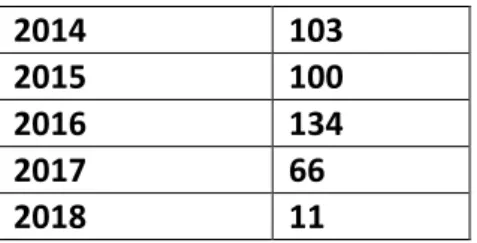
Amongst the medical profession, allied health professions and other disciplines in both the undergraduate and postgraduate education environment, interest in PBL grew and has continued to grow. Evidence of this can be seen by the increase in the number of publications related to PBL in table 1 and figure 1.
35
Table 1. The number of publications on Problem Based Learning 1975-2018 Publication year Number
1975 3 1976 2 1977 2 1978 1 1979 2 1980 1 1981 2 1982 2 1983 2 1984 2 1985 3 1986 4 1987 7 1988 3 1989 8 1990 10 1991 14 1992 17 1993 21 1994 29 1995 32 1996 31 1997 31 1998 45 1999 53 2000 44 2001 47 2002 72 2003 77 2004 92 2005 108 2006 110 2007 97 2008 87 2009 98 2010 85 2011 67 2012 93 2013 81
36 2014 103 2015 100 2016 134 2017 66 2018 11 https://www.ncbi.nlm.nih.gov/pubmed/?term=Problem+Based+Learning+AND+Me dical+Education+AND+Undergraduate updated 30.03.2018
Figure 1. The number of publications on Problem Based Learning 1975-2018
https://www.ncbi.nlm.nih.gov/pubmed/?term=Problem+Based+Learning+AND+Me dical+Education+AND+Undergraduate updated 30.03.2018
Concern about knowledge decay
Howard Barrows, a neurologist working in McMaster’s medical school at the time that the new curriculum was being introduced, was a huge supporter of the new ideas being developed using small group work. It was he who was subsequently
0 20 40 60 80 100 120 140 160 1975 1977 1979 1981 1983 1985 1987 1989 1991 1993 1995 1997 1999 2001 2003 2005 2007 2009 2011 2013 2015 2017 Publication Year
Number of Publications on PBL
37
responsible for much development of PBL and its promotion and popularisation. Barrows’ motivation for the development of PBL was, that he felt students forgot much of what they had learned in the preclinical curriculum by the time they got to the clinical stages of their course. He believed knowledge decay was a problem for students in the traditional undergraduate medical curricula of the day. He states; ‘Students had, for the most part, good techniques in performing a neurological history and physical examination, but they seemed to have a paucity of basic knowledge that they could apply to the medical problem. This seemed paradoxical to me as I had been closely associated with and contributed to the students’ prior courses in neuroanatomy, neurophysiology and clinical neurology. I knew that these students had been exposed to and passed excellent detailed courses (Barrows and Tamblyn 1980 p.ix). In his report, Barrows does not provide data to back his claim but supports his belief by referencing two papers by Miller (Miller 1962). The paper by Miller is not an original research paper; it is a text version of a presentation. David (1999) highlighted that, in the presentation, Miller mentions a study which he claims produces evidence of knowledge decay but does not give details and no reference is given (David 1999). It is not certain where the study was undertaken or where it was published, if indeed it ever was published. The second paper
referenced by Barrows entitled ‘The Contribution of Research in the Learning Process. Medical Education 12(5):28, May 1978’ is not possible to locate and is possibly incorrectly referenced. So, though Barrows’ perception was that there was knowledge decay, we have no firm evidence.
38
PBL as a solution to knowledge decay
Barrows theorised that presentation of a problem, as the starting point of learning, would lead to better medical knowledge retention. He claimed the problem would serve ‘to challenge the learner with patient problems and other problems that will be faced in practice both as a stimulus for learning and a focus for organising what has been learned for later recall and application to future clinical work’ (Barrows 2000 p.3). Barrows backs this claim by drawing on research to explain why starting with a real life problem would help students learn. He quotes a study by Godden and Baddeley that describes improvement in knowledge retention by learning in context, but he does not critically appraise this research (Godden and Baddeley 1975). In the study, divers were asked to learn a list of words on land and underwater. They were assessed in the same environment in which they were taught and in the opposite environment. The authors of this study state that, knowledge recall was better when the divers were assessed in the same location in which they were taught. The conclusion was that recall was better when the assessment took place in the same environment as the learning, though the
difference was recognised to be minor. The study itself was small, hampered by bad weather and relied on simple recall of data. The extent to which this can be
extrapolated to medical education is questionable.
Nevertheless, the implementation of PBL was successful in McMaster’s medical school. The team began to promote their new method and other medical schools
39
adopted PBL. It began to grow in popularity and a new university in Maastricht in the Netherlands was set up in 1976 based entirely on PBL principles.
PBL started to acquire believers in what some have likened to an evangelical manner and it has continued to spread worldwide. John Hamilton, chairman of the MD education committee at McMaster University, came to London in November 1974 to present the McMaster’s curriculum at the Horder memorial lecture at St Bartholomew’s Hospital. The lecture was subsequently published in the British Medical Journal (Hamilton 1976).
The introduction of PBL in the UK; problems with medical
education
PBL was not immediately taken up by medical schools in the UK, but by the 1990s, applications for UK medical schools had dropped and there was concern that increasing numbers of doctors were disillusioned. A television series and
subsequent book ‘Doctors To Be’ (Spindler 1992) described how long hours, low morale and high stress levels were affecting the profession. The undergraduate medical course was cited as contributing to the demoralisation of doctors by failing to prepare them adequately for the realities of professional life’ (Lowry 1992). A series of high profile articles was published in the British Medical Journal which outlined problems in medical education. The first article opened with the statement ‘Something is seriously wrong with medical education in Britain’ (Lowry 1992
40
The overcrowded curriculum
A major concern was that the UK medical undergraduate curriculum had become hugely overloaded. The General Medical Council called for medical schools to reduce factual load (GMC 1993). The GMC is a public body that sets standards for medical schools and postgraduate medical education in the UK. It acts as the overall regulator of medical schools, doctors and standards, but it does not dictate the content of curricula and has no examining powers. The GMC previously made recommendations with regard to undergraduate medical education, but it had resulted in little change in practice (GMC 1957, GMC 1980). The next time however was different. A report was commissioned by the King’s Fund which is an
independent policy institute, part-funded by the NHS and involved with work relating to the health systems in England. It advised that doctors of the future needed to be able to identify their knowledge gaps and be able to direct their own learning to fill these gaps. Flexibility of the curriculum was called for and the old instructive methods were seen as outmoded (Towle 1991). By the late 1990s, in response to these recommendations and growing discontent, UK medical schools were looking for solutions.
PBL as a solution to the overcrowded curriculum
PBL was identified by medical schools as a flexible learning tool to provide a solution to the overcrowded curriculum and it was introduced in the late 1990s by Manchester University and Liverpool University Medical Schools (David 1999), followed by Glasgow University and Imperial College University of London medical schools. Other medical schools followed later but some, notably the older
41
university medical schools (Oxford, Cambridge and UCL), refused to embrace the new ideas.
The profession was split with advocates and opponents of PBL locked in heated debate, and arguments as to whether PBL was better than what had gone before were played out in the medical literature (Albanese and Mitchell 1993, Vernon and Blake 1993, Bligh 1995, Albanese 2000, Colliver 2000, Neville 2009, Schmidt, van der Molen et al. 2009)
Educational theory
Educational theory attempts to explain how we learn. For many years, educational theory had been the domain of psychologists, but the introduction of PBL into the undergraduate medical school curriculum appeared to spark interest amongst the medical profession and discussion of educational philosophies began to appear in the medical literature.
PBL was not actually developed from educational theory. The originators of PBL admitted to having no background in education other than their experience of teaching medical students (Barrows and Tamblyn 1980). Later, Barrows and other advocates considered PBL in relation to several educational theories to both explain how PBL worked and to defend its use (Barrows 2000).
Discussion as a way of teaching
Learning theories that emphasise the importance of self-conceptualisation of knowledge, rather than memorisation of fact, combined with modern access to
42
information, have revolutionised the role of the teacher in the classroom. The teacher’s importance as a source of knowledge has also declined in the western world with widespread access to information through the internet. There are still many facts that a medical student is required to learn, and these are necessary building blocks in order to understand the workings of the human body, but they can be learned in a variety of ways; anatomy for example can be learned in the traditional way – by attending a lecture, reading a book and through dissection, but models and computer aided technologies are now widely available at reasonable cost. In addition, discussion can be used and can help students with conceptual understanding, recall and customary pronunciation of long Latin names.
Other aspects of medicine, for example, ethics, are less precise than anatomy. Patients and doctors will have a range of views which may change and vary according to circumstances. Discussion can help students to consider the wider issues, and help them to appreciate others’ points of view, to enable them to develop their understanding of the concepts and examine their beliefs.
Brookfield’s publication (Brookfield and Preskill 2010) ‘Discussion as a way of teaching’ is a valuable text for university lecturers and provides guidance on how to facilitate discussion to take place between learners. It highlights the difficulties of enabling discussion. The book provides advice on asking the right question in the right way. In the many examples provided however, it is usually assumed that the teacher is knowledgeable about the subject about which the students are learning, and so, they can focus the discussion to areas of importance. Much of the advice is
43
transferable to the PBL setting, but the techniques have some limitation for PBL tutors at Norwich Medical School who must stimulate discussion sometimes without expert knowledge of the study area.
Discovery learning
Barrows can be seen as an early adopter, in medicine, of the ideas of discussion as a way of learning. Barrows related the PBL method to discovery learning which
emphasises the importance of students discovering things for themselves rather than learning by rote (Barrows and Tamblyn 1980). Discovery learning originates from ideas based in constructivism which suggests that learning takes place through a series of active steps by which the learner builds knowledge (Bruner 1961).
Bruner’s work built on ideas promoted by Piaget in the early part of the century who encouraged teachers to consider that learning, especially in childhood, is more effective when engagement in activity is promoted rather than by passive reception of facts (Piaget 2001). Piaget highlighted the need for the learner to develop
interest in a subject and set his or her own learning goals. At a time when most medical schools were delivering large quantities of information by lecture, and assessments were designed to demonstrate accumulation of facts through rote learning, these ideas were innovative.
Self-directed learning and andragogy
Barrows described PBL as a form of self-directed learning. He states, ‘There is an increasing concern that the curricula of many medical schools put too heavy an emphasis on memorization of facts, and little stress on problem-solving or
self-44
directed study skills necessary for the practice of medicine. Problem based, self-directed learning is a teaching-learning method specifically designed to emphasize these skills and to increase the retention of facts and their recall in the clinical situation. This approach, built on research into the problem-solving skills of
physicians and principles of educational psychology, is employed by several medical schools and serves as an antidote to the many educational abuses seen in more traditional approaches’ (Barrows 1983 p3077).
In many publications, self-directed learning and problem based learning are
intertwined (Distlehorst and Barrows 1982). Self-directed learning has been defined as a process in which individuals take the initiative without the help of others in diagnosing their learning needs, formulating goals, identifying human and material resources and evaluating learning outcomes (Knowles 1975). Knowles considered self-directed learning to be a very important component of the way that adults learned. He developed a theory of adult learning that he called ‘andragogy’ to match the childhood learning theory of pedagogy. He suggested there were
differences in the way that adults aged over 18 learned, compared to how children aged under the age of 18 learned (Knowles 1975). He outlined how the principles of adult learning should:
1) Involve the adult in the planning and evaluation of learning,
2) Incorporate their prior experience,
45
4) Be problem focused.
The similarities with these ideas and those of PBL are clear. In more recent years andragogy has been subject to considerable debate. There is a question as to whether there is a difference between how adults and children learn (Hanson 1996). Knowles was in later life to concede that certainly there was no neat age cut-off point at 18 between andragogy and pedagogy (Knowles 1989). Others have gone so far as to say that what Knowles described was closer to good education practice rather than a learning theory at all (Levitt 1979)
Activation elaboration hypothesis
Professor Henk Schmidt, a psychologist, has extensively explored the theoretical underpinnings of PBL. He claims there are specific learning theories to explain how PBL works (Schmidt 1993). Schmidt claims that initial discussion of the PBL problem activates students’ prior knowledge and that this facilitates new knowledge
acquisition. Schmidt draws on his own research and on a range of other relevant research in the field of medicine and in other educational environments to explore the activation elaboration hypothesis. The author’s research involves observation of students in a classroom setting.
Schmidt undertook a series of studies aimed to elucidate the role of prior
knowledge in activation and elaboration in the initial discussion of a problem. He describes how he presented students who had previously studied osmosis with either a) an osmosis related problem called ‘red blood cell problem’, in which students were asked to discuss, for example, why it burst when put into fresh water
46
or b) a problem unrelated to osmosis. He later assessed how well students who had discussed the red blood cell problem remembered facts about osmosis compared with students who had discussed an unrelated problem. He found that students who discussed the red blood cell problem recalled almost twice as many facts about osmosis as those who did not.
There are some issues with the study. We are not told whether the students were matched for prior knowledge of osmosis and Schmidt acknowledges that it is not possible to distinguish activation of prior knowledge from knowledge learnt from other students during the initial discussion.
In another study, two groups of students were asked to observe a video recording of students discussing a problem (Schmidt, De Volder et al. 1989). One group were asked only to observe a video recording. Another group were asked to observe the recording and were prompted to elaborate on the material several times during observation of the video. They found that students who were prompted to elaborate recalled more information later. Again, methodological issues of
matching are not described, but also, the outcomes were not compared with other methods of enhancing knowledge, for example, pre-testing.
What emerged from these studies is that elaboration and verbalisation seem helpful in learning. Knowledge retention appears to be increased by elaboration and verbalisation. This could be created in settings other than PBL of course.
47
between students who had the opportunity to verbalise in PBL with those who had the same opportunity in another learning environment.
In summary, the studies explore verbalisation and elaboration in two settings, but they do not compare these with their use in other learning environments. Further exploration would be needed in other learning environments to explore whether elaboration and verbalisation in PBL had advantage over any other setting.
Situational interest hypothesis
Another explanation for how PBL works is that the PBL group provides motivation that supports cognitive change, and that the presentation of the problem arouses situational interest which drives learning due to the enigmatic nature of the problem (Schmidt 2011).
Interest, or liking and engaging in a cognitive activity plays an important part in the learning process. It determines what we learn, how much we learn and whether we retain the information. Theoretical discussion of the role of ‘interest’ dates back to John Dewey (Dewey 1897). One of the most important findings to emerge was that interest is a multifaceted phenomenon. Interest can be broadly divided into two types: personal interest and situational interest. Personal interest is characterised by intrinsic desire to understand a topic. This persists over time and an individual will carry it with them from place to place. In contrast, situational interest is more transitory. It is environmentally activated and context-specific; it is a
temporary interest that arises spontaneously due to environmental factors such as a task or an engaging text. Situational interest can fade as rapidly as it emerges
48
though so, although personal and situational interest may both affect learning, they probably do so quite differently.
Schmidt outlines a study in which he attempts to measure situational interest (Rotgans and Schmidt 2011). In the study, students were asked to self-evaluate their situational interest and tutors were asked to provide feedback about student engagement at various times throughout the day in a ‘one day’ PBL study day. Situational interest is very difficult to measure, and use of a validated tool is
described. Situational interest was measured five times during the day. It was found to be increased immediately after presentation of the problem, appeared to
decrease throughout the day, but then it was seen to increase again in the reporting phase of PBL (Rotgans and Schmidt 2011).
The authors report that presentation of the problem increased situational interest. Presentation of new material could arouse situational interest in other learning environments too, however. For example, situational interest might increase when a lecturer begins talking, or when students start to learn about a new topic when reading about it in a book. So, we don’t know if presentation of a new topic alone raises situational interest in any context. The study does not explore situational interest in any learning environment other than PBL.
In conclusion, PBL was not developed from educational theory. Several educational theories were applied to PBL laterly to both explain how it works and defend its use. It is not clear whether there is a unique element to make PBL a completely
49
different learning pedagogy, or if it just describes good learning and teaching practice. Many of the elements that can be demonstrated to aid learning in PBL could also aid learning in other learning environments.
The problem as a starting point for learning
The problem as the starting point for learning is a distinctive feature of PBL. A description of PBL in Wikipedia describes it as a student focused pedagogy in which students can learn about a subject through experience of ‘solving an open ended problem found in trigger material’ (Wikipedia). In medicine, however, Wood (2003) disagrees that PBL is about problem solving. She advocates that appropriate
problems are used to increase knowledge and understanding, because presentation of clinical material as the stimulus helps students to understand the relevance better (Wood 2003).
Barrows’ original ideas about the problem were that it would enable students to learn in context to enhance recall of knowledge, to serve as a stimulus for learning, and be a focus for organising what has been learned for later recall and application to future clinical work (Barrows 2000). He also expanded on the role of the problem as a tool to facilitate clinical reasoning and to provide help with motivation and self-directed learning (Barrows 1986). He described how problems could take many forms depending on the desired learning objectives.
Azer (2008) outlined many functions of the PBL problem; helping students with acquisition of a knowledge base that would be easy to retain, development of clinical reasoning and problem-solving skills, development of self-directed learning
50
skills, development of professional attitudes and non-cognitive skills e.g. empathy, communication, and interpretation skills and encouragement of independent and critical thinking.
Schmidt’s take on the function of the problem was that it needed to engage students in discussion, lead to identification of learning issues, and stimulate self-directed study. In order to do this he advised that certain characteristics were important in a problem and that it should be interesting, authentic and adapted to the student’s level of knowledge (Schmidt 2011). Research relating to the content of text-based features that promote situational interest are suggested to be; unexpectedness of information, character identification, activity, coherence and completeness, information complexity, suspense, vividness, imagery and ease of comprehension (Rotgans and Schmidt 2011).
Savin-Baden and Howell Major (2004) highlight the lack of clarity that surrounds the purpose of the problem in PBL in medicine (Savin-Baden and Howell-Major 2004). They question whether we are asking students to solve clinical problems, or to use their experiential and propositional knowledge to manage a case, and whether the problem is simply to trigger to make students to think and identify learning needs, or to provide a context in which to hang information.
The reality is that problems can be designed to do many things as Barrows originally stated. The actual function of each problem will be dependent on the content and the way the problem is set out and structured. In medicine therefore the problem
51
can have a variety of roles; stimulating students to want to learn, helping students develop clinical reasoning skills, activating prior knowledge, serving as a guide to the curriculum and being a focus to trigger discussion. So, the question is, how can we write problems to achieve these goals?
How to write a PBL problem for medicine
Dolman and Snellen-Balendong (1997) explored the theoretical and practice literature relating to the problems in PBL and produced a set of principles for case design (Dolmans, Snellen-Balendong et al. 1997). The authors adopt a positive value stance in relation to the expectation that PBL can be improved by effective case design with the implicit research questions a) to what extent is there evidence based knowledge about effective case design and b) how can this be used to develop principles of effective case design? They harness theoretical ideas about how learning takes place to focus the research question, and they use this as a basis on which to justify the seven principles that they describe for practice.
Principle 1 Prior knowledge: ‘Ensure the content of the case adapts well to student’s prior knowledge because it will help the student mobilise what they already know about the contents of the case. Look at the curricular materials students have been confronted with previously.’
The ideas are theoretically sound but there are difficulties in getting these ideas to work in practice. They suggest that looking at the course materials may be useful, but of course these may or may not relate to what students know, and no
52
an assumption is being made that a student’s prior knowledge will be uniform, but in a group learning process, students will come with varying knowledge. Methods of dealing with the range of student’s prior knowledge within the group are not
addressed. In addition, it does not deal with the idea that medicine may not be a linear subject so that material can be covered in a variety of sequences.
Principle 2 Elaboration: ‘Ensure that the case contains several cues that stimulate discussion and encourage students to search for explanations. The case should however not contain so many cues that the task for the students consists of separating out relevant cues from non-relevant cues. Pointless cues will distract students’. It is claimed that new information will be better understood and recalled if students are stimulated to elaborate on it. The authors describe how elaboration can take different forms: discussion, answering questions, asking critical questions or giving explanations. They suggest that these activities will ‘increase the number of relations between concepts and the number of details in student’s semantic networks and will lead to a sophisticated knowledge structure...’ but we are left to guess how these can be measured. We are not provided with any clear guidance about how to construct cues which may make students elaborate or that would stimulate discussion.
Principle 3 Relevant context: ‘Preferably present a case in a context that is relevant to the future profession or at least show the linkage to the future profession’. The authors state that ‘research on human memory shows that information is better recalled if the context in which the information is applied closely resembles the
53
content in which the information is learned’. They refer to an educational theory that the reason for this is that the knowledge is ’stored in the same cognitive structures.’ They do not give references or any evidence that this is the case. They suggest that this implies students should be ‘exposed to some professionally meaningful problems or situations that have a strong resemblance to the problems they will be confronted with in their future profession’ and conclude that the case should be ‘presented in a context that is relevant’. If we are to fully embrace this, surely it would mean bedside teaching in a hospital ward or general practice would be better rather than a PBL classroom?
Principle 4 Integration of knowledge: ‘Present basic science concepts in the context of a clinical problem’. They suggest there is evidence to show that integration of basic science knowledge and clinical knowledge results in ‘better diagnostic performance’. We are not told how the ‘diagnostic performance’ is measured or how robust the evidence is.
Principle 5 Self-directed learning: ‘Ensure that the case encourages students to generate learning issues and conduct literature searches. This implies that the case should not be too structured. A case that contains specific references that need further explanation or a case containing references to literature providing solutions to the issues raised in the case will not prepare students to become more
accomplished sel