ProQuest Number: 10702939
All rights reserved
INFORMATION TO ALL USERS
The qu ality of this repro d u ctio n is d e p e n d e n t upon the q u ality of the copy subm itted.
In the unlikely e v e n t that the a u th o r did not send a c o m p le te m anuscript and there are missing pages, these will be note d . Also, if m aterial had to be rem oved,
a n o te will in d ica te the deletion.
uest
ProQuest 10702939
Published by ProQuest LLC(2017). C op yrig ht of the Dissertation is held by the Author.
All rights reserved.
This work is protected against unauthorized copying under Title 17, United States C o d e M icroform Edition © ProQuest LLC.
ProQuest LLC.
789 East Eisenhower Parkway P.O. Box 1346
THE FUNCTIONAL ANALYSIS OF SHOE WEAR
PATTERNS: THEORY AND APPLICATION
Denis Wesley Vernon
A thesis submitted in partial fulfilment o f the requirements o f Sheffield Hallam University for the degree o f Doctor o f Philosophy
September 2000
ABSTRACT
Shoe wear patterns have potential value in clinical diagnosis and forensic identification, although they lack rigorous study. Podiatrists have claimed understanding of shoe wear patterns, associating foot pathologies with characteristic patterns and implying a “one- condition, one wear pattern” hypothesis. This project was commenced to understand and clarify this relationship. Round one of an initial Delphi exercise to seek agreements over such wear pattern associations however indicated that, many different patterns could be associated with single named foot pathologies with round three agreements appearing to relate to the most common pattern associations. Analysis o f the patterns in the Delphi exercise produced an instrument to describe and compare shoe wear patterns using focal points - points from which areas of shoe wear would spread.
A following survey questionnaire suggested that podiatrists were most familiar with wear patterns associated with four foot pathologies - pronation, hallux rigidus, pes cavus and rearfoot varus. Patterns associated with these pathologies were collected from U.K. podiatrists in a single round questionnaire. Inductive analysis of these patterns from a hermeneutic phenomenological perspective using the focal point concept suggested that if the pathological context is known, wear patterns could be classified on the basis of
causative function. A theoretical model was proposed of factors important in wear pattern production, suggesting that primary walking intention (the intended walking function of the foot) was more influential than foot pathologies in wear pattern formation and that “external” factors could also influence shoe wear.
Validation and grounding of the focal point concept and model of shoe wear influence was planned, involving paired podiatry observers, to determine whether focal points could clarify, differentiate and show similarities between shoe wear patterns in reality and whether the model of wear influence was justified. To reduce the potential for observer error, two prior exercises were undertaken. A Delphi exercise focused participants on the required task and produced statements for the recognition of variables, which may
influence shoe wear patterns. Inter-observer reliability tests demonstrated that clinical observation agreement levels were acceptable for the validation. In the validation, three subjects exhibiting pathologies, including hallux rigidus, and their owned footwear (22 items) were studied. The presence, level and effect of variables potentially influencing the wear patterns present, were determined by paired observations of foot pathologies, shoe fit and function, video analysis of foot function and subject interview for the footwear history. The focal point concept showed similarities and differences between shoe wear patterns, although wear pattern clarity limitations occurred. Within the pathological context the patterns predicted the related functions. The model of wear influence was supported with external influences needing to be major to override primary walking intention and foot pathology effects.
CONTENTS
Volume 1
Acknowledgements xi
Part 1 Introduction
1.1 The background, history, and potential of shoe wear 4 patterns.
1.2 Methodologies: the natural history and evolution of the 25 project research strategies
Part 2 Preliminary exploration
2.1 Delphi round 1: preliminary findings of non-consensus 40 2.2 Delphi round 2: production of an instrument to describe 50
and compare shoe wear patterns
2.3 Delphi round 3: consensus obtained 60 2.4 Delphi round 4: participant validation 72
Part 3 Further exploration and theory
3.1 Pre- questionnaire survey: a focus for the shoe wear 80 pattern questionnaire
3.2 Shoe wear pattern questionnaire: a theory of shoe wear 91 pattern influence
Part 4 Grounding the theories
4.1 Developing and focusing validation phase participants: 118 pre-validation Delphi rounds
4.2 The diagnostic consistency o f participants: pre- 134 validation inter-observer reliability tests
4.3 Validation: grounding theories of shoe wear pattern 149 influence in the reality of podiatry practice
4.4 Conclusions 174
References 184
CONTENTS - contd.
Volume 2
Illustrations
Diagrams
1 Comparison o f past published wear pattern sketches 198 2 Sequence of progression of the research 199 3 Instrument for the description and comparison of shoe 200
wear patterns
4 Blank outsole outlines which participants provided wear 201 pattern depictions on
5 Example of common wear areas presented by 202 respondents for hallux rigidus
6 Examples of breakdown of patterns into pattern 203 components
7 Similarities observed between the locations of wear 204 pattern components of the shoe outsole
8 Example o f instrument in use with pattern 7 205 9 Collation card used for data analysis 206 10 Factors considered when contemplating functions 207
associated with wear patterns within a known context
11 Basic model o f hierarchical relationship of shoe wear 208 influence
12 Shoe wear pattern influences 209 13 Functions suggested for subjects examined in the 210
validation phase
CONTENTS - contd.
Graphs
1 Face level consensus in Delphi round 2, section 1 213 2 Face level consensus in Delphi round 2, section 214 3 Hidden levels of focal point consensus in Delphi round 215
2, section 1
4 Hidden levels of focal point consensus in Delphi round 218 2, section 2
5 Comparison o f focal point agreements between 219 pathologies common to sections 1 and 2, Delphi round 2 6 Delphi round 3, section 1 face consensus achieved 220 7 Delphi round 3, section 1 - comparison of face level 221
consensus with round 2, section 1
8 Delphi round 3, section 1, focal point consensus 222 9 Delphi round 3, section 2 - face consensus 224 10 Delphi round 3, section 2 - comparison of face level 225
consensus with round 2, section 2
11 Delphi round 3, section 2 - focal point consensus 226 12 Delphi round 3, section 2 - comparison of focal point 227
consensus with round 2, section 2
13 The strength of focal code relationships with 2nd 228 condition, adducted gait
14 The strength of focal code relationships of the four main 229 pathologies
15 Statements with 100% and 0% consensus, pre-validation 230 Delphi rounds 2 - 6
16 Highest levels of consensus reached in pre-validation 231 Delphi round 6 for conditions/states considered
CONTENTS - contd.
Tables
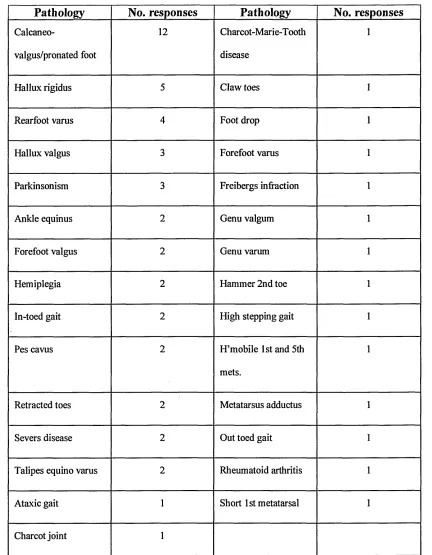
1 Pathologies for which wear patterns were given by 233 Delphi round 1 participants
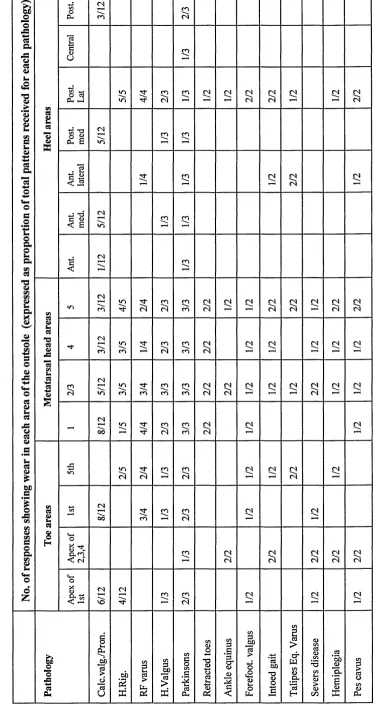
2 Number of responses for each pathology showing wear 234 in specific areas of the outsole
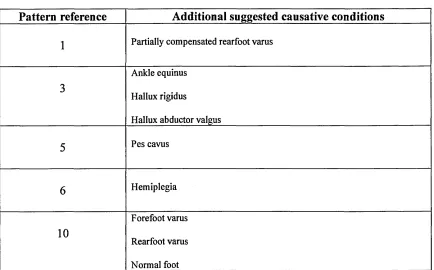
3 Patterns for which additional pathologies were 235 suggested in Delphi round 2
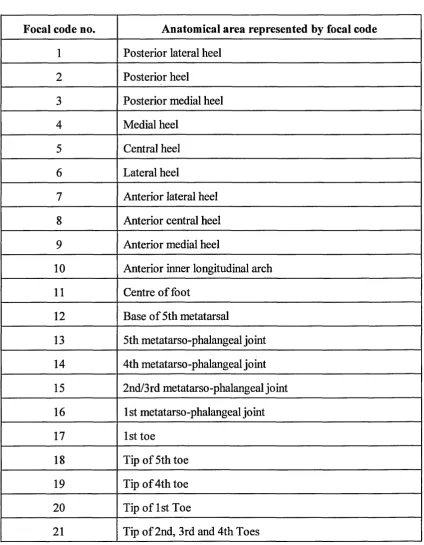
4 Anatomical references for focal codes - the positions 236 from which outsole wear would spread
5 Areas covered by section 1 patterns, Delphi round 2 237 6 Areas covered by section 2 pattern components, Delphi 238
round 2
7 Focal points marked by respondents in Delphi round 3 239 8 Delphi round 4 - respondent comments 240 9 Conditions named by respondents in descending order 241
in the pre-questionnaire survey.
10 Respondent comments analysis from the pre- 242 questionnaire survey
11 Total and mean numbers of patterns given for each 243 pathology in main questionnaire
12 Numbers of named variables given in main 244 questionnaire
13 Functional analysis of data relating to patterns occurring 245 with pronation
14 Functional analysis o f data relating to patterns occurring 246 with hallux rigidus
15 Functional analysis o f data relating to patterns occurring 247 with pes cavus
16 Functional analysis o f data relating to patterns occurring 248 with rearfoot varus
17 Levels of support offered by named variables for 249 function categories suggested with pronation
CONTENTS - contd.
Tables - contd.
18 Levels of support offered by named variables for function categories suggested with hallux rigidus 19 Levels of support offered by named variables for
function categories suggested with pes cavus 20 Levels of support offered by named variables for
function categories suggested with rearfoot varus 21 Named variables repeated across patterns given 22 Number of statements produced in the pre-validation
Delphi round 1
23 Patterns of change for statements overall in pre validation Delphi rounds
24 Interobserver agreement levels achieved for paired observers
25 Levels of agreement achieved by individual podiatrists 26 Classifications given by observers for pronation, pes
planus and reduced arches
27 No. occasions that pronation, pes planus and reduced arches were associated with the same subject, by individual observers
28 Observer pairings to be used in the validation phase o f the project
29 The relationship of the research aims in the validation phase, to the analysis approach adopted
30 Repeated wear pattern focal codes in footwear examined during the validation phase
31 Comparison of level and type of external variables acting on different outsoles of footwear examined 32 Comparison of type of internal variables acting on
different outsoles of footwear examined
33 Comparison of observations with video frame analysis
CONTENTS - contd.
Appendices
1 Papers presented by podiatrists at forensic science 267 conferences
2 Shoe wear and its’ use in diagnosis, 1979: Salford 268 College o f Technology, Northern College of Chiropody - student information sheet
3 Functional possibilities of the foot suggested to occur in 269 association with hallux limitus/hallux rigidus
4 Delphi round 1 package 270 5 Wear patterns for pathologies identified by more than 278
one respondent
6 Delphi Round 2 - Questionnaire package 282 7 Delphi round 3 questionnaire package 291 8 Delphi round 3, - analysis of respondent comments 302
given to justify viewpoints
9 Delphi round 3; marking centres from which wear was 304 spreading - examples of markings which did not comply with the focal point principle
10 Comparison o f agreed pattern associations for hallux 305 rigidus in Delphi round 3, section 1, with previously
published hallux rigidus pattern
11 Delphi round 4 questionnaire package 306 12 Pre-questionnaire survey package 321 13 Main questionnaire package 326 14 Example of inductive analysis o f wear patterns by 332
pathology and pattern form
15 Sample of pattern sub-categories based on focal code 333 descriptions
16 Illustration of hermeneutic circle traced in wear pattern 335 analysis
17 Patterns suggesting more than one function 336 18 Patterns repeated across pathology categories 342
CONTENTS - contd.
Appendices - contd.
19 Functions suggested by patterns with pronation 344 20 Functions suggested by patterns with hallux rigidus 364 21 Functions suggested by patterns with pes cavus 382 22 Functions suggested by patterns with rearfoot varus 404 23 Summary of “named variable” analysis 422 24 Questionnaire to determine criteria to be used as 424
definitions for the inter-observer reliability trial
25 Comparison of agreements achieved in round 6 with 433 previous opinion
26 Forms used for inter observer reliability test 443 27 Calculation o f Cohen’s Kappa to test inter-observer 447
reliability
28 Invitation to participate in the study 450 29 Appointment letter 451 30 Information sheet 452 31 Subject assessment form 453 32 Subject outsole wear patterns with focal codes 456 33 Observer questionnaire to validate video frame 459
descriptions
34 Summary o f observer comments on statements 463 describing the video frame analysis
References 465
Bibliography 478
ACKNOWLEDGEMENTS
Grateful thanks are offered to the following for their invaluable assistance in undertaking and completing the thesis:
Supervisory Team
Professor Anne Parry (Director of studies) Mike Potter
Bunny Le Roux
I have been fortunate to have been granted supervisors of the highest calibre and experience. Their knowledge of research and related health care matters has been inspirational and the empathy and advice given, by all my supervisors has been instrumental in being able to conclude the thesis.
Podiatry advisers
Additional advice and support has been received from expert podiatry colleagues,
particularly Dr. Norman Gunn, the pioneer of forensic podiatry and my forensic podiatry mentor, who along with Dr. John DiMaggio provided valuable advice on this specialty. Dr. Alan Borthwick, gave me valuable insights into using qualitative research techniques and Donald Neale, who unfortunately died before completion of the project kindly provided details of his past experiences in the clinical use of shoe wear patterns.
Forensic Science advisers
examiners from across the world were interested in the work and its’ forensic potential and provided helpful and motivating comments throughout the project.
Workplace colleagues
Much support and help was provided by workplace colleagues several o f whom deserve special mention. Linda Glasby, my past line manager made the necessary arrangements for me to undertake project tasks in work time and gave practical suggestions to ease
completion of the work. My friends and senior colleagues, Jeremy Walker, Lisa Farndon and Ian Atkinson gave me the confidence and practical help to allow optimum research time throughout the project. My secretary Jane Palmer and podiatry colleagues Lisa Shaw and David Thomas, who between them undertook multiple trips to libraries and bookshops to collect or photocopy references which I required, gave additional help to me.
Research participants
The research could not have taken place without the help of podiatrists who participated in various stages of the work. These include those who undertook the initial Delphi exercise, those who responded to the main questionnaire and preceding survey and also the
validation phase participants, all o f whom shared knowledge fundamental to the work.
General support and help
I am grateful to my sister for help in word processing and for providing advice on
presentation of the thesis and to my parents for supporting and believing in me throughout my education. I am grateful to my friends Ken Higginbotham and Rick Jackson, who have helped me with numerous non-research based tasks, allowing me additional time to work on the project.
1.1 THE BACKGROUND, HISTORY,
AND POTENTIAL OF SHOE WEAR
Accumulative summary
Footprints are universally present and shoe outsole wear patterns may be observed in footprint impressions. Outsole wear patterns have potential value in podiatry and forensic investigation, although they have not been fully understood through lack of rigorous study. Podiatrists have believed that wear patterns relate directly to foot pathologies, therefore wear patterns may assist with clinical diagnosis. Forensic podiatry is a new discipline in crime investigation and there is increasing interest in the value of footwear in identification. Improved wear pattern understanding would
1.1: THE BACKGROUND, HISTORY AND POTENTIAL
OF SHOE WEAR PATTERNS
1.11 Introduction to shoe wear patterns
“Nor in this wilderness of peat should one whoop for joy upon coming across footprints, which too often don’t indicate a track, but merely the erratic
wanderings of some unhappy wretch as hopelessly lost as yourself’ (Wainwright, 1968: 163)
Footprints are something which we all leave behind, whoever we are, wherever we go. Although footprints are common to all, they can have significant importance depending on the circumstances in which they occur. Defoe (1719) classically used a footprint to produce a powerful literary impact in Robinson Crusoe and many detective writers including Conan Doyle and P. D. James have used footprints to provide clues pointing to the perpetrators of fictional crimes. Various disciplines have used prints and impressions of many types to classify and identify animals, vehicles, foot types and shoe types. In western society, footwear is usually worn, with the term “shoe-prints” relating to this practice.
Materials of the outsole of footwear are gradually destroyed during use and the
examination of patterns created by this wear was first recorded 85 years ago (Schuster, 1914; 1915). Although Schuster did not suggest patterns which characterised foot pathologies, five years later, Ware (1920) did relate some pattern variations to named foot conditions. Interest in diagnosis through shoe wear patterns peaked in the 1940’s and 1950’s, with several authors including Hanby and Walker (1949), Napier (1957) and Gibbard (1958, a; b) advocating wear pattern interpretation. Minimal reference to wear patterns in podiatric literature during the next 30 years suggests that clinical interest had ceased. Anthropological interest began, however, when Robbins, an American forensic anthropologist published personal footprint and wear pattern theories (Robbins 1978; 1984; 1985; 1986) and began to present shoe wear evidence as forensic evidence in criminal cases (Valmassey, 1982). Robbins’ work was however informally, but publicly discredited as idiosyncratic. Later, Bodziak, a forensic footwear examiner, provided
definitions of wear patterns although he was sceptical about their value:
"Wear on shoe outsoles may be defined as the erosion of the outsole due to frictional and abrasive forces that occur between the outsole and the ground." "The wear pattern or position of wear can be defined as an arrangement or pattern of wear characteristics that stands out against areas of relatively less or greater wear. The wear pattern is largely influenced by the shape, size, bone structure and biomechanics of the wearers feet." (Bodziak, 1990: 305 - 306)
Following Robbins’ errors and Bodziaks’ scepticism, forensic interest in shoe wear patterns rapidly declined. In England, however, Facey, a respected forensic scientist continued to believe that wear patterns would eventually prove to have forensic value, but was unable to demonstrate this personally (Facey, Hannah and Rosen, 1992a; b;
1993). Podiatrists still examine and claim understanding of outsole wear patterns (Gorman, 1997; Anderson and Black, 1998; Hinter) but there is no evidence to justify their claims, despite the increasing application of biomechanical principles in podiatry.
While shoe wear patterns may have several uses in podiatry and forensic identification, through lack of rigorous study they are not yet understood either clinically or
forensically. Bodziak has described shoes as “fascinating items of clothing” (Bodziak, 1990: xv) and outsole wear patterns are one of the most fascinating aspects of shoes. This thesis therefore concerns the interpretation and meaning of the patterns of wear called shoe wear patterns that can be transferred onto supporting surfaces by functional use of the foot.
1.12 The potential value of shoe wear patterns in clinical podiatry
DiMaggio (1995) described a podiatrist as “a specialist who studies foot pathology from a structural and functional standpoint and who treats medical problems dealing with the foot”. The term is formally described as being synonymous with “chiropodist” (Sinclair, 1995). The term “chiropodist” has long since been deleted in the U.S.A. to prevent confusion and this term is expected to soon become obsolete in the U.K., where “podiatrist” is used by those wishing to extend chiropody practice (Tollafield and Dagnall, 1997).
During the course of everyday practice, clinical podiatrists treat soft tissue lesions o f the feet which may have arisen from functional aberrations, structural deformities or
footwear inadequacies. Diagnosis of the underlying cause of these soft tissue lesions is an integral part of modem podiatry practice which now involves problem solving diagnostic skills in addition to the traditional palliative approach once adopted
(Borthwick, 1999). In podiatry, shoe wear patterns may be used to confirm diagnoses apparent through patient examination or to suggest diagnoses not easily arrived at where time is restricted in busy working clinics. Although clinicians use shoe wear in diagnosis, this knowledge has been informal, without research and of uncertain value. Podiatry has now developed the speciality of biomechanics as the “scientific basis” on which the modem day profession is founded.
“The study of biomechanics allows today’s practitioner to understand how and why the mechanical function o f the lower extremity can lead to a wide variety of pathologic conditions. Once today’s practitioners understand the normal and pathologic function of the lower extremities, they may then successfully implement a variety of treatment regimens specifically directed towards improving their patients’ lower extremity mechanical function” (Valmassey, 1995: xv)
The speciality of biomechanics is however complex and requires in-depth diagnostic assessment of the foot from a functional aspect in order to determine the biomechanical abnormalities requiring treatment. This is time consuming and specialist diagnostic equipment has been developed to assist with this process. If shoe wear patterns are “records” of the repetitive function of the foot, they may have the potential to offer functional information to the practitioner which enables greater understanding and improved treatment without recourse to such expensive equipment.
In podiatry teaching, wear pattern knowledge could improve students’ understanding of foot function and the development of pattern interpretation devices may accelerate the recognition and understanding of pathologies. Podiatry (chiropody), being a
comparatively new and underdeveloped profession (Larkin, 1983), lacks a sound research basis. Although knowledge of foot function is fundamental to podiatry, research has focused on normal function. If shoe wear is influenced by amended
function, study of wear may promote greater understanding of pathological function with
the potential for improved approaches to treatment.
1.13 The potential value of shoe wear patterns in forensic identification
Footwear evidence
“It is necessary in almost every criminal investigation to determine and prove through forensic science that a particular person or persons may or may not have been present at the scene of a crime Since criminals must enter and exit crime scene areas, it should be reasonably assumed that they would leave traces of their footwear” (Hilderbrand, 1999: 3-4)
Personal identity is formed from infinite combinations of physical and mental features. As identikit apparatus and genetic fingerprinting show, while no feature is unique to an individual, combinations of features constitute a unique identity. Forensic science seeks to establish the identification of an individual either directly or indirectly with a particular scene of crime. Forensic investigations involve the finding of evidence, the evaluation of that evidence and the comparison o f this unknown item with a known item (belonging to a suspect) with the objective of proving either a match or a mismatch. This demonstrates the presence or absence of the conclusive link sought. When a physical match is made, this can be at two different levels - class and identifying characteristic levels. A class characteristic is a characteristic which all similar items have in common (Bodziak, 1990). They are obvious features which distinguish an object, but which don’t on their own constitute uniqueness. An identifying characteristic is one which represents uniqueness (Bodziak, 1990). The presence of such characteristics can allow an identification to be made with absolute certainty. In terms of footwear evidence, the forensic footwear examiner may be required to analyze and compare footprints, shoeprints or shoes o f unknown origin with those of known origin to seek the required match.
Class characteristics of footwear evidence relate to the dimensions, type, patterns and make of shoes. Shoe outsole wear patterns are currently viewed as class characteristics. In a footwear context, identifying characteristics are the points of minor damage to be found on the outsoles of worn shoes. The probability of two shoes of the same type receiving identical damage of this type is so low as to suggest absolute uniqueness. This uniqueness is expressed in the position, shape, size and orientation of the cuts, nicks,
splits and tears which have formed on the outsole. When the various class and identifying characteristics have been defined on the unknown shoe or print, they can be compared with a known shoe or print. In this, all relevant aspects of footwear belonging to a suspect would be directly compared point by point with the unknown shoe, or print and a conclusion arrived at as to whether these were identical or compatible.
The use of footwear in criminal investigations has become a specialty in its own right, however great reliance is placed on the comparison of accidental damage present on the shoe outsole. As the characteristics that need to be directly compared may be changed or obliterated as the outsole wears, identification depends on finding the footwear item leaving a print as soon as possible after a criminal event. Unlike clinical situations, the forensic investigator may not have access to the wearer and it would be advantageous if conclusions could be drawn from shoes or prints in the absence of those shoes or the wearer. Reliable shoe wear pattern interpretation would not just provide evidence of relationship with a wearer even in his or her absence but, by comparing footwear items for wear compatibility, a suspect might also be connected with a crime scene through his or her other footwear even if the item producing the print had been destroyed.
Conversely, a suspect might be cleared of involvement. Any such shoe wear pattern interpretations must be error-free. If they are not dependable, unsound expert opinion should not be heard in criminal court proceedings.
Forensic podiatry
The potential of an alliance between chiropody problem-solving and footwear evidence in forensic investigation was recognised thirty years ago when Lucock (1967)
demonstrated an approach to comparing footwear to establish common ownership. However, over two decades passed before Nirenburg (1989) suggested that forensic podiatry should be developed as a specialty and still longer before techniques in forensic podiatry appeared in the literature. In 1991, Gunn (1991a; b) reported methods of analysing three-dimensional footprints and in 1994, Vernon reported the results of a preliminary study of the use of podiatry records in forensic investigation. His technique of retrospective analysis of records was subsequently refined by introduction of an ‘identification strength scale’ (Sanger and Vernon, 1997). Since 1994, podiatrists have
presented papers at all annual conferences of the International Association for
Identification (I.A.I.) (Appendix 1!) and a podiatrist wrote a guest editorial (DiMaggio, 1995) for the journal of the I.A.I. in 1995. Kippen (1996) has presented a podiatrist’s view of forensic podiatry as a developing specialty across the globe and Gorman (1997) wrote a promotional article for Podiatry Today explaining the potential benefits of podiatrists’ involvement in forensic investigation. In response to increasing interest, Vernon and McCourt (1999) recently summarised and defined forensic podiatry in the
British Journal o f Podiatry.
Footwear evidence is being seen as having increasing importance in forensic
investigations. The four textbooks devoted to this subject area (Abbott, 1964; Cassidy, 1987; Bodziak, 1990; Hilderbrand, 1999) with an updated edition of Bodziaks’
comprehensive text being anticipated in the near fiiture, are testament to the increasing importance of footwear evidence in forensic investigations. A course of study and certification programme in footwear examination has recently been developed by the I.A.I. to educate investigators in the techniques and maintain high standards of forensic investigation. Footwear evidence was central in the high profile O. J. Simpson trial, with both defence and prosecution presenting evidence to support their cases (Bodziak, 1996). Footwear evidence is therefore highly topical in forensic identification and it is anticipated that such evidence will become widely used through increasing understanding and awareness of its potential. Techniques of identification utilising shoe wear patterns underpinned by podiatric understanding would therefore be both timely and valuable.
1.14 Limitations in shoe wear pattern understanding in podiatry
“While the potential worth of this adjunct to clinical diagnosis is usually admitted, the fact remains that the study of shoe-wear patterns lies somewhere in the limbo between the realms of charlatanism on the one hand and folklore on the other” (Napier, 1957: 145)
Whether foot/gait function can be interpreted through shoe wear is not known although there is a belief that this must be possible. Although some wear patterns have been described and linked to foot pathologies in chiropody literature, the basis of these
suggested relationships is unknown. There is no previous research into wear pattern significance and attempted forensic interpretation has been discredited (Valmassey,
1982). Despite this, podiatrists have believed that wear patterns can be interpreted. Shoe examination is a routine aspect o f podiatry diagnosis (Neale, 1981) with unsubstantiated faith that wear patterns are diagnostic indicators. Wear pattern knowledge is therefore currently informal and acquired through personal experience.
The development of shoe wear pattern use in podiatry
The first records of the use of shoe wear in podiatry literature are provided by Schuster (1914; 1915). In his first paper, Schuster reports the excessive wearing o f an outer border of a shoe due to Mortons’ neuralgia, and in his second paper he recommends the examination of shoes for wear as part of the routine diagnosis of foot conditions. While advocating the examination of footwear for wear variation, he does not suggest any characteristic pattern association with named pathologies. In 1920, Ware elaborated further and associated a limited number of wear variations with named categories of foot condition. He believed that “improper” walking, shoe neglect, ankle rotation and
improperly fitting shoes were the most important factors in causing abnormal outsole wear. No other wear references can be found until 1938, when increased confidence in wear pattern interpretation is expressed by Stamm, an orthopaedic surgeon, who stated that:
“People whose toes are paralysed or deformed do not wear out the sole of their shoes further forward than the line of the metatarsal heads, whereas if the toes are normal, the sole wears out almost evenly all over” (Stamm, 1938: 171-172)
This represented a definite shift towards believing that specific relationships exist between wear patterns and foot conditions. A series of other publications referring to wear patterns followed, with signs of increasing confidence in the relationship of foot pathologies to specific characteristic shoe wear patterns. Gottlieb believed that:
“a mere glance of the sole showing much wear on the lateral surface suffices for diagnosis of hallux rigidus” (Gottlieb, 1939:319)
‘This indicates a belief that examination of shoes permits diagnosis in isolation from the feet that usually wear them. Gottlieb’s view may, however, have been overoptimistic as well as arrogantly expressed. He was writing in a publication for chiropodists in an era when the scope of allied health professions was defined by medicine and their knowledge bases were not deemed to be separate or unique in any way (Parry, 2000). As a medical doctor, he possessed the intuitive knowledge and schemata that Elstein, Shulman and co authors (1979) suggested were the foundation for diagnostic problem solving in
medicine. However, not only did he not have the personal constructs and theories of experienced chiropodists but Vernon and co-authors (1998) have shown that
assumptions about the dependability of intuitive knowledge may itself be dangerous.
A year after Gottlieb’s article, Gordon (1940-1941) described the outer heel and area below the first metatarsal head as the most common places for shoe wear to occur. This suggests that shoes were being examined regularly for wear associations with increasing recognition. Indeed, the use of shoe wear in clinical diagnosis may have had its heyday during the 1940’s and 1950’s with more frequent references to the value of wear and its perceived associations than at any other period. These included the advocation of shoe examination for wear during clinical assessment (Smith, 1942-3; Pickering, 1942-3; Lake, 1943; Le Rossignol, 1949), reports of wear in case study examples (Nield, 1952) and reference to unusual wear in childrens’ shoes leading to advice being sought by concerned parents (Thomas, 1952). Podiatrists began to publish written descriptions (Scholl, 1942) and sketched depictions (Hanby and Walker, 1949; Turchin, 1955; Napier, 1957Gibbard, 1958, a; b;) of specific shoe wear patterns which they linked categorically to named foot pathologies of the normal foot (Diagram 1). This
outpouring implied belief in the hypothesis that “one condition will create one specific shoe wear pattern”. The supposition must be treated sceptically, however. None of these authors’ sketched depictions of wear pattern associations included evidence of
supporting research to underpin the claims made. When these sketches are placed together, variations that emerge imply that more than one pattern form may be associated with any single foot pathology (Diagram 1). By the end of the 1940s, the possibility of a non-pathological influence over shoe wear had also begun to be
considered, with Korn (1949) describing the wear effects of shoes fitted too short or too narrow and Gibbard (1958a) describing wear associated with bad shoe fitting.
The work of Barnett
In 1956, Barnett and co-researchers undertook an experimental study of shoe wear in order to determine whether the assumption that shoes are a reliable means of estimating the effects of locomotor disorder of gait was supported by critical analysis. They concluded that shoe wear could provide reliable information on abnormal gait if all available evidence from the shoe in its entirety is taken into account. Their paper reported observations on 10 case studies involving patients with sciatic nerve lesions. The subjects were examined clinically to determine their lower limb status and their stance phase of gait was assessed with a plastic pedograph. The plastic pedograph consisted of packed vertical perspex rods on a rubber base which were depressed when vertical force was applied. When walked upon, the depressed rods were filmed and each frame converted to a record showing an outline of the shoe sole along with an index of the overlying pressure at that point in time. For each case study, pedograph records and shoe wear were presented diagrammatically along with descriptions of the pressure involved. It allowed sciatic nerve lesions to be described along with detail of shoe appliances used, the frequency of shoe repairs, descriptions of shoe distortions and the presence of major foot pathologies. Although the researchers claimed that the wear patterns correlated well with vertical pressures underfoot, some unexpected wear patterns were seen and possible reasons were suggested for them. While representing the only attempt to study shoe wear patterns to date, Barnett and his co-researchers were hampered by limitations in their knowledge of function and foot pathology as well as the relatively unsophisticated equipment.
The plastic pedograph is now obsolete and Barnett and co-researchers acknowledged the restrictions impeding their investigations of the functional implications of wear. The equipment was only capable of measuring the length of each phase of gait (stance and swing), the duration of weight bearing in stance phase and the intensity of vertical forces during weight bearing. The pedograph did not measure friction or shear or torsion forces under foot, all of which may have affected wear of the outsole. It is not surprising therefore that Barnett and co-researchers (1956) referred to several discrepancies
between pedograph readings of high pressure areas and wear of the associated shoe
outsole, indicating that other factors may have been present of which they remained unaware. In their reported case two, they directly explained a wear area discrepancy as relating to frictional and shearing forces not revealed by the pedograph. In reported case 5, they suggested that poor correlation between pressure and wear may have been due to an out-turned foot indicating again that factors other than vertical force may have been present. They also observed areas of high pressure where excessive wear did not occur in addition to wear occurring where there was minimal pressure - again an indication that pressure may not be the main factor of wear production influence.
Other inadequacies of the pedograph related to poor sensitivity with the team noting that it failed to provide evidence of either scuffing or light pressure ground contact on
occasion. It also appeared to be insensitive to the sites o f pressure focus during stance, recording heavily outlined areas of pressure which may have obscured accuracy.
Consequently, some claimed correlations are dubious because “blanket” vertical pressure patterns may hide the true nature of the forces involved. In this respect, Barnett and co researchers (1956) noted that scrutiny of the shoe outsole was a more sensitive
observation of foot/ground contact than the pedograph.
Despite the discrepancies which occurred between the wear patterns and the pedograph vertical pressure records, Barnett and co-researchers (1956) stated that shoe wear patterns arise from the pressure effect of standing, walking and running. In the absence of more sensitive instrumentation, this statement is not valid. Discrepancies are not explained by the vertical pressure-effect proposal and the non-measured forces (i.e. friction, shear and torsion) may have been present in addition to the vertical pressure noted. The project therefore lacked construct validity in the absence of more sensitive instrumentation or additional evidence (e.g. visual function analysis). The
appropriateness of the instrumentation is further brought into question in their
discussion, where they noted that the gait evaluation systems used were more suitable for research than general clinical use. If gait abnormalities have clinical significance, then factors causing that significance may be more important to study than those without value to the clinician. It is doubtful however, whether more appropriate instrumentation would have been available in 1956, although filmed observations may have been a useful supplement.
Barnett and co-researchers (1956) may have also been limited through a lack of podiatric knowledge. In reported case two, they suggested that a slight passive movement of a stiff hallux may have been responsible for an observed wear pattern. Experience suggests that podiatrists may have given a stiff hallux greater importance and may have interpreted the situation with greater confidence and suggested more positive
conclusions. In the same case, a podiatrist may have related the wear pattern of the right shoe to excessive pronation (flattening of the foot) in light of the pedograph patterns recorded. The presence of a valgus insole with the shoe would support a previous diagnosis o f “valgus foot” - a condition now viewed as representing a state of excessive pronation. While Barnett and co-researchers (1956) stated that all available evidence had been taken into account, details of foot pathologies with the exception of those of a more obvious nature were not stated. All of this incomplete and negative information mitigates against critical examination. In stating that uppers would also need to be considered, this again may indicate that further information was needed in order to critically evaluate the wear patterns, possibly information relating to foot pathologies which would have been understood by podiatrists.
Barnett and co-researchers (1956) made a commendable attempt to demonstrate shoe wear pattern links with abnormal function, but had focused on the vertical pressure aspects of function only. They were restricted by inadequate equipment, lack of podiatric knowledge and the restricted knowledge of function available at the time. Their claimed “striking agreements” between pedograph records and wear were not always justified implying that other factors than vertical pressure may have influenced the wear patterns seen, particularly aspects of function which may have created friction, shear or torsional stress on the outsole. The study was experimental and attempted to show that wear may be useful in diagnosis. The findings, while demonstrating that this may be possible, required further work in order to produce useful conclusions including theories of wear formation. The work also did not clarify whether characteristic wear patterns would be created by specific foot pathologies. Despite this initial research, the work was not followed up by either Barnett and co-researchers, or by podiatrists, who continued to accept the “one condition, one pattern” theory with the suggested non researched wear pattern associations remaining.
Other professions interests in shoe wear patterns
Members of associated medical specialties also believed that shoe wear patterns had diagnostic value. In addition to Stamms’ paper (1938), another orthopaedic surgeon, Du Vries, advised that, during diagnosis, shoes should be examined for wear (Inman, 1973) and Cailliet (1968), a specialist in physical medicine, also referred to the diagnostic value of shoe wear. The value of shoe wear pattern information to physicians was also
referred to by Cavanagh (1980), who outlined major areas of outsole wear in running shoes. Again, none of these other authors offered research data to support the claims made, although Cavanagh had collected numerous running shoes from university students to examine areas of wear and tear throughout the shoes.
Sources of confusion
Despite the claims made for the value of shoe wear patterns in clinical diagnosis, there is considerable doubt about their meaning and usefulness, with disagreements between wear pattern diagrams which have never been resolved. Without evidence or reference to research, podiatrists claimed wear pattern knowledge is without foundation or validity. Far from clarifying the situation for podiatry students, podiatry teaching has added to this confusion. A 1978, student information sheet depicted wear patterns which could be used diagnostically (Appendix 2). This was un-referenced and contained several errors:
• While stating that normal wear affects the posterio-lateral border of the heel, an accompanying diagram showed contradictory posterio-medial heel wear.
• Heel wear diagrams showed central posterior heel wear as normal and posterior- lateral heel wear associated with foot strain.
• Another diagram associated posterior heel wear with foot rigidity.
• The depicted foot strain pattern was described as similar to the hallux rigidus pattern, which deviated from patterns previously published.
During the author's studentship, staff and students did not query these errors; rather acceptance indicated failure to understand fundamental aspects of wear patterns.
Further complications arise from enhancements of understanding of foot function.
Changes in perception have led to deletion of past terminologies describing conditions no longer recognised. Some wear patterns have been associated with such conditions. Turchin (1955 ) described wear related to laterally, medially and biplanar unbalanced feet. Similarly, Ware (1920) referred to arch and ankle weakness as did Scholl (1942) while Hanby and Walker (1949) and Charlesworth (1961) described the weak long arch, all with associated wear patterns. These obsolete terms probably represented a wide spectrum of currently recognised, but differently named pathologies.
Previous shoe wear "experts" had fundamental implied beliefs which remain
unchallenged. The first of these is the hypothesis that one specific condition will create one specific wear pattern (p.l 1). Diagram 1 patterns imply that this is incorrect. Further doubt is suggested by recent functional considerations of hallux rigidus. Root and co authors (1977) suggested only one functioning mechanism for hallux rigidus requiring the distal phalanx of the hallux to hyperextend to compensate for limited 1st toe dorsiflexion. Neale (1981) supported this view, while also noting that the foot may supinate to partially compensate. Dananberg (1986; 1993) and Rzonka and co-authors (1984) however suggested that hallux rigidus may present with other compensatory functioning. Through a correspondence column, Sherman (1993) stated that his experience supported this notion. If these suggestions are correct, then the “one condition, one pattern” belief may not be. Between them, Dananberg , Sherman and Rzonka and co-authors suggested eight alternative methods of functioning with hallux rigidus (Appendix 3). If shoe wear can be affected by gait function as suggested by Barnett and co-authors (1956), then at least eight different forms of wear pattern would be anticipated in association with hallux rigidus assuming that shoe fitting variables were not having additional effects.
Summary
Shoe wear patterns may have diagnostic use, but while ultimately this may be possible, the discrepancies, errors, possible unappreciated compensations of named pathologies and lack of research indicate that such diagnoses cannot yet be made reliably. These
concerns must be addressed before diagnostic claims can be justified. There is also a long standing belief that wear pattern interpretation cannot be used in isolation (Ware,
1920), contradicting other claims made or implied by published pattern depiction. Again, lack of clear understanding may be responsible for this contradiction and research into shoe wear patterns may make isolated pattern interpretation possible.
Over the past 30 years, podiatry interest in shoe wear patterns has diminished. With the exception of forensic podiatry articles and wear references in Neales’ text, shoe wear patterns have not been referred to in podiatry literature during this time. Interest in shoe wear patterns in forensic science however began in the 1980’s.
1.15 Past problems with the attempted forensic use of shoe wear
patterns
Early forensic considerations of shoe wear patterns
Major problems have occurred with attempted forensic shoe wear interpretation. Forensic use of wear patterns was first mentioned in 1920 by Gerard, who considered possibilities for utilising the foot in criminal investigation. This included wear
assessment, deductions from shoe type and repair and psychological interpretations (e.g. determination, curiosity, cynicism and sarcasm) from gait patterns. No supportive research was offered however.
Until the 1980's shoe wear patterns had minimal use as forensic evidence. Only one example can be found where shoe wear patterns provided evidence in a burglary trial (Smith, 1959). The whole shoe was available as evidence however with gross foot pathologies identifiable (i.e. leg length discrepancy, "withered foot" and overlying 4th toe). The wear pattern interpretation in this case may have been incorrect. It was assumed that heavier right sole wear showed that most bodyweight was borne by that leg. Heavier wear, however, may have had other causes, (i.e. pathologies which increase wear through shearing stress and not simply from greater weight bearing on that side). Lucocks’ approach (1967) to comparing footwear for signs of common ownership included the presentation of depictions of “classic” wear pattern associations said to be a
feature helpful in this type of comparison. There is no indication however that Lucock had ever undertaken actual case work using these techniques and no evidence of underpinning research to support his paper.
The Robbins’ controversy
In the 1980's, forensic anthropologist, Dr. Louise Robbins began to present shoe wear as evidence in U.S.A. courts. Robbins had an interest in footprints and had studied ancient footprints anthropologically, developing measurement systems for bare feet. Robbins published papers (1978; 1984; 1986) and a textbook (1985) on footprints which included wear pattern interpretation. This work, which is the only recorded attempt to explain shoe wear pattern formation, however, was flawed, causing serious problems in forensic investigations (Bodziak, 1994). In 1981, Robbins perceptions were successfully challenged in court by two podiatrists (Valmassey, 1982). A logical and informed
argument based on knowledge of foot function refuted Robbins work and highlighted errors in Robbins' testimony which demonstrated basic misunderstandings in knowledge of the foot. Later, other evidence provided by Robbins was re-examined and found to reflect the same misconceptions.
To understand Robbins' mistakes, it is necessary to refer to her book Footprints: their collection, analysis and interpretation (1985) which states her beliefs and philosophies with regard to shoes and prints. As an anthropologist, Robbins understood anatomy and structure but not foot function and dynamics. This is reflected in Robbins’ bibliography. By 1985 there had been many examples of observational and instrument based research into foot function, several being recent (Murray et. al., 1970; Viladot, 1973; Klenerman, 1976; Stokes et. al., 1979; Gibbs and Boxer, 1982). Of 60 publications in Robbins’ bibliography, none of these fundamental papers were recorded. This was a serious omission. Only eight bibliographic items related to foot function/gait and all but one were out-dated. Robbins’ work therefore did not reflect current theories which were supported by new technologies. A bibliography relating to work on wear patterns would require an emphasis on functional texts and this is not the case. Failure to consider function indicates failure to understand the nature of shoe wear patterns. Robbins' bibliography mostly contains anatomical and anthropological references, seeming to
imply a belief that wear patterns are purely morphological and anatomical reflections of the foot.
Of equal concern is the absence of a reference section in the book, with a bibliography only being published. The information contained is not referenced and had not been researched. The information therefore can only be viewed as unsubstantiated opinion. Robbins alludes to shoe wear impressions being produced by downward force or pressure, stating that wear patterns correspond to specific downward pressure sites. Although Barnett and co-authors (1956) also believed in a connection between vertical pressure and wear, they did not always take this literally and justified non-correlations in terms of the laws of physics and the suspected presence of other forces. Force plate findings have repeatedly shown that in normal walking, maximum load of downward pressure occurs at 15% of the walking cycle when it exceeds body weight by 10-20% and at 45% of the walking cycle when it exceeds body weight by 25% (Root et. al.,
1977; Klenerman, 1976; Lord et. al., 1986). These points occur just before mid stance and at toe off (Neale, 1981). If Robbins' assertions were correct, the heaviest wear areas of a normally functioning foot would relate to these peaks of pressure. Observations of worn shoes have not supported this notion. Davis and DeHaan (1977) examined 650 pairs of used footwear and found that the "outside rear comer of the heel edge" was the most frequently worn section of the shoe. Lucock (1967) suggested that a "normal” wear pattern shows marked wear at the posterior-lateral heel edge and under the “big and little toe” joints. This contradicts Robbins' theory which would place the heaviest wear at the front of the heel unit and across the area corresponding to all toes for the toe-off component of the stance phase. Robbins however notes that severe wear is to be found at the heel area corresponding with initial heel strike. Following her argument that the amount of downward pressure controls the amount of wear, this implies a belief that maximum loading occurs at heel strike - a belief contrary to research findings
(Klenerman, 1976; Betts et. al., 1980; Lord et. al., 1986).
Robbins does not consider the effects of acceleration, deceleration, shear, inversion, eversion and torsional movements of the foot as wear influences. The triplanar
movements of the foot are therefore replaced by a two dimensional view of foot function with unavoidable incorrect assumptions on wear. This lack of understanding is reflected
in Robbins’ terminology. There are differing views on biomechanical terminology of the foot which lacks universally accepted systems of nomenclature and has misinterpretation potential (Wall et. al., 1987). Robbins however ignored all such terminologies in favour of her own. In abandoning these terms there has been failure to appreciate their
meaning. Pronation is described as " a dropping of the inner side of the foot" - a simplistic and inaccurate description of a complex foot pathology. Anatomical location terms of anterior, posterior, medial and lateral are deleted and the terms front, rear, inner and outer substituted, again reflecting insufficient understanding.
Robbins also stated that footwear will not influence foot function. This contradicts Viladots' kinematic, cinemaradiographic and radiographic evidence (1992). Failure to appreciate variable effects of footwear could lead to incorrect interpretations being placed on foot function when attempting to match shod and unshod feet forensically.
Robbins’ attempt to understand, interpret and explain shoe wear patterns is flawed with a number of major errors made. Like Gottlieb (1939), Robbins lacked the professional background to understand foot function and this inadequacy was not addressed by
research and supportive reading, which undoubtedly caused her downfall in the American courts.
1.16 Continued forensic attempts to understand shoe wear patterns
There has since been a general mistrust of forensic wear pattern interpretation. This is reflected by Bodziak in stating that while few studies have been carried out on wear patterns:
"It should be emphasised that, just as in a direct comparison of wear
characteristics with the shoes believed to have made those impressions, wear characteristics do not alone constitute a basis for positive identification. To attempt to reach an opinion using this kind of comparison is extremely dangerous and can easily result in mistaken identification or mistaken nonidentification." (Bodziak, 1991: 330)
Bodziak considered that wear patterns have too many variable influences to provide firm conclusions from wear alone, supporting Ware's earlier comments (1920). Forensic
interpretation of shoe wear patterns has remained elusive to date.
Other forensic scientists have attempted to understand wear patterns. Davis and DeHaan's survey (1977) noted that wear patterns differed widely, but in using footwear donated to charity, could not examine the shoe owners for comparison. In surveying 97 shoes, Cassidy (1987) noted that wear varied, but restricted examination to the heel only. In a second survey of 60 shoes, only two similar wear patterns were found. Cassidy also advised that footwear observation should not be based on general wear alone. As with Davis and DeHaan, there was no attempt to compare wear with the shoe owners foot/gait status.
Subsequent attempts to understand shoe wear patterns have been restricted to the U.K.
"It has long been thought that the information about an individual is contained in the shape and position of the general shoe-wear apparent on the shoe sole” (Facey et. al., 1992a: 16).
While acknowledging the above statement, Facey and co-researchers used a dynamic pedobarograph to compare foot to ground pressure with general shoe wear. Along with two follow-up studies (1992b; 1993), Facey and co-researchers attempted to produce a quantitative method of wear pattern analysis and comparison. While noting that subjects could be differentiated using pedobarograph imagery, an analysis and comparison
method was not found. The need for such a system remains.
1.17 Summary - The value of wear pattern description, understanding
and interpretation
The reporting of personal wear pattern experiences in podiatry literature is not adequate to justify the forensic usage of shoe wear patterns in identification. Discrepancies noted preclude their use until they are fully understood or resolved. Research demonstrating the interpretation and meaning of wear patterns or proving that variables confound interpretative meaning would benefit both clinicians and forensic scientists. The production of descriptive and comparison systems would help forensic scientists who could then use wear patterns in routine shoe and shoeprint examinations instead of
ignoring them through lack of knowledge. Although podiatrists have claimed wear pattern understanding, discrepancies exist indicating that such understanding is not justified. Podiatry has no research base of wear pattern interpretation and forensic
science investigations have not yet produced understanding of wear patterns and their interpretation. Forensic anthropology claims on wear pattern interpretation have been discredited.
If a method of describing and interpreting or explaining wear patterns can be
produced or if the link between functioning and wear can be explained, this new
and original knowledge will benefit both podiatry practice and forensic
identification.
1.2 METHODOLOGIES: THE
NATURAL HISTORY AND
EVOLUTION OF THE PROJECT
Accumulative summary
An introduction is given to the philosophy, methodologies and methods adopted in the project. From setting out to elucidate an implied “one condition, one pathology” theory, an initial Delphi study unexpectedly disproved this position,. A hermeneutic
phenomenological position was adopted to understand a situation where multiple patterns apparently existed with single pathological conditions. A descriptive instrument was produced using qualitative analysis and a following focused survey captured a wide range of patterns for analysis within the context of associated pathology. This analysis produced a basic model to explain wear pattern influence. Case study methodology involving paired clinical observers and semi-structured
1.2 METHODOLOGIES: THE NATURAL HISTORY AND
EVOLUTION OF THE PROJECT RESEARCH
STRATEGIES
1.21 The project overview
The broad sequence of progression involved three distinct phases of research (Diagram 2). These were:
Phase one. This phase sought agreement about associations between characteristic shoe wear patterns and foot pathologies. Importantly and unexpectedly, wide ranges of associated patterns were revealed rather than the single characteristic pattern forms anticipated with single foot pathologies. At the same time, a useful instrumental means of comparing these patterns emerged.
Phase two. The second phase sought to understand and explain the reasons for such variations. In the process, a basic theoretical model of wear pattern influence was developed.
Phase three. The final phase validated the pattern comparison instrument and model o f influence, which facilitated expansion of the theory and empirical grounding of the study. The overall research strategy was qualitative with a variety of methods and techniques chosen and used from a hermeneutic phenomenological perspective.
1.22 The qualitative approach to the research
The original aim of the project was to elucidate wear patterns and confirm the “one condition, one wear pattern” hypothesis. It was envisaged that the process would create and evaluate an instrument to describe and interpret shoe wear patterns. An
experimental approach that required deliberate manipulation of foot function in order to determine the effects of wear was considered and rejected. According to Bevans (1992), during normal gait the foot is slightly supinated (inverted) at the end of the swing phase of gait, pronates (everts) as the heel makes contact with the ground and then supinates again. That is, when viewed from the rear, the foot rotates anti-clockwise about its long axis from the heel to the second toe as the heel strikes then rotates clockwise as weight is transferred from the heel to the toes with complex movements of the small joints o f
the foot throughout. On consideration, it was judged that altering foot function
artificially would not replicate the structural and functional states of the complex joint relationships caused by foot pathologies and other physical attributes. Therefore, experimental observations would not reflect “real” wear patterns. Additionally, despite the “one condition, one wear pattern”’ hypothesis, review of the literature showed that published associations between pathologies and patterns were both limited and
unsubstantiated and that there was no firm theoretical framework for hypothesis formulation. Morse and Field (1996) stated that a qualitative approach is appropriate when little is known about a phenomenon. This was adopted and hypotheses and theories were inductively derived as the study progressed.
1.23 Phase 1: Description
Consensus methodology: an attempt to elucidate and confirm the “one condition, one wear pattern” theory of shoe wear
Although formal wear pattern knowledge is limited, podiatrists are taught to use shoe wear patterns in clinical diagnosis (Anderson and Black, 1998) and some knowledge is codified in handouts. (Appendix 2). It can be assumed that this knowledge is extended and changed by experience. In particular, ‘knowing how’ is non-propositional
knowledge acquired by practitioners through practice and experience (Ryle, 1949). It constantly evolves through experiential learning but does not require the knower to articulate underlying personal theories. Polyani (1967) invented the term “tacit
knowledge” to describe that which people know but cannot tell; and Eraut (1994; p. 15) asserts that “people do not know what they know”. He also discusses (p.49) the
intuitive capacity of professionals to digest, distil and select from previous experience. According to Parry and Stone (1991), this intuitive knowledge is a combination of logic and heuristics, tricks of the trade, rules of thumb, and the ability to reason from partial knowledge and to make reasonable guesses. Higgs and Titchen (1995) refer to health practitioners’ theories- in-use which allow them to interpret incomplete and ambiguous data and identify implications that are not directly deducible from explicit data. There is therefore evidence that podiatrists are taught to use wear patterns. Furthermore, theories of professional knowledge development suggest that this basic knowledge may be refined and developed with experience although difficulties may arise in conveying
this knowledge to others. This may explain why such knowledge has remained
informal. In the absence of formal wear pattern knowledge, an approach which utilised this potential informal knowledge resource was appropriate. At the same time,
published inconsistencies relating to wear patterns needed to be resolved. Such an approach was expected to elucidate and confirm the “one condition, one wear pattern” hypothesis of shoe wear and in doing so, lead to a database of characteristic wear pattern associations with named foot pathologies.
“The focus of consensus methods lies where unanimity of opinion does not exist owing to lack of scientific evidence or where there is contradictory evidence on an issue. The methods attempt to assess the extent of agreement (consensus measurement) and to resolve disagreement (consensus development)” (Jones and Hunter, 1995)
This description of consensual methodology suggested that such methods would address the research requirements stated above. Consensus methods have become widely used in health and medicine (Fink et. al., 1984). They use the insights of appropriate experts (Jones and Hunter, 1995) and follow a structured process to collect and analyse
information provided by participants in order to produce immediate solutions to problems (Fink et. al., 1984). Consensus methods include the Delphi technique, the nominal group technique, the consensus development conference, National Institute of Health (NIH) consensus development and Glasers’ state-of-the-Art approach, all of which were considered as the method to be utilised. All these consensus techniques involve a structured approach to communication between a group of experts.
The Delphi technique involves several rounds of questionnaire distributed to a group of selected experts. It is widely used in health and enables widely distributed participants to be involved cheaply and anonymously, therefore allowing uninhibited response. The nominal group technique is a facilitated, structured meeting of experts with two rounds of rating and discussion of considered items (Jones and Hunter, 1995). While the technique is similar to Delphi, it does not offer any advantages, while involving much greater expense and the logistical problems of arranging a meeting of geographically dispersed experts. The face to face group nature of this technique may also be potentially inhibiting to some participants. Glasers state-of-the-Art approach, a variation on the nominal group technique, is idiosyncratic to Glaser and its’ applicability to fields outside his own specialty of chronic obstructive pulmonary
disease has not been evaluated (Fink et. al., 1984). The NIH consensus development is an in-house technique used to evaluate new health techniques (Fink et. al., 1984). It has been developed for a specific purpose requiring the resources of the NIH and is
therefore not available or appropriate externally. Similarly, the consensus development conference is usually operated within defined programmes and requires resources prohibitory to researchers (Jones and Hunter, 1995). The method selected was therefore the Delphi technique which could potentially address the research requirement, while allowing practical, cost-effective access to busy practitioners and respecting their anonymity.
The Delphi technique
The Delphi technique was first devised by Dalkey and associates of the RAND
Corporation in the early 1950’s, but had been previously suggested as a method by both Whitehead and Churchman (Grant and Kinney, 1992). RAND developed the technique to obtain the most reliable consensus of a group of experts for nuclear strike prediction purposes (Everett, 1993). The technique has since been adopted by other disciplines and has been used in nursing since 1975. While many health professionals now use the Delphi technique, there have only been two previously reported uses of Delphi in podiatry (Ashford, 1991; Wood and Wayne, 1981). Linstone and Turoff define the technique as:
“a method for structuring a groups’ communication process so that the process is effective in allowing a group of individuals as a whole, to deal with a complex problem” (Linstone and Turoff, 1975: 3)
Several rounds of questionnaire are involved, all being completed by the same group of experts. Delphi characteristics include anonymity, feedback, statistical group response (Dalkey, 1967), use of informed respondents (Miles-Tapping et. al., 1990) and group consensus (Grant and Kinney, 1992). As podiatry shoe wear pattern knowledge may have been limited even in an expert group, anonymity and the expert group focus were seen to be valuable characteristics for this project. Williams and Webb (1994) attribute a wide range o f additional strengths to the techniques including equal weighting of responses, wide access to experts, time efficiency, inexpensive to perform, early production of overview and flexibility. The Delphi technique was appropriate to
obtaining a consensus of opinion about characteristic wear patterns associated with foot pathologies that would have been difficult to obtain by alternative means due to the practicalities of arranging a clinical expert group meeting. Linstone and Turoff (1975) also stressed that Delphi disagreements may be important and should not be overlooked in favour of achieving consensus. Although unexpected, divergent viewpoints
encountered in this study were the most valuable Delphi product. During
implementation, Delphi was also found to be a useful learning and focusing tool and it was used again for these purposes prior to the validation stage of the research to prepare podiatrists for optimal participation.
1.24 Phase 2: Interpretation
Hermeneutic Phenomenology: a strategy to understand the cryptic message of
diverse wear pattern associations
The wide range of patterns produced for single named pathologies in round 1 of the Delphi exercise was a startling phenomenonon that challenged podiatrists’ claim that they understood shoe wear patterns. This in turn discredited the “one pathology, one wear pattern” hypothesis and demanded a new approach. Initially, Glaser and Strauss’s grounded theorising appeared to offer the most appropriate strategy for achieving a conceptually dense theory of shoe wear patterns in the presence of such diverse pattern forms, but it lacked the contextual elements required to achieve understanding of the phenomenon through interpretation. While phenomenology is concerned with description (Jasper, 1994; Koch, 1995), hermeneutics relates to the principles of interpretation and explanation (Palmer, 1969). The approach adopted here was analagous to the classic meaning of phenomenology and hermeneutics. Two different stages in achieving understanding are reflected here - description followed by
explanation. The descriptive ins