Original Article
Lichen extracts regulate the
expression of BMP7 via miR-194-5p
targeting to decrease the risk atrial fibrillation
Kailin Zhao1*, Liyun Xiao2*, Meili Zhao2, Changjian Ji2
1Department of Cardiology, Yantai Yeda Hospital, Shandong, China; 2Department of Cardiology, Jinxiang People’s
Hospital Affiliated to Jining Medical School, Shandong, China. *Equal contributors and co-first authors. Received December 8, 201; Accepted January 20, 2017; Epub August 1, 2017; Published August 15, 2017
Abstract: Background: Atrial fibrillation (AF), the most common cardiac supraventricular arrhythmia, affects more than 5 million people worldwide. Increasing evidence has demonstrated that genetic factors play an important role in the pathogenesis of AF, and multiple genes responsible for AF have been identified. A better understanding of the genetic mechanism underlying AF would be expected to lead to more accurate risk stratification of AF and op-timal clinical treatment strategies. Methods: Immunofluorescence staining was performed to find the components which would have effects on the H9c2 cells development. The changes of BMP7 and miR-194-5p expressions were detected before and after Human Cardiac Myocytes (HCM) were treated with Lichen extraction. In order to confirm whether Lichen could increase the expression of BMP7 through inhibiting the expression of miR-194-5p, the mRNA levels of BMP7 and miR-194-5p were determined in HCM before and after the treatment of Lichen on the condi-tions that miR-194-5p was over-expressed or not. Results: After 48 hours’ treatment with 20 µg/mL Lichen extracts, the Collagen I expression level significantly decreased. The expressions of several genes in H9c2 cells could were changed after the treatment of Lichen extracts and some mRNA of them could also be targeted by miR-194-5p including BMP7. Lichen could depress the expression of miR-194-5p in HCM no matter miR-194-5p was overex-pressed or not and correspondingly, the expression of BMP7 could be increased in both conditions. Conclusions: It is indicated that Lichen extracts could regulate the expression of atrial fibrillation-associated genes via miR-194-5a targeting.
Keywords: Atrial fibrillation, lichen, BMP7, miR-194-5p, traditional Chinese herbal preparation
Introduction
Atrial fibrillation (AF) is the most common car -diac supraventricular arrhythmia with the prev-alence increasing markedly with age, which ranges from approximately 1% in general popu -lation to 10% in those aged over 75 years old [1]. The morbidity of AF is estimated to increase five-fold by 2050 along with the accelerating aging population [2]. The presence of atrial fibrillation can cause serious complications and can independently increase the risk of mortality and morbidity of patients [3]. Atrial fibrillation confers a five-fold increase in the risk of stroke and approximately doubles mor -tality, resulting in a major financial burden to patients and healthcare systems [4]. Generally, AF is known as a common complication in vari
-ous cardiac and systemic disorders. While in some cases, AF can also exist in the absence of predisposing factors and is defined as lone AF [5].
other disorders. Recent data have shown that almost all sodium channel genes and potassi-um channel genes are involved in the develop-ment of AF [7]. Makiyama. et al revealed that the SCN5A mutation P.M1875T which displays a gain-of-function modulation of cardiac Na+ channels is associated with familial AF, it also provided us a novel mechanism that predispos-es to increased atrial excitability and familial AF [8, 9]. KCNA5 encodesa member of the potas -sium channel producing ultra-rapid delayed rectifier potassium current, on which locus mutations can result in a loss-of-function effect on potassium current and eventually lead to AF [10-12]. However, as we all know that the mech -anisms of AF are complex, and the mainte -nance of sinus rhythm after pharmacological or interventional treatments remains very challenging.
In this case, if we could find some chemical components which canalter expression levels of the AF-related genes resulting in the sup -pression of AF [13-16], it will be an important step forward to cure AF and relieve the pain that the patients suffer from. In this study, we tried to screen out some chemical components from traditionalChinese herbal preparation which have some effects on regulating the expression of some AF-related genes. Bmp7, Lox, Mmp3, Mmp8, Mmp9, Serpine I, Acta2, Ctgf, Grem1, Col1a2, and Col3a1 were choos -ed for their report-ed functions in AF. BMP7 encodes bone morphogenetic protein 7, which plays a key role in the transformation of mesen -chymal cells into bone and cartilage. It has been reported that it could inhibit the fibrosis of heart and kidney [17].
Lectin-like oxidized low density lipoprotein receptor-1 (LOX-1) has the synergistic effect with TGF-β1 in myocardial fibrosis and Increased expression of LOX has been observed in left atria of patients with AF [18, 19]. MMPs has been reported to correlate with human AF [20]. Patients with AF always have higher Serpine I levels which is implicated in the development of atrial fibrillation. Elevated levels of Serpine independently predict development of AF after cardiac surgery as well [21, 22]. Acta2, also known as α-SMA, is a major constituent of the contractile apparatus and has a positive corre-lation with fibrosis [23]. CTGF, also called CCN2 or connective tissue growth factor, plays an important role in fibrotic diseases, whose
over-expression could promote fibrosis in human [24-26]. Grem1 is the antagonist of bone mor -phogenetic proteins (BMPs) which could inhibit BMP-2, BMP-4, and BMP-7 in the TGF beta sig -naling pathway, so that it could accelerate organ fibrosis [27-29]. Collagen alpha-2 (I) chain (COL1A2) is one of the chains for type I colla -gen, the fibrillar collagen which has a positive correlation with human organ fibrosis [30, 31]. COL3A1 is a fibrillar collagen that is always related to type I collagen [32].
Some of the herbal preparations are usually used to treat systemic disorders or valvar heart disease, as we all know that valvar heart dis-ease, hypertension, ischemic heart disease and hyperthyroidism are the most common causal risk factors of atrial fibrillation [33, 34]. Furthermore, we found that aftertreating the H9c2 cells with Lichen extracts for 48 hours, the chosen AF-related genesin H9c2 cell lines were significantly changed compared with untreated cells and the cells treated with other extracts or chemical components. It was noted that the expression of BMP7 was obviously upregulated in both levels of mRNA and pro -tein. It has been speculated that the mRNA of BMP7 is the target of miR-194-5p which is always upregulated in the patients with heart failure (HF) after acute myocardial infarction (AMI) [35, 36]. While it has been displayed that AF is bidirectional associated with AMI, which means the risk of AF could be bigger when the risk of AMI is bigger [37-40]. According to this, we hypothesized that in patients with AF, BMP7 was inhibited by overexpressed miR-194-5p to lead to fibrosis, then promoted the progress of AF. In order to prove it, we treated human car -diac myocytes (HCM) with Lichen extracts and performed luciferase assay to reveal the mech -anism underlying the inhibition of AF through regulating miR-194-5p or BMP7.
Materials and methods
Cell culture and reagents
Table 1. Dosing sequence and drug concentration per well
H9c2 Dosing sequence\drug concentration per well 20 μg/ml
1 2 3 4 5 6 7 8
A Emodin Lichen Gegen flavonoids Juncus roemerianus Cardamun Lyciumbarbarum Salvia miltiorrhiza Fenugreek
B Baicalin Salviae miltiorrhizae Puerarin Chrysin Tetrandrine Baicalein Glycyrrhizic acid Atractylodes C Pachyman Rhodioloside Clove Formononetin Artichoke Angelica sinensis Sennoside Salt black bean
D Tribulus terrestris saponins Ligustilide Kudzu Semen plantaginis Nutmeg 2 Resveratrol Spinach Garlic Polysaccharide
mM), non-essential amino acids [1% (v/v)] and gentamicin (100 mg/l) under an atmosphere of 5% CO2 in air saturated with water vapors at 37°C. The medium was replaced every 2 days. Cells were grown to confluence as monolayers and were split by treatment with trypsin. Stock solutions of (-)-isoproterenol, (-)-propranolol and dexamethasone were prepared in water and then diluted directly in DMEM. Untreated cells used as control were grown in the same DMEM to which only water was added.
Immunofluorescence staining
Cells were divided into the following treatment groups (n=10 wells): 1) Rabbit anti-collagen I antibody (1:200 dilution; Catalog Number: Ab6308; Abcam); 2) Rabbit α-actinine antibody (1:400 dilution); 3) 10 mM PBS (control). The cells were cultured for 48 h, fixed in 4% parafor -maldehyde, and blocked with goat serum. They were then incubated with the above-mentioned primary antibodies for 1 h and fixed at 4°C in a wet box overnight. Cells incubated with 10 mM
PBS served as the control for the antibody staining. Next, the cells were treated with FITC-labeled goat anti-rabbit IgG (1:100 dilution, Catalog Number: 28176-05-FITC; Seebio), incu -bated at room temperature in a wet box for 1 hour, and stained in 0.5 μg/mL DAPI solution for 1 min. After washing the cells with PBS, five visual fields in each slide were randomly select -ed under a fluorescence microscope (400× magnification) and observed. The images were processed using the Image-Pro plus 6.0 (Media Cybernetics, USA) Image Processing Software to obtain the absorbance values at the same time of exposure. All the experiments were per -formed in the same condition for at least three individual repeats.
Q-PCR analysis
Total RNA from H9c2 cells was extracted by binding to a silica-based membrane using a microspin column technique according to the manufacturer’s protocol (Catalog. Number: 15596-026; Invitrogen TRIZOL® Reagent). Remaining traces of DNA were digested in a total volume of 100 µl with 10 units of DNaseI (FPLCpure, Pharmacia, Freiburg, Germany) in a buffer containing 10 mM Tris/HCl/10 mM MgCl2/50 mM KCl/10 mM dithiothreitol (pH 9.0) for 20 min at 37°C. With an additional clean-up procedure, DNaseI-treated RNA was recovered by adsorption on silica-based mem-branes as described in the total RNA extraction procedure.
[image:4.612.91.288.81.413.2]cDNA synthesis was carried out in a 20 µL reverse transcription reaction containing 1 μg of total RNA, and various amounts of the cor -responding internal standard RNA. RNA was reverse transcribed in a buffer containing 5 mM MgCl2, 50 mM KCl, 10 mM Tris/HCl (pH 8.3), 1 mM dNTPs, 2.5 µM random hexamers, and 20 units of RNase inhibitor and 100 units of RT. The reaction was performed at 42°C for 20 min. Thereafter, the mixture was incubated at 99°C for 5 min to inactivate the enzyme’s activity. Quantitative real-time PCR was per-formed on BioRad Connet Real-Time PCR plat -form using SYBR Green Master Mix Kit. In brief, each PCR reaction mixture containing 7.5 µL of 2× SYBR premix ex taq, 0.5 µL of sense and antisense primers (2.5 µM), 1 µl of cDNA and 5.5 µL of ddH2O, were run for 1 cycle of initial denaturation at 95°C for 30 s, and run for 40 cycles of denaturation at 95°C for 5 s and
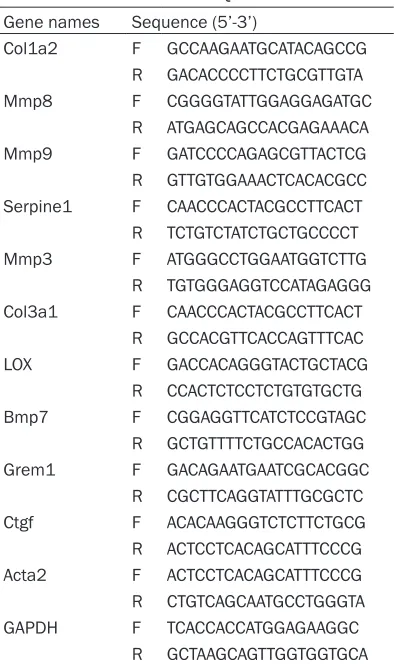
Table 2. Primers used for Q-PCR Gene names Sequence (5’-3’)
Col1a2 F GCCAAGAATGCATACAGCCG R GACACCCCTTCTGCGTTGTA
Mmp8 F CGGGGTATTGGAGGAGATGC
R ATGAGCAGCCACGAGAAACA
Mmp9 F GATCCCCAGAGCGTTACTCG
R GTTGTGGAAACTCACACGCC Serpine1 F CAACCCACTACGCCTTCACT
R TCTGTCTATCTGCTGCCCCT
Mmp3 F ATGGGCCTGGAATGGTCTTG
R TGTGGGAGGTCCATAGAGGG Col3a1 F CAACCCACTACGCCTTCACT
R GCCACGTTCACCAGTTTCAC
LOX F GACCACAGGGTACTGCTACG
R CCACTCTCCTCTGTGTGCTG
Bmp7 F CGGAGGTTCATCTCCGTAGC
R GCTGTTTTCTGCCACACTGG
Grem1 F GACAGAATGAATCGCACGGC
R CGCTTCAGGTATTTGCGCTC
Ctgf F ACACAAGGGTCTCTTCTGCG
R ACTCCTCACAGCATTTCCCG Acta2 F ACTCCTCACAGCATTTCCCG R CTGTCAGCAATGCCTGGGTA
GAPDH F TCACCACCATGGAGAAGGC
extension at 64°C for 34 s. The expression level of GAPDH was used as an internal control for normalization. All the primers were designed (Sequences of the primers are listed in Table 2). Relative gene expression levels were calcu-lated using 2-ΔΔCT analysis. All the experi -ments were performed in the same condition for at least three individual repeats.
Western blot analysis
H9c2 cells were homogenized in a lysis buffer containing 150 mM NaCl, 50 mM Tris·HCl, 10 mM EDTA, 0.1% Tween-20, 1% Triton, 0.1% β-mercaptoethanol, 0.1 Mm phenylmethylsul -fonyl fluoride, 5 μg/mL leupeptin, and 5 μg/ml aprotinin (pH 7.4) and allowed to be incubated for 1 h on ice. Homogenates were then centri -fuged at 4°C for 10 min at 10,000 g, and super-natants were collected. Protein concentrations were measured in the supernatants using a
[image:5.612.91.522.72.366.2]analysis software. All the experiments were performed in the same condition for at least three individual repeats.
Data were expressed as means ± SE. Statistical significance (P<0.05) was determined by analy-sis of variance (ANOVA) followed by Newman-Figure 2. The expression of AF-realated genes were changed after 48 h of
Lichen extracts treatment in H9c2 cells. A. Real-time quantitative analysis of atrial fibrillation transcription related genes expression (Lichen process-ing H9C2 cells after 48 hours, usprocess-ing real-time quantitative PCR to detect AF gene transcription level changes (P<0.001 Experimental groups VS. Control groups). B. Western blotting analysis (1: DMSO, 2: Lichen extracts.) Pro-Fi-brotic: Acta2, Ctgf, Grem1, Anti-FiPro-Fi-brotic: Bmp7, Extracellular Matrix (ECM) Structural Constituents: Col1a2, Col3a1. Extracellular Matrix (ECM) Remod-eling Enzymes: Lox, Mmp3, Mmp8, Mmp9, Serpine1 (mediates inhibition of fibrinolysis by inhibiting the activity of plasminogen activator). C. The column chart results of Western blotting. *P<0.05, **P<0.01, compared with DMSO treatment.
Luciferase activity assay
A fragment of the wild-type (WT) BMP7 3’UTR containing the predicted miR-194-5p binding site was amplified by RT-PCR. The primers used were 5’-CGGAGGTTCATCTCC-GTAGC-3’ (forward) and 5’-GC-TGTTTTCTGCCACACTGG-3’ (re-verse). Site-directed muta-genesis of the miR-194-5p target site was carried out using Stratagene Quik-Ch- ange site-directed mutagene-sis kit (Stratagene, Heidel-berg, Germany). The con -struct was sequenced and named BMP7-UTR-Mut. The pMIR-report luciferase vector was used for the construction of BMP7-UTR or BMP7-UTR-Mut plasmids (Ambion, USA). HCM cells were cultured in 24-well plates. In each well, 10 ng of phRL-TK renillalucif -erase vector (Promega, USA) was co-transfected to normal -ize transfection efficiency. A concentration of 500 ng of BMP7-UTR or BMP7-UTR-Mut plasmids together with 10 nM miR-194-5p mimics or nega-tive control was also co-trans-fected. Transfection was done using Lipofectamine 2000 and Opti-MEM I-reduced se- rum medium (Life Techno-logies, California, USA). Firefly luciferase activity was mea -sured using the Dual lucifer -ase assay kit (Promega). Normalized relative luciferase activity (RLA) was calculated as the following formula: RLA=[firefly luciferase]/[renil -la luciferase] [41].
[image:6.612.90.375.71.524.2]Keuls post hoc testing or Student’s t-test, where appropriate.
Results
Screening for candidate components
In order to find some candidate components, we selected a series of traditional Chinese herbal preparations (all the details are shown in
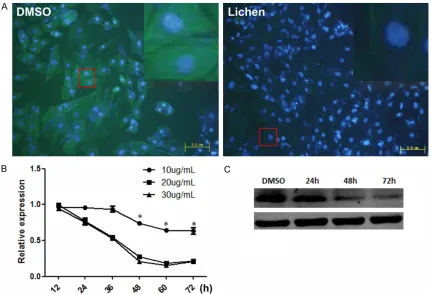
Table 1) and added equal volume with the same concentration per well, i.e. 20 μg/ml extract or herbal preparation. After the treatment, immu -nofluorescence staining was performed to find the components which would have effects on the H9c2 cells development. Interestingly, we found that after 48 h of treatment with 20 μg/ mL Lichen extracts, Collagen I expression level was significantly down regulated, comparing with the control (Figure 1A).
We also harvested the H9c2 cells treated with different concentrations (10 μg/mL, 20 μg/mL and 30 μg/mL) of Lichen extracts at different time points and extracted RNA from them to make sure that the immunofluorescence stain -ing results were reliable, and find the optimal conditions for Lichen to inhibit the expression of collagen I in H9c2 cells. As is shown in Figure 1B, the Collagen I expression level decreased in the first 48 h treatment and did not go down any more as time went on. The results of west -ern blotting also confirmed the results of q-PCR (Figure 1C).
Mmp9, and Serpine I were upregulated; and Acta2, Ctgf, Grem1, Col1a2, Col3a1 were down regulated compared with control (Figure 2A). The results were then comfirmed by western blotting analysis (Figure 2B, 2C).
Expression levels of BMP7 and miR-194-5p in HCM were changed after the treatment of
lichen extraction
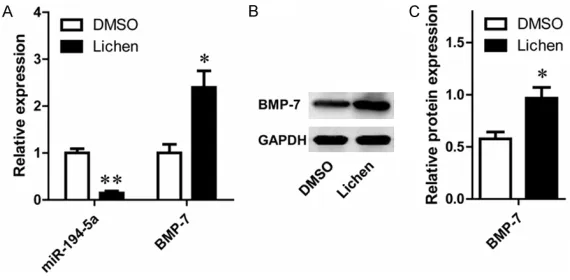
In order to investigate the correlation between BMP7 and miR-194-5p during the process myo-cardial cells are treated with Lichen extraction, we detected the changes of BMP7 and miR-194-5p expressions before and after Human Cardiac Myocytes (HCM) were treated with Lichen extraction. Interestingly, the mRNA level of miR-194-5p significantly decreased after the treatment of Lichen extracts while both the mRNA and protein levels of BMP7 evidently increased simultaneously (Figure 3).
Inverse relationship between expression of BMP7 and miR-194-5p
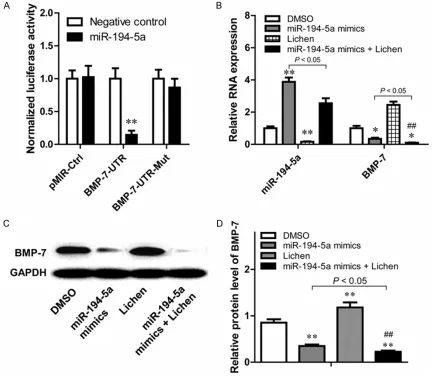
To validate whether miR-194-5p directly targets the 3’UTRs of BMP7 mRNA or not, we cloned a sequence with the predicted target sites of miR-194-5p or a mutated sequence with the predicted target sites to downstream of the pMIR luciferase reporter gene. When the wild-type or mutation-wild-type vector was transfected with miR-194-5p, the luciferase activity of wild-type vector was significantly decreased (P<0.01) compared with mutation-type vector (Figure 4A). While the wild-type or mutation-Figure 3. The expression of of miR-194-5p and BMP7 were reversely changed
after the treatment of Lichen extracts in HCM. A. The mRNA expressions of miR-194-5p and BMP7 were reversely changed after the treatment of Li-chen extracts in HCM. B, C. The protein level of BMP7 were significantly in-creased by Lechen extract in 48 h in HCM. *P<0.05, **P<0.01, compared with DMSO treatment.
Expression levels of AF
asso-ciated genes were changed
after the treatment of lichen extraction
[image:7.612.91.376.73.213.2]type vector was transfected with negative con -trol miRNA, there was no significant difference between the wild-type or mutation-type vector. These data suggested that miR-194-5p may play a major role in the regulation of BMP7. Taken together, these data indicated that the 3’UTR of BMP7 is a functional target site for miR-194-5p in HCM.
Lichen could always inhibit the expression of miR-194-5p to increase the expression of BMP7 in HCM
As is shown above, it was already proved that BMP7 is the target of miR-194-5p, which
[image:8.612.91.526.75.451.2]means the increase of BMP7 expression might be the result of miR-194-5p depletion. In order to confirm whether Lichen could increase the expression of BMP7 through inhibiting the expression of miR-194-5p, we determined the mRNA levels of BMP7 and miR-194-5p in HCM before and after the treatment of Lichen on the conditions that miR-194-5p was over-expressed or not. As is shown in Figure 4B, Lichen could depress the expression of miR-194-5p in HCM no matter miR-miR-194-5p was overexpressed or not and correspondingly, the expression of BMP7 could be increased in both conditions.
Discussion
AF is a problem of growing proportions that has been termed “epidemic” [42]. Present thera-peutic options have limited efficacy and discon -certing adverse-effect risks. Consequently, a variety of novel, mechanism-based approaches are in development. One approach has been developed to target atrial remodeling, with the use of “upstream therapy” interventions that interfere with putative signaling pathways. Interventions, such as omega-3 fatty acids and renin-angiotensin system inhibitors, were re- ported to work through preventing atrial remod-eling in experimental models [43]. While retro-spective analysis of clinical data is promising, the few prospective randomized clinical trials which are completed to date have been nega-tive or inconclusive [43]. Even though the notion of remodeling prevention is very attrac -tive, its feasibility remains to be demonstrated. Although the underlying mechanisms of AF are complex and not well understood yet, people have already put forward multiple potential pathways. A better understanding of the genet -ic mechanism underlying AF will hopefully lead to an accurate risk stratification of AF [44].
Current management strategies for AF have had some developments; However, some chal -lenges still remain to be solvedin this field. For example, we still cannot fully understand the early identification of AF in patients who are at risk andlittle progress hasbeen made in pharmaceuticals. Some groups, for example, Husser et al [45] and his group included a total of 195 consecutive patients with drug refrac -tory paroxysmal or persistent AF who under -went AF catheter ablation, and were the first to genotype two common variants, rs2200733 and rs10033464 on chromosome 4q25, wh- ich were independently associated with an increased risk of recurrence of AF after cathe -ter ablation. Another group [46] investigated the variations in the human soluble epoxide hydrolase gene responsible for recurrence of AF after catheter ablation and described that the rs751141 polymorphism of the EPHX2
gene is associated with a significantly increased risk of AF. These results point to a potential role for these common variants and may guide dif -ferential therapy in the future. Although, there are many genes related to AF and have been published, there is no prognostic or therapeutic
impact derived from an AF genetic test result. However, it still very valuable if we could find some chemical components which would alter the AF associated genes’ expression.
In this study, we have investigated the effects Lichen extracts has on several AF related genes including miR-194-5p and BMP7 in H9c2 cells and HCM, as well as the mechanism underlying the corresponding changes of miR-194-5p and BMP7 in Lichen-treated HCM. According to Figure 1, Collagen I expression in H9c2 cells could be significantly decreased by the treat -ment of Lichen extracts, which could help pre -vent atrial fibrosis of organs to protect heart from AF. In order to explore more about the effect of Lichen extracts has on preventing AF, expression of more genes concerning AF in H9c2 cells were detected before and after the treatment of Lichen extracts. All the genes expression changed to reduce the risk of AF after the treatment of Lichen extracts as we predicted except MMPs. There is one possibility that the way MMPs influence is complicated and several relevant factors could affect each other through various pathways, so more research needs to be performed to figure out the reason why MMPs were upregulated in H9c2 cells after Lichen extracts treatment.
Because of the predicted targeting action between miR-194-5p and BMP7 [35], we hypothesized that Lichen extractsupregulated the expression of BMP7 through inhibiting the expression of miR-194-5p and performed lucif -erase activity assay to confirm the targeting reaction between miR-194-5p and BMP7. According to the corresponding changes of expression levels of miR-194-5p and BMP7 in miR-194-5p-overexpressed HCM before and after the treatment of Lichen, it was demon -strated that Lichen could regulate the expres-sion of BMP7 through regulating mRNA level of miR-194-5p in HCM to decrease the risk of AF in human.
Based on the achievements in the past several years, our results, in a way, show the clinical implications of exploring the genetic basis of AF and will have more impacts on screening for pharmaceuticals which would release the pain the patients suffer from.
fibrosis and AF to solidify our result, and more tests in vivo also need to be performed to make our result easier to apply on clinic in the future.
Disclosure of conflict of interest
None.
Address correspondence to: Dr. Liyun Xiao, De- partment of Cardiology, Jinxiang People’s Hospital Affiliated to Jining Medical School, No. 117 East Jinfeng Road, Jining, Shandong, China. Tel: +86-15588734110; Fax: +86-54332939; E-mail: xly- [email protected]
References
[1] Hobbs FD, Fitzmaurice DA, Mant J, Murray E, Jowett S, Bryan S, Raftery J, Davies M and Lip G. A randomised controlled trial and cost-effec-tiveness study of systematic screening (target-ed and total population screening) versus rou-tine practice for the detection of atrial fibrilla-tion in people aged 65 and over. Health Technol Assess 2005; 9: 1-74.
[2] Kannel WB and Benjamin EJ. Current percep-tions of the epidemiology of atrial fibrillation. Cardiol Clin 2009; 27: 13-24.
[3] Beyerbach DM and Zipes DP. Mortality as an endpoint in atrial fibrillation. Heart Rhythm 2004; 1: 8-18.
[4] European Heart Rhythm A, European Asso- ciation for Cardio-Thoracic S, Camm AJ. Guidelines for the management of atrial fibril-lation: the task force for the management of atrial fibrillation of the European Society of Cardiology (ESC). Europace 2010; 12: 1360-1420.
[5] Munger TM, Wu LQ and Shen WK. Atrial fibrilla-tion. J Biomedi Res 2014; 28: 1-17.
[6] Brugada R, Tapscott T, Czernuszewicz GZ, Marian AJ, Iglesias A, Mont L, Brugada J, Girona J, Domingo A, Bachinski LL and Roberts R. Identification of a genetic locus for familial atrial fibrillation. N Engl J Med 1997; 336: 905-911.
[7] Magnani JW, Rienstra M, Lin H, Sinner MF, Lubitz SA, McManus DD, Dupuis J, Ellinor PT and Benjamin EJ. Atrial fibrillation, current knowledge and future directions in epidemiol-ogy and genomics. Circulation 2011; 124: 1982-1993.
[8] Chen YH, Xu SJ, Bendahhou S. KCNQ1 gain-of-function mutation in familial atrial fibrillation. Science 2003; 299: 251-254.
[9] Makiyama T, Akao M, Shizuta S, Doi T, Nishiyama K, Oka Y, Ohno S, Nishio Y, Tsuji K,
Itoh H, Kimura T, Kita T and Horie M. A novel SCN5A gain-of-function mutation M1875T as-sociated with familial atrial fibrillation. J Am Coll Cardiol 2008; 52: 1326-1334.
[10] Yang Y, Li J, Lin X, Yang Y, Hong K, Wang L, Liu J, Li L, Yan D, Liang D, Xiao J, Jin H, Wu J, Zhang Y and Chen YH. Novel KCNA5 loss-of-function mutations responsible for atrial fibrillation. J Hum Genet 2009; 54: 277-283.
[11] Olson TM, Alekseev AE, Liu XK, Park S, Zingman LV, Bienengraeber M, Sattiraju S, Ballew JD, Jahangir A and Terzic A. Kv1.5 channelopathy due to KCNA5 loss-of-function mutation cau- ses human atrial fibrillation. Hum Mol Genet 2006; 15: 2185-2191.
[12] Yang T, Yang P, Roden DM and Darbar D. Novel KCNA5 mutation implicates tyrosine kinase signaling in human atrial fibrillation. Heart Rhythm 2010; 7: 1246-1252.
[13] Yang YQ, Li L, Wang J, Zhang XL, Li RG, Xu YJ, Tan HW, Wang XH, Jiang JQ, Fang WY and Liu X. GATA6 loss-of-function mutation in atrial fibrillation. Eur J Med Genet 2012; 55: 520-526.
[14] Ellinor PT, Lunetta KL, Albert CM. Meta-analysis identifies six new susceptibility loci for atrial fi-brillation. Nat Genet 2012; 44: 670-675. [15] Nishida K, Michael G, Dobrev D and Nattel S.
animal models for atrial fibrillation: clinical in-sights and scientific opportunities. Europace 2010; 12: 160-172.
[16] Dobrev D, Graf E, Wettwer E, Himmel HM, Hála O, Doerfel C, Christ T, Schüler S and Ravens U. Molecular basis of downregulation of G-protein-coupled inward rectifying K(+) current (I(K,ACh) in chronic human atrial fibrillation: decrease in GIRK4 mRNA correlates with reduced I (K,ACh) and muscarinic receptor-mediated shortening of action potentials. Circulation 2001; 104: 2551-2557.
[17] Weiskirchen R, Meurer SK, Gressner OA, Herrmann J, Borkham-Kamphorst E and Gressner AM. BMP-7 as antagonist of organ fi-brosis. Front Biosci 2009; 14: 4992-5012. [18] Adam O, Theobald K, Lavall D, Grube M,
Kroemer HK, Ameling S, Schäfers HJ, Böhm M and Laufs U. Increased lysyl oxidase expres-sion and collagen cross-linking during atrial fi-brillation. J Mol Cell Cardiol 2011; 50: 678-685.
[19] Wolke C, Bukowska A, Goette A and Lendeckel U. Redox control of cardiac remodeling in atrial fibrillation. Biochim Biophys Acta 2015; 1850: 1555-1565.
pa-tients with atrial fibrillation. Ann Cardiol Angeiol 2015; 64: 285-291.
[21] Pretorius M, Donahue BS, Yu C, Greelish JP, Roden DM and Brown NJ. Plasminogen activa-tor inhibiactiva-tor-1 as a predicactiva-tor of postoperative atrial fibrillation after cardiopulmonary by pass. Circulation 2007; 116: I1-17.
[22] Maass AH, De Jong AM, Smit MD, Gouweleeuw L, de Boer RA, Van Gilst WH and Van Gelder IC. Cardiac gene expression profiling - the quest for an atrium-specific biomarker. Neth Heart J 2010; 18: 610-614.
[23] Fukui A, Takahashi N, Nakada C, Masaki T, Kume O, Shinohara T, Teshima Y, Hara M and Saikawa T. Role of leptin signaling in the pathogenesis of angiotensin II-mediated atrial fibrosis and fibrillation. Circ Arrhythm Elec- trophysiol 2013; 6: 402-409.
[24] Jun JI and Lau LF. Taking aim at the extracel-lular matrix: CCN proteins as emerging thera-peutic targets. Nat Rev Drug Discov 2011; 10: 945-963.
[25] Hall-Glenn F and Lyons KM. Roles for CCN2 in normal physiological processes. Cell Mol Life Sci 2011; 68: 3209-3217.
[26] Kubota S and Takigawa M. The role of CCN2 in cartilage and bone development. J Cell Commun Signal 2011; 5: 209-21.
[27] Zuniga A, Haramis AP, McMahon AP and Zeller R. Signal relay by BMP antagonism controls the SHH/FGF4 feedback loop in vertebrate limb buds. Nature 1999; 401: 598-602. [28] Zuniga A, Michos O, Spitz F. Mouse limb
defor-mity mutations disrupt a global control region within the large regulatory landscape required for Gremlin expression. Genes Dev 2004; 18: 1553-1564.
[29] Bénazet JD, Bischofberger M, Tiecke E, Gonçalves A, Martin JF, Zuniga A, Naef F and Zeller R. A self-regulatory system of interlinked signaling feedback loops controls mouse limb patterning. Science 2009; 323: 1050-1053. [30] Retief E, Parker MI and Retief AE. Regional
chromosome mapping of human collagen genes alpha 2(I) and alpha 1(I) (COLIA2 and COLIA1). Hum Genet 1985; 69: 304-308. [31] Wenstrup RJ, Cohn DH, Cohen T and Byers PH.
Arginine for glycine substitution in the triple-helical domain of the products of one alpha 2(I) collagen allele (COL1A2) produces the os-teogenesis imperfecta type IV phenotype. J Biol Chem 1988; 263: 7734-7740.
[32] Hosper NA, van den Berg PP, de Rond S, Popa ER, Wilmer MJ, Masereeuw R and Bank RA. Epithelial-to-mesenchymal transition in fibro-sis: collagen type I expression is highly upregu-lated after EMT, but does not contribute to col-lagen deposition. Exp Cell Res 2013; 319: 3000-3009.
[33] Anumonwo JM and Kalifa J. Risk factors and genetics of atrial fibrillation. Cardiol Clin 2014; 32: 485-494.
[34] Nguyen TN, Hilmer SN and Cumming RG. Review of epidemiology and management of atrial fibrillation in developing countries. Int J Cardiol 2013; 167: 2412-2420.
[35] Yang JH, Li JH, Shao P, Zhou H, Chen YQ and Qu LH. starBase: a database for exploring microR-NA-mRNA interaction maps from argonaute CLIP-Seq and degradome-Seq data. Nucleic Acids Res 2011; 39: 202-209.
[36] Matsumoto S, Sakata Y, Suna S, Nakatani D, Usami M, Hara M, Kitamura T, Hamasaki T, Nanto S, Kawahara Y and Komuro I. Circulating p53-responsive microRNAs are predictive indi-cators of heart failure after acute myocardial infarction. Circul Res 2013; 113: 322-326. [37] Stamboul K, Lorin J, Lorgis L, Guenancia C,
Beer JC, Touzery C, Rochette L, Vergely C, Cottin Y and Zeller M. Atrial fibrillation is asso-ciated with a marker of endothelial function and oxidative stress in patients with acute myocardial infarction. PLoS One 2015; 10: e0131439.
[38] Jabre P, Jouven X, Adnet F, Thabut G, Bielinski SJ, Weston SA and Roger VL. Atrial fibrillation and death after myocardial infarction: a com-munity study. Circulation 2011; 123: 2094-2100.
[39] Schmitt J, Duray G, Gersh BJ and Hohnloser SH. Atrial fibrillation in acute myocardial infarc-tion: a systematic review of the incidence, clin-ical features and prognostic implications. Eur Heart J 2009; 30: 1038-1045.
[40] Stamboul K, Zeller M, Fauchier L, Gudjoncik A, Buffet P, Garnier F, Guenancia C, Lorgis L, Beer JC, Touzery C and Cottin Y. Incidence and prog-nostic significance of silent atrial fibrillation in acute myocardial infarction. Int J Cardiol 2014; 174: 611-617.
[41] Shen R, Pan S, Qi S, Lin X and Cheng S. Epigenetic repression of microRNA-129-2 leads to overexpression of SOX4 in gastric can-cer. Biochem Biophys Res Commun 2010; 394: 1047-1052.
[42] Cardin S, Libby E, Pelletier P, Le Bouter S, Shiroshita-Takeshita A, Le Meur N, Léger J, Demolombe S, Ponton A, Glass L and Nattel S. Contrasting gene expression profiles in two ca-nine models of atrial fibrillation. Circ Res 2007; 100: 425-433.
[43] Chen LY and Shen WK. Epidemiology of atrial fibrillation: a current perspective. Heart Rh- ythm 2007; 4: 1-6.
manage-ment of atrial fibrillation: review of clinical evi-dence and implications for European Society of Cardiology guidelines. Europace 2011; 13: 308-328.
[45] Husser D, Adams V, Piorkowski C, Hindricks G and Bollmann A. Chromosome 4q25 variants and atrial fibrillation recurrence after catheter ablation. J Am Coll Cardiol 2010; 55: 747-753.