R E S E A R C H A R T I C L E
Open Access
Sex tourism among Chinese men who have
sex with men: a cross-sectional
observational study
Jessica Mao
1,2, Weiming Tang
1, Chuncheng Liu
1, Ngai Sze Wong
1,3, Songyuan Tang
1, Chongyi Wei
4and
Joseph D. Tucker
1,5*Abstract
Background:Sex tourism among men who have sex with men (MSM) may exacerbate transmission of HIV and
other sexually transmitted infections (STIs). Sex tourism is defined as purchasing sex with gifts or money outside of one’s hometown. Our objective was to characterize the frequency, socio-demographic characteristics, and sexual risk behaviors among Chinese MSM sex tourists.
Methods:An online, cross-sectional survey for high-risk MSM throughout China was conducted in November 2015
covering sociodemographic characteristics, sexual risk behaviors, and sex tourism. Univariate and multivariable logistic regressions were performed to identify correlates of sex tourism. The mean MSM HIV prevalence of sex tourism journey origins and destinations were compared.
Results:Of 1189 MSM who completed the survey, 62 (5%) men identified as sex tourists; among these sex tourists, twenty (32%) traveled primarily to purchase sex and the remainder purchased sex while traveling for another purpose. There was minimal socio-demographic and behavioral difference between the two groups. In multivariable analyses, adjusting for age and income, sex tourism was correlated with high-risk sexual behaviors, higher income (aOR 4.44, 95%CI 1.77–11.18) and living with HIV (aOR 2.79, 95%CI 1.03–7.55). Sex tourism was more often from locations with lower to higher MSM HIV prevalence (mean = 4.47, SD = 2.01 versus mean = 6.86, SD = 5.24).
Conclusion:MSM sex tourists were more likely to have risky sexual behaviors and travel to locations with a higher HIV prevalence. MSM sex tourists may be part of core groups that are disproportionately responsible for MSM HIV
transmission. Enhanced surveillance and interventions tailored to MSM sex tourists should be considered.
Keywords:Men who have sex with men (MSM), China, HIV/AIDS, Sexually transmitted diseases, Migration
Background
Local stigma associated with men who have sex with men (MSM) in low and middle-income countries is widespread. [1] Formal and informal condemnation of MSM in these settings encourage many men to hide their sexual orientation, especially in their hometowns. [2] This social pressure may contribute to an increase in sex tourism. [3] In this study, we define sex tourism as
having traveled outside of one’s hometown to purchase sex in exchange for money or gifts.
Sex tourism may be important for HIV control for three reasons. First, this human movement could con-nect areas of low HIV prevalence and areas of high HIV prevalence. [4] The movement of high-risk individuals across areas with markedly different HIV prevalence has been shown to drive HIV transmission. [5,6] Second, as sex tourists are a subgroup of clients of male sex workers, they often have greater power in deciding about condom use. [6] Third, traveling for sex is linked with unprotected anal intercourse and other behaviors that increase HIV risk. [7–10]
* Correspondence:[email protected]
1University of North Carolina Project China, 2 Lujing Road, Floor 11., Guangzhou, Guangdong 510000, China
5Faculty of Infectious and Tropical Diseases, London School of Hygiene and Tropical Medicine, London, UK
Full list of author information is available at the end of the article
While the literature on sex tourism has traditionally focused on men traveling in search of women, the topic of MSM sex tourism has recently become more com-mon. [11] In addition, sex tourists were previously more common from high-income countries traveling to lower-income countries, but sex tourism originating from low and middle-income countries is increasingly common. China presents a strong location to study sex tourism among online MSM because of a growing number of do-mestic and international tourists [12] and a culturally re-pressed MSM society that is subject to numerous societal pressures to stay closeted. [4]
The purpose of this study was to characterize sex tour-ism in the context of Chinese MSM at high risk for HIV infection. We conducted an online survey to determine socio-demographic and behavioral correlates of MSM sex tourism in China.
Methods
Participant recruitment and survey development
In November 2015, MSM in China were recruited to par-ticipate in a nationwide online, cross-sectional survey. The survey was anonymous and voluntary. Survey promotion took place online primarily throughDanlan.org, an online gay portal, and its gay mobile dating app BlueD. A number of men were also recruited through social media platforms such as Weibo, a microblogging platform and WeChat, a messaging app. The banner ad asked for men who had ever had sex with men to complete a brief survey in return for compensation. Upon clicking the ad, men were di-rected to the survey, hosted on Qualtrics (Provo, Utah). Men were excluded if they were under 16 years of age, not born biologically male, had never had anal sex with a man, and had not had condomless sex within the last three months. Men who met eligibility criteria provided in-formed consent. For this study, we defined high-risk indi-viduals as those who had participated in condomless sex within the last three months. Those who did not meet in-clusion criteria were excluded using the above criteria. The survey was run until the sample size of 1170 partici-pants was met, approximately 4 days. All promotional ma-terials and the survey itself were written in the Chinese language.
A more detailed description of survey preparation and participant recruitment is reported elsewhere. [13] Sex tourism questions were developed after a review of current literature and field tested with 150 MSM. The CONSORT E-health checklist [14] for online surveys was used to ensure completeness.
Measures
Sociodemographic and sex behavior survey items were used in a previous online MSM research survey. [15] Survey questions collected data on sociodemographic
information, including age, residence, marital status, education, and income. Participants were also asked about their self-identified sexual orientation, whether or not they had ever disclosed their orientation to a health-care worker, number of male and/or female sex partners in the last three months, whether sex partners were pri-mary or casual partners, and condom use behaviors. Questions also covered sexual risk behaviors, such as sex while drunk, sex under the influence of drugs, group sex, and paid sex.
In our survey, sex tourism was defined as having trav-eled outside of the city of residence to purchase sex with gifts or money. Participants answering that they had par-ticipated in sex tourism were then asked whether they traveled for the primary purpose of purchasing sex (pri-mary sex tourists) or for another pri(pri-mary reason (non-primary sex tourists), where they traveled, how they found sex partners at their destination, gender and eth-nicity of partner from whom they purchased services, reasons for participating in sex tourism, condom use be-haviors while traveling, price paid, whether they traveled alone and whether they had discussed HIV status prior to intercourse.
Statistical analysis
Descriptive analysis, including frequency of observed be-havior, was completed comparing the sex tourists to the general survey population. Pearson’s chi-squared test was applied to determine the independence of observed variables to outcomes. Univariate analysis was completed to identify which variables were correlated with having participated in sex tourism. Multivariable logistic regres-sion analyses were performed adjusting for age and in-come. All statistical analyses were completed using SAS (Cary, NC).
The prevalence of HIV among MSM at each sex tour-ist’s origin hometown and the destination was obtained from existing literature. [16–21] All Chinese and inter-national prevalence data were taken from the most re-cent published source. Analysis of MSM HIV prevalence among was completed by comparing the MSM HIV prevalence at the origin and destination of each journey made by a sex tourist. The HIV prevalence among MSM was compared between each sex tourist’s home province in China and destination province in China (if a domes-tic journey) or destination country (if an international journey). The average HIV prevalence among MSM at the journey origins and destinations were compared using a paired T-test.
Ethics
number 1R01AI114310–01), the University of North Car-olina at Chapel Hill (IRB number 14–1865), and the Uni-versity of California San Francisco (IRB number 14– 14887). All participants signed an online informed consent form prior to beginning the survey detailing what infor-mation would be collected and what the data would be used for. Those who refused to sign the informed consent were not allowed to proceed with the survey.
Results
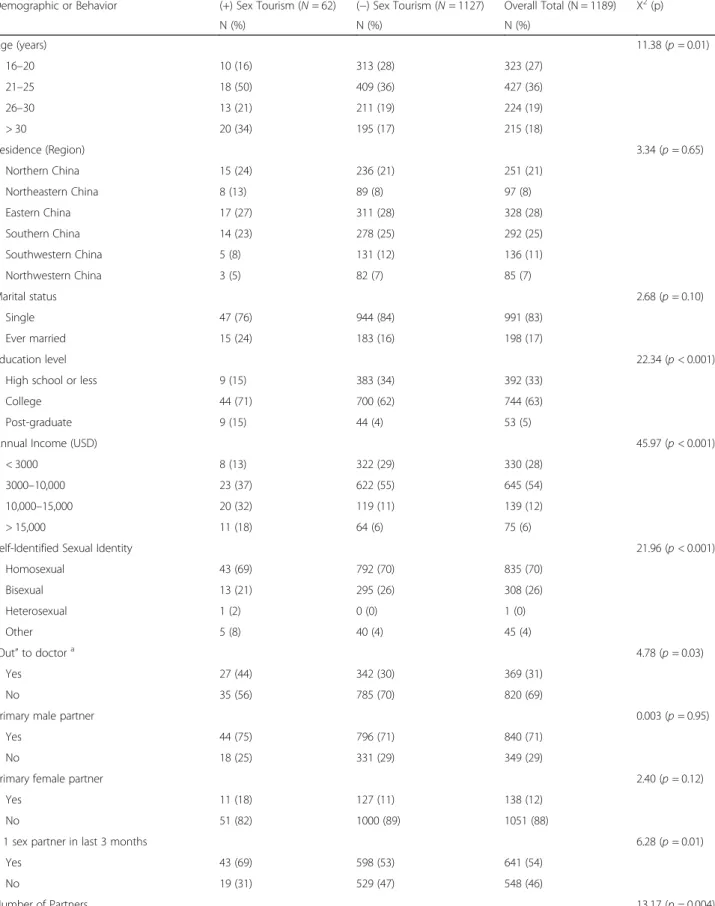
In total, 7892 people clicked on the banner link to enter the survey, and 7551 (96%) started the survey. Of the 1597 participants who passed the exclusion criteria and agreed to the online informed consent, 1189 participants completed the survey. The majority of study participants were under 30 years old (82%), had never been married (83%), identified as gay (70%), had been educated beyond high school (68%), with an average income of less than $10,000 United States Dollars (USD) annually (82%). Full statistics of the study population are reported in Table1.
Characteristics of sex tourism
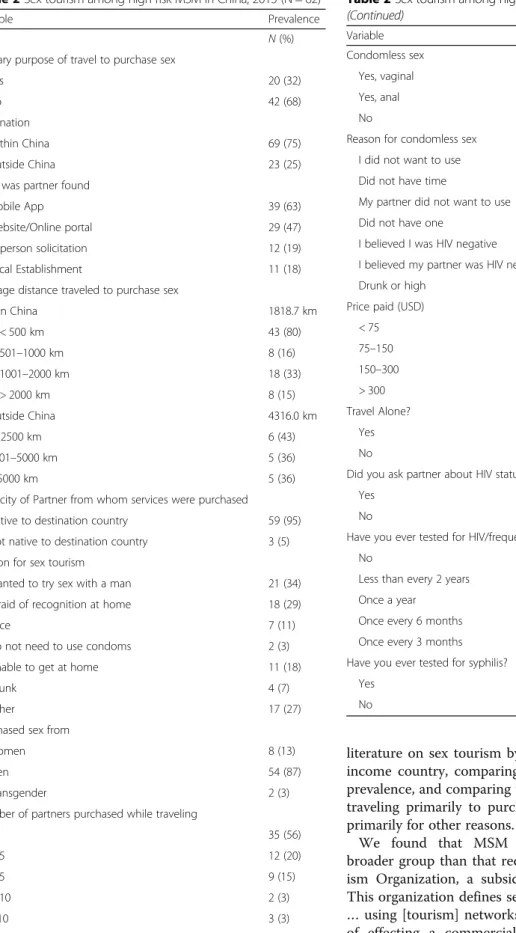
Sixty-two of the 1189 participants (5%) reported sex tourism, and of these 62 men, 20 (32%) traveled for the primary purpose of purchasing sex. Forty-two (68%) men reported that they purchased sex while traveling for another primary reason. Of the 62 sex tourists, 76% pur-chased sexual services from two or fewer partners, and 87% purchased services from male partners. Of the 92 journeys made by the 62 sex tourists, 75% of them were domestic, with Beijing as the most popular destination, followed by Shanghai and Guangzhou. Thailand was the most popular international destination, followed by Japan and Russia. The primary reasons for participating in sex tourism were desire to try sex with a man (34%) and fear of recognition at home (29%). The frequency of condomless sex while sex touring (33%) was comparable to the rate of condomless sex in the most recent month prior to taking the survey (37%). More details regarding characteristics of sex tourists can be found in Table2.
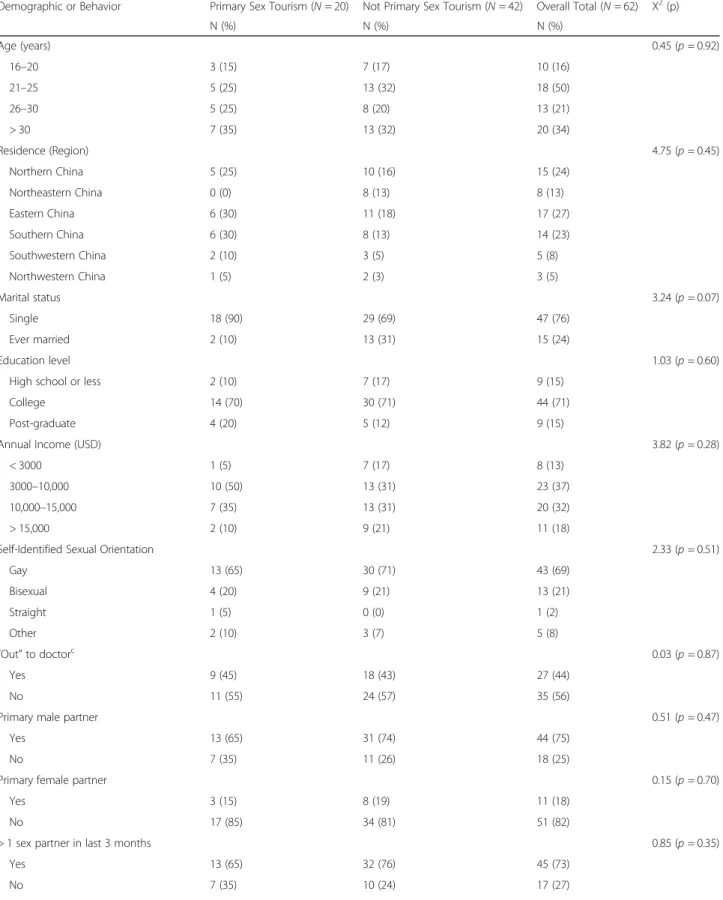
In comparing the two subsets of primary sex tourists and non-primary sex tourists, we found that the two groups were comparable in terms of age, education, in-come, self-identified sexual orientation, the disclosure of orientation to a healthcare provider, and number of sex partners. Among the primary sex tourists, we observed a higher frequency of international travel (36% versus 18%), a higher average price paid for services ($200 USD versus $85 USD), a greater frequency of condomless sex while traveling (70% versus 21%). These differences proved to be purely observational with chi-squared tests showing no significant correlation of behaviors to whether individuals were primary or non-primary sex
tourists. A detailed comparison of the two groups can be found in Table3.
Differences in sociodemographic and behavioral characteristics between sex tourists and non-sex tourists
In comparing the 62 sex tourists to non-sex tourists, sex tourists tended to be older (64% of sex tourists were under 30 years old vs. 83% of non-sex tourists), married (76% single vs. 84% single), and more educated (85% ed-ucated beyond high school vs. 66%). In looking at how many sex partners participants had in the last three months, sex tourists were more likely to have had more than three sex partners (31% vs. 15%), and were more likely to have participated in condomless sex in the last month (37% vs. 24%).
There was a higher frequency of HIV testing among sex tourists (69% of sex tourists compared to 54% in non-sex tourists) and more sex tourists had received a positive HIV result compared to non-sex tourists (9% compared to 3%) (Table1).
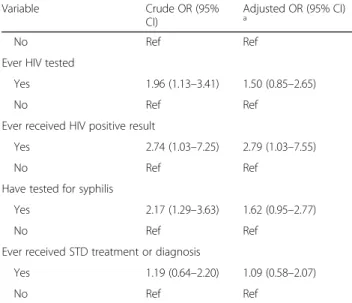
Univariate and multivariable analyses were performed to identify correlates of sex tourism. Multivariable ana-lyses were adjusted for age and income. Age was chosen as many other variables, including education level, mari-tal status, income, lifetime number of partners, and hav-ing ever participated in other risk activities or healthcare screening were thought to all be likely affected by age. Income was chosen as an adjustment variable as major factors of our study, including travel and payment for services, are more feasible for those with expendable in-come. Higher income (adjusted only for age, adjusted odds ratio (aOR) 4.44, 95%CI 1.77–11.18) and higher education were correlated with sex tourism (aOR 2.26, 95%CI 1.29–5.54 and 8.71, 95%CI 3.28–32.08 for college and graduate school, respectively). The likelihood of par-ticipating in sex tourism was higher among those report-ing more than 6 sex partners in the last three months (aOR 2.94, 95%CI 1.15–7.53), sex while drunk (aOR 4.67, 95%CI 2.63–8.27), group sex (aOR 2.81, 95%CI 1.44–5.51), and having ever been paid for sex (aOR 3.18, 95%CI 1.68–6.02). HIV testing and syphilis testing were both positively correlated with sex tourism in univariate analysis (crude odds ratio (cOR) 1.96, 95%CI 1.13–3.41 and cOR 2.21, 95%CI 1.29–3.63, respectively) but this correlation disappeared after adjusting for age, income and education. Detailed results from univariate and multivariate analyses are reported in Table4.
Geographical HIV prevalence
Table 1Socio-demographic and behavioral data of high-risk MSM in China in 2015 (N= 1189)
Demographic or Behavior (+) Sex Tourism (N= 62) (−) Sex Tourism (N= 1127) Overall Total (N = 1189) Χ2(p)
N (%) N (%) N (%)
Age (years) 11.38 (p= 0.01)
16–20 10 (16) 313 (28) 323 (27)
21–25 18 (50) 409 (36) 427 (36)
26–30 13 (21) 211 (19) 224 (19)
> 30 20 (34) 195 (17) 215 (18)
Residence (Region) 3.34 (p= 0.65)
Northern China 15 (24) 236 (21) 251 (21)
Northeastern China 8 (13) 89 (8) 97 (8)
Eastern China 17 (27) 311 (28) 328 (28)
Southern China 14 (23) 278 (25) 292 (25)
Southwestern China 5 (8) 131 (12) 136 (11)
Northwestern China 3 (5) 82 (7) 85 (7)
Marital status 2.68 (p= 0.10)
Single 47 (76) 944 (84) 991 (83)
Ever married 15 (24) 183 (16) 198 (17)
Education level 22.34 (p< 0.001)
High school or less 9 (15) 383 (34) 392 (33)
College 44 (71) 700 (62) 744 (63)
Post-graduate 9 (15) 44 (4) 53 (5)
Annual Income (USD) 45.97 (p< 0.001)
< 3000 8 (13) 322 (29) 330 (28)
3000–10,000 23 (37) 622 (55) 645 (54)
10,000–15,000 20 (32) 119 (11) 139 (12)
> 15,000 11 (18) 64 (6) 75 (6)
Self-Identified Sexual Identity 21.96 (p< 0.001)
Homosexual 43 (69) 792 (70) 835 (70)
Bisexual 13 (21) 295 (26) 308 (26)
Heterosexual 1 (2) 0 (0) 1 (0)
Other 5 (8) 40 (4) 45 (4)
“Out”to doctora 4.78 (
p= 0.03)
Yes 27 (44) 342 (30) 369 (31)
No 35 (56) 785 (70) 820 (69)
Primary male partner 0.003 (p= 0.95)
Yes 44 (75) 796 (71) 840 (71)
No 18 (25) 331 (29) 349 (29)
Primary female partner 2.40 (p= 0.12)
Yes 11 (18) 127 (11) 138 (12)
No 51 (82) 1000 (89) 1051 (88)
> 1 sex partner in last 3 months 6.28 (p= 0.01)
Yes 43 (69) 598 (53) 641 (54)
No 19 (31) 529 (47) 548 (46)
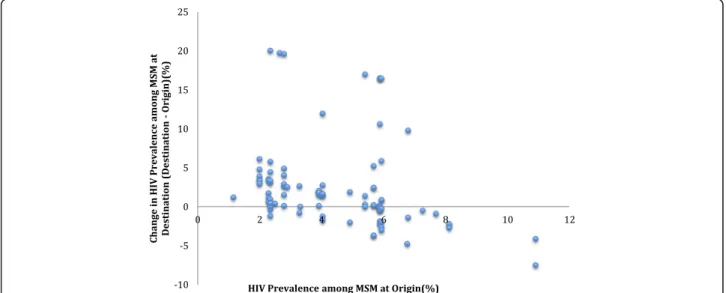
MSM HIV prevalence at the origin and the change of prevalence at the destination. Paired sample analysis showed that the MSM HIV prevalence at sex tourism journey origins were lower than MSM HIV prevalence at the destinations (mean = 6.86, SD = 5.24; paired T-test t(91) =−4.218,p< 0.01).
Discussion
We identified a subset of MSM sex tourists with mul-tiple high-risk sexual behaviors. Most MSM sex tourist research has focused on high-income countries [7, 10, 17] or specifically recruited participants who have trav-eled recently. [7, 8, 10, 22] Our study extends the
Table 1Socio-demographic and behavioral data of high-risk MSM in China in 2015 (N= 1189)(Continued)
Demographic or Behavior (+) Sex Tourism (N= 62) (−) Sex Tourism (N= 1127) Overall Total (N = 1189) Χ2(p)
N (%) N (%) N (%)
1 19 (31) 527 (47) 546 (46)
2–3 24 (39) 435 (39) 459 (39)
4–5 12 (19) 109 (10) 121 (10)
6+ 7 (11) 56 (5) 63 (5)
Condomless sex in last monthb 6.0 (p = 0.01)
Yes 23 (37) 264 (23) 287 (24)
No 39 (63) 863 (76) 902 (76)
Condomless sex with male in last month 3.20 (p= 0.07)
Yes 20 (32) 253 (22) 273 (23)
No 42 (68) 874 (78) 916 (77)
Condomless sex with female in last month 9.27 (p= 0.002)
Yes 5 (8) 23 (2) 28 (2)
No 57 (92) 1104 (98) 1161 (98)
Sex while drunk 38.72 (p< 0.001)
Yes 25 (40) 139 (12) 164 (14)
No 37 (60) 988 (88) 1025 (86)
Group Sexc 9.77 (
p= 0.002)
Yes 13 (21) 101 (9) 114 (10)
No 49 (79) 1026 (91) 1075 (90)
Been paid for sex 7.64 (p= 0.005)
Yes 16 (26) 150 (13) 166 (14)
No 46 (74) 977 (87) 1023 (86)
Ever HIV tested 5.89 (p= 0.02)
Yes 43 (69) 604 (54) 647 (54)
No 19 (31) 523 (46) 542 (46)
Ever received HIV positive result 4.45 (p = 0.03)
Yes 5 (8) 35 (3) 40 (3)
No 57 (92) 905 (97) 953 (97)
Ever tested for syphilis 9.04 (p = 0.002)
Yes 29 (47) 325 (29) 354 (30)
No 33 (53) 802 (71) 835 (70)
Ever received STD diagnosis or treatment 0.31 (p= 0.58)
Yes 14 (23) 222 (20) 236 (20)
No 48 (77) 905 (80) 953 (80)
a“Out to a doctor”was defined as having ever discussed sexual orientation with a healthcare provider;b
Condomless sex is defined as any incidence of sexual intercourse without use of a condom;c
literature on sex tourism by including data in a middle-income country, comparing origin and destination HIV prevalence, and comparing the differences between those traveling primarily to purchase sex and those traveling primarily for other reasons.
We found that MSM sex tourists represented a broader group than that recognized by the World Tour-ism Organization, a subsidiary of the United Nations. This organization defines sex tourism as“trips organized …using [tourism] networks…with the primary purpose of effecting a commercial sexual relationship by the tourist with residents at the destination.” [23] This
Table 2Sex tourism among high-risk MSM in China, 2015 (N = 62)
Variable Prevalence
N(%) Primary purpose of travel to purchase sex
Yes 20 (32)
No 42 (68)
Destination
Within China 69 (75)
Outside China 23 (25)
How was partner found
Mobile App 39 (63)
Website/Online portal 29 (47)
In-person solicitation 12 (19)
Local Establishment 11 (18)
Average distance traveled to purchase sex
Within China 1818.7 km
< 500 km 43 (80)
501–1000 km 8 (16)
1001–2000 km 18 (33)
> 2000 km 8 (15)
Outside China 4316.0 km
< 2500 km 6 (43)
2501–5000 km 5 (36)
> 5000 km 5 (36)
Ethnicity of Partner from whom services were purchased
Native to destination country 59 (95)
Not native to destination country 3 (5)
Reason for sex tourism
Wanted to try sex with a man 21 (34)
Afraid of recognition at home 18 (29)
Price 7 (11)
Do not need to use condoms 2 (3)
Unable to get at home 11 (18)
Drunk 4 (7)
Other 17 (27)
Purchased sex from
Women 8 (13)
Men 54 (87)
Transgender 2 (3)
Number of partners purchased while traveling
1 35 (56)
2–5 12 (20)
3–5 9 (15)
6–10 2 (3)
> 10 3 (3)
Table 2Sex tourism among high-risk MSM in China, 2015 (N = 62)
(Continued)
Variable Prevalence
Condomless sex
Yes, vaginal 3 (5)
Yes, anal 20 (32)
No 41 (66)
Reason for condomless sex
I did not want to use 17 (27)
Did not have time 8 (13)
My partner did not want to use 6 (10)
Did not have one 4 (7)
I believed I was HIV negative 4 (7)
I believed my partner was HIV negative 4 (7)
Drunk or high 1 (2)
Price paid (USD)
< 75 39 (63)
75–150 14 (23)
150–300 5 (8)
> 300 3 (5)
Travel Alone?
Yes 41 (66)
No 21 (34)
Did you ask partner about HIV status?
Yes 24 (39)
No 37 (61)
Have you ever tested for HIV/frequency
No 20 (32)
Less than every 2 years 6 (10)
Once a year 19 (31)
Once every 6 months 12 (19)
Once every 3 months 5 (8)
Have you ever tested for syphilis?
Yes 28 (45)
Table 3Comparison of socio-demographic and behavioral data between primary sex touristsa(n= 20) and non-primary sex touristsb (n= 42)
Demographic or Behavior Primary Sex Tourism (N= 20) Not Primary Sex Tourism (N= 42) Overall Total (N= 62) Χ2(p)
N (%) N (%) N (%)
Age (years) 0.45 (p= 0.92)
16–20 3 (15) 7 (17) 10 (16)
21–25 5 (25) 13 (32) 18 (50)
26–30 5 (25) 8 (20) 13 (21)
> 30 7 (35) 13 (32) 20 (34)
Residence (Region) 4.75 (p= 0.45)
Northern China 5 (25) 10 (16) 15 (24)
Northeastern China 0 (0) 8 (13) 8 (13)
Eastern China 6 (30) 11 (18) 17 (27)
Southern China 6 (30) 8 (13) 14 (23)
Southwestern China 2 (10) 3 (5) 5 (8)
Northwestern China 1 (5) 2 (3) 3 (5)
Marital status 3.24 (p= 0.07)
Single 18 (90) 29 (69) 47 (76)
Ever married 2 (10) 13 (31) 15 (24)
Education level 1.03 (p= 0.60)
High school or less 2 (10) 7 (17) 9 (15)
College 14 (70) 30 (71) 44 (71)
Post-graduate 4 (20) 5 (12) 9 (15)
Annual Income (USD) 3.82 (p= 0.28)
< 3000 1 (5) 7 (17) 8 (13)
3000–10,000 10 (50) 13 (31) 23 (37)
10,000–15,000 7 (35) 13 (31) 20 (32)
> 15,000 2 (10) 9 (21) 11 (18)
Self-Identified Sexual Orientation 2.33 (p= 0.51)
Gay 13 (65) 30 (71) 43 (69)
Bisexual 4 (20) 9 (21) 13 (21)
Straight 1 (5) 0 (0) 1 (2)
Other 2 (10) 3 (7) 5 (8)
“Out”to doctorc 0.03 (p= 0.87)
Yes 9 (45) 18 (43) 27 (44)
No 11 (55) 24 (57) 35 (56)
Primary male partner 0.51 (p= 0.47)
Yes 13 (65) 31 (74) 44 (75)
No 7 (35) 11 (26) 18 (25)
Primary female partner 0.15 (p= 0.70)
Yes 3 (15) 8 (19) 11 (18)
No 17 (85) 34 (81) 51 (82)
> 1 sex partner in last 3 months 0.85 (p= 0.35)
Yes 13 (65) 32 (76) 45 (73)
operational definition has been used in previous re-search. [10,22] Our data suggest that in China, this def-inition is no longer adequate and that many MSM sex tourists will travel for primary reasons other than pur-chasing commercial sex. In fact, nearly two-thirds of our sex tourists would not be captured using this original definition. Comparison of the primary sex tourists who fall within the original definition and the non-primary sex tourists who do not shows that there is no signifi-cant difference in socio-demographic and sexual behav-ior characteristics, suggesting a broader definition is more appropriate. In addition, both primary and non-primary sex tourists reported their non-primary motivation to purchase sex while traveling was due to fear of
recognition at home as well as a desire to try sex with males. This supports previous findings that Chinese MSM are driven to participate in sex tourism because of the strong social stigmas and bias against MSM. [24] A previous study has also argued for the need to include non-primary sex tourists in sex tourism research, and re-ported that sexual services are often purchased by those businessmen and others staying long-term at their des-tination. [9] We further broadened the definition of sex tourism by including domestic journeys as well as inter-national journeys. Had we not defined sex tourism to in-clude domestic travel, 75% of our sex tourists would not have been identified. By using our broader definition of sex tourism, we were able to capture a wider spectrum
Table 3Comparison of socio-demographic and behavioral data between primary sex touristsa(n= 20) and non-primary sex touristsb (n= 42)(Continued)
Demographic or Behavior Primary Sex Tourism (N= 20) Not Primary Sex Tourism (N= 42) Overall Total (N= 62) Χ2(p)
N (%) N (%) N (%)
Number of Partners 1.97 (p= 0.58)
1 7 (35) 10 (24) 19 (31)
2–3 8 (40) 16 (38) 24 (39)
4–5 2 (10) 10 (24) 12 (19)
6+ 3 (15) 6 (14) 7 (11)
Condomless sex in last monthd 0.30 (p= 0.86)
Yes, with man 7 (35) 13 (31) 20 (32)
Yes, with woman 2 (10) 3 (7) 5 (8)
No 12 (60) 28 (67) 37 (60)
Sex while drunk 1.63 (p= 0.20)
Yes 11 (55) 30 (71) 25 (40)
No 9 (45) 12 (29) 37 (60)
Group Sexe 3.75 (p= 0.05)
Yes 7 (35) 6 (14) 13 (21)
No 13 (65) 36 (86) 49 (79)
Been paid for sex 3.11 (p= 0.08)
Yes 8 (40) 8 (19) 16 (26)
No 12 (60) 34 (81) 46 (74)
Ever HIV tested 0.10 (p= 0.75)
Yes 13 (65) 29 (69) 42 (68)
No 7 (35) 13 (31) 20 (32)
Ever tested for syphilis 2.74 (p= 0.10)
Yes 6 (30) 22 (52) 29 (47)
No 14 (70) 20 (48) 33 (53)
Ever received STD diagnosis or treatment 0.29 (p= 0.59)
Yes 5 (25) 8 (19) 13 (21)
No 15 (75) 34 (81) 49 (79)
a
Primary sex tourists defined as those who traveled for the primary purpose of purchasing sex,bNon-primary sex tourists are defined as those who purchased sex while traveling for other reasons.c“Out to a doctor”was defined as having ever discussed sexual orientation with a healthcare provider;d
Condomless sex is defined as any incidence of sexual intercourse without use of a condom;e
of individuals engaging in the same risky sexual behav-iors. Thus, our data also suggest that previous research likely underestimates the frequency of MSM sex tour-ism. [10,22]
Sex tourists displayed several high-risk sexual behav-iors such as condomless sex, sex while drunk, group sex, multiple sex partners and having been paid for sex. These findings are consistent with findings from China, [24], the United Kingdom, [7] Belgium, [10] the United States, [8] and Vietnam. [22] This suggests that sex tour-ism may contribute to the co-occurrence of risk and dis-ease syndemics. [25] Our participants reported slightly higher rates of condom usage at home than when travel-ing (23% versus 34%, respectively), contrasttravel-ing existtravel-ing research showing that sex tourists are more likely to use condoms while traveling. [24] Unprotected sex while traveling, in combination with other correlated risk be-haviors such as group sex, sex while using drugs, sex while drunk and multiple sex partners, amplifies disease transmission. [5] This trend is consistent with the higher burden of living with HIV noted among sex tourists in our sample. Efforts to reduce HIV/STI transmission risks while traveling may be effective in reducing disease spread upon return. Delivering information on disease transmission and prevention prior to departure has been shown to reduce STI risk in Dutch marines prior to Cambodian travel, American Peace Corps volunteers in Africa and Swiss airline workers. [9]
Another key finding of our study was that sex tourists tend to travel from locations with low MSM HIV
Table 4Correlates of men having participated in sex tourism among MSM in China (n = 62) when compared to men who did not (n = 1127)
Variable Crude OR (95%
CI)
Adjusted OR (95% CI) a
Ageb 1.06 (1.03–1.09) 1.03 (0.99–1.07)
Education level
High school or less Ref Refc
College or higher 2.68 (1.29–5.54) 2.26 (1.08–4.72)
Post-graduate 8.71 (3.28–23.08) 5.19 (1.87–14.38)
Marital status
Single 0.61 (0.33–1.11) 0.47 (0.35–1.62)
Ever Married Ref Ref
Annual Income (USD)
< 3000 Ref Refd
3000–10,000 1.49 (0.66–3.37) 1.23 (0.52–2.90)
10,000–15,000 6.77 (2.90–15.77) 5.21 (2.09–13.01)
> 15,000 6.92 (2.68–17.88) 4.41 (1.51–12.86)
Self-identified sexual orientation
Gay 0.96 (0.55–1.67) 1.08 (0.61–1.91)
Bisexual / Straight / Other
Ref Ref
“Out”to healthcare worker
Yes Ref Ref
No 0.57 (0.34–0.95) 0.61 (0.36–1.03)
Primary Male partner
Yes 1.08 (0.59–1.97) 1.01 (0.54–1.89)
No Ref Ref
Primary Female partner
Yes, female 0.39 (0.11–1.36) 0.31 (0.08–1.15)
No Ref Ref
Number of sexual partners in last 3 months
1 Ref Ref
2–3 1.53 (0.83–2.83) 1.28 (0.68–2.41)
4–5 3.81 (1.53–9.49) 2.58 (0.99–6.67)
6+ 2.92 (1.38–6.18) 2.29 (1.06–4.97)
Condomless Sex
Yes 1.93 (1.13–3.29) 1.83 (1.06–3.17)
No Ref Ref
Sex while drunk
Yes 4.80 (2.81–8.22) 4.24 (2.44–7.40)
No Ref Ref
Have participated in group sex
Yes 2.70 (1.41–5.14) 2.81 (1.44–5.51)
No Ref Ref
Been paid for sex
Yes 2.27 (1.25–4.11) 2.81 (1.52–5.22)
Table 4Correlates of men having participated in sex tourism among MSM in China (n = 62) when compared to men who did not (n = 1127)(Continued)
Variable Crude OR (95%
CI)
Adjusted OR (95% CI) a
No Ref Ref
Ever HIV tested
Yes 1.96 (1.13–3.41) 1.50 (0.85–2.65)
No Ref Ref
Ever received HIV positive result
Yes 2.74 (1.03–7.25) 2.79 (1.03–7.55)
No Ref Ref
Have tested for syphilis
Yes 2.17 (1.29–3.63) 1.62 (0.95–2.77)
No Ref Ref
Ever received STD treatment or diagnosis
Yes 1.19 (0.64–2.20) 1.09 (0.58–2.07)
No Ref Ref
a
Multivariable analysis controlled for age and income unless otherwise specified;bAge was analyzed as a continuous variable;cMultivariable analysis of education level controlled for age and income;d
prevalence areas to locations with high MSM HIV prevalence, consistent with previous research from China. [26] This is likely related to the higher known burden of HIV in urban areas, [20] to where domestic sex tourists tended to travel. This presents a concern for disease transmission when travelers return to their home regions with lower HIV prevalence. [6] Previous studies on sex tourism in China [27] and internationally [5] have shown a trend in travel from regions of lower HIV prevalence to higher HIV prevalence, leading to trans-mission upon return. However, given the large migrant population in China, it may be challenging to isolate dis-ease transmission secondary to migration from sex tour-ism. Studies targeted towards better understanding disease transmission dynamics are needed to illuminate the impact of sex tourism on disease transmission in China. Furthermore, the lack of access to healthcare and the low retention in the HIV treatment cascade among both the migrant population and sex tourists is ex-tremely concerning. [28]
Some limitations of our study should be noted. First, our participants were recruited for an online survey, and MSM recruited through the Internet in China are on average younger and better educated. [29] In addition, we only recruited high-risk men, and men who consist-ently used condoms were not captured in this analysis. However, we believe this selection makes our findings even more relevant to HIV transmission. Second, as the survey was a cross-sectional study, it impossible to infer causal relationships or to interpret baseline activity. Questions on sex tourism and sexual risk behaviors were asked without a specific time frame. As we gathered data on MSM HIV prevalence from recent sources, these numbers changed and we cannot confidently correlate that to the MSM HIV prevalence during the time period
each individual was traveling. Third, the definitions and indicators used by each source may have varied from both each other and our own definitions. Fourth, the small number of sex tourists limited our ability to exam-ine some associations. However, as our study was a cross-sectional, observational study, the small percentage we noted may be a better estimation of the frequency of sex tourism among MSM in China. Fifth, although our study collected information on the price paid for sexual activities, we did not ask about which sexual activities were purchased. The lacking of this information limited our ability to know the cost of sexual tourism of the par-ticipants. Finally, only 62 people indicated that they en-gaged in sexual tourism. This small size limited our ability to conduct additional sub-analyses.
While it is becoming increasingly clear that sex tour-ism poses an international public health risk, more stud-ies on the topic are necessary. Targeted studstud-ies using phylogenetic research would give a better understanding disease transmission. Site-specific phylogenetic studies have been able to provide definitive evidence of HIV transmission between Singapore and Malaysia, [5] in turn helping to more accurately design and target inter-ventions. Our behavioral data is consistent with phylo-genetic research suggesting sexual mixing between Thai and Chinese MSM. [30] Similar studies looking at travel within China would shed more light on the disease transmission due to migration.
Interventions need to be set in place to prevent disease transmission as a result of sex tourism. Using procedures requiring few resources, it may be possible to identify sex tourists for more targeted intervention. Facilitating healthcare access for MSM and implementing policies requiring healthcare providers to ask about recent travels and relevant sexual history may identify cases
that would otherwise go unnoticed. In addition, giving pre-departure education to travelers either in health set-tings such as clinics or travel websites would also better inform travelers. At destinations popular for sex tourism, promoting healthcare access in the form of travel clinics and public advertisements promoting sexual health may also mitigate disease transmission risks. As several of our participants reported smartphone app use to locate a sexual partner, use of smartphones to deliver interven-tions may be useful in the future to target sex tourists both pre- and post-departure.
Conclusion
Sex tourism occurs in several countries, and has long been associated with risky sexual behavior, [7–10] pre-senting significant public health concerns. The stigma associated with MSM behaviors will likely persist in low-and middle-income countries, increasing the need for improved public health programs and research. Given existing syndemics among MSM and differential HIV prevalence in origin and destination locations, sex tour-ism could amplify regional MSM HIV epidemics.
Abbreviations
aOR:Adjusted Odds Ratio; cOR: Crude Odds Ratio; HIV: Human Immunodeficiency Virus; IRB: Institutional Review Board; MSM: Men who have sex with men; STI: Sexually Transmitted Disease
Acknowledgements
We thank Dr. Bolin Cao, Dr. Haochu Li, Yilu Qin, May Thanthanasup, and Terrence Wong as well as the other members at SESH Global. We also extend special thanks to the staff at the Guangdong Provincial Center for Skin Diseases and STI Control.
Availability of data and material
All data generated or analysed during this study are included in this published article.
Funding
This work was supported by the Doris Duke Charitable Foundation [Doris duke International Clinical Research Fellowship to JM] and the National Institutes of Health [National Institute of Allergy and Infectious Diseases 1R01AI114310 to JT and CW]. The funding sources had no role in the design or implementation of this study.
Authors’contributions
The study was conceived by JM, CW, and JT. JM and CC collected data for the study. JM, WT, ST, and NW analyzed the data. JM started the first draft of the manuscript and all authors provided critical feedback. All authors read and approved the final manuscript.
Ethics approval and consent to participate
Ethical approval was obtained from institutional review boards at the Guangdong Provincial Center for Skin Diseases and Sexually Transmitted Infections Control (IRB number 1R01AI114310–01), the University of North Carolina at Chapel Hill (IRB number 14–1865), and the University of California San Francisco (IRB number 14–14887). All participants signed an online informed consent form prior to beginning the survey detailing what information would be collected and what the data would be used for. Those who refused to sign the informed consent were not allowed to proceed with the survey.
Consent for publication
Not applicable.
Competing interests
The authors declare that they have no competing interests.
Publisher’s Note
Springer Nature remains neutral with regard to jurisdictional claims in published maps and institutional affiliations.
Author details 1
University of North Carolina Project China, 2 Lujing Road, Floor 11., Guangzhou, Guangdong 510000, China.2The Johns Hopkins Hospital, Baltimore, USA.3University of North Carolina Chapel Hill, Chapel Hill, USA. 4Rutgers School of Public Health, New Brunswick, USA.5Faculty of Infectious and Tropical Diseases, London School of Hygiene and Tropical Medicine, London, UK.
Received: 8 May 2017 Accepted: 23 February 2018
References
1. Baral S, Sifakis F, Cleghorn F, Beyrer C. Elevated risk for HIV infection among men who have sex with men in low- and middle-income countries 2000-2006: a systematic review. PLoS Med. 2007;4(12):e339.
2. Preston DB, D'Augelli AR, Kassab CD, Starks MT. The relationship of stigma to the sexual risk behavior of rural men who have sex with men. AIDS Educ Prev. 2007;19(3):218–30.
3. Liu H, Liu H, Cai Y, Rhodes AG, Hong F. Money boys, HIV risks, and the associations between norms and safer sex: a respondent-driven sampling study in Shenzhen, China. AIDS Behav. 2009;13(4):652–62.
4. Liu H, Li S, Feldman MW. Forced bachelors, migration and HIV transmission risk in the context of China's gender imbalance: a meta-analysis. AIDS Care. 2012;24(12):1487–95.
5. Cheong HT, Ng KT, Ong LY, Chook JB, Chan KG, Takebe Y, Kamarulzaman A, Tee KK. Cross-border sexual transmission of the newly emerging HIV-1 clade CRF51_01B. PLoS One. 2014;9(10):e111236.
6. Lau JT, Cai W, Tsui HY, Chen L, Cheng J, Lin C, Gu J, Hao C. Unprotected anal intercourse behavior and intention among male sex workers in Shenzhen serving cross-boundary male clients coming from Hong Kong, China - prevalence and associated factors. AIDS Care. 2012;24(1):59–70. 7. Clift SM, Forrest SP. Factors associated with gay men's sexual behaviours
and risk on holiday. AIDS Care. 1999;11(3):281–95.
8. Darrow WW, Biersteker S, Geiss T, Chevalier K, Clark J, Marrero Y, Mills V, Obiaja K. Risky sexual behaviors associated with recreational drug use among men who have sex with men in an international resort area: challenges and opportunities. Journal of Urban Health. 2005;82(4):601–9. 9. Richens J. Sexually transmitted infections and HIV among travellers: a
review. Travel Med Infect Dis. 2006;4(3–4):184–95.
10. Vanden Berghe W, Nostlinger C, Hospers H, Laga M. International mobility, sexual behaviour and HIV-related characteristics of men who have sex with men residing in Belgium. BMC Public Health. 2013;13:968.
11. Bandyopadhyay R. A paradigm shift in sex tourism research. Tourism Management Perspectives. 2013;6:1–2.
12. Arlt W. China's outbound tourism. Routledge; 2006.
13. Liu C, Mao J, Wong T, Tang W, Tso LS, Tang S, Zhang Y, Zhang W, Qin Y, Chen Z, Ma W, Kang D, Li H, Liao M, Mollan K, Hudgens M, Bayus B, Huang S, Yang B, Wei C, Tucker JD. Comparing the effectiveness of a crowdsourced video and a social marketing video in promoting condom use among Chinese men who have sex with men: a study protocol. BMJ Open. 2016; 6(10):e010755.
14. Eysenbach G, Group C-E. CONSORT-EHEALTH: improving and standardizing evaluation reports of web-based and mobile health interventions. J Med Internet Res. 2011;13(4):e126.
15. Tang W, Han L, Best J, Zhang Y, Mollan K, Kim J, Liu F, Hudgens M, Bayus B, Terris-Prestholt F, Galler S, Yang L, Peeling R, Volberding P, Ma B, Xu H, Yang B, Huang S, Fenton K, Wei C, Tucker JD. Crowdsourcing HIV Test Promotion Videos: A Noninferiority Randomized Controlled Trial in China. Clin Infect Dis. 2016;62:1436–42.
17. Marcus U, Hickson F, Weatherburn P, Schmidt AJ. Prevalence of HIV among MSM in Europe: comparison of self-reported diagnoses from a large scale internet survey and existing national estimates. BMC Public Health. 2012;12: 978.
18. McDonald A: National Centre in HIV epidemiology and clinical research 2007. HIV/AIDS, Viral hepatitis and sexually transmissible infections in Australia: annual surveillance report 2007.
19. van Griensven F, De Lind van Wijngaarden JW. a review of the epidemiology of HIV infection and prevention responses among MSM in Asia. AIDS (London, England). 2010;24(Suppl 3):S30–40.
20. Wu Z, Xu J, Liu E, Mao Y, Xiao Y, Sun X, Liu Y, Jiang Y, McGoogan JM, Dou Z, et al. HIV and syphilis prevalence among men who have sex with men: a cross-sectional survey of 61 cities in China. Clin Infect Dis. 2013;57(2):298– 309.
21. Public Health Agency of Canada: M-track: enhanced surveillance of HIV, sexually transmitted and blood-borne infections and associated risk behaviours among men who have sex with men in Canada. Phase 1 report. Public Health Agency of Canada 2011. http://librarypdf.catie.ca/PDF/ATI-20000s/26403.pdf.
22. Nguyen H, Nguyen HQ, Colby DJ. HIV knowledge and risks among Vietnamese men who have sex with men travelling abroad. Int J STD AIDS. 2013;25(9):643–9.
23. Diotallevi M. WTO statement on the prevention of organized sex tourism. World Tourism Organization 1995.https://www.e-unwto.org/doi/abs/10. 18111/unwtodeclarations.1995.21.19.1.
24. Lau JT, Cai W, Tsui HY, Cheng J, Chen L, Choi KC, Lin C. Prevalence and correlates of unprotected anal intercourse among Hong Kong men who have sex with men traveling to Shenzhen, China. AIDS Behav. 2013;17(4): 1395–405.
25. Jie W, Ciyong L, Xueqing D, Hui W, Lingyao H. A syndemic of psychosocial problems places the MSM (men who have sex with men) population at greater risk of HIV infection. PLoS One. 2012;7(3):e32312.
26. Cheung DH, Lim SH, Guadamuz TE, Koe S, Wei C. The potential role of circuit parties in the spread of HIV among men who have sex with men in Asia: a call for targeted prevention. Arch Sex Behav. 2015;44(2):389–97. 27. Mi G, Ma B, Kleinman N, Li Z, Fuller S, Bulterys M, Hladik W, Wu Z. Hidden
and Mobile: A Web-based Study of Migration Patterns of Men Who Have Sex With Men in China. Clin Infect Dis. 2016;62(11):1443–7.
28. Tanser F, Barnighausen T, Vandormael A, Dobra A. HIV treatment cascade in migrants and mobile populations. Curr Opin HIV AIDS. 2015;10(6):430–8. 29. Zhang T, Zhang J, Gao M, He N, Detels R. Knowledge, attitudes and
practices of voluntary HIV counselling and testing among rural migrants in central China: a cross-sectional study. Eur J Pub Health. 2012;22(2):192–7. 30. Ye J, Xin R, Yu S, Bai L, Wang W, Wu T, Su X, Lu H, Pang X, Yan H, et al.
Phylogenetic and temporal dynamics of human immunodeficiency virus type 1 CRF01_AE in China. PLoS One. 2013;8(1):e54238.
• We accept pre-submission inquiries
• Our selector tool helps you to find the most relevant journal • We provide round the clock customer support
• Convenient online submission • Thorough peer review
• Inclusion in PubMed and all major indexing services • Maximum visibility for your research
Submit your manuscript at www.biomedcentral.com/submit