i
Hrsg. von Prof. Dr. Susanne LützMiriam Bulbarelli
The Housing Finance System in Italy and Spain:
Why did a housing bubble develop in Spain – and not in
Italy?
© 2016 by the author(s)
Papers on International Political Economy are working papers from the current research of the Center for
International Political Economy at the Free University of Berlin. They appear in irregular intervals and are available for download free of charge from the homepage of the Center.
Downloads
http://www.polsoz.fu-berlin.de/polwiss/forschung/oekonomie/ipoe/index.html PIPE Working Papers
Arbeitsstelle Internationale Politische Ökonomie Center for International Political Economy Freie Universität Berlin
Ihnestraße 22 14195 Berlin Germany Tel. (+49-30) 838-56470 Fax. (+49-30) 838-56474 http://www.polsoz.fu-berlin.de/polwiss/forschung/oekonomie/ipoe/index.html Miriam Bulbarelli
The Housing Finance System in Italy and Spain:
Why did a housing bubble develop in Spain – and not in Italy? PIPE Working Paper No. 26 / 2016
Arbeitsstelle Internationale Politische Ökonomie, Berlin Center for International Political Economy, Berlin Hrsg. von Prof. Dr. Susanne Lütz
07.03.2016
Papers on International Political Economy ISSN 1869-4985 (Print)
ISSN 1869-8468 (Internet)
Miriam Bulbarelli completed her bachelor degree in Political Science in Rome at the LUISS Guido Carli. Currently she is studying Political Science (Master) at the Free University of Berlin. During her studies she has been focusing on two EU-related aspects: financial and economic crisis – especially within the Eurozone – and refugee and migration policy.
Abstract
The international financial crisis, which started in the United States at the end of 2007, hit Europe soon afterwards. Its impact on the old continent has been enormous. A number of country-specific crises were triggered, especially in the European periphery. This essay will focus on two countries, which were affected particularly severely: Spain and Italy. In Spain, the global financial crisis was worsened by the burst of the housing bubble, which had inflated the cost of housing during the early 2000s. In Italy, in contrast, pre-existing problems with the management of high public debt, long-term stagnation in labour productivity and low government credibility made its economy vulnerable to the financial crisis. Though both countries had different experiences dealing with the global crisis, Italian and Spanish structural and economic features are largely comparable and both countries experienced an economic boom since the 2000s, especially in the housing sector. Yet, Italy did not witness a housing boom turning into a bubble and its consequences, a steep correction of housing prices – the “bust” – , whereas Spain is still recovering from it. This paper attempts to analyze the reason for this discrepancy.
Table of contents
1. Introduction ... 1
2. Analytical approach: two-country case-study comparison, most-similar-system design ... 2
3. General Framework ... 3
4. Diverging outcome ... 6
5. Similar dynamics ... 11
5.1. International context ... 11
5.2. Tax incentives toward home-ownership: historical path dependency ... 12
5.3. Fiscal policy since the introduction of the Monetary Union ... 14
6. Where it all went wrong. ... 15
6.1. Foreign investment... 15
6.2. Lending policies to finance home-ownership ... 16
6.3. Banking structure ... 18
6.4. Proneness to Europeanization ... 19
6.5. Bringing it all together ... 20
7. Conclusion ... 21
1. Introduction
The international financial crisis, which started in the United States at the end of 2007, hit Europe soon afterwards. Its impact on the old continent has been enormous. A number of country-specific crises were triggered, especially in the European periphery. These crises challenged the very existence of the European Union (EU), highlighting structural and institutional problems,1 which remain to be solved
and which are still jeopardizing the unity and the future of Europe. One critical aspect has been the fact that European countries were not affected by the crisis in the same way: Some countries were hit severely by it, whereas others seem to have overcome it better.
This essay will focus on two countries, which were affected particularly severely: Spain and Italy. In Spain, the global financial crisis was worsened by the burst of the housing bubble, which had inflated the cost of housing during the early 2000s. In Italy, in contrast, pre-existing problems with the management of high public debt, long-term stagnation in labour productivity and low government credibility made its economy vulnerable to the financial crisis (Messori 2012).
Though both countries had different experiences dealing with the global crisis, Italian and Spanish structural and economic features are largely comparable and both countries experienced an economic boom since the 2000s, especially in the housing sector. Yet, Italy did not witness a housing boom turning into a bubble and its consequences, a steep correction of housing prices – the “bust” –, whereas Spain is still recovering from it. This paper attempts to analyse the reason for this discrepancy. Pinpointing the factors that triggered the housing bubble is not just relevant for understanding the burst in 2009 in Spain, but also for exposing the deep interrelation between the national housing markets and global finance2 and to examine the current development of the housing finance system in the aftermath.
This paper is divided into seven parts including this introduction. Following the introduction, the methodology will be outlined (Section Two). In the third section, the ‘varieties of capitalism’ literature will be introduced in order to describe the similar frameworks of the two countries (Section Three). To assert that a housing bubble developed in Spain but not in Italy, it will be necessary to provide a definition of a housing bubble and then compare some of the crucial figures of the Spanish and Italian systems (Section Four). In Section Five, the specific dynamics that had an impact on the development of the housing market will be presented. The sixth section will focus on the decisive variables that account for the development of the housing bubble, the banking sector. The conclusion will sum up the findings of this analysis (Section Seven).
1 See Scharpf 2011. 2 See Schwartz 2009.
2. Analytical approach: two-country case-study comparison,
most-similar-system design
The theoretical approach adopted in this paper is the most-similar-system design (Tarrow 2010). It involves a pair comparison between two countries, which exhibit very similar variables but a different outcome (Przeworski & Teune 1970: 34). This paper will first elaborate on the highly similar economic framework of both countries on the verge of the global financial crisis. In this section, reference to the ‘varieties of capitalism’ and ‘varieties of residential capitalism’ literature will be explicitly drawn. Counterpoising the diverging outcome in the subsequent section helps to understand the underlying logic of my argument: Two countries, which share numerous commonalities, experienced a different evolution of the housing finance system. Coming from a similar setting, both countries are subject to the same international dynamics at the dawn of the crisis and show similar policy reactions. The change in the international environment due to the creation of the European Monetary Union exposed both countries to a regime of low interest rates and thus to a similar international context. Furthermore, I will argue that both countries reacted in the same way to the lax European monetary policy: instead of implementing tight fiscal policies, which would have been the appropriate response, both countries maintained pro-cyclical economic policies (Dellepiane et al. 2013; Scharpf 2011). These similarities notwithstanding, a severe housing bubble developed in Spain. And while Italy experienced an increase in house prices and in the construction sector, this was definitely not to the same extent.It seems that in order to find the explanatory variable, it is necessary to look into the two countries’ banking systems. In particular, a higher level of foreign capital, opposing lending policies, different degrees of financialization underpinned by a different structure of the banking systems seemed to account for the development of the housing bubble in one country and not in the other. The argument I wish to make is that Spain was rendered much more vulnerable when the international financial collapse took place due to its higher degree of financialization, whereas the more conservative structure of the Italian banking system protected the Italian market from a supply overhang.
Figure 1: Most-similar-system design: Spain and Italy
Variables Spain Italy
X-Variables
Interest rates in the context
of European Integration Low Low
Fiscal policies Pro-cyclical Tax incentives towards Pro-cyclical
home-ownership Tax incentives towards home-ownership
Banking system
High level of foreign
investment Low level of foreign investment
Liberal lending policy Conservative lending policy
The role of cajas in the crisis The role of banks in the crisis
Y-Variable Housing bubble Yes No
3. General Framework
Spain and Italy are both classified – together with Greece and Portugal – as the southern periphery of Europe. The similarities between the two countries do not end with their geographical characteristics. There is much more at stake.
According to the ‘varieties of capitalism’ literature, Spain and Italy are both defined as State-led mixed market economies (MME) (Molina & Rhodes 2007). The classification places these two countries in between liberal market economies (LME), such as the United Kingdom or Ireland, and coordinated market economies (CME), like Germany and Sweden (Hall & Gingerinch 2009). MMEs are political economies that exhibit a mixed character and a high level of complexity in their institutional systems. Two main aspects are postulated as particularly important in describing the production systems of MMEs: “the organizational fragmentation and politicization of interest associations and the role of the state as regulator and producer of goods” (Molina & Rhodes 2007: 3). Welfare systems show both social democratic (relatively high level of pensions) and liberal (low level of social housing) traits; generally, they are very fragmented and subject to clientelism (ivi).
Since the aim of this paper is to determine the causal mechanism underlying the development of the housing bubble, it is particularly relevant to investigate the structure of the housing tenure in the countries under investigation. Also in this regard, Italy and Spain reveal similar features. Allen (2006: 253) explains that Southern European countries have a particular housing structure that differs from that of Northern Europe: Relatively high levels of owner occupation and usually low levels of social housing. It has been shown that a late industrialization – both Italy and Spain are late bloomers in a central EU comparison – is related to the absence of a social rented sector (Allen 2006: 261). Without strong laws supporting renters and enough dwellings with affordable and stable rents, it seems that people tend to buy instead of rent in an attempt to hedge against price fluctuations in rents. According to the data in 1998, 82% of the total stock of tenure in Spain was owner-occupied, 10% private rented, and just 1% social rented. Also in Italy the majority of the population owns the house they live in (69%), 11% were privately rented, and 5% social rented housing. Although the number of renters is lower in Spain than in Italy, the general housing trend is very similar.
Figure 2: Housing tenure and social housing units per 1,000 inhabitants, European Union, circa 2000
Tenure (% of total stock) Social
rented units per 1000 inhabitants Owner occupier Social rented Private rented Other Spain (1998) 82 1 10 7 3 Greece (1990) 78 0 22 0 0 Italy (1998) 69 5 11 15 16 Portugal (1998) 64 3 25 8 12 Ireland (1998) 78 9 16 3 27 Belgium (2000) 74 7 16 3 26 Luxembourg (1995) 70 3 27 0 9 United Kingdom (2001) 69 22 9 0 92 Finland (1997) 60 14 16 10 48 Austria (1998) 56 21 20 3 94 France (1996) 54 17 21 8 71 Netherlands (2000) 53 36 11 0 149 Denmark (2000) 51 19 26 4 94 Germany (former FRG) (1998) 43 7 50 0 30 Sweden (1990) 41 27 13 19 105 Source: Allen 2006: 254.
Schwartz and Seabrooke (2009: 245), in their work on ‘varieties of residential capitalism’, also classify Italy and Spain as part of the same ideal-type, pointing out that they are both characterized by a relatively low level of mortgage debt per capita – at least traditionally. According to their study, the housing system can be classified along two major dimensions. The first dimension measures the owner-occupation rates and the second measures the level of mortgage debt relative to GDP, reflecting the degree to which housing finance is ‘liberal’ or ‘controlled’ (Schwartz & Seabrooke 2008: 243). Along these two indicators Schwartz and Seabrooke created a four-cell table depicting the degree of owner-occupation and housing financial structure. Spain and Italy both belong to the group of familial housing finance system.
The role of the family in providing housing is central in supporting the younger generation in Italy and Spain. On the one hand, families help the younger generation financially in the acquisition of their own dwellings. Second, children live with their parents much longer than in other European countries. On average in 2000, people moved out of their parents’ house at the age of 28.4 in Italy and 27.5 in Spain (Allen 2006: 255).
Figure 3: Average age when more than half of young people are living in their homes, selected European countries, 1998.
Country Females Males
Italy 27.1 29.7 Spain 26.6 28.4 Greece 22.9 28.2 Portugal 25.2 28.0 France 22.2 24.1 Germany 21.6 24.8 UK 21.2 23.5 Netherlands 21.2 23.3 Ireland 25.2 26.3 Denmark 20.3 21.4 Source: Allen 2006: 255.
Many scholars have also analysed the relation between the particular features of the housing system and the structure of the welfare state. Usually countries with a less well-developed welfare system display a higher degree of home-ownership. However, in the case of Italy and Spain, there has been a combination of generous pensions and extensive home-ownership for a long time (Castles & Ferrara 1996). Historically, this trend means that it is relatively more difficult for younger generations to purchase property, while income needs of older people are favoured (Allen et al. 2004).This relates again to the prominent role of families as providers of social security. And which might also show account for the high level of owner occupation: people are either rich enough to afford their own house (or their
families are), or they live with their families – the latter often counts as owner-occupied, too. This, and the lack of a reliable social security net, could also be one of the factors explaining why even in a country with high owner-occupation rates, a housing boom (or even a bubble) can develop.
Altogether, looking at the general framework, it is evident that Spain and Italy not only have comparable economic and social systems, but also similar housing tenure.
4. Diverging outcome
This section provides a brief description of the financial crisis, stressing the relation to the housing finance system. After that, it will focus on the diverging course of the crises in Italy and Spain.
Over the past decades, the housing system has been increasingly involved in financial activities. What made this phenomenon possible was the radical change in the banking system. During the 1970s in the United States, and successively in the following decade in Europe, a shift from an originate-to-hold to an originate-to-distribute model occurred (Messori 2009). In the former, bank loans were kept inside the issuers’ balance sheets until maturity or renegotiation, in the latter, a substantial portion of bank loans were securitized and transformed into tradable assets (Heires & Nölke 2011). How does the securitization-based model work? Whereas, before banks originated and held loans; with the securitization process, the issuance of loans by banks became just the first step in a longer sequence, in which specialized entities perform specific roles. The financial actors involved in the securitization chain are: the bank, which has the role to originate loans; the issuer, a company that acquires the assets to be transformed into securities; an underwriter that has the role to package and sell the securitized assets; and finally a servicer, the party that manages both the income streams originated by the assets and the investor’s payments (Cetorelli et al. 2012). One result of the originate-to-distribute model is a reduced incentive for banks to monitor their borrowers, since the assets are further traded on the financial markets and the banks are not the primary holders of illiquid assets. Before the crisis, many economists were convinced that such a phenomenon was rather positive for the economy, allowing an efficient allocation of risk to a broader range of agents, enabling to relax constraints on credit availability and consequently enhancing market liquidity3 (Affinito & Tagliaferri 2010). However, after the financial
turmoil, most scholars – and a few scattered opinions also before (e.g. Fender & Mitchell 2005) – recognized the risks related to this phenomenon: causing contagion between different sectors of the economy and increasing the risk of crisis. As it will be shown throughout this paper, the increasing involvement of the housing system in global financial activities has been a crucial factor in explaining the development of the housing bubble in Spain – and not in Italy.
3 Just to cite an example of the positive view on securitization see Greenspan “Over-the-counter derivatives. Before
To make this assertion, it is necessary to introduce a definition of such phenomenon. A housing boom can be defined as “a rise in the level of real per capita residential investment of at least 15% over a five-year period” (Rae & Van den Noord 2006: 20). Residential investment is defined by the difference between house prices and the cost of constructing an additional unit (Girouard & Blöndal 2001: 8). However, to take the rapid growth of the entire economy into account, this paper will use the house price-to-income ratio to paint a picture of the development of the housing market in the two countries under investigation.
As is apparent in the figure below, house prices in Spain increased a lot more than in Italy. The five-year period before the bust of the housing bubble in Spain saw a surge in house prices by 49%, whereas in Italy they increased by 27%, which is still a major development. It is evident that after 2007, Spain’s housing market experienced a strong price correction, the bust. In Italy instead the housing market boom stalled, but the prices to income ratio remained stable at OECD average. In Italy, although house prices have increased approximately as much as in the US, there is no housing overhang (Gros 2007: 18). This figure clearly visualizes the difference between the Italian boom and the Spanish bubble, the prices in Spain increased a lot faster than in Italy, but had to strongly correct after the bust.
Figure 4: House price-to-income ratio, 1999-2009 (sample data in 2010 = 100)
Source: OECD, 2015, Housing Price Database (indicator) (Accessed on 7 October 2015).
Looking just at prices, one might not see the severity in a “simple” price correction. To fully grasp the economic consequences, it is necessary to take other data into account.
In Spain, the “strong rise in demand found a very dynamic response on the supply side” (Carballo-Cruz 2011: 314). While the Spanish economy as a whole grew substantially, it experienced an extraordinary
increase in the construction sector, which went clearly beyond the reasonable macroeconomic equilibrium. In 2004, one of the years of major bubble development, construction investment counted for 16% of GDP and 58% of total gross fixed investment (Manzano 2006). And almost 50% of the investment in this sector was related to residential uses (ivi). Naredo and Marquez (2011) argue that construction became Spain’s central industry, 4 even though the number of houses and other
infrastructures per capita was already higher than in the majority of other European countries. Indeed, because of the country’s low level of competitiveness, it appeared more profitable to invest the readily available finance streams in non-tradable goods industries (housing) than in tradable goods (Gentier 2012: 344). On the other hand, Italy also witnessed an expansion of the construction sector since the 2000s, but not of the same magnitude.5 Accordingly, 193,000 new dwellings were built in 1999, whereas
in 2007 the number was 337,000 (Bianchi 2014).
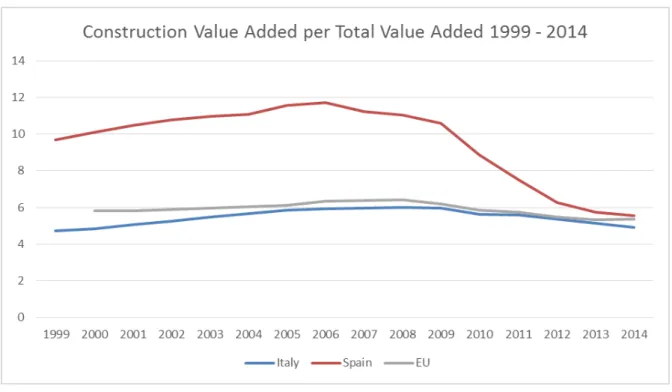
Figure 5: Construction Value Added/Total Value Added, % of TVA, 1999-2014
Source: OECD (2015), Value added by activity (indicator). doi: 10.1787/a8b2bd2b-en (Accessed on 18 October 2015).
Figure 5 well summarizes the different evolution of the construction sector in the two countries under investigation, especially the Spanish abrupt deterioration after 2009.
4 Not exclusively in housing but also in infrastructure.
5 Though in the Italian regions of Veneto and Lombardy some areas increased their housing stock by 15 % to
Figure 6: Construction of new dwellings in Germany, Italy, France and Spain (1995, 2000 and 2005)
Source: Gros 2007: 16.
In relation to the prominent expansion of the construction sector, the unemployment rate dropped significantly in Spain. Garcia-Montalvo (2002) states that the increase in house prices decreased youth unemployment by 16%. Italy also experienced a decrease in the unemployment rate (from 7.7% in 2005 to 5.8% in 2007), but this was far from matching the rates of Spanish development.
Figure 7: Unemployment Rate, Total, % of labour force, 1999-2014
Figure 8: Youth Unemployment Rate, Total, % of youth labour force 1999-2014
Source: OECD (2015), Youth unemployment rate (indicator). doi: 10.1787/c3634df7-en (Accessed on 18 October 2015).
Finally, to examine the financial activities related to housing, the mortgage debt to GDP is introduced here. The difference between Italy and Spain is fairly evident. While both countries more than doubled the share of mortgage debt to GDP from 1998 to 2008, the massive increase in the Spanish system is striking. In an environment in which house prices were steadily increasing, the confidence of both lenders and takers of mortgages in the market tended to misjudge the systemic risks, which eventually lead to a bust.
Figure 9: Mortgage debt/GDP ratio (%), 1998-2008
The description of the data helps to grasp the situation in Italy and Spain. Despite the fact that there was a housing bubble in Spain whereas in Italy there was not, by looking at the figures, it is possible to state that both countries experienced a rise in housing prices, mortgage loans and construction sector, with the exception that the Spanish boom far exceeded the Italian one.
5. Similar dynamics
The classification along the line of the ‘varieties of (residential) capitalism’ literature – as stated in Section 3 – is helpful to conceptualize the housing and welfare structure, but it fails to address the dynamic process that brought about the diverging outcome presented in Section 4. Though it does give us an idea of the path dependency of the Italian and Spanish governmental apparatus and highlights the background on which the different policies and international events working in favour of the crisis developed. In this section, I will elaborate on the dynamics at the dawn of the international financial crisis.
5.1. International context
This paragraph will delve into the influence of the EU’s economic policies on the rapid developments in the two countries under investigation.
The introduction of the euro aligned short-term interest rates of all euro countries perfectly and long-term interest rates partially. Thus, countries with formerly low-value currencies witnessed historically low domestic interest rates (Scharpf 2011). The consequence of such a cheap monetary policy, maintained by the European Central Bank, fostered rapid growth in the peripheral countries (Dellepiane et al. 2013). It has even been estimated that in Spain during 2000-2002 up to 13% of the increase in house prices (see figure 4) can be attributed to the so called “euro effect” (Balmaseda et al. 2002). Referring to the figure below, it is evident that both Italy and Spain had a phase of growth after the introduction of the euro in 1999. The extent of such growth differed in the two countries though. In 1999, Italian per capita GDP was initially a quarter higher than the Spanish. However, the Spanish growth quickly caught up and by 2007 Italian per capita GDP was just 2.2% higher than the Spanish.
Figure 10: Gross Domestic Product, Total, US dollars per capita, 1999-2014
Source: OECD (2015), Gross domestic product (GDP) (indicator). doi: 10.1787/dc2f7aec-en (Accessed on 14 October 2015).
5.2. Tax incentives toward home-ownership: historical path dependency and deliberate policies
The tendency to favour home-ownership over renting is deeply entrenched in both countries’ history, but the level of owner-occupancy is also the result of each deliberate policy decision taken throughout the years. Even though policy reforms might have had contradictory aspirations (see below), both Italy and Spain show a path-dependent bias toward homeownership (Dellepiane et al. 2013). In other words, it is possible to state that both Spain and Italy undertook policies that favoured home-ownership throughout both countries younger history as well as in the resent activities preceding the crisis. In the following paragraphs, country-specific tax incentives will be analysed along a historical perspective.
In Spain at the end of the 1950s, in view of a long-run social pacification, the Franco dictatorship started to support the demand for private housing. The Minister of Housing, José Louis Arrese affirmed in 1957 “We want a country of owners, not of proletarians”6 (Lopez & Rodrigez 2011). This statement can be
remembered as a turning point in the history of the Spanish housing market. If in the 1950s most of the population was still renters, by the 1970s 60% were homeowners. In 1964 Franco further reinforced the incentives towards home-ownership through the Ley de Arrendamientos Urbanos (Law of Urban Leasing) in
short LAU. This regulation had the objective to protect low-income families and pensioners, but it essentially produced an increase in home-ownership and – one of the most relevant consequences – the drop of the rental sector. Several reasons may account for this: On the one hand, a tax deduction of 15% for the purchase of a dwelling persuaded many renters to become owners. On the other hand, forced extension of tenancy contracts, frozen rental income and little incentives to invest in the maintenance of their dwellings further discouraged the supply of rental housing, making many owners prefer to sell their dwellings than to rent them out (García-Montalvo 2007: 8; Dellepiane et al. 2013: 23). Although one of the goals of the Ley Boyer (1985) was to reactivate the depressed renting market, it did not succeed and the number of homeowners continued to rise. Finally, the reform of the LAU (1994) aimed at striking a balance between rights and obligations of lessor and lessee. Its goal was to deregulate the renting market7 while still trying to protect the rental sector8. Even this law failed in incentivizing the private
rental sector with the consequence that its collapse continued even further. In a nutshell, policy decisions in the housing market have often been contradictory. Yet, despite different attempts to boost the renting market, stronger policies pushing towards home-ownership prevailed.
As already mentioned above, the Italian housing market has also traditionally been characterized by a high percentage of home-ownership. This is due to a number of policies implemented from the end of the Second World War onwards. It is possible to point out two periods in the development of housing situation in Italy. After 1945 until the 1980s, the housing situation was characterized by shortage mainly due to war damage and population migrations towards urban centres. In this first period, the Italian government financially supported the construction of new dwellings, providing a significant amount of public housing (Bianchi 2014: 4). Although the State built many new dwellings, especially in certain urban areas, soon it preferred to sell them (Baldini 2010). For instance, statutes on public housing allowed a right of redemption (diritto di riscatto) to grantees (assegnatari), so that the grantees could become owners of the flats at lower prices than their market value (Bianchi 2014: 5). The sale of public stock caused the reduction of total social housing and the increase in home-ownership. This decision reflects the public choice, exactly as in the case of Spain, of the Christian Democrats to favour “homeowners over proletarians” (Baldini 2010). Furthermore, the fiscal treatment of home-ownership was rather favourable. In fact, until the early 1980s, owning real estate was basically tax-free (Bernardi & Poggi 2002: 7). The second phase corresponds to the development from the 1980s to the end of 2000s, in which the State started to withdraw financial supports for housing. Despite this fact, a number of reforms aimed at liberalizing the housing market produced a stronger counter effect leading to more home-ownership. Also in the Italian case, other policies that intended to incentivize the rental sector failed to meet their goals. The 1978 reform, for instance, which originally had the scope of limiting rent increases, brought about in reality an under-investment of this sector and diffuse tenant eviction, thus indirectly favouring home-ownership (Aalbers 2007: 182). Another important aspect that characterized
7 Lessor and leases are now free to decide the duration of the rental contract, in case of less than 5-year lease
agreement (García-Montalvo 2007).
the 1990s was that the State or other public entities started to sell off public urban properties i.e. offices or employees’ dwellings of public entities to families or companies. Also this aspect can account for an additional increase in home-ownership (Bianchi 2014: 5).
5.3 Fiscal policy since the introduction of the Monetary Union
Since the European Central Bank had control over monetary policy after the introduction of the Monetary Union, the only viable means for steering the economy at the national level was fiscal policy. Economics basic principles tell us that from the early 2000s Italy and Spain should have implemented tight fiscal policies to counteract the lax monetary policy (Scharpf 2011). However, neither Italy nor Spain was able to manage this vis-à-vis the extraordinarily rise in inflation levels. Moreover, both the Italian and Spanish government was incapable to ensure the development of social pacts accepted by all the main labour market actors (Dellepiane et al. 2013: 25; Molina & Rhodes 2011).
In Spain, expansionary fiscal policy was favoured, thus sustaining the evolution of home-ownership and further growth expansion. Subsidies on house purchasing ranged from 20% to 50% of the total price during the 1990s and this resulted in the highest fiscal cost in Europe (2% of GDP) (Dellepiane et al. 2013: 28). This policy made particularly low and high incomes groups disproportionally benefit from government support, further depressing the middle class. This helped governments build a populist coalition behind home-ownership (García-Montalvo 2002). Successive fiscal reforms tried to reduce such subsidies, but in the end, the system remained biased towards the purchase of new houses.
As stated above, historically, also in Italy fiscal treatment toward home-ownership was favourable. Also, since the introduction of the Euro, Italy failed to implement policies to counter the effects of the lax monetary policy and to decrease the favourable conditions for home-ownership. In fact, during this period home-ownership continued to rise. According to Jordà et al. (2014) home-ownership in Italy rose from 67% in the 1990s to 80% in 2000 and 82% by 2010. Though, as pointed out before, this rise in homeownership didn’t lead to an overheating of the market. In conclusion, as Hemmelgarn et al. (2011) pointed out that tax incentives may explain the rise in house purchasing, but they are not powerful explanations for the development of the housing bubble, rather attention should be given to lax monetary policy (see above) and increased risk-taking by lenders.
6. Where it all went wrong
The main provider of credit to households for the purchase of new dwellings and to the construction sector in both Italy and Spain is the banking system (Manzano 2006; De Bonis et al. 2011). In this section, the features of the financial market will be analysed to explain the difference of mortgage market development in Spain and Italy. I will first examine 1) the relative openness to foreign investment 2) lending policies and 3) development of the banking system.
6.1. Foreign investment
In Spain, the degree of financial openness, measured as the sum of foreign assets and liabilities relative to the whole range of assets and liabilities, increased from 15.1% in 1998 to 19.5% in 2008 (Malo de Molina 2012: 204).
Figure 11: Foreign Direct Investment stocks, % of GDP, 1999-2013
Source: OECD (2015), FDI stocks (indicator). doi: 10.1787/80eca1f9-en (Accessed on 18 October 2015).
Consulting the figure 11, it is striking how the degree of foreign direct investment (FDI) surged over the same period of time. According to Rodriguez and Bastillo (2008), 40% of total FDI was foreign real estate investment (FREI). Furthermore in 2004, foreign banks, or more precisely, branches and subsidiaries of foreign banks provided 14.4% of total mortgage credit for house purchases and 5.5% of credit to the construction sector (Manzano 2006: 4). Italy, on the other hand, shows growth in FDI but on a completely different level than Spain. The role of foreign capital in the Italian banking system was less pronounced (Molina & Rhodes 2007: 26). This could indicate that the Italian market is less open to foreign investment than the Spanish. However, this does not seem to be the consequence of a generally
restrictive trade policy of the Italian State: The 2011 Open Markets Index based on 2008 and 2009 data clearly shows that the trade policy indicator, which sums up policies related to tariffs and other trade barriers, is the same for both economies (ICC 2011). This leads to the possible conclusion that the Italian system could have experienced the same influx of foreign money if it had been as attractive as the boom in the Spanish construction sector. Of course, the expansion of the construction sector in Spain was fuelled by the ability of financial institutions to mobilize resources from abroad to fulfil the requirements of the Spanish domestic economies (Tortella & Garcia Ruiz 2013: 167), but this seems to be just one aspect of a broader picture.
6.2. Lending policies to finance home-ownership
As stated by Schwartz and Seabrooke (2009) Spain historically represents one of the countries with a relatively undeveloped mortgage market. However, it is striking how this sector expanded dramatically during the 2000s mostly in synchronization with bank credit being made available to the private sector (Carbó-Valverde et al. 2011). From 1998 to 2008, residential mortgage debt to GDP ratio increased by almost 40% in Spain (see Figure 9). Since the 1990s, credit policies have been liberalised trying to increase competition. To be more precise, flexibility in the features of mortgage products (fixed or variable rates or a combination of the two rates over time) and an extension in the average maturity of mortgages were introduced (i.e. 50-year loans) (Dellepiane et al. 2013: 32). Moreover, as of 1994 the cost of subrogation and modification of mortgage credit declined, enhancing further competition (Manzano 2006). Another important aspect for measuring the flexibility of the lending policies is Loan-To-Value (LTV) – the ratio between the amount of capital lent and the value of the property that serves as collateral. In Spain the average is 80% with maximum peaks of 100%, which is quite high compared to the European average, 75% (Hess & Holzhausen 2008: 6).
Furthermore, it is crucial to take into account another factor that strengthened the expansion of the lending sector in Spain: securitization. In the case of Spain, its increase is outstanding: In 1999, securitization issuance was valued at 5 billion euros, almost an insignificant portion of bank lending, but in 2006 it had risen to 90 billion euros (Carbó-Valverde et al. 2011: 7). But why should securitization have an impact on the development of housing bubbles? Carbó-Valverde and Rodriguez (2010) stated that in countries experiencing credit growth, securitization bolstered the feedback loop between increasing house prices and credit expansion. In addition, the expansion of securitization brings about a laxer screening of borrowers, which contributes to augmenting the number of loans granted in the short-term, while at the same time being responsible for higher default rates in the long-term (Mian & Sufi 2014; Carbó-Valverde et al. 2011). In other words, the increase of credit loans to private investors, as well as to the construction sector, is a factor that fuelled growth substantially during the 2000s, but that also determined the vulnerability of the Spanish system toward the international financial crisis.
Figure 12: Lending growth and loan quality in Spain, 2000Q1-2010Q1
Source: Carbó-Valverde et al. 2011: 34.
Historically, Italy has featured a restricted lending policy, Italian banks offered but a small number of financial products regarding the acquisition of tenure (Aalbers 2007: 182). Although there has been a process of deregulation and liberalization since the 1980s, banks’ lending activities remained subject to procedural and lending restrictions, judicial inefficiency and high enforcement costs (Girouard & Blöndal 2001: 11). Furthermore, the presence of informal arrangements and intergenerational transfers9
reduced the need for mortgage credit (Jappelli Pistaferri 2007: 251). All of these factors bring about that “Italy is the world’s most affluent large country that has such a low level of mortgage activity” (Ball 2005: 95). For instance, until the 1980s a law prevented homeowners from taking out mortgage loans for higher than 50% of the estimated property value. Even though policy changed in subsequent years – allowing the granting of a loan for up to 80% of the value of a property in 1993 – households and financial institutions generally preferred less risky loans (Aalbers 2007: 182). On average, in 2003, the LTV ratio was 55%, which is very low by international standards (Hess & Holzhausen 2008: 6). As shown in the Spanish case, securitization is a fundamental aspect in order to analyse the size of banking lending policies. Also in this regard, Italy used to stand out for the small proportion of its banks’ securitized assets. In 1999 securitization was legally introduced to the Italian system (Law 130/99), however its use was limited and banks maintained most of the loans on their balance sheets (Gobbi 2005). Though, this tendency has changed in past years in favour of financial deregulation (Aalbers 2012). Before the financial crisis, many representatives of the Italian banking sector complained about
9 There are different kinds of intergenerational transfers, such as inter vivos transfers, bequests, help for down
the “poor” development of the credit market (Panetta 2002)10, which at the time seemed to negatively
affect the production sector, but turned out to protect the Italian banking system when the international financial crisis happened.
6.3. Banking structure
To explore the reasons for the different lending policies of Spanish and Italian banks, this section will look closely at the structure of the banks that developed along the integration process of the European Union.
In Spain, there are different types of credit institutions, but two kinds were primarily involved in the financial activities covered here. First, there are the commercial banks, which are either national banks (Sabadell or Popular) or large international banks (BBVA and Santander). The second class is composed by the Savings Banks – in Spanish Cajas de Ahorros 11. These institutions had a particular governance
structure (Santos 2014).
Since the epicentre of the current financial situation in Spain lies in the cajas, I will focus on their structure. As Santos (2014: 14) explains “[t]he cajas are private, deposit taking institutions identical to banks except for the fact that their profits revert to a foundation which goes on to fund socially minded projects with these profits”. In the following section I will try to summarize the problems related to such institutions. First, because of ill-defined property rights, the cajas could essentially not be acquired by other banks (Santos 2014). Thus, the cajas are not subject to the full range of market disciplining mechanisms. Second, cajas and local political elites are strongly entwined, which led to political motivated investments, mismanagement and very low regulation (Dellepiane et al. 2013: 31). This entity played a central role in the evolution of the housing bubble: They concentrated 48% of deposits and more than 46% of the loans of the banking sector (Confederaciòn Española de Cajas de Ahorros 2011). As Carballo-Cruz points out (2011), at the end of 2009, the cajas granted 56.3% of the total financing for productive activities for credit to the construction sector and 27.7% of their loan portfolio to the households. At that time, loans for housing acquisition and rehabilitation counted for 41% of the total number of granted loans. It is thus evident that when the housing bubble bust, it was mainly the cajas that revealed solvency issues (Santos 2014).
The Italian banking system is first of all characterized by its small size, especially when compared to that of other OECD countries. For instance, at the end of 2010 total balance sheet assets accounted for 2.5% of the country’s GDP, while in Spain the figure was 3.3% (De Bonis et al. 2011). There is not a consensus in explaining the “dwarfism” of the Italian banking sector. However, scholars have
10 Even after the crisis, the banking sector is pushing for more liberal lending policies (Panetta & Signoretti 2010). 11 There is also a third category composed by credit unions. Since they are very tiny in comparison to the other two
pinpointed some factors: the country’s historical legacy and the legal and regulatory system (Demirgüç-Kund & Levine 2001), and the political and institutional system (Rajan & Zingales 2003). It can also cautiously be stated that the Italian banking system is small because the financial system in general is less developed than in other countries (De Bonis et al. 2011). Stock market capitalization to GDP, for instance, is clearly lower than in Spain – and in other European countries, accounting for 28% at the end of 2010 vis-à-vis 44% in Spain. Also the relative size of the financial sector is smaller, especially insurance companies and pension funds are poorly developed (ivi).
Figure 13: Size of bank balance sheets in the large euro-area countries (end of 2010 stocks as percentage of GDP for the year)
Euro area Germany Spain France Italy
Total assets 3.50 3.32 3.27 4.02 2.45
Loans to households 0.56 0.57 0.83 0.52 0.38
of which: for house purchase 0.40 0.39 0.63 0.40 0.23
consumer of credit 0.07 0.07 0.08 0.08 0.04
other 0.09 0.11 0.12 0.04 0.11
Loans to firms 0.51 0.36 0.86 0.43 0.57
Deposits 2.19 2.07 2.39 2.29 1.47
memo: Total bank assets/financial
assets of entire economy
0.32 0.31 0.29 0.29
Source: De Bonis et al. 2011: 26. Harmonized statistics of European System of Central Banks; Eurostat. Loans are to counterparties resident in euro area.
What seems to be most striking is that Italian banks are less internationalized than in Spain, both in terms of direct business with non-residents and of the presence of Italian branches and subsidiaries abroad (De Bonis et al. 2011). Moreover, Italy blocked acquisitions by foreign banks for years (Aalbers 2012: 133). Only in 2005, the first foreign bank (the Dutch ABN-AMRO) was able to buy the Italian bank Antonveneta after a long process of negotiation and strong opposition by the Bank of Italy, which only ended when its governor was prosecuted and had to resign (ivi). Even though the general openness of the Italian economy is comparable with the Spanish one, as shown above, the Italian banking system is considerably more closed.
6.4. Proneness to Europeanization
How can this this different path of development best be explained? In order to clarify this, it is important to include the process of Europeanization in the analysis. As Aalbers affirms (2012), European integration has been a stimulus for deregulation and liberalization. Especially in the banking system, the EU pushed for ongoing restructuring and merging of banks, with the goal of enhancing
internationalization and transparency on the supply side of the market (Aalbers 2007). Yet, this process took deeper roots in Spain than in Italy: Spain resorted to stronger open market logic bringing about liberalizing measures and undertaking a sudden process of bank deregulation (Molina & Rhodes 2007: 26; Dellepiane et al. 2013: 10). Why is this?
On November 20 1975, the dictator Franco died and with him the Spanish dictatorship. The process of democratization and the Spanish approach toward the EU – at that time still European Community (EC) – began. Powell (2015) states that, for most Spaniards, the legitimation of the new democratic political system strongly depended on the accession to the EC.12 In addition to this political motive, there were
other economic reasons why Spain was willing to become an EC member. Spain’s industrialization model, founded on protectionism, state interventionism and tariff barriers was increasingly seen as cumbersome and out-dated. Thus, EC membership was perceived as a means of modernization, a way to overcome Spanish economic backwardness. Apart from the Spanish enthusiasm, the EC strongly pushed for such reforms as access precondition criteria. In explaining the factors that drove this profound reforming process in Spain, we also find the key explanation for the different outcome in Italy. Italy, as one of the founding members of European Coal and Steel Community, did not experience the same pressure for deregulation.
In short, Spain’s strong commitment to deregulation and liberalization seems to stem from the push to adapt to EU entry criteria in the aftermath of the Franco dictatorship, which definitely was missing in the case of Italy.
6.5. Bringing it all together
Italy and Spain share structural and economic features and, moreover, are similarly situated in the broader context of international political/economical events. These similarities notwithstanding, the two European peripheral countries did not develop the same construction-related economic bubble.
This section has aimed to identify the causes of this discrepancy. Even though Spain developed (and still has) a relatively high level of foreign direct investment compared to Italy, Spain generally doesn’t seem to have implemented more policies towards an open market than Italy. This could suggest that Italy could have also been flooded with foreign capital, if the housing sector had been booming enough. Examining the banking sector more closely, the differences become evident. Italy prevented the internationalization of its banks while Spain particularly sought out FDI-oriented growth, which, in turn, made its economy more receptive to calls for liberalization, especially in a sector like finance (Molina & Rhodes 2007: 13).
12 Apart from the fact that, already in 1975, King Juan Carlos during his coronation speech proclaimed Spain’s
commitment to full integration, thus spreading this hope throughout Spain, there was also a widespread idea that EC membership would prevent Spain from a return to authoritarianism.
And here we arrive at the crucial point. There was a substantial difference in the banks’ willingness to supply discounted financing for housing. While in Spain the commercial banks and the deregulated cajas could use international finance and securitization to pump seemingly low-risk money into the market, the small, national and more regulated Italian commercial banks “failed” to do so to a comparable extent.
To sum up, in Spain, low levels of interest rates and the flexibility of the mortgage market system brought about growth, which resulted in a large influx of capital, pushing up domestic demand and inflation rates. This intensified international lending to Spain and increased lending by the national banking system. This system strengthened itself by pushing more capital into construction. On the other hand, Italy also experienced low levels of interest rates, but since the features of the banking system were far more favourable toward international lending, the result was a less developed evolution, which is clearly described by the figures above.
7. Conclusion
The burst of the housing bubble in Spain made the Spanish economy floundered. Unemployment topped 25% by 2012, while youth unemployment peaked 50% by 2013 (Figure 7 and 8). Furthermore, Spanish homeowners, who missed mortgage payments, not only found themselves evicted from their houses, but they also remained liable by law for the entire debt.13 In the end, Spain avoided entering a
loan agreement with the European Institutions, but bank recapitalization has been required through the European Stability Mechanism (Dellepiane et al. 2013). Although also the Italian economy has been severely hit by the financial crisis, my analysis has shown that its vulnerability did not originate from the development of a housing bubble.
This paper tried to examine why Spain did develop the bubble and Italy did not, notwithstanding the numerous similarities between the two systems. It first aimed to show how the Italian and Spanish structural and economic systems resemble each other and how both countries were exposed to the same international circumstances with the introduction of the European Monetary Union. Then, it focused on the banking systems, which – in this pair comparison – mostly differ. The main finding of this paper is that the different degree of financialization and deregulation account for the diverging outcome in Italy and Spain.
The reason underneath this diverging development can be analysed as a different reaction to the same impulse: the process of Europeanization. After the end of Franco dictatorship, the Spanish state tried to
abruptly withdraw from its previous paternalist and protectionist modes of interventionism and pushed for EU-induced process of liberalization and deregulation, whereas in Italy the system remains cumbersome and policy change has been consequently slower.
Recalling that there has been – and still are – strong parties pushing for more deregulation of the finance sector also in Italy, this paper ends with a final remark. A slow but steady shift towards financial deregulation is taking place in Italy (Aalbers 2007), so that, ceteris paribus, Italy might be on the path towards strong market fluctuations similar to the Spanish housing bubble.
References
Aalbers, M. (2007), Geographies of Housing Finance: The Mortgage Market in Milan, Italy, in: Growth and Change, 38(2), pp. 174-199.
Aalbers, M. (2012), European Mortgage Markets Before and After the Financial Crisis, in: Aalbers, M., (Ed.) Subprime Cities: The Political Economy of Mortgage Markets. Wiley-Blackwell, pp. 130-157.
Affinito, M. & Tagliaferri, E. (2010), Why Do (or Did?) Banks Securitize Their Loans? Evidence from Italy, Bank of Italy Temi di Discussione (Working Paper) No. 741.
Allen, J., Barlow, J., Leal, J., Maloutas, T. & Padovani, L. (eds.) (2004), Housing and Welfare State in Southern Europe, London, Wiley-Blackwell.
Allen, J. (2006), Welfare Regimes, Welfare Systems and Housing in Southern Europe, in: European Journal of Housing Policy, Routledge, pp. 251-277.
Baldini, M. (2010), La casa degli italiani, Bologna: Il Mulino.
Balmaseda, M., San Martín, I. & Sebástian, M. (2002), Una aproximación cuantitativa a la burbuja inmobiliaria, Situación Inmobiliaria BBVA.
Ball, M. (2005), RICS European Housing Review 2005. Conventry: Royal Institute of Chartered Surveyors. Bernardi, F. & Poggio, T. (2002), Home-ownership and Social Inequality in Italy, in: Home Ownership and
Social Inequality in comparative Perspective, (eds.) K. Kurz & H. P. Blossfeld, Standford: Standford University Press, pp. 187-232.
Bianchi, R. (2014), National Report for Italy, in: TENLAW: Tenancy Law and Housing Policy in Multi-level Europe.
Carballo-Cruz, F. (2011), Causes and Consequences of the Spanish Economic Crisis: Why Recovery is Taken so Long?, Panoeconomicus, pp. 309-328.
Carbó-Valverde, D., Rodrìguez Fernàndez (2010), The Relationship between Mortgage Markets and Housing Prices: Does Financial Instability Make the Difference?, Moneda y Credito 230, 123-43. Carbó-Valverde, S., Marqués-Ibáñez, D. & Rodrìguez Fernàndez, F. (2011), Securitization, Bank Lending
and Credity Quality, Working Paper, No. 1329, ECB.
Castles, F. G. & Ferrera, M. (1996), Home Ownership and Welfare: Is Southern Europe Different?, in: South European Society and Politics, 1(2), pp. 163-185.
Cetorelli, N., Mandel, B. H. & Mollineaux L. (2012), The Evolution of Banks and Financial Intermediation: Framing the Analysis, in: Economic Policy Review, NY Federal Reserve Bank, pp. 1-12.
Dellepiane, S., Hardiman, N. & Las Heras, J. (2013), Building on easy money: The political economy of housing bubbles in Ireland and Spain. UDG Geary Institute Discussion Paper 2013/18. Available at: http://irserver.ucd.ie/handle/10197/4929. (Accessed on July 3, 2015).
De Bonis, R., Pozzolo, A. & Stacchini M. (2011), The Italian banking system: Facts and interpretations. Economic and Statistics Discussion Paper, No. 068/12.
Demirgüç-Kunt, A. & Levine, R. (2001), Financial Structure and Economic Growth. The MIT Press.
Quarterly Review, 67-79.
García-Montalvo, J. (2002), La vivienda en España: Desgravaciones, burbujas y otras historias, Barcelona, Universidad Pompeu Fabra.
García-Montalvo, J. (2007), Algunas consideraciones sobre el problema de la vivienda en España, Barcelona, Universidad Pompeu Fabra.
Gentier, A. (2012), Spanish Banks and the Housing Crisis: Worse than the Subprime Crisis? International Journal of Business, 17(4), pp. 343-351.
Girouard, N. & Blöndal, S. (2001), House Prices and Economic Activity, OECD Economics Department Working Paper No. 279, Paris, OECD.
Gobbi, G. (2005), “Housing Finance in Italy”, Banca d’Italia.
Gros, D. (2007), Bubbles in real estate? A Longer-Term Comparative Analysis of Housing Prices in Europe and the US, in: CEPS Working Document No. 276, October 2007. Available at: http://www.ceps.eu. (Accessed on August 26, 2015).
Hall, P., A. & Gingerich, D. W (2009) Varieties of Capitalism and Institutional Complementarities in the Political Economy, 35, pp. 1239-1255.
Heires, M. & Nölke, A. (2011), Finanzkrise und Finanzialisierung, in: Kessler, O., (ed.) Die Internationale Politische Ökonomie der Weltfinanzkrise, Wiesbaden: VS Verlag für Sozialwissenschaften.
Hemmelgarn, T., Nicodeme G. & Zangari, E. (2011), The Role of Housing Tax Provisions in the 2008 Financial Crisis, Taxation Papers, No. 27, European Union.
Hess, A. & Holzhausen, A. (2008), The Structure of European Mortgage Markets, Working Paper No. 97, Allianz Dresdner Economic Research.
Jappelli, T. & Pistaferri, L. (2007), Do people respond to tax incentives? An analysis of Italian reform of the deductability of home mortgage interests. European Economic Review 51, pp. 247-271.
Jordà, O., Schularick M. & Taylor, A. (2014), The Great Mortgaging: Housing Finance, Crises, and Business Cycles, Working Paper No. 20501. Available at: http://www.nber.org/papers/w20501. (Accessed on June 16, 2015).
Lopez, I. & Rodriguez, E. (2011), The Spanish Model, in: New Left Review, No. 69, pp. 5-28.
Malo de Molina, J. L. (2012), The Macroeconomics Basis of the Recent Development of the Spanish Financial System, in J.L. Malo de Molina and P. Martin Acena (eds.) The Spanish Financial System. Growth and Development since 1900. Basingstoke and New York: Palgrave Macmillan, pp. 183-217. Manzano, M., (2006), Structure of the Spanish housing market and source of finance: an overview, Bank
of Spain.
Messori, M. (2009), The Financial Crisis: Understanding it to Overcome it, Assogestioni. Available at: http://www.assogestioni.it/index.cfm/1,147,0,49,html/editoriali. (Accessed on August 28, 2015). Messori, M. (2012), La Governance economica europea, La finanza pubblica italiana. Rapporto 2012, Zanardi,
A. (ed.), Bologna: il Mulino.
Mian A. & Sufi, A. (2014), House of Debt. How They (and You) Caused the Great Recession, and How We Can Prevent it from Happening Again, Chicago and London: The University of Chicago Press.
Molina, O. & Rhodes, M. (2007), The Political Economy of Adjustment in Mixed Market Economies: A Study of Spain and Italy, in: Hancké, B., Rhodes, M., Thatcher, M. (eds.) Beyond the Varieties of Capitalism: Conflict, Contradictions and Complementarities in the European Economy. Oxford, Oxford University Press, pp. 223-252.
Molina, O & Rhodes, M. (2011), Spain: From Tripartite to Bipartite Pact, in: Avadgic, S., Rhodes, M. & Visser, J. (eds.) Social Pacts in Europe: Emergence, Evolution, and Institutionalization. Oxford, Oxford University Press, pp. 157-198.
Naredo, J. & Marquez, A. M. (2011), El modelo inmobiliario español – su culminicaion en el caso valenciano, Barcelona, Icario & Antrazyt.
Panetta F. (2002), I riflessi del ciclo economico sull’attività bancaria, in: Quaderni dell’Associazione per lo Sviluppo degli Studi di Banca e Borsa, No. 198.
Panetta, F. & Signoretti, F. M. (2010), Domanda e offerta di credito in Italia durante la crisi finanziaria, in: Questioni di Economia e Finanza, No. 63. Banca d’Italia.
Powell, C. (2015), The Long Road to Europe: Spain and the European Community, 1957-1986, Working Paper Real Instituto Elcano.
Przeworski, A. & Teune, H. (1970), The Logic of Comparative Social Inquiry, Wiley-Interscience.
Rae, D. & van den Noord, P. (2006), Ireland’s Housing Boom, What has driven it and have prices overshot?, in: OECD Economics Department Working Papers. Paris, OECD.
Rajan, R. G. & Zingales, L. (2003), The Great Reversals: The Politics of Financial Development in the 20th Centuary, Journal of Financial Economics, 69(1), 5-50.
Rodriguez, C. & Bastillo, R. (2008), Modelling Foreign Real Estate Investment: The Spanish Case, Journal of real estate finance and economics, 41(3), 354-67.
Santos, T. (2014), Antes del diluvio: The Spanish Banking System in the First Decade of the Euro. Columbia University, NBER and CEPR.
Scharpf, F. (2011), Monetary Union, Fiscal Crisis and the Preemption of Democracy, LEQS Annual Lecture Paper 2011.
Schwartz, H. (2009), Subprime Nation: American Power, Global Capital and the Housing Bubble, Cornell University Press.
Schwartz, H. & Seabrooke, L. (2008), Varieties of Residential Capitalism in the International Political Economy: Old Welfare States and the New Politics of Housing, in: Comparative European Politics, Palgrave Macmillan, 237-61.
Tarrow, S. (2010), The Strategy of Paired Comparison: Toward a Theory of Practise, in: Comparative Political Studies, 43, 230-259.