THESIS
PROJECT RELATIONSHIP TO INNOVATION AND ITS IMPACT
WHEN PROJECT MEETS INNOVATION,
CREATING NEW VALUE WHILE DELIVERING SUSTAINABLE RESULTS. “NEW CONCEPTUAL (PRO-INNOVA) & PRACTICAL (PROD-JECT) MODEL”
Project purpose (Pp.) = Innovation impact (Ii.)
Presented by: Ismail Albaidhani
Supervised by: Prof. Brahim Meddeb
THESE PRESENTED AT THE UNIVERSITY OF QUEBEC IN CHICOUTIMI TO OBTAIN THE DEGREE OF DOCTORATES IN MANAGEMENT OF PROJECTS
Québec, Canada
1
Contents
LIST OF ABBREVIATIONS ... v
LIST OF TABLES ... viii
LIST OF FIGURES ... viii
ABSTRACT ... x
GENERAL INTRODUCTION ... 13
CHAPTER 1 ... 17
RESEARCH CONTEXT & REVIEW ... 17
1.1 Innovation-dilemma ... 19
Innovation challenge ... 36
1.2Project on time ... 39
Project challenge ... 44
1.3 Research challenges: In-between innovations and projects ... 44
How Can This Research Contribute ... 46
1.4 Literature Review ... 49
Evolution of Management ... 49
Evolution of Projects & Project Management Research ... 63
Professional Review ... 65
Academic Review ... 69
Innovation & Innovation Models ... 98
Links between project management and innovation models ... 100
Impact evaluation ... 103
Complexity ... 105
CHAPTER 2 ... 107
RESEARCH FRAMEWORK & METHODOLOGY ... 107
2.1Towards Theoretical Model: Conceptual Frameworks ... 107
Innovation Conceptual Definition ... 107
Project Conceptual Definition ... 110
Innovation to Project Theoretical Framework ... 111
2.2Proposed Theoretical Framework (PRO-INNOVA) ... 113
Research Variables ... 121
ii
2.3Research Methodology ... 126
Qualitative: Multiple Case Studies & Semi-Structured Interviews ... 130
Case Studies ... 132
Case Observations—Third Party Case Assessment ... 135
Semi-conducted Interviews ... 137
Quantitative: Survey ... 140
Scientific Publications: Articles and Conferences ... 143
The Journal of Modern Project Management (JMPM) ... 143
The International Journal of Arts and Sciences’ (IJAS) Conference ... 144
Other Notable Contributions: European Organization for Nuclear Research (CERN) & Harvard Business Publishing (HBP) ... 144
CHAPTER 3 WHEN PROJECT MEETS INNOVATION: “PRO-INNOVA CONCEPTUAL MODEL” FIRST ARTICLE ... 145
WHEN PROJECT MEETS INNOVATION: “PRO-INNOVA CONCEPTUAL MODEL” ... 145
Keywords: Innovation, project management, delivering results, theoretical model ... 146
Introduction ... 146
1.Research context: project and innovation relation ... 149
3. Conceptual framework ... 156
4.Conclusions ... 164
CHAPTER 4 PRODJECTING THE FUTURE: NEW PRODUCT-PROJECT DEVELOPMENT—THE PROD- JECT MANAGEMENT SYSTEM”—SECOND ARTICLE ... 167
Abstract ... 167
1. Introduction ... 168
1. Theory background ... 169
3.Research methodology... 175
4.Findings ... 184
5.Discussion and conclusions ... 206
CHAPTER 5 PROJECTS WITH PURPOSE (PP) = INNOVATION WITH IMPACT (II) EXAMINING TECHNOLOGICAL AND SOCIAL INNOVATION PROJECTS—THIRD ARTICLE ... 215
Abstract ... 215
1. Introduction ... 216
2. Innovation and project ... 222
i
4. Key Findings... 256
1. Discussion and conclusions ... 260
CONCLUSION ... 262
Limitation & Future Tracks ... 272
Annexes: ... 275
Annex 1: Publications ... 275
Annex 2: Researcher & Co-Authors Contribution ... 276
Annex 3: Ethic Commitee Approval ... 277
Annex 4: Researcher Biography ... 278
LIST OF ABBREVIATIONS
AIPM: Australian Institute for Project Management APM: Association of Project Management
ATB: Automated Ticket & Boarding Pass ATM: Automated Teller Machine
CEO: Chief Executive Officer COPS: Complex Product Systems CQ: Cultural Intelligence
CS: Central Secretariat
DAC: Development Assistance Committee DNA: Deoxyribonucleic Acid
EBO: Emerging Business Organization
EQ or EI: Emotional Quotient or Emotional Intelligent EU: European Union
EU: European Union
GDP: Gross Domestic Product
GSQO: Government Standard & Quality Organization HR: Human Resource
IATA: International Air Transport Association IBAAN: International Bank Account Number IBM: International Business Machines
ICAO: International Civil Aviation Organization
IEEE-TEM: Institute of Electrical and Electronics Engineers Technology Management
IJPM: International Journal of Project Management IMI-JU: Innovation Medicine Initiative Joint Undertaking
INSEAD: Institut Européen d'Administration des Affaires (European Institute of Business Administration)
IPMA: International Project Management Association IPPM: Innovation Project Portfolio Management ISO: International Organization for Standardization IT: Information Technology
JPMF: Japan Project Management Forum LoB: Line of Business
MBA: Master of Business Administration MBO: Management by Objectives MOOCs: Massive Open Online Courses NATA: National Air Transport Association NPD: New Product Development
OECD: Organisation for Economic Co-operation and Development OECED: Organization for Economic Co-operation and Development OT: Online Ticket
PMAJ: Project Management Association of Japan PMBOK: Project Management Body of Knowledge
PMCC: Project Management Professional Certification Centre PMI: Project Management Institute
PMJ: Project Management Journal PMO: Project Management Office
PRINCE2: Projects In Controlled Environments
PROMPT: Project Resource Organization Management Planning Technique RACI: Responsible, Accountable, Consulted and Informed
RFID: Radio Frequency Identification ROIC: Return on Invested Capital SC: Success Criteria
SIA: Stakeholder Impact Analysis SMEs: Small and Medium Enterprises TAT: Transitional Automated Ticket
TCs: Technical Committees
TGMs: Technical Group Managers ToC: Theory of Change
TPMs: Technical Program Managers
UNOPS: United Nations Office for Project Services UQAM, UQO, UQAR: Universities of Quebec US: United States
LIST OF TABLES
TABLE 1: IMPACT OF INNOVATION TO ECONOMY ... 32
TABLE 2: INNOVATION GENERATIONS ... 35
TABLE 3: SUMMARY OF PERSPECTIVE CATEGORIES UNDERLINING THE MOST RELEVANT ONES TO THIS RESEARCH ... 70
TABLE 4: PRO-INNOVA 4-PERSPECTIVE SYSTEM DYNAMICS MATRIX ... 120
LIST OF FIGURES
FIGURE 1: ORGANIZATIONAL PARADOX ... 17FIGURE 2: ORGANIZATIONAL COMPLEXITY ... 19
FIGURE 3: THE WORLD’S TOP 50 COMPANIES BY THEIR TOTAL R&D INVESTMENT (€M) IN THE 2015 .. 21
FIGURE 4: TOP R&D INVESTING COMPANIES BY COUNTRY ... 22
FIGURE 5: R&D INVESTMENT AND NET SALES ... 22
FIGURE 6: EU INDUSTRIAL R&D INVESTMENT SCOREBOARD, 2015 ... 23
FIGURE 7: R&D INVESTMENT BY SECTOR (2006 VS. 2014) ... 24
FIGURE 8: DISTRIBUTION OF COMPANY ECONOMIC PROfi T WITHIN INDUSTRY ... 25
FIGURE 9: THE GLOBAL INNOVATION INDEX, 2016 ... 27
FIGURE 10: INNOVATION ECOSYSTEM & FRAMEWORK ... 27
FIGURE 11: THE GLOBAL INNOVATION EFFICIENCY & ECONOMIC PERFORMANCE ... 28
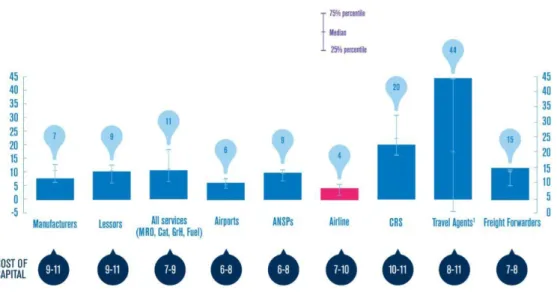
FIGURE 12: INDUSTRY MEDIAN ROIC ... 29
FIGURE 13: RETURN ON CAPITAL THROUGHOUT THE VALUE-CHAIN ... 30
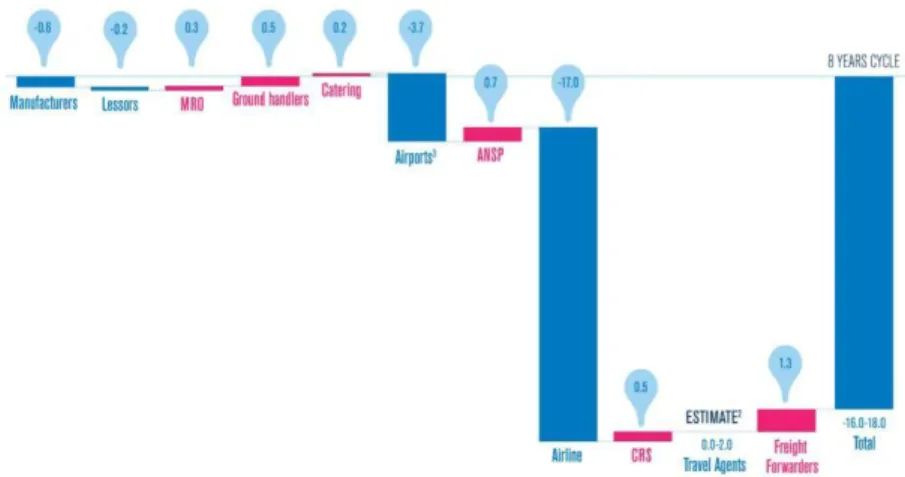
FIGURE 14: ECONOMIC PROFITS IN THE AIR TRANSPORT VALUE-CHAIN ... 31
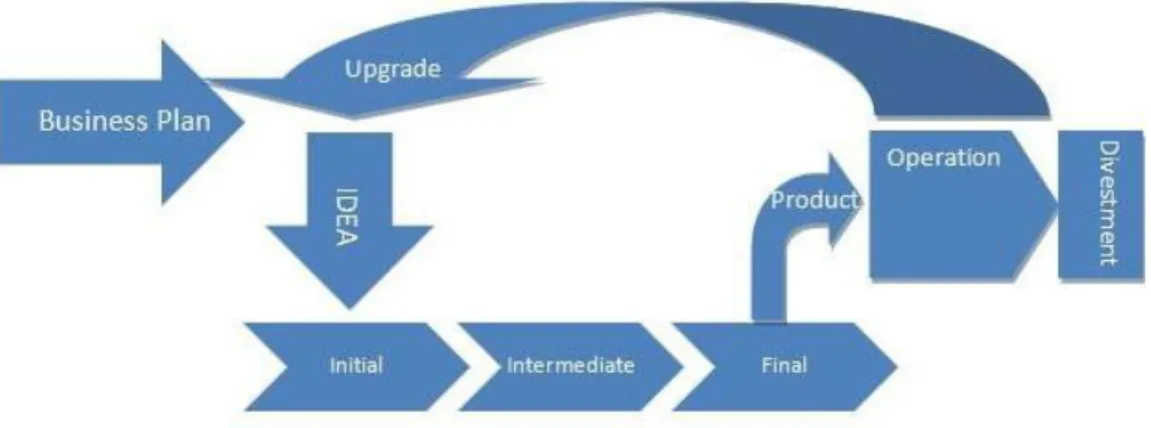
FIGURE 15: RELATIONSHIP BETWEEN THE PRODUCT AND THE LIFE CYCLE... 33
FIGURE 16: STRATEGIC INITIATIVES & HIGH PERFORMING ORGANIZATIONS ... 40
FIGURE 17: PROJECT INTENSIVE INDUSTRIES ... 42
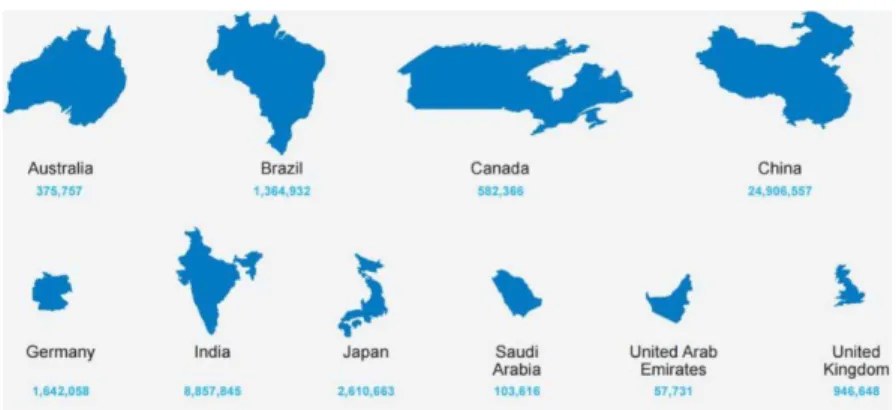
FIGURE 18: COUNTRIES WITH PROJECT— INTENSIVE INDUSTRIES ... 42
FIGURE 19: UNOPS ACTIVE PROJECTS WORLDWIDE ... 43
FIGURE 20: INTERACTION BETWEEN PROJECTS, INNOVATION AND IMPACT ... 47
FIGURE 21: IDEATION, DELIVER AND IMPACT CYCLE ... 48
FIGURE 22: PROJECT GANTT, CRITICAL PATH AND PERT ILLUSTRATION ... 77
FIGURE 23: PROJECT MODELING EXAMPLE- 5 STRATEGIES OF MODELLING PROJECT ... 78
FIGURE 25: WORLD PASSENGER TRAFFIC ... 83
FIGURE 26: PROJECT & INNOVATION GOVERNANCE INTERACTION EXAMPLE ... 86
FIGURE 27: AIRLINES E-TICKETING PROJECT MARKETING EXAMPLE ... 88
FIGURE 28: HUMAN INTELLIGENCE IN THE NEW PRODUCT & INNOVATION CYCLES ... 92
FIGURE 29: LEADERSHIP DYNAMICS (INDIVIDUAL VS TEAM) IN PROJECT CYCLE ... 93
FIGURE 30: AIRLINE ROUTE ILLUSTRATION FROM MONTREAL TO BEIJING ... 95
FIGURE 31: STANDARD PROJECT MANAGEMENT PROCESSES ... 96
FIGURE 32: MANAGEMENT INNOVATION PROCESS FRAMEWORK ... 108
FIGURE 33: THE INNOVATION PROCESS AS STORY-TELLING ... 110
FIGURE 34: THEORETICAL FRAMEWORK ... 115
FIGURE 35: PRO-INNOVA ADAPTIVE SYSTEM & 4-PRESPECTIVES ... 121
FIGURE 36: RESEARCH VARIABLES ... 124
FIGURE 37: RESEARCH METHODOLOGY ... 129
SOURCE: RESEARCHER’S ILLUSTRATION ... 129
ABSTRACT
At the macro and micro levels, governments, industries, and companies are
constantly challenged by their stakeholders and customers to show relevance by adding
a new value with innovative services, products, and solutions. The same stakeholders
are simultaneously very demanding for the agile (Continuous and evolving) delivery of
results with high impact. Both competing and often contradictory demands can be
challenging to be met by organizations. Innovating new and unique value often requires
a different set of skill and environment (Reflective, creative process with the need for a
reasonable time to experiment) than those needed for delivering rapid projects (Time
intensive and process-driven activity). This state of complexity is the main reason for the
research study that is discussed in this doctorate thesis.
Paradigm belief theory (Guba & Lincoln, 1994) and constructivism discipline were
guiding this research work, assuming that there isn’t just one-way of the truth as it is
relative and highly dependent to its context, opening the concept for interpretations.
We used a blend of qualitative (Semi-structured Interviews, literature reviews)
and quantitative (Multi-country and sector Survey) approaches in this research to
increase the rigour of its findings, each methodology used works to complement and not
compete with the other methods, in a way that it should help address some of the gaps and weaknesses, which can be found in each method if used independently.
The consequence of using rigorous mixed qualitative and quantitative methods
allowed for the findings of this research to be published (3 articles) in scientific double—
blind reviewed international journals and conferences.
A proposed conceptual framework to merge between some of the innovation and
the project phases and activities, referred to here as “Pro-Innova” for short. We argue, validate and propose this new theoretical model that integrates the innovation and
project management activities, using some aspects of the design thinking and the system
dynamics loops with focus on the complementary and common aspects found in both
areas to address the challenges, limitations and contradictions as well as the complexity
each area (Innovation and Project) has on its own.
Furthermore, the research reveals a new practical management system to
breakdown the Pro-Innova conceptual model into more details (process, organization,
roles and systems) to help the interaction between new product & project development.
The management framework is therefore referred to as “Prod-Ject” for short.
The proposed model (Pro-Innova) and while it has practical implications (Prod—
Ject) and can be deployed within organizations in the public, private or social sectors,
the model by analysis and design clearly follows the research perspectives that are more
geared toward development in project management (Success, Business, Human,
Contingency), which in one hand serves the research scope in the innovation project
area. However, it doesn’t look at the other type of project perspectives that are merely
Pro-Innova conceptual model branches into Prod-Ject practical management
system that offers project owners at the PMO unit a new way of conceptualizing and
managing their projects when aiming at producing innovative products and solutions. It
also provides inventors at the R&D or New Product Development units a new way of
conceptualizing and managing their innovation cycle. Therefore, the model offers
modern organizations an end-to-end conceptual model combined with a practical management system, which enables ideas to be actualized with high impact, in an
effective and efficient manner.
The integration of “Impact” in the Pro-Innova model and as part of the phases of
the Prod-Ject management system is specifically aimed at forcing organizations to
rethink the way they conduct their innovation projects, by moving from the short-term
deliverable of outcomes into a longer term and sustainable socio-economic benefits.
Therefore, redefining the success criteria for these exploratory organizational missions.
Academically, there are limited attempts in studying the relationship between
innovations and projects, which allowed for this research to unleash new theoretical and
conceptual angles.
Professionally, the two areas are often separated in a silo within organizations,
putting modern leaders in a real paradox by either focusing their resources on one area
(Creating innovative value) or the over (Delivering projects). The practical management
system therefore attempts to bridge this gap and align internal organizational efforts for
GENERAL INTRODUCTION
Several researchers argued for the perspective that project management should
focus on processes, modelling, and optimizations to perform control and contribute to
standardization (Turner, Huemann, Anbari, & Bredillet, 2010). This could be attributed to the
influence project management had when it first started as a branch from operation research
theories and therefore had some historical links to some early nineteen (1911) management
science concepts during the Taylorism era which suggested human work as close as possible
to machines in the factory. Looking at the project activities through the lenses of pure
processes is a way to coordinate work across functions. However it increasingly hinders the
quest for innovation and risks the adaptability factor that is key aspects in new management
to deal with complexity and unpredictable operating environments (Rayasam, Renuka,
2008).
The definition of what is to be considered a project seems to have been widely
accepted across most industry sectors and around the world, making it easier to define and
process. However, the challenge with projects nowadays is that many are often failing to
deliver on what all involved stakeholders would consider as a “successful result”, which goes
beyond the traditional project definition that pay attention to the processes related to
project cost, time and scope. And on the other hand, the reasons behind the failure of many projects around the world despite the clarity in processes and definition in scope, cost and
On the other spectrum innovation, the creation of something both novel and helpful
that can be a new product, service, process, model, or a new way of organizing. Whatever
form innovation takes, people often think of it as a chance occurrence, a brainstorm by one
of those rare individuals who is creative, but the actual process of innovation is more
complex. (Hill, Brandeau, Truelove, Lineback, 2014). Innovation attracted more research attention compared to the project management area. The focus however was majorly in the
technological innovation area (Brady & Hobday, 2012).
A major challenge with innovation in today’s global environment remains somehow
consistent with those discussed by some fathers of innovation research such as the case of
Schumpeter who argued that the prediction of business cycles and the success of business
model rely heavily on the model ability to predict future cycles after careful consideration of
historical events and trends (Schumpeter, 1939). Similarly, Friedman argued that the solidity
and reliability of a model is assessed based on its predictability factor more than its
assumption. He also distinguished between new and improved innovation (Friedman, 1953).
The Schumpeterian innovation emphasized the point that innovation is not just about
technology, as it includes other things such as imagining new combinations of the firm
resources and capabilities (Galunic & Rodan, 1996).
And while innovation models started to evolve through different generations
(Rothwell, 1992), unlike projects that achieved a certain level of clarity in definition and
process flow, innovation lacks a clear definition and way to conceptualize, which is a major
case for why many great ideas don’t see the light of becoming a real product or service
And therefore, as we analyze and look closely at the innovation trends, benefits and
challenges and those for the projects, we started to detect contradictions, but also
similarities and complementarities all at the same time, which lead us to further explore the
interaction and relationship between the two areas in an attempt to contribute in solving
the complexity faced by modern companies.
On the complementary traits, what innovation is missing in term of clarity in
definition and process is what projects seem to excel with some clear and widely consented definition and agreed processes that the innovation area is still searching for.
Looking at the similarities, it seems that today’s modern organizations are trying to
use both innovation labs, R&D centres as well as the project and program offices to break
from the traditional organizational structures with the hope to come up with a final
deliverable that is new, unique and different.
On the other hand, no one can ignore the fact that organizations today are still
perplexed to put the words innovation and project in the same sentence. Innovation is often
perceived within organizations as the free flow, unstructured and borderless work that
requires the genius of the people involved to produce the next big idea, while the project
term is still commonly perceived to a very structured and defined scope and processes that
doesn’t tolerate deviations and regularly rejects creativity that is considered “out-of-scope”.
Still, the real unanswered questions are why many innovation initiatives don’t see the light
(market: customers, users or citizens)? And why several important projects’ work fails?
Looking at it the other way around, what makes innovation work? And what makes
the project successful? Could organizations and governments benefit from the structure of
the projects to make great ideas a reality? And can the inspiration behind a great idea define
and drive projects’ success? It was worth exploring!
We also recognize that organizations are generally dense with several internal and
external interdependencies, objectives and goals. Within this organizational density,
innovation and projects are arguably the most complex work an organization undertakes with the human factor at its highest, connected processes and networked organizational
structures. Therefore, exploring a relationship between these two complex undertakings will
require applying simplification through an effective use of design thinking and dynamic
systems to try and explain any relationship through the feedback loops and interactions.
Although it’s a challenging objective to advance this area, it can be seen as a potential
unique angle to further examine the relationship and links between innovation cycles and
project management. The integration between project management and innovation
research is very limited, opening the door for more research work to be done to examine a
stronger link between the two areas (Brady & Hobday, 2012). The main objective of this
article is rethinking the traditional project management concepts by conceptualizing a new
theoretical model, which brings the discipline of project management closer to the field of
innovation. We argue that project is a critical enabler for the creativity to materialize and for
CHAPTER 1
RESEARCH CONTEXT & REVIEW
Complexity is a living Challenge to innovate while delivering results with impact. At the macro and micro levels, governments, industries, and organizations are constantly
challenged by their leaders, stakeholders, users and customers to show relevance by adding
value with new services, products, and solutions. At the same time, the same stakeholders are very demanding for the agile delivery of these results with high quality (Rosenbusch,
Brinckmann & Bausch, 2011). Both competing and often contradictory demands can be
challenging to be met by organizations, since creating new and unique value often requires
a different set of skills environment (Reflective, creative process with the need for
reasonable time to experiment) that those needed for delivering rapid results (Time
intensive and process-driven activity).
Figure 1: Organizational Paradox Source: Researcher’s illustration
Quest for Result with Impact Quest for Delivery Quest for Creativity
With this complexity, companies, industries, and governments often decide to focus
on only one side of the two spectrums, as an example, the delivery of rapid results (products
or services) on timely and agile fashion while ignoring the continuous need to create new
and unique value to their stakeholders, and the other way around would also apply as shown
in (Figure 1).
This situation is often the reason why many firms struggle to sustain its activities for
the long-term. Industries start to struggle and get merged into other advanced sectors. And government falls into an economic downturn (Rodrik, 2016).
This state of complexity caused by the contradictory nature of the two increasingly
stakeholder-demanded areas, one (Innovation) that is intangible, hidden and dependent on
the organizational ability to realize new value through the brainpower and organizational
intellectual capital (Edvinsson, L. and Malone, 1997), and another (Project delivery) that is
often tangible, scope-defined and can be realized through established processes (PMI, 2004).
This human factor, skill requirements (IQ and EQ) that at times contradict each other,
yet are required to interact with the two demanded areas (Innovation and project delivery),
and how the two areas’ process areas could be potentially interlinked inside the same
organization with the objective and interaction to satisfy the external stakeholders, are the
premier reasons and trigger for this research to be conducted with the quest to come up
with a potential theoretically-tested and practically-practiced adaptive model to assist
creating new value (Innovation), while delivering results (Projects) that sustainably benefit
the economy and social levels (Impact), as seen in (Figure 2).
Figure 2: Organizational Complexity Source: Researcher’s illustration
1.1 Innovation-dilemma:
Innovation is becoming a “buzz” word that is being transmitted to organizations and
governments around the world whether they are small, medium or large-sized. Fortune 100
companies invest and dedicate billions of dollars from their earning toward research and
development that are primarily aimed to give them a competitive edge against their market
rivals. Apple, Microsoft, Google, and Samsung spend a combined US$32 billion in research
Result delivery (Projects) Creating new value benefit to stakeholders economy & Scociety
and development R&D (CNN Money, 2013). This R&D is being considered as an important
innovation activity, which often translates into new products, processes or markets (Oslo
Manual, 2005). The world’s biggest R&D spenders are also responsible for around one third
of all the patents filed in the US and EU patent offices. Consequentially, these R&D and
innovation investments have a direct impact on the firms and governments overall growth
and profitability as per the latest EU industrial innovation performance that uses R&D
investment as the key indicator for innovation in at both the private and government sectors
(Guevara et al., 2015).
At the firm level, we notice that the R&D and innovation investment made by major
firms mounted up to EUR 89.1 billion in 2015 did surpass in many governments total budgets,
especially in developing and emerging economies, which speaks to the value and relevance
innovation plays in modern organizations, being a major factor in its longevity and
sustainability over the various time horizons. This investment in innovation is also
contributing to these firms’ revenue and profitability as indicated in the last Fortune 500 analysis where all major R&D investors were in the list that measured their revenue and
Figure 3: The World’s Top 50 Companies by their total R&D Investment (€m) in the 2015 Source: EU Industrial R&D Investment Scoreboard, 2015, p.38
At the macro country level, major competing world economies such as the US, EU, China and
Japan are ensuring they have the lion share of R&D investment by their home-based
companies, as shown in (Figure 4).
Figure 4: Top R&D Investing Companies by Country
Source: 2015 EU Industrial R&D Investment Scoreboard, 2015, p.19
Figure 5: R&D Investment and Net Sales
In particular, that many governments have realized the interrelation between macro
and micro levels illustrated in the below relationship between R&D investment and Net Sales
trends, and their overall impact on employment and socio-economic sustainability.
Figure 6: EU Industrial R&D Investment Scoreboard, 2015 Source: 2015 EU Industrial R&D Investment Scoreboard, 2015, p.28
At the industry and sector levels, the deviation and difference between
industries with regard to their investment in R&D and innovation is also quite noticeable,
giving us an idea that not all industries have the same attention and intensity to
service sectors compared with pharmaceutical or information technology services is
remarkable, as seen in (Figure 7).
Figure 7: R&D Investment by Sector (2006 vs. 2014) Source: EU Industrial R&D Investment Scoreboard, 2015, p.13
The lack of R&D investment has certainly impacted the economic profitability
and attractiveness of certain sectors and firms within. In a McKinsey Quarterly review
analyzing the economic-profit performance of nearly 3,000 global companies from the
different industries (Bradley, Dawson, & Smit, 2013). Pharmaceuticals and IT industries
that were highly ranked in their share of R&D project investment, as shown in (Figure 8),
(Guevara et al., 2015), these were also listed among the top 5 industries in term of
economic-profit performance (Bradley et al., 2013), while those who didn’t appear to
invest in R&D projects are categorized among the bottom five industries, including
Figure 8: Distribution of company economic profi t within industry Source: McKinsey & Company, 2013, p.32
Consequently, the principle of “being creative and innovative” has also been
integrated within many organizations’ corporates core values, missions and visions’
statements, which are used to drive new strategies, plan resources, and even screen
new hires as well as assess employees’ performances. Some of the world biggest R&D
investors, Volkswagen, has in its mission a specific goal to set the world standards in
their respective vehicle class. Samsung’s vision for the new decade is to “inspire the world and create the future” with a key focus on “New Technology,” “Innovative
Organizationally, CEOs and senior leaders are busy creating new units to foster
innovation within the company to come up with the next “big thing” of product and services
that will define their value proposition and competitive advantage within their respective
industries. And therefore, we see many Innovation Labs, Think-Tanks, Innovation Awards,
R&D centres that are all being created to be led by the highly skilled human resource in order to manage these complex brainstorming and creative-processing activities. In many cases,
and to illustrate how strategically important innovation is for companies, these innovation
labs, and R&D units are moved outside the corporate borders as stand-alone subsidiaries
with the goal to break from the traditional (often operational) organizational activities.
The Roche Innovation Center in Copenhagen was set up outside the main company
offices in Switzerland, as an independent subsidiary company, focuses on the discovery and
development of targeted therapies internationally and offers targeted drug to enter human
clinical trials. The firm attention to R&D and innovation has a direct influence as well as get
influenced by the country and government level of focus in this area. No wonder most of the
fortune-500 companies and the leading innovators within their sectors are based in countries
with advanced economies that dedicate important portions from their GDP to spend on
research and development, with the goal to foster and sustain innovation-based economies
with new jobs and employment opportunities (Figures 9, 10 & 11) according to the new 2016
academic-industry research by Johnson Cornell University, INSEAD Business School, and the
World Intellectual Property Organization (WIPO)—The Global innovation Index (Dutta,
Figure 9: The Global Innovation Index, 2016
Source: Johnson Cornell University, INSEAD Business School, and the World Intellectual Property Organization (WIPO), 2016, p. 20
Those governments, industries, and firms operating within an innovation supported
ecosystem have paid attention to some key enablers as illustrated below.
Figure 10: Innovation Ecosystem & Framework
Source: Johnson Cornell University, INSEAD Business School, and the World Intellectual Property Organization (WIPO), 2016, p.50
It is countries who have the most efficient and effective innovation ecosystem (High GII
Score) have a leadership economic position (GDP) globally as the study concluded, this is
shown in (Figure 11).
Figure 11: The Global Innovation Efficiency & Economic Performance
Source: Johnson Cornell University, INSEAD Business School, and the World Intellectual Property Organization (WIPO), 2016, p.32
In addition to the company and country levels, we can further illustrate the
importance of innovation to improving performance at an industry level, the air transport
industry (The air carriers) as an example, has one of the lowest R&D investment among all
other industries as studied by Mckinsey for IATA in the profitability and the air transport
value chain (The ecosystem that forms the industry) report (Pearce, 2013).
The state of this industry, in particular, that’s not enjoying the best economic
conditions (ROIC, and economic performance), neither that it invests in the R&D projects, i.e. 67 companies from this industry invested less in R&D projects than 4 IT companies
(Guevara et al., 2015).
Figure 12: Industry Median ROIC Source: Mckinsey for IATA, 2013, p.12
Many of the critical industry value chain players such as airlines and airports don’t
even exist in the R&D investment space. This lack of investment in innovation has certainly
impacted the economic profitability and attractiveness of the aviation sector in general,
especially for its main players such as the airlines.
In the same token, we could zoom even further to the air transport value chain, and
we will find that airlines who invest very little (if any) in R&D have one of the lowest Return
on Invested Capital (ROIC) with about 4.1% by 2011, this can be shown in (Figures 12),
compared with other aviation industry value chain players such as the technology and
reservation system providers and manufacturers, which invest in R&D projects and has
higher ROIC than airlines.
Figure 13: Return on Capital throughout the Value-Chain
Figure 14: Economic Profits in the Air Transport Value-Chain Source: Mckinsey for IATA, 2013, p.21
With all the above-mentioned about R&D and its link to the country, industry and
company economic performance, and considering the remarkable variation in R&D and
innovation investment among the different firms (Apple vs. Air Canada), industries
(Pharmaceutical vs. Air Transport) and regions of the world (North America vs. Africa).
Academically speaking, and as outlined in my literature review during the exam
presentation, as part of the economic view on projects is to evaluate the product
development and innovation as well as the R&D cycles in businesses and their relation to
projects and project management (Artto & Wikstrom, 2005). All three perspectives in this
area (Success, Marketing & Governance) are relevant to this doctoral research topic.
To briefly introduce this area, it is important to remember that the simple concept of
innovating something new is in a way linked to what projects are intended for, which is to
create something unique. Both are linked to the basic idea of development (Morris, Pinto, &
life, Gordon (2012) presented a graph in NBER Working Paper, where he expressed average
annual GDP growth after a meaningfully innovated idea introduced to the society.
Table 1: Impact of Innovation to Economy Period Average GDP Growth Rate
(%)
Introduced Innovation
1700–1850 0.4
WATT’S STEAM ENGINE
STEAM LOCOMOTIVE TELEGRAPH
1850–1870 0.7
1870–1910 0.8
ELECTRONIC GENERATORS
INDOOR PLUMBING
1910–1940 0.9 BROAD CAST RADIO
1940–2010 1.9
Source: Gordon, 2012
The clear effect of innovation is presented by an increase in the annual GDP growth
as the gauge of overall economic activity. On the other side, if we look at the company level,
the link between the project management and the innovation models has been looked by
examining the first generation of innovation models (Technology push) when R&D is
way the project management process as a part of the development lifecycle (Morris et al.,
2012).
The link between the project management and the second & third innovation
generation models maintained a presence with the integration of the market and customer feedback to the innovation project development process. However, the link between the two
areas started to pick up again during the times of the fourth-generation innovation model
when integration across the different functions (and the matrix management) started to
require cross-team coordination and therefore project management was part of the solution
to coordinate efficient delivery across the multiple functional streams.
Figure 15: Relationship Between the Product and the Life Cycle. Source: PMBOK Guide, 2004, p.24
Even though, it’s going to be a challenging objective to advance this area, there is an
argument about the relationship and links between the project and innovation management.
The integration between project management and innovation research is very limited
(Morris et al., 2012), opening the door for more research work to be done to examine a
By the same token, the innovation models themselves evolved through different
generations (Rothwell, 1991), the latest of which is the fifth-generation systems integration
and networking models post the 1990, opening yet another door to explore the possibility
for a sixth and even seventh generation of innovation models that will further integrate the
common attributes between innovation and project systems, i.e. the attention to creating
unique solutions that come through coordination with the aim for development, while
respecting their own specific features, one being open and the other is scoped and
structured. Through the effective use of dynamic models to solve real complexities at the
Table 2: Innovation Generations Rothwell’s Five Generations of Innovation Models
Generation Key Feature
First Technology Push: Simple linear sequential process
Second Need Pull: Simple linear sequential process
Third Coupling Model: recognizing interaction between different
elements and feedback loops between them
Fourth Integrated Model: Integration within the firm, upstream
with key suppliers and downstream with demanding and active
customers, emphasis on linkage and alliances
Fifth System integration and extensive networking model:
Flexible and customized response, continuous innovation
While the innovation in complex product systems (COPS) did explore some links
between product development and projects in the high-technology industries, new research
is required to understand the link between innovation and projects in other industries
(Morris, Pinto, & Jonas, 2012). One example is the aviation industry (with a focus on airlines)
where limited project and innovation related research was conducted in the past. Few and
specific aeronautics projects related research were reviewed e.g., Whittle, 2004 and Scranton,
2006 on the Jet industry. It’s also worth noting of the unique role the aviation industry plays
in all industries by transporting goods for the IT, agricultural, pharmaceutical and other
sectors, connecting businesses and people together, contributing to the countries and global
economic health. Above all bridging cultures and promoting tourism worldwide. All is making
the research in this particular industry worth doing for its own benefit as well as of the other industries benefiting from its services in today’s connected global economy.
Similarly, very limited research work was given to explore innovation and project
interaction in the standard development context, which uniquely crosses the different
industries and sectors across the world and enables the smooth transfer and expansion of
innovation and technologies across the countries and industries.
Innovation challenge
Organizations’ challenge with innovation in today’s global environment remains
Schumpeter who argued that the prediction of business cycles and the success of business
models rely heavily on the model ability to predict the future with careful consideration of
historical events and trends (Schumpeter, 1939). Similarly, Friedman argued that the solidity
and reliability of a model is assessed based on its predictability factor more than its
realization (Friedman, 1953). The dynamic competitive market factors, which that Schumpeter argued foster innovation at a much more efficient rate than a perfect
competition is what we are seeing in today’s volatile and technologically provoked markets.
The same Schumpeter’s creative destruction process (Schumpeter, 1942), which
proposed that capitalism survives and strives from the new goods, new means of production,
and from the quest for people to evolve in the way we communicate and transport, are the
same we notice nowadays. The Schumpeterian innovation emphasized the point that
innovation is not just about technology, as it includes other things such as imagining new
combinations of the firm resources and capabilities (Galunic and Rodan, 1996). And
therefore, the challenges we see in our modern days when it comes to innovation are best
described in two folds.
The first is related to the definition of innovation (The output), as the word itself can
in many cases be interrupted differently by different people, organizations, industries, and
governments. In some companies and industries such as in IT and high-technology,
innovation is often linked to revolutionary thinking and breakthrough ideas, whilst in other
companies and industries such as in the transportation sector, innovation could be as simple
geographical region, which are generally of an evolutionary nature. Take the example of
innovation considered by airlines to track the passengers’ luggage using RFID technology,
which was previously introduced in other industries such as in the food supply chain and
retail industry.
The second fold to the innovation challenge is related to its process and cycle (The
input), many companies considers innovation a brainstorming exercise that is done internally
(and occasionally with external stakeholders) to come up with an idea to either breakthrough
or improve from where they stand today. These ideas often existed somewhere else in the
world but aren’t evenly distributed, and usually remain at the innovation lab or the R&D
centre levels, failing to make it to reality including to markets and the hands of consumers.
This is not to suggest that the only way to foster innovation at the company, industry
and country levels is by just spending resources in research and development. There are
many examples of organizations that allocated major resources to R&D and yet failed to
innovate and create a real breakthrough. However, R&D as we have seen in the several
analyses, it remains today as the key indicator for the country, industry and firm level of
innovation.
And the famous case of Kodak’s in the digital photography industry is one that can
vividly be used to illustrate how the company R&D by itself only can’t create the innovation
that impact markets and economies. The company that originally invented the digital
they delayed its launch to market for decades, as a result of their lack of agile execution and
fear from losing their status quo leading market position in the traditional film business
(Chunka Mui, 2012).
On the other hand, learning from how a company like Sony grabbed an opportunity
to take over the global digital photography market share from Kodak. This wasn’t because of Kodak’s insufficient investment in R&D or lack of innovative thinking since Steve Sasson,
Kodak engineer, was actually the inventor of the first digital camera back in 1975. This could
be attributed to Kodak strategic failure to try and take the idea from the R&D lab to market
in an agile implementation manner.
The above multifold innovation challenge, at both the input and output levels, poses
questions on what exactly is considered innovation and what is the process that firms,
industries, and countries can use to define and deliver on innovation. And with all existing
innovation definitions and processes being considered, the question this research will
attempt to answer what else we can bring to clarify the concept of innovation and accelerate
its processes.
1.2 Project on-time
In accordance with the Project Management Institute research in 2013 that
conducted in collaboration with the Economist Intelligence Unit, there are about fifty-one
million people who are involved in projects worldwide. The use of projects in organizations
especially within SMEs, than the use of innovation that can be at times limited to high—
performing and big companies in matured-industries often within advanced economies.
Projects are often linked to the organization ability to deliver on important strategic
initiatives, and on customer needs. Take the example of the car and aircraft manufacturing
activity where project management is used as the key tool to deliver new products as per the customers’ requirements. Many corporates values, vision, and missions are also highly
linked to the company ability to deliver its results with agility.
Organizationally, project and program management offices (PMOs) are being created
in many companies with the objective to create a culture of delivery and discipline within
their DNA. This has a great impact on organizations’ performance since it is considered that
companies with strong project performance, which are delivering more than eighty percent
of the schedule, budget and scope, achieve as twice as many strategic initiatives (Figure 16)
than companies with the weak project (PMI, 2014).
Figure 16: Strategic Initiatives & High Performing Organizations Source: Project Management Institute, 2014, p.9
And you can see this live in major international companies such as HP that has a prime
strategic goal to be the preferred outsourced provider for companies, and with that in mind,
the company structures itself to set up a dedicated PMO for each acquired account to better
serve the customer needs in a consistent and efficient manner across the world.
This discipline in delivering results was also confirmed when an Economist
Intelligence study revealed that about eighty percent of the participating global leaders
confirmed that having project management core competency assisted them to maintain
competitiveness, especially during the economic downturn (Economist Intelligence Unit,
2009). Equally speaking, a survey study by McKinsey & Co. explained that about sixty percent
of executives mentioned that establishing a solid project management discipline is among
their top three priorities in the future. In Intel, the global IT giant “Good project management
discipline stopped us from spending money on projects that fail,” said Ron Kasabian, general
manager at Folsom, California.
At the government levels, some regulators realized the importance of project
management to the effectiveness of their economies. Take the European Union (EU), which
made a regulation that requires a strong project management methods and skills as selection
criteria for EU funds in building any member country administrative capacity. This helps
governments implement projects effectively and efficiently when receiving the EU financial
And like in R&D and Innovation, there are industries that are more project-intensive
(Figure 17) where employment has more and high-level project related work than others as
studied in the last industry growth forecast 2010–2020 (PMI, 2013). Many these industries
are also enjoying a very good economic performance in revenues and margins (Bradley et al.,
2013)
Figure 17: Project Intensive industries
Source: Industry growth forecast 2010–2020 PMI, 2013, p.2
At the country level, advanced economic countries and some emerging economies
seem to have an established or quickly developing project management industry,
measured through the forecasted job demand for the project management roles by the
year 2020, as shown in (Figure 18).
Figure 18: countries with Project-Intensive Industries Source: Industry growth forecast 2010–2020 PMI, 2013, p.3
This global project management intensive demand of about 15.7 million new PM
roles between the years 2010–2020 will have some expected direct impact on both the
country economic performance as well as the specific project-intensive industry levels, which
was estimated by $18 trillion in economic activities.
Project Management has also expanded beyond the important economic benefits
and is helping in the sustainable development of countries, especially developing countries,
around the world. The United Nations Office for Project Services (UNOPS) looks after more than one thousand humanitarian, peacebuilding and developmental projects in some of the
world’s most challenging environment within eighty developing countries around the world
(Figure 19), managing a budget of about one billion US dollars, with a very high level of
effectiveness and efficiency. The UN believes that “better projects—those that are better
designed, better implemented and better coordinated—improve the lives of people in need”
(UNOPS, 2015).
Figure 19: UNOPS Active Projects Worldwide
Project challenge
The Challenge with Projects, on the other hand, can be a bit contradictory to the ones
noted in the innovation area. The definition of what is to be considered a project seems to
have been widely accepted across all sectors and countries around the world, making it
easier to define and process. However, the challenge with projects today is that many of them are often failing to deliver on what all involved stakeholders would consider as a
“successful result”.
Therefore, the challenge in projects seems to be in one hand defining what can be
called successful by all stakeholders, which goes beyond the traditional project practises of
cost, time and scope outputs, and, on the other hand, the reasons behind the failure of many
projects around the world (and the success of the few) despite the clarity in scope, cost and
timelines (Economist Intelligence Unit, 2009).
Several studies that analyzed projects’ performance suggested that the majority of
projects fail to deliver what their stakeholders want them to achieve, making the project
failure a new norm within organizations nowadays. The Standish Group Chaos Report
indicated a thirty-one percent as the rate of failure within projects (Oracle, 2011).
1.3 Research challenges: In-between innovations and projects
And as we were analyzing the innovation trends, benefits and challenges and those
for the projects, we started to detect contradictions, but also similarities and
interaction and relationship between the two areas to attempt solving the complexity issue
described in the first chapter of this research.
On the complementary traits, what innovation is missing in terms of clarity in
definition and process is what projects seem to excel at, with some clear and widely
consented definition and agreed processes that the innovation area is still searching for.
Looking at the similarities, it seems that today’s modern organizations are trying to
use both innovation labs, R&D centres as well as the project and program offices to break from the traditional organizational structures with the hope to come up with a final
deliverable that is new, unique and different.
On the other hand, no one can ignore the fact that organizations today are still
perplexed to put the words innovation and project in the same sentence. Innovation is often
perceived within organizations as the free, unstructured and borderless work that requires
the genius of the people involved to produce the next big idea, while the project term is
commonly perceived to a very structured and defined scope and process that doesn’t
tolerate deviations and regularly rejects creativity that is considered “out-of-scope”.
Still, the real unanswered questions are, why many innovation works don’t see the
light (market: customers, users or citizens)? Why several important projects fail? Despite the
defined processes and scopes. Looking at it the other way around, what makes innovation
from the structure of the projects to make great ideas a reality? And can the inspiration
behind a great idea define and drive projects’ success? It is certainly worth exploring.
Nonetheless, let us first recognize that organizations are generally dense with several
internal and external interdependencies, objectives and goals. Within this organizational
density, innovation and projects are arguably the most complex work an organization undertakes with the human factor at its highest, connected processes and networked
organizational structures. Therefore, exploring a relationship between these two complex
undertakings will require applying simplification through an effective use of dynamic systems
to try and explain any relationship through the feedback loops and interactions.
How Can This Research Contribute?
From the prior sections’ review, the challenges across the different firms whether in
one industry value chain or in several sectors, or even across the different countries is
becoming more visible that is to fuel innovation while being still able to deliver results with
the agility to respond to market needs proactively in a sustainable development manner
(Social, environment, and economic impact). Hence, how this research work could help
address this simultaneous innovation and project delivery challenges at the company,
industry and country levels.
The central idea of this research is to study the relationship between innovation and
project. The main question is the degree of connection between innovation and project. In
sequence; first, Propose and evaluate the possibility of a new theoretical and practical model
to manage the interaction between innovation and project with their impact. Second,
Evaluate the link between innovation & project management (From the process, roles,
systems & organizational fronts). Third, Evaluate the possibility to create a new innovation
projects’ impact tool that considers the company, country, and industry from the socio-economic angle.
Figure 20: Interaction Between Projects, Innovation and Impact. Source: Researcher’s illustration
With this in mind, there is a possible unique angle to research about the concept
of “Innovation Projects with Impact”, which aims to build on and go beyond the current
project management degree-one research categorized by Navarre (1989), as well as
advancing the fifth-generation in innovation models described by Rothwell (1991/92/94)
Projects
Innovation
Impact
Socio-
Economic
Impact
by exploring the interrelation of the two areas. This work will also be benefiting from the
research work that has been done in “business projects”, and “product development
projects” (Artto & Wikstrom, 2005), by specifically researching the “innovation project”
and their impact on the firm, industry, and country levels.
In order to ensure this research work is S.M.A.R.T (Specific, Measured, Achievable, Realistic and Time-bound) more emphasis was given to studying the
interaction between innovation and project. While the impact was still reviewed, it took
a second priority with regard to this research work.
The examination to a possible further interrelation and integration between the
innovation and project management will lead this research to also review some practical
aspects of management such as the organizational set-up in both areas by for example,
evaluating how the Project Management Office (PMO) could potentially play a role in the
R&D and/or New Product Development (NPD) organizational structure within a firm,
industry, or country. It will also assess the new roles, integrated system, and process in
both areas in a comprehensive ideation-to-realization cycle, which can be shown in
(Figure 21).
Ideation
Ideation-to-realization
cycle
Figure 21: Ideation, Deliver and Impact Cycle Source: Researcher’s illustration
The research and final outcome will give prime focus to the following audiences
within firms, industries, and countries. First, less-mature economic countries, such as
emerging and developing countries as defined by the United Nations and the
Organization for Economic Co-operation and Development (OECED, 2016). Second, Low-medium R&D and project intensity industries such as transportation and services as
categorized by the European Union and the Project Management Institute respectively.
Third, Small and medium enterprises (SMEs) as defined by the World Trade Organization
& United Nations Conference on Trade and Development (ITC, 2015) as opposed to
mega organizations.
1.4 Literature Review
A review of some major literature in management, project, and innovation with their
impact and integration in order to a) build from what has been researched, b) integrate some
of the existing work for new area of work and c) focus on unique angles that has not been
thoroughly explored in the past.
Evolution of Management
The concept of management as an activity to coordinating people and resources with
the objective to achieve the desired results is a discipline that existed as long as human beings
lived to survive through the different prehistoric as well as modern days. The evolution of
and civilization normal evolution including the introduction and use of new resources, tools
and equipment to facilitate achieving results.
The Early Beginnings
Therefore, it is important we review the evolution of management concepts to help
determine any pattern, or combined pre-existing models, which could solve the current and future management challenges. When doing this, it is worth highlighting the history of
management doesn’t necessarily evolve in a consistent linear manner, each period of time
has complex and dynamic interaction that cannot be completely separated and distinguished
as part of a specific and isolated periodic of time, and therefore the periodic classification
used in this paper are used just to simplify the review process, by determining when a
concept was first developed and used regularly without necessarily ending that management
concept by the start of the next one. This is done in an attempt to facilitate the discovery of
some useful characteristics, which could advance our modern management thinking, in a
way it proactively solves current and future organizational challenges.
Historically speaking, and although the term widely known today as “management”
is being directly linked to the modern era (Industrialization), it is difficult to deny the fact
ancient civilizations that existed prior to the modern era, such as the Egyptian, Indian,
Chinese and Sumerian age-old societies had used different forms of management to facilitate
trade, construction or in organizing war campaigns. It is true however that the techniques,
tools and work relationship including workforce compensation and motivation, which were
back then to what researchers and practitioners would describe management in the modern
era.
From the 5th to the 15th century is when the world started to slowly witness some
advancement in the use of new management tools with thanks primarily to the introduction of the Hindu-Arabic numerals (Smith and Karpinski, 1911) which led to the evolution of
double-entry book-keeping in the 13 and 14 centuries by the merchants of Venice,
transforming the way enterprise conducted and controlled its business activities.
In the 18th and 19th centuries during when the industrial revolution began with
factory management concepts that were mostly inspired by military practices (Giddens,
1981). The industrial (factory management) revolution had prompted key economists and
theory thinkers such as Adam Smith and John Stuart Mill (who lived in the 17-18th century)
to contribute in providing ideas on management issues such as factory production,
resourcing and market value (Pricing). At the same time, others like James Watt, Matthew
Boulton and Eli Whitney focused on specific elements related to the factory production
activities including processes, quality and planning procedures. While the role of a
compensated managerial position came into the management surface by the late 19th
century (Khurana, 2010).
The 20th century brought some important innovation into management discipline.
This included the introduction of the scientific principles into the traditional management
Henry R. Towne’s in the late eightieth century (1890s) with the introduction of the Science
of Management, Taylor titled as the father of scientific management with his influential
monograph the Principles of Scientific Management in the 1911, widely known in
management as the Taylorism, it outlined four important principles that led the development
of modern management era. Firstly, replace traditional work methods with methods based on a scientific study of the tasks. Secondly, scientifically search, select, train, and develop
each employee instead of leaving them to train themselves. Thirdly, give clear, and specific
instruction and supervision of worker in the performance. Fourthly, split work fairly between
managers and workers, for managers to apply scientific management principles to planning
the work performed by workers who perform the assigned tasks.
And some other fathers and pioneers including Henry L. Gantt and his famous charts
(1910s) that is still used today in almost all project management discipline (Morris, 1994).
Following the 1910s decade, the principles of scientific management (Taylorism) started to
transfer across the Pacific Ocean from the US where it originally started to Japan which was
at an important industrial growth time, Yoichi Ueno called as the father of Japanese
administrative science was among the first who led this transfer of knowledge to Japan as
well as introducing the Japanese management concepts to the US and the rest of the world.
As an example, it was the Ueno’s family (Ichiro) who had the important role in the Japanese
quality management and assurance concepts (Wood, 2002).
A more coherent and comprehensive management concepts started to appear in the
Fayol also a founder of modern management methods introduced the theory for general
administration known as Fayolism (Witzel, 2003) which for the first time proposed fourteen
principles and five main functions of management that firms are still using till our modern
days. Those were the planning, organize, staffing, directing, coordinating and controlling. The
Fayolism principles and functions were detailed in his publication “Administration industrielle et générale; prévoyance, organisation, commandement, coordination, contrôle”
(Fayol, 1917).
Beside the famous Taylorism and Fayolism phenomena that came in the early 20th
century to transform research and management concepts from basic common sense into
more scientifically-oriented work, furthermore, there were some other pioneer researchers
who came after to argue and apply the principles of psychology into management practices
(i.e. the Art beside the Science in management). Those included Walter Dill Scott who was
among the first psychologists who applied the psychology principles into the different
management practices, including researching the subject of human motivation and required
intelligences at the work place that were covered in some of his work as in the “Increasing
Human Efficiency in Business—A contribution to the psychology of business” in 1911.
During the second half of the twentieth century, major researchers such as the
founder of modern management in corporation Drucker who also greatly contributed to the
development of management education, and the introduction of modern concepts
described in the “Concept of the Corporation” publication in 1946 and many other modern
of General Motors). His work comprised modern concepts such as the management by
objective (MBO) still being used by companies today for staff performance management and
appraisals (Sloan,1990).
In the same time, the management science, (not to be confused with the Taylorism
and scientific management), included operations research using statistical and quantitative approaches to solve management problems (Such as in transportation, IT and quality) were
also explored by researchers like Patrick Blackett, Thornton Fry and Ronald Fisher to name a
few.
The combination of the above-mentioned researches on management theories
during the 20th century lead to the belief that management is a combined scientific and
artistic discipline with a blend of the two areas, which require a careful increase of the
science than the art in specific management situations and vice-versa. For example, the area
of management in human resources requires more of the art (i.e. understanding staff
psychology and motivation) than the science. While areas such as financial, IT and operation
management require the scientific part (i.e. mathematical and statistical approaches that are
fact based) more than the artistic part. Other management areas such as strategy and
marketing may require equal proportion of the art and science of management, i.e. data
analysis with market intelligence (Consumer insights, competition and market trends) in
understanding the customers’ behavior and needs in order to make better strategic decisions
Modern Management Theories
The 21st century saw major development in the area of technology, which in turn
forced many companies to re-think the way they manage their resources (Financial, material
and human resources) to effectively and efficiently operate their businesses. This era saw the introduction of the e-commerce business models. Traditional business such as the travel
companies that used to operate through traditional retail shops, hiring staff to manage daily
face-to-face interaction with visiting customers, the printing and distribution of airlines’
paper travel tickets and holiday packages are now mostly e-businesses (e.g. book.com,
TripAdvisor etc.), which require less overhead and physical presence and more virtual
customer service solutions. All this transformation happened rapidly thanks to the
introduction of the e-ticketing and other technologically oriented distribution concepts.
Other examples exist in several other industri