UNITED NATIONS
Human Resources
Management and Training
UNITED NATIONS ECONOMIC COMMISSION FOR EUROPE
Compilation of good practices
in statistical offices
U
N
E
C
E
/
F
A
O
U
N
E
C
E
/
F
A
O
UNITED NA
TIONS
H
u
m
a
n
R
e
s
o
u
rc
e
s
M
a
n
a
g
e
m
e
n
t a
n
d
T
ra
in
in
g
H
u
m
a
n R
e
so
u
rc
e
s
M
a
n
a
g
e
m
e
n
t a
n
d
Tr
a
in
in
g
This compilation provides 24 papers on good
practices in human resources management
and training in statistical offices from across
the UNECE region, grouped into three
sections: cross cutting issues, training, and
human resources management. The papers
cover a range of issues from recruitment and
retaining of staff and setting up training
programs, to competence mapping and
management development.
The publication is available online at
www.unece.org/stats
C
ompila
tion of good pr
ac
tic
es
in sta
tistical offic
es
Human Resources
Management and Training
Compilation
of
Good
Practices
NOTE
The designations employed and the presentation of the material in this publication do not imply the expression of any opinion whatsoever on the part of the Secretariat of the United Nations concerning the legal status of any country, territory, city or area, or of its authorities, or concerning the delimitation of its frontier or boundaries.
iii
In an era of technological, social and economic change, statistical offices are facing several challenges to further develop their key role as provider of high-quality information on economic, social and environmental phenomena. These include the need to meet both current and future demands of the users of statistics and to develop production processes that increase efficiency of work and reduce costs.
New technologies and new organisational arrangements are fundamental in this respect. This is why the High-Level Group on Modernisation of Statistical Production and Services, established under the auspices of the Conference of European Statisticians, is developing an integrated approach to update production processes and statistical outputs.
In this context, human resources are the most important asset of statistical offices. Appropriate and skilled human resources are essential to ensure the production of high quality statistics and to implement more efficient and effective production processes based on new technologies. Proactive human resources management is essential to achieve the abovementioned change and to allow statistical offices to meet the challenges today and in future.
This volume includes 24 papers highlighting good practices in human resources management and training in statistical offices. The papers cover a range of issues from recruitment and retaining of qualified staff and setting up training programmes, to competence mapping and management development. These papers have been presented at seminars and workshops on human resources management and training from 2006 to 2012, organised on the initiative of the Conference of European Statisticians.
It is my hope that the Compilation will be useful for the work on human resources in statistical offices in their transition to more efficient and effective working methods.
Mr. Enrico Giovannini Chairman of the Conference of European Statisticians
v
Preface ... III
Contents ...V
Acknowledgements ... VII
Cross
‐
cutting issues
1. Future Challenges in Human Resources Management and Training in National Statistical Offices ... 1 Wouter Jan van Muiswinkel, Statistics Netherlands
2.Strategic Personnel Planning ... 11 Wouter Jan van Muiswinkel, Statistics Netherlands
3.Strategy Based HR Management in Practice ‐ Experience of Statistics Finland ... 21 Hanna Bärlund, Heli Jeskanen‐Sundström
and Anna‐Leena Reinikainen, Statistics Finland
4.Statistical Excellence Through Capability Development and Planning ... 31 Chris Libreri, Australian Bureau of Statistics
5.Managing Human Resources in a Small Statistical Office ... 39 Blagica Novkovska, State Statistical Office of the Republic of Macedonia
Training
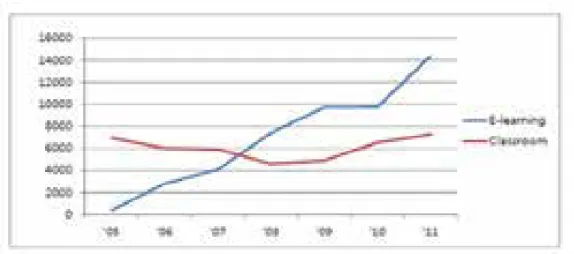
6.E‐learning System in STI, Statistics Korea: Achievements and Challenges ... 53 Kyung ae Park, Statistics Korea
7.Setting up In‐house Training: Some Issues to Consider ... 65 Dag Roll‐Hansen, Statistics Norway
8.Training Programme in Statistical Skills ... 85 Riikka Mäkinen, Statistics Finland
9.Theory and Practice in the Comprehensive Training Programme ... 101 Imre Dobossy, Eszter Viragh and Gabor Apati, Hungarian Central Statistical Office
10.Towards a European Master in Official Statistics ... 109 Anne Kofoed, Marius Suciu and Marcus Zwick, EUROSTAT
11.Moving from Introduction Towards Integration of New Employees – Objectives and Methods ... 117 Ingvild Maanum Möller, Statistics Norway
12.Management Development ... 125 Martin Lagerström, Statistics Sweden
13.From Competences to Awareness: Management Development ... 139 Antonio Ottaiano, Federica Navarra,
Cecilia Colasanti and Fabrizio Rotundi, National Institute of Statistics of Italy
14.ABS Leadership and Management Charter and the Senior Executive Program ... 163 Chris Libreri, Australian Bureau of Statistics
vi
Human Resources Menagement
15.Recruiting and Retaining Qualified Staff at Statistics Finland ... 169 Elina Pääkkö, Statistics Finland
16.Mobility and Knowledge Sharing ... 187 Marleen Verbruggen and Adrie Ykema, Statistics Netherlands
17.Becoming an Attractive Employer for Future Employees: Some Experiences from Statistics Norway .... 197 Rita Braziunaite, Heidi Torstensen and Jan Byfuglien, Statistics Norway
18.Learning and Development in Challenging Times ... 207 Anne Kofoed and Mats Olsson, EUROSTAT
19.A Competence Profile for Staff Supporting the European Statistical System ... 215 Wesley Miles, UK National Statistician’s Office Silvio Stoppoloni, National Institute of Statistics of Italy Alexandra Molcuti, National Institute of Statistics of Romania Veronika Radermacher, EUROSTAT Wouter Jan van Muiswinkel, Statistics Netherlands Yolanda Gomez, National Statistics Institute of Spain
20.Why and How to Improve Competence Descriptions and Evaluations in a Statistical Institute? ... 227 Jan Byfuglien and Beate Johnsen, Statistics Norway
21.Beyond Vocational Training ‐ Competence Management at Statistics Sweden. ... 233 Crister Haglund, Statistics Sweden
22.Statistics Finland’s Personnel Survey ... 241 Anne Lahdenperä‐Seunavaara, Statistics Finland
23.The Improvement of HR Management by Using Lean ... 253 Jan Byfuglien, Heidi Torstensen and Anne Trolie, Statistics Norway
24.Methods and Main Results of Staff Migration Motivation Research ... 261 Eszter Viragh, Hungarian Central Statistical Office
vii
Human Resources Management and Training (HRMT) in statistical offices should be organised to take place in 2012. The aim of this workshop was to discuss current and upcoming issues for HRMT in statistical offices, and follow-up on issues discussed at previous CES workshops on HRMT. Leading on from this, it was requested by the Bureau that concrete outputs directed towards the creation of a compilation of good practices in HRMT.
At the HRMT workshop in Budapest in September 2012, the participants supported the initiative to produce a compilation of good practices and agreed it should be based on selected papers from the HRMT seminar at the CES plenary session in 2006 and the following HRMT workshops in 2008 (Skopje), 2010 (Geneva) and 2012 (Budapest). The selected papers should be of general relevance and address current and future challenges in both human resources management and in training.
The final selection of 24 papers for the compilation was made by the co-chairs of the 2012 HRMT workshop, Statistics Netherlands and the Central Statistical Office of Poland on basis of the proposals of the participants of the workshop. After the selection of the papers, the authors were contacted and asked to review and update their papers where necessary. The papers have been grouped in three sections in the compilation: cross cutting issues, training, and human resources management, according to the main theme of the papers.
The following authors have provided papers for the compilation: Australian Bureau of Statistics
Chris Libreri Eurostat
Anne Kofoed, Marius Suciu, Marcus Zwick, Mats Olsson and Veronika Radermacher
Statistics Finland
Hanna Bärlund, Heli Jeskanen-Sundström, Anna-Leena Reinikainen, Riikka Mäkinen, Elina
Pääkkö and Anne Lahdenpera-Seunavaara Hungarian Central Statistical Office Imre Dobossy, Eszter Viragh and Gabor Apati
National Institute of Statistics of Italy Antonio Ottaiano, Federica Navarra, Cecilia
Colasanti, Fabrizio Rotundi and Silvio Stoppoloni
Statistics Korea Kyung ae Park
State Statistical Office of the Republic of Macedonia
Blagica Novkovska Statistics Netherlands Wouter Jan van Muiswinkel, Marleen
Verbruggen and Adrie Ykeme Statistics Norway
Dag Roll-Hansen, Ingvild Maanum Möller, Rita Braziunaite, Heidi Torstensen, Beate Johnsen,
Anne Trolie and Jan Byfuglien National Institute of Statistics of Romania
Alexandra Molcuti
National Statistics Institute of Spain Yolanda Gomez
Statistics Sweden
Martin Lagerström and Crister Haglund UK National Statistician’s Office
Wesley Miles
Wouter Jan van Muiswinkel, Carina Fransen and Ineke Van Der Stoel, Statistics Netherlands, Anna Borowska, the Central Statistical Office of Poland, and Tetyana Kolomiyets and Charlotte Hadden, UNECE, undertook the selection and review of the papers. The compilation was edited and prepared for printing by Tetyana Kolomiyets and Charlotte Hadden, UNECE.
1
1. FUTURE CHALLENGES IN HUMAN RESOURCES MANAGEMENT AND
TRAINING IN NATIONAL STATISTICAL OFFICES
Wouter Jan van Muiswinkel
Statistics Netherlands
INTRODUCTIONThe Conference of European Statisticians (CES) at its plenary session in 2006 conducted a seminar on human resources and training in statistical offices. The seminar concluded that human resources and training are crucial elements for the successful fulfilment of the mission of the offices and that there was a need to continue the exchange of experience in the area of human resources and training. Hence, as a follow-up to the CES seminar, workshops on human resources management and training (HRMT) were organised in 2008, 2010 and 2012 where a number of issues in HRMT were discussed.
This paper takes a forward looking approach and provides an outline of the future challenges in the area of HRMT for statistical offices. The paper draws on the discussions at the HRMT workshop in 2012 and incorporates issues that were raised by countries during the workshop. The paper also draws on information collected through a survey to CES member countries on their practices and plans in HRMT.1
Section 2 provides a brief overview of the strategic directions for HRMT, including also the challenges raised by the High-level Group on Modernization of Statistical Production and Services. Section 3 lists a number of key challenges to the statistical offices and, on this basis, a number of areas in HRMT that will be particular important in the future. Section 4 groups the main elements of HRMT according to whether they are primarily operational, tactical or strategic. This grouping can be used to assess current HRMT activities and may also be used for planning of future developments in HRMT. Annex 1 provides a summary table of the results of the 2012 survey on HRMT to CES member countries.
STRATEGIC DIRECTION FOR HRMT
The economic, technical and social changes in society pose challenges and possibilities for national statistical offices (NSOs). With the development of the information society the amount of (electronic) information that is available has increased dramatically. The way in which information can be accessed and exchanged has also changed and become much more global. There is no evidence that these developments and changes will not continue in future, and NSOs will need to be active in developing their ways of production to take advantage of new technologies and data sources.
The demand for statistical products and services is also changing, and users are asking for more, better and more timely statistics. The NSOs also need to respond to this demand and develop statistics that meets future needs. While in the past NSOs had a special role as the main provider of official statistics and often in practice had a monopoly on the provision of statistics, this role is challenged by the growing availability of information available, and NSOs may have to compete with other providers of statistics. At the same time many NSO are faced with budget restrictions and requested to increase efficiency and ‘do more with less’.
The modernisation of the statistical production and services is not only of organisational and technical nature but relies also on the development of human resources and the skills and attitudes of staff members at all levels. Human resources management and training is crucial for the modernisation of
1 The paper is a revised and updated version of the paper Contemporary issues on HRM and Training in National Statistical Institutes that was presented at the HRMT workshop in September 2012 in Budapest, Hungary. Dr.Nicole Njaa, Headwave, Norway, and UNECE have provided comments and suggestions for the update.
2
national statistical offices where labour costs typically represent 70% to 80% of the total budget. The development of human resources and change management is part of and has to go along with the modernisation of the statistical production and services, it cannot be implemented afterwards.
In order to successfully implement the changes that official statistics are confronted with, it is important that human resources not only adapt passively, but actively participate and contribute to the process of modernisation. In many countries this calls for a change, where HRMT needs to have an active role in the corporate strategy and planning.
The High-level Group on Modernization of Statistical Production and Services (HLG)2 has highlighted
the need to develop the production methods and the statistical output to meet future challenges and ensure that official statistics stay relevant to the world of tomorrow. The HLG defines two directions in its vision and strategy:
(a) Statistical output: New and better products and services which are more tuned to the way the world is operating today, and created from a global perspective.
(b) Production methods: Different and better processes and methods tuned to delivering the products and services at minimal cost with greater flexibility and in cooperation between institutions.
The development of technologies and communication facilities has sprung up and are reforming the landscape in which statistics is being produced. The challenge for statistical offices is to take advantage of these changes and be sufficiently flexible and agile to provide statistics according to future user needs at acceptable cost. The HLG underlines the need to develop a culture of change within statistical offices, encouraging innovation in terms of sources, processes and products and the need to change the way that organisations and their employees work. It also recognises that this should be reflected in changing staff profiles and reallocation of resources.
CHALLENGES TO NSOS AND TO HRMT
National statistical offices are met with a number of challenges that directly or indirectly will affect the role and priorities of HRMT. The participants in the workshop on HRMT in September 2012 in Budapest identified a number of main challenges that statistical offices will face in the coming years. These included:
Meeting future user demands of statistical products and services
Responding to increasing competition from other providers of statistics
Budget restrictions and the need to develop more efficient organisation of work processes
Modernisation of statistical production and services
The transition from production to knowledge working
Attracting the right candidates
In the preparation of the 2012 HRMT workshop, the Organising Committee conducted a survey to statistical offices to identify the main current and future challenges of HRMT. The survey covered four areas: current challenges in HRMT; tools which are currently used for HRMT purposes; the main future challenges in HRMT; and tools to use or develop to meet future needs of HRMT. Twenty-four countries replied to the survey. The survey provided very useful information about the future challenges and priorities of HRMT from the viewpoint of the countries. Annex 1 provides a summary table of the results of the survey.
2 The HLG was set up by the Bureau of the Conference of European Statisticians in 2010 to oversee and coordinate international work relating to the development of enterprise architectures within statistical organisations. It was originally named the High-Level Group for Strategic Developments in Business Architecture in Statistics.
3
On the basis of the results of the survey and the discussions at the 2012 HRMT workshop, the following areas of HRMT that will be particular important in helping statistical offices to respond to the future challenges can be identified:
Motivation
Change management
Knowledge management
Work environment and mobility
Training and skills development
Management development
Attracting and retaining people
In all of these areas there are different experiences and practices among countries. Some are advanced in, for example, knowledge management or in using E-learning, while other countries may have very little or no experiences in these fields. Countries can therefore benefit from exchanging experiences and good practices.
Motivation
Motivation is a multifaceted phenomenon. It is difficult to define (Vinke, 1996, p. 218) and through the years many theories about motivation have been developed.
Motivating employees is a complex task. It requires the understanding of the dynamics of people and the ability to create an environment that fosters motivation. Motivation and competencies are critical in managing people: Competencies and skills ensure that people can commit to the organisation: motivation that they also want to.
Motivation is also considered as an “engine for change”. It will be necessary to look at new ways to motivate staff – mainly by supportive leadership, flexibility and other benefits. Managers are in the position to create motivating conditions for their employees. To make this happen, a whole range of tools need to be employed – mainly communication, surveys and teambuilding. Performance review or staff appraisal interviews may also be used as motivating tools. The lack of the possibility to provide incentives may be a major challenge
.
Change Management
Change management is much about the question of how individuals and organisations can change or can be changed (Caluwé and Vermaak, 2006). While it may not be possible or difficult to change the attitudes or readiness for change of staff, it is important to create an environment that supports changes and innovations. Establishing such a culture for change will be a major challenge. Contributions are wide in scope – from focus and leadership to efficiency and engagement. This will require time and focus, and that HRM needs to act as a partner to business. Top management commitment and assessments are positive drivers, whilst lack of skills or lacking access of HRM to top management represents a possible barrier.
Implementation of change management will be important for a successful modernisation of statistical production and services. To support modernisation HRMT should be integrated in the coporate strategy and planning and play an active role in the process. Important steps in the change process are communicating the need for change; working towards a shared vision; ensuring resources and capacity for the change process and taking the first steps in the direction of the shared vision.
4 Knowledge Management
Knowledge management is needed to ensure that important knowledge is kept and maintained within the NSO. The objective is to ensure that knowledge is distributed and accessible at the right place, at the right moment to the right people (e.g. whenever people move to new areas of work or for introducing newly recruited staff). This requires exchange of knowledge and training and careful management. Activities towards this goal are flexible and low cost mapping and monitoring of competencies, cooperation and exchange of knowledge. Lack of motivation, communication and resources are possible barriers.
Work environment and mobility
The work environment includes the physical and social environment in the workplace. New technological developments increase the possibilities to organise flexible work arrangements, less restricted by time and place. Remote work, working from home arrangements and working at flexible hours becomes possible and more common. It may no longer be necessary to come to office every day, but to work from home – or somewhere else. A good and healthy work environment is an important ‘job-satisfier’. This means that it is an important factor for attracting and retaining staff. These developments in work environment also bring new challenges, for instance for the manager, but also concerning working conditions and implementation of proper technologies.
Mobility of employees has a number of benefits. Firstly, it is a good motivation factor for people to give the opportunity of career paths. Secondly, mobility helps to ensure the flexibility of staff – employees will be better prepared to occupy different positions. This is an important prerequisite to react to a changing environment and supports better problem solving. This is especially important when statistical production methods change, or if NSOs are forced to reduce staff. Mobility may also help to create networks across units of the NSO and give employees a better understanding of overall issues of the NSO. To improve mobility, top management commitment and less bureaucracy is required together with delegation of tasks and responsibilities. Increasing mobility requires a clear strategy and rewards. Increased work load and cultural opposition are possible barriers
.
Training and skills development
Training and skills development comprises a broad range of activities and arrangements, including formal and informal training, job-rotation, traditional class-room courses, internal vs external training, cooperation with e.g. universities, competence mapping, (personal) training plans (development plans), special (introductory) training for newly recruited people, mentoring and the use of new organisations or technologies in training, such as E-learning. One other important issue is the question of the cost/benefits of training and how to measure and evaluate the outcome of training activities.
The importance of training is stressed by a growing gap between existing competences and skills and those competences and skills that are required to meet future challenges and ensure a successful modernisation of official statistics. A framework of skills/capabilities begins with a gap analysis and a description of how to close the gap. Lack of resources is a major barrier.
To stay updated competences of employees need to be assessed and trained regularly. This is sometimes referred to as competence management, other times as development plans. The key issue is that the management regularly assess the skills and knowledge of the employees in a systematic way and follow-up on this.
E-Learning offers possibilities of training that are less restricted by space and time and which can be used for both general training or more specific purposes or for specific groups of staff, for training in
5
regional offices. It also has potential for use across countries since the same E-learning course could be offered to different countries and hence be available for much more people than would be possible in a traditional class room training. E-learning can be developed at relative low costs compared to traditional training, but there is also evidence that it may be less efficient and that it should be followed up closely or complemented with face-to-face activities.
Management Development
Management development plays a vital role in preparing an organisation for the next generation of leadership. While some employees may seem potential candidates for management positions, their knowledge and skills must be carefully evaluated. Success in one area of management does not necessarily mean success as a manager which requires training and guidance. A good management development plan, however, will bring to light any deficiencies and provide concrete opportunities for the manager to improve.
The overall success of the NSOs is closely linked to the effectiveness of management. By taking the time to invest in good management development, the benefit to the organisation can be increased.
It would be valuable to investigate and compare management development programmes across countries (how managers are selected and trained, etc.) share experiences and learn more from good practices implemented in other offices.
Attracting and retaining people
Attracting and retaining people is a key success factor. Attracting and retaining the best candidates is a major objective of HRMT. To achieve this “an attractive package” needs to be created, including positive work place atmosphere, flexible working time, quality training, diversity, etc. The organisation needs to commit fully to make this happen – top management support, open communication and incorporation in policies and appraisal systems. Most important barrier is the competition with other government institutions and the private sector.
A specific challenge concerns the attraction of good candidates of the new generation, sometimes reffered to as the Y-generation or the Digital generation. Because of demographic shifts in many countries less young persons will enter the labour market in the coming years, which will increase the competition among employers to attract the best candidates.
The young generation is more sophisticated in using social networks and new technologies. Statistical offices should consider how to utilize such competencies. The young generation may also have different expectations for a job and career than in the past. There is therefore a need to create stimulating, flexible and innovating working environment to attract the new generation. It will also be necessary for NSOs to consider their image in the public as this is influencing the possibility to attract candidates.
TYPES OF HRMT ACTIVITIES
Looking at the challenges ahead, the question is not if statistical offices will need to change their organisation and working processes, but how radical these changes will be and in what way and in what time frame they can be implemented. It will not be sufficient to be reactive on these processes or just do business as usual. It is important that HRMT is integrated in the changing process and plays an active role to facilitate and support modernisation.
The statistical offices are operating under different economic and institutional conditions across countries, and the development of the statistical systems differs. HRMT practices also differ widely
6
between countries. The HRMT challenges therefore are also different may be dealt with differently in different countries.
HRMT activities can be divided into five types of activities: Basic HRMT; administrative HRMT; instrument-based HRMT; policy-based HRMT; and strategic HRMT, which are illustrated in Figure 1. FIGURE 1: TYPES OF HRMT ACTIVITIES
© W.J. van Muiswinkel
The five types of HRMT activities can be characterised as listed below: Basic HRM
The key elements of basic HRMT include primary working conditions (wages, working hours- and rest times) and bargaining arrangements between the employer and the unions. The key elements in basic HRM are also called “hygiene factors”. This means that if these elements are done perfectly they are not noticed, but if not they may attract attention (Vosburgh 2007).
Policy-based HRMT Change Management Management Development, Mobility, Training,
Instrument-based HRMT: Working contract, feedback & evaluation, performance appraisal, recruitment, staffing & talent management, career planning, training on excellence in current job
Administrative HRM: Mutual work relations
Administrative HRM-information system
Employee rights - work conditions - attractive employer Secondary terms of employment(holidays, extra’s etc.) Recruitment, Training on basic issues
Basic HRM:
Primary terms of employment: Employer sets rules/ duties for employees
Collective Bargaining Arrangement between employer and Labour unions/ social plans (working hours rest times); safety.
Strategic
Tactical
Operational
Strategic HRMT
Strategic Personnel Planning Organizational effectiveness Knowledge management
7 Administrative HRMT
Administrative HRMT aims to structure and organise the procedures concerning HRMT. This may be supported by a staff information system. In many cases such a system includes the automated and computer software for personnel data, often with a view to managing staff. The level of administrative HRMT also includes arrangement on secondary terms of employment (such as holidays and holiday bonus, the pension scheme and the arrangements of the sickness benefit, childcare, and other benefits like training facilities) that may be used in attracting and retaining employees.
Instrument-based HRMT
Instrumental HRMT is characterised by the use of HRMT tools used to standardize procedures which tends to reduce subjectivity in HRMT. Examples are protocols for recruitment, staffing and talent management and career planning. In this respect the yearly ‘management cycle’ is an important instrument, starting by articulating the working contract between manager and employee (expected output), half-way the year followed by giving feedback, and finally at the end of the year to evaluate the outcome. This instrument will help to articulate points of improvement in the current job. Specific training can be offered to improve work performance.
Policy-based HRMT
In policy-based HRMT the activities are directed by an articulated policy within which HRMT instruments are put in place (Vosburgh, 2007), usually with a time horizon of one or two years. Key elements are mobility-policy for employees, a management development programme and training. Implementation of change management is also an example of policy-based HRMT.
Strategic HRMT
The focus of strategic HRMT is to support the overall objectives of the organisation with focus on long-term development of business processes and personnel. Two strategic instruments are strategic personnel planning and knowledge management (to ensure the level of knowledge, taking into account the (external) mobility of personnel).
The first two types of activities, basic and administrative HRMT, can be characterised by the term Operational HRMT, because the main focus of the activities is to secure basic operational issues. The activities involved are mainly re-active in the sense that they are reacting on circumstances. Instrument-based and policy-Instrument-based HRMT can be characterised by the term Tactical HRMT and require an active role of the HRMT department. These activities focus on ad-hoc demands of the moment and activities with short-term focus, one or two years ahead. Finally, Strategic HRMT plays a pro-active role in the organisation in setting and reaching future goals of the organisation. This means that HRMT activities are aimed to plan and develop resources for their most efficient and effective use.
The pyramid can be used to assess the development of HRMT activities in the statistical office, and it also gives an indication of what may be required in order to develop and implement new HRMT activities. If, for example, in one NSO all HRMT activities are focused on primary terms of employment and in setting the rules and duties for employees, this would correspond to the basic HRMT activities of the pyramid, which are mainly operational and often reactive on emerging issues. To implement administrative HRMT activities, an administrative HRM-system needs to be developed focussing on secondary terms of employment and basic statistical training programmes.
8
REFERENCES
Caluwé, L., H. Vermaak, Leren veranderen een handbook voor de veranderkundige 2006 (Learning how to change, a handbook for the change agent). ISBN
9789013016543. Kluwer, Deventer, The Netherlands. Vinke, Rob H.W. Motivatie en belonen. De mythe van intrinsieke motivatie 1996 Kluwer Bedrijfswetenschappen. Deventer, ISBN 90 267 25361. Vosburgh, R.M. The Evolution of HR: Developing HR as an Internal
2007 Consulting organisation. Human Resource Planning Vol. 30 Nbr. 3, July 2007, pp 11-23.
9
APPENDIX 1: RESULTS OF THE SHORT QUESTIONNAIRE: MAIN TOPICS
Current challenges Current Tools 2016: Biggest challenges Ideal situation
General General
Budget constraints (do more with less resources; increasing efficiency)
Doing more with less (less resources and staff), efficient production, Business process redesign
Training Training Training
Training (operational and strategic, specific)
In-house and external trainings (specialised, exclusive, etc.), ESTP, Civil service training
Master and doctoral degree, home and abroad
Investing in knowledge and training of employees; Further development of the ESTP; To develop degree in official statistics
E-learning E-learning system E-learning
Leadership & Management
Development Training for the middle and top management Job shadowing, training on
the job, short training sessions etc.
International exchange, study visits, secondment Knowledge management Training of trainers HRM HRM HRM HRM Development and implementation of the HR concept HR management system (database)
To develop analytical skills to meet increased demand for the administrative data Identifying, developing and using competencies of employees
HR metrics and analytics
Mobility (internal-) Yearly interviews about training&development skills
Recruitment, Attracting and retaining young and qualified staff
Web portal for recruitment and selection, High quality recruitment; Mentoring of new staff, Induction programmeme/training for new recruits
Retaining qualified staff Recruitment of well qualified staff (demographic shift), Use of new staff selection methods
Recruitment and training new staff
Personnel performance evaluation
Incentive for high performance/staff motivation
Staff appraisal interviews, performance
review/evaluation Competences Management Competence database (competencies and skills)
Staff opinion survey Staff opinion survey Staff motivation (low wages, learning, development, etc) Performance linked payment; To develop non-financial incentive, Flexible working times,
modern work solutions, work from home
Smart working tools for smart working environment (flexi-time, remote work)
Healthy work environment Upward feedback
Better use of modern technologies, to adapt to the new process of survey production; Innovative work culture, smart working tools, Quality Management
Better working conditions (permanent posts, adequate renewal); Broader use of new technologies; etc.)
11
2. STRATEGIC PERSONNEL PLANNING
Wouter Jan van Muiswinkel
Statistics Netherlands
This paper outlines how Statistics Netherlands drafted its first Strategic Personnel Planning (SPP) in 2006 and updated it in 2009. The reasons for drafting an SPP at Statistics Netherlands are described, as well as the applied method, the results of the working process, the conclusions and the projects that have emerged from it. Finally, the added value of an SPP is examined.INTRODUCTION
Statistics Netherlands is a central statistical bureau with two offices of comparable size in The Hague and Heerlen). As a result of consecutive budget cuts, the workforce has decreased by about 30% in the last ten years with no corresponding reduction in the statistical programmeme (from 2650 Full Time Equivalents (FTEs) in 2003 to 1850 FTE on 1 January 2013). The budgetary compensation received for fulfilling our new EU duties will bring the net decrease in this period to about 20%.
Statistics Netherlands has a comprehensive HRM-policy and associated HRM-instruments. Continuing to meet the public demand for more, better and faster statistics, the workforce will require selective recruitment, and investment in education and training. To support the management in implementing our HRM-policy, we make use of a computerized personnel information system, from which monthly HR management information is generated. The distribution of employees at Statistics Netherlands is 70% male and 30% female, approximately 70% of the employees work part-time and around 70% of all employees have a degree from higher education (Bsc, Msc or Phd).
An external research Bureau performed a general risk analysis at Statistics Netherlands in the time frame of 2005-2006. One of the great strategic risks was the availability of personnel and management. We had a problem in our personnel supply, demonstrated by the fact that part of the vacancies could not be filled. Furthermore, consecutive budget cuts in the past decade led to little in-flow of new personnel. Statistics Netherlands was facing progressive ageing of personnel. This meant that a large part of the staff would retire in the coming years.
Statistics Netherlands was obliged to take measures in order to have access to sufficient, qualitatively good and motivated employees for 2006 and the years to come. In order to master and manage the personnel requirement issue, Statistics Netherlands started a project to conduct a Strategic Personnel Planning (SPP) for 2006-2012.
In this paper we outline how we carried out this project and what follow-up actions were taken. Since our first SPP in 2006, we conducted an update of the SPP in 2009 because of changes in the labour market. At this moment in time (2012) we are working on a second update of the SPP, mainly because of severe budget cuts in the period 2012-2016.
WHAT IS STRATEGIC PERSONNEL PLANNING?
The aim of Strategic Personnel Planning is to gain insight in the number and type of personnel needed in the short and long term, taking into account developments in the labour market. Strategic Personnel Planning helps to translate policy developments into HR-policy issues concerning the in- through- and outflow of personnel.
Drafting a Strategic Personnel Planning requires comprehensive data about the workforce. To that end, a computerized personnel information system should be filled with up-to-date data. Secondly, it
12
requires a strategic vision of the organization, so the organization goals and ambitions can be translated in HRM and training policy (and HR-instruments).
The activities of this project are placed within the perspective of a general approach in five steps to conduct a Strategic Personnel Planning (developed by KPMG consultancy):
FIGURE 1: FIVE STEPS TO CONDUCT STRATEGIC PERSONNEL PLANNING
Analysis
Making Choices
Action
KPMG Business Advisory Services B.V. METHOD
Statistics Netherlands used the following method to draft the SPP in 2006: A trend estimate regarding the need for human capital inflows in the period 2006-2012 based on an analysis of the historical in- and outflow of staff in the period 2000-2005, the flow (as expressed in obtaining function scale increases by employees) and the development in the age distribution of the employees.
A qualitative analysis about future developments in the statistical processes, and the needed knowledge and skills in the coming five years. More specifically:
What level, function scale, requirements and competences are required in the near future?
The match or mismatch between the available and the required quality of the employees. How does the actual level of training of the employees relate to the level of training required for the functions?
The actual functioning of the employees. What part of the employees function well or very well and how many employees’ functioning is insufficient?
An inventory of the labour market developments was made by performing a literature study. The expected future situation on the labour market was mapped by combining several studies (among others the Dutch Research Centre for Education and Labour market (ROA), Dutch Council for Government Staff, the Dutch Council for Work and Income).
Representatives from other organisations (comparable in size and properties of Statistics Netherlands) were interviewed to learn from their experiences and insights. Finally, after processing all the
Step 1 Analysis of future needs quantitative & qualitative personnel file Step 2 Mapping development need, ability and readiness at the individual level
Step 3
Scenario planning:
- development of personnel costs - qualitative & quantitative personnel file based on in-, through-, and outflow
Step 4
Make choices on the basis of analysis and scenario planning
Step 5: Formal conversation in organization: a: About development of employees
b: or When development is no option: - adapt the organization to theemployees - or employees will have to leave Organization
13
information, a programmeme of concrete HR-projects was formulated. This programme consists of solutions for addressing the issue of staffing needs.
In the 2009 update of Strategic Personnel Planning, the main focus was on competency requirements as a result of statistical process redesign, the threat of new budget cuts, retaining young talents and changes in the labour-market. In the current update Strategic Personnel Planning (2012) the main focus will be on coping with the budget cuts in 2012-2016.
RESULTS
In this paragraph we give a short summary of the results of the quantitative analysis 2000-2005. To this end we describe the developments in the formation and staffing of the core personnel in 2000 to 2005, the in-and outflow in this period, the scale increases by employees and the development in the age distribution.
FIGURE 2: NUMBER OF FULL TIME EQUIVALENTS (FTE’S) PER FUNCTION SCALE IN FORMATION AND OCCUPATION CATEGORY CBS TOTAL (SCALE 3-8 AND 9-19), 2000-2005
Figure 2 shows:
A clear decrease of the formation in the scales 3-8 and an increase in the scale 9 and higher.
A decline of staffing in 2000-2005 and that the scale of formation and staffing was in balance in 2000.
However, in 2005 the staffing in the scale category 9-19 was 190 FTE behind the allowable formation. In the lower scale category, there was a limited understaffing in comparison to the formation.
FIGURE 3: PERCENTAGE DISTRIBUTION FUNCTION SCALES TO SCALE CATEGORY IN 2000 AND 2005
0 200 400 600 800 1000 1200 1400 s 3t/m 8 ≥ s 9 Function Scale
Formation 2000 Formation 2005 Staffing 2000 Staffing 2005
0% 10% 20% 30% 40% 50% 3+4 5+6 7+8 9+10 11to19 Function Scale Year 2000 Year 2005
14
Figure 3 shows an observed increase in the Function scales 9 and higher (for scales 9-10 and for scale 11-19). There was a relative decrease in the three scale categories within 3 to 8.
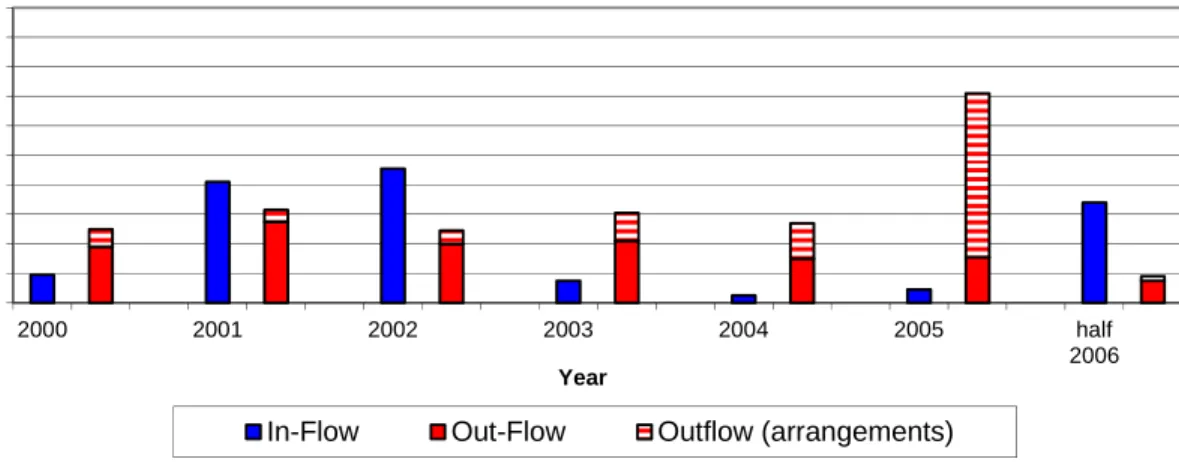
One key aspect in the context of determining the staffing needs in the period 2006-2012 was the expected in-and outflow of staff. When analysing the outflow, a distinction was made between 'normal' outflow because of changing jobs, and outflow based on special (financial) departure arrangements. This distinction was relevant, because of extensive regulations, such departure arrangements were not allowed anymore after 2006.
FIGURE 4: INFLOW VERSUS OUTFLOW OF EMPLOYEES, FUNCTION SCALES 9 TO 19, 2000-2005
Figure 4 shows that the inflow of staff into the function scales 9-19 was particularly high in 2001 and 2002. The same also applies for the first half of 2006. The influence of the increased recruitment efforts in these periods is clearly noticeable. The ' normal ' outflow of staff in scales 9-19 has an annual average of about 30 to 50 employees. The influence of special departure arrangements is substantial, especially in 2005 (and partly in 2004).
Table 1 gives information on the outflow by scale category and length of employment. TABLE 1: OUT-FLOW PER YEAR BY CATEGORY AND FUNCTION SCALE (%)
Function Scale
Length of employment (yrs) 1-8 9-11 12-19 Total
0-5 13 (5%) 78 (6%) 18 (6%) 109 (6%)
6-10 1 (1%) 12 (4%) 6 (3%) 19 (3%)
11-20 9 (1%) 15 (1%) 14 (2%) 38 (1%)
21+ 11 (0%) 10 (0%) 6 (1%) 27 (0%)
Total 35 (1%) 115 (2%) 44 (2%) 193 (2%)
Table 1 shows that 56% (109 out of 193) of employees left Statistics Netherlands in the first five years of their hire in 2001 to 2005). Conversely, the 'normal' outflow of employees (excluding retirement, departure arrangements or death) after a ten-year employment is negligible. This is true for all scale categories. The next key factor in determining the future staffing requirements concerns the development in the age distribution. This development gives an indication of what to expect of the future outflow. 0 20 40 60 80 100 120 140 160 180 200 2000 2001 2002 2003 2004 2005 half 2006 E m p l o y e e s Year
15
FIGURE 5: AGE DISTRIBUTION STATISTICS NETHERLANDS 2000-2005, FUNCTION SCALES 9-19
Figure 5 shows the shift in the age distribution with a five year interval (2000 and 2005). The share of employees in their thirties had increased slightly in 2005 because of inflow of staff. The policy to attract young employees with a trainee pool clearly influenced the age distribution among the employees in the scales 9 and higher.
TREND ESTIMATE OF THE IN- AND OUTFLOW 2006-2012
Inflow: Statistics Netherlands developed a calculation model in Microsoft Access based on the outcomes of the analysis over 2000-2005 as outlined in paragraph 4.1, and on the consequences of budgets cuts on the number of staff. We calculated the statistical probability of in- and outflow of employees based on historical data. In this way a prognosis was made of the workforce in the future. We determined the personnel shortfall or surplus per function scale by taking formative developments in the years 2006-2012 into account, including the budget cuts by function scale.
According to the calculation model, 521 employees would leave Statistics Netherlands (483 FTE) in 2006-2012. Taking into account the formative developments, we need an inflow of about 460 full-time staff: approximately 75 a year (evenly divided over the entire period). Based on historic figures, 76 of the 460 newly hired staff will leave the organisation again in this period.
The Hague: About 250 vacancies are foreseen in The Hague in scales 9, 10, 11 and later 12 and higher (see figure 5).
Heerlen: About 210 vacancies are foreseen, with an emphasis on scale 11 and to a lesser extent scales 9, 10, 12 and higher.
There will be some vacancies in scales 7 and 8 in The Hague, and very few in Heerlen.
0 10 20 30 40 50 60 70 21 22 23 24 25 26 27 28 29 30 31 32 33 34 35 36 37 38 39 40 41 42 43 44 45 46 47 48 49 50 51 52 53 54 55 56 57 58 59 60 61 62 63 64 65 E m p l o y e e s Age Year 2000 Year 2005
16
FIGURE 6: EXPECTED NUMBER OF VACANCIES (IN FTE’S) IN THE HAGUE 2006-2012 BROKEN DOWN BY FUNCTION SCALE
Figure 6 shows that the expected number of vacancies was 45 in 2006, and 52 in 2007. The colours in the bars indicate in which scales the vacancies are expected.
Outflow: In addition to the inflow there is some need for outflow in scales 3-6 in location Heerlen. Management: To estimate the future need for new managers, this group was mapped separately. Based on the calculation model, the assumption was made that 20 managers would leave in 2007-2012. This expectation is supported by the outflow of managers in 2000-2005: 18 of the 41 executives from the target group left Statistics Netherlands because of retirement or departure arrangements (44%). The remaining 23 managers left for other reasons. We expected a great need for replacement influx of new managers in the period until 2012.
DEVELOPMENTS ON THE LABOUR MARKET 2006-2012
How the labour market will develop in the years ahead depends on economic developments, political choices about social security, market forces and practices of the public administration itself. The sources we studied in this SPP were largely based on macro-economic developments in 2006 and 2007, and the studies of the Dutch economy by the Central Economic Plan of the Netherlands Bureau for Economic Policy Analysis (CPB), and its long term exploration to 2040. It distinguishes four scenarios. It goes too far to elaborate these scenarios here, but both used mainly the so-called TM-ROA as Ecorys scenario (Transatlantic Market), that is considered the most realistic.
The labour market forecast is determined by many factors, including the increase or reduction in demand for workers, the replacement demand, and the supply of school leavers. A mismatch between demand and supply in a particular profession leads to bottlenecks in staffing or in bottlenecks on the labour market perspective. Given the economic growth expected for 2006-2012, increasing employment and declining unemployment, there is generally a shortage of staff and an increase in the number of vacancies that are difficult to fill. The Netherlands faces an ageing population, so the working population will decrease in the years to come. Statistics Netherlands has a relatively old workforce (average age in 2011 is 49.7) and needs highly qualified staff. The problems that are outlined in the field of educational attainment, educational background mathematics, natural and computer sciences among others and ageing are also applicable to Statistics Netherlands.
0 10 20 30 40 50 60 2006 2007 2008 2009 2010 2011 2012 V a c a n c i e s The Hague 7-8 9-10 11 12+
17
QUALITATIVE ANALYSIS
A key source for our qualitative analysis was to interview managers and directors about the renewal of the statistical production process and how this innovation is to be realized. A conference was held on this topic in 2006. The main question was what skills and competences were needed to face future challenges. Would it be possible to develop these skills and competences by training of current staff? If not, we need additional inflow of new, qualified staff on top of the outcomes from the quantitative analysis.
However, during the working conference it was difficult to draw specific conclusions about (groups of) employees because competence management was not widely implemented.
ACTION PLAN
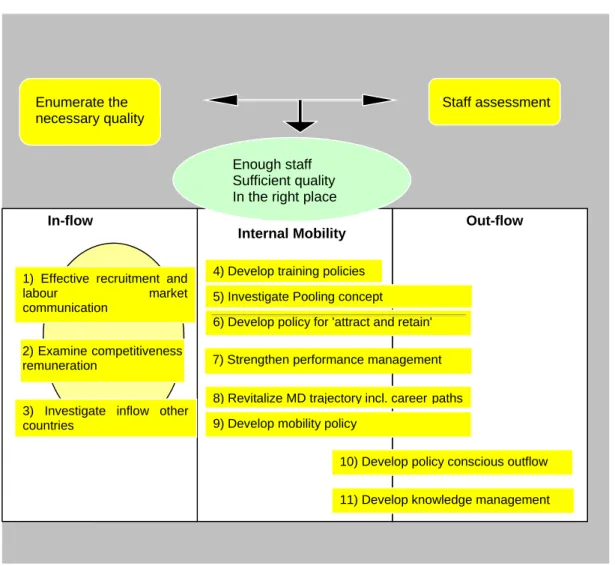
FIGURE 7. AS A RESULT OF THE SPP, THE FOLLOWING ACTION PLAN WAS PRESENTED TO THE EXECUTIVE
BOARD:
The Executive Board of Statistics Netherlands asked the HR Department to tackle the identified problem in close cooperation with the line organisation. To this end, we designed a programme structure.
Enumerate the necessary quality
‘Staff assessment
imago In-flow
Internal Mobility Out-flow
6) Develop policy for 'attract and retain'
8) Revitalize MD trajectory incl. careerpaths 4) Develop training policies
9) Develop mobility policy
10) Develop policy conscious outflow 1) Effective recruitment and
labour market communication
7) Strengthen performance management
Enough staff Sufficient quality In the right place
3) Investigate inflow other countries
5) Investigate Pooling concept
11) Develop knowledge management 2) Examine competitiveness
18
THE PROGRAMME STRUCTURE FOCUSED ON THE FOLLOWING THEMES:
The revitalisation of the Management Development programme including career paths for managers. Enumeration of the necessary quality: mapping the future way of statistical production (with the necessary competences linked). Assessment of the staff: the collective and individual level mapping of competences and development potential of current employees; on this basis, the preparation of targeted training plans. Effective recruitment and labour market communication, including an active stage policy and campus recruitment. Benchmark working conditions for some features:
Researching:
- inflow possibilities from other countries / EU Member States; - pooling concepts/career paths.
Developing and implementing: - robust training policies; - flow policies;
- a policy for outflow;
- a policy for actively ' buoys and bind ' of employees.
Strengthening performance management.
Knowledge Management: in case of outflow of experienced staff to prevent drainage of critical knowledge)
General image campaign to reinforce this process
OUTCOME
The outcome of the programme in 2006-2007 produced the following results: Inflow
Recruitment-& image campaigns
Professionalization of recruitment selection & new Statistics Netherlands recruitment website Analysing the outcome of Exit interviews and compare the outcome with other organizations
Results research inflow EU countries Internal mobility
Upgrading pathways (secondary vocational training Bsc)
Employer research (how to effectively attract & retain employees)
Pilots ’Life stage aware HR policy’
Revitalization Management Development (incl. Project management)
Introducing Staff assessments (Team level)
Strategic Training plans (Division level)
Development career paths Outflow
Matching consultation; monthly meeting in which all vacancies are discussed by all divisions
(Decentralised) mobility managers, central re-employment managers
External partners for implementation
Internal mobility actions/information weeks
19
UPDATES OF THE SPP
Update SPP 2009
The SPP of 2006 was updated in 2009. The reasons for updating were to recalibrate the expected out-flow of staff due to expected budget cuts. Moreover, the aim was to determine the impact of new competence requirements as a result of process innovation, emphasis on knowledge management, keeping young talent in the organisation, and changes in the labour market.
Most important outcomes of the update:
In the update of the SPP, it turned out that the budget cuts 2010-2012 would lead to an outflow problem of 340 jobs in the function scales 3-8. By using the SPP and taking into account the expected natural outflow, this would lead to the redundancy of 127 employees.
The progressive ageing of staff led to the conclusions that despite the redundancy in scales 3-8, Statistics Netherlands still needed an inflow of some 65 FTE in highly educated employees a year. The importance of knowledge management in order to preserve crucial knowledge was again underlined. We plotted the number of employees reaching the retirement age of 65 in 2009-2012. Table 2 shows that in 2009-2016 a total of 370 FTE will retire (of which 73% in scales 9-19).
TABLE 2: RETIREMENTS IN THE PERIOD 2009-2016 BY FUNCTION SCALE Function Scale
Year of outflow 3-8 9-19 Total
2009 - 2012 23.4 79.2 102.6
2013 - 2016 76.8 190.4 267.2
Total 100.2 269.6 369.8
Update SPP 2012
In 2012 Statistics Netherlands is facing new budget cuts for 2012-2016. As a result of the economic crisis, the labour market has changed dramatically. This is why the SPP is calibrated again to give direction to the most suitable HRM and training policy.
DISCUSSION & CONCLUSIONS
Creating an SPP is a labour-intensive job. It is therefore important to consider in advance whether there are substantial grounds for such a plan. Also is important to sharply state the problem and formulate the research questions in advance.
It is important to put together a project team with adequate knowledge and skills in the field of HRM and Training, labour market, and dealing with Access/Excel and basic knowledge to identify statistic probabilities.
It is essential for drafting the SPP to have high quality, proven data from an automated employee-management system. The quality of the data on which the SPP is based, largely determines the quality of the outcome. So this needs critical care. The collection and editing of historical data at Statistics Netherlands was difficult because the organizational structure was changed between 2000 and 2005. As a consequence data on the ‘old’ divisions needed to be translation into the newly formed division structure.
Another difficulty was the qualitative analysis and forecast for the staff in the coming years. A conference and interviews with directors and managers showed that it was difficult to translate the strategy and vision of the business process redesign, to the necessary extent, knowledge, skills and
20
competences of employees in the years to come. That’s why it was impossible to make a gap analysis between the quality of the current workforce and the desired situation in a few years’ time. The reality is that the SPP must be updated every few years. The SPP update in 2009 took Statistics Netherlands far less time than drafting the SPP in 2006. This is because there were no substantial developments in 2006-2009. However, drafting the SPP 2012-2016 will cost more energy because of profound changes in the ageing staff, and the economic crisis with its consequences for budget cuts and its effects on the labour market.
The SPP 2006 and 2009 were both well received by the Executive Board of Statistics Netherlands. In particular the numerical and visual displays of HRM issues were helpful to focus on considerations and bottlenecks. Also the practical recommendations based on the results of the SPP, to start a programme with eleven HR and Training projects were well received. The HR-programme proved to be a practical guideline for the strategic direction of HRM and Training policy of Statistics Netherlands. In this way Strategic Personnel Planning provide added value.
21
3. STRATEGY BASED HR MANAGEMENT IN PRACTICE ‐ EXPERIENCE OF
STATISTICS FINLAND
Hanna Bärlund, Heli Jeskanen
‐
Sundström
and Anna
‐
Leena Reinikainen
Statistics Finland
INTRODUCTIONThe areas of emphasis in Statistics Finland’s strategy1 are reliability of statistics, usability of data, good
service to researchers, stable budget development, improvement of profitability, standardisation of processes, quality commitment, skilled personnel, renewing modes of work and procedures, and a healthy work community. The goals are translated into actions in the context of annual planning. The targets for the coming year and the measures describing their attainment are decided in annual performance agreements between the Director General and the statistics departments. At the same time, agreements are made about the resources that the departments will have available.
The scope of performance management also extends to matters concerning personnel. Directors of the statistics departments are responsible for the maintenance and development of the competence and well-being of the personnel of their own departments in line with the agency’s policy. A centralised personnel unit is responsible for the development and uniformity of processes related to human resources management throughout the agency, and for personnel development programmes and information systems. All employees of Statistics Finland have performance discussions with their own superior. The discussions, of which there are three, can be carried out separately or at once. It is essential that both the supervisor and the employee know what the objectives of each discussions are. The two first discussions are target and development discussions and take place in the latter half of the year. The third one is an appraisal discussion, which takes place at the beginning of the year. The target and development discussions focus on setting goals and drawing personal development plans for the coming year. In the appraisal discussion, the focus is on the assessment of work performance during the past year. This procedure has a major bearing on the planning of personnel development measures and analyses of achievements.
Besides by continuous development, improvements to Statistics Finland’s activities are also sought through special projects and strategic development programmes, as well as projects spanning the whole organisation. An example of these is “Policy outlines of personnel strategy 2010-2015” (personnel strategy) which is based on the former Personnel 2010 programme and strategic plan of Statistics Finland. The personnel strategy sets out the lines and points of emphasis for Statistics Finland's personnel policy for the immediate future years.
The main elements of this programme relate to competence development, renewing work modes and procedures and healthy work community. The paper describes these goals in detail and explains how these targets are brought into practice by management and leadership and what kinds of monitoring and follow-up mechanisms are in use. The strategic plan of Statistics Finland has been updated in 2007 and 2012. Therefore a project for updating the Personnel strategy will be started next year.
22
FIGURE 1: POLICY OUTLINES OF PERSONNEL STRATEGY 2010-2015
COMPETENCE DEVELOPMENT - AIMING TOWARDS RENEWAL AND SAFEGUARDING OF SKILLS
Renewal and safeguarding of skills in areas that are strategically important to Statistics Finland is one of the targets set in the operating strategy. Statistics Finland must ensure that its core competences are up-to-date and developed by means of goal-oriented training, challenging job tasks, internal mobility, recruitment of new talent and special expertise, and by supporting the personnel’s voluntary pursuits of further training. In addition, Statistics Finland must safeguard knowledge transfer and develop methods to serve this purpose.
The agency’s activities are developed as a learning organisation that is capable of managing its processes of knowledge and know-how, that is, generation and processing of knowledge, sharing of innovations and best practices, and learning. Skills requirements vary by task or personnel group.
CORE COMPETENCES AND DEVELOPMENT OF PERSONNEL
Statistics Finland's objective is that human resources are used appropriately and flexibly from the point of view of the whole organisation. This can be achieved by proactive planning of the quantity and quality of human resources and by procuring from outside such competence and services that are not expedient to be provided in-house.
Statistics Finland manages and develops its competence in line with its competence strategy that was compiled in 2008. The strategy defines the organisation’s core competences and the competence required in statistical work in accordance with an appropriate model. It further specifies the points of emphasis arising from the organisation’s operational strategy and environment for human resources development.
The core competences comprise special skills that are necessary for a national statistical service to be able to produce statistical descriptions of ever more complex social and economic phenomena, and produce information services for the needs of society. Apart from methodological knowledge, the
23
compilation of statistics also requires knowledge of the social phenomena they are intended to describe. Statistics Finland’s core competences include:
Statistical skills - methodological and institutional know-how
Familiarity with described topic
Knowledge of statistical methods and official statistics
Knowledge of the demand for statistical data
Knowledge of presentation of statistical data.
The core competences, or competences supporting them, can be found in all personnel groups. Different kinds of skills are required in the diverse tasks of Statistics Finland and these are described with competence models. The models describe the skills and knowledge that are required in statistical work, and in information service, information technology, management and administrative tasks. The models are used to support development and career planning.
Statistics Finland aims to integrate its competence management with its planning and monitoring system. In 2007, 2008 and 2010 personnel planning rounds were conducted with a proactive human resources planning model according to which the statistics departments make an annual assessment of the present status quo of their competence, the kind of competence they will need in future, and their out-coming areas of competence deficiency. Basing on these assessments, a framework personnel plan was drawn up for the whole organisation containing plans for recruitment from both the qualitative and the quantitative perspectives, and for course-format personnel training and other methods for competence development, such as job familiarisation, job rotation, civil servant exchange, mentoring, and group, team and pair working (learning opportunities). According to the policy outlines of the personnel strategy proactive personnel planning continues in the departments where agreed policy lines steer the planning of activities for the next year. The plans are then executed at the individual level in the target and development discussions where individual development and career plans are devised. The competence models are applied to diverse task entities at department, unit and individual levels. A new procedure for proactive human resources planning will be designed after the Competence mapping pilot project in 2013.
Goal-oriented personnel training focuses on statistical skills, leadership skills, skills relating to international tasks, information technology and network know-how, customer management, and quality and project work skills. The personnel may also participate in customer training courses. Web-based methods are exploited in Statistics Finland’s personnel training, whether it is multi-form training or voluntary self-studies.
The personnel participate quite widely in formal training. During 2008-2011, the average attendance in training was 7-8 working days per staff year. Exclusive of pay during training, expenditure on training has decreased over the past few years from 2.1 per cent to 1.3 per cent of remuneration costs. The majority of the training input belongs to Statistics Finland's internal Training Programme in Statistical Skills2, where the instructors are mainly from the agency's personnel and the training takes place in the
agency's main building, which is in its part visible in the falling training expenditure.
By nature, the compilation and development of statistics is group or project work. Co-operative capacity and interactive and communication skills are elements of professional competence. The work community is a learning environment that offers everybody the opportunity to increase their knowledge and develop their working and co-operative skills. Doing things together is the most important means of transferring knowledge, for knowledge multiplies through sharing. This becomes concretised not only in the statistics departments, units and teams but also in working groups and development
2 For more details, see ”Training Programme in Statistical Skills - towards top statistical know-how and solid professional identity” by Riikka Mäkinen, Statistics Finland, CES Workshop on HRMT 14-16 September 2010.
24
projects. Learning and knowledge transfer are also given due consideration when members are selected to working groups and projects. Projects are set up, planned and implemented, as well as monitored and steered according to models given in the Project management databank. Courses on basic skills in project work and on project leadership, including steering group work, are provided as personnel training. Knowledge and best practices are also shared in internal networks, such as those of co-ordinators of official statistics, research liaison persons, website updaters, intranet editors, customer segment teams, quality management network, project management network, and developers of well-being and health and safety at work.
Voluntary studying for e.g. a professional qualification or an academic degree can be supported with flexible arrangements of working hours and by granting paid or unpaid leaves of absence for studies. The scope and type of support granted for studying depends on the extent to which the studies concerned advance professional skills and improve performance in job tasks, and promote exploitation of Statistics Finland’s data files or methodological development. Over the 1994-2012 period, support for further studies was granted to 52 staff members of Statistics Finland.
The acquisition of new skills and knowledge is also sustained by close co-operation between Statistics Finland and universities. University researchers and professors act as scientific advisers and consultants in many methodologically demanding development projects. This kind of co-operation also encourages young statistical professionals to pursue careers in research and further university studies.
Likewise, development of the personnel’s competence is supported by granting leaves of absence or study leaves for the purpose of acquiring work experience at home and abroad. Statistics Finland’s experts have participated in the Nordic civil servant exchange programme and in other international personnel exchange and traineeship programmes.
Learning through work and sharing of knowledge are also fostered by offering challenging job tasks and encouraging internal mobility. For instance, to support career planning, a career path model3 is
devised, depicting supervisory and expert career paths and the skills they require. The career path model is intended to enable provision of equal benefits and rewards to those in expert and supervisory positions and promote internal mobility, both horizontally and vertically.
RECRUITMENT SYSTEM4
According to several seniority studies made by Statistics Finland, an increasing proportion of the personnel will be retiring in the next few year