Mouseless-
Camera Based Mouse by Detecting
Real-Time Face
Vijay Masne#1, Gaurav Bhagat#2, Piyush Guhe#3, Yogesh Dahake#4.
Professor, Dept. of CSE, Dr. Babasaheb Ambedkar College of Engineering and Research, Maharashtra, India1 Researcher, Dept. of CSE, Dr. Babasaheb Ambedkar College of Engineering and Research, Maharashtra, India 234
ABSTRACT: Today lots of projects based on hand free movement of mouse cursor are available in market but somehow they have some limitations, someone may lack the speed of mouse cursor or require some color code to identify the objects. Our objective is to gain or access data from machine at real time environment and converting that information into productive output in the form of movement of mouse pointer with high accuracy.
KEYWORDS: optical mouse, mouse pointer, desktop computer, laptop, Human Computer Interactionc(HCI).
I.INTRODUCTION
Lots of inventions have been done in the field of computer science, like for example from desktop computer to portable laptops but very few inventions have been done in case of computer mouse. Today also we use traditional optical mouse to interact with the computer. In order to provide another form of cursor movement we are trying to build a program that avoids the use of traditional mouse and uses human head movement to move the mouse cursor.
Mouseless is the program that allows you to control mouse pointer by your head but with additional options. Mouseless uses a webcam to track your head. When person moves his/her head to the left then the pointer also moves to left and so on. When the mouse pointer is kept at one place for example fraction of seconds then the click event occurs according to the additional options selected.
Worldwide, millions of people are affected with disorders such as cerebral palsy, multiple sclerosis, and traumatic brain injuries and are in need of assistive software that helps them interact with the computer.
Mouseless provides such peoples access to computer using hand free movement of mouse.
II.RELATED WORK
ISSN(Online): 2320-9801
ISSN (Print): 2320-9798
I
nternational
J
ournal of
I
nnovative
R
esearch in
C
omputer
and
C
ommunication
E
ngineering
(An ISO 3297: 2007 Certified Organization)
Website: www.ijircce.com
Vol. 5, Issue 2, February 2017
III. SYSTEM OVERVIEW
Fig1.SystemOverview
V. METHODOLOGY
A] FACE TRACKING:
Our system provided degree automatic pursuit data format procedure. Within the initial frame of the video, we have a tendency to do face detection using Ada boosting algorithm. When face detection, the location of facial expression are known by ASM techniques. And eventually, the generic three-dimensional face model is adapted and malformed to suit to the detected two-dimensional facial expression. In the worst case, if the automated procedure goes wrong, user is additionally supplied with GUI tool to fine tune the initialization result. At the first frame of the video, the model parameter is initialized. From the second frame on, the optical flow at each vertex on face surface is computed, the displacement of the model parameters is estimated by solving the system of linear equations and the model parameters are updated accordingly. This procedure iterates for each frame.
B] COMPUTATION OF OPTICAL FLOW:
One of the longest and time consuming operation of tracking process is computation of optical flow.
Fig2: Tracking Procedure
C] CURSOR MOVEMENTS:
The direct mode, joystick mode and differential mode are implemented for the mouse control module. For the direct mode, the face orientation angle Rx, Ry (the rotation angle with respect to x and y coordinate)are mapped to the mouse cursor coordinates (X, Y ) on the screen.
As the reliable tracking range of Rx and Ry is about 40 degree celciouse, and the resolution of the screen is 1600 x 1200, we therefore empirically let the mapping function to be
X = 40 (Ry – Roy) Y = 30 (Rx – Rox ) where R0x and R0y are the initial face orientation angles.
For joystick mouse control mode, the following control rule is employed.
Xt+1 = Xt + Δ (Ry – R 0y)
Y t+1 = Yt + Δ (Rx – R 0x )
For joystick mouse control mode, the following control rule is employed.
Xt+1 = Xt + Δ (Ry – R 0y)
Y t+1 = Yt + Δ (Rx – R 0x )
The Δ (x) function is a step function in which the constants are specified empirically. We found it is easier for the user
to learn to move the mouse cursor with desired speed and to keep cursor still at desired location by changing user head pose with such a step control function. For differential mouse control mode, we have the following control rules:
ISSN(Online): 2320-9801
ISSN (Print): 2320-9798
I
nternational
J
ournal of
I
nnovative
R
esearch in
C
omputer
and
C
ommunication
E
ngineering
(An ISO 3297: 2007 Certified Organization)
Website: www.ijircce.com
Vol. 5, Issue 2, February 2017
That why the mouse is navigate by using the cumulation of head orientation displacements Δ Rt x and Δ Rt y with head
moving toward to the camera turns on the mouse dragging state, head moving away from the camera turns on the mouse lifting state.
The variations in no rigid motion parameters trigger mouse button events. While there are 12 AUs for selection, not all of them are good for triggering mouse event. Ideally the detection of AU should be robust against head pose change and noisy outliers. AU7 and AU8(eyebrows raising) are not good because eyebrow movements are relative subtle for detection. AU9, AU10 (cheek lifting) are not good because the lack of texture on cheek makes the estimation unreliable. And AU11 and AU12 (eye blinking) are not good because user may blink his eye unintentionally and user may have difficulty to do click-and-drag operation with their eyes closed. We chose using, and the detection of mouth corner stretching to trigger right-button click event, and the detection of mouth opening to trigger left-button-click event.
IV. RESULTS
From our implementation and execution of our program we found that the mouse pointer can be made to move and its functions can be implemented without the use of a touchpad or mouse .The pointer is moved with the help of our finger gestures by placing the specific color substance in our hand (any colored cap or any colored small substance) making us easy to use our system works. The performance of the software has been improved.
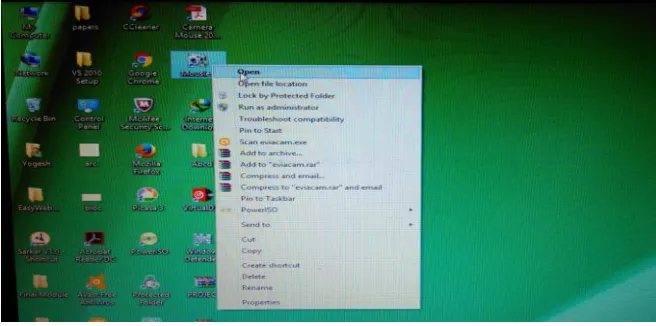
Figure 1. Screenshot for mouse pointer functions in windows
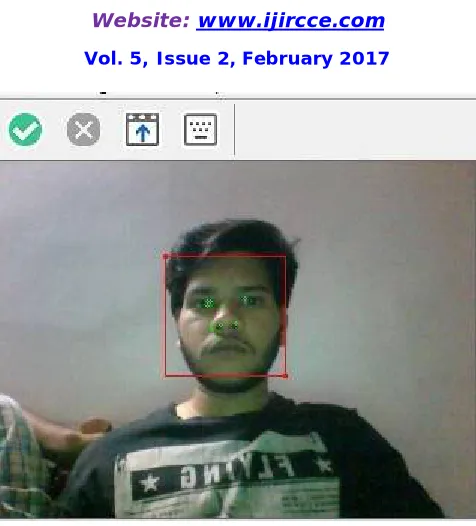
Figure 2. Screenshot of mousless interagace.
The main window shows the image of the camera and provides access to all commands and configuration options. Once Mouseless is started, this window opens and begins streaming live video. Make sure that image quality and capture speed fulfill the required standards for a correct operation .
Figure 3. Screenshot of various mouse control options
VI.CONCLUSION
ISSN(Online): 2320-9801
ISSN (Print): 2320-9798
I
nternational
J
ournal of
I
nnovative
R
esearch in
C
omputer
and
C
ommunication
E
ngineering
(An ISO 3297: 2007 Certified Organization)
Website: www.ijircce.com
Vol. 5, Issue 2, February 2017
REFERENCES
[1] Hai Tao and Thomas Huang, “Explanation-based facial motion tracking using a piecewise bezier volume deformation model,” in Proc. IEEE Computer Vision and Patt. Recogn., 1999, vol. 1, pp. 611–617.
[2]. JamesW. Davis and Serge Vaks, “A perceptual user interface for recognizing head gesture acknowledgements,” in Workshop for Perceptive User Interface, Orlando, FL, 2001, pp. 1–7.
[3]D.O. Gorodnichy, S. Malik, and G. Roth, “Nouse ’use yournose as a mouse’ - a new technology for hands-free games and interfaces,” in Intern. Conf. on Vision Interface, Calgary, 2002, pp. 354–361.
[4]Hai Tao and Thomas Huang, “Explanation-based facial motion tracking using a piecewise bezier volume deformation model,” in Proc. IEEE Computer Vision and Patt. Recogn., 1999, vol. 1, pp. 611–617.
[5]Jilin Tu, Zhenqiu Zhang, Zhihong Zeng, and Thomas Huang, “Face localization via hierarchical condensation with fisher boosting feature selection,” in IEEE Computer Society Conference on Computer Vision and Pattern Recognition (CVPR’04), 2004, vol. 2, pp. 719–724.
[6]Xingfeng Wang, Kaihuai Qin , “A Six-degree-of-freedom Virtual Mouse based on Hand Gestures”, 2010 International Conference on Electrical and Control Engineering, pp. 257-260.
[7]Utpal V. Solanki, Nilesh H. Desai, “Hand gesture based remote control for home appliances : Handmote”, 2011 World Congress on Information and Communication Technologies IEEE, pp 425-429.
[8]Y. Wu and T.S. Huang, “Hand modeling, analysis and recognition for vision-based human computer interaction,” IEEE Signal Processing Magazine, vol. 18, May 2001, pp:51-60.
[9]A. Pandit, D. Dand, S. M. Sabesan, A. Daftery, “A simple wearable hand gesture recognition device using iMEMS,” Soft Computing and
Pattern Recognition, 2009. SOCPAR ’09. International Conference, vol. 4, no. 7, pp. 592-597, Dec. 2009.
[10]A. Albiol, L. Torres, and E. J. Delp, “Optimum color spaces for skin detection,” in Proceedings of 2001 Image Processing International
Conference, vol. 1, pp. 122-124, 2001.
[11]Betke M (2009) Intelligent interfaces to empower people with disabilities. In: Nakashima H, Augusto JC, Aghajan H (eds) Handbook of ambient intelligence and smart environments. Springer, New York, pp 409–432
[12]Biswas P, Samanta D (2007) Designing computer interface for physically challenged persons. In: Proceedings of the international information technology conference (ICIT 2007). IEEE, New York, pp 161–166
BIOGRAPHY
Mr.Gaurav Bhagat: Researcher, Department Of Computer Science And Engineering of
Dr.Babasaheb Ambedkar College of Engineering and Research. Area of interest: Database.
Mr.Yogesh Dahake: Researcher, Department Of Computer Science And Engineering of
Dr.Babasaheb Ambedkar College of Engineering and Research. Area of interest: Networking.
Mr.Piyush Guhe: Researcher, Department Of Computer Science And Engineering of