c e-ISSN: 2348-6848, p- ISSN: 2348-795X Volume 2, Issue 12, December 2015
International Journal of Research (IJR)
Available at http://internationaljournalofresearch.org
An Efficient Frame Work for Traffic Analysis in the Clouds
1
B.Vijay Kumar &
2Ch. Sivasankar
1
M.Tech (Computer Science), AITS, Tirupati,([email protected])
2
M.Tech Assistant Professor, Dept of CSE, AITS, Tirupati,([email protected])
Abstract:
While demands on video traffic over mobile networks have been souring, the wireless link capacity cannot keep up with the traffic demand. The gap between the traffic demand and the link capacity, along with time-varying link conditions, results in poor service quality of video streaming such has mobile networks, we propose a new
mobile video streaming framework, dubbed
AMES-Cloud, which has two main parts: AMoV(adaptive
mobile video streaming)
andESoV(efficientsocialvideosharing).AMoVandES
oVconstructaprivateagenttoprovidevideostreamings ervicesefficientlyforeachmobileuser.Foragivenuser, AMoVletsherprivateagentadaptivelyadjustherstrea mingflowwithascalablevideocodingtechniquebased onthefeedbackoflinkquality.Likewise,ESoVmonitors thesocialnetworkinteractionsamongmobileusers,an dtheirprivateagentstrytoprefetchvideocontentinadv
ance.WeimplementaprototypeoftheAMES-Cloudframeworktodemonstrateitsperformance.Itiss hownthattheprivate
agentsinthecloudscaneffectivelyprovidetheadaptive streaming,andperformvideosharing(i.e.,prefetching )based on the social network analysis.
I.INTRODUCTION:
Over the past decade, increasingly more traffic is accounted by video streaming and downloading. In particular, video streaming services over mobile networks have become prevalent over the past few years [1]. While the video streaming is not so challenging in wired networks, mobile networks have been suffering from video traffic transmissions over scarce bandwidth of wireless links. Despite network operators‟ desperate efforts to enhance the wireless link
bandwidth (e.g., 3G and LTE), soaring video traffic demands from mobile users are rapidly
overwhelming the wireless link capacity.
While receiving video streaming traffic via 3G/4G mobile networks, mobile users often suffer from long buffering time and intermittent disruptions due to the limited bandwidth and link condition fluctuation caused by multi-path fading and user mobility [2] [3] [4]. Thus, it is crucial to improve the service quality of mobile video streaming while using the networking and computing resources efficiently [5] [6] [7].
The video content may incur high overhead in terms of storage and communication. To address this issue, the Scalable Video Coding (SVC) technique (Annex G extension) of the H.264 AVC video compression standard [9] [10] [11] defines a base layer (BL) with multiple enhance layers (ELs). These sub streams can be encoded by exploiting three scalability features: (i) spatial scalability by layering image resolution (screen pixels), (ii) temporal scalability by layering the frame rate, and (iii) quality scalability by layering the image compression. The fluctuating wireless link status should be properly dealt with to provide „tolerable” video streaming services. To address this issue, we have to adjust the video bit rate adapting to the currently time-varying available link bandwidth of each mobile user. Such adaptive streaming techniques can effectively reduce packet losses and bandwidth waste.
Scalable video coding and adaptive streaming techniques can be jointly combined to accomplish effectively the best possible quality of video streaming services. That is, we can dynamically adjust the number of SVC layers depending on the current link status [9] [12].
c e-ISSN: 2348-6848, p- ISSN: 2348-795X Volume 2, Issue 12, December 2015
International Journal of Research (IJR)
Available at http://internationaljournalofresearch.org
services (SNSs) have been increasingly popular. There have been proposals to improve the quality of content delivery using SNSs. In SNSs, users may share, comment or re-post videos among friends and members in the same group, which implies a user may watch a video that her friends have recommended (e.g., an official facebook or twitter)
In this paper, we design a adaptive video streaming and prefetching framework for mobile users with the above objectives in mind, dubbed AMES-Cloud. AMES-Cloud constructs a private agent for each mobile user in cloud computing environments, which is used by its two main parts: (i) AMoV(adaptive mobile video streaming), andESoV (efficient social video sharing). The contributions of this paper can be summarized.
AMES-Cloud supports distributing video streams efficiently by facilitating a 2-tier structure: the first tier is a content delivery network, and the second tier is a data center. With this structure, video sharing can be optimized within the cloud. Unnecessary redundant downloads of popular videos can be prevented.
The rest of the paper is organized as follows. We first introduce related work in SectionII, and explain the AMES-Cloud framework in Section III. The adaptive video streaming service and the efficient social video sharing will be detailed in Sections IV and V, respectively. Then the operations of AMES-Cloud is illustrated in Section VI. Finally, we evaluate the prototype implementation in Section VII, and conclude the paper in Section VIII.
II. RELATED WORK
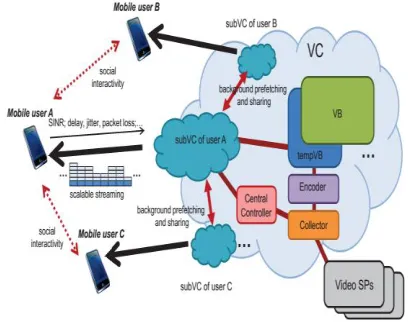
Fig. 1. An illustration of the AMES-Cloud framework
A. Adaptive Video Streaming Techniques:
In the adaptive streaming, the video traffic rate is adjusted on the fly so that a user can experience the maximum possible video quality based on his or her link‟s time-varying bandwidth capacity [2]. There are mainly two types of adaptive streaming techniques, depending on whether the adaptivity is controlled by the client or the server.
The rate adaptation controlling techniques, TCP-friendly rate control methods for streaming services over mobile networks are proposed, where TCP throughput of a flow is predicted as a function of packet loss rate, round trip time, and packet size. Considering the estimated throughput, the bit rate of the streaming traffic can be adjusted. A few cross-layer adaptation techniques are discussed, which can acquire more accurate information of link quality so that the rate adaptation can be more accurately made.
B. Mobile Cloud Computing Techniques:
The cloud computing has been well positioned to provide video streaming services,
especially in the wired
Internet because of its scalability and capability [13]. For example, the quality-assured bandwidth
auto-scaling for
c e-ISSN: 2348-6848, p- ISSN: 2348-795X Volume 2, Issue 12, December 2015
International Journal of Research (IJR)
Available at http://internationaljournalofresearch.org
distributed users. However, extending the cloud computing-based services to mobile environments requires more factors to consider: wireless link dynamics, user mobility, the limited capability of mobile devices More recently, new designs for
users on top of mobile cloud
computingenvironments are proposed, which virtualize private agents that are in charge of satisfying the requirements (e.g.QoS) of individual users such as Cloudlet and Stratus. Thus, we are motivated to design the AMES-Cloud framework by using virtual a gents in the cloud to provide adaptive video streaming services.
III. AMES-CLOUD FRAMEWORK
In this section we explain the AMES-Cloud framework includes the Adaptive Mobile Video streaming (AMoV) and the Efficient Social Video sharing (ESoV).As shown in Fig. 1, the whole video storing and streaming system in the cloud is called the Video Cloud (VC). In the VC, there is a large-scale video base (VB), which stores the most of the popular video clips for the video service providers (VSPs). A temporal video base (tempVB) is used to cache new candidates for the popular videos, while tempVB counts the access frequency of each video. The VC keeps running a collector to seek videos which are already popular in VSPs, and will re-encode the collected videos into SVC format and store into tempVB first. By this 2-tier storage, the AMES-Cloud can keep serving most of popular videos eternally.
Specialized for each mobile user, a sub-video cloud (subVC) is created dynamically if there is any video streaming demand from the user. Note that the video deliveries among the subVCs and the VC in most cases are actually not “copy”, but just “link” operations on the same file eternally within the cloud data center. There is also encoding function in subVC, and if the mobile user demands a new video, which is not in the subVB or the VB in VC, the subVC will fetch, encode and transfer the video. During video streaming, mobile users will always report link conditions to their corresponding subVCs, and then the subVCs offer adaptive video streams. Note that each mobile
device also has a temporary caching storage, which is called local video base (localVB), and is used for buffering and prefetching.
Fig.2. A comparison of the traditional video streaming, the scalable video streaming and the
streaming in the AMES-Cloud framework.
IV. AMOV: ADAPTIVE MOBILE VIDEO STREAMING
A. SVC
As shown in Fig. 2, traditional video streams with fixed bit rates cannot adapt to the fluctuation of the link quality. For a particular bit rate, if the sustainable link bandwidth varies much, the video streaming can be frequently terminated due to the packet loss.
In SVC, a combination of the three lowest scalability is called the Base Layer (BL) while the enhanced combinations are called Enhancement Layers (ELs). To this regard, if BL is guaranteed to be delivered, while more ELs can be also obtained when the link can afford, a better video quality can be expected.
c e-ISSN: 2348-6848, p- ISSN: 2348-795X Volume 2, Issue 12, December 2015
International Journal of Research (IJR)
Available at http://internationaljournalofresearch.org
packet loss. So it is necessary to control the SVC-based video streaming at the server side with the rate adaptation method to efficiently utilize the bandwidth.
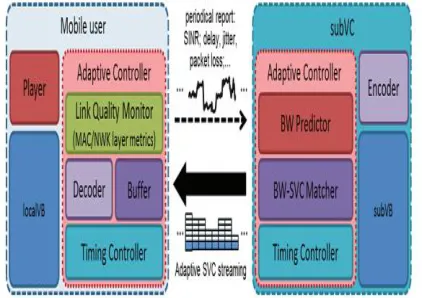
Fig. 3. Functional structure of the client and the subVC
B. Adaptability with Monitoring on Link Quality:
We design the mobile client and the subVC with the structure as shown in Fig. 3. The link quality monitor at mobile client keeps tracking on metrics including signal strength, packet round-trip-time (RTT), jitter and packet loss with a certain duty cycle. And the client will periodically report to the subVC. Hereby we define the cycle period for the reporting as the “time window”, denoted by Twin,
Once the subVC gets the information of the link quality, it will perform a calculation and predict the potential bandwidth in the next time window.
BWiestimate+1=BWipractical[ f (pi; pi1)
+ g (RTTi; RTTi1) + h (SINRi; SINRi1)]
where, + + = 1 indicating the importance of each factor, p is for packet loss rate, RTT is for RTT,
SINR is for the signal to interference and noise ratio, and f(), g(), h() are three functions reflecting the value change ofeach factor compared with that of last time window.
Actually in this paper we deploy a measurement-based prediction, that is we directly use BWipractical
of last time window as the BWiestimate+1 of next time
window, which is proved with already high
accuracy
C. Matching between Bandwidth Prediction and SVC Segments:
After obtaining the predicted bandwidth, or say good put, of next time window, subVC will match and decide how many video segments of BL and ELs can be transmitted approximately. We hereby define the term “resolution” to indicate the level of temporal segmentation and the number of ELs.
Fig. 4. Matching between predicted bandwidth and SVC-segments with different resolutions
The resolution with two ELs and a larger
Twin can hardly fit to the signal fluctuation, and thus
there are some bandwidth wasted or packets lost. In contrast a higher resolution with more ELs and a smaller Twin can always fit the fluctuation of the
bandwidth. However a higher resolution also induces more encoding workload to the servers.
V. ESOV: EFFICIENT SOCIAL VIDEO SHARING
A. Social Content Sharing
There are various types of social activities among users in SNSs, such as direct message and public posting. For spreading videos in SNSs, one can post a video in the public, and his/her subscribers can quickly see it; one can also directly recommend a video to specified friend(s); furthermore one can periodically get noticed by subscribed content publisher for new or popular videos.
c e-ISSN: 2348-6848, p- ISSN: 2348-795X Volume 2, Issue 12, December 2015
International Journal of Research (IJR)
Available at http://internationaljournalofresearch.org
called a “hitting probability”, so that subVCs can carry out effective background prefetching at subVB and even localVB. Because after a video sharing activity, there may be a certain delay that the recipient gets to know the sharing,The amount of prefetched segments is mainly determined by the strength of the social activities. And the prefetching from VC to subVC only refers to the “linking” action, so there is only file locating and linking operations with tiny delays; the prefetching from subVC to localVB also depends on the strength of the social activities, but will also consider the wireless link status.
Algorithm 1 Matching Algorithm between BW and Segments
i = 0
BW0= RBL
Transmit BL0
Monitor BW0practical
repeat Sleep for Twin
Obtain pi, RTTi, SINRi etc., from client‟s report
Predict BWiestimate+1 (or BWiestimate+1 = BWipractical)
k=0
BWEL=0
repeat
k++
ifk >= j break
BWEL=BWEL+RELk
untilBWEL>= BWiestimate+1RBL
Transmit BLi+1 and EL1i+1, EL2i+1,...,ELki+11
Monitor BWipractical+1 i++
untilall video segments are transmitted.
We classify the social activities in current popular SNSs into three kinds, regarding the impact of the activities and the potential reacting priority from the point of view of the recipient.
Subscription:
In thatthe connectivity between the subscriber and the video publisher is considered as “median”, because the subscriber may not always watch all subscribed videos.
Direct recommendation:
In SNSs, an user directly recommend a
video to particular friend(s) with a short message. This is considered as “strong”.
Public sharing:
Each user in SNSs has a timeline-based of activity stream,The activity of a user watching or sharing a video can be seen by his/her friends (or followers). We consider this public sharing with the “weak” connectivity among users, because not many people used.
B. Prefetching Levels:
Different strengths of the social activities indicate different levels of probability that a video will be soon watched by the recipient. Correspondingly we also define three prefetching levels regarding the social activities of mobile users:
“Parts”: Because the videos that published by subscriptions may be watched by the subscribers with a not high probability, we propose to only push a part of BL and ELs segments, for example, the first 10% segments.
“All”: The video shared by the direct recommendations will be watched with a high probability, so we propose to prefetch the BL and all ELs, in order to let the recipient(s) directly watch the video with a good quality, without any buffering.
“Little”: The public sharing has a weak connectivity among users, so the probability that a user‟s friends (followers) watch the video that the user has watched or shared is low. We propose to only prefetch the BL segment of the first time window in the beginning to those who have seen his/her activity in the stream.
c e-ISSN: 2348-6848, p- ISSN: 2348-795X Volume 2, Issue 12, December 2015
International Journal of Research (IJR)
Available at http://internationaljournalofresearch.org
suitable for “parts” or “little” [39]. If a user, A, gets the direct recommendation of a video from another user, B, A‟ssubVC will immediately prefetch the video either from B‟s subVB, or from the VB (or tempVB) at the level of “all”, if A is with Wi-Fi access. However if user A is connected to 3G/4G link, we will selectively prefetch a part of the video segment to A‟s local storage at the level of “parts”. A better extension of the prefetching strategy by social activities can be designed by an self-updating mechanism from the user‟s hitting history in an evolutionary manner.
VI. VIDEO STORAGE AND STREAMING FLOW BY AMOV AND EMOS
The two parts, AMoV and EMoS, in AMES-Cloud framework have tight connections and will together service the video streaming and sharing: they both rely on the cloud computing platform and are carried out by the private agencies of users;
Fig.5. Working flow of video streaming in the subVC and VC of AMES-Cloud framework Once a mobile user starts to watch a video by a link, the localVB will first be checked whether there is any prefetched segments of the video so that it can directly start. If there is none or just some parts, the client will report a corresponding VMap to its subVC. if the subVC has perfected parts in subVB, the subVC will initiate the segment transmission. But if there is also none in the subVB, the tempVB and VB in the center VC will bechecked. For a non-existing video in AMES-Cloud, the collector in VC will immediately fetch it from external video providers via the link; after
re-encoding the video into SVC format, taking a bit longer delay, the subVC will transfer to the mobile user.
Also in AMES-Cloud, if a video is shared among the subVCs at a certain frequency threshold (e.g., 10 times per day), it will be uploaded to the tempVB of the VC; and if it is further shared at a much higher frequency (e.g., 100 times per day), it will be stored with a longer lifetime in the VB. In such a manner, which is quite similar to the leveled CPU cache, the subVB and VB can always store fresh and popular videos in order to increase the probability of re-usage.
VII. IMPLEMENTATION AND
EVALUATION
We evaluate the performance of the AMES-Cloud framework by a prototype implementation. We choose the U-cloud server (premium) in the cloud computing service offered by Korean Telecom, and utilize the virtual server with 6 virtual CPU cores (2.66GHz) and 32GB memory, which is fast enough for encoding 480P (480 by 720) video with H.264 SVC format in 30 fps at real time [9]. In the cloud, we deploy our server application based on Java, including one main program handling all tasks of the whole VC, while the program dynamically initializes, maintains and terminates instances of another small Java application as private agents for all active users. We implement the mobile client at a mobile phone, Samsung Galaxy II, with android system version 4.0. The mobile data service is offered by LG U+ LTE network, while in some uncovered area the 3G network is used. Note that we still use “3G” to indicate the general cellular network. We test in the downtown area, so the practical bandwidth of the mobile link is not as high as we expected, but this won‟t impact our experiment results.
c e-ISSN: 2348-6848, p- ISSN: 2348-795X Volume 2, Issue 12, December 2015
International Journal of Research (IJR)
Available at http://internationaljournalofresearch.org
software of version 9.1. We just use default settings for the decoding and encoding, and do the H.264 SVC encoding at the virtual server in the cloud.
We split the video into segments by 1 second to 5 seconds, that is to vary Twin with values
1s, 2s, 3s, 4s and 5s. By JSVM, besides the base layer, we further make five temporal layers (1.875, 3.75, 7.5, 15, and 15 fps), two spatial layers (240 by 360 and 120 by 180) and two more quality layer (low and high), referring to [12] . Thus we define the best resolution configuration as “1+5+2+2”. And we also test different resolution configurations, including “1+1+1+1”, “1+2+2+2”, “1+3+2+2” and “1+4+2+2”.
A. Adaptive Video Streaming based on SVC
Fig. 6. Relative errors between predicted bandwidth and practical bandwidth (percentage)
Firstly we examine whether there is a deep relationship between the measured bandwidth of last time window and the practical bandwidth of next time window (goodput by Kbps). We test the video streaming service via cellular link, and move the device around in the building to try to change the signal quality. Note that all tests are ran five times. The collected the relative errors for the predicted bandwidth to the practical bandwidth for everytime window,
Calculated
𝐵𝑊𝑒𝑠𝑡𝑖𝑚𝑎𝑡𝑒 − 𝐵𝑊𝑝𝑟𝑎𝑐𝑡𝑖𝑐𝑎𝑙 𝐵𝑊𝑝𝑟𝑎𝑐𝑡𝑖𝑐𝑎𝑙
are shown in Fig. 6, where the bar indicates the 25% and 75%quartiles, and the whiskers indicate the 5% and 95% percentiles. When Twin is 1 second
or 2 seconds, the predicted bandwidth is very near to the practical one with around 10% relative error, but large values of Twin have relatively poor
prediction accuracy, which reflects the similar results. So we suggest a short Twin of 2 or 3 seconds
for accurate prediction in practical designs.
B. Video Streaming in subVC and VC
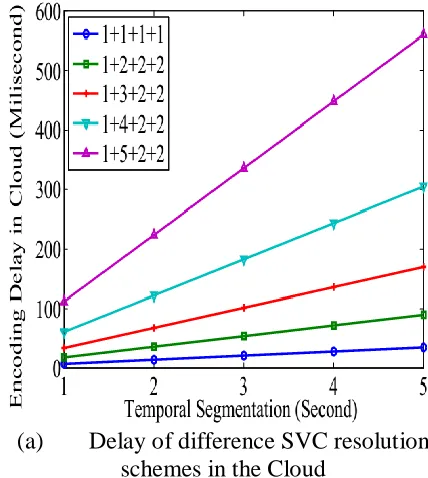
We evaluate how H.264 SVC works in AMES-Cloud framework regarding the above mentioned SVC resolution configurations. As shown in Fig. 7(a), because of the strong computational capacity by the cloud computing, the encoding speed is fast. The best resolution configuration “1+5+2+2” with 5 second temporal segmentation scheme requires about 560 ms for encoding. For shorter intervals of Twin, the encoding
delay is very small under 50 ms.
Because more ELs induce higher overhead due to the duplicated I-frames, we test the overhead, which is calculated by the ratio of the total size of the video segments after SVC encoding to the size of only the BL. As shown in Fig. 7(b), the resolution scheme of “1+1+1+1” has a low overhead around below 10%, and “1+2+2+2” with two ELs for each scalability feature has about 17% overhead, which is acceptable. However higher resolution like “1+4+2+2”.
c e-ISSN: 2348-6848, p- ISSN: 2348-795X Volume 2, Issue 12, December 2015
International Journal of Research (IJR)
Available at http://internationaljournalofresearch.org
(b) Overhead of different SVC resolutions schemes in the Cloud
has 61% overhead, and “1+5+2+2” has even 120% overhead, which is not efficient. Overall, an SVC stream should not contain too many enhance layers for extremely high scalability, which may practically bring too much overhead.
C. Prefetching Delays
In ESoV, video segments can be prefetched among VB, tempVB, and localVBs of the mobile users, based on their activities in SNSs. we evaluate the required delays for different levels of prefetching as shown in Table. 3. We here use the normal resolution configuration of “1+2+2+2” with 2 second temporal segmentation by default (the same in following tests). We also set the sharing length of “little” as only the first 5 seconds of the BL and ELs, that of “parts” as the first 15 seconds of the BL and ELs, and that of “all” as all BL and ELs segments.
We can see that prefetching supported by
the cloud computing is significantly fast. When prefetching via wireless links, it takes several seconds. However it is obvious that in most cases a recipient of the video sharing may not watch immediately after the original sharing behavior, that is normal users have significant access delay gaps, so this prefetching transmission delay won‟t impact user‟s experience at all, but will bring “non-buffering” experience in fact when the user clicks to watch at a later time.
VIII CONCLUSION
In this paper, we discussed our proposal of an adaptive mobile video streaming and sharing framework, called AMES-Cloud, which efficiently stores videos in the clouds (VC), and utilizes cloud computing to construct private agent (subVC) for each mobile user to try to offer “non-terminating” video streaming adapting to the fluctuation link quality based on the Scalable Video Coding technique. Also AMES-Cloud can further seek to provide “non-buffering” experience of video streaming by background pushing functions among the VB, subVBs and localVB of mobile users. We evaluated the AMES-Cloud by prototype implementation and shows that the cloud computing technique brings significant improvement on the adaptivity of the mobile streaming.
The focus of this paper is to verify how cloud computing can improve the transmission adaptability and prefetching for mobile users. We ignored the cost of encoding workload in the cloud while implementing the prototype. As one important future work, we will carry out large-scale implementation and with serious consideration on energy and price cost. In the future, we will also try to improve the SNS-based prefetching, and security issues in the AMES-Cloud.
REFERENCES
[1] CISCO, “Cisco Visual Networking Index : Global Mobile Data Traffic Forecast Update , 2011-2016,” Tech. Rep., 2012.
c e-ISSN: 2348-6848, p- ISSN: 2348-795X Volume 2, Issue 12, December 2015
International Journal of Research (IJR)
Available at http://internationaljournalofresearch.org
“Measurement and Analysis of a Large Scale Commercial Mobile Internet TV System,” in ACM IMC, pp. 209–224, 2011.
[3] T. Taleb and K. Hashimoto, “MS2: A Novel Multi-Source Mobile-Streaming Architecture,” in
IEEE Transaction on Broadcasting, vol. 57, no. 3, pp. 662–673, 2011
[4] X. Wang, S. Kim, T. Kwon, H. Kim, Y. Choi, “Unveiling the BitTorrent Performance in Mobile WiMAX Networks,” in Passive andActive
Measurement Conference, 2011.
[5] A. Nafaa, T. Taleb, and L. Murphy, “Forward Error Correction Adaptation Strategies for Media Streaming over Wireless Networks,” in IEEE Communications Magazine, vol. 46, no. 1, pp. 72– 79, 2008.
[6] J. Fernandez, T. Taleb, M. Guizani, and N. Kato, “Bandwidth Aggregation-aware Dynamic QoS Negotiation for Real-Time Video Applications in Next-Generation Wireless Networks,” in IEEE Transaction on Multimedia, vol. 11, no. 6, pp. 1082–1093, 2009.
[7] T. Taleb, K. Kashibuchi, A. Leonardi, S. Palazzo, K. Hashimoto, N. Kato, and Y. Nemoto, “A Cross-layer Approach for An Efficient Delivery of TCP/RTP-based Multimedia Applications in Heterogeneous Wireless Networks,” in IEEE Transaction on VehicularTechnology, vol. 57, no. 6, pp. 3801–3814, 2008.
[8] K. Zhang, J. Kong, M. Qiu, and G.L Song, “Multimedia Layout Adaptation Through
Grammatical Specifications,” in
ACM/SpringerMultimedia Systems, vol. 10, no. 3, pp.245–260, 2005.
[9] M. Wien, R. Cazoulat, A. Graffunder, A. Hutter, and P. Amon, “Real-Time System for Adaptive Video Streaming Based on SVC,” in
IEEE Transactions on Circuits and Systems for Video Technology, vol. 17, no. 9, pp. 1227–1237, Sep. 2007.
[10]H. Schwarz, D. Marpe, and T. Wiegand, “Overview of the Scalable Video Coding Extension of the H.264/AVC Standard,” in IEEETransactions on Circuits and Systems for Video Technology, vol. 17, no. 9, pp. 1103–1120, Sep. 2007.
[11]H. Schwarz and M. Wien, “The Scalable Video Coding Extension of The H. 264/AVC Standard,” in IEEE Signal Processing Magazine, vol. 25, no. 2, pp.135–141, 2008.