A Model for Improved Online Service Process Computing; a
Case for VLAN Online Shop Integration
A.C. Okafor1, H. C. Inyiama1, A.I.Onwujei1, 2K.C.Okafor, 1O.B Obianuju
1Department. of Electronic and Computer Engineering, Nnamdi Azikiwe University, Awka, Nigeria 2Department of Electrical and Electronic Engineering, Federal University of Technology, Owerri, FUTO,
Nigeria, P.M.B 1526.
Abstract
With the advent of cloud computing, online service processes has evolved considerably. Efforts have been made in developing web based applications, but in the electronic commerce environment, trust is more difficult to build even in traditional commerce. Research has failed to explore Virtualized Local Area Network (VLAN) integration from both the front and back ends for trust in the e-commerce domain. Consequently, this paper presents a new conceptual model for online trust, which illustrates the phases of building online consumer trust and outlines the necessary interactions between consumers, and the vendors. This model can help to further the understanding of online trust, while providing online vendors with methods for building consumer trust, and direct future research in this new and critical field. A questionnaire was used as a tool to derive findings from both customers and vendors on their bias on online computing. Relevant hypothesis were formed and tested with t-Test. A demonstration Online Service application and the system design was achieved considering the model. PhP and MyQSL were employed for the Graphic User Interface, (GUI).
Keywords: Cloud Computing, Front-End, Online Service Computing, E-Commerce, VLAN,-Test, Hypothesis.
1. Introduction
A new paradigm has emerged with the advent of E-commerce online service computing which fits into the paradigms shown in Fig 1. In the online service process computing paradigm, the critical success factor for every commercial entity to implement and operate an e-business mechanism is money flow, material flow and information flow in commerce process [1]. The majority of trust theories are built upon the basis that there is a history of exchanges between users, merchants, payment partners and banks, but the fluid and dispersed nature of e-commerce market still makes the issue of trust hard due to the frailness to scale the reliability of participants. A Virtualized Local Area Network (VLAN) Secured-tier management portal optimized for E-commerce services processes on the cloud is required to solve some security related problems on the e-commerce web application. VLAN secured-tier architectures comprising of the user
front-end, business/integration logic and the server backend, with designated VLAN services will help to deal with the issue of scalability, security and network efficiency for service computing online stores application [1].
Fig 1: Web paradigms [2]
Following the web paradigms of Fig 1, this paper seeks to explore the use of VLAN application integration as a means of improving online service computing process transaction and performance without resorting to expensive special purpose hardware. For the back end integration, this work will derived its basis from VLAN online mapping scheme which will host the online stores application on a well designed internet IP cloud been driven by VLAN system.
This research implicates the security and trust issues that are essential for every online electronic payment mechanism in order to be accepted and established as a common medium of financial transactions.
1.1. Motivation
The traditional way of offline business transactions presents a lot of limitations to prospective customers and business owners. Some of these include improper account auditing, poor inventory documentation, inflexibility and poor service delivery, etc. A new way of thinking has emerged with the advent of OSC that not only solves the above problems, but entrenches stronger security scheme referred to as VLAN Secured-tier service cryptographic encryption. This leverages on the potentialities of VLAN service process technology which addresses the challenges of current web centric designs. An online stores application with its service computing will be used to demonstrate the tight integration on secured service process. This will solve the optimization problem of security cost and integration efficiency (high performance, security and enterprise scalability) which will benefit business owner in general.
1.2. Research Contribution
The main objective of this research is to develop an intelligent framework for online line service computing in the context of secured business transactions on the internet. This leverages on a proposed Secured-tier VLAN service process for internet backbone. This research seeks to achieve the following sub-objectives:
To develop an effective customer centric VLAN internet computing service model that improves customers satisfaction and retention called (Online VLAN service process scheme). This will be compatible to web 2.0 and semantic web
1. To develop a security framework for online service computing e-payment gateway based on VLAN port tagging [1]
2. To improve transaction latency using a light weighted and flexible technology. This is for a case of online VLAN integration with service sided scripting while allowing for unicast and multicast traffic flows in the network backbone. Hence, a reliable and a high throughput web application with practically zero down time will be realised.
This research will help offline enterprise organizations involved with large scope business transactions to fasten response to customer needs, access customers and make larger sales from any location over the web. This will enable overall system flexibility while maintaining security. It will also enable staff and owners of companies, businesses or institutions, etc to appreciate the importance of online customer care in enhancing cost savings, while increasing revenue and sales with accurate sales tracking
and management. The propose integration approach will account for security while allowing for flexibility and reduction in downtimes.
2. Literature Review
Various works in literature have been studied to ascertain the level of security trust on E-commerce systems. Works on VLAN, Security integration and other related online web based services have been studies in [3], [4], [5], [6], [7],[8],[9],[10],[11],[12],[13]. Essentially, Cryptography [15], biometrics [16] and other techniques have been applied in e-commerce domain. Though most proposals seems to be yielding results, the intrinsic vulnerabilities both on the web front-end and back end systems are still visible and needs to be addressed. Confidentiality, authentication, integrity, non-repudiation, non-deny, availability, identification. Passive attacks include interception, Release of message contents and traffic analysis while active attacks include: interruption, modification, fabrication, masquerade, replay, modification and denial of service [14]. Fig 2 shows the key components a security model.
In view of the security model in Fig 2, there is need for a qualitative field survey using questionnaires with approariate hytpothesis and validity tests so as to generate findings that will facilitate the proposed online security framework.
Fig 2: Security Model [14]
3. Methodology
3.1. Design Research Methodology
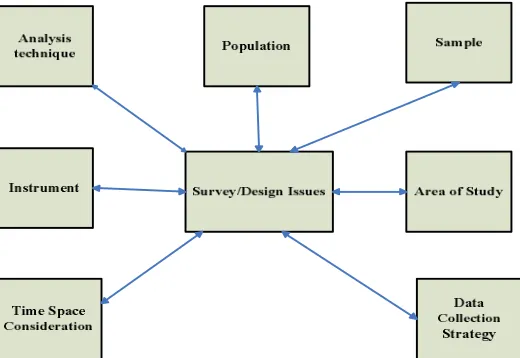
A survey investigation was adapted for the findings in this regard. But, for the online service computing in the context of e-commerce, the developmental framework necessary for developing security integration at the backend for the system requires a survey data. As such, the outcome of the survey was be used to build application framework using a Secured-tier VLAN integration for the server architecture while achieving the efficiency and flexibility. This will be detailed after the analysis of a survey focusing on the challenges of enterprises/business owners in migrating to internet for business transactions and in delivering efficient services to end users in Nigeria. Consequently, using the DRM will involve a complete research survey with the view to ascertain the challenges of enterprises/business owners in migrating to internet for business transactions and in delivering efficient services to end users in Nigeria. As a basis for the OSC study, the DRM captured in Fig.3 is used.
Fig 3: DRM Survey/Design Considerations
From Fig 3, the study area is the geographical boundaries covering Anambra, Enugu, Abuja, Imo and Abia States. A survey aid was developed for the purpose of qualitative the data collection for this research. The questionnaire was structured on a 5-point likert scale namely; strongly Agree, Undecided, Disagree, Strongly Disagree. The population of the study comprised of traders in the eastern part of Nigeria. The sample size was statistically determined using Yaro Yamane model for a finite population as:
n= N/1+N(e)^2 (1)
Where n = sample size, N = Finite Population, e = Level of significance or limit of tolerable error, 1= Unity constant.
The hypothesis was tested using two major parameters namely; categories, location and business experience. The survey aid was administered in order to ensure the accuracy of data and was collected immediately from respondents after responding to the questions. In all cases, 61 samples were returned out of the 70 samples distributed. Frequency count was used in analyzing section A of the survey instrument eliciting data on the categories, location and business experience of the respondents.
On the other hand mean and standard deviation was used to answer the research question. In analyzing the hypothesis, the mean ratings (X), standard deviation (SD) of traders with Above 5 yrs of business experience and those with below 5 yrs of business experience, those in the rural area and those in the urban area, medium scale traders and large scale traders were used for the computation while t-Test was used to test the hypothesis.
3.2. Data Collection and Analysis
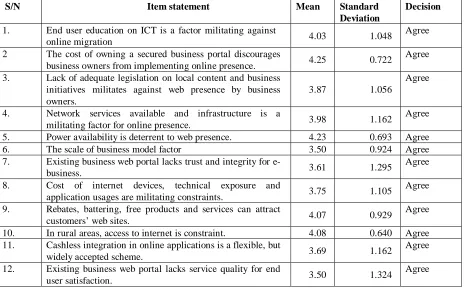
Research Question: What are the challenges that interfere with efficiency and reliability in business delivery in Nigeria? In this research, a statistics data editor was used to analyze the complete data as shown in table 1 which shows the frequency and percentage distribution of respondents on categories, location and business experience of the respondents. Table 2 shows the Mean and Standard Deviation of Respondents on the challenges that interfere with efficiency and reliability in business delivery in Nigeria
In this study, table 3 shows that all the elicited items were agreed to be the challenges that interfere with efficiency and reliability in business delivery in Nigeria. Two hypothesis were stated for the purpose of directing our findings next.
Hypothesis 1; H1: There is no statistical significant
Table 1: Frequency and Percentage Distribution of Respondents on categories, location and business experience of the respondents.
S/N ITEMS CATEGORY LOCATION BUSINESS EXPERIENCE
Medium Scale
Large Scale
Rural Urban Below 5yrs Above 5 yrs
1. Frequency 27 32 33 28 24 37
2. Percentage (%)
44.2 52.5 54.1 45.9 39.3 60.7
Table 2:Mean and Standard Deviation of Respondents on the challenges that interfere with efficiency and reliability in business delivery in Nigeria.
S/N Item statement Mean Standard
Deviation
Decision
1. End user education on ICT is a factor militating against
online migration 4.03 1.048
Agree
2 The cost of owning a secured business portal discourages
business owners from implementing online presence. 4.25 0.722
Agree
3. Lack of adequate legislation on local content and business initiatives militates against web presence by business owners.
3.87 1.056
Agree
4. Network services available and infrastructure is a
militating factor for online presence. 3.98 1.162
Agree
5. Power availability is deterrent to web presence. 4.23 0.693 Agree
6. The scale of business model factor 3.50 0.924 Agree
7. Existing business web portal lacks trust and integrity for
e-business. 3.61 1.295
Agree
8. Cost of internet devices, technical exposure and
application usages are militating constraints. 3.75 1.105
Agree
9. Rebates, battering, free products and services can attract
customers’ web sites. 4.07 0.929
Agree
10. In rural areas, access to internet is constraint. 4.08 0.640 Agree 11. Cashless integration in online applications is a flexible, but
widely accepted scheme. 3.69 1.162
Agree
12. Existing business web portal lacks service quality for end
user satisfaction. 3.50 1.324
Agree
Table 3: t-Test Analysis of Mean and Standard deviation of responses of the respondents with below 5years of business experience and those with above 5years of business experience on the challenges that interfere with efficiency and reliability in business delivery in Nigeria.
S/N Below 5 yrs Above 5 yrs t-cal Sig (2-tailed)
X1 S.D1 X2 S.D2
1.
3.79 1.179 4.19 .938 -1.460 0.149
2.
4.08 .974 4.35 .484 -1.428 0.159
3.
4.00 1.063 3.78 1.058 0.778 0.439
4
5.
4.17 .702 4.27 .693 -0.567 0.573
6.
3.33 1.049 3.57 .835 -0.967 0.338
7.
3.71 1.268 3.54 1.325 0.491 0.625
8.
3.71 1.083 3.78 1.134 -0.258 0.797
9.
4.25 .737 3.95 1.026 1.255 0.214
10.
4.00 .722 4.14 .585 -0.803 0.425
11.
3.54 1.285 3.78 1.084 -0.792 0.431
12.
3.08 1.349 3.76 1.256 -1.987 0.052*
From the SPSS tool, the degree of freedom = 59; Significant level = 0.05 [reject hypothesis if Sig (2-tailed) is less or equal to 0.05] . Hence, from table 3, the significance levels of all the items except item 12 are greater than the stated 0.05 level of significance, therefore the null hypothesis is accepted for all other items except for item 12 (Existing business web
portal lacks service quality for end user satisfaction-0.052*).
Hypothesis 2 H2: There is no statistical significant
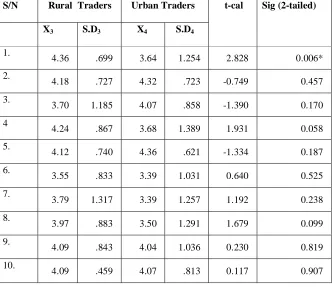
difference in the mean responses of Rural and Urban traders on the challenges that interfere with efficiency and reliability in business delivery in Nigeria. Table 4 shows the t-test analysis for H2.
Table 4: t-Test Analysis of Mean and Standard deviation of responses of Rural and Urban traders on the challenges that interfere with efficiency and reliability in business delivery in Nigeria.
S/N Rural Traders Urban Traders t-cal Sig (2-tailed)
X3 S.D3 X4 S.D4
1.
4.36 .699 3.64 1.254 2.828 0.006*
2.
4.18 .727 4.32 .723 -0.749 0.457
3.
3.70 1.185 4.07 .858 -1.390 0.170
4
4.24 .867 3.68 1.389 1.931 0.058
5.
4.12 .740 4.36 .621 -1.334 0.187
6.
3.55 .833 3.39 1.031 0.640 0.525
7.
3.79 1.317 3.39 1.257 1.192 0.238
8.
3.97 .883 3.50 1.291 1.679 0.099
9.
4.09 .843 4.04 1.036 0.230 0.819
10.
11.
3.64 1.245 3.75 1.076 -0.378 0.707
12.
3.61 1.197 3.36 1.471 0.729 0.469
Degree of Freedom (df) = 6 Significant level = 0.05
From table 4 above, the significance levels of all other items except item 1(End user education on ICT is a factor militating against online migration-0.006*) items are greater than 0.05 and makes the null hypothesis for the items acceptable except for item 1.
3.3. Survey Findings Using DRM
From the survey investigations, the following were the identified issues in the possibility of migration to online platforms, viz:
i. High illiterate level (index =79%) for online transactions
ii. High cost of solution development and deployment
iii. Poor online security legislation iv. Poor network quality and security
From these findings, this work now will detail the proposed Online Service Computing model that will address the security issues of Fig 2 next.
4. Proposed Online Service Computing Model
4.1. An Integrated Model for OSC
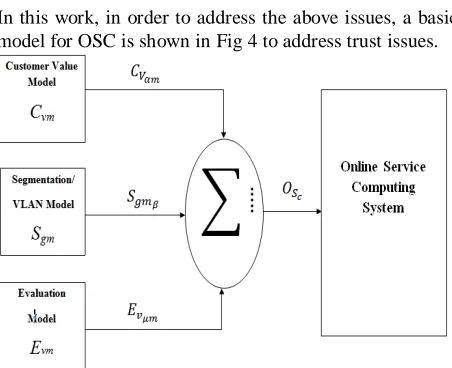
In this work, in order to address the above issues, a basic model for OSC is shown in Fig 4 to address trust issues.
Fig 4: Proposed Online Service Computing Model
The OSC model equation could be represented as: = + + (2)
Where, are the combinations of several
internal and external design models for the OSC.
In the proposed model, when a business owner migrate their business template online, legitimate customers must login with their VLAN names and link ids for the transaction to be consummated. The customer value model, the segmentation VLAN model on the network and the evaluation model constitutes the functional components that characterize the proposed OSC. The OSC model developed for efficient user transaction will address consumer value chain, application network integration for secure traffic transactions (http), application flexibilities and system evaluation criteria. The model will address possible server-centric request processing jobs, VLAN server mapping. Hence, while considering the server interconnection concept of the OSC, The following were introduced in the system designing.
Analytical model for customer value chain Analytical model that will handle VLAN traffic
control issues in OSC.
VLAN segmentation for logical isolation of the customers in the OSC architecture.
In designing our proposed OSC model, the main goals are to maintain balanced transaction on the web with trust and confidence, support, fast and scalable network that is flexible with less administrative overhead. The network should be capable of supporting high performance workloads (HPW) like end user web connections.
4.2. Design Specifications/Assumptions
4.3. Customer Value Model
This work considered factors relating to security, trust, and privacy and grouped them under the term e-confidence. The customer value model includes the
fundamental factors that influence the consumer acceptance and use of e-commerce in OSC. In this context, the approach towards establishing e-confidence can be divided into two categories: legislation and self-regulation. The establishment of laws relating to e-commerce must be adhered to and the legislation on traditional (offline) commerce should be applied or adapted to e-commerce. On an e-market, a consumer will conduct a transaction when s/he has a sense of controlling the risks involved, having acquired an appropriate degree of trust and confidence. Trust and confidence in the OSC occur by the functionality of the security VLAN in a B2C e-commerce
4.4. Behavioral Model
Given that customer’s makes online transaction, this is regarded as input information in the model. In a transaction, information value Iv is considered. In this
regard, Integrity I, timeliness t and accuracy of information provided on the platform affects customer’s decision to purchase or not. Other key considerations in a transactional model are the economic and emotional values (Ev1 and Ev2). The Economic value (Ev1)
determines the purchasing power of the customer at a time on the platform. The Emotional value (Ev2)
determines if a customer is satisfied with the transaction or enjoying the procedure. On the e-commerce platform, the customer value model is shown in Fig 5. The
customer value model in customer’s perspective seeks to provide an evaluation of each customer’s perspective on the enterprise portal. Hence, enterprises can upgrade their market strategy in order to have more customers.
Fig 5: Customer value model of OSC (E-commerce model)
From Fig 5, C1, C2, C3, C4, Cn+1represents the conceptual
emotional value eg. Popularity, satisfaction of products, satisfaction of service, color tendency etc.
e1, e2, e3, e4, en+1 represents the conceptual economic
value eg. Cost of money, cost of time, security of transaction, etc.
a1, a2, a3, a4, an+1 represents the conceptual information
value eg. Accuracy of information, integrity of information, timeliness of information.
o1, o2, o3, o4, on+1 represents the outside influential
factors eg. Shopping experience, rivals, instance, etc.
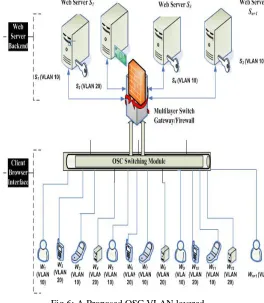
Fig 6 depicts a proposed OSC VLAN layered architecture where the application web servers are tied to the end user VLAN tags. As such once a user registers into the application, the user is automatically logged to a unit VLAN, making the system to be secured.
There could be Wn+1 VLAN users on the VLAN switching
controller mapped with the web server as shown in Fig 6. In a previous work, the OSC VLAN controller block and the scheduling architectural model were thoroughly described and simulated
Fig 6 shows the proposed OSC VLAN architecture while Fig 9 shows the achieved design interface a secured web based application.
4.4. E-Commerce Application Flowchart Designs
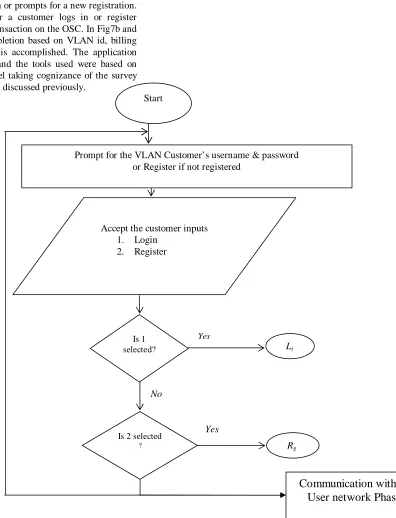
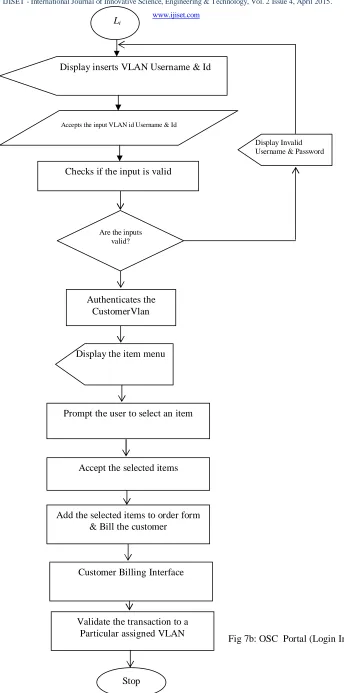
Fig 7a shows OSC user interface algorithm. The system accepts new registration or prompts for a new registration. Essentially, it is either a customer logs in or register before initiating any transaction on the OSC. In Fig7b and Fig 8, transaction completion based on VLAN id, billing and server processing is accomplished. The application development strategy and the tools used were based on waterfall software model taking cognizance of the survey findings based on DRM discussed previously.
Fig 7a: OSC Portal (User Interface) with network Communication Phases Start
Prompt for the VLAN Customer’s username & password or Register if not registered
Accept the customer inputs 1. Login
2. Register
Is 1
selected? Li
Is 2 selected
? Rg
Yes No
Yes
Fig 7b: OSC Portal (Login Interface) Display inserts VLAN Username & Id
Accepts the input VLAN id Username & Id
Checks if the input is valid
Are the inputs valid?
Display Invalid Username & Password
Authenticates the CustomerVlan
Display the item menu
Prompt the user to select an item
Accept the selected items
Add the selected items to order form & Bill the customer
Customer Billing Interface
Fig 8: OSC Portal (Registration Interface) Rg
Prompt the Non-Registered VLAN Customer for Registration Details
Accept VLAN details
Check If the VLAN id Matches
Does the Vlan_ id Matches?
Display Customer Registered Check If A Particular Assigned VLAN Is Active
Is an Assigned VLAN Selected?
Register the New VLAN Customer & Inserts the Details to the Customers_Info_DB_Table No
No
Display VLAN Invalid
Navigates to the OSC Menu Item Yes
5. System Requirements
The requirements to run the proposed system are listed below and any computer that meets these requirements can install the system without any problem;
5.1.
Software requirements
- Microsoft windows vista or ms windows7 - Apache server version 1.3.14 & above - PHP version 4.1.0 & above
- MYSQL version 4.1.0 & above - Any Web browser
5.2.
Hardware requirements
- Monitor
- 1GHZ or faster processor
- Microsoft windows XP (certified for 32-bit windows XP & windows vista)
- 512MB of RAM
- 1GB of available hard-disk space - 1.280*800 display with 16-bit video card
5.3.
Language Justification
Hypertext pre-processor (PHP) was used for the purpose of the web scripting in order to produce dynamic web pages. It is embedded into HTML and runs on a web browser which needs to be configured to process PHP code and create web page content from it. It can be deployed on most web servers, many OS and platforms and can be used with many relational data base management system.
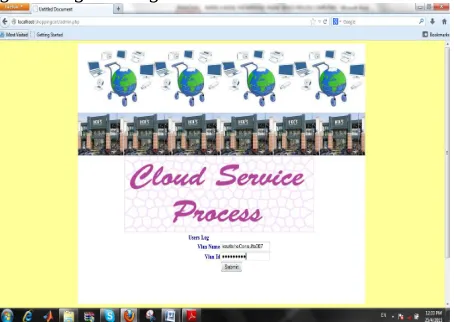
Fig 9 shows the OSC user login with VLAN id identification. This application is tied to the network switch such that every user on the specific LAN is identified. This allows for forensic monitoring and in generating audit log files.
Fig 9: Online Service Shop login Snapshot
6.
Conclusion
This paper presents an extended work on online service computing using VLAN design architecture. In this case, findings on the reasons for online apathy were derived after a background study on e-commerce domain was analyzed considering various web paradigms. The research motivations and objectives were articulated. A brief literature was considered while appraising the existing security model. A DRM was used alongside some selected hypothesis to obtain findings on online service apathy. Consequently, the OSC model was formulated while illustrating the OSC VLAN integration. The application flowchart designs were presented while outlining the system requirements and design. This paper argues that there a high degree of correlation between online security and user participation in the e-commerce domain. When security compromise is high, then users are bound to neglect online buying and selling. It was observed that the approach of building consumer trust using VLAN mapping serves dual purpose. Firstly, it optimizes network performance and secondly, it facilitates security at large. Newer web applications can explore this in their application integration.
References
[1] Okafor A. C, Okafor K.C, Ugwoke.F.N, Osuesu B. O., Ogbu V. I. “Online Service Computing Using VLAN Design Architecture in American Journal of Computer Science and Information Engineering, (AJCSIE),USA,2014, 1(3), Pp.10-23. Online: (http://www.aascit.org/journal/ajcsie).
[2] C.C Okezie, Udeze, C.C, Okacor K.C, “Cloud Computing: A Cost Effective Approach to Enterprise Web Application- A ccase for Cloud ERP Web model, Academic Research International, Vol3, No.1, July 2012.
[3] Okafor Nneka I.,Okafor K.C, Ugwoke F. N, Udeze,C.C “3-Tier E-ComP: A Novel E-Commerce Management Portal Based on Secured SDLC Approach”, Computing, Information Systems, Development Informatics & Allied Research Vol. 4 No. 4 December, 2013, Pp.1-11.
[4] Swapna Kodali, “The Design and Implementation of an Ecommerce Site For Online Book Sales”, M.Sc thesis for the Department of Computer and Information Sciences, Indiana University South Bend, May 2007.
[5] Han Zhang, “A Formal Security Modeling and Analysis in B2B e-commerce, A thesis submitted in partial fulfillment of the requirements of Doctor of Philosophy in Computer Science, University of Auckland July 2006.
[7] Zhongwei Zhang and Zhen Wang, “Assessing and Assuring Trust in E-Commerce Systems”,
[8] Minli Zhu, Mart Molle, “Design and Implementation of Application-based Secure VLAN”,
[9] Okafor K.C and Dr. T.A Nwaodo: “ A Synthesis VLAN Approach to Congestion Management in Datacenter internet Networks”, International Journal of Electronics and Telecommunication System Research, Volume 5, Number 6, May 2012.Pp. 86 – 92.
[10] Xin Sun and Sanjay G. Rao, “A Cost-Benefit Framework for Judicious Enterprise Network Redesign”, In Proc. IEEE INFOCOM, 2011.pp.216-220.
[11] P. Garimella, Y.-W. E. Sung, N. Zhang, and S. Rao. Characterizing VLAN usage in an operational network. In ACM SIGCOMM workshop on Internet Network Management (INM’07), Kyoto, Japan, 2007. [12] S. K. Sadhukhan and D. Saha. Auditing campus-wide
local area networks (LANs) for Virtual LAN configurations using a simple network manager. Technical report, Indian Institute of Management (IIM).
[13] Okafor, K.C, Achumba I, Ezeh G.N, Diala, U.H, “ OpenFlow Virtual Appliance: An Efficient Security Interface For Cloud Forensic Spyware Robot”, Accepted in IJDF,IGI global,2015.
[14]Xiang-Yang Li, Cryptography and Network Security. [15] Gajendra Singh, Vishwa Gupta, Ravindra Gupta, “A
Hyper Modern Cryptography Algorithm to Improved Data Security: HMCA, International Journal of Computer Science & Communication Networks ,Vol 1(3), 258-263.
![Fig 1: Web paradigms [2]](https://thumb-us.123doks.com/thumbv2/123dok_us/7832294.1297883/1.595.307.580.288.464/fig-web-paradigms.webp)