Review
1
Advanced nanotechnologies for enhancing the
2
bioavailability of silymarin: a state of the art
3
Alfonso Di Costanzo 1 and Ruggero Angelico 2,*
4
1 Centre for Research and Training in Medicine for Aging, Department of Medicine and Health Sciences
5
"Vincenzo Tiberio", University of Molise, I-86100 Campobasso, (Italy); [email protected]
6
2 Department of Agriculture, Environmental and Food Sciences (DIAAA), University of Molise, I-86100
7
Campobasso, (Italy); [email protected]
8
* Correspondence: [email protected]; Tel.: +39-0874-404649
9
10
Abstract: Silymarin, a mixture of flavonolignan and flavonoid polyphenolic compounds extractable
11
from the milk thistle seed, Silybum marianum, has anti-oxidant, anti-inflammatory, anti-cancer and
12
anti-viral activities potentially useful in the treatment of several liver disorders, such as chronic liver
13
diseases, cirrhosis and hepatocellular carcinoma. Equally promising are the effects of silymarin in
14
protecting the brain from the inflammatory and oxidative stress effects by which metabolic
15
syndrome contributes to neurodegenerative diseases. However, despite clinical trials have proved
16
that silymarin is safe at high doses (>1500 mg/day) in humans, it suffers limiting factors such as low
17
solubility in water (<50 μg/mL), low bioavailability and poor intestinal absorption. To improve its
18
bioavailability and provide a prolonged silymarin release at the site of absorption, the use of
19
nanotechnological strategies appears to be a promising method to potentiate the therapeutic action
20
and promote sustained release of the active herbal extract. The purpose of this study is to review
21
the different nanostructured systems available in literature as delivery strategies to improve the
22
absorption and bioavailability of silymarin.
23
Keywords: Silymarin; silybin; nanoemulsion; solid lipid nanoparticles; nanostructured lipid
24
carriers; liposome; polymeric particles; self-emulsifying delivery systems; enhanced bioavailability
25
26
27
Contents
28
29
1. Introduction 2
30
2. Silymarin: source and physicochemical properties 2
31
3. Types of Delivery Systems (DSs) designed to encapsulate Silymarin/Silybin 3
32
3.1 Lipid-based formulations 3
33
3.1.1 Liquid Emulsions (LEs) 4
34
3.1.2 Liposomes 6
35
3.1.3 Solid-Lipid Nanoparticles (SLNs), Nanostructured Lipid Carriers (NLCs) 9
36
3.2 Polymer-based delivery agents 10
37
3.2.1 Inclusion in polymeric matrices 11
38
3.2.2 Dendrimers and polymeric NPs 12
39
3.3 Nanocrystals, nanosuspensions and nanohybrid DSs 13
40
3.4 Nanostructured materials based on inorganic compounds 14
41
3.5 Cyclodextrin inclusion complexes 15
42
4. Conclusions and outlook 16
43
References 21
44
45
1. Introduction
46
Nanotechnology has become an important part of medical science, pharmaceutical and food
47
industry, since it focuses on the development of novel delivery systems to sustain or prolong drug
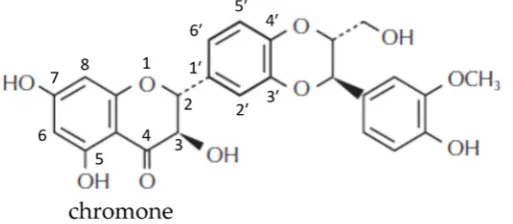
48
release properties, control human biological systems at the molecular level and improve the
49
therapeutic activity of various types of substances and compounds [1]. The usefulness of
50
nanotechnology has also been extended to natural healthy products, where numerous efforts are
51
continuously being made to improve the bioavailability and therapeutic potential of active
52
compounds extracted from natural sources [2]. Nanotechnology is defined as a process by which
53
some main physicochemical properties of particles are changed by reducing their size to
54
nanodimension. The various definitions of nanoparticle size range are presented in different
55
industries such as food, pharmaceutical, and cosmetics. For instance, in the food industry, European
56
Food Safety Authority (EFSA) has called the particles below 100 nm as nanoparticles. However, in
57
general, particles with sizes less than 1000 nm can be considered as nanoparticles [3].
58
Nanoencapsulation, a main branch of nanotechnology, can be applied by two common methods
59
including “bottom-up” (self-assembly and self-organization) or “top-down” (physical processing).
60
Nanoencapsulation of natural compounds provides a large surface area and causes steerable release,
61
protects them against different stresses during the processes and storage in comparison to their
62
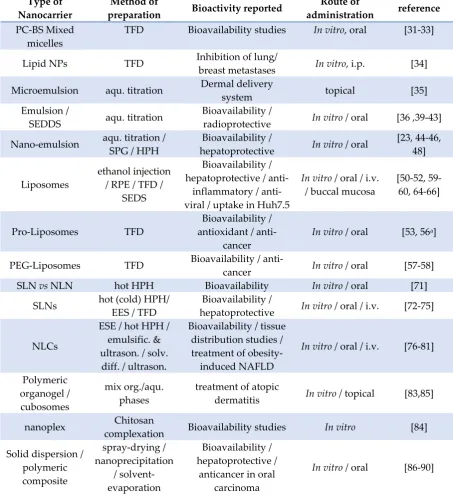
microencapsulation, and improves their bioavailability for removing free radicals, antidisease and
63
antimicrobial activities. Indeed, the bioavailability of plant extract can be increased with higher
64
solubility, absorption, and permeation of them in the body and food formulations through
65
nanoencapsulation process. For instance, nanoencapsulation allows phenolics and antioxidants to be
66
absorbed passively from the lumen of the intestine into the lymphatic and blood circulatory system;
67
therefore, their bioavailability is increased [4]. It should be also mentioned that selection of a
68
nanoencapsulation technology depends on several parameters, such as physicochemical features,
69
required particle size, release type, delivery method, process cost, etc. Hence, a vast arsenal of
70
increasingly sophisticated nano-methodologies is now available for researchers to efficiently entrap
71
and make more bio-available in vivo poorly water-soluble active plant ingredients, among which a
72
very well documented example concerns silymarin. Indeed, inadequate aqueous solubility of active
73
pharmaceutical ingredients (APIs) is a major concern in the formulation and development of novel
74
delivery systems since it directly affects the bioavailability [5]. Thus, novel formulations of silymarin
75
have been prepared by innovative techniques and found to increase its therapeutic efficacy against
76
various diseases [6]. Several reviews have appeared on the subject in the recent past, each of them
77
trying to offer the reader a broad and increasingly updated vision of the most advanced
78
nanoencapsulation solutions developed to increase the in vivo absorption efficiency of silymarin
[7-79
11]. The ambition in the present paper has been to summarize and focus on the advances made over
80
the past 15 years regarding the nanoencapsulation of silymarin, as well as on the emerging trends of
81
the nano-delivery of this drug in new pharmaceutical applications.
82
2. Silymarin: source and physicochemical properties
83
Silymarin consists of several flavonoid-like compounds extracted from the small hard fruits
84
(kenguil seeds) of Silybum marianum L. Gaertn (milk thistle), which grows extensively in Europe and
85
Asia including India. The drug belongs to a class of compounds −flavonolignans − likely produced
86
in the plant by radical coupling of flavonoid and coniferyl alcohol [12]. Silymarin is a complex
87
mixture of four flavonolignan isomers: silybin (70-80%), silychristin (20%), silydianin (10%) and
88
isosilybin (0.5%), which are assumed to be responsible for the therapeutic liver-protecting activity of
89
the extract [13-16]. For the main component silybin, a large amount of pharmaco-toxicological and
90
clinical documentation exists [17-19]. The molecular structure representative of one of the two
91
diastereoisomers (silybin A and silybin B, 1: 1 mixture) is shown in Figure 1.
92
94
95
Figure 1. molecular structure of Silybin A
96
97
98
Its molecular structure possesses a chromone fragment responsible for weak acidic properties,
99
enabling donor-acceptor interactions with basis. The presence of polyphenol hydroxyls and the
100
ability to form complexes with transition and other metal ions in the 3,4- or 4,5-positions, confers high
101
antioxidant capability to the molecule. Several studies have shown that for this active ingredient even
102
very high doses are well tolerated by animals and humans [20,21]. In particular, the oral 50% lethal
103
dose is 10,000 mg/kg in rats while the maximum tolerated dose is 300 mg/kg in dogs [22]. Due to its
104
lipophilic nature characterized by a logP value of 1.41 [23] where P is the partitioning coefficient of
105
the drug, the therapeutic efficiency of silybin is rather limited by its very low water solubility
106
(430mg/L) [24-27]. According to the biopharmaceutical classification system (BCS), silymarin belongs
107
to class II BCS, which includes either insoluble compounds in aqueous media or which have a very
108
low solubility. Consequently, the drug is poorly absorbed (20-50%) from the GIT and has a low
109
bioavailability from oral formulations [28]. Several semisynthetic compounds have been designed to
110
overcome the drawback of very low water solubility such as, e.g., the bis-hemisuccinate (Legalon®),
111
23-O-phosphate, 23-O-β-glycosides derivatives and silybinic acid [29]. However, chemical
112
modifications leading to an increase in silybin water-solubility usually led to an impairment of its
113
antioxidant (antiradical) activity [24]. The hepatoprotective mechanism of silymarin and its main
114
component silybin is due not only to the antioxidant activity but also to a membrane-stabilizing
115
action that prevents or inhibits the lipid peroxidation process [30].
116
117
3. Types of Delivery Systems (DSs) designed to encapsulate Silymarin/Silybin
118
119
In the following subsections, various classes of DDS specifically designed for silymarin encapsulation
120
will be reviewed and systematically classified in the final Table 1, including the suitable cross
121
references mentioned in the text. Henceforth, the acronym SIL will be used indifferently to indicate
122
both silymarin and its main and biologically active constituent, silybin. The meaning of the other
123
acronyms is shown in the list of abbreviations at the end of the review.
124
125
3.1. Lipid-based formulations
126
127
A widespread formulation strategy exploits lipid-based colloidal vehicles as winning option for the
128
delivery of SIL penalized by the poor aqueous solubility. Lipid-based formulations (incorporation of
129
the active lipophilic component into inert lipid vehicles) are used to improve the oral bioavailability
130
of poorly water-soluble drug compounds, which include micro or nanoemulsions, oils,
self-131
emulsifying formulations, surfactant dispersions, proliposomes and liposomes, solid lipid
132
nanoparticles and lipid nano carriers, etc. These lipidic formulations can be broadly divided into two
133
groups namely liquid Oil-in-Water (O/W) emulsions (LEs) and solid lipid nanoparticles (SLNs). The
134
LE systems could be lipid solutions, emulsions, microemulsions and self-(nano/micro) emulsifying
135
biodegradable lipids such as highly purified triglycerides, monoglycerides, hard fats, complex
137
glyceride mixtures or even waxes, which are solid at physiological temperature.
138
3.1.1. Liquid Emulsions (LEs)
139
The formulations based on both microemulsion and nanoemulstion strategies for oral administration,
140
are designed with food-acceptable components or generally recognized as safe (GRAS) to increase
141
solubility, stability, and improve the SIL permeability. Micellar carriers have been found useful to
142
encapsulate efficiently SIL and enhance its water solubility and bioavailability. For example, due to
143
the physiological compatibility and solubilizing capacity, the PC-BS mixed micelle was found to be a
144
good nanocarrier candidate to encapsulate SIL with high loading capacity. Yu et al. [31] prepared
145
phospholipidic micelles mixed with BS (SPMM) to solubilize SIL in their inner hydrophobic cores.
146
From pseudo-ternary phase diagram investigations, an optimum micellar formulation was capable
147
to solubilize the drug up to 10 mg/ml, which was also found to double in the presence of PVP [32].
148
An analogous nano-vehicle for the water-insoluble SIL purposely designed for parenteral application
149
was proposed by Duan et al. [33], who first prepared a SIL-PPC equimolar complex by TFD method,
150
which was then dissolved in anhydrous ethanol together with PPC and SDC at various molar ratios.
151
After evaporation of the organic phase, the mixed micelles loaded with SIL were reconstituted by
152
adding double distilled water. The optimal formulation led to a SIL loading efficiency of 14.43%,
153
which corresponded to a drug solubility in water of 10.14±0.36 mg/mL.
154
A similar strategy was pursued by Xu et al. [34] who first prepared a SIL-PC complex at a mass
155
ratio of 1:3 by TFD method, which was subsequently dissolved in anhydrous ethanol together with a
156
water-soluble derivative of vitamin E (TPGS) and PC at ratios 4:1:20, w/w/w. After ultrasonication
157
and further solvent evaporation, the resultant lipid film was hydrated in distilled water leading to a
158
lipid suspension, which was sonicated until a translucent colloidal dispersion was obtained. The aim
159
was to test the anti-metastatic effect of SIL in combination with TPGS co-entrapped in lipid
160
nanoparticles, to suppress effectively the metastasis of breast cancer both in vitro and in vivo. The
161
average particle size was about 45 nm with a zeta potential value of 2.78 ± 0.31 mV. The encapsulation
162
efficiency of SIL in lipid nanoparticles was approximately 99%. The in vivo results supported the
163
potential use of SIL-TPGS loaded NPs as an anti-metastasis agent capable to inhibit the invasive and
164
metastatic activities of breast cancer cells instead of acting a cytotoxic effect against them.
165
Other types of O/W microemulsions were formulated to incorporate 2% w/w of drug as a
166
potential dermal delivery system. In particular, microemulsions containing IPM as oil phase
167
emulsified with a 1:1 mixture of water-dispersible Labrasol® and HCO-40® nonionic surfactants and
168
Transcutol® as cosurfactant, enhanced SIL solubility while maintaining adequate physical and
169
chemical stability [35].
170
SIL-loaded lipid O/W emulsions were optimized by testing the emulsification properties of
171
soybean lecithin as surfactant and Tween 80 as cosurfactant in combination with several food grade
172
oils (soybean oil, castor oil, and olive oil) [36]. The authors reported that SIL was added to the lipid
173
phase in soybean oil as 10% aqueous solution in 1 M NaOH up to an optimum drug loading of 1 %
174
w/w to produce an emulsion stable for 35 days, constituted by oil droplets with size distribution
175
range of 0.31-1.24 μm and median diameter of 0.46 μm. The in vitro drug release behaviour was faster
176
from the SIL-loaded lipid emulsion as compared with a SIL propylene glycol solution.
177
To overcome the disadvantage of the administration of large volumes of (micro)emulsions per
178
dose, several researchers focussed their studies on the design of preconcentrated organic liquid
179
phases loaded with poorly water soluble drugs, capable of reconstituting the (micro)emulsion
180
spontaneously once in contact with an aqueous milieu (gastric fluids after ingestion). The resulting
181
formulation is commonly termed in literature as liquid Self-Emulsifying Drug Delivery System
182
(SEDDS) [37,38]. The essential property that must be satisfied in the development of a liquid SEDDS
183
formulation is that the drug must remain partitioned within the O/W droplets after dilution with the
184
aqueous medium in the GIT. Otherwise, the drug could undergo an unwanted precipitation that
185
would lead to poor bioavailability in vivo. Among the first documented studies on the application of
186
the work by Wu et al. [39], who optimized the multi-component oily phase, ethyl
188
linoleate/Tween80/ethyl alcohol, to solubilize SIL. The self-emulsifying properties of that system
189
were tested upon titration with various aqueous media until a stable O/W microemulsion was
190
obtained. During the titration, the samples were agitated gently in order to reach equilibrium quickly.
191
Dilution volume had no significant effect on droplet sizes (mean value of dozens nm), which were
192
found also unaffected by the increase of drug loading up to 100 mg of SIL per 1 g of oil phase. Relative
193
SIL bioavailability after oral administration of the said lipid emulsion, improved approximately 1.88-
194
and 48.82-fold that of drug dissolved in PEG 400 solution and aqueous suspension, respectively.
195
Another optimized SEDDS was prepared using 10 % GMO as the oil phase and 15% SIL, with
196
37.5% of a surfactant mixture of TWEEN 20 and HCO-50 (1:1), and 37.5% Transcutol® as cosurfactant
197
[40]. The authors evaluated also the SIL solubility in various solvents at 25°C. The O/W
198
microemulsion was generated upon water addition until reaching a maximum water content of 95.4
199
%. After aqueous dilution, the mean droplet size of the internal oil phase was about 67 nm. The release
200
rate of the drug from the SEDDS measured through in vitro dissolution tests, was approximately 2.5
201
times higher than that from the reference commercial product (Legalon®). After oral administration,
202
SIL-loaded SEDDS showed a 360% higher bioavailability compared with the reference formulation.
203
In a similar subsequent investigation, Li et al. optimized SIL-loaded SEDDS formulations based
204
on ethyl linoleate, Cremophor EL and ethyl alcohol, which were selected regarding the
self-205
microemulsifying ability, solubilization ability, and reduced use of surfactant, [41]. The best
206
combination of ingredients screened after a systematic pseudo-ternary phase diagram study, yielded
207
a SIL solubility of 130.8 mg/mL homogeneously dispersed in small O/W droplets with mean size in
208
the range 20 - 30 nm and no changes were detected at 40°C for 3 months. Both the in vitro release
209
performance and in vivo bioavailability after oral administration of SIL from SEDDS were evaluated
210
and compared with the commercial SIL preparation Legalon®. The relative drug bioavailability of
211
SEDDS to commercial SIL suspension was 227%.
212
To overcome the side effects caused by high surfactant levels usually employed in SEDDS, Wei
213
et al., designed a supersaturable SEDDS (S-SEDDS) formulations to improve SIL oral bioavailability
214
[42]. It consisted of a reduced amount of surfactant in combination with HPMC added in the liquid
215
SEDDS to induce a supersaturated state in vivo by preventing or minimizing the SIL precipitation.
216
The authors evaluated also the SIL solubility in various oils, surfactants and cosurfactants at 25°C.
217
Labrafac® CC showed the highest drug solubility and was selected as an oil phase for the formation
218
of S-SEDDS. Cremophor RH 40 was chosen as a surfactant for its good emulsion-forming ability and
219
smaller droplet size of the optimized SIL loaded emulsion (~ 50 nm), thanks also to the synergic effect
220
of the compresence of Transcutol® and Labrasol® as cosurfactants. From in vitro studies, it was
221
confirmed the stabilizing effect of HPMC in maintaining high SIL solution concentrations
222
(supersaturated state). Precipitates collected after the in vitro tests from the S-SEDDS formulated with
223
HPMC, were identified as amorphous SIL while crystalline precipitates were found when HPMC
224
was absent in the formulation. Relative drug bioavailability after oral administration of a SIL dose of
225
533 mg/kg was found higher for S-SEDDS than SEDDS, i.e., same formulation without HPMC. In
226
particular, Cmax was 16.1 μg/mL as compared to that of the SEDDS formulation (5.68 μg /mL), while
227
AUC of SIL from S-SEDDS was approximately 3.0-fold higher than that of SEDDS.
228
Stable nanoemulsions for SIL delivering and containing Labrafac® as an oily phase, Solutol® HS
229
15 as surfactant, Transcutol® as co-surfactant, and water as aqueous phase were developed by
230
Adhikari et al. [43], to test the radioprotective potential of the SIL-loaded nanosuspensions against γ
-231
radiation-induced oxidative damage in human embryonic kidney cells. The formulations were
232
designed to act as SEDDS after water addition, until the oil phase was 10 – 15 % at the end of the
233
dilution process. HEK cells viability upon treatment with variable concentrations of SIL-SEDDS and
234
bare SIL suspensions as control was checked prior to irradiation. Radiation-induced apoptosis was
235
estimated by microscopic analysis and cell-cycle estimation. The proposed formulation based on
236
SEDDS technology to improve the SIL bioavailability was found radioprotective, supporting the
237
A very stable O/W nanoemulsion consisting of silymarin solubilized in nanosized oil droplets
239
dispersed in an aqueous medium by a mixture of Tween 80 and ethanol as co-surfactant, was
240
optimized through a systematic investigation on experimental pseudo-ternary phase diagrams [23].
241
Among various tested oils such as OA, IPM, Triacetin, the highest value of SIL solubilisation was
242
observed in Sefsol-218 (183.375 ± 0.0036 mg/mL), which was selected for the nanoemulsion
243
formulation at 5% w/w in water. After oral administration of SIL solubilized in the nanoemulsion,
244
AUC and Cmax were, respectively, 199.45±56.07 μg h/mL and 31.17±7.56 μg/mL, namely, 4-fold and
6-245
fold higher than those of the correspondent drug aqueous suspension.
246
A SIL-loaded liquid nanoemulsion was formulated by Yang et al. [44], using the SPG membrane
247
emulsification technique and then spray-dried to obtain solid state nanoparticles. Dissolution,
248
bioavailability, and hepatoprotective activity in vivo were assessed by comparison with a
249
commercially available SIL-loaded product. Optimal formulation was composed by SIL, castor oil,
250
PVP, Transcutol®, Tween 80, and water at the weight ratio of, respectively, 5:3:3:1.25:1.25:100. The
251
mean sizes of the SIL-loaded nanoemulsion and nanoparticles obtained after spray-drying were
252
about 170 and 214 nm, respectively. The SIL bioavailability after oral administration from the
253
nanoparticles was about 1.3-fold higher than that obtained with a commercial product.
254
In a more recent investigation, SIL enriched nanoemulsions were formulated using different oils
255
such as sunflower, EVO and castor oils, respectively, [45]. SIL solubility in castor oil was 0.668 ± 0.072
256
mg/g whereas in EVO and sunflower oils was rather lower. However, upon addition of Tween 80 in
257
oil (10 mg/g), drug solubility increased up to reach 1-2 mg/g in the three tested oils. Coarse emulsions
258
were first prepared by mixing 200 g oil+SIL with 1 L of aqueous phase and then subjected to HPH,
259
giving rise to final droplet sizes in the range 200-300 nm. Moreover, it was found that the greater the
260
oil susceptibility to oxidation, and thus the formation of oxidation products, the greater the SIL
261
degradation incorporated into nanoemulsions.
262
In another recent study, Nagi et al. employed a Box-Behnken statistical design (BBD) to optimize
263
SIL-loaded nanoemulsions using Capryol 90 as oil phase capable of solubilizing SIL up to 40.00 ± 1.53
264
mg/mL, in terms of various factors such as processing pressure and number of cycles of HPH
265
technique and amount of surfactant/cosurfactant mixture [46]. The non-ionic hydrophilic surfactant
266
Solutol® HS 15 was selected due to its high capacity to solubilize hydrophobic drugs and low toxicity
267
(LD50 > 20 mg/kg) [47], and used in combination with Transcutol® selected as cosurfactant on the
268
basis of the good miscibility with Capryol 90 and Solutol® HS 15. The optimal nanoemulsion
269
satisfying the criteria of low droplet size and low PDI, necessary for high drug release potential and
270
drug permeation through the GIT membrane, was characterized by nanodroplets of about 50 nm
271
(PDI: 0.45) and zeta potential -31.49 mV. The values of AUC and Cmax of that nanoemulsion
272
formulation after oral administration were found equal to 28.69±3.28 μg h/mL and 3.25±0.48 μg/mL,
273
respectively, i.e., 1.9-fold and 2.7-fold higher than those of a marketed drug suspension.
274
In a recent study [48], it was reported that a SIL commercial extract could be completely
275
solubilized at the dosage of 40 mg/mL in a nanoemulsion formulated using 2.5 g of Labrasol® (20%)
276
as the oil phase and 2.5 g of Cremophor® EL/Labrafil® as the surfactant/cosurfactant mixture in a 1.5:
277
1 ratio, the remaining mass being deionized water (60%). Besides, the authors determined selectively
278
the solubility of the main constituents identified in SIL extract, such as, TXF, SILcr, SIL and isoSIL, in
279
various oils, surfactants, and cosurfactants to ascertain the appropriate components of the
280
nanoemulsions. The SIL extract loaded within O/W nanodroplets showed excellent physical and
281
chemical stability, as the size (30-40 nm) and PDI (0.114-0.179) were unaffected and no degradation
282
of active constituents was recorded over 40 days of observation. In vitro permeation studies were
283
performed to determine the suitability of the prepared nanoemulsion for oral delivery.
284
285
3.1.2. Liposomes
286
Liposomes are hollow spherical nanoparticles with a closed shell of a lipid membrane (mono- or
287
multi-layer), inside of which an aqueous solution can be encapsulated. These supramolecular
288
aggregates owe their success as carriers of therapeutic drugs for many advantages including the
289
release properties, cell affinity, tissue compatibility, reduced drug toxicity and improved drug
291
stability [49]. Moreover, liposomal systems are known to find an immediate access to the
reticulo-292
endothelial system (RES) rich sites like liver and spleen, and this self-targeted nature of liposomal
293
carriers can be exploited well for drug distribution to hepatic site. During the researches, the
294
conventional structures of the liposomes have been subjected to several changes, which have brought
295
out a series of new type liposomes, such as long-circulating stealth liposomes, stimuli-responsive
296
liposomes, cationic liposomes and ligand-targeted liposomes. Liposomes can be prepared using a
297
wide range of methods, such as thin-film dispersion (TFD), reversed-phase evaporation (RPE),
298
alcohol injection, and spray-freeze-drying. Other strategies comprise proliposomal formulation, with
299
the use of a cryoprotectant and high process temperature, and supercritical fluid of carbon dioxide
300
method (SCF-CO2), which is a flexible and environmental-friendly technique by which particle sizes
301
and shapes can be controlled by tuning the experimental conditions (temperature and pressure).
302
One of the first liposomal formulation of SIL reported in literature dates back to the early 2000s.
303
The study addressed by Maheshwari et al. [50], focused on the development of factors such as the
304
drug to lipid ratio, the proportion of CHOL and presence of the charge inducer DCP in the
305
optimization of the formulation loaded with SIL. The highest drug entrapment of 94.7 % was
306
achieved in the formulation with SIL / PC / CHOL / DCP ratio of 2 : 10 : 2 : 1. The obtained size range
307
of SIL loaded liposomes (56−1270 nm with median diameter of 390 nm) was suitable for i.v.
308
administration for hepatoprotective studies in mice. A drug leakage of about 40 % was observed in
309
28 days as well as evident aggregation phenomena recorded after 3 weeks of the preparation.
310
To overcome instability problems that commonly occur in the GIT and improve the poor
311
aqueous solubility of SIL, El-Samaligy et al. [51], investigated the feasibility of encapsulating the drug
312
in a liposomal dosage-form for buccal administration via spray. Liposomes were prepared by RPE
313
method using a base lipid mixture of soybean lecithin and CHOL in a 9:1 optimized molar ratio. In
314
addition to the basic liposome ingredients various additives were gradually introduced, such as
315
positively (SA) or negatively (DCP) charge inducers and non-ionic surfactants (Tween 20 or Tween
316
80). At the end of a multifactorial screening, an optimal composition for hybrid liposomes was
317
derived as lecithin / CHOL / SA / Tween 20 at 9:1:1:0.5 molar ratios, which warranted both best SIL
318
encapsulation efficiency of about 69% and high in vitro absorption and permeation performances [52].
319
In order to improve the stability of liposomal nanocarriers and enhance the SIL encapsulation,
320
Xiao et al. [53] adopted the strategy of “proliposomes”, which are defined as dry, solid particles that
321
form a reconstituted liposomal suspension when put in contact with water [54]. The
SIL-322
proliposomes were prepared by film-deposition using mannitol as carrier and a mixture of methanol
323
and chloroform (2:1 v/v) as the apolar medium to dissolve SIL and phospholipids. The content of SIL
324
in the proliposomes was 9.73 % (w/w). In the reconstituted liposomal suspension, the mean particle
325
size was 196.4±43.7 nm while a mean value for SIL entrapment efficiency was 92.56±0.93%. After oral
326
administration in beagle dogs of SIL entrapped in the reconstituted liposome suspensions (drug
327
equivalent to 7.7 mg kg−1), the pharmacokinetic parameters AUC and Cmax were, respectively,
328
2.46±0.58 μg h/mL and 0.47±0.13 μg/mL.
329
The proliposome nanotechnology was also exploited to improve the water solubility and
330
bioavailability of 2,3-dehydrosilymarin, an oxidized form of SIL characterized by significantly greater
331
antioxidant and anti-cancer activity than the reduced precursor [55]. Hence, the
2,3-332
dehydrosilymarin-loaded proliposome powder was produced by the TFD-freeze drying method
333
obtaining a polyphase dispersed system composed of phospholipids, CHOL, IPM and sodium
334
cholate, with optimal drug-lipid ratio set to 1:3 [56]. The correspondent drug content after
335
reconstitution with water was 25.00±5.93 μg/mL, yielding an encapsulation efficiency of 81.59%±0.24,
336
which was predominately dependent on the drug/phospholipid and sodium cholate/phospholipid
337
ratios. The improved oral absorption in rabbits was ascribed to the relatively small size of liposomes
338
distributed in the range 7 - 50 nm and average diameter of about 16 nm. The AUC and Cmax were
339
approximately 2.29-fold (12.77±1.39 μg h/mL) and 4.96-fold (2.83 μg/mL) higher than those of the
340
SIL-loaded PEGylated liposomes decorated with the hepatic targeting ligand Sito-G (a
342
carbohydrate epitope) were prepared by TFD method, [57]. The liposomes contained fixed 2:1 molar
343
ratios of HSPC and CHOL with or without PEG as well as a varying concentration of Sito-G to check
344
its optimal amount for improving the targeted delivery of the encapsulated SIL to hepatic target cells.
345
The combination of relatively high melting point HSPC with a high percentage of CHOL provided
346
liposomes with very rigid lipid bilayers. The obtained multilamellar vesicles were exposed to several
347
freeze-thaw cycles in which the liposomes were freezed in liquid nitrogen for 2 min and defrost in
348
warm water bath for 2 min. The submicron-sized liposomes were prepared by using a pressurized
349
extruder with two polycarbonate membrane filters with pore size of 100 nm. The final lipid
350
concentration in the liposome formulations was 4 mg/ml. The particle size distribution of the
351
liposomes with mean values in the range 145-168 nm showed very good homogeneity (PDI 0.15-0.3).
352
An acceptable drug encapsulation efficiency was recorded for all tested formulation (about 60 % in
353
average), although high contents of Sito-G were found detrimental to the stability of liposomal
354
membrane, thus leading to a decrease in the encapsulation efficiency. A systematic investigation of
355
the in vitro release profiles performed with the dialysis method (37 °C in HEPES buffer, pH = 7.4),
356
indicated that PEGylated liposomes exhibited a sustained release of SIL as compared to
non-357
PEGylated liposomes. On the other hands, PEGylation of liposomes equipped with Sito-G manifested
358
a reduced SIL cellular uptake with HepG2 cells compared to non-PEGylated nanocarriers.
359
A more recent development of using PEGylated liposomes to improve the SIL bioavailability is
360
reported in the work published by Ochi et al. [58], who demonstrated a synergic effect on the liver
361
cancer cell line HepG2, provided by the co-encapsulation into PEGylated nano-liposomes of SIL and
362
GA. The liposomial suspensions, prepared by TFD method followed by sonication, were formulated
363
with SIL and GA at a 1.74:1 molar ratio together with a mixture of DPPC, CHOL, and
mPEG2000-364
DSPE at a specified molar ratio. Scanning Electron Microscopy analyses showed that the
co-365
encapsulated nano-liposomes had a mean diameter of 43 nm while zeta potential was -23.25 mV,
366
sufficient to inhibit liposome aggregation.
367
Beside to enhance the SIL bioavailability, the liposomal formulation developed by Kumar et al.
368
[59], was designed to promote the regeneration of hepatocytes and to prevent inflammation in liver.
369
The drug entrapment efficiency of liposomes prepared with the TFD technique, was found to be
370
maximum (55 %) for formulation containing SPC and CHOL at molar ratio 6:1. The optimal liposomal
371
formulation yielded a 3.5-fold higher bioavailability of SIL (AUC 0.500±0.023 μg h/mL) than the
372
correspondent drug suspension. Likewise, Cmax was found 5.25-fold (0.716±0.043 μg/mL) higher than
373
the SIL suspension. Analysis of in vivo studies suggested that SIL encapsulated in said liposomal
374
carriers might have targeted inflammatory cells resulted in increased anti-inflammatory activity.
375
A slightly different approach was explored by Angelico et al. [60] in the preparation of liposomes
376
loaded with SIL-phytosome rather than using the commercial purified SIL extract in the formulation.
377
The phytosome unit is a molecular complex between phospholipids and standardized polyphenolic
378
constituents in a 1:1 or 2:1 molar ratios [61], and according to numerous studies, it proved to be more
379
bioavailable compared to the purified molecular extracts though most of formulations have been
380
addressing to orally and topically drug administrations [62,63]. The addition of lecithin in the starting
381
lipid film based on SIL-phytosome such that the final phospholipid/SIL ratio reached 6:1, yielded
382
stable phyto-liposomes with the suitable surface charge and average dimensions in view of a
383
potential parenteral i.v. use, where the nanoparticle size is a critical parameter to be controlled. The
384
cellular uptake of SIL encapsulated into phyto-liposomes and its antiviral activity were also tested in
385
vitro with Huh7.5 cells [64]. The data clearly demonstrated that the cell absorption was 2.4-fold more
386
efficiently than free SIL, and 300-fold more potent pharmacological activity. It is worth noting that
387
the phyto-liposomes were able to reduce the hepatitis C virus infection by inhibiting the entry of viral
388
particles into cells.
389
Methods that use SCF-CO2 technique have been also employed for the preparation of SIL-loaded
390
liposomes. In particular, the solution-enhanced dispersion by supercritical fluids (SEDS) has been
391
adopted to produce liposomes constituted by HSPC and SGC as base lipid ingredients, [65]. The
392
methods such as RPE or TFD. Based on the analysis of drug release profiles in vitro, the novel
394
formulation improved the SIL solubility. In vivo tests showed an improved oral bioavailability of
395
drug administered in liposomes containing BS (AUC 18.406±1.481 μg h/mL; Cmax 1.296±0.137 μg/mL)
396
compared to an aqueous suspension or a commercial SIL product.
397
A recent study reported on the effect exerted by SIL contents and type of BS on the drug
398
encapsulation efficiency in SIL-loaded BS-liposomes (bilosomes) prepared with TFD method [66].
399
The obtained vesicle dispersions were characterized by highly negatively charged zeta-potential
400
values compared to an analogous preparation formulated with CHOL in place of BS. Considering
401
particle dimensions, BS/liposomes containing SC exhibited the largest particle diameter (595.1 ± 98.48
402
nm) among all BS investigated. Among all the screened formulations, the optimum composition in
403
terms of highest SIL-entrapment efficiency (84.54 %) corresponded to a lipid molar ratio 4:1 for SPC
404
/ SC system. In vitro release studies revealed biphasic pattern of all formulations while in vivo
405
investigations revealed that bilosomes showed a pronounced effect in retaining the hepatoprotective
406
as well as oxidative stress biomarkers to their normal levels against CCl4 induced hepatotoxicity.
407
3.1.3 Solid-Lipid Nanoparticles (SLNs), Nanostructured Lipid Carriers (NLCs)
408
Solid lipid nanoparticles (SLNs) are the first generation of lipid-based nanocarriers that are
409
formulated from lipids, which are solid in the body temperature and stabilized by emulsifiers [67].
410
Emulsomes are special case of SLNs, considered as the solid state version of common uninamellar
411
and multilamellar lipid vesicles, i.e., nanoparticles with an internal solid fat core surrounded by one
412
or more phospholipid layers [68]. For an exhaustive discussion about pros and cons occurring in the
413
use of this type of lipid nanocarriers see, e.g., a recent review by Ghasemiyeh et al. [69]. Differently
414
from matrices having either solid (SLNs) or liquid lipids (LEs) as core composition, the
415
nanostructured lipid carriers (NLCs), which belong to the second generation of lipid nanoparticles,
416
represent hybrid formulations prepared by blending solid lipids and liquid lipids, thus resulting in
417
a less ordered inner structure [70].
418
Considering the application of these drug delivery nanotechnologies as nano-vehicles for SIL, in
419
an interesting work by Shangguan and coworkers [71], it was reported the performance in animal
420
models of both SIL-loaded SLNs and SIL-loaded NLCs, by comparing their oral bioavailability with
421
that of their lipolysate counterparts and fast-release formulations. The goal was to determine whether
422
and to what extent the integral lipid nanoparticles contribute to the overall bioavailability of SIL
423
selected as a poorly water-soluble model drug.
424
In an earlier study, SIL-loaded SLNs were developed using the emulsifiers Compritol 888 ATO,
425
soybean lecithin and poloxamer 188 and both hot and cold variants of the HPH method were
426
compared each other to check differences in drug incorporation modes and release mechanisms [72].
427
From the analysis of results obtained by centrifugal ultrafiltration method, the SIL encapsulation
428
efficiency in the cold preparation reached 87% with a fraction of adsorbed drug of about 8%, while
429
for hot homogenization the entrapment efficiency was 43% and the fraction adsorbed was 54%. The
430
in vitro tests carried out by reverse dialysis bag technique at pH 7.4, showed a prolonged drug release
431
for SIL-SLNs produced by cold homogenization. In vivo studies confirmed the trend showing higher
432
drug levels and longer residual time in the plasma and liver after oral administration of the cold
433
preparation compared to SIL aqueous suspension.
434
Experimental evidences of the anti-hepatotoxic property of SIL encapsulated in SLNs were
435
reported in Cengiz et al. [73], who tested their formulations against the liver damage induced in
436
model animals by the administration of a combination of the hepatotoxin D-GaIN and TNF-α. The
437
solid lipid nanosuspensions based on Compritol and Tween 80, respectively, lipid matrix and
438
surfactant, were prepared through the hot homogenization technique. The resultant colloidal
SIL-439
loaded dispersions were characterized by particle sizes varying in the range 165 - 200 nm with zeta
440
potential of – 26.5 mV. Both in vitro and in vivo tests demonstrated that SIL-loaded SLNs were found
441
to be more effective than bare drug as control in curing liver damage, mainly owing to the slow and
442
regular release of SIL by NPs, which in turn could have increased the drug bioavailability and then
443
To reduce the disadvantages due to the elimination from blood circulation of SLNs by the
445
reticuloendothelial system (RES), Zhang et al. [74] proposed a novel formulation based on stearic acid
446
covalently grafted with PEG 1000 (Brij 78) as stealth agent to form a hydrophilic steric barrier around
447
the SLNs. SIL was incorporated into stealth SLNs according to the EES method, which consisted in
448
the preliminary preparation of a lipid emulsion, obtained by adding dropwise an organic phase of
449
steric acid and SIL dissolved in acetone to an aqueous phase containing the non-ionic surfactant Brij
450
78. After removing the organic solvent by evaporation, the resulting emulsion system was quickly
451
added to a given volume of cold distilled water to obtain a final suspension of SIL-loaded SLNs. The
452
authors observed that the rate of addition of organic phase to the aqueous phase was the crucial step
453
in preparing the emulsion. A systematic investigation was carried out in order to optimize the drug
454
entrapment efficiency and the homogeneity of particle size distributions. The mean particle size of
455
the optimized formulation was 179 nm (PDI: 0.168) and zeta potential of -25 mV, which represented
456
quality values of good stability. In vitro assays by dialysis method revealed a very slow drug release,
457
a property considered beneficial for SIL bioavailability after oral administration.
458
Thanks to the good biocompatibility and biodegradability, the emulsomes nano-encapsulation
459
technology has been recently applied to provide particle stability, high entrapment efficiency, and
460
sustained SIL release, [75]. The preparation followed the TFD method with the variant of choosing a
461
solid lipid matrix at r.t. such as triglycerides composed of natural unbranched fatty acids or glycerol
462
triesters of saturated fatty acids (e.g. trilaurin), in place of biocompatible oils as internal phase in
463
which SIL has to be dissolved. Other ingredients were CHOL and Tween 80 mixed together with
464
trilaurin and PC in chloroform solution. The film obtained after solvent removal was hydrated and
465
homogenized by ultrasonication to obtain SIL-emulsomes, which were characterized by average
466
particle diameter of about 364 nm and zeta potential of -34 mV. SIL-emulsomes exhibited sustained
467
release in vitro and better pharmacokinetic parameters in vivo compared with SIL solution as control.
468
Regarding the application of NLCs to entrap efficiently SIL and thus increase its bioavailability
469
and consequent therapeutic activity, the specific literature is plenty of various studies such as the one
470
published by Jia et al. [76], who explored the potential of NLCs for the intravenous (i.v.) delivery of
471
SIL. For the preparation of SIL-NLCs with the method of emulsion evaporation at a high temperature
472
and solidification at a low temperature, GMS was used as solid-lipid ingredient while MCT was
473
selected as liquid-lipid material. First, a nanoemulsion was obtained by adding dropwise a hot
474
alcoholic solution of SIL, lipids (GMS and MCT) and lecithin, to an aqueous phase containing 1.5%
475
pluronic F68 under mechanical stirring. Then, the nanoemulsion was quickly dispersed into cold
476
distilled to promote the SIL-loaded NLC dispersion. The mean particle size was about 230 nm and
477
zeta potential -20.7 mV. It was also observed that the drug entrapment efficiency and drug loading
478
of nanoparticles increased from 72.31 to 96.87% and from 3.63 to 4.84%, respectively, with the increase
479
of MCT % from 0 to 30 wt% [77]. From in vitro studies, a burst drug release was detected at the initial
480
stage due to a fraction of SIL loaded into the liquid-lipid-enriched outer layers of NLCs. Afterwards,
481
a more prolonged drug diffusion occurred when the SIL fraction dispersed into the nanoparticle core
482
was gradually released by erosion of the lipid matrix. Moreover, SIL-NLCs showed higher AUC
483
values and a prolonged residence time in the blood circulation compared with SIL solution as control.
484
More recent improvements in the formulation of SIL-NLCs consider several variants of
485
preparation, such as hot HPH method [78], emulsification and ultrasonication method [79], and
486
solvent diffusion followed by ultrasonication to develop SIL-NLCs gel for epidermal tissue
487
deposition enhancement, [80]. Finally, SEDDS and NLCs were employed to enhance SIL oral
488
bioavailability at level of gastrointestinal membrane and treat obesity-induced NAFLD [81].
489
490
3.2. Polymer-based delivery agents
491
492
In literature exists a variety of solutions designed by researchers to effectively encapsulate SIL
493
in biocompatible and biodegradable polymeric nanosystems such as polymeric micelles, composites
494
water-soluble drug can be dispersed into an inert hydrophilic polymer matrix. As the polymeric
496
erosion progresses, the loaded drug is released in the form of very fine particles for rapid dissolution.
497
498
3.2.1. Inclusion in polymeric matrices
499
500
The choice of the formulation method is fundamental to optimize the performance of the final
501
product as described by Sonali et al. [82], whocompared kneading, spray drying and co-precipitation
502
techniques in the preparation of SIL-loaded solid dispersions using HPMC as a hydrophilic
503
polymeric carrier. In vitro studies suggested the following enhancement in SIL dissolution compared
504
to pure drug: co-precipitation (2.5 fold) > spray drying (1.9 fold) > kneading (1.5 fold).
505
A novel SIL-based formulation for the treatment of atopic dermatitis (AD) was designed by
506
using pluronic-lecithin organogels, owing to their biphasic composition and versatility as
507
transdermal and topical drug delivery systems [83]. The tested formulations contained 20% oil phase
508
(lecithin / IPM) and 80% aqueous phase (pluronic). The high penetrating ability and hydration effect
509
of the organogel base, provided a significant improvement in the signs and symptoms of AD patients.
510
Nguyen et al. [84] developed a high-payload supersaturating delivery system by preparing
SIL-511
chitosan nanoparticles from a drug-polysaccharide complexation (nanoplex). At the optimal pH and
512
chitosan-to-SIL charge ratio, the size and zeta potential of nanoplex were, respectively, 243 nm and
513
21 mV, while the complexation efficiency and yield were obtained in the range 83-87% and 55-63%,
514
respectively. The nanoplex stability after either short or long-term storage and prolonged
515
supersaturation in the presence of HPMC, demonstrated its feasibility as a new strategy for
516
improving SIL bioavailability.
517
Liquid crystalline (LC) cubosomes coupled to P407 have been also formulated to enhance the
518
oral bioavailability of SIL [85]. The LC matrix system was prepared by a melting/congealing method
519
with GMO to P407 ratio of 100 : 12 at which cubic LC phases formed upon hydration. The amounts
520
of drug dispersed as amorphous state in the matrices were fixed within the range 2-8%. SIL entrapped
521
into the GMO-P407 LC system, manifested a 3.5-fold increase in bioavailability after oral
522
administration as compared with a commercial drug formulation.
523
An increase of SIL aqueous solubility by almost 650-fold compared to bare drug powder was
524
achieved by incorporating the drug into a solid dispersion, prepared by spray-drying SIL aqueous
525
suspensions in presence of a surfactant-polymer mixture [86]. This strategy, beside using water
526
instead of the organic solvent, led to a reduced ratio of hydrophilic polymeric carrier and drug in the
527
final solid dispersion. A series of 1% aqueous solutions of biocompatible polymers and surfactants
528
were tested to evaluate their capacity as SIL carriers in enhancing the aqueous solubility of the drug.
529
PVP and Tween 80 provided the highest drug solubility of about 800 mg/ml and 2500 mg/ml,
530
respectively, and were selected for preparing SIL-loaded solid dispersions. The optimised
531
SIL/PVP/Tween 80 formulation (5 : 2.5 : 2.5, w/w/w), combined both relatively smaller amounts of
532
carriers and increased drug solubility and dissolution. Compared to a commercial product, the
533
proposed solid dispersion improved the oral bioavailability of the drug in rats by almost 3-fold and
534
also exhibited advanced hepatoprotective bioactivity.
535
NPs formulated by loading SIL into the cationic copolymer Eudragit, were prepared by
536
nanoprecipitation technique using PVA as a stabilizer to investigate their anticancer efficacy in oral
537
carcinoma (KB) cells [87] and their ability to reverse the fibrosis-induced cholestasis in rats [88].
538
Another recent investigation reports the formulation of Eudragit-based SIL-loaded NPs,
539
prepared by nanoprecipitation technique utilizing different PVA concentrations at various
540
organic/aqueous phase ratios. The formulation of suitable particle size of about 85 nm, entrapment
541
efficiency of 83.45% and in vitro 100% drug release after 12 h, was selected for in vivo hepatoprotective
542
activity and toxicity studies [89].
543
One of the recently published research reports a formulation composed by SIL-PVP-PEG (0.25 :
544
1.5 : 1.5, on weight basis) in form of polymeric composite, which promotes an increase in the SIL
545
solubility of more than 24 mg / ml and an excellent dissolution profile [90]. The enhancement in drug
546
polymers, complete conversion of the crystalline components into the amorphous state and
548
molecular level homogeneousness of SIL, PVP and PEG in the resulting polymeric composite.
549
550
3.2.2. Dendrimers and polymeric NPs
551
552
SIL water solubility was significantly improved by embedding the drug in nano-containers
553
made by dendritic macromolecules such as PAMAM [91]. In particular, both amine-terminated full
554
generation (G2 and G3) and ester-terminated half-generation (G1.5 and G2.5) PAMAM dendrimers,
555
were tested for their potential use as SIL solubility enhancers [92]. Low molecular weight drugs such
556
as SIL, may be encapsulated into the inner core of PAMAM dendrimers or interact with their
557
positively charged surface groups. The estimated number of SIL molecules incorporated into
558
dendrimers ranged between 20 and 32 for G2 and G3 while for G1.5 and G2.5 it was comprised
559
between 4 and 6. The analysis of pharmacokinetic experiments and oral bioavailability data
560
demonstrated that drug-dendrimer complex could improve the oral absorption of SIL. One of the
561
open question is the mechanism whereby PAMAM dendrimers increase the small intestinal
562
absorption of the drug. Probably more than one mechanism, such as the effect of paracellular
563
transport of drug-dendrimer complexes through the epithelium, improved contact with the
564
epithelium itself and higher absorption through the endocytosis process, could contribute to the
565
greater oral bioavailability of SIL vehicled by PAMAM dendrimers.
566
SIL solubilization into polymeric micelles was achieved using an amphiphilic derivative of the
567
Carboxy-Methyl-Chitosan (CMCHS) synthetized by Sui et al. [93]. At the concentration of 10 mg / ml
568
of polymer, the concentration of solubilized SIL increased more than 13 times that pure drug
569
dissolved in water. SIL-loaded polymeric aggregates were found much bigger and polydisperse than
570
blank micelles. In vitro tests showed a slow SIL release from micellar solution, lasted up to 40 h.
571
Polymeric PLGA nanoparticles, prepared by the single ESE technique, have been also used to
572
solubilize SIL as described in ref. [94]. Then, the SIL-loaded PLGA NPs were encapsulated into a
573
calcium-crosslinked alginate matrix to obtain a series of biodegradable pH-responsive hydrogel
574
microparticles. The developed particles showed promising biodegradability and sustained SIL
575
release profiles, as well as improving overall drug dissolution.
576
SIL NPs were formulated by ESE technique using poly-ε-caprolactone as a biodegradable
577
polymer to achieve sustained release, improvement in bioavailability as well as enhancement of liver
578
protection following intravenous administration [95]. The mean particle size and encapsulation
579
efficiency ranged from 130 - 430 nm and 91 - 95 %, respectively, depending on polymer concentration.
580
Increase in polymer content led also to delayed drug release due to increase in particle size. Both in
581
vitro and in vivo tests suggested that the developed SIL NP formulation may be useful in the treatment
582
of cirrhosis and fibrosis diseases.
583
Among various methods used in the preparation of chitosan nanoparticles, namely,
584
microemulsion, emulsification/solvent diffusion, polyelectrolyte complex and ionic gelation, the
585
latter was chosen by Pooja et al. [96], to prepare chitosan-TPP nanoparticles for oral delivery and to
586
evaluate the potential of encapsulated SIL for anticancer activity. In this method, chitosan was
587
dissolved in 1% (v/v) acetic acid and SIL dissolved in acetone was added drop wise to polymer
588
solution, then TPP to allow spontaneous formation of nanoparticles. The optimal formulation was
589
characterized by an entrapment efficiency of about 83 % with particle size of 264 nm (PDI < 0.3) and
590
zeta potential of 37.4. SIL was amorphous and homogenously dispersed in polymeric matrix, and no
591
chemical interactions between drug and chitosan were deduced from the analysis of FTIR spectra.
592
Cytotoxicity studies, revealed that SIL entrapped in chitosan NPs was more effective than free drug.
593
In a different study, SIL NPs were prepared by Snima et al. [97] through ESE method using
594
PLGA as polymeric nanocarrier. The particle hydrodynamic diameter was about 220 nm and SIL
595
entrapment efficiency was 60%. In vitro tests showed a slow and sustained drug release profile at
596
physiological conditions. Moreover, the NPs with desired drug release kinetics were capable of
597
Guhagarkar et al. [98] reported the design of PolyEthylene Sebacate (PES) NPs functionalized
599
with the polysaccharide Pullulan (PUL) as hepatic targeting agent. SIL was entrapped into the NPs
600
prepared by nanoprecipitation method giving rise to final the PES-SIL-PUL biodegradable polymeric
601
nanocarrier. The entrapment efficiency was about 43% with mean particle size of 283 nm. The liver
602
protection activity was ascertained in a model of induced hepatotoxicity in rats, by detecting the
603
reduction in levels of serum transaminase. Histopathological evaluation of liver tissues also
604
confirmed the enhanced hepatoprotection upon oral administration of PES-SIL-PUL NPs.
605
Another formulation of SIL-loaded NPs with particle size of about 100 nm, was proposed by
606
Zhao et al. [99] by ESE technique and freeze-drying method, using P188 as polymer. SIL NPs
607
absorption in the organs was significantly higher than that of drug suspension and very high SIL
608
concentrations were observed in the liver with a long retention time.
609
Ma et al. [100] used the Bletilla striata polysaccharide (BSP) modified with stearic acid to
610
encapsulate SIL into self-assembled spherical NPs with a mean diameter of 200 nm. Compared to the
611
drug suspension, the developed formulation with SIL encapsulation efficiency of about 80%, was
612
able to improve cytotoxicity and cell uptake in HepG2 cell lines in vitro.
613
In another biopolymer-based treatment, the incorporation of SIL in nanoparticles composed by
614
water soluble chitosan and poly-γ-glutamic acid (γ-PGA), a natural anionic peptide produced by
615
several Bacillus species, has been clearly revealed to be an effective approach for improving the drug
616
solubility and its antimicrobial activity [101]. Hence, it was demonstrated that biodegradable films
617
containing SIL NPs could efficiently control the growth of food microorganisms.
618
The hepatoprotective role of SIL entrapped into chitosan NPs (SIL-NPs) by ionotropic gelation
619
method, and the anti-inflammatory effect of inulin nanoparticles (IN-NPs) synthesized using the
620
emulsion method, were evaluated singly or in combination against hepatotoxicity induced by the
621
mycotoxin Deoxynivalenol (DON) in vivo [102]. It has been shown that the combined treatment with
622
SIL-NPs plus IN-NPs was able to overcome significantly the toxicity of DON in the liver.
623
624
3.3. Nanocrystals, nanosuspensions and nanohybrid DSs
625
626
Drug nanosuspensions are sub-micron colloidal dispersions of pure drug particles, which are
627
stabilized by surfactants or polymeric steric stabilizers [103]. Nano- and micronization technologies
628
improve the oral bioavailability and dissolution rates and prolong the half-life of sparingly soluble
629
drugs. For instance, Zhang et al. [104] applied the ESD method to produce uniform SIL nanospheres
630
with a mean size of ∼240 nm as well as micronized rod-shaped and spherical particles obtained by
631
controlling the temperature and SDS concentration. X-ray powder diffraction (XRPD) investigations
632
demonstrated a low crystalline state for the rod-shaped smaller particles, which in turn manifested a
633
better dissolution property than the larger spherical ones. However, although the precipitation
634
technology is simple and cost effective, the tendency of the pharmaceutical particles to grow, and the
635
difficulty in inhibiting that growth, posed obstacles to their production at industrial level.
636
Wang et al. [105] used the HPH technology to design SIL nanosuspension formulations for oral
637
and i.v. administrations with different particle sizes. XRPD and differential scanning calorimetry
638
(DSC) experiments showed that the crystalline structure of SIL was not perturbed as a result of the
639
homogenization and freeze-drying processes. In vitro dissolution profiles and solubility tests of
640
various nanosuspensions, including un-milled commercial SIL and a physical mixture for
641
comparison, yielded an increase in solubility and dissolution rate following the reduction of particle
642
size as predicted by the Noyes-Whitney equation [106]. Such nanosuspensions wre able to improve
643
the permeability of the transport of SIL across the Caco-2 cell monolayer. In vitro results were further
644
confirmed by the pharmacodynamics and tissue distribution studies in beagle dogs and mice [107].
645
An alternative methodology for the preparation of SIL-based nanodispersion with enhanced
646
dissolution rate was performed by Cui et al., using a microchannel antisolvent precipitation
647
combined with spray-drying [108]. This was the first work reporting SIL-loaded nanodispersion
648
produced via microfluidics, enabling efficient control over the particle size, homogeneity, and drug
649
The anticancer efficacy of SIL nanosuspensions was also tested by Zheng et al. [109], by carrying
651
in vitro assays on human prostatic carcinoma PC-3 cell line. The HPH method has been recently used
652
to test the feasibility of SIL nanocrystals as stabilizing agent of a Pickering emulsion of glyceryl
653
monocaprylate oil droplets in water and provide a novel formulation free of any surfactants or
654
polymer stabilizer [110]. The authors obtained flat spherical drug nanocrystals with mean particle
655
size of 300 nm for homogenization pressure as high as 100 Mpa. Scanning electron micrographs
656
supported a core-shell microstructure of the emulsion characterized by a core of oil saturated with
657
SIL and a shell of SIL nanocrystals. Compared with SIL nanocrystalline suspension (SN-NCS), SIL
658
nanocrystal self-stabilized Pickering emulsion (SN-SSPE) showed a better dissolution profile with a
659
faster rate and more efficient dissolution. This difference was attributed to the fraction of drug
660
dissolved in the oily phase of SN-SSPE, which could be released more easily than SN-NCS.
661
Yang et al. [111] applied the solution-enhanced dispersion approach by supercritical fluid
662
(SEDS) technology using various polymeric excipients to produce SIL solid dispersions with
663
improved dissolution and bioavailability of the active ingredient tested in rodents.
664
An example of nanohybrid materials for the advanced delivery of SIL in therapeutic applications
665
is represented by SIL-loaded magnetite NPs (Fe3O4) modified with PLGA-PEG copolymers as
666
reported by Ebrahimnezhad et al. [112], to investigate their inhibitory effect on Telomerase
667
expression in T47D human breast cancer cell line. The PLGA-PEG-Fe3O4 NPs with a SIL loading
668
capacity of about 76%, besides being biocompatible, possessed the advantage of being directed into
669
the target tissue by the action of an external magnetic field [113]. The cytotoxic effect on the T47D cell
670
line increased with increasing the concentration of SIL-loaded NPs, demonstrating the feasibility of
671
this nanodrug in down-regulation of Telomerase gene expression in cancer cells.
672
In a more recent formulation, Fe3O4 NPs were coated with chitosan by the coprecipitation
673
method and then loaded with SIL [114]. The capability to act simultaneously as drug nanocarrier and
674
magnetic resonance imaging (MRI) contrast agent was tested through various methods and
675
techniques. The zeta potential of bare magnetite NPs in aqueous dispersion changed from negative
676
(-24.2 mV) to positive (+31.6 mV) values upon coating with chitosan, demonstrating the presence of
677
terminal amino groups on the particle surface. The average particle size was about 18 nm with SIL
678
entrapment efficiency of 95%. In vitro studies revealed a sustained drug release pattern.
679
Another interesting nanohybrid systems containing stimuli-sensitive components was reported
680
by Fazio et al. [115], where SIL and gold nanocolloids synthesized by laser ablation were co-loaded
681
into the PLGA-PEG copolymer in a single step procedure. The SIL-loaded PEG-PLGA-Au
682
nanocomposite with a polymer/drug weight ratio of 50 : 5, was prepared by a modified
emulsion-683
diffusion method. The hybrid NPs allowed SIL to be released in a controllable manner upon thermal
684
activation of Au NPs incorporated in the polymer matrix, stimulated by irradiation of a red laser
685
source of low power density (21 mW cm-2), partially transparent to human flesh. The localized and
686
intensive heating of Au NPs causes the thermal expansion of the polymer, with the consequent
687
release of drug that starts to diffuse out. As a potential application of this nanocomposite, it was
688
suggested the use of wirelessly controlled nanowires responding to an electromagnetic field
689
generated by a separate device. This engineering system would eliminate the tubes and cables
690
required by other implantable devices with the risk of infections and other complications, and
691
activate the release of the drug near areas of the body that are often difficult to reach.
692
693
3.4. Nanostructured materials based on inorganic compounds
694
695
Inorganic nanomaterials are currently considered as powerful and very efficient drug carriers
696
due to their versatile nanostructure, functional properties and controlled drug release behaviors.
697
Moreover, they can exhibit excellent biocompatibility, biodegradation, in vivo stability, low
698
cytotoxicity and nonimmunogenic profiles, thereby making these nanovectors an ideal candidate for
699
oral and parenteral drug delivery [116]. One of the first applications appeared in the literature on the
700
exploitation of these inorganic nanomaterials as carriers of the poorly soluble SIL, in order to improve