University of South Carolina
Scholar Commons
Theses and Dissertations
2017
Buy for the Sake of your Baby: Guardian
Consumerism in Twentieth Century America
Mark VanDriel
University of South Carolina
Follow this and additional works at:https://scholarcommons.sc.edu/etd
Part of theHistory Commons
This Open Access Dissertation is brought to you by Scholar Commons. It has been accepted for inclusion in Theses and Dissertations by an authorized administrator of Scholar Commons. For more information, please [email protected].
Recommended Citation
VanDriel, M.(2017).Buy for the Sake of your Baby: Guardian Consumerism in Twentieth Century America.(Doctoral dissertation).
BUY FOR THE SAKE OF YOUR BABY: GUARDIAN CONSUMERISM IN TWENTIETH CENTURY AMERICA
by
Mark VanDriel
Bachelor of Arts
University of Northern Colorado, 2009
Submitted in Partial Fulfillment of the Requirements
For the Degree of Doctor of Philosophy in
History
College of Arts and Sciences
University of South Carolina
2017
Accepted by:
Marjorie J. Spruill, Major Professor
Kent Germany, Committee Member
Deanne Messias, Committee Member
Joseph November, Committee Member
DEDICATION
ACKNOWLEDGEMENTS
I was introduced to the study of history by taking on the major as a transfer
student to a new university with the intention of finishing a program in a single academic
year. The condensed nature of this program blessed me by intense introductions to
passionate historians who shared their craft with me. Steven Seegel, Aaron Haberman,
Joan Clinefelter, and Marshall Clough at the University of Northern Colorado were
magnificent inspirations and educators. I am especially grateful to Steven for his hard
realism and tough talks about the challenges of academia. I was well warned and
prepared for all of the unpleasant parts of graduate school, an exceptional courtesy he
certainly did not need to provide.
At the University of South Carolina, I am particularly grateful to Andrew Berns,
Tom Lekan, Adam Schor, Lauren Sklaroff, Saskia Cohen Snyder, and Laura Woliver for
fostering my intellectual development.
My dissertation was completed due to the patient guidance of a wonderful
committee of historians. Marjorie Spruill provided direction and patient editing and went
beyond the call of duty to help me better explore a topic that at times seemed far too
ambitious. Joseph November, Kent Germany, and Deanne Messias advised me
throughout the research and writing process.
I have a particular debt to Lawrence Glickman, who patiently helped me explore
cultivated my own, and he provided invaluable early advice and encouragement
as this project developed.
My first communication from the University of South Carolina came from a letter
from the late Ann Johnson. She was also the first person I met in person at the university,
the person who convinced me to attend USC, and she provided invaluable early career
and teaching advice. She was a model ambassador for higher education in the
humanities, a caring teacher and a kind friend. I am grateful to have had the opportunity
to learn from her.
This project required many different kinds of historical research, and I received
the assistance of some wonderful researchers along the way. The reference and
Interlibrary loan staff at Thomas Cooper Library provided invaluable aid. I am especially
grateful to Bill Sudduth for assistance navigating government documents. At the USC
Library Annex, James E Weeks Jr provided exceptional help to my requests for series of
old magazines and space in which to study them. The staff at Syracuse University
Libraries was patient and prompt in responding to my numerous requests. I appreciate
archival assistance at the National Museum of American History, the American
Philosophical Society, The University of Illinois, and Depaul University. I am
particularly grateful to Charles Greifenstein for allowing me to conduct research with
pre-processed archival material. Robert Allen provided helpful assistance with the
history of Fort Lewis. Casey Anis provided helpful answers and context on constitutional
law.
A project that is about conventional wisdom cannot be written without nearly
with my pestering questions, provided invaluable insight about society, and made
challenging suggestions. I especially thank Michelle Watkinson, John Deneen, Alzbeta
Volk, Daniel Volk, John Volk, Steve Monroney, and Lara Nield. My brother Matt
VanDriel and his wife Josie provided many patient answers to my questions about the
legal profession and politics. My parents, Bryan and Marcia VanDriel, put up with far
too many long drawn out explanations from me, patiently read over incomprehensible
drafts, and gave kind encouragement and keen insight.
Conversations in 2010 with Andy Peterson and his mother Dorothy Peterson
inspired me to think much harder about what normative parenting is, and how the
American culture established these norms. I have barely scratched the surface of the
history they have inspired me to try and tell, so I suspect I will end up owing most of my
entire career to their insight.
I was blessed to have many wonderful friends and colleagues to ease the journey
through graduate school. I thank Matt Fink, Megan Bennett, Carter Bruns, Robert
Greene, Evan Kutzler, Kaitlin Mans, Tim Minella, Rochelle Outlaw, Randall Owens,
James Risk, Jennifer Taylor, Ali Nabours, and Chaz Yingling for their friendship,
collegiality, and solidarity that made my years at USC some of the best of my life.
I did not expect at the beginning of graduate school to end it with new friends like
I have found in Katherine McFadden and Erin Holmes. They provided six years of
hilarity, sanity checks, and solidarity. I am proud that they were present for the most
embarrassing moments of my life. They have consistently provided helpful feedback on
matters both academic and personal. I am happy to call them the best of friends. I know
I originally planned to finish this dissertation before starting my family, so that I
would have a finished product that I could then reconsider after having had children of
my own. I am grateful every day to my daughter Eliana that I did not stick with the plan.
I am also grateful to Lori Vann, Janie Campbell, Rebecca Tucker, Carrie Kerfonta,
Allison Kretchmar and Andy Kretchmar for watching Eliana so I had time to finish this
project.
My delightful wife Erika made this entire process possible. She provided endless
support, kindness and encouragement throughout the writing process. She tolerated long
separations for research and many days of acting like a single parent due to this project.
ABSTRACT
“Buy For the Sake of Your Baby” argues that consumerism for infants in
twentieth century America was an exceptional type of consumer society. Because the
parents who bought the consumer goods could not effectively communicate with their
children who used these products, parents frequently purchased items for their babies as
acts of good parenting. These parent consumers wanted to do what was right for their
children, but because they could not effectively communicate with their children, they
were particularly susceptible to influence from outside groups. Businesses,
non-governmental organizations, and the federal government recognized throughout the
twentieth century how to effectively sell to these concerned parents. By doing this they
created new marketing paradigms. Through thematic examinations over time of advice
to parents, nutrition for infants, safety in automobiles, and attempts to adjust the genetic
materials of infants through eugenic efforts, I demonstrate the growth and contours of this
unique consumer activity. The increased role of experts in parental education and
parenting decisions, along with American ambivalence about the government mandating
what they do with their families, establish the foundation of this work. Using influential
parenting sources such as Dr. Benjamin Spock and the La Leche League, as well as
advertising materials from across the nation, my dissertation explains how becoming a
new parent developed into an exceptional American consumer activity during the
TABLE OF CONTENTS
DEDICATION ... iii
ACKNOWLEDGEMENTS ... iv
ABSTRACT ... viii
LIST OF FIGURES ...x
LIST OF ABBREVIATIONS ... xi
CHAPTER 1INTRODUCTION ...1
CHAPTER 2ADVICE ...13
CHAPTER 3NUTRITION ...47
CHAPTER 4SAFETY...82
CHAPTER 5GENETIC MATERIAL ...111
CHAPTER 6CONCLUSION ...144
LIST OF FIGURES
Figure 3.1 Sears Catalog Bottle Advertisement, 1964 ...53
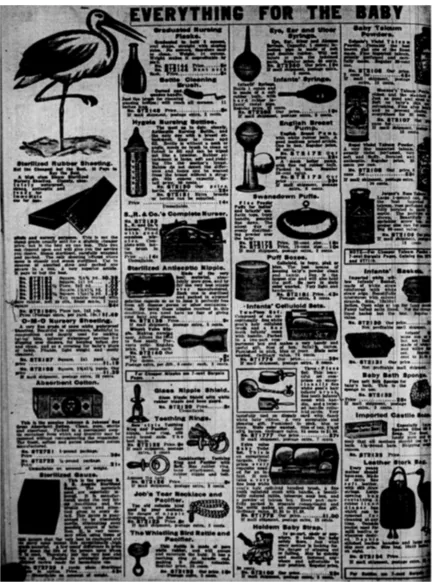
Figure 3.2 Sears Catalog Baby Section, 1910...69
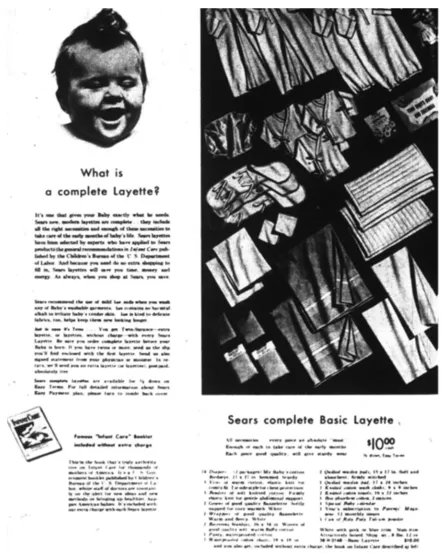
Figure 3.3 Sears Catalog Baby Section, 1944...70
Figure 3.4 Ad Council revised advertisement on breastfeeding, 2004 ...80
Figure 4.1 American Traffic Fatalities 1945-2000 ...87
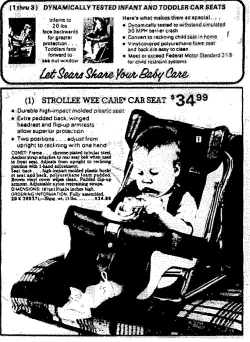
Figure 4.2 Sears Car Seat Advertisement, 1965 ...93
Figure 4.3 Sears Car Seat Advertisement 1972 ...96
Figure 4.4 Sears Car Seat Advertisement 1974 ...97
Figure 4.5 Sears Car Seat Advertising 1978 ...100
Figure 4.6 “Child Safety Seat” Word Usage ...102
LIST OF ABBREVIATIONS
AI ... Artificial Insemination
EMIC ... Emergency Maternity and Infant Care
ERO...Eugenics Records Office
IBFAN ...International Baby Food Action Network
IVF ... In Vitro Fertilization
LATCH ... Lower Anchors and Tethers for Children
LLL ... Le Leche League
LLLI ... Le Leche League International
NHTSA ... National Highway Traffic Safety Administration
CHAPTER
1:
INTRODUCTION
My great grandparents had thirteen children. My grandparents had seven
children. My parents had three children. Statistically I am most likely to have two
children. This family history mirrors that of the typical American family, which has
continued to shrink over time. Family size in the United States has continued to shrink in
slow but predictable ways since the end of eighteenth century. The decline in the
birthrate was temporarily interrupted by a post-World War II baby boom, but resumed
around 1960.
One of the main drivers of this phenomenon is parental worry about the cost of
raising children. Parents typically delay having children when exposed to economic
concerns precisely because they are unwilling to risk the inability to adequately provide
for their children. This has led to a long-observable trend of prospective parents having
children later and later in life.
The cost of deferring the age at which Americans have children is considerable.
In the United States over forty percent of women in their forties and fifties had fewer
children than they desired by 2014. This is a trend that has grown since at least 1975
(survey data from prior years is not available to answer the question directly, although
phenomenon and previously most women ended up having the number of children
that they wanted).1
Since 1960 the US Department of Agriculture had been providing cost estimates
for raising a child. During that time the cost per child has risen from $25,230 to
$245,340. In this same period, however, the median family income has increased from
$5,600 to $55,775. This means that the cost of having a child in terms of income has gone
from approximately 4.5 year’s income down to 4.4 year’s income. Thus the cost of
having children has remained essentially the same since 1960. Yet, while the cost has
remained the same with regard to income, the worry prospective parents have about those
costs has consistently increased over time. 2 These worries are far from benign since they
have prevented almost half of American women (and an unmeasured number of men)
from accomplishing their critical life goals.3
1 Gretchen Livingston “Birth rates lag in Europe and the U.S., but the desire for kids does
not,” Pew Research Center Fact Tank, April 11, 2014. http://www.pewresearch.org/fact-tank/2014/04/11/birth-rates-lag-in-europe-and-the-u-s-but-the-desire-for-kids-does-not/ accessed 2/25/2017. Janet Currie and Hannes Schwandt, “Short- and Long-Term Effects of Unemployment on Fertility,” Proceedings of the National Academy of Science, vol. 111, no. 41, October 14, 2014, 14734–14739. There is a bias inherent to this type of survey that is worth a brief note, namely that most people incorporate children they already have into their childrearing plans. This means if a woman wanted two kids but had a third, she will generally rewrite her history to have wanted the third, and thus will reply to surveys that she wanted three children. The same phenomenon does not occur for having fewer children than women wanted.
2 In this context parents means mothers. Demographic and social surveys have
historically excluded men from surveys about parenting and family size. This allows simpler calculations, because in basically every case women know exactly how many children they have had, while men have more uncertainty in this.
3 The cost of a child is calculated for the first child. Additional children generally have
lower costs, and some studies and surveys have attempted to correct for this difference, however the results have been inconsistent and use different methodologies than those the Census Bureau has consistently used for fifty years. The multiple child discount is
Policy makers have been concerned about childbearing, parents’ reproductive
choices, and how to influence them has been a concern of policy makers since the
nineteenth century. In Europe it was relatively common for the state to take an active
role in researching population trends and policies. However, in the United States policy
makers have tended to take a more hands-off approach to these matters. Since World War
II research relating to these concerns has been driven almost entirely by foundations and
charitable organizations, in lieu of efforts led by the government. Critical work in
undertaking and implementing population policy studies was done by the Rockefeller,
Ford, Carnegie, Markel, Commonwealth, Old Dominion, Alfred Sloan, New York, Henry
Nias, Smith Kline, and French, Ottinger, and Gleich foundations, as well as the
Pathfinder Fund, Salisbury, Sunnen, John Linsley, Larned Johnson, and Rosenstock
Foundations. Much of the work the foundations have supported has been coordinated by
the Population Council, a nongovernmental organization established in 1952 by John
Rockefeller III. While these foundations made the United States the world leader in
researching and creating policies related to population dynamics, the approach had
limitations. Because of the horrific problems caused by the American eugenics
movement (supported by many of the same foundations and because of the same
fundamental concerns), foundations in the mid-twentieth century reformed their scientific
grant-giving processes to focus on scientifically-based studies with tangible and discreet
goals. Functionally, this limitation meant that the organizations that would potentially
fund research about the perceptions Americans had about the cost of having children
Series P-60, No. 36, June 9, 1961; Kirby Posey, “Household Income : 2015” American Community Survey Briefs, ACSBR 15/02 September 16, 2016; Mark Lino,
were specifically trying to move their grant giving processes away from intangible goals.
As a result of these choices, contemporaneous study of the phenomenon was lacking.4
While historians have long examined both pronatalism and antinatalism, these
studies have tended to follow discrete programs. In 2001 Donald Critchlow
demonstrated how many pro-choice political operatives intended their advocacy to result
in fewer children being born. In 2006 Kimberley Morgan showed how childcare policies
fell apart in the seventies because of the general political atmosphere which became
increasingly hostile to welfare state programs and big government. Laura Lovett’s 2007
Conceiving the Future magnificently chronicled programs that the federal government
used to promote procreation among those perceived to be the most physically gifted.
While to some extent each of these historians study family perception, these perceptions
are directed through proposals and judging the efficacy of programs for achieving
specific political goals. These historians avoid the nebulous challenge of consideration of
the roles these policies had in shaping the broader parenting culture, and certainly do not
4 There are many histories of the American eugenics movement. Edwin Black, War
Against the Weak: Eugenics and America’s Campaign to Create a Master Race (New York: Four Walls Eight Windows, 2003) is probably the most aggressive, while Lutz Kaelber’s website “Eugenics: Compulsory Sterilization in 50 American States”
consider that parenting culture from a holistic perspective. Their topics were discretely
political, so broader questions about family life were outside of their focus.5
Many of the issues relevant to this study are part of larger political discussions.
Those larger discussions have seen excellent recent historical scholarship. Jennifer
Klein’s For All These Rights devotes most of a chapter to discussing the Emergency
Maternal and Infant Care program and the role of the World War II home front in
politics. Her main questions concern health care access, New Deal policy makers, and
the labor movement, however, and her argument only gestures towards the implications
that those policies had on family culture and life. Derek Hoff chronicles how the US
government has viewed families and reproduction in The State and the Stork. His focus
is on discreet policies, and while this work is excellent, it omits coercive governmental
influence that was accidental or non-specific. These examples show the challenges that
political histories face in accounting for the impact that politics had on shaping
perceptions and culture in society. Especially when the cultural transformations were
indirect, most political historians have not attempted to precisely determine what impact
political arguments had on culture. By specifically focusing on these issues, this
dissertation complements these political arguments about the family by applying them
5 See Laura Lovett, Conceiving the Future: Pronatalism, Reproduction and the Family in
the United States, 1890-1930 (Raleigh: University of North Carolina Press, 2007); Donald Critchlow, Intended Consequences: Birth Control, Abortion, and the Federal Government in Modern America (Oxford: Oxford University Press, 2001); and
into the social realm of the family. In short it looks at how macro-level political
arguments changed families’ expectations about their children.6
Historians of consumerism have in the last twenty years demonstrated that
American consumer activities have shaped society in a wide variety of surprising ways.
Gary Cross has demonstrated the impact of consumerism in shaping the culture of
America throughout the twentieth century. Some historians have recently turned their
focus towards the autonomous activities of consumers. While Lizabeth Cohen and T.H.
Breen demonstrated the capacity of consumer politics in discreet time periods, Lawrence
Glickman has extended this argument to the entirety of American history in his Buying
Power: A History of Consumer Activism in America. He identifies consumers of goods
as capable agents using their ability to buy or not as effective tools of coercion and
political action against seemingly much larger institutions – notably large corporations,
and governments both foreign and domestic.7
Central to my arguments in this dissertation is the idea of guardian consumerism.
Guardian consumerism is my term for consumer activities that are not directly motivated
by self-interest or personal needs, but rather the perceived wants and needs of a separate
individual not responsible for their own choices. The guardian (generally a parent in this
6 See Derek Hoff, The Stork and the State: The Population Debate and Policy Making in
US History (Chicago: University of Chicago Press, 2012), and Jennifer Klein, For All These Rights: Business, Labor, and the Shaping of America’s Public-Private Welfare State (Princeton: Princeton University Press, 2003).
7 Gary Cross, An All-Consuming Century: Why Commercialism Won in Modern America
(New York: Columbia University Press, 2000), and XXXX; Lizabeth Cohen A
Consumers Republic: The Politics of Mass Consumption in Postwar America (New York: Alfred A. Knopf Press, 2003); T.H. Breen, The Marketplace of Revolution: How
dissertation), is buying using metrics of wants and needs that are guesses about what the
other individual would want. In guardian consumerism the consumer as the person who
purchases goods, is different from the consumer as the person who uses the goods. These
two different consumers are linked through the reliance and vulnerability that the using
consumer has on the purchasing consumer, and the responsibility that the purchasing
consumer feels for the using consumer. For this definition, the relationship between an
infant and its parents makes for an ideal guardian consumer relationship because the
infant has almost no ability to provide meaningful feedback about their preferences with
regards to any particular product. There are other additional complications and
considerations to the guardian consumer relationship. The vulnerability of the using
consumer limits or entirely prevents the conventional relationship in consumer society
that provides feedback to the producers. This feedback system has been the source of
consumer politics and activism, thus allowing my study to explore an entirely new
dynamic within consumer activism and consumer society.
The focus of this study is on guardian consumerism situated at an intersection
between national politics, business advertising and marketing, and activist consumer
groups. To allow for a more thorough exploration of many factors impacting guardian
consumerism, it is organized thematically. The themes generally build upon one another
in loose chronological fashion, however there is significant overlap in the time frames of
the chapters. This is out of necessity, as the themes of infant consumerism built slowly
and frequently changed across generations. The topics examined all had periods of
intense activity, engagement and scrutiny, but also longer periods where the influence of
I mostly look at norm setting, the pursuit of the normal family, and the impact that
these norms had on disparate parts of society. Historical records disprove the idea that
there was ever a perfectly normal family. Historian Elaine Tyler May has shown that the
family norms I seek to uncover were injurious to many. While she focuses upon the
infertile, her point is more widely applicable. Ideas about what was normal greatly
impacted guardian consumerism, and the pursuit of being a good parent.
This work is not meant to criticize any of the millions of families that existed in
America in the twentieth century. Rather, one of my goals as I focus on guardian
consumerism is to better understand the potential harm that this type of social pursuit can
have. Stephanie Coontz, in The Way We Never Were, argues that memories of family life
are mostly myth, especially so for those who aspired to have normal families. To some
degree, I extend Coontz’s argument and to further displace historical reality of family life
from our inherited memories. One of the greatest challenges I face in this pursuit is that
much of this dissertation focuses on the recent past. As such, the memories of historians,
politicians, and activists from their own experiences interacts with the evidence of the
historical record in unpredictable ways. I have had many parents insist to me that they
remember precisely when child safety seats became a thing, or when breastfeeding
became typical, or when formula became standard. There are many memories of
parenting in post-war America, and it would be surprising for a family to have been
raised meeting all of the precise norms described here.8
8 See Elaine Tyler May, Barren In the Promised Land: Childless Americans and the
Parenthood is a complicated term historically, when referring to infants. For
almost all of American history parenthood of children in the age group I am studying was
essentially the same thing as motherhood, as fathers rarely performed the duties that are
colloquially considered “parental.” Nevertheless, I generally refrain from using the terms
mother and motherhood unless there are explicit biological implications inherent to the
topic of study. For example, my treatment of terms means that Breastfeeding vs
bottle-feeding was a topic that was necessarily about mothering and motherhood in contrast to
parenthood. However in most situations where parenting was collectively thought of as
“women’s work” I will refer to it as parenting. This is largely because even when most
families had women doing “mothers work”, using parenthood to describe it will not
unjustly exclude any of the complicated child-rearing arrangements that have necessarily
existed throughout American history.
Perceptions about the costs of children, as discussed previously, are not the only
complication of parenting that has risen since World War II. During that period, the
federal government assumed a very limited role in supervising family life in the United
States. Prior to the Progressive Era this was typical worldwide, and throughout the
nineteenth century governments had only limited access to the governance and operations
of families. Beginning in the first decades of the twentieth century, governments took on
increasing roles in family life. Governments started establishing standards for discipline,
child labor, education, health and wellness. The United States was the real leader in this
field, especially through the work of the Children’s Bureau. Chapter Two, “Advice,”
chronicles the challenges that the Childrens Bureau faced in entering family life as part of
transitions from the Progressive Era into the 1920s and in the New Deal and finally into
World War II. It argues that during World War II the United States went from the
industrialized nation most willing to intervene in the family, to one that was least willing
to allow the government to regulate and to advise parents on how to run their families. It
argues that when the Childrens Bureau was effective at shaping families it did so by
having a combination of talents and resources. These included exceptional
communicators, an ability to satisfy powerful expert lobbies, and an ability to conform to
the gendered expectations of politicians, families, social organizations, and medical
practitioners. Finally, it shows that by the end of World War II, the United States
government had managed to accidentally erode all of its strengths that had allowed it to
effectively distribute advice on maternal and infant health, which left an opening for
private sources of advice to fill the void. It shows how Dr. Benjamin Spock managed to
meet all of these historical requirements, and thus was able to successfully replace the
Childrens Bureau as the source for most advice to new parents. This chapter runs from
the early twentieth century into the 1950s.
Chapter Three, “Nutrition,” examines the long fight waged between advocates of
breastfeeding and formula feeding of infants. Using advertisements, policy statements,
medical articles and activist records, it explains how infant nutrition developed into a
type of guardian consumerism. It also shows precisely what happens to guardian
consumerism and child-rearing in the absence of strong and coercive governmental
actions, as both the federal government and most state governments have attempted to
avoid taking sides in nutrition debates. Finally, it shows the critical roles that medical,
contested terrain, in this case through the norm setting by way of guardian consumerism.
This chapter mostly focuses on the period from 1940-1960.
In Chapter Four, “Safety,” I discuss how the government became much more
involved in regulating one part of family life via regulations and partnerships designed to
harness new technological developments to create a culture that prioritized child safety.
This chapter examines safety in the place where young children are most likely to suffer
death or significant injury – the motor vehicle. It chronicles the consumer marketplace
before there was such a thing as a culture of safety, and identifies the transformations that
accompanied the federally mandated move to safe travel as a priority. As federal
regulations decisively shaped the marketplace once introduced, this chapter explores
guardian consumerism in a marketplace where the dominant influence and purpose was
uncontested. It finds that the same hostility that naturally enough exists in a contested
terrain persists even when all actors agree on the point of the marketplace. This chapter
also exhibits how a guardian consumerism can develop. As car seats transitioned from
personal luxuries of convenience into a safety essential, the marketplace for them
transformed from a conventional consumerism into a guardian consumerism. This
chapter examines safety through a periodization of pre-safety (prior to 1972), developing
safety (1970-1979), and uncontested safety (after 1979).
Chapter Five looks at the infant as a consumer product. It examines ways in
which the very act of having a child has been an act of guardian consumerism. It
explores a variety of area from the commodification of sperm and eggs to the adoption
marketplace. It also examines genetic inheritance, and the ways that Americans have
guardian consumers have guarded the human genome, and worked very hard to limit or
eliminate possibilities of consumer genetics.
The parents of newborn infants could have acted like conventional consumers,
evaluating products and services relative to their perceived needs, wants and desires.
However, there are differences between the conventional consumers and guardian
consumers. Because guardian consumers want to do the proper thing in their roles as
guardians, they are susceptible to different types of marketing efforts than traditional
consumers. These differences were utilized by a wide variety of agents as ways to
advance their agendas. As such, after World War II, guardian consumerism arose as a
coercive tool within consumer politics. This coercion has changed American society,
creating some significant benefits but also some deeply troubling problems. It has
transformed family life and the meaning of family in both the twentieth and twenty-first
CHAPTER 2: ADVICE
In 1996, the ultimate expression of infant consumerism arrived in the United
States with the launch of two new department stores that focused entirely on baby related
shopping: buybuy Baby and Babies’R’Us. These stores both entered the marketplace to
near immediate success, and rapidly expanded. buybuy Baby alone grew to 60 stores by
2012 and over 150 by 2016. It is easy to look at the rise of these chains as a
transformational moment in infant consumerism. They are big stores and consolidate
infant consumerism into singular shopping experiences. However, these stores did not
revolutionize the baby industry. While these stores have defined a marketplace in
impressive fashion, they did not transform baby consumerism.
In looking historically at these stores’ entrance into the marketplace, the most
remarkable thing is what they did not do. They did not change advertising practices,
challenge regulatory precepts, or inspire a new consumerism in any measurable way.
Instead, they gave tangible expression to the reality that, in the United States, baby
focused marketing had been an exceptionally lucrative practice for fifty years.
The spark that ignited the uniquely American baby consumerism was Baby and
Child Care by Dr. Benjamin Spock, first published in 1946. The book’s success and the
however, was not inevitable. The spark that Spock provided landed in tinder that
had been inadvertently placed by the federal government in the preceding thirty years.9
Released originally in 1946, Baby and Child Care went through seven editions by
the end of 1998. It sold over 50 million copies, in 39 languages, both under its hardcover
title and a paperback version entitled The Common Sense Book of Baby and Child Care,
published originally the same time and updated with revisions at approximately the same
pace as the hardcover editions. By some estimations, it ranked second on the list of
best-selling books of the twentieth century worldwide, bested only by the Bible.
Baby and Child Care was far more than “just” a massive international best-seller.
The child-rearing advice it provided, which became known informally as the “Spock
Method,” was adopted by millions of families across America as the basis for their
parenting philosophy. Countless letters written to Dr. Spock by mothers from across both
the United States and around the world attested to this. Many referred to Baby and Child
Care as the new Bible for the modern family. Some users even commented upon the
irony that they consulted Spock far more regularly than their actual Bible.10
The unparalleled, unprecedented success of Baby and Child Care was of major
significance in American history. It had major social and political implications. Dr.
Spock not only changed child-rearing practices, he also played an essential role in
9 “Bed Bath & Beyond Inc. Announces the All Cash Acquisition of buybuy BABY,”
Press Release March 22,2007. retrieved from PR Newswire
http://www.prnewswire.com/news-releases/bed-bath--beyond-inc-announces-the-all-cash-acquisition-of-buybuy-baby-52175742.html, Tanya Mannes, “Will New Baby Megastore Compete With Babies R Us?” San Diego Union Tribune, April 27,2012. http://www.sandiegouniontribune.com/sdut-baby-megastore-competes-babies-r-us-2012apr27-htmlstory.html.
10 See General Correspondence, Box 4, Benjamin Spock and Mary Morgan Papers,
creating the post-war consumer ideology that featured a limited role for government in
the lives of Americans. The irony is that he did not seek to have had such an impact, and
did not agree with it philosophically. He worked hard to bolster government directed and
assisted parenting throughout his life. He used the fame and influence he acquired from
writing Baby and Child Care to support John F. Kennedy’s presidential campaign, as
well as Medicare, Medicaid, Welfare, and other government programs to aid family life.
Spock wrote Baby and Child Care at a time of transformation in which the very
meaning of parenting changed dramatically. Structural changes in health care, and
centuries-long trends in fertility and mortality combined to create a set of conditions that
can best be defined as modern parenting. Modern parenting began in the early twentieth
century as social scientists, medical researchers, progressives, pediatricians and parents
searched for solutions to challenges and opportunities in childrearing that were
historically unprecedented. Education for new parents became exceptionally important
because it connected them to the diligently created cutting edge of modern medicine,
technology, and science.
The education that modern parents received had a significantly different focus in
the early twentieth century than in the age of buybuy Baby. The earliest attempts at
parenting education were pioneered by believers in public forces in education. These
public programs for modern parents ran into intense political and social challenges in an
American culture historically resistant to government intervention in private affairs. The
process of overcoming these challenges forced public officials to adopt informal
structures and language. They went from educating parents about their children to
challenges that public officials faced in implementing advice for modern parents would
give rise to the robust guardian consumerism of the post-war years.
To appreciate the ways modern parents had different needs than earlier
generations of parents, we need to first look back to the early American republic and
what was understood as normal parenting. Examples from the early republic through the
nineteenth century show how foundational tasks related to becoming a new parent were
transformed through this time until by the early twentieth century a first time parent
would experience parenthood as a process completely different from those in generations
past.
In January and February of 1781, Sarah Fouace Nourse was preoccupied with
babies. Catherine Cooke, Sarah’s daughter, was expecting her first child in late winter,
and Sarah made visits, goods, and preparations for becoming a grandmother. She also
made clothing for and visited two other new mothers from the Piedmont, Virginia area.
At the same time, she had a child of her own who was only three years old, the youngest
of her eight children. The lack of a chronological gap between the time that Sarah was a
mother to young children to the time that she became a grandmother meant that Sarah
spent her entire life involved with babies.11 This was typical for women in colonial
America. The birth rate in the late eighteenth century was over 7 children per mother.
The high number of babies in comparison to the number of adults had profound cultural
implications, including that new mothers like Catherine Cooke were surrounded by
11 Sarah Fouce Nourse, “1781-1783 Diary of Mrs. Sarah Fouce Nourse, wife of James
friends and family like Sarah Nourse who had extensive and recent experience with
childrearing.12
Catherine Cooke was a typical new mother in eighteenth century America.
Indeed, with only a few minor differences, her experiences and expectations as she
prepared to become a mother resembled those of women over many centuries and across
cultural and geographic boundaries. She lived, however, on the cusp of change. What it
meant to be a typical American parent changed in several critical ways by the
mid-twentieth century, changes that required significant adaptation in the norms of parenting
and changed the needs of modern parents.
The first of these changes was a major reduction in the infant mortality rate as a
result of new developments in science, technology and medicine. While it seems obvious
that the discovery of germ theory, the introduction of forceps, and other new
developments in medical knowledge would have some impact on the birthing process, the
transformation was dramatic. Despite the Industrial Revolution, mortality rates were very
high. In Britain, for which there are breakdowns that show mortality based on where
women labored, by 1872 the mortality rates by age five for the children of mothers
working outside the home was still 69%, with only a slightly less horrifying 45%
mortality by age five for the children of women working in the home.13 The high infant
and child mortality rates led parents to look at their children in ways quite different from
12 Herbert Klein, A Population History of the United States (Cambridge UK: Cambridge
University Press, 2004),78. See Susan Klepp, Revolutionary Conceptions : Women, Fertility, and Family Limitation In America, 1760-1820 (Chapel Hill : University of North Carolina Press, 2009).
13 Working in the home instead of working outside of the home did not have a causal
parents in the late twentieth century: nineteenth century parents were looking out for their
own psychological well-being. The clearest manifestation of this was that parents tended
to compartmentalize their feelings for their children and many viewed newborns without
affection. An excellent example of this was recounted by Ann Dally:
In the 1770s, Mrs. Thrale, devoted mother of many children, was extremely upset when one of her older children died but showed no grief over the deaths of infants. She took an instant dislike to one baby since “she is so very poor a creature I can scarce bear to look on her.” Later, when another newborn baby died, she commented, “one cannot grieve after her much, and I have just now other things to think of.”14
In 1900, the average woman lost more than one child in delivery or due to
accident or illness before the child’s fifth birthday.15 In addition, miscarriages were
significantly more common and pregnancy was not viewed as “going to have a child.”16
Parents had to prepare psychologically for the death of their offspring, precisely because
it occurred so regularly. Having a large family meant burying at least some offspring.
But after scientific advances significantly cut down the infant mortality rates,
attitudes changed. These changes were reflected in the advice Spock gave to parents in
mid-century America. In his memoirs he discussed how he would never advise his
patients to do as he did, and instead advised them to attach emotional significance to their
newborns and to embrace grief if they faced tragedy.
14 Clifford, JL. Hester Lynch Piozzi pp 83-94, quoted in Ann Dally, Inventing
Motherhood: The Consequences of an Ideal (London: Burnett Books, 1983), 28.
15 Dally, Inventing Motherhood, 25-42.
16 A significant factor for some European populations was Rh Disease, which was not
discovered until 1937 and caused regular miscarriages in approximately 12% of women. See Landsteiner, K. and Weiner, A, "An Agglutinable Factor in Human Blood
Biomedical ethicist Lee Silver draws an important distinction between different
types of life that is rather helpful for considering what these parents were going through.
He argued that there are two very different types of life, both of which can be human, but
neither of which necessarily is so. The first is life in the biological, or general sense.
This meaning comes from cellular biology. A person who is killed will normally still
have many living cells within them. Most of these cells continue to function for a long
time, until external factors cause them to die. If these cells were considered dead the way
society thinks of living and dying, then the process of organ transplantation that gave life
to these dead cells by using them to sustain another external life (for example by
transplanting a heart after an untimely death) would be impossible.
The reason why society does not think of the organs as dead immediately when
the person dies is that it has intuitively acknowledged a separation between general life
and special life. In humans, special life is a combination of genuine self-awareness and
an ability to feel a wide range of motions. Special life is generally what society tries to
protect and what is believed to hold natural rights. The boundaries of special life are
nebulous and open to interpretation. This is precisely why there have been so many
political controversies about where life begins, how it should be allowed to end, and how
much emotional range a living being has to show to qualify as human.17
As a result of the high infant and child mortality rates prior to the twentieth
century, parents often intentionally or unintentionally avoided connecting emotionally
with their children until the children reached an older age. For these families babies were
not living human beings, at least not in the special sense of life. As a result, until the child
17 Lee Silver, Remaking Eden: How Genetic Engineering and Cloning Will Transform the
was old enough that their survival was extremely likely, having a child was somewhat of
an abstract experience. In some families, losing babies during or right after delivery was
regarded as analogous to miscarriages and the parents tried to move beyond the
experience, while in other families these children would be felt and memorialized in
various ways. One common method which blended the routes was to give the name of a
deceased child to the next infant born. This both allowed the parents to remember their
lost child, and to attempt to trick their memories and subconscious into forgetting the lost
child.
Such attitudes persisted throughout the nineteenth century owing to high death
rates of newborn children of approximately two hundred per thousand live births.
However, the early twentieth century saw huge changes in infant and early childhood
death rates, primarily resulting from technical and medical advances. Increased
knowledge of germ theory, the introduction of sewage systems, and the adoption of
public health measures by the government helped to reduce transmission of several
diseases most notably cholera and typhoid. These trends were aided by developments in
preventative health care, notably because of the invention of vaccines and subsequent
campaigns to immunize the population.
As a result of these transformations, during the twentieth century the mortality
rate for infants in the United States went from nearly twenty percent to less than one
the century, falling from five percent to less than point two percent. Almost all of this
change was due to decreased mortality from disease.18
Decreased infant and child mortality rates quickly transformed cultural
expectations of how parents should handle child death in the twentieth century. Dr. Ben
Spock experienced this personally. When he lost a newborn child during the Great
Depression, his attitude resembled those of nineteenth century parents. As he later
recalled, “Sadly our first child was born premature. The baby weighed a little over three
pounds and died in two days. We didn’t give the baby a name… we tried to make as
little as possible of his short life, believing at the time that this was the wise and
courageous thing to do.”19 However, as he acknowledged, by the 1950s he would never
have suggested to patients that after losing children that they should have acted the way
he and his wife did. While Spock, a physician trained in psychology, was perhaps on the
leading edge of the cultural transformation, by the time of the baby boom it became
normal for parents to bond with their newborn children. This change, rooted in new
realities, was embraced by Spock.
In part because more infants were surviving to adulthood, there was another major
demographic change: Americans were having fewer babies. The higher survival rates,
combined with the industrialization and urbanization that made children more of an
18 Kline, Population History of the United States, 104, Bernard Guyer et al., “Annual
Summary of Vital Statistics: Trends in the Health of Americans During the 20th
Century,” Pediatrics Vol. 106-6 (December 2000) 1307, DOI: 10.1542/peds.106.6.1307. See John B. McKinlay and Sonja M. McKinlay, “The Questionable Contribution of Medical Measures to the Decline of Mortality in the United States in the Twentieth Century” The Milbank Memorial Fund Quarterly. Health and Society Vol. 55, No. 3 (Summer, 1977), pp. 405-428 DOI: 10.2307/3349539 for detailed argument on why medical interventions were not a significant part of declining mortality.
19 Benjamin Spock, Spock on Spock: A Memoir of Growing Up with the Century (New
economic liability than an asset (as they were to farm families), birthrates and average
family size decreased steadily in the United States from the late eighteenth century until
World War II. At first this had a limited impact on family function and knowledge
transmission: families shrinking from ten to eight individuals did not require substantially
different knowledge or psychological makeup of what having an additional child meant.
However, by the late nineteenth century when the average American woman started
having fewer than four children during her lifetime, it became much easier for expectant
parents to have a social circle that did not include adults with recent experience in
childbearing and rearing.
One other major demographic shift took place during the nineteenth and twentieth
centuries: a dramatic increase in life expectancy. Together with a decline in the average
number of children, this meant that fewer and fewer adults were engaged in caring for
young children. While in 1781 Catherine Cooke could ask for topical advice from her
mother, as well as from many friends, neighbors, and extended family members, in 1945
such resources were rarely there for new parents.
When typical life expectancy was 55 years in 1780 and parents had so many
children, it meant that any new parent enjoyed an incredible amount of tacit knowledge
gained from assisting friends and family with childcare. Even if that failed, women such
as Catherine Cooke could simply rely on her mother’s advice, as Sarah Nourse was still
actively raising young children when Catherine became a mother. In contrast, when my
thousands of miles away from their families, but it had been twenty years since their
parents had their last child.20
These demographic transitions outlined above, and the resulting problems
regarding transmission of knowledge about pareting methods inspired action on the part
of the federal government. In 1912, the United States created a Children’s Bureau. This
was the first government office in any nation worldwide to focus entirely on child
welfare, particularly equipping parents with the knowledge needed to successfully care
for children in an era in which they were less likely to be surrounded by family and
friends eager and able to educate them.
Federal authorities were eager to attack the problem of infant mortality and for
new parents to benefit from new scientific knowledge about caring for young children.
One of the four fundamental questions Julia Lathrop, the first Director for the Federal
Children’s Bureau posed in her organization of the bureau dealt directly with the modern
problem. “How far is ignorance to blame for [unnecessary death of children] and who is
responsible for ignorance?” she asked. From its first days, the Children’s Bureau would
be charged with researching, chronicling, and disseminating information to combat
parental ignorance. This ignorance was quintessentially modern, in that it was both
caused by modernity and its advances in scientific method and knowledge production as
well as being a result of the modern social dislocations outlined above. The challenge of
researching, reporting upon, and overcoming ignorance would prove to be worthy of
20 Mortality data from David Kertzler and Peter Laslett eds., Aging in the Past:
Lathrop’s prominent early emphasis on the problem. The Children’s Bureau would prove
to be highly effective in preparing parents to attack the problem of infant mortality. 21
There were three types of concerns that the Children’s Bureau had to navigate to
in society to be effective in its work: concerns about expertise, concerns about gender
roles in the family and society, and concerns about the government’s role in family life.
The Children’s Bureau was founded by individuals well aware of these social and
political challenges, and developed strategies to effectively integrate these concerns into
its work.
From its beginning, the Children’s Bureau dealt with issues of gender and
parenting in complicated ways. Its original director, Julia Lathrop, was the first woman
to direct a federal agency, and the Children’s Bureau was exclusively directed by women
from 1912 until 1968. While there were men working in the bureau, it was conceived as
a maternal state institution. Gender factors heavily influenced the bureau’s choice of
goals and its ability to pursue them.
The Children’s Bureau made its first major initiative to launch a program on
infant mortality and health. Officials within the bureau designed the program to start
with research into family life across America by a series of periodic in-home visits to
gather various information related to the health of infants. This program would be
followed by general education campaigns that combined widely distributed pamphlets
with more intense and focused interventions possible as problems arose.
21 Julia Lathrop, “The Children’s Bureau” (Reprinted from Proceedings of the National
A closer look at the earliest research from the Children’s Bureau illustrates how
the Bureau would utilize gender to accomplish its goals. Dissemination of this research
marked the coming out of the Children’s Bureau, and it launched a program meant to
demonstrate how such a Bureau could work and to publicly demonstrate both its political
acceptability and social value.
The program focused upon the subject of infant mortality and health. This was, in
the words of future Children’s Bureau chief Grace Abbott, “of fundamental social
importance and of popular interest.” Abbott detailed the logistical bonuses to focusing on
infancy, especially from an operational standpoint. The Children’s Bureau designed its
surveys for the project to start at birth and move forward in the lives of children as they
aged.
Only female agents of the Children’s Bureau were used for the field work of
gathering the survey, because “the questions [involved] were necessarily intimate and
difficult.” The administrators of the Children’s Bureau thus understood that their ability
to engage in family life was predicated on the Bureau taking on a specific, maternal
gender role. This fed on old stereotypes about gender roles in society, and was a strong
way of reinforcing those roles in the Progressive Era.22
The gendered approach to parenting that the Children’s Bureau tacitly
demonstrated throughout its early work at fundamental levels helped legitimize ideas
about gendering concerns about infant welfare as women’s work. However, it also gave
the Children’s Bureau, as a government institution, freedom to engage in work of a type
22 Grace Abbott, “Ten Years’ Work For Children” (Reprinted from U.S. Chidren’s
that was extremely controversial. While the Bureau faced serious opposition from
families that were concerned any advice, educational materials, or coercive resources it
provided would be an unacceptable form of government intrusion into family life, the
maternal nature of the Bureau allowed it some access into family life.
In 1914 the Bureau published a pioneering work Infant Care. Infant Care was a
pamphlet designed to share basic information “regarding hygiene and normal living every
mother has the right to possess in the interest of her and her children.” It focused on
topics like pasteurization, pure water, clean living conditions, and sunlight for children.
Infant Care was designed as the second step in fighting early childhood mortality (the
first being the surveys discussed above). If it has not been for the clear gendered tone of
Infant Care and the female staff of the Children’s Bureau, the controversy generated by a
governmental publication of child-rearing advice would likely have prevented Infant
Care from publication.23
Neither Julia Lathrop nor Grace Abbott anticipated that Infant Care was going to
have a large impact on families across the United States. They viewed Infant Care
merely as a bulletin that was supplementary to their more important direct instructional
work through infant-welfare centers and through public-health nurses. Their focus was on
waging a war against infant mortality, and publications were only a small part of this
battle.
23 The Children’s Bureau used the term “pamphlet” in early years, histories, and
recollections to describe those works. Despite this, the term is generally avoided in this text. Most of these “pamphlets” were in excess of twenty pages, and most editions of Infant Care ran approximately 80 pages. The term pamphlet was commonly used in the early 20th century for longer printed collections in a different way than the term is used in
This context is critical to understanding the success of Infant Care. The
Children’s Bureau was able to establish a reputation for quality work in part because they
started educating and advocating at a time when they were able to promulgate excellent
(and mostly recent) medical, scientific, and technological advances. In small part as a
result of these efforts, infant mortality plunged in the years after the release of Infant
Care. Unsurprisingly, Infant Care’s reputation and timing greatly benefited from this
timing.24
Unexpectedly, Infant Care enjoyed immediate and continued success. In the first
ten years of printing distribution of the booklet rose to more than 600,000 copies per
year. Congressional offices received so many requests for Infant Care that by the 1920s
the Children’s Bureau had to create a Congressional distribution scheme to handle the
persistent demand. Thus, in less than a decade, the public aversion to government
childrearing advice mechanisms had been completely overrun by the potent effectiveness
of consumer political demands.
This was able to take place even in the context of a more general retrenchment
from the progressive politics that had inspired the creation of the Children’s Bureau and
provided the political capital necessary to make it an effective government agency.
Ultimately Infant Care would become the most printed government booklet in the entire
twentieth century, speaking to the general effectiveness of Infant Care as well as
exploding market for parenting materials.
The Children’s Bureau, while almost certainly the most popular parenting advice
source of the first half of the twentieth century, was by no means the only one. Women’s
magazines ran regular columns on parenting, some of which were quite popular. There
were also parenting magazines such as Babyhood and American Motherhood. The
Children’s Bureau never attempted to create a monopoly, and never came close to
achieving one. However, it did manage to cultivate a remarkable and unique influence
with American parents. This can best be judged by the letters that parents sent to the
Children’s Bureau, many asking for follow-up help or advice to that they had received
from the Children’s Bureau’s booklets.25
In addition to Infant Care, the Children’s Bureau produced other advice literature
in the early years using a similar style and gendered tone. Prenatal Care and The Child
From 2-6 debuted in the same timeframe, with the same authors, and with the same goals
in mind. However, these booklets had very different destinies. While Prenatal Care was
a success story in its own right, with millions of copies distributed making it became
another twentieth century best-seller, it did not have the chart-topping success of Infant
Care. Prenatal Care reasonably distributed, but because it had such a similar subject
matter and less demand it was merely grouped into discussions of Infant Care. Whether
the discussion was internal to the Children’s Bureau, in front of Congress, or advocating
to state and local offices, Infant Care was the document of primary importance and
whatever policy outcome respecting Infant Care resulted would prove satisfactory for
Prenatal Care.26
The impact of Prenatal Care, while not nearly as significant as that of Infant
Care, nevertheless dwarfed the “other” booklets that the Children’s Bureau produced.
25 See Rima Apple, Perfect Motherhood: Science and Childrearing In America (New
Brunswick: Rutgers University Press, 2006), 52-55.
The Child From 2-6 had originally been intended as- a continuation of the series, which
would then in further volumes consider additional topics related to child labor practices
and education. The Child From 2-6 was poorly received.
There was a much lower demand for advice covering this time period for several
reasons. First, parents had a better sense of what to do with their older children. They
had memories from being that age, and frequently from having younger siblings having
been that age. Their children could also communicate by that age and share needs wants
and desires with parents, making some of the bewildering aspect of parenting much
diminished. Additionally, one of the most important contributions to parents feeling as
though they did not need help raising their children after infancy can be backed up by
direct data. High infant mortality rates had been a feature of human life as far back as
reliable records allow for reasonable estimation. Mortality dropped off rapidly after
infancy however. As such there was naturally less concern about children and their
welfare as they reached toddlerhood and then childhood. Considering the goals for
Prenatal Care and Infant Care – it becomes obvious that The Child From 2 – 6 simply
did not have a natural place in America.27
Infant Care was successful beyond merely seeing wide distribution and popular
demand from the marketplace. As discussed above, Infant Care was originally designed
with the goal of being a part of a broader and comprehensive fight against infant
mortality. To the extent that Infant Care was a part of this strategy it was an
overwhelming success. Infant mortality rates plummeted in the decade after the release
of Infant Care, and continued to drop throughout the rest of the twentieth century. In
27 It also suggests the power of guardian consumer relations and their impact on buying
1900 infant mortality was around 16%. When Infant Care was published in 1912,
mortality was at 12%. By 1930 this had dropped to around 7.5%, and by 1945 it had
fallen to 4.7%, and would continue to decrease. For comparison, in 2016 mortality in the
US is .58%.28 While the Children’s Bureau was not solely responsible for this
achievement, the decrease in infant mortality was a significant accomplishment for the
Bureau.29
After approximately a decade of operation, the Children’s Bureau went through a
process of expansion that would significantly impact operations. The scientific studies
that the Children’s Bureau had sponsored were met with general acclaim, but the other
missions of the Children’s Bureau were becoming more complicated and complex.
The biggest reason for this is the passage of the 1921 Promotion of the Welfare
and Hygiene of Maternity and Infancy Act, referred to inside the Children’s Bureau as
the Maternity and Infancy Act, and commonly as the Sheppard-Towner Act. This act
necessitated a new vision for the Children’s Bureau. Sheppard-Towner did not give the
Children’s Bureau any new direct responsibilities in maternity and infant care, but it still
greatly increased the responsibilities of the Children’s Bureau in these areas. While the
Children’s Bureau was prevented from providing direct care, the Children’s Bureau
28 US historical rates compare to 2016 rates roughly as follows: the US rate in 1912 was
the same as Afghanistan’s in 2016, the US rate in 1930 approximates Angola 2016, US 1945 approximates Haiti 2016, USA 1970 approximates Egypt 2016, USA 2000 approximates Russia 2016.
29 Data Prior to 1950 from Klein, A Population History of the United States, 147. Data
after 1945 from Centers for Disease Control and Prevention, National Center for Health Statistics, Health, United States, National Vital Statistics Report, compiled on
would issue grants, advice and resources to state and local programs to implement new
and expanded health programs.
Even Sheppard Towner’s original success was due to political fears about the
need to appease new women voters and strong lobbying from the Women’s Joint
Congressional Committee. Concern about the new politics post-suffrage were a necessary
prerequisite for any expansion of the Children’s Bureau’s mandate. As time went by and
politicians were able to accurately determine that women engaged in politics in manners
fundamentally similar to men, those politicians no longer felt like they were required
politically to fund Sheppard Towner and similar projects. Freed from the political
necessity, personal and philosophical objections were manifest in the debate over renewal
of Sheppard Towner. These objections were the same objections to almost all of the
Children’s Bureau’s work: objections based on the state taking on too large of a role in
the family, of the state taking on a maternal role, and of it being too socialized of a
program.30
The Children’s Bureau under Grace Abbott took its new responsibilities under
Sheppard-Towner seriously, well aware of the problematic political potential of the
federal government engaging too closely in family life. There were several concerns that
led to the strange process of expansion of the influence and mission of the Childrens
Bureau without direct obvious expansion of its offices or personnel.
30 Moehling and Thomasson, “The Political Economy of Saving Mothers and Babies,”
Politically there was significant pushback from groups who were worried about
what kind of programs the government would launch. The most vocal of these concerns
came from Catholics who feared that the government would provide reproductive
materials and education which was contrary to their faith. Anti-suffragists such as
Harriet Frothingham also raised political concerns about the role of the government.
Finally, a series of state professional associations, mostly of medical practitioners,
objected to the program. Thus, the same three types of concerns that had been critical in
the first decade of the Children’s Bureau continued to form the necessary parameters of
consideration for its work: concerns about expertise, concerns about gender roles in the
family, and concerns about the government’s role in the family.31
The unexpected success and influence of Infant Care led to an initiative to
restructure the authorial process of the Children’s Bureaus booklets at the same time as
the Bureau was expanding to meet the mandate of Sheppard-Towner. The American
Medical Association decided to object strongly to the governmental advice coming from
author Mary Mills West emphasizing her lack of medical training. As a letter of
complaint to Director Lathrop noted, West wrote “simply and pleasingly… but did not
have any particular qualifications.” Mrs. West had successfully raised five children, and
was an educated woman. Nevertheless, a growing number of doctors demanded that
31 Frothingham and other individuals, states, and groups also raised concerns based on the
federal government playing a role in family life through this program, but these
objections did not prevent them from endorsing other federal grant programs. Thus, the issue was not one of federalism and the role of the federal government in society, but rather the question of the government’s role in the family and questions about the government’s rights to countermand parent’s moral choices. See Carolyn M. Moehling and Melissa A. Thomasson, “The Political Economy of Saving Mothers and Babies: The Politics of State Participation in the Sheppard-Towner Program” The Journal of