53
©IJRASET: All Rights are Reserved
Video Face
Recognition using Deep Learning based
Representation
Shahzadi Asra1, Mr. Holambe Sushilkumar Nathrao 2
1
M.E Student, 2Assistant Professor, Department of Computer Science & Engineering, TPCT’s College of Engineering, Osmanabad
Abstract: Smart phones and surveillance cameras have initiated research in video face identification. Face recognition in video is extremely significant in the area of law enforcement purposes, the recent advances have reported high accuracies at equal error rates, performance at lower false accept rates require significant enhancement. The decision of verification can be obtained by using a classifier called multilayer neural network. The proposed algorithm yields accuracy of verification about 97% at equal error rate on the database of YouTube faces. We proposed to design a novel video face verification algorithm that uses discrete wavelet transform and entropy computation to select feature-rich frames from a video sequence. This proposed algorithm is implemented and simulated using MATLAB tool.
Keywords: face, recognition, verification, deep learning, feature extraction, frames, neural network
I. INTRODUCTION
Recent development in smart mobile phones and surveillance cameras has made the face recognition one of the most significant biometrics authentication techniques. Identification and verification of video face recognition is the key issue from security viewpoint. Video Face recognition has been considered for over two decades and it is examined in various fields such as pattern recognition, computer vision and digital image analysis. It is an active research area in computer vision, determined by its broad range of practical applications in access control, identification systems, surveillance, pervasive computing, social networks, etc. The advances in technology made large number of people to capture video using smart phones and tablets. This captured video can also utilized by law enforcement bureaus. Consequently, there is a high motivation to make use of video data to carry out accurate face identification[1]. The video clip comprises of sequence of frames and the face regions frame can be detected and cropped. The information captured by a single frame is limited and multiple frames from video clip can capture lot of information about appearance of face under the effect of pose, illumination and expression. With the use of huge variety of information present in video, a robust and complete representation of a video face can be extracted and verification/identification accuracy can be improved. In literature video face recognition has been widely studied and several algorithms have been proposed. Video face recognition algorithms can be set based and sequence based. The set based algorithm takes video as a set of images (frames) and then the frames are modelled and matched variety of methodologies. These approaches may not use the temporal information contained in the video. Whereas, the sequence based approaches will use temporal information present in video. The sequence based algorithm model the video as a sequence of images and apply sequence classification techniques for face recognition. A few of the latest algorithms utilize large image dictionaries to characterize videos, while some algorithms will be based on metric learning or deep learning approaches.
54
©IJRASET: All Rights are Reserved
performs frame selection process; feature extraction based deep learning architecture and matching. This paper is organised as : section II describes the related work for this research work in the form of literature. Section III describes about concept and steps followed in proposed algorithm and its advantages. Section IV of this paper describes the simulation results and discussion of proposed work and section V represents the conclusion and future work to be carried out.
II. LITERATUREREVIEW
The related works presented here by various researchers across the globe is discussed in the form of exhaustive literature, which includes large number of research papers till date. It also includes the references of diverse technologies that have been used so far in the selected field along with their drawbacks, lacunas, disadvantages and how we are going to address some of the issues in our research work. The opportunities for the research towards video face recognition techniques are identified and highlighted. There is a need for significant scope of improvement in the performance of video face recognition and additional research on focusing at lower false accept rates is required.
Wolf et al., in 2011[3] have proposedset based algorithm forrecognition of face in unconstrained videos with matched background similarity. They considered you tube faces and achieved verification accuracy of 74.6%.
Wolf and N. Levy L in 2013[4] have investigated set based video face recognition algorithm for YouTube faces using on SVM-minus similarity score and achieved face verification accuracy of 78.9%.
H. Li, G. Hua et al., in 2013[5] carried out the analysis of face verification for YouTube faces under the pose variant using matching called probabilistic elastic. The accuracy of verification is 79.1%.
Z. Cui et al., in 2013[6] has proposed the sequence based algorithm for recognition of face in the wild. This algorithm uses fusing robust face region descriptors via multiple metric learning. They taken YouTube face database for investigation and obtained the verification accuracy of 79.5%.
Vázquez et al., in 2013[7], carried out the video face recognition using features called volume structured ordinal features with background similarity measure. They analysed the results of sequence based algorithm for YouTube faces and the accuracy of face verification achieved is 79.7%.
Bhatt v et al., in 2014[8] investigated the faces recognizing in YouTube databases using the set based algorithm that uses clustering based re-ranking and fusion and obtained the verification accuracy of 80.7%.
Junlin Hu et al., in 2014[9], has investigated the set based algorithm for face and kinship verification in the wild under large margin multi metric learning for YouTube and achieved accuracy of verification 81.3%.
Hu et al., in 2014[10], carried out the analysis of set based algorithm for face verification using YouTube databases based on learning called discriminative deep metric. The verification accuracy achieved is 82.3%.
Taigman, in 2014[11], developed the set based algorithm for face verification based on deep Face using YouTube faces. A simulation result shows that the verification accuracy is 91.4% (unrestricted).
Wang et al., in 2015[12] carried out the face verification in image sets of YouTube faces using riemannian manifold of Gaussian. achieved verification accuracy of 73.01%. This is set based algorithm.
Khan et al., in 2015[13] investigated a video face recognition using YouTube database by use of adaptive sparse dictionary with set based algorithm. They achieved a video face verification accuracy of 82.9%.
Li et al., in 2014[14], carried out the investigation and simulated algorithm(set based) with Eigen-PEP for face identification in video. They considered you tube faces and simulation analysis gives the accuracy of verification is 84.8%.
Li et al., in 2015[15] developed the set based hierarchical-PEP algorithm for real world video face recognition using YouTube faces. The simulation of algorithm gives verification accuracy of 87.0%.
Sun in 2015[16] developed the set based algorithm using deeply learned face representations are sparse, selective, and robust. They considered YouTube faces and achieved 93.2% accuracy of face verification (unrestricted).
Schroff et al., in 2015[17] has developed the FaceNet for identification and clustering. This is unified embedding approach usingn YouTube faces and achieved a face verification accuracy of 95.1% (unrestricted).
Parkhi et al., in 2015[18] investigated deep video face recognition using set based algorithm for YouTube faces and simulation results of this algorithm gives verification accuracy of 97.3% (unrestricted).
55
©IJRASET: All Rights are Reserved
Yang et al.,in 2016[20] has carried out the simulation of set based algorithm for video face recognition using neural aggregation network . The analysis of this algorithm shows that accuracy of face verification is 95.5% (unrestricted).
Tran et al., in 2016[21] developed the algorithm which is set based for face recognition Regressing robust and discriminative 3D morphable models with a very deep neural network. They considered you tube faces and achieved verification accuracy of 88.8% (unrestricted). This is set based algorithm.
Beveridge et al., in 2013[22] investigated the challenge of video face recognition using algorithm that is based on set with the help of digital point and- shoot cameras. Simulation analysis has verification accuracy of 8% (handheld) and 10% (control).
Wang, in 2015[23] the discriminant analysis on riemannian manifold for Gaussian distributions for face recognition with image sets based algorithm. They considered you PaSC and achieved verification accuracy of 18.3% (handheld) and 18.7% (control).
Huang et al.,in 2015[23] have developed the set based algorithm for face recognition in video using projection metric learning under Grassmann manifold. The video database taken for investigation is PaSC and achieved video face verification accuracy of 43.9% (handheld) and 43.6% (control).
Li et al., [24]proposed the concept of real world video face recognition for PaSC database using HierarchicalPEP model. The proposed set algorithm gives face verification accuracy of 30.7%.
Goswami, in 2014[25] has developed the algorithm called set based MDLFace called memorability augmented deep learning for video face recognition. They utilized PaSC database and achieved video face verification accuracy of 89% (handheld) and 94% (control). Also they carried the work for YouTube Faces and 88.6% face verification accuracy is obtained.
Various existing approaches have attained high video face verification accuracies at equal error rate, but achieving high performance at low false accepts rate is still a difficult research challenge.
III. PROPOSED WORK
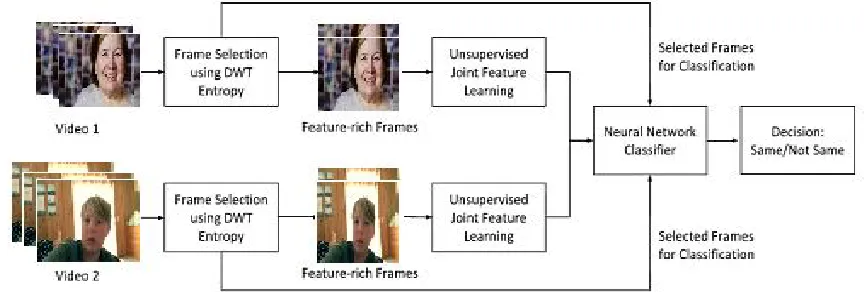
[image:3.612.107.539.441.587.2]We propose a novel algorithm for video face recognition in YouTube and PaSC databases. The proposed algorithm utilizes frame selection and deep learning based feature representation. The proposed algorithm follows three steps for video face recognition: Entropy based frame selection, Feature extraction using deep learning framework and Face verification using Feature Richness and Deep Learning Based Representation. The two different openly accessible databases, YouTube Video Faces database and PaSC (point and shoot challenge) database obtained using Android Mobile Phone are used to analyse the performance of proposed algorithm.
Figure 1. Illustrating the steps involved in the proposed video face recognition algorithm.
An overview of the proposed algorithm is presented in Figure 1. From figure we see that two different video is given as input and on this inputs a discrete wavelet transform (DWT) and Entropy operations are performed to obtain the feature rich key frames of a two different videos.
56
©IJRASET: All Rights are Reserved
A. Advantages Of Proposed Work
1) The frame selection based on feature richness offers noticeable and consistent performance improvement .
2) Performance of video face verification is improved with the use Joint feature learning in SDAE and sparse and low rank regularization in DBM.
IV. SIMULATION RESULTS & DISCUSSIONS
The proposed face recognition algorithm is implemented and simulated using MATLAB tool. The effectiveness of proposed algorithm is evaluated with the use of two popular videos of YouTube and PaSC database: video 1and video 2.
1) Input: Video 1
[image:4.612.112.251.202.318.2]
Figure 1 : video frame Figure 2: video frame
[image:4.612.152.476.405.581.2]Figure 1 and figure 2 are video frames of YouTube video taken as input to this proposed system for analysis of face verification and identification and to have improved accuracy of face verification.
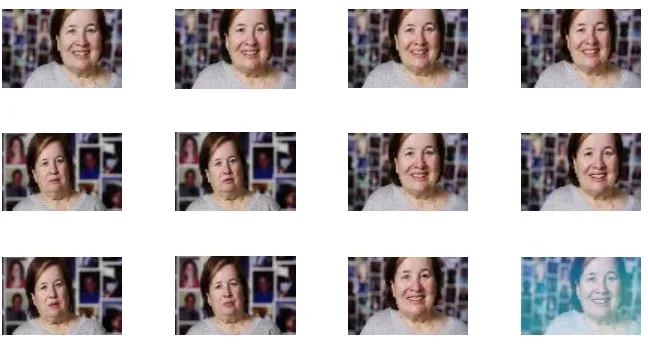
Figure 3 represents the subset of YouTube video frame
[image:4.612.205.407.627.716.2]57
[image:5.612.103.504.125.624.2]©IJRASET: All Rights are Reserved
Figure 4 shows the decision for face matching in video and it display the message as not same if the matching is not correct. If the decision for face matching in video is correct, it will display the message as same. This is shown using other video of PaSC database. This is shown in figure 5 through figure8.
2) Input: video 2
[image:5.612.100.248.141.273.2]
Figure 5 video frame Figure 6 video frame
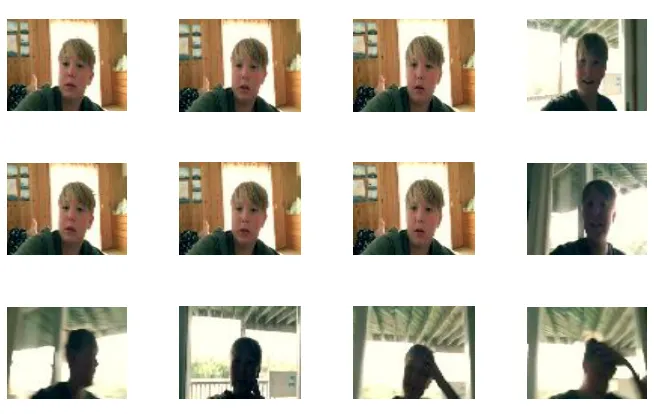
[image:5.612.364.512.152.277.2]Figure 7 represents the subset of PaSC video frame
[image:5.612.149.476.339.546.2] [image:5.612.199.409.598.681.2]58
©IJRASET: All Rights are Reserved
V. CONCLUSION AND FUTURE WORK
The implementation and simulation of proposed algorithm is successfully carried out using YouTube Faces and PaSC databases. The analysis of simulation results of algorithm gives the finest results on both the databases at low false accept rate, even with limited training data. In future the proposed algorithm can be implemented using python and IoT.
REFERENCES
[1] J. R. Barr, K. W. Bowyer, P. J. Flynn, and S. Biswas, “Face recognition from video: A review,” Int. J. Pattern Recognit. Artif. Intell., vol. 26, no. 5, p. 1266002, 2012.
[2] J. Beveridge et al., “The challenge of face recognition from digital point and- shoot cameras,” in Proc. IEEE Conf. Biometrics Theory, Appl. Syst., Oct. 2013, pp. 1–8.
[3] L. Wolf, T. Hassner, and I. Maoz, “Face recognition in unconstrained videos with matched background similarity,” in Proc. IEEE Conf. Comput. Vis. Pattern Recognit., Jun. 2011, pp. 529–534.
[4] L. Wolf and N. Levy, “The SVM-minus similarity score for video face recognition,” in Proc. IEEE Conf. Comput. Vis. Pattern Recognit., Jun. 2013, pp. 3523– 3530.
[5] H. Li, G. Hua, Z. Lin, J. Brandt, and J. Yang, “Probabilistic elastic matching for pose variant face verification,” in Proc. IEEE Conf. Comput. Vis. Pattern Recognit., Jun. 2013, pp. 3499–3506.
[6] Z. Cui, W. Li, D. Xu, S. Shan, and X. Chen, “Fusing robust face region descriptors via multiple metric learning for face recognition in the wild,” in Proc. IEEE Conf. Comput. Vis. Pattern Recognit., Jun. 2013, pp. 3554–3561.
[7] H. Méndez-Vázquez, Y. Martínez-Díaz, and Z. Chai, “Volume structured ordinal features with background similarity measure for video face recognition,” in Proc. Int. Conf. Biometrics (ICB), Jun. 2013, pp. 1–6.
[8] H. S. Bhatt, R. Singh, and M. Vatsa, “On recognizing faces in videos using clustering-based re-ranking and fusion,” IEEE Trans. Inf. Forensics Security, vol. 9, no. 7, pp. 1056–1068, Jul. 2014.
[9] J. Y. Junlin Hu, J. Lu, and Y.-P. Tan, “Large margin multi-metric learning for face and kinship verification in the wild,” in Proc. Asian Conf. Comput. Vis., 2014, pp. 252–267.
[10] J. Hu, J. Lu, and Y. Tan, “Discriminative deep metric learning for face verification in the wild,” in Proc. IEEE Conf. Comput. Vis. Pattern Recognit., Jun. 2014, pp. 1875–1882.
[11] Y. Taigman, M. Yang, M. Ranzato, and L. Wolf, “DeepFace: Closing the gap to human-level performance in face verification,” in Proc. IEEE Conf. Comput. Vis. Pattern Recognit., Jun. 2014, pp. 1701–1708.
[12] W. Wang, R. Wang, Z. Huang, S. Shan, and X. Chen, “Discriminant analysis on riemannian manifold of Gaussian distributions for face recognition with image sets,” in Proc. IEEE Conf. Comput. Vis. Pattern Recognit., 2015, pp. 2048–2057.
[13] N. M. Khan, X. Nan, A. Quddus, E. Rosales, and L. Guan, “On video based face recognition through adaptive sparse dictionary,” in Proc. IEEE Int. Conf. Workshops Autom. Face Gesture Recognit., May 2015, pp. 1–6.
[14] H. Li, G. Hua, X. Shen, Z. Lin, and J. Brandt, “Eigen-PEP for video face recognition,” in Proc. Asian Conf. Comput. Vis., 2014, pp. 17–33.
[15] H. Li and G. Hua, “Hierarchical-PEP model for real-world face recognition,” in Proc. IEEE Conf. Comput. Vis. Pattern Recognit., Jun. 2015, pp. 4055–4064. [16] Y. Sun, X. Wang, and X. Tang, “Deeply learned face representations are sparse, selective, and robust,” in Proc. IEEE Conf. Comput. Vis. Pattern Recognit.,
Jun. 2015, pp. 2892–2900.
[17] F. Schroff, D. Kalenichenko, and J. Philbin, “FaceNet: A unified embedding for face recognition and clustering,” in Proc. IEEE Conf. Comput. Vis. Pattern Recognit., Jun. 2015, pp. 815–823. [18] O. M. Parkhi, A. Vedaldi, and A. Zisserman, “Deep face recognition,” in Proc. BMVC, 2015, vol. 1, no. 3, p. 6. [18] O. M. Parkhi, A. Vedaldi, and A. Zisserman, “Deep face recognition,” in Proc. BMVC, 2015, vol. 1, no. 3, p. 6.
[19] C. Ding and D. Tao. (Jul. 2016). “Trunk-branch ensemble convolutional neural networks for video-based face recognition.” [Online]. Available: https://arxiv.org/abs/1607.05427
[20] J. Yang, P. Ren, D. Chen, F. Wen, H. Li, and G. Hua. (Mar. 2016). “Neural aggregation network for video face recognition.” [Online]. Available: https://arxiv.org/abs/1603.05474
[21] C. Szegedy et al., “Going deeper with convolutions,” in Proc. IEEE Conf. Comput. Vis. Pattern Recognit., 2015, pp. 1–9.
[22] A. T. Tran, T. Hassner, I. Masi, and G. Medioni. (Dec. 2016). “Regressing robust and discriminative 3D morphable models with a very deep neural network.” [Online]. Available: https://arxiv.org/abs/1612.04904
[23] Z. Huang, R. Wang, S. Shan, and X. Chen, “Projection metric learning on Grassmann manifold with application to video based face recognition,” in Proc. IEEE Conf. Comput. Vis. Pattern Recognit., Jun. 2015, pp. 140–149.
[24] J. Beveridge et al., “Report on the FG 2015 video person recognition evaluation,” in Proc. IEEE Int. Conf. Workshops Autom. Face Gesture Recognit., May 2015, pp. 1–8.