ePrints Soton
Copyright © and Moral Rights for this thesis are retained by the author and/or other
copyright owners. A copy can be downloaded for personal non-commercial
research or study, without prior permission or charge. This thesis cannot be
reproduced or quoted extensively from without first obtaining permission in writing
from the copyright holder/s. The content must not be changed in any way or sold
commercially in any format or medium without the formal permission of the
copyright holders.
When referring to this work, full bibliographic details including the author, title,
awarding institution and date of the thesis must be given e.g.
AUTHOR (year of submission) "Full thesis title", University of Southampton, name
of the University School or Department, PhD Thesis, pagination
Prologue
What time is it Eccles?
Scene Two plain clothes detectives surround the Crun omnibus factory, secreted in the ground floor attic of a nearby clock repairers.
Various timepieces ticking, chiming and cuckooing. A chicken clucking. Finally a hooter.
Bluebottle (aka Peter Sellers): What time is it Eccles?
Eccles (aka Spike Milligan): Err, just a minute. I've got it written down on a piece of paper. A nice man wrote the time down for me this morning.
Bluebottle: Ooooh, then why do you carry it around with you Eccles?
Eccles: Well, um, if anybody asks me the time, I can show it to dem.
Bluebottle: Wait a minute Eccles, my good man.
Eccles: What is it fellow?
Bluebottle: It's writted on this bit of paper, what is eight o'clock, is writted.
Eccles: I know that my good fellow. That's right, um, when I asked the fella to write it down, it was eight o'clock.
Bluebottle: Well then. Supposing when somebody asks you the time, it isn't eight o'clock?
Eccles: Well den, I don't show it to 'em. …
Bluebottle: Well how do you know when it's eight o'clock?
Eccles: I've got it written down on a piece of paper.
Bluebottle: Ohh, I wish I could afford a piece of paper with the time written on.
Eccles: Oohhhh.
Bluebottle: 'Ere Eccles?
Eccles: Yah.
Bluebottle: Let me hold that piece of paper to my ear would you? 'Ere. This piece of paper ain't goin'
Eccles: What? I've been sold a forgery.
Bluebottle: No wonder it stopped at eight o'clock.
There is a sense in which scholarly researchers, librarians and archivists are effectively emulating Eccles by seeking to migrate and maintain the record of research on the Web while, for a variety of reasons, clinging to its print characteristics.
Take, for example, reactions to JSTOR, the service that digitises copies of old print journals: “It seems there's not much bad you can say about an organization whose mission is to "preserve and maintain journal literature, and to make that material more accessible.” (Phillips 2001)
Yet when we try to add dynamic, time-varying features to the scholarly literature, as the electronic information environment compels us to do, reactions become more polarised, as this thesis and the model of the title that it uses to explore these issues, shows.
Academic research preserves the results of its endeavours in the form of an authorised record, historically in printed journals and other publications. In this system information is fixed in time. Thus readers can, with a greater or lesser ease determined by cost or location, access the individual published records and view them as a true record of the author’s intent.
The benefit of preservation is that a reader today looking at a printed issue of the Proceedings of the Royal Society of London, Series B, from 1934, say (the earliest year currently available in the JSTOR archive), will see exactly the same articles as his or her predecessors. But the reader’s context, his or her view of the world or line of enquiry, will be entirely different. It is possible to enhance the purpose of preservation in a digital environment by enabling the user to select time-varying services that can be superimposed without detracting from the original document.
Take a familiar example – in scholarly papers connections with earlier works are established by authored references. Garfield (1955) showed that analysis of these references across a broad section of the literature can reveal influences on later works, e.g. what cites this paper? While references are a standard feature of scientific papers, citation analysis requires additional services. ISI, the
information company set up to exploit Garfield’s method, and other recent projects show that electronically it is possible to make citation data accessible either within, or closely linked with, an original paper, although it is clearly not an authored part of the paper.
Yet in the scholarly information chain we remain constrained by the continuing emphasis on writing, content and preservation, to the exclusion of other data services. The problem with digital
words and illustrations, simply the digital bits (Negroponte 1995). For the archival journal literature, digital preservation concentrates on saving page images, naturally, since that is the only available version of the data. But then the emphasis switches subtly to page fidelity. For Web-originated materials, preservation may be concerned with saving the presentation, that is, reproducing the user's experience. Add the attention given to technology migration and emulation as a means to preserve both digitised and digital experiences, and barriers begin to be erected – cost, technological and cultural barriers – to other uses of these digital resources.
Alternatively, content can be separated from presentation, in practice as well as principle, recognising that beyond the original authored content it is not necessary to preserve everything from a given presentation in time. Otherwise it will never be acceptable to add new data to presentations.
1 Introduction
1.1 Motivations
Scientists and researchers, Nobel Laureates among them, have produced the clearest declaration of their requirement for access to published research papers – a comprehensive collection that can be efficiently indexed, searched, and linked: 'a dynamic digital archive' (Roberts et al. 2001). This thesis is not about the form of the archive. It is about the 'dynamic', the innovations and services that might begin to emerge if the content of the archive, or collective archives, becomes freely, or openly, accessible. “Unimpeded access to these archives and open distribution of their contents”, Roberts et al. continue, “will enable researchers to take on the challenge of integrating and interconnecting the fantastically rich, but extremely fragmented and chaotic, scientific literature.”
That declaration encapsulates what this thesis, and the model it promotes, contend are the vital features of any system of electronic scholarly communication, which must be:
• Integrated and interconnected, making something accessible from something else
• Dynamic, computationally adding time-critical data services
Allied to the idea that electronic access to scholarly papers might be open to all regardless of location, background or privilege, these characteristics point to the main inspirations for the work described in this thesis. In an integrated information environment we can expect to reproduce Bush’s (1945) ‘intricate web of trails’ in a way that more closely matches the speed and spontaneity of enquiry, especially in scholarly research. We may at last be able to approach this vision with today’s powerful computer networks.
It is not simply the computing power of a network that matters but how it connects people.
Despite calling for a dramatically different information environment, the scientists’ statement implicitly supports the continuing role of journals as validators and filters of the scholarly literature that they expect to form the core content of the archive. Fulfilling this expectation will profoundly change journals, for which the scientists are the principal contributors and users. In particular, two issues endemic to the established scholarly journal publishing system will have to be tackled:
• Decoupling content from publishing process and function
• Reversing the fragmentation of the scientific literature
This thesis presents a new model electronic ‘journal’ that, conceived and developed before this debate, can claim to contribute to the scientists' objective of a dynamic, integrated and interconnected literature. Perspectives in Electronic Publishing (PeP) indexes and links selected works, combining the functions of a review journal with original materials and access to full-text papers on a focused topic, in this case on electronic publishing.
A scholarly journal can take many forms, but characteristically they present original, peer reviewed papers submitted by their authors. This may not be a strict definition, but for many contributors these are the defining features. In addition journals seek to address a specified community, to which the selected materials are actively disseminated. Then there is the issue of presentation, most obviously in the editing, layout and appearance of the works, which ideally are consistent for the whole package, not just individual works.
In the PeP model papers are not bound to the journal physically, by location or by transfer of ownership, but by a collection of links stored in a link database. PeP targets an audience, and selects scholarly papers – supported by review, comment and feedback – from the corpus of the freely accessible online literature in the chosen field. Thus it fulfils certain elements of the established journal model (selective dissemination), tries to reinvent others (review), and omits services that might be considered inessential or which are performed elsewhere. Whether this model is accepted as a scholarly ‘journal’ is a point of contention that will be investigated.
but by linking content from over 100 named sources, as well as many personal sites, PeP is less fragmented than conventional journals.
This approach is consistent with the variously argued view that on the Internet it will be intellectual services that have value, not intellectual assets, in other words content (Barlow 1994, Bauwens 1996, Dyson 1994). According to Dyson, “while content won't be entirely free, the economic dynamics will tend to operate as if it were.” Aggregated content, in contrast will remain of high value. Some argue that in the age of information glut the new currency will be 'attention'. This is likely to be especially true of scholarly works (Mermin 1992), but others put the case more generally (Goldhaber 1997).
Using PeP, the thesis examines whether the journal ‘container’ can be expanded without
compromising its defining features, and if so whether it might be feasible to approach Bush’s vision, for journal users, of instant navigation and unanticipated discovery in a virtually – in principle – unlimited information universe.
The established structure of scholarly journal publishing, encompassing primary journals and secondary services such as abstracting, indexing and alerting, is now largely reproduced digitally. If this structure is not yet fully integrated and interconnected, significant progress has been made, but it remains too dependent on the restrictions on access . The challenge for Web publishing over this digitised structure is to give all users the freedom to explore all works in context, to discover new relationships, perspectives and ideas through immediate and direct interaction with all relevant texts.
1.2 Publishing background
On electronic publishing two views appear to prevail today: one is that electronic publishing is publishing as we know it with the aid of new technology (Graham 2001); the other is to treat the media integration capability of the new technology, or ‘multimedia’, merely as mixed media. Both views misunderstand the impact of new technology on the publishing product, that is, the product experienced by end-users rather than the publishers’ end-product, profit. The reality is that from the user’s perspective, electronic publishing, principally in the form of networked, online, Internet-, World Wide Web-based publishing, will be publishing reinvented, and that the online medium is a new medium in its own right. These factors alone are sufficient for a major transformation, generating new opportunities and new products and changing publishing practices.
demonstrate the distinctiveness of multimedia compared with other media forms. But as one mature technology reaches the mass market, another appears with yet more far-reaching implications. Publishing via computer networks offers a new dimension: interactive, in some cases approaching real-time, communication that transforms product generation and dissemination. Online publishing removes the constraints of physically packaged products such as books, journals and CD-ROMs.
It is in this context that this thesis focuses on academic publishing, mainly journals publishing. One of the less glamorous publishing sectors, academic publishing has nevertheless become, when viewed in the totality of ‘professional’ publishing, one of the most commercially successful publishing businesses. In the summer of 1995 the largest science, technical and medical (STM) publisher, Reed-Elsevier, announced the planned divestment of many of its constituent publishing companies, including mass-market book publishers and newspaper groups, to reinvest in ‘more profitable’ professional publishing, probably in electronic publishing, it was reported (The Times, 19 July 1995). The results of that investment have included the purchase of a major US rival publisher and the development of online businesses aimed at ‘professionals who cannot do without the information services the titles provide’ (The Times, 10 August 2001).
Academic journal publishing is peculiar in other respects. It is perhaps the only commercial
publishing sector that does not routinely pay its principal contributors, academic authors and editors. It has, at its worst, generated large profits from specialised journals with tiny circulations and therefore large overheads by ruthlessly price-gauging already expensive products. At the other extreme, academic publishers have nurtured discipline-wide, sometimes centuries-old journals that confer an unmatched authority on their contributors (Schauder 1994). These contributors are among the first network-literate users, yet they remain curiously conservative when asked to break long-established publishing rituals that are embedded in the academic reward system.
Wily publishers have exploited that conservatism. Recognising the growing popularity of the Web, in 1995 journal publishers began producing digital versions of established journals, inevitably the vast majority copied directly from print originals using portable document formats such as Adobe Acrobat. This may appear, given the support of all major publishers, to be the definitive short-to-medium term solution. Publishers such as Reed Elsevier have even been cited as examples of the first online business models to become profitable (The Times, 10 August 2001), something they will be keen to maintain.
a string of digital 'bits', or the McLuhan (1964) view that “we shape our tools and afterwards our tools shape us”, even this partial shift to digital journals represents a major change in the nature of information, its communication and value in society.
Can academic journals survive in their present form? On the basis of a broader analysis of magazine publishing, Randle (2001) is cautionary: “even with all the excitement generated by the explosive growth of the Internet and its exciting capabilities, history shows us that old media continue to survive and prosper – somehow.” Academic journals will challenge the rule expressed by the author and media commentator Umberto Eco, that “in the history of culture it has never happened that something has simply killed something else. Something has only profoundly changed something else.” (The Observer 18 June 1995)
1.3 Plan of the thesis
The origin of this thesis was a detailed survey of the development from 1990-95 of the first Internet-based electronic scholarly journals in the areas of science, technology and medicine (Hitchcock et al. 1996). The survey analysed the features, formats, economics and the prospects for e-journals. The survey noted, however, that the next phase of the development of e-journals would not be to remodel the journal based on these early examples, but to digitize copies of printed journals. It is against this background that a more radical journal than was apparent or anticipated at that time was conceived as the basis for this investigation.
Today’s Web journals are clones of paper journals not just in terms of titles and formats but also in terms of the publishing process. Chapter 2, the literature survey, learns the lessons of early attempts to build electronic journals and identifies the emerging technologies that are redefining the journal publishing framework and have inspired debates re-articulating the role of journals in scholarly communication. Focusing on the period from the 1960s, alternate sections interleave parallel developments in electronic journals and hypertext systems, the latter highlighting the emergence of the Internet and the impact of the Web. Aiming to identify points of convergence between publishing and the supporting technology, the concepts of open systems, and open information, emerge as critical factors.
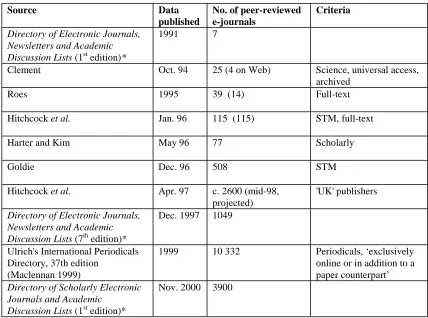
estimates, there are now over 10 000 e-journals, so analysis of e-journals must be more focused to spot significant new developments. This chapter examines three ‘snapshots’, collected e-journal descriptions, spanning the decade from 1991 – a particularly intense transitional period – charting progress and identifying the emerging, critical features that may shape the next-generation e-journals. One particular genre – free, open access e-journals – has not been wholly stifled by mass digitization and some especially successful examples are highlighted, notably physics journals published as ‘overlays’ to a collection of over 150k freely-available papers, the arXiv physics eprint archives.
‘Overlay’ journals perhaps highlight the most significant change in journal function: from package to service. Users will continue to browse core journals, but practices are changing. Online, research queries tend to be more precise. It is no longer sufficient to deliver a collection of papers as a journal from a single publishing site, or even to copy the package to the sites of commercial partners, such as journal aggregators. The journal as a package already has less relevance to the user. The emerging network architecture includes new services that transform the data between source and user, interposing machine–machine services in the client–sever architecture of the Web.
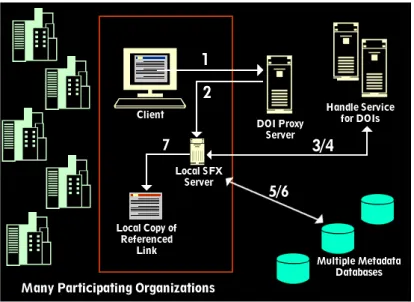
Chapter 4 considers the impact of these services on scholarly communication. Change is already happening in the academic library, embracing journal site licenses, services provided by distributed digital libraries, and the means of interconnecting rapidly expanding collections of digital resources, including new standards for linking such as OpenURL. The Open Archives initiative is just one influential organisation promoting interoperability, the ability of cooperating services to share data across networks, with implications for more open and freely-accessible scholarly resources.
Development of machine–machine services in scholarly digital libraries is likely to be founded on a new form of distributed computing environment, the emerging standards-based architecture of ‘Web services’, and this is another consideration. Understanding this emerging infrastructure of scholarly communication and its implications will be pivotal to the acceptance of new journal models such as proposed in this thesis.
conflicting goals and interests of the contributing partners, including authors, users, publishers and other service providers.
If the network-based services described in chapter 4 are to be effective, a user-based analysis suggests two critical steps are the decoupling of journal content from publishing process, and the
defragmention of collections of content, the journals. Decoupling questions the traditional approach to rights, ownership and access. By deconstructing the process of journal production, chapter 5 shows how this change might be achieved. Defragmentation is reversing the process of specialisation forced on paper journals by page constraints and other factors, and the consequent stagnation in the ability of non-specialist users to access these works. Two primary tools supporting defragmentation are search and link. E-journals may have marked the transition to a post-Gutenberg era; defragmentation will accelerate as another seminal influence is assimilated, marking a post-Google era.
The original hypothesis for the new model e-journal of this thesis is reproduced in Chapter 6. This may be unusual, but it places the conception of the model chronologically some years ahead of actual implementation, which is described in Chapter 7. This allows comparison of the two stages, revealing whether changes were due to practical constraints or to changes in the prevailing infrastructure, perhaps with implications for the longer-term stability of the proposed model. That model re-implements the three key elements required of any scholarly journal publishing system: distribution and accessibility; academic recognition and validation; and placing new work within the context of the other works. Comparison with the original hypothesis informs the design of the evaluation of the model, and therefore users’ reactions to it, as Chapter 9 reveals.
Perspectives in Electronic Publishing (PeP), as well as informing the title of this thesis, was also the title of the implementation of the proposed model. Chapter 7 offers a brief guided tour. A database-driven Web service, the primary unit of the model is the template for the database records.
Examination of the template reveals the main design features. This chapter also outlines the ancestry of PeP within the IAM group (formerly the Multimedia group) at the University of Southampton, and compares and contrasts it with similar models elsewhere.
The principal tool for applying editorial management and control in the new model is a link service, and conceptually a key premise of the project was to evaluate reaction to a link-based, more
best understood alongside similar examples from annotations services and hypertext systems. Although not fully explored in the practical work of this thesis, there are intriguing possibilities for this model of linking to participate in more global linking services, based on the emerging OpenURL standard, and these options are briefly discussed.
The impact of any new model must ultimately be judged by the reaction of target users. Chapter 9, the heart of the thesis, analyses the results of a detailed evaluation among invited target users, authors of papers included in the journal, and other specialists in the field. The model is shown to have provoked divergent, occasionally controversial views that provide insights for the future of scholarly publishing generally. Detailed results are presented in Appendices 1–7; follow-up correspondence with evaluators, in Appendix 8, adds a more personal, and colourful, dimension to the analysis.
1.4 A note on terminology
One of the difficulties of emerging fields is adopting words and phrases that have a consistent meaning for all readers over a significant period of time: “terms such as electronic library, electronic journal, and electronic publishing all stem from a failure to stress that the core of the revolution we find ourselves in is not that existing systems and activities now have an electronic form, but that library, publishing and journal are archaic and obsolescent, if not yet obsolete, ideas.” (Wilson 1997)
In this field the journal prefix terms electronic- , digital-, networked- , online-, Internet- and Web-, which describe the range of forms for disseminating journals, are often used interchangeably. In fact, they can be used quite specifically. Broadly they describe decreasing subsets of these forms. Thus, 'e-journal' has been used most broadly to describe disc and network distribution, while the term 'Web-journal' is the most specific; almost invariably, non-paper journals today are Web journals.
Terms such as ‘Web’ journal indicate the origins of a particular journal, whether in print or the electronic medium. With the rapid conversion, or ‘digitization’, of most past and present print
Journals without a print version might be referred to as electronic-only; most of the pioneering electronic journals are electronic-only. Those electronic-only journals that existed before the Web might refer to themselves as Internet-journals, often preserving those pre-Web text-only formats to emphasise the point.
So-called network or online journals are more difficult to define. Online information services, in the form of databases for example, have been available since the time of teletext in the early 1960s, giving the term ‘online’ a longer life-span than any other form defined here. In journal terms ‘online’ was used to indicate that a product could be accessed via a network rather than on a disc, although with the disappearance of disc-based journals this distinction is no longer necessary and the term is often used as a direct substitute for ‘electronic’.
Which leaves ‘network’ journal, an occasional and misunderstood term, for which a definition will be attempted here. Any journal accessed via the Web could be called a network journal, but that is simplistic and limiting. With the network increasingly being viewed as a computational resource rather than a transmission mechanism, there is a chance to establish a more useful form. Let’s
consider network journals to have a computational interface, not just a user interface. Underlying this are computer language syntaxes like XML, a more advanced markup language for the Web than HTML, and metadata schemes such as the Resource Description Framework (RDF) and Dublin Core (DC). In this way something more powerful begins to emerge. At one level many journals offer bibliographic descriptions in DC, but let’s be more ambitious and retain the term to describe those journals that make the texts ‘open’, or accessible, for computational analysis too.
Where appropriate this thesis will aim to use the most specific term. Otherwise it will revert to using ‘electronic’. Perspectives in Electronic Publishing, the model at the centre of the thesis, can
reasonably use the terms electronic-, online-, Web-, and possibly networked- (with some more effort). Whether it is a ‘journal’ is open to examination. Perhaps it might be better described as a
2 Literature survey: the convergence of
journal publishing, technology and users
2.1 Electronic journals: why now?
Publishing is about people. The Oxford English Dictionary variously defines the verb to ‘publish’ as: to make generally known; to issue copies for sale to the public. In a business sense the two are inextricably linked, but these definitions show that publishing is not strictly limited to commercial activity; simply, in many cases, it is the most practical way. Since there is invariably a cost associated with the process of making something generally known, in whichever medium, it is accepted that a price will attach to the item to recover that cost. This works perfectly well, especially in the lucrative international markets for published products in which publishers put profit before their historical, perhaps mythical, obligation to the ‘social good’.
There is an exception, however, to the efficiency of publishing markets. The published output of the worldwide scholarly community has risen dramatically. Odlyzko (1995) demonstrates the effect in the field of mathematics where over a period of a century and a quarter the number of papers published annually doubled every 20 years, but post-World War 2 that doubling has occurred every 10 years. More scholarly papers mean more journals, as new fields, sub-fields and increasingly specialised niches have developed. More journals have typically reduced the size of the market for other journals, however, with the result that prices have spiralled upwards. Some journal publishers have prospered as a result (McCabe 1999).
The consensus among those responsible for journal purchasing, librarians, was that the market for scholarly journals was beginning to break down (Okerson 1992), a process chronicled since 1989 by a newsletter (Tuttle 1991). An ongoing 30-year survey of the usage of scholarly journals offers a less dramatic view. This survey shows that usage of journal articles continues to increase and that the effective cost per reading has increased only minimally, due less to publisher and library costs, which have decreased slightly, than to an increase in scientists' time used to obtain and read articles
(Tenopir and King 2000).
publishing of scholarly papers is to improve access by resolving these problems through more open access and improved information management tools.
It is recognised that the cost of printing words on paper is high. Scholars had no alternative but to accept the ‘Faustian bargain’, as Harnad’s ‘subversive proposal’ (Okerson and O’Donnell 1995) called it, with this ‘papyrocentric’ publishing industry in order for their work to be distributed and read. The published work of scholars had to be paid for. Until now, that is. Electronic-only
publishing, despite false early promise (Turoff and Hiltz 1982), makes free access to scholarly papers
for all a viable alternative. Some contemporary electronic-only journals are proving to be more robust than their predecessors, although their number remains small relative to paper journals, hundreds rather than tens of thousands.
Rapid growth in the numbers of electronic journals is not due to original e-journals, however. Most paid-for scholarly journals that originated on paper now have an electronic version too. One major learned society, the Association for Computing Machinery, even published a plan to phase out print versions of its traditional esoteric journals and transactions as the demand for them becomes too small, “an outcome that may happen for some journals as early as 1998.” (Denning and Rous 1995) It has not happened yet, but the trend towards greater electronic access and usage is clearly established.
Put simply, what has motivated electronic journal publishing on this scale since 1995 is the World Wide Web with its freely-available browser interfaces that enable information to be viewed easily using personal computers connected via a common communication infrastructure, the Internet. How did we reach this point, and what are the prospects for reshaping electronic journals publishing?
2.2 The hypertext influence
If publishing is people-oriented, a simplified analysis of online publishing that concentrates on technology is clearly going to be inadequate. In fact, what works in the electronic medium was identified at the end of the last World War, long before any of this technology was possible. Bush’s (1945) seminal vision was based on our ability to create, store, organise, retrieve and understand information. His crucial insight was to recognise that although elaborate ways of indexing
information structure now referred to as hypertext, involving associative indexing, linking items of information and annotation. The memex’s ‘large translucent screens’ perhaps foreshadowed today’s windowing interfaces, and the reference to a ‘web of trails’ isn’t the only parallel with today’s Web as Bush also saw that a critical feature of his memex was its ability to be consulted with ‘exceeding speed and flexibility’.
It was not until the 1965 that the term hypertext first appeared, and it was credited to Ted Nelson, who defined it as ‘non-sequential writing’. In this respect hypertext is not confined to computers, but Nelson imagined that all information would one day be ‘equally accessible’ from ‘one great
repository’ and readers could follow different pathways, so it was inevitable that computers would be intrinsically involved.
This was the starting point in 1960 for an ambitious project to create not any hypertext system, but a
universal hypertext system, called Xanadu (Nelson 1987). This was to be that repository, and it appears that there was to be no scope for evolution in a system that would contain ‘all of its ultimate features’ as part of the design. Not so much a publishing system for the world, but the world
publishing system.
Much of the initial acclaim for Nelson deflected attention from another pioneer, Douglas Engelbart, who developed a machine for ‘the augmentation of human intellect’ called NLS (the oN Line System) but which was later marketed as Augment. This system supported not just shared information, but collaborative authorship as well (Engelbart 1975), and has particular significance for those seeking to establish a greater role for authors in the dissemination of their work directly to users: “We have a strong feeling that most people working in such an environment will want to reach through to work with other people at least as often as with computer services.”
2.3 A short history of electronic journals
While Nelson’s massive Xanadu publishing project alternately inspired and floundered through the 1970s, elsewhere scientists were becoming interested in the more mundane goal of reproducing single journals electronically. It is over 300 years since the first scientific journals appeared simultaneously in 1665 in London (Philosophical Transactions of the Royal Society of London) and Paris (Le Journal des Scavans), as reviewed by Guedon (2001), these events themselves happening approximately 200 years after the invention of print (Schauder 1994). It is just 20 years since the
journal led to the first e-journal project, the Electronic Information Exchange System (EIES)
developed between 1976 and 1980 at the New Jersey Institute of Technology (Sheriden et al. 1981).
What began as a model for a single e-journal evolved rapidly. A remarkable paper by Turoff and Hiltz (1982) describes what emerged: a newsletter; an unrefereed ‘paper fair’ or preprint journal; a refereed journal similar to the classic print-based model; and a subsystem for attaching enquiries, comments and notes to published materials. What is remarkable about the paper is that, despite a revolution in the supporting technology since EIES was implemented, in publishing terms it describes exactly the same problems and challenges that e-journals face today. Three elements of the EIES journal were successful and one, the refereed journal, failed. Only two articles were ever published.
A retrospective by Naylor and Geller (1995) identified conflicting views for this failure. Turoff, effectively the technical director, blamed the lack of motivation of the academic community at which the journal, Mental Workload, was aimed. Neville Moray, the journal editor, in contrast attributed it to the poor quality of the EIES system. One of the two articles to appear was written by John Senders, who was also part of the project team. According to Moray the article “took nearly 12 hours to enter into the electronic journal, and about 4 hours to edit.” Users retrieved articles through ‘dumb terminals’ attached to minicomputers that were connected over a Telenet network. Interface design was primitive and variously described as ‘very rich’ or ‘too complicated’.
Following a failed attempt to collaborate on EIES, due principally to restrictive national
telecommunications policies in force at that time, a similar project was proposed in the UK. The Blend project at Loughborough University was funded from 1980 to 1984 (Shackel 1991). Learning from the EIES experience, the project constructed refereed ‘journals’ but these journals were not
published, as was Mental Workload, merely archived, in electronic form only. Given the level of computer interconnectivity at that time, access would clearly have been limited. Papers could be published elsewhere, with acknowledgement.
2.4 From hypertext to open systems
By the mid-1980s the early mainframe-based hypertext systems had been superseded by hypermedia systems using workstations, what Halasz called second-generation systems. The IBM Personal Computer had appeared at the beginning of the decade, and this provided the platform for the first commercial hypertext products. Ironically, the application that popularised hypertext ran not on PCs but on the then relatively new Apple Macintosh. HyperCard was bundled free with the Apple hardware and, with the aid of the Mac’s advanced graphical user interface (GUI), users who had never heard of hypertext began building so-called HyperCard stacks (Hall 1994). “Suddenly, everyone is talking about hypertext”, said Nelson (1987).
The scale of this activity can be gauged from Conklin’s (1987) review. The most striking features of the work at the time were the differences between hypertext systems. Conklin did not provide a definition of hypertext systems but listed some of their characteristic features, differentiating a hypertext system from other computer applications. According to Conklin a hypertext system should have a single underlying database, a single coherent interface to the database, and a sophisticated notion of machine-supported links: not one or other of these features, but all three are essential.
Despite heightened activity in the field, concern was expressed that a quarter of a century after Nelson had introduced the idea, hypertext was still not being used as 'a fundamental tool for daily knowledge work' (Meyrowitz 1989). The reason, or 'missing link' as Meyrowitz argued, was that hypertext systems as applications were separate from others, forcing users to 'disown' their existing applications should they want to use hypertext. The solution was to enable hypertext to integrate with applications, an 'open systems' approach.
In computing the concept of ‘open systems’ was developed to enable proprietary applications to interoperate, that is, share data. The need for this was evident in all popular applications and for all platforms – Unix, PC and Macintosh. The key technical idea underlying the Internet was open-architecture networking, allowing different networks to interwork (Leiner et al.1997). Since the essence of hypermedia would be to integrate a wide range of applications supporting the production of text and audio-visual materials on a large scale, this was clearly an important concept.
as they choose.” So Nelson viewed open hypermedia as the ability to add to or reuse parts of
materials. Although Xanadu conformed to this view, Nelson persisted in referring to it as a universal
open hypermedia environment, failing to recognise that in publishing terms the concepts of ‘open’ and ‘universal’ begin to conflict. As Cliff Morgan of the publisher Wiley has said in a different context: “the publishing industry is rather notorious for its culture of resistance to standardisation – the anti-Procrustean tendency is strongly represented!”
The first working 'open' hypermedia system, Intermedia, was developed at Brown University in the USA. Researchers at Brown had been experimenting with electronic document systems, all with an underlying hypertext structure, since the late 1960s. Intermedia, in effect Brown’s fourth-generation system, was the first to include multimedia capabilities (Yankelovich et al. 1985). The system design assumed that users would want to create links as part of their regular work with word processors, spreadsheets, and graphics editors, for example. Intermedia was thus “a framework for a collection of tools that allow authors to make links between standard documents created with heterogeneous applications.” Instead of integrating widely-used applications, however, Intermedia used customised front-end tools and in this sense could almost be viewed as a monolithic hypertext package that Meyrowitz, also at Brown, had deprecated. But the system introduced the paradigm of the
'navigational link', which could make connections between applications because the link data were not contained within any single application, and this has since become recognised as the measure of open hypertext.
Taking Conklin’s description of a hypertext system as a database, an interface and links, the question an open hypertext system raises is how different applications can interact equally with the hypertext system to share and display links, which are stored in a link database or linkbase. This structure requires link data to be communicated to the applications. A general approach called a ‘link service’ was introduced by Pearl (1989). The link service is effectively a database lookup service where the data items are interpreted as links between other data items. A link service can potentially integrate a far wider range of third-party applications than realised by Intermedia, although this requires that the applications are link-aware, that is, able to communicate with the link service. There are drawbacks – maintaining valid links when documents change, for example, is more difficult in a system mediated by a link service – but Pearl envisaged, as did Meyrowitz, link services giving links the same utility as computer cut-and-paste operations.
Sauter 1992), and there are other examples of open hypermedia systems in research (Wiil and Leggett 1997). Two of these systems, Microcosm and Hyper-G, were commercialised.
Describing Microcosm, Hall and Davis noted that advances in operating systems and GUIs were making integration between applications easier, but that this usually involves embedding virtual objects within applications: “To take advantage of the availability of multimedia information within our computer systems, we need the flexibility provided through the use of hypermedia link services.” Within Microcosm link data are processed by filters and displayed, for a given application, in a viewer. A Microcosm viewer was developed for AutoCad, and some limited interaction was possible with Word. For applications without viewers, which were thus not link-aware, an intermediate solution providing a limited set of link functions was constructed using the Windows Clipboard (Davis et al. 1994).
The power of the link service approach becomes more evident in the range of processing functions Microcosm makes available to the user. Users can create and follow links using menu-based options. Links define a relationship between specific points in a set of documents, which could be text documents or audio-visual materials. In Microcosm a spectrum of link types can be created: the
specific link is defined at a specified point in a document (when the link anchor is highlighted or coloured this is commonly known as a ‘button’ link); local links are defined on an object, say a common word or phrase, within a particular document, and apply to every instance of the object in that document; while the generic link extends the concept by applying to every instance of the object in any document within a defined collection of documents, known in Microcosm as an ‘application’.
Within large and complex information environments the importance of this incremental range of link actions is apparent in the degree of control and level of automation that can variously be applied to create link structures. “The local and generic links, which have dynamic source anchors, are the features that enable the Microcosm link service to be applied to other applications.” (Hall and Davis 1994) In the context of link structures, linkbases provide an added dimension. Linkbases act as an important filter process, and in the Microcosm architecture there can be any number of linkbases in the filter chain. Users can install and delete linkbases even when Microcosm is running, so different views of the data can be presented to different users. “On an even wider scale, filters can be built to generate links to and from wide area information servers such as WAIS, WWW and Gopher.” (Hall and Davis 1994)
1996). The DLS was initially aimed at ‘publishers, authors and readers’. In this area its impact can be measured in terms of influence rather than implementations, which can be understood by looking at the character of the electronic publications motivated by the emergence of the Internet as a public utility.
2.5 Early Internet ‘journals’
Where the early electronic journal experiments, EIES and Blend, were unable to distribute articles widely due to the limitations of telecommunications networks, electronic journals that published and transmitted full-text, peer-reviewed papers worldwide via a network had begun to appear by 1990. The catalyst for this new development was a global network, the Internet, the character of which today is defined by its broadly-based community of users and can be traced back over 30 years.
The transmission of data between computers requires a physical connection and a means of communicating, a protocol. The Internet grew out of a US military network, ARPAnet, which to conform to military requirements had to be fault-tolerant, that is, resistant to attack. This produced a peer-to-peer network rather than one with any centralised control, and transmitted information in packets using a packet-switched protocol first developed in the 1960s. According to Leiner et al. (1997) ARPAnet grew into the Internet based on the idea of multiple independent networks. In the 1970s other networks included satellite and radio networks, and these were enabled to interwork through the adoption of open architecture networking which describes not the network architecture but the way in which the different networks can communicate. This communication came to be based on two protocols, TCP/IP, to control the addressing and forwarding, or mailing, functions (IP) and to manage the information in transit (TCP).
For most Internet users it is not the technicalities of this infrastructure that are important but the universality of information services that can be accessed (Krol 1994). Prior to the Web, the most popular of these services were electronic mail, for one-to-one and list messaging, and news lists for posting to larger groups. For larger data transfer, the Internet could be used to log into remote computers and transfer data files using the file transfer protocol (FTP).
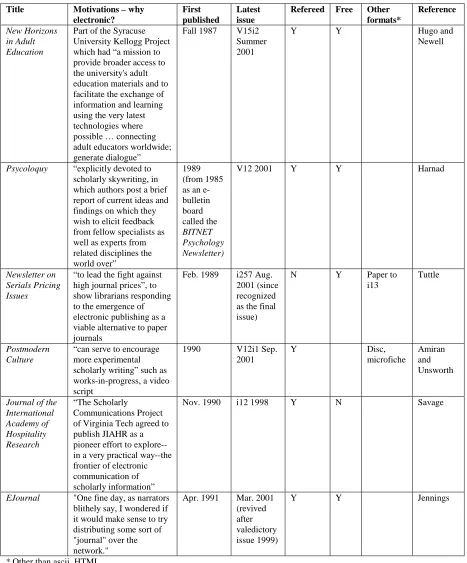
Technicalities did intrude, however, in the earliest implementations of these services. Users needed to acquire what might generally be regarded as specialist computer skills, for example, some knowledge of Unix, or an understanding of computer file structures or database structures – albeit on a limited scale. So when “one of the first electronic journals distributed via computer networks” appeared in 1987, New Horizons in Adult Education, readers are unlikely to have found a simple or even intuitive interface. Nor would the journal have had typographical design or graphical images, just plain text.
This aspect of presentation was not the primary concern of the first online journal to make an impact,
Psycoloquy, in 1990. Its founder, Stevan Harnad, also edited a paper-based journal, Behavioral and Brain Sciences, which demonstrated the idea of open peer commentary. It is standard practice for scholarly journals to peer-review submitted articles before agreeing to publish. These reviews are tendered anonymously to authors and are never published. Open peer commentary, in contrast, actively encourages comments to be posted publicly, by invited and non-invited contributors, while also using anonymous refereeing on which to base editorial judgement preceding formal publication.
As a cognitive science specialist, Harnad recognised the potential of virtually instantaneous
electronic dissemination over the Internet to enhance open peer commentary. In the new medium he renamed this ‘scholarly skywriting’ (Harnad 1990), so-called because it is “as if each contribution were being written in the sky, for all peers to see and append to.” (Harnad 1991)
Psycoloquy demonstrates skywriting. Underlying the simple text presentation is a sophisticated vision of a new type of publication, unconstrained by commercial interests, unfettered by the temporal and spatial constraints of print, and free to explore the cognitive potential of the new medium.
2.6 Eprints: complement or competitor to the journal monopoly?
dissemination of separate articles in paper form, which a number of projects had shown to be ineffective (Piternick 1989). Gardner saw the primary advantage of the electronic archive, however, as the improved facility for discovering, retrieving and using information.
Harnad (1990) argued for archives that go “far beyond providing searchable electronic archives for electronic journals”, likening to an ‘intellectual perestroika’ the prospect of scholarly skywriting combined with freely accessible electronic archives of papers in the PREPUBLICATION (author’s capitals) phase of scientific enquiry, “the phase in which most of the cognitive work is done”. He claimed this would be “incomparably more thorough and systematic, potentially global... so unprecedentedly interactive” that it would “restructure the pursuit of knowledge.” Subsequently Harnad (1996) predicted that scholarly skywriting would “increase individual scholars’ productivity by an order of magnitude”.
Such an archive soon materialised, based on an automated system developed in 1991 by physicist Paul Ginsparg at the Los Alamos National Laboratory, USA (Ginsparg 1994). Specialising initially in high-energy physics, what became known as arXiv has grown phenomenally, encompassing all other fields in the discipline. Over 150,000 papers have been posted to the archives, and with over 30,000 new submissions in 2000 the physics archives exhibit an approximately linear growth rate.
ArXiv is frequently and inaccurately referred to as a ‘preprint’ archive, but the physics archives perform a service substantially in excess of a repository of papers awaiting formal publication. Simply in terms of usage, the system serves over 70,000 users in over 100 countries and attracts up to 130,000 visits daily (Luce 2001). Recent studies have shown this level of usage to be significant. Citations to electronic eprints such as those accessible from the physics archives “have nearly doubled every year since 1992.” (Youngen 1998) A study of arXiv showed that in the case of highly cited papers there is a significant positive correlation between how often a paper is cited and how often it is downloaded (Harnad et al. 2001), showing how access can enhance impact for the best papers. The effect is not confined to physics, but extends to other disciplines that are less well organized on the Web: “More highly cited articles, and more recent articles, are significantly more likely to be online, in computer science.” (Lawrence 2001)
published in journals. In many cases copies of the peer-reviewed versions that appear in journals are posted to arXiv, replacing the original preprints. In this sense it can be seen why arXiv is more accurately referred to as an ‘eprint’ archive. The result of this deceptively sophisticated
re-engineering of the dissemination process for papers in physics, according to Brown (2001), is that “eprints are used to a greater extent by physicists than previously measured and that eprints have become an integral and valid component of the literature of physics.”
The success of arXiv was not guaranteed. In the 1960s some biomedical science articles, which were treated as personal communications, were distributed through Information Exchange Groups (IEGs), simply organised mailing lists (Green 1967). In the early 1960s one of the seven IEGs was processing 'at least 90 per cent' of important papers in its field, according to Green. At that point “the editors of five biomedical journals met and agreed to refuse publication of any manuscript previously circulated via IEG. This unaccountable decision turned out to be lethal to IEG.” Green went on to remark that the type of dialogue fostered by IEGs “has virtually disappeared from the scientific journals”.
Till (2001) compares the experiences of the IEGs with arXiv to identify the important factors that led to the latter’s success: “The most crucial factor may have been the extent to which the author, reader, and reviewer communities have coincided, and thus have had an implicit agreement (or ‘scholarly consensus’) about standards of quality for research considered to be acceptable for publication.”
Just as importantly, physics had a pre-existing preprint culture; authors printed and circulated papers to colleagues prior to journal submission. It helped that by the end of the 1980s virtually all physicists were interconnected through the Internet. Thus Ginsparg did not have to market a new product, but instead re-engineered an existing service in a markedly more efficient form.
It is harder to determine the origins of the model on which the working implementation of arXiv was based, perhaps unsurprisingly since the system was simply described by Ginsparg as written in ‘a few summer afternoons’. Papers about arXiv give few clues in this respect, but comments given to the
New York Times (Overbye 2001) point to Cornell physicist David Mermin as a contemporary
influence. A few months before arXiv appeared, Mermin (1991) wrote about distributing a preprint of a paper he expected less than a dozen people to read seriously. The paper was ‘squeezed’ into eight pages so it could be printed on two sheets to save postage and copying costs. Finally he produced four copies that were sent to the journal Physical Review Letters, a step he described as “the only one that casts doubt on my judgment, seriousness of purpose and moral integrity”. The process of printing the work on paper was barely tolerable either: “In a rational world, paper, printing, postage and PRL
clearinghouse for posting on its electronic bulletin board.” Ginsparg’s archive became that clearinghouse, although it is explicitly not an informal bulletin board.
Antipathy between journals and the free circulation of papers was not confined to biomedical journal editors. In language that Ginsparg would subsequently echo, Mermin pronounced “journals are obsolete except as archival repositories”.
Intended to be based on journals, Gardner (1990) did not describe an electronic archive that would be free. According to Ginsparg systems such as arXiv cost so little to set up and maintain that they can be offered ‘virtually free’. Following a system ‘spasm’ caused by Ginsparg’s protest over funding (Taubes 1993), and a later grant of $1M from the US National Science Foundation, the physics eprint archive remains free to users.
On the scale of cost to users, the publisher Elsevier, which also publishes in physics among other areas, is at the opposite extreme to eprint archives. Elsevier is has a reputation for its predatory pricing policies, but must be regarded as highly successful commercially. It was also one of the first major publishers to recognise the potential of electronic publishing, and in 1991 it began the ambitious Tulip project. This investigated, with nine US universities, the networked delivery of scanned page images and the ‘raw’ ascii text of 43 journals, expanded to 83 journals in 1995.
The project concluded that year and the final report (Borghuis et al. 1996), although self-serving in some respects, is a rare and candid insight into the operations of a major multinational publisher. Crucially, the report highlighted that “the universities and Elsevier Science have not resolved one critical issue, that of how to make the transition to digital libraries work economically”, for which read ‘highly profitably’. Despite the thoroughness of the project, it was always likely to be undone by this dogmatic attachment to a commercial model that, however successful for paper journals, cannot simply be applied to e-journals. Since it was predetermined that charges would have to be maintained at the levels of paper journals, page images would have to be preserved to associate the electronic product with the journals to justify the price. So when, unforeseen, the popularity of the Web began to surge midway through the project, the publisher's response was to use it merely as a transmission medium rather than adapt the content to the new information structures now possible. As a result, file sizes for individual papers were large, incurring high storage and cost overheads; in addition there were printing problems, and response times were ‘too slow’.
additional information elsewhere. Curiously, such a large-scale project produced ‘no definite answer’ on the relative importance of coverage versus convenience. No doubt Elsevier was reluctant to hear the answer as demonstrated by the physics eprint archives, because there lies the real potential for e-journals publishing and the fraying of the substantial influence of publishers like Elsevier, a factor the publisher belatedly appears to recognize (Guedon 2001).
2.7 The Web challenges the printed page
The impact of the Web may have surprised publishers in the mid-1990s; it is now recognized as a mainstream form of communication. By 1991 sophisticated hypertext systems had begun to appear, but the Web was prompted by a ‘home brew’ personal hypertext system used to keep track of personal information in a distributed project (Berners-Lee et al. 1994). Simply, if the relationship between two projects changed the information “could smoothly reshape to represent the new state of knowledge”. It is this property of scaling, the originators argue – with the Web it is easy to address an object anywhere on the Internet – that has allowed the Web to expand rapidly. This is not to mention the popularity inspired by the simple and intuitive browser interfaces based on NCSA’s Mosaic, through which Web documents can be viewed, and the simple utility of the HTML markup language, based on the SGML standard, from which the ‘fabric’ of the Web is constructed.
Despite the inference of its full title, the Standardised Generalised Markup Language, SGML is not a markup language: it prescribes how markup should be specified, not what that markup is (Barron 1989). In other words, to generate a printed page or document in a readable, or viewable, form from its SGML description requires an underlying formatter or front-end translator. HTML adheres to SGML as an instance of a document type definition (DTD) that can be parsed by an SGML parser, but where SGML is regarded as a format for long-term storage and maximum flexibility, HTML is simply a communication language. HTML documents are plain text files with 'tags' or codes that are interpreted by the presentation system, typically a Web browser, using a specified DTD. A set of tags is defined in the recommended HTML standard of the moment.
Where HTML is easy to use but limited, SGML is powerful and flexible, but creating and
maintaining SGML publishing applications is labour-intensive (Wusteman 1997) and many features in SGML are not needed for Web applications. The solution is XML (Extensible Markup Language), standardised in 1998 by the World Wide Web Consortium (W3C), a broad-interest body formed to maintain and develop standards for the Web. Like SGML, XML is not a language but a
XML effectively marks the convergence of decades of computing development supporting
interoperable data across computers and networks. XML derives from a philosophy that data belongs to its creators and that content providers are best served by a data format that does not bind them to particular script languages, authoring tools and delivery engines (Bosak 1997).
The most compelling vision for XML is database interchange, what Bosak calls ‘the universal hub’, but other critical applications have emerged to assure the success of XML. For example, XML is becoming fundamental to the dissemination and interchange of multimedia documents, with languages such as the Synchronized Multimedia Integration Language (SMIL) (Ayars et al. 2001).
Structured documents can be created using the Resource Description Framework (RDF), based on XML syntax (Lassila and Swick 1999). Where Web content was originally mostly textual, one of the objectives of XML was to motivate a more data-driven Web, where data did not have to be human-readable but could be understood through machine processing. The broad solution was to use metadata to describe the data contained on the Web. A particularly important metadata schema for digital library applications is the Dublin Core, which was proposed as the minimum number of metadata elements required to facilitate the discovery of document-like objects in a networked environment such as the Internet (Weibel 1995). At the time the syntax of the Dublin Core was left unspecified as an implementation detail. Dublin Core metadata elements can be represented in many syntax formats, although RDF is expected to be the most widely used because it establishes an encoding scheme, and DTDs and XML schema to validate DC documents written in RDF are likely to become available for wide reuse.
Dublin Core is defined by a large community of users whose primary concern is the description of academic and scholarly resources. Other communities may develop metadata applications described using similar terms but which have different meanings, or semantics. RDF provides the ability for resource description communities to define semantics and to disambiguate these semantics among communities. The property-type ‘author’, for example, may have broader or narrower meaning in different communities.
XML can also be viewed as a set of rules that enable markup of complex scientific and mathematical notations: two such markup languages (MLs) are MathML and ChemistryML. For journals these markup languages provide Web presentation standards to compete with document delivery standards such as Postscript and PDF. An XML browser has been developed for chemistry.
As well as providing greater support for database applications on the Web and document validation, XML is designed to work with 'classic' hypertext linking mechanisms, the sort that were 'built and proven during the 1970s and 1980s', including third-party managed links (Bosak 1997). The principal linking mechanisms defined in XML are XLink, used to create structures that can describe the simple unidirectional hyperlinks of HTML as well as more sophisticated inter-resource links, and XPointer, a fragment identifier that allows precise parts of resources to be targetted by links and supports intra-resource linking. Systems such as Microcosm and Intermedia were explicitly recognised as formative influences in the W3C Recommendation, effectively the standard, for XLink (DeRose et al. 2001).
A feature of Web presentation is that it concentrates on the structure of information, in particular the hypertext link structure, rather than page appearance. Text fills the browser window, reflowing and reshaping dynamically to fit adjustments in window size. For hypermedia documents, which have no printed equivalent, this flexibility is reasonable, yet experience of using Web pages suggests that there is a desire among designers to exert more control. The use of style sheets, which describe how documents are presented on screen and in print, returns some control over page appearance to the HTML designer. Separate tags can be applied for text and style (e.g. fonts, colors and spacing).
The best-known application is Cascading Style Sheets (CSS). The ‘cascading’ feature enables authors to attach a preferred style sheet, while the reader may alternatively have a personal style sheet (Lie and Bos1997). Level 1 CSS, the original specification, was designed to ensure all browsers could understand basic text and page structure even if some proprietary presentation commands are used. Later levels of CSS support media-specific style sheets so that authors can tailor the presentation of their documents to visual browsers, aural devices, printers, handhelds and other devices. The CSS specification also supports content positioning, table layout, features for internationalization, and some user interface properties. CSS is widely implemented in Web browsers.
XSL is a language for expressing style sheets. It consists of three parts: a language for transforming XML documents (XSL Transformations, XSLT), an expression language used by XSLT to access or refer to parts of an XML document (XML Path Language, XPath) and an XML vocabulary for specifying formatting semantics (XSL Formatting Objects). An XSL style sheet specifies the presentation of a class of XML documents by describing how an instance of the class is transformed into an XML document that uses the formatting vocabulary.
Like XSL, the Document Style Semantics and Specification Language (DSSSL) is a document tree transformation and style language. DSSSL is mainly intended for processing SGML documents but, since XML 1.0 documents are also SGML documents, a DSSSL engine can process them. According to Martin (2000) DSSSL has traits redolent of both CSS and XSLT. As in CSS, each formatting object is specified with a set of properties. As in XSLT, processing order is controlled by a processing construct. DSSSL is the best choice for transforming XML into documents for print purposes, Martin says. The nearest W3C-blessed alternative is XSL formatting objects.
Style sheets, and style sheet programming languages which can support more complex markup such as XML, will simplify the maintenance of Web sites, it is claimed.
For publishing applications the issue of page appearance against document structure has a longer history. ‘Does page fidelity matter?’ asked Brailsford (1994). There are powerful pressures for a page-based approach: reader familiarity with the printed page, and the desire of publishers to retain control over page appearance, which for many is almost a trademark. Further, most archive material is in page form already, Brailsford noted.
The most successful example of a scanned page image service supplying copies of archival journals is JSTOR. For most material in the JSTOR database, which is dominated by black-and-white textual documents, “we believe 600 dpi bi-tonal TIFF images represent a stable archival standard” (Guthrie 2000a). The same level of stability has not yet been achieved for photographs, and “new scans may have to be made to capture acceptable levels of detail”. By 2000 the JSTOR database included the backfiles of 117 journal titles, covering nearly 5,000,000 pages, with more than 650 participating academic institutions from 30 countries (Guthrie 2000b).
In 1993 the CAJUN project at Nottingham University set more stringent requirements, seeking a means to preserve the ‘look and feel’ of a printed journal without resorting to simple page images. The desired system had to support document browsing using hypertext links and text search, and it should be available to viewers on all popular computer platforms (Smith et al. 1993).
For nearly two decades Adobe Postscript has been the industry-standard page description language, that is, a means of printing a faithful copy of a page originated in electronic form with, say, a word processor or desk-top publishing system. When it introduced Acrobat, applying a document
representation called the portable document format (PDF), Adobe provided the means to disseminate or transmit faithful copies of page originals in electronic form, either on disc or over networks, with the facility to convert to PDF from Postscript. All the features sought by the CAJUN project had thus been added to display Postscript.
A significant feature of PDF is the file compression options, which are robust for network transmission and reduce the file size overhead, the issue that seriously limits most page image formats. Although there are other portable document applications, Acrobat dominates in the production of e-journals.
As the Tulip project revealed, however, too great an emphasis on the conventional publishing framework, as demonstrated in the need for page fidelity among other features, obscures a wider understanding of the demands of publishing across a computer network, as epitomized by the Web. Greater user control over selection and presentation, for many the essence of the Web, fundamentally alters the parameters assumed in previous publishing models.
2.8 Open information systems
example of an open system denying attempts to impose proprietary solutions. Bank cashpoint networks and airline reservation systems which particular companies used to seek monopoly power were defeated by consumer choice (Browning 1996). Huge investment in online services such as America Online attracted large numbers of subscribers into what was intended to be a closed network, but it had to provide a gateway to the ‘open’ Web.
The Web though is not an open hypertext system. A generally accepted requirement of open
hypertext systems is that they do not differentiate between authors and readers(Malcolm et al. 1991). Each should be offered the same set of functions, that is, a reader should have the same facility for altering a version of a text, say, as the original author. The implications are enormous. From a technical viewpoint systems such as Microcosm, which gives users the option to make as well as follow links, conform to this requirement.
By encoding links within HTML markup, the Web does not conform to this view, because it restricts link functionality and reduces linking to an authoring task. According to Berners-Lee et al. (1994): “The Web does not yet meet its design goal as being a pool of knowledge that is as easy to update as to read. The level of immediacy of knowledge sharing waits for easy-to-use hypertext editors to be generally available on most platforms.” This does not extend link authoring capabilities to readers, however. In the standard Web environment a document presented with no authored links can have no links added to it. It is connected within the Web by other documents linking to it, but it is always a dead-end for linking outwards.
One solution is to augment the hypertext capabilities of the Web with an independent link service, as envisaged by Hall and Davis (1994). The DLS incorporated many of the open hypermedia features of Microcosm to enable hypertext links to be added to any document presented on the Web “whether or not it provides link following facilities itself”(Carr et al. 1995). The DLS uses the concept of links as independent entities. In a networked environment the links are distributed across a number of
linkbases, and the linkbases can be distributed across a number of servers: the document server may provide a basic set of linkbases, the end user may have a private set of linkbases, and a third-party server may provide specialist links.
and to recreate a different Web over the same information for different users. The Open Journal project explored the potential for this publishing capability by interlinking published materials for different user groups (Hitchcock et al. 1998b).
As with Sun's Link Service (Pearl 1989), the DLS recognises the problem of maintaining link consistency across a range of diverse resources over which it has no control; on a worldwide
distributed system such as the Web the problem is magnified. Further complications are added by the functionality of the DLS, which allows the host server software to access linkbases stored anywhere on the Web by specifying a URL. So not only are the source and destination documents not under the author’s control, but neither are the links.
This is a particularly open example of an open information system (OIS), which trades link flexibility and the ability to integrate a wide range of documents with the possible loss of coherence.
HyperWave, another OIS – open in the sense in that it stores link data separately from documents in linkbases – solves the problem of coherence by combining a closed document management system with an open link service, what Carr et al. (1996) call a ’partially open’ system.
HyperWave has a superficially similar architecture to the Web, and in this respect sought not to augment the Web, as does the DLS, but ultimately to replace it (Flohr 1995). HyperWave works optimally with its own client browsers that communicate with HyperWave network servers. Each HyperWave server maintains a document management system.
HyperWave was described by Nelson as the system that came closest to realizing his vision of Xanadu, but the prospects for a universal publishing sy