© 2019, IRJET | Impact Factor value: 7.34 | ISO 9001:2008 Certified Journal
| Page 1320
Design, Test the Performance Evaluation of Automobile Security
Technique based on Human Face Recognition
Vinesh Ananda Bagul
1, Dr. Rajesh S. Bansode
21
M.E. Scholar, Dept. of Information Technology, Thakur College of Engineering and Technology Mumbai, India
2Professor, Dept.
of Information Technology, Thakur College of Engineering and Technology Mumbai, India
---***---
Abstract- Face recognition is a popularized method inidentifying human features. Face Recognition is non-intrusive method of identifying individual faces by the feature extraction and classification of faces. Key technologies for differentiate persons based on face occurrences of different position, size, illumination, pose and age face detection, feature location, size and grey level of face appearance normalization. Thus, the goal of this approach is to discuss the significant challenges involved in the adaptation of existing face recognition algorithms on the basis of Accuracy, Cost, Equipment, Time and Acceptability. These techniques provide diverse performance with various factors such as illumination variation, face expression variation noise and orientation and used for identification. It gives highest classification accuracy. The algorithm called local binary patterns histogram can describe well about the micro patterns. Texture based approach is effective computationally for real time system & can be implemented to help to decrease the number of car theft attempts by sending image and location of thief and car respectively on android mobile.
Keywords-LBP, Raspberry Pi, Face Recognition, OpenCV, Texture based technique, Image processing, Security, feature vector database.
1. INTRODUCTION
Real time person identification systems are necessary for security, surveillance and biometric applications. Usually it is desirable to detect, track and recognize persons in public areas such as airports, shopping centers, in areas with restricted access such as private offices, houses etc. Human identification can be performed by analyzing its biometric information, such as fingerprints, face, iris, palm prints, palm veins etc. However, for fast and convenient person recognition, still the most suitable biometric parameter is facial information. Identification of humans by using facial biometrics is still challenging task, due to the variable illumination, changing facial expressions according to mood changes, head orientation and pose.
Over the years, various methods analyze the geometric features of facial images, such as location and distance
between nose, eyes, and mouth. Many subspace learning based holistic feature extraction methods have been developed, including Eigen faces, Fisher faces. In this project we propose an embedded face recognition system that can be used as a system to control door lock of the doors based on face recognition using algorithms such as Eigen faces, Fisher faces.
Face recognition could be a difficult and fascinating analysis topic within the field of pattern recognition that has been found a widely used in many applications such as verification of credit card, security access control, and human computer interface. Thus many face recognition algorithms have been proposed and survey in this area can be found in [1]- [2]. There are two central problems of an automatic face recognition system; they are
(a) Feature selection of representation of face.
(b)Classification [3] of new face image based on the chosen feature representation.
Also in a face identification environment, the result of feature selection may be affected by some discrepancy in the face images, such as lighting, expression and pose.
The best facial recognition system is the one in which changes in experience lighting, head pose, facial expression, hairstyle, cosmetics and age, all are considered and does not have an impact on the result. Despite a large number of available techniques, FACE recognition remains a difficult, unsolved problem in general. While each of the approaches works well for the specific variation being studied, performance degrades rapidly when other variations are present.
2. LITERATURE
© 2019, IRJET | Impact Factor value: 7.34 | ISO 9001:2008 Certified Journal
| Page 1321
stolen or forged. Biometric-based technologies include identification based on physiological characteristics (such as face, fingerprints [5], finger geometry, hand geometry, hand veins, palm, iris, retina, ear and voice) and behavioral traits (such as gait, signature and keystroke) [1].
Face recognition seem to offer several benefit over other biometric methods. Face identification can be done passively without any explicit movement or participation on the part of the user since face images can be acquired from a distance by a camera. This is particularly beneficial for security and surveillance purposes [6].
Moreover, information acquisition normally is fraught with issues for other biometrics: techniques that rely on hands and fingers can be rendered useless if the epidermis tissue is damaged in some way (i.e., bruised or cracked). Iris and retina identification [1][2] require expensive equipment and are much too sensitive to any body motion. Voice recognition is susceptible to background noises [3] in public places and auditory fluctuations on a phone line or tape recording. Signatures can be modified or forged. However, facial pictures can be easily obtained with a couple of inexpensive fixed cameras. Face recognition is totally non-intrusive and does not carry any such health risks [4].
In recent research areas point of view faces in images and videos have easily identified and localized. So to propose a fully automated system we need an efficient and robust face detection method. In given class to find position and size of object we are going for many robust techniques. There are many challenges such as size color shape and texture of human face. There many kinds of face detection:
• Knowledge based
• Feature invariant technique
• Template matching method
• Appearance based technique
• Color based technique
• Ad boost face detector
After studying all the techniques of feature [7] extractions, it can now conclude the characteristics, advantages and disadvantages of the above described techniques [8]. And their comparison can be given as:
Table-1 Comparison between various feature extraction techniques
Author Techni
que Methods No. of
featu re
Advant
ages Disadvantages
T. Kanade, 1997
Geomet ry -based Gabor wavelet method eyes, mout h and nose Small data base Simple Recogni tion rate 95% Large number of features are used A. Yuille, D. Cohen, and P. Hallina n, 1989 Templa te-based Deform able templat e eyes, mout h, nose and eyebr ow Recogni tion rate 100% Simple manner -computati onal complexit y -descriptio n between template and images has long time C.
Chang, T.S. Huang and C. Novak,1 994
color-based Color based feature extracti on Eyes and/ or mout h Small databas e Simple manner -discontinu ity between colors-in profile and closed eyes has a problem.
-Performan ce is limited due to diversity of backgroun ds. Y. Tian,
T. Kanade, And J.F. Cohn,20 02 Appear ance -based Approa ches PCA, ICA, LDA Eyes and mout h Small no of feature -recognit ion rate 98% -need good quality image. -large database require -illuminati on
3. Scope of Project
© 2019, IRJET | Impact Factor value: 7.34 | ISO 9001:2008 Certified Journal
| Page 1322
in many face recognition tasks, particularly those in which large databases of faces must be searched. A system with the capability to detect and recognize faces has many potential applications including crowd and airport surveillance, private security and improved human-computer interaction. An automatic face recognition system is perfectly suited to fix security issues and offer flexibility to smart automobile control. Since a decade in the field of IOT many work related to security is implemented. It is very important approach for the security purpose. Here methods like LDA, PCA, ICA, ANN are used for face recognition with respect to illumination, pose, color and facial expression.
Some further work direction for improvement in results and implementation of variants of proposed system are as follows. Initially system will recognize the image of person which will be verified with respect to feature vector database and authenticate person and automobile will be able to ignite or otherwise unauthorized can be caught by locking the doors of the car. For that system need to be connected with internet 24*7 and android application should be installed in owners of smartphone.
On considering face recognition traditional way using LBP histogram, it can also be done using improved LBP with various features and analyze their performance.
The thesis considers texture features and obtained resultant feature vector.
4. Motivation
The motivation behind this project is that facial detection has an amplitude of possible applications. From common
household objects like digital cameras that automatically focus on human faces to security cameras that actually match a face to a person’s identity. Webcams are often used as a security measure for locking a personal Car.
The webcam’s facial recognition technology allows for the person to be authenticate to the Car only if it recognizes their face. Cameras can also use this technology to track human faces and keep a count of the number of people in a shot and keeps image of person. This technology can be further narrowed down to the recognition and tracking of eyes.
This would save power by dimming a screen if viewer is not looking. In this project, use of already existing algorithm as a basis for face detection and build upon it to create improvements and explore more data.
5. Objectives
The aim of the thesis is to propose an improved LBP system; an important task of the system is to reduce Symantec gap.
Real time face recognition
To reduce the overall retrieval time
features and richness of human Symantec
Provide cost effective system
The objective of this project was to create prototype and create an encapsulated system that would use a camera to view the outside world and detect and recognize individual faces.
So this approach is used as face recognition technique to prevent the automobile stealing.
6. PROBLEM DEFINITION
To have linear understanding of security using face recognition technique that comprises of LBP approach. All the Phase similarity measurement is used to reduce Symantec gap and time complexity at the time of feedback and provide the real time phase recognition. Automatic recognition of facial expression takes place.
7. METHODOLOGY
7.1 OpenCv:
OpenCV (Open Source Computer Vision Library) is software library which is an open source computer vision and machine learning. OpenCV was design to provide support to develop computer vision applications and to accelerate the use of machine perception in the commercial products.
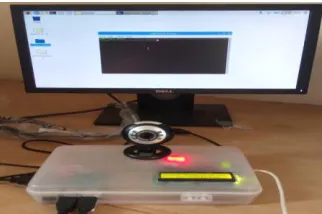
Figure1 OpenCV & Raspberry PI Face Recognition
© 2019, IRJET | Impact Factor value: 7.34 | ISO 9001:2008 Certified Journal
| Page 1323
Figure2 Raspberry Pi B+ features [image:4.612.39.297.55.234.2]This approach going to use the face recognition in the application where we can detect the car thefts. It will be using Raspberry Pi as the brain of the project because the Raspberry Pi is capable of handling Complex algorithms for the basic organization. Here USB camera is used to capture [10] [11] the image of the person sitting inside the car. The images captured with the USB camera will be given to Raspberry pi in order to recognize the faces implemented python language.
Figure 3 Face Recognition in OpenCV on Raspberry Pi
The system will be having a predefined database of users stored inside the Raspberry Pi, Raspberry Pi will match the incoming images with the Stored images if the face captured is matched with any of the predefined face then it will consider that person as authorized and if face is not matching with any of the predefined faces [12].
Raspberry pi B+ microcontroller used and gives 62% of the accuracy scale. It captures Minimum 50 images of a person. In this system raspberry pi 3 range Quad core 1.2GHz Broadcom BCM2837 64bit CPU and USB Camera with 25 megapixel CMOS sensor, Auto exposer and acts as the main processing unit of the project.
As shown in flowchart, initially face recognition takes place and then face image histogram will be match with feature vector database using LBPH method. Then it will consider that person as a non-authorized person [13] to drive a car if any unauthorized person is detected then car will get locked and the server and acknowledgement SMS
[image:4.612.324.572.114.310.2]with picture of unauthorized person will be sent to the smart phone having android application installed in it of the car owner.
Figure 4 Architecture of LBP for Face Recognition
This approach implements face recognition
algorithms: Local Binary Patterns Histograms (LBPH).
As it is one of the easier face recognition algorithms.
7.2 Local Binary Pattern
Local Binary Pattern (LBP) is could be a easy and very efficient texture operator which labels the pixels of an image by thresholding the neighborhood of each pixel and considers the Parameters,
7.2.1 Training the Algorithm: First, need to prepare the algorithm. To do so, need to use a dataset with the facial images of the people we want to recognize. [14] an input image saved with its details. With the feature vector set already constructed, The LBPH computational steps are below.
7.2.2 Applying the LBP operation: The first computational step of the LBPH is to create an intermediate image that describes the original image in a better way, by highlighting the facial characteristics. The image below shows this procedure:
[image:4.612.81.242.373.480.2]© 2019, IRJET | Impact Factor value: 7.34 | ISO 9001:2008 Certified Journal
| Page 1324
Based on the image above, steps will be:
• Consider a facial image in grayscale.
• So to get part of this image [14] as a window of
3x3 pixels.
• It can also be represented as a 3x3 matrix
containing the intensity of each pixel (0~255).
• Then, need to take the central value of the matrix
to be used as the threshold.
• For each adjacent of the central value (threshold),
and set a new binary value. Set 1 for values equal and the values higher than the threshold and 0 for values lower than the threshold.
• Now, the matrix will hold only binary values
(ignoring the central value). each binary value from each position from the matrix line by line into a new binary value (e.g. 1100011). Note: some authors use other approaches to concatenate [15] the binary values (e.g. clockwise direction), but the final result will be the same.
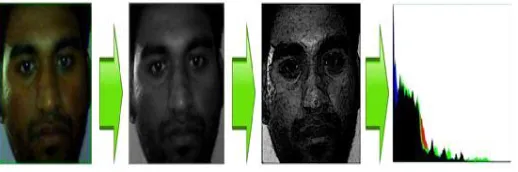
[image:5.612.39.298.428.514.2]7.2.3 Extracting the Histograms: Now, using the image generated in the last step, we can use the Grid X and Grid Y parameters to divide the image into multiple grids, as can be seen in the following image:
Figure 6 Color Image -> Grayscale Image -> LBP Mask -> Normalized LBP Histogram
Based on the image above, the extract the histogram of each region as above
As an image in grayscale [13], each histogram (from each grid) will contain only 256 positions (0~255) representing the occurrences of each pixel intensity.
7.2.4 Performing the face recognition: In this step, the algorithm is already trained. Each histogram created is used to rep resent each image from the training dataset [15]. So, given an input image, perform the steps again for this new image and creates a histogram which represents the image.
So to find the image that matches the input image
we just need to compare two histograms and return the image with the closest histogram.
It can be possible to use various approaches to
compare the histograms (calculate the distance
between two histograms), for example: Euclidean
distance [16], chi-square, absolute value, etc. In this example, we can use the Euclidean distance (both histogram) based on the following formula:
D =√∑ (1)
To perform the specific area with the help of the LBP operator from the edges of the image if not exist this means some section of the border is not related. For the image (CxD), the feature vector is designed with the help of
calculating the LBP code for all pixels (PC,QC ) with xcє {U +
1,. .., C − U} and qc {U + 1, . . . , D − U}. If an image is divided into a × a regions, then the histogram for region(αp-αq) with є {1, . . . , a} and αq є {1, . . . , a}, Mathematically,
Jk(Ap-Aq) = Σp, q {LBP v, u (p, q) =M(K), k=1, ...V(V-1) +3} (2)
P є { } = 1
{ } = A
{ } (( ))
є { } = 1
{ } = A
{ } (( ))
In which M is the label of binary k and B(Z) = {1, Z is True 0}, Z is False
7.2.4 Comparing the Feature Vectors: To measure the feature of images, the sample (H) and a model (I) are used as so that the difference values between feature vectors can be measured. Here with the help of histograms can measure the difference between two images. - Histogram Intersection
F(H,I)=∑ ∑ (3)
All Input images (for training and testing) must have the same size. Different of OpenCV, the images don't need to be in grayscale, because each pixel is automatically converted to grayscale function using the following formula:
Y = (0.299 * RED) + (0.587 * GREEN) + (0.114 * BLUE) (4)
© 2019, IRJET | Impact Factor value: 7.34 | ISO 9001:2008 Certified Journal
| Page 1325
use a threshold and the ‘confidence’ to automatically estimate if the algorithm has correctly recognized the image. It can be assuming that the algorithm has successfully recognized if the confidence is lower than the threshold defined.
8. PERFORMANCE AND EXPERIMENTS
[image:6.612.369.531.221.314.2]The project is performed by Local Binary Patterns Histograms (LBPH) methodology for face recognition, it will probably work better in different environments and light conditions, however, it will depend on your training and testing data sets. It needs around 10 or more different images of this person's face in order to be able to recognize him/her.The main idea of eigenface is to get the features in mathematical sense instead of physical face feature by using mathematical transform for recognition. One another method is Fisherface Concept, it is differing from the Eigenface concept, the fisherface method tries to maximize the proportion,of the between-class scatter versus the within-class scatter. The LBPH methodology will improve higher accuracy than fisherface methodology. Extraction of color and texture features is obtained ,which is then saved into feature vector database.
Figure.7 Training datasets Pre-Processing of Image (RGB to Grayscale & resizing)
Pre-Processing of Image where problem of sensitivity to illumination intensity will be resolved. Raspberry will be connected with the USB camera for image capturing and LBP removes the drawback of factors such as face orientation, expression, lighting and background as well. Accuracy isfound to be 95.55%. LBP Compute the histogram, over the cell, of the frequency of each "number" occurring This histogram can be seen as a 256-dimensional feature vector and feature datasets in database is shown in above figure 8 .There were lot of Error of the approximation and accuracy. This current system improves such all the factors.
9. RESULT ANALYSIS
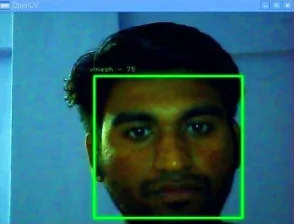
[image:6.612.51.273.357.507.2]To perform Face identification firstly dataset is created which gives number of face images of person, then there is need of training set to recognize his/her face image. By estimate, current face image with face image in database as shown in figure 7 above recognition of respective person is carried out. Where there was limitations of creating database with more images that issue has been solved and it gives face recognition process with confidentiality.In this lower confidentiality higher will be accuracy for face detection as shown bellow
Figure.8 Detected image
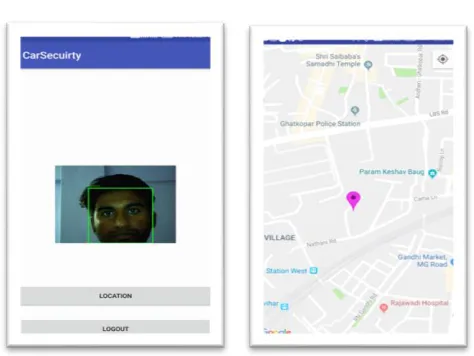
Above figure 8 shows that if the image of particular person has not stored in featured vector database then it will indicate unkown and image of that unauthenticated person will be redirected to server and server gives notification with its lpcation on android application which should be installed on android phone .
Figure. 9 Recognized image
[image:6.612.377.526.427.539.2]© 2019, IRJET | Impact Factor value: 7.34 | ISO 9001:2008 Certified Journal
| Page 1326
Figure. 10 Image of unauthenticated person with itslocation
10. CONCLUSIONS
This research project explains firstly training and identification in embedded devices. While this device can do the training and the identification independently, without being connected to any other machine therefore goal is achieved. As it is known that there are many equipments like this in market, but this project proposes to implement this kind of application by the reason of cost. Based on the comparisons the equipment is offered with lower price than commercial equipment.
Secondly the implementation of a face recognition application using LBP, This particular algorithm is very suitable and fast. It allows us to reduce the number of images in our database. In addition the because of this algorithm ,it helps us to use simple camera which are offered with low price. As a result, we can conclude that goal, to implement a face recognition system using LBP histogram has been achieved.
To perform Face Recognition firstly dataset is made which gives number of face pictures of individual, then there is need of training set to recognize his/her face image. By comparing current face image with face image in database Recognition of separate individual is done.Among all biometric techniques, face recognition approach possesses one of the great advantage, which is its user -friendliness. Local Binary Patterns Histograms is used for feature extraction and Euclidean distance for the matching process. In the end, the evaluation of the system reported an execution time of 8.6 ms and an accuracy of 95.55%, confirming its efficiency.
REFERENCES
[1] Urvashi Bakshi, Rohit Singhal “A survey on face detection methods and feature extraction techniques of face recognition” International Journal of Emerging
Trends & Technology in Computer Science Volume 3, Issue 3, May-June 2014.
[2] Sanjeev Dhawan, himanshu Dogra, “Feature Extraction Techniques for Face Recognition” International Journal of Engineering, Business and Enterprise Applications 2012.
[3] A . K. Jain, R. Bolle, and S. Pankanti, Eds.: Kluwer “Biometrics Personal Identification in Networked Security” Academic Publishers, 1999
[4] Sanjay Kr. Singh , D. S. Chauhan , Mayank Vatsa , Richa Singh “A Robust Skin Color Based Face Detection Algorithm” TJSE, Vol.6, No. 4, pp. 227-234 (2003).
[5] Ylber Januzaja , Artan Lumaa , Ymer Januzaja and Vehbi Ramaj “Real Time Access Control Based on Face Recognition” International Conference on Neurological Surgery and Clinical Science ICNSCS-15 June 10-11 2015
[6] Müge Çarıkçı , Figen Özen “A Face Recognition System Based on Eigenfaces Method” Procedia Technology 1 ( 2012 ) 118 – 123
[7] Liton Chandra Paul, Abdulla Al Sumam “Face Recognition Using Principal Component Analysis Method” Advanced Research in Computer Engineering & Technology(IJARCET) Volume 1, Issue 9, November 2012
[8] M. Kirby, L. Sirovich “Application of the Karhunen-Lokve Procedure for the Characterization of Human Faces” IEEE transactions on pattern analysis and machine intelligence. vol.12, no.i , january 1990
[9] Dhiren R. Patel “Information security : Theory and practice” Information security Book,chapter1 2008
[10] Jones, M. Viola, P “Face Recognition Using Boosted Local Features” Mitsubishi Electric Research laboratories TR2003-25 May 2003
[11] Shu Liao, Wei Fan, Albert C. S. Chung and Dit-Yan Yeung, “Facial Expression Recognition Using Advanced Local Binary Patterns, Tsallis Entropies And Global Appearance Features”, IEEE International Conference on Image Processing, pp.665-668, 2006
[12] Sanjeev Dhawan, Himanshu, “A review of Face Recogntion”, IJREAS Volume 2, Issue 2 (February 2012) ISSN: 2249-3905
[13] Rajkiran Kaur, Rachna Rajput, “Face recognition and its various techniques: a review”, International Journal of Science, Engineering and Technology Research (IJSETR) Volume 2, Issue 3, March 2013.
© 2019, IRJET | Impact Factor value: 7.34 | ISO 9001:2008 Certified Journal
| Page 1327
International Conference on Acoustics, Speech and Signal Processing, Vol.4. Orlando, Florida, 2002, pp.3644-3647.
[15] J.Lim, Y. Kim J. Paik” Comparative Analysis of Wavelet- Based Scale-Invariant Feature Extraction Using Different Wavelet Bases” International Journal of Signal Processing, Image Processing and Pattern Recognition Vol. 2, No. 4, December, 2009.
[16]Yang Zhang, Taolun Chai, Chih-Cheng Hung “Local binary patterns for face recognition under varying variations Proceedings of the Sixth Annual Workshop on Cyber Security and Information Intelligence Research April