Iranian journal of educational Sociology
(Interdisciplinary Journal of Education) Available online at: http://www.iase-idje.ir/
Volume 1, Number 6, September 2017
Developing a perceptual appropriate framework for Iranian teacher’s
dispatch to schools abroad
Reza Kachoueian javadi1*, Badri Shahtalebi2, Mohammad Ali Nadi3
1. PhD in Educational Management, Islamic Azad University, Isfahan (Khorasgan) Branch
2. Associate Professor in Department of Educational Management, Islamic Azad University, Isfahan (Khorasgan) Branch
3. Associate Professor in Department of Educational Management, Islamic Azad University, Isfahan (Khorasgan) Branch
Article history:
Received date: 30 April 2017 Review date: 26 may 2017 Accepted date:26 June 2017 Printed on line: 23 September 2017
Abstract
Purpose: The current research is done with the using of comparative studies and its aim was developing a perceptual appropriate framework of Iranian teacher’s dispatch to schools abroad. Methodology: The Iran's dispatch component and the selective countries, (included: America, France, Germany, Canada, England, Russia, Australia, Turkish, Japan, South Korean and Singapore) was identified and extracted for the developing of a perceptual appropriate framework. Then descriptive method for validation and presenting an appropriate perceptual frameworkwas employed. In the last three period of dispatch, all accepted teachers were included in statistical society which 250 of them, were selected in simple random sampling. Their questionnaires had a lot of components which it was needed for their dispatch in abroad. For doing this research, 54 factors in conceptual model were determined as observed variables and 8 extracted factors from exploratory factor analysis as latent variable and the deployment of teachers as second latent variable, were determined too. Findings: The findings show that all factors had significant meaning on their own factors and management authority, selecting and protection, mastering on computer, interviewing, mastering on language, professional competence, health and test, respectively had the most load of factor and the most weight of factor in the second deployment of teachers in abroad. Discussion: Therefore, the appropriate perceptual framework of the deployment of Iranian teachers in abroad, was a combination of normalized components in the deployment model of Iranian teachers and selective countries in abroad. So it's worthy that we consider the archived factors and their components which had the most load of factor in the new method of letter for the further selections.
Keywords:
Iranian teacher’s dispatch, schools abroad, management authority, selecting and protection, mastering on computer, interviewing, mastering on language, professional
competence, health and test.
Please cite this article as: Kachoueian javadi, R. Shahtalebi, B. Nadi, MA. (2017). Developing a perceptual appropriate
framework for the deployment of Iranian teachers to schools abroad, Iranian journal of educational Sociology, 1(6), 1-13
*Corresponding Author Email: [email protected]
1. Introduction
Education and training is one of the common concern in human society and educational institutions. In according to the mentality and philosophy of Countries and Nations, they define their own educational purposes and the difference of their styles leads to the difference of their educational purposes. (Zare &, et.al, 1389). Recognizing of these purposes comes from the knowing of the social style of any society and nations (Salarifar & pakdaman, 1388). Therefore, the education and training is considering as the main educational and training factor and the social, cultural, economic development of society and also is consider as the most powerful of means shaping the future and an approach for understanding and mastering on changes, stability, training and culture which it has the main role in increasing the competency and production capacity in societies. (Atar khamene &, seif, 1388).
As mentioned before, by comparing with all of the factors of educational and training which can provide specific purpose of training in any society, the role of teacher as the most important factor of education system, is so valuable because the teacher's teaching method should be synchronize with the principles and purposes of education and training and also with the personality trait of students. In this case teacher can influence on improving and growing of their personalities. So it's necessary that as teacher selecting in the country will endeavor for educational and educative purposes, such an attempt should be done for selection of teachers in abroad. So the deployment model of teachers should be design in such way that can select them in a reasonable manner (Jafari ,1392).
2. literature Review
As Berford (2009) claim, it's necessary to use of a selecting model for doing the right activity for student's education in abroad. Substantial appropriation in this matter is on the authorities’ education system which included in the obligations of ministry of education and nurture in abroad. The result of this appropriation is useful in such a way that the actual enforcers of education and nurture select in the right manner. Therefore, 13 influential factor is included in the deployment model of teachers in accordance with the last method of letter of the teacher's deployment in abroad which are: having a warrant formal employment of education and mature ministry, having the minimum of 12 year and maximum 26 year of years of service, success in one step internal test, success in the oral interview in the form of single stage and semi structured, the ability of doing the work with computer and maximum using of the world wide web, enough acquaintance with one foreign language( rather English or Arabic), having the full mentally health with the confirmation of trusted doctor in education and nurture institution ،being married, having enough competency of selection and protection, not having more than three children under pretentious and not having any children under three years in the time of dispatch and during the mission, Not having a fix mission more than 6 month in abroad, Passing courses in service after acceptance and having full mentality with the confirmation of trusted doctor in education and nurture institution, are listed and one code is allocated for every one of them.(Mohammad poor, Firooze & Hosein poor, 2015).
On the other hand, the current research has been studied the model of eleven selected countries including: America, France, Germany, Canada, England, Russia, Australia, Turkish, Japan, South Korea, and Singapore which presents an appropriate perceptual framework based on the result of the third international study of science and mathematics. This study had been ranked base on the international association evaluation educational achievement. The recognized factors were 29 items which one part of them was the same as the deployment model of Iran and the other part of it had some items which haven't seen in the deployment model of Iran. In some countries, these processes
are done by the selection of teachers by the privet companies and in the other part it can be done by the central or provincial education and nurture institution (Shabani & Seadatee Shamir, 2015).
In the mentioned factors, attention to selection confirmation and confirmation in security parts of some countries is so important which is include the countries like: America, France, Germany and Russia. In accordance to received method of letters from valid sources in selected countries, some items are influential factors in the deployment of teachers like: Having a strong executive resume, Certificate of theoretical and practical qualification of references to valid academic and the broader enterprise. Having a private website, having a work office approved by school's directors, having a maximum 20% error in the written test, Success in the test of emotional intelligence and Editing of creative educational component (Mohammadpoor, Firooze & Hoseinpoor, 2015). Therefor the main goal of the current research, except reviewing of influential model of Iranian teacher's deployment and selected countries, was presenting a perceptual appropriate framework for Iranian teacher's deployment in abroad with using comparative studies and Iranian teacher's model of deployment in abroad.
3. Methodology
In the current research we used of qualitative method for extracted of factors and also we used of comparative study in kind of survey for the validation of framework and that was for editing a perceptual appropriate framework for teacher's deployment in abroad. The statistical society of this research was included of all accepted teachers in the last three period of deployment (between the years of 86 until 92) which were 750 people that in accordance with the Korjesi-Morgan table, 250 of them were selected in the simple random sampling. Selected countries (America, Franch, Germany, Canada, England, Russia, Australia, Turkish, Japan, South Korea & Singapore) in accordance with the resulting of the third international study of mathematic and the international association evaluation educational achievement, were included in the most development countries around the world and had the process of deployment of teachers in abroad and were also included in the selected countries in the part of evaluating, the tools needed were the researcher's questionnaire which had the required factors for the deployment in abroad.
For investigating the justifiability of the above tools, we used of ostensible and content justifiability and for investigating of tool's validation we used of Cronbach Alfa coefficient. Therefor the questionnaire was given to thirty central expert of international relations of Iran's education ministry and they were asked to validate the content of questionnaire. This coefficient was 0.87 which showed the high precision of measuring tools. The initial questionnaire was containing of 84 factor which after the applying of expert's reviews it minimized to 54 factor in the five point Likert scale and in the frame of absolutely agree-absolutely disagree. It should be mentioned that thirty questionnaires were distortive from 250 people of statistical society included the teachers which had teaching experience in abroad and had also the bachelor, master and PhD degrees and totally, 220 questionnaires were collected and interred in final analysis. For justifiability investigating of scale structure of teacher's deployment model, we used of factor analysis confirmation for the second order (both the first and second order analysis was carried out simultaneously). In this analyses, in addition to load of factors from first and second order analysis, we extracted their weight of factors too.
4. Findings
The results of table 1 shows the existing or not existing the factors of teachers’ deployment in abroad in the deployment model of selected countries and Iran. Therefor the number 1 expresses the existing of that factor and the number 0 expresses the not existing of above factor in the deployment model of selected countries and Iran. Also in this relation, the collection of existing factors is express in each deployment model of this countries and also it should be mention that in related to above table, the success or nonsuccess of deployment model is recognized by citation to human development indicators (HDI) which presented by the word bank (Ghafari ,1389). So for determining of the countries which had success or unsuccessful model, we have been cited to this indicator.
Therefore, among the countries where the pattern deployment had been evaluated and the content had been analyzed, some countries were included in the success deployment model categorize and that was in accordance with three condition which included: First, the countries that qualified rating in human development was under 20. Second, the countries which ranked in the high quality in human development in the part of education and nurture institution. Three, the countries which were under the confirmation of international central experts and school affairs in abroad of the education ministry. Therefore, the countries like: Australia, America, Germany, Canada, Singapore, England, France, South Korea, and Japan respectively were qualified in 2, 5, 6, 8, 9, 14, 15, 17 ranks in accordance with human development indicators and were considered as the success deployment model categorize and the countries like Russia, Turkish and Iran which respectively had qualified in 57, 69, 75 ranks, were included in the nonsuccess deployment model categorize.In this study, the Cronbach's alpha coefficient was calculated 0.88.
The factors in table 1 was provided in the case of 54 items and for investigating the scale structure justifiability, we used of analysis method of factor confirmation of the second order (both of the first and second order analysis was carried out simultaneously). Therefor eight factors extracted from the analysis factors were considered as hidden variables. Also, one hidden variable was considered as the teachers’ deployment in abroad as the hidden variable of the second order which eight load of factors of the second order was traced on eight latent factors from this variable and then the analysis was carried out by the using of maximum filed view method.
In Naderi’s research (2005), Cronbach's alpha and Sensei's alpha were used to measure the reliability of this scale, which was calculated 0.78 and 0.81, respectively. In this study, an evaluation of the validity of this scale was performed using the Enrique Marital Satisfaction Questionnaire, which correlation coefficient between these two questionnaires was -0.40; it was significant at level 0.001. In the present study, the Cronbach's alpha coefficient of the whole questionnaire was calculated 0.90.
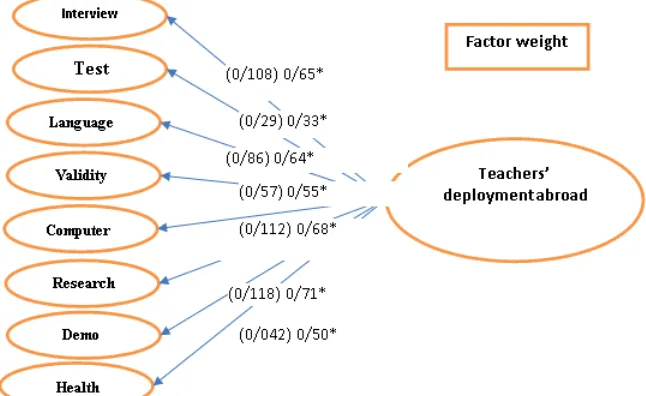
The load of factor and the weight of factor of first order factors on the second factor of teacher's deployment in abroad
Figure 1 and 2 concerning load and weight of factors shows the teacher's deployment in abroad on the second order factor
Figure 1: load of factors and weight of factors on the second order factor of teacher's deployment in abroad
Attention: the inside number of Parentheses shows the weight of factor and the outside number of Parentheses shows the load of factor of teacher's deployment in abroad and 2_3 figures shows the load of factor on each observed variables.
Figure 2: the load of factor table in accordance to research competency
Equivalent of each number in the rectangles respectively are:38 having at least on scientific research article published in interior magazines in relation with field of study or activity.38 having at least one valid article published in foreign magazines of (ISI) in relation with the field of study or activity. 39 certificate of completion at least one valid research project in the field of teaching in relation with the field of study or activity. 40 certificate of participation at least in two valid workshop training in relation with the field of study or activity.
Figure 3: The table of load of factors in relation to the selection and protection factor
Equivalent of each number in rectangles respectively are: 35 Confirmation of the person's performance in terms of entity selection (based on ethical and behavioral features). 36 Confirmation of person's performance of entity protection
Figure 4: the table of load of factors in relation to mastering on computer
Equivalent of each number in rectangles respectively are: 13. Mastering on computer for doing routine activities. 14. Relative dominance of word software. Relative dominance of PowerPoint and excel software. Mastering on computer for researching sources, bases and databases. 18. Dominance of the software related to data entry about students, teachers and also reporting where is necessary.
Figure 5: The table of load of factors in relation to mastering on interview
Equivalent to every number in rectangles respectively are: 33. Oral interview in three steps (first passing in the district then provincial and finally national) 25. The motivational indirect interview in natural condition and by viewing. 21. Personally semi organized interview by normalized character test and some question out of the test by distinguishing of interviewers. 27. Team or group interviews which had been accepted in the internal test. 28. Organized characteristically interview by video conference .24. organized motivational interview with the consideration of interviewers. 20. Not-organized characteristically interview by consideration of interviewers.26. The presence of an interviewer for solo with interviewee after passing the internal test. 30. Semi-organized characteristically interview by video conference. 31. First step interview (nationally). 22. in directional character interview in natural condition and by viewing. 32. Two step
interview (provincial and then national.) 23. Motivational interview just by a normalized motivational test of deployment in abroad. 19. Characteristically interview by normalized character test. 29. Not-organized interview by video conference.
Figure 6: Bar graph factor related to language proficiency (P<0.01)
Equivalent to each number rectangles respectively are: 7. Relative dominance in English conversation for routine speeches. 8. Relative dominance in English reading and comprehension in texts related to the field of study. 9. Relative dominance in English language for participating in scientific events related to the field of study. 10. Relative dominance in English language for using in texts related to the field of study. 11. Relative dominance in English language writing for texting to people related to the field of study and working erea.12. Familiarity of target language for routine using.
Figure 7: The table of load of factor related to the professional competency.
Equivalent to each number in rectangles respectively are: Earn the title of sample teacher at least for once during the serving time in country. 6. having at least the master's degree related to acceptance field of educational institutions approved by scientific ministries.5. Having at least three years alternate experience of teaching in the cross sectioned desired from the applying time for deployment.4. Having at least three years alternate experience of teaching in the cross sectioned desired from the applying time for deployment. 2. Having at least three years’ continuous experience of teaching in the cross sectioned desired from the applying time for deployment.43. Earning the title of sample student during the education in university. 44. Certify at least 50 hours course in service related to dispatch and stay out after passing.
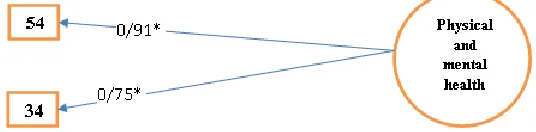
Figure 8: The table of load of factors related to the health factor
Equivalent to each number in rectangles respectively are: 34. Having the physical health with the confirmation of trusted doctor of education and nurture institution. 54. having the mentality health with the confirmation of expert doctor trusted in the education and nurture ministry.
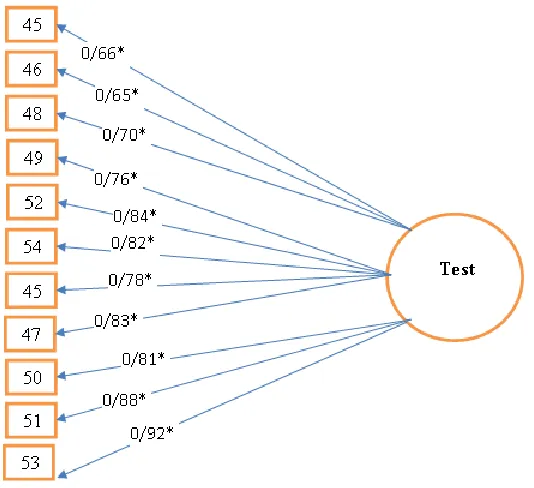
Figure 9: The table of load of factor related to the test
Equivalent to each number in rectangles respectively are: One step internal scientific national test. 46. Acceptable score evaluation (at least 80%) in the last three years of teaching. 48. Acceptable density evaluation score (at least 80%) in the last three years of teaching. 49. Conducting four option and objective scientific test. 52. Conducting scientific test in the form of both anatomical with wide and short answers. 54. Two steps internal test (first provincial and then national). 45. Acceptable genetically score (almost 80%) in the last three years of teaching. 47. Acceptable normative score (almost 80%) in the last three years of teaching. 50. Conducting anatomical and wide answer scientific test. 51. Conducting anatomical short answer scientific test. 53. Three steps internal test (first provincial acceptance and the national acceptance). After analyzing, the model's indicators have been evaluated. Table tow shows the indicators of this two-step model.
Table 2: Indicators related to the scale confirmation factor of the teacher’s deployment in abroad
χ2 P
df K2/df GFI
AGFI NFI
TLI CFI
RMSEA SRMR
Acceptable range Meaningful test
Lower than 3 Upper than 0.8
Lower than 0.1
Eight-factor model in second stage 3536/4
0/001 1316
1/19 0/13 0/10
0/19 0/77 0/78 0/089
0/018
The results of the table 2 show that the indicators of this two-step model are in the domain of weak till so favorable, with general investigating of this indicators, it can be said that this model is acceptable. Also the load of factors and their significant are represented in the table 3 with the weight of factors and order of the priority factors in each of the one step eight factors.
Table 3: The achieving parameters in the one step scale model of the deployment teachers in abroad 1st factor Factor No. Factor weight Factor weight sequence 1st factor Factor No. Factor weight Factor weight sequence In ter v iew 33 0/86* 033 / 0 51 L ang u age s k il l 7 0/81* 0/123 4 51 0/75* 038 / 0 51 6 0/61* 0/159 3 55 0/73* 036 / 0 53 9 0/90* 517 / 0 5 59 0/78* 016 / 0 55 50 0/77* 503 / 0 1 57 0/71* 015 / 0 55 55 0/61* 573 / 0 5 56 0/79* 018 / 0 6 55 0/71* 091 / 0 8 51 0/77* 016 / 0 50 Profe ss io na l sk ill 15 0/73* 553 / 0 1 50 0/79* 015 / 0 9 8 0/78* 517 / 0 5 58 0/61* 071 / 0 5 1 0/87* 505 / 0 8 30 0/65* 081 / 0 8 1 0/71* 517 / 0 3 35 0/65* 073 / 0 1 5 0/18* 089 / 0 7 55 0/63* 017 / 0 1 13 0/60* 500 / 0 5 35 0/65* 081 / 0 7 11 0/70* 555 / 0 1 53 0/63* 015 / 0 3 C om p u te r sk il l 53 0/68* 515 / 0 5 59 0/68* 097 / 0 5 51 0/87* 333 / 0 8 T est 05 0/88* 033 / 0 50 51 0/89* 063 / 0 1 18 0/81* 035 / 0 55 58 0/70* 509 / 0 1 16 0/70* 015 / 0 9 57 0/90* 333 / 0 5 19 0/78* 015 / 0 6 56 0/71* 557 / 0 3 15 0/61* 061 / 0 3 R es ea rc h v alid it y 37 0/77* 566 / 0 5 11 0/65* 089 / 0 1 36 0/19* 090 / 0 1 11 0/76* 019 / 0 7 39 0/68* 333 / 0 5 17 0/63* 077 / 0 1 10 0/19* 096 / 0 1 10 0/65* 089 / 0 8 15 0/86* 556 / 0 3 13 0/66* 553 / 0 5 De m o 31 0/69* 353 / 0 5 15 0/95* 566 / 0 5 38 0/93* 109 / 0 5 - - - - H ea lt h 11 0/95* 816 / 0 5 (*P<0/01)** 31 0/71* 555 / 0 5
As what we observed in the table 3, all factors have significant meaning on their own factors which this shows the structure justifiability of this scale. Table 4 shows the resulting of two step load of factors.
Table 4. One step load of factor and weight of factor on the two step factor of teachers’ deployment in abroad
The results of table 4 shows that research competency, selection and protection and mastering on computer have respectively the most weight of factor on the two step factor of teachers’ deployment in abroad. The figures of 1 and 2 shows this results. Finally figure 4 shows the perceptual research framework.
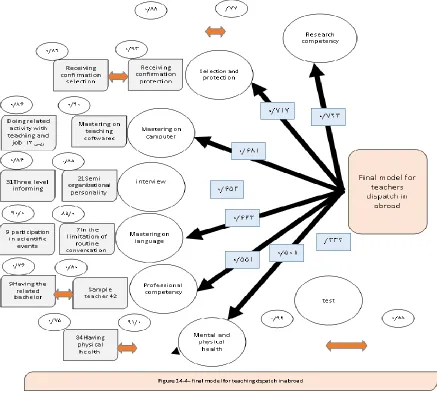
Figure 10: The final model of the perceptual teachers’ deployment in the Islamic republic of Iran
Attention: In the above model the ovate shows the latent variable and the square shows the observed variable. The number of flashes shows the load of factor and inside number of Parentheses shows the weight of factor of latent variables. Also the inside number of squares shows the factor related to check list of teacher’s deployment in abroad.
5. Discussion
In according to research findings, the most important factor among the octagon deployment factors is the research competency which have the five indicators that are: Having at least one research-scientific article published or publishing a valid article in interior magazines related to the field of study or activity, Completion Certificate of at least one valid research plan and participating
in one symposium or two valid training workshop related to the field of study or activity and also, Earning the title of sample teacher at least two times during the serving time or earning the sample student in education terms of university.
The research ability in the case of scientific, documentary and academic, represent the abilities of people in educational and experiential fields. Therefore, the teachers who are experienced in the educational field can report their research findings and republish them in the valid sources. In fact, these people have the modern knowledge and information and research abilities can predict the educational and scientific abilities. (Alen, 2003). The valid scientific workshops which participate in the field of their teaching and activity, usually earn high abilities (Kokran, smith & Zincher, 2005), are modern (Penis 2008), earn high motivation (Rol, 2005), their confidence has improved and in the result, their educational efficiency has increased (Shabani & Saadati Shamir 2014).
Therefore, the research factor and competency research are the most important factors among the eight factors of teacher’s dispatch in abroad.
The second factor was with title of selection and protection confirmation which means the confirmation of person's function by selection entities (based on the ethical and behavioral traits) and the confirmation of person's function by protection entities. In compering to the second factor, the first factor which is the person's function in the view of protection entities (informative) have the more load and weight of factor for evaluation of protection and selection variable. From the important reasons which stated for this issue is that the protection and selection process is for value and accrual assessment and therefor this process is from among the important and necessary factors for the model. It means that this factor can act as a reverse factor if no accuracy makes in this field and a skillful teacher in terms of scientific, research and experimental have selected but that teacher doesn't believe in the doctrinal, policy foundations and general norms of the country. In the other word instead of acting for educational, cultural and nurturers’ profits, these skillful people with may act as a reverse factor.
Mastering of computer was the third factor in this current research. While Bris and his colleagues stated, software have different types which every one of them are useful for a specific term. We should have more speed and discipline and of doing the activities for an appropriate teaching and also good mastering on different software. Also one of the reasons that we considered interview as the most important indicator for teacher’s dispatch in abroad was that in accordance of many findings like (Engles & Mirelz 2001, Abdolrahman ,2007) we can evaluate the teachers’ abilities like their personality traits which are not evaluable by test. The fifth factor had six indicator of mastering on language which was included in six factor by itself. This factor is researchable in oral, speaking, reading, and writing skills. Although, the first factor in the dispatch teacher's questionnaire, was relative mastering on English language for routine speeches. Conversation skill is one of the most important language skills which provide an opportunity to people to practice and produce the new language samples. In this regard it can be said that the initial factors for having the routine conversation ability are: playing role, doing the oral practices, retelling a read or heard short story, expanding the routine activities, guessing and completing a conversation, managing a text by hearing or by a skimpy text, describing a picture and or many related pictures and compering two or several pictures (Khorami et.al 2013).
The sixth factor in the dispatch factors, is the high professional competencies. Having the high motivation for teaching, useful experience, enough knowledge and balanced personality are necessary for having the professional competency in teaching. (Fericano 2013). Therefore, in relation to dispatch, authorities are intended to select the people who are professional and have enough skill for teaching. Satisfaction of students, parents and earning the acceptance of education
and nurture authorities are the other factors which required the professional competency (Tilly, Fold, 2008).
The seventh factor among the dispatch factor, was having the mental and physical health. In relation with the importance of the physical and mental health of teachers for dispatching in abroad, Shabani & Seadatee shamir (2014) expressed that a lot of variation is happened today in the role of schools in countries of the world. This variation caused to in addition of the tradition role of schools which is education for growing the reading, writing and earning knowledge, the role of growing the mentality and human evolution come into consideration. In the current time, in many countries a lot of healthy and nurture activities has been laid on schools which studies shows the positive results and implications of it.
The eight factor in the dispatch factor is acceptance in the exam. In relation to exams, some countries had believed in one step exams while some selected countries had more believed in two and three step of exams. These people expressed that applicant people must give exams in several times to the amount of their knowledge come into control and in the case of the lack of penchant of persons there will be a possibility of compensation and in the other way the person have enough dynamic for having the scientific indicators. Since that, tasks formative assessment doesn’t lead just in the evaluation of improvement of the person in one field of different steps, but also caused in on time information of their formation types, in compering to density assessment, this method has been more preferred because if just final assessment come into consideration and formative assessment don't be done, there will be no chance for changing the teaching method and planning for restoratives program. Therefore, in informative assessment the best method for data analyzing is being applied for representing the most basic and information in the field of imperfection learning. (Choong & Koopinghan, 2008).
Although the represented framework of the current research can be very useful but it should be taken into the consideration that just the comments of 220 people of dispatch teachers from three course before dispatch of teachers in abroad, have been used so reviewing the factors of this case is included in the limitation of current study. In addition, in according of the research findings and final research model, research competency, selection, and protection, mastering on computer, interview, mastering on language, professional competency, health and test respectively are the most important factors among octet factors and have the most load of factors for evaluating the dispatch model of teachers in abroad, so central authorities of the international affairs and abroad schools should consider the achieving factors and their components which had the most load of factors in the new stylebook of teachers dispatch.
References
Abdurrahman KhA. 2007. Factors influencing academic achievement of medical students in the basic medical sciences at a conventional college of medicine. Unpublished Master’s Thesis, King Saud University.
Allen MB. 2003. Eight questions on teacher preparation: What does the research say? Denver, CO: Education Commission of the States.
Angus D, Mirel J. 2001. Professionalism and the public good: A brief history of teacher certification. Washington, DC: Thomas Fordham Foundation.
Attar Khamenei F, Saif A. 2010, Effectiveness of learning strategies training and Metacognitive study on achievement motivation and academic achievement of female secondary school students, Journal: Educational Psychology Studies, spring and summer, -10.18;9.
Berford A. 2009. Crossing borders: Developing an innovative collaboration to improve the preparation of high school English teachers. Equity and Excellence in Education, 38: 17–28.
Chong S, Gopinathan S. 2008. Singapore. In T. Donoghue & C. Whitehead (Eds.), Teacher education in the English-speaking world: Past, present and future (pp. 121–137). Charlotte, NC: Information Age.
Cochran-Smith M, Zeichner K. (Eds.). 2005. Studying teacher education: The report of the AERA panel on research and teacher education. Mahwah, New Jersey: Lawrence Erlbaum.
Fricano M. 2013. “Teachers from China overcome culture shock in the classroom UCLA today. Http: //today. ucla. Edu/portal/ut/ucla-trains-chinese-teachers-to-247719. aspx.
Jaafari , S. 2014 , The relationship between religious orientation and moral growth and resilience in female secondary school students in Bojnoord city , Islamic Azad University of Quechan
Khorami M, Fathvalizadeh A, Mohammadniya Y, Seadatee shamir A. 2013. The Role of Metacognitive Strategies on Persian Students’ Vocabulary Learning. Journal of Psychology Research, 5: 270-275.
Mohamadipur D, Firuzeh N, Hossainpur A. 2015. Teachers’Work: Beginning Teachers’ Conceptions of Competence, the Australian Educational Researcher, 57 (3).
Revell P. 2005. The professionals: Better teachers, better schools. England: Trentham Books.
Salarifarm, H. Pakdaman Sh. 2013, The role of metacognitive state components in academic performance, Journal of Applied Psychology "third period: 112--102
Shabani E, Seadatee Shamir A. 2014. High school teachers Sensation seeking, quality of life & hope of life. International Journal of Innovation and Research in Educational Sciences. (In press).
Tili, Fold. 2008. A study by the Chinese academy of sciences on the benefits of study abroad. Chinese Educational and Society, 27 (2): 41
ZahediSh, 1991, Training in relation with development, Tehran: State Management Training Center Publications Zare H, Ghanbarian , Saadizadeh A. 2010 , Comparison of Recognition , Memory in students with and without social
anxiety , Journal of Behavioral Sciences , Volume 2. Number 3