Iran University of Medical Sciences
____________________________________________________________________________________________________________________ 1. MSc in Clinical Psychology, Department of Psychology and Educational Sciences, Semnan University, Semnan, Iran.
2. (Corresponding author) Associate Professor of Educational Psychology, Department of Psychology and Educational Sciences, Semnan
University, Semnan, Iran. [email protected]
The effect of group mindfulness - based stress reduction program
and conscious yoga on the fatigue severity and global and specific
life quality in women with breast cancer
Soheila Rahmani1, Siavash Talepasand2
Received:20 June 2014 Accepted:18 November 2014 Published:8 February 2015
Abstract
Background: Cancer is not merely an event with a certain end, but it is a permanent and vague situation that is determined by delayed effects due to the disease, its treatment and its related psycho-logical issues. The aim of this study was to examine the effectiveness of the mindfulness-based stress reduction program and conscious yoga on the mental fatigue severity and life quality of women with breast cancer.
Methods: This was a quasi-experimental study with a pre-test, post-test and control group. In this study, 24 patients with the diagnosis of breast cancer were selected among the patients who referred to the Division of Oncology and Radiotherapy of Imam Hossein hospital in Tehran using available sampling method, and were randomly assigned into the experimental and control groups. All the par-ticipants completed the Fatigue Severity Scale, Global Life Quality of Cancer Patient and Specific Life Quality of Cancer Patient questionnaires. Data were analyzed by multivariate repeated meas-urement variance analysis model.
Results: Findings revealed that the mindfulness-based stress reduction treatment significantly im-proved the overall quality of life, role, cognitive, emotion, social functions and pain and fatigue symptoms in global life quality in the experimental group. It also significantly improved the body image, future functions and therapy side effects in specific life quality of the experimental group compared to the control group. In addition, fatigue severity caused by cancer was reduced signifi-cantly.
Conclusion: The results showed that the mindfulness - based stress reduction treatment can be ef-fective in improving global and specific life quality and fatigue severity in women with breast can-cer.
Keywords: Mindfulness, Yoga, Fatigue, Life Quality, Breast Cancer.
Cite this article as:Rahmani S, Talepasand S. The effect of group mindfulness - based stress reduction pro-gram and conscious yoga on the fatigue severity and global and specific life quality in women with breast cancer.Med J Islam Repub Iran2015 (8 February). Vol. 29:175.
Introduction
Cancer is a global expression for malig-nant diseases and affects different aspects of individual’s life (1). Breast cancer is the most common fatal cancer among women aged 40 to 55(2). It allocates more than 23% of the whole cancers in women to it-self. Breast cancer is the second common
cancer after lung cancer, and the fifth cause of cancer-related deaths because of its relatively good prognosis. The ratio of mor-tality to catching is 35% (3). Thanks to the recent developments in medicine, many people can fight cancer better compared to the past. Despite the progress in the course of medical treatment, psychosocial and
emotional needs of these patients are most-ly ignored (4). Cancer develops many stressors and can disturb life quality and almost every aspect of individual’s life sig-nificantly (5).
There are different factors in developing fatigue in breast cancer patients. Fatigue can result from a disease, treatments related to a disease, or other physical symptoms or conditions resulted from a disease (6). Fa-tigue can also depend on anatomical posi-tion of the tumor, treatment stage, type of the treatment and other factors (7). In breast cancer, many patients report fatigue at the beginning of the treatment (8). Fatigue can last months and years after the treatment (9). Different studies have shown that women who received chemotherapy as a treatment reported greater degree of fatigue (10). Fatigue is a mental feeling and it can be mostly seen as a lack of mental and physical energy (11), and it affects activity, circadian rhythm and life quality. Normal-ly, the severity, pattern and quality of fa-tigue depend on their causes (12).
One of the most common treatments for fatigue reduction is the mindfulness- based stress reduction program (MBSR) that was presented by Kabat-Zinn in Medical Cen-tre of Massachusetts University in 1979 (13,14). It is an 8-week program, in which every session lasts 2 to 2:30 hours; in this program, mindfulness skills for coping with life stresses and raising awareness of the present moment are taught and include thought-related meditation, relaxation and Hatha yoga (15). Mindfulness means pay-ing attention to the present time in a spe-cial, targeted way without being judgmental (13). One of the main goals of this program is promoting health and reducing stress (16). Meditation and mindfulness exercises result in increasing awareness and self-acceptance ability in patients (17).
The mindfulness-based stress reduction model showed success in cancer treatment (18) and considerably improved life quali-ty, stress symptoms and sleep quality in patients with breast and prostate cancers (19) and it also resulted in increasing
men-tal clarity, menmen-tal health and reducing physical stress significantly (20). In an 8-week intervention, based on the mindful-ness and stress reduction, which was con-ducted on 19 women with breast cancer, it was found that these interventions had a positive effect on improving mental condi-tions (fear of recurrence, stress, anxiety, and depression), psychosocial characteris-tics (optimism, gaining support from others and spirituality) and physical symptoms (21). The results of a study showed that mindfulness exercises result in reducing mood disorders and finally increasing life quality in the trained group (22). In a re-search conducted on 133 patients with stag-es I to III breast cancer, the rstag-esults showed that mindfulness has a significant effect on the quality of life of patients with cancer (23). In another research, mindfulness in-terventions and meditation were imple-mented on 49 patients with breast cancer and 10 patients with prostate cancer. The results revealed a reduction in stress symp-toms and a significant increase in patients’ quality of life (24, 25). Results of a study which used the mindfulness intervention revealed that the overall life quality, men-tal, physical, emotional and spiritual wel-fare and amount of social activity signifi-cantly improved among the participants after the intervention. Also positive chang-es were observed in the amount of pain, pain severity and amount of burnout, amount of support receiving from friends, family and financial and legal concerns. Therefore, even a short-term mindfulness intervention significantly improves partici-pants’ quality of life (26). In a study, the positive effect of the mindfulness-based stress reduction program on stress, anxiety, depression and sleep in patients with cancer was reported (27). A study was conducted about the relationship between emotional condition and immune system function af-ter 8 sessions of mindfulness-based stress reduction program, and it was reported that the activity of NK cells increased and quality of life of the patients with cancer improved (28). Considering the problems
which women with breast cancer face and evidences related to the mindfulness-based stress reduction program on different psy-chological variables, this study was de-signed with the aim of examining the effect of the mindfulness-based stress reduction program on improving global and specific life quality of the patients. On the other hand, considering the fatigue caused by cancer, which is reported by these patients, improving fatigue in these patients was also one of the aims of this study.
Methods
This was a full experimental study which was conducted with a randomized con-trolled trial. After obtaining approval from the hospital, and consent from the breast cancer patients, a random sample was se-lected and the participants were assigned into two groups. One group included those who were completing the mindfulness-based stress reduction program weekly and group conscious yoga (the experimental group) and the other group were those who did not receive any intervention (the control group). Written informed consent was ob-tained from all the patients who participat-ed in the study.
Participants
All women who referred to the Division of Oncology and Radiotherapy of Imam Hossein hospital during April 2013 to March 2014 were the population of this study. The Group Mindfulness - Based Stress Reduction Program is a group thera-py with 6-12 members. Therefore, a sample of 24 patients was randomly assigned to the experimental group (12 patients) and the control group (12 patients). Inclusion and exclusion criteria for this study were as fol-lows: patients diagnosed with stages l, ll, lll of breast cancer based on the clinical findings, cytological studies and diagnosis of a physician; the fatigue severity score in the patient had to be higher than 4; duration of breast cancer had to be more than a month; the patient should not have Anemia; the patient should not suffer from another
kind of cancer; the patient’s age had to be between 30 to 55 years; the patient should not have received any psychological treat-ment from the time the disease was diag-nosed; the patient had to have a degree of second school or higher; the patient should consent to participate in the study and should have the ability to take part in the desired courses. Exclusion criteria for the experimental group were as follows: ab-sence of more than two intervention ses-sions; not wanting to continue to participate in the intervention; disease recurrence or development of metastasis elsewhere in the body during the research.
Tools
A: Fatigue Severity Scale:Fatigue severi-ty scale (FSS) is provided by Crop et al. (29) to assess the fatigue severity of chron-ic diseases such as multiple sclerosis and lupus. The fatigue scale measures patients’ fatigue with 9 items on a7- degree Likert scale, with higher score indicating more fatigue. Chronbach’s alpha in healthy par-ticipants was .88, it was .81 in patients with MS and it was .89 in patients with lupus (29). The internal consistency of the Per-sian version of the test, Chronbach’s alpha, was .98 and the re-test reliability was .93(29). In this study, the retest reliability over a 2-month interval was .86 and inter-nal consistency with Cronbach’s alpha was .89.
B: Questionnaire Measuring the Global “Life Quality” in Cancer Patients (QLQ-C30):To measure life quality in cancer pa-tients, we used the third version of life quality measurement questionnaire, which belongs to a European Organization for Re-search and Treatment of Cancer. The Per-sian version of this questionnaire has been translated and validated by Montazeri et al. (30). This questionnaire is multidimension-al and consists of 30 questions measuring life quality in 5 functional scales (physical, role playing, cognitive, emotion, social), 9 symptoms scales (fatigue, pain, nausea and vomiting, asthma, loss of appetite, sleep
disturbances, constipation and diarrhea) and economic problems caused by the dis-ease and the treatment (an overall domain of life quality) (31). This questionnaire has been validated in Iran by Montazeri et al. (30). The range of validity of this question-naire with Cronbach’s alpha was reported to be .48 - .95 in the initial interview and .52 - .98 in the follow-up. The subscales such as (asthma, loss of appetite, sleep dis-turbances, constipation and diarrhea) were not used in this study.
C: Specialized Supplemental Question-naire to Measure Special “Life Quality” of Patients with Breast Cancer (QLQ-BR23): The QLQ-BR23 questionnaire is used for patients with different stages of breast can-cer and for different treatments (surgery, chemotherapy, radiotherapy, hormone ther-apy).This questionnaire contains 23 ques-tions that measure special life quality in 4 functional scales including body image, sexual functioning, sexual enjoyment and future perspective and 4 symptoms scales including systematic therapy side effects, breast symptoms, arm symptoms and sad-ness due to hair loss. This questionnaire has been used by Montazeri et al. (31). To
de-termine the reliability and validity of the Persian version, it was administered to 168 patients with breast cancer, and they re-ported that they understood 99% of the questions of the questionnaire. The reliabil-ity of this questionnaire with Cronbach’s alpha was .63 - .95 at the initial interview and .72 - .92 in the follow-up. The reliabil-ity of this questionnaire with the scales consistent approach shows that almost all scales are conceptually related to each other and are statistically correlated in the ex-pected direction. In this study, the subscales such as sexual enjoyment, arm symptoms and breast symptoms were not analyzed.
D: Demographic Information Question-naire: This questionnaire was used to col-lect demographic data including age, mari-tal status, education, socio-economic condi-tion, educational background, career histo-ry; and also the patients were asked some questions about the breast, smoking and alcohol consumption, and when they found out about the disease and the disease stage.
The study was conducted at the Oncology Division of Imam Hossein hospital in Teh-ran by two master clinical psychologists who were familiar enough with the
inter-Table1. Summary of Operating Instruction Sessions of Mindfulness-Based Stress Reduction Program
Session Topic
First The introduction of automatic guidance system/knowing how to use present moment awareness of bodily sensation, thoughts and emotions in reducing stress/practicing eating raisins1,giving feedback and discussion about the practice/three - minute breathing, giving assignment for next week and dis-tributing leaflets of the first session and CDs of meditation
Second Re-examining body workout/ giving feedback and discussion about examining body workout/ practic-ing breathpractic-ing mindfulness meditation/ yoga stretchpractic-ing exercise/distributpractic-ing leaflets of the second ses-sion and CDs of meditation
Third Having conscious sitting with awareness of breathing(the sitting meditation)/practicing yoga exercis-es(in the hospital chapel)/ practicing three -minute breathing /distributing leaflets of the third session and video tape of yoga practices
Fourth Re-examining body workout /practicing exercises related to conscious yoga(in the hospital chapel)/5-minute practicing of “seeing or hearing”/ re-practicing conscious session with awareness of breathing and body/ distributing leaflets of fourth session and CDs of meditation
Fifth Practicing breathing /re-practicing conscious session(awareness of breathing ,body, sounds and thoughts)/explaining the stress and identifying participants’ reactions to stress/examining awareness of pleasant and unpleasant events on feeling ,thoughts and bodily sensations/practicing conscious yoga exercises/practicing 3-minute breathing /distributing leaflets
Sixth Practicing conscious yoga/practicing sitting meditation (mindfulness of sounds and thoughts)/distributing leaflets of the sixth session and number4 video tape to participants
Seventh Practicing mountain meditation/sleep hygiene/ repeating exercises of the previous session/making a list of enjoyable activities/distributing leaflets of the seventh session
Eighth Examining body workout /overview of program/examining and discussing programs /practicing stone, beads and marbles meditation
vention. After administering the ethical standards of the research (informed consent and anonymity of the participants of the two groups), the participants were asked to complete the questionnaires in three stages: before the intervention (pre-test), after the intervention (post-test) and two months af-ter the inaf-tervention (follow-up). Treatment was done in 8 group sessions. Eight inter-vention sessions of this study were fol-lowed based on the mindfulness-based stress reduction program (14) and were conducted once a week in a 2-hour session for participants of the experimental group. Participants of the control group did not receive any interventions. Due to ethical considerations, participants of the control group were given a CD of the yoga prac-tices at the end of the research. A summary of functional instructions of the
mindful-ness-based stress reduction program is pre-sented in Table 1.
Results
The age range of the participants was 30 to 55 years. Participants of the control group were, on average, a year (44.8±3.28) older than the participants of the experi-mental group (43.25±3.07). The average age when the disease was diagnosed was a year more in the control group than the ex-perimental group (Table 2). Participants were of average socio-economic level and their left breast was involved, and they were receiving chemotherapy.
The mean and standard deviation of glob-al life quglob-ality in functionglob-al scglob-ale (physicglob-al, role, emotion, cognitive and social), in symptoms (fatigue, nausea and vomiting and pain) and in total in the 3 stages of pre-Table 2. The Mean and Standard Deviation of Age of the Participants and Age at the Time of Diagnosis in the Ex-perimental and Control Groups
Group Mean SD
Age Control 44.08 3.28
Experimental 43.25 3.07
Age at diagnosis time Control 43.08 4.12
Experimental 42.08 3.28
Table 3. Descriptive Statistics of Global and Specific Life Quality Dimensions in Patients with Cancer
Control(n=12)
Mean±sd Experimental(n=12)Mean±sd
Pre-test Post-test Follow-up Pre-test Post-test Follow-up Global
quality Functions Physical 65.0052±12.7 66.11±10.809 58.33±19.306 61.66±8.587 72.77±3.432 69.44±13.768
Role 37.50±7.53
7 38.88±10.855 36.11±9.622 37.50±10.359 59.72±8.582
*** 56.94±11.142 ***
Emotion 12.50±9.05
0 22.91±10.733 23.61±14.139 11.11±8.942 56.94±***11.142 48.61±***10.560
Cognitive 59.72±8.58
2 59.72±11.142 6111±16.412 62.50±10.359 75.00±11.236
** 72.22±12.974
Social 33.33±7.10
6 29.16±16.088 34.72±13.216 34.72±13.216 51.38±11.142
** 54.16±7.537***
Symptoms Fatigue 76.85±5.72
1 71.29±12.938 72.22±11.111 77.77±4.737 37.96±8.810
*** 47.22±11.725 ***
Nausea and vomit-ing
31.94±24.0
50 20.83±7.537 23.61±8.582 25.00±16.666 19.44±6.487 22.22±8.206
Pain 75.00±15.0
75 73.61±11.142 83.33±15.891 68.05±4.811 37.50±***10.359 50.00±***18.802
Total score of life quality 39.58±7.21
6 54.16±10.952 58.33±10.050 41.66±6.154 66.66±9.401
** 61.11±8.942
Specific
quality Functions Bodyimage 45.130±9.03 41.66±7.945 3680±17.573 42.36±8.301 50.69±7.502
** 50.00±17.766
Sexual function-ing
13.88±11.9
62 16.66±14.213 15.27±15.005 16.66±14.213 18.05±11.142 16.66±12.309
Futureper-spective 8.33±515.07 16.66±22.473 1388±22.285 8.33±15.070 47.22±22.285
** 50.00±22.473 **
Symptoms systematic therapy side effects
62.30±8.95
6 59.92±7.166 61.11±6.683 6388±6.566 51.19±7.356
** 50.00±7.994**
upset by
hair loss 80.5564±17.1 86.11±17.164 86.11±17.164 80.55±17.164 80.55±17.164 80.55±17.164
Fatigue severity 5.69±.1580 5.60±1457 5.52±.3075 5.85±1972 481±2609*** 4.95±.2614***
*p<0.05 **p<0.01 ***p<0.001
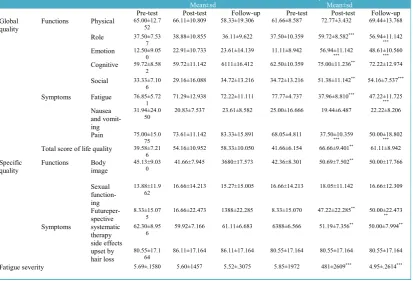
test, post-test and follow-up in the experi-mental and control groups are reported in Table3. Findings revealed that not only the scores of global life quality in the experi-mental group increased in the post-test compared to the pre-test in all the (physical, role, emotion, cognitive and social) func-tions, but also it showed a relative stability in the follow-up. Greatest increase in the scores was first seen in emotion dimension and then in the dimension of role of global life quality. Scores of global life quality in the symptoms scale showed the greatest
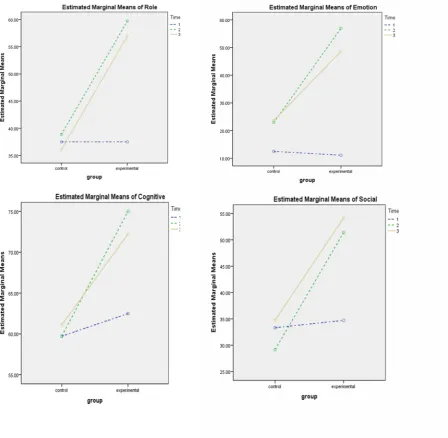
decrease first in fatigue dimension and then in pain dimension and it showed an in-crease of global life quality in these dimen-sions. The total score of the patients’ global life quality also increased from pre-test to post-test suggesting an increase in the glob-al life quglob-ality of the patients. The mean and standard deviation of different dimensions of specific life quality in functional scales (body image, sexual functioning and future perspective) and symptoms (systematic therapy side effects and sadness due to hair loss) in 3 stages of pre-test, post-test and Fig. 1. Time Interaction Effect × Group on Global Life Quality Functional Dimensions A: Role B: Emotion C: Cognitive D: Social
follow-up in the experimental and control groups are reported in Table3. Findings re-vealed that scores of body image, sexual functioning and future perspective in-creased in the experimental group from the pre-test to the post-test. Scores increase in future perspective is very egregious. In the body image and future perspective, the spe-cific life quality scores had a relative con-sistency in the follow-up but in sexual functioning, the scores decreased in the fol-low-up. Specific life quality in symptoms scale decreased in the side effect dimension showing an increase of specific life quality in this dimension. However, the total score of the specific life quality in the dimension of sadness due to hair loss dimension had no changes. The average fatigue severity scores in the three stages of pre-test, post-test and follow-up in the experimental group suggests a score decrease in the
post-test and scores relative consistency in the follow-up and it shows patients’ fatigue severity reduction (Table 3).
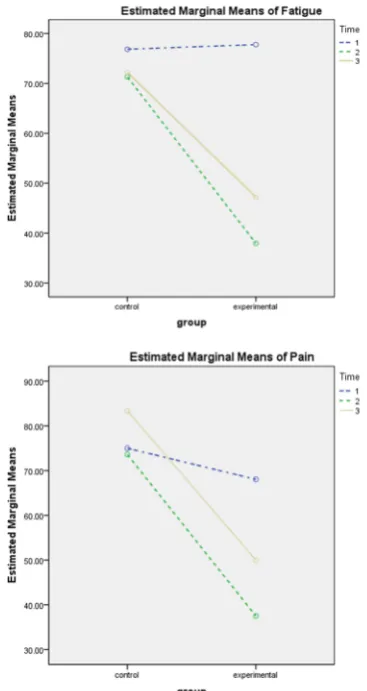
In this study, the global life quality scores, specific life quality and fatigue se-verity in the experimental and control groups were analyzed by multivariate re-peated measurement model. First, the as-sumptions of using the model were exam-ined. The results of sphericity Mauchly test showed that sphericity assumption was not rejected in emotion, fatigue and fatigue se-verity dimensions but it was rejected in other assumptions, so the corrected value of the Huynh - Feldt was used for compari-sons. The results of the multivariate tests showed that the effect of time factor (pre-test, post-test and follow-up) was signifi-cant (p< 0.001, η = 0.72) and also time factor interaction effect × group was signif-icant (p< 0.001, η = 0.61). The results of univariate tests in global life quality scale showed that time main effect(pre-test, post-test and follow-up) was not significant in the physical dimension (p> 0.05) but the main effect of nausea and vomiting dimen-sion was significant (p< 0.05, η = 0.15). It also tested the effects of two-way. Findings suggested that the interaction effect of time × group in the functional scale was signifi-cant in role function (p< 0.001, η = 0.33), emotion function (p< 0.001, η = 0.47), cognitive function (p< 0.05, η = 0.15) and social function (p< 0.01, η = 0.27). Find-ings were statistically significant and the greatest size effect was emotion function, that is, this treatment had the greatest effect on the emotion function. The interaction effect of time × group in symptoms scale in fatigue dimension (p< 0.001, η = 0.55) and pain (p< 0.001, η = 0.33) was significant. The maximum size effect in symptoms scale was related to the fatigue dimension. The interaction effect of time × group on the total quality was also significant (P < 0.05, η = 0.15). The results of the univari-ate tests in specific life quality showed the main effect of time (pre-test, post-test, fol-low-up)in functions scale in the sexual function dimension (p> 0.05) and in symp-Fig. 2. Time Interaction Effect × Group on
Symp-toms Dimensions and Total Score of Global Life Quality A: Fatigue B: Pain
toms scale, but it was significant in the di-mension of sadness due to hair loss (p>0.05). Findings suggested that the inter-action effect of time × group in specific life quality in functions scale of body image dimension (p< 0.05, η = 0.14) and future perspective dimension (p< 0.001, η = 0.31) was significant. In the symptoms scale, the two-way interaction effect of time × group for the systematic therapy side effects was significant (p< 0.001, η = 0.33). The re-sults of the univariate tests in the fatigue severity scale showed that the two-way in-teraction effect of time × group on the fa-tigue severity was significant (p< 0.001, η = 0.61). Findings also demonstrated a significant difference between the experi-mental and control groups in global life quality functions in role (p< 0.001, η = 0.55 ), emotion (p< 0.001, η = 0.67), cog-nitive (p< 0.05, η = 0.20) and social di-mensions (p< 0.001, η = 0.42), but no sig-nificant differences were observed in the physical dimension (p> 0.05).There was a significant difference in global quality symptoms in the two groups in fatigue (p<0.001, η = 0.69) and pain dimensions (p< 0.001, η = 0.67). Total quality also showed significant differences between the two groups (P < 0.05, η = 0.17). Also, find-ings revealed a significant difference in specific life quality functions scale between the experimental and control groups just in the future perspective (p< 0.05, η = 0.35), but no significant differences were found in the body image (p> 0.05) and sexual func-tions (p> 0.05). In addition, in specific life quality symptom, a significant difference was observed between the experimental and control groups in systematic therapy side effects (p< 0.05, η = 0.20) but there was not a significant difference between the two groups in the dimension of sadness due to hair loss (p> 0.05). Findings revealed a significant difference between the experi-mental and control groups in the fatigue severity scale (p<0.001, η = 0.64). To ex-amine the interaction effect, post hoc tests with Bonferroni adjustment were used. Paired comparison findings have been
re-ported in Table 4. The difference between the experimental and control groups in global life quality of functions scale was not significant in pre-test, but the difference was significant between the two groups in post-test and follow-up scores (p< 0.001). In other words, not only the life quality in the role dimension significantly increased after the treatment in the experimental group, but also this increase was main-tained in the follow-up (Fig. 1A). A similar pattern was observed in the emotion and social dimensions i.e., the difference be-tween the two groups was not significant in the emotion and social dimensions in the pre-test, but the difference became signifi-cant between the two groups in the post-test and follow-up (Fig.1B). In the cognitive dimension, the difference was significant between the two groups just in the post-test. The difference between the two groups was not significant in the cognitive dimension in the follow-up, suggesting that the effect of interaction in this dimension was not consistent (Fig.1C). The difference between the two groups in global life quality of symptoms scale in the fatigue and pain di-mensions in the pre-test was not significant, but the difference became significant be-tween the two groups in the post-test and follow-up scores (Fig. 2A, 2B). Although the main effect was significant in nausea and vomiting dimensions, no significant difference was observed between the two groups in the pre-test, post-test, follow-up scores. In the total quality, the difference between the two groups was significant just in the post-test (Fig.2C). Moreover, in the total quality dimension, the difference was not significant between the two groups in the follow-up suggested that the interven-tion effect in this dimension was not con-sistent. To examine the interaction effect, post hoc tests with Bonferroni adjustment were used. In specific life quality of func-tions scales in the body image dimension, the difference was significant between the two groups just in the post-test. The differ-ence was not significant between the groups in the body image in the follow-up
which suggest that the intervention effect in this dimension was not consistent. In the future perspective dimension, the differ-ences were not significant between the two groups in the pre-test, but the difference was significant between the two groups in the post-test and follow-up scores. In oth-er words, life quality in the future poth-erspec- perspec-tive dimension not only increased signifi-cantly after the intervention in the experi-mental group, but also this increase was maintained in the follow-up. In the special life quality of symptoms scale in the sys-tematic therapy side effects dimension, the differences were not significant between the two groups in the pre-test but the differ-ences were significant between the exper-imental and control groups in the pre-test and follow-up scores. The interaction ef-fect time × group on the fatigue severity was examined by the post hoc tests and Bonferroni adjustment. Paired comparisons findings have been reported in Table 4. Furthermore, the differences between the two groups were significant in the pre-test, post-test and follow-up. The differences between the two groups became greater in the fatigue severity in the post-test and fol-low-up compared to the pre-test.
Discussion
The aim of this study was to examine the effectiveness of mindfulness-based stress reduction program on fatigue severity and life quality in patients with breast cancer. The findings of this study revealed that the group mindfulness-based stress reduction program improved the overall life quality functions in patients with cancer. This pro-gram also improved global life quality functions in role, cognitive, emotion and social dimensions. In this regard, its most effectiveness was seen in the emotion func-tion. When implementing this program, pain symptoms and fatigue considerably decreased in patients compared to the base-line and the control group. The maximum effect of this program was seen in improv-ing fatigue. Moreover, the specific life quality of the patients in the body image
and future functions showed a considerable improvement in the post-test and follow-up in the experimental group compared to the control group. After implementing the group mindfulness-based stress reduction program, the treatment side effect symp-toms in the specific life quality significant-ly improved in the experimental group compared to the baseline and the control group. These findings are consistent with those of previous studies that showed this program can be an effective mental-social intervention for improving life quality (17, 21). Carlson and Space found that perform-ing mindfulness meditation, in addition to its effect on stress reduction, also causes a significant increase in mental clarity, men-tal health and decreases physical stress in patients. These researchers revealed that the mindfulness-based stress reduction pro-gram can play an important role in the im-provement of symptoms and can bring about positive results for the patients after participating in this program (22). Another finding of this study suggested that global life quality in the physical dimension was not improved significantly. No significant improvement was found in the nausea and vomiting dimension before and after the program. Therefore, it can be suggested that although the mindfulness-based stress reduction program improves psychological variables of global and specific life quality, we cannot expect it to have a particular ef-fect on the physical dimension. The find-ings of this study were consistent with those of previous studies (18, 21), and the mindfulness-based stress reduction pro-gram showed a considerable improvement in the global life quality of patients with breast cancer. In the specific life quality, the mindfulness-based stress reduction pro-gram did not have a significant effect on sexual functions and sadness due to hair loss. One of the probable explanations is that sexual function is not just related to the individual, and questions asked about sexu-al interactions (questions 15 and 16) in the hospital is not appropriate. Evaluation of sexual desire is associated with
orientation. In other words, a person must be placed in a position to be able to have an appropriate assessment of sexual function. The finding of this research is consistent with that of previous researches (22, 23, 26). The group mindfulness-based stress reduction program intervention causes mindfulness by meditation practices, and mindfulness causes an increase in self-awareness and self-acceptance ability in patients. Mindfulness is not a method or technique, but it is defined as an available technique to reduce pain and increase posi-tive qualities such as consciousness, in-sight, wisdom and sympathy (16). Using relaxation training widely and emphasizing its importance shows that it is a valuable stress management skill that should be used regularly in individual’s life and should be a consistent part of the individual’s coping skills. Expressing emotions during all ses-sions of the program has different treatment advantages. Mindfulness through attention self-regulation by meditation practices af-fects affective and sensory components of the body. Regular exercise of Hatha yoga increases skeletal-muscle flexibility, strength and balance, and helps the individ-ual to experience deep states of relaxation and awareness (32). The treatment effects of the group mindfulness-based stress re-duction program increase by group-related factors, cause an increase in the ability to cope and adapt, to make sense of hope, to be more responsive to treatment, and so they affect more treatment consequences (33). Based on the findings of the present research, it seems that psychological inter-ventions such as the mindfulness -based stress reduction program and conscious yo-ga can be effective in increasing mental health in patients with breast cancer. This study has some limitations. The first limita-tion of this study was its small sample size. Although the number of participants did not decrease in this study, the small sample size was one of its limitations that could hinder accurate measurement of the program ef-fect. The second limitation was related to using self-report tools. These tools have
some essential problems (measurement er-ror, lack of self-insight and etc.) The third limitation was related to lack of contextual and individual factors control. It is possible that the participants overestimated the ef-fect of the program because of some con-textual factors. Another possible hypothesis is that the participants may have overesti-mated the effect of the program because of personal willingness, optimism and similar factors. Therefore, it is recommended to conduct pseudo-therapy programs (placebo program) on control groups in the future studies to control the expected effect. It is also recommended to conduct further stud-ies on this topic with a larger sample size to achieve a true effect size. This study was conducted on patients referring to Imam Hossein hospital in Tehran. It is recom-mended that this program be implemented on similar patients in other hospitals to ex-pand the findings of this study.
Conclusion
According to the results, the group mind-fulness - based stress reduction program is an effective method for decreasing the fa-tigue severity and improving global and specific life quality in women with breast cancer.
Acknowledgments
We deeply appreciate the support and ef-forts of all those who helped us in conduct-ing this study, particularly doctor Sheibani, the president of the Division of Oncology, doctor Ghanbary Motlagh, the director of the Cancer Prevention and Control Pro-gram, and the staff of the Division of On-cology at Imam Hossein hospital.
References
1. Chen PY, Chang HC. The coping process of pa-tients with cancer. EurJOncolNursing. 2012; 16(1): 10-6
2. Akbari ME, Akbari M, Zirakzadeh H, Nafisi N, Heidari A, Hosseinizadegan Shirazi F. Margin Sta-tus Influence on the Outcome of Patients Treated with Breast Conserving Surgery. I JCP. 2011; 4(4):177-2.(Persian).
3. Murat Tuncer A. Cancer Report: APOCP.
kara-Turkey: Publisher New hope in health founda-tion. 2010
4. Nezu A, Nezu C, Felgoise H, McClure K, Houts S. Project Genesis: assessing the efficacy of prob-lem-solving therapy for distressed adult cancer pa-tients .J Consult Clin Psychol. 2003; 71, 1036-48.
5.Ayers S, Baum A, McManus C, Newman S, Wallston K, et al. Cambridge Handbook of Psychol-ogy ,Health and Medicine ,Second edition. Cam-bridge University Press. 2007.
6. Kim SH, Son BH, Hwang SY, Han W, Yang JH, Lee S, Yun YH. Fatigue and depression in dis-ease-free breast cancer survivors: prevalence, corre-lates, and association with quality of life. JPSM. 2008; 35: 644-56.
7. Dagnelie PC, Pijls-Johannesma MC. Lambin P, Beijer S, DeRuysscher D, Kempen GI. Impact of fatigue on overall quality of life in lung and breast cancer patients selected for high dose radio therapy. Ann Onco. 2007; 18: 940-54.
8. Bardwell WA, Ancoli-Israel S. Breast Cancer and Fatigue. Sleep Med Clin 2008; 3: 61-71.
9. Bower JE, Ganz PA, Desmond KA, Bernaards C, Rowland JH, Meyerowitz BE. Fatigue in long-term breast carcinoma survivors: a longitudinal in-vestigationCancer.2006; 106: 751 - 68.
10. Ali Pour A. An Introduction to health psychol-ogy 2nd ed. Tehran: Payam Noor University.2011; 120-88.(In Persian)
11. Kaminski M, Kimoff R, Schwartzman K, Tro-jan D. Sleep disorders and fatigue in multiple scle-rosis: Evidence for association and interaction J Neurol Sci. 2011; 302(1):7-13
12. Osborn K, Wraa A. Medical Surgical Nursing preparation for reactiontoday.2011; 28:627- 2.
13. Kabat-Zinn J. Mindfulness-based interventions in context: past, present, and future. American Psy-chological Association. 2003; 10(2):144-6.
14. Kabat-Zinn J. Coming to our senses: Healing ourselves and the world through Mindfulness. New York; Hyperion 2005.
15. Matousek R, Dobkin L, Pruessner J. Cortisol as a marker for improvement in mindfulness-based stress reduction. Complement TherClinPract. 2010; 16: 13-19
16. Brantley J. Mindfulness-Based Stress Reduc-tion. In S.M. Orsillo & L. Roemer (Eds), Accptance and mindfulness-based approaches to anxiety: Con-ceptualization and treatment, New York: Springer. 2005;131-45.
17. Baer R. Mindfulness-based treatment ap-proaches: Clinician's guide to evidence base and applications, San Diego: Elsevier.2006
18. Speca M, Carlson L, Goodey E, Angen M. A randomized wait-list controlled clinical trial: The effect of a mindfulness meditation-based stress re-duction program on mood and symptoms of stress in cancer outpatients. Psychosomatic Med.2010; 62: 613-22.
19. Carlson L, Speca M, Patel K, Goodey E.
Mindfulness-based stress reduction in relation to quality of life, mood, symptoms of stress, and im-mune parameters in breast and prostate cancer out patients.Psychosom Med.2003; 65: 571-81.
20. Carlson L, Speca M. Mind fulness-based can-cer recovery. Oakland, CA: New Harbinger.2011; 17-31.
21. Lengacher C, Barta M, Jacobsen P, Kip K, Shelton M, Budhrani P, et al. Feasibility of a Mind-fulness-Based Stress Reduction Program for Early-Stage Breast Cancer Survivors. J Holist Nurs. 2011; 29(1):107-117.
22. Matchim Y, Armer J, Stewart B. Effects of Mindfulness-Based Stress Reduction (MBSR) on Health among Breast Cancer Survivors. West J Nurs.2011; 33(1): 996-101
23. Forti A. Mindfulness and quality of life among breast cancer survivors. Carolina: Harvard Health Publications.2011.http:// Library.uncg.edu.
24. Carlson L, Speca M, Patel K, Goodey E. Mindfulness-based stress reduction in relation to quality of life, mood, symptoms of stress, and levels of cortisol, dehydrepiandrosteronesulfate, and mela-tonin in breast and prostate cancer outpatientsPsy-choneuroendocrinology.2004; 29: 448-74.
25. CarlsonL, Speca M, FarisP, Patel K. One year pre-post intervention follow-up of psychological, immune, endocrine and blood pressure outcomes of mindfulness-based stress reduction in breast and prostate cancer outpatients. Brain Behave Immune. 2007; 21:1038-49.
26. Flugel Colle K, Cha S, LoehrerL, Bauer B, Wahner-Roedler D. Measurement of quality of life and participant experience with the mindfulness-based stress reduction program. Complementary Therapies in Clinical Practice.2010; 19:36-40.
27. Shannon C, Payne S, Fenlon D. What is the evidence for the use of mindfulness-based interven-tions in cancer care? A review. Psychooncology. 2010;20.
28. Fang C, Reibel D, Longacre M, Rosenzweig S, Campbell D, Douglas S. Enhanced psychosocial well-being following participation in a mindfulness-based stress reduction programis associated with increased natural killer cell activity.2010.J Altern Complement Med, 16, 531-38.http://dx.doi.org/ 10.1089/acm.2009.0018.
29. Shahvarvqy-Farahani A, Zymyan M, Fallah-Pour M. Reliability measures of the Persian version of fatigue in people with MS. Rehabil. 2009; 10(4):46-51. [Persian].
30. Safaee A, Moghimi Dehkordi B. Validation Study of a Quality of Life (QOL) Questionnaire for Use in Iran. APJCP.2007; 8: 543-6.
31. Montazeri A, Harirchi I, Vahdani M, Khaleghi F, Jarvandi S, Ebrahimi M, et al. The EORTC breast cancer-specific quality of life questionnaire (EORTC QLQBR23): translation and validation study of the Iranian version. Qual Life Res. 2000; 9: 177-84.
32. Chaskalon M, Wiley J. The mindful work-place: developing resilient individuals and resonant organizations with MBSR. 2011; 230-2
33. Imel Z, Baldwing S, Bouns K, Mac Coon D.
Beyond the individual: Group effects in mindful-ness-based stress reduction. Psychotherapy Re-search.2008; 18:735-2.