R E S E A R C H
Open Access
Peripheral inflammation is associated with remote
global gene expression changes in the brain
Carolyn A Thomson
1, Alison McColl
1, Jonathan Cavanagh
2*†and Gerard J Graham
1*†Abstract
Background:Although the central nervous system (CNS) was once considered an immunologically privileged site, in recent years it has become increasingly evident that cross talk between the immune system and the CNS does occur. As a result, patients with chronic inflammatory diseases, such as rheumatoid arthritis, inflammatory bowel disease or psoriasis, are often further burdened with neuropsychiatric symptoms, such as depression, anxiety and fatigue. Despite the recent advances in our understanding of neuroimmune communication pathways, the precise effect of peripheral immune activation on neural circuitry remains unclear. Utilizing transcriptomics in a well-characterized murine model of systemic inflammation, we have started to investigate the molecular
mechanisms by which inflammation originating in the periphery can induce transcriptional modulation in the brain. Methods:Several different systemic and tissue-specific models of peripheral toll-like-receptor-(TLR)-driven
(lipopolysaccharide (LPS), lipoteichoic acid and Imiquimod) and sterile (tumour necrosis factor (TNF) and 12-O-tetradecanoylphorbol-13-acetate (TPA)) inflammation were induced in C57BL/6 mice. Whole brain
transcriptional profiles were assessed and compared 48 hours after intraperitoneal injection of lipopolysaccharide or vehicle, using Affymetrix GeneChip microarrays. Target gene induction, identified by microarray analysis, was validated independently using qPCR. Expression of the same panel of target genes was then investigated in a number of sterile and other TLR-dependent models of peripheral inflammation.
Results:Microarray analysis of whole brains collected 48 hr after LPS challenge revealed increased transcription of a range of interferon-stimulated genes (ISGs) in the brain. In addition to acute LPS challenge, ISGs were induced in the brain following both chronic LPS-induced systemic inflammation and Imiquimod-induced skin inflammation. Unique to the brain, this transcriptional response is indicative of peripherally triggered, interferon-mediated CNS inflammation. Similar models of sterile inflammation and lipoteichoic-acid-induced systemic inflammation did not share the capacity to trigger ISG induction in the brain.
Conclusions:These data highlight ISG induction in the brain as being a consequence of a TLR-induced type I interferon response. As considerable evidence links type I interferons to psychiatric disorders, we hypothesize that interferon production in the brain could represent an important mechanism, linking peripheral TLR-induced inflammation with behavioural changes.
Keywords:cytokines, innate immunity, interferons, interferon-stimulated genes, lipopolysaccharide, neuroimmune communication, neuroinflammation, systemic inflammation, toll-like-receptor ligation
* Correspondence:[email protected]; [email protected]
†Equal contributors
2Institute of Health & Wellbeing, College of Medical & Veterinary Life Sciences, University of Glasgow, Southern General Hospital, Glasgow G51 4TF, UK
1
Institute of Infection, Immunity & Inflammation, College of Medical & Veterinary Life Sciences, University of Glasgow, 120 University Place, Glasgow G12 8TA, UK
Background
By mechanisms that remain to be fully established, sys-temic infection or inflammation can have a profound ef-fect on the central nervous system (CNS), manifesting in a number of behavioural adaptations, as well as fever and increased neuroendocrine activation. Promoting en-ergy conservation and minimizing heat loss, these sick-ness behaviours represent a sound strategy designed to help an organism overcome infection. Symptoms include fever, malaise, anorexia, lethargy and, in severe cases, neuropsychiatric disorders, such as depression and anx-iety [1]. Sickness behaviours occur during acute bacterial or viral infections, but also during chronic inflammatory diseases, such as rheumatoid arthritis, inflammatory bowel disease and psoriasis [2-4]. In the case of the latter, what would be a beneficial, self-limiting, system can become dysregulated. The prolonged depression and anxiety that ensues represents a major burden to patients, not least be-cause these detrimental comorbidities lead to a poorer clinical outcome.
It is becoming increasingly evident that sickness beha-viours are triggered as a result of biological, inflammatory, pathways. In particular, inflammatory cytokines, such as tumour necrosis factorα (TNFα), interleukin-1β(IL-1β) and interleukin-6 (IL-6) play a pivotal role in inducing symptoms of sickness behaviour. Although not a prequisite for any of the psychiatric symptoms, IL-6 is re-quired for the induction of a fever response [5], whereas behavioural changes are thought to be attributable to IL-1βand TNFα. Using animal models, it has been demon-strated that most behavioural symptoms can be induced by peripheral, or central, administration of either IL-1βor TNFα[6,7]. Furthermore, several cytokines have been im-plicated in the manifestation of major depressive disorders in patients with chronic inflammatory diseases. For ex-ample, in a phase III clinical trial in which patients with moderate-to-severe psoriasis were treated with the soluble TNFα receptor etanercept, improvement in depression scores preceded the improvements seen in terms of psor-iasis severity [4]. Supporting the notion of cytokine-induced depression, patients receiving interferon (IFN) α or IFNβtherapy face a risk of experiencing depression as a side effect of treatment [8-12]. Moreover, patients with major depressive disorders, and no clinical signs of inflam-mation, often present with elevated levels of circulating inflammatory cytokines [13]. Therefore, significant quan-tities of literature back the immune system, in particular inflammatory cytokine production, as a key contributor to sickness-induced behavioural changes.
Once considered an immunologically privileged site, the CNS is well fortified against changes in the periphery. However, cross talk does occur and, as a result, much research has gone into elucidating putative routes of immune-to-brain communication. In spite of this, the
precise effect of peripheral immune activation on neural circuitry remains unclear. With the aim of better unravel-ling neuroimmune communication pathways, and the downstream consequences of peripheral inflammation on the brain, we compared gene expression in the brains of mice following several different sterile (tumour necrosis factor (TNF) and 12-O-tetradecanoylphorbol-13-acetate (TPA) and toll-like-receptor-(TLR)-dependent (lipopoly-saccharide (LPS), lipoteichoic acid (LTA) and Imiquimod) models of peripheral inflammation. We also compared gene expression in the brain with that of peripheral blood leucocytes (PBLs). Lastly, we explored a potential molecular mechanism by which inflammation originat-ing in the periphery can induce transcriptional modula-tion in the brain.
Methods Mice
Wild type C57BL/6 mice (7 to 8 weeks old, 20 to 25 g) were purchased from Harlan Laboratories. Mice were maintained in specific pathogen-free conditions in stan-dard caging in the Central Research Facility at the University of Glasgow and treated with sterile (TNF and TPA) and TLR ligand-based (LPS, LTA and Imiquimod) inflammatory agents as described. For microarray experiments, a mini-mum of three biological replicates are required to allow sta-tistical analysis of the data [14]. Three mice were used per study arm for all our microarray experiments and four or five mice each for qPCR-based experiments, to ensure the statistical robustness of the data. All experiments re-ceived ethical approval and were performed under the auspices of UK Home Office Licences.
Acute inflammatory models
For acute LPS-induced inflammation, mice were injected intraperitoneally (i.p.) with 100 μl of 1 mg/ml LPS (≈4 mg/kg), derived from Escherichia coli serotype 055:B5 (Sigma, St. Louis, MO, USA, or an equivalent volume of vehicle (PBS). For TNFα- or LTA-induced inflammation, mice were injected intravenously (i.v.) with two doses of 1μg recombinant TNFα(Peprotech, Rocky Hill, NJ, USA), two doses of 500μg LTA (Sigma, St. Louis, MO, USA) or two doses of an equivalent volume (100μl) of vehicle (ste-rile H2O) at 0 and 24 hours. Mice were euthanized by CO2 exposure 48 hours after initial injection and perfused for 5 minutes with 20 ml PBS.
Chronic inflammatory models
prior to receiving daily applications of≈80 mg of 5% Imi-quimod (Aldara™, MEDA Ab, Stockholm, Sweden) cream [15], 150μl of 100 μM TPA, or an equivalent volume of Vaseline (Unilever, Leatherhead, UK) or acetone control. Mice were treated for 5 consecutive days as described pre-viously [15]. All mice were euthanized by CO2exposure 24 hours after final treatment and perfused for 5 minutes with 20 ml PBS.
ELISA
Blood was collected from tail veins (approximately 300μl) prior to termination of the mice. Plasma was isolated from whole blood by centrifugation. Throughout the study, plasma concentrations of soluble mediators, IL-1β, TNFα and IL-6, were determined using DuoSet ELISA kits (R&D Systems, Minneapolis, MN, USA) according to the manu-facturer’s instructions.
RNA isolation from tissue and peripheral blood leucocytes
Whole brain tissue was snap frozen and stored at−80°C until use. Under RNase-free conditions, brains were ho-mogenized using the TissueLyser LT (Qiagen, Hilden, Germany). RNA was extracted from homogenized tissue using Trizol® (Life Technologies, Invitrogen, Carlsbad, CA, USA) as described by the manufacturers. Isolated RNA was further purified and genomic DNA removed using an RNeasy Mini Kit (Qiagen, Hilden, Germany). Red blood cells were lysed from blood samples using red blood cell lysis buffer (Miltenyi, Cologne, Germany). Under RNase-free conditions, RNA was isolated and genomic DNA was removed from PBLs using an RNeasy Micro Kit (Qiagen, Hilden, Germany).
GeneChip microarray analysis
Microarray assays were performed in the Glasgow Polyo-mics Facility at the University of Glasgow [16]. Briefly, 1 μg of purified total RNA was amplified by in-vitro transcription and converted to sense-strand cDNA using a WT Expression kit (Life Technologies, Invitrogen, Carlsbad, CA, USA). cDNA was then fragmented and labelled using a GeneChip WT Terminal Labelling kit (Affymetrix, Santa Clara, CA, USA). Fragmented cDNA samples were then hybridized to GeneChip Mouse Gene 1.0 ST Arrays (Affymetrix, Santa Clara, CA, USA). Proce-dures were carried out as described by the manufacturers.
To maximize the identification of key differentially expressed genes we utilized two separate software ana-lysis packages (Partek and GeneSpring) and focused on gene expression differences identified using both ap-proaches. As shown in the results section, this reduced the number of genes requiring analysis and provided in-creased confidence in their validity.
Data generated using Partek Genomics Suite were normalized using the robust multichip average (RMA) method, adjusted for GC content. The normalized data were subsequently analyzed using one-way analysis of variance (ANOVA) to determine the significance of each gene in LPS-treated mice compared with vehicle-treated controls. Data generated using GeneSpring GX software were normalized using RMA 16. Normalized data were analyzed using unpaired ttests to determine the signifi-cance of gene expression differences in LPS-treated mice compared with vehicle-treated controls. In both analyses, P values were adjusted for multiple comparisons using the Benjamini-Hochberg multiple testing correction.
Gene ontology terms were assigned to differentially expressed genes using the Database for Annotation, Visualization and Integrated Discovery (DAVID) Bio-informatics Resources v6.7 [17]. Analysis was performed in accordance with two protocols outlined by Huanget al. [18,19]. Significance of enrichment was determined using a modified Fisher’s exact test and a Benjamini-Hochberg multiple testing correction was used to correct for the rate of type I errors. Co-expression of a gene cluster was con-sidered significant forP≤0.05.
Genes were grouped into canonical pathways using Ingenuity Pathway Analysis software (Ingenuity® Systems [20]). Significance of differentially altered pathways was determined using a Fisher’s exact test and a Benjamini-Hochberg multiple testing correction was used to cor-rect for the rate of type I errors. Enrichment of a path-way was considered significant forP≤0.05.
qPCR
Total RNA was reverse transcribed using Quantitect® Re-verse Transcription kit (Qiagen, Hilden, Germany) using random primers. Quantitative real-time PCR (QPCR) am-plifications were performed in triplicate using PerfeCTa® SYBR® Green FastMix® (Quanta Biosystems, Gaithersburg, MD, USA). A 500μM mix of forward and reverse primers was used per reaction. Primers were designed using Pri-mer3 Input software (version 0.4.0) and generated by IDT technologies. Primer sequences are listed in Additional file 1: Table S1. qPCR reactions were performed using a Prism® 7500HT Sequence Detection System (Life Tech-nologies, Invitrogen, CA, USA) for 40 cycles, in accordance with the manufacturer’s guidelines. The absolute copy number was calculated from a standard curve and normal-ized to a reference gene, TATA binding protein (TBP), as previously described [21]. Fold change values were calcu-lated by comparing the normalized copy number of indi-vidual samples with the mean of the control samples.
Histology
performed using the Shandon Citadel 1000 automated tis-sue processor (Thermo scientific). Embedded tistis-sue was then cut into 5μm sections and stained with (H & E) to discern morphology.
Results
Peripheral LPS challenge triggers an inflammatory response in the brain
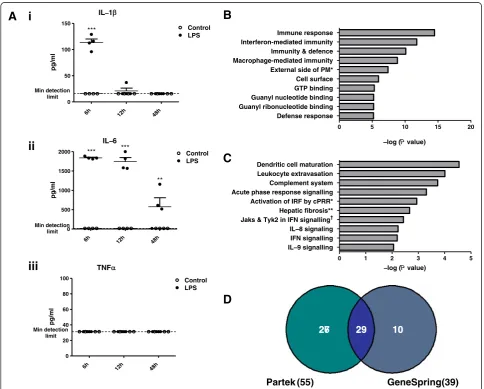
To induce systemic inflammation, mice were injected with a single high dose of LPS (100μg i.p.); 6 hours fol-lowing injection, plasma from all mice injected with LPS displayed significantly elevated levels of IL-1β and IL-6 (Figure 1A). Although TNFαwas not elevated, it has pre-viously been shown that TNFαlevels peak in the circula-tion of C57BL/6 mice 2 hours following LPS injeccircula-tion
(100μg i.p.) and then rapidly decline [22]. Levels of IL-1β returned to baseline between 6 and 12 hours following in-jection and IL-6 levels remained elevated until 48 hours. Thus, systemic LPS injection triggers a potent and rapid inflammatory response in the periphery.
Systemic administration of high doses of LPS is known to activate the innate immune system in the CNS, occur-ring throughout the circumventricular organs, the men-inges and the parenchyma [23,24]. To determine what downstream effects this has on global gene expression throughout the brain, Affymetrix GeneChip microarrays were used to compare transcriptional profiles of brain tissue 48 hours after LPS or vehicle injection. The time point of 48 hours was selected to allow time for the tran-scription and translation of peripheral responses to LPS
B
C
D
0 1 2 3 4 5
IL−9 signalling
IFN signalling
IL−8 signaling
Jaks & Tyk2 in IFN signalling†
Hepatic fibrosis** Activation of IRF by cPRR* Acute phase response signalling Complement system Leukocyte extravasation Dendritic cell maturation
−log (P value)
0 5 10 15 20
Defense response Guanyl ribonucleotide binding Guanyl nucleotide binding GTP binding Cell surface External side of PM* Macrophage-mediated immunity Immunity & defence Interferon-mediated immunity Immune response
−log (P value)
IL−1
6h 12h 48h
0 50 100 150
Control LPS
Min detection limit
***
pg/ml
IL−6
6h 12h 48h
0 500 1000 1500
2000 Control
LPS
*** ***
**
Min detection limit
pg/ml
TNF
6h 12h 48h
0 20 40 60 80
100 Control
LPS
Min detection limit
pg/ml
A
i
ii
iii
10 29
27 29 10
26
Partek (55) GeneSpring(39)
and the subsequent initiation of transcriptional responses in the brain. Whilst it is not possible to define rigorously when these processes will have been completed, 48 hours was selected as a plausible time point. All mice were per-fused extensively (20 ml over 5 minutes) with PBS to re-move contaminating peripheral blood from the harvested brains. When analyzed using Partek Genomics Suite, 85 entities were differentially expressed in the brains by at least 1.5-fold (Additional file 2: Table S2). Therefore, 48 hours after challenge, the transcriptional profile of the brain is altered in response to systemic LPS-induced inflammation.
Differentially expressed genes with a fold change value of 1.5 or greater were subjected to gene ontology clus-tering using the DAVID Bioinformatics Resources. Amongst the most significantly enriched biological pro-cesses are: ‘immune response’, ‘immunity and defence’, ‘macrophage-mediated immunity’ and ‘ interferon-medi-ated immunity’ (Figure 1B). This strongly implies the presence of a remotely triggered immune or inflamma-tory response in the brain.
To complement and validate the data generated using DAVID, the putative interactions and functional rela-tionships between the protein products of the signifi-cantly altered genes were assessed using Ingenuity Pathway Analysis software. Significantly altered path-ways included:‘activation of interferon regulatory factors (IRFs) by cytosolic pattern recognition receptors (cPRRs)’, ‘Jak1, Jak2 and Tyk2 in interferon signalling’ and ‘interferon signalling’ (Figure 1C). The transcrip-tional enhancement of IFN signalling pathway compo-nents, coupled with the enrichment of genes involved in IFN-mediated immunity, suggests that systemic LPS challenge might induce an IFN response in the brain.
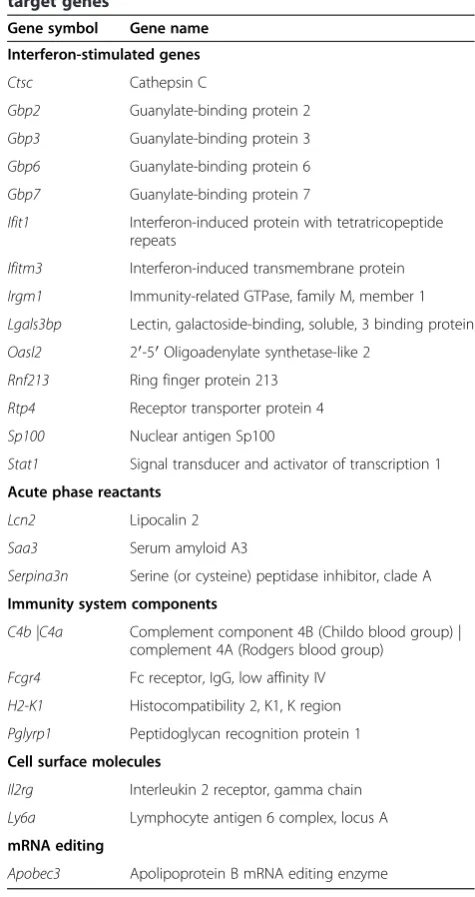
Analyzing the Affymetrix dataset using Partek Genom-ics Suite returned a list of 55 differentially expressed en-tities that satisfied a more stringent fold change cut-off of 2 (Additional file 2: Table S2). Prior to qPCR valid-ation, with the aim of focusing only on the genes that are most robustly differentially expressed, the Affymetrix dataset was reanalyzed using GeneSpring GX analysis software, and the resulting list of significantly regulated genes was compared with that generated using Partek. The 39 entities identified by GeneSpring as being upreg-ulated by at least 2-fold (Additional file 3: Table S3) were then compared with those identified using Partek (Figure 1D). Of the 29 entities that were common to both lists, 24 are known genes. These are grouped according to biological function in Table 1. Strikingly, over half of the genes in this list are interferon-stimulated genes (ISGs). This supports the hypothesis generated from the Ingenuity Pathway analysis; that IFN signalling is in-duced in the brain following peripheral LPS injection. As they have been simultaneously validated using two
bioinformatics approaches, ISGs from this sub-list of genes (Table 1) have subsequently been focused on for the remainder of the study, with the assumption that these genes are most likely to be biologically relevant.
Differential expression of ISGs was confirmed using qPCR Using RNA isolated from an independent experiment, ISG upregulation in the brain following LPS injection was then validated using qPCR. Even though brains were perfused, to control for the possibility of a residual contaminating signal coming from the peripheral blood, the expression of ISGs was compared in the brain and PBLs. In addition to target ISGs (Table 1), upregulation of genes encoding the classic interferon-inducible chemokine Table 1 Functional properties of differentially expressed target genes
Gene symbol Gene name
Interferon-stimulated genes
Ctsc Cathepsin C
Gbp2 Guanylate-binding protein 2
Gbp3 Guanylate-binding protein 3
Gbp6 Guanylate-binding protein 6
Gbp7 Guanylate-binding protein 7
Ifit1 Interferon-induced protein with tetratricopeptide repeats
Ifitm3 Interferon-induced transmembrane protein
Irgm1 Immunity-related GTPase, family M, member 1
Lgals3bp Lectin, galactoside-binding, soluble, 3 binding protein
Oasl2 2′-5′Oligoadenylate synthetase-like 2
Rnf213 Ring finger protein 213
Rtp4 Receptor transporter protein 4
Sp100 Nuclear antigen Sp100
Stat1 Signal transducer and activator of transcription 1
Acute phase reactants
Lcn2 Lipocalin 2
Saa3 Serum amyloid A3
Serpina3n Serine (or cysteine) peptidase inhibitor, clade A
Immunity system components
C4b |C4a Complement component 4B (Childo blood group) | complement 4A (Rodgers blood group)
Fcgr4 Fc receptor, IgG, low affinity IV
H2-K1 Histocompatibility 2, K1, K region
Pglyrp1 Peptidoglycan recognition protein 1
Cell surface molecules
Il2rg Interleukin 2 receptor, gamma chain
Ly6a Lymphocyte antigen 6 complex, locus A
mRNA editing
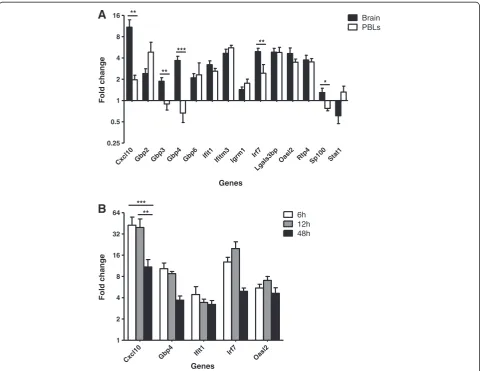
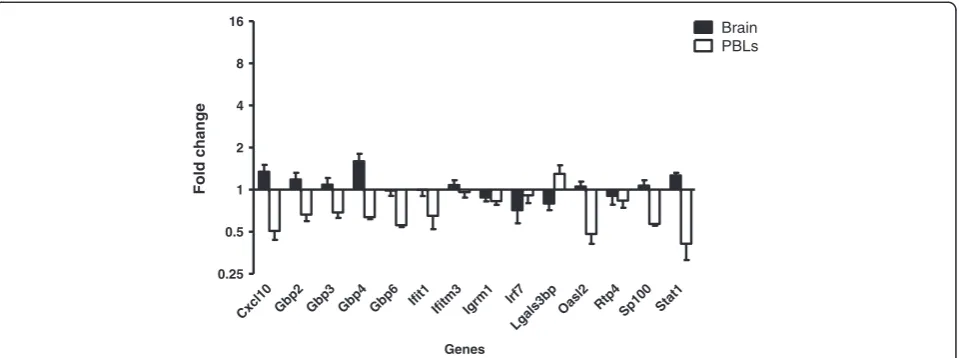
CXCL10, and IRF7, were also validated by qPCR, as was the upregulation of the gene encoding the negative regu-lator of IRF7, guanylate-binding protein (GBP) 4. Owing to the relatively high proportion of GBPs in the dataset, Gbp6andGbp7were arbitrarily excluded from validation. With the exception ofSp100 and Stat1, all ISGs assayed were significantly upregulated in the brains of mice chal-lenged with systemic LPS compared with vehicle controls (Figure 2A, Table 2). Although many of the genes were upregulated to a similar extent in both the brain and PBLs, in terms of fold change, Cxcl10, Irf7, Gbp3 and Gbp4were upregulated independently in the brain. Thus, our data demonstrate a differential pattern of gene ex-pression in the brain from that of the PBLs. Not only do these crucial observations provide evidence of a brain-specific inflammatory response as a result of systemic
LPS injection, but they support the validity of the dataset; confirming an upregulation of target genes whilst simul-taneously verifying that the observed fold changes in the brain are not a secondary effect of blood contamination.
ISGs are rapidly induced in the brain following systemic LPS injection
In the immediate hours following a single injection of LPS, the response in the brain is well characterized. Largely encompassing an acute phase response, the majority of reported effects in the brain are known to peak within 12 hours following peripheral LPS injection [24-26]. To determine whether the upregulation of ISGs is a remnant of an earlier response, we looked at expres-sion levels of a selection of ISGs in the brain 6 hours and 12 hours following injection and compared them
Cxcl10Gbp2 Gbp3 Gbp4 Gbp6
Ifit1
Ifitm3 Igrm1 Irf7
Lgals3bp
Oasl2 Rtp4 Sp100 Stat1 0.25
0.5 1 2 4 8
16 Brain
PBLs
**
** ***
**
*
Genes
Fold change
Cxcl10 Gbp4
Ifit1 Irf7
Oasl2 1
2 4 8 16 32
64 6h
12h 48h
** ***
Genes
Fold change
A
B
with the expression levels at 48 hours (Figure 2B). With the exception ofCxcl10, the expression levels of which are significantly reduced at 48 hours, no significant dif-ferences were observed in the expression levels of ISGs at 48 hours, compared with either 6 hours or 12 hours. Thus, ISGs are induced in the brain by 6 hours follow-ing systemic LPS injection and this response persists until 48 hours after injection.
ISGs were not induced in the brain following peripheral TNFα-induced inflammation
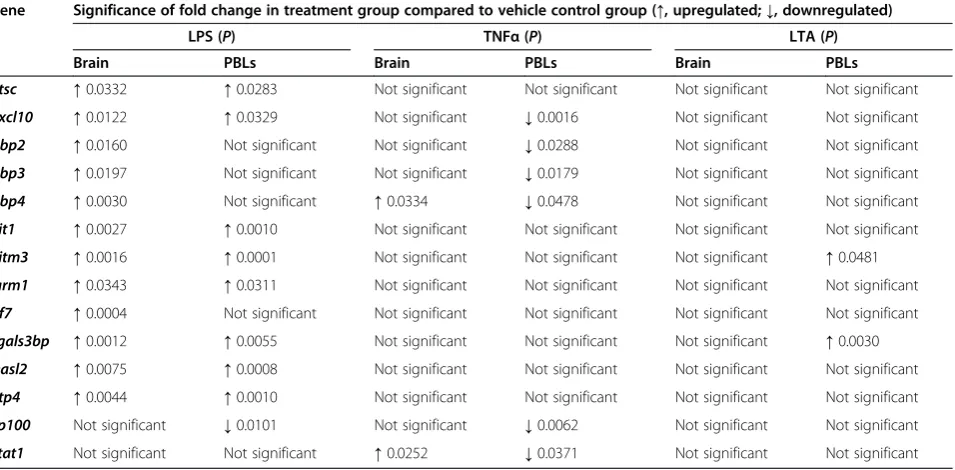
One of the accepted routes of brain sensitization follow-ing systemic LPS challenge is the activation of endothe-lial cells in the brain vasculature by circulating cytokines [26]. To determine whether circulating cytokines were sufficient to induce the expression of ISGs in the brain, mice were challenged with recombinant murine TNFα (1μg i.v. at 0 and 24 hours). After 48 hours, the expres-sion of the target ISGs was quantified by qPCR. Gbp4 andStat1were the only ISGs to show slight but signifi-cant elevation (1.59- and 1.26-fold, respectively) in the brain following TNFα-injection (Figure 3, Table 2). In fact, several ISGs were significantly downregulated in matched PBLs. Given that the concentrations of sys-temic TNFα that would result from the intravenous in-jection of 1μg would be considerably higher than those induced by systemic LPS (levels were undetectable, as shown in Figure 1), these data collectively suggest that central ISG induction following LPS challenge cannot be accounted for simply on the basis of elevated TNFα in the circulation.
Inflammatory cytokines and ISGs remain elevated in the brain during endotoxin tolerance
Although ISGs were not induced in the brain in response to circulating TNFα, the previous experiment did not rule out the contribution of other inflammatory cytokines. With the aim of establishing the temporal pattern of ISG expres-sion in the brain and PBLs in the context of endotoxin tol-erance, when inflammatory cytokine production is known to be ameliorated in the periphery, we injected mice with a single dose of LPS (50μg i.p.) daily for 2, 5 or 7 consecutive days. This contrasts with the use of a single application of 100 μg for the initiation of acute LPS effects. Endotoxin tolerance is an important defence mechanism designed to protect the host against endotoxic shock. In addition to eli-citing expression of a number of proinflammatory genes, initial cellular exposure to LPS triggers the simultaneous downregulation of TLR expression and the induction of several inhibitory molecules that negatively regulate TLR signalling [27]. This culminates in a transient inactivation of various proinflammatory genes by leucocytes in the periphery, including genes encoding the inflammatory cytokines TNFα, IL-1βand IL-6. At the same time, less po-tentially pathogenic genes are primed, such as antimicro-bial effectors [28]. As a consequence, repeated exposure to TLR ligands leads to a dampening of the proinflammatory milieu without compromising host defence. Conversely, cytokine expression has been shown to continue in the brain during endotoxin tolerance [29,30].
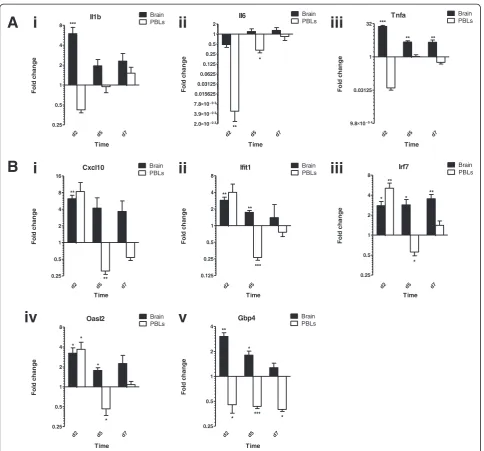
Consistent with previous reports, Il1b and Tnfa were independently upregulated in the brain following mul-tiple LPS challenges (Figure 4A). As anticipated, under Table 2 Significance of differentially expressed target genes following acute inflammatory models
Gene Significance of fold change in treatment group compared to vehicle control group (↑, upregulated;↓, downregulated)
LPS (P) TNFα(P) LTA (P)
Brain PBLs Brain PBLs Brain PBLs
Ctsc ↑0.0332 ↑0.0283 Not significant Not significant Not significant Not significant
Cxcl10 ↑0.0122 ↑0.0329 Not significant ↓0.0016 Not significant Not significant
Gbp2 ↑0.0160 Not significant Not significant ↓0.0288 Not significant Not significant
Gbp3 ↑0.0197 Not significant Not significant ↓0.0179 Not significant Not significant
Gbp4 ↑0.0030 Not significant ↑0.0334 ↓0.0478 Not significant Not significant
Ifit1 ↑0.0027 ↑0.0010 Not significant Not significant Not significant Not significant
Ifitm3 ↑0.0016 ↑0.0001 Not significant Not significant Not significant ↑0.0481
Igrm1 ↑0.0343 ↑0.0311 Not significant Not significant Not significant Not significant
Irf7 ↑0.0004 Not significant Not significant Not significant Not significant Not significant
Lgals3bp ↑0.0012 ↑0.0055 Not significant Not significant Not significant ↑0.0030
Oasl2 ↑0.0075 ↑0.0008 Not significant Not significant Not significant Not significant
Rtp4 ↑0.0044 ↑0.0010 Not significant Not significant Not significant Not significant
Sp100 Not significant ↓0.0101 Not significant ↓0.0062 Not significant Not significant
Stat1 Not significant Not significant ↑0.0252 ↓0.0371 Not significant Not significant
these conditions, inflammatory cytokine transcripts were not induced in PBLs. Interestingly, whilst ISG expression is rapidly dampened in the periphery, expression con-tinues in the brain, gradually decreasing between days 2 and 7 (Figure 4B). At day 2, all ISGs were significantly upregulated in the brains of the LPS-challenged mice. At the same time point, most ISGs were similarly upregu-lated in PBLs as in brain, with the exception of GBP4, which was downregulated. On day 5, ISGs remained in-duced in the brain. All butCxcl10were significantly up-regulated at this time point. In contrast, the same genes were significantly downregulated by PBLs. By day 7, ISG transcript levels began to return to baseline, with the exception of Irf7, which remained significantly induced. Thus, in comparison with PBLs, it would appear that the brain exhibits a specific and prolonged response to re-peated LPS challenge. Not only does this further suggests that LPS-induced ISG expression in the brain is unlikely to be a downstream consequence of peripheral inflamma-tory cytokines, it again suggests differential mechanism of gene regulation in the brain and the PBLs.
Systemic administration of LTA was unable to induce an IFN response in the brain
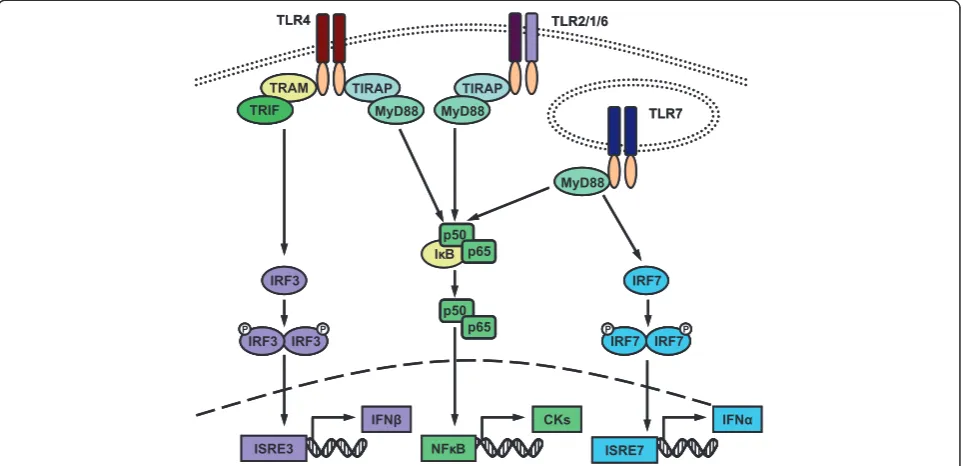
LPS binds to TLR4 and exerts its effects via one of two downstream signalling pathways (Figure 5): activation of NFκB through the classical MyD88-dependent pathway, which results in inflammatory cytokine induction, or IRF3 activation through the domain-containing-adaptor-pro-tein-(TRIF)-dependent pathway, which triggers IFNβ production [31]. As many of the genes upregulated in response to LPS can be regulated by IFNs, it is possible that they are being expressed downstream of LPS-induced
IFNβ production. To further investigate this possibility, mice were challenged systemically with two high doses of the TLR2 ligand, LTA (500 μg i.v. at 0 and 24 hours). TLR2 ligation can only activate NFκB through the clas-sical pathway [31], thereby eliminating the possibility of TRIF-dependent signalling (Figure 5). As we hypothesized, no significant ISG induction was detected in the brain following LTA-injections (Figure 6, Table 2). Ifitm3 and Lgals3bpwere the only ISGs to be significantly induced in PBL. Consequently, activation of the MyD88-dependent pathway alone is insufficient to mimic the brain inflamma-tion that occurs following systemic LPS challenge.
Brain-specific ISG induction is seen following induction of psoriasis-like skin inflammation
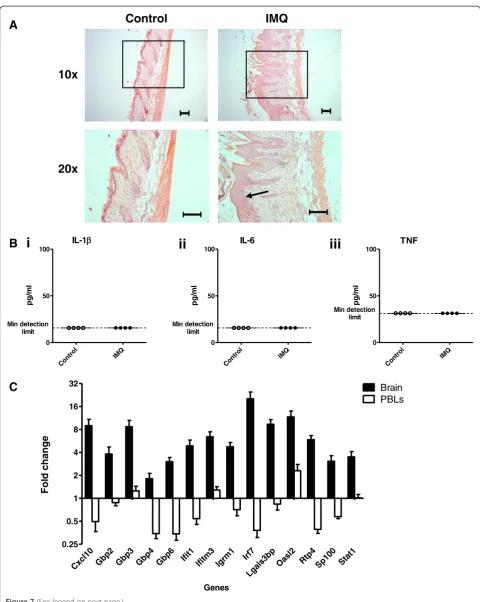
Our data demonstrate that following acute or chronic LPS challenge, the response in the brain culminates in the transcription of a panel of ISGs. To determine whether TLR-induced inflammation could induce ISG expression in a tissue-specific peripheral, but not systemic, model of inflammation, we decided to assess the expression of target ISGs in mouse brains obtained following topical, cutaneous administration of a TLR7 agonist. Mice were challenged daily with topical applications of Imiquimod (IMQ) cream on their dorsal skin for five consecutive days and sacrificed for tissue harvesting 24 hours later. This is a standard method used to create a psoriasis-like pathology [15]. After two applications, all IMQ-treated mice showed signs of psoriasis-like skin inflammation, characterized by skin thickening, erythema and scaling. The severity of the symptoms peaked after the fourth application (data not shown). Figure 7A shows repre-sentative histological images of the skin inflammation
Cxcl10Gbp2 Gbp3 Gbp4 Gbp6 Ifit1
Ifitm3 Igrm1 Irf7
Lgals3bpOasl2 Rtp4 Sp100 Stat1
0.25 0.5 1 2 4 8
16 Brain
PBLs
Genes
Fold change
present after five applications of IMQ or control cream. Like human psoriasis lesions, dorsal skin samples from IMQ-treated mice display epidermal hyperplasia. No signs of inflammation were observed following control cream (Vaseline)-treatment. The concentration of circu-lating IL-1β, IL-6 and TNFα was measured by ELISA. No significant increase in circulating cytokines was detected 24 hours after the final application of IMQ (Figure 7B). Thus, daily applications of IMQ induce a psoriasis-like skin pathology that causes local, but not systemic, inflammation.
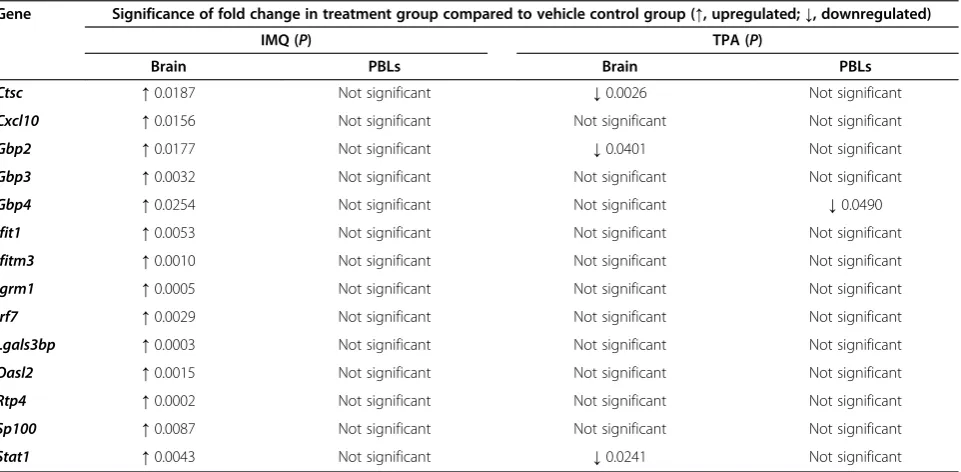
At 24 hours after the final application, all target ISGs were significantly upregulated in the brains of IMQ-treated mice (Figure 7C, Table 3). Importantly, these data identify a common transcriptional signature in the brains of LPS- and IMQ-treated mice. Strikingly, in contrast with the brain, ISG expression in the PBLs did not significantly deviate from baseline. The difference in ISG regulation in the brain and PBLs following IMQ-treatment again high-lights a brain-specific response to peripheral inflammation that does not appear to be mediated by circulating inflam-matory cytokines.
Il1b
d2 d5 d7
0.25 0.5 1 2 4 8 Brain PBLs *** * Time Fol d c h ange Il6
d2 d5 d7
2.0 10- 0 3
3.9 10- 0 3
7.8 10- 0 3
0.015625 0.03125 0.0625 0.125 0.25 0.5 1 2 Brain PBLs ** * Time Fol d c h ange Tnfa
d2 d5 d7
9.8 10- 0 4
0.03125 1 32 Brain PBLs ** ** *** Time Fol d c h ange Cxcl10
d2 d5 d7
0.25 0.5 1 2 4 8 16 Brain PBLs ** ** Time Fol d change Ifit1 d2 d5 0.125 0.25 0.5 1 2 4 8 Brain PBLs *** ** ** Time Fol d c h ange Oasl2
d2 d5 d7
0.25 0.5 1 2 4 8 Brain PBLs * * * * Time Fol d c h ange Gbp4
d2 d5 d7
0.25 0.5 1 2 4 Brain PBLs ** * * *** * Time Fol d c h ange Irf7
d2 d5 d7
0.25 0.5 1 2 4 8 Brain PBLs * * ** ** * Time Fol d change
i
iv
i
ii
v
ii
iii
iii
A
B
Lack of ISG induction following sterile psoriasis-like skin inflammation
Central ISG expression was also measured in a sterile model of skin inflammation to determine the import-ance of TLR ligation. Mice were challenged daily with
topical applications of 12-O-tetradecanoylphorbol-13-acetate (TPA) on their dorsal skin for five consecutive days. Like human psoriasis and IMQ-treatment, TPA is thought to induce skin inflammation in an IL-17 and IL-23-dependent manner [32]. However, unlike IMQ,
TLR4 TLR2/1/6
TLR7
ISRE3 NFκB ISRE7
IRF3
IRF3 IRF3
P P
IRF7 IRF7
P P
IRF7
p50 p65 IκB
p50 p65
IFNβ CKs IFNα
TRAM TRIF
TIRAP MyD88
TIRAP MyD88
MyD88
TLR4 TLR2/1/6
TLR7
Figure 5TLR-induced signalling pathways.When activated, toll-like receptors (TLRs) either heterodimerize, such as TLR2 with either TLR1 or TLR6, or homodimerize to induce signalling pathway activation. Signalling is regulated by adaptor molecules. MyD88 is an adaptor used by all TLRs aside from TLR3. TLR7 recruits MyD88 directly, whereas TLR4 and TLR2 recruit MyD88 through bridging adapter TIRAP. MyD88 recruitment ultimately leads to the activation of nuclear transcription factor NFκB by releasing the p50 and p65 subunits from the NFκB inhibitor IκB. Activated NFκB then translocates to the nucleus to induce the expression of inflammatory cytokines. When activated by TLR7, MyD88 can also induce the phosphorylation and dimerization of interferon regulatory factor 7 (IRF7). This activation of IRF7 triggers the induction of IFNα. An alternative signalling pathway downstream of TLR4 involves the recruitment of adaptor molecule TRIF through bridging protein TRAM. This ultimately leads to activation of IRF3 and subsequent IFNβinduction (For review see [31]). Note that for simplicity the full complement of extracellular proteins involved in TLR for function are not represented in this diagram. Specifically, TLR4 requires MD-2, CD14 and LPS binding protein to bind LPS efficiently.
Cxcl10Gbp2 Gbp3 Gbp4 Gbp6 Ifit1
Ifitm3 Igrm1 Irf7
Lgals3bpOasl2 Rtp4 Sp100 Stat1 0.25
0.5 1 2 4 8
16 Brain
PBLs
Genes
Fold change
Cxcl10 Gb p2
Gb p3
Gb p4
Gb p6 Ifit1
Ifitm3 Igrm1 Irf7 Lga
ls3b p
Oasl2 Rtp 4
Sp100 Stat1 0.25
0.5 1 2 4 8 16
32 Brain
PBLs
Genes
Fol
d c
h
ange
A
B
C
IL-1
Con
trol IMQ
0 50 100
Min detection limit
pg/
m
l
IL-6
Cont
rol IMQ
0 50 100
Min detection limit
pg/
m
l
TNF
Cont
rol IMQ
0 50 100
Min detection limit
pg/
m
l
i
ii
iii
Control
IMQ
10x
20x
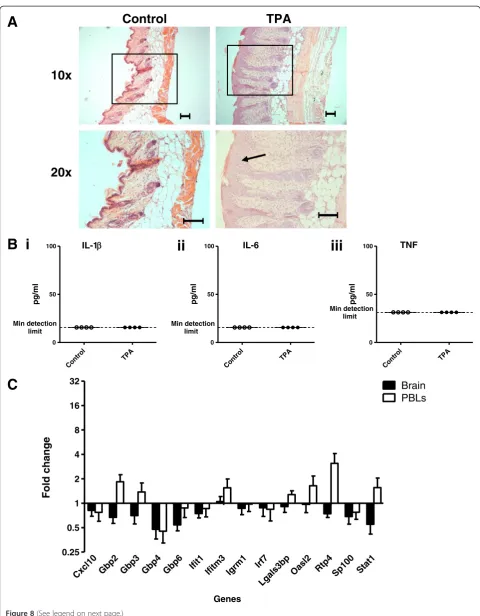
TPA does not result in TLR ligation. After two applica-tions, all TPA-treated mice displayed psoriasis-like skin thickening, lesioning and erythema. Symptoms grad-ually worsened until the end of the model (data not shown). Figure 8A shows histological images of the skin inflammation present after five applications of TPA or vehicle. Like those from the IMQ model, dorsal skin samples taken from TPA-treated mice displayed epider-mal hyperplasia. Only mild signs of inflammation were observed when mice were treated with the vehicle. At 24 hours after the final application, no inflammatory cyto-kines were detected in the circulation (Figure 8B). There-fore, topical applications of TPA induce a psoriasis-like pathology with similar characteristics to the inflammatory skin condition induced by IMQ.
Despite both the IMQ- and TPA-treated mice displaying similar skin pathology, no upregulated ISG expression was detected in the brains of the TPA-treated mice compared with the vehicle-treated control group (Figure 8C, Table 3). This is in stark contrast to the significant induction of all target ISGs that was detected in the brains of the IMQ-treated group.Gbp4 was the only ISG to be significantly upregulated in the PBL. The lack of response in the brain following TPA-treatment suggests that ISG induction in
the brains of IMQ-treated mice is not a generic effect of skin inflammation.
Discussion
Here we demonstrate that systemic administration of LPS or topical administration of IMQ alters the gene ex-pression profile in the brain, inducing the exex-pression of a common panel of ISGs. Differing in kinetics and mag-nitude, this response is distinct from that of the PBLs. We also highlight ISG induction as a consequence of a TLR-induced type I IFN response. As considerable evi-dence links type I IFNs to psychiatric disorders [8-12], IFN production in the brain may represent a significant mechanism, linking peripheral TLR-induced inflamma-tion with neuropsychiatric symptoms.
The differential response of brain and PBLs provides evidence of a brain-specific inflammatory response result-ing from both acute and chronic LPS challenge and IMQ-induced skin inflammation. This was not a downstream by-product of peripheral inflammatory cytokine produc-tion as similar sterile models of inflammaproduc-tion failed to in-duce the same response. Furthermore, ISG expression remained elevated in the brain following daily LPS or IMQ administration, long after the peripheral cytokine
Table 3 Significance of differentially expressed target genes following chronic inflammatory models
Gene Significance of fold change in treatment group compared to vehicle control group (↑, upregulated;↓, downregulated)
IMQ (P) TPA (P)
Brain PBLs Brain PBLs
Ctsc ↑0.0187 Not significant ↓0.0026 Not significant
Cxcl10 ↑0.0156 Not significant Not significant Not significant
Gbp2 ↑0.0177 Not significant ↓0.0401 Not significant
Gbp3 ↑0.0032 Not significant Not significant Not significant
Gbp4 ↑0.0254 Not significant Not significant ↓0.0490
Ifit1 ↑0.0053 Not significant Not significant Not significant
Ifitm3 ↑0.0010 Not significant Not significant Not significant
Igrm1 ↑0.0005 Not significant Not significant Not significant
Irf7 ↑0.0029 Not significant Not significant Not significant
Lgals3bp ↑0.0003 Not significant Not significant Not significant
Oasl2 ↑0.0015 Not significant Not significant Not significant
Rtp4 ↑0.0002 Not significant Not significant Not significant
Sp100 ↑0.0087 Not significant Not significant Not significant
Stat1 ↑0.0043 Not significant ↓0.0241 Not significant
Significance of differential gene expression was calculated separately for individual genes in each tissue using an unpairedttest.
(See figure on previous page.)
Cxcl10 Gbp2 Gbp3 Gbp4 Gbp6 Ifit1
Ifitm3 Igrm1 Irf7 Lgals3bp
Oasl2 Rtp4 Sp100 Stat1 0.25
0.5 1 2 4 8 16
32 Brain
PBLs
Genes
Fold change
A
B
C
IL-1
Control
TPA 0
50 100
Min detection limit
pg/ml
IL-6
Control
TPA 0
50 100
Min detection limit
pg/ml
TNF
Control
TPA 0
50 100
Min detection limit
pg/ml
i
ii
iii
Control
TPA
10x
20x
response was attenuated. Thus, ISG induction was brain-specific and not mediated by peripheral inflammatory cy-tokines in either the skin or the circulation.
As type I IFN production is a classic hallmark of both TLR4-induced IRF3 activation and TLR7-induced IRF7 activation, it would be attractive to propose that a TLR-induced IFN response is responsible for the induction of ISGs in the brain. Supporting this hypothesis, Skelly and colleagues documented a central induction of IFNβ within 2 hours of systemic LPS challenge [33]. No cen-tral or peripheral type I IFN induction was observed fol-lowing systemic TNFαor IL-1βinjection. Furthermore, Leung and colleagues demonstrated that, following sys-temic administration of a TLR7 agonist, IFNα was in-duced in the brain in an IRF7-dependent manner [34]. Both TLR4 and TLR7 are widely expressed in the brain. Although, to our knowledge, the capacity of IMQ to cross the blood–brain barrier (BBB) has not been investigated, a study with radiolabelled LPS suggested that negligible levels cross the intact BBB [35]. Therefore, it is possible that the upregulation of target ISGs, following peripheral LPS or IMQ challenge, occurs via an indirect route down-stream of IRF activation in the periphery. This may in-volve the direct action of peripherally produced IFNs on the CNS, the BBB or afferent nerves. Alternatively, intro-ducing high or repeated doses of LPS or IMQ to the per-iphery may cause BBB breakdown, facilitating the direct action of these TLR ligands on the brain.
To further investigate the involvement of IRF activa-tion in the neuroinflammaactiva-tion induced by systemic LPS injection, mice were challenged with the TLR2 ligand LTA. Consistent with previous reports [36], no response was detectable in the brains of mice following peripheral LTA injection. This lack of response may be due to the inability of TLR2 ligands to stimulate IRF-dependent signalling. Conversely, peripheral stimulation with TLR3 ligands is known to trigger brain inflammation [37,38]. Like the MyD88-independent pathway downstream of TLR4, TLR3 signals through the adaptor molecule TRIF to activate IRF3, ultimately triggering IFNβ production [31]. Subsequently, it would appear that IRF-dependent signalling, whether it occurs in the periphery or the brain, may be a requirement of ISG induction in the brain fol-lowing systemic administration of TLR ligands.
As described, type I IFN therapy is intrinsically linked to severe neuropsychiatric disorders, mainly major depression
[8-12]. It is well known that injecting rodents with LPS initiates a number of behavioural adaptations, including a depression-like behaviour that perseveres after the other sickness behaviours have resolved [1]. A recent re-port has also linked IMQ-treatment to the development of sickness behaviours in rats [39]. The elevated tran-scription of type I ISGs in the brain following LPS or IMQ challenge is a strong indication that type I IFNs are produced during these models. As this family of cy-tokines are well known for their effects on behaviour, type I IFN production in either the periphery or in the brain, following peripheral LPS or IMQ challenge could contribute to the onset of depression-like behaviours in rodents. Formal demonstration of this will require the use of rodent behavioural models in conjunction with appropriate gene-deficient mice.
Conclusions
Toll-like receptor ligands have the capacity to modulate ISG expression distally in a manner that may be dependent on TLR-induced type I IFN production. Whether type I IFNs are produced in the brain or whether peripherally induced IFNs directly access the brain to modulate ISG ex-pression remains open to further investigation; as does the downstream effects of central ISG induction. Owing to the well-established link between type I IFNs and depression, TLR-induced IFN production is worth investigating as a potential key mechanism, linking peripheral inflammation with sickness behaviour.
Additional files
Additional file 1: Table S1.Primer sequences.
Additional file 2: Table S2.Analysis of differentially expressed entities identified using Partek.
Additional file 3: Table S3.Analysis of differentially expressed entities identified using GeneSpring.
Abbreviations
ANOVA:analysis of variance; BBB: blood–brain barrier; CNS: central nervous system; cPRR: cytosolic pattern recognition receptor; DAVID: Database for Annotation, Visualization and Integrated discovery; ELISA: enzyme-linked immunosorbent assay; GBP: guanylate-binding protein; H & E: haematoxylin and eosin; IFN: interferon; IL: interleukin; IMQ: Imiquimod; i.p.: intraperitoneally; IRF: interferon regulatory factor; ISG: interferon-stimulated gene; i.v.: intravenously; IκB: NFκB inhibitor; LPS: lipopolysaccharide; LTA: lipoteichoic acid; NFκB: nuclear factorκ-light-chain-enhancer of activated B cells; PBL: peripheral blood leucocyte; PBS: phosphate-buffered saline; qPCR: quantitative polymerase chain reaction; RMA: robust multichip average; SEM: standard error of the mean; TBP: TATA (See figure on previous page.)
binding protein; TIR: Toll/interleukin-1 receptor; TLR: toll-like receptor; TNF: tumour necrosis factor; TPA: 12-O-tetradecanoylphorbol-13-acetate; TRIF: domain-containing adaptor protein.
Competing interests
The authors declare that they have no competing interests.
Authors’contributions
All data was collected, analyzed and interpreted by CT and AM. Experiments were conceived and designed by JC and GG. The manuscript was drafted by CT and all authors read and approved the final manuscript.
Acknowledgements
We would like to thank Dr Pawel Herzyk and Dr Jing Wang from the Glasgow Polyomics Facility at the University of Glasgow for their assistance with the microarray. We would also like to thank Dr Darren Asquith for his assistance with thein-vivoexperimentation. This study was supported by the Dr Mortimer & Theresa Sackler Foundation and the Medical Research Council.
Received: 12 December 2013 Accepted: 11 March 2014 Published: 8 April 2014
References
1. Dantzer R, O’Connor JC, Freund GG, Johnson RW, Kelley KW:From inflammation to sickness and depression: when the immune system subjugates the brain.Nat Rev Neurosci2008,9:46–56.
2. Addolorato G, Capristo E, Stefanini GF, Gasbarrini G:Inflammatory bowel disease: a study of the association between anxiety and depression, physical morbidity, and nutritional status.Scand J Gastroenterol1997, 32:1013–1021.
3. Dickens C, McGowan L, Clark-Carter D, Creed F:Depression in rheumatoid arthritis: a systematic review of the literature with meta-analysis.
Psychosom Med2002,64:52–60.
4. Tyring S, Gottlieb A, Papp K, Gordon K, Leonardi C, Wang A, Lalla D, Woolley M, Jahreis A, Zitnik R, Cella D, Krishnan R, Tyring S, Gottlieb A, Papp K, Gordon K, Leonardi C, Wang A:Etanercept and clinical outcomes, fatigue, and depression in psoriasis: double-blind placebo-controlled randomised phase III trial.Lancet2007,367:29–35.
5. Chai Z, Gatti S, Toniatti C, Poli V, Bartfai T:Interleukin (IL)-6 gene expression in the central nervous system is necessary for fever response to lipopolysaccharide or IL-1β: a study on IL-6-deficient mice.J Exp Med
1996,183:311–316.
6. Bluthé RM, Pawlowski M, Suarez S, Parnet P, Pittman Q, Kelley KW, Dantzer R:Synergy between tumor necrosis factorαand interleukin-1 in the induction of sickness behavior in mice.Psychoneuroendocrinology
1994,19:197–207.
7. Dantzer R:Cytokine-induced sickness behavior: where do we stand?Brain Behav Immun2001,15:7–24.
8. Kraus MR, Schäfer A, Faller H, Csef H, Scheurlen M:Psychiatric symptoms in patients with chronic hepatitis C receiving interferon alfa-2b therapy.
J Clin Psychiatry2003,64:708–714.
9. Kraus MR, Schäfer A, Schöttker K, Keicher C, Weissbrich B, Hofbauer I, Scheurlen M:Therapy of interferon-induced depression in chronic hepatitis C with citalopram: a randomised, double-blind, placebo-controlled study.Gut2008,57:531–536.
10. Miyaoka H, Otsubo T, Kamijima K, Ishii M, Onuki M, Mitamura K:Depression from interferon therapy in patients with hepatitis C.Am J Psychiatry1999, 156:1120.
11. Musselman DL, Lawson DH, Gumnick JF, Manatunga AK, Penna S, Goodkin RS, Greiner K, Nemeroff CB, Miller AH:Paroxetine for the prevention of depression induced by high-dose interferon alfa.N Engl J Med2001,344:961–966.
12. Neilley LK, Goodin DS, Goodkin DE, Hauser SL:Side effect profile of interferon beta-lb in MS: results of an open label trial.Neurology1996, 46:552–553.
13. Raison CL, Capuron L, Miller AH:Cytokines sing the blues: inflammation and the pathogenesis of depression.Trends Immunol2006,27:24–31. 14. How to Design a Successful Microarray Experiment.[www.brc.dcs.gla.ac.
uk/~rb106x/microarray_tips.htm]
15. van der Fits L, Mourits S, Voerman JS, Kant M, Boon L, Laman JD, Cornelissen F, Mus AM, Florencia E, Prens EP, Lubberts E:Imiquimod-induced psoriasis-like skin inflammation in mice is mediated via the IL-23/IL-17 axis.J Immunol
2009,182:5836–5845.
16. Glasgow Polyomics:Glasgow Polyomics.[www.gla.ac.uk/colleges/mvls/ researchinstitutes/gpf]
17. DAVID Bioinformatics Resources 6.7.[http://david.abcc.ncifcrf.gov/] 18. Huang DW, Sherman BT, Lempicki RA:Systematic and integrative analysis
of large gene lists using DAVID Bioinformatics Resources.Nat Protocols
2008,4:44–57.
19. Huang DW, Sherman BT, Lempicki RA:Bioinformatics enrichment tools: paths toward the comprehensive functional analysis of large gene lists.
Nucleic Acids Res2009,37:1–13. 20. Ingenuity®.[www.ingenuity.com]
21. McKimmie CS, Fazakerley JK:In response to pathogens, glial cells dynamically and differentially regulate toll-like receptor gene expression.
J Neuroimmunol2005,169:116–125.
22. Jones KL, Mansell A, Patella S, Scott BJ, Hedger MP, de Kretser DM, Phillips DJ:Activin A is a critical component of the inflammatory response, and its binding protein, follistatin, reduces mortality in endotoxemia.
Proc Natl Acad Sci2007,104:16239–16244.
23. Nadeau S, Rivest S:Effects of circulating tumor necrosis factor on the neuronal activity and expression of the genes encoding the tumor necrosis factor receptors (p55 and p75) in the rat brain: a view from the blood–brain barrier.Neuroscience1999,93:1449–1464.
24. Quan N, Whiteside M, Herkenham M:Time course and localization patterns of interleukin-1βmessenger RNA expression in brain and pituitary after peripheral administration of lipopolysaccharide.
Neuroscience1998,83:281–293.
25. Buttini M, Boddeke H:Peripheral lipopolysaccharide stimulation induces interleukin-1βmessenger RNA in rat brain microglial cells.Neuroscience
1995,65:523–530.
26. Serrats J, Schiltz JC, García-Bueno B, van Rooijen N, Reyes TM, Sawchenko PE: Dual roles for perivascular macrophages in immune-to-brain signaling.
Neuron2010,65:94–106.
27. Liew FY, Xu D, Brint EK, O’Neill LA:Negative regulation of toll-like receptor-mediated immune responses.Nat Rev Immunol2005,5:446–458. 28. Foster SL, Hargreaves DC, Medzhitov R:Gene-specific control of
inflammation by TLR-induced chromatin modifications.Nature2007, 447:972–978.
29. Chen R, Zhou H, Beltran J, Malellari L, Chang SL:Differential expression of cytokines in the brain and serum during endotoxin tolerance.J Neuroimmunol2005,163:53–72.
30. Faggioni R, Fantuzzi G, Villa P, Buurman W, van Tits LJ, Ghezzi P: Independent down-regulation of central and peripheral tumor necrosis factor production as a result of lipopolysaccharide tolerance in mice.
Infect Immun1995,63:1473–1477.
31. Akira S, Takeda K:Toll-like receptor signalling.Nat Rev Immunol2004, 4:499–511.
32. Nakajima K, Kanda T, Takaishi M, Shiga T, Miyoshi K, Nakajima H, Kamijima R, Tarutani M, Benson JM, Elloso MM, Gutshall LL, Naso MF, Iwakura Y, DiGiovanni J, Sano S:Distinct roles of IL-23 and IL-17 in the development of psoriasis-like lesions in a mouse model.J Immunol
2011,186:4481–4489.
33. Skelly DT, Hennessy E, Dansereau MA, Cunningham C:A systematic analysis of the peripheral and CNS effects of systemic LPS, IL-1β, TNF-α and IL-6 challenges in C57BL/6 mice.PLoS One2013,8:e69123. 34. Leung PY, Stevens SL, Packard AE, Lessov NS, Yang T, Conrad VK, van den
Dungen NN, Simon RP, Stenzel-Poore MP:Toll-like receptor 7 preconditioning induces robust neuroprotection against stroke by a novel type I
interferon-mediated mechanism.Stroke2012,43:1383–1389.
35. Banks WA, Robinson SM:Minimal penetration of lipopolysaccharide across the murine blood–brain barrier.Brain Behav Immun2010,24:102–109. 36. Laflamme N, Soucy GV, Rivest S:Circulating cell wall components derived
from Gram-negative, not Gram-positive, bacteria cause a profound induction of the gene-encoding Toll-like receptor 2 in the CNS.
J Neurochem2001,79:648–657.
38. Konat GW, Borysiewicz E, Fil D, James I:Peripheral challenge with double-stranded RNA elicits global up-regulation of cytokine gene expression in the brain.J Neurosci Res2009,87:1381–1388. 39. Damm J, Wiegand F, Harden LM, Gerstberger R, Rummel C, Roth J:
Fever, sickness behavior, and expression of inflammatory genes in the hypothalamus after systemic and localized subcutaneous stimulation of rats with the toll-like receptor 7 agonist Imiquimod.Neuroscience2012, 201:166–183.
doi:10.1186/1742-2094-11-73
Cite this article as:Thomsonet al.:Peripheral inflammation is associated with remote global gene expression changes in the brain.Journal of Neuroinflammation201411:73.
Submit your next manuscript to BioMed Central and take full advantage of:
• Convenient online submission
• Thorough peer review
• No space constraints or color figure charges
• Immediate publication on acceptance
• Inclusion in PubMed, CAS, Scopus and Google Scholar
• Research which is freely available for redistribution