Available online on 15.11.2019 at http://ujpr.org
Universal Journal of Pharmaceutical Research
An International Peer Reviewed Journal
Open access to Pharmaceutical research
This is an open access article distributed under the terms of the Creative Commons Attribution-Non Commercial Share Alike 4.0 License which permits unrestricted non
commercial use, provided the original work is properly cited Volume 4, Issue 5, 2019
RESEARCH ARTICLE
IN VITRO
DISSOLUTION STUDY OF GLIMEPIRIDE FROM BINARY AND
TERNARY SOLID DISPERSION FORMULATION
Sharmin Akhter
1, Md. Sajjad Hossen
1, Md. Salahuddin
2, Muazzem Ahmed Sunny
1,
Farzana Akther Sathi
3, Md. Shahidul Islam
*41
Department of Pharmacy, BGC Trust University, Bangladesh
2
Bimco Animal Health Ltd.Bangladesh
3The Acme Laboratories Ltd.Bangladesh 4*
Department of Pharmacy, University of Science and Technology Chittagong (USTC), Bangladesh
ABSTRACT
Objective: Glimepiride (GMP) is poorly water soluble drug, so solubility is the main constraint for its oral bioavailability. Because, poor aqueous solubility and slow dissolution rate of the glimepiride lead to irreproducible clinical response or therapeutic failure in some cases due to sub therapeutic plasma drug levels.
Methods: In this study, binary and ternary solid dispersion of glimepiride were prepared with polyethylene glycol 6000 (PEG 6000) and polyethylene glycol 4000 (PEG 4000) at different weight ratios using the solvent evaporation and melting method. Results: It was found the drug was released 0.46% after 5 minutes and only 15.83% within 60 minutes from active glimepiride on the other hand the release pattern of glimepiride from the binary formulation containing PEG 4000 in 1:5 (Formulation coding: G5) showed the best result.
Conclusion: It was found that the ternary different SD formulation containing (PEG4000: Glimepiride: Povidone) in ratio 1:1:0.25 (Formulation G13) showed the best result. The drug was changed to amorphous form after solid dispersion. It was also evident that solid dispersions improve solubility of drug particles thus enhancing dissolution characteristics of drugs they increase the oral bioavailability.
Keywords: Fusion method, glimepiride, poorly soluble drug.
Article Info: Received 22 September 2019; Revised 8 October; Accepted 1 November, Available online 15 November 2019 Cite this
article-Akhter S, Hossen MS, Salahuddin M, Sunny MA, Sathi FA, Islam MS.In vitro dissolution study of glimepiride from binary and ternary solid dispersion formulation. Universal Journal of Pharmaceutical Research 2019; 4(5):7-11.
DOI: https://doi.org/10.22270/ujpr.v4i5.310 Address for Correspondence:
Md. Shahidul Islam, Assistant Professor, Department of Pharmacy, University of Science and Technology Chittagong (USTC) Bangladesh. E-mail: [email protected]
INTRODUCTION
It has studied that, improving oral bioavailability of drugs those given as solid dosage forms remains a challenge for the formulation scientists due to solubility problems. Most of the newly invented chemical entities are poorly water soluble. As a result formulating them as oral solid dosage forms is a hurdle to the specialists. Many techniques have been exercised
to improve oral bioavailability of drugs1. The rate of
dissolution and solubility should not be confused as
they are different concepts, kinetic and
thermodynamic, respectively. The solubilization
kinetics, as well as apparent solubility can be improved after complexation of an active ingredient with cyclodextrin. This can be used in the case of drug with
poor solubility2. The oral route of administration is the
most preferred and widely acceptable route of delivery
due to ease of ingestion for many drugs. Drugs with slow dissolution rate show the incomplete absorption
leading to low bioavailability when orally
administered3. Many of the drugs belong to class II of
the biopharmaceutical classification system showing poor solubility and high permeability Glimepiride shows low, pH dependent solubility. In acidic and neutral aqueous media, glimepiride exhibits very poor
solubility at 37oC (<0.004 mg/ml). In media pH>7,
solubility of drug is slightly increased to 0.02 mg/ml. These poor water soluble drugs provide challenges to deliver them in an active and absorbable form to the desired absorption site using physiologically safe excipients Therefore; one of the most important steps in the development of dosage forms for these drugs is to improve their solubility and/or dissolution rate.
the solid dispersion (SD) technique for dissolution
enhancement of poorly water-soluble drugs4. Among
the various approaches, the SD technique has often proved to be the most successful in improving the dissolution and bioavailability of poorly soluble active pharmaceutical ingredients because it is simple, economic, and advantageous. Sekiguchi and Obi were the first to propose the SD method using water-soluble carriers to improve the dissolution characteristics of poorly water-soluble drugs. Many water-soluble carriers have been employed for preparation of SD of
poorly soluble drugs5. The most common are
polyethylene glycols, polyvinyl pyrrolidone, mannitol and hydroxypropyl methylcellulose. Due to poor solubility in GI fluids, it results in low and erratic oral
bioavailability6. Glimepiride was selected as a model
drug for dissolution enhancement studies in the present investigation. Attempts were made to enhance the dissolution of GMP using a SD technique. SDs of GMP with PVP K 30 was prepared in different ratios using solvent evaporation method and then tablets of best formulation of SD were formulated by using direct
compression method7. Tablet formulations were
prepared by direct compression technique using super
disintegrates povidone in different concentrations8.
Glimepiride is a poorly water-soluble oral
hypoglycemic drug exhibiting poor dissolution
pattern9. The purpose of this work was to increase the
dissolution rate of glimepiride by formation of solid dispersion with different water soluble carriers. Solid dispersion of glimepiride were prepared with polyvinyl pyrrolidone K-30, poloxamer 407, polyethylene glycol 6000 (PEG 6000), polyethylene glycol 4000 (PEG 4000), sodium starch glycolate, ludiflash and lactose at different weight ratios using the solvent evaporation
and melting method10. Physical mixtures of the
poloxamer 407 and povidone K-30 with glimepiride at different ratios were also used. In compare to physical mixtures with povidone K-30 and poloxamer 407, drug release from physical mixture PM (1/9) PVP K-30 was higher (65.93% within 5 min) than drug release from physical mixture with poloxamer 407 (56% within 5 min) the drug release from pure drug was 6.84% within
5 min
Error! Reference source not found.
. With therecent development in the screening of potential therapeutic agents, the number of poorly water soluble drugs have risen sharply and gained large interest due to the challenges in the oral solubility of the drug which leads to the major cause for which the techniques are meant to be implemented. One amongst such techniques is the formulation of solid dispersion
for the solubility enhancement12,16,18.
MATERIALS AND METHODS
Glimepiride was obtained from Eskayef Bangladesh ltd, Gazipur. PEG 4000, PEG 6000 were obtained from Albion laboratories ltd, Eudragit was obtained from The Acme laboratories ltd. Other reagents used were of analytical grade.
Preparation of solid dispersion formulation
Fusion method was used for the preparation of solid dispersion of glimepiride. Desired amount out of drug
and polymers in different ratio were weighted out
accurately and taken in a beaker and melted at 700C.
The mixture was stirred vigorously for uniform mixing and was kept in normal room temperature for 72 hour until a solid mass was formed. Solidified mixture was then grinded thoroughly with the help of mortar and pestle. Then the powdered particle passed through a sieve (mesh size 40).
Figure 1: Solid dispersion formulations of different batches
The resulted solid dispersion formulations were weighted and transferred in a fresh vial and kept in a dessicator until further investigation.
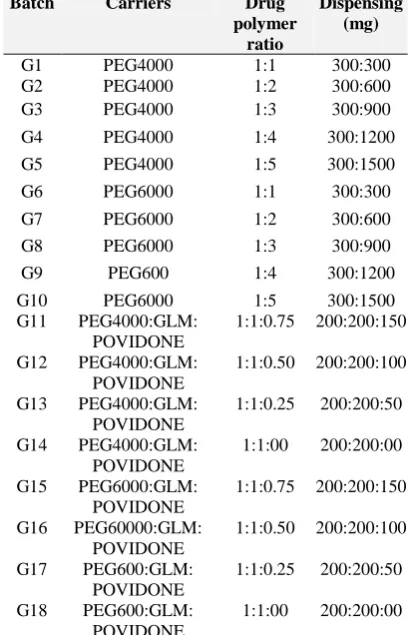
Table 1: Formulation of binary and ternary solid dispersion of glimepiride prepared by fusion method using different polymer at different ratio
Batch Carriers Drug
polymer ratio
Dispensing (mg)
G1 PEG4000 1:1 300:300
G2 PEG4000 1:2 300:600
G3 PEG4000 1:3 300:900
G4 PEG4000 1:4 300:1200
G5 PEG4000 1:5 300:1500
G6 PEG6000 1:1 300:300
G7 PEG6000 1:2 300:600
G8 PEG6000 1:3 300:900
G9 PEG600 1:4 300:1200
G10 PEG6000 1:5 300:1500
G11 PEG4000:GLM: POVIDONE
1:1:0.75 200:200:150
G12 PEG4000:GLM: POVIDONE
1:1:0.50 200:200:100
G13 PEG4000:GLM: POVIDONE
1:1:0.25 200:200:50
G14 PEG4000:GLM: POVIDONE
1:1:00 200:200:00
G15 PEG6000:GLM: POVIDONE
1:1:0.75 200:200:150
G16 PEG60000:GLM: POVIDONE
1:1:0.50 200:200:100
G17 PEG600:GLM: POVIDONE
1:1:0.25 200:200:50
G18 PEG600:GLM: POVIDONE
1:1:00 200:200:00
In-vitro dissolution test for Glimepiride and solid dispersion formulation
was maintained at (37±0.50C) throughout the experiment. The samples contained glimepiride or its equivalent solid dispersion were placed in the dissolution medium. Paddle was used at a stirring rate of 75 rpm. A 5ml aliquot was withdrawn at predetermined time intervals of 5, 15, 30, 45, and 60 min and then 5ml of fresh dissolution medium was replaced to maintain the constant volume of dissolution medium. The absorbance value of the collected samples was measured at 273nm using UV-visible spectrophotometer against dissolution medium as blank. The percent release of drug was calculated using the equation obtained from the standard curve in the
media19.
RESULTS AND DISCUSSION
The aims of present investigation was to enhance the dissolution rate of poorly water soluble drugs glimepiride by preparing the solid dispersion using povidone, PEG 4000, PEG 6000. In current study18 SD dispersion formulations of glimepiride were prepared by Fusion method using different soluble polymers. When glimepiride were dispersed in polymer, its dissolution were enhanced significantly compared with active glimepiride.
Figure 2: Average % release of drug from binary SD formulation containing PEG 4000 with different
ratio
In this study fusion/melting method was used for the
preparation of solid dispersion of glimepiride.
Dissolution profile of active Glimepiride
10 mg of pure Glimepiride was used for dissolution study.
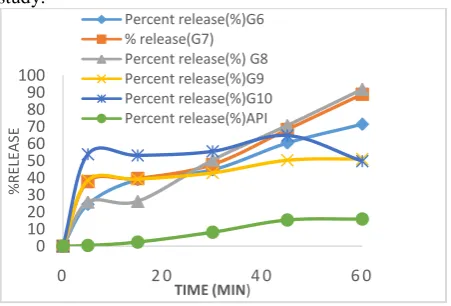
Figure 3: Average % release of drug from SD formulation containing PEG 6000 with different
ratio
It was found that only 0.46% drug was released after 5 minutes and 15.83% was released within 60 minutes time interval. This showed that dissolution profile of glimepiride was very poorly.
In vitro dissolution study of binary and ternary solid dispersion of glimepiride (fusion method)
Solid dispersion of glimepiride with PEG 4000 at different ratio G1 (1:1), G2 (1:2), G3 (1:3), G4 (1:4), G5 (1:5) and active glimepiride (API) were used for dissolution study. It was found that only 0.46% from active glimepiride, 21.46% from formulation G1, 56.30% from G2, 77.30% from G3, 64.15% from G4 and 76.84% from G5, were released after 5 min and 60.77% from G1, 83.66% from G2, 88.83% from G3, 65.47% from G4, 94.36% from G5, 15.29% from active glimepiride were released after 45 min. Finally 72.88% from G1, 97.27% from G2, 90.91% from G3, 75.75% from G4, 99.76% from G5 were released within an hour time interval. Whereas only 15.83% was released from active glimepiride in 1 hour.
Figure 4: Average % release of drug from ternary SD formulation containing PEG 4000 and Povidone.
From the obtained data (Figure 2) we can conclude that, the release pattern of drug from SD formulation containing PEG 4000 has increased gradually when the amount of PEG 4000 was increased. It was observed
that solid dispersion formulation G5 showed
substantially better result in 1:5 ratio in comparison to those of G1, G2, G3, and G4.
Comparative dissolution profile of active
glimepiride and solid dispersion formulation (Glimepiride+PEG 6000) for their different ratio.
Solid dispersion of glimepiride with PEG 6000 at different ratio G6 (1:1), G7 (1:2), G8 (1:3), G9 (1:4), and G10 (1:5) were used for dissolution study. It was found that 24.46% from G6, 37.86% from G7, 25.84% from G8, 38.53% from G9, 53.76% from G10 were released after 5 min and 60.36% from G6, 68.30% from G7, 70.72% from G8, 50.28% from G9, and 64.82% from G10 were released after 45 min. Finally 71.31% from G6, 88.99% from G7, 91.87% from G8, 51.01% from G9 and 49.71% from G10 were released within an hour time interval. From the obtained data (Figure3) it was found that, the release pattern from SD formulation containing PEG 6000 has increased gradually when the amount of PEG 6000 was decreased. It was observed that solid dispersion 0
10 20 30 40 50 60 70 80 90 100
0 2 0 4 0 6 0
%R
EL
EA
SE
TIME(MIN)
Percent release(%)G1 % release(G2) Percent release(%) G3 Percent release(%)G4 Percent release(%)G5 Percent release(%)API
0 10 20 30 40 50 60 70 80 90 100
0 2 0 4 0 6 0
%R
ELEA
SE
TIME (MIN)
Percent release(%)G6 % release(G7) Percent release(%) G8 Percent release(%)G9 Percent release(%)G10 Percent release(%)API
0 10 20 30 40 50 60 70 80 90 100
0 5 1 0 1 5 2 0 2 5 3 0 3 5 4 0 4 5 5 0 5 5 6 0
%R
ELEA
SE
formulation G8 showed their better result in 1:3 ratios in comparison to those of G6, G7, G9, and G10.
Comparative dissolution profile of active
glimepiride and solid dispersion (Glimepiride+ PEG 4000+ Povidone) for their different ratio
Ternary SD formulation of Glimepiride containing PEG 4000 and Povidone at different ratios of G11 (1:1:0.75), G12 (1:1:0.50), G13 (1:1:0.25), G14 (1:1:0) and API were used for dissolution study. It was found that 6% from G11, 1.38% from G12, 64.15% from G13, 21.46% from G14 and 0.46% from API were released after 5 min and 11.48% from G11, 14.19% from G12, 65.47% from G13, 60.77% from G14, 15.29% from API were released after 45 min. Finally 24.69% from G11, 19.35% from G12, 75.75% from G13, 72.88% from G14 and 15.83% from API were released in an hour time interval.
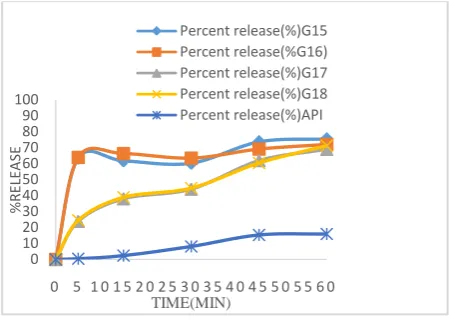
Figure 5: Percent release from ternary SD formulations of glimepiride containing PEG 6000
and Povidone.
From the obtained data (Figure4) we can conclude that the release pattern from the glimepiride containing two water soluble polymer PEG 4000 and Povidone have increased gradually when the amount of second polymer povidone were decreased in different ratio. It was observed SD formulation G13 (1:1:0.75) gave the best result in comparison to those of G11, G12, G14.
Comparative dissolution profile of pure glimepiride and solid dispersion formulation (Glimepiride+ PEG 6000+ Povidone) for their different ratio
Ternary SD formulation of Glimepiride containing PEG 6000 and Povidone at different ratio of G15 (1:1:0.75), G16 (1:1:0.50), G17 (1:1:0.25), G17 (1:1:0) and API were used in dissolution study. It was found that 63.46% from G15, 63.92% from G16, 23.90% from G17, 24.46% from G18 and 0.46% from API were released after 5 min and 73.71% from G15, 69.14% from G16, 61.84% from G17, 60.36% from G18, 15.29% from API were released after 45 min. Finally 75.50% from G15, 72.06% from G16, 69.09% from G17, 71.31% from G18 and 15.83% from API were released in an hour interval.
From the obtained data (Figure 5) we can conclude that the release pattern from the glimepiride containg two water soluble polymer PEG 6000 and Povidone has increased gradually when the amount of second polymer povidone were increased in different ratio. It
was observed SD formulation G15 (1:1:0.75) gave the best result in comparison to those of G16, G17, G18.
Effect of the polymer on the improvement of solubility and dissolution rate of poorly water soluble glimepiride
From the above analysis of the result showed in figure number all of the formulation of soliddispersion of glimepiride successfully made their enhancement of release profile of active glimepiride. It was proved that the water soluble polymers were exclusively able to change the drug in the micro level and finally crystal glimepiride was formed to the amorphous state. There is lots of effect to increase the solubility of poorly water soluble drug. Such as polyethylene glycol (PEG) have the ability to solubilize the drug and improve wettability. The solid dispersion of glimepiride with PEG 6000 and PEG 4000 may be useful to increase the stability, solubility, dissolution and bioavailability of poorly water soluble drug. Another povidone is suitable for the manufacturing of solid dispersion as it possesses forms water soluble complexes with many active drugs. It also act as binder, bioavailability
enhancer and taste master13,14.
Eudragit has a lower content of quaternary ammonium group in the structure and is considered as more permeable to water.Poloxamer act as solubilizing agent and plasticizer for enhancing the solubility and bioavailability of poorly soluble drugs in solid dosage forms. These water soluble polymers may operate in the micro environment immediately surrounding the drug particles in the early stage of dissolution, since the carrier completely dissolves in short time thus enhancing the solubility and dissolution of drug. Finally it can be concluded that dissolution rate of glimepiride was increased by solid dispersion technique which is due to the wettability and spread ability of the precipitated drug by reducing aggregation
in the readily soluble state17.
CONCLUSION
Solid dispersion has attracted considerable interest as an efficient means of improving the dissolution rate and bioavailability of hydrophobic drugs.Glimepiride is an oral blood sugar-lowering drug in a class of medicine for controlling diabetes called Sulfonylurea. In the present study, solid dispersions of Glimepiride with different hydrophilic carriers in different ratios were prepared by physical mixing and fusion method
to improve water solubility and dissolution
characteristics. The preparation of solid dispersion of Glimepiride by fusion method has been proven to be
successful. This research showed that when
Glimepiride was dispersed in suitable water-soluble carriers such as PEG 6000, PEG 4000 and Povidone. Its dissolution was enhanced as compared with pure drug. It was found the drug was released 0.46% after 5 minutes and only 15.83% within 60 minutes from active glimepiride on the other hand the release pattern of glimepiride from the binary formulation containing PEG 4000 in 1:5 (Formulation coding: G5) showed the best result. It was found that the ternary different SD
formulation containing (PEG4000: Glimepiride:
Povidone) in ratio 1:1:0.25 (Formulation coding were:
0 10 20 30 40 50 60 70 80 90 100
0 5 1 0 1 5 2 0 2 5 3 0 3 5 4 0 4 5 5 0 5 5 6 0
%R
ELEA
SE
TIME(MIN)
G13) showed the best result. In-vitro dissolution data also proves that percent release of drug from binary SDs was not similar with ternary SDs. The water soluble carrier may operate in the micro environment (diffusion layer) immediately surrounding the drug particles in the early stage of dissolution, since the carrier completely dissolves in short time thus enhancing the solubility and dissolution of drug.
CONFLICT OF INTEREST
No conflict of interest associated with this work.
AUTHOR’S CONTRIBUTION
The manuscript was carried out, written, and approved in collaboration with all authors.
REFERENCES
1. Dahlberg C, Millqvist-Fureby A, Schuleit M. Surface comparison and contact angle relationship for differently prepared solid dispersion. Europ J Pharm Bio-pharm 2008; 70(2): 478-485.
https://doi.org/10.1016/j.ejpb.2008.05.026
2. Singh S, Baghel RS, Yadav L. A review on solid dispersion. Int J Pharm Life Sci 2011; 2(9): 1078-1095. 3. Costantino HR, Firouzabadian L, Wu C, Carrasquillo KG,
Griebenow K, Zale SE, et al. Protein spray freeze drying. Effect of formulation variables on particle size and stability. J Pharm Sci 2002; 91(2): 388-395.
https://doi.org/10.1002/jps.10059
4. Chiou WL, Riegelman S. Preparation and dissolution characteristics of several fast-release solid dispersions of griseofulvin. J Pharm Sci 1969; 58: 1505–1510.
https://doi.org/10.1002/jps.2600581218
5. Deepti, Dureja H, Madan AK. Solid dispersion adsorbates for enhancement of dissolution rates of drugs. PDA J Pharm Sci Tech 2007; 61(2): 97-101.
6. Bandarkar FS, Khattab IS. Lyophilized Gliclazide poloxamer solid dispersions for enhancement of in vitro
dissolution and in vivo bioavailability. Int J Pharmacy Pharm Sci 2011; 3: 122-127.
https://doi.org/10.1016/j.jddst.2018.06.005
7. Chiou WL, Riegelman S. Pharmaceutical applications of solid dispersion systems. J Pharm Sci 1971; 60: 1281-1302.https://doi.org/10.1002/jps.2600600902
8. Nasir ASM, Aarti MJ, Manoj M, Bari, Randhir B, Chavhan, Barhate SD.New dimensions to Solid
Dispersion. Indo Am J Pharm Res 2013; 3(4): 3247.https://doi.org/10.7324/JAPS.2012.21031
9. Arunachalam A, Karthikeyan M, Konam K, Prasad PH, Sethuraman S, Kumar AA. A review on solid dispersion. Curr Pharm Res 2010; 1(82): 82-90.
https://doi.org/10.7324/JAPS.2012.21031
10.Sonpal RN, Lalwani AN, Darji VC, Patel KR. Solid dispersion; an efficient tool for increasing bioavailability of poorly soluble drugs. Int J Pharm Sci Rev Res 2011; 8(1): 44-45.
https://doi.org/10.4103/2230-973X.96921
11.Agarwal P, Semimul A. A comprehensive review on sustained release matrix tablets: a promising dosage form. Universal J Pharm Res 2018; 3(6): 53-58.
https://doi.org/10.22270/ujpr.v3i6.222
12.Dahlberg C, Millqvist-Fureby A, Schuleit M. Surface comparison and contact angle relationship for differently prepared solid dispersion. Europ J Pharm bio-pharm 2008; 70(2): 478-485.https://doi.org/10.1016/j.ejpb.2008.05.026
13.Kumar A, Kumar K. Solid dispersion-strategy to enhance solubility and dissolution of poorly water soluble drugs. Uni J Pharm Res 2017; 2(5): 54-59.
https://doi.org/10.22270/jddt.v5i2.1060
14.Bhusnure OG, Kazi PA, Gholve SB, Ansari A, Kazi SN. Solid Dispersion: An evergreen method for solubility enhancement of poorly water soluble Drugs. Int J Res Pharm Chem 2014; 4(4):906-918.
15.Jajere UM, Achadu AE. Fabrication and characterization of ezetimibe solid dispersion for solubility enhancement. Universal J Pharm Res 2017; 2(1): 12-16.
https://doi.org/10.22270/ujpr.v2i1.R3
16.Kim KT, Lee JY, Lee MY, Song CK, Choi J, Kim DD. Solid dispersions as a drug delivery system. J Pharm Invest 2011;41(3):125-142
https://doi.org/10.13040/IJPSR.0975-8232.4(6).2094-05
17. Islam MS, Rasheda AL. Development and in vitro dissolution study of binary and ternary solid dispersions of aceclofenac. Universal J Pharml Res 2019; 4(1):
29-36.https://doi.org/10.22270/ujpr.v4i5.310
18.Mooter G: Evaluation of Inutec SP1 as a new carrier in the formulation of solid dispersions for poorly soluble drugs. Int J Pharm 2006; 316: 1–6.
https://doi.org/10.1016/j.ijpharm.2006.02.025
19.Younis MA. Solid dispersion technology, a contemporary overview on a well established technique. Universal J Pharm Res 2017; 2(3): 15-19.