INCREASING COMMUNITY AND FAMILY PARTICIPATION IN CHILD WELFARE AGENCIES AS A WAY TO IMPROVE FAMILIES’ USE OF HEALTH SERVICES
Mónica Pérez Jolles
A dissertation submitted to the faculty of the University of North Carolina at Chapel Hill in partial fulfillment of the requirements for the degree of Doctor of Philosophy in the
Department of Health Policy and Management.
Chapel Hill 2014
Approved by:
Bruce Fried
Bryan Weiner
Christopher Wiesen
Rebecca Wells
ABSTRACT
Mónica Pérez Jolles: Increasing Community and Family Participation in Child Welfare Agencies as a Way to Improve Families’ Use of Health Services
(Under the direction of Rebecca Wells)
Background.
Many families in contact with child protective service agencies do not receive needed health
services. Agencies have used community and family participatory practices as a way to improve
services for families. We lack a better understanding of variation in these practices and on whether
they improve health service use among caregivers and children.
Conceptual Framework.
The socio-technical systems framework underscores agency characteristics of the work
environment as factors associated with variation in agency practices and agencies’ ability to reach
their goals.
Research Objective.
This research is divided into three studies: The first examines the association between
agency characteristics related to quality-oriented culture, flexibility in procedures and caseworker
strain on agency use of community review boards, and formerly served caregiver participation in
planning/policy groups. The second study tests whether caregivers from an agency with these boards
and/or planning/policy groups are more likely to be served through a participatory decision-making
service practice. Finally, study three compares caregiver and child physical and mental health service
use between caregivers served through a participatory practice and those who did not experience it.
Methods.
All study analyses are drawn from the National Survey of Child and Adolescent Well-Being
(NSCAW). Multivariate logistic regressions incorporating weights and the complex survey design of
the data as well as the implementation of propensity scores to address selection bias in study three
Findings.
In the first study, agency characteristics did not explain variation in agency use of community
review boards or caregiver-based planning/policy groups. In the second study, caregiver participation
in planning/policy groups was surprisingly negatively associated with caregiver inclusion in
decision-making during service planning. In the last study, caregiver inclusion in participatory decision-decision-making
did not predict child health service use.
Implications.
Caregiver and family member inclusion in the discussions leading to decision-making during
service planning meetings is a promising strategy for increasing health service use among children in
TABLE OF CONTENTS
LIST OF TABLES ... vi
LIST OF FIGURES ... vii
LIST OF ABBREVIATIONS ... viii
CHAPTER I: INTRODUCTION ... 1
Organization of the Dissertation ... 1
Overview of the Research ... 1
Inclusion of Community Members in Agency Advisory Review Boards ... 2
Inclusion of Caregivers in Decision-Making during Service Planning Meetings ... 3
Overview of the Three Studies by Aim... 5
Decision-Making in the Child Welfare Context ... 10
Policy Significance of this Study ... 11
Organization of Chapters II–V ... 11
CHAPTER II: CHILD WELFARE AGENCY CHARACTERISTICS ASSOCIATED WITH AGENCY USE OF COMMUNITY REVIEW BOARDS AND CAREGIVER-BASED PLANNING/POLICY-MAKING GROUPS ... 12
1. Introduction ... 12
2. Conceptual Framework ... 14
2.1. Service-Quality Oriented Culture ... 14
2.2. Agency Flexibility in Procedures and Rules ... 15
2.3. Caseworker Emotional Strain ... 16
3. Methods ... 16
3.1. Data Sources ... 16
3.2. Sample ... 17
4. Analyses ... 21
5. Results ... 21
5.1. Sample Characteristics ... 21
5.2. Multivariate Logistic Models ... 23
6. Discussion ... 26
6.1. Limitations ... 27
6.2. Conclusions ... 28
CHAPTER III: COMMUNITY PARTICIPATION IN CHILD PROTECTIVE SERVICE AGENCIES: IMPACT ON FAMILY PARTICIPATION IN SERVICE PLANNING ... 29
1. Introduction ... 29
2. Conceptual Framework ... 34
2.1. Collaborative Governance in the Child Protective Service Agency Context ... 34
3. Methods ... 36
3.1 Data Sources ... 36
3.2. Sample ... 37
3.3. Measures... 39
3.4. Data Analysis... 41
4. Results ... 43
4.1. Sample Characteristics ... 43
4.2. Multivariate Logistic Models ... 43
5. Discussion ... 45
5.1. Limitations ... 46
5.2. Conclusions and Future Research ... 48
CHAPTER IV: CAREGIVER PARTICIPATION IN DECISION-MAKING WITHIN CHILD WELFARE AGENCIES AND IMPACT ON INDIVIDUAL HEALTH SERVICE USE: A PROPENSITY SCORE ANALYSIS ... 49
1. Conceptual Framework ... 53
1.2. Cognitive Facilitators... 54
1.3. Participatory Decision-Making in the Child Welfare Context ... 55
2. Methods ... 57
2.1. Data Sources ... 57
2.2. Sample ... 58
2.3. Measures... 58
3. Data Analysis ... 61
4. Results ... 65
5. Discussion ... 74
CHAPTER V: CONCLUSIONS ... 78
Limitations ... 82
Conclusion ... 83
LIST OF TABLES
Table 2.1. Child Protective Service Agency Descriptive Statistics ... 22
Table 2.2. Correlation Matrix ... 23
Table 2.3. Agency Characteristics Associated with Use of Community
Participatory Practices: Multivariate Logistic Regression Results ... 25
Table 3.1. Bivariate Analyses of Item Respondents vs. Non-Respondents ... 38
Table 3.2. Table 3.3. Community Inclusion in CPS Agency Governance and
Caregiver Inclusion in Decision-Making: Multivariate Logistic Regression Results ... 44
Table 4.1. Pre-Matched NSCAW Sample Descriptive Characteristics
for Custodial Caregivers Served by a CPS Agency ... 67
Table 4.2. Pre-Matched Sample Descriptive Characteristics for Children
Served by a CPS Agency and Who Remained at Home ... 68
Table 4.3. Post-Matched Sample Descriptive Characteristics for Custodial
Caregivers Served by a CPS Agency ... 69
Table 4.4. Post-Matched Sample Descriptive Characteristics for Children Who
Remained at Home and Who Were Served by a CPS Agency ... 70
Table 4.5. Bivariate Analyses for Hypothesis Testing on Health Service Use
for the Matched NSCAW Samples ... 72
Table 4.6. Multivariate Analyses of Physical and Mental Health Service Use
LIST OF FIGURES
LIST OF ABBREVIATIONS
CPS Child Protective Service
NSCAW National Survey of Child and Adolescent Wellbeing
CHAPTER I: INTRODUCTION
“Who knows what is best for the people if not the people themselves?”
Merkel-Holguin, L. (2004)
Organization of the Dissertation
Chapter I presents an overview of the research and each proposed aim. This dissertation research
has been divided into three distinct chapters, a summary of decision-making in the child welfare
context, and a final section on the policy implications of this study. Each manuscript is presented in
Chapters II, III, and IV. An overarching conclusion is presented in Chapter V.
Overview of the Research
In the United States, Child Protective Service (CPS) agencies provide or facilitate health services
for a growing number of families as a way to ensure children’s safety and well-being (Child Welfare
Information Gateway., 2008). CPS agencies are part of state and local departments of social services
responsible for receiving reports of suspected child abuse and neglect, determining if the reported
information meets the agency guidelines for child maltreatment, and assessing the urgency with
which the agency must respond to a report. The main goals of CPS agencies are to: (a) ensure the
child’s safety while keeping the child within the family or with family members when possible, and (b)
strengthen the ability of families to protect their children and ensure that the child’s social,
educational, physical, and behavioral needs are met (Child Welfare Information Gateway., 2008).
CPS agencies provide health services directly or collaborate with local agencies to facilitate those
services. Despite CPS agency efforts, many individuals with health needs do not receive services or
end services prematurely (Bai, Wells, & Hillemeier, 2009; Burns et al., 2010; Hurlburt et al., 2004;
Leslie et al., 2005; Simms, Dubowitz, & Szilagyi, 2000). Low health service use among families
served by a CPS agency is particularly troublesome for two reasons. First, child maltreatment has
presence of physical health conditions among children, including developmental delays and diabetes
(Casanueva, Martin, Runyan, Barth, & Bradley, 2008; Svensson, Eriksson, & Janson, 2013). Unmet
mental health needs among caregivers have also been associated with repeated referrals
(“re-referred”) to a CPS agency for potential child maltreatment (English, Marshall, Brummel, & Orme,
1999). Second, health services may not be readily available otherwise because many of these
families come from areas characterized by unemployment, cultural isolation, and an inadequate
safety net of services such as public hospitals and community health centers (Chow, Jaffee, &
Snowden, 2003; Landsverk, Garland, & Leslie, 2002).
CPS agencies are presented with unique opportunities to ensure families’ well-being by, among
other tasks, identifying and facilitating timely access to health services for children and their
caregivers. Yet these agencies have been described as failing to meet families’ best interests and as
uninformed about local communities’ needs and resources (Duncan, Shlonsky, & McLuckie, 2008;
Gambrill, 2008; Schorr, 2000; Tilbury, 2004). This likely often limits CPS agencies’ ability to
accurately assess children and caregivers’ health care needs and make the best service decisions
during their involvement with a family.
The well-being of children in the welfare system has been a focus of policy concern in the United
States for some time now (Raghavan R., 2007). Sponsors of child welfare legislation have called for
increased participation of community and family members to better inform service-related decisions,
and improve family engagement in services (Jones & Royse, 2008). Community members may
include local community leaders, child advocacy groups, and/or former caregivers served by a CPS
agency. Participatory practices have been encouraged by a renewed view of community members as
relevant players in public governance (Collins-Camargo, Jones, & Krusich, 2009). For decades, CPS
agencies have taken action by including community members in CPS agency advisory review boards
(Collins-Camargo, et al., 2009) and caregivers in service planning meetings (Merkel-Holguin, 2004).
Inclusion of Community Members in Agency Advisory Review Boards
CPS agencies have incorporated input from community members through various community
review boards and policy groups. These community review boards are comprised of volunteers who
child welfare system and/or caregivers who were previously served by a CPS agency (Bryan, Jones,
Allen, & Collins-Camargo, 2007). Community members who are part of these boards meet with CPS
agency personnel to review child welfare policies, assess agency performance, and recommend
changes to the agency’s service practices. The goal of these groups is to improve CPS agency
performance and services for families (Ansell & Gash, 2008; Collins-Camargo, et al., 2009). One way
for community members to improve agency policy is by sharing information about their communities’
needs and priorities with CPS agency personnel. Research suggests that community members’ input
directly shared with CPS agency management and staff through their participation in review boards
positively impacts agency practices and service outcomes for families (Jennings, McDonald, &
Henderson, 1996; Litzelfelner, 2001; Wert, Fein, & Haller, 1986).
Inclusion of Caregivers in Decision-Making during Service Planning Meetings
CPS agencies have included caregiver and family members’ input in the conversations that
lead to decision-making during service planning meetings in two ways. First, some CPS agencies
have used a family-centered approach to service practices. Some of these practices are called Family
Group Decision-Making, Family Team Conferencing, and the Unity Model. They differ mainly in how
they structure the service process with families. In the Family Group Decision-Making service model,
the family and the caseworker make collaborative decisions and the service planning process is led
by a trained coordinator, who is independent of the CPS case (King, Feltey, & O'Neill, 1998). In the
Family Team Conferencing model the family and the child’s service team make joint decisions and
often the CPS caseworker serves as the team coordinator. Last, within a Unity Model families have a
private meeting without service providers to develop a service plan for their child prior to sharing with
the service team (Halvorsen, 2003).
All three service practices share the fact that caregivers and family members are given the
opportunity to work through their problems and devise solutions based on their own values, cultures,
and needs and to share their ideas with caseworkers and local service providers during service
planning meetings (Merkel-Holguin, 2004). A family-centered approach to services is considered
good practice for improving families’ experiences and services during their involvement with the child
CPS procedures to serve families, which include background checks of the adults living with the child
to ensure the child’s safety, periodic visits by a case worker to ensure that the child remains in a safe
environment at home, and facilitation of voluntary services for the caregiver and/or the child if
deemed necessary (Child Welfare Information Gateway., 2008). When and how caregiver input is
sought through these standard procedures may depend on the agency’s management guidelines and
caseworker skillset.
The second way for CPS agencies to include caregivers and family members in service planning
meetings is through the inclusion of previously served caregivers in the current family’s service team.
This practice is expected to improve service engagement for current families for two reasons. First,
these previously served caregivers are expected to use their own experiences with the CPS system
to guide and better inform the decisions made by currently served families. Second, these formerly
served caregivers are likely to be perceived as trustworthy allies who understand currently served
caregivers’ situation given their own experiences with the service process (Dolan, Casanuevas,
Smith, Lloyd, & Ringeisen, 2012).
Community input at these two levels-–community review boards and service planning meetings--
have been implemented for decades in the child welfare system. Child welfare scholars have
recognized that policies developed within an inclusion approach are more likely to be based on
consumer preferences (Irvin & Stansbury, 2004) and that family inclusion is paramount given their
role as “active participants in the service experience and largely responsible for the changes sought
by the agency” (Patti, 2000, p. 15). Yet three questions remain unanswered:
First, what are the agency factors that make them more likely to use community review boards?
Not all CPS agencies across the United States have included community members in their review
boards (Collins-Camargo, et al., 2009). We know little about the sources of this variation and what
specific agency characteristics make a CPS agency more likely to include community members in
their boards. In Aim 1, I apply a socio-technical conceptual framework to test three agency
characteristics that are expected to influence CPS agency use of community review boards. This
workers experience and perceive their work environment (i.e., agency’s social environment) as
factors that can support or hinder agency action.
Second, within an agency using community advisory boards, are families more likely to be
included in decision-making during service planning? In Aim 2, based on the collaborative
governance framework I propose that community participation in CPS agency governance is
expected to impact agency policy by permeating service practices with family-inclusion values.
Third, are families who actively participate in decision-making during service planning more likely
to use health services when needed? The activities implemented within participatory service practices
are expected to increase caregivers’ input in decision-making during service planning and
collaborative meetings with other professionals (Connolly & McKenzie, 1999; Weigensberg, Barth, &
Guo, 2009). The participatory decision-making (PDM) framework is applied in Aim 3 to answer this
question. Drawing from the PDM framework, participation in decision-making is expected to facilitate
emotional and cognitive processes that likely impact individual behavior—i.e., caregiver health
service use in this study. Internal mediational processes were not tested in this study.
The perceived need to address these research gaps is shared by some child welfare researchers
who have called for additional studies on the relationship among CPS agency practices, services, and
individual outcomes (NSCAW, 2010). An overview of each aim is provided in the following section.
Overview of the Three Studies by Aim
A separate conceptual framework was implemented to examine each aim in this three-paper
dissertation research. The three frameworks share an overarching assumption that CPS agency
efforts to incorporate community and family input are based on these agencies’ shared values of
democratic participation and as a way to improve agency performance and service engagement
among families served (Halvorsen, 2003; King, et al., 1998; LeRoux, 2009). An overview of the three
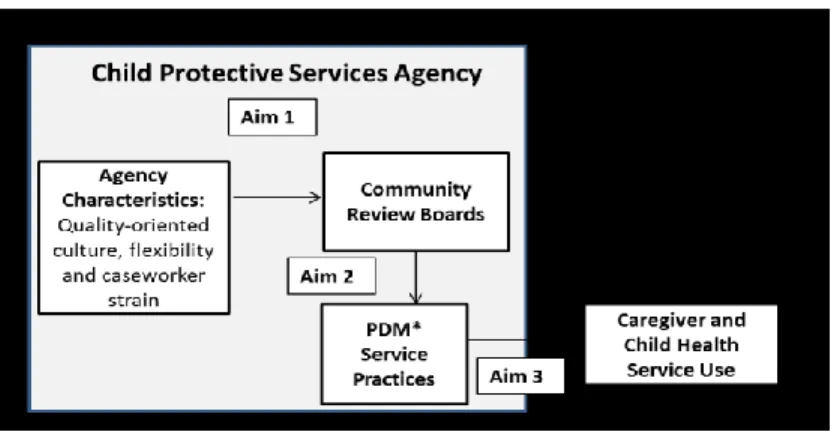
Figure 1. Conceptual Framework
*Participatory Decision-Making
Aim 1: To identify agency characteristics associated with variation in the agency’s use
of community boards and caregiver-based planning/policy groups. A socio-technical systems
framework contributes to this research because it underscores the agency characteristics of the work
environment where policies are implemented to identify variation in agency practices (Rousseau,
1977). This framework was applied to support the selection of three agency characteristics related to
an agency’s social environment as predictors of an agency’s use of community boards and
caregiver-based policy groups. Proponents of this framework posit that we can better understand how agencies
optimize services and reach their goals by considering: a) the agency’s core technology (i.e., types of
policies and services) and b) how workers experience and perceive their work environment
(Cummings, 1978; Rousseau, 1977; Schneider, 1996). Implementation efforts are more likely to be
realized within a work environment that guides and supports those efforts (Schneider, 1996).
The first agency characteristic considered in this study relates to the CPS agency culture. Agency
culture is defined as “the shared beliefs and values that guide the thinking and behavioral style of
individuals” (Garland et al., 2000). Child welfare scholars have argued that certain types of agency
culture promote new approaches in the way the agency does business (Cooke & Rousseau, 1988).
The type of agency culture considered in this study is one characterized by agency norms and
expectations seeking to improve service quality (Glisson, 2002). This service-quality oriented agency
culture has been empirically tested in child welfare and found to be significantly associated with
The second agency characteristic considered in this study relates to the level of agency flexibility
in daily tasks and procedures. The use of community boards and caregiver-based policy groups is
likely to require a level of agency flexibility. That is, agencies are likely to undergo changes in their
routine and procedures to accommodate community members’ needs. For example, community
members may require additional training in the CPS system and procedures, and such training is
likely to require a less technical language than the one used for managers or caseworkers. Agencies
characterized by flexibility would be more able than less flexible agencies to change routines and
procedures to accommodate community members’ needs.
Finally, I proposed that agencies with a lower level of caseworker strain would be more likely to
engage community members in their governance. Caseworker strain is defined as caseworkers’
aggregated perception that their work environment is too emotionally draining and detrimental to their
well-being and success in their work (Glisson & Hemmelgarn, 1998). A less strained workforce is
probably more energized and willing to add the necessary tasks to their professional role to make
citizen participatory practices happen. Based on the reviewed literature, I have concluded that the
proposed associations have not been empirically tested in the child welfare system.
Hypothesis: A higher level of service-quality oriented culture, flexibility in CPS agency service procedures, and a lower level of caseworker strain will increase the likelihood of a CPS
agency use of community review boards and caregiver-based planning/policy groups.
Aim 2: To examine the impact of agency use of community review boards and
caregiver-based planning/policy groups on caregiver inclusion in participatory decision-making service
practices. For the second aim, a collaborative governance framework supports the assumption that
the incorporation of community input into a CPS agency’s governance could reflect a level of
commitment to a participatory and democratic approach to governance (Farmer et al., 2010), which in
turn is expected to impact an agency’s service practices. This study’s main goal is to examine
whether community and family participation within a CPS agency increase the likelihood of
caregiver/child use of health services. Thus, the unit of analysis for Aims 2 and 3 is the caregiver/child
For Aim 2, families served through a participatory service model and by a previously served
caregiver who were part of the current’s family team were compared with families where the
caseworker did not identify a participatory service model as being used with the family. It is likely that
a family that was not served through a participatory service model, as reported by the caseworker,
was served through a standard CPS procedure. This standard procedure is followed by a caseworker
once a report is accepted for investigation by the agency and, as a result, a family is deemed in need
of services.
We hypothesized that compared to children and caregivers from CPS agencies without
community inclusion in agency governance,
Hypothesis 2.1: Children and caregivers from agencies with community review boards and/or caregiver-based planning/policy groups will be more likely to be included in decision-making
during service planning meetings.
Agency efforts to increase families’ participation may also reflect practices where previously
served caregivers are included in the service planning meetings of currently served families.
Previously served caregivers are expected to use their own experiences with the CPS system to
guide and support currently served families (Dolan, et al., 2012).
Hypothesis 2.2: Children and caregivers from agencies with community review boards and caregiver-based planning/policy groups will be more likely to have previously served
caregivers in their service planning meetings.
Aim 3: To assess the impact of participatory decision-making (PDM) service practices on
caregiver and child physical and mental health service use. There is evidence that the use of
participatory service practices are positively associated with mental health service use among
caregivers and/or children compared to health service use by families not served through these
participatory service practices (Glisson & Hemmelgarn, 1998; Weigensberg, et al., 2009). Yet we still
lack insight on how these practices impact the use of health services within specific groups of families
that have been considered in the literature as marginalized in the child welfare system.
In summary, we suggest that caregiver participation in decision-making through a PDM
Hypothesis 3.1: Compared to children and caregivers not served through a PDM service practice, children and caregivers served through PDM service practice will be more likely to
use physical health services when needed.
Hypothesis 3.2: Compared to children and caregivers not served through a PDM service practice, children and caregivers served through PDM service practice will be more likely to
use mental health services when needed.
This study adds to the literature by also including sub-group analyses on the impact of PDM
service practices among racial and ethnic groups because current research has provided mixed
results. Some studies have found no racial and ethnic differences (Crampton & Williams, 2000;
Weigensberg, et al., 2009) while others have shown differences in the impact of PDM service
practices among racial and ethnic groups (Nqui & Flores, 2006). In this study, we propose that
Blacks and Hispanic families served through PDM service practices would have higher likelihood of
health service use than their White counterparts. These participatory service practices provide
opportunities for caregivers to share their cultural values and health service preferences with
caseworkers and other professionals during service planning meetings. This, in turn, is likely to
increase the cultural relevance of those services for families and increase the likelihood of service
use.
We also examined the impact of PDM service practices among re-referred families. Repeated
contact with a CPS agency may increase caregivers’ motivation to participate in decision-making and
use health services in an effort to avoid a subsequent CPS agency referral.
Hypothesis 3.3: Minority and re-referred caregivers and children served through a PDM service practice will be more likely to use physical health services when needed compared to
White families.
Hypothesis 3.4: Minority and re-referred caregiver and children served through a PDM service practice will be more likely to use mental health services when needed compared to
Decision-Making in the Child Welfare Context
The decision-making process at the CPS agency case level is based on county and/or
state-level child welfare policies. The implementation of child welfare policies related to program planning,
resource allocation, and case protocols are initially made at the state or county levels. CPS agencies
nationwide differ widely on whether the state or the county lead that initial input into the decision
making process (Marsh, D'Aunno, & Smith, 2000). Decisions on how to implement those policies are
then handed down to managers and/or caseworker supervisors who work jointly with caseworkers on
how to implement those decisions and on a case-by-case basis.
The benefits of community participation in the child welfare system have been analyzed in the
literature mostly in terms of facilitating core values within the social work profession and as individual
gain for family members who participate in service planning. Participatory efforts are deemed
conducive to self-reliance among families involved with CPS agencies. Self-reliance is one of the core
values in the social work profession (Banks, 2001; Matland, 1995). In addition, caregivers who are
actively involved in decision-making during service planning are more likely to rely on their own
knowledge and skills throughout the process than solely on the decisions made by the caseworker.
This participatory approach is also considered a best practice among child welfare agencies (Smith &
Donovan, 2003).
Consumer participation in public agencies in general has been shown to increase community
members’ understanding and appreciation of the challenges and trade-offs faced by the agencies (Ho
& Coates, 2006). Yet despite shared agreement on the value of this participatory approach for the
participating caregiver as previously described, public agency managers remain skeptical of the
benefits of these practices for agency performance (Moynihan, 2003; Yang & Pandey, 2011). This
study will contribute to the literature by examining factors associated with community participation in
agency governance, the effect of this participation on agency service practices, and ultimately the
impact of caregiver participation in service planning on the caregiver and child’s use of health
Policy Significance of this Study
The prevailing view of the benefits of participation in child welfare is the promotion of individual
core values within the social work profession: self-reliance, education, and engagement. Despite
financial and human investment in these participatory practices and consensus on their value in
child-serving agencies, there is skepticism among managers on the applied impact of these practices
(Collins-Camargo, et al., 2009; Jones, Litzelfelner, & Ford, 2003). Most studies on community
participation have focused on public forums (e.g., neighborhood councils) as the analytical context
(Neshkova & Guo, 2012).
Evidence provided by this study could inform the efforts of health and human service agency
managers, policy leaders, and funding agencies to identify interventions that foster service
improvement for families, that are deemed best practices by child welfare scholars, and that are
implemented in a child welfare setting. This setting has been considered a key point of entry to
services for individuals with physical and mental health needs (Curtis, Dale, & Kendall, 1999).
Empirical evidence that communities and family participation influence CPS agency service practices,
and ultimately service use could potentially influence the advocacy clout that these groups could exert
in how child welfare services are designed and delivered to the families served. In addition, given the
current economic landscape, policy makers and serving agencies cannot afford to allocate limited
resources to participatory practices without enough evidence that these practices are in fact allowing
agencies to better meet the needs of families.
Organization of Chapters II–V
This dissertation research has been divided into three distinct manuscripts and each has
been written in a format for publication in a peer-review journal. These three manuscripts are
CHAPTER II: CHILD WELFARE AGENCY CHARACTERISTICS ASSOCIATED WITH AGENCY USE OF COMMUNITY REVIEW BOARDS AND CAREGIVER-BASED
PLANNING/POLICY-MAKING GROUPS
1. Introduction
Child Protective Service (CPS) agencies have been described as inefficient and uninformed
about local communities’ needs and resources (Duncan, et al., 2008; Gambrill, 2008; Jones, et al.,
2003; Tilbury, 2004). This likely limits CPS agencies’ ability to assess children’s safety risks and
make appropriate “life-altering” decisions, such as removing a child form the home, during their
involvement with the family (Duncan & Shlonsky, 2008, p. 173). Scholars consider a CPS agency’s
ability to make sound decisions at the policy and agency levels as the cornerstone of the child welfare
system (Duncan, et al., 2008).
For over two decades, sponsors of child welfare legislation and scholars have called for
increased community participation in agency decisions (Collins-Camargo, et al., 2009; Jones &
Royse, 2008; Schorr, 2000; Waldfogel, 1998) as a way to improve services for families. In response,
CPS agencies have established and worked with community review boards, in part to comply with
federal mandates (Administration for Children and Families., 1998) as well as out of local initiative
(Child Welfare Information Gateway., n.d.). These community review boards are comprised of
volunteers who represent the agency’s local community. Volunteers could include individuals with
expertise in the child welfare system and/or caregivers who were previously served by a CPS agency
(Jones & Royse, 2008).
Community boards are important to the general public, policy leaders, and managers
because members of the community meet with CPS agency personnel to review child welfare
policies, assess agency performance, and recommend changes to the agency’s service practices.
The ultimate goal of these boards is to improve CPS agency performance and services for families
2009). One way for community members to improve agency policy is by sharing information about
their communities’ needs and priorities with CPS agency personnel.
Despite legislative and public support, as well as human resources allocated to these boards, not
all CPS agencies across the United States have included community members in their boards
(Collins-Camargo, et al., 2009). We know little about the sources of this variation and what specific
agency characteristics make a CPS agency more likely to include community members in their
boards.
A lack of understanding of what agency conditions foster their use of community boards may
negatively impact the sustainability of community participation within CPS agencies. Also, an
inconsistent use of community boards makes it difficult to assess their benefits and may indirectly
lead to inconsistent services for families. Thus, the child welfare field could benefit from empirical
evidence on the factors that facilitate public agencies’ use of community boards.
This study seeks to contribute to the literature by examining the role of CPS agency
characteristics in predicting variation in the use of community boards. We test our proposed
associations using a national sample of public CPS agencies whose directors participated in the 2009
National Survey of Child and Adolescent Wellbeing (NSCAW). Through this approach, we seek to
increase the external validity of our findings while appropriately accounting for agencies’ differing
contextual factors and resources.
This research focuses on three agency characteristics related to how caseworkers experience
and perceive their work environment (i.e., agency’s social environment). The next section provides an
overview of the conceptual framework that supports the proposed associations.
Often, agencies are encouraged or mandated to use community boards without a clear
understanding of the agency conditions that can best support those efforts. This study’s findings
could potentially inform policy leaders and agency managers on whether an agency’s level of service
culture, flexibility and caseworker strain play a role in the use of community boards. This information
in turn could be used to increase the success of current efforts and to develop best practices to better
2. Conceptual Framework
The selection of agency characteristics in this study was supported by a socio-technical
systems framework. This framework originated in the early 1950s as an approach to the design of
organizations where technology and individuals closely interface (Cummings, 1978). This close
interface is particularly relevant in the child welfare system given the caregivers’ perceived role as
“active participants in the service experience and largely responsible for the changes sought by the
agency” (Patti, 2000, p. 15).
The socio-technical framework posits that we can better understand how agencies optimize
services and reach their goals by considering: a) the agency’s core technology (i.e., types of policies
and services) and b) how workers experience and perceive their work environment (i.e., agency’s
social environment) (Curtis, et al., 1999; Rousseau, 1977; Smith & Marsh, 2002). Policies are
implemented by agencies with the expectation of improved performance (Schneider, 1996).
Implementation efforts are more likely to be realized when they are accompanied by a work
environment that “directs and motivates employees efforts” (Schneider, 1996).
In this study, three agency characteristics related to how workers experience and perceive their
work environment (i.e., agency’s social environment) are hypothesized to impact the likelihood of a
CPS agency use of community boards: (a) Service-quality oriented culture, (b) flexibility in daily
routines and practices, and (c) caseworker strain.
2.1. Service-Quality Oriented Culture
Child welfare scholars have argued that certain types of agency culture promote new
approaches in the way the agency does business (Hurlburt, et al., 2004). A type of agency culture
considered in this study is known in the literature as service-quality oriented culture which is
characterized by norms and expectations that prioritize all managerial action to service quality
improvement efforts within the agency. This type of agency culture is expected to increase an
agency’s use of strategies to “gather recommendations for improvements directly from teams of
service providers and advisory groups of community opinion leaders” (Glisson, 2002, p. 248). I
propose that an agency with a service-quality oriented type of culture is likely to impact an agency’s
improvement norms and values are likely to attract a workforce (i.e., management and caseworkers)
with similar individual values. These congruent values may make agencies more receptive to the
implementation of service improvement policies, including the use of community boards, and b) an
agency’s common values are likely to guide the type of practices that are embraced for
implementation. Thus, an agency with service improvement standards is likely to prioritize actions to
set aside funding and personnel for the implementation of policies supportive of these standards. This
service-quality agency culture has been empirically tested in child welfare and has been found to be
significantly associated with higher quality services provided to families. Those services include CPS
agency personnel being available to families and acting in the best interests of each child served
(Glisson & James, 2002). No studies from the reviewed literature have tested the impact of
service-quality culture on community review boards. However, these boards are considered by policy leaders
and managers as service improvement practices within CPS agencies.
2.2. Agency Flexibility in Procedures and Rules
The second characteristic proposed in this study is the agency’s level of flexibility in the daily
procedures and rules. Community participation is likely to require CPS agencies to alter their
communication practices to channel information to their community members and to adjust their
procedures to better accommodate these members’ needs. Thus, it is likely that agencies with a level
of flexibility to accommodate those changes will be more likely to successfully incorporate and
maintain community input. There is evidence that rigid and burdensome administrative rules and
procedures within public administration agencies negatively impact community participation by
hampering the flow of information from the agency to community members (Leslie et al., 2000; Yang
& Pandey, 2011). In the child welfare system, rigidity could be reflected in agencies’ inability to make
the changes needed in the daily routine and procedures to accommodate community and caregiver
participation.
However, formalization of rules and procedures “is necessary for the successful
implementation and maintenance of collaborative activities” (Wandersman, Goodman, & Butterfoss,
2002, p. 267). Some studies have found a positive association between an agency’s level of
commitment to the agency’s goals (Jennings, et al., 1996; Patti, 2000). In the child welfare system,
CPS agencies have been characterized as highly formal and structured agencies (Hasenfeld, 2010b).
It is argued in this study that CPS agencies would need a level of flexibility to adjust their procedures
to accommodate the needs and dynamics of community members. I hypothesize that the level of
flexibility in procedures and rules is positively associated with higher community input within CPS
agencies.
2.3. Caseworker Emotional Strain
Caseworker strain is defined as caseworkers’ perception that their work environment is
emotionally draining and detrimental to their well-being and success in their work (Glisson &
Hemmelgarn, 1998). We propose that agencies with a lower level of caseworker strain will be more
likely to engage community members in their governance. A less strained workforce is likely to be
more energized and willing to add the necessary tasks, to their professional role, to make community
participation in decision-making happen. Those tasks may include actively recruiting volunteer
community members to be part of agency boards and supporting those members’ participation in
agency boards.
Hypothesis: A higher level of service-quality oriented culture, flexibility in CPS agency service procedures, and a lower level of caseworker strain within a CPS agency will increase the
likelihood of a CPS agency use of community boards.
3. Methods
This study used secondary data to examine associations between CPS agency
characteristics and community inclusion in governance.
3.1. Data Sources
All analyses in this study used data from the National Survey of Child Adolescent Well-being
(NSCAW). NSCAW was the first national survey of children involved with child welfare agencies and
sponsored by the Administration for Children and Families, which is part of the U.S. Department of
maltreatment was either confirmed (i.e., substantiated or indicated maltreatment) or not confirmed
(i.e., unsubstantiated) by a CPS agency, based on the evidence threshold required by each state
(Biemer, Dowd, & Webb, 2010). Thus, NSCAW included a vulnerable group of families in contact with
CPS agencies; it was not designed to include all individuals receiving services from a Department of
Social Services (e.g. Temporary Assistance for Needy Families or TANF).
NSCAW includes measures of CPS agency practices and characteristics, as well as child
and caregivers’ physical, social, and psychological health (Dowd, 2010). The NSCAW sampling frame
reflected a two-stage stratified sample design. At the first stage, the United States was divided into
sampling strata and primary sampling units (PSU). PSUs were defined as geographic areas that
covered the population served by one CPS agency. Some CPS agencies serving a small number of
children were combined to form PSUs. For the second stage, researchers used the PSUs as
sampling frames for the selection of children into the NSCAW sample.
Given this study’s interest in examining variation in CPS agency inclusion of community
members in governance, we focused on NSCAW data collected from CPS agency directors
interviewed at baseline. Directors provided information such as their agency’s characteristics, policies
guiding child welfare practice, and service availability and delivery to families (Casanuevas, Horn,
Smith, Dolan, & Ringeisen, 2011). NSCAW included agency-related measures only at baseline, which
was collected between March 2008 and September 2009. The response rate at baseline was 56%,
and probability sample weights accounted for survey non-response.
RTI international, NSCAW’s lead data collection agency, merged additional data from the 2009
Area Resource File into the NSCAW data file using county-level identifiers.
3.2. Sample
The unit of analysis in this study is the CPS agency. The NSCAW sample was comprised of a
national sample of 86 public CPS agencies whose directors (county, local, or assigned) participated
in the NSCAW II study. From those 86 agencies, five agencies were dropped from the sample
because of missing information on agency characteristics (i.e., list-wise deletion). The final analytical
3.3. Measures
3.3.1. Agency use of community participatory practices
This construct was measured through three separate binary variables. Two variables indicated a CPS
agency’s use of a: 1) citizen review board to review agency practice, and 2) community board to
provide input to the agency. The third variable measured caregiver participation in a
planning/policy-making group, which also reflects community participation in an agency’s review of policies and
service practices. For this variable, the following explanation was provided to agency directors:
“Some child welfare agencies involve families they have previously served as partners in agency
management. Here are some ways that an agency might involve such ‘alumni.’ For each one, please
indicate if your agency has involved previously served families in this way by saying yes or no.”
3.3.2. Agency characteristics
For the three selected variables that measure agency characteristics, we conducted sensitivity
analyses to understand the impact of missingness for each scale. We constructed four different
scales on each variable: one scale using all available values, one dropping those with more than two
items missing, one dropping those with more than three items missing, and finally one dropping those
with more than four items missing. The four scales on each of the variables resulted in the same
mean values for each scale, indicating that missingness would not be an issue for the scales.
Service-quality oriented culture. This scale was developed to determine the extent to which CPS agency caseworkers perceived that their agency had a service-quality oriented culture. Initially,
the scale was constructed by calculating the mean of eight perceptual items as reported by
caseworkers in the NSCAW survey. Some of the items included in the scale were: Unit members
evaluate how much we benefit clients, Unit members find ways to effectively serve clients, and Unit
members act in best interest of the client. The response scale ranged: 0=Not at all, 1=A slight extent,
2=A moderate extent, 3=A great extent, and 4=A very great extent. This agency-level scale has been
validated in child-serving systems (Glisson, 2002). The Cronbach’s alpha of the service-quality
oriented scale demonstrated acceptable internal consistency of the survey items (α= 0.81)
Given that this measure is an agency-level variable, within-group consistency analysis among
caseworkers from the same CPS agency in the sample was estimated using the within-agency
interrater agreement index (rwg) (James, Demaree, & Wolf, 1984). The average rwg index for this sample was 0.978 (0.92–1.00 range). A consensus threshold of 0.70 or higher among caseworkers
within an agency reflects a shared perception of experiences and it is a precondition for the
construction of an agency-level measure (Cohen, Doveh, & Nahum-Shani, 2007). An estimated
inter-agency reliability reflected minimum accepted variation (ICC2=0.70) between agencies in the scoring
of this measure and based on a conventional threshold of >=0.70 (LeBreton & Senter, 2008). For
data analysis, caseworkers’ responses were then aggregated to the agency level to obtain an
agency’s average service-quality oriented culture.
Agency flexibility in procedures and rules. This scale measured the extent to which
caseworkers reported that their agency had flexible procedures. The scale was first constructed as a
mean of seven perceptual items as reported by caseworkers. Some of the survey items included in
the scale were: The same procedures followed in most situations, we usually work under the same
circumstances day to day, there is only one way to do the job--the boss’s way, and we are to follow
strict operating procedures at all times. The response scale was: 0=Not at all, 1=A slight extent, 2=A
moderate extent, 3=A great extent, and 4=A very great extent. This agency-level scale has been
validated in the child welfare system (Glisson & James, 2002). The Cronbach’s alpha of the scale
reflected satisfactory internal consistency of the survey items (α= 0.70). The average rwg index for this measure was 0.958 with a 0.77 – 0.99 range. An estimated inter-agency reliability reflected lower
than the conventional threshold (ICC2 = 0.66). For data analysis, the responses from caseworkers at
each agency were aggregated to the agency level to obtain an agency’s average flexibility in CPS
service procedures (i.e., lower scores reflect higher level of flexibility).
Caseworker emotional strain. Caseworkers’ view on the strain placed by their work
environment is measured through a scale operationalized as the mean of six perceptual items as
reported by the caseworkers. Some of the survey items included in the scale were: Co-workers show
signs of stress, not given enough time to complete assignments, lack of time to finish the work,
work. The response scale was: 0=Not at all, 1=A slight extent, 2=A moderate extent, 3=A great
extent, and 4=A very great extent. This agency-level scale originally measured at the individual level
and then aggregated has been validated in child welfare systems (Matland, 1995). The Cronbach’s
alpha reflected acceptable internal consistency of the survey items (α= 0.79). The average rwg index was 0.95 (0.78 – 0.99 range), which reflects high average agreement among caseworkers within a
CPS agency. An estimated inter-agency reliability reflected acceptable between-agency variation
(ICC2 = 0.76).
3.3.3. Contextual variables
Three variables captured agency differences that were potentially associated with CPS
agency practices. The first variable indicated that a CPS agency was located in an urban
geographical area. This variable accounts for differences in agency service practices between rural
and urban settings (Landsman, 2002). A second binary variable captured whether an agency was
under one or more consent decrees, defined as a class action lawsuit or court order related to child
welfare practices (Smith & Donovan, 2003). Child advocates have used consent decrees as a legal
strategy to improve services for families (Meltzer, Joseph, & Shookhoff, 2012). These lawsuits often
lead to settlement agreements that become “consent decrees” upon approval by the court. Once
approved by the court, the consent decree acts as a contract, binding the child welfare agency and
the attorneys acting on behalf of the individuals represented by the lawsuit to its terms, and it is fully
enforceable by the court.The consent decree describes specific actions CPS agencies must take to
resolve the identified problems, and the plaintiffs’ responsibilities to ensure the provisions in the
decree are implemented (CWLA, 2005). Several individuals are involved in the litigation process as
plaintiffs such as child welfare advocates and community members. These individuals are expected
to provide an outside view of the child welfare system’s strengths and weaknesses and
recommendations for service improvement (Meltzer, et al., 2012). Thus, a CPS agency that is under
consent decree is expected to be more likely to include community and family members in
decision-making with the goal to improve agency policy and performance.
Finally, a continuous variable measured the amount of yearly Medicaid spending for children
welfare serviced for Medicaid eligible children. These funds are known as Title IV-E and they are part
of the Social Security Act. For example, Kinship Guardianship Assistance Payments provide
subsidies on behalf of eligible children who enter into the legal guardianship with a relative (American
Humane Association., n.d.). This variable captured differences in service practices based on
variation in agency resources (LeRoux, 2009). This variable was drawn from the 2007-2009 Kaiser
Family Foundation State Health Facts.
4. Analyses
Descriptive statistics were estimated to describe the study’s overall sample. Pearson and
tetrachoric correlations among predictors were r=0.35 or less and tolerance checks did not indicate
multicollinearity concerns (Chen, Ender, Mitchell, & Wells, 2003). Multivariate logistic regression
models were implemented given the binary nature of the outcome variable. To examine model fit, the
Pregibon linktest, Hosmer and Lemeshow (GOF), and the Akaike Information Criterion (AIC) tests
were employed in the analyses (Cameron & Trivedi, 2009). All data analyses were performed using
STATA 12.0 statistical software (StataCorp, 2011).
This study’s secondary data analysis was approved by the Institutional Review Board at the
first author’s academic institution. The NSCAW survey study was originally approved by the
Institutional Review Board at RTI International.
5. Results 5.1. Sample Characteristics
Caseworkers’ weighted descriptive statistics
A total sample of 2,363 caseworkers from 81 CPS agencies were included in this study, with
an average of 33 caseworkers per agency (ranging from 1 to 163). From this group of caseworkers,
85% were female, 57% were White, 22% were African American, 19% were Hispanic and 2%
represented other racial and ethnic groups. The average age was 37 years old (SD 0.81). Half of
caseworkers had a non-social work bachelor’s degree, followed by 23% with a bachelor’s degree in
social work, and 12% with a master’s degree in social work. On average, caseworker annual income
CPS agency characteristics
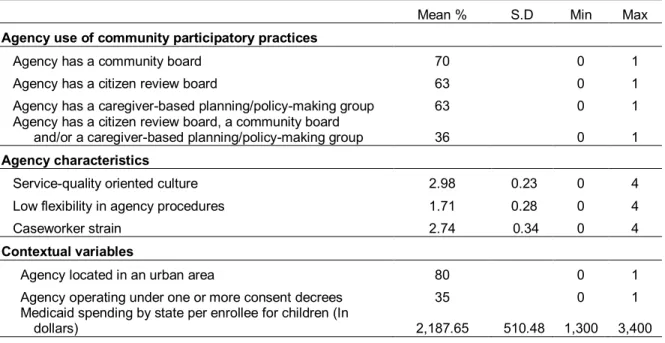
Table 2.1 provides descriptive statistics for the CPS agencies (n=81) used in analyses. Table
2.1 begins describing the frequency of agency use of community participatory practices. Most
agencies used a community board (70%), and the same percentage of agencies (63%) had either a
citizen review board or a caregiver-based planning/policy-making group at the time of the NSCAW
survey. From all agencies, over one third (36%) had any one of those three types of community
participatory practices. Concerning agency characteristics, the average number of agencies reported
a level of service-quality orientation (mean=2.98, SD=0.23), corresponding with between “A
moderated extent” and “A great extent.” Most agencies reported a level of flexibility in procedures
(mean=1.71, SD=0.28) that correspond to “A slight extent” and “A moderate extent”. Finally, agencies
reported a level of caseworker strain (mean=2.74, SD=0.34) that correspond to “A moderate extent”
and “A great extent.”
Concerning contextual variables, the majority of agencies (80%) were located in an urban
area, just over one third (35%) were operating under one or more consent decrees and had an
average Medicaid funding per enrollee for children of $ 2,187.65 (SD=510.48), ranging from $1,300 to
$3,400.
Table 2.1.
Child Protective Service Agency Descriptive Statistics (n = 81)
Mean % S.D Min Max
Agency use of community participatory practices
Agency has a community board 70 0 1
Agency has a citizen review board 63 0 1
Agency has a caregiver-based planning/policy-making group 63 0 1
Agency has a citizen review board, a community board
and/or a caregiver-based planning/policy-making group 36 0 1
Agency characteristics
Service-quality oriented culture 2.98 0.23 0 4
Low flexibility in agency procedures 1.71 0.28 0 4
Caseworker strain 2.74 0.34 0 4
Contextual variables
Agency located in an urban area 80 0 1
Agency operating under one or more consent decrees 35 0 1
Medicaid spending by state per enrollee for children (In
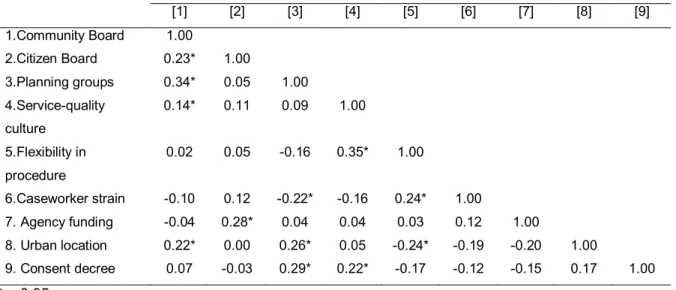
Table 2.2 presents a correlation matrix for all variables in the analyses. The following
correlations were higher than 30%. Two agency characteristics were positively correlated:
service-quality related culture and agency flexibility in procedures (r=0.35, p<0.05), and two community
participatory practices were also positively correlated: community review boards and caregiver-based
planning/policy-making group (r=0.34, p<0.05).
Table 2.2.
Correlation Matrix
[1] [2] [3] [4] [5] [6] [7] [8] [9]
1.Community Board 1.00
2.Citizen Board 0.23* 1.00
3.Planning groups 0.34* 0.05 1.00 4.Service-quality
culture
0.14* 0.11 0.09 1.00
5.Flexibility in procedure
0.02 0.05 -0.16 0.35* 1.00
6.Caseworker strain -0.10 0.12 -0.22* -0.16 0.24* 1.00
7. Agency funding -0.04 0.28* 0.04 0.04 0.03 0.12 1.00
8. Urban location 0.22* 0.00 0.26* 0.05 -0.24* -0.19 -0.20 1.00
9. Consent decree 0.07 -0.03 0.29* 0.22* -0.17 -0.12 -0.15 0.17 1.00 *p<0.05
5.2. Multivariate Logistic Models
Table 2.3 presents the results of multivariate logistic models. Overall, the proposed agency
characteristics of service-quality oriented culture, flexibility and caseworker strain were not
significantly associated with a CPS agency’s likelihood of including community members in
decision-making (p<0.10). A higher threshold for the significance level was selected (p<0.10) given the small
sample size in this study. I also implemented a model using a single outcome variable (i.e., an
agency used any one of the participatory practices) and results did not differ.
Service-quality oriented culture
There was no evidence of a significant effect of an agency’s service quality-oriented culture
on the likelihood of having a citizen review board, community board or family participation in
Flexibility in CPS agency procedures
The model’s results did not support the proposed hypothesis of the effect of flexibility in
agency procedures on the likelihood of having a citizen review board, community board or family
participation in planning/policy-making groups.
Caseworker strain
There was no evidence of a significant effect of caseworker strain on the likelihood of a CPS
agency having a citizen review board, community board, or family participation in
planning/policy-making groups.
Contextual factors
CPS agency funding was associated with higher odds (OR 1.13, SE 0.06) of agency use of a
citizen review board while holding other factors constant in the model (p<0.05). In addition, CPS
agency consent decree status was associated with higher odds (OR 3.77, SE 2.31) of agency use of
Table 2.3.
Agency Characteristics Associated with Use of Community Participatory Practices: Multivariate Logistic Regression Results
Agency has a citizen review board (n=81) Agency has a community board (n=81) planning/policy-making group (n=81) Agency has a caregiver-based
OR SE P>|t| 95% CI OR SE P>|t| 95% CI OR SE P>|t| 95% CI
Agency Characteristics Service-quality oriented
culture 3.76 4.81 0.30 46.27 2.99 3.86 0.24 37.42 1.15 1.37 0.11 11.72
Flexibility in agency
procedures 0.86 0.84 0.13 5.79 1.20 1.23 0.16 8.94 0.66 0.64 0.10 4.45
Caseworker strain 2.24 1.67 0.52 9.62 0.77 0.76 0.11 5.32 0.31 0.24 0.07 1.42
Contextual Factors
Medicaid spending by state per
enrollee for children (In dollars) 1.13 0.06 * 1.02 1.25 1.00 0.06 0.90 1.12 1.07 0.06 0.97 1.18
Agency located in urban area 1.49 0.99 0.41 5.46 2.95 1.96 0.80 10.82 3.22 2.10 0.90 11.55
Agency operating under one or
more consent decrees 0.87 0.46 0.30 2.47 1.05 0.59 0.35 3.18 3.77 2.31 * 1.13 12.55
+p<0.10 *p<0.05 **p<.01 ***p<.001
6. Discussion
This study examined whether specific CPS agency characteristics significantly predict the
implementation of participatory practices at the governance level. It was expected that agencies with
a service quality oriented culture, which values service improvement efforts, would be more likely to
implement these practices. Other factors expected to have a significant impact on the use of
community participatory practices were the level of flexibility in an agency’s daily procedures and the
level of strain among caseworkers carrying out community participatory practices.
The empirical models did not support the proposed hypothesis. None of the selected agency
characteristics significantly predicted community participatory practices in the sample of CPS
agencies. Yet some contextual factors included in the regression models as controls were
significantly associated with community participatory practices. The level of state funding and an
agency's consent decree status significantly predicted higher odds of a CPS agency having
community participatory practices (p<0.10). These findings could be interpreted as factors that are
outside managerial control are better predictors of community participatory practices than
within-agency cultural and structural factors. Demands for higher community input originated not from within
agencies but in great part from external sources such as concerned citizens, advocacy groups, and
elected/public officials. Results from this study suggest that contextual factors such as the level of
state funding, which are beyond managerial action and control, better predict the use of community
participatory practices. Contextual factors that are closer to institutional pressure from policy leaders,
such as funding, and from public scrutiny, such as consent decrees significantly predicted
participatory practices.
This study also provided evidence that these significant contextual factors had different impacts
across participatory practices. That is, higher state funding predicted a higher likelihood of having
citizen review boards while an agency’s consent decree status significantly predicted family
participation in planning/policy-making groups. We were not able to measure whether citizen review
boards were mandatory vs. used out of local initiative by a county because that data was not
available in the NSCAW survey. Regarding funding, an agency’s use of additional funds seems to
governance level. It is possible that agencies seeking to incorporate community input in governance
prioritize scarce funds to the implementation of citizen review boards. These boards are aimed at
reviewing agency policies and practices and can be seen by agencies as a way to maximize the
impact of community feedback.
It is also possible that other contextual factors related to state-level practices and community
characteristics, which were not measured in this study, explain the observed variation in CPS
agencies’ participatory practices.
6.1. Limitations
This study’s findings should be interpreted in light of three main limitations. First, this study
did not measure changes in community participatory practices over time because data for this study
were collected only at baseline in the NSCAW data file. Second, the external validity of the sample
used in this study is limited to public child welfare agencies. Findings may not be generalizable to
private profit or non-profit child welfare agencies in the country. Also, there is a possibility for potential
residual confounding from unmeasured factors. This potential source of bias was reduced with the
incorporation of control variables in the logistic regression models.
Third, variables used in this study were based on self-reports from agency directors and
caseworkers. These measures are therefore subject to respondents’ recollection of events and
understanding of the items in the survey. Community participatory practice measures reflected
whether local CPS agency directors reported that type of participation in their agency. Although
agency directors are considered to be knowledgeable about their agency’s participatory practices, the
authors were not able to obtain more objective measures of these reported community participation
practices (e.g., frequency of meetings and level of community members’ participation in those
meetings). The data available to researchers in the NSCAW file reflects a more general measure of
local directors’ interpretation of the survey questions.
Despite these limitations, this is the first study that empirically looks at the role of
agency-level factors in the use of community participatory practices in the child welfare system. The need to
additional studies on the relationship among CPS agency practices, services and individual outcomes
for families (NSCAW, 2010).
6.2. Conclusions
Pressure from policymakers and the general public to increase community participation in the
child welfare system has paved the way for change. Many agencies have answered the call by
incorporating feedback from community members into their policy review meetings. These efforts
have been sparked by consensus among policy leaders, scholars and practitioners on the value of
community input and by resources invested in the implementation of these participatory practices.
Past experience has shown that often the implementation of practices with intrinsic support from
relevant stakeholders is often not sustained overtime. To ease and sustain the use of community
participatory practices, efforts should be supported through the appropriate resources at the agency
disposal (Matland, 1995). This study’s findings suggest that sufficient resources should be provided to
CPS agencies to implement participatory practices. Given the current economic landscape,
public-serving agencies cannot afford to function under a trial-and-error approach when it comes to the use
of community participatory practices. The contextual factors and resources that are likely to support
these practices should be informed by research.
This study’s findings could contribute to underscore the importance of funding. States interested
in the implementation of participatory practices within the child welfare system should allocate funding
to support their implementation. In addition, the association found between consent decree status and
agency changes to their service practices could be interpreted as a last resource for communities to