
NEW DEVELOPMENTS IN PLATINUM-CATALYZED CYCLIZATION AND FLUORINATION OF POLYENES
Nikki A. Cochrane
A dissertation submitted to the faculty of the University of North Carolina at Chapel Hill in partial fulfillment of the requirements for the degree of Doctor of Philosophy in the Department of Chemistry.
Chapel Hill 2013
Approved by:
ii
ABSTRACT
NIKKI A COCHRANE: New Developments in Platinum-Catalyzed Cyclization and Fluorination of Polyenes
(Under the direction of Dr. Michel R. Gagné)
This dissertation encompasses two major components, both focused around the platinum(II) catalyzed cyclization of polyenes into polycyclic compounds. Previous studies have determined that in the Wacker-type platinum(II) catalyzed net dehydrogenative cyclization reactions, [Pt]-H is stable towards elimination, making typical 2-electron oxidants ineffective in these systems. As a result, Ph3C+ was used to abstract hydride from the [Pt]-H resulting in triphenylmethane and turning over the catalytic cycle. There are many inherent problems using Ph3C+, in particular, the steric bulk and cumbersome workup. For this reason, this dissertation focuses on exploring alternative turnover mechanisms for these platinum(II) cascade cyclization reactions of polyenes.
The first project focuses on the development of a system with a hydride abstractor that is more atom economical than Ph3C+ and can provide facile workup procedures. We found that dimethoxymethane, although slower, performed as well as Ph3COMe. In addition, dimethoxymethane suppressed the formation of byproducts and was easily removed during product isolation.
iii
ligand, (S)-(xylyl-phanephos), can generate the desired bicyclic product in approximately 70% yield with enantioselectivities as high as 87%.
iv
ACKNOWLEDGMENTS
I have many people that I would like to acknowledge for their support throughout my graduate career. First, I would like to thank my advisor, Dr. Michel Gagné, who saw my potential from the beginning and helped me to become a better chemist and let me find my niche. I would also like to thank Dr. Maurice Brookhart who, as a co-advisor, provided advice and an alternative point of view. I would also like to thank my other committee members, Dr. Cynthia Schauer, Dr. Joe Templeton and Dr. Marcey Waters who have taken time out of their busy schedules to serve on my committee. I would especially like to thank those who have taken the time to read my dissertation.
I would also like to extend gratitude to the entire Gagné group who have provided advice and support throughout my graduate career. I would like to especially thank Laura Adduci for her continued support with grammar in my writing and particularly, her role as a person that I could turn to for advice on idea proposals. In addition, I would like to express my gratitude to the group members with whom I have collaborated, including Ha Nguyen, Joseph Sokol, and Marshall Nisbeth. Ha Nguyen, in particular, provided significant help throughout the fluorination project through substrate synthesis and isolation.
v
I must also extend gratitude to Dr. Colleen Munro-Leighton, Dr. Samuel Delp (Sam) and Dr. Brent Gunnoe, all of whom initially sparked my interest in organometallic chemistry. Colleen taught me the basics of doing research in an academic setting, including air-free reaction conditions, glovebox etiquette and other synthetic techniques which have acted as the building blocks for my research throughout my graduate career. In addition, Sam provided expertise for both organic and inorganic compound syntheses during my undergraduate career, which have proven to be invaluable skills in graduate school.
vi
Table of Contents
Table of Contents ... vi
LIST OF TABLES ... x
LIST OF SCHEMES ... xi
LIST OF FIGURES ... xiii
LIST OF ABBREVIATIONS AND SYMBOLS ... xiv
Chapter 1. Cascade Cyclization : Natural and Synthetic ... 1
1.1. Introduction to cascade cyclization ... 1
1.1.1 Enzymatic cascades ... 1
1.1.2. Cation-olefin cascade cyclization ... 3
1.1.2. Previous work in cation-olefin cascade cyclization ... 6
1.1.3. Pd(II) and Pt(II) complexes in cascade cyclization (Gagné group) ... 10
1.2. Wacker chemistry ... 14
1.2.1. Traditional Wacker chemistry ... 14
1.2.2. Extension of Wacker chemistry to aza-Wacker systems ... 17
1.2.2. Extension of Wacker chemistry to platinum-catalyzed polyolefin cyclization .. 21
vii
1.3.1. Properties of fluorine ... 23
1.3.2. Nucleophilic vs electrophilic fluorinations ... 23
1.3.3. Properties of XeF2 and other electrophilic fluorine sources ... 26
1.3.4. Aryl electrophilic fluorination using late transition metals ... 27
1.3.5. Aliphatic asymmetric fluorinations ... 29
1.4. Research objectives ... 30
Chapter 2. Hydride Abstraction in Pt-catalyzed Cascade Cyclization ... 33
2.1. Introduction ... 33
2.2. Results and discussion ... 37
2.2.1. Synthesis and characterization [Pt]-H ... 37
2.2.2. Stoichiometric results ... 40
2.2.3. Catalytic results ... 44
2.3. Conclusion ... 48
2.4. Experimental details ... 49
2.4.1 Materials and methods ... 49
2.4.2. Synthesis of Pt complexes ... 51
Chapter 3. Catalytic Cyclization/Fluorination of Polyenes ... 55
3.1. Introduction ... 55
3.2. Results and discussion ... 58
3.2.1. Stoichiometric reaction ... 58
viii
3.2.3. Substrate scope ... 64
3.3. Conclusion ... 67
3.4. Experimental details ... 68
3.4.1 Materials and methods ... 68
3.4.2. Synthesis of substrates ... 69
3.4.3. Typical catalytic reaction ... 76
3.4.4. Product characterization ... 77
Chapter 4. Preliminary Mechanistic Investigation into Cyclization/Fluorination ... 85
4.1. Introduction ... 85
4.1.1. Previous mechanistic studies on the Pt(II)-catalyzed cascade cyclization ... 85
4.1.2. High valent [Pt]IV-F complexes ... 88
4.2. Initial mechanistic studies for the cyclization/fluorination reaction: results and discussion ... 89
4.2.1. Synthesis of Pt-F complexes ... 93
4.3. Conclusion and future directions ... 97
4.4. Experimental details ... 99
4.4.1 Materials and methods ... 99
4.4.2. Synthesis and characterization of complexes ... 100
APPENDIX A ... 101
APPENDIX B ... 105
ix
x
LIST OF TABLES
Table 2-1. Stoichiometric hydride abstraction from [Pt]-H using acetals and ketals. ...43
Table 2-2. Hydride abstraction using acetals under catalytic conditions...46
Table 3-1. Selected conditions for optimization of the ligand, nitrile and base. ...61
Table 3-2. Optimization of silanes and silyl ethers...64
Table 3-3. Substrate Scope for catalytic electrophilic fluorination.a ...65
Table A-1. 31P NMR chemical shifts for (P2P)Pt-alkyl methyl complexes. ...101
Table A-2. 31P NMR chemical shifts for (PPP)Pt complexes. ...102
Table A-3. 31P NMR shifts of P2PtI2 complexes containing various P2 ligands with a MeO-BIPHEP backbone. ...103
Table A-4. 31P NMR shifts of P2PtI2 complexes containing various P2 ligands. ...104
Table B-1. Enantioselectivies of dehydrogenative cascade cyclization determined from using P2PtI2 complexes containing various P2 ligands with a MeO-BIPHEP backbone. ...105
Table B-2. Enantioselectivies of dehydrogenative cascade cyclization determined from using P2PtI2 complexes containing various P2 ligands. ...106
Table C-1. Conditions varying the acetal and additive in Stahl-like conditions for the monocyclization of terminal tosyl amide substrates. ...110
xi
LIST OF SCHEMES
Scheme 1-1. Selective Enzyme Catalyzed Cyclization. ...2
Scheme 1-2. The cationic polymerization of isobutylene to polyisobutylene. ...4
Scheme 1-3. Biomimetic reactions by W.S. Johnson. ...7
Scheme 1-4. Yamamoto Enantioselective BLA assisted biomimetic cyclization. ...9
Scheme 1-5. Proposed Wacker process for the conversion of ethylene into acetaldehyde. ...15
Scheme 1-6. Syn versus Anti-addition of nucleophile across olefin ...16
Scheme 1-7. Catalytic aza-Wacker reaction mechanism. ...20
Scheme 1-8. Proposed Catalytic Cycle for Platinum-Catalyzed Cation-Olefin Cyclization of Olefins ...22
Scheme 1-9. Buchwald system for Pd(0)-catalyzed aryl-fluoride cross-coupling reaction using nucleophilic fluorine source, CsF. ...25
Scheme 1-10 . Intra- and intermolecular carbofluorinations using a Pd(0) catalyst and nucleophilic fluorine source, AgF...25
Scheme 1-11. Silver-catalyzed C-F bond formation from aryl stannanes using an electrophilic fluorine source. ...28
Scheme 1-12. Asymmetric fluorinations of Togni using [TiCl2(R, R)-(TADDOLato)] and Selectfluor as electrophilic fluorinating reagent. ...29
Scheme 1-13. Enantioselective Fluorination of b-ketoesters using (BINAP)Pd complexes. ...30
Scheme 1-14. Previous hydride abstraction using Ph3C+ compared to work described in this thesis...31
Scheme 1-15. Proposed fluorination described in this thesis. . ...31
Scheme 2-1. Platinum-catalyzed polyene cascade cyclization reaction and mechanism displaying the [Pt]-H and Ph3C+. ...35
Scheme 2-2. Comparison of previous work using Ph3C+ and our proposal to use an acetal to abstract a hydride from a [Pt]-H. ...36
xii
Scheme 2-4. Synthesis of [(S)-(xylyl-phanephos)Pt(H)(NCC(CH3)3)][BF4], 8, from
(S)-(xylyl-phanephos)PtI2 ...39 Scheme 2-5. Predicted pathway for activation and hydride abstraction using
benzaldehyde dimethyl acetal. ...40 Scheme 2-6. Deactivation of the [Pt] catalyst through formation of the π-allyl
complex. ...45 Scheme 2-7. Acid-catalyzed byproduct formation of substrate 1. ...46 Scheme 2-8. Proposed catalytic cycle using an oxocarbenium ion as hydride
abstractor. ...48 Scheme 2-9. Catalytic reaction using (DTBM-SEGPHOS)Pt2+ as the active catalyst
showed catalytic turnover using dimethoxymethane as hydride abstractor. ...49 Scheme 3-1.Common fluorinated steroids. ...56 Scheme 3-2. Possible reactions of cationic organometallic Pt-intermediate, 4. ...58 Scheme 3-3. (DTBM-SEGPHOS)Pt(alkyl)nitrile complex prefers fluorination over
β-H elimination. ...59 Scheme 3-4. Proposed reaction to generate the double fluorination product (12)...63 Scheme 3-5. Various substrates that produced no fluorinated product under catalytic
conditions. ...67 Scheme 4-1. Proposed catalytic cycle for Pt(II)-catalyzed cation-olefin cyclization. ...87 Scheme 4-2. Reactivity of platinum (II) complexes containing monodentate or
bidentate phosphine ligands with XeF2...89 Scheme 4-3. Proposed mechanism for the Pt(II)-catalyzed cascade
cyclization/fluorination of dienephenol. ...90 Scheme 4-4. Cyclometallation of (PPP)Pt-benzyl fluoride complex to generate a
(PPP)[Pt]IV-F intermediate. ...91 Scheme 4-5. Possible enantiomers and diastereomers for the reaction of P2Pt(alkyl)(I)
with XeF2. ...97 Scheme C-1. Traditional Wacker catalytic cycle with hypothesized hydride abstraction
using an acetal. ...107 Scheme C-2. Proposed Catalytic Cycle for the monocyclization of tosyl amide
xiii
LIST OF FIGURES
Figure 1-1. Stork-Eschenmoser Postulate. ...5
Figure 1-2. Polyene cyclization. ...6
Figure 1-3. Various P2 ligands tested in cyclization. ...13
Figure 1-4. Square planar structure of cationic P2Pt-alkyl complex with an open coordination site suitable for β-H elimination. ...14
Figure 1-5. 19F NMR spectrum of XeF2 in nitromethane. ...27
Figure 1-6. Possible Ag(II)-Ag(II) complex suitable for C-F reductive elimination. ...28
Figure 2-1. Generation of a putative oxocarbenium compound. ...38
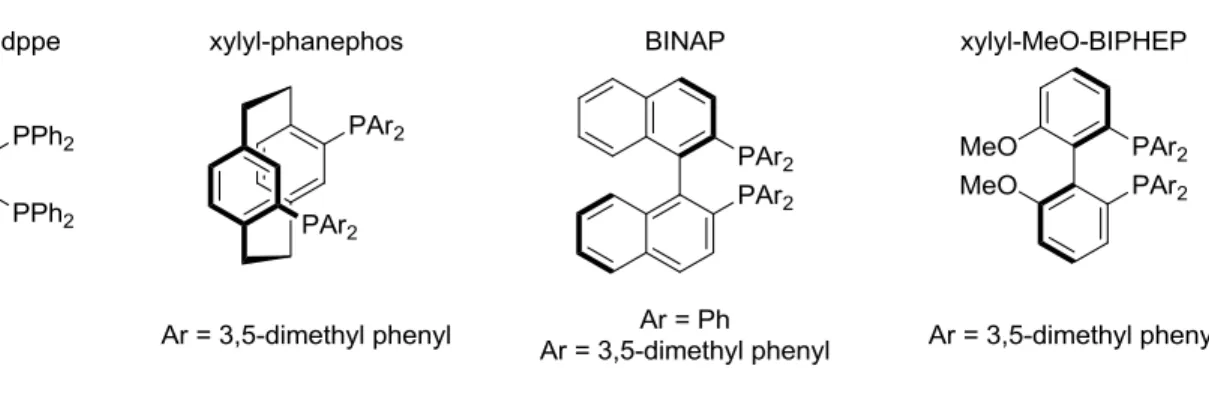
Figure 2-2. Commercially available P2 ligands for coordination to [Pt] for catalytic cascade cyclization...39
Figure 2-3. (S)-(xylyl-phanephos) and (R)-(xylyl-MeO-BIPHEP) ligands used in these studies. ...45
Figure 3-1. 19 F NMR spectrum of fluorinated product, 11, showing coupling to geminal proton. ...60
Figure 3-2. Electrophilic fluorinating reagents tested under catalytic conditions. ...62
Figure 4-1. Various P2 commercially available ligands for coordination to [Pt] for catalytic cascade cyclization. ...86
Figure 4-2. 19F NMR spectrum of [M]-F region (-280 to -300ppm) at 200K of potential [Pt]IV-F complex using dppe as P2 ligand. ...96
xiv
LIST OF ABBREVIATIONS AND SYMBOLS
◦ degrees
Å angstroms
a Pd(alkene)-OH2 complex
atm atmospheres
b P2Pt-alkene complex
β beta
BINAP 2,2'-bis(diphenylphosphino)-1,1'-binaphthyl
BIPHEP 2,2'-bis(diphenylphosphino)-1,1'-biphenyl
BLA Brønsted Lewis Acid
Bn benzyl
BQ benzoquinone
br broad
BrettPhos 2′,4′,6′- triisopropyl-3,6-dimethoxy-1,1′-biphenyl
c P2Pt(alkyl)(nitrile) complex
◦
C degrees Celsius
CD2Cl2 deuterated methylene chloride
CDCl3 deuterated chloroform
CD3CN deuterated acetonitrile
CD3NO2 deuterated nitromethane
COD 1,5-cyclooctadiene
d doublet
d [M]-benzyl methyl ether complex
xv
dcpe 1,2-bis(dicyclohexylphosphino)ethane
dmpe 1,2-Bis(dimethylphosphino)ethane
DMSO dimethylsulfoxide
dppe 1,2-bis(diphenylphosphino)ethane
e P2Pt-π-allyl complex
ee enantiomeric excess
Et ethyl
EtOAc ethyl acetate
Eq. equation
equiv equivalents
f P2Pt-H complex
g P2PtIV-F alkyl nitrile complex
GC gas chromatography
GC-MS gas chromatography mass spectrometry
h hours
HOTf triflic acid
HRMS high resolution mass spectrometry
Hz hertz
(I) monovalent
(II) divalent
J three bond H-H coupling
JF-H two bond F-H coupling
JPt-P one bond Pt-P coupling
JPt-H one bond Pt-H coupling
xvi
K Kelvin
kcal kilocalorie
m multiplet
M Molarity
[M] metal complex
M(0) zerovalent metal complex
M(I) monovalent metal complex
M(II) divalent metal complex
Me methyl
MeO-BIPHEP 2,2’-bis(diphenylphosphino)-6,6’-dimethoxy-1,1’-biphenyl
mg milligram
MHz megahertz
mL milliliter
min minutes
µL microliter
mmol millimole
µmol micromole
mol mole
mol % molar percentage
MS mass spectrometry
m/z mass-to-charge ratio
NFSI N-fluorobenzenesulfonimide
NHTf triflamide
xvii
NMR nuclear magnetic resonance
OMe methoxy
OEt ethoxy
OR alkoxy
OTf triflate
P2 bidentate phosphine ligand
Pa Pascal
Ph phenyl
Ph2NH diphenylamine
[Ph2NH2][BF4] diphenylammonium tetrafluoroborate
Phanephos
4,12-bis(diphenylphosphino)-[2.2]-paracyclophane
ppm parts per million
PPP bis(2-diphenylphosphinoethyl)phenylphosphine
psi pounds per square inch
Pt platinum
PTFE polytetrafluoroethylene
R alkyl
rac racemic
RT room temperature
s singlet
SEGPHOS
5,5’-bis(diphenylphosphino)-4,4’-1,3-benzodioxole
t triplet
THF tetrahydrofuran
xviii
t-Bu tertiary butyl
TMS trimethylsilyl
Ts (4-methylphenyl)sulfonamide
vs versus
Chapter 1
Cascade Cyclizations: Natural and Synthetic
1.1. Introduction to cascade cyclization
1.1.1 Enzymatic cascades
Nature has perfected one of the most impressive biochemical phenomena, the enzyme-controlled selective cyclization of poly-alkenes into terpenes, which are themselves common starting materials for multiple natural products.1 Terpenes have isoprenoid skeletons, and although they are not derived from isoprene itself, generally cyclize to form polycyclic compounds which are the basis of many natural products.1 These enzyme-catalyzed polyene cyclization reactions form carbon-carbon bonds, and in the sterol biosynthesis manifold, produce tetra- and penta-cyclic products with multiple stereocenters from achiral polyolefin substrates. The selectivity, specificity and efficiency with which these terpenes are cyclized by enzymes has enthused scientists for decades.
The cyclase enzyme class, in particular, has been shown to selectively generate stereospecific polycyclic compounds in bacteria, plants and animals through the use of enzymes that are tuned for specific transformations from a common polyene.1 As an example, the bacterial enzyme squalene-hopene cyclase efficiently cyclizes the polyene
1(a) Yoder, R. A.; Johnston, J. N. Chem. Rev.2005, 105, 4730. (b) Wendt, K. U. Angew. Chem. Int. Ed.2005,
2
squalene into the plant steroid hopene, a pentacyclic compound containing nine stereocenters (Scheme 1-1).1 The mechanisms for this and all other terpene cyclase enzymatic transformations are thought to be based on the cation-olefin reaction, wherein a transiently formed carbocation reacts with an olefin to form a ring and regenerate the cation.
Scheme 1-1. Selective Enzyme Catalyzed Cyclization.
3
because discrete carbocationic intermediates are never observed. Termination then results from deprotonation forming the unsaturated hopene product.2
If instead, catalytic squalene epoxidase is present, squalene is enantioselectively epoxidized using molecular oxygen to afford 2,3-oxidosqualene (Path B, Scheme 1-1).1 A large family of oxidosqualene cyclases convert 2,3-oxidosqualene into multiple unique natural products. As shown in Scheme 1-1, two possible natural products, cycloartenol or lanosterol (a cholesterol precursor), can be generated using two specific oxidosqualene cyclases either in plants or animals and fungi.
It has often been stated that the high stereochemical control of the cyclized products is due to the preorganization of the polyolefin substrate that is achieved by the pocket within the enzyme active site. In the formation of hopene, squalene is organized in a chair-chair-chair conformation by the squalene-hopene cyclase, resulting in cyclohexane C-ring formation. In contrast, oxidosqualene epoxidase, which is the dominant enzyme in animals and fungi, arranges 2,3-oxidosqualene into a chair-boat-chair conformation, which is then in the proper conformation for multiple 1,2-methyl and hydride shifts to form natural products with the specific stereochemistry and carbon skeleton observed in lanosterol.1a,2 These conformations are shown in Scheme 1-1. Since cyclase enzymes are specific for a single class of polyene substrates and they typically form a single product, alternative methods to reproduce the outstanding stereo-and regioselectivity have been sought for decades.
1.1.2. Cation-olefin cascade cyclization
To this end, cation-olefin reactions have been developed and biomimetic reactions utilized to access a broad class of natural products and natural product-like compounds. A
4
simple cation-olefin intermolecular reaction is the cationic polymerization of isobutylene (Scheme 1-2).3 Initiation of the isobutylene monomer by a Brønsted acid/base pair (H+X-) generates a carbocation, which upon reaction with another monomer results in chain propagation and growth. This cation-olefin polymerization is terminated by deprotonation/elimination.
Scheme 1-2. The cationic polymerization of isobutylene to polyisobutylene.
The reaction involved in C-C bond formation in isobutylene polymerization (the cation-olefin reaction) is also responsible for the C-C bond formation in terpene cyclase reactions, where the process occurs intramolecularly to build rings. That is, 1,5-dienes undergo intramolecular cation-olefin cyclization to generate bicyclic decalin products.1a The formation of these cyclized products are favored because of the exothermicity associated with the conversion of C=C to C-C during ring formation (ΔE = -20 kcal/mol, thermodynamics) and also the low activation barrier (< 3 kcal/mol) for the formation of a six membered ring (kinetics). For the latter feature intramolecular carbocation addition to a
3
5
carbon-carbon double bond, is entropically favorable and is the dominant C-C bond forming process in terpene biosynthesis.1b,4
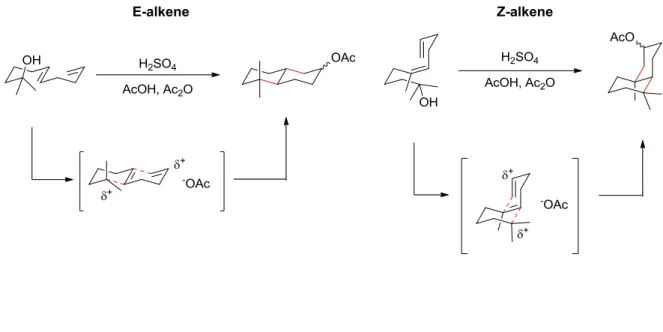
Stork and Eschenmoser studied similar systems to determine the basis for the diastereoselectivity in cyclic systems that are not under enzyme control.5 To this end they developed the Stork-Eschenmoser postulate, which states that the stereochemistry at the ring junction is dictated by the geometry of the alkenes in the starting polyolefins (Figure 1-1). They found that polyolefins containing E-olefins form trans ring junctions, while those with Z-olefins form cis ring junctions. In addition, Eschenmoser and Schinz provided evidence for anti-addition of a carbenium ion to an olefin, that is, the two additions to the original alkene occur on opposite faces.5c Studies of this system also demonstrated that these bi-cyclizations were concerted with putative carbocation formation.
Figure 1-1. Stork-Eschenmoser Postulate.
4Jensen, C.; Jorgenson, W. L. J. Am. Chem. Soc. 1997, 119, 10846.
5
(a) Stork, G.; Burgstahler, A. W. J. Am. Chem. Soc.1955, 77, 5068. (b) Eschenmoser, A.; Arigoni, D. Helv. Chim. Acta2005, 88, 3011. (c) Eschenmoser, A.; Ruzicka, L.; Jeger, O.; Arigoni, D. Helv. Chim. Acta 1955,
6
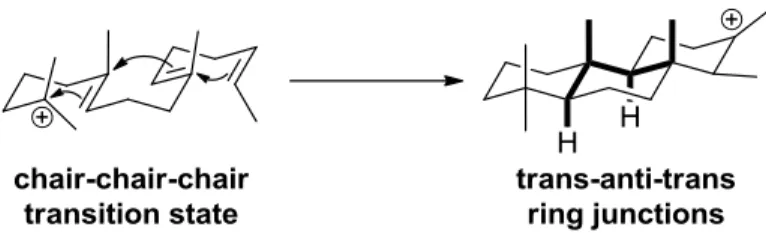
Similarly, terpenes adhere to the Stork-Eschenmoser postulate and generate a trans-anti-trans relative stereochemistry as evidence of the formation of six membered rings from a chair-like transition state (Figure 1-2).5 An analysis of natural terpenes indicate that most polyenes adopt orientations that lead to trans-anti-trans product structures, suggesting their formation is concerted and that stereochemical information encoded into the polyene is expressed in the products. If the cyclizations were step-wise with discrete carbocations, then multiple ring stereochemistries might be expected.
Figure 1-2. Polyene cyclization.
1.1.2. Previous work in cation-olefin cascade cyclization
7
Scheme 1-3. Biomimetic reactions by W.S. Johnson.
Upon investigating initiators, Johnson reported that acetals activated with tin tetrachloride, introduced functionality on the A ring, which extended the synthetic utility of these cyclization reactions (A, Scheme 1-3).6 Johnson additionally found that allyl alcohols were effective initiators for the biomimetic tricyclization under mild reaction conditions (trifluoroacetic acid in methylene chloride, B, Scheme 1-3).7 Johnson also reported the first non-enzymatic biomimetic cyclization of a pentacyclic compound using fluorine on the polyolefin backbone as a carbocation stabilizing moiety (C, Scheme 1-3). This fluorine was
6(a) Fish, P. V.; Johnson, W. S. J. Org. Chem.1994, 59, 2324. (b) Bartlett, W. R.; Johnson, W. S.; Plummer, M. S.; Small, V. R. J. Org. Chem.1990, 55, 2215. (c) Guay, D.; Johnson, W. S.; Schubert, U. J. Org. Chem.
1989, 54, 4731. (d) Schmid, R.; Huesmann, P. L.; Johnson, W. S. J. Am. Chem. Soc.1980, 102, 5122. (e) Johnson, W. S.; Wiedhaup, K.; Brady, S. F.; Olson, G. L. J. Am. Chem. Soc.1974, 96, 3979. (f) Bartlett, P. A.; Johnson, W. S. J. Am. Chem. Soc.1973, 95, 7501. (g) Johnson, W. S.; Li, T.-T.; Harbert, C. A.; Bartlett, W. R.; Herrin, T. R.; Staskun, B.; Rich, D. H. J. Am. Chem. Soc.1970, 92, 4461. (h) Johnson, W. S.; Semmelhack, M. F.; Sultanbawa, M. U. S.; Dolak, L. A. J. Am. Chem. Soc. 1968, 90, 2994. (i) Johnson, W. S.; Jensen, N. P.; Hooz, J.; Leopold, E. J. J. Am. Chem. Soc.1968, 90, 5872. (j) Johnson, W. S.; Wiedhaup, K.; Brady, S. F.; Olson, G. L. J. Am. Chem. Soc.1968, 90, 5277. (k) Johnson, W. S.; van der Gen, A.; Swoboda, J. J. J. Am. Chem. Soc.1967, 89, 170.
8
found to help control the regioselectivity of C-ring formation to afford a cyclohexyl ring rather than a cyclopentyl ring, expected from carbocation stability considerations.
In extending this work, in 1996, Corey used Lewis acidic aluminum-based complexes to open the epoxide ring through oxygen activation and initiate the diastereoselective tricyclization (Eq. 1-1).8 As an alternative to Lewis acids, Nishizawa found that mercuric salts were also effective for the initiation of cascade cyclization reactions. He showed that a stoichiometric amount of mercury(II) triflate aided in the cyclization of farnesyl acetate resulting in an organometallic mercury complex. He noted, however that the selectivity between the products was poor (Eq. 1-2).9
8Corey, E. J.; Wood, H. B. J. Am. Chem. Soc. 1996, 118, 11982. (b) Gnanadesikan, V.; Corey, E. J. J. Am.
Chem. Soc.2008, 130, 8089. (c) Mi, Y.; Schreiber, J. R. V.; Corey, E. J. J. Am. Chem. Soc.2002, 124, 11290. (d) Corey, E. J.; Lin, S. J. Am. Chem. Soc.1996, 118, 8765. (e) Corey, E. J.; Lee, J. J. Am. Chem. Soc.1993,
115, 8873.
9
Although cyclization worked using these stoichiometric metal complexes, enantioselective variants are relatively rare. In 2002, the Yamamoto group reported the first enantioselective biomimetic cyclization of polyenes utilizing Lewis-acid assisted chiral Brønsted acids (BLA) generated from tin tetrachloride and an optically active binaphthol derivative for the tricyclization of a triene alcohol (Scheme 1-4).10 The catalytic activity of these BLA compounds are slightly inhibited due to the nucleophilic hydroxyl group on the ligand that acts as a terminator in the cyclization of some polyolefinic alcohols.
Scheme 1-4. Yamamoto Enantioselective BLA assisted biomimetic cyclization.
With these BLA complexes, moderate enantioselectivities in the cyclized products were observed. Ishihara improved upon the scope of enantioselective cascade cyclization of polyolefins in 2007 by reporting the first enantioselective halocyclizations of polyprenoids using a chiral BINOL-derived phosphoramidite with N-iodosuccinimide (Eq. 1-3).11 Exploring other possible initiators for biomimetic cyclization reactions, the Loh group recently investigated chiral N-acetals (as promoters) in conjunction with TiCl4 to generate
10(a) Ishibashi, H.; Ishihara, K.; Yamamoto, H. The Chemical Record2002, 2, 177. (b) Uyanik, M.; Ishihara, K.; Yamamoto, H. Org. Lett.2006, 8, 5649. (c) Uyanik, M.; Ishibashi, H.; Ishihara, K.; Yamamoto, H. Org. Lett.2005, 7, 1601. (d) Ishibashi, H.; Ishihara, K.; Yamamoto, H. J. Am. Chem. Soc.2004, 126, 11122. (e) Kumazawa, K.; Ishihara, K.; Yamamoto, H. Org. Lett. 2004, 6, 2551. (f) Ishihara, K.; Ishibashi, H.; Yamamoto, H. J. Am. Chem. Soc.2002, 124, 3647.
10
either an oxocarbenium or iminium, which reacts with the 2,3-alkene of the polyolefin starting material to initiate cyclization (Eq. 1-4).12 The product observed after initial cyclization is a side-chain cleaved chloride species, which upon stirring in wet silica gel, forms the final alcohol product in reasonable yields and enantioselectivities. The mechanism of these N-acetal promoted reactions is still under investigation. Despite the progress in biomimetic cyclization of polyenes since Johnson’s work in the 1960s, many scientists focus on the development of new systems to increase yields and enantioselectivities of polycyclic products.
1.1.3. Pd(II) and Pt(II) complexes in cascade cyclization (Gagné group)
Similar to the Lewis acid catalysts previously discussed, transition metals, in particular group 10 metals, are known to be electrophilic. In contrast to other soft Lewis acids, transition metals such as Pd(II) and Pt(II) have been shown to favor coordination and
11
activation of the least substituted alkene of polyenes; in addition they exhibit a preference for d8 square planar geometry.13,14 The preference for coordination to the terminal alkene serves to activate the substrate to cyclize via the cation-olefin process to the desired bicyclic product.
As an example, the use of (PhCN)2PdCl2 as the catalyst for the cyclization of 1 under Wacker-type (discussed in detail in Section 1.2) conditions using benzoquinone as an oxidant, facilitated the conversion of 1 to the net-dehydrogenated product, 2, as a mixture of regioisomers (Eq. 1-5).15 In addition, a “Wacker” product was observed in low yields, 3. Inspired by work by the Vitagliano group,16 the Gagné group used pincer tridentate triphos Pt(II) complexes to trap the cationic [Pt]-alkyl intermediate, 4 (Eq. 1-6).16b
13(a) Hegedus, L. S. Transition Metals in the Synthesis of Complex Organic Molecules; University Science Books: Mill Valley, CA, 1994; pp 199-236. (b) Hegedus, L. S. Comprehensive Organic Synthesis, Trost, B. M.; Fleming, I., Eds. Pergamon Press: Oxford, 1990; Vol. 4, pp 571-583.
14(a) Chianese, A. R.; Lee, S. J.; Gagné, M. R. Angew. Chem., Int. Ed.2007, 46, 4042. (b) Pizzo, E.; Sgarbossa, P.; Scarso, A.; Michelin, R. A.; Strukul, G. Organometallics2006, 25, 3056. (c) Cucciolito, M. E.; D’Amora,
A.; Vitagliano, A. Organometallics2005, 126, 3359. (d) Liu, C.; Han, X.; Wang, X.; Widenhoefer, R. A.; J. Am. Chem. Soc. 2004, 126, 3700.
15
Koh, J. H.; Mascarenhas, C.; Gagné, M. R. Tetrahedron2004, 60, 7405.
16Hahn, C.; Cucciolito, M. E.; Vitagliano, A. J. Am. Chem. Soc.2002, 124, 9038. (b) Koh, J. H.; Gagné, M. R.
12
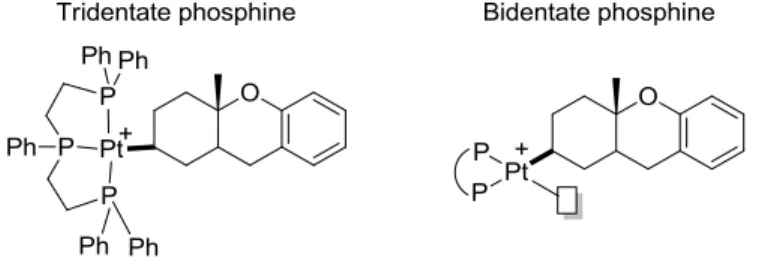
Using a stoichiometric amount of the activated (PPP)Pt2+ (activated by halide extraction with silver salts), a cationic [Pt]-alkyl complex was isolable. It was observed that the [Pt]-C bond of 4 could be cleaved using NaBH4 providing 5, which was isolated and crystallized. X-ray diffraction of the major stereoisomer of 5 confirmed the A-B trans ring and structure displayed in Eq. 1-6.16b The [Pt]-alkyl, 4, is however, unable to turn over catalytically because there is no open cis coordination site available on the metal center to accommodate β-H elimination. As a result, bidentate phosphines were studied as possible ligands for catalytic reactions with 1 (Figure 1-3).17 Initial studies using achiral ligands such as diphenylphosphinoethane, (dppe), formed the desired product, 2, in good yields as one regioisomer (Eq. 1-7). This reaction required the use of Ph3COMe as the stoichiometric oxidant, functioning to turn over the catalytic cycle by abstracting the hydride of a putative intermediate [Pt]-H, and also absorbing H+ to form MeOH (discussed in detail in 1.2.2 and Chapter 2).
13
As expected, the ring junction between rings A and B is trans, as determined by comparison to the hydrogenated product, 5. The reaction conditions were optimized for base and solvent to give a 73% isolated yield. This chemistry was extended to include chiral bidentate phosphines, which enhanced the enantioselectivity of the product. Binaphthyl and other biaryl bidentate phosphine ligands were screened, with the most enantioselective being (S)-xylyl-phanephos (Figure 1-3).18
Figure 1-3. Various P2 ligands tested in cyclization.
Using these bidentate ligands, an open cis coordination site on the platinum metal center was available for β-H elimination (Figure 1-4), however, unlike most Pd(II) based catalytic systems, routine oxidants like benzoquinone, peroxides, or O2 and CuCl2 were not effective in this system. This is rationalized by considering that the Pt(II)-H is less acidic than its Pd(II)-H analogs and is therefore, resistant to deprotonation or reductive elimination to generate Pt(0). Under catalytic conditions, 2-electron oxidants that are effective in Wacker chemistry are ineffective in this system. The Gagné group has found that direct hydride abstraction from the putative Pt(II)-hydride using Ph3CBF4 resulted in the most
14
success with catalytic turnover, the mechanism of which is described in Section 1.2.3 and in Chapter 4.19
Figure 1-4. Square planar structure of cationic P2Pt-alkyl complex with an open coordination site suitable for β-H elimination.
1.2. Wacker chemistry
1.2.1. Traditional Wacker chemistry
The Wacker process was first developed by Smidt in the late 1960s and was defined as the metal catalyzed conversion of ethylene into acetaldehyde, which has also been extended to other alkenes, always containing a terminal olefin (Eq. 1-8).13a
Generally a palladium(II) complex is used as the catalyst for these transformations, which have a preference for binding to the terminal olefin of the substrate. Multiple studies have contributed to the proposed mechanism including, kinetic studies, isotope effect studies, stereochemical studies and computational studies.20 The proposed mechanism begins with
19
Campbell, A. N. Platinum (II) Catalyzed Diene Cyclizations, Ph.D. Thesis, University of North Carolina at Chapel Hill, Chapel Hill NC, December 2008.
20
15
coordination of the alkene to the palladium(II) salt (Scheme 1-5), generating a Pd(η2-alkene). A chloride ligand is then replaced with water to make a Pd(alkene)-OH2 adduct (a). The rate-determining step is the nucleophilic anti-addition of water or syn-addition of a hydroxide group to the alkene resulting in a (β-hydroxyalkyl) palladium complex. β-hydride elimination affords an enol which tautomerizes to the desired ketone and generates a putative Cl-Pd-H complex, which rapidly reductively eliminates (H+ loss) giving a Pd(0) complex. This Pd(0) complex is then re-oxidized to Pd(II) via its reaction with an oxidant such as CuCl2/O2, O2, or benzoquinone. The in situ reduction of Cu(II) to Cu(I) by the Pd(0) generates Pd(II). Cu(I) is then re-oxidized to Cu(II) by the reaction with molecular oxygen, benzoquinone or a peroxide, thus making this oxidant catalytic (Eq. 1-9).
Scheme 1-5. Proposed Wacker process for the conversion of ethylene into acetaldehyde.
16
the inclusion of a bidentate diamine ligand or the use of H2O2 as oxidant, shifts the bias towards the syn-addition (Scheme 1-6).
Scheme 1-6. Syn versus Anti-addition of nucleophile across olefin
17
methodologies to enhance functional group tolerance under milder conditions including solvent variability and choice of palladium catalyst and re-oxidant.
1.2.2. Extension of Wacker chemistry to aza-Wacker systems
N-heterocyclic compounds are a class of important organic products with widespread applications in the pharmaceutical and fine chemical industry; therefore, it is important to efficiently and selectively form C-N bonds that directly generate cyclic structures.21 Numerous methods for C-N bond formation exist, with an emphasis on late-transition metal chemistry, in particular Pd0/II systems.21,22,23 In addition, procedures for the direct amination of olefins, in particular oxidative aminations, are synthetically attractive due to the resultant net increase in substrate functionality.24 As a result, aza-Wacker conditions have been developed for the formation of indoles.
Hegedus reported the first example a palladium-assisted intramolecular formation of indoles.25 This reaction occurred under mild conditions with a wide substrate scope including secondary and primary aniline analogs. He determined that the cyclization was not limited to neutral or weakly basic conditions, but more basic benzylamines could also
21
(a) Krüger, K.; Tillack, A.; Beller, M. ChemSusChem. 2009, 2, 715. (b) Tamaru, Y.; Kimura, M. Synlett. 1997, 749. (c) Hartwig, J.F.; Angew. Chem., Int. Ed. 1998, 37, 2046.
22
For Buchwald-Hartwig Pd catalyzed aminations see: (a) Hartwig, J.F. Organotransition Metal Chemistry, 1st ed..; University Science Books: California, 2010. (b) Kienle, M.; Dubbaka, S. R.; Brade, K.; Knochel, P. Eur.
J. Org. Chem.2007, 4166. (c) Shi, C.; Ojima, I. Tetrahedron2007, 63, 8563. (d) Nettekoven, U.; Hartwig, J. F. J. Am. Chem. Soc.2002, 124, 1166. (e) Hartwig, J. F. Acc. Chem. Res. 1998, 31, 852. (f) Wolfe, J. P.; Wagaw, S.; Marcoux, J.-F.; Buchwald, S. L. Acc. Chem. Res. 1998, 31, 805. (g) Wagaw, S.; Rennels, R. A.; Buchwald, S. L. J. Am. Chem. Soc. 1997, 119, 8451.
23For Ullmann condensation with [Cu] catalyst complexes: (a) Ley, S. V.; Thomas, A. W. Angew. Chem., Int.
Ed. 2003, 43, 5400. (b) Kunz, K.; Scholz, U.; Ganzer, D. Synlett2003, 2428.
24(a) Timokhin, V. I.; Stahl, S. S. J. Am. Chem. Soc. 2005, 127, 17888. (b) Timokhin, V. I.; Anastasi, N. R.; Stahl, S. S. J. Am. Chem. Soc.2003, 125, 12996.
25
18
undergo cyclization. Even though this reaction was successful, it was stoichiometric in palladium; prompting him to develop a catalytic variant (Eq. 1-10).26
These catalytic protocols utilized nucleophilic amines for cyclization; however, N-protonation due to acidic reaction conditions and facile binding of the amine moiety to the metal, were found to inhibit catalytic turnover. As a result, amine protecting groups, such as 4-toluenesulfonyl (Ts), were employed to eliminate both the protonation and non-productive binding of the amine to the catalyst.22g
Approximately a decade later, seminal studies by Larock reported the first intramolecular cyclization of N-tosylated aliphatic amines using O2 as the stoichiometric oxidant in DMSO (Eq. 1-11).27 Such aerobic methods eliminated the need for co-catalysts (CuCl2) or stoichiometric oxidants like benzoquinone, which required cumbersome removal procedures upon reaction completion.
A disadvantage to Larock’s system included the use of DMSO as solvent, which likely coordinated to the palladium metal center inhibiting the complexation with substrate or
26
(a) Hegedus, L. S.; McKearin, J. M. J. Am. Chem. Soc.1982, 104, 2445. (b) Hegedus, L. S.; Allen, G. F.; Bozell, J. J.; Waterman, E. L. J. Am. Chem. Soc. 1978, 100, 5800.
19
asymmetric ligands.28 As a result, the development of an alternative system with mild reaction conditions and similar turnover was needed. For this reason, the Stahl group investigated catalytic turnover in non-coordinating non-polar solvents such as toluene and p -xylene. In addition, Stahl found that the catalytic reaction proceeded with faster turnover rates (70 h-1 during the first two hours) and high turnover numbers (250-300) with a lower catalyst loading ([Pd(OAc)2] (0.2 mol %)/pyridine (0.4 mol %) in p-xylene), as compared to previous oxidative amination reactions.29
Examination of the [Pd(OAc)2]/O2/DMSO system by the Stahl group revealed that the re-oxidation of Pd(0) to Pd(II) was the turnover limiting step. Furthermore, they determined that pyridine or other imine donor ligands promoted the oxidation of palladium, increasing the catalytic efficiency of these amination reactions. The use of pyridine coupled with toluene or p-xylenes was found to operate effectively and generate yields in excess of 80 % (Eq. 1-12)29,30
Despite the extensive development of oxidative amination reactions, the mechanism of these reactions is still under investigation, however, the general mechanism is similar to the Wacker process (Scheme 1-7) in that the alkene and nucleophile must both coordinate to the palladium metal center, either syn or anti. This alkyl aminopalladate complex undergoes
28
Trend, R.; Ramtohul, Y.; Stoltz, B. J. Am. Chem. Soc., 2005, 127, 17778.
29
Fix, S. R.; Brice, J. L.; Stahl, S. S. Angew. Chem. Int. Ed., 2002, 41,164.
30
20
β-H elimination generating the desired heterocyclic product and a putative palladium hydride. This [Pd]-H quickly reductively eliminates giving a Pd(0) complex, which must be re-oxidized to the active Pd(II) catalyst by molecular oxygen.
Scheme 1-7. Catalytic aza-Wacker reaction mechanism.
The alkene aminopalladation elementary step of the cycle was the subject of some controversy. Early studies indicated that the amine nucleophiles reacted via an outer sphere mechanism with external attack on the coordinated olefin giving the product of trans -aminopalladation.31,32 However, recent studies have found that it is in fact the cis-alkene insertion into the amino-palladium, an inner sphere mechanism, that is generally preferred.33 The propensity for aminopalladation to proceed via a syn or anti pathway can be altered by the presence of additives, such as Brønsted acids, or by changing the identity of the nitrogen
31
Bäckvall, J. E. J. Am. Chem. Soc., 1992, 114, 6374.
32Åkermark, B.; Bäckvall, J. E.;Siirala-Hansén, K.; Sjöberg, K.; Zetterberg, K. Tetrahedron Lett., 1974, 15, 1363.
33(a) Liu, G.; Stahl, S. S. J. Am. Chem. Soc.2006, 128, 7179. (b) Muñiz, K.; Hövelmann, C. H.; Streuff, J. J.
21
nucleophile. The configuration of the aminopalladation intermediate is dependent on a combination of the substrate identity, the catalyst and reaction conditions.34
Undoubtedly, the highest levels of enantioselectivity would be observed when only a single aminopalladation pathway is operating.34 Due to the competing pathways, the scope of asymmetric oxidative amination reactions is limited to a handful of examples, despite the extensive efforts to refine the reaction conditions and develop asymmetric methods.28,35
1.2.2. Extension of Wacker chemistry to platinum-catalyzed polyolefin cyclization
The Gagné group has studied the platinum catalyzed cation-olefin cyclization of polyenes, in particular a dienephenol (1) substrate as described in Section 1.1.3. The proposed mechanism for this transformation shown in Scheme 1-8 includes initial coordination of substrate 1 to the dicationic [Pt] species to form η2 alkene platinum, similar to the Wacker process.19 Complex b quickly cyclizes to c with the aid of a base (diphenylamine), forming a [Pt]-alkyl cationic species and a diphenylammonium salt. Complex c undergoes β-H elimination to form the desired product 2 and a putative [Pt]-H. Ph3C+, liberated from the reaction of the diphenylammonium salt with Ph3COMe, rapidly abstracts the hydride from the putative [Pt]-H, regenerating the catalytically active [Pt] dicationic complex. In the absence of Ph3C+, no catalytic turnover is observed. This Wacker-type platinum-catalyzed cyclization was further optimized by varying the hydride abstractor to enhance the atom economy and efficiency of this reaction (For details, see Chapter 2).
34
Liu, G.; Stahl, S. S. J. Am. Chem. Soc.2007, 129, 6328.
35
22
Scheme 1-8. Proposed Catalytic Cycle for Platinum-Catalyzed Cation-Olefin Cyclization of Olefins
1.3. Fluorination chemistry
Organofluorine compounds are important in many pharmaceuticals, materials, fine chemicals and agrochemicals, with approximately 35% of agrochemicals and 20% of pharmaceuticals containing one or more C-F bonds.36 Due to their prominence in industry, methods for the synthesis of organofluorine compounds are in demand. The following introduction provides an overview of the fluorine atom, C-F bonds, details regarding electrophilic fluorine sources such as XeF2 and recent advances in transition-metal mediated fluorination chemistry.
36(a) Furuya, T.; Kamlet, A. S.; Ritter, T. Nature2011, 473, 470. (b) Cahard, D.; Xu, X.; Couve-Bonnaire, S.; Pannecoucke, X. Chem. Soc. Rev. 2010, 39, 558. (c) Kirk, K. L. Org. Process Res. Dev.2008, 12, 305. (d) Hagmann, W. K. J. Med. Chem.2008, 51, 4359. (e) Purser, S.; Moore, P. R.; Swallow, S.; Gouverneur, V.
23
1.3.1. Properties of fluorine
Fluorine is the most electronegative atom on the periodic table due to its low energy valence shell and few core electrons to provide shielding from the positively charged nucleus, which affords very highly polarized C-F bonds. This polarization is responsible for geometry changes as hydrocarbons are converted to fluorocarbons and electron density migrates from predominately carbon-based to fluorine-based.37 Another feature that dominates the chemistry is its C-F bond strength, which is the strongest in organic chemistry (105 kcal/mol), in part due to the heightened electrostatic component of the carbon-fluorine bond.
In addition, fluorine has a small atomic radius (approximately 1.47 Å), which is between that of hydrogen (1.20 Å) and oxygen (1.52 Å).38 In medicinal chemistry, fluorine is used as the best steric replacement for hydrogen; however electronically this fluorinated product is drastically different than the protonated variant. Based on size and electronegativity alone, fluorine would be an approximately neutral (little change in sterics and electronics) substitute for oxygen. However, substitution of a C=O bond with a C-F or C-F2 requires a hybridization change at carbon. Similarly, the replacement of OH with C-F results in net loss of an acidic proton, and a change in hydrogen bonding character of the fragment. In general, organofluorine compounds with sp3 C-F bonds are favored over sp2 hybridized C-F bonds.37
1.3.2. Nucleophilic vs electrophilic fluorinations
Conventional methods for the formation of aryl fluorides, such as the Balz-Schiemann
reaction, generally require high temperatures or harsh reagents, thus limiting the substrate scope of
37
O'Hagan, D. Chem. Soc. Rev.2008, 37, 308.
24
the reaction.36a In addition, the strength of C-F bonds means that most C-F bonds are
thermodynamically favorable, however, their formation is kinetically challenging. To this end,
interest in transition metal catalysis for bringing fluorination processes under kinetic control has
increased drastically. Early transition metals are known to form stronger metal-fluorine bonds than late transition metals due to the π-donation of the fluoride ligand into the empty d-orbital on the metal center. The larger difference in electronegativity of the metal and fluoride causes early transition metal fluoride complexes to also have more polarized, hence stronger metal-fluorine bonds, making them kinetically inert For this reason, late transition metals are used most often for fluorinations.
Methods for C-F bond formations in organic compounds have evolved along two pathways, those utilizing nucleophilic and those taking advantage of electrophilic fluorination sources.36,39,40 The nucleophilic fluorination of organic compounds is challenging and therefore underdeveloped because of inherent limitations in reactivity of F-. The nucleophilic nature of F- affords tight ion pairs in aprotic solvents that require significant amounts of energy to overcome these barriers. In addition, F- is readily solvated in protic solvents, causing an overall reduction in the nucleophilicity/reactivity of fluoride. Recently, the Buchwald group reported the first example of a palladium (0) catalyzed aryl-fluoride cross-coupling reaction that effectively converted aryl triflates to aryl-fluoride compounds using a [(cinnamyl)PdCl]2 catalyst coupled with CsF as a nucleophilic fluorine source (Scheme 1-9).39a The use of a bulky monophosphine t-BuBrettPhos
39For nucleophilic fluorination examples see: Watson, D. A.; Su, M.; Teverovskiy, G.; Zhang, Y.; Garcia-Fortanet, J.; Kinzel, T.; Buchwald, S. L. Science2009, 325, 1661. (b) Braun, M.-G.; Katcher, M. H.; Doyle, A. G. Chem. Sci.2013, 4, 1216. (c) Kalow, J. A.; Doyle, A. G. J. Am. Chem. Soc.2011, 133, 16001.
40For electrophilic fluorination examples see: (a) Vigalok, A.
25
butylphosphino)-2′,4′,6′-triisopropyl-3,6-dimethoxy-1,1′-biphenyl) was the key to the generation of a three coordinate arylpalladium(II) fluoride complex necessary for reductive elimination. This nucleophilic fluorination of aryl triflates was extended to the formation of a wide scope of aryl fluorides.
Scheme 1-9. Buchwald system for Pd(0)-catalyzed aryl-fluoride cross-coupling reaction using nucleophilic fluorine source, CsF.
Scheme 1-10 . Intra- and intermolecular carbofluorinations using a Pd(0) catalyst and nucleophilic fluorine source, AgF.
Additionally, the Doyle group has developed the first examples of intra- and intermolecular carbofluorinations of olefins using a Pd(0) catalysts and a stoichiometric amount of AgF as the nucleophilic fluorine source (Scheme 1-10).39b
26
transformation still remains challenging. Transition metal complexes, in particular, provide viable routes for accessing fluorinated compounds with both regio- and stereocontrol. In particular, high valent group 10 M-F complexes allow for increased stereocontrol in the development of fluorinated products.40
1.3.3. Properties of XeF2 and other electrophilic fluorine sources
XeF2 is a stable white solid at room temperature that sublimes at room temperature under vacuum (vapor pressure 6.0 x 10² Pa).41 In solid form, each Xe atom has two fluorine atoms in a linear centro-symmetric structure, as deduced from vibrational spectra. XeF2 is stabilized by other XeF2 molecules through strong intermolecular electrostatic interactions. In addition, XeF2 is soluble in multiple organic solvents without oxidation or reduction, for example, it reacts with acetonitrile at a negligible reaction rate with solvent. In halogenated solvents such as methylene chloride and chloroform, it was observed that chlorine-fluorine exchange occurred on a short time scale.
Because 129Xe is spin active (spin ½, 26.4% abundance), 19F NMR is a powerful tool to determine the presence of XeF2. Figure 1-5 shows the 19F NMR spectrum of XeF2 in nitromethane with a characteristic resonance at -184 ppm and with a JXe-F coupling constant of ~5600 Hz. Nitromethane was used for this spectrum since it is the solvent used in the studies outlined in this thesis.
Due to its low bond energy (32 kcal/mol), XeF2 has the potential to be a very reactive oxidant in electrophilic fluorination. In addition, after fluorination, the byproduct of Xe is inert towards other reactivity and is a gas, which makes this an ideal candidate for electrophilic fluorination.
27
Figure 1-5. 19F NMR spectrum of XeF2 in nitromethane.
1.3.4. Aryl electrophilic fluorination using late transition metals
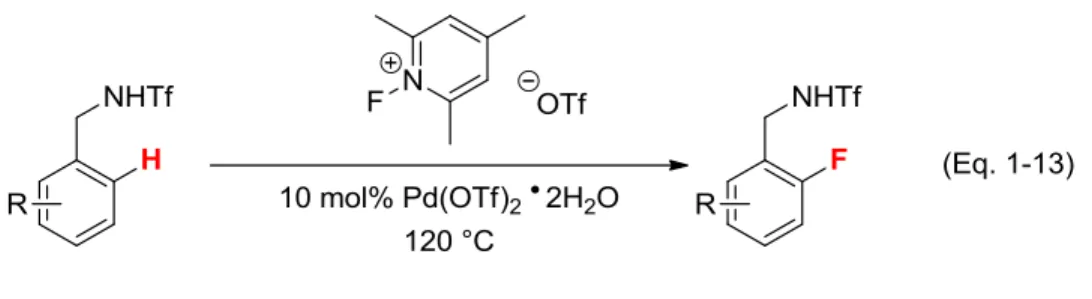
The most direct way to regioselectively form C-F bonds is through the use of directing groups for the functionalization of a particular (e.g. C-H) bond. Covalently attached directing groups, which can pre-coordinate to a transition metal catalyst, and through proximity, lower the activation energy for preferentially cleaving a specific C-H bond and thus achieving an efficient direct fluorination at the kinetically activated position. Usually, directing groups provide a mechanism for C-H bond functionalization ortho to the directing group on the aryl ring. In 2009, the Yu group developed a Pd(II) catalyzed directed electrophilic fluorination of triflamide functionalized aromatics (Eq. 1-13). The obvious limitation of the directed electrophilic fluorination strategy is that fluorine can only be incorporated into the ortho position to the directing group.
28
Scheme 1-11. Silver-catalyzed C-F bond formation from aryl stannanes using an electrophilic fluorine source.
In addition to group 10 metals, the Ritter group reported the first silver-catalyzed transmetallation to form carbon-heteroatoms via an electrophilic fluorination of aryl stannanes (Scheme 1-11).42 This electrophilic fluorination occurs under mild conditions, leading to high functional group tolerance and applicability to late stage fluorinations of small complex molecules. The key to the late stage fluorination of small molecules may be metal-metal redox interactions that result from silver aggregates. These interactions are proposed to reduce the barrier to C-F reductive elimination. (Figure 1-6). The major drawback of this system, however, is the use of toxic aryl stannanes, which must be synthesized from phenols or arenes through aryl triflates or aryl halides.43
Figure 1-6. Possible Ag(II)-Ag(II) complex suitable for C-F reductive elimination.
42Tang, P.; Furuya, T.; Ritter, T. J. Am. Chem. Soc.2010, 132, 12150.
29
1.3.5. Aliphatic asymmetric fluorinations
Aliphatic C-F bonds are prominent in many pharmaceuticals, materials and agrochemicals.36 The electrophilic fluorination of racemic α-fluoro carbonyl compounds have been known for years, however, until recently, asymmetric fluorination relied on the relay of existing stereochemistry. For this reason, scientists have embarked on new reaction development for asymmetric fluorination of aliphatic hydrocarbons.36a
In 2000 Togni developed the first enantioselective transition-metal mediated electrophilic fluorination.44 Using an analog of Ti(TADDOL)Cl2, the regio- and stereoselective fluorination of β-ketoesters was achieved (Scheme 1-12). In these reactions the bulky Lewis acidic catalyst triggers the enolization of the β-ketoester making the enolized substrate susceptible to external electrophilic fluorination on the re side by Selectfluor [1-Chloromethyl-4-fluoro-1,4-diazoniabicyclo[2.2.2]octane bis(tetrafluoroborate)].
Scheme 1-12. Asymmetric fluorinations of Togni using [TiCl2(R, R)-(TADDOLato)] and Selectfluor as electrophilic fluorinating reagent.
44(a) Hintermann, L.; Togni, A. Angew. Chem., Int. Ed.2000, 39, 4359. (b) Togni, A.; Mezzetti, A.; Barthazy, P.; Becker, C.; Devillers, I.; Frantz, R.; Hintermann, L.; Perseghini, M.; Sanna, M. CHIMIA Int. J. Chem.2001,
30
Scheme 1-13. Enantioselective Fluorination of b-ketoesters using (BINAP)Pd complexes.
A few years later, the Sodeoka group developed an enantioselective electrophilic fluorination of various β-ketoesters using NFSI (N-Fluorobenzenesulfonimide) as the fluorinating reagent and a (BINAP)Pd(II) dimeric complex as the catalyst (Scheme 1-13).45 This was an early example of transition metal-catalyzed electrophilic fluorination that resulted in good yields and enantioselectivities under conditions that were not free of water or air. In addition, the catalyst could be recycled multiple times with no loss in catalytic reactivity. Although, the yields and enantioselectivies are excellent for these reactions, the fluorination is opportunistic, meaning that the fluorine addition only occurs at an “activated” site (in these cases, an enolate).
1.4. Research objectives
The research goals of this thesis are two-fold. First, we want to study the hydride abstraction in Pt(II)-catalyzed cascade cyclization of 1. Previous work had shown that catalytic turnover was achieved by a hydride abstraction from a putative [Pt]-H by
31
Ph3C+.17,18,19 My goal was to find an alternative hydride abstractor to Ph3C+ that possessed the same reactivity but with increased atom economy and provided improved product isolation conditions. As will be discussed, this was achieved by utilizing acetals and ketals in an activated oxocarbenium form as an alternative triphenylcarbenium source (Scheme 1-14). From studies initiated on model compounds, the most promising candidates were transitioned to catalytic systems to determine which acetals could be used as alternatives to Ph3C+.
Scheme 1-14. Previous hydride abstraction using Ph3C+ compared to work described in this thesis.
Scheme 1-15. Proposed fluorination described in this thesis. .
32
Chapter 2
Hydride Abstraction in Pt-Catalyzed Cascade Cyclizations
2.1. Introduction
Reactions that proceed via a Wacker-type oxidative cyclization have provided net-dehydrogenative routes to a broad variety of heterocycles (as discussed in Chapter 1).1 The formation of these heterocyclic compounds typically involve the same sequence of steps including activation of an alkene by an electrophilic metal center, attack of a nucleophile (e.g. H2O), and β-H elimination of the resulting metal-alkyl complex to yield a metal hydride and product alkene. The challenge in rendering these processes catalytic has been the turnover mechanism to return the catalyst to its electrophilic “activated” state. In the case of Pd(II) catalysts, the resulting [Pd]-H typically undergoes reductive elimination (deprotonation) to generate Pd(0), which is re-oxidized to Pd(II) using oxidants such as CuCl2, benzoquinone (BQ), or O2. 1,2
1
(a) Hartwig, J. F. Organometallic Metal Chemistry; University Science Books: Sausalito, CA, 2010; p 717-744. (b) Wang, F.; Yang, G.; Zhang, Y. J.; Zhang, W. Tetrahedron2008, 64, 9413. (c) Minatti, A.; Muniz, K.
Chem. Soc. Rev.2007, 36, 1142. (d) Muñiz, K. Adv. Synth. Catal. 2004, 346, 1425. (e) Takacs, J. M.; Jiang, X.
Curr. Org. Chem. 2003, 7, 369. (f) Hegedus, L. S. Transition Metals in the Synthesis of Complex Organic Molecules; University Science Books: Mill Valley, CA, 1994; p 199-236.
2(a) Stahl has recently demonstrated that the significant process challenges of using O
2 can be mitigated under flow conditions, see McDonald, R. I.; Stahl, S. S. Angew. Chem. Int. Ed.2010, 49, 5529. (b) Korotchenko, V. N.; Gagné, M. R. J. Org. Chem. 2007, 72, 4877. (c) Cornell, C. N.; Sigman, M. S. Inorg. Chem. 2007, 46, 1903. (d) Muzart, J. Tetrahedron2007, 63, 7505. (e) Popp, B. V.; Thorman, J. L.; Stahl, S. S. J. Mol. Catal. A.
34
While Pt complexes display many of the same reactivity profiles as Pd complexes, they have, until recently, typically not been used for Wacker-type transformations.3 The use of platinum in these transformations has been hindered due to the lower acidity of a platinum hydride, deterring its elimination and the higher binding strength of Pt(II) to counterions like Cl-, which poison its electrophilic character, hence its catalytic activity. Previous efforts in the Gagné group on electrophilic dicationic Pt(II) complexes demonstrated that Wacker-like activity could be achieved with polyene substrates that proceed via cation-olefin pathways.4 Similar to Wacker systems, β-H elimination resulted in the regioselective organic polycyclic product, 2, and a putative [Pt]-H. Conventional 2-electron oxidants such as benzoquinone, O2, and CuCl2 were unsuccessful at achieving catalytic turnover. Fortunately, triphenylcarbenium (trityl) cation, [Ph3C+][BF4-], was found to efficiently abstract the hydride to form Ph3CH and regenerate Pt2+ free of coordinating anions (Scheme 2-1).5,6
3
(a) Chianese, A. R.; Lee, S. L.; Gagné, M. R. Angew. Chem. Int. Ed. 2007, 46, 4042. (b) Helger, D. S.; Atwood, J. D. Organometallics2004, 23, 2412. (c) Matsumoto, K.; Magai, Y.; Matsunami, J.; Mizuno, K.; Abe, T.; Somuzawa, R.; Kinoshita, J.; Shimura, H. J. Am. Chem. Soc.1998, 120, 2900. (d) Matsumoto, K.; Mizuno, K.; Abe, T.; Kinoshita, J.; Shimura, H. Chem. Lett.1994, 1325.
4For additional non-catalytic variants of alkene cascades by Pd(II) and Pt(II) see: (a) Feducia, J. A.; Campbell, A. N.; Doherty, M. Q.; Gagné, M. R. J. Am. Chem. Soc.2006, 128, 13290. (b) Koh, J. H.; Gagné, M. R. Angew. Chem. Int. Ed.2004, 43, 3459.
5(a) Mullen, C. A.; Campbell, A. N.; Gagné, M. R. Angew. Chem. Int. Ed.2008, 47, 6011. (c) Mullen, C. A.; Gagné, M. R. J. Am. Chem. Soc.2007, 129, 11880.
6In addition, Bullock has used Ph
3C+ as a hydride abstractor for various [M]-H complexes. See references: (a) Cheng, T.-Y.; Bullock, R. M. Inorg. Chem. 2006, 45, 4712. (b) Cheng, T.-Y.; Bullock, R. M. Organometallics
35
Scheme 2-1. Platinum-catalyzed polyene cascade cyclization reaction and mechanism displaying the [Pt]-H and Ph3C+.
Use of Ph3C+ provides an approach to Pt(II) Wacker-type catalysts and access to regioselective reactions not available to Pd variants.3a,5,7 In this first-generation platinum-catalyzed Wacker-type cyclization, the use of Ph3COMe which, upon reacting with [Ph2NH2][BF4], as “H+” (the by-product of the electrophilic activation), liberated MeOH and the active Ph3C+ was convenient and served to keep the concentration of the reactive species (Ph3C+) at relatively low levels. This ultimately enabled the development of catalytic, enantio- and regioselective oxidative cascade cyclizations.
7For recent reviews on electrophilic Pt catalysts see reference 3a and Fürstner, A.; Davies, P. W. Angew. Chem.
36 A major disadvantage of utilizing Ph3C
+
, however, was the consequent generation of a full
equivalent of Ph3CH, which, combined with unreacted Ph3COMe, makes workup and product
isolation cumbersome. To combat this, a trityl-bound polystyrene resin was utilized. Due to its heterogeneous nature, the trityl-bound resin is easily removed from the reaction mixture during workup; however, batch to batch variability was observed with some reduction in activity. To circumvent these limitations, we sought an alternative “oxidant” or hydride abstractor that would react similarly to Ph3C+ but also encompass the following qualities (1) would not react unless liberated by an in situ generated acid keeping the relative concentration low; (2) small in size, so that the reaction would be atom economical and (3) conveniently removed during reaction workup (i.e. vacuum). To this end, we considered the possibility that acetals, ketals, and ortho-esters might be capable of hydride abstraction under acidic conditions (Scheme 2-2).
37
Supporting the idea that acetals could be used as potential hydride abstractors were ionic
hydrogenations of acetals reported by Bullock.8 In contrast to the mechanism for traditional
hydrogenation of ketones (which includes insertion of the ketone into a [M]-H bond), ionic
hydrogenations deliver H2 to a ketone in the form of protonation by a strong acid followed by direct
hydride transfer from a [M]-H. In 1996, Bullock reported the ionic hydrogenation of acetals using a
Cp(CO)3WH complex (Scheme 2-3).
8a
After protonation by triflic acid and loss of methanol in benzaldehyde dimethyl acetal, the Bullock group was able to observe and isolate a [M]-benzyl methyl ether complex, d, at low temperatures. They found that overtime at room temperature benzyl methyl ether displaced from d, suggesting that d is kinetically stable and thermodynamically unstable. These results suggested that acetals had the potential to first react with a proton source, generated from the deprotonation during cyclization, then react with a [M]-H to abstract the hydride, generating an ether and turning over the catalytic cycle.
Scheme 2-3. Ionic hydrogenation of acetals and ketals generating a [M]-ether complex as kinetic intermediate.
2.2. Results and discussion
2.2.1. Synthesis and characterization [Pt]-H
In our systems, the P2Pt2+-catalyzed polyene cyclization reactions are buffered with Ph2NH; therefore, we first tested whether its conjugate acid, Ph2NH2+, could generate a
8
(a) Song, J.-S.; Szalda, D. J.; Bullock, R. M. J. Am. Chem. Soc.1996, 118, 11134. (b) Bullock, R. M. Chem. Eur. J. 2004, 10, 2366. (c) Song, J.-S.; Szalda, D. J.; Bullock, R. M. Organometallics2001, 20, 3337. (d) Song, J.-S.; Szalda, D. J.; Bullock, R. M.; Lawrie, C. J. C.; Rodkin, M. A.; Norton, J. R. Angew. Chem., Int. Ed. Engl.


![Figure 2-2. Commercially available P 2 ligands for coordination to [Pt] for catalytic cascade cyclization](https://thumb-us.123doks.com/thumbv2/123dok_us/8249861.2185974/57.918.150.791.165.398/figure-commercially-available-ligands-coordination-catalytic-cascade-cyclization.webp)
![Table 2-1. Stoichiometric hydride abstraction from [Pt]-H using acetals and ketals.](https://thumb-us.123doks.com/thumbv2/123dok_us/8249861.2185974/61.918.233.713.145.944/table-stoichiometric-hydride-abstraction-pt-using-acetals-ketals.webp)

