i
Older Adults with Cancer: Participation in Activity and the Utilization of Occupational Therapy
Mackenzi Pergolotti
A dissertation submitted to the faculty of the University of North Carolina at Chapel Hill in partial fulfillment of the requirements for the degree of Doctor of Philosophy in the
Department of Allied Health Sciences (Occupational Science)
Chapel Hill 2013
Approved by:
Malcolm Cutchin, PhD
Virginia Dickie, PhD
Morris Weinberger, PhD
Brian Boyd, PhD
iii ABSTRACT
MACKENZI PERGOLOTTI: Older Adults with Cancer: Participation in Activity and the Utilization of Occupational Therapy
(Under the direction of Malcolm Cutchin, PhD)
iv
(POPS) was found to be reliable and valid when tested with a sample of older adults within the Carolina Senior Registry; in addition, the POPS was found to be a significant predictor of meaningful activity participation. The perceived occupational possibilities of older adults were better predictors of participation in meaningful activity than
demographics, functional status and emotional support. In combination, the findings of these three studies suggest that, as more adults are diagnosed with and survive cancer, it is imperative they not be assessed solely on functional ability but also on meaningful activity participation and occupational possibilities. In addition, older adults with cancers that are least likely to be seen by occupational therapists should be targeted with
v
DEDICATIONS
To Nightingale, your love and your optimism keep me going. May you keep your persistence and grow older knowing that you can achieve anything.
“What is for you, won’t go by you.”
vi
ACKNOWLEDGEMENTS
I am forever grateful to and indebted to many who guided me through this process. I owe sincere thankfulness to all of the adults in my studies who agreed to share their experiences with cancer with me and thereby made this dissertation possible.
Valeria, Hazen, Everett and the many other children and adults with cancer who continue, even after their passing, to provide me with the passion to continue to improve the quality of lives of all affected by cancer: I thank you.
This dissertation would not have been possible without my advisor, Dr. Malcolm Cutchin, and his time, effort and guidance throughout this process. I would like to thank my committee members, whose open doors, easy conversation and laughter always allowed me to explore my interests and pushed me to explore my assumptions and think critically. I thankfully acknowledge Dr. Morris Weinberger, who wholeheartedly
supported me through my fellowship as my mentor at Sheps and as a member of my dissertation committee. Your unwavering confidence and understanding helped me through the hardest parts. I am very thankful the unfaltering excitement and
vii
would also like to thank the faculty and students in the Division of Occupational Science for your impromptu lunches, coffee and support throughout these four years.
viii
TABLE OF CONTENTS
LIST OF TABLES... xi
LIST OF FIGURES... xiii
LIST OF ACRONYMS AND ABBREVIATIONS... xiv
CHAPTER 1 INTRODUCTION AND BACKGROUND... 1
1.1 Overview... 1
1.2 The Quality of Cancer Care in the United States... 3
1.3 Activity Participation and Quality of Life... 4
1.4 Occupational Possibilities... 7
1.5 Older Adults with Cancer... 8
1.6 Disparities in Cancer Care... 10
1.7 Cancer Rehabilitation to Improve Quality of Life... 11
1.8 The Role of Occupational Therapy Services in Cancer Rehabilitation... 12
1.9 Aims of This Dissertation... 15
1.10 Specific Aims... 16
1.11 References... 17
2 METHODS... 25
ix
2.2 Specific Aim 1... 28
2.3 Specific Aim 2... 45
2.4 Specific Aim 3... 57
2.5 Conclusion... 63
2.6 References... 64
3 DISCUSSION AND CONCLUSION... 69
3.1 Overview... 69
3.2 Study 1... 70
3.3 Study 2... 74
3.4 Study 3... 76
3.5 Future Research ... 78
3.6 Conclusion... 79
3.7 References... 84
4 OCCUPATIONAL THERAPY USE BY OLDER ADULTS WITH CANCER IN NORTH CAROLINA... 89
4.1 Introduction... 89
4.2 Methods... 91
4.3 Results... 94
4.4 Discussion... 97
4.5 Conclusion... 101
4.6 References... 103
5 DEVELOPMENT OF THE PERCEIVED OCCUPATIONAL POSSIBILITIES SCALE... 114
x
5.2 Background... 115
5.3 Methods... 118
5.4 Results... 127
5.5 Discussion... 130
5.6 References... 133
6 THE INFLUENCE OF SOCIO-OCCUPATIONAL BELIEFS ON PARTICIPATION IN ACTIVITIES THAT OLDER ADULTS WITH CANCER FIND PERSONALLY MEANINGFUL... 142
6.1 Introduction... 142
6.2 Methods... 145
6.3 Results... 149
6.4 Discussion and Conclusion... 151
6.5 References... 156
APPENDIX A... 165
xi
LIST OF TABLES
Table 2.1 Specific Aims, Hypotheses, and Analyses, Summarized by
Aim... 27
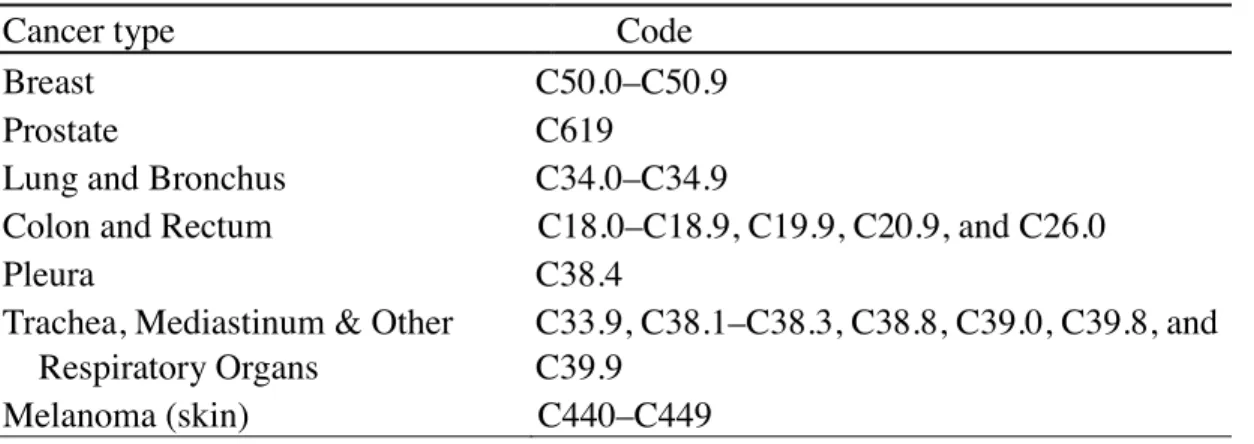
Table 2.2 Codes Used to Determine Cancer Type... 35
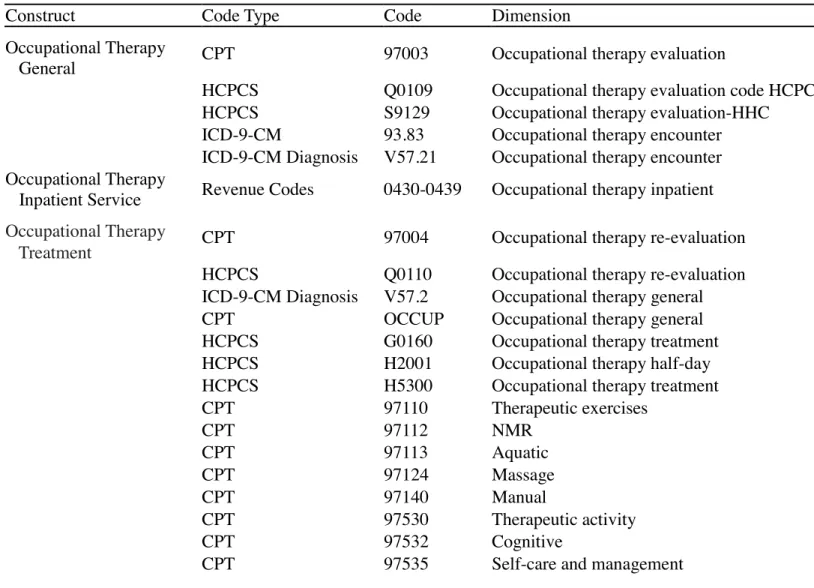
Table 2.3 Medicare Claims Codes Used to Identify Occupational Therapy Services... 37
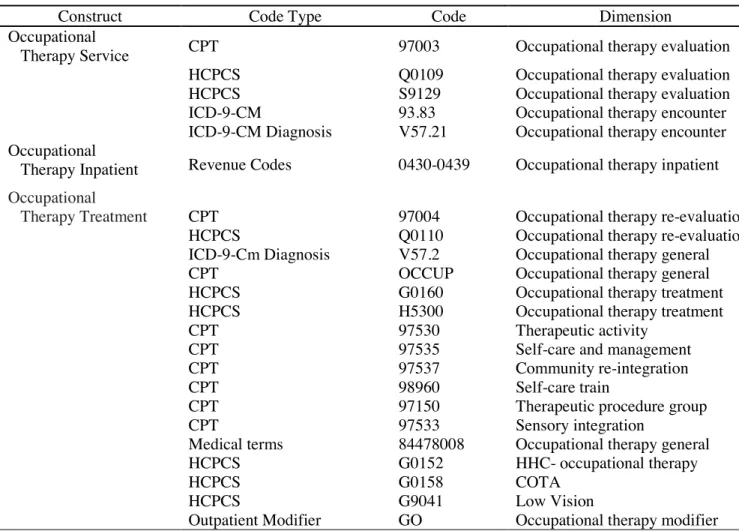
Table 2.4 Conservative List of Codes Used in Analysis... 39
Table 2.5 Cancer Status in Carolina Senior Registry... 47
Table 2.6 Cancer Types in Carolina Senior Registry... 47
Table 2.7 Treatment Periods in Carolina Senior Registry... 47
Table A2.8 Perceived Occupational Possibilities Scale: Occupational Expectations... 183
Table A2.9 Perceived Occupational Possibilities Scale: Occupational Self-Efficacy... 184
Table A2.10 Meaningful Activity Participation Assessment: Frequency... 185
Table A2.11 Meaningful Activity Participation Assessment: Meaning... 187
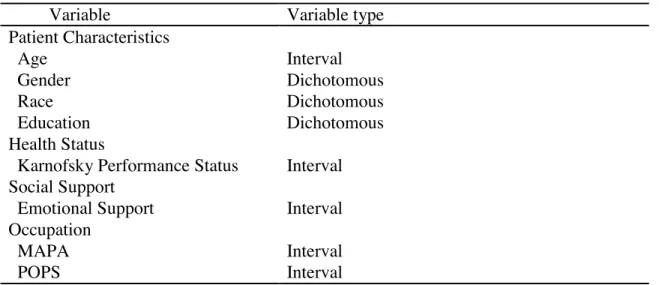
Table 2.12 Variables for Aim 3... 61
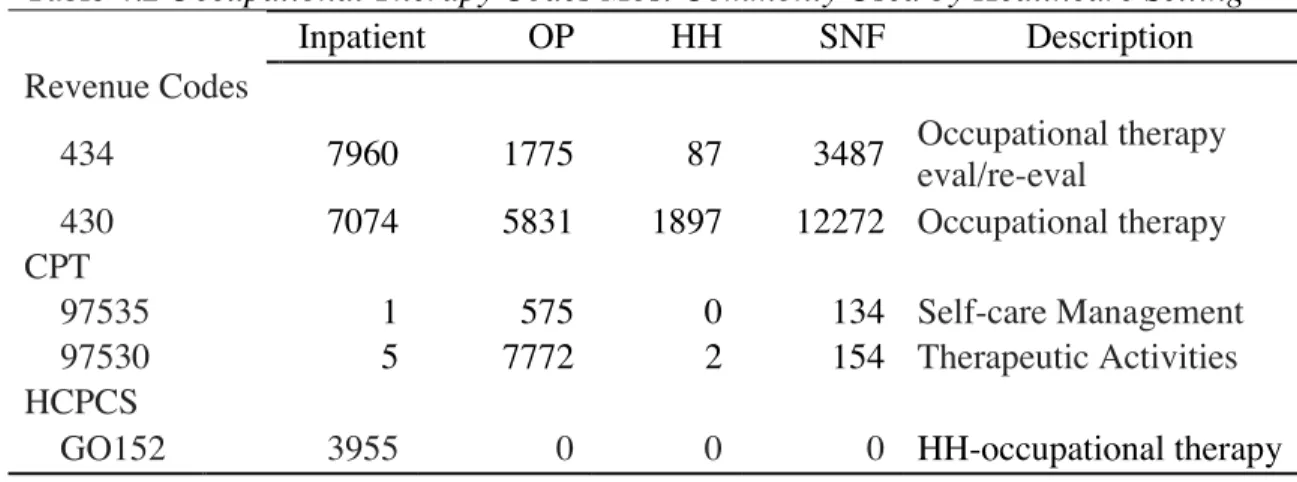
Table 4.1 Independent Variables to Predict Occupational Therapy Usage in NC Medicare Beneficiaries... 110 Table 4.2 Occupational Therapy Codes Most Commonly Used by Health Care Setting... 111 Table 4.3 Characteristics for the Sample... 112
Table 4.4 Model Predicting Occupational Therapy Use and GLM Results-Risk Ratio... 113
Table 5.1 Occupational Expectations... 139
Table 5.2 Occupational Self-Efficacy... 140
xii
Table 5.4 Model Fit of the Model of Perceived Occupational Possibilities... 141
Table 5.5 Correlations Between POPS Total Scores and MAPA Scores... 141
Table 6.1 Individual Characteristics... 162
Table 6.2 Predictors of MAPA Score... 163
xiii
LIST OF FIGURES
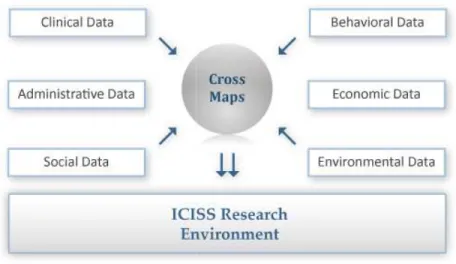
Figure 2.1 ICISS Data Management... 31
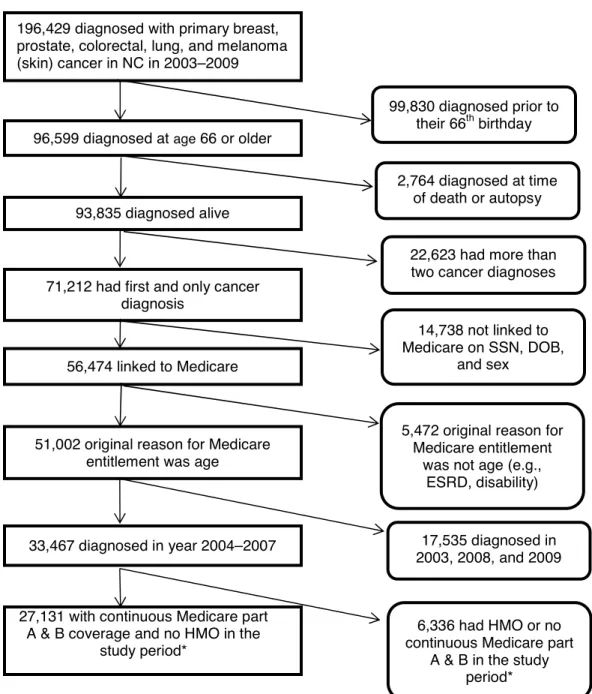
Figure 2.2 Participant Flow Chart for Aim 1... 41
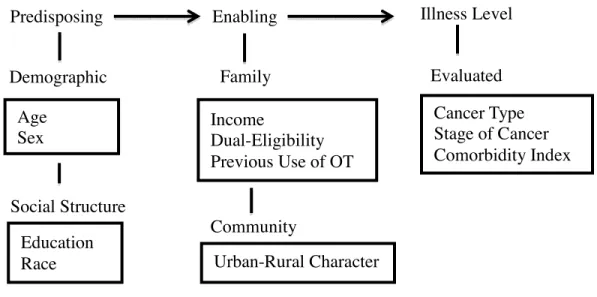
Figure 4.1 Conceptual Model... 109
xiv
LIST OF ACRONYMS, ABBREVIATIONS AND SYMBOLS ADL Activities of daily living
AIC Akaike information criterion
AJCC American Joint Committee on Cancer
α Alpha
ARF Area resource file
AOTA American Occupational Therapy Association β Regression coefficients
CCI Charlson comorbidity index CCR Central Cancer Registry CFI Comparative fit index CFA Confirmatory factor analysis CI Confidence interval
CPT Current procedural terminology
∆ Increment of change
ECOG Eastern Cooperative Oncology Group performance status EFA Exploratory factor analysis
f2 Cohen’s f ratio
GLM Generalized linear modeling
HCPCS Healthcare Common Procedure Coding System IADL Instrumental activities of daily living
ICD-9-CM International Classification of Diseases, Ninth Revision (Clinical Modification)
xv IOM Institute of Medicine
KPS Karnofsky Performance Status Scale
MAPA Meaningful Activity Participation Assessment MOS Medical outcome study
NC North Carolina
NCI National Cancer Institute NFI Normed fit index
OLS Ordinary least square
p Probability
POPS Perceived Occupational Possibilities Scale
r Estimate of Pearson product-moment correlation coefficient R2 Measure of strength of association
RMSEA Root mean square error of approximation RR Relative risk ratio
SE Standard error
SEM Structural equation modeling t Sample value of the t statistic USPS United States Postal Service
1
Chapter 1: Introduction and Background 1.1. Overview
As the U.S. population grows older, the number of Americans over the age of 65 who have cancer will also continue to rise (Parry, Kent, Mariotto, Alfano, & Rowland, 2011). Most older adults with cancer do not return to previous levels of activity after treatment, and this reduced activity leads to decreased quality of life as well as increased morbidity and mortality (Courneya & Friedenreich, 1997; 2003; Extermann & Hurria, 2007). Moreover, after a life-threatening illness and subsequent disruption to the typical daily routine, a decrease in participation may challenge how people perceive themselves within society (Vrkljan, & Miller-Polgar, 2001). Thus, as the numbers of individuals living with and surviving cancer increase, their ability both to participate in meaningful activity and to have access to occupational therapy services that support their
participation is of the utmost importance.
Although previous research has examined the risk of functional decline in older adults with cancer, literature on their participation in meaningful occupations is lacking (Ashing-Giwa & Lim, 2008; Courneya & Friedenreich, 1997, 2003; Extermann & Hurria, 2007; Hurria, 2009). Levels of use of occupational therapy services and patterns of
2
possibilities) may result in less actual participation in occupation and decreased quality of life (Laliberte Rudman, 2010). Therefore, the need for knowledge about utilization of services, occupational possibilities, and meaningful activity participation in the older cancer population is great. Such knowledge would pave the way for interventions by building an evidence base that can undergird changed practices and transform standard post-cancer treatments for older adults.
This study addressed these gaps through the analysis of occupational therapy use patterns, development of an occupational possibilities measure, and the analysis of meaningful activity participation by older adults with cancer. Data from three sources were used. The first, the Integrated Cancer Information and Surveillance System (ICISS), incorporates usage data for cancer survivors in North Carolina (NC) and includes the NC Central Cancer Registry and administrative claims from public and private insurance payers. The second, Carolina Senior: University of North Carolina Registry for Older Patients (Carolina Senior), is a dataset that includes a geriatric assessment of adults (most of whom have cancer). The third is our survey of eligible adults from Carolina Senior to assess their occupational possibilities and meaningful activity participation.
More specifically, this study pursued knowledge about the following research questions:
1. Among older adults with cancer, who uses occupational therapy and what other factors predict utilization?
2. Can occupational possibilities be operationalized as a reliable, valid measure to be used with older adults with cancer?
3
Addressing these questions together in this 3-study dissertation will provide a breadth of understanding about this understudied topic as well as a foundation for future research on and interventions with the population of interest. The first study addresses the use of occupational therapy by older adults with cancer between 2004 and 2007 to assess variation in patterns of use. The second study describes the development and validation of the Perceived Occupational Possibility Scale (POPS). The third study examines the associations for older adults with cancer between meaningful activity participation and traditional risk factors, and determines if occupational possibilities are an important correlate. The literature review provides additional background for the significance and contributions of this study.
1.2. The Quality of Cancer Care in the United States
4
Researchers and stakeholders are recognizing the importance of measuring disease burden and ability to function to determine survival prognoses as well as quality of both survivorship and care (Abernathy et al., 2009; Extermann & Hurria, 2007; Grunfield, 2006; Lipscomb et al., 2007; Reeve et al., 2007). Lipscomb, Gotay, and Snyder (2007) explained the significance of a health-related quality-of-life measure to understand patient and provider decision-making processes and to support the importance of understanding adults’ experiences of care, their quality of life, and the overall quality of their care. The World Health Organization (WHO) has defined quality of life as “individuals’ perception of their position in life in the context of the culture and value systems in which they live and in relation to their goals, expectations, standards and concerns” (Kuyken et al., 1995). Measurement of quality outcomes, such as quality of life, is a complex endeavor; as such, it should be sensitive to societal and cultural perspectives (Greenfield, 2006; Hewitt & Simone, 1999).
1.3. Activity Participation and Quality of Life
Hewitt and Simone (1999) defined quality of life as related to the ability to
participate in activity. The importance of assessing participation in activity as a quality
outcome in geriatric oncology was also noted when Extermann and Hurria (2007) stated that measurement of a decrease in either activities of daily living (ADL) or instrumental activities of daily living (IADL) may also “uncover problems relevant to cancer care that would otherwise go unrecognized” (p. 1824). Cancer-related fatigue is an example of one such problem. Macquart-Moulin et al. (1999) found an inverse relationship between
quality of life and fatigue, and Curt et al. (2000) found both that 91% of adults with
5
life” (p. 356) and that 81% indicated the need to modify their daily routine due to fatigue.
When adults experience fatigue, their ability to participate in their daily routines and
activities decreases such that their lives become disrupted. In turn, this decrease in
participation leads to a decrease in quality of life (Curt et al., 2000; Macquart-Moulin et
al., 1999).
Functional status measures (ADL and IADL) are commonly used in geriatric
assessments to predict the mortality and toxicity of cancer and its treatments (Hurria, 2009; Wedding et al., 2007). Accuracy of performance measurement and the approach to measurement of functional status are debated within the oncology literature.
Measurements used in oncology to assess function such as the Karnofsky Performance Status Scale (KPS), Eastern Cooperative Oncology Group (ECOG) Performance Status,
and geriatric assessments, are limited to evaluations of an adult’s ability (typically, as
perceived by the practitioner) (Bellury et al., 2011). Although the geriatric assessment is
broader and includes evaluations of social support, depression, and cognitive ability, it
does not include any measurement of the meaning and frequency of participation. The
WHO framework for classifying health, the International Classification of Functioning,
Disability and Health (ICF), identifies function, activity, and participation as separate yet
interrelated constructs. Using that framework, Schreiber et al. (2006) found that although
functional limitations and impairments were related to the performance of activities,
participation restrictions had a greater effect on health-related quality of life.
In the occupational science and occupational therapy literatures, scholars have
reported significant relationships between participation in occupation (defined as
6
Kiellberg, 2010; Wilcock et al., 1998). Participation in activity that is meaningful to the
adult with cancer leads to improved emotional and physical well-being (Palmadottir,
2010; Unruh & Elvin, 2004). Although participation is a complex construct, it must be
measured beyond an adult’s ability score because ability is just one aspect of the
multifaceted relationship between activity participation and quality of life for cancer
survivors.
Within rehabilitation science, which includes occupational therapy, consensus has
not been reached on how to measure participation due to its complex nature (Dijkers,
2010). Although measures of functional ability or performance ability are helpful in
determining impairments, their lack of complexity has been noted. Dijkers stated that
“because of the norming of participation by social roles and cultural values, the potential
for developing a single measure that is appropriate across age groups, sexes,
socioeconomic classes, and cultures is debatable” (2010, p. S5). Multiple measures are
needed to measure participation in activity for older adults; moreover, these measures
must be sensitive to a social perspective (Dijkers, 2010). Traditional measures of
participation, which focus on an adult’s ability to perform ADL, lack dimensions of
social influence on participation in activity.
Beyond an individual’s perception of meaning attached to activity participation,
there remains a dearth of information about the meaning and frequency of participation in
activity and the relationship of such participation to the occupational possibilities of older
adults with cancer. In addition, the complexity of participation is rarely acknowledged or
appreciated in health sciences (Eakman, 2010) although it is recognized in both
7
2005; Law, 2002; Vessby & Kiellberg, 2010; Wilcock et al., 1998). Understanding this
complexity and using measures to evaluate other aspects of participation will provide
information valuable for exploration and intervention into restrictions upon participation.
1.4. Occupational Possibilities
Beyond the traditional restrictions upon participation, the restrictions of adults’
beliefs about what they should be or could be doing (i.e., their “occupational
possibilities”) may also affect quality of life (Laliberte Rudman, 2010). The term
“occupational possibilities,” a relatively new construct within occupational science, was
intended to expand the understanding of occupation (defined as meaningful activity) and
participation to include broader social forces (Laliberte Rudman, 2010). This construct
suggests that a group’s tacit knowledge about societal ideals influences members’
participation in meaningful activity. Occupational possibilities are thus situated within
particular socio-historical contexts and include the social construction of what people
“should be” and “could be” doing. As Laliberte Rudman (2005, 2006, 2010) described,
popular discourse encourages older adults to be active, purposeful, and youthful
consumers. She also emphasized a recent turn in Western society toward the
individualization of occupation, exemplified by the focus on meaning and upon the
ability of individual agents with little consideration of the situated (social, political)
nature of occupation. This individualistic turn places the responsibility for action
upon/within the individual and disregards larger social forces that promote and enforce
idealized ways of doing. While acknowledging the importance of both personal meaning
8
construct suggests an expanded scope of evaluations and interventions that can further
understanding of participation and improve the quality of life for adults.
Patterns of activity participation are likely to be influenced by the ways that
individuals internalize social pressure about what they “should” and “could” be doing as
defined by the social structures and broader systems through which life is lived (Laliberte
Rudman, 2005, 2006). This understanding of how participation is shaped (i.e., by the
internalization of social forces affecting perceptions of what occupations are possible) is
important not only for appreciating the variations in participation but also for determining
how to develop interventions that take into consideration social influences as these are
suggested by the construct of occupational possibilities. Research into the development
and use of the concept of occupational possibilities is dominated by the qualitative
methodologies, for example critical discourse analysis (Laliberte Rudman, Huot, &
Dennhardt, 2009). Although this concept has proved to be very informative and useful for
theoretical purposes, operationalization for quantitative research is still lacking.
Moreover, the focus within occupational therapy and geriatric oncology upon functional
assessment does not capture the social understandings of participation or influences on it.
Additional measurement of occupational possibilities should broaden the
conceptualization of participation for occupational science, therapy, and geriatric
oncology. The limited focus on function, by contrast, places the responsibility of
participation, and therefore for quality of life, onto the older adult with cancer.
1.5. Older Adults with Cancer
9
treatment (Hewitt, Rowland, & Yancik, 2003; Reeve et al., 2009). Advanced age, which is a major risk factor for cancer, is associated with a decline in functional ability, increase in comorbidity, and other age-related health issues (Smith et al., 2008; Yancik, 1997). Currently, there are about 12 million Americans living with cancer and about 7 million of them are over the age of 65 (National Cancer Institute [NCI], 2013). An estimated 68% of people who are diagnosed with cancer survive at least five years, an increase of 18% since the late 1970s (American Cancer Society, 2011). By 2030, older adults will make up 70% of the cancer population (Smith, Smith, Hurria, Hortobagyi, & Buchholz, 2009). Of the 14 million cancer survivors living in the US today, about 33% are over the age of 65 (NCI, 2011). In fact, more older adults are being diagnosed with cancer and surviving than ever before. Yet, many survivors do not return to previous levels of participation in activities they find meaningful, and about 20% do not return to work (Sesto &
Simmonds, 2009; Söderback, Pettersson, Von Essen, & Stein, 2000). These statistics are important because participation in meaningful activities predicts mortality, morbidity, and quality of life in adults who undergo cancer treatment (Courneya & Friedenreich, 1997, 2003; Curt et al., 2000; Extermann & Hurria, 2007; Hurria, 2009).
10
perspective on the discourses surrounding aging, retirement, and participation in occupation (2005, 2006).
Lebel and Devins (2008) defined stigma as “a social process, experienced or anticipated, characterized by exclusion, rejection, blame or devaluation that results from experience, perception or reasonable anticipation of an adverse social judgment regarding a person or a group” (p. 717). Adults with cancers that may have been caused by
behaviors that are considered irresponsible (for example, lung and cervical cancers) are subject to more obvious forms of stigma, whether or not behaviors or actions were the actual causes. Lung cancer is the perfect example of a type of cancer diagnosis for which stigma is high (Chapple, Ziebland, & McPherson, 2004). For older adults with cancer, the risks of stigma, depression, and suicide increase after diagnosis and treatment, which may also increase the risk of marginalization (Llorente et al., 2005). This marginalization should be addressed through novel measurements and interventions that acknowledge the inherent power of socio-occupational beliefs and generally accepted definitions of
successful aging (Llorente et al., 2005). 1.6. Disparities in Cancer Care
11
of care (NCI, 2011). Additionally, minority groups in general are at risk for poorer health status and decreased ability for physical activity. Minorities demonstrate the highest need for special equipment to assist with ADL and IADL and report the lowest participation in physical activity and exercise (Bass-Haugen, 2009). However, access to rehabilitation services designed to alleviate difficulties in ADL, IADL, and physical activity are largely unknown in the minority cancer population (Stubblefield & O'Dell, 2009).
Although a few documents have demonstrated a growing interest in occupational therapy’s role in health disparities (AOTA, 2006; Bass-Haugen et al., 2005; Kronenberg & Pollard, 2006), very little research exists on the actual use of occupational therapy services. An essential need exists for detailed research that outlines the predictors of usage and particular organizational and individual structures that lead to better outcomes. Additionally, the relationships among meaningful activity, illness, and traditional risk factors for decreased quality of life and health (e.g., minority status and disability) have not been examined in the literature. These relationships are paramount to guiding future research and interventions to improve quality of care initiatives. A more definitive understanding of the use of occupational therapy services and the relationship between meaningful activity participation and risk factors for health disparities will allow
occupational science and occupational therapy interventions to target specific populations that have been neglected.
1.7. Cancer Rehabilitation to Improve Quality of Life
Cancer rehabilitation comprises teams with multiple therapeutic specialties:
occupational, physical, speech and language pathology, nursing, and more. Recognition
12
began in the 1970s. Lehmann (1978), who performed the first prospective study with a
sample of 805 adults with cancer that assessed their rehabilitation needs, initiated the
national push toward cancer rehabilitation centers and education; however, an interest in
cancer rehabilitation research never took hold in American health care. Patricia Ganz
(2007) at the National Cancer Policy Forum (NCPF) suggested that this lack of interest was due to reimbursement issues for outpatient therapy. In the 1980s, researchers again
called for more rehabilitation programs to meet the growing needs of cancer adults
(Dietz, 1981). Although Dietz developed the first conceptual model for cancer
rehabilitation that included care from prevention to palliation, funding for research and
programs lagged. Watson (1990) declared the 1990s to be the decade of cancer
rehabilitation programs; yet, in spite of this declaration, due to decreased funding for
research and difficulties with reimbursements, a gap in the literature about cancer
rehabilitation and new programs remained (DeLisa, 2001; Stubblefield, 2011). Cancer
programs presently exist; however, variations in the patterns of use of such services and
predictors of this usage remain unknown. The cancer rehabilitation literature speaks to
the need for such programs and what they should look like, and provides specific case
examples of adults who received care as well as barriers to care (DeLisa, 2001; Franklin,
2007; Stubblefield, 2011).
1.8. The Role of Occupational Therapy Services in Cancer Rehabilitation Occupational science and occupational therapy provide perspectives and
approaches to improve participation and health-related quality of life for older adults with cancer (AOTA, 2011). Occupational therapy interventions target participation in
13
known and effective in other endeavors such as neurologic and orthopedic services, knowledge of access to and effectiveness of occupational therapy is lacking in cancer care (AOTA, 2011; Bass-Haugen, 2009).
For example, Clark et al. (1997) reported significant benefits of occupational
therapy intervention for older adults living independently; those ranged from higher
quality of life and improved function to better overall health. Within the literature on
adults with stroke, occupational therapy has been associated with better outcomes,
significantly fewer readmissions, reduced disability, and improved ADL and IADL
ability (Corr & Bayer, 1995; Legg, Drummond, & Langhorne, 2006; Walker,
Drummond, Gatt, & Sackley, 2000). For adults who were mechanically ventilated,
Schweickert and colleagues (2009) discovered that those who used occupational therapy
were significantly more likely to return to independent functional status at discharge, had
shorter durations of delirium, and more ventilator-free days than their counterparts who
did not use this service. Furthermore, adults with low back pain who used occupational
therapy were significantly less likely to report disability, had decreased pain, and
demonstrated an increased ability to maintain work status (Gatchel et al., 2003).
Research examining occupational therapy’s effects on adults with cancer is
limited (Hindly & Johnston, 1999; Lyons et al., 2010a, 2010b, 2011; Purcell, Fleming,
Haines, & Bennett, 2009). Research on the relationship between use of occupational
therapy and improved outcomes has mostly been limited to the following: a certain type
of cancer treatment (e.g., a stem-cell transplant), chemotherapy, or craniotomy; a specific
type of impairment (e.g., lymphedema); a particular side effect of treatment (e.g.,
14
(Campbell, Pergolotti & Blaskowitz, 2009; Cooper & Littlechild, 2004; Lyons et al.,
2010a, 2010b, 2011; Purcell et al., 2009, 2010; Unruh & Elvin, 2004). Those studies used
mostly qualitative methods with small samples.
One purpose of occupational science is to serve occupational therapy (Clark et al., 1991; Yerxa, 1990,). To move occupational science forward in this area, and to begin to improve the quality of lives of older adults with cancer, an understanding of patterns of occupational therapy use by this population must be reached, in order to understand care as it is already provided. Research on the usage of occupational therapy services in general has rarely been done, and if occupational therapy is considered during an analysis
of rehabilitation therapy use it has typically been bundled with other services such as
physical therapy (Cook, Stickley, Ramley, & Knotts, 2005; Freburger & Konrad, 2002;).
Utilization reports from the Centers for Medicare and Medicaid Services have examined
utilization of occupational and physical therapy and speech and language pathology
(Meadow, Silver, Lyda-McDonald, Bachofer, & Gage, 2012). These reports have focused on outpatient care only and although they did examine use by adult beneficiaries, they did
not focus on adults with cancer. The reports examined use broadly by setting (i.e.,
institutional versus private-practice outpatient) and only compared use by age and sex,
and cost. Although these are important topics, little research has been conducted on
health services with a focus on understanding use and effectiveness of services, health
disparities, and cancer research (Braveman and Bass-Haugen, 2009; Morello, Giordano,
Falci, & Monfardini, 2009). Gaps remain about patterns of occupational therapy use,
factors associated with such use, and an understanding of participation in activity among
15 1.9. Aims of This Dissertation
Older adults “bear the brunt of the cancer burden” and most do not return to
previous levels of activity participation (Courneya & Friedenreich, 1997, 2003; Yanick, 1997, p. 1273). Although participation in activity is the main focus of occupational
therapy and occupational science (AOTA, 2006; Vessby & Kjellberg, 2010), who among
older adults with cancer uses occupational therapy, and the predictors of this usage,
remain unknown. To address this gap, the first of the papers that comprise this
dissertation describes an investigation into the use of occupational therapy by older adults
in North Carolina who have cancer.
The lack of evidence-based interventions provided by occupational therapists for
older adults with cancer are as important as the gaps in the literature described above.
Constructs developed within occupational science can provide a base of theory from
which to understand occupation and occupational therapy intervention. Although the
construct of occupational possibilities is an example of an occupational science construct
that could be used to shape intervention, a need for operationalization of the construct for quantitative research remains. To address this need, a new instrument called the
16
important correlate for them. This three-paper dissertation examines the quality of cancer care through three succinct aims. Each aim below corresponds to a paper within this
dissertation.
1.10 Specific Aims
Aim 1: To determine patterns and predictors of occupational therapy service
utilization across Medicare beneficiaries with cancer in North Carolina using the ICISS data set.
H1: There are significant differences between occupational therapy users and non- users.
H2: Occupational therapy use is predicted by predisposing-, enabling-, and illness-level determinants.
Aim 2: To develop, implement, and validate an instrument to measure occupational possibilities.
H1: The data will fit the hypothesized measurement model of the POPS, thereby demonstrating construct validity.
H2: The POPS Cronbach’s α will be above .7, which will demonstrate reliability.
H3: POPS scores will be moderately positively correlated with MAPA scores (r > .20 and < .60), demonstrating criterion validity and thereby constructing validity.
Aim 3. To examine the relationship between risk factors and MAPA scores from a sample of the Carolina Senior Registry.
H1: Risk factors and perceived occupational possibilities will be significantly associated with activity participation scores. For example, those who are White, with higher education, better overall health status, more social
17
1.11. References
American Cancer Society (ACS) (2011). Cancer facts and figures. Retrieved from http://www.cancer.org/research/cancerfactsfigures/cancerfactsfigures/cancer-factsfigures-2011
Abernethy, A. P., Herndon II, J. E., Wheeler, J. L., Day, J. M., Hood, L., Patwardhan, M., Shaw, H., & Lyerly, H. K. (2009). Feasibility and acceptability to patients of a longitudinal system for evaluating cancer-related symptoms and quality of life: Pilot study of an e/tablet data-collection system in academic oncology. Journal of Pain and Symptom Management, 37(6), 1027.
Andersen, R. & Newman, J. F. (1973). Societal and individual determinants of medical care utilization in the United States. Milbank Memorial Fund Quarterly: Health and Society, 51(1), 95–124.
AOTA (2006). A consumer’s guide to occupational therapy. Retrieved from: http://www.promoteot.org/CG_ConsumersGuide.html
Ashing-Giwa, K. T., & Lim, J. M. (2008). Predicting health-related quality of life: Testing the contextual model using structural equation modeling. Applied Research in Quality of Life, 3(3), 215–230.
Bass-Haugen, J. D. (2009). Health disparities: Examination of evidence relevant for occupational therapy. American Journal of Occupational Therapy, 63(1), 24–34.
Bellury, L. M., Ellington, L., Beck, S. L., Stein, K., Pett, M., & Clark, J. (2011). Elderly cancer survivorship: An integrative review and conceptual framework. European Journal of Oncology Nursing, 15(3), 233–242. doi:10.1016/j.ejon.2011.03.008 Braveman, B. & Bass-Haugen, J. D. (2009). Social justice and health disparities: An
evolving discourse in occupational therapy research and intervention. American Journal of Occupational Therapy, 63, 7–12.
Campbell, C. L., Pergolotti, M., & Blaskowitz, M. (2009). Occupational therapy
utilization for individuals with brain cancer following a craniotomy: A descriptive study. Rehabilitation Oncology, 27, 9–13.
Chapple, A., Ziebland, S., & McPherson, A. (2004). Stigma, shame, and blame experienced by patients with lung cancer: Qualitative study. British Medical Journal, 328(7454), 1470.
18
Clark, F., Azen, S. P., Zemke, R., Jackson, J., Carlson, M., Mandel, D., . . . & Lipson, L. (1997). Occupational therapy for independent-living older adults. JAMA,278(16), 1321–1326.
Cook C., Stickley L., Ramey K., & Knotts V. (2005). Variables associated with
occupational and physical therapy stroke rehabilitation utilization and outcomes. Journal of Allied Health, 34, 3–10.
Cooper J. (1998). Occupational therapy intervention with radiation-induced brachial plexopathy. European Journal of Cancer Care, 7, 88–92.
Cooper, J. & Littlechild, B. (2004). A study of occupational therapy interventions in oncology and palliative care. International Journal of Therapy and Rehabilitation, 11, 329.
Corr, S. & Bayer, A. (1995). Occupational therapy for stroke patients after hospital discharge: A randomized controlled trial. Clinical Rehabilitation,9(4), 291–296.
Courneya, K. S. & Friedenreich, C. M. (1997). Relationship between exercise pattern across the cancer experience and current quality of life in colorectal cancer survivors. Journal of Alternative and Complementary Medicine, 3(3), 215–226. Courneya, K. S., Mackey, J. R., Bell, G. J., Jones, L. W., Field, C. J., & Fairey, A. S.
(2003). Randomized controlled trial of exercise training in postmenopausal breast cancer survivors: Cardiopulmonary and quality of life outcomes. Journal of Clinical Oncology, 21(9), 1660–1668. doi:10.1200/JCO.2003.04.093
Curt, G. A., Breitbart, W., Cella, D., Groopman, J. E., Horning, S. J., Itri, L. M., Johnson, D. H., Miaskowski, C., Scherr, S. L., Portenoy, R. K., & Vogelzang, N. J. (2000). Impact of cancer-related fatigue on the lives of patients: New findings from the fatigue coalition. Oncologist, 5(5), 353–360.
DeLisa, J. A. (2001). A history of cancer rehabilitation. Cancer,92(S4), 970–974.
Desrosiers, J. (2005). Participation and occupation. Canadian Journal of Occupational Therapy, 72(4), 195–203.
Dietz, J. H. (1981). Rehabilitation Oncology. New York: Wiley.
Dijkers, M. P. (2010). Issues in the conceptualization and measurement of participation: An overview. Archives of Physical Medicine and Rehabilitation, 91(9), S5–S16. doi:10.1016/j.apmr.2009.10.036
19
Extermann, M. M. & Hurria, A. (2007). Comprehensive geriatric assessment for older patients with cancer. Journal of Clinical Oncology, 25(14), 1824–1831.
Freburger, J. K. & Konrad, T. R. (2002). The use of federal and state databases to conduct health services research related to physical and occupational therapy. Archives of Physical Medicine and Rehabilitation, 83(6), 837–845.
Franklin, D. J. (2007). Cancer rehabilitation: Challenges, approaches, and new directions.
Physical Medicine and Rehabilitation Clinics of North America,18(4), 899–924.
Gatchel, R. J., Polatin, P. B., Noe, C., Gardea, M., Pulliam, C., & Thompson, J. (2003). Treatment- and cost-effectiveness of early intervention for acute low-back pain patients: A one-year prospective study. Journal of Occupational Rehabilitation, 13(1), 1–9.
Garcia, S. F., Cella, D., Clauser, S. B., Flynn, K. E., Lad, T., Lai, J. S., ... & Weinfurt, K. (2007). Standardizing patient-reported outcomes assessment in cancer clinical trials: A patient-reported outcomes measurement information system initiative. Journal of Clinical Oncology, 25(32), 5106–5112.
Grunfeld, E. E. (2006). Looking beyond survival: How are we looking at survivorship? Journal of Clinical Oncology, 24(32), 5166–5169.
Hemmingsson, H. & Jonsson, H. (2005). An occupational perspective on the concept of participation in the ICFDH-some critical remarks. American Journal of
Occupational Therapy, 59, 569–576.
Hewitt, M. & Simone, J. V. (Eds.) (1999). Ensuring quality cancer care. Washington, DC: National Academies Press.
Hewitt, M., Rowland, J. H., & Yancik, R. (2003). Cancer survivors in the United States: Age, health, and disability. Journals of Gerontology Series A: Biological Sciences and Medical Sciences,58(1), M82–M91.
Hewitt, M., Greenfield, S., & Stovall, E. (Eds.) (2005). From cancer patient to cancer survivor: Lost in transition. Washington, DC: National Academies Press. Hindley, M. & Johnston, S. (1999). Stress management for breast cancer patients: Service development. International Journal of Palliative Nursing, 5, 135–141. Hurria, A., Gupta, S., Zauderer, M., Zuckerman, E. L., Cohen, H. J., Muss, H., ... &
Kornblith, A. B. (2005). Developing a cancer specific geriatric assessment. Cancer, 104(9), 1998–2005.
20
Kronenberg, F. & Pollard, N. (2006). Political dimensions of occupation and the roles of occupational therapy. American Journal of Occupational Therapy,60(6), 617– 626.
Kuyken, W., Orley, J., Power, M., Herrman, H., Schofield, H., & Murphy, B. (1995). The World Health Organization quality of life assessment (WHOQOL): Position paper from the World Health Organization. Social Science Medicine,41(10), 1403– 1409.
Laliberte Rudman, D. (2005). Understanding political influences on occupational possibilities. Journal of Occupational Science, 12, 149–160.
Laliberte Rudman, D. (2006). Shaping the active, autonomous and responsible modern retiree: an analysis of discursive technologies and their links with neo-liberal political rationality. Ageing and Society, 26, 181–201.
Laliberte Rudman, D. (2010). Occupational possibilities. Journal of Occupational Science, 17(1), 55–59.
Laliberte Rudman, D., Huot, S., & Dennhardt, S. (2009). Shaping ideal places for retirement: Occupational possibilities within contemporary media. Journal of Occupational Science, 16(1), 18–24.
Lebel, S. & Devins, G. M. (2008). Stigma in cancer patients whose behavior may have contributed to their disease. Future Oncology, 4(5), 717–733.
Lehmann, J. F., DeLisa, J. A., Warren, C. G., DeLateur, B. J., Bryant, P. L., & Nicholson, C. G. (1978). Cancer rehabilitation: Assessment of need, development, and
evaluation of a model of care. Archives of Physical Medicine and Rehabilitation, 59(9), 410.
Lipscomb, J., Gotay, C. C., & Snyder, C. F. (2007). Patient‐reported outcomes in cancer: A review of recent research and policy initiatives. CA: A Cancer Journal for Clinicians,57(5), 278–300.
Law, M., Steinwender, S., & Leclair, L. (1998). Occupation, health and well-being. Canadian Journal of Occupational Therapy, 65(2), 81–91.
Law, M. (2002). Participation in the occupations of everyday life. American Journal of Occupational Therapy, 56, 640–649.
21
Llorente, M. D., Burke, M., Gregory, G. R., Bosworth, H. B., Grambow, S. C., Horner, R. D., . . . & Olsen, E. J. (2005). Prostate cancer: A significant risk factor for late-life suicide. American Journal of Geriatric Psychology,13(3), 195–201.
Lloyd, C. & Coggles, L. (1988). Contribution of occupational therapy to pain
management in cancer patient with metastatic breast disease. American Journal of Hospice Care, Nov–Dec, 36–37.
Luckett, T., Goldstein, D., Butow, P. N., Gebski, V., Aldridge, L. J., McGrane, J., Ng, W., & King, M. (2011). Psychological morbidity and quality of life of ethnic minorities with cancer: A systematic review and meta-analysis. Lancet Oncology, 12(13), 1240–1248.
Lyons, M., Orozovic, N., Davis, J., & Newman, J. (2002). Doing-being-becoming:
Occupational experiences of persons with life-threatening illnesses. The American Journal of Occupational Therapy, 56(3), 285–295. doi:10.5014/ajot.56.3.285 Lyons, K. D. (2006). Occupation as a vehicle to surmount the psychosocial challenges of
cancer. Occupational Therapy in Health Care, 20(2), 1–16. doi:10.1300/J003v20n02_01
Lyons, K. D., Hull, J. G., Root, L. D., Kimtis, E., Schaal, A. D., Stearns, D. M., &
Williams, I. C. (2010). A pilot study of activity engagement in the first six months after stem cell transplantation. Oncology Nursing Society, 38(1), 75–83.
Lyons, K. D., Hull, J. G., Root, L. D., Kimtis, E., Schaal, A. D., Stearns, D. M., ... & Ahles, T. A. (2011, January). A pilot study of activity engagement in the first six months after stem cell transplantation. Oncology Nursing Forum, 38(1), 75–83. doi:10.1188/11.ONF.75-83
Lyons, K., Root, L., Kimtis, E., School, A., Stearns, D., Williams, I., & . . . Ahles, T. (2010). Activity resumption after stem cell transplantation. Occupation, Participation & Health, 30(1), 20–28. doi:10.3928/15394492-20091214-04 Macquart-Moulin, G. G. (1999). Concomitant chemoradiotherapy for patients with
nonmetastatic breast carcinoma side effects, quality of life, and daily organization. Cancer, 85(10), 2190–2199.
Mariotto, A. B., Yabroff, K. R., Shao, Y., Feuer, E. J., & Brown, M. L. (2011).
Projections of the cost of cancer care in the United States: 2010-2020. Journal of the National Cancer Institute, 103(2), 117–128. doi:10.1093/jnci/djq495
McGlynn, E. A., Asch, S. M., Adams, J., Keesey, J., Hicks, J., DeCristofaro, A., & Kerr, E. A. (2003). The quality of health care delivered to adults in the United States.
22
Meadow, A., Silver, B., Lyda-McDonald, B., Bachofer, H., & Gage, M. B. (2012). Developing outpatient therapy payment alternatives (DOTPA): 2009 utilization report. Retrieved April 11, 2013 from
http://optherapy.rti.org/Portals/0/DOTPA_2010_Utilization_FINAL.pdf Nathan, H. & Pawlik, T. M. (2008). Limitations of claims and registry data in surgical
oncology research. Annals of Surgical Oncology, 15(2), 415–423.
National Cancer Institute (NCI) (2011). Cancer statistics. U.S. National Institutes of Health. Retrieved December 2011 from http://www.cancer.gov/statistics National Cancer Institute (NCI) (2013). Cancer statistics. U.S. National Institutes of
Health. Retrieved March 2013 from http://www.cancer.gov/statistics Palmadottir, G. (2010). The role of participation and environment among Icelandic
women with breast cancer: A qualitative study. Scandinavian Journal of Occupational Therapy, 17(4), 299–307.
Parry, C., Kent, E. E., Mariotto, A. B., Alfano, C. M., & Rowland, J. H. (2011). Cancer survivors: A booming population. Cancer Epidemiology, Biomarkers &
Prevention, 20(10), 1996.
Powell, J. L. (2009). Social theory, aging, and health and welfare professionals: A Foucauldian “toolkit.” Journal of Applied Gerontology, 28(6), 669–682. Purcell, A., Fleming, J., Haines, T., & Bennett, S. (2009). Cancer-related fatigue: a
review and conceptual framework to guide therapist understanding. British Journal of Occupational Therapy, 72 (2), 79–86.
Reeve, B. B., Hays, R. D., Bjorner, J. B., Cook, K. F., Crane, P. K., Teresi, J. A., Thissen, D., Revicki, D. A., Weiss, D. J., Hambleton, R. K., Liu, H., Gershon, R., Reise, S. P., Lai, J., & Cella, D. (2007). Psychometric evaluation and calibration of health-related quality of life item banks plans for the patient-reported outcomes
measurement information system (PROMIS). Medical Care, 45Suppl 2, S22– S31.
Reeve, B. B., Arora,N. K., Clauser, S. B., Davis, W. W., Haffer, S. C., Han, P. K., Hays, R. D., Potosky, A. L., & Smith, A. W. (2009). Impact of cancer on quality of life for older Americans. Journal of National Cancer Institute, 101(12), 860–868. Rowe, J. W. & Kahn, R. L. (1997). Successful aging. The Gerontologist, 37(4), 433–440. Sabia, S., Singh-Manoux, A., Hagger-Johnson, G., Cambois, E., Brunner, E. J., &
23
Salander, P., Lilliehorn, S., Hamberg, K., & Kero, A. (2011). The impact of breast cancer on living an everyday life 4.5-5 years post-diagnosis: A qualitative prospective study of 39 women. Acta Oncologica,50(3), 399–407.
Schag, C. C. & Heinrich, R. L. (1986). The impact of cancer on daily living: A
comparison with cardiac patients and healthy controls. Rehabilitation Psychology, 31(3), 157–167. doi:10.1037/0090-5550.31.3.157
Schweickert, W. D., Pohlman, M. C., Pohlman, A. S., Nigos, C., Pawlik, A. J., Esbrook, C. L., . . . & Kress, J. P. (2009). Early physical and occupational therapy in mechanically ventilated, critically ill patients: A randomized controlled trial.
Lancet,373(9678), 1874–1882.
Sesto, M. E. & Simmonds, M. J. (2011). Fatigue, pain, and hysical function. In Michael Feuerstein, ed., Work and cancer survivors (pp. 123–145). New York: Springer.
Smith, A. W., Reeve, B. B., Bellizzi, K. M., Harlan, L. C., Klabunde, C. N., Amsellem, M., . . . & Hays, R. D. (2008). Cancer, comorbidities, and health-related quality of life of older adults. Health Care Financing Review,29(4), 41.
Smith, B. D., Smith, G. L., Hurria, A., Hortobagyi, G. N., & Buchholz, T. A. (2009). Future of cancer incidence in the United States: Burdens upon an aging, changing nation. Journal of Clinical Oncology, 27(17), 2758–2765.
Söderback, I., Pettersson, I., Von Essen, L., & Stein, F. (2000). Cancer patients’ and their physicians’ perceptions of the formers’ need for occupational therapy.
Scandinavian Journal of Occupational Therapy, 7(2), 77–86.
Stafford, R. S. & Cyr, P. L. (1997). The impact of cancer on the physical function of the elderly and their utilization of health care. Cancer, 80(10), 1973–1980.
Stubblefield, M. D. & O'Dell, M. W. (Eds.) (2009). Cancer rehabilitation: Principles and practice. New York: Demos Medical.
Unruh, A.M. & Elvin, N. (2004). In the eye of the dragon: Women’s experiences of breast cancer and the occupation of dragon boat racing, Canadian Journal of Occupational Therapy, 71(3), 138–149.
Vessby, K. & Kjellberg, A. (2010). Participation in occupational therapy research: A literature review. British Journal of Occupational Therapy, 73, 319–326. Vrkljan B. H., & Miller-Polgar, J. (2001). Meaning of occupational engagement in
24
Walker, M. F., Drummond, A. E. R., Gatt, J., & Sackley, C. M. (2000). Occupational therapy for stroke patients: A survey of current practice. British Journal of Occupational Therapy, 63(8), 367–372.
Watson, P. G. (1990). Cancer rehabilitation: The evolution of a concept. Cancer Nursing,
13(1), 2–12.
Wedding, U., Röhrig, B., Klippstein, A., Pientka, L., & Höffken, K. (2007). Age, severe comorbidity and functional impairment independently contribute to poor survival in cancer patients. Journal of Cancer Research and Clinical Oncology, 133(12), 945–950. doi:10.1007/s00432-007-0233-x
Wilcock, A. A., van der Arend, H., Darling, K., Scholz, J., Sidall, R., Snigg, C., &
Stephens, J. (1998). An exploratory study of people’s perceptions and experiences of wellbeing. British Journal of Occupational Therapy, 61(2), 75.
Yancik, R. (1997). Cancer burden in the aged. Cancer,80(7), 1273–1283.
Yancik, R. (2005). Population aging and cancer: A cross-national concern. Cancer Journal,11(6), 437–441.
Yerxa, E. J. (1990). An introduction to occupational science, a foundation for
25
Chapter 2: Methods
2.1. Overview
To address Aim I, I conducted a secondary analysis of the Integrated Cancer Information and Surveillance System (ICISS) data that included Medicare claims data linked to the NC Central Cancer Registry (CCR) data for the years 2004 to 2007. Within this aim I performed a hierarchal regression analysis in order to examine the effect of variables as determined in an adapted Andersen and Newman model of health service research. For Aim 2, I developed and tested a new scale called the Perceived
26
27
Table 2.1. Specific Aims, Hypotheses, and Analyses, Summarized by Aim
Hypothesis Analysis Sample
Aim 1: To determine patterns and predictors of occupational therapy service utilization across Medicare beneficiaries with cancer in North Carolina, using the ICISS dataset
H1: There are significant differences between occupational therapy users and non-users. H2: Occupational therapy use is predicted by predisposition-, enabling-, and illness-level determinants.
Hierarchical regression approach using generalized linear modeling, binomial family with log link to generate relative risk ratios.
AIC values examined to determine the parsimonious model.
Medicare claims 2004– 2007; NC Cancer Registry
Area Resource File
Aim 2: To develop, implement, and validate an instrument to measure occupational possibilities
H1: The data will fit the hypothesized measurement model of the POPS, thereby demonstrating construct validity.
H2: The POPS Cronbach’s coefficient α will be above .70, demonstrating reliability. H3: POPS scores will be moderately positively correlated with MAPA scores (r > .20 and < .60), demonstrating criterion validity and thereby construct validity.
Confirmatory factor analysis with structural equation modeling and model testing.
Cronbach’s coefficient α to determine reliability. Criterion-validity assessment tested by correlations with MAPA score, and discriminate testing with non-related variables
Carolina Senior Registry and new patients
recruited in outpatient oncology clinic.
Aim 3: To examine the relationship among MAPA scores, risk factors and the POPS from a sample of older adults with cancer
H1: Risk factors and perceived occupational possibilities will be significantly associated with activity participation scores. For example, those who are White, with higher education, better overall health status, more social support, and higher scores on the POPS will have higher meaningful activity participation.
Hierarchical Regression approach using ordinary least squares regression to identify predictors of overall MAPA scores.
Change in R2 values to determine best model.
28 2.2. Specific Aim 1
2.2.1. Overview
Because the literature within the field of occupational therapy has been silent about the use of its services, there is no awareness of or research on possible differences between groups who use or do not use occupational therapy. In previous research, the use of occupational therapy services has been bundled with physical therapy (Freburger, Holmes & Ku, 2012; Freburger, Holmes, Ku, Cutchin, Heatwole‐Shank & Edwards,
2011) or was institution-specific (Lemoignan, Chasen & Bhargava, 2010). This aim
examined the use of occupational therapy by Medicare beneficiaries with breast, lung, colorectal, prostate, and melanoma (skin) cancers within the state of North Carolina. The hypotheses for this aim were that (1) differences exist between users and non-users of occupational therapy in the older-adult cancer population, and (2) there are significant predictors in patterns of occupational therapy service use between groups as defined by determinants of care in the Anderson and Newman model (2005). This model is
described later in this chapter.
29
Aiken, 2003; Gliem & Gliem, 2003). Considering the sample size within the overall population (27,131) and within the sample of occupational therapy users (8,720), the samples were sufficient to power the analyses.
2.2.2. Conceptual Model
The most commonly used model to examine health care use is the Behavioral Model of Health Services Use (Andersen, 1995; Andersen & Newman, 2005; Babitsch, Gohl, & von Lengerke, 2012). As cited by Andersen and Newman (1973), Andersen initially developed the healthcare utilization theoretical framework in the late 1960s to understand predictors of health care usage as well as to establish under- and overuse of such services, depending both upon need and enabling factors. This conceptual model shapes the analysis of usage of health care, and thereby access to it. This model was chosen because it included both individual and contextual variables and allowed for specific examination into use by meaningful hierarchal models in order to determine access and possible disparity in usage. As defined by this model, inequitable access (disparity) occurs when a predisposing factor (e.g., race) and enabling resources instead of need (i.e., health status) determines who gets health care (Andersen, 1995; Andersen & Newman, 2005). This project used and adapted the revised Andersen and Newman
conceptual model of socio-behavioral health service utilization (2005) to identify factors that might predict occupational therapy use. In this aim, predisposing, enabling, and illness-level determinants are hypothesized to predict occupational therapy usage (see Figure 4.1 for adapted conceptual model and Table 4.1 for variables used).
30
To investigate the predictors of occupational therapy use, this study analyzed data from ICISS and also considered other large datasets such as the Cancer Care Outcomes
Research and Surveillance Consortium (CanCORS) for analysis. CanCORS was a
national database that includes a longitudinal survey of more than 10,000 people newly
diagnosed with lung and colorectal cancers. CanCORS was designed to evaluate the
quality of cancer care in populations throughout the United States, including the elderly
and those with comorbidities that tend to be overlooked in clinical trials. One of the main
aims of CanCORS was to determine whether patients’ symptoms were being managed
throughout their various stages of cancer (Ayanian et al., 2004). However, CanCORS
does not include billing claims for services such as occupational therapy, and only data
from adults with colorectal cancer were collected within NC. In addition, CanCORS
bundled occupational therapy use with physical therapy and contained only one question
related to occupational therapy; neither of these conditions allows for an understanding of
occupational therapy usage alone. Therefore, CanCORS was rejected (it could not
address Aim 1).
ICISS was chosen because it allowed for an exclusive examination into the use of
occupational therapy by older adults with a range of cancer types. ICISS prospectively
integrates multiple data sources for cancer survivors in North Carolina, including the NC
Central Cancer Registry (CCR) and administrative claims from public and private
insurance payers (e.g., Medicaid, Medicare, the State Employee Health Plan, etc.).
Ultimately, only Medicare claims in ICISS were analyzed for this study. Medicaid claims
were initially considered, but were not included due to data issues concerning coding and
were included within this sample, however. Private
unavailable at the time of analysis.
The ICISS system cross
clinical, administrative, social, behavioral, economic,
create a rich research environment for analysis (see Figure 2.1).
to create and evaluate linked data sets to understand patterns in health
services as well as environmental and economic
continuum. The ICISS includes about 80
contains adults and children with private insurance who are not included in the system,
and the uninsured. The ICISS features an innovat
expand and ease the examination of the billing codes that are used and maintained. This
portal was utilized, along with clinical experience, relevant literature, and expert
consensus, to create the list of codes used
therapy use. This dataset is maintained and controlled by researchers at the University of
North Carolina at Chapel Hill.
Figure 2.1. ICISS Data Management (from
31
were included within this sample, however. Private-pay insurer information was
unavailable at the time of analysis.
The ICISS system cross-maps and links individual- and aggregate-level data from
clinical, administrative, social, behavioral, economic, and environmental datasets to
create a rich research environment for analysis (see Figure 2.1). The ICISS was designed
to create and evaluate linked data sets to understand patterns in health care delivery and
as well as environmental and economic data along the entire
cancer-CISS includes about 80% of the N.C. cancer population; the other 20
contains adults and children with private insurance who are not included in the system,
ICISS features an innovative portal system that was designed to
expand and ease the examination of the billing codes that are used and maintained. This
portal was utilized, along with clinical experience, relevant literature, and expert
consensus, to create the list of codes used to define both cancer type and occupational
therapy use. This dataset is maintained and controlled by researchers at the University of
North Carolina at Chapel Hill.
anagement (from http://iciss.unc.edu/research.php) pay insurer information was
level data from
and environmental datasets to
ICISS was designed
care delivery and
-care
cancer population; the other 20%
contains adults and children with private insurance who are not included in the system,
ive portal system that was designed to
expand and ease the examination of the billing codes that are used and maintained. This
portal was utilized, along with clinical experience, relevant literature, and expert
to define both cancer type and occupational
therapy use. This dataset is maintained and controlled by researchers at the University of
32 2.2.4. Measures
33
2.2.5. Predisposing Variables
Age, sex, education, and race were chosen as predicting variables, consistent with the conceptual model. Age, sex, and race of the participants were obtained from the NC CCR. Age corresponded to the age reported at diagnosis. The education variable refers to the percentage of adults within the county that do not have a high-school diploma. Level of education was a county-level and continuous variable derived from the Area Resource File (ARF). The ARF contains county-level information on health facilities, health professions, measures of resources, economic activity, and socioeconomic and environmental characteristics (A.R.F., n.d.).
2.2.6. Enabling Variables
34
to designate counties as metropolitan, larger urban, and rural. A metropolitan county consisted of counties in areas of more than 250,000 people. Larger urban counties
included urban populations of 20,000 or more that were either adjacent or not adjacent to metropolitan areas. Rural counties had fewer than 19,999 people and could be adjacent or non-adjacent to metropolitan areas.
2.2.7. Illness-Level Variables
Illness-level variables included cancer type, cancer stage, and the Charlson comorbidity index (CCI). The cancer types chosen for this study included breast, prostate, lung, colorectal, and melanoma (skin). Lung cancer included codes for lung, bronchus, trachea, pleura, mediastinum, and other respiratory organs. Colorectal included both colon and rectal cancer. Cancer type was coded as a categorical variable. Table 2.2 presents all of the codes used to define cancer type. Cancer stage was defined using the sixth edition of the American Joint Committee on Cancer Staging Handbook (AJCC). Cancer staging is complex, with multiple levels within each larger stage. Although staging may differ between cancer types, higher stages always indicate increased severity (e.g., metastasis). This staging system classifies cancers based on tumor size, node
involvement, and metastatic stage. For example, with a diagnosis of stage IIB T4a N0 M0 colon cancer would mean that the cancer had spread through the serosa of the colon wall but not to nearby organs. The abbreviation T4a signifies that the tumor has penetrated the surface of the visceral peritoneum. The abbreviations N0 and M0 signify that there is no regional lymph node or distant metastasis. For this aim, the staging codes were
35
The comorbidity index was measured with the Charlson comorbidity index (CCI) (Klabunde, Potosky, Legler, & Warren, 2000). Comorbid conditions that make up this index were identified; these included claims from inpatient, outpatient, and physician claims from 12 months to 1 month before diagnosis. The index was then sorted into categories of none, 1, 2, 3, and 4 or more for the analysis. Table 4.1 presents a list of the variables and definitions.
2.2.8. Occupational Therapy Codes
Occupational therapy users were identified by codes from the Healthcare Common Procedure Codes (HCPCS), current procedure terminology (CPT), and the procedure and revenue codes found in the International Classification of Diseases, Ninth Revision’s clinical modification (ICD-9-CM) section. HCPCS codes also use the CPT codes developed and maintained by the American Medical Association; where CPT codes do not exist, an HCPCS code is created for that procedure. ICD-9 codes are
assigned both to diagnoses and procedures and are used to quantify healthcare utilization (Centers for Disease Control and Prevention, 2012).
Table 2.2. Codes Used to Determine Cancer Type
Cancer type Code
Breast C50.0–C50.9
Prostate C619
Lung and Bronchus C34.0–C34.9
Colon and Rectum C18.0–C18.9, C19.9, C20.9, and C26.0
Pleura C38.4
Trachea, Mediastinum & Other Respiratory Organs
C33.9, C38.1–C38.3, C38.8, C39.0, C39.8, and C39.9
36
To determine the best codes to use for the identification of occupational therapy users, I consulted the literature as well as experts (Freburger, Holmes & Ku 2012; Freburger, Holmes, Ku, Cutchin, Heatwole‐Shank & Edwards, 2011). Fifty-eight codes were first examined with preliminary data. After further examination, a more
37
Table 2.3. Medicare Claims Codes Used to Identify Occupational Therapy Services
Construct Code Type Code Dimension
Occupational Therapy
General CPT 97003 Occupational therapy evaluation
HCPCS Q0109 Occupational therapy evaluation code HCPCS
HCPCS S9129 Occupational therapy evaluation-HHC
ICD-9-CM 93.83 Occupational therapy encounter
ICD-9-CM Diagnosis V57.21 Occupational therapy encounter Occupational Therapy
Inpatient Service Revenue Codes 0430-0439 Occupational therapy inpatient
Occupational Therapy
Treatment CPT 97004 Occupational therapy re-evaluation
HCPCS Q0110 Occupational therapy re-evaluation
ICD-9-CM Diagnosis V57.2 Occupational therapy general
CPT OCCUP Occupational therapy general
HCPCS G0160 Occupational therapy treatment
HCPCS H2001 Occupational therapy half-day
HCPCS H5300 Occupational therapy treatment
CPT 97110 Therapeutic exercises
CPT 97112 NMR
CPT 97113 Aquatic
CPT 97124 Massage
CPT 97140 Manual
CPT 97530 Therapeutic activity
CPT 97532 Cognitive
38
CPT 97537 Community re-integration
CPT 97760 Orthotics/splints
CPT 97761 Prosthetic
CPT 97770 Cognitive skills
CPT 98960 Self-care training
CPT 97150 Therapeutic procedure group
CPT 97504 Orthotic fitting
CPT 97533 Sensory integration
CPT 97520 Prosthetic training
CPT 97542 W/C
CPT 97545 Work hardening
Medical Terms 84478008 Occupational therapy
HCPCS G0152 HHC-occupational therapy
HCPCS G0158 COTA
HCPCS G9041 Low Vision
Outpatient Modifier GO Occupational therapy modifier
39 Table 2.4. Conservative List of Codes Used in Analysis
Construct Code Type Code Dimension
Occupational
Therapy Service CPT 97003 Occupational therapy evaluation
HCPCS Q0109 Occupational therapy evaluation
HCPCS S9129 Occupational therapy evaluation
ICD-9-CM 93.83 Occupational therapy encounter
ICD-9-CM Diagnosis V57.21 Occupational therapy encounter Occupational
Therapy Inpatient Revenue Codes 0430-0439 Occupational therapy inpatient Occupational
Therapy Treatment CPT 97004 Occupational therapy re-evaluation HCPCS Q0110 Occupational therapy re-evaluation ICD-9-Cm Diagnosis V57.2 Occupational therapy general
CPT OCCUP Occupational therapy general
HCPCS G0160 Occupational therapy treatment
HCPCS H5300 Occupational therapy treatment
CPT 97530 Therapeutic activity
CPT 97535 Self-care and management
CPT 97537 Community re-integration
CPT 98960 Self-care train
CPT 97150 Therapeutic procedure group
CPT 97533 Sensory integration
Medical terms 84478008 Occupational therapy general
HCPCS G0152 HHC- occupational therapy
HCPCS G0158 COTA
HCPCS G9041 Low Vision
Outpatient Modifier GO Occupational therapy modifier